nuclear-news

The News That Matters about the Nuclear Industry Fukushima Chernobyl Mayak Three Mile Island Atomic Testing Radiation Isotope

Fukushima Unit 2; New Containment Panorama Photos

u2_lower_pedestal_2019_web

April 1, 2019

A pair of new panoramic photos from inside Fukushima unit 2’s containment have been published. TEPCO provided the photos as part of ongoing updates on the disaster decommissioning work. The photos were stitched together from earlier containment inspection work then processed to bring out details of the photos. Also included in this report is details about the radiation and temperature readings inside containment, we explain that later in this report.

To read more on Fukuleaks:

Fukushima Unit 2; New Containment Panorama Photos

April 8, 2019 Posted by | fukushima 2019 | , | Leave a comment

Fukushima: “An Ongoing Global Radiological Catastrophe”. “A Huge Coverup”. Dr. Helen Caldicott
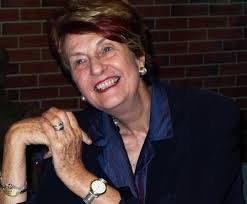
Caldicott

March 21, 2019

Transcript of 8th anniversary interview with Dr. Helen Caldicott

By Dr. Helen Caldicott and Michael Welch

The eight year anniversary of the triple meltdowns at the Fukushima Daiichi nuclear facility passed mostly without comment in mainstream media circles. In spite of ongoing radiological contamination that will continue to spread and threaten human health for lifetimes to come, other stories dominate the international news cycle. The climate change conundrum, serious though it may be, seemingly crowds out all other clear and present environmental hazards.

As part of efforts to normalize this historic event and cover it up in its magnitude, the Japanese government has invested considerable financial, public relations and other resources into what they are billing the ‘Recovery Olympics‘ set to take place in a year’s time in Tokyo. 

But Helen Caldicott warns that the dangers associated with Fukushima have not gone away and remain a cause for concern. 

Dr. Helen Caldicott has been an author, physician and one of the world’s leading anti-nuclear campaigners. She helped to reinvigorate the group of Physicians for Social Responsibility, acting as president from 1978 to 1983. Since its founding in 2001 she served as president of the US based Nuclear Policy Research Institute later called Beyond Nuclear which initiates symposia and educational projects aimed at informing the public about the dangers of nuclear power, nuclear weapons, and nuclear war. And she is the editor of the 2014 book, Crisis Without End: The Medical and Ecological Consequences of the Fukushima Nuclear Catastrophe.

On the week marking the eighth anniversary of the Fukushima meltdowns, the Global Research News Hour radio program, hosted by Michael Welch, reached out to Dr. Caldicott to get her expert opinion on the health dangers posed by the most serious nuclear disaster since, at least, the 1986 Chernobyl event.

Global Research: Now the Japanese government is preparing to welcome visitors to Japan for the 2020 Olympic Games, and coverage of the 8th anniversary of the Fukushima disaster is hardly, it seems to me, registered given the significant radiological and other dangers that you cited and your authors cited in your 2014 book, Crisis Without End. Now it’s been more than four years since that book came out. I was hoping you could update our listenership on what is currently being recognized as the main health threats in 2019, perhaps not registered in the book, that you’re currently looking at in relation to the Fukushima meltdown.

Helen Caldicott: Well it’s difficult because the Japanese government has authorized really only examination of thyroid cancer. Now thyroid cancer is caused by radioactive iodine and there were many, many cases of that after Chernobyl. And already, they’ve looked at children under the age of 18 in the Fukushima prefecture at the time of the accident, and … how many children… 100…no 201 by June 18 last year… 201 had developed thyroid cancer. Some cancers had metastasized. The incidence of thyroid cancer in that population normally is 1 per million. So obviously it’s an epidemic of thyroid cancer and it’s just starting now.

What people need to understand is the latent period of carcinogenesis, ie the time after exposure to radiation when cancers develop is any time from 3 years to 80 years. And so it’s a very, very long period. Thyroid cancers appear early. Leukemia appears about 5 to 10 years later. They’re not looking for leukemia. Solid cancers of every organ, or any organ as such appear about 15 years later and continue and in fact the Hibakusha from the Hiroshima and Nagasaki who are still alive are still developing cancers in higher than normal numbers.

The Japanese government has told doctors that they are not to talk to their patients about radiation and illnesses derived thereof, and in fact if the doctors do do that, they might lose their funding from the government. The IAEA, the International Atomic Energy Agency interestingly set up a hospital – a cancer hospital – in Fukushima along with the Fukushima University for people with cancer, which tells you everything.

So there’s a huge, huge cover up. I have been to Japan twice and particularly to Fukushima and spoken to people there and the parents are desperate to hear the truth even if it’s not good truth. And they thanked me for telling them the truth. So it’s an absolute medical catastrophe I would say, and a total cover up to protect the nuclear industry and all its ramifications.

GR: Now, are we talking about some of the, the contamination that happened 8 years ago or are we talking about ongoing emissions from, for example–

HC: Well there are ongoing emissions into the air consistently, number one. Number two, a huge amount of water is being stored –over a million gallons in tanks at the site. That water is being siphoned off from the reactor cores, the damaged melted cores. Water is pumped consistently every day, every hour, to keep the cores cool in case they have another melt. And that water, of course, is extremely contaminated.

Now they say they’ve filtered out the contaminants except for the tritium which is part of the water molecule, but they haven’t. There’s strontium, cesium, and many other elements in that water – it’s highly radioactive – and because there isn’t enough room to build more tanks, they’re talking about emptying all that water into the Pacific Ocean and the fishermen are very, very upset. The fish already being caught off Fukushima, some are obviously contaminated. But this will be a disaster.

Water comes down from the mountains behind the reactors, flows underneath the reactors into the sea and always has. And when the reactors were in good shape, the water was fine, didn’t get contaminated. But now the three molten cores in contact with that water flowing under the reactors and so the water flowing into the Pacific is very radioactive and that’s a separate thing from the million gallons or more in those tanks.

They put up a refrigerated wall of frozen dirt around the reactors to prevent that water from the mountains flowing underneath the reactors, which has cut down the amount of water flowing per day from 500 tons to about a hundred and fifty. But of course, if they lose electricity, that refrigeration system is going to fail, and it’s a transient thing anyway so it’s ridiculous. In terms… So over time the Pacific is going to become more and more radioactive.

They talk about decommissioning and removing those molten cores. When robots go in and try and have a look at them, their wiring just melts and disappears. They’re extraordinarily radioactive. No human can go near them because they would die within 48 hours from the radiation exposure. They will never, and I quote never, decommission those reactors. They will never be able to stop the water coming down from the mountains. And so, the truth be known, it’s an ongoing global radiological catastrophe which no one really is addressing in full.

GR: Do we have a better reading on, for example the thyroids, but also leukemia incubation—

HC: No they’re not looking–well, leukemia they’re not looking for leukemia…

GR: Just thyroid

HC: They’re not charting it. So the only cancer they’re looking at is thyroid cancer and that’s really high, and you know it’s at 201 have already been diagnosed and some have metastasized. And a very tight lid is being kept on any other sort of radiation related illnesses and leukemia and the like. All the other cancers and the like, and leukemia is so… It’s not just a catastrophe it’s a…

GR: …a cover up

HC: Yeah. I can’t really explain how I feel medically about it. It’s just hideous.

GR: Well I have a brother who’s a physician, who was pointing to well we should maybe, the World Health Organization is a fairly authoritative body of research for all of the indicators and epidemiological aspects of this, but you seem to suggest the World Health Organization may not be that reliable in light of the fact that they are partnered with the IAEA. Is that my understanding…?

HC: Correct. They signed a document, I think in ‘59, with the IAEA that they would not report any medical effects of radiological disasters and they’ve stuck to that. So they are in effect in this area part of the International Atomic Energy Agency whose mission is to promote nuclear power. So don’t even think about the WHO. it’s really obscene.

GR: So what would… the incentive would be simply that they got funding?

HC: I don’t know. I really don’t know but they sold themselves to the devil.

GR: That’s pretty incredible. So there’s also the issue of biomagnification in the oceans, where you have radioactive debris, hundreds of tons of this radioactive water getting into the oceans and biomagnifying up through the food chain, so these radioactive particles can get inside our bodies. Could you speak to what you anticipate to see, what you would anticipate, whether it’s recorded by World Health authorities or not, what we could expect to see in the years ahead in terms of the illnesses that manifest themselves?

HC: Well number one, Fukushima is a very agricultural prefecture. Beautiful, beautiful peaches, beautiful food, and lots of rice. And the radiation spread far and wide through the Fukushima prefecture, and indeed they have been plowing up millions and millions of tons of radioactive dirt and storing it in plastic bags all over the prefecture. The mountains are highly radioactive and every time it rains, down comes radiation with the water. So the radiation – the elements. And there are over 200 radioactive elements made in a nuclear reactor. Some have lives of seconds and some have lives of millions of years or lasts for millions of years will I say. So there are many many isotopes, long-lasting isotopes – cesium, strontium, tritium is another one – but many, many on the soil in Fukushima.

And what happens is – you talked about biomagnification – when the plants take up the water from the soil, they take up the cesium which is a potassium analog – it resembles potassium. Strontium 90 resembles calcium and the like. And these elements get magnified by orders of magnitude in the rice and in the plants. And so when you eat food that is grown in Fukushima, the chances are it’s going to be relatively radioactive.

They’ve been diluting radioactive rice with non-radioactive rice to make it seem a bit better. Now, into the ocean go these isotopes as well, and the algae bio-magnify them by – you know -ten to a hundred times or more. And then the crustaceans eat the algae, bio-magnify it more. The little fish eat the crustaceans, the big fish eat the little fish and the like. And tuna found in – off the coast of California some years ago contained isotopes from Fukushima. Also fish, being caught on the west coast of California contained some of these isotopes. So, it’s an ongoing bio-magnification catastrophe.

And the thing is that you can’t even taste, smell or see radioactive elements in your food. They’re invisible. And it takes a long time for cancers to occur. And you can’t identify a particular cancer caused by a particular substance or isotope. You can only identify that problem by doing epidemiological studies comparing irradiated people with non-irradiated people to see what the cancer levels are and that data comes from Hiroshima and Nagasaki and many, many, many other studies.

GR: Chernobyl as well, no?

HC: Oh, Chernobyl! Well, a wonderful book was produced by the, uh, Russians, and published by the New York Academy of Sciences, called Chernobyl with over 5000 on the ground studies of children and diseases in Belarus and the Ukraine, and all over Europe. And by now over a million people have already died from the Chernobyl disaster. And many diseases have been caused by that, including premature aging in children, microcephaly in babies, very small heads, diabetes, leukemia, I mean, I could go on and on.

Um, and those diseases which have been very well described in that wonderful book, um, which everyone should read, are not being addressed or identified or looked for in the Fukushima or Japanese population.

May I say that parts of Tokyo are extremely radioactive. People have been measuring the dirt from rooves of apartments, from the roadway, from vacuum cleaner dust. And some of these samples, they’re so radioactive that they would classify to be buried in radioactive waste facilities in America. So, that’s number one.

Number two, to have the Olympics in Fukushima just defies imagination. And uh, some of the areas where the athletes are going to be running, the dust and dirt there has been measured, and it’s highly radioactive. So, this is Abe, the Prime Minister of Japan, who set this up to – as a sort of way to obscure what Fukushima really means. And those young athletes, you know, who are – and young people are much more sensitive to radiation, developing cancers later than older people – it’s just a catastrophe waiting to happen.

GR: Dr. Caldicott…

HC:They’re calling it the radioactive Olympics!

GR: (Chuckle). Is there anything that people can do, you know, whether they live in Japan or, say, the west coast of North America to mitigate the effects that this disaster has had, and may still be having eight years later?

HC: Yes. Do not eat any Japanese food because you don’t know where it’s sourced. Do not eat fish from Japan, miso, rice, you name it. Do not eat Japanese food. Period. Um, fish caught off the west coast of Canada and America, well, they’re not testing the fish so I don’t know what you’d do. Um, I mean, most of it’s probably not radioactive but you don’t know because you can’t taste it.

Um they’ve closed down the air-borne radioactive measuring instruments off the west coast of America, uh, but that’s pretty bad, because there still could be another huge accident at those reactors.

For instance, if there’s another large earthquake, number one, all those tanks would be destroyed and the water would pour into the Pacific. Number two, there could be another meltdown, a release – huge release of radiation, um, from the damaged reactors. So, things are very tenuous, but they’re not just tenuous now. They’re going to be tenuous forever.

https://www.globalresearch.ca/fukushima-an-ongoing-global-radiological-catastrophe-a-huge-coverup-dr-helen-caldicott/5672265?fbclid=IwAR2yWNJN9-C7iGm08V1F7ZCKg_kVcL-WzPi2ftoMScrLEmSstrMKlV3BNG4

April 8, 2019 Posted by | fukushima 2019 | , , , | Leave a comment

‘I am the witness’: Post-Fukushima, a Japanese man’s regrets mirror his country’s turn against nuclear power

japan-17-1920x1412-768x565.jpg
As a boy, Yuji Onuma won a contest to create the town slogan for Futaba, Japan. His phrase — “Atomic power: energy for a bright future” — was enshrined on an archway over the town’s main street. But after the Fukushima nuclear accident in 2011, Onuma — like many in Japan — has turned against what he used to champion. Here, he stands in front of the archway holding a banner that modifies his slogan as statements opposing nuclear energy.
March 29, 2019
The partial meltdown at Three Mile Island nuclear power plant in central Pennsylvania 40 years ago in March did not lead to large releases of radiation, but it helped turn public opinion away from nuclear energy. In Japan, an even more catastrophic nuclear disaster occurred eight years ago this month. And like many Pennsylvanians, the Japanese have largely turned against nuclear.
The earthquake, tsunami and nuclear meltdown is known in Japan as simply “March 11.” And everyone knows where they were on March 11, 2011.
Yuji Onuma was in the town of Futaba, where he grew up and was living with his wife, who was pregnant with their first child. Their home was about 3 or 4 kilometers from the Daiichi nuclear power plant.
But right now, he’s living away from the coast in another prefecture, and he says he wants to settle in a town that is about as far away from any of Japan’s 54 nuclear power plants as he can possibly be.
During an interview, Onuma showed a picture of when he was about 12 years old and getting an award from the Mayor of Futaba. A teacher had asked the kids to come up with a town slogan. In a place where everyone depended on the nearby nuclear plant for work, Onuma’s entry won:
“Atomic power: energy for a bright future” became the slogan on an archway over Futaba’s main street.
“I was very proud because this is my first ever award by the town,” Onuma said through a translator. “And all the town people praised me and said, you are very great. So I was so proud of that.”
Then he showed another photo. It’s only a few months after the accident, and no one is left living in Futaba. This time, he’s wearing a protective Tyvek suit and mask, he’s standing below the sign holding up a placard that changes his slogan to:
“Atomic power: energy for a destructive future.”
“I made the wrong slogan,” Onuma said. “If we didn’t have this accident I would have still believed that atomic energy has a bright future. But I’m glad that I realized my mistake before I died.”
Read more:

March 31, 2019 Posted by | fukushima 2019 | , , | Leave a comment

Arnie and Maggie Discuss Fukushima Meltdown On Project Censored

hlkjmmmù.jpg
March 26, 2019
Arnie and Maggie recently appeared on Project Censored to discuss Fukushima and why nuclear is not part of the answer the climate. Give it a listen!
 
Nuclear-power experts Arnie and Maggie Gundersen return to Project Censored to publicize the ongoing damage the Fukushima meltdown site is inflicting on Japan and the Pacific. They also rebut the idea that nuclear power is part of the answer to climate change.
This has been edited from the original show to showcase only Arnie and Maggie’s interview. To listen to the full show go herehttps://www.projectcensored.org/fukashima-meltdown-site-with-anri-and-maggie-gundersen-and-us-military-plans-to-dominate-outer-space-with-bruce-gagnon/
Notes:
Arnie and Maggie Gundersen are the founders of Fairewinds Energy Education (www.fairewinds.org), and former employees of the nuclear-power industry. 

March 31, 2019 Posted by | fukushima 2019 | , , , | Leave a comment

Evacuation Order to be lifted in Okuma, the Fukushima Daiichi Plant Town

In total denial of the existing radiation risks the Japanese government will lift on April 10 the evacuation order in Okuma, one of two towns where the crippled Fukushima Daiichi nuclear plant is located. The Japanese government thus continues its so-called ‘reconstruction’ campaign, which in reality in nothing else but a disinformation campaign of denial orchestrated without any real care for the lives of the people, nor for their basic human right to live a normal life protected from radiation, all which is being done in the name of  the Japanese government’s holy economics and the coming  recovery showcase 2020 Tokyo Olympics.
f0a0119c69e971b312c30e584602910aadd6837f.jpg
A geiger counter attached to a fence near the Daiichi power plant measures radiation in Okuma town, Fukushima prefecture A geiger counter attached to a fence near the Daiichi power plant measures radiation in Okuma town, Fukushima prefecture
March 26, 2019
The government plans to lift the order for part of Okuma town on April 10…
“We have determined the radiation level in the environment has fallen sufficiently as a result of decontamination work,” said Yoshihiko Isozaki, the head of the government’s nuclear emergency response headquarters…
… The evacuation order will remain in place for so-called difficult-to-return zones still registering high radiation levels..
… As of the end of February, only 374 people out of the previous 10,000 residents were registered as residents of the targeted areas…
… Japan’s government has lifted evacuation orders across much of the region affected by the meltdown – allowing residents to return – as Tokyo has pressed an aggressive decontamination programme involving removing radioactive topsoil and cleaning affected areas….
… But not everyone has been convinced, with a poll conducted in February by the Asahi Shimbun daily and Fukushima local broadcaster KFB finding that 60 per cent of Fukushima region residents still felt anxious about radiation….
… “People have the freedom to go back if they want to, but personally I am against living in areas where there are no children and no places to work,” said a 72-year-old man, who has relocated to the nearby city of Iwaki.
“We don’t know what’s going to happen when they remove (nuclear) debris” at the crippled plant, co-hosted by the towns of Okuma and Futaba, he added…
… No one is officially recorded as having died as a result of radiation from the accident, but last year, the government for the first time acknowledged the death from cancer of a man involved in the clean-up….
… As of the end of February, around 52,000 people remain displaced because of evacuation orders or because they are unwilling to return, according to Japan’s Reconstruction Agency.
jokklm.jpg
This March 10, 2018 photo shows barricades installed in Okuma, a Fukushima Prefecture town near the crippled Fukushima Daiichi nuclear power plant, designated as an evacuated zone.

March 31, 2019 Posted by | fukushima 2019 | , , | Leave a comment

Yusuke Kimura’s ‘Sacred Cesium Ground and Isa’s Deluge’: Tohoku refuses to be silenced

p18-boyd-sacredcesium-a-20190324.jpg
March 23, 2019
An anger directed toward Tokyo underlies Yusuke Kimura’s two novellas, “Sacred Cesium Ground” and “Isa’s Deluge.” Born from a keen sense of abandonment felt by the Tohoku region in the aftermath of the 3/11 disaster, this anger plays out across stories exploring the post-disaster relationships between humans and animals.
The main character in “Sacred Cesium Ground” is a woman from Tokyo who travels to Fukushima Prefecture to volunteer at the Fortress of Hope, a farm where cattle irradiated by the meltdown of the Fukushima No. 1 power plant are tended to despite a government order to kill them.
Based on the story of a real post-Fukushima ranch, the novella carries with it a weight of research born from the author’s own volunteering, though proves somewhat slow reading and ultimately unsatisfying, never quite reaching the moment of reinvention that the lead character hints at throughout.
“Isa’s Deluge” is the more readable of the two, with a flow and pacing that draws in the reader. Shortlisted for the Mishima Yukio Prize after it was first published in 2012, it follows a family of fishermen who relate the story of their uncle Isa and his “deluge” of pain and depression, an allegory of the 3/11 tsunami.
Both novellas highlight peripheral voices in the post-3/11 period and ultimately return time and again to that tension between a “sacrificial” Tohoku and an all-powerful capital. These perspectives are those not frequently heard and challenge the widespread narrative of an ever-dominant Tokyo.
Read more:

March 25, 2019 Posted by | fukushima 2019 | , , | Leave a comment

Radioactive material released from Fukushima plant doubled up since last year

Radioactive-material-released-from-Fukushima-plant-doubled-up-since-last-year-800x500_c.jpg
March 23, 2019
The released amount of Cs-137 and Cs-134 from the crippled reactors in Fukushima plant reached over the double compared to the previous year.
Tepco released their monthly report about the additional atmospheric contamination on 25th February 2019.
According to the report, from January 2018 to January 2019, 933,000,000 Bq of Cs-137 and Cs-134 were release from the buildings of reactor 1, 2, 3 and 4 in total. It was 471,000,000 Bq during the corresponding period of the previous year.
 
Tepco commented it is likely to be affected by debris removal task around reactor 1 etc.. They avoided mentioning the further details.


March 25, 2019 Posted by | fukushima 2019 | , | Leave a comment

10 Reasons You Might Want to Think Twice about the Tokyo Olympics

goforit-01-1.png
March 23, 2019
Sure, the Olympics/Paralympics deliver thrilling races, stunning performances and inspiring stories… But they also steal green space and leave mountains of trash, require massive human displacement (gentrification on steroids) and worker abuse (including athlete exploitation), enforce the gender binary, promote noisy nationalism, high-tech surveillance, corruption and cost overruns.
So what’s unique about the 2020 Tokyo Olympics?  It’s happening with a Declaration of Nuclear Emergency, issued March 11, 2011, still in place. Then why is Japan spending astronomical sums for the Games? Because these Games are supposed to show the world that the Fukushima Nuclear Disaster is a thing of the past, that Japan is roaring and ready for business. Should we go along with that agenda? Here are ten issues for you to consider:
1.     Eight years and counting, Tepco, the owner of the Fukushima Daiichi Nuclear Power Station, still lacks a viable plan for dealing with the fuel cores that not only “melted down” but “melted through” the heavy steel pressure vessel and landed …where?
2.     To keep the site “under control,” the plant uses massive amounts of water daily. The result? Tank after tank of contaminated water, with leaks and releases, exposing workers and the surrounding environment – including the Pacific Ocean. Factor recurring earthquakes into that mix.
3. The Japanese government has spent huge sums to corporations to “decontaminate” – moving radioactive contaminants instead of getting people away from harm. Their method involves bagging yard waste and topsoil, resulting in seas of neatly stacked black plastic bags. And just think: 70 % of Fukushima consists of forests and mountains – which by definition cannot be decontaminated. Moreover, the government even wants to reuse contaminated soil.
4.     Decontamination can reduce radiation levels to a degree, for a limited time and space. But, every part of the process – hosing down, trimming, digging, bagging, burying, re-digging, transporting, reusing – subjects workers to the risk of exposure. Not surprisingly, many of them are Fukushima residents who lost their livelihoods in the 2011 disaster.
5.     Radioactivity itself is invisible. In Fukushima, strange white columns called “monitoring posts” for measuring airborne radiation have become an awkward feature of the landscape. The government wants to get rid of them. Local residents insist that the disaster is not over and that the government needs to be looking after its people—not hosting a sports extravaganza that benefits an elite few.
6.     People who fled radiation—often women with children—knew all too well from the beginning the absurdity of the Games being hosted in Tokyo. Their existence is now being erased, with the government cutting off housing aid and opening up mandatory evacuation zones it deems safe for return. What’s “safe” for the Japanese government is 20 times looser than international standards.
7.     The mandated evacuation zone in Fukushima was too narrow in the first place, and many areas including parts of Tokyo should be designated “radiation-controlled areas,” where you’d have to be trained in radiation occupational safety and wear personal protective equipment.
8. The Japanese government and the Japan Olympic Committee (JOC), with the implicit collaboration of the International Olympic Committee (IOC), have concealed or distorted data inconvenient not just for declaring an end to the disaster but for continuing with the national nuclear program. In fact, the Games are a key weapon in suppressing information on radiation and health effects. In the only large-scale health study conducted on the nuclear disaster, the government consistently denies a link between radiation and people’s health, despite a striking increase of thyroid cancer among children and youths.
9.     The JOC claims that airborne radiation levels in Fukushima and Tokyo are no higher than those in other world cities. But radionuclides move around, and there are many radioactive waste storage sites close to Olympic venues, in addition to “hotspots” with highly radioactive contaminants carried by the wind and distributed unevenly throughout eastern Japan.
10.  The JOC has chosen sites in Fukushima for the Olympic softball and baseball games. As the saying goes, the best defense is a good offense. To make sure we get the point, the Olympic torch relay will begin in Fukushima, just 20km (12 miles) south of Fukushima Daiichi Nuclear Power Plant.
The 2020 Tokyo Olympics are a disaster coverup.
Is that something you want to be part of?
Statement drafted by NoTokyo2020, an informal collective standing in solidarity with the people of Fukushima and other disaster-affected areas, both those who have left and those who have stayed on.
Image courtesy of 281_Anti nuke

March 25, 2019 Posted by | fukushima 2019 | , , , | Leave a comment

Japan’s Swimming Great and 2020 Tokyo Olympics Hopeful diagnosed with Leukemia cancer

gkjlkl.jpg
NEW YORK – March 22, 2019 – PRLog — Rikako Ikee, Japan’s reigning national record holder in multiple swimming events and record-setting winner of 6 gold and 2 silver medals at the recent Asian Games has been diagnosed with cancer in the form of Leukemia.
 
Author of “Fukushima 311: Is the enduring aftermath of the Fukushima nuclear disaster killing off the Earth?” Col. Walter T. Richmond was saddened to learn the news, and expressed his sincerest best wishes that Ikee is able to beat the disease since doctors apparently discovered it in its earlier stages.
 
In light of the serious news, Richmond revisited his health warnings surrounding the Tokyo 2020 Olympics. He said “Ikee would have been about 10 or 11 years old at the time of the original Fukushima nuclear disaster. She’s also a native of Tokyo, and Japanese citizen scientists have reportedly found radioactive materials all over Japan, including Tokyo.”
 
Author Richmond pointed out that since “the health effects and cancers from nuclear radiation exposure can take years to manifest, chances are people won’t get sick immediately, if ever. But why would anyone roll the dice on their health? The research we did for this book paints a very disturbing radioactive picture compared to the apparent marketing hype coming out of Japan.”
 
That the authorities were often not forthcoming or transparent about the gravity of the actual crisis has Richmond equally concerned, saying, “After the anomalies we found during our Fukushima 311 research, plus the serious concerns and red flags raised by the United Nations recently, we have little faith in official claims that ‘all is well’ that aren’t corroborated by independent outside sources. The time to ask hard questions is now, not after the 2020 Olympics.”
 
Richmond ended by, yet again, calling for an impartial international team of highly-specialized scientists and doctors to determine the actual radiation safety levels in and around the 2020 Olympic facilities, in Tokyo and the Olympic ball fields in Fukushima, as well as the surrounding areas likely to be visited by athletes, guests, and spectators.

March 25, 2019 Posted by | fukushima 2019 | , , | Leave a comment

On the Frontline of the Fukushima Nuclear Accident: Workers and Children – Radiation risks and human rights violations

1262973-b12d8f83-frontfksm_en.png
22 Mar 2019
 
Eight years after the start of the Fukushima Daiichi nuclear disaster and two years after the Japanese government lifted evacuation orders in areas of Namie and Iitate, radiation levels remain too high for the safe return of thousands of Japanese citizen evacuees.
 
This report summarizes information from Greenpeace’s latest extensive radiation survey in Namie and Iitate, Fukushima prefecture. The survey, conducted during October 2018, focused in particular on the radiation risks to decontamination workers, whose exploitation and human rights violations have rightly become a focus of attention from United Nations human rights experts during the last year.
 
The report also focuses on the failure of the Japanese government to comply with its international obligations to protect the rights of children. Preventing exposure of children to harmful radiation, one of the obligations under the Convention on the Rights of the Child, is particularly critical given their higher vulnerability to health effects from radiation. In the case of workers and children, who are in the frontline of hazards resulting from the Fukushima Daiichi nuclear disaster, the Japanese government continues to ignore international radioprotection recommendations

Download PDF (12.03 MB)

https://reliefweb.int/report/japan/frontline-fukushima-nuclear-accident-workers-and-children-radiation-risks-and-human


March 25, 2019 Posted by | fukushima 2019 | , , , , | Leave a comment

The Unlearned Lessons of Japan’s Fukushima Nuclear Disaster

a_japan-fukushima-anniversary-03202019-1.jpg
March 20, 2019
Last week, Japan marked the eighth anniversary of the catastrophic earthquake and tsunami that hit the country in 2011, leaving more than 18,000 people dead or unaccounted for and triggering one of the worst nuclear accidents in modern history. A moment of silence was observed across the country at 2:46 p.m. on March 11, the time the earthquake struck. Sports teams interrupted their practice to pray for the souls of those who perished. “We must never let the valuable lessons that we have learned from the enormous damage caused by the disaster to fade away,” Prime Minister Shinzo Abe said at a commemorative ceremony.
 
The following day, three former executives of the Tokyo Electric Power Corporation, or TEPCO—which operated the Fukushima Daiichi Nuclear Power Plant when it took a direct hit from the tsunami—entered the district courthouse in Tokyo for the final day of their trial. They reiterated pleas of “not guilty” in response to charges of criminal negligence in connection with the disaster at Fukushima. The prosecution is requesting that each defendant serve five years in prison….
… Eight years on, residents of Fukushima continue to feel the impact of the nuclear accident. Much of the surrounding area remains designated as a “difficult-to-return zone,” requiring special permission to enter. Even in parts of the nine municipalities that have been deemed safe since 2014, most residents have yet to return home. An investigation by the Kyodo News service revealed that only 23 percent of registered homes in those areas are currently inhabited.
For citizens affected by the Fukushima nuclear disaster, the process of seeking justice has been halting and uncertain.
Even for areas outside the initial evacuation zone, fears of radiation persist amid a massive, ongoing cleanup effort. One problem has to do with contaminated soil and debris that has been removed and stored in black bulk container bags across Fukushima. There’s still no set plan for their removal, so in many neighborhoods, the bags simply pile up—an ugly reminder of a tragedy that continues to reverberate through the area. In some cases, storage pits have been created, but they are far from a lasting solution, and not sufficient to hold the massive amounts of contaminated material slated for eventual disposal. The government has also installed monitoring posts throughout the affected area, but these sensors often fail to catch radioactive “hot spots”—concentrations of contaminated particles that accumulate over time due to weather patterns…
 
… Concerns over residual radiation are also hampering the recovery of the largely agriculture-based economy in Tohoku, the region that includes Fukushima. In the weeks and months after the meltdown, as many as 54 of Japan’s trading partners, fearing that radiation would reach their shores via contaminated produce, enacted trade embargoes on agricultural products from the region. Many governments have since removed or relaxed these prohibitions, but 24 countries and territories maintain some form of restriction despite repeated assurances from Tokyo that food products from the region are safe. These include major nearby export markets like China, Hong Kong, Taiwan and South Korea. The Yomiuri Shimbun, Japan’s most widely circulated daily newspaper, reports roughly $6 billion worth of exports are affected….
 
… This reality points to the permanent reputational damage to the people of Fukushima and its neighboring prefectures caused by the nuclear meltdown, which is proving just as hard to clean up. Like other sites of major nuclear accidents—Chernobyl, for example, and Three Mile Island—Fukushima is indelibly associated with nuclear fallout and the stigma that comes with it…
 
… For affected citizens, the process of seeking justice has been halting and uncertain, but there has been some progress. The verdict in the Tokyo criminal case is expected in September, though legal experts point out that guilty verdicts in cases that have been forcibly brought to trial by an inquest panel are rare. Meanwhile, roughly 30 class action lawsuits brought by residents of the Fukushima plant’s surrounding area are working their way through Japan’s legal system. A number of courts in those cases have found both TEPCO and the Japanese government liable for the disaster, awarding substantial damages…
 
… Japan is certainly no exception when it comes to lax and failing government regulation. Nor is it the only country that has prioritized economic growth over safety concerns. But as Japan’s nuclear reactors gradually come back online eight years after the meltdown in Fukushima, the potential costs of failing to learn from its mistakes seem particularly stark.
Read more:

March 25, 2019 Posted by | fukushima 2019 | , | Leave a comment

Fukushima water headache: 1 million tons and counting
hjjlmlmm.jpg
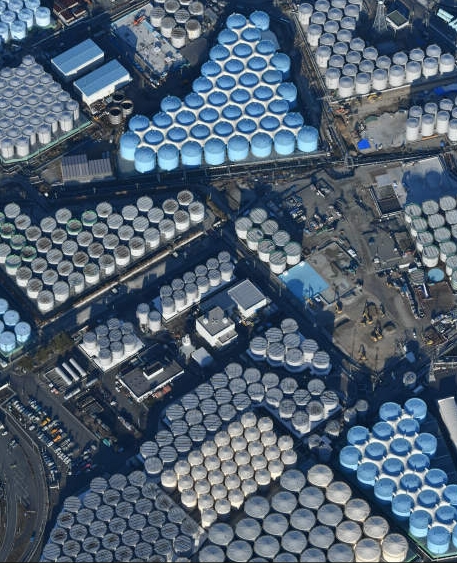
Hundreds of storage tanks on the grounds of the Fukushima No. 1 nuclear power plant hold water contaminated with radioactive materials.
March 19, 2019
The crippled Fukushima No. 1 nuclear plant reached an undesired milestone on March 18: Storage tanks at the site now contain more than 1 million tons of radiation-contaminated water.
The announcement by the plant’s operator, Tokyo Electric Power Co., came as the utility and the central government continue to weigh water-disposal methods while hearing the concerns of fishermen who fear for their livelihoods.
Toyoshi Fuketa, chairman of the Nuclear Regulation Authority, has repeatedly said a decision must be made soon on how to deal with the contaminated water.
Groundwater becomes contaminated when it flows into the buildings of the three reactors that suffered meltdowns in 2011 following the Great East Japan Earthquake and tsunami.
… Water is used to cool the nuclear fuel debris, but its processing in order to remove radioactive substances is far from successful, which Tepco itself recently finally admitted after years of claiming that it was effective and that only tritium remained in the filtered water, lobbying for its relase into the ocean…
… These problems have forced TEPCO to store the contaminated water in hundreds of tanks installed at the Fukushima plant.
If more storage tanks are constructed, the overall capacity of 1.37 million tons at the site will likely be reached by the end of 2020….
… Fukushima fishermen are already on alert for the one option they have already criticized–diluting the water and dumping it into the Pacific Ocean…
… The government has spent about 34.5 billion yen ($309 million) to build a frozen underground earth wall around the three reactor buildings to divert the groundwater to the ocean. The “ice wall” has cut down the flow of groundwater, which at one time reached about 500 tons a day.
But still, groundwater continues to flow into the three reactor buildings at a rate of about 100 tons daily.
Read more:

March 25, 2019 Posted by | fukushima 2019 | , , | Leave a comment

Court absolves government of blame in nuclear disaster

hkjml.jpgPlaintiff Takahiro Kanno, left, speaks about the verdict in Chiba’s Chuo Ward on March 14.


March 15, 2019

CHIBA–A district court here on March 14 absolved the central government of responsibility but ordered the operator of the crippled Fukushima No. 1 nuclear power plant to pay compensation to nine of 19 plaintiffs who evacuated to Chiba.

The Chiba District Court ordered Tokyo Electric Power Co. to pay a total of about 5.1 million yen ($45,630) to nine plaintiffs who evacuated out of radiation fears following the nuclear accident triggered by the Great East Japan Earthquake and tsunami in March 2011.

The 19 plaintiffs were from six households who voluntarily evacuated from Fukushima to Chiba Prefecture. The plaintiffs sought a total of 247 million yen from TEPCO and the central government.

While the presiding judge ordered TEPCO to pay compensation to nine plaintiffs from four households, it denied the central government’s responsibility.

Read more :

http://www.asahi.com/ajw/articles/AJ201903150041.html

March 18, 2019 Posted by | fukushima 2019 | , , , , | Leave a comment

Fukushima forests contain ‘most of 2011 accident cesium’

March 12, 2019

A study has found that forests contain most of the radioactive cesium released during the 2011 Fukushima Daiichi nuclear accident.

About 70 percent of the cesium released into the environment is believed to have accumulated in forests near the plant.

There has been concern that the radioactive substance could spread to residential and farming areas, because little progress has been made in decontaminating the forests.

March 18, 2019 Posted by | fukushima 2019 | , , , | Leave a comment

Congenital heart disease operations rose 14% after Fukushima nuclear accident

hjk.jpg

March 13, 2019

Murase K, et al. J Am Heart Assoc. 2019;doi:10.1161/JAHA.118.009486.

There was an increase in the number of operations performed on neonates and infants with complex congenital heart disease after the 2011 Japanese earthquake and tsunami that resulted in a nuclear accident at Fukushima, according to a study published in the Journal of the American Heart Association.

Although this research focuses on events that occurred in Japan, the potential for nuclear accidents throughout the world is a global health concern,” Kaori Murase, PhD, associate professor at Nagoya City University in Japan, said in a press release. “Our study suggests that a nuclear accident might increase the risk for complex congenital heart disease.”

Researchers analyzed data from annual surveys conducted between 2007 and 2014 by the Japanese Association for Thoracic Surgery. The years that were included in the survey were the 4 years before and after the Japanese earthquake on March 11, 2011. The surveys included information on 45 surgical classifications for congenital heart disease. Patients with congenital heart disease were categorized into two groups based on the time of occurrence during heart development, complexity and the age at operation.

There was a 14.2% increase in the number of operations per 100,000 live births for complex congenital heart disease in neonates and infants. There was no significant change in the number of operations performs in patients aged 1 to 17 years.

The cause of the increase is unknown, but we should consider the influence of the radionuclides emitted from the Fukushima nuclear power plant,” Murase and colleagues wrote. “More specific patient data such as time, location and amount of maternal exposure would be required to determine the cause.” – by Darlene Dobkowski

Read more :

https://www.healio.com/cardiology/pediatric-cardiology/news/online/%7B587ccb11-f924-4ead-aa8f-24b7da911c55%7D/congenital-heart-disease-operations-rose-14-after-fukushima-nuclear-accident

https://medicalxpress.com/news/2019-03-newborn-heart-problems-surged-fukushima.html

March 18, 2019 Posted by | fukushima 2019 | , , , | Leave a comment



