Fukushima: Japan’s new PM won’t delay release of contaminated water into ocean
Lying by omission. In that accumulated radioactive water on Fukushima Daiichi nuclear plant site, tritium is only one of the 64 radionuclides present, as the ALPS filtering system did not work fully to remove ALL radionuclides from that water.

Fumio Kishida said every effort would be made to reassure local people that disposing of the water in the Pacific was safe
Japan’s new prime minister, Fumio Kishida, has said that there can be no delay to plans to release contaminated water from the wrecked Fukushima Daiichi nuclear power plant into the sea, despite opposition from fishers and neighbouring countries.
Kishida, who made his first trip to the plant at the weekend since becoming prime minister last month, said every effort would be made to reassure local people that disposing of the water in the Pacific Ocean was safe.
The wastewater, which is pumped up from reactor basements and treated to remove all but one radioactive material, has built up at the site since the plant suffered a triple meltdown in March 2011.
“I felt strongly that the water issue is a crucial one that should not be pushed back,” Kishida told reporters after being shown around by the plant’s operator, Tokyo Electric Power.
More than one million tonnes of water are being stored in 1,000 tanks at the site, and Tepco has warned that space will run out late next year.
The government and Tepco said in April that work to release the heavily diluted water would begin in the spring of 2023 and take decades to complete.
The move is opposed by nearby fishing communities which say it will undo years of hard work rebuilding their industry’s reputation since the plant was struck by a huge tsunami in March 2011, soon after Japan’s north-east coast was rocked by a magnitude-9 earthquake.
The decision ended years of debate over what to do with the water, with other options including evaporation or the construction of more storage tanks at other sites.
Neighbouring South Korea, which still bans seafood imports from the region, has repeatedly voiced concern, claiming that discharging the water represented a “grave threat” to the marine environment.
The South Korean Olympic committee made separate catering arrangements for the country’s athletes during the Tokyo Olympics amid concern they could be served food from Fukushima, even though produce from the region undergoes rigorous safety checks.
Japan’s government says releasing the water is the most realistic option and will enable workers at the site to proceed with decommissioning the plant – a costly operation that is expected to take about 40 years.
“We will provide explanations about safety from a scientific viewpoint and transparency in order to address people’s concerns,” Kishida said.
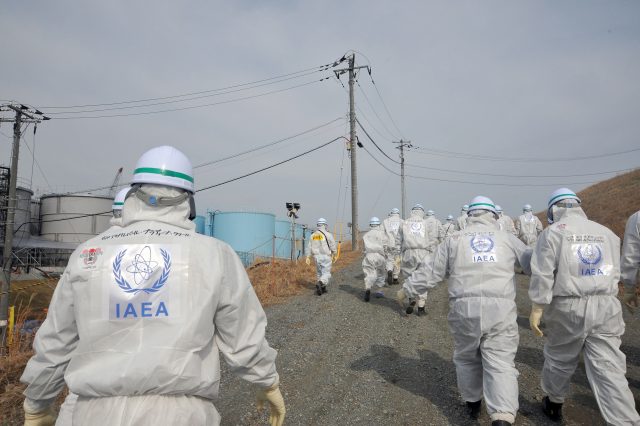
Japan has requested help from the International Atomic Energy Agency to ensure the discharge meets global safety standards, including treating the wastewater so its radioactivity levels are below legal limits.
Tepco’s Advanced Liquid Processing System reduces radioactive substances in the water to safe levels, but the system is unable to filter out tritium, a radioactive isotope of hydrogen.
Experts say tritium, a radioactive isotope of hydrogen, is only harmful to humans in very large doses, while government and Tepco officials have pointed out that working nuclear plants routinely dilute and release tritium into the ocean.
Kishida, who supports the restart of nuclear reactors that were idled after the Fukushima meltdown, offered flowers and prayed at a monument to the disaster in Namie, one of several communities near the plant that were declared no-go zones after the disaster. Some residents have since returned to their homes after evacuation orders were lifted.
Kishida has said that nuclear power must be part of Japan’s energy mix if it is to become carbon neutral by 2050. But he has yet to confirm if he will attend the Cop26 climate summit in Glasgow early next month, with Japanese media reports suggesting he won’t decide until after lower house elections are held at the end of this month.
Boris Johnson encouraged Kishida to attend the summit during a phone call last week, adding that Britain was considering lifting import restrictions on Fukushima produce that were introduced while it was a member of the European Union, according to the Kyodo news agency.
Prime Minister Kishida makes first inspection of Fukushima Daiichi Nuclear Power Plant after taking office

October 17, 2021
Prime Minister Fumio Kishida made his first inspection tour of the Fukushima Daiichi Nuclear Power Plant (Okuma and Futaba towns, Fukushima Prefecture) after assuming office on March 17. The Tokyo Shimbun’s nuclear power coverage team flew over the nuclear power plants by the Oozuru helicopter on March 11, and found that even a decade and a half after the accident, the reality is far from being “under control.
On the south side of the site, around the reactor buildings of Units 1-4, there are many cylindrical tanks for storing water that has been purified from contaminated water. On the north side of the site, containers filled with rubble and debris were piled up. Since the accident, the amount of waste contaminated by radiation at the Fukushima Daiichi Nuclear Power Plant has only increased. There is no way to even begin full-fledged containment work, such as removing the nuclear fuel (debris) that has melted down inside the reactor.
No progress in cutting high-dose vent pipes
The only progress that can be seen from the outside is that the exhaust pipes between the No. 1 and No. 2 reactors, which were 120 meters high, will be cut in half in 2020, reducing the risk of collapse. According to TEPCO’s plan, the removal of the pipes connecting the exhaust stack to the reactor buildings should have started, but the area around the pipes was quiet.
This pipe was highly contaminated during the accident by the venting process to reduce the pressure inside the reactor. Since it was dangerous for people to get close to the pipes, TEPCO planned to remove the pipes by remote control and was scheduled to start in early October. However, the mock-up test has been prolonged and there is still no way to start it. The fact that the process is not proceeding as planned has become the norm.
The construction site of a shaft for storing treated water for discharge into the ocean
Looking at Units 5 and 6, which did not have serious accidents, there were cranes and other heavy equipment along the sea. In this area, a shaft will be dug to release the treated water into the ocean. From there, an underground tunnel will be dug about one kilometer to the sea floor, and the treated water mixed with seawater will be released offshore. TEPCO is aiming to start releasing the treated water around spring 2011, and will continue to explain the plan to the local community, but there is strong opposition, especially from the fishing industry.
Some tanks under construction
At the southern end of the site, new tanks were being constructed in preparation for the oceanic release. Four tanks were visible before their lids were attached. TEPCO says it will secure a total of 23 tanks (about 30,000 tons) by November 2010.
A gaping hole in the underground drainage channel.
A gaping hole was found near the building of the ALPS (Advanced Radionuclide Purging System), which purifies and treats contaminated water. They were working on the construction of an underground drainage channel to drain rainwater when it rains heavily. Beside the heavy machinery, we could see a circular tube that appeared to be a tunnel member. The underground tunnel will be connected to the sea by next year’s typhoon season.
Unplanned debris “temporary accumulation” drastically increases in 9 months
In the northern part of the site, many containers were piled up. This is a “temporary accumulation site” where debris from the work was placed in an unplanned location. Because the planned debris storage area did not take into account slopes and other factors, there were fewer places to place containers than initially expected, and we were forced to rearrange the way we arranged the containers. In January of this year, they stopped the delivery of containers to the planned site and started to organize them, but in March, water containing radioactive materials leaked from one of the containers. However, in March, water containing radioactive materials leaked from one of the containers, and the number of temporary accumulations has been increasing rapidly due to delays in inspections.
The number of inadequately managed temporary accumulation sites is scattered at about 150 locations, and the total amount of debris is unknown. The Nuclear Regulation Authority (NRA) has pointed out the inadequate management of these sites, and TEPCO has been on the back foot in its response.
In January, there were only a few containers at this site in the northern part of the city, but over the past nine months, it has become densely packed. TEPCO has explained that they will minimize the number of temporary storage areas, but it is doubtful that they will be able to move such a large amount to the planned site.
Even from the air, it is obvious that the situation has gone astray, and there is still much work to be done to bring the accident under control. The Liberal Democratic Party has pledged to restart nuclear power plants in the House of Representatives election, but we must not turn our backs on the reality that once an accident occurs, even after a decade and a half, it is impossible to control.
https://www.tokyo-np.co.jp/article/136565?fbclid=IwAR1ExIyeyHbEi8CdZshXWhEoZMBorNbuYDnpZV1hLdnm2XYr5grar6-iEuA
Industry minister vows to promote scrapping of Fukushima plant as top priority
Japanese government’s hard-headed obstinacy toward unsafe release of radioactive water, in complete denial of the consequences on the environment and on the health of the people, and totally ignoring the majority of the Japanese people against such sea dumping….
Oct 11, 2021
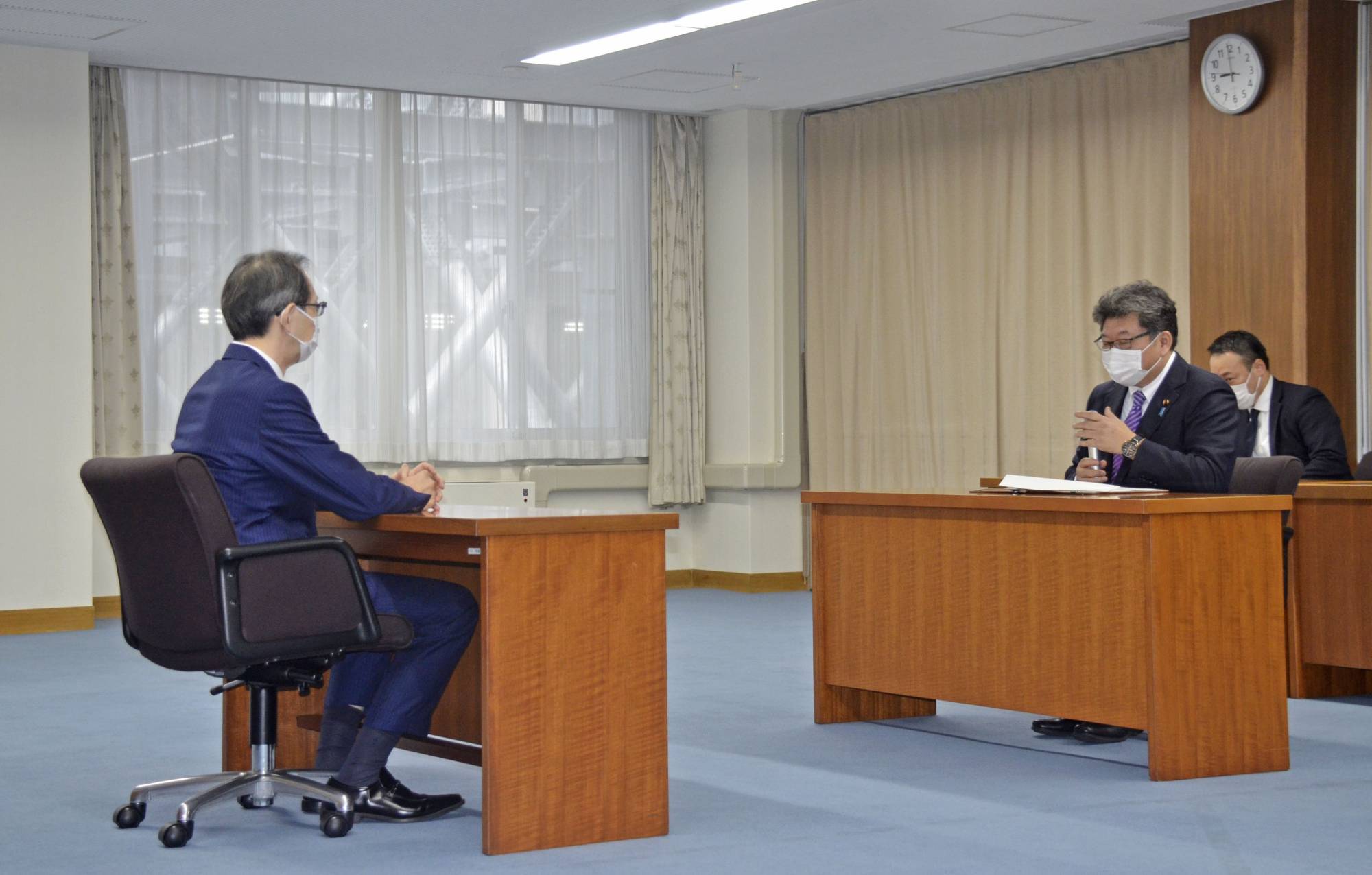
Fukushima – Industry minister Koichi Hagiuda pledged Sunday to promote the decommissioning of the crippled Fukushima nuclear plant and recovery of the area as a top priority during his first visit to the prefecture since assuming office.
Hagiuda also told Fukushima Gov. Masao Uchibori and the mayors of municipalities hosting the Fukushima No. 1 nuclear power plant that his ministry will make its “best efforts” to release treated radioactive water from the facility hit by a massive earthquake and tsunami in March 2011.
Prime Minister Fumio Kishida is also arranging a trip to the Fukushima No. 1 complex over the next weekend as part of his first visit to the Tohoku region as leader of the country, government sources said.
Uchibori requested in his meeting with Hagiuda at the prefectural government office that the central government tackle issues such as the lifting of an evacuation order for residents near the crippled power plant.
Futaba Mayor Shiro Izawa and Okuma Mayor Jun Yoshida later jointly asked the minister that the state take effective measures against the reputational damage associated with the planned discharge of treated water.
The mayors also warned Tokyo Electric Power Company Holdings Inc. (Tepco), the operator of the plant, against sloppy management of radioactive waste at the power facility.
“The state, instead of Tepco, will lead the decommissioning of (Fukushima No. 1) reactors,” Hagiuda told reporters after the meetings.
Japan is planning to begin discharging treated water into the sea from around the spring of 2023.
Water pumped into the ruined reactors at the Fukushima plant to cool the melted fuel, mixed with rain and groundwater that has also been contaminated, is treated using an advanced liquid processing system, while a low level of tritium remains in the water.
Tepco Chairman Yoshimitsu Kobayashi, who accompanied Hagiuda on his tour of the power plant, met with Uchibori on Monday as part of his first visit to Fukushima since assuming his post in June.
Local fishermen remain opposed to the planned discharge of treated water as it could harm the reputation of Fukushima seafood, and Kobayashi told reporters after the meeting that he will “hold further dialogue (with locals) to enhance their understanding toward the safety steps.”
https://www.japantimes.co.jp/news/2021/10/11/national/fukushima-plant-decommissioning/
Footage reveals highly radioactive area in crippled Fukushima Daiichi
21 sept. 2021
The Nuclear Regulation Authority reveals footage of a highly radioactive area in Fukushima Daiichi, which may affect decommissioning plans.
“Having a meeting is not necessarily the same as dialogue, and if it is a one-way explanation meeting, it is no different from an online video or television”
September 21, 2021
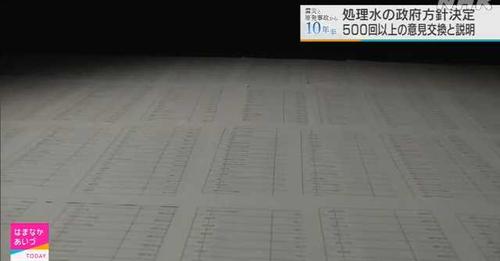
The release of treated water into the ocean was explained 532 times in advance…
A request for information disclosure made by NHK has revealed that the government claimed to have held a total of 532 “opinion exchanges” and “briefing sessions” regarding the increasing amount of treated water at the TEPCO’s Fukushima Daiichi Nuclear Power Plant in the year leading up to April 2012, when it decided to release the water into the ocean.
On the other hand, even after the decision was made, there are still strong opposition to the release of radioactive materials from fishermen in the prefecture, raising questions about the nature of the discussions.
The government says that the decision to release treated water from the Fukushima Daiichi Nuclear Power Plant into the sea was made after listening to the opinions of related parties, based on the report of a national sub-committee which said that “release into the sea or the atmosphere is realistic.
However, even after the decision was made, a series of resolutions and opinion letters opposing the policy were issued by fishery groups and parliamentary assemblies in Fukushima Prefecture, claiming that there was not enough discussion.
Therefore, NHK requested the Ministry of Economy, Trade and Industry (METI), which is in charge of the policy, to disclose the documents showing what discussions the government had with the relevant parties before the decision was made.
In response, the Ministry of Economy, Trade and Industry (METI) disclosed a list of the subjects and dates of “opinion exchanges” and “briefing sessions” held between January 31, 2011, when the national subcommittee compiled its draft report, and April 13, 2011, when the government decided on the policy of oceanic release.
According to the list, a total of 532 “opinion exchanges” and “briefing sessions” were held in and outside of Fukushima Prefecture over a period of more than one year and two months.
The average number of times per day is two per point, with the highest number of times per day being 14.
The breakdown of the targets, in descending order of frequency, is as follows: heads of local governments in the prefecture 83 times, fishery-related organizations 74 times, and local government councils 72 times.
On the other hand, consumers were interviewed 18 times, the tourism industry 12 times, the head of a local government outside the prefecture 23 times, and the assembly of a local government outside the prefecture 15 times.
Masahiro Matsuura, a professor at Meiji University’s Graduate School of Public Policy who is an expert on science and technology policy and consensus building, said, “It is possible that there was a lack of dialogue in the sense of gaining understanding,” and added, “Having a meeting is not necessarily the same as dialogue, and if it is a one-way explanation meeting, it is no different from an online video or television. Dialogue is only possible when the participating fishermen and the general public speak out and the explanation is given in the form of a catch-all game. Even if an opinion is received, if the bureaucrat without authority continues to say, ‘We will take it back to Tokyo for consideration,’ it is not dialogue. If the prime minister, ministers, and other people who can make substantive decisions came to the meeting and answered specific questions on the spot, it might not have been necessary to hold the meeting as many times. It will be important to evaluate the state of the debate over treated water over time,” he said.
Fishermen: “There was no discussion.
The government has held more than 70 “opinion exchanges” and “briefing sessions” with fishermen, but after the policy was decided, fishermen in Fukushima Prefecture said that the decision was unilateral.
In July 2020, the Soma Futaba Fishermen’s Cooperative Association in the northern part of the prefecture held a total of four briefing sessions for fishermen belonging to the cooperative, divided into four districts.
However, according to the fishermen who participated in the briefings, most of the briefings were about the report compiled by the subcommittee, and they rarely exchanged opinions with each other about the disposal method or reputational measures.
Mr. Masahiro Kikuchi, the vice president of the association, said, “At the time of the briefing, we hadn’t decided whether to release the waste into the ocean or into the air, and there were no concrete explanations about measures against harmful rumors. There were no further meetings, and I feel that the decision was made unilaterally. I think that if they had held monthly meetings with young fishermen, including those who will be responsible for the future of the fishery, and listened to their opinions, they would have come up with an answer that would have satisfied some, if not all, of them.
Co-op: “Not enough explanation to consumers”
More than 70 “opinion exchanges” and “briefing sessions” were held for fishermen, heads of local governments and assemblies in the prefecture, but only 18 briefings were given to consumers.
At Fukushima Prefecture’s Co-op Fukushima, where about 200,000 households in the prefecture are members, no briefing was held by the government before the policy was decided.
Shunkichi Nonaka, the general manager of the co-op, said that he feels that there was an overwhelming lack of opportunities to hear the opinions of consumers, some of whom are opposed to the release of radioactive materials into the ocean due to safety concerns.
Mr. Nonaka said, “All citizens are consumers, and I thought it was necessary to give a broad explanation to consumers, but I think the government and TEPCO did not give enough consideration to this. I think the government and TEPCO should have consulted with us before deciding on the policy of releasing radioactive materials into the ocean and asked us what we thought about it.
The government official said, “We discussed it to a great extent.
Regarding the fact that the government and related parties held more than 500 opinion exchanges and briefing sessions over a period of about one year and two months, Mr. Masato Kino, Counselor of the Agency for Natural Resources and Energy of the Ministry of Economy, Trade and Industry, said, “We have been visiting related parties who are likely to be affected by the rumors due to the disposal of the treated water, and our staff members have been working together to make a list of them. We believe that we have exchanged opinions with all kinds of people to a considerable extent. There were people who opposed the release of treated water into the ocean, but I believe we have incorporated the opinions we have heard into our decision-making process.
As for the fact that we have not gained the understanding of fishermen and others regarding our policy on the release of radioactive materials, he said, “We are doing our best to prevent rumors. I think we are still at the stage where people don’t feel safe, so our mission is to do our best.
https://www3.nhk.or.jp/lnews/fukushima/20210921/6050015878.html?fbclid=IwAR22Y7RVJ8eTn7_tON6pDmtV6PdnMZU1BAULMXLY-JseTew3 glnFBLeKhvs
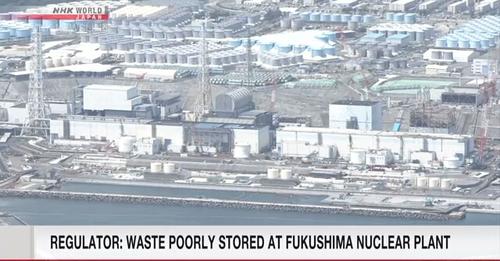
Regulators: Waste stored poorly at Fukushima plant
Sept. 18, 2021
Japanese nuclear regulators have urged the operator of the disabled Fukushima Daiichi nuclear plant to improve the way it manages accumulating waste at the complex.
Most of the radioactive waste generated through decommissioning of the plant is being stored at designated outdoor depots.
But wreckage and other clutter that cannot be quickly transported there is instead being kept at interim sites for up to one year in principle.
The Nuclear Regulation Authority says the volume of waste at the interim sites reached 60,000 cubic meters in July, surging more than eight-fold from the figure in January of last year.
It also says the waste has been kept longer than one year in some sites, and not enough patrols are being conducted.
The plant’s operator, Tokyo Electric Power Company, says it could not send the waste to the outdoor depots while work was underway to rearrange containers there. It adds that the containers had to be inspected following leaks of radioactive substances.
The company says it will review the temporary storage arrangements and manage waste properly.
The total volume of radioactive waste at the plant reached about 480,000 cubic meters as of March of this year, 10 years after the triple nuclear meltdown accident.
Japan’s Plan To Discharge Nuclear Waste Into The Pacific Worries Island Nations
The effects and memory of U.S. nuclear testing endures in the Pacific. “It is a level up from urgent for us,” one Pacific leader says.
Pacific nations and territories aren’t yet convinced their people and waters will be safe when Japan discharges processed nuclear wastewater into the Pacific, as it recently announced it plans to do.
Despite briefings from Japan, and its cooperation with the International Atomic Energy Agency, the Pacific community has yet to fully understand what the ramifications of dropping 1 million tons of wastewater off Japan’s coast might be.
“Currently we are not satisfied there will be no harm to our Blue Pacific,” said Henry Puna, secretary general of the Pacific Islands Forum Secretariat, noting that even basic concerns had not yet been addressed.
Japan triggered immediate and strong opposition when it announced the plan in April, initially from neighboring nations South Korea and China, though countries and territories across the Pacific continue to express their dissatisfaction with Japan’s engagement with them thus far.
The wastewater, which contains debris from the Fukushima Daiichi power station destroyed during the 2011 Tohoku earthquake and tsunami, has been treated and many scientists believe the technology is safe.
But for countries in the Pacific, the nuclear legacy still endures and many have their reservations.
The Pacific Islands Forum Secretariat, an intergovernmental organization comprising 17 Pacific nations and territories, noted the serious concerns over Japan’s plans in a July meeting and, following a briefing on Tuesday, remains unconvinced.
Puna said one issue was the highly technical nature of the briefings. The former Cook Islands prime minister acknowledged Japan was “as committed as we are to having frank and open dialogue,” but the planned action is less than 18 months away.
Puna said a major issue was that the Pacific nations lacked the expertise to interpret the highly technical plans.
“I just want to note that, for us, the issue is very urgent but also requires very careful thinking,” said Puna. “When you have a major development partner explaining that the only way for it to get rid of more than a million cubic tons of treated, but still contaminated water, is to dump it into an ocean, where we share the same tides, current, and fish, it is a level up from urgent for us.”
An IAEA review of the waste disposal, agreed to on Sept. 9, would focus on safety, regulation and environmental monitoring, and a team of IAEA experts would review the process in a December visit. PIFs concerns have not been allayed, however, so it was in the process of bringing on three independent scientists to assess the plans.
“This is an area of the planet where people see the ocean as an extension of themselves,” Puna added.
The Republic of the Marshall Islands was subjected to 67 nuclear bombings between 1948 and 1956, and the legacy of nuclear testing endures. Islands were scarred or fully vaporized and people were forced from their homes. Across the Pacific, France and the United Kingdom also tested their nuclear prowess around the same time. The fallout has had generational effects.
A recently released study, conducted as part of ongoing collaboration between IAEA and RMI, found that Bikini Atoll, where the U.S. conducted the Castle Bravo test (a 15 megaton thermonuclear bomb) in 1954, is slowly healing from the test though radioactive material remains.
Given RMI’s nuclear history — even with IAEA’s involvement — Marshallese have maintained a “healthy distrust” of governments and agencies, said Giff Johnson, editor of The Marshall Islands Journal.
He said although Japan and Micronesian nations share a long history, and have enjoyed a healthy diplomatic relationship in more recent times, nuclear issues remain contentious. “That in itself is a big hurdle to get over,” Johnson said. “It makes it complicated, diplomatically.”
This is not the first time Japan has riled Pacific nations with nuclear waste. In 1979, Japanese plans to dump 10,000 drums of nuclear waste in the Marianas Trench were met with virulent opposition from political leaders and protests from citizens.
Given the multi-generational legacy of nuclear testing and waste disposal, young activists are also voicing their concerns. Youngsolwara Pacific, a regional collective of young activists, has condemned the Japanese government’s plans and lack of consultation.
According to Talei Luscia Mangioni, a Pasifika researcher at the Australian National University and Youngsolwara Pacific member, Japan’s nuclear behavior seemed to ignore the region’s ongoing Nuclear Free and Independent Pacific movement and the history of colonizers dumping nuclear waste and testing nuclear weapons.
“Pacific youth acknowledge that this is an act of transboundary harm and is part of a great legacy of where nuclear powers have treated the Pacific as a sacrifice zone,” said Mangioni. “I think that Japan needs to properly consult and engage with Pacific people and their own Japanese civil society instead of making an announcement that they are going to do this, given their history.”
Mangioni was similarly concerned by the proximity of Micronesian nations to the proposed dumping and emphasized that they “have been the vanguard for a lot of nuclear resistance.”
PIFS Secretary General Puna, however, said Micronesia remained part of the forum “family” and said it had endorsed Rhea Moss-Christian, chair of the Marshall Islands National Nuclear Commission, as a representative of its interests on the IAEA safety task force.
Moss-Christian said she was unsure if her involvement with IAEA reassured the Marshallese, and her organization had not yet begun its outreach program in RMI.
Though Japan’s government had been working hard to assure the region’s concerns, whether its plans were robust enough remained to be seen and would be addressed by the task force.
“However, it is still difficult to accept that our backyard should be a dumping ground for our neighbor’s toxic waste, no matter how minimal the risk,” she said.
Pacific Forum Members Hold Third Briefing With Japan Regarding Fukushima Treated Nuclear Wastewater
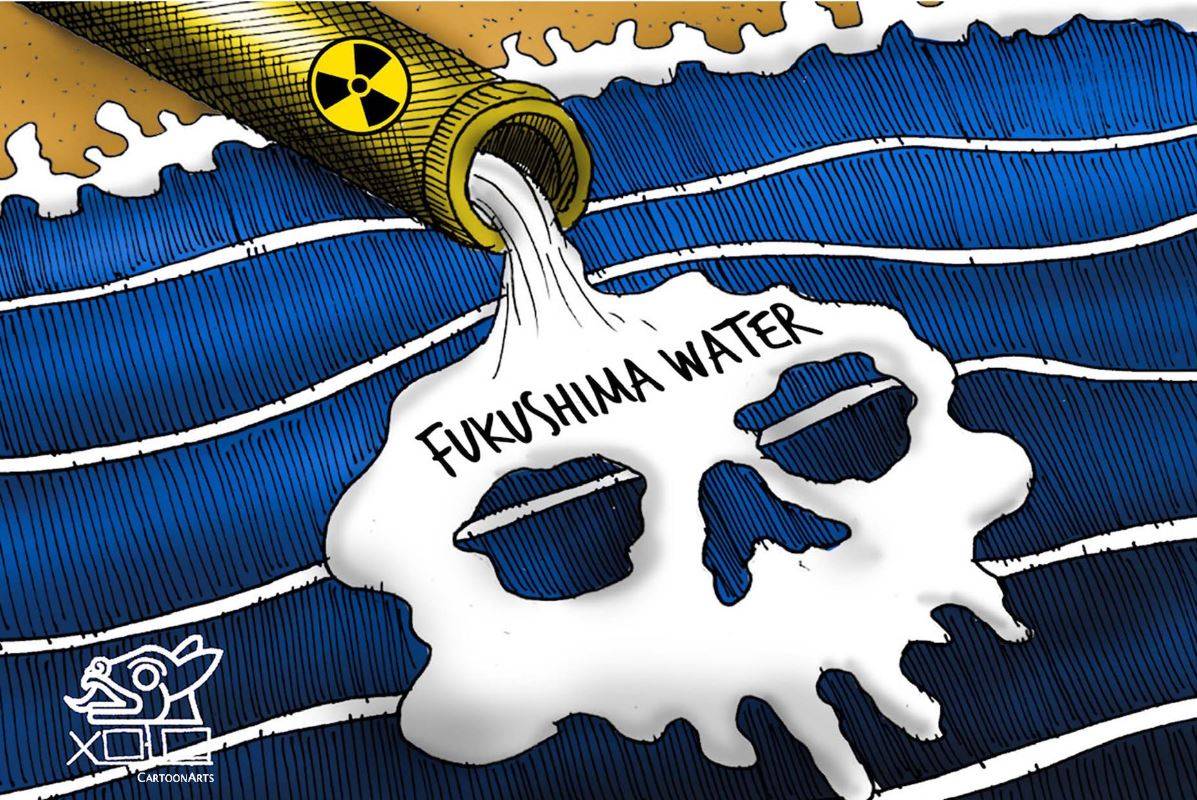
Thursday, 16 September 2021, 6:01 am
Press Release: Pacific Islands Forum Secretariat
Wed 15th September 2021—Pacific nations continue to raise questions and concerns in closed briefing sessions around plans by Japan to discharge over a million tonnes of treated water from the Fukushima Daiichi Nuclear Power Plant into the Pacific Ocean.
The Government of Japan committed to ongoing dialogue with Forum Members as a priority follow up to the PALM9 Summit in July. This followed Japan’s announcement in April of plans to begin discharge in 2023, for a period of up to 40 years. The announcement drew strong global response, including from the Forum Chair and Leaders.
In his opening comments at the third briefing on Tuesday afternoon, Secretary General of the Pacific Islands Forum Henry Puna noted the issues require “open and frank consultation” along with sustained dialogue at the political and technical level.
Japan officials presented a status update on the ALPS (Advanced Liquid Processing System) Treated Water, interim measures regarding the planned discharge, and outcomes of the latest International Atomic Energy Agency (IAEA) visit to Fukushima.
While appreciative of the information being shared by Japan, Secretary General Puna reiterated the region’s unequivocal need for information as being key to safeguard the Blue Pacific as a nuclear-free zone. “I appeal to the Government of Japan to continue to share the relevant information in its totality, and within agreed timelines.”
“Importantly for us in the Blue Pacific, our fears really lie in the transboundary nature of the impacts. We require nothing less than full and complete disclosure of all information and evidence to enable us to fully understand the nature and extent of the impact, and to enable us to make a comprehensive and unbiased assessment of the impacts of the proposed ALPS water discharge.”
As reiterated by Forum Foreign Ministers on 27 July, the region is actively pursuing efforts to advance Forum Leaders’ commitments to international consultation, international law, and independent expertise to provide guidance and verifiable scientific assessments. To accelerate efforts, the Forum will engage independent experts to support the region’s efforts over the next months.
Thanking the Government of Japan, Secretary General Puna said he is hopeful there will be ways to address Pacific concerns to reach “solutions that are based on science, and consistent with legal and moral obligations.”
Lethal radiation levels detected in Fukushima nuke plant reactor lid

The operator of the crippled Fukushima No. 1 nuclear plant could be forced to reconsider the plant’s decommissioning process after lethal radiation levels equivalent to those of melted nuclear fuel were detected near one of the lids covering a reactor.
The Nuclear Regulation Authority said Sept. 14 that a radiation reading near the surface of the lid of the No. 2 reactor’s containment vessel was 1.2 sieverts per hour, higher than the level previously assumed.
The discovery came on Sept. 9 during a study by the NRA and Tokyo Electric Power Co., the operator of the plant.
TEPCO plans to insert a robotic arm into the No. 2 reactor’s containment vessel from its side in a trial planned for the second half of 2022 to retrieve pieces of melted nuclear fuel.
“We will consider what we can do during the trial on the basis of the detection of the concentration of contamination” in the upper area of the containment vessel, a TEPCO official said.
The round concrete lid, called the shield plug, is 12 meters in diameter and about 60 centimeters thick.
The shield plug consists of three lids placed on top of each other to block extremely high radiation emanating from the reactor core.
Each lid weighs 150 tons.
When operators work on the decommissioning, the shield plug will be removed to allow for the entry into the containment vessel.
The NRA said a huge amount of radioactive cesium that was released during the meltdown of the No. 2 reactor in March 2011 remained between the uppermost lid and middle lid.
In the Sept. 9 study, workers bored two holes measuring 7 cm deep each on the surface of the uppermost lid to measure radiation doses there by deploying remotely controlled robots.
One radiation reading was 1.2 sieverts per hour at a location 4 cm down from the surface in a hole near the center of the lid.

TEPCO not informing the Regulation Agency for 2 years about the 25 damaged filters at Fukushima Daiichi NPP

After finishing my stage (*Mako and her husband Ken are comedians) , we attended a Monitoring and Evaluation meeting of the Nuclear Regulatory Agency and a press conference of TEPCO today.
Various terrible things came out at the Regulatory Agency meeting. As for the holes of ALPS high-performance filters, although no photos came out at the press conference with TEPCO no matter how much I requested, I found them in the document from the Regulatory Agency. https://www.nsr.go.jp/data/000364892.pdf
It was much worse than I had imagined. TEPCO said they didn’t notice that there were such holes for these two years.
They replaced the 25 filters with holes (*out of 25 filters, means all filters had holes) in 2019.(This incident wasn’t published, nor reported to the Regulatory Agency.)
In 2021, 24 out of 25 filters have holes.The photos are here.These filters are not for ALPS’s contaminated water treatment, but the ones for the treatment of gaseous waste generated in the process.
The terrible thing is, until being asked at the press conference on August 31st, TEPCO had not explained the total damage of the filters two years ago.
When I asked, I got the answer that 25 out of 25 filters were damaged two years ago. Why didn’t TEPCO explain it voluntarily? That’s quite important information, isn’t it?
I wanted to know how TEPCO would explain it at today’s Regulatory Agency meeting and what kind of discussion would develop.
TEPCO reported only this year’s filter damages and didn’t explain the damage of all filters two years ago to the Regulatory Agency!
TEPCO finally gave an oral explanation when they were asked by chance, “What was the situation at the time of the last inspection?” by Mr. Yasui, Inspector General of the Regulatory Agency.
The Regulatory Agency got to know for the first time today about the damage of all 25 high-performance filters two years ago (and this time the 24 of 25 filters were damaged again). It was natural that the members of the Regulatory Agency got angry about the fact and the discussion about a completely damaged high-performance filter did not proceed at all …! !!
During unofficial Q and A session at the end of the meeting, we shared various information with Mr. Takeuchi, the director of the Regulatory Agency.
Fukushima plant failed to probe cause of faulty filters

TOKYO (AP) — Officials at Japan’s wrecked Fukushima nuclear power plant have acknowledged they neglected to investigate the cause of faulty exhaust filters that are key to preventing radioactive pollution, after being forced to replace them twice.
Representatives of the operator, Tokyo Electric Power Company Holdings, made the revelation Monday during a regular review of the Fukushima Daiichi plant at a meeting with Japanese regulatory authorities. Three reactors at the plant melted following a massive earthquake and tsunami in 2011.
The filters are designed to prevent particles from escaping into the air from a contaminated water treatment system — called Advanced Liquid Processing System — that removes selected radioactive isotopes in the water to below legal limits.
“At the core of this problem is TEPCO’s attitude,” a Nuclear Regulation Authority commissioner, Nobuhiko Ban, said at the meeting.
TEPCO has been repeatedly criticized for coverups and delayed disclosures of problems at the plant. In February, it said two seismometers at one reactor had remained broken since last year and failed to collect data during a powerful earthquake.
Company officials said that 24 out of 25 filters attached to the water treatment equipment had been found damaged last month, after an alarm went off as workers were moving sludge from the unit to a container, temporarily suspending the water treatment. The operation partially resumed last week after the filters were replaced.
TEPCO said it had detected similar damage in all of the filters two years ago, but never investigated the cause of the problem and did not take any preventive steps after replacing the filters.
Another regulatory commissioner, Satoru Tanaka, said at the meeting that the utility company should have responded to the problem more quickly to minimize the risk of possible radiation leakage into the environment.
TEPCO officials said dust monitors indicated no radiation leaks to the outside or exposure to plant workers inside the water treatment facility.
Akira Ono, head of TEPCO’s decommissioning unit, said he regretted the utility’s failure to address the problem earlier. He promised to improve safety management.
Japanese officials are working with the International Atomic Energy Agency to prepare to discharge into the ocean the wrecked plant’s cooling water, treated so its radioactivity levels are below legal limits. Slated to start in spring 2023, the controversial plan is fiercely opposed by Fukushima’s fishing community, as well as local residents and nearby countries.
Fully decommissioning the nuclear plant is expected to take decades, experts say.
Pharyngeal cancer recognized as work-related injury for two convergence workers after Fukushima Daiichi nuclear accident
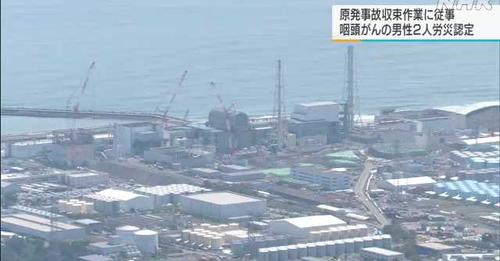
September 09, 2011
The Ministry of Health, Labor and Welfare (MHLW) has recognized the causal relationship between the cancer and the work, and certified it as a work-related accident.
This is the first time that pharyngeal cancer has been recognized as an occupational injury related to the convergence work of the nuclear power plant accident.
The two victims were a man in his 60s who worked for TEPCO, and a man who worked for a subcontractor who developed the disease in his 40s and later died.
According to the Ministry of Health, Labor and Welfare, after the accident at the Fukushima No. 1 nuclear power plant in March 2011, the two men worked on the premises of the plant, removing debris and measuring radiation levels.
However, in December 2018 and January of last year, they both developed pharyngeal cancer and applied for workers’ compensation.
The two men were exposed to about 85 millisieverts and 44 millisieverts, respectively, during their work at the plant.
A panel of experts from the Ministry of Health, Labor and Welfare recognized a causal relationship between the two workers’ radiation doses and their cancer, as their radiation doses exceeded 100 millisieverts, which is the standard for certification.
This is the first time that pharyngeal cancer has been recognized as an occupational injury related to the convergence work of the nuclear power plant accident.
Since the accident at the Fukushima Daiichi Nuclear Power Plant, six workers have been recognized as suffering from leukemia, thyroid cancer, and lung cancer.
TEPCO plan to discharge water relies on winning local trust

September 7, 2021
More than four months have passed since the government gave the green light to plans for Tokyo Electric Power Co. to release treated radioactive water from the crippled Fukushima No. 1 nuclear plant into the Pacific Ocean.
TEPCO, the plant’s operator, recently announced it would construct a tunnel to discharge the water about 1 kilometer offshore. At the same time, the government unveiled its strategy for responding to concerns the discharge could cause irreparable reputational damage to local businesses, the fishing industry, in particular.
Ever since the nuclear crisis triggered by the March 2011 earthquake and tsunami disaster, the utility has been pumping tons of water to cool melted nuclear fuel at the wrecked facility. Rain and ground water have added to the deluge with the result that the volume of radiation-contaminated water has continued to grow rapidly.
The water is stored in more than 1,000 tanks installed within the compound after being treated with special equipment to eliminate most of the highly radioactive materials. TEPCO said the tanks will reach capacity around spring 2023. The plant operator then intends to start releasing the treated water after first diluting it with seawater.
Under TEPCO’s plan, an undersea tunnel will be built to discharge the treated water. It said the tunnel will ensure that the treated water does not re-enter the on-site discharge equipment after it has been diluted.
This will be a gigantic construction project that will start with a geological survey of the seabed, something that must be approved by the Nuclear Regulation Authority.
TEPCO pledged to measure the concentration of tritium, a radioactive isotope of hydrogen produced as a byproduct in nuclear reactors which cannot be removed with filtering equipment, before the water is released into the ocean. This is a welcome effort to allay concerns among local businesses and communities, especially the fisheries industry.
The company, whose reputation has further been tarnished by a series of embarrassing revelations about security lapses, including those at the Kashiwazaki-Kariwa nuclear plant in Niigata Prefecture, needs to realize it has an obligation to take all possible steps to ensure the operation is conducted safely and be willing to disclose all related information and options.
No matter how cautiously the problem of tritium-tainted water is handled, the plan to release treated contaminated water into the sea is bound to trigger negative publicity and deter people from eating fish caught in local waters.
To deal with this challenge, the government decided to establish a fund to buy catches that can be put in frozen storage. The fund is framed as an emergency relief measure to assist fishermen and fisheries businesses expecting to face sharp drops in sales. It is a well-conceived proposal to help those affected by the nuclear disaster regain their livelihoods, in addition to providing cash to compensate for their economic losses.
But not all marine products are fit for freezing. Frozen fish tend to fetch lower prices compared with when they are sold fresh. How to secure viable operations of the proposed fund remains a key question, but the government has only said that details will be worked out by the end of the year.
Fisheries businesses may not be only targets of rumors that require compensation payouts. To ease anxiety among local businesses, TEPCO said victims alone will not be forced to bear the burden of proof. The company says it will assess economic losses by comparing prices and sales after it starts releasing the contaminated water into the sea with corresponding estimates for before the operation gets under way.
Still, local businesses remain concerned about whether they will receive appropriate compensation from the utility, which rejected out-of-court settlements with a number of plaintiffs in damages lawsuits proposed by the government’s Nuclear Damage Compensation Dispute Resolution Center. The government, which is effectively the utility’s largest shareholder, has a duty to supervise the company to ensure it offers compensation swiftly and appropriately to any new parties that suffer losses as a result of the water discharge operation.
TEPCO hopes to begin discharging the treated water in spring 2023. It has pledged not to “undertake any disposal measure without gaining the understanding of stakeholders.”
The company will not be able to move forward with the plan unless it first wins the trust of the local communities through sincere and honest talks.
Experts say that the government’s measures against harmful rumors are “an extension of what we’ve been doing for 10 years.
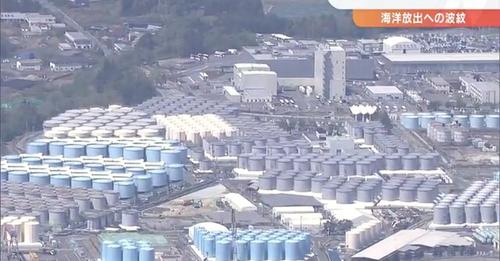
We have been reporting in this series about the ripple effect of the release of tritiated water into the ocean.
Many people concerned about the release of tritium into the sea are concerned about the reputational damage.
On the 24th, the government presented an interim summary of the immediate measures to deal with the reputational damage.
First of all, as a measure to prevent reputational damage, fish should be raised in treated water and information should be disseminated in an easy-to-understand manner.
The measures include monitoring by international organizations and ensuring transparency.
In the event of reputational damage, a new fund will be set up to temporarily purchase frozen marine products, and sufficient compensation will be provided to match the actual damage.
Looking at it this way, it seems to be a continuation of the previous measures. We examined whether these measures are really effective.
Chief Cabinet Secretary Katsunobu Kato
“We will create an environment in which we can overcome rumors and continue our business with peace of mind, even if rumors should arise.
A meeting of relevant ministers on March 24.
The government has put together a list of immediate measures to deal with the reputational damage caused by the release of treated water.
The government and Tokyo Electric Power Company (TEPCO) plan to release treated water from the Fukushima Daiichi Nuclear Power Plant into the sea by the spring of the following year.
One of the fishermen in the prefecture commented on the measures taken.
“One of the fishermen in the prefecture said, “The decision was made without any discussion or explanation.
“One of the fishermen in the prefecture severely criticized the measures, saying, “We can’t accept it and this way of proceeding is unacceptable.
The prefectural fishermen’s federation also said, “We haven’t received an explanation from the government yet, and we want to wait for that before considering our response.
There is a strong opposition to the release of radioactive materials both inside and outside of the prefecture.
“They have not yet fulfilled their promise not to release the radioactive materials without the understanding of the people concerned.
Professor Ryota Koyama of Fukushima University, who has studied reputational damage in the prefecture and served as a member of the government’s subcommittee, points out that the latest measures to curb reputational damage are “almost the same” as the previous measures.
Professor Ryota Koyama, School of Food and Agricultural Sciences, Fukushima University
“I’m concerned that if this is the case, it’s just an extension of what we’ve been doing for the past 10 years, and if we say we’re going to release the pollutants two years from now under the same conditions, the problem will get bigger.
Another problem is the assumption that reputational rumors will occur, according to Professor Koyama.
Professor Ryota Koyama, School of Food and Agricultural Sciences, Fukushima University
“If we assume that harmful rumors will occur, then we cannot agree to that, and I think the whole premise is that we should not create a situation two years from now where the price of (marine products) falls to the point where we have to buy them, or where trading is suspended.
He also said that we need to analyze the current situation and rethink what we should do to prevent harmful rumors.
Professor Ryota Koyama, School of Food and Agricultural Sciences, Fukushima University
Professor Ryota Koyama of Fukushima University’s Department of Food and Agricultural Sciences said, “Consumers and distributors in Tokyo do not have a good understanding of the situation. I would like to see a process of analyzing this lack of progress and then formulating countermeasures based on the current situation.
TEPCO to build new 1km long undersea tunnel to release Fukushima Daiichi radioactive water offshore
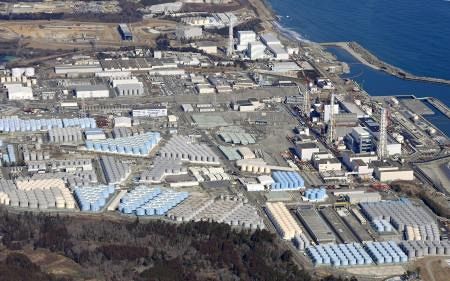
On the 24th, it was learned through interviews with officials that Tokyo Electric Power Company (TEPCO) has decided to build a new submarine tunnel about one kilometer long, run pipes through it, and release the treated water from the Fukushima Daiichi Nuclear Power Plant offshore. The radioactive substance tritium contained in the treated water will be diluted to below the standard value, but by releasing the water offshore, the company hopes to further dilute it and spread it, thereby curbing the reputational damage that the local people are concerned about.
On the same day, the government held a meeting of ministers concerned with the disposal of the treated water. If the release of the water into the ocean causes damage such as a decrease in sales or prices of marine products, the government will purchase the water at its own expense to support the fishermen, and is preparing the environment for the release. On the other hand, there is a deep-rooted opposition from the local community and fishermen, and there are many uncertainties about the future outlook.
1 This Month

of the week – Shut Down Drone Warfare!


Tell the Ukrainian Government to Drop Prosecution of Peace Activist Yurii Sheliazhenko

Petition to revoke the licensing of the Near Surface Nuclear Disposal Facility (NSDF) at Chalk River. https://www.ourcommons.ca/petitions/en/Petition/Details?Petition=e-7247
To see nuclear-related stories in greater depth and intensity – go to https://nuclearinformation.wordpress.com
-
Archives
- April 2026 (34)
- March 2026 (251)
- February 2026 (268)
- January 2026 (308)
- December 2025 (358)
- November 2025 (359)
- October 2025 (376)
- September 2025 (257)
- August 2025 (319)
- July 2025 (230)
- June 2025 (348)
- May 2025 (261)
-
Categories
- 1
- 1 NUCLEAR ISSUES
- business and costs
- climate change
- culture and arts
- ENERGY
- environment
- health
- history
- indigenous issues
- Legal
- marketing of nuclear
- media
- opposition to nuclear
- PERSONAL STORIES
- politics
- politics international
- Religion and ethics
- safety
- secrets,lies and civil liberties
- spinbuster
- technology
- Uranium
- wastes
- weapons and war
- Women
- 2 WORLD
- ACTION
- AFRICA
- Atrocities
- AUSTRALIA
- Christina's notes
- Christina's themes
- culture and arts
- Events
- Fuk 2022
- Fuk 2023
- Fukushima 2017
- Fukushima 2018
- fukushima 2019
- Fukushima 2020
- Fukushima 2021
- general
- global warming
- Humour (God we need it)
- Nuclear
- RARE EARTHS
- Reference
- resources – print
- Resources -audiovicual
- Weekly Newsletter
- World
- World Nuclear
- YouTube
-
RSS
Entries RSS
Comments RSS
 nuclear-news