4 former executives blamed for Fukushima nuclear disaster and ordered to pay $97 billion to shareholders

July 14, 2022
Four former heads of Japanese utility Tokyo Electric Power Co. have been ordered to pay 13.32 trillion yen ($97 billion) for the damages caused by the Mar. 11, 2011, Fukushima nuclear power plant meltdown, as the country continues to struggle to deal with the aftermath of the disaster.
In the first case to lead to a verdict against TEPCO executives, presiding judge Yoshihide Asakura found that the leaders of the company at the time had failed to properly prepare for a tsunami-related accident.
The civil lawsuit, brought on by 48 TEPCO shareholders, claimed the three reactor meltdowns could have been avoided if measures had been taken to prevent flooding in the plant’s main buildings and critical equipment rooms.
The eye-popping $97 billion verdict is the largest ever awarded by a court for a civil lawsuit, according to the Japan Times.
11 years on
The aftermath of the nuclear disaster can still be felt in Japan and the rest of the world more than 11 years later. Scientists continue working to decommission and decontaminate the plant, which still has more than 1.24 million tonnes of water contaminated with radioactivity on-site. TEPCO has recently been campaigning to dump the water into the surrounding ocean—a plan met with pushback from environmentalists and the local fishing industry.
Many residents are also still not able to return to their homes near the site. Of the 154,000 people who were evacuated after the nuclear meltdown, 37,000 were still unable to return home due to the risk of radiation as of 2021.
A spokesperson for TEPCO told Fortune, “We deeply apologize for the immense burden and deep concern the accident at the Fukushima Daiichi Nuclear Power Station of TEPCO Holdings, Inc. is causing local residents and society at large.”
The spokesperson declined to comment on the litigation against TEPCO.
The lawsuit
The civil lawsuit was initially filed against five former TEPCO officials—including former chair Tsunehisa Katsumata and former president Masataka Shimizu—and centered on whether senior TEPCO management could have predicted a serious nuclear accident hitting the facility after a powerful tsunami. The court found one of the five executives not responsible in the civil suit: Akio Komori, a former managing executive officer and director of the Fukushima plant.
The plaintiffs charged the TEPCO executives with ignoring recommendations to take stronger tsunami protection measures and initially sought 22 trillion yen ($158 billion) in compensation to completely neutralize the site. The plaintiffs sought 8 trillion yen to decommission the plant completely, another 6 trillion to decontaminate the site and build interim nuclear waste storage, and 8 trillion for victim compensation.
In the case, the executives argued that the data presented to them in a long-term government assessment of possible tsunami damage published in 2002 was unreliable, and they could not have foreseen the massive tsunami that triggered the disaster.
The Tōhoku earthquake and tsunami ended up being the most powerful earthquake ever recorded in Japan and the fourth most powerful in the world, and would eventually claim 19,747 deaths, with 2,556 people still missing as of 2021.
Even if it was possible to predict the damage, the defendants argued, they didn’t have the time to take the needed countermeasures.
In the end, the judge ruled in favor of the prosecution, saying the company’s countermeasures against the tsunami “fundamentally lacked safety awareness and a sense of responsibility.” According to Kyodo News Agency, the defendants will be expected to pay as much as their assets allow.
Criminal complaint
This is not the first lawsuit brought against the TEPCO executives. The same prosecutors filed a criminal lawsuit against three of the five defendants—Katsumata, former vice president Ichiro Takekuro, and vice president Sakae Muto—in the Tokyo District Court of criminal responsibility. The prosecutors at the time sought a five-year prison term for each executive.
The three executives were found not guilty of professional negligence, as they could not have foreseen the huge tsunami, and cleared by the court in the 2019 ruling. Prosecutors have since appealed the decision; a ruling is expected in early 2023.
Fukushima nuclear disaster: ex-bosses of owner Tepco ordered to pay ¥13tn
Firm’s president at time of disaster among four defendants found liable for $95 billion in damage by Tokyo court

A court in Japan has ordered former executives of Tokyo Electric Power (Tepco) to pay ¥13tn (£80bn) in damages for failing to prevent a triple meltdown at the Fukushima Daiichi nuclear power plant in 2011.
The ruling by Tokyo district court centred on whether senior Tepco management could have predicted a serious nuclear accident striking the facility after a powerful tsunami.
Four defendants, including Tepco’s president at the time of the disaster, Masataka Shimizu, were ordered to pay the sum, while a fifth was not found liable for damages, according to the Kyodo news agency.
The plant in Fukushima, 150 miles north of Tokyo, experienced meltdowns in three of its six reactors after it was struck by a tsunami on 11 March 2011, flooding the backup generators.
The tsunami, which was triggered by a magnitude-9 earthquake, killed more than 18,000 people along Japan’s north-east coast.
The meltdowns at Fukushima, the world’s worst nuclear disaster since Chornobyl 25 years earlier, caused massive radiation leaks and forced the evacuation of more than 150,000 people living nearby – some of who have only recently been given permission to return to their homes.
The lawsuit, which was filed in 2012 by 48 Tepco shareholders, is the first to find company executives liable for damages connected to the Fukushima disaster, which shook Japan’s faith in nuclear energy and resulted in widespread closures of atomic power plants.
The plaintiffs had sought a record ¥22tn in damages. The executives found liable are unlikely to have the capacity to pay the full amount, according to media reports, but will be expected to pay as much as their assets allow.
Tepco did not comment on the ruling, saying it would not respond to individual lawsuits, according to Kyodo.
The court said the company’s countermeasures against tsunami “fundamentally lacked safety awareness and a sense of responsibility”.
Tepco has argued it was powerless to take precautions against a tsunami of the size that struck in March 2011, and that it had done everything possible to protect the plant. But an internal company document revealed in 2015 that it had been aware of the need to improve the facility’s defences against tsunami more than two years before the disaster, but had failed to take action.
Plaintiffs also cited a government report that showed Tepco had predicted in June 2008 that the Fukushima plant could be hit by tsunami waves of up to 15.7 metres in height after a major offshore earthquake.
The court said the government’s assessment had been reliable enough to oblige Tepco to take preventive measures.
Former Tepco executives ordered to pay $95 billion in damages over Fukushima nuclear disaster
The ruling, in a civil case brought by Tepco shareholders, marks the first time a court has found former executives responsible for the nuclear disaster, local media reports said.

The Tokyo district court on Wednesday ordered four former executives of Tokyo Electric Power Company (Tepco) to pay 13 trillion yen ($95 billion) in damages to the operator of the wrecked Fukushima Dai-ichi nuclear power plant, national broadcaster NHK reported.
The ruling, in a civil case brought by Tepco shareholders, marks the first time a court has found former executives responsible for the nuclear disaster, local media reports said.
The court judged that the executives could have prevented the disaster if they had exercised due care, the reports said.
A Tepco spokesperson declined to comment on the ruling.
“We understand that a ruling on the matter was handed down today, but we will refrain from answering questions on individual court cases,” the spokesperson said.
The ruling marks a departure from a criminal trial ruling in 2019, where the Tokyo district court found three Tepco executives not guilty of professional negligence, judging that they could not have foreseen the huge tsunami that struck the nuclear power plant.
The criminal case has been appealed and the Tokyo high court is expected to rule on the case next year.
The Fukushima Dai-ichi nuclear power disaster, triggered by a tsunami that hit the east coast of Japan in March 2011, was one of the world’s worst and generated massive clean-up, compensation and decommissioning costs for Tepco.
The civil lawsuit, brought by Tepco shareholders in 2012, demanded that five former Tepco executives pay the beleaguered company 22 trillion yen in compensation for ignoring warnings of a possible tsunami.
Ex-TEPCO execs found liable for damages over Fukushima nuclear crisis

July 13, 2022
A Tokyo court on Wednesday ordered former executives of Tokyo Electric Power Company Holdings Inc. to pay the utility some 13 trillion yen ($95 billion) in total damages for failing to prevent the 2011 crisis at the Fukushima Daiichi nuclear plant.
The ruling in favor of shareholders who filed the lawsuit in 2012 is the first to find former TEPCO executives liable for compensation after the nuclear plant in northeastern Japan caused one of the worst nuclear disasters in history triggered by a massive earthquake and tsunami in March 2011.
The Tokyo District Court’s Presiding Judge Yoshihide Asakura said the utility’s countermeasures for the tsunami “fundamentally lacked safety awareness and a sense of responsibility,” ruling that the executives failed to perform their duties.
If tsunami resilience work had been conducted to prevent flooding of main structures, TEPCO could have prevented the disaster, in which power was lost and reactor cooling functions were crippled, causing reactor meltdowns, according to the ruling.
Among five defendants — former Chairman Tsunehisa Katsumata, former vice presidents Sakae Muto and Ichiro Takekuro, former President Masataka Shimizu and former Managing Director Akio Komori — the court found all but Komori liable to pay the damages.
“It’s a historic verdict that deserves lasting praise,” Hiroyuki Kawai, a lawyer representing the shareholders, said in a press conference. “It showed company executives have such a heavy responsibility and could even be held liable for damages if an accident occurs.”
The damages of over 13 trillion yen are likely be the largest ever in a civil lawsuit in Japan, though it would be realistically difficult for the company to collect them from the former executives.
Nearly 50 shareholders had sought a total of around 22 trillion yen ($160 billion) in damages.
TEPCO declined to comment on the ruling, saying it will refrain from responding to matters related to individual lawsuits.
Chief Cabinet Secretary Hirokazu Matsuno reiterated the government’s policy to continue to use nuclear energy despite the disaster, saying, “We will make safety our top priority and make utmost efforts to resolve the Japanese people’s concerns.”
The focal point of the trial was whether the management’s decisions on tsunami countermeasures were appropriate after a TEPCO unit estimated in 2008 that a tsunami of up to 15.7 meters could hit the plant based on the government’s long-term earthquake assessment made public in 2002.
The shareholders said the government’s evaluation was the “best scientific assessment,” but the management postponed taking preventive steps, such as installing a seawall.
The former executives’ lawyers said the assessment lacked reliability and the accident occurred when the management was asking a civil engineering association to study whether the utility should incorporate the evaluation into its countermeasures.
The court judged that the government’s assessment was reliable enough to oblige the company to take measures against tsunami. “It is extremely irrational and unforgivable” to put off a decision to act on the government study, the ruling said.
In a criminal trial in 2019, defendants were acquitted on the grounds they could not foresee a giant tsunami triggering a nuclear disaster.
Yukie Yoshida, 46, who was forced to evacuate her home near the Fukushima Daiichi power plant, said, “My life won’t change even if the damages are paid to TEPCO,” adding, “I just want to go back to my home as soon as possible.”
More than 15,000 people lost their lives after the magnitude-9.0 earthquake and ensuing tsunami caused widespread damage in the country’s northeast and triggered meltdowns at the Fukushima nuclear complex.
Some 38,000 people still remain displaced as of March due mainly to the aftermath of the world’s worst nuclear accident since the 1986 Chernobyl disaster.
There is still a no-go zone near the Fukushima plant where decommissioning work is scheduled to continue until sometime between 2041 and 2051.
Court orders former TEPCO managers to pay damages for Fukushima plant losses

July 13, 2022
A Tokyo court has ruled that former managers of Tokyo Electric Power Company must pay damages to the utility, as demanded by its shareholders.
The shareholders claimed the company incurred massive losses from the 2011 accident at the Fukushima Daiichi nuclear plant.
They include costs for decommissioning the plant’s crippled reactors and compensation for local residents who had to evacuate.
The shareholders demanded 22 trillion yen, or more than 160 billion dollars, from five individuals who held managerial posts.
On Wednesday, the Tokyo District Court ordered four of them to pay a total of 13.3 trillion yen, or about 97 billion dollars.
The trial focused on the reliability of a long-term assessment of possible seismic activities issued by a government panel in 2002, nine years prior to the accident.
The shareholders claimed the assessment was reliable, and that the managers should have done more to safeguard the plant against a huge tsunami that they knew would come.
The former managers, on the other hand, claimed the assessment had low credibility, so they could not foresee damage from a massive tsunami.
They argued that even if they did, they would not have had time to take necessary preventive measures.
The shareholders filed their lawsuit in 2012. In October last year, the presiding judge inspected the plant compound for the first time.
Why was the tsunami countermeasure postponed? TEPCO resisted the NISA’s request for 40 minutes.
July 12, 2022
<The “warning” that was not utilized
On July 13, the Tokyo District Court will issue a ruling on a shareholder lawsuit seeking to hold five former TEPCO executives responsible for the accident at the Fukushima Daiichi Nuclear Power Plant. The possibility of a giant tsunami off the coast of Fukushima Prefecture surfaced nearly 10 years before the accident occurred. Why were tsunami countermeasures continually postponed? Ahead of the verdict, we take a look back at the evidence presented in court. (Keiichi Ozawa)
TEPCO Shareholders’ Suit 48 shareholders are demanding that former TEPCO chairman Tsunehisa Katsumata and five others pay approximately 22 trillion yen in compensation to TEPCO for damages, decommissioning costs, and other losses caused by the former management’s failure to take tsunami countermeasures following the Fukushima Daiichi Nuclear Power Plant accident. The other defendants are former president Masataka Shimizu, former vice president Ichiro Takekuro, former vice president Sakae Muto, and former managing director Akio Komori. Katsumata, Takekuro, and Muto were indicted on charges of manslaughter in connection with the nuclear accident, but the Tokyo District Court ruled in 2007 that they were not guilty. In June, the Supreme Court ruled against the government’s responsibility in a lawsuit against nuclear power plant evacuees and confirmed that TEPCO must pay a total of approximately 1.4 billion yen in compensation to plaintiffs in four lawsuits in Fukushima, Gunma, Chiba, and Ehime.
In July 2002, the government’s Headquarters for Earthquake Research Promotion released a “long-term assessment” of earthquake forecasts, including those for the area off Fukushima Prefecture. The reliability of this long-term assessment is one of the points of contention in the lawsuit.
The long-term assessment is not a finding, but an opinion.
At the oral argument last July, Sakae Mutoh, former vice president of the defendant, stood in front of the witness stand and emphasized that the long-term evaluation is not a finding but an opinion. The former management team claims that the long-term assessment was not reliable enough to determine the tsunami countermeasures, as some experts disagreed with the assessment.
In August 2002, the Nuclear and Industrial Safety Agency of the Ministry of Economy, Trade and Industry (METI) requested TEPCO to estimate the tsunami based on the long-term assessment. However, an e-mail sent by a TEPCO official to the relevant parties states that the company “resisted the request for about 40 minutes.

NISA further instructed TEPCO to investigate how the long-term assessment was prepared, but the person in charge merely sent an e-mail inquiry to Kenji Satake, a member of the promotion headquarters (now director of the Earthquake Research Institute of the University of Tokyo), who was skeptical about the occurrence of a tsunami off Fukushima Prefecture. The NISA did not pursue TEPCO any further.
Later, in December 2004, a tsunami caused by an earthquake off the coast of Sumatra, Indonesia, submerged a nuclear power plant in India. The plaintiffs claimed that they could have learned from this accident, but TEPCO did not take any action.
In September 2006, the “Guidelines for the Examination of Seismic Design” for nuclear power plants were revised to include tsunami countermeasures, and the NISA was assigned to conduct “seismic backchecks. In October of the same year, the NISA gathered together the personnel in charge of the power companies and instructed them to “promptly study tsunami countermeasures and take action.
At the time, the tsunami height expected at the Fukushima Daiichi Nuclear Power Plant was 5.7 meters. The height of the tsunami that the facility could withstand was the same 5.7 meters, making it the plant with the least margin of safety in the nation. Even so, TEPCO did not initiate countermeasures. The Tokyo District Public Prosecutors Office’s report to the head of the NISA’s review team, submitted in the lawsuit, states, “(TEPCO) is really reluctant to incur costs. Frankly, I was angry at the slow response.
In response to such backward-looking attitude on the part of the former management, the plaintiffs said, “If there is a warning with reasonable credibility, we should take measures for the time being. The attitude of wasting time while leaving it unattended is unacceptable.
In 2008, TEPCO took a heavy stance. It sought advice from Fumihiko Imamura, a professor of tsunami engineering at Tohoku University and an expert in civil engineering, and began to study tsunami countermeasures. The issue was also discussed at the “Gozen Conference,” which was attended by the managing board and former TEPCO chairman Tsunehisa Katsumata, among others.
In March of the same year, however, the situation changed when the height of the tsunami was estimated based on a long-term assessment. The tsunami was 15.7 meters high, nearly three times the previous height. The policy to proceed with countermeasures began to waver once again.
https://www.tokyo-np.co.jp/article/188953?fbclid=IwAR3JUUbELPYESXCxZuw7hZA1YlbR1ILncO3VyTaMQFAEGASEF4sv8rFCqnE
Young people bring new energy to revive fortunes of town devastated by Fukushima disaster
Bruce Brinkman: “It’s not a good use of time, money, or energy to encourage people to enter a radiologically contaminated area, any more than it would be wise to encourage visits to an area contaminated with chemicals like mercury or an area contaminated with biohazards. Living here should be discouraged and the area set aside as a long-term National Park for the Study of Environmental Radiation. With 90% of the country losing population, why not save other uncontaminated communities? Property owners in the “Difficult” zone should be compensated with comparable properties purchased in other underpopulated communities in Japan.”

FUKUSHIMA, Japan (Kyodo) — In the more than a decade since reactors at the Fukushima Daiichi nuclear power plant exploded, the nearby town of Futaba has tried to pick up the pieces of a community shattered by the disaster.
Now, young people from other parts of Japan and elsewhere are playing a part in resurrecting a community to which they have few links.
Since last year, Tohoku University undergraduate student Masayuki Kobayashi has teamed up with his Indian schoolmates and a Futaba-based association to rehabilitate the Fukushima Prefecture town’s tarnished image.
They are expanding their network to involve people of various nationalities, ages and skills, many young and without any direct links to the disaster-hit area in Japan’s northeast. They aspire to attract tourists and develop sustainable homegrown businesses.
Soon, Futaba may again be inhabited, with an evacuation order for the reconstruction and revitalization base in the town expected to be lifted possibly as soon as July. But challenges abound.
“The town was said to be impossible to recover but if we can achieve that goal we can say to the world that nothing is impossible,” said 22-year-old Kobayashi, whose involvement in Futaba started from a local walking tour he joined last year.
Joining Kobayashi in the cause are Trishit Banerjee, 24, and Swastika Harsh Jajoo, 25, who are PhD students at the same university in Sendai, Miyagi Prefecture. All three are interns for the Futaba County Regional Tourism Research Association.
With Futaba seeing an exodus of its residents, estimated at around 7,000 before the March 11, 2011, earthquake-tsunami and nuclear disasters, Kobayashi is determined to change perceptions of the town.
“If we can make more fun activities, then a more diverse range of people will visit,” said Kobayashi whose brainchild, the PaletteCamp, is tailored toward that goal.
The idea of the camp is to have people interact with the local community through visits centered on Futaba and nearby areas, using fun activities like yoga to learn about the local culture and history, in a shift from the disaster-centric tours.
The PaletteCamp has been held three times since October last year, the most recent in May.
Ainun Jariyah, a 21-year-old Indonesian making her first trip to Futaba, was among around 15 participants in the latest program that included a bingo quest game in Namie, next to Futaba, to introduce the town’s local culture and history, and a walking tour in English and Japanese in Futaba.
The group was struck by the contrast seen on the streets of Futaba with decrepit houses and empty lots juxtaposed by walls bearing refreshingly uplifting art.
“I learned that art could be used for peacebuilding and reconciliation and empower people,” Jariyah said.
Jajoo, who provided English translation to Jariyah and a few others, could not be happier to hear such feedback. She wants camp participants to enjoy the fun elements “without imposing” the educational aspect.
Tatsuhiro Yamane, head of the association that supports the three in their project and guided Kobayashi on his walking tour, said, if the social infrastructure is in place, we can encourage more people to return or live in the area.
Yamane, 36, also stressed the importance of having thriving small businesses that are deeply rooted in the community while seeing the potential of tourism in a town that has long relied on the nuclear power plant for sustenance.
Yamane, a former Tokyo resident who eventually became deeply involved in Futaba after his post-reconstruction role there, is now a town assemblyman. He said progress in both hard and soft infrastructure is crucial.
“We must be able to build many things at the same time. It won’t do to just construct a building,” he said. “The key is to create a community that can make use of that structure.”
Jariyah and her fellow participants may have wrapped up their PaletteCamp tour, which ended with a brainstorming session on how to develop Futaba, but their connection to Futaba did not end there.
They kept in touch online and are now exploring a project to make cookies with the Futaba “daruma” (Japanese doll) design, which is the town’s symbol, eventually to sell them as a souvenir. The group has also been publishing newsletters, both in Japanese and English and in print and online, to introduce stories of day-to-day life in Futaba.
Banerjee believes their work to help in rebuilding Futaba is something “which most towns in the world do not get an opportunity to do.”
“We are able to create a story that here is a town and here is something you can do against the impossible and we can do it together,” he said.
While the three students visit Futaba from time to time from Sendai, former resident and musician Yoshiaki Okawa keeps alive the memory of his hometown through his performances across the country.
Okawa, 26, was fresh out of his junior high graduation ceremony when disaster struck in 2011. His family had to evacuate and they settled in Saitama Prefecture north of Tokyo, where he attended senior high and fell in love with the “koto,” a traditional Japanese string instrument akin to a zither.
“Back then, I didn’t want people to know that I had evacuated from Fukushima. I was still in pain and I did not want to talk about what I felt. I wanted to lay low.”
During his performances, he often talks about his love for Futaba and its idyllic setting and how the place has inspired his music. Some of his compositions are a tribute to those impacted by the 2011 catastrophe.
Okawa hopes his music will encourage people who are still in pain and struggling from 2011 “to move forward.”
His home in Futaba was torn down after their family decided not to return. Even so, he said, through his music, “I would like to help in mending the hearts of people. I feel I can do that even if I am not there.”
General Contributions for Compensation for Fukushima Nuclear Accident Reduced by ¥29.3 Billion for Major Electric Power Companies in FY21, Despite Recovery from Consumers…
July 5, 2022
Due to the severe business conditions of the major electric power companies, the amount of “general contributions” paid annually to the “Organization for Nuclear Damage Liability and Decommissioning etc.” to compensate for the accident at TEPCO’s Fukushima Daiichi Nuclear Power Station has been reduced by 29.3 billion yen from the previous year. The amount of the general burden in fiscal year 202.1 was reduced by 29.3 billion yen from the previous year due to the severe business conditions of the electric power companies. The general burden for FY 2009 includes 60 billion yen in “consignment charges,” which are included in the electricity rates of households and other users, and the NPO says that “the electric power companies’ share of the burden has been reduced while placing a burden on the public. The corporation is complaining that “it is unfair to reduce the amount borne by the electric power companies while forcing the public to bear the burden. (The corporation is suing, saying, “It is unfair to reduce the amount borne by the power companies while placing a burden on the public.)

The general burden is paid annually to ETIC by the nine major electric power companies (excluding Okinawa Electric Power), Japan Atomic Power Company, and Japan Nuclear Fuel Limited (JNFL). The total amount for fiscal years 2001 to 2007 was ¥163 billion each.
However, it was discovered that the cost of compensation for the accident at the Fukushima Daiichi Nuclear Power Plant will be higher than initially expected, and from FY20, users of new electric power companies that do not have nuclear power plants will also be asked to pay. The government devised a mechanism to recover approximately 60 billion yen annually from the consignment charges included in monthly electricity bills and add it to the general burden. In FY 2008, when the system is introduced in the second half of the fiscal year, the amount will be halved to about 30 billion yen, and in FY 2009, the full amount, about 60 In FY2009, the full amount of the fee was supposed to increase by approximately 60 billion yen.
However, when Makoto Yamazaki, a member of the House of Representatives of the Constitutional Democratic Party of Japan, inquired about the fiscal 2009 amount, he found that the actual amount borne by major electric power companies and others had increased from 163.3 billion yen in the previous fiscal year to 133.7 billion yen. The background to this is that the electric power companies are facing severe business conditions.
Behind this is the severe business situation of electric power companies, which saw their ordinary income decline across the board last fiscal year due to intensified competition following the full liberalization of electric power retailing in 2004, as well as soaring fuel costs.
The amount of the general contribution is determined each fiscal year upon application by ETIC and approval by the Minister of Economy, Trade and Industry. The Minister of Economy, Trade and Industry determines the amount of the general contribution upon approval. A ministry official acknowledged the reduction and told the paper, “We took into account the severe business situation, with some electric power companies falling into the red last fiscal year. If the amount is not reduced, the stable supply of electricity will be affected.
Kenichi Oshima, professor of environmental economics at Ryukoku University and an expert on nuclear power plant costs, said, “If they say they are struggling to pay the general burden, that includes the cost of nuclear power plants. It is not right that only nuclear power plant operators are protected while other industries are also struggling. The government and ETIC should publicly explain the reasons for the reduction.
The Organization for Nuclear Damage Compensation and Nuclear Decommissioning Assistance and General Contributions The Organization for Nuclear Damage Compensation and Nuclear Decommissioning Assistance was established in September 2011 by major electric power companies and the central government to assist with compensation for the enormous damages caused by the TEPCO Fukushima Daiichi nuclear power plant accident. Established in September 2011. Each company pays the general burden. To make up for the shortfall in compensation costs, the Ministry of Economy, Trade and Industry (METI) approved a new pricing system in 2008 that allows the recovery of general contributions from consignment charges. The plan is for each company to collect a total of 2.4 trillion yen over 40 years, which is added to the annual general contributions.
https://www.tokyo-np.co.jp/article/187587?fbclid=IwAR0baRfCuLB4MsT0CF-gkvAkaNWMqNRa8lg5eqKYZDaxZcR3rF8y4mjGyNI
The Pacific faces a radioactive future
11th July 2022
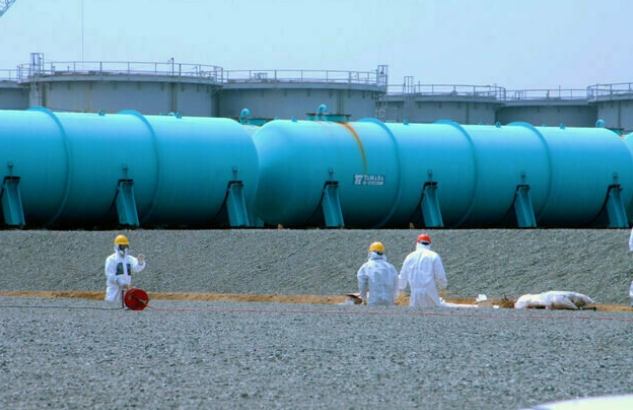
Japan plans to dump radioactive water from Fukushima into the Pacific Ocean, but its effects on Pacific nations are not clear.
When the earthquake and tsunami hit Fukushima, Japan in 2011, it resulted in the tragic death of many people, and severe damage to a nuclear power plant, which required a constant flow of cooling water to prevent further catastrophe. More than 1.3 million tonnes of radionuclide-contaminated water have now been retained on-site. The Fukushima plant operator, Tokyo Electric Power Company (TEPCO), with the approval of the Japanese Government, plans to begin releasing this water into the Pacific Ocean starting next year. But compelling, data-backed reasons to examine alternative approaches to ocean dumping have not been adequately explored.
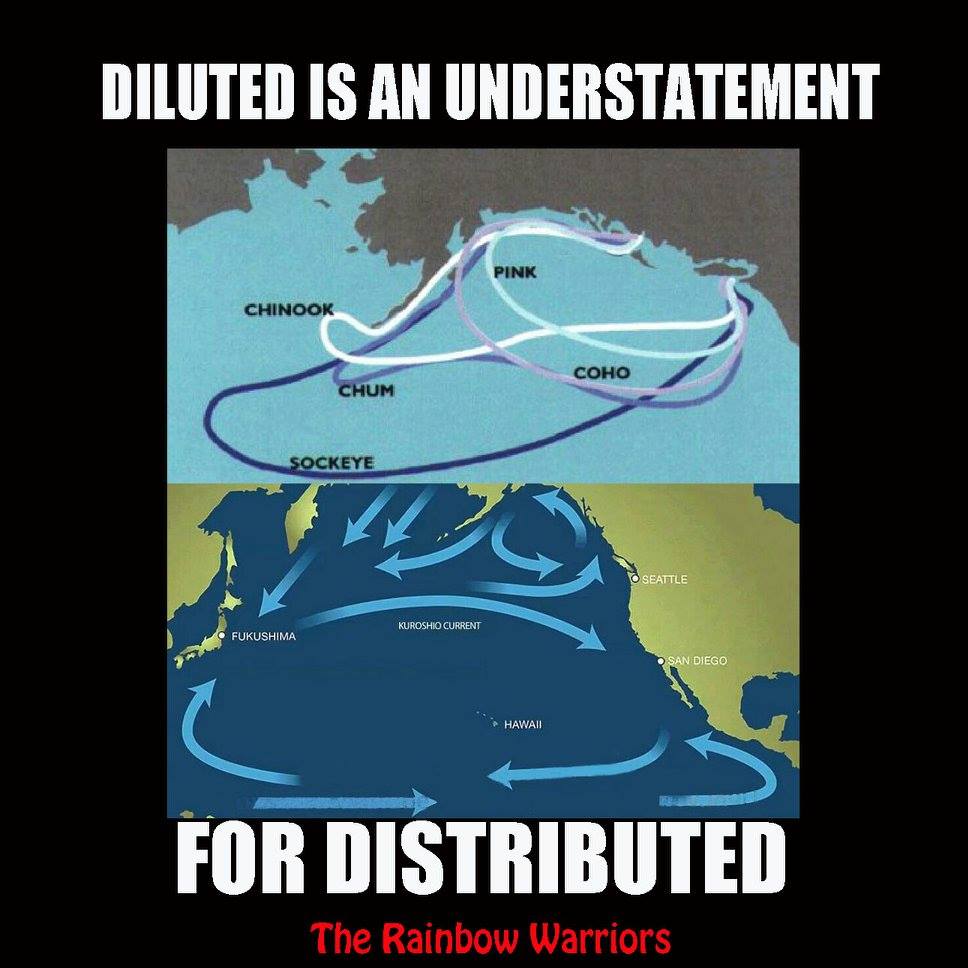
Claims of safety are not scientifically supported by the available information. The world’s oceans are shared among all people, providing over 50 percent of the oxygen we breathe, and a diversity of resources of economic, ecological and cultural value for present and future generations. Within the Pacific Islands in particular, the ocean is viewed as connecting, rather than separating, widely distributed populations.
Releasing radioactive contaminated water into the Pacific is an irreversible action with transboundary and transgenerational implications. As such, it should not be unilaterally undertaken by any country. The Pacific Islands Forum, which meets on July 12, has had the foresight to ask the relevant questions on how this activity could affect the lives and livelihoods of their peoples now and into the future. It has drawn on a panel of five independent experts to provide it with the critical information it needs to perform its due diligence.
No one is questioning the integrity of the Japanese or International Atomic Energy Agency (IAEA) scientists, but the belief that our oceans’ capacity to receive limitless quantities of pollutants without detrimental effects is demonstrably false. For example, tuna and other large ocean-going fish contain enough mercury from land-based sources to require people, especially pregnant women and young children, to limit their consumption. Tuna have also been found to transport radionuclides from Fukushima across the Pacific to California. Phytoplankton, microscopic plant-like life that floats free in the ocean, can capture and accumulate a variety of radioactive elements found in the Fukushima cooling water, including tritium and carbon-14. Phytoplankton is the base for all marine food webs. When they are eaten, the contaminants would not be broken down, but stay in the cells of organisms, accumulating in a variety of invertebrates, fish, marine mammals, and humans. Marine sediments can also be a repository for radionuclides, and provide a means of transfer to bottom-feeding organisms.
The justification for dumping is primarily based on the chemistry of radionuclides and the modelling of concentrations and ocean circulation based on assumptions that may not be correct. It also largely ignores the biological uptake and accumulation in marine organisms and the associated concern of transfer to people eating affected seafood. Many of the 62-plus radionuclides present in the Fukushima water have long periods over which they can cause harmful effects, called half-lives, of decades to millennia. For example, Cesium-137 has a half-life of 30 years, and Carbon-14, more than 5,700 years. Issues like this really do matter, as once radioactive materials enter the human body, including those that release relatively low-energy radiation (beta particles), they can cause damage and increase the risk of cancers, damage to cells, to the central nervous system and other health problems.
The Fukushima nuclear disaster is not the first such event, and undoubtedly won’t be the last. The challenges of cleaning-up, treating and containing the contaminated cooling water is also an opportunity to find and implement safer and more sensible options and setting a better precedent to deal with future catastrophes. The Pacific region and its people have already suffered from the devastation caused by United States, British and French nuclear testing programmes. Documented problems have led to international agreements to curtail such testing. In this case, the members of the Pacific Islands Forum are key stakeholders that are finding a unified voice against the planned dumping of radionuclides and other pollutants into the ocean that surrounds their homes, and holds their children’s futures.
The world’s oceans are in trouble and experiencing mounting stress from human-induced impacts tied to global climate change, overfishing, and pollution, with consequential cumulative effects on living resources and the people who depend on them. Pollution, particularly from land-based sources, is one of the greatest threats and challenges to ocean resource sustainability and associated elements of human health.
Japan and TEPCO plan to begin dumping radioactively contaminated water into the Pacific Ocean in 2023. A more deliberative and prudent approach would adhere to the precautionary principle – that if we are not sure no harm will be caused, then we should not proceed. The rush to dilute and dump is ill-advised and such actions should be postponed until further due diligence can be performed. Sound science, and a much more careful consideration of the alternatives, and respect for the health and well-being of the peoples of the Pacific region, all demand it. Far better and transparent communications are needed to provide accurate and adequate information for leaders, resource managers and stakeholders to use in their deliberations on the way forward. If the Island nations lead, other nations are sure to follow.
Robert H. Richmond, PhD is a Research Professor and Director of the Kewalo Marine Laboratory, University of Hawaii at Manoa. He is also a Pew Fellow in Marine Conservation, Aldo Leopold Fellow in Environmental Leadership and Fellow of the International Coral Reef Society. He is part of the advisory panel to the Pacific Islands Forum on the Fukushima dumping, who funded this research. He gratefully acknowledges the contributions of the other panel members, Dr Arjun Makhijani, Dr Ken Buesseler, Dr Ferenc Dalnoki Veress, and Dr Tony Hooker.
https://www.bignewsnetwork.com/news/272615799/the-pacific-faces-a-radioactive-future
New Chairman of All Fishermen’s Federation “firmly opposed” to discharge of treated water The person who agreed to an interview at METI was… a retired counselor, not a minister

June 27, 2022
Masanobu Sakamoto, chairman of the National Federation of Fishermen’s Associations (ZENYOREN), visited the Ministry of Economy, Trade and Industry (METI) on June 27 for the first time since becoming chairman, and handed a special resolution to Akira Matsunaga, counselor at METI, stating “firm opposition” to the ocean discharge of water contaminated from the Fukushima Daiichi Nuclear Power Plant (Okuma-cho and Futaba-cho, Fukushima Prefecture), which is mainly radioactive tritium, after purification and treatment.
Sakamoto is the chairman of the Chiba Prefectural Fisheries Federation, and was recently appointed chairman of the All Fisheries Federation at its general meeting on March 23. Meanwhile, Mr. Matsunaga, who responded to the letter, is a former director general of the Japan Patent Office who was involved in post-nuclear power plant reconstruction at the Cabinet Office and the Agency for Natural Resources and Energy, but retired at the end of March this year to become a part-time counselor.
According to METI, the meeting with Minister Koichi Hagiuda did not take place because he could not adjust his schedule in time. Immediately after the interview, the ministry monitor showing Hagiuda’s schedule was marked “meeting.
Sakamoto said at the meeting, “Regardless of the replacement of the chairman, we will remain opposed to the proposal,” and called for the creation of a fund for the continuation of the fishing industry, such as support for fuel costs for fishing boats, in addition to the fund for reputational damage measures and other measures budgeted by the government.
Mr. Matsunaga said, “The entire ministry will work together to present effective and concrete measures.
After the meeting, Mr. Sakamoto responded to media interviews, saying, “Eleven years ago, when the accident occurred in Chiba Prefecture, I myself suffered from severe reputational damage. Based on my own experience, I cannot condone (the release of radioactive materials into the ocean). As for not being able to meet with Mr. Hagiuda, he said, “Naturally, I would like to meet with the minister as soon as possible and convey my thoughts directly to him. (Kenta Onozawa)
Contaminated water generated when cooling water injected into reactors No. 1 through No. 3 at the Fukushima Daiichi Nuclear Power Plant comes into contact with nuclear fuel debris that melted down in the accident and mixes with groundwater and rainwater that has flowed into the buildings. Tritium, a radioactive substance that cannot be removed, remains in concentrations exceeding the national discharge standard. In April 2021, the government decided to discharge the treated water into the ocean by the spring of 2011. TEPCO is proceeding with a plan to use a large amount of seawater to dilute the tritium concentration to less than 1/40th of the discharge standard and discharge the water into the sea.
https://www.tokyo-np.co.jp/article/186025?fbclid=IwAR3Fw9AOVsfvzCZumK6LhzD__csp1hPC0YdUNksj9lPYN5AxPgj6152zM5E
All fishermen’s federation “opposition to discharge will remain unchanged” Special resolution on treated water from nuclear power plant
June 23, 2022
The National Federation of Fishermen’s Associations (ZENYOREN) held an ordinary general meeting in Tokyo on June 23, and unanimously adopted a special resolution stating that it remains “firmly opposed” to the ocean discharge of treated water from TEPCO’s Fukushima Daiichi Nuclear Power Plant. This is the third resolution opposing the ocean discharge.
The resolution pointed out that the government’s April response to a request from the Federation of Fishermen’s Associations at the time of the decision to discharge nuclear fuel into the ocean lacked specific measures to explain the situation to fishermen and the public, or to deal with harmful rumors. He stressed, “We demand that the government provide careful and sincere explanations and effective concrete measures to gain the understanding of the public.
Vice President Masanobu Sakamoto, who was elected as the new president at the general meeting, stated at the press conference that “ocean discharge is a matter of life and death for fishermen.
https://www.chunichi.co.jp/article/494903?fbclid=IwAR2rM7hA8hi4Q9oWxOs8_F6o576aTCeoQh2k-2RelZEJSzi3pTXpqlfzst0
Fukushima’s Dueling Museums
Abstract: In Fukushima there are two museums that present different narratives of the 3.11 natural disaster and nuclear crisis. TEPCO’s Decommissioning Archive Center focuses on the nuclear accident, what its workers endured and provides rich details on the decommissioning process expected to take three to four decades. The Great East Japan Earthquake and Nuclear Disaster Memorial Museum focuses on how the lives of the prefecture’s residents were affected by the cascading 3.11 disaster. The Archive elides many controversial issues that reflect badly on the utility while the Memorial conveys the human tragedy while addressing some of the controversies not covered in the Archive. TEPCO presents an evasive narrative at the Archive, but it is slickly packaged and casts the utility in the best light possible. The Memorial is impressive in scope and conveys the extent of the various tragedies with updates that responded to patrons’ criticisms about controversial issues.

Museums are important sites for shaping public memory and promoting desired narratives, especially concerning controversial issues and events. The goal is to influence how visitors think about and remember what have become collective memories, and thereby shape public discourse. Thus, much is at stake in how the past is selected and represented at sites that commemorate the divisive past and assert interpretations of it. It’s important to examine museums like texts, read between the lines and see what is marginalized, ignored, emphasized and distorted in the displays. Two distinctive narratives about the Fukushima nuclear disaster feature in two museums in Fukushima Prefecture, the TEPCO Decommissioning Archive and the prefectural government’s Great East Japan Earthquake and Nuclear Disaster Memorial Museum. The contrast is stunning if not predictable.
The strategy of the TEPCO facility is to elide awkward details and emphasize how its dedicated workers, at great personal risk, saved the day and how the utility is committed to cleaning up the mess and acting responsibly. It was never going to be easy for TEPCO to burnish its reputation, but with this slick facility and some artful spin the Archive makes the best of the poor hand the utility dealt itself. The prefectural museum focuses on the human element and how the natural and man-made nuclear disasters of 3.11 wreaked havoc on communities and families, endangered the health of evacuees and children, assigning blame for what was and what was not done while also trying to suggest that a brighter future for Fukushima is emerging. The Memorial Museum is more engaging and visceral while TEPCO presents a more dispassionate narrative that works to normalize and routinize the trauma while highlighting progress. Museums are moving targets, as exhibits and panels are updated and revised, owing to public pressure in the case of the Memorial Museum and the evolving process of decommissioning for the TEPCO Archive.

Credit: Jeff Kingston
The TEPCO Archive opened in late 2018 in the town of Tomioka, about 10 km south of the stricken reactors. Its stated purpose is to “preserve the memories and records of the nuclear accident at Fukushima Daiichi Nuclear Power Station, and to share the remorse and lessons learned, both within TEPCO and with society as a whole.”(Nippon.com 2020) Up to a point this is correct, but the remorse and lessons learned is overshadowed by the detailed exhibits and explanations about nuclear energy technology and the decommissioning process. The archive’s pamphlet suggests that “TEPCO has a keen sense of its responsibility to record the events and preserve the memory of the nuclear accident”, but this is a selective memory that is more evasive than forthright about the causes and unfolding consequences of the three meltdowns. One exits the museum knowing more about how TEPCO and its workers were affected by the nuclear accident than how it affected the people living in the vicinity.
There is a collage of TEPCO workers specifying the number of people currently employed in Fukushima, 4,170 as of mid-April 2022. This display is there to underscore how important TEPCO remains to local communities, generating jobs in a depressed region. The company has kept faith with its employees while betraying their hometowns. Good jobs are one of the inducements offered when TEPCO began building the nuclear plant in 1967. The government and utilities selected remote, depressed towns for siting reactors, offering lavish subsidies and well-paid jobs that were a lifeline for these communities. (Onitsuka 2012) They also promoted the myth of 100% safety to reassure locals that there was nothing to worry about until they discovered it was a fairy tale with an unhappy ending.

Credit: Jeff Kingston
The Fukushima Daiichi workers on site at the time of the meltdowns had to cope with fears of radiation contamination and uncertainty about how to bring the situation under control in a cascading disaster that began with total loss of power on March 11, 2011 due to the massive 13 meter tsunami triggered by the magnitude 9 earthquake. This station blackout caused a cessation of reactor cooling systems and precluded automated venting of the hydrogen accumulating in the reactors’ secondary containment buildings. As the zirconium clad fuel rods heated up, they emitted hydrogen, but the staff had never practiced manual venting and had to spend valuable time figuring out how to do so due to poor training. (Cabinet 2012; Hatamura 2014; Akiyama 2016) Sato Hiroshi, one of the men in the control room during the crisis, confirmed that nobody knew how to operate the venting manually and when they eventually tried the venting system proved inoperable. (Interview April 16, 2022)
The hydrogen explosions that ripped apart secondary containment structures in Unit 1 (March 12), Unit 3 (March 14) and Unit 4 (March 15) spread radioactive debris and injured some workers, hampering the emergency response. The crisis atmosphere was also heightened by several powerful aftershocks that left staff worried about another tsunami and wondering what else might go wrong. High on that list was the possibility that the water in the spent fuel rod cooling pools adjacent to the reactor vessels might evaporate, causing a catastrophic explosion; this was the nightmare scenario because the hydrogen explosions had shredded the secondary containment housing, leaving the pools exposed to the elements. This worst-case scenario of a massive eruption of radiation with no containment would have forced any surviving emergency workers to flee the site and might have forced the evacuation of Tokyo. The plant manager Yoshida Masao had another nightmare scenario, referring to what he called a China Syndrome involving a “nuclear fuel melt through” penetrating all containment of the crippled reactors and releasing vast amounts of radiation exceeding the 1986 Chernobyl accident. (Asahi 2014) The situation was so dire he testified he felt he was likely to die. The TEPCO Archive doesn’t delve into these worst-case scenarios about what might have happened.

One can only imagine how stressful and traumatizing this on-the-job training experience was for these professionals, part of the trauma narrative of 3.11 that is not prominently featured in public discourse because they are not seen as victims of this disaster but rather those responsible for the accident. At the TEPCO Archive, I spoke with Sato Yoshihiro, one of the Fukushima 50 (actually 69 workers) who stayed on to manage the crisis while hundreds of others evacuated. (McCurry 2013) He was a control room deputy manager and involved in the failed venting efforts. There is a video interview with him at the facility recalling just how harrowing the nuclear accident was, but nothing about the manual venting. When asked, he said that the venting system failed even when they tried manually operating it and that there had not been adequate crisis emergency training. (Interview April 16, 2022) Plant manager Yoshida Masao reached the same conclusion; he and other plant workers were insufficiently trained and that was a key factor in the nuclear accident. (Asahi 2014) The Cabinet Investigation into the causes of the accident also highlights this deficiency. (Cabinet 2012, Hatamura 2014) As the sign below attests, TEPCO acknowledges this critical shortcoming.

Credit: Jeff Kingston
Since 2011 there have been significant upgrades of reactor safety hardware, but doubts linger about how well workers are trained in crisis management and operation of disaster emergency systems. Given TEPCO’s extensive institutionalized flaws and lax culture of safety along with dysfunctional internal and external communication that exacerbated the crisis, it is hard to be optimistic that sufficient improvements have been enacted in the ensuing decade. (Akiyama 2016) The Nuclear Regulation Authority (NRA) has issued robust safety guidelines on restarting reactors, but has been lax on enforcing compliance, not rejecting any applications for extending the operating licenses of forty-year old plants, after asserting that this would be exceptional, and issuing approvals in cases where all safety upgrades had not yet been completed. (Kingston 2021) This appears to be yet another lesson from the 3.11 disaster about the dangers of wishing risk away that has not been taken to heart. This institutionalized insouciance about safety is why citizens have sought and won lower court injunctions blocking restarts because judges agree that the review process has been inadequate; on appeal these injunctions have been overturned but even so, the lawsuits demonstrate that the nuclear energy industry has not yet regained public trust. (Johnson, Fukurai and Hirayama 2020)
As the nuclear crisis grew increasingly dire, many plant workers drove away from the site and retreated to the Daini Plant about 12 km away, a sensible response to the evident dangers even as it raises questions about the broader implications for managing the risks of responding to a nuclear accident. The causes of this exodus are controversial, but it appears that the plant manager’s instructions may have been misinterpreted or garbled as they passed down the line. (Asahi 2014) However, Yoshida believed that the workers who decamped to safety at the Daini Plant made the right call, although he maintains he intended they retreat to the rear area of the Daiichi Plant. It’s important to note that the site is massive, about the same size as Central Park in New York. At any rate those that stayed on have been immortalized as the Fukushima 50 in an eponymous hagiographic film that focuses on how their heroic self-sacrifice saved the nation from what could have been a much more serious calamity.
It is striking how in the film Fukushima 50 (2018) the nuclear accident has been transformed into an uplifting story of bravery rather than a sordid saga of lax safety practices, regulatory capture and corporate cost cutting at the expense of public safety. (Diet 2012) It’s a deeply flawed and biased account of the nuclear accident, perpetuating myths that PM Kan Naoto was responsible for an accident that was largely the utility’s fault abetted by slipshod government oversight. (Diet 2012, Cabinet 2012, RJIF 2012) TEPCO was widely reviled following the accident and even years afterwards employees I knew were not keen to let others know where they worked. Given how important one’s job is to one’s identity in Japan, this too has been traumatizing. When the mandatory evacuation order was lifted in 2016 for Odaka, Sato’s hometown, he recalls worrying about whether he would be blamed for an accident that had transformed a once prosperous community into a ghost town. Apparently, those worries proved unfounded.
Previously, in an ill-advised act of hubris that generated a harsh public backlash, TEPCO issued a self-exonerating report about the accident in mid-2012, asserting it was a Black Swan event that was sotegai (beyond what could be anticipated) although in house researchers knew of the tsunami risk and in the 1990s TEPCO had been alerted to the dangers of a station blackout potentially leading to a nuclear accident. (Kingston 2012) However that position became untenable following three major investigations into the accident published in 2012 that emphasize TEPCO’s failure to improve disaster countermeasures despite numerous warnings, in-house and from government regulators. (Lukner and Sasaki 2013). Until October 2012 TEPCO tried to evade responsibility and muddy public perceptions by falsely implicating PM Kan but was pilloried for doing so and retracted this whitewash and issued a mea culpa at the insistence of an international team of experts brought in to review internal documents and the utility’s initial investigation. Although the Archive doesn’t explore this chapter of shirking, TEPCO’s employees probably feel victimized by the backlash generated by the attempted cover-up and the lingering image of skullduggery.
While sympathetic to the story of traumatized plant workers, the Archive is perhaps most noteworthy for what is missing. The collective and ongoing trauma of the nuclear refugees forced out of their homes, and the gutted communities and abandoned towns left behind, are not covered in the exhibits. The shared sense of betrayal among the displaced is not on display nor are the profound human consequences experienced by them and by Japanese throughout Japan who are now anxious about living in the shadow of nuclear power plants. People assumed that the scientists and officials knew what they were doing and would act responsibly to ensure safe operations, but that trust has been shattered.
Wandering into the Archive visitors encounter a progress report on decommissioning and the challenges of doing so. However, there is no reference to the spiraling cost to taxpayers now estimated to exceed $600 bn over the next four decades. (JCER 2019) Delays are expected and may extend that timeline and boost costs. The imposing F Cube in the center of the spacious first floor presents a video explaining what decommissioning work is and the status of that effort while other panels assert that there is steady progress day-by-day. It is an encouraging message that contradicts a steady stream of media reports about limited progress a decade on and various setbacks in decommissioning efforts. (Yamaguchi 2021)
Still on the first floor, we see photos of the workers engaged in decommissioning and learn about what measures they are taking at the reactors. The display on waste treatment and storage of radioactive waste overlooks the government’s so far fruitless quest to secure a permanent waste storage facility. A video panel discusses measures for treating contaminated water that TEPCO keeps in over 1,000 large storage tanks on the plant site. There is considerable controversy associated with this radiated water and what to do with it. Back in 2013 when Tokyo was bidding for the 2020 Olympics, PM Abe assured the International Olympic Committee that the water situation at Fukushima was under control, but it was untrue then and continues to be misleading now. The notorious $325 million ice wall installed to halt the flow of water passing down from adjacent hills through the reactors into the ocean has not worked as planned. (Sheldrick and Foster 2018)
There have also been numerous problems with the ALPS water decontamination system that is supposed to remove all but trace amounts of tritium so that the water can be safely dumped into the ocean. In 2018 TEPCO suddenly announced that the treatment of stored water had to be redone because the system had malfunctioned, a confidence sapping measure that further undermined confidence in TEPCO and its touted technologies. (Brown 2021)

Fukushima’s beleaguered fishermen are unhappy about the government approved plans to dump TEPCO’s treated/contaminated water into the ocean starting in 2023 because the 2011 accident has dashed consumer confidence in the safety of their fish. Hopes that these concerns would ebb over time have now faded with the high-profile dispute over ocean dumping that includes criticism from many Japanese citizens and domestic NGOs, international environmental experts and the governments of South Korea and China. (Brown 2021) The government has allocated JPY30 billion (US$245 million) to support the local fisheries industry and promises to buy seafood if demand declines due to consumer concerns, but these inducements have not convinced fishermen that the discharge of treated water won’t further tarnish the brand and reduce their income. (Kyodo 2022) It is common to hear locals rhetorically ask,“If the water is so safe why not dump it in Tokyo Bay?”
Visitors ascend the staircase to the second floor where there is a clock shaped pedestal of 3.11 remembrance commemorating the damage caused by the earthquake and tsunami. It is part of the exhibit: “Memory and record/Reassessment and lessons”. The video displayed nearby does open with an apology and dispassionate acknowledgement of responsibility that is an attempt to convey a level of remorse not evoked effectively by the other exhibits. But much of the video focuses on the seismic event and TEPCO’s response to the accident, conveying the sudden rupture of routine and the tensions of taking countermeasures. On a curved wall display there is a timeline of the first eleven days of the accident, another panel summarizes the countermeasures taken to manage the accident while a time series chart sketches the disaster from the time of the tsunami until cold shutdown was achieved in December 2011. Visitors also get a reactor-by-reactor review of how the accident unfolded and recreated scenes from inside the main control room for reactors 1 and 2 during the station blackout. There is also an animation including water injection efforts by fire engines at the various reactors as depicted below, a point we return to in discussing the prefectural museum.

The exhibit on the second floor that focuses on reassessment and lessons learned is striking for its brevity and breezy boosterism. Visitors learn that, “Faithfully facing up to the accident we were unable to prevent, we are determined to increase the level of safety, from yesterday to today and from today to tomorrow.” Left out is any discussion of the reasons why TEPCO was unable to prevent the accident and scant detail on how TEPCO is increasing safety other than expressing an ostensibly earnest desire to do so. Media reports about continued safety lapses and submission of falsified data in relation to TEPCO’s application to restart its Niigata nuclear power plant cast a shadow over the utility’s commitment to learning from, and acting on, the lessons of Fukushima. (Nikkei 2021). TEPCO has lost public trust (Rich and Hida 2022) and has shown limited capacity to regain it, even earning a stunning public rebuke from the NRA chair Tanaka in 2017 when he proclaimed the utility was unfit to operate a nuclear power plant. (Japan Times 2017)
Just before one descends the stairs to the exit there is an illuminating message from TEPCO asserting that, “We will pass on the genuine feedback received from the staff members who worked for the response to the accident, as ‘real voices,’ to future generations.” Here the museum is positioned as a site commemorating the trauma experienced by TEPCO’s employees and its mission of ensuring that their experiences are not overlooked. Sato is one of several employees who are featured in on-demand videos in which they share their experiences during the crisis. By highlighting the difficulties endured by plant workers, and the trauma they share with local residents, the Archive encourages a more sympathetic view of TEPCO. It is a sanitized and selective narrative that elides the damning findings of public investigations and the media, but creates the basis for “reasonable doubt” in the court of public opinion, especially as the details fade from collective memory.

In contrast to TEPCO’s facility, Fukushima Prefecture’s Great East Japan Earthquake and Nuclear Disaster Memorial Museum opened in 2020 highlights the wider human consequences of the events of 3.11, including the tsunami devastation and nuclear accident. This sleekly designed glass-walled facility located on a barren tsunami-swept area close to the coast is part of the government’s lavishly funded Fukushima reconstruction and recovery effort. Between the museum and the ocean is a derelict ruin of a house, preserved as a reminder of what the massive tsunami wrought. Inside, the spacious three story museum features displays about the derailment of people’s lives, the gutting of once vibrant communities, and the fear and uncertainty generated by the nuclear disaster. It too emphasizes lessons for the future but draws different ones than TEPCO and emphasizes the upheaval people experienced at the time, and dispiriting aftermath that lingers.

Just past the entrance an introductory short video on a large screen shows the tsunami sweeping through towns and pulverizing communities with footage of the hydrogen explosions at the Daiichi Plant that reminds visitors just how serious the situation was. In terms of public memory, the radioactive plumes bursting from the reactor buildings launched the Fukushima nightmare. The day after the third explosion, Emperor Akihito appeared in a televised address on March 16, perhaps as a gesture of reassurance but also, given how extremely rare such appearances are, ramping up anxieties. The footage of the hydrogen explosions and tsunami is repeated elsewhere in the museum. Prominent symbols of the radioactive consequences of 3.11 are also displayed such as a hazmat suit typically donned by workers where there are high levels of radiation and one of the large black plastic bags where contaminated soil is stored. As of 2022, these remain ubiquitous in the prefecture.


As one ascends the ramp to the second floor the wall features a series of photographs and text that provide a chronology from the safety agreement between the prefecture and TEPCO in 1969, commencement of operations in 1971 to the 13 meter tsunami that struck at 15:37 on 3.11 and the loss of AC power at 15:41 with a detailed timeline of the expanding evacuation zone that evening and the next day on March 12, including bewildering and contradictory requests for evacuations within a 10 km radius of the plant at 5:44 AM on 3.12 and about 2 hours later a shelter in place order for a 10 km radius. The next image shows Unit 1 after the hydrogen explosion at 15:36 PM later that day, a reissue of the evacuation order for those living within the 10 km radius at 17:39 PM, expanded to 20 km at 18:25 PM. One can only imagine how local residents were processing these disconcerting, rapidly shifting directives. Then on March 14 there was a second hydrogen explosion at Unit 3 followed by another early on the 15th at Unit 4, a reactor that was not even in operation at the time. Later that morning a shelter in place order was issued for a 20-30 km radius from the reactors. The chaotic government response to the unfolding compound disaster of earthquake, tsunami and major nuclear accident amplified the trauma, conveying uncertainty and incompetence at a time when the anxieties of affected people were already spiking.
March 11 Timeline of Disaster


Credit: Jeff Kingston
The museum exhibits trace the origins and unfolding of the disaster in a more visceral and emotive set of displays than at the TEPCO Archive. The combination of video, animation, photographs, dioramas, graphs and captions provides a thoughtful assessment of what happened, how lives were affected and what lessons can be gleaned to prepare for and mitigate future disasters. The timeline of the earthquake, tsunami and nuclear accident shifts the focus to the broader impact and draws on documents, investigations and testimonies that add detail and credibility to the grim narrative. The voices, thoughts and feelings of locals are conveyed powerfully, especially the ordeal of long-term displaced evacuees. Although not at the museum, readers interested in this subject can watch Funahashi Atsushi’s powerful documentary Nuclear Nation (2013) that follows a group of nuclear refugees from Futaba to an evacuation site in Saitama, detailing the demoralizing experience.
Visitors learn about the power of rumors to distort reality and how these have been the basis for continued stigmatization affecting the lives of those engaged in agriculture and fisheries. Tackling this problem, some displays try to counter negative perceptions of Fukushima food products, and also present graphs showing increasing sales and prices.

Credit: Jeff Kingston
Unlike the TEPCO center, the museum provides a harsh assessment of the response to the nuclear accident as residents were given conflicting information and instructions, and relocated from evacuation centers several times, adding to the stress and trauma that still haunts the nuclear refugees. There are touch screen panels that visitors can use to better understand what Fukushima’s residents have been dealing with in the aftermath of the meltdowns and the lingering impact on the psyche of people who suddenly lost everything and have had to contend with dislocation, discrimination and anxieties about potential health problems, triggering PTSD and physical ailments. Visitors see the ultrasound machine used for thyroid examinations and replicas of other devices used in monitoring food safety.

The museum was opened in September 2020 and updated in March 2021 just before my first visit. The updated displays were in response to criticisms from local residents and the media. The enhanced exhibits modify information on four specific issues: 1) the use of the System for Prediction of Environmental Emergency Dose Information (SPEEDI); 2) the botched evacuation of the Futaba Hospital and related deaths, 3) mandatory euthanasia of livestock, and; 4) inadequate precautions and a poor emergency response due to radiation. The updates were based on feedback from questionnaires filled out by visitors, opinions of prefectural residents and issues raised in media reports. Altogether more than 70 panels, photos and display items were added. (Asahi 2021) A new panel mentions that government officials failed to utilize SPEEDI data for residents’ evacuation, an oversight that relocated many evacuees to the hot zone of Iitate Village for an entire month, raising their radiation exposure and anxieties. The Fukushima Prefectural Disaster Response Headquarters is accused of failing to make use of the data on radiation dispersion in any systematic way and of deleting 65 of the 86 emails it received with SPEEDI updates. However, in a spiral file folder just in front of that sign there is an added explanation entitled: “SPEEDI Not Usable in Evacuation”, casting doubts on the usefulness of SPEEDI. Elsewhere I met a retired prefectural official who was closely involved in the disaster response, and he too questioned how useful SPEEDI really is and said it was not possible to use the data to plan evacuations.

There is also added text about the problems of long-term evacuations, including isolation, loss of community, fears of “dying alone” in temporary housing and the ongoing process of restoring lives and livelihoods. Another panel compares health surveys in 2014 and 2019-2020 indicating that radiation related health anxieties are abating. Parents also seem less worried about letting children play outdoors; in 2011 67% were opposed to letting them play outside compared to 3% in 2015. However, the museum did add text about the failure of the central or prefectural governments to order the distribution of iodine tablets to lessen absorption of radiation, leaving it to local initiative.


Perhaps the saddest addition refers to the “harsh evacuation” at the Futaba Hospital that caused the deaths of at least 40 patients during and after the ordeal due to delays and miscommunication. (Nakagawa 2021)
Citing the 2012 Diet investigation report into the accident, there is a panel added in 2021 about, “the collapse of the safety myth: a man-made calamity caused by failed measures.” This safety myth was why evacuation drills had not been deemed necessary, ensuring a chaotic response when it was crucial to act effectively in a timely manner.

Taking measure of the nuclear crisis in ways that the TEPCO archive avoids, the museum’s misery index also includes panels on “living with anxiety everyday” due to radiation concerns and restrictions on rice planting and the shipping of vegetables and the “collapse of communities”. Another claims 2,329 disaster-related deaths as of September 30, 2021 due to radiation impeding rescue efforts and delaying evacuations, and the negative health effects of evacuations and prolonged living in shelters. In addition, there is a panel on the “agonizing decision” to accept the construction of Interim Storage Facilities on the Daiichi site. Agonizing because the prefecture was given little choice and because locals resent that they endured a nuclear disaster as a consequence of hosting a plant that only existed to generate electricity for Tokyo. Now Fukushima is left with ghost-towns, a battered economy and reputation in tatters. It is now also saddled with TEPCO’s nuclear waste for at least two to three decades to come, if not longer, perhaps becoming the de facto radiation dump.
Also added in March 2021 is a replica of the iconic pro-nuclear sign that once spanned Futaba’s main street, declaring “Nuclear Power: Energy for a Bright Future”. It became a fixture of reporting on the nuclear accident, an ironic rebuke to the nuclear village of nuclear energy advocates. The sign was removed from Futaba in 2016 partly because the pillars had rusted but also because it was an awkward reminder that seemed to mock TEPCO, the government and the townspeople who had naively embraced nuclear energy. It now serves to remind visitors of how strong pro-nuclear sentiments were, and the appalling risks of their blind faith in TEPCO and official reassurances of 100% safety, something unthinkable in contemporary Fukushima. Oddly, the sign is displayed on an outdoor terrace at the rear of the museum, ostensibly because of its size, but staff acknowledge there are places inside or in front of the building where the sign would fit. Whatever the reason, placing this iconic symbol on a back terrace that is difficult to see from inside the museum is curious curation.

The mandatory evacuation order for Futaba was finally lifted in June 2022. It is a ghost-town bustling with construction projects. In early April 2022, next to the still deserted street where the iconic sign had been located is a small poster of an abandoned Futaba featuring Onuma Yuji, the student who came up with the winning catchphrase in praise of nuclear energy back in 1987. In the poster he is wearing a hazmat suit with his arms stretched upward holding a placard that blocks part of the original sign. The placard declares Radioactive Ruins, featuring the symbol of radioactive flanked by the red kanji for ruins, an indictment of the naïve boosterism of his youth and the bright future based on nuclear energy that he and other townspeople had once believed in. Now, as depicted in the poster, the truncated iconic sign reads: “Nuclear Power: Radioactive Ruins Future”. Superimposed on the image is a poem expressing Onuma’s anguish about the great betrayal, and what was lost. He laments,” Oh, if only there was no nuclear accident.”

Until 3.11 the sign had been a source of personal pride. Although the 1986 Chernobyl accident was fresh in Onuma’s memory when he submitted his entry for the town competition in 1987, he says that living in a small town of just under 8,000 where many residents were employed by TEPCO and related to someone who was, criticizing nuclear power was a taboo. But after the reactor meltdowns he had a change of heart and in 2016 Onuma protested the removal of the pro-nuclear sign, wanting it to remain as a stark reminder of the misguided policy and wishful thinking that prevailed. (Tanaka 2016)
Visitors may wonder if the crushed mini fire engine displayed next to the sign is a metaphor suggesting TEPCO’s inadequate disaster emergency preparedness or the government’s undersized safety countermeasures. The bright red twisted heap was found in the vicinity of the museum and serves as a reminder of the heroic first responders who paid a heavy price in lives lost in the effort to rescue others along the tsunami-pulverized Tohoku coast. I was told that the Japanese Self Defense Forces offered one of their full-size fire engines that provided water for cooling the reactors and spent fuel pools during the Fukushima crisis. Apparently under pressure from TEPCO, the museum declined to display this reminder of the nightmare that almost was. As noted above, however, a display at the TEPCO Archive does show fire engines at work in the crisis response so it is not clear why it would oppose having one displayed at the museum. Perhaps the more critical context of the Museum shifts the fire engine from being a positive symbol of collective effort in managing the crisis to an indictment of TEPCO’s poor crisis response and putting fire fighters lives at risk to save the nation from the utility’s lax safety culture.
Controversially, the media has reported that the local storytellers at the Memorial Museum who relate their experiences during and after the disaster are told, at the risk of losing their jobs, not to criticize TEPCO or the prefectural or central governments when talking to visitors. (Asahi 2020) A prefectural official told the Asahi, ““We believe it is not appropriate to criticize a third party such as the central government, TEPCO or the Fukushima prefectural government in a public facility.” Some of the guides are puzzled and angry at being muzzled since these organizations have been implicated in investigations into the nuclear disaster. Guides are asked to submit scripts of the remarks they intend to give that are reviewed and edited by museum staff. Reportedly, any changes to the script, and media interviews, must be cleared with museum staff. For example, if directly asked by a visitor about TEPCO’s responsibility for the accident, guides were told to avoid directly responding and refer visitors to facility staff. The Asahi points out that, “Committees set up by the Diet and central government to investigate the cause of the Fukushima nuclear disaster issued reports that called it a “man-made disaster” and said TEPCO never considered the possibility that the Fukushima plant would lose all electric power sources in the event of an earthquake or tsunami because it stuck to a baseless myth that the plant was safe.” (Asahi 2020) In addition, there are displays at the museum that present critical information about these institutions, so it is strange to prohibit guides from expressing opinions that are documented in the exhibits. I was unable to confirm this censorship in April 2022 but did chat at length with staff who were forthright in expressing critical opinions of TEPCO and government organizations.
Conclusion
The two museums present quite distinctive narratives of the nuclear crisis. Visitors inclined to support nuclear power will exit the TEPCO Decommissioning Archive Center feeling validated, but the exhibits are unlikely to persuade critics of TEPCO or skeptics about nuclear energy safety. The Archive offers a clear and detailed explanation of what happened inside Fukushima Daiichi during the first eleven days of the accident but does not probe into the institutionalized causes of the accident highlighted in the three main investigations. (Diet 2012, Cabinet 2012, RJIF 2012) There is acknowledgement that workers were not adequately trained to deal with the cascading disaster and expressions of remorse about the consequences without explicitly detailing the nature or extent of those consequences. There is also considerable focus on decommissioning efforts but no examination of related controversies such as the more than $600 billion estimated costs over the next 30-40 years or local opposition to the building of a “temporary” nuclear waste storage facility. Similarly, there is no acknowledgment of problems with the ALPS decontamination of radioactive water, or fishermen’s anger about the planned ocean discharge beginning in 2023, the equivalent of some 500 Olympic-size pools worth of treated water now stored in over 1,000 water tanks at the plant site. The Archive diverts attention away from such problems towards a more positive outlook. TEPCO has invested lots of money in this facility and other PR efforts to improve its image and shape the 3.11 narrative. This was never going to be easy, and challenges remain, but the Archive makes the best of a difficult situation and is what one would expect. It’s one of the Fukushima tour sites, not far from the Museum and a new memorial at the Ukeda Elementary School that will attract visitors and as such an opportunity to provide different information, challenge damning narratives and influence public attitudes and memories. Given how low TEPCO’s image sunk post-3.11, over time the Archive can achieve PR goals of improving the corporate image and how its role in the disaster is remembered.
As of March 2022, the Great East Japan Earthquake and Nuclear Disaster Memorial Museum has welcomed over 100,000 visitors since the museum opened in late 2020 but the pandemic has limited numbers that are only now beginning to recover. Unlike the Archive it is a stunning building in an expansive space that is more appealing for tourists and school excursions. In addition to providing extensive coverage of the tsunami’s impact, it engages various nuclear-related controversies that the Archive does not cover. Among these are the botched evacuations, especially of elderly hospital patients, the frequent evacuations and lingering trauma of the nuclear refugees, the transformation of communities into ghost towns, the daily anxieties of living with radiation, and the disaster-related deaths of over 2,300 residents. Overall, the displays convey a damning indictment of TEPCO and government institutions and as such will powerfully influence collective memories of the traumas experienced and perceptions of the organizations responsible for the man-made nuclear crisis that blighted livelihoods, families and communities in Fukushima while etching its place in global memory alongside Chernobyl.
Sources
Akiyama, Nobumasa, (2016) “Political leadership in nuclear emergency: institutional and structural constraints” in Sagan, Scott and Edward Blanchard, eds, Learning from a Disaster: Improving Nuclear Safety and Security after Fukushima. Stanford, CA: Stanford Security Studies, pp. 80-108.
Asahi (2022). “TEPCO pushes back timeline for storage tanks at Fukushima plant”, Asahi Shimbun. April 28.
Asahi (2021a) “3/11 museum updates displays of nuclear crisis to give truer picture” Asahi Shimbun, April 10.
Asahi. (2021b) “Editorial: Public’s distrust of TEPCO runs deeper than its water tanks” Asahi Shimbun. April 14.
Asahi (2020) “Don’t criticize government or TEPCO, guides in Fukushima told” Asahi Shimbun, September 23.
Asahi (2014). “Reality of the Fukushima 50 Special Report”, Asahi Shimbun.
Brown, Azby. (2021) “Fukushima Daiichi water: The world is watching or should be” Safecast, May 6.
Cabinet(2012). Cabinet of Japan Investigation committee on the accident at Fukushima nuclear power stations of Tokyo Electric Power Company. Final Report. 23 July. (accessed April 30, 2022).
Diet. (2012) The Fukushima Nuclear Accident Independent Investigation Commission. Executive Summary. Tokyo: National Diet of Japan.
Hatamura, Yotaro, et al. (2014) The 2011 Fukushima Nuclear Power Accident. Sawston, UK: Woodhead Publishing.
JCER. (2019) “Accident cleanup costs rising to 35-80 trillion yen in forty years” Japan Center for Economic Research, July 3.
Tanaka, Miya. (2016). “Creator slams removal of pro-nuclear signs from Fukushima ghost town” Kyodo News reprinted in Japan Times. March 3.
Japan Times. (2017) “Editorial: NRA’s nod for a Tepco restart” Japan Times. Oct 8.
Johnson, David, Hiroshi Fukurai and Mari Hirayama (2020). “Reflections on the TEPCO trial: prosecution and acquittal after Japan’s nuclear meltdown” Asia Pacific Journal: Japan Focus, 18:2(1) January 15.
Kingston, Jeff. (2021) “The development state and nuclear power in Japan” in Kyle Cleveland, Scott Knowles and Ryuma Shineha, eds., Legacies of Fukushima. Philadelphia, PA: University of Pennsylvania Press.
Kingston, Jeff. (2012) “Mismanaging Risk and the Fukushima Nuclear Crisis” The Asia-Pacific Journal, Vol 10: 12 (2) March 12.
Kyodo. (2022) “Fisheries group conveys to PM opposition to Fukushima water release” Kyodo News. April 5.
Lukner, Kerstin and Alexandra Sakaki, (2013)”Lessons from Fukushima: An Assessment of the Investigations of the Nuclear Disaster,” The Asia-Pacific Journal, 11:19 (2), May 13.
McCurry, Justin. (2013) “Fukushima 50: ‘We felt like kamikaze pilots ready to sacrifice everything’ Guardian. January 11.
McCurry, Justin. (2012). “Fukushima disaster could have been avoided, nuclear plant operator admits” Guardian. October 15.
Nakagawa Nanami. (2021) “Evacuation complete with 227 patients left behind during Fukushima disaster”, Tansa (Tokyo Investigative Newsroom. March 10.
Nikkei (2021). “Japan bans TEPCO from restarting nuclear plant over safety flaws.” Nikkei, April 14.
Onitsuka, Hiroshi. (2012) ‘Hooked on Nuclear Power: Japanese State-Local Relations and the Vicious Cycle of Nuclear Dependence,’ The Asia-Pacific Journal10: 3, 1 (16 January).
RJIF. (2014) Independent Investigation Commission on the Fukushima Nuclear Accident,The Fukushima Daiichi Nuclear Power Station Disaster: Investigating the Myth and Reality. (Expanded and updatedEnglish edition of the Report by The Independent Investigation Commission on the Fukushima Nuclear Accident, Rebuild Japan Initiative Foundation originally published in Japanese on 1 March 2012) London: Routledge.
Sheldrick, Adam and Malcolm Foster. (2018) “Tepco’s ice wall fails to freeze Fukushima’s toxic water buildup” Reuters. March 8.
Yamaguchi, Mari. (2021) “Fukushima Chief: No need to extend decommissioning target” The Diplomat, March 4.
Source; Asia-Pacific Journal https://apjjf.org/2022/12/Kingston2.html
Contesting Fukushima
Abstract: The legacies of the Fukushima nuclear accident remain hotly contested in the media, academia, the courts and public debate because various actors have much at stake in contemporary battles over the future of nuclear energy, the national economy, decommissioning of the stricken reactors and public memory. Here I examine some aspects of this vibrant discourse and how the trauma of Fukushima is evolving


Daiichi Tour
In 2022, TEPCO is mounting a PR campaign to normalize the Fukushima disaster and assert that everything is more or less under control, the nuclear plant is safe, and decommissioning is making good progress. Apparently, the government encouraged TEPCO to arrange public tours as a way of regaining trust and demonstrating transparency. Based on my April 16th tour, transparency and forthrightness remain a work in progress.

Surreal is the only way to describe how it felt to be standing on a viewing platform about 100 meters from the four crippled reactors at the Fukushima Daiichi nuclear power plant as the chilly winds gusted in from the ocean. Our TEPCO guide briefed us before we arrived at the security check and then reboarded the bus, passing by a phalanx of water storage tanks, water treatment plants, cherry blossoms, parking lots of abandoned radiation-contaminated vehicles and construction work until we reached the reactors. Fukushima Daiichi is an immense site covering 3.5 sq km, just a bit bigger than Central Park in Manhattan, New York City. Our guide provided numerous handouts and gave an informative PowerPoint presentation that focused on the positive and progress made, but much was not covered, and her answers were sometimes evasive or misleading.

Upon reaching the viewing platform the scene of devastation triggered memories of the televised March 2011 hydrogen explosions and served as a reminder of what could go tragically wrong. As we gazed on the ruins and debris our guide fielded questions and herded our group of eight into photos against this eerie backdrop. No hazmat suits or protective gear, just a light vest with a pocket for a radiation monitor and thin gloves TEPCO required as an anti-Covid measure. At the end of the tour my radiation monitor recorded a mild dose of 0.02 mSv, similar to a typical chest x-ray. TEPCO asserts one can safely access 96% of the plant complex in normal clothing.

Despite an abundance of reassuring facts, the tour may not succeed in dispelling everyone’s concerns. Unit 1, the only reactor still without a shroud and closest to the viewing platform, is a shattered shell of a structure still partially buried under radioactive debris eleven years on. The silhouette of twisted metal and shredded walls evokes the iconic Hiroshima atomic dome. A cover for this reactor is under construction that will stretch 66 meters long, 56 meters wide and 68 meters high. A considerable amount of nuclear fuel remains in the spent fuel pool but that and the debris can’t be removed safely without a shroud; the removal is scheduled for 2027-2028 while removal of the nuclear fuel in the sheathed Unit 2 is scheduled from 2024-2026. All the nuclear fuel was removed from Unit 3 by February 2021 and Unit 4 by the end of 2014. Unit 4 has the most imposing cover with a 53 meters high steel structure that uses about the same amount of steel as in the 333-meter-high Tokyo Tower. (Mainichi 2022)


Amidst the debris scattered between the viewing platform and the Unit 1 reactor is a large cylindrical tank that bears the names of GE and Hitachi, the firms that designed and built the reactors. One imagines the corporate branding professionals might find this an awkward reminder, but there are now new opportunities in the multi-billion dollar, four-decade long decommissioning of the reactors so GE and Hitachi are again collaborating to build robots designed to help in the clean-up and retrieve melted-down nuclear fuel from the primary containment vessels where levels of radiation remain deadly for human beings.


Mismanaging Risk
The Fukushima Daiichi reactors were based on a GE boiling water reactor design from the early 1960s and were built from the late 1960s and put into operation in the 1970s. Controversially, the backup generators were installed in the basements of the reactor turbine buildings that are closer to the ocean than the reactors, leaving them vulnerable to inundation in the event of a large tsunami. This placement was further jeopardized by the decision to lower the original elevation of the bluff where the reactors are located from 35 meters to 10 meters above sea-level to lower the costs of construction and operating seawater pumps. The plant was built to withstand a 3.1 meter tsunami based on the 1960 Chilean earthquake that triggered a tsunami of that height on the Fukushima coast. That risk assessment, however, was updated in 2002 to 5.7 meters based on a new methodology developed by the Japan Society of Civil Engineers, but TEPCO made no safety improvements in response to the new estimate. (Acton and Hibbs 2012) What is stunning to see at the Fukushima Daiichi plant is the absence of a proper seawall; there is only a low breakwater that creates a small harbor for loading and unloading ships. It did not provide any protection from the 13-meter tsunami that engulfed the plant on March 11, 2011. TEPCO considered building a 15-meter wall in response to a 2008 in-house study warning of the possibility of a monster tsunami, but the $1 billion price tag was considered excessive. (McCurry 2012; O’Connor 2018). In light of the >$600 billion estimate for decommissioning the plant over four decades, it is another example of how short-term focusing on the bottom line came at the expense of public safety. (JCER 2019) And TEPCO is not alone, as it came to light after the 2011 accident that all of the utilities operating nuclear reactors had falsified repair and maintenance data. (Clenfield 2011) The Onogawa Plant about 80 km north, also located on what is popularly known as the “tsunami coast”, was closer to the epicenter of the 2011 earthquake but did not suffer catastrophic damage, indicating the advantage of siting the plant at a higher elevation, not underestimating risk and a corporate culture of safety at Tohoku Electric. (Ryu and Meshkati 2014)
Is It Safe?
The Fukushima Daiichi station blackout (loss of all power) triggered by the combination of the magnitude 9 earthquake and massive tsunami caused the cessation of reactor cooling systems and the three meltdowns that are the reason why the name Fukushima has entered the global lexicon as shorthand for a cascading nuclear disaster, lax safety and poor oversight. This negative image annoys some of the prefecture’s residents who told me that now the overall situation is not so bad, and they resent the negative hyperbole propagated in some media such as the lame Netflix series Dark Tourism (2018). In one segment focusing on Fukushima, a snarky Kiwi journalist smirks his way through the evacuation zone, hyping the dangers he faced while managing to get his guide into trouble with the police in his desperation to generate a simulacrum of drama.
Fukushima’s farmers and fishermen have struggled to overcome consumers’ negative perceptions by extensive testing for radiation. They fear that discharging one million tons of treated radiation-contaminated water into the ocean, as the Japanese government has announced, will undo those sustained efforts. The government has earmarked Yen 30 billion ($250 million) to purchase seafood products if demand falls, but fishermen remain opposed to the discharge of contaminated water. There are efforts by the central and prefectural government to promote a better image for Fukushima food products and retail giants like Aeon have pitched in to promote sales, but negative sentiments remain at home and overseas. Soon after the nuclear disaster, 55 countries banned food imports from Fukushima and four neighboring prefectures, but the US ended restrictions in 2021 and in 2022 Taiwan finally lifted its ban on most food imports, reducing the number of closed markets to 13, including China and South Korea.


Nuclear Momentum?
The 2012 Diet investigation concluded that the three reactor meltdowns resulted from a complacent culture of safety, and collusion between TEPCO and government regulators. (Diet 2012) As a result, Suzuki Tatsujiro, director of the Research Center for Nuclear Weapons Abolition at Nagasaki University believes, “people think that the industry is not trustworthy and the government that is pushing the industry is not trustworthy.” (Dooley and Ueno 2021)
Fukushima devastated the global nuclear industry, as governments and utilities suspended reactor projects and announced plans to eliminate or phase out nuclear energy. This hiatus was due to greater scrutiny of safety issues. Enactment of stricter safety guidelines raised the costs of building reactors and ensured further delays in an industry notorious for cost overruns and not meeting deadlines. Indeed, a year after the Fukushima disaster in a special issue on nuclear energy the Economist concluded that it was no longer financially viable. (Economist 2012)
And yet, institutional actors have held on and used their influence over energy policy to lay the foundations for a nuclear comeback in Japan. (Hymans 2011) A decade on the so-called “nuclear village” of Japanese nuclear energy advocates (Kingston 2012) is hoping to capitalize on the Russian invasion of Ukraine and spiking oil and gas prices. The Russian attack on Chernobyl was a reminder of the dangers of nuclear energy that have lingered since the 1986 accident, but as higher energy costs batter the Japanese economy there has been a well-orchestrated PR campaign to focus on the advantages of restarting more of Japan’s idled nuclear reactors to offset Japan’s dependency on energy imports in a hostile regional climate, reduce trade imbalances and to reach the government’s zero emissions target by 2050. The pro-nuclear PR blitz, however, confronts continued examples of TEPCO’s safety lapses, and falsification of documents in restart applications for its Niigata plant. There the utility is discovering that trust is not a renewable resource. (Rich and Hida 2022) Tanaka Shunichi, before stepping down as head of the Nuclear Regulation Authority (NRA) in 2017 was so exasperated that he called TEPCO unfit to operate a nuclear power plant. (Japan Times 2017) However, later in 2017, the NRA approved TEPCOs restart application for the world’s largest nuclear energy plant at the Kashiwazaki-Kariwa complex in Niigata. Yet, serious safety and lax security issues persist, undermining public confidence and delaying the utility’s plans to bring the plant back online. (McCurry 2017) TEPCO’s financial recovery plan depends on doing so, but in 2021 due to mounting safety concerns the government effectively postponed Niigata restarts by banning TEPCO from transporting nuclear fuel stored at the plant or loading it into reactors. (Nikkei 2021)
Despite these setbacks, for the first time since 2011 one newspaper poll conducted in March 2022 found 53% of Japanese in favor of nuclear energy if it can be operated safely while 38% oppose restarting idled reactors. (Oda and Reynolds 2022) That clause “if it can be operated safely” is a key point of contention and qualifies the headlines about majority support and it’s worth bearing in mind that this survey was conducted by the Nikkei, a pro-nuclear business newspaper. Another survey conducted in October 2021 found Japanese support for nuclear energy was 18.4%. (Statista 2022) Back in 2017, when simply asked if they favor restarting nuclear reactors or not, 55% were opposed and 26% were in favor, suggesting that how the question is asked makes a significant difference. (Mainichi 2017)
More recently, an Asahi poll in March 2022 gave respondents five choices in responding to whether they felt “nuclear power stations should be immediately abolished” or “they should be retained in the future as an energy source.” (Isobe 2022) Support for abolishing nuclear power plants fell to 32 percent from 40 percent a year earlier while 39% favored retaining them, up from 32% in 2020; 29% remained neutral on the issue. But as we have seen post-3.11 when anti-nuclear energy sentiments spiked, public opinion does not drive national energy policy and the pro-nuclear Liberal Democratic Party (LDP) is doing what it can to sway public sentiments. After all, Japan’s fleet of reactors, once numbering 54, was built on its watch, and it has taken the lead on reviving nuclear energy’s prospects.
Prime Minister Kishida Fumio, who visited Fukushima Daiichi on April 29, 2022, is actively promoting nuclear reactor restarts, and rallying public support, saying that due to high energy prices and a weak yen it’s time to reconsider current regulatory constraints to boost Japan’s flagging economy. He maintains that he will adopt a safety-first approach and gain public understanding of reactor restarts while making existing regulations more “efficient”. (Oda and Reynolds 2022) The boost in support for nuclear energy may also be related to a powerful magnitude 7.4 earthquake on March 16, 2022 in Tohoku that shutdown several coal and gas-fired plants, causing some scattered blackouts in Tokyo and an electricity supply alert for the metropolitan area of 30 million residents.
Since 2015 the Nuclear Regulatory Authority (established in 2012 as the successor to the discredited Nuclear and Industrial Safety Agency) has approved restarts for 10 reactors, while 23 others remain idled and 21 are slated for decommissioning with 3 more under construction. Citizens around the nation have filed lawsuits opposing reactor reboots but mounting utility bills and fading memories of the Fukushima disaster are creating an opportunity for a nuclear renaissance. (Kingston 2021)
PM Abe laid the groundwork for this revival by reinstating nuclear energy into the national energy strategy in 2014, setting a target of 20-22% of electricity generating capacity from nuclear reactors by 2030, a target that would require restarting almost all of Japan’s 33 operable reactors. (Kingston 2014) Given that many of the reactors are aging and have passed, or will soon pass, the original 40-year operating license limit, and upgrading to meet safety guidelines is prohibitively expensive for many of these smaller reactors, it is not clear how Kishida plans to prioritize safety and gain public understanding if those guidelines are relaxed.
By 2030, only 21 of Japan’s 33 reactors will be under the 40-year cap. (Ogawa 2021) Some of the aging reactors in the Kansai region that gained approval to restart are likely to miss deadlines to install counter-terrorism safeguards and thus may have to shut down again. Nationwide, 5 of the 10 reactors that have been approved to restart are in operation, generating about 4% of the nation’s electricity, but as of May 2022, 7 haven’t yet completed required safety upgrades that are a condition for operating, perhaps leading to shutdowns and pushing back the timetable for others to late 2022 at the soonest. (Inajima and Oda, 2022) Although an energy crunch is looming, the safety guidelines enacted since the 2011 disaster will make it difficult to accelerate restarts without political intervention and that is a potentially risky gamble. Especially so since it is essential to secure support from hosting towns where many residents remain anxious about safety. (Rich and Hida, 2022)
Auto giant Toyota weighed in on the debate in late April 2022, asserting that its electric vehicle strategy depended on decarbonization. In an NHK televised special on “The Impact of the EV Shift” (4/24/2022), a chart was shown comparing the energy mix of France (75% nuclear, renewables 15%, fossil fuel 10%) and Japan (nuclear 6%, renewables 23%, fossil fuels 67%), highlighting that an EV shift in Japan will not reduce CO2 emissions until the energy mix changes. The nuclear village has its institutional fingers crossed that the national mood of anti-nuclear sentiment has ebbed, and much is riding on TEPCO demonstrating progress in decommissioning, part of which hinges on discharging massive volumes of contaminated water currently stored at the Fukushima Daiichi plant.
Ocean Discharge
It was breathtaking to stand so close to the shattered reactor buildings and to see the scale of destruction up close. The plant covers an immense area, now brimming with over 1,000 large water tanks where contaminated water is treated and stored. Partly it is groundwater trickling down from nearby hills through the reactor buildings and in addition TEPCO has kept pumping large amounts of water into the reactors to cool the nuclear fuel. In 2013 it was revealed that everyday 272 metric tons of highly radioactive water was leaking into the Pacific Ocean, causing PM Abe to order government intervention to help resolve the issue and save Tokyo’s 2020 Olympic bid. (Fackler 2013) This was an admission that TEPCO had mismanaged the cleanup, further undermining public confidence, and forcing the government to subsidize the construction of a $325 million ice wall to block groundwater seepage into the reactors by freezing the soil. However, there has been ongoing seepage and a government review panel found that the ice wall has only been partially effective. (Sheldrick and Foster 2018)
In 2022, the TEPCO guide did not know the annual electricity costs of maintaining the ice wall, once estimated as the equivalent of the annual electricity consumption of 15,000 Japanese households. (Fackler 2013) What is often overlooked in the greenwashing nuclear discourse is the sizeable level of CO2 emissions associated with nuclear energy, not just in the decade or more of constructing reactors, but also in processing nuclear waste and several centuries of storing and monitoring that radioactive legacy. Moreover, in the event of an accident like at Fukushima, there is a four-decade long, high carbon footprint decommissioning process.

Our guide did inform us that there are three ALPS (Advanced Liquid Processing System) water treatment systems being used to remove most of the radioactive contaminants except for trace amounts of tritium. We were not told, however, that in 2018 TEPCO announced that it would have to re-treat all the processed water because the ALPS system had malfunctioned. (Asahi 2021a) This blunder was a public relations disaster because now there will always be doubts about how safe the treated water really is even if proclaimed to be safe. At the end of our tour, we were handed a glass bottle filled with ALPS treated water and assured that it is safe to drink. Maybe so, but TEPCO’s reassurance evoked parallels with Chisso, the firm responsible for widespread methylmercury poisoning in a small fishing port in Kyushu where it faked a water treatment system for its industrial effluent. (George 2001) The president invited the press to watch as he drank a glass of regular tap water passed off as treated water. Public memory in Japan has been refreshed by the recent film Minamata (2021) that focuses on the iconic photos published in Life by photographer Eugene Smith, played by Johnny Depp, documenting the consequences of this notorious case of industrial pollution in the 1970s.
In April 2021 the government decided that it would approve TEPCO’s request to discharge the treated contaminated water into the ocean off Fukushima beginning in 2023. In its application, the utility projected that by the end of 2022 (since recalculated for some time in 2023) it would have no additional storage capacity on the plant site and thus needed to release the water to make room for a nuclear waste temporary storage facility and other decommissioning related facilities. (Asahi 2022) Fishermen are irate about the planned dumping, particularly because TEPCO had promised to gain their understanding before doing so, but the release is a fait accompli as construction of the 1 km tunnel for the offshore discharge is already well underway. They and others often ask if the contaminated water is so safe why not dump it into Tokyo Bay? In addition to Fukushima’s fishermen and residents, China and South Korea are also highly critical of the potential environmental impact and find scant reassurance in the International Atomic Energy Agency’s (IAEA) ongoing review. The IAEA mandate is to promote atomic energy thus the outcome of the review appears to be a foregone conclusion. (Kyodo 2022)

When asked about discharge of water into the ocean our guide told us that TEPCO was abiding by the government’s decision, without explaining that this came at TEPCO’s behest. She also said it is standard practice for nuclear power plants around the world to discharge tritium tainted water, but the situation is of course quite different in Fukushima after 3 meltdowns and there is nothing standard about this upcoming release planned in stages over thirty years. Fishermen are opposed because their brand has been devastated by the accident and their livelihoods affected. They now worry that TEPCO is re-tarnishing the brand and making it even more difficult to restore public trust in Fukushima’s marine products.
During the Nuclear Regulation Authority’s March 2021 review of TEPCO’s request to discharge the water, the utility explained that the ocean release was necessary “to safely and steadily remove fuel debris and spent nuclear fuel.” (Mainichi 2022d) The area now occupied by over 1,000 water storage tanks is designated as a site for ten different new decommissioning-related facilities. On the tour, the plant was a beehive of construction activity, including a large white building for reducing the volume of solid waste (concrete and metal debris) and another planned for storing that waste, the tenth such waste storage building in the compound. There is also a large incinerator for burning logged trees from the once forested compound much of which is now paved in concrete as a contaminated water radiation reduction measure. Removal of fuel debris is scheduled for the end of 2022, so TEPCO explains that it is imperative to build temporary storage facilities for that fuel and highly radiated solid waste. Eventually, these buildings will also become solid waste because the cycle of decommissioning generates new tasks requiring new facilities. Currently, temporary storage of nuclear waste on site is anticipated to last 20-30 years, but it is hard to be certain of this timetable because a permanent storage site has not yet been decided. (Dooley and Ueno 2021)
Our guide helpfully suggested that two towns in Hokkaido have agreed to a first phase review as potential sites for storing nuclear waste, eliciting a groan of protest from an elderly Hokkaido resident in our group. On the bus trip back to TEPCO’s Decommissioning Archive Center, the guide was peppered with questions. One British woman responded to the evasive replies by suggesting that TEPCO be more transparent and forthright. Asked about accountability for the accident, the guide emphasized how much money TEPCO was using to compensate claimants and in the decommissioning, without acknowledging that it was quasi-nationalized by the government so that its debt, and accident-related expenses, are financed by taxpayers and consumers who have been paying a 10% surcharge on utility rates. (Tabuchi 2012)

Credit: The Great East Japan Earthquake and Nuclear Disaster Museum
Fukushima 50
At TEPCO’s Decommissioning Archive Center I met Sato Yoshihiro, one of the so-called Fukushima 50, those workers who volunteered to stay on and manage the nuclear crisis at great risk to their lives. Sato is a low key, unassuming man who is embarrassed by the suggestion he saved the nation from a potential nuclear catastrophe. In a video at the Archive he speaks about his fears at the time and alludes to a brush with death.
The film Fukushima 50 (2020), a plodding melodrama that focuses on bravery, dedication and self-sacrifice, serves as a pat on the back for TEPCO’s overcoming the crisis without probing the safety lapses and overly optimistic assumptions that left the plant vulnerable to a station blackout. The film includes heavy-handed propaganda, repeating discredited allegations blaming PM Kan for cessation of seawater injection into the reactors and for delaying the venting, falsehoods that vainly attempt to shift blame for the nuclear accident that three major investigations pin on TEPCO and lax government oversight. (Lukner and Sasaki 2013) TEPCO’s top brass appear bumbling and shameless but get off lightly because the men on the spot fortunately ignored their orders and, despite some hairy moments, brought the situation under control. Asked about the film Sato, the deputy shift supervisor for Units 3 and 4 at the time of the accident, refrained from offering his take but pointed out that there were 69 employees who stayed on. All told, hundreds of workers laid their lives on the line to manage the triple meltdowns. (McCurry 2013). But there was an even larger exodus of workers from the compound to the Fukushima Daini plant 12 km to the south due to concerns about radiation exposure and uncertainty about how the nuclear crisis might develop. (Asahi 2014) Sato described the real-life plant manager Yoshida Masao as an “oyabun” (yakuza boss), alluding to his imperious and mercurial manner, exactly how Tanaka Ken plays him in the film. When the tsunami struck, Sato was not at the plant but the following day he went there to help since he had extensive control room experience. He confirmed that Yoshida only pretended to cease injection of sea water into the reactors on instructions from TEPCO HQ in Tokyo. There the main concern was the irreparable damage that would cause to the reactors. Yoshida’s main concern was a beyond Chernobyl-level crisis, what he called a China Syndrome scenario of a triple melt-through with molten fuel penetrating the containment vessel and the release of huge doses of radiation. (Asahi 2014) He testified that on March 14, as problems mounted, “I thought we were really going to die.”

Asked if there had been enough crisis emergency training prior to the accident, Sato acknowledged there had not been, confirming Yoshida’s view that inadequate staff training and knowledge about how to operate emergency systems exacerbated the crisis. (Asahi 2014; Akiyama 2016) One of the three major investigations into the accident also concluded that poor staff training, systematic underestimation of risk and a lack of emergency preparation were key factors in TEPCO’s mismanaging the crisis response. (Cabinet of Japan 2012; Hatamura 2014) But that has not stopped TEPCO and the LDP trying to shift responsibility to Kan and demonize him. There is also considerable controversy about why venting was delayed so long given that onsite staff knew the risks of a build-up of hydrogen gases emitted by fuel rods due to the cessation of cooling systems.
The Fukushima 50 film perpetuates the myth that PM Kan’s visit to the plant early on March 12th forced TEPCO to delay the venting, but this is a baseless assertion. It is well documented that Kan had been demanding TEPCO start venting well before his visit and was frustrated with its evasive replies about the lengthy delay in doing so. (Shinoda 2013, 50-51) As a result, Kan took a helicopter to the plant just after 7 AM on March 12th to find out what was going on and again urge TEPCO to begin venting; shortly past 9 AM, an hour after Kan departed, it finally tried doing so at Unit 1 but without success. Later that day at 3:36 PM a hydrogen explosion shredded the secondary containment structure at Unit 1 sending plumes of radioactive smoke billowing into the sky.
At the Decommission Archive Center on April 16, 2022 Sato gave the standard responses about delaying venting due to PM Kan Naoto’s visit, and concerns about dousing locals with radiation if it did vent, but when pressed he acknowledged inadequate training and lack of experience in manual venting. (Asahi 2014; Akiyama 2016) Venting is usually automated but had to be done manually due to the station blackout and was complicated by spiking radiation levels and the need to wear cumbersome protective gear. Sato said he tried opening the vent manually, something nobody had practiced, but the venting system was not viable. Apparently, TEPCO had known of the need to upgrade and harden the venting system, but as with other safety warnings that would hit the bottom line, the utility ignored global best practices. (Behr and Fialka 2011; Ferguson and Jansson 2013)
Sato emphasized that the venting efforts occurred in very difficult and dangerous circumstances and that improvisation was key to the emergency response. He also spoke of the uncertainty the workers were coping with at the time, noting that after the earthquake and tsunami, the electricity went out and monitoring systems were not functioning. Crisis managers were thus flying blind. The plant was also rocked by a series of aftershocks, and nobody knew what might come next in this cascading disaster. The three hydrogen explosions at the site spread radioactive debris and injured colleagues, further hampering emergency operations. The day after the tsunami struck, Unit 1 exploded on March 12, and hydrogen explosions ripped apart the containment structures of Unit 3 on March 14 and Unit 4 on March 15, leaving the spent fuel rod pools exposed to the elements with no containment or cooling. There were fears of a worst-case scenario of an explosion of the spent fuel rods if all the water evaporated from the pools.
Asked if he ever thought they might not succeed in bringing the crisis under control, Sato answered that he was too busy trying to do whatever he could, so there was no time to contemplate failure. He claims that despite the unimaginable dangers and anxieties he was not traumatized by the experience and doesn’t suffer from PTSD. Although workers at the time suspected there were reactor meltdowns, he says there was no solid evidence to back up such speculation. That, he maintains, explains the two-month delay in TEPCO acknowledging what the international media had been reporting since mid-March. But there was also a circling of wagons as the domestic media held back. According to Martin Fackler, then the Tokyo bureau chief for the New York Times, “when disaster struck in March 2011, it should be no surprise that the {Japanese}journalists’ default mode was to promote the same goals as the national government: maintain order, prevent a public panic, and limit damage to both the nuclear industry and the moral authority of the central ministries that had given birth to it. This meant that the journalists—at least those at the big national newspapers and broadcasters—saw their role as defending the narratives put forth by officialdom, not challenging those with reports about the reality on the ground.” (Fackler 2021)
Misery Index
Nuclear proponents point out that nobody died from the radiation emitted during the Fukushima nuclear accident, implying that nuclear energy anxieties exceed the actual risks. That argument confronts Japan’s tens of thousands of nuclear refugees who have kept their battle alive in the courts and through ongoing media coverage of their lawsuits. (Johnson, Fukurai and Hirayama 2020) For them, the misery index is not just about deaths. The catastrophic loss of communities, careers, family ties and sense of well-being caused by the nuclear accident has left a deep scar. The Great East Japan Earthquake and Nuclear Disaster Memorial Museum in Futaba, co-hosting town with Namie of the Fukushima Daiichi plant, interrogates the “no deaths” claim, with dioramas explaining how the spread of radiation hampered rescue and relief efforts, perhaps condemning some survivors of the tsunami to death. The exhibits also drive home how shambolic the evacuation was, partly because the myth of 100% safety provided a pretext to not conduct any drills; they were unnecessary and if conducted might give ammunition to critics of nuclear power who would see this as an admission that the myth was a fairy tale.

Overall, according to the Fukushima government that runs the museum, there have been 2,329 disaster-related deaths in the prefecture as of September 30, 2021. The display explains that these deaths resulted “from the prolonged post-disaster refugee lifestyle…primarily caused by delays in initial care stemming from the failure of hospitals to fulfill their functions as well as by physical and psychological fatigue during evacuation and refugee life at shelters.” The museum also notes how the botched evacuation caused the deaths of 40 patients of the Futaba Hospital due to interruption of medical treatment and the ordeal of evacuation, but other sources suggest a toll of 45 if residents of the nearby Deauville Retirement Home are included. (Nakagawa 2021) The grim picture of abandoned hospital beds and medical equipment scattered in the parking lot convey a sense of the ghastly experience.

An evacuation order applying to both facilities, just 4.5 km from the Fukushima Daiichi, was issued on March 12 but many patients were not evacuated until March 16. Buses evacuated 209 people on March 12, but 227 others waited for transport until March 16 as officials mistakenly believed everyone had been evacuated. This slow-motion evacuation meant that many did not get adequate medical treatment, and some died on the spot, in transit or soon thereafter from the ordeal. For many relatives and local residents these deaths were caused by the Fukushima nuclear accident as is the surprisingly high number of young people suffering from thyroid cancer. This a relatively rare cancer but the numbers in Fukushima are thirty times the national average.
Court Challenges
In the latest setback for the nuclear village, and PM Kishida’s vigorous efforts to promote restarts of idled reactors, on May 31, 2022 the Sapporo District court ordered that the three reactors of the Tomari nuclear power plant in Hokkaido must remain offline. (Asahi 2022b) The judge ruled that Hokkaido Electric plant does not meet reasonable safety standards and that its tsunami defenses are inadequate. The court rejected the utility’s assurances and cast doubt on the credibility of its evidence regarding the risk of liquefaction compromising the sea wall. The NRA has also been unusually critical of the utility and its explanations about safety measures and failure “to submit proper materials for the safety screening.” (Asahi 2022b) The powerful legacy of Fukushima has been sustained in several similar rulings around the nation.
In January 2022, a group of six young men and women filed a class action lawsuit in Tokyo District Court against TEPCO, seeking 616 million yen (about $4.6 million) in damages from the utility. (Mainichi 2022a) This is the first-class action suit by residents who were minors at the time of the accident. The plaintiffs claim that they developed thyroid cancers due to radiation exposure following the three reactor meltdowns. The Fukushima Prefectural Government and central government have not recognized a causal relationship between local thyroid cases and radiation exposure so establishing a correlation is key to the plaintiffs’ case. All have had surgery on their thyroids and in one case the cancer had spread to the lungs.
There is considerable controversy over the connection between high thyroid cancer rates among children in Fukushima and the nuclear accident. (Mainichi 2016) Thyroid checkups for children in Fukushima began six months after the nuclear disaster and two health experts concluded that the number of cases was thirty times the expected number based on national levels. Some experts believe the unprecedented mass screening is the reason for a spike in cases, but early detection can’t explain the significantly higher incidence recorded since the initial screening. The incidence among residents of Futaba where the crippled reactors were located is 4.6 times higher than in other parts of the prefecture distant from the epicenter, indicating that radiation exposure may have played a role in the unexpectedly high number of thyroid cancers among children there. (Rosen 2021)
Based on screening of the thyroid glands of 380,000 people aged 18 or younger at the time of the nuclear disaster a total of 266 cases of cancer were diagnosed or suspected; based on national rates, there should be about 13 cases. (Rosen 2021) Rosen also reports a significantly higher incidence among children in the thirteen most contaminated towns around the plant where evacuation was mandatory compared to children in other parts of Fukushima. He further argues that the steadily rising number of thyroid cancers detected between 2012-2020 refutes the screening effect theory, that mass testing resulted in higher numbers of diagnosed cases. While the screening effect might explain the large number of cases in the initial screening, it cannot account for the large and growing gap between expected cases based on national data and confirmed cases over time. Rosen argues, “it can be ruled out that the increased cancer rates in subsequent screenings are consequences of a screening effect, because all of these children had already been examined and found to be cancer-free in previous screenings. They must therefore have developed the cancer between the screening examinations.” (Rosen 2021)
In March 2022, at the Foreign Correspondent’s Club Japan (FCCJ), Iida Kenichi and Kawai Hiroyuki, the two lawyers for the plaintiffs, assert that the actual number of thyroid cases in Fukushima is now 293. (FCCJ 2022) They argue that the burden of proof should be on TEPCO and the state to prove that the unusually high rate of thyroid cancers in the prefecture is not related to the nuclear accident. In other cases of industrial pollution like Minamata there is a precedent to place the burden of proof on the polluter to prove there is no causal relationship between the contamination and the illness suffered by plaintiffs. Lawyers for the thyroid plaintiffs want the court to apply this principle but confront the government’s denial of any connection between the nuclear disaster and thyroid cancers. Much is riding on what courts decide.
Many of those displaced by the nuclear crisis have sought accountability and compensation in the courts, filing some 30 class actions suits. In March 2022 the Supreme Court rejected TEPCO’s appeal of a lower court ruling and ordered the utility to pay damages of 1.39 billion yen (about US$10 million) to nearly 3,682 people involved in three class action suits filed in Fukushima, Gunma and Chiba whose lives were harmed by the nuclear disaster. (Mainichi 2022b) This is the first of some 30 class-action suits filed by evacuees where the utility’s liability for damages has been finalized. Overall, the Supreme Court has rejected TEPCO’s appeals in six cases and increased the amount of compensation above government standards.
Finalizing the amount of damages well above existing government standards sends a strong message from the judiciary that the level of compensation is inadequate for what people lost. The Court also expanded the areas eligible for compensation. Under the government standards, former residents of what became designated “difficult-to-return” zones (subject to mandatory evacuation) are entitled to 14.5 million yen (about $110,000) while those who evacuated “voluntarily” are entitled to 80,000 yen ($600), an amount calculated based on traffic accident liability criteria. This latter group of nuclear refugees were not required to evacuate but did so due to justified worries about radiation spreading beyond the 20 km mandatory evacuation zone. These plaintiffs argue that they also had to relocate and were deprived of their homes and communities in what became, for want of a better term, “difficult-to-live & work” zones for farmers and fishermen. TEPCO maintained in court that the government standards for compensation are excessive and opposed higher levels of damages. The nuclear refugees, who suffered irreparable harm in good faith waited many years for relief and accountability and will find some vindication if not justice in the ruling. Later in 2022, the Supreme Court is expected to rule on a number of other cases regarding the state’s liability.
In 2019 the Tokyo District court ruled that three top former TEPCO executives were not guilty of professional negligence resulting in death and injury. (Johnson, Fukurai and Hirayama 2020) Despite the verdict, however, the prosecution was invaluable because, “this criminal case revealed many facts that were previously unknown, concealed, or denied, and it clarified the truth about the Fukushima meltdown by exposing some of TEPCO’s claims as nonsense.” (Johnson, Fukurai and Hirayama 2020) Media coverage also kept the issue of TEPCO’s culpability and negligent decisions in the limelight.
Lessons Learned?
Why wouldn’t Japan’s nuclear village use the Russian invasion of Ukraine and spiking energy prices to regain lost ground? This is happening elsewhere around the world but everywhere the technological, logistical, political and financial challenges of a nuclear revival are daunting for an industry haunted by massive cost overruns and epic delays, just ask Finland where their new reactor finally began operating this year, 13 years behind schedule, at nearly quadruple the original Euro 3 billion price tag. (Alderman and Reed 2022) Nuclear energy is not a quick fix for the current energy crunch, especially considering that Japan’s idled reactors have been mothballed for a decade. Moreover, there are legitimate concerns whether the key problem of poor crisis training for staff at nuclear plants has been overcome.
Sato believes Japan needs nuclear power as part of a balanced energy policy because its energy security remains vulnerable. This is the view that the government and utilities are promoting, but some key lessons of the Fukushima crisis are being overlooked, especially the dangers of wishing risk away. The disruption and costs of the Fukushima accident have been immense, forcing mass, long term evacuations that transformed once prosperous communities into desolate ghost towns. Japan’s nuclear refugees are a living reproach to the lax safety culture at TEPCO and the failure of the state to provide effective oversight. So too are the over 2,300 disaster-related deaths and the high incidence of thyroid cancer.
Given current regulatory guidelines, it won`t be easy to get approval and restart additional reactors if indeed the government is prioritizing safety. Rushing restarts would require easing sensible safety protocols. There is no short-term solution to Japan’s energy vulnerability but reducing emissions will require a shift away from coal, a policy Japan has resisted. It also means renewed commitment to boosting renewable energy and subsidizing smart grid initiatives to better integrate renewable energy sources. (Jensterle 2019)
There has been rapid progress, but as Andrew DeWitt reminds us, shifting Japan’s energy strategy away from coal and nuclear also entails various risks, and huge challenges remain. (DeWit 2020) Nonetheless, by 2020 Japan ramped up renewable energy-solar, wind, geothermal, hydroelectric and biomass, to 20% of total electricity production from just 10 % in 2010. Japan has also aggressively promoted various smart city initiatives and they offer a path to lower electricity consumption and enhanced disaster resilience. (Barrett et al 2020) Accelerating these transitions appears more promising than turning on aging reactors based on dated technologies that are vulnerable to risk.
Touring the Daiichi site is a reminder of what can go wrong and the consequences if it does in a seismically active archipelago where earthquakes, tsunami and volcanic eruptions often wreak havoc. The Great East Japan Earthquake and Nuclear Disaster Memorial Museum highlights how essential emergency preparedness is, including evacuation drills. It is thus disturbing that the NRA’s mandatory 30 km evacuation protocol, calling on all towns within this radius of nuclear reactors to collaborate on conducting evacuation drills, has occurred just once. The single exception is the Onogawa plant in 2022, but there instead of ordinary citizens, town officials from Onogawa and Ishinomaki who knew what to do participated in the drill under ideal conditions. This will help them better understand the challenges. But even in that case, it seems more of a symbolic gesture rather than a robust emergency exercise that will help local residents prepare for a worst-case scenario, which is what the drill is all about. The dangers of improvising an evacuation as radiation spews into the heavens as happened in Fukushima back in 2011 are well-known, but this lesson seems, like many others, to have been forgotten or sidelined. As the people of Fukushima understand too well, there are no do-overs and taking these lessons seriously is essential.
Sources:
Acton, James and Mark Hibbs,(2012) Why Fukushima was preventable. Washington, D.C. : Carnegie Endowment for International Peace, March 6, 2012.
Akiyama, Nobumasa, 2016, “Political leadership in nuclear emergency: institutional and structural constraints” in Sagan, Scott and Edward Blanchard, eds, Learning from a Disaster: Improving Nuclear Safety and Security after Fukushima. Stanford, CA: Stanford Security Studies, pp. 80-108.
Alderman, Liz and Stanley Reed, “Nuclear power could help Europe cuts its Russia ties, but not for years,” New York Times April 26.
Asahi (2022). “TEPCO pushes back timeline for storage tanks at Fukushima plant”, Asahi Shimbun. April 28.
Asahi. (2021a) “Editorial: Public’s distrust of TEPCO runs deeper than its water tanks” Asahi Shimbun. April 14.
Asahi, (2021b) Ex-TEPCO executives again plead not guilty to nuke accident” Asahi Shimbun, November 3.
Asahi (2014). “Reality of the Fukushima 50- Special Report”, Asahi Shimbun.
Barrett, Brendan, Andrew DeWit and Masaru Yarime, (2020) “Japanese smart cities and communities: Integrating technological and institutional innovation for Society 5.0”
in Hyung-Min Kim, et al. (ed.), Smart Cities for Technological and Social Innovation:Case Studies, Current Trends, and Future Steps. Amsterdam: Elsevier Science & Technology, 2020. pp. 73-94.
Behr, Peter and John Fialka. (2011) “US experts blame Fukushima 1 explosions and radiation on failed venting system” New York Times, March 25.
Cabinet of Japan (2012). Investigation committee on the accident at Fukushima nuclear power stations of Tokyo Electric Power Company. Final Report. 23 July. (accessed April 30, 2022).
Clenfield, J. (2011). Japan disaster caps decades of faked reports, accidents. Bloomberg Business News. 18 March 2011.
DeWit, Andrew (2020) “The Japan Renewable Energy Institute’s Proposal for the 2030 Energy Mix” Asia Pacific Journal Japan Focus, 18:7(4) September 1.
Diet. (2012) The Fukushima Nuclear Accident Independent Investigation Commission. Executive Summary. Tokyo: National Diet of Japan.
Dooley, Ben and Hisako Ueno, (2021), “Furor in Japanese town casts light on Fukushima’s legacy” New York Times, March 10.
Economist. (2012) “The dream that failed” Economist, March 8.
Fackler, Martin. (2021) “Media capture: The Japanese Press and Fukushima” in Kyle Cleveland, Scott Knowles and Ryuma Shineha, ed., The Legacies of Fukushima. Philadelphia, PA: University of Pennsylvania Press, 112-128.
Fackler, Martin. (2013)“Japan stepping in to help clean up atomic plant” New York Times, August 7, 2013.
FCCJ (2022). “Fukushima Thyroid-Cancer Victims Take TEPCO to Court” FCCJ Press Conference, March 2.
Ferguson, Charles and Mark Jansson. (2013) “Regulating Japanese nuclear power in the wake o the Fukushima Daiichi accident” Federation of American Scientists, May.
Hamada, Kentaro (2015) “Fukushima operator’s mounting legal woes to fuel nuclear opposition” Reuters, August 17.
Hatamura, Yotaro, et al. (2014) The 2011 Fukushima Nuclear Power Accident. Sawston, UK: Woodhead Publishing.
Hymans, Jacques. (2011) “Veto Players, Nuclear Energy, and Nonproliferation” International Security, Vol. 36, No. 2: 154–189 (Fall).
Inajima, Tsuyoshi and Shoko Oda, (2022). “Nuclear power’s fan base in Japan faces a reality check”, Bloomberg. April 6.
Isobe, Yoshitaka, (2022). “Survey: Record 64% of Japanese want national defense bolstered” Asahi Shimbun, May 2.
Japan Times. (2017) “Editorial: NRA’s nod for a Tepco restart” Japan Times. Oct 8.
JCER. (2019) “Accident cleanup costs rising to 35-80 trillion yen in forty years” Japan Center for Economic Research, July 3.
Jensterle, Miha and Maike Venjakob (2019). Smart power grids and integration of renewables in Japan. Current activities concerning smart grids implementation, energy system digitisation and integration of renewables. Berlin: adelphi.
Johnson, David, Hiroshi Fukurai and Mari Hirayama (2020). “Reflections on the TEPCO trial: prosecution and acquittal after Japan’s nuclear meltdown” Asia Pacific Journal: Japan Focus, 18:2(1) January 15.
Kingston, Jeff. (2021) “The development state and nuclear power in Japan” in Kyle Cleveland, Scott Knowles and Ryuma Shineha, eds., Legacies of Fukushima. Philadelphia, PA: University of Pennsylvania Press.
Kingston, Jeff. (2016) “Devastating Consequences, Flawed Responses: Assessing Japan’s 3.11 Earthquake, Tsunami and Nuclear Tragedies” in P. Daly and R.M Feeny, eds., Rebuilding Asia Following Natural Disasters. Cambridge, UK. Cambridge University Press, 367-392.
Kingston, Jeff. (2014) “After 3.11: Imposing Nuclear Energy on a Skeptical Japanese Public,” The Asia-Pacific Journal, Vol. 11, Issue 23, No. 4, June 9.
Kingston, Jeff. (2012) “Japan’s Nuclear Village”, The Asia-Pacific Journal 10: 37 1 (10 September).
Kyodo. (2022) ”No safety flaws found so far in Fukushima water discharge plan: IAEA” April 30.
Lochbaum, David. (2014) Fukushima: The story of a nuclear disaster. New York: The New Press.
Lukner, Kerstin and Alexandra Sakaki, (2013)”Lessons from Fukushima: An Assessment of the Investigations of the Nuclear Disaster,” The Asia-Pacific Journal, Vol 11 Issue 19, No. 2, May 13.
Mainichi (2022a) “6 people to sue TEPCO over thyroid cancer after Fukushima nuclear disaster.” Mainichi, January 21.
Mainichi (2022b) “Japan’s top court orders TEPCO to pay damages over Fukushima crisis.” Mainichi March 4.
Mainichi (2022c) “Editorial: Ruling pressures Japan to set proper damages for Fukushima nuclear disaster.”Mainichi, March 19.
Mainichi (2022d). “Construction projects surge at Fukushima nuclear plant despite decommissioning progress.” Mainichi, April 4.
Mainichi (2017), ”55% oppose restarting nuclear reactors, 26% in favor: Mainichi survey”, Mainichi, March 13.
Mainichi (2016) “Experts divided on causes of high thyroid cancer rates among Fukushima children” Mainichi, March 7.
McCurry, Justin. (2017) “Fukushima operator can restart nuclear reactors at world’s biggest plant” Guardian, October 4.
McCurry, Justin. (2013) “Fukushima 50: ‘We felt like kamikaze pilots ready to sacrifice everything’ Guardian. January 11.
McCurry, Justin. (2012). “Fukushima disaster could have been avoided, nuclear plant operator admits” Guardian. October 15.
Nakagawa Nanami (2021) “Evacuation complete with 227 patients left behind during Fukushima disaster”, Tansa (Tokyo Investigative Newsroom. March 10.
Nikkei, (2021). “Japan bans TEPCO from restarting nuclear plant over safety flaws.” Nikkei, April 14.
Rich, Motoko and Hikari Hida (2022), ”Japan says it needs nuclear power. Can host towns ever trust it again?” New York Times, May 4.
O’Connor, Tom. (2018) Fukushima Nuclear Plant: tsunami wall could have avoided disaster but boss scrapped the plan, employee testifies” Newsweek, April 14.
Oda, Shoko and Isabel Reynolds. (2022) “Kishida says nuclear power should be reconsidered as energy costs soar” Bloomberg, April 27.
Ogawa, Kazuhiro, (2021). “Japan faces nuclear reckoning as retired reactors restart” Nikkei, April 29.
Ota, Hisashi. (2014) “Fukushima workers tried to save reactor 1 through venting” Japan Times, September 2.
RJIF. (2014) Independent Investigation Commission on the Fukushima Nuclear Accident,The Fukushima Daiichi Nuclear Power Station Disaster: Investigating the Myth and Reality. (Expanded and updatedEnglish edition of the Report by The Independent Investigation Commission on the Fukushima Nuclear Accident, Rebuild Japan Initiative Foundation originally published in Japanese on 1 March 2012) London: Routledge.
Rosen, Alex. (2021) “Latest results of the Fukushima thyroid screenings confirm worrying trend ” Beyond Nuclear International.May 23.
Ryu, Airin and Najmedin Meshkati. (2014) “Onagawa: The Japanese nuclear power plant that didn’t melt down on 3/11.” Bulletin of the Atomic Scientists. March 10.
Sheldrick, Adam and Malcolm Foster. (2018) “Tepco’s ice wall fails to freeze Fukushima’s toxic water buildup” Reuters. March 8.
Statista. 2021.”Share of Japanese people who support the use of nuclear energy from 2012 to 2021. March.
Tabuchi Hiroko “Japan to nationalize Fukushima utility” New York Times, May 9.
Tsunoda, Tomohito. (2013). “DPJ’s Political Leadership in Response to the Fukushima Nuclear Accident”, Japanese Journal of Political Science 14 (2) 243–259
Source: Asian-Pacific Journal https://apjjf.org/2022/12/Kingston.html
The second cutting of the contaminated pipe was interrupted because the device was stuck again

June 11, 2022
On June 10, TEPCO resumed removal work of pipes contaminated with highly radioactive materials between Units 1 and 2 at the Fukushima Daiichi Nuclear Power Plant (Okuma and Futaba, Fukushima Prefecture) for the first time in 18 days and began cutting a second pipe, but the work was interrupted by a problem. The chain-shaped cutting tool became stuck in the pipe. TEPCO was forced to review its construction methods.
According to TEPCO, around 3:00 p.m., a large crane began cutting a 7-meter-long pipe (approximately 30 cm in diameter), and an hour later, when 90% of one side had been cut, the cutting tool became lodged in the pipe. At around 7:50 p.m., the cutting device was forcibly lifted up by a crane and removed.
A similar problem at the end of March occurred when 90% of one side of the pipe was cut. When work resumed two months later after considering measures to prevent the pipe from biting, the piping had been cut spontaneously, so the prepared measures could not be tested on site.
The piping, 135 meters long in total, was used for venting the steam containing high concentrations of radioactive materials that had accumulated inside the reactor to prevent the containment vessel from rupturing at the time of the accident in March 2011. Since it will be an obstacle to future construction work, it will be removed in 26 sections.
The work began at the end of February, but after a series of troubles, the first pipe (approximately 12 meters long) was successfully cut on May 23. The cut surface of this pipe was found to have a radiation dose of 3 sievert per hour, which is high enough to kill a person if exposed to radiation for several hours, and the work procedure was reviewed. (The work procedure had to be reviewed.)
https://www.tokyo-np.co.jp/article/182880?rct=national&fbclid=IwAR3CC_FMnl5E_ZOsrclfdytCnDchF9ufc95QXfwiw5HaLqzns4ev20UBtPI
No to Fukushima discharge

1 This Month

of the week – Shut Down Drone Warfare!


Tell the Ukrainian Government to Drop Prosecution of Peace Activist Yurii Sheliazhenko

Petition to revoke the licensing of the Near Surface Nuclear Disposal Facility (NSDF) at Chalk River. https://www.ourcommons.ca/petitions/en/Petition/Details?Petition=e-7247
To see nuclear-related stories in greater depth and intensity – go to https://nuclearinformation.wordpress.com
-
Archives
- April 2026 (19)
- March 2026 (251)
- February 2026 (268)
- January 2026 (308)
- December 2025 (358)
- November 2025 (359)
- October 2025 (376)
- September 2025 (257)
- August 2025 (319)
- July 2025 (230)
- June 2025 (348)
- May 2025 (261)
-
Categories
- 1
- 1 NUCLEAR ISSUES
- business and costs
- climate change
- culture and arts
- ENERGY
- environment
- health
- history
- indigenous issues
- Legal
- marketing of nuclear
- media
- opposition to nuclear
- PERSONAL STORIES
- politics
- politics international
- Religion and ethics
- safety
- secrets,lies and civil liberties
- spinbuster
- technology
- Uranium
- wastes
- weapons and war
- Women
- 2 WORLD
- ACTION
- AFRICA
- Atrocities
- AUSTRALIA
- Christina's notes
- Christina's themes
- culture and arts
- Events
- Fuk 2022
- Fuk 2023
- Fukushima 2017
- Fukushima 2018
- fukushima 2019
- Fukushima 2020
- Fukushima 2021
- general
- global warming
- Humour (God we need it)
- Nuclear
- RARE EARTHS
- Reference
- resources – print
- Resources -audiovicual
- Weekly Newsletter
- World
- World Nuclear
- YouTube
-
RSS
Entries RSS
Comments RSS
 nuclear-news