Wind and cars disperse radioactive material
By Kurumi Sugita
A remarkable documentary of the RTBF about contaminated areas, including Minami Soma in Fukushima prefecture. These areas are heavily contaminated. Nevertheless, the Japanese government makes the people return by lifting the evacuation order and stopping aid.
The Nos Voisins Lointains 3.11 association, exchanged messages with Mr. Ozawa, the engineer interviewed in the documentary. According to him, the most worrisome problem is the fact that black substances in the mall parking area get attached to car tires and are transported everywhere, as we can see in the documentary. The risk of radiation is thus dispersed.

On the other side of the parking area, we see collective dwellings from where children play outside, according to Mr. Owaza.
See also the video sent by Mr. Ozawa showing the wind lifting and dispersing the contaminated dust from fields now uncultivated.
Linens that are drying on the balcony outside are exposed to radioactive material transported by these dusty winds. Just watch at which height the dust is lifted compared to the passing car towards the end of the video. Farmers working the land inhale this dust.
With the forced return of the population this will become their daily reality.
American nuclear expert Arnie Gundersen warns: “There is a possibility that now in Fukushima recontamination is occurring.”
CCTV (Channel 17 in Burlington, Vermont), published Jun 20, 2016
Maggie Gundersen, Chiho Kaneko and Caroline Phillips of Fairewinds Energy Education discuss the nuclear risk concerns for children not only near the nuclear disaster sites of Fukushima-Dai-ichiin Japan and Chernobyl in Ukraine, formerly the Soviet Union, but globally where areas near all nuclear power plants are contaminated with radiation. Since mothers in Japan especially bear the responsibility to protect children, they experience greater hardships in an environment where just expressing one’s concern about radiation is seen as a treasonous act. Even 30 years later, the Belarus government recognizes the merits of relocating children away from radiation contaminated areas but the children of Japan are socially forced to stay put in highly contaminated areas.
Margaret Harrington, host: I know you mentioned Arnie Gundersen, the chief engineer at Fairewinds, and he said that he measured the radiation there, too. Could you talk about that a little bit?
Maggie Gundersen, Fairewinds Energy Education founder and CEO: He’s working with some other scientists who are studying — both Japanese scientists, the samples that they took, and the US scientists who are evaluating the samples — and they’re finding astronomical amounts of radiation, even in downtown Tokyo outside of METI’s door. METI is the regulatory agency over nuclear power… When he and others were downtown in Tokyo, they took samples right there in a garden right outside the door and on the front doormat, and these are really, really high samples. Frightening, because people walking in Tokyo will then be inhaling that dust. What was the film we saw from Japan that had the mothers who were in an area where kids play and run from middle school?
Caroline Phillips, Fairewinds Energy Education: It’s a fantastic video… it’s a mothers organization, they live in the Fukushima Prefecture and they’re actually using Geiger counters that have been issued by the government. They’re walking along the river [in Fukushima City.]
Maggie Gundersen: What’s so tragic about it – kids are running along dirt paths doing gym class and track and things like that and the mothers are right down in areas that are not posted and the kids can go after school and play, and people do nature hikes and stuff. And the radiation readings are horrific.

Gendai Business Online’s top ranked article is an exclusive interview with Fairewinds Chief Engineer Arnie Gundersen titled, American nuclear expert warns: “There is a possibility that now in Fukushima recontamination is occurring.” With more than 10,000 likes on Facebook, this Japanese article delves into the truth about nuclear contamination from Fukushima Daiichi as uncovered by Arnie Gundersen during his most recent trip to Japan. Fairewinds, with the help of Japanese translators, provides you with an English translation:
On a mid-February morning, just before the 5th anniversary of the triple meltdown at Fukushima Daiichi, a group of young girls in the city of Minami-Soma rode their bikes to school past a shocked and saddened pedestrian. That upset observer was Arnie Gundersen, nuclear reactor expert and Chief Engineer with Fairewinds Associates. Mr. Gundersen has 45 years of experience as a design, operations, and decommissioning nuclear engineer. He has engaged in research of the effects of the meltdown at Three Mile Island (TMI) and conducts independent research of the triple meltdown at Fukushima Daiichi. Mr. Gundersen is in ongoing conversations with both the US and Japanese media concerning the dangers of nuclear reactors and nuclear power operation. Invited by “Peace News Japan” and several other civil groups, Mr. Gundersen visited the Fukushima prefecture five years after the catastrophe at Fukushima Daiichi.
“What surprised me at this visit to Japan [his third since the meltdowns] is that the decontaminated area is contaminated again,” Mr. Gundersen said while explaining why it was such as sad shock to witness the girls on their bicycles. “This was not what I had expected. I had thought that we would not find such high doses of radiation in the decontaminated area. But, sadly, our results prove otherwise.”
During his Japan visit, Mr. Gundersen collected samples of dust from the rooftop of Minami-Soma city town hall, the floor mat of a 7-Eleven convenience store, and the roadsides of Minami-Soma city. Although the official data cannot be released before the publication of formal scientific papers, it is evident that high doses of radiation, usually found in nuclear waste, was detected from these samples.
“This means that highly radioactive dust is flying around the city. In other words, the decontaminated land is contaminated again. Little girls are affected by the radiation 20 times as much as adult men. The Japanese government’s standard of 20 mSv is based on exposure assessments for adult men. The girls on their bicycles are actually being affected by a radiation dose equivalent to as much as 400 mSv.”
Mr. Gundersen also pointed out that human lungs are heavily affected by internal exposures to radiation.
“At this visit, I wore a radiation proof mask that can filter out 99.98% of radiation for six hours. I sent my filter to the lab, and they found a high dose of Cesium. But, unfortunately, the Japanese government only cares about the number on a Geiger counter and does not consider the internal exposure. This has resulted in a hazardous downplay of this kind of data and human lungs are affected by the serious internal exposure.”
Why is the recontamination happening? One of the reasons is that the government did not decontaminate thoroughly. Mr. Gundersen witnessed first-hand the poor decontamination of the prefecture.
“In the house I visited, only half of the garden area was decontaminated because only that half fell into the category of a contaminated area. It should not be like that. The other half would be contaminated too. Furthermore, one person discovered highly radioactive dust in their driveway where decontamination had occurred. So, of course, this person notified the related offices but the related offices told them that it was not necessary to decontaminate the driveway again because it had already been done once. It’s unbelievable. This person’s house is located near a ravine and the opposite side of the ravine is designated a non-habitable zone.”
Another reason for recontamination is that the radiation from the mountains are coming back to the city by way of wind and rain. Mr. Gundersen noted the extreme radioactive contamination of the mountains.
“We tracked wild monkeys in the mountains and found a high dose of radiation in their feces. I received the meat of a wild pig as a gift and since I could not bring it back to the US [it is illegal to bring meat back to the United States from Japan], tested the meat on a Geiger counter. The meat showed 120 counts/min. I think that the Japanese government should spend more money to decontaminate the mountains but they don’t appear to have that kind of political will. I also worry that contamination in the rivers is not monitored as rain from the mountains flow down into the rivers.”
Due to the heavy radiation contamination of the mountains, vegetables grown in that area exceed the government’s standard by 1500 Bq. These vegetables were sold at the MichinoEki in Tochigi prefecture, and the bamboo shoot grown in this contaminated region was used for elementary school lunches in Utsunomiya. These school lunches contained more than twice as much radiation as the government’s standard.
Recontamination is happening due to poor decontamination and residents of Kawauchi village in Fukushima prefecture claim that the decontamination in the forests is not enough. However, the government continues to push for the end of people’s relocation and force the return to recontaminated areas.
“If I had a little child, I would never let them live there,” Mr. Gundersen pointedly states.
Mr. Gundersen also found that Tokyo remains contaminated. He measured dust collected from the sidewalk in front of MITI (Ministry of International Trade and Industry) and found a high dose of radiation. That dust is in the air that will be inhaled by the visitors and athletes of the 2020 Olympic Games. Needless to say, the current residents are inhaling it every day. “Mr. Abe should not take the advice from IAEA, MITI and TEPCO seriously,” Mr. Gundersen insists. “Instead, he should have an independent organization conduct research and listen to the advice from them.”
Japan asks Pokemon GO players to stay out of Fukushima fallout zone – but yet still allows thousands to return living in contaminated land

Evolution at its best! Japan asks Pokemon GO players to stay out of Fukushima fallout zone – but yet still allows thousands to return living in contaminated land.
So far, everything from car crashes to shootings have been associated with the addictive game, and countries all over the world are now trying to stop accidents before they can happen. That, you see, is why Japan is asking Niantic to remove any wild pokemon that are currently cropping up in the Fukushima fallout zone.
TEPCO has asked the developer to keep pocket monsters far, far away from the radioactive site. Obviously, they are worried about trainers stumbling upon the area in their pursuit to catch, say, a Nucleon.
Currently, Tepco has confirmed, “the Fukushima Daiichi plant, the Fukushima Daini plant and the Kashiwazaki-Kariwa plant in Niigata Prefecture,” were all scouted. Unsurprisingly, pokemon were found at all three of the sites.
Masao Uchibori, the governor of Fukushima, said it would be dangerous for trainers to enter the areas due to their radioactive nature. As such, he’s confirmed that, “the prefectural government will consider how to draw attention to this.” Beyond that, the city of Nagasaki has also asked for Niantic to remove the app’s presence from Nagasaki Peace Park, a local memorial for the victims of the 1945 atomic bombing.
A month later following the announcement though, Earthquake-stricken regions in Japan are turning to the “Pokemon Go” phenomenon to catch more tourism money.
The Iwate, Miyagi, Fukushima and Kumamoto prefectural governments said Aug. 10 they will partner with Niantic Inc., operator of the popular “Pokemon Go” smartphone app, to promote local tourism.
Money talks !
Credit to Nelson Surjon
14 arrested for smuggling illegal irradiated seafood into China from waters off coast of Fukushima

14 arrested for smuggling irradiated seafood in Shandong
Customs authorities in Qingdao, East China’s Shandong Province, detained 14 people for smuggling frozen seafood from Japan, including irradiated high-end seafood from waters near Fukushima prefecture, China Central Television (CCTV) reported on Monday.
The group has smuggled over 5,000 tons of frozen seafood – including shrimp and king crab – valued at 230 million yuan ($34.5 million) into China over the past two years, according to an announcement by the Qingdao Customs District (QCD) posted on its official website on Monday.
Some of the high-end products were from Fukushima, one of 12 Japanese prefectures from which China has banned any seafood imports due to the contamination of their waters after the Fukushima nuclear accident in 2011, according to CCTV.
Before sending the products to Shandong, smugglers transferred the seafood from Hokkaido to Vietnam, where they changed the items’ packaging and altered their production dates to evade taxes and avoid quarantine, Li Fudong of the QCD Anti-Smuggling Department told CCTV.
An investigation by officers from the Anti-Smuggling Department in the neighboring city of Yantai traced some low-priced seafood on the local market to a Shandong-based import corporation that had opened branches in East China’s Fujian Province, South China’s Guangxi Zhuang Autonomous Region and Northeast China’s Liaoning Province.
Qingdao preventive officers arrested the smuggling group’s head in June after he returned to China from the US.
Most of the smuggled seafood products were sold in Beijing, Shanghai and Guangzhou, Shandong-based dzwww.com reported.
An expert from a tissue engineering and regenerative medicine research center who asked for anonymity told the Global Times on Monday that radioactive nuclear materials can cause irreversible damage to the human body at the cellular level. The expert said such radiation can even damage our DNA and may be present in the body for many years before symptoms occur.
She said that remaining nuclear material may still affect sea life in the waters surrounding the Fukushima site, even though five years have passed since the nuclear accident.
http://www.globaltimes.cn/content/1002105.shtml
【Thyroid Cancer in Fukushima】Fukushima Thyroid Examination Under Dual Review

Monday, August 8, 2016
Below is unofficial translation of two Fukushima Minyu articles regarding the review of the thyroid examination, published on August 8, 2016 and July 4, 2016. The August article is based on an interview of Hokuto Hoshi, Chair of Oversight Committee for the Fukushima Health Management Survey. It might be tied to this post. The July article covers the launch of an independent exploratory committee by Fukushima Pediatric Association.
Interestingly, a telephone inquiry by a concerned citizen revealed the Division of the Fukushima Health Management Survey at the Fukushima Prefectural Office was unaware of the content of the August article before its publication in newspaper. They declined to comment on the issue for the time being while contacting Oversight Committee Chair Hoshi to confirm facts and discuss the issue internally.
On September 26-27, 2016, the 5th International Expert Symposium “Chernobyl+30, Fukushima+5: Lessons and Solutions for Fukushima’s Thyroid Question” will be held in Fukushima, organized by Nippon Foundation and co-organized by Fukushima Medical University, Nagasaki University and Sasakawa Memorial Health Foundation. Judging from the symposium theme, there seems to be a rush to bring closure to the thyroid cancer issue even before the final results of the second round screening are released. A glance at the program is quite revealing.
*****
Oversight Committee for the Fukushima Health Management Survey Plan to Review the Thyroid Examination: Reduction in Target Population Considered
August 8, 2016
Oversight Committee for the Fukushima Health Management Survey, engaged in discussion on the status of the survey to examine the health effects due to the nuclear accident, will begin discussions as early as September to consider reduction in target population as well as review of the screening procedure.
The thyroid examination that targets all residents who were age 18 or younger at the time of the accident will face a big turning point, as revealed by the Oversight Committee Chair Hokuto Hoshi in the interview with Fukushima Minyu as of August 7th.
The thyroid examination targets about 380,000 residents. Thyroid cancer cases detected by the examination are considered “unlikely to be the effect of radiation exposure at this time” by the Oversight Committee.
What lies behind starting the discussion to consider review of the examination is the concern about detection of “latent cancer” cases, which exist at a constant rate regardless of radiation exposure, by screening with high sensitivity.
Thyroid cancer is curable in many cases, and the across-the-board cancer screening is unlikely to give rise to the merit of “reduced mortality.” Thus thyroid cancer screening is not globally recommended. This has led medical providers to voice concerns that “participation in the examination alone can be detrimental to the participants.”
Under the circumstance, the Oversight Committee is expected to begin discussions on issues such as: 1) Whether residents older than age 18 should be included in the target population in the future; and 2) Whether to change the method of mass screening currently conducted in school settings which has been pointed out to interfere with the participant’s wish not to participate.
*****
“Thyroid Examination” Should Be Reviewed: Fukushima Pediatric Association to Establish an Independent Committee
July 4, 2016
Fukushima Pediatric Association (president: Kazuhiro Ohga) adopted a general assembly statement incorporating the establishment of its own exploratory committee to consider the status of the thyroid examination on July 3, 2016 at the general meeting held in Kooriyama City. The thyroid examination, part of the Fukushima Health Management Survey that investigates health effects of the Tokyo Electric Fukushima Daiichi nuclear power plant accident, is conducted by the prefecture targeting residents who were age 18 or younger at the time of the accident. The association deems necessary to review the thyroid examination, taking a fresh look at part of it. This is the first time the association expresses the need to review the examination.
Five years have passed since the nuclear accident, a question was raised about the status of the thyroid examination mainly by pediatricians performing medical examinations on residents who are targeted for the thyroid examination.
According to the Fukushima Pediatric Association, there are 172 individuals (as of the end of March 2016) who have been diagnosed with thyroid cancer or “suspicion of cancer.” Thyroid cancer is curable in many cases, and the screening is unlikely to give rise to the merit of “reduced mortality,” while there is a mental detriment when diagnosed with cancer. Thus thyroid cancer screening is not globally recommended.
The general assembly statement referred to health worries experienced by children participating in the thyroid examination and their guardians as well as residents, stating “It is necessary to explain (the results) to the participants with care and compassion and offer an easily comprehensible explanation to residents.”
President Ohga stated, “The thyroid examination was started in order to alleviate anxiety of residents, but it is possible the examination created (new) anxieties. It is necessary to review the examination from the standpoint of the participants.”
The Exploratory Committee, comprising the association members, is scheduled to begin discussions this fall. It will take up opinions of those diagnosed with thyroid cancer and intend to set directions before next year’s general assembly. In addition, the content of the general assembly statement will be sent to the prefectural government as a request in the future.
The statement also incorporates items regarding the response to health effects on children, long-term health management, and continuing support for children and their families who are evacuated or returning.
State funds planned for cleaning heavily contaminated zones in Fukushima
Privatized profit, socialized risk and clean up
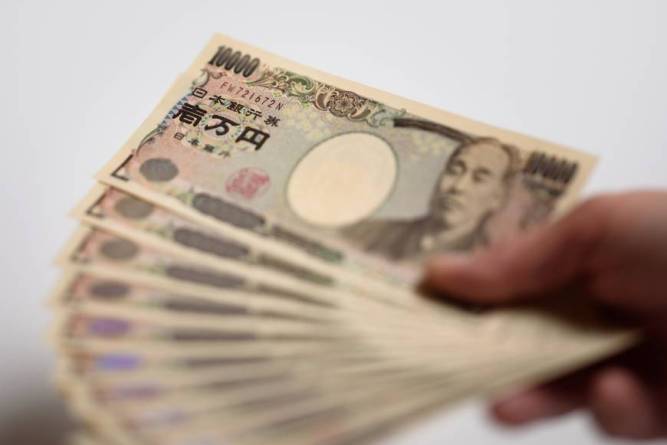
The government plans to use state funds to finance the radiation cleanup in the areas most seriously contaminated by the Fukushima disaster in 2011, government sources said Friday.
It is the first plan to decontaminate the “difficult to return to” zones, including a large portion of the two towns hosting the crippled Fukushima No. 1 nuclear power plant and parts of other nearby municipalities in the prefecture.
The move is intended to expedite the cleanup process but may draw criticism because it will effectively reduce the financial burden on Tokyo Electric Power Company Holdings Inc., the utility responsible for the world’s worst nuclear crisis since Chernobyl.
Under the current legal framework, the decontamination costs are first shouldered by the state, with Tepco told to reimburse the expenses over time. But since the costs are expected to far exceed the ¥2.5 trillion estimated earlier, the utility has requested more financial support.
The government plans to conduct decontamination in the difficult-to-return-to zones, which comprise about 337 sq. km of land where around 24,000 people used to live, the sources said.
The work within the designated “reconstruction bases” will include removing buildings, replacing soil and paving roads.
Tepco will only be asked to shoulder the costs of cleaning existing facilities and infrastructure that will continue to be used within the reconstruction bases.
The government hopes to officially endorse the plan this month, the sources said.
The Fukushima disaster, triggered by a huge earthquake and tsunami in March 2011, prompted the government to issue evacuation orders to 11 municipalities near the plant.
The areas have been reclassified into three categories based on radiation level — a zone where evacuation orders are ready to be lifted, a zone where human habitation is restricted, and a zone where residents will have difficulty coming back to for a long time.
The areas subject to evacuation are gradually being reduced, with the government setting a goal of lifting all the remaining orders apart from the difficult-to-return-to zones by next March.
In the heavily contaminated zones, the government plans to conduct costly and intensive radiation cleanup efforts that will allow it to lift the evacuation orders in five years’ time.
Promoted Fukushima Tourism Booming
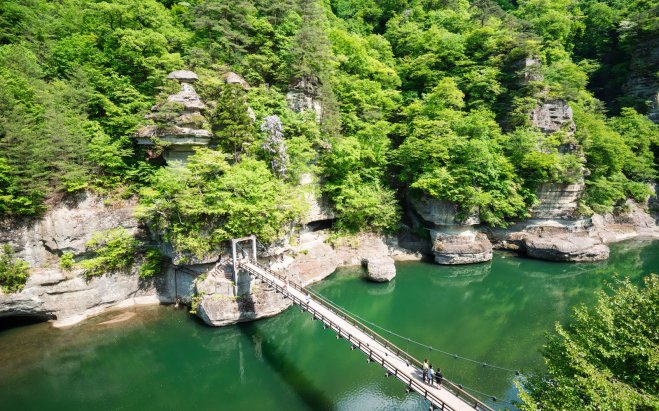
Fukushima Attracts 50 Million Tourists Annually for the First Time Since the Nuclear Disaster
Japan’s Fukushima Prefecture has hit a tourism milestone, drawing in more than 50 million visitors in the past year, according to data released by the Fukushima Prefectural Government.
The prefecture drew in a total of 50.31 million tourists, making it the first time this annual threshold has been achieved since the nuclear disaster of 2011.
According to the The Japan Times, the area has seen a recovery of close to 90 percent since then, which officials in the region contribute to several factors.
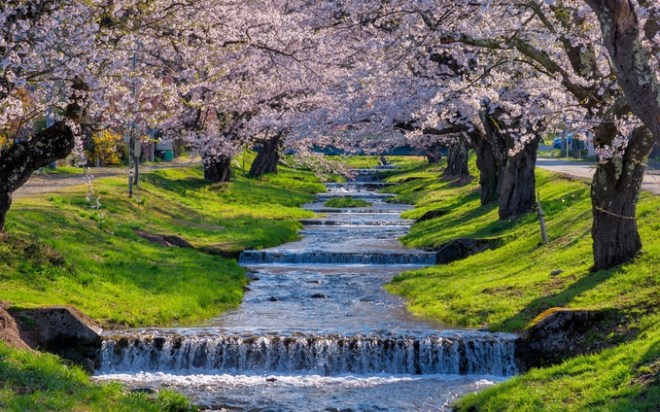
Last year, Fukushima officials launched the “Fukushima Destination Campaign,” tapping into the country’s transportation resources to offering railway deals and promotions.
Officials pointed to the opening of the section between the Tomioka and Namie interchanges on the Jōban Expressway last March as a key player in the surge of visitors in eastern Fukushima last year, which was up 59.9 percent from 2014.
The opening of new leisure facilities and a re-emergence of the area’s famous hot springs is also helping draw in visitors.
Above all, the data found that travelers were most drawn to the prefecture’s natural sights, with destinations like the Bandai-kogen highlands drawing in a total of 2.18 million visitors last year.
http://www.travelandleisure.com/trip-ideas/nature-travel/fukushima-tourism-rebound
Footholds Should Be Built in Fukushima No-Go Zone: LDP Team
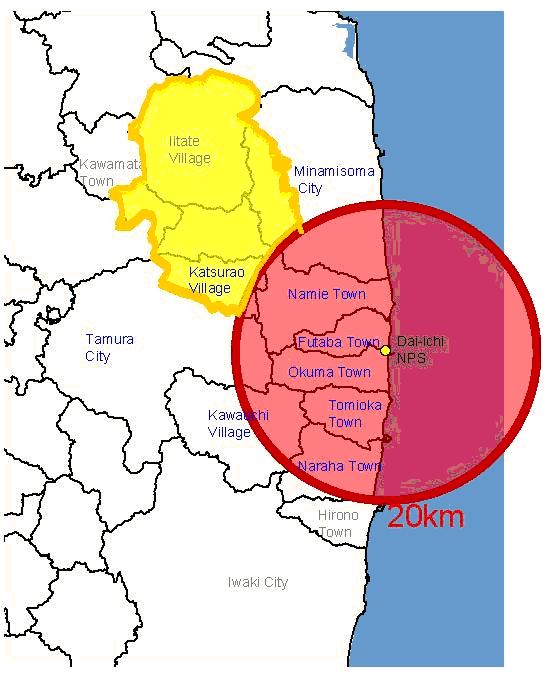
Tokyo, Aug. 17 (Jiji Press)–Reconstruction footholds should be set up in the no-go zone heavily contaminated by the 2011 nuclear accident in Fukushima Prefecture in northeastern Japan, a Liberal Democratic Party team proposed Wednesday.
The footholds should be used for decontamination work and infrastructure development so that evacuation orders for residents of the zone will be lifted in around five years, said the ruling party’s Headquarters for Accelerating Reconstruction after the Great East Japan Earthquake.
At a general meeting, the headquarters broadly agreed on a draft outline of the party’s planned sixth reconstruction proposal for areas damaged by the March 2011 earthquake and tsunami and the subsequent reactor meltdowns at Tokyo Electric Power Company Holdings Inc.’s Fukushima No. 1 nuclear power plant.
The government plans to remove all evacuation advisories in municipalities affected by the nuclear accident by the end of March 2017, excluding in the no-go zone where radiation levels are still too high for local residents to return home anytime soon.
The LDP will submit the proposal to Prime Minister Shinzo Abe later this month, after finalizing it through discussions with its coalition partner, Komeito.
Fukushima tourism making strong progress on “recovery”
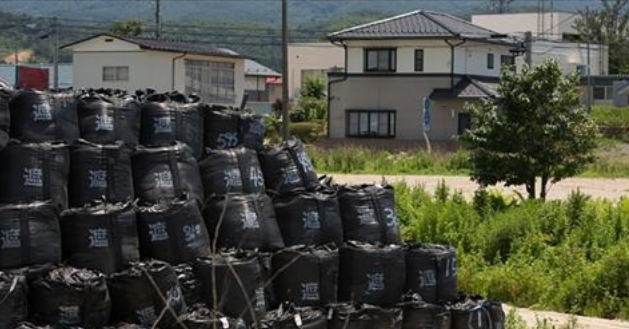
This is an article from the Fukushima Minpo News, the Fukushima local newspaper which is the propaganda organ of the Japanese central government. Therefore everything announced in this article should be taken with a grain of salt. Or maybe those tourists are the ones who enjoy sightseeing the numerous contaminated soil bags dump sites.

Tourism in Fukushima Prefecture approached a milestone in fiscal 2015 after recovering to nearly 90 percent of where it was before the nuclear disaster unfolded in March 2011, the prefectural government said in a recent tourism report.
In the year ended March 31, the prefecture saw 50.31 million tourists visit its resorts, sightseeing spots and leisure facilities, data compiled by the Fukushima Prefectural Government showed earlier this month.
That’s an increase of 3.42 million on the year before and nearly 90 percent of its tourism tally in fiscal 2010, when 57.17 million tourists visited, the report said.
It is also the first time the annual threshold of 50 million has been achieved since 2011, when the Great East Japan Earthquake tipped the Fukushima No. 1 power plant into a triple core meltdown on March 11.
Fukushima officials praised their promotion drive, dubbed the “Fukushima Destination Campaign,” for bearing fruit. The campaign allows its municipalities to tap the transport resources of the Japan Railway group across the country.
“We will work to draw more tourists by analyzing the effect of the Destination Campaign,” said a Fukushima prefectural official in charge of tourism promotion.
In a surprise, the Soma-Futaba region in eastern Fukushima, along the Pacific coast, drew 2.65 million tourists in fiscal 2015, up 59.9 percent from last year, the report said. Officials say the opening of a key part of the Joban Expressway between the Tomioka and Namie interchanges in March 2015 facilitated the surge. Indeed, the number of people who used drive-in facilities was 33.4 percent higher than last year, the report said.
The opening of new leisure facilities and the resumption of some onsen (hot spring) spas that suspended business in the wake of the disasters also contributed, the officials said.
Tourists were most attracted by the grand nature of Fukushima Prefecture, the data showed. The top spot in fiscal 2015 remained the Bandai Kogen highlands in the north, which drew 2.18 million visitors, up 4.6 percent from the year before.
Pokemon gets hot in Fukushima

Fukushima to use rare Pokemon to lure tourists back
Japan is planning to use Pokemon Go to lure tourists back to its quake hit regions, including in the radiation affected prefecture of Fukushima.
Officials for four prefectures in Japan have announced they are partnering with the Japanese subsidiary of Niantic, the US company behind the Pokemon Go game.
They hope that creating virtual attractions in the popular location-based game will help draw people back to the natural disaster affected areas.
Iwate, Miyagi and Fukushima prefectures are located in the north of the country and were heavily impacted by the 2011 earthquake and tsunami.
Kumamoto, located in southern Japan, suffered a series of earthquakes in April this year.

A handout image made available 16 March 2011 by Japanese Fukushima nuclear plant operator Tokyo Electric Power Co (TEPCO)
The game is already live in Japan, but players would find extra goodies in the four prefectures under the plan.
Game-makers will add more PokeStops – places where treasured items can be found, and more Pokemon Gyms – locations where people can meet and send their captured monsters into battle.
Officials say they will also place more rare Pokemon in the areas for players to hunt.
Tourism promotions say that less than 10 per cent of Fukushima is affected by radiation exclusion zones, insisting that other areas are safe to visit.
Officials in Miyagi, Iwate and Fukushima have also been planning ‘recovery tours’ in which guides take visitors to sites affected by the disasters.
But there are limits.
Tokyo Electric Power Company Holdings, TEPCO, reportedly had to request game developers to prevent Pokemon from spawning in radiation affected areas of Fukushima, to avoid drawing players into hazardous areas.
Nuclear reactors at the Fukushima Daiichi Nuclear Power Plant suffered meltdowns as a result of the 2011 earthquake and tsunami, and TEPCO says they recently found Pokemon at the site.
https://www.sbs.com.au/news/article/2016/08/12/fukushima-use-rare-pokemon-lure-tourists-back
Biological effects of Fukushima radiation on plants, insects, and animals

This is a pale grass blue butterfly, one of the most common species of butterfly in Japan. Recent research has revealed major impacts on this species from the radiation leaks at the Fukushima nuclear power plant. Credit: Joji Otaki, University of the Ryukyus, Okinawa, Japan
Following the 1986 Chernobyl nuclear power plant meltdown, biological samples were obtained only after extensive delays, limiting the information that could be gained about the impacts of that historic disaster. Determined not to repeat the shortcomings of the Chernobyl studies, scientists began gathering biological information only a few months after the disastrous meltdown of the Fukushima Daiichi power plant in Japan in 2011. Results of these studies are now beginning to reveal serious biological effects of the Fukushima radiation on non-human organisms ranging from plants to butterflies to birds.
A series of articles summarizing these studies has now been published in the Journal of Heredity. These describe widespread impacts, ranging from population declines to genetic damage to responses by the repair mechanisms that help organisms cope with radiation exposure.
“A growing body of empirical results from studies of birds, monkeys, butterflies, and other insects suggests that some species have been significantly impacted by the radioactive releases related to the Fukushima disaster,” stated Dr. Timothy Mousseau of the University of South Carolina, lead author of one of the studies.
Most importantly, these studies supply a baseline for future research on the effects of ionizing radiation exposure to the environment.
Common to all of the published studies is the hypothesis that chronic (low-dose) exposure to ionizing radiation results in genetic damage and increased mutation rates in reproductive and non-reproductive cells.
One of the studies (Hayashi et al. 2014) documented the effects of radiation on rice by exposing healthy seedlings to low-level gamma radiation at a contaminated site in Fukushima Prefecture. After three days, a number of effects were observed, including activation of genes involved in self-defense, ranging from DNA replication and repair to stress responses to cell death.
“The experimental design employed in this work will provide a new way to test how the entire rice plant genome responds to ionizing radiation under field conditions,” explained Dr. Randeep Rakwal of the University of Tsukuba in Japan, one of the authors of the study.
Another team of researchers (Taira et al. 2014) examined the response of the pale grass blue butterfly, one of the most common butterfly species in Japan, to radiation exposure at the Fukushima site. They found size reduction, slowed growth, high mortality and morphological abnormality both at the Fukushima site and among laboratory-bred butterflies with parents collected from the contaminated site.
Multiple sources of exposure were included in the butterfly study. “Non-contaminated larvae fed leaves from contaminated host plants collected near the reactor showed high rates of abnormality and mortality,” explained Dr. Joji Otaki of the University of the Ryukyus in Okinawa, Japan. Some of their results suggested the possible evolution of radiation resistance in Fukushima butterflies as well.
A review of genetic and ecological studies for a range of other species at both Chernobyl and Fukushima (Mousseau 2014) revealed significant consequences of radiation. Population censuses of birds, butterflies, and cicadas at Fukushima showed major declines attributable to radiation exposure. Morphological effects, such as aberrant feathers on barn swallows, were also observed. The authors suggest that long-term studies at Chernobyl could predict likely effects in the future at the Fukushima site.
All of these studies highlight the need for early and ongoing monitoring at sites of accidental radiation release. “Detailed analyses of genetic impacts to natural populations could provide the information needed to predict recovery times for wild communities at Fukushima as well as any sites of future nuclear accidents,” Mousseau said. “There is an urgent need for greater investment in basic scientific research of the wild animals and plants of Fukushima.”
Provided by: American Genetic Association
http://m.phys.org/news/2014-08-biological-effects-fukushima-insects-animals.html
Japan’s new environment minister pledges to build trust, contaminated waste storage facility in Fukushima
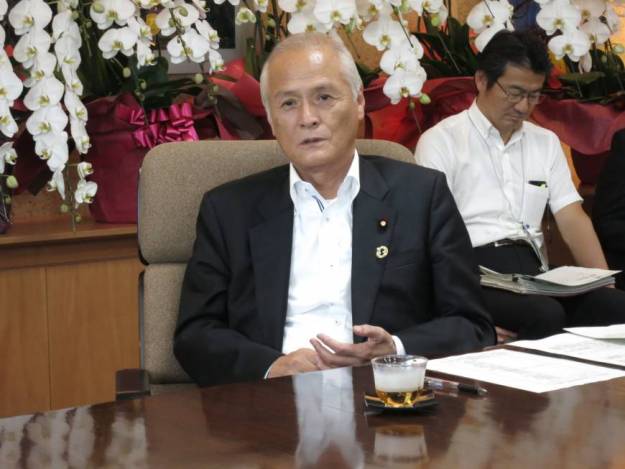
Environment Minister Koichi Yamamoto speaks during a group interview in Tokyo on Friday.
Newly appointed Environment Minister Koichi Yamamoto said Friday he will further efforts to build trust with people in Fukushima Prefecture to facilitate a stalled project to build a temporary nuclear storage facility.
The 2011 triple meltdown at the Fukushima No. 1 nuclear power plant has contaminated a large part of the prefecture while massive amounts of radioactive waste have been generated by decontamination work.
The government is planning to construct a huge temporary storage site near the Fukushima plant, but needs more than 2,300 landowners to agree to use their property for the project. So far it has only secured about 4.9 percent of the 1,600 hectares of land needed, owned by 234 people.
Although the government says it plans to store the waste for 30 years, no other areas have volunteered to host a final disposal site, leading many local residents to fear that the Fukushima site will end up being permanent.
“I’m aware that getting landowners’ consent is a very tough issue,” said Yamamoto, 68, a veteran Liberal Democratic Party lawmaker, during a media interview.
Yamamoto has learned from ministry officials that the situation is improving, and hopes to accelerate the momentum.
Storing contaminated waste at the site is crucial for Fukushima’s reconstruction work, which is currently stalled due to large amounts of waste piling up around the prefecture.
Meanwhile, some landowners are reportedly questioning the government’s commitment on this matter, as environment ministers have already changed four times since Prime Minister Shinzo Abe took office in December 2012.
But Yamamoto said the ministers have handled affairs properly. “This administration has been led by the LDP, so of course we have continuity and even (if) the minister changes (often), we share the same thoughts,” said Yamamoto.
He said 99 percent of the handover information he received from his predecessor, Tamayo Marukawa, was about Fukushima-related issues. “I have to make efforts to go to Fukushima often to make stronger connections than Marukawa did,” he said. Yamamoto plans to visit the temporary storage facility on Tuesday.
The government hopes to begin construction of the temporary storage site in October, the ministry said.
Home at last, but little joy as evacuee picks up pieces of her life
3 km’s up the coast. 1.8 miles to Minami-Soma from fuk. …. “The Japanese government steered displaced people toward their return by repeating that an annual exposure of up to 20 millisieverts poses little health risk,”
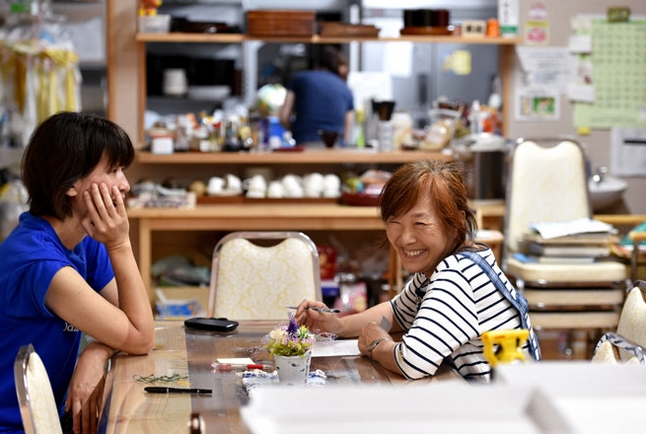
Tomoko Kobayashi, right, prepares with a volunteer worker for the reopening of her Futabaya ryokan in the Odaka district of Minami-Soma, Fukushima Prefecture, on July 11.
MINAMI-SOMA, Fukushima Prefecture–It was no ordinary homecoming for Tomoko Kobayashi, after an enforced absence of more than five years due to the 2011 Fukushima nuclear disaster.
She says she is “in no mood for celebration” given the daunting task facing her: having to start from scratch at the traditional ryokan inn that has been in the family for nearly 70 years.
The community that Kobayashi had called home was overrun with rats, wild boar and palm civets, and she struggled to protect the family business from that nightmare.
Kobayashi’s journey home to start afresh took her via Ukraine, which she visited in 2013 to learn how victims of the world’s worst nuclear accident–the Chernobyl disaster in 1986–were coping after all those years.
Kobayashi, 63, was shocked by the different approach authorities there had taken compared with that of Japan.
She said Ukraine takes a more cautious approach toward radiation risks.
Kobayashi returned to Minami-Soma’s Odaka district on July 12 after the central government lifted a ban for 11,000 or so evacuees from the district, which is within a 20-kilometer radius of the crippled Fukushima No. 1 nuclear power plant.
Her initial concern is living with low-level radiation.
She also worries for her future and whether she can get the business up and running. With her husband, Takenori, 67, Kobayashi has reopened Futabaya ryokan. The inn that she took over from her mother 10 years ago has 15 guest rooms and is located in front of JR Odaka Station, which is 16 km from the plant.
Another of her concerns centers on whether her return home to reopen the inn could play into the hands of the authorities.
“The central government is eager to wind up the program that compensates the victims,” she said, alluding to a sense that evacuees are being encouraged to return so that financial redress can end.
On the plus side, the radiation level in her neighborhood has dropped to below 0.2 microsievert per hour. Although it is three times the level before the triple meltdown in March 2011, the figure is significantly lower than in the immediate aftermath.
Since the disaster, Kobayashi has closely monitored the radioactivity of food, drinking water and soil by working with a local citizens group. In one instance, radioactivity registered more than 10,000 becquerels per kilogram when she measured the levels of the dust and dirt sucked up in a vacuum cleaner at her home.
Returning home means she still faces the risk of exposure to long-term, low radiation. How this could affect her health is not understood by scientists.
Odaka was previously designated a “zone in preparation for the lifting of the evacuation order,” where an annual radiation dose is estimated at 20 millisieverts or below.
Extensive decontamination work over the past three years paved the way for the evacuees’ return.
Despite the lifting of the ban, only 10 to 20 percent of the residents from Odaka and other parts of Minami-Soma are expected to go back.
Evacuees are reluctant because of the potential hazard of the long-term, low radiation exposure and the new living and social networks built during the five years they were away.
They are also wary of the risks of moving back in the vicinity of the nuclear complex where the unprecedented scale of work to decommission the damaged reactors is under way amid a host of challenges, including an accumulated buildup of highly radioactive water.
Before the nuclear accident, Kobayashi had a staff of five that washed and starched the linen. It was a hallmark of her ryokan’s hospitality. With only one staffer coming back, however, Kobayashi has to forgo the starched sheets.
At one point, more than 60,000 of the city’s 72,000 residents evacuated, including those who left voluntarily.
After she moved into temporary housing in Minami-Soma in 2012, Kobayashi occasionally visited the inn to clean up. The dark waters of the tsunami, spawned by the magnitude-9.0 tremor on March 11, 2011, almost reached the front door of her ryokan, even though it is situated 3 km from the coast.
Her neighborhood, which was blessed with a wide array of edible wild plants, mushrooms and freshwater fish, was transformed into a “gray ghost town.” The landscape became increasingly bleaker as gardens of homes were occupied by piles of black plastic bales containing radioactive waste from the cleanup operation.
Kobayashi had many sleepless nights. She wondered whether she could ever pick up the threads of the existence she led before the catastrophe.
Her turning point came in September 2013 when she joined a tour to the region in Ukraine devastated by the Chernobyl accident.
“I was curious to know how victims of a nuclear accident considered more serious than Fukushima’s are faring nowadays,” Kobayashi said.
Kobayashi also wanted to convey her gratitude to those affected by the Chernobyl explosion in Zhytomyr province for sending 150 dosimeters to Minami-Soma. The devices proved to be invaluable at a time when the city badly needed them.
When her tour group visited Zhytomyr, the residents there shared their experiences and answered questions sincerely.
What struck Kobayashi during the trip was the disparity between Ukraine’s local government and Japanese authorities in their handling of radiation risks and programs made available to help the victims.
In Ukraine, authorities are more hands-on.
“No Trespassing” and other warning signs were put up in communities, although their doses of radiation were lower than that in Odaka. Ukraine authorities issued a warning on the basis of radioactive contamination in the ground as it could lead to internal radiation exposure of residents through the spread of radioactive dust.
She also learned that a large number of people in Zhytomyr have developed health problems, not just cancer, but also a wide variety of diseases.
But they are guaranteed by law the right to receive treatment or to take refuge.
That is in sharp contrast with the Japanese government briefings with evacuees, which barely touched on the long-term, low radiation risks.
Kobayashi is outraged by this.
“The Japanese government steered displaced people toward their return by repeating that an annual exposure of up to 20 millisieverts poses little health risk,” she said.
Kobayashi said she would have been less suspicious of the intention of Japanese officials if they had candidly admitted that they didn’t know about the possible effects on health.
She is also angered about the way authorities treated evacuees in light of the July 12 lifting of the ban.
Evacuees from Minami-Soma’s Kawabusa district, a mountainous area that fell in the “residence restriction zone,” were also allowed to return. The zone is defined as one registering an estimated annual dose of between 20 to 50 millisieverts.
Although a dose in Kawabusa was confirmed to have dropped to less than 20 millisieverts, the clearance came as a surprise to many locals since it ran counter to the government’s previous policy of designating such an area first a zone in preparation for the lifting.
Kawabusa is home to about 300 people, including many children.
Despite a drop in radiation readings in her community, Kobayashi said she cannot ask her grandchildren, who are 8 and 2, to come visit her and her husband yet.
But she is determined to make an effort for rebuilding.
“I don’t know how many more years it will take to bring back the happy sounds of children to our community, but I am determined to do what I can do now,” Kobayashi said.
http://www.asahi.com/ajw/articles/AJ201608050001.html
Big business creeps into agriculture as farmers dwindle
“Fukushima is known for perilla production, and Yajima began cultivating the plant in there in 1999 after learning skills from local farmers. But he pulled the plug on the operation following the triple core meltdown at the Fukushima No. 1 nuclear plant in 2011 during the quake and tsunami disasters in March that year.”
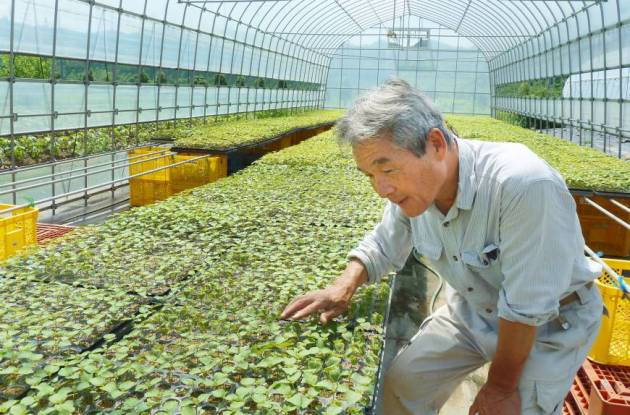
Shigeru Yajima, president of Morishige Bussan Co., takes a close look at perilla his firm is growing in Chichibu, Saitama Prefecture, in July.
With traditional family farms on the wane, corporations are increasingly entering the agriculture sector, taking advantage of an updated law allowing them to lease farmland across the country.
At the end of 2015, more than 2,000 companies were operating in the farm sector, a roughly five-fold increase from before the farmland law was revised in 2009, according to the Agriculture, Forestry and Fisheries Ministry.
Among them is Morishige Bussan Co., a food wholesaler in the city of Saitama that’s growing perilla on a 6-hectare patch of hilly land in Chichibu, Saitama Prefecture.
“We have doubled the patch since last year and are growing perilla all over the field,” Bussan President Shigeru Yajima said in early July.
Perilla plants are grown from seeds raised in vinyl greenhouses; those planted outside two weeks earlier were already 10 cm high.
“We have leased deserted arable land introduced by the Saitama prefectural and Chichibu municipal governments,” Yajima said. “Local people helped us improve the land.”
Oil obtained from perilla seeds is in booming demand as it is considered good for health and beauty, Yajima said.
“Though perilla seeds produced in China and South Korea are available, we stick to homegrown seeds,” he said.
Fukushima is known for perilla production, and Yajima began cultivating the plant in there in 1999 after learning skills from local farmers. But he pulled the plug on the operation following the triple core meltdown at the Fukushima No. 1 nuclear plant in 2011 during the quake and tsunami disasters in March that year.
Chichibu is suited to perilla cultivation because of its wide temperature variations, like Fukushima, said Yajima, who works the fields and processes the crops with five employees. Production of perilla and related business contribute to some 40 percent of Morishige’s annual sales of around ¥100 million.
To meet growing demand for perilla oil, Morishige farms out production of the plant to farmers in Gunma, Nagano and Miyagi prefectures.
Among other firms that have entered the farm sector, Kawaguchi Construction Co., a water supply and road construction company in the town of Minobu, Yamanashi Prefecture, grows Akebono Daizu (Akebono soybeans), a local specialty produced in a cool climate along the Fuji River in the southern part of the prefecture.
“We become busy with public works at the end of each fiscal year,” said Osamu Mochizuki, president of the company. “But as we have lots of time to spare early in each year, I decided (to farm soybeans) to protect jobs for employees.”
The amount of deserted arable land has been growing in Minobu, like other places, in line with the dwindling ranks of Japan’s aged farmers and the lack of successors. The prefectural government offered some 3 hectares of such land to Kawaguchi Construction.
“I decided to grow Akebono Daizu soybeans to help revitalize the local economy, hoping to develop them into a popular brand,” Mochizuki said.
Paste, curd and toasted flour made from dried soybeans are becoming popular. During an annual autumn fair to promote Akebono Daizu, many people visited the town to experience harvesting soybeans.
Of the roughly 2,000 corporations that have entered the agriculture sector, food companies accounted for 23 percent, agricultur and stock-breeding companies 22 percent and construction firms 10 percent.
Meanwhile, schools, medical institutions, social welfare corporations and nonprofit organizations represent a quarter of new institutional entrants into agriculture, according to Shinichi Shogenji, professor at the Graduate School of Bioagricultural Sciences at Nagoya University.
“It is a welcome development for them to use agriculture to support the independence of people with physical or mental disabilities, such as creating job opportunities,” Shogenji said.
Reuse of radioactive soil could cut costs by 1.5 trillion yen: ministry estimate
Behind the Environment Ministry’s controversial decision to allow reuse of highly radioactive soil emanating from the Fukushima nuclear disaster in public works projects was an estimate that the reuse could cut the costs of reducing radiation levels of such soil by over 1.5 trillion yen, it has been learned.
The estimate in question was presented during a closed-door meeting of the ministry in January and stated that reuse of radioactive soil generated from Fukushima decontamination work could cut the cost for purifying such soil from 2.9127 trillion yen in case the levels of radioactive cesium are reduced to 100 becquerels per kilogram to 1.345 trillion yen in case the cesium levels are cut down to 8,000 becquerels per kilogram. The estimate calls the latter option “reasonable from economic and social points of view.”
The Environment Ministry decided in June to allow reuse of soil with radioactive cesium of no more than 8,000 becquerels per kilogram in mounds under road pavements and other public works projects. The decision sparked criticism that it runs counter to the safety standards of 100 becquerels or less for recycling metals generated from the decommissioning of nuclear reactors under the Act on the Regulation of Nuclear Source Material, Nuclear Fuel Material and Reactors. The ministry has insisted that the radiation levels of tainted soil used in road mounds can be held down from 8,000 becquerels to around 100 becquerels by covering those mounds with concrete among other measures.
A ministry working group on safety evaluation of radiation effects held closed-door meetings over the issue on six occasions between January and May this year. In June, the Mainichi Shimbun reported that an estimate presented to one of those meetings stated, “For example, it will take 170 years for radiation levels to reduce to 100 becquerels if tainted soil of 5,000 becquerels is put to reuse,” sparking controversy. In response, the ministry on Aug. 1 released the minutes of the closed-door meetings and other documents on its website.
At the second meeting of the working group on Jan. 27, the copies of a document titled “About reasonable radioactivity concentrations of recycled materials” were handed out to attendants. The document, which was drawn up by the Japan Atomic Energy Agency, includes an estimate that the cost for reducing the radiation levels of tainted soil to 100 becquerels for recycling would reach 2.9127 trillion yen, with a volume reduction rate of 40 percent, adding that 40 percent of contaminated soil could not be put to reuse. Meanwhile, the estimate says it would cost 2.1185 trillion yen to drop the radiation levels of tainted soil to 3,000 becquerels, with a volume reduction rate of 0.5 percent, while it would cost 1.345 trillion yen to decrease the radiation levels of soil to 8,000 becquerels, with a volume reduction rate of 0.2 percent. The latter option could make 99.8 percent of tainted soil available for reuse, the estimate says.
“Considering economic and social factors, it is appropriate to set the radioactivity concentration of recycled materials at several thousand becquerels,” the document stated. A note of caution in the document states, “Apart from this, it is necessary to project the cost for final disposal (of tainted soil).”
A ministry official in charge of the issue told the Mainichi Shimbun, “The document was produced in response to a request by a member of the working group. As the document states, it is difficult to (set the standards for reusing tainted soil) at 100 becquerels from a realistic point of view.”
http://mainichi.jp/english/articles/20160803/p2a/00m/0na/014000c
1 This Month
19 February – VIRTUAL EVENT-Decision Time: AI and Our Nuclear Arsenal
12:45 p.m. Central / 1:45 p.m. Eastern
To see nuclear-related stories in greater depth and intensity – go to https://nuclearinformation.wordpress.com
-
Archives
- February 2026 (181)
- January 2026 (308)
- December 2025 (358)
- November 2025 (359)
- October 2025 (376)
- September 2025 (258)
- August 2025 (319)
- July 2025 (230)
- June 2025 (348)
- May 2025 (261)
- April 2025 (305)
- March 2025 (319)
-
Categories
- 1
- 1 NUCLEAR ISSUES
- business and costs
- climate change
- culture and arts
- ENERGY
- environment
- health
- history
- indigenous issues
- Legal
- marketing of nuclear
- media
- opposition to nuclear
- PERSONAL STORIES
- politics
- politics international
- Religion and ethics
- safety
- secrets,lies and civil liberties
- spinbuster
- technology
- Uranium
- wastes
- weapons and war
- Women
- 2 WORLD
- ACTION
- AFRICA
- Atrocities
- AUSTRALIA
- Christina's notes
- Christina's themes
- culture and arts
- Events
- Fuk 2022
- Fuk 2023
- Fukushima 2017
- Fukushima 2018
- fukushima 2019
- Fukushima 2020
- Fukushima 2021
- general
- global warming
- Humour (God we need it)
- Nuclear
- RARE EARTHS
- Reference
- resources – print
- Resources -audiovicual
- Weekly Newsletter
- World
- World Nuclear
- YouTube
-
RSS
Entries RSS
Comments RSS
 nuclear-news