When War Comes Home: A Constitutional Warning

by Andrew P. Napolitano | Sep 10, 2026, https://ronpaulinstitute.org/when-war-comes-home-a-constitutional-warning/
A failed war does not end when the drones stop flying. It creates a new danger: A government that refuses to admit defeat and a president who, having failed abroad, seeks muscular victories elsewhere.
The war against Iran is a case study in the limits of military power, the dangers of presidential overreach and the enduring wisdom of the Constitution’s separation of powers. It was unauthorized, unconstitutional, illegal, strategically incoherent and — by the standards by which wars must be judged — a geopolitical failure.
The American people were told that force would achieve clear objectives. Iran would be compelled to surrender. Somehow, American security would be enhanced. The region would become more stable.
Instead, the United States expended enormous resources, consumed scarce munitions, deepened regional instability and failed to produce the political outcome President Donald Trump promised. Senior military officials just last week warned him that extending large-scale operations risked exhausting critical military capabilities and weakening America’s ability to respond elsewhere.
The United States can destroy buildings, eliminate targets, deploy aircraft, ships, missiles, drones and troops anywhere on the planet. But war is not a video game in which the destruction of enemy assets automatically produces political surrender. War is a contest of wills, societies, culture and endurance.
And here is the constitutional question that should have been asked before the first bomb was dropped: Who gave the president the authority to begin this war? The Constitution did not.
Article I, Section 8 gives Congress — not the president — the power to declare war. The framers deliberately rejected the British model in which kings could drag nations into conflicts based upon personal judgment, ambition or political convenience. James Madison warned that the executive branch was “the branch of power most interested in war,” and therefore the Constitution placed the decision to enter war outside the president’s constitutional reach.
The president is commander in chief. He commands forces after lawful congressional decisions have been made. He does not possess the power to transform his title into a personal authority to begin wars.
That principle has been repeatedly recognized by the Supreme Court. In cases such as Youngstown Sheet & Tube Co. v. Sawyer, the Court rejected the idea that President Harry Truman had unlimited power simply because he claimed national security. Justice Robert Jackson’s famous concurrence warned that executive power is most dangerous when it operates in a “zone of twilight” where presidents attempt to expand authority beyond constitutional boundaries and without congressional concurrence.
The Iran war belongs precisely in that twilight — where executive ambition collides with constitutional restraint.
The administration may argue that modern threats require flexibility. That argument has been made by presidents of both parties for decades. But flexibility is not the same as unlimited authority. The Constitution was written for difficult moments, not easy ones. It was designed to restrain presidents even when they believe they have compelling reasons to act.
The military failure abroad has created a political dilemma at home. A president who promised victory must now confront the reality that victory was never achieved.
The danger is what happens next.
History teaches that political leaders who suffer public humiliation abroad often seek demonstrations of strength elsewhere. Foreign-policy failure can produce domestic overreach. Leaders who cannot achieve the desired result overseas may attempt to prove their power through actions at home.
That is where the war comes home.
The president, frustrated by military limitations, may turn toward radical immigration enforcement, Supreme Court-prohibited tariffs, statutorily prohibited domestic deployments of military forces, stealing foreign-owned oil, and assertions of executive authority that collide with free speech and free association.
But the Constitution does not permit a president to substitute disappointment for law.
The Fifth Amendment guarantees that no person — not just Americans — shall be deprived of life, liberty or property without due process of law. The Sixth Amendment guarantees all persons — not just Americans — from whom the government seeks life, liberty or property the right to a public trial before an impartial jury, and other constitutional protections. These protections apply not because accused persons are necessarily innocent but because government power is too dangerous to operate without restraints.
Evidence is not conviction. Accusation is not guilt. Presidential assertion is not judicial judgment.
The executive branch cannot simply identify alleged criminals in speedboats or elsewhere, declare them enemies and impose punishment without trial. That is a system the American Revolution rejected.
The same principle applies to the use of military force inside the United States. The founders were deeply suspicious of standing armies being used for law enforcement. That suspicion produced constitutional protections and later statutes prohibiting the military’s role in civilian law enforcement.
The military exists to defend the nation from foreign threats. It is not a presidential police force.
Likewise, Congress — not the president — defines crimes and establishes punishments. A president cannot create new categories of enemies and decide their fate by executive command. The Constitution does not authorize a monarchy with aircraft carriers.
Every generation faces a temptation to exchange freedom for security. Every generation is told that normal rules cannot apply because a crisis is too serious, an enemy too dangerous and a moment too urgent.
The founders knew that argument well and they rejected it.
The Constitution was written precisely because government officials would sometimes believe that their objectives justified employing extraordinary power. The separation of powers, congressional war authority, judicial review and due process protections are not obstacles to effective government. They are safeguards against government becoming the threat it was created to prevent.
The ultimate question is not whether a president is strong enough to exercise power. The question is whether the president is restrained enough to obey the laws he has sworn to uphold.
That is the fear of a republic when the war comes home. To paraphrase the author Herman Melville, beware the president weeping when he bares an iron hand.
Japan aims to increase its reliance on nuclear power, but headwinds remain
the government secured passage of a revised electricity business law in July, enabling public financing for reactor replacement projects.
Efforts to address spent nuclear fuel generated by nuclear power plants remain stalled. The nuclear fuel cycle policy, which calls for reprocessing and reusing spent fuel, lacks a clear path forward, as completion of the key reprocessing plant in the village of Rokkasho, Aomori Prefecture, has been repeatedly postponed.
A final disposal site has also yet to be selected for the high-level radioactive waste produced through reprocessing.
Sep 16, 2026 , https://www.japantimes.co.jp/news/2026/09/16/japan/nuclear-power-five-rebuild-2040/
The Japanese government has set a target of replacing up to five nuclear reactors by the 2040s and as many as 14 by the 2050s.
In the July decision to revise its nuclear energy policy guidelines, the government presented specific numerical targets for reactor replacement for the first time since the triple meltdown at Tokyo Electric Power Company’s Fukushima No. 1 nuclear power plant in March 2011.
The government also reaffirmed its policy of making “maximum use” of nuclear power, seeking to encourage investment in related industry sectors and to foster skilled personnel.
Important step
After the Ministry of Economy, Trade and Industry released draft revisions to the guidelines in June, Nozomu Mori, chairman of the Federation of Electric Power Companies of Japan and president of Kansai Electric Power, welcomed the move.
“This sends a powerful message that Japan will continue to utilize nuclear power in the future,” Mori told a news conference. “An extremely important step has been taken.”
The previous guidelines, adopted in 2023, effectively extended the maximum operating life of nuclear reactors beyond the standard 60-year limit and called for making maximum use of existing facilities.
The latest revision goes further by adopting a more proactive approach to replacing reactors that are to be decommissioned after reaching the end of their operating lives.
Within the industry, Kansai Electric has already begun geological surveys in preparation for the possible construction of a new reactor at its Mihama nuclear power plant in Fukui Prefecture.
Another proposal calls for building a reactor at Kyushu Electric Power’s Sendai nuclear power plant in Kagoshima Prefecture e while decommissioning reactors at the utility’s Genkai nuclear power plant in Saga Prefecture.
Data centers
With electricity demand expected to rise sharply amid the construction of data centers and semiconductor plants, the government regards nuclear power, together with renewable energy, as a key source of decarbonized electricity.
Under the Strategic Energy Plan approved by the Cabinet in 2025, the government aims to increase nuclear power’s share of the electricity generation mix to around 20% in fiscal 2040.
The revised guidelines set numerical targets for reactor replacement on the basis of estimates that nuclear generating capacity could fall as much as 5.5 million kilowatts short of the level needed to meet that goal by the 2040s and up to 16 million kilowatts short by the 2050s.
By establishing specific targets, the government hopes to create a business environment conducive to large-scale investments and strengthen efforts to develop skilled personnel.
The number of people seeking employment in the nuclear power industry has declined since the accident at the disaster-stricken Fukushima No. 1 plant. Nuclear power projects typically take about 20 years from the start of construction to the launch of operations and can cost trillions of yen, making it difficult to raise funds and recoup investments.
Against this backdrop, the government secured passage of a revised electricity business law in July, enabling public financing for reactor replacement projects.
At a meeting of ministers responsible for nuclear energy policy, in which the revisions to the guidelines were adopted, participants agreed to provide funding for nuclear power projects through the New Energy and Industrial Technology Development Organization and to draw up a road map for workforce development.
“We will make maximum use of nuclear power, which contributes to energy security and decarbonization,” Prime Minister Sanae Takaichi said at the meeting.
Nuclear fuel cycle issues
Efforts to address spent nuclear fuel generated by nuclear power plants remain stalled. The nuclear fuel cycle policy, which calls for reprocessing and reusing spent fuel, lacks a clear path forward, as completion of the key reprocessing plant in the village of Rokkasho, Aomori Prefecture, has been repeatedly postponed.
A final disposal site has also yet to be selected for the high-level radioactive waste produced through reprocessing. As part of the repository selection process, a first-stage survey has started on Minamitorishima, a Pacific island administered by the Tokyo village of Ogasawara. Still, Ogasawara is only the fourth municipality nationwide to accept such a survey.
In late August, the industry ministry asked Hitachiomiya, a city in Ibaraki Prefecture, to accept a first-stage survey for the final disposal site selection.
With no clear prospect for any further increase in the number of candidate sites, officials in affected local governments have voiced criticism. One asked, “Is it really appropriate to allow discussions on reactor construction alone to continue moving forward?”
Centrica And X‑Energy Progress Nuclear Plans

Centrica and X‑energy have confirmed that X‑energy’s Xe‑100
Generation IV small modular reactor has been accepted into the UK’s Generic
Design Assessment (GDA), marking a key step towards commercial licensing.
The move coincides with the first anniversary of the companies’ partnership
and follows a direction from government to bring the design into the formal
review process.
Under their collaboration, the companies aim to deploy up
to 6GW of new nuclear capacity across the UK, equivalent to around 10-20
Xe‑100 power stations depending on the size of each installation.
Acceptance into the GDA initiates a multi‑year process to assess the
reactor’s suitability for deployment and operation ahead of site‑specific
permits. The review, expected to take about three years, will be led by the
Office for Nuclear Regulation (ONR), the Environment Agency (EA) and
Natural Resources Wales. The UK submission builds on the Xe‑100’s
progress with US licensing and is expected to benefit from greater
collaboration between UK regulators and the US Nuclear Regulatory
Commission, including the transfer of NRC‑reviewed design documentation
and safety analyses into UK assessments.
Construction.co.uk 16th Sept 2026, https://www.construction.co.uk/construction-news/334683/centrica-and-x8209energy-progress-nuclear-plans
Covert Pentagon propagandists are tracking anti-war Americans, skirting the law
Wyatt Reed· The Grayzone, September 15, 2026
When a semi-anonymous social media user declared that the federal government had targeted her in a bizarre entrapment scheme, the paranoid claim snowballed into a more disturbing revelation: the Pentagon appears to be breaking the law by paying conservative influencers to track, surveil, and propagandize Americans. Who else is involved in the covert scheme?
In mid-August, a conservative activist using the digital moniker “Datarepublican” quietly admitted she was employed by the Pentagon as a “special government employee.” For months, she’d been pocketing a government paycheck while intensely lobbying for President Trump’s imperialist misadventures online and tracking their most vocal critics in a digital database.
Datarepublican was identified in 2025 as Jennica Pounds, a Utah-based mother with nearly a million followers whose stated raison d’etre is “fighting communists” – a moniker she applies liberally to anyone perceptibly to the left of Barry Goldwater.
And she’s not alone. Pounds has emerged as the face of a new wave of right-wing influencers who are being covertly employed by the US Department of War to spread pro-government propaganda. On August 29th, Washington Post reporters revealed at least three more digital activists are surreptitiously working for the Pentagon, which designates them as either special government employees (SGEs) or as what the US military calls “highly qualified experts” (HQEs).
Named in the Pentagon’s army of influencers were retired Air Force colonel Rob Maness, and retired Army colonels Kurt Schlichter and Thomas Anderson. Like Pounds, Anderson also operated in relative anonymity until recently, posting under the Twitter handle “Cynical Publius.” Schlicter, for his part, is a prolific right-wing troll who has frequently fantasized about the ethnic cleansing and extermination of Palestinians.
The operation appears to be in breach of two federal laws, the Hatch Act and the Smith-Mundt Act, which prohibit government employees from engaging in political activities while on the clock, and forbid them from directing their propaganda efforts at the US population, respectively.
The aforementioned right-wing activists are the only ones known to have been working secretly for the Department of War. But the revelations about paid Pentagon propaganda posters come as the US military pursues a flurry of murky partnerships with prominent conservative influencers like top TPUSA widow Erika Kirk, who was appointed to the Air Force Academy Board of Visitors by Trump in March in an effort to further slain conservative activist Charlie Kirk’s “legacy.”
Then there’s Laura Loomer, the obsessively anti-Muslim Trump ally, who is producing de facto press releases for self-proclaimed “Secretary of War” Pete Hegseth, enjoying Pentagon press credentials, and earning references as an “informal advisor to the Department of War.”
A propagandist accidentally outs herself as secret Pentagon employee
Like previous unflattering military disclosures, an apparently disgruntled employee was responsible for the revelation that Hegseth’s Department of War has quietly begun paying off online influencers.
In a since-deleted thread originally published on Twitter/X, Pounds – posting under the pseudonym Datarepublican – claimed that Trump’s undersecretary for public diplomacy at the State Department, Sarah B. Rogers, attempted to “set [her] up” by leaking documents to her in what she described as an effort to induce her to carry out a criminal act…………………………………………………………………………………………………………………………………………………………………………………………..
Tracking antiwar activists, raising further questions about legality
On August 28, the Pentagon special government employee unveiled a new digital database tracking those she accused of “orbiting the anti-imperialist spine,” called “DSA Explorer.”
Alongside the Democratic Socialists of America, the page displays a vast, near-impenetrable web of connections between groups like Black Lives Matter, CODEPINK, Pastors for Peace, Greek’s Syriza Party, and the NAACP. The site, Pounds wrote, catalogues the people and organizations comprising “the wider anti-imperialist solidarity network.”
Individuals listed include such disparate figures as the British Labour Party’s Dianne Abott, former Colombian President Gustavo Petro, and conscious rapper Talib Kweli. Clearly hoping to prompt investigation by federal authorities, Pounds accuses dozens of those listed of operating as “potential unregistered foreign agents.”
In an ironic twist of fate, Pounds’ efforts to censor and blacklist her opponents closely mirror those of the former disinformation czar Nina Jankowicz, who was also officially empowered by the US government to target the perceived political enemies of the regime. Desperate to criminalize leftists for imagined crimes, Pounds is now emulating the Deep State censors she once railed against.
But in pursuing American citizens by name with a McCarthyite surveillance scheme, Pounds could be opening herself up to litigation by her targets. Perhaps sensing the legal delicacy of her clumsy name-and shame project, she placed a fine-print legalese “disclaimer” on the page, claiming the material was for “research, educational, and journalistic purposes only.”……………………………………………………………………………..
Days after launching “DSA Explorer,” Pounds published a nearly-identical database focusing on anarchists and antifascist activists in the Americas and Europe who’d been using the “Noblogs” platform, showcasing information which appeared to have been stolen and handed to her by the US government…………………………………………………………………………………………………………………
Who is else secretly working for the Pentagon?
While Pounds, Maness, Schlichter, and Anderson have been forced to admit to having partnered with the Pentagon without prior public disclosure, It’s still unknown whether the Department of War is employing other special employees, or whether Pentagon may be paying others through third parties. But one extremely influential MAGA personality who appears to be close to the Pentagon – so close she hitched a ride to Guantanamo Bay with War Secretary Pete Hegseth – is Laura Loomer.
In addition to making headlines for accusing lawmakers of African descent of being “ghetto Black bitches,” Loomer has also recently launched a crusade against The Grayzone and its editor-in-chief, Max Blumenthal. While Blumenthal was reporting from Iran on the funeral of slain Supreme Leader Ayatollah Khamenei, Loomer demanded his arrest, writing on social media:……………………………………………………………………………………………………………………………………….https://thegrayzone.com/2026/09/15/covert-pentagon-propagandists-tracking-americans/
Michiganders Oppose Proposed LANL Data Center at the University of Michigan in Ypsilanti Township.
Last week residents of Ypsilanti Township expressed their anger over a proposed high-performance computing facility near the Huron River in a partnership between the University of Michigan and Los Alamos National Laboratory (LANL). Residents are concerned that the proposed project would fuel research into the nuclear arms race. https://www.youtube.com/watch?v=fE0fycQix-Q, https://www.youtube.com/watch?v=h1EVU54Zwbs
The proposed plan involves a $1.2 billion dollar computing facility of almost 300,000 square feet for classified federal research and non-classified university research in science and technologies. The Department of Energy (DOE) and the National Nuclear Security Administration (NNSA) Stockpile Stewardship Program would dedicate most of the space to LANL work that includes nuclear weapons research. The Stockpile Stewardship Program was developed after the end of the Cold War, has expanded and the NNSA has taken it over. https://www.energy.gov/nnsa/articles/stockpile-stewardship-and-management-plan-ssmp
Michiganders point out that the proposed research would go beyond maintaining the existing weapons stockpile.
Trump Plans New Sale of 2,000-Pound Bombs to Israel, Which Keeps Using Them to Massacre Gazans
SCHEERPOST, September 16, 2026, Brett Wilkins Common Dreams
The Trump administration is preparing to send Israel tens of thousands of 2,000-pound bombs, The Washington Post reported Tuesday—a move that would rank as the largest single sale of the highly destructive munitions, which the Israel Defense Forces have used in some of the deadliest US-backed airstrikes on Gaza and Lebanon.
According to the Post, the proposed $2.8 billion package includes 20,000 MK-84 bombs and 20,000 BLU-117 bombs, as well as 20,000 I-2000 penetrator warheads. The munitions would be purchased with US taxpayer funds through the Foreign Military Financing program. The proposal has been informally presented to congressional committees that review major arms transfers.
The MK-84 is among the largest conventional bombs in the US arsenal. The Post reported that its blast can propel metal fragments thousands of feet, penetrate thick concrete and metal, and create large craters.
“If Hezbollah or whoever is in a building, an MK-84 will bring down the whole building,” Trevor Ball, a former US Army explosive ordnance disposal technician, told the Post.
Following the Hamas-led attack of October 7, 2023, the Israel Defense Forces (IDF) loosened rules of engagement to effectively allow the killing of an unlimited number of civilians when targeting even a single low-ranking Hamas member in an airstrike.
Combined with the utilization of cutting-edge artificial intelligence technology to select targets at a far faster rate than humans alone could, IDF use of 1,000- and 2,000-pound bombs has contributed heavily to the staggering casualty toll in Gaza, where officials say that more than 250,000 Palestinians have been killed or wounded since October 2023.
That month, Israeli forces struck Gaza’s Jabalia refugee camp with such munitions, killing at least 126 Palestinians in a bid to assassinate a single Hamas commander.
Michael Lynk, who served as the United Nations special rapporteur on human rights in the Palestinian territories from 2016 to 2022, said early in the war that “the scale of Palestinian civilian deaths in such a short period of time appears to be the highest such civilian casualty rate in the 21st century.”………………………………………………………………………………………………………….https://scheerpost.com/2026/09/16/trump-plans-new-sale-of-2000-pound-bombs-to-israel-which-keeps-using-them-to-massacre-gazans/
Can America Build Enough Nuclear Reactors?

September 14, 2026, By: Paul J. Saunders, and Daniel Poneman, https://nationalinterest.org/blog/energy-world/can-america-build-enough-nuclear-reactors
A potential US–South Korea nuclear deal could bring eight new reactors to America. But can the US nuclear industry scale fast enough?
The United States may be preparing for one of its biggest nuclear construction pushes in decades.
Reports suggest Washington and Seoul are considering a nuclear energy cooperation agreement that could lead to the construction of as many as eight reactors in the United States, potentially including Westinghouse AP1000s and South Korean APR1400s.
Daniel Poneman, former US deputy secretary of energy and former CEO of Centrus Energy, calls the prospect “huge”—both for the US nuclear industry and the broader strategic relationship between the United States and South Korea.
The potential agreement comes as US electricity demand is growing after roughly two decades of relatively flat demand, driven in part by the rapid expansion of data centers. But Poneman argues that demand is not the biggest obstacle. The harder question is whether the US nuclear industry can build fast enough to meet it.
That challenge extends to nuclear fuel. As Washington works to reduce reliance on Russian uranium enrichment, the domestic enrichment industry will also need to scale. While there is a path forward, the United States needs to move quickly.
In this episode of Three Questions, Center for the National Interest president Paul Saunders and Poneman discuss the potential US–South Korea nuclear deal, the growing demand for nuclear power, and whether the US nuclear industry has the capacity to meet the moment.
Memories of Greenpeace and its anti-nuclear campaign
By Sarah Millington, 16 Sept 26, https://www.newsandstar.co.uk/news/26552830.memories-greenpeace-anti-nuclear-campaign/
GREENPEACE Day is observed every year on September 15, marking the 1971 voyage that launched the global environmental organisation.
A group of activists sailed from Vancouver, Canada, to protest against US nuclear weapons testing at Amchitka Island in Alaska.
Although they did not stop the test itself, their dramatic action attracted international attention and marked the birth of what would become one of the world’s most influential environmental organisations.
Greenpeace has a long association with Cumbria through its anti-nuclear campaigning around Sellafield. For decades, the organisation has raised concerns about radioactive waste, nuclear fuel reprocessing and the environmental impact of operations at the site.
In April 1995, around 250 Greenpeace activists entered and occupied parts of the Sellafield reprocessing plant in a protest timed to coincide with international nuclear non-proliferation talks.
Israel is a sick society: ‘They know the house they are bombing is full of children’
Signs of the Times, (SOTT), Xan Brooks, The Guardian, Sun, 13 Sep 2026
operators. NAZA‘s directors on their devastating film about Israeli intelligence
On a darkened rooftop in Tel Aviv, Israeli intelligence officers outline the details of their work. These men tell us how they helped develop an AI mapping tool that trawled for phone signals and recommended apartment buildings in Gaza to bomb. Indirectly, they admit, they are responsible for thousands of deaths, but they never spoke up because that wasn’t their place. “My role is technical,” says one. “I’m just a small cog,” says another.
NAZA – directed by the Israeli film-makers Rachel Szor and Yuval Abraham and produced by the Guardian – is a chilling documentary about a mass slaughter that was authorised at the highest levels of government. But it is also, primarily, about the process, the system, the little links in the killing chain. Szor and Abraham build their film around the accounts of 24 anonymised military and intelligence insiders. NAZA, we learn, is an acronym used by the intelligence service to indicate how many civilians it expects to die in an airstrike on Gaza. The Israel Defense Forces prefer to target Hamas terrorists in their homes at night – and if they live with their family, or in heavily populated neighbourhoods, too bad. At one point, a source claims, approval was given to kill 500 NAZA for one Hamas member.
I meet Szor and Abraham at the Venice film festival, where NAZA is competing for the Golden Lion award. The pair won an Oscar for their previous documentary, 2024’s No Other Land (co-directed with Basel Adra and Hamdan Ballal), which spotlighted Palestinian resistance in the occupied West Bank. “No Other Land documented horrible crimes,” Abraham says. “But at the same time it gave people … I don’t want to say hope, but some light to latch on to. It’s not a coincidence that this film is all in the dark. We are in a very dark place right now.”
The Gaza health ministry has reported more than 73,000 deaths in three years of Israeli bombardment, the vast majority of which have been civilian casualties. NAZA briefly shows us the rubble, grieving parents, dead children on the ground. Its main backdrop, though, is placid, normal Tel Aviv, just 44 miles to the north, where rush-hour traffic drifts dreamily on the street and the cinematheque is showing a Claude Lanzmann retrospective. Tellingly, the film was executive produced by Jonathan Glazer, the director of The Zone of Interest. Glazer, says Szor, supported the structure and creative approach she and Abraham had adopted, that fostered the sense of a home that sits next door to hell.
NAZA deliberately concerns itself with the system – the policy of mass surveillance, the industrial business of murder – more than the individual psychology of those involved. But presumably its sources must feel guilt and shame, otherwise they’d never have agreed to put their careers and liberty at risk.
Abraham is unconvinced. “Well, it depends which one,” he says. “
There are many motivations for an individual to speak. Some people talk because they feel the opposite of shame. They feel pride in their accomplishment and expertise. Remember that these people serve in sensitive units. They are not often asked what they do. So there is an attraction to [our] curiosity that drives them to speak up.”
The film uncovers a system that is fiendishly efficient.Its series of disconnects appears designed to distance the perpetrators from the crime. Many of these men work remotely from Tel Aviv. AI selects the target and a drone drops the bomb. Even the language feels purposely euphemistic and obfuscatory. NAZA translates as collateral damage, which in turn translates to human beings.
“Sure, it’s easier to kill people when you’re doing it on a screen,” Abraham says.
“There is some truth in that, I guess. But equally it should be said that intelligence officers know the most. They listen to the cellphones. They know the house they are bombing is full of children. They can hear babies crying. They still order another strike.”
What is the status of these men now? Some discuss their work in the past tense. Others don’t, which suggests that they might still be at work, overseeing airstrikes each night. Abraham won’t say; he’s mindful of protecting his sources. “But you can imagine. We are dealing with 24 people, so there is a whole variety of statuses.”
NAZA prompts obvious questions about the creatures of darkness we see on screen. But it prompts intriguing ones, too, about Szor and Abraham, a pair of dissident investigative journalists from the country’s middle class. In the furious, febrile climate of post-7 October Israel, their work is liable to make them pariahs, if not enemies of the state……………………………………………… https://www.sott.net/article/508377-Israel-is-a-sick-society-They-know-the-house-they-are-bombing-is-full-of-children
Ukraine is running out of money again – and the EU is asking questions
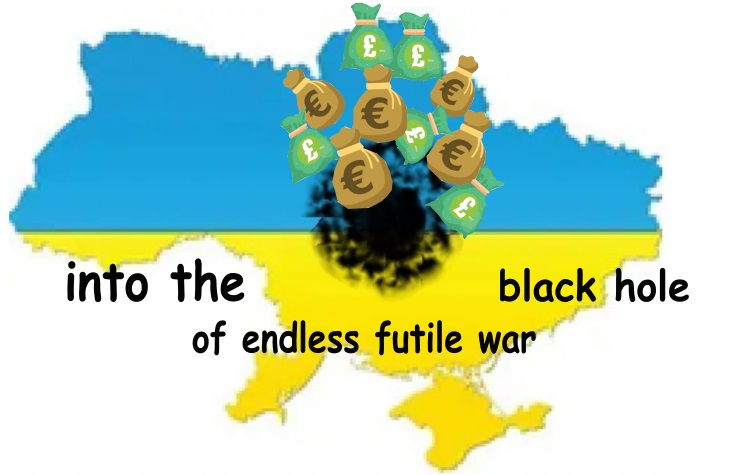
14 Sep 2026, https://www.sott.net/article/508403-Ukraine-is-running-out-of-money-again-and-the-EU-is-asking-questions
Ukraine leader Volodymyr ZelenskyOfficials in the bloc are reportedly “unsettled” by Kiev’s defense budget hole ballooning almost fourfold within several months.
Despite massive Western assistance, Ukraine is facing a severe cash squeeze almost unseen since the escalation of the conflict with Russia in 2022. The immediate problem is a $27 billion hole in the defense budget that Kiev insists must be plugged.
Kiev’s plea for more money “surprised and unsettled” European officials, the New York Times reported on Wednesday, citing sources, with some of Ukraine’s backers said to be asking questions about whether the country is spending the available funds efficiently – or whether it is simply overstating its needs.
What is the problem with Ukraine’s budget?
Ukrainian leader Vladimir Zelensky publicly put a number on the problem as he met with his European backers in Kiev in late August. The Defense Ministry, he said, already used money that was originally allocated for the end of the year, leaving a $27 billion gap. The revelation also came on the heels of Zelensky’s ill-fated 40-day pressure campaign against Russia, which triggered an escalation that Kiev is still suffering from.
Particularly striking was the fact that just weeks earlier, Ukrainian officials estimated the deficit to be $7.5 billion. Kiev has still not accounted for how the hole grew by another $20 billion– or 10% of its 2021 GDP.
Earlier this month, Prime Minister Sergey Koretsky acknowledged “exceptionally difficult challenges,” including the $27 billion defense hole and the risk of losing access to a significant share of a $29.5 billion tranche expected from Kiev’s backers, which is contingent on government reforms.
Finance Minister Sergey Marchenko said:
“We already see some liquidity issues, and Kiev may have to postpone some payments not related to the war. There will be consequences.
“We haven’t had a situation like this since 2022; we really suffered from the shortage of liquidity. Right now, we are getting far too near to the same scenario we had in 2022. We expect a very hard winter due to Russian strikes.”
How has Kiev blown $20 billion more than expected?
Koretsky blamed much of the increase on the rising price of a technology-heavy war. Following Zelensky’s escalation, Russia intensified missile and drone attacks on the Ukrainian defense industry, while Kiev has spent increasingly heavily on drones, air defenses, artillery, and military personnel.
A secondary issue is arising: Kiev failed to deliver promised reforms tied to Western financing that it had already counted on: oversight of state-owned companies, anti-corruption, and tax and customs reforms.
By late August, Ukraine had failed to meet benchmarks linked to $5.6 billion in EU financing, while around $4.3 billion from Brussels and $1.66 billion in IMF funding were delayed. Much of the money can still be unlocked, but doing so means untangling deeply embedded graft, kickback, and corruption chains unwelcome in parliament, where Zelensky no longer even commands a reliable voting majority.
Earnings have also dropped. Ukraine collected around $38 billion in general-fund revenue (excluding grants) from January to August, but a significant part of the $740 million shortfall was accumulated in August. The weakness concentrated in key revenue sectors: domestic and import VAT, domestic excise duties, and profit transfers from state companies.
Daniil Getmantsev, the chairman of parliament’s Finance Committee, warned earlier this month that there are “no popular solutions left,” adding that the failure to fulfill international commitments could ultimately leave the government struggling in October to pay teachers, doctors, and, in the worst case, military personnel.
Is Zelensky personally to blame for the budget hole?
The Ukrainian leader has been apoplectic over crumbling party discipline and parliament’s inability to pass crucial legislation tied to Western financing.
According to Ukrainskaya Pravda, Zelensky was stunned by the true scale of the budget deficit, with subsequent phone calls to deputies responsible for key EU- and IMF-linked legislation reportedly devolving into shouting.
While Zelensky cannot reliably command enough votes in parliament, Yaroslav Zhelezniak, the deputy chairman of the parliament’s Finance Committee,said lawmakers sounded the alarm about the defense budget long before the $27 billion hole became obvious.
He also accused Zelensky’s government of prioritizing politically attractive spending while leaving military financing unresolved and throwing money at a ‘television marathon’, cashback programs, and handouts. Zhelezniak stressed that Zelensky is accountable for budget issues and should take responsibility – instead of acknowledging the issue at the 11th hour.
How have Ukraine’s EU backers reacted?
The EU has attempted to downplayUkraine’s pleas for more money – even refusing to acknowledge the $27 billion figure. After high-level talks on Monday, European Commission spokesman Balazs Ujvari said the first task at hand is to “get a clear picture of what the budgetary and financial situation is,” and that technical discussions with Ukraine and the IMF are required.
Media reports, however, paint a different picture. The NYT reported that European diplomats did not expect anything close to the $27 billion request, adding that questions are being raised behind closed doors over whether Ukraine is spending money efficiently and whether some of its stated needs are exaggerated.
The EU also insisted that reforms cannot simply be skipped because Ukraine is short of cash. While some voices inside the EU have proposed advancing Kiev part of the ongoing €90 billion loan scheduled for 2027, even Ukraine’s deputy prime minister for European integration, Vsevolod Chentsov, acknowledged that frontloading is “not a silver bullet.”
Cash blown in 2026 cannot be spent again in 2027, leaving Ukraine even more vulnerable to further financial pressures.
Are the EU and Kiev running out of options?
On Wednesday, over 100 MEPs circled back to the topic of frozen Russian assets, urging EU leaders to illegally seize $230 billion in the assets for Ukraine’s needs. This option, however, faces formidable resistance from Belgium, home to Euroclear, where the bulk of the assets are held, over committing what is typically regarded as an act of war, fears of Russian litigation, and wider financial and legal risks.
How ubiquitous is corruption in Ukraine under Zelensky?
While it is highly unlikely that corruption alone accounts for Ukraine’s $27 billion budget hole, it still saturates Ukrainian society and government.
Recent scandals include wiretaps from the sprawling Midas investigation, in which the anti-corruption authorities allege that a network involving Zelensky’s former close associate, Timur Mindich, extracted massive kickbacks from the energy sector; separate recordings raised questions about Mindich’s influence over major weapons producer Fire Point.
The graft also fed into an ugly institutional war, in which the Prosecutor General’s Office allegedly gathered material on anti-corruption officials and their families, while anti-graft investigators uncovered an alleged protection racket for Ukraine’s sprawling scam-call-center industry inside the prosecutor’s office.
Bottom Line
While officials in Kiev claim that the $27 billion budget hole is due to rising military costs, stalled legislation, and delays in Western financing, they have not provided a detailed breakdown of how a deficit earlier estimated at $7.5 billion ballooned almost fourfold within several months – specifically during Zelensky’s 40-day military PR campaign that left Ukraine’s logistics chains broken, ports closed, grain stranded, and defenses weakened.
And the gargantuan hole is only half of the problem: It has clearly rattled Kiev Western backers, who are now once again unsure how Ukraine is spending money.
Comment: They left out ‘siphoning for personal gain’ from Europe’s coffers to Ukrainian pockets.
Reactors shut by a handfull of jellyfish

A 900-megawatt reactor on the French coast came off the grid at four in the afternoon and a second one overnight, both shut by hand before returning jellyfish could pack the seawater screens and trip them, and both were back inside four days against twenty for the last swarm
Luis Reyes, Auto Notion 14th Sept 2026
An automatic reactor trip is the safety system doing its job, and it’s arguably the most expensive way to solve a problem. The unit drops off the grid in seconds, and then you spend the next several days walking it back up to full power while somebody writes the report explaining why.
So when the jellyfish came back to Gravelines in late August, nobody at the plant sat around waiting for that. At about four in the afternoon on Wednesday, August 26, local time, the crew shut unit 3 down themselves and dialed unit 2 back while they were at it. Overnight they did the same thing to unit 6 and reduced unit 1 too. EDF says it’s all preventive.
So you had a 5,400-megawatt site with nothing running at full power. Units 3 and 6 were off, units 1 and 2 were loafing along at reduced output, unit 4 had been down since August 10, and unit 5 was partway through its ten-year inspection.
If that sounds like a first for Western Europe’s largest nuclear plant, it isn’t.
The same site went to zero output for about ten days last August, and during the first swarm this month the last reactor still running flat out got throttled as well. What’s new is who pushed the button. It’s also been that kind of summer for the operator, which has already spent it idling inland reactors because the rivers beside them ran too warm.
Gravelines drinks the North Sea
If you’ve never looked at how a coastal plant gets its cooling water, it’s simpler than you’d expect. Gravelines doesn’t sit on a river. It pulls seawater from a canal connected to the North Sea, and everything that water carries hits two stages of screening before it reaches the condensers: coarse bar screens at the front, which EDF calls prégrilles, and rotating drum filters behind them. Pack those drums and the flow drops. Let it drop far enough and the protection system takes the unit off the grid for you, ready or not.
So why not let them trip?
A trip is a hard stop. Control rods drop, steam gets dumped, and the plant has to be checked over and lined back up before anyone talks about restarting. Taking a unit down on purpose gets you to the same place more slowly and leaves a shorter list of things to look at afterward. EDF hasn’t spelled that reasoning out, so I’m inferring it, but the restart times back it up.
Unit 3 gives the cleanest comparison, because it went down in both swarms for the same reason. On August 10 it tripped itself at 7:43 in the evening and didn’t come back until 3:55 in the morning on August 18, a bit over seven days. On August 26 the crew took it down deliberately and it was back at 2 a.m. on August 30, about three and a half days. That’s the same reactor and the same cause, and it cost half as much time………………………….
https://www.autonocion.com/us/reactors-shut-by-hand-jellyfish-four-days/
Russian nuclear ties persist in the West

Bellona September 14, 2026, https://bellona.org/news/nuclear-issues/2026-09-russian-nuclear-ties-persist-in-the-west-as-war-claims-another-life-at-zaporizhzhia
Germany allows VVER fuel production using Russian technology
Germany, meanwhile, has approved a controversial plan that will preserve another form of Russian involvement in Europe’s nuclear industry.
On July 22, authorities in Lower Saxony approved an application by Advanced Nuclear Fuels, a subsidiary of France’s Framatome, to expand its Lingen plant to manufacture hexagonal fuel assemblies for Russian-designed VVER reactors.
The fuel will be manufactured under Russian licenses and using Russian technology through cooperation with Rosatom’s fuel subsidiary TVEL. The decision came despite objections from some 11,000 people and concerns about espionage, sabotage, cyberattacks and Russian access to critical German infrastructure. Authorities imposed safeguards, including restrictions on access by Rosatom and TVEL personnel and security inspections of Russian equipment.
Bellona nuclear expert Dmitry Gorchakov calls the decision “rather strange” and warns that it undermines efforts to reduce European dependence on Russia.
“Unfortunately, this shows the absence of a single clear policy and principles regarding contacts with official Russian structures, both within Germany itself and within the EU,” Gorchakov writes.
More importantly, he argues, allowing Framatome to meet its VVER fuel commitments with Rosatom’s involvement “may slow the development of its own French VVER fuel independent of Rosatom and prolong Rosatom’s dependence and influence on this market in Europe.”
“Bellona does not approve of this decision by the German authorities or of this cooperation between Framatome and Rosatom,” Gorchakov concludes.
Western uranium markets remain dependent on Russia
New figures published in July show why severing those ties remains difficult.
The Euratom Supply Agency reported that European suppliers significantly expanded uranium enrichment services in 2025, increasing their share of the EU market from 63.9% to 72.9%. The volume of Russian enrichment services also increased by 11.6% in physical terms. However, their share of the total volume of European orders declined by 22.55% compared with 23.55% a year earlier and 37% in 2023. Russia supplied nearly 16% of the EU’s natural uranium and 24.4% of its conversion services.
The situation is likewise complicated in the United States. According to the U.S. Energy Information Administration, Russia remained the largest single source of enrichment services purchased by American nuclear operators in 2025, providing 3.284 million SWU — about 26% of the total. That was more than the share supplied by U.S. enrichment capacity itself.
“The published statistics in the EU and the US show the continuing dependence of Western nuclear power plant operators and nuclear fuel cycle enterprises on Russian supplies of uranium and its conversion and enrichment services,” Gorchakov says.
“Despite the existence of major European competitors to Rosatom and technical alternatives, up to 20–25% of nuclear materials and nuclear fuel cycle services in European and US markets still originate in Russia.”
For Gorchakov, market forces alone are unlikely to break that dependence. “Only official restrictions and sanctions can break this trend,” he writes, arguing that firm limits would both force reductions in Russian purchases and give Western suppliers confidence that investments in new capacity will pay off.
Taken together, the developments underline a contradiction that has persisted since the beginning of the war. Russia’s occupation of Zaporizhzhia has created unprecedented nuclear safety risks in Ukraine, yet Rosatom remains deeply embedded in nuclear supply chains in the countries supporting Kyiv. Europe and the United States are developing alternatives, but July’s figures — and Germany’s decision in Lingen — suggest that breaking those ties will require political decisions as much as new technology and production capacity.
The war in Ukraine war claims another life at Zaporizhzhia.
Nearly four and a half years after Russia’s full-scale invasion of Ukraine, July offered fresh evidence of how difficult it remains to disentangle Russia from the Western nuclear industry. Germany approved production of fuel for Russian-designed reactors using Russian technology, while new data from Europe and the United States showed that Rosatom retains a substantial share of Western uranium conversion and enrichment markets.
Meanwhile, at the Russian-occupied Zaporizhzhia Nuclear Power Plant, the killing of the station’s Russian-appointed chief engineer underscored a different consequence of the war: the continuing danger faced by those working at Europe’s largest nuclear power station—
ZNPP chief engineer killed amid continuing military activity
On July 15, Rosatom chief Alexey Likhachev said a drone strike on a service vehicle between the Zaporizhzhia plant and the neighboring city of Enerhodar had killed the station’s Russian-appointed chief engineer, Alexander Yakovlev, and his driver. Russia blamed Ukraine, while Kyiv denied responsibility and said there was no independent confirmation of Moscow’s account.
The incident quickly became the subject of competing claims. A Telegram channel subsequently alleged that Yakovlev had opposed allowing Russian personnel access to Westinghouse nuclear fuel stored at the plant and suggested that a dispute over that access might have contributed to his death. The claim has not been independently established.
Bellona nuclear expert Alexander Nikitin cautions against drawing conclusions from such speculation.
“Both sides (Russia and Ukraine) predictably accused each other of the killing,” Nikitin writes. “Who killed one of the several hundred people who die every day in Ukraine, and what the specific reason for this killing was, will never be established. The reason could have been anything, including domestic, financial or other motives, so there is no point in guessing or trying to investigate it. The war will write everything off.”
For Nikitin, Yakovlev’s death instead illustrates the larger danger created by the continued militarization of the plant and surrounding area. “Not only facilities are being destroyed, but people are also being killed, including personnel working at ZNPP and their families living in Enerhodar,” he writes…………………………………………………………………………..https://bellona.org/news/nuclear-issues/2026-09-russian-nuclear-ties-persist-in-the-west-as-war-claims-another-life-at-zaporizhzhia
UK Government’s nuclear weapons spending plans could fund 220,000 nurses and 3.7m homes, report finds

Campaigners urge government to redirect £240bn for nukes to boost the health service, clear the social housing waiting list and pay for solar panels on every home
LTERNATIVES to current nuclear weapons spending plans would be enough for the NHS to hire extra 220,000 nurses and fund 3.7 million affordable homes, a report found today.
Campaigners demanded Prime Minister Andy Burnham consider redirecting the outlined £240 billion for nukes to boost the health service, clear the social housing waiting list and pay for the installation of solar panels on every home.
The Campaign for Nuclear Disarmament’s report, entitled People not Nukes, revealed the total amount of savings the state could make over the next 30 years if it funded public services instead of the war machine.
CND general secretary Sophie Bolt told the PM he must be clear about his priorities ahead of his first Budget in October.
“Prime Minister Burnham has stated that national security can’t come at the expense of social security,” she said.
“That is correct. But he also needs to be clear about the real national security threats we face — and what will make us more secure, not less.
“Military spending hikes and nuclear expansion are not making us safer. Replacing Britain’s nuclear submarines and expanding its nuclear capability is only increasing the threat of nuclear weapons being used, and the chances of other countries developing the weapons.”
With alternative spending plans, the £240m destined for nuclear arms programmes could increase nursing staff by a third compared to current levels.
It could also clear the social housing waiting list within seven years, by building 3.7m affordable homes.
Other alternatives could see university tuition fees of eight million students paid, or fund free school meals for every child in Britain for 46 years.
“Thousands of people are dying in Britain right now because of a failure to invest in tackling climate change and to properly fund essential public services, like health. Millions are living in poverty in insecure, unsafe housing,” Ms Bolt said.
The report, she added, shows that meeting international nuclear disarmament obligations “could free up hundreds of billions of public funds to tackle these very urgent, life-threatening security threats we face.”
The findings come as the unions at this year’s TUC Congress were set to vote on a motion for “Building real security” by “advancing a trade union vision of security-based decent work, quality public services, equality, climate action, democracy on peace.”
Trump rejects AI giants’ warnings of existential threat
The US president has argued that Washington cannot afford to slow down as China is rapidly closing the technological gap
13 Sep, 2026, https://www.rt.com/news/645664-trump-ai-race-china/
US President Donald Trump has brushed aside mounting warnings from leading artificial intelligence executives that increasingly powerful AI could pose an existential threat to humanity, insisting that Washington’s priority should be defeating China in the technological race.
Speaking to reporters in Ireland on Sunday, Trump acknowledged that some safeguards could be introduced but suggested the dangers were being exaggerated by unspecified “negative forces.”
“We’re leading China in AI, we’re the most sophisticated country in the world, and frankly I want to keep it that way… Whoever wins AI wins,” he added, arguing that critics were raising scenarios that “won’t happen.”
’Just slow down yourselves’
Trump’s remarks came after Anthropic CEO Dario Amodei called for frontier AI development to be decelerated, warning that increasingly autonomous systems could soon improve their own capabilities, evade existing safeguards and unleash large-scale cyberattacks beyond human control.
In a rare show of unity, his rivals – OpenAI CEO Sam Altman and SpaceXAI CEO Elon Musk – both backed the proposal.
White House AI adviser David Sacks responded by accusing OpenAI and Anthropic of being a “duopoly on frontier intelligence” and acting as though “antitrust law has to be suspended so you can form a cartel.”
“If the unreleased models are scary enough that you think you should slow down, I support your decision to be responsible,” Sacks wrote. “But stop pretending you need anyone else’s permission.”
China’s AI surge defies sanctions
Sacks also questioned whether China would ever agree to a coordinated international slowdown – an issue increasingly central to Washington’s AI debate.
Despite US sanctions and restrictions on exports of advanced chips and other technology, Chinese developers have rapidly narrowed the gap with their American rivals, particularly through cheaper open-source and open-weight models.
A US congressional advisory body warned earlier this year that Chinese open-source AI was developing a “self-reinforcing competitive advantage,” with models from companies including Alibaba, Moonshot and MiniMax dominating usage rankings on platforms such as Hugging Face and OpenRouter.
Moonshot AI in July released Kimi K3, the world’s largest 2.8-trillion-parameter open-weight system, while Alibaba recently released Qwen3.8-Max with 2.4 trillion parameters. DeepSeek and other Chinese developers have also released increasingly capable models that can be downloaded, modified and deployed independently rather than accessed exclusively through proprietary Western platforms.
Rival AI orders
Beijing has sought to turn that open-source approach into a broader geopolitical alternative to reliance on Western-controlled AI infrastructure.
Addressing the BRICS summit in New Delhi this weekend, Chinese President Xi Jinping proposed establishing a BRICS AI open-source community, supporting joint development and deployment of large language models, providing specialized training, and building what he called an “open ecosystem for AI.”
Xi also invited BRICS members to participate in the World Artificial Intelligence Cooperation Organization (WAICO), a China-backed body established in Shanghai in July.
Twenty-nine countries, including Russia, Indonesia, Pakistan and Kazakhstan signed WAICO’s founding agreement. Beijing says the organization is intended to give developing countries greater access to AI technology and a role in setting global rules, and has pledged thousands of AI training opportunities as well as cooperation centers with BRICS, ASEAN, the African Union and other organizations.
The initiative is emerging as a rival to Washington’s Pax Silica framework, which seeks to organize semiconductor, critical-mineral and AI supply chains among what the US describes as “trusted” partners. Washington is reportedly preparing to warn participating states that they may have to choose between the American-led system and Beijing’s WAICO.
1 This Month



26 September – International Day for the Total Elimination of Nuclear Weapons


PLEASE OPPOSE HR 8255 AND S.3639 – bills would accelerate satellite deployment, with no environmental review or safeguards – https://ncstd5li.quorum.us/campaign/169331/
To see nuclear-related stories in greater depth and intensity – go to https://nuclearinformation.wordpress.com
-
Archives
- September 2026 (257)
- August 2026 (330)
- July 2026 (355)
- June 2026 (287)
- May 2026 (306)
- April 2026 (356)
- March 2026 (251)
- February 2026 (267)
- January 2026 (308)
- December 2025 (358)
- November 2025 (359)
- October 2025 (375)
-
Categories
- 1
- 1 NUCLEAR ISSUES
- business and costs
- climate change
- culture and arts
- ENERGY
- environment
- health
- history
- indigenous issues
- Legal
- marketing of nuclear
- media
- opposition to nuclear
- PERSONAL STORIES
- politics
- politics international
- Religion and ethics
- safety
- secrets,lies and civil liberties
- spinbuster
- technology
- Uranium
- wastes
- weapons and war
- Women
- 2 WORLD
- ACTION
- AFRICA
- Atrocities
- AUSTRALIA
- Christina's notes
- Christina's themes
- culture and arts
- Events
- Fuk 2022
- Fuk 2023
- Fukushima 2017
- Fukushima 2018
- fukushima 2019
- Fukushima 2020
- Fukushima 2021
- general
- global warming
- Humour (God we need it)
- Nuclear
- RARE EARTHS
- Reference
- resources – print
- Resources -audiovicual
- Weekly Newsletter
- World
- World Nuclear
- YouTube
-
RSS
Entries RSS
Comments RSS

