Hubris in Action: Netanyahu and the Warnings of October 7

As with previous disasters in history, he may well have been found out.
15 September 2026 Dr Binoy Kampmark, https://theaimn.net/hubris-in-action-netanyahu-and-the-warnings-of-october-7/
Whatever awaits him this coming November, few politicians could claim to have the endurance, bloody mindedness and sense of granite staying power than Israel’s Benjamin Netanyahu. With some prowess, he has wooed, deceived, and lied his way to power, and, for the most part, stayed the course for the best part of a generation. He bloomed in arid soil when sceptics thought him dead. He offers lessons of Machiavellian proportions almost unsurpassed.
What, then, of being found out for falling short ahead of the October 27 elections? Errors in the making, the sundering blunder to soil the image of strength? History offers the guidance of tragic and foolish mistakes. The British failure to anticipate their routing in Singapore by the Imperial Japanese Army in 1942 is always a topic of interest (they wagered on a sea attack, not a jungle incursion); even, dare one say, the failure of the United States to anticipate an attack on Pearl Harbour in December 1941 despite doing much to aggravate a power that had done so much to put the Western powers on edge. Did, in other words, the individual in a position of power and influence know and, for whatever said reasons, not take the threat seriously? Self-confidence, or, as the ancient Greeks might put it, hubris, bulks complacency and places it on a pedestal. This is the case being made about Netanyahu. And more besides.
The latest bruising claim by Haaretz, based on research for a book Hostages: 843 Days of Abandonment by Shlomi Eldar and Ruth Yuval, involving “dozens of sources in Israel and worldwide, including very senior officials, as well as sound recordings, internal documents and recordings”, is chastening.
Netanyahu was, according to the authors, told, in unequivocal terms, that an attack by Hamas was being planned. According to the report, a 45-minute conversation took place between UAE President Sheikh Mohamed bin Zayed (MBZ) and Netanyahu, in which the Emirati leader warned of the intentions of the late Hamas leader Yahya Sinwar that could lead to an exaction of bloodiness from Israel and a destabilising of the Abraham Accords. This came after the stymieing of negotiations between Hamas and Netanyahu’s office that had begun in 2023 in pursuit of a temporary truce, known as a hudna, that would pave the way for a more durable arrangement regarding the Gaza Strip. Ghazi Hamad took the lead for Hamas, as he did in 2014 when talks are also said to have taken place between Netanyahu and Hamas, unbeknown to security officials.
The paper notes the views of Israeli President Isaac Herzog on MBZ on the escalation taking place in the West Bank and Gaza in September 2023. Bin Zayed is said to have, according to Herzog, spoken to him “about this often in the months leading to the war.” He “constantly conveyed messages that the situation needed to be defused. “
He even sent a special envoy to Israel who met with the prime minister. The emir seemed to sense that the area was on the verge of explosion.”
To dilute the scorching acid in the mix, a senior Fatah official, cast in the role of “Coal Eyes” to both Hamas and the internal intelligence agency Shin Bet, was brought in. Talks proceeded. It seemed that some semblance of an agreement was made. “The atmosphere was so optimistic that Fatah’s Coal Eyes repeatedly reported that an agreement with Israel was closer than ever and that both sides viewed the proposals as ‘feasible options’.”
Netanyahu, however, baulked. “Perhaps,” speculate the logically minded scribblers, “he did so out of fear of reaching an agreement with Hamas, or perhaps out of fear from the reaction of his extremist partners in his new government.” His right-wing coalition partners, cut and dried fanatics as they are, were not likely to have approved. Sinwar remained sly, fielding his options: he was still conducting negotiations with Hezbollah and Iran in the context of an attack on Israel. “He simply vanished from our radar, evaporated,” Haaretz records a senior Shin Bet official as saying. The journalists float the suggestion that Iran, Hamas and Hezbollah, bound in that axis of growling resistance, thought Israel vulnerable at that particular point n time. “In September 2023, Coal Eyes has a meeting with Sinwar: ‘Tell the Israelis that if they don’t make progress, I’m preparing a huge surprise for them.’ They could expect a ‘zilzal’ (earthquake).”
Events transpire with dull inevitability, but Coal Eyes eventually readies himself to tell Shin Bet about the ominous developments. Its head, Ronen Bet, seeks Netanyahu for discussions. Briefings take place on the “earthquake” threat. The defence establishment remained largely phlegmatic, almost cocky. The threat by Sinwar was, according to an Israeli intelligence official, something of a prodding tease, a scouting exercise: “due to being tired about Israel’s delays, placing pressure on seeking an arrangement and not so eager to start a war. Or, as we prefer to think, it was part of his ‘Great Deception’ plan, and he wanted to test the IDF’s readiness.”
To cloud matters further for Netanyahu, the Egyptian intelligence chief Gen. Abbas Kamel is also said to have warned the PM’s office that Hamas was readying to launch “something unusual, a terrifying operation.” The CIA-director William Burns is also said to have been told by bin Zayed about “something there […] about to explode.” The jam spread of imminent attack, in other words, becomes harder to avoid. Following the October 7, 2023 attack, Netanyahu, according to a report by Smadar Perry writing for Ynet, is said to have told Kamel that, “In Gaza, we are in the picture, we are in control. Our problem is with the West Bank, and that’s where we are diverting our forces.”
The PM’s office poured corrosive scorn on the Haaretz report, describing it as “a complete lie. Prime Minister Netanyahu did not speak with the president of the United Arab Emirates during the period in question and did not receive a warning from him.” The opposition leaders thought far more of the revelations, eager to pluck the fruits of electoral opportunity. “Netanyahu bears personal and direct responsibility for the failure that led to the deaths of thousands of Israelis on his watch,” former Prime Minister Naftali Bennett stated. “His ignoring of the warnings is criminal negligence, and therefore he is doing everything to prevent the establishment of a state commission of inquiry that will expose the truth.”
In a joint statement, opposition leaders Bennett, Gadi Eisenkot, Yair Golan and Avigdor Lieberman demanded that, “The Israeli public is entitled to know: What did Netanyahu know, and when did he know, why he didn’t update the security establishment, and why he didn’t act to protect Israeli civilians?” Reasons await from the wily Netanyahu, a man so confident he thought he could outwit oppressive precedent and damn Clio. As with previous disasters in history, he may well have been found out.
Kremlin blasts US move to militarize space

“We believe that space should be free from any weapons. And certainly we count on broad international consolidation… to continue efforts for the full demilitarization of space,”
Moscow believes Washington’s deployment of an orbital weapons system is taking the world in the wrong direction
15 Sep 26,https://www.rt.com/russia/645760-kremlin-us-space-weapons/
Weapons should not be deployed in space, Kremlin spokesman Dmitry Peskov has said, responding to the Pentagon’s announcement that the US has placed a weapons system in orbit.
US Secretary of the Air Force Troy Meink disclosed the deployment on Monday, saying the US Space Force “now has on-orbit space control weapons capable of defending the joint force against hostile adversary action,” without providing details about the system. Media reports have suggested that it is intended to disable or destroy hostile satellites.
“We believe that space should be free from any weapons. And certainly we count on broad international consolidation… to continue efforts for the full demilitarization of space,” Peskov told journalists on Tuesday during a regular briefing.
The Pentagon has a long history of using orbital systems for military purposes, specifically intelligence gathering, navigation and communications. Some US military concepts, however, have also envisioned systems potentially capable of conducting strikes from space. During the Cold War, for example, the Soviet Union viewed the Space Shuttle as a potential platform for delivering a rapid nuclear strike.
Countries regarded by Washington as strategic rivals, including Russia and China, have reportedly developed anti-satellite capabilities that could deny the US the advantage in space during a direct conflict. The use of such weapons, however, could produce significant unintended consequences.
The so-called Kessler effect describes a scenario in which collisions generate increasing amounts of orbital debris, triggering further collisions and potentially making low Earth orbits unusable for an extended period.
Russia has long called for stronger international agreements restricting the military use of space. While the Outer Space Treaty prohibits the deployment of weapons of mass destruction in orbit, Moscow has argued that conventional weapons should also be banned.
In June, Israeli Defense Minister Israel Katz announced that his country was developing a space-based anti-satellite laser system and aimed to become “the leading country in the world with this capability.”
New Details On How Space Force Has Waged Electronic Warfare Against Iran
Space Force learned important lessons from the war with Iran about operations inside and outside of the atmosphere.
Joseph Trevithick, TWZ10 Sep 15, 2026
S. Space Force’s top officer has shared new details about his service’s use of electronic warfare capabilities during Operation Epic Fury against Iran earlier this year. This underscores how space is steadily becoming an arena where conflict actually occurs, and the implications this has for forces operating inside and outside of the Earth’s atmosphere.
Chief of Space Operations Gen. Douglas Schiess highlighted the actions of a member of the 42nd Electromagnetic Warfare Combat Detachment (EWCD) in support of Epic Fury during a keynote speech earlier this morning. Schiess’ remarks came at the Air & Space Forces Association’s (AFA) 2026 Air, Space & Cyber Conference, at which TWZ is in attendance. This is his first major engagement since taking over as head of Space Force less than two weeks ago.
“During Operation Epic Fury, our components, notably at U.S. Central Command and Space Command, with support from our components at European Command and Pacific Command, demonstrated that Guardians [the official term for uniformed Space Force personnel] are not supporting from the sidelines as a nice-to-have [sic], but we are delivering space power directly into the fight as a need-to-have,” Schiess said. “One of those impressive Guardians is Specialist Gray, who hails from Tampa, Florida. She joined the Space Force just two years ago, but listen to the impact she [has] made in her short term already.”………………………….
Schiess did not name the system in question or elaborate further on how it was employed. However, previously released pictures of elements of the 42nd EWCD in the Middle East have shown personnel working with trailer-mounted multi-band antennas that have been associated in the past with variants of the Counter Communications System (CCS). CCS is a family of ground-based electronic warfare jammers primarily designed to disrupt enemy space-based communications capabilities. Prior to yesterday, CCS was the U.S. military’s only publicly acknowledged anti-satellite weapon. Space Force has now confirmed it also has weapons in orbit, which we will come back to later on.
The 42nd Electromagnetic Warfare Combat Detachment has been operating in the Middle East since at least 2024 under the umbrella of Space Force’s main headquarters in the region, U.S. Space Forces – Central (SPACECENT). President Donald Trump briefly called attention to the detachment’s “cutting-edge defense activities” during a Christmas Eve conference call with deployed service members last year.
“Sometimes we have to be within the footprint of the satellite, and so that’s why Guardians go into harm’s way,” Gen. Schiess did tell TWZ and other outlets at a roundtable after his speech this morning when asked for more details about the 42nd EWCD’s role in Operation Epic Fury, and what lessons Space Force has been learning from the conflict more broadly.
“Electromagnetic warfare was a big part of that, but also satellite communications,” he added. “The ability to keep communications, obviously GPS and PNT [positioning, navigation, and timing], were important there.”………………………………………………………………………………………………https://www.twz.com/space/new-details-on-how-space-force-has-waged-electronic-warfare-against-iran?utm_source=pushly
PLEASE OPPOSE HR 8255 AND S.3639 – bills would accelerate satellite deployment, with no environmental review or safeguards

15 Sept 26, https://ncstd5li.quorum.us/campaign/169331/
Why It Matters:
US Congress is fast-tracking two bills — HR 8255 and S.3639 — to launch of hundreds of thousands of satellites without any meaningful health or environmental review.
These bills would accelerate satellite deployment despite a myriad of potential yet unexamined harms. Applications for a million orbital data centers have already been submitted to the FCC. The number of total satellites under review by the FCC for all purposes is much greater. Yet the FCC has no meaningful process for health or environmental review. The FCC has NEVER assessed the health or environmental impacts of satellites, and the GAO has already found that this outdated approach needs to be reexamined. These bills would further incentivize the FCC to continue to ignore otherwise legally required analysis and public involvement on environmental and human health impacts.
Effects from satellites include:
- Significant increase in electromagnetic radiation, which in turn raises the risk of harm to people, animals and plants
- Toxic metals released when satellites burn up, poisoning air, food and water
- More rocket‑fuel pollution already appearing in ecosystems
- Severe orbital crowding — Starlink logged 25,000 collision‑avoidance maneuvers in 6 months
- Hundreds of thousands of satellites falling back to Earth each year polluting the earth
- Loss of dark, night skies with adverse ecological, biological, cultural and scientific effects
- More rare-earth mining, which is linked to unsafe conditions for workers and child labor
- No meaningful process for health or environmental review
What We’re Asking For:
Urge your U.S. Senators and Representatives to oppose HR 8255 and S.3639 by filling out the form.
Your Voice Matters:
Your outreach as a constituent directly influences how Congress evaluates and prioritizes legislation. By speaking up, you can help ensure satellite expansion doesn’t outpace health and environmental protections — and that these bills aren’t advanced without the safeguards our communities and planet need.
Ten Sellafield leaders earn more than the Prime Minister
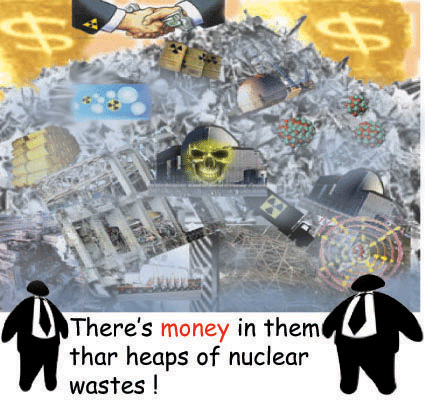
Ten Sellafield leaders earn more than the Prime Minister. SENIOR figures at
a West Cumbria nuclear decommissioning operation are earning more than the
Prime Minister, public records show.
Whitehaven News 15th Sept 2026, https://www.whitehavennews.co.uk/news/26548323.ten-sellafield-leaders-earn-prime-minister/
Saudi Arabia Discovers 110 Million Tonnes of Uranium-Bearing Ore
Saudi Arabia has discovered 110 million tonnes of uranium-bearing raw
material in the Medina region, a potentially significant find as the
Kingdom accelerates plans to develop a domestic nuclear energy industry.
Saudi Energy Minister Prince Abdulaziz bin Salman announced the discovery
on Monday at the International Atomic Energy Agency’s General Conference in
Vienna, according to Saudi state television……………………………………………..
Saudi Arabia and the United States signed a landmark civil nuclear cooperation agreement in July, establishing the legal framework for American companies to supply nuclear technology and equipment to the Kingdom. The U.S. Department of Energy described the agreement as laying the foundation for a decades-long, multibillion-dollar nuclear partnership………………………….
Oil Price 14th Sept 2026,
https://oilprice.com/Latest-Energy-News/World-News/Saudi-Arabia-Discovers-110-Million-Tonnes-of-Uranium-Bearing-Ore.html
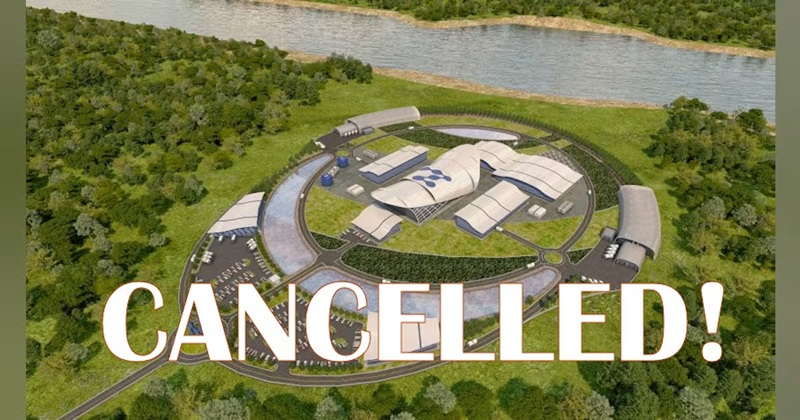
Canadian Nuclear Laboratories cancels SMR programs
| Ole Hendrickson, Sep 17, 2026, |
CNL’s call for SMR demonstration projects, and CNL’s “Advanced Reactor” research initiative, are now officially terminated:
Chalk River, ON – September 10, 2026 – Canadian Nuclear Laboratories (CNL), Canada’s premier nuclear science and technology organization, is announcing adjustments to its clean energy research programs. As of July 2026, CNL will close its Invitation for Clean Energy Projects program and the Canadian Nuclear Research Initiative (CNRI). Both programs were aimed at leveraging the facilities and capabilities at CNL-managed sites to advance clean energy projects.
Canadian Nuclear Research Initiative (CNRI) – it was a program to support collaborative Advanced Reactor (AR) research projects with third-party proponents in Canada.- Invitation for Clean Energy Projects program (originally titled as Invitation for SMR Demonstration Projects) – CNL had been working with its client, Atomic Energy of Canada Limited (“AECL”), to develop a process by which CNL could recommend the establishment of one or more clean energy demonstration projects on one or more sites owned by AECL (including Chalk River Laboratories and Whiteshell Laboratories).
CNL will continue “to explore the potential of micro-reactors,” using $40 million of DND funding:
On April 29, 2026, Minister Hodgson, on behalf of the Honourable David J. McGuinty, Minister of National Defence, announced that the Government of Canada, through the Department of National Defence (DND), is making an initial $40-million investment for 2026–2027 to assess the potential of a Canadian‑controlled microreactor that could provide heat and electricity to remote and northern DND and Canadian Armed Forces (CAF) facilities and operations.
Huge nuclear energy initial public offering put on hold amid economic concerns
Holtec pulls IPO over “perfect storm” in AI sector, founder says
One of the largest nuclear energy initial public offerings of the year has
been put on hold amid concerns about a slowdown in the economy and the AI
sector.
Kris Singh, Holtec International’s founder and chief executive,
told the FT on Wednesday that the IPO had been suspended because of the
market’s sharp turn against the AI data centre economy in the past few
weeks.
“It’s like a perfect storm,” Singh said. “Our business,
rightly or wrongly, is viewed as connected to it [data centres]. We provide
nuclear power. So that was, of course, a big factor in market sentiment
against nuclear.”
Holtec was planning to raise $900mn this week to help
it finance an ambitious plan to transform itself from a supplier of nuclear
components and services into a reactor design and nuclear plant operator.
The suspension of Holtec’s IPO will send a shockwave through the US nuclear
sector, which is aiming to raise tens of billions of dollars to build a
fleet of reactors to power the AI revolution. Westinghouse, which has
ambitions to build up to 10 large-scale reactors, recently filed plans to
list on the US market.
FT 17th Sept 2026, https://www.ft.com/content/5f4a4fce-72bb-4ea6-862b-1da1234d5b25
Once again, pro small nuclear reactor propaganda covers itself with warnings on what could go wrong – this time it’s Centrica’s Xe-100 plan
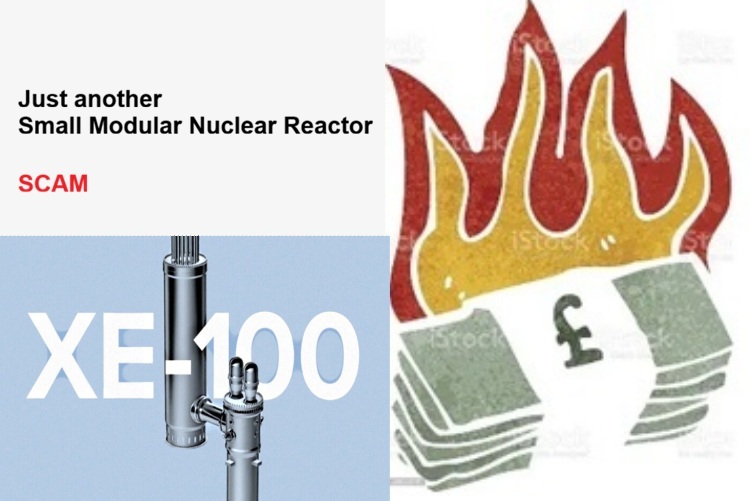
Centrica, X-energy Advance Nuclear Plans as UK Regulators to Begin Design Review for Xe-100
X.Energy Sep 15, 2026
“…………………………………………………………………………………………..You should not rely on these forward-looking statements as predictions of future events. Actual results may differ materially due to a number of factors, including, but not limited to: delays or setbacks in the GDA process; site-specific issues related to licensing, permitting, consenting, or scaling of Xe-100 plants in the UK; changes, delays, or the inability to obtain and maintain licenses or governmental approvals from the UK Office for Nuclear Regulation or other regulatory authorities, and the risk that anticipated cooperation between jurisdictions does not occur as expected; risks relating to the Company’s partnership with Centrica, including the parties’ ability to perform under and realize the anticipated benefits of the Joint Development Agreement, to secure site development, and to meet expected timelines; changes in UK or U.S. government policy, funding, or support for advanced nuclear; supply chain and supplier constraints; and first-of-a-kind risks and the Company’s limited operating experience at intended scale, including latent design or operational issues. More information about potential risks is detailed under “Risk Factors” in X-energy’s Form 10-Q filed with the Securities and Exchange Commission (the “SEC”), and in subsequent SEC filings, available on X-energy’s Investor Relations website at https://investors.x-energy.com/ and on the SEC website at www.sec.gov. Any forward-looking statements herein are based on assumptions believed reasonable as of, and speak only as of, the date of this press release. Except as required by law, X-energy undertakes no obligation to update these statements as a result of new information or future events. https://x-energy.com/news/centrica-x-energy-advance-nuclear-plans-as-uk-regulators-to-begin-design-review-for-xe-100/
Nuclear fusion’s moment of truth

No fusion experiment has yet produced more electricity than the facility consumes,
let alone demonstrated a powerplant that can operate reliably.
No fusion experiment has yet produced more
electricity than the facility consumes, let alone demonstrated a power
plant that can operate reliably.
The precarious fusion boom. Start-ups are attracting billions. Some
scientists think the timeline is far too optimistic.
In late August, amid
the blinding New Mexico heat, politicians and investors wielding ceremonial
spades broke ground for a new facility that aims to trap the Sun in a
bottle. Pacific Fusion, a start-up founded and backed by elite scientists
and tech entrepreneurs, is building a nuclear fusion test site in
Albuquerque that it hopes will be a crucial step towards generating
commercial electricity from the same reaction that powers the Sun.
For now,
there is little more than pale, sandy earth to suggest what might
eventually rise there. But politicians attending the event spoke of fusion
as a historic transformation, with one Democratic senator comparing its
potential significance to humanity’s discovery of fire. Eric Schmidt, the
former Google chief executive and an investor in Pacific Fusion, said on
stage that if fusion eventually produced the majority of America’s
electricity, “it solves all the problems” created by the energy demands
of AI.
In the first eight months of this year, fusion start-ups attracted a
record $3.8bn in private funding, according to PitchBook, overtaking last
year’s total of $3.3bn, which was itself an all-time high. But while
there is broad agreement that fusion science has advanced substantially,
experts and start-ups disagree over how soon companies can deliver
meaningful power to the grid and whether providing that electricity will
make commercial sense.
No fusion experiment has yet produced more
electricity than the facility consumes, let alone demonstrated a power
plant that can operate reliably. Alain Bécoulet, chief scientist of the
publicly funded international fusion research project ITER, says connecting
a fusion power plant to the electricity grid “will never happen” within
the next five to 10 years.
FT 16th Sept 2026,
https://www.ft.com/content/ef511d46-a689-4868-9654-15b96a71586d
US blocks Iran nuclear chief from attending IAEA conference in Vienna
Iran slams Austria’s visa denial for nuclear chief, accusing the US of political bullying at the IAEA conference.
Al Jazeera Staff, Reuters and The Associated Press, 14 Sep 2026, https://www.aljazeera.com/news/2026/9/14/us-blocks-iran-nuclear-chief-from-attending-key-vienna-conference
The United States has barred Iran’s nuclear chief, Mohammad Eslami, from attending this week’s annual General Conference of the International Atomic Energy Agency (IAEA) at its headquarters in Vienna, after the United Nations Security Council rejected any waiver of “snapback” sanctions.
Eslami and his accompanying delegation were forced to cancel their trip to the five-day conference after Austria revoked his visa, Iranian state media said.
The head of Iran’s Atomic Energy Organization is subject to a UN Security Council travel ban under the pre-2015 multilateral “snapback” framework, which was reinstated last year by European signatories. It mandates that member states prevent the entry or transit of designated Iranian officials who are linked to the country’s nuclear and ballistic missile programmes.
Speaking at the conference opening, Iran’s ambassador to the IAEA, Reza Najafi, confirmed to delegations that Eslami’s visa had originally been approved, calling the move a direct infringement on Iran’s rights as a member state.
“By obstructing our full and effective participation, the denial of access contravenes both the letter and the spirit of the legal framework” governing attendance at meetings of the IAEA, he said, adding that Vienna’s decision not to grant a visa to Eslami “violates the host country’s obligation”.
Iran’s Foreign Ministry spokesperson Esmaeil Baghaei accused the US of pressuring Austria into the decision, as Eslami had regularly attended and addressed the IAEA’s General Conference in Vienna since being appointed head of Iran’s Atomic Energy Organization in 2021.
Both Iran and Russia viewed the incident as part of a coordinated effort to thwart Iranian officials from securing international travel visas.
“The cancellation and so-called legal justification advanced for it are a stark indication of a political act and advanced formal politicisation of this organisation,” Iran’s ambassador to the IAEA told the conference.
Last year, France, Germany and the United Kingdom (the E3) triggered the snapback mechanism of the Joint Comprehensive Plan of Action (JCPOA) to automatically recover UN sanctions that had been temporarily suspended under UN Security Council Resolution 2231, when the JCPOA took effect in 2015. US President Donald Trump withdrew from the accord three years later.
The snapback sanctions include travel bans, a UN conventional arms embargo, restrictions on activities related to ballistic missile development and capabilities, asset freezes and a ban on producing nuclear-related technology.
Iran and its allies, including Russia, do not recognise the reimposed sanctions.
Austria’s status as host state to UN bodies allows it to request travel ban derogations for sanctioned officials attending international conferences, and it initially sought a UN Security Council travel-ban exemption for Iran’s nuclear chief. But the US objected.
Under the UN committee’s strict “no-objection” rule, “Austria was obliged to deny one member of the Iranian delegation the entry into its territory”, Austria’s ambassador to the IAEA, Christian Ebner, told the conference.
US Ambassador Preston Wells Griffith III said his country had objected in New York to granting an exemption, which is why the application was denied.
“His (Eslami’s) participation would have only resulted in Iran exploiting IAEA proceedings as a stage for propaganda while sidestepping substantive cooperation, undermining the credibility of the very body charged with verifying its nuclear commitments,” he said, referring to a standoff over nuclear inspections.
Following US and Israeli strikes on its nuclear facilities during the 12-day war in June of last year, Tehran has denied IAEA inspectors access to the affected sites, a breach of its legal obligations under the Nuclear Non-Proliferation Treaty. Iran has maintained that it is not pursuing nuclear weapons and its programme is entirely peaceful.
On Monday, Trump said Iran wanted to reach a deal with Washington, signalling a possible diplomatic opening despite the Strait of Hormuz impasse, widening regional escalations and the postponement of talks between Gulf Arab states and Iran.
“The failing Nation of Iran wants to make a deal, quickly and badly. I will determine whether or not the U.S.A. will choose to engage – The concept of which we are open to,” the president wrote on Truth Social.
Rosatom’s Likhachev Says Ukraine Attacked Fuel Trucks, Endangered Zaporizhzhia Plant
Moscow Times, By Reuters, Sep. 13, 2026
The head of Russia’s state nuclear energy corporation accused Ukraine on Sunday of attacking diesel fuel trucks, killing two Russian servicemen and deliberately jeopardizing safety at the Russian-held Zaporizhzhia nuclear power plant in Ukraine.
Alexei Likhachev said the attack took place on Friday and also resulted in injuries to other Russian soldiers.
The Zaporizhzhia plant, Europe’s largest with six reactors, was seized by Russian forces in the early weeks of the Ukraine war that broke out in February 2022. Each side has regularly accused the other of actions that endanger safety at the plant and increase the risk of a nuclear accident.
Likhachev issued a statement saying Ukrainian forces had launched “a series of combined strikes” on Friday on fuel trucks which deliver diesel to the station.
“The strikes hit very close to the perimeter of the station’s site,” he said.
“Two servicemen were killed, and a large number of Russian soldiers were injured, some seriously. They were all involved in supporting this purely civilian mission.”
Fuel is critically important for the plant as diesel generators provide power to keep nuclear fuel in the reactors cool when the plant’s two external power links are down. Both were down for nearly three weeks in August and September.
Ukraine has demanded that Russia abandon the station and hand its operation back to Kyiv, a demand rejected by Moscow. The fuel currently generates no electricity.
The UN nuclear watchdog, the International Atomic Energy Agency, has stationed an observer team permanently at the station, along with Ukraine’s three other working plants.
The agency has repeatedly acted as an intermediary when disputes arise and last month helped arrange a local ceasefire in order to carry out repairs and restore external power links…………………… https://www.themoscowtimes.com/2026/09/13/rosatoms-likhachev-says-ukraine-attacked-fuel-trucks-endangered-zaporizhzhia-plant-a93695
Cigéo Nuclear Waste Project Receives Favorable Opinion With Two Reservations
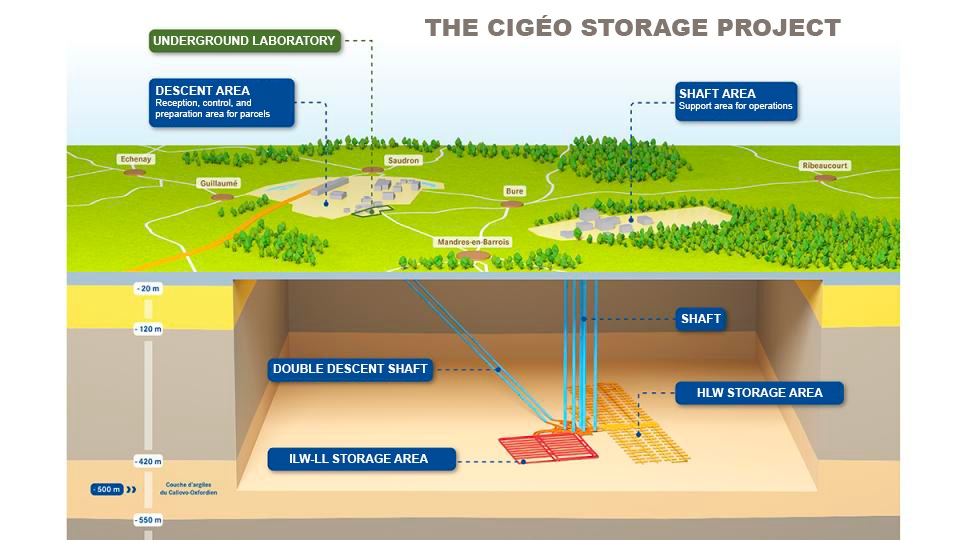
The inquiry commission on Cigéo, a deep geological storage project for nuclear waste at Bure, issued a favorable opinion with two reservations concerning parliamentary oversight and storage reversibility.
www.nuclearwastewatch.ca, September 15, 2026—energynews
The inquiry commission examining the Cigéo project issued a favorable opinion in August on the application for a creation authorization, filed by France’s National Agency for Radioactive Waste Management (Andra). The public inquiry, opened in May and closed on July 16, gathered 3,166 contributions, according to Andra………………….The inquiry commission examining the Cigéo project issued a favorable opinion in August on the application for a creation authorization, filed by France’s National Agency for Radioactive Waste Management (Andra). The public inquiry, opened in May and closed on July 16, gathered 3,166 contributions, according to Andra.
A site 500 meters underground, service targeted for 2050
The project involves storage in a deep geological layer roughly 500 meters underground, in the Bure area, on the border between the Meuse and Haute-Marne departments. The facility is meant to receive, starting in 2050 if authorized, about 83,000 cubic meters of radioactive waste from nuclear power plants, whose hazard is expected to persist for several hundred thousand years. Andra filed the authorization application in January 2023.
The five members of the inquiry commission attached two reservations and two recommendations to their favorable opinion. The first reservation calls for strengthening parliamentary oversight of the pilot industrial phase, particularly regarding its limits in time and space. The second concerns follow-up reviews dedicated to storage reversibility, a principle embedded in the project’s legal framework. The commission also recommended that the question of municipal taxation be settled before the authorization decree is signed, a point concerning
the fiscal benefits applicable to host territories that remains not yet definitively set in the official economic assessment.An industrial cost revised to €33.36 billion.
The French state fixed, by decree of March 30, 2026, Cigéo’s reference industrial cost at €33.36 billion at 2025 economic conditions, compared with €25 billion in the assessment retained in 2016. According to the public information center dedicated to Cigéo, this amount excludes taxation, and €9.7 billion covers the initial construction phase through commissioning. The same public framework puts the overall cost, including studies, construction, operation and closure, at €37 billion, with taxation provisionally maintained at €3.7 billion at 2025 conditions. The costs are to be borne by nuclear waste producers through their long-term provisions.
Cigéo remains contested by local and environmental associations, in a debate that has run for more than three decades over the fate of the most radioactive nuclear waste. The commission nonetheless considers that the project “enjoys an undeniable democratic and legal legitimacy.”
The file’s fate now rests with the government
The commissioners consider that the uncertainties, gaps and shortcomings identified by opponents can be resolved by Andra during the pilot industrial phase, under the oversight of France’s Nuclear Safety and Radiation Protection Authority (ASNR). This assessment leaves the government free to pursue the authorization process, once the report, conclusions and required administrative opinions have been submitted.
Centrica, X-energy Advance Nuclear Plans as UK Regulators to Begin Design Review for Xe-100, (but with a warning)

You should not rely on these forward-looking statements as predictions of future events. Actual results may differ materially due to a number of factors, including, but not limited to: delays or setbacks in the GDA process; site-specific issues related to licensing, permitting, consenting, or scaling of Xe-100 plants in the UK; changes, delays, or the inability to obtain and maintain licenses or governmental approvals from the UK Office for Nuclear Regulation or other regulatory authorities, and the risk that anticipated cooperation between jurisdictions does not occur as expected;
risks relating to the Company’s partnership with Centrica, including the parties’ ability to perform under and realize the anticipated benefits of the Joint Development Agreement, to secure site development, and to meet expected timelines; changes in UK or U.S. government policy, funding, or support for advanced nuclear; supply chain and supplier constraints; and first-of-a-kind risks and the Company’s limited operating experience at intended scale, including latent design or operational issues. More information about potential risks is detailed under “Risk Factors” in X-energy’s Form 10-Q filed with the Securities and Exchange Commission (the “SEC”), and in subsequent SEC filings, available on X-energy’s Investor Relations website at https://investors.x-energy.com/ and on the SEC website at www.sec.gov. Any forward-looking statements herein are based on assumptions believed reasonable as of, and speak only as of, the date of this press release. Except as required by law, X-energy undertakes no obligation to update these statements as a result of new information or future events.
- On the one-year anniversary of the Centrica X-energy partnership being signed, the UK Government has directed regulators to accept the X-energy Xe-100 Advanced Modular reactor into the Generic Design Assessment, marking a significant step toward UK commercial licensing.
- Under their partnership, the companies intend to deploy up to 6 GW of new nuclear capacity in the UK (10-20 Xe-100 power stations depending on size of each installation)
LONDON, England – September 15, 2026 – Centrica plc (“Centrica”) and X-Energy, Inc. (Nasdaq: XE) (“X-energy”), a leading developer of advanced nuclear reactors and fuel technology, today announced that X-energy’s Xe-100 Generation IV advanced Small Modular Reactor (“SMR”) has been accepted into the United Kingdom’s Generic Design Assessment (“GDA”) process.
GDA acceptance formally triggers the process of assessing the design’s acceptability for deployment and operation ahead of the technical and environmental evaluations required for site-specific licensing and permitting. The assessment is expected to take approximately three years and will be administered by the UK Office for Nuclear Regulation (“ONR”), the Environment Agency (EA), and Natural Resources Wales.
The submission builds on the Xe-100’s U.S. licensing progress and is expected to benefit from expanded collaboration between the UK regulators and the U.S. Nuclear Regulatory Commission (“NRC”), enabling transfer of NRC-reviewed design documentation and safety analyses into UK design reviews.
This press release contains forward-looking statements within the meaning of the Private Securities Litigation Reform Act of 1995, which X-energy and its subsidiary TRISO-X intend to be covered by the safe harbor provisions of Section 27A of the Securities Act of 1933, as amended, and Section 21E of the Securities Exchange Act of 1934, as amended. Words such as “assume,” “believe,” “continue,” “could,” “estimate,” “expect,” “intend,” “may,” “plan,” “potential,” “predict,” “project,” “will,” “seek,” the negative of these words, or similar terms may identify forward-looking statements, but their absence does not mean a statement is not forward-looking. These include, but are not limited to, statements regarding the intended deployment of up to 6 GW of new nuclear capacity; the expected timing, conduct and completion of the GDA; the anticipated benefits of the expanded collaboration between the UK Regulators and the U.S. Nuclear Regulatory Commission; and the anticipated development and completion of X-energy’s other ongoing reactor projects.
You should not rely on these forward-looking statements as predictions of future events. Actual results may differ materially due to a number of factors, including, but not limited to: delays or setbacks in the GDA process; site-specific issues related to licensing, permitting, consenting, or scaling of Xe-100 plants in the UK; changes, delays, or the inability to obtain and maintain licenses or governmental approvals from the UK Office for Nuclear Regulation or other regulatory authorities, and the risk that anticipated cooperation between jurisdictions does not occur as expected; risks relating to the Company’s partnership with Centrica, including the parties’ ability to perform under and realize the anticipated benefits of the Joint Development Agreement, to secure site development, and to meet expected timelines; changes in UK or U.S. government policy, funding, or support for advanced nuclear; supply chain and supplier constraints; and first-of-a-kind risks and the Company’s limited operating experience at intended scale, including latent design or operational issues. More information about potential risks is detailed under “Risk Factors” in X-energy’s Form 10-Q filed with the Securities and Exchange Commission (the “SEC”), and in subsequent SEC filings, available on X-energy’s Investor Relations website at https://investors.x-energy.com/ and on the SEC website at www.sec.gov. Any forward-looking statements herein are based on assumptions believed reasonable as of, and speak only as of, the date of this press release. Except as required by law, X-energy undertakes no obligation to update these statements as a result of new information or future events.
European Investment Bank makes first investment in modular nuclear reactors

by Global Banking & Finance Review, September 15, 2026
Quick Summary
The European Investment Bank has extended a €40 million loan to Finnish startup Steady Energy to support its development of a 50 MW small modular reactor for district heating—its first investment in SMR technology, anchored within the EU’s broader strategy to deploy SMRs by the early 2030s.
………….Currently, only two commercial SMRs are in operation, in Russia and China. The European Commission wants Europe to have its first SMRs up and running by the early 2030s.
Industry and Political Reactions
“The EIB’s support to nuclear sends a positive signal to investors,” said Emmanuel Brutin, the head of industry association nucleareurope.
EU Policy and Nuclear Energy
EU countries have long been at loggerheads over whether to promote atomic power, reflecting a split between members like France and Sweden which have nuclear power plants, and traditionally anti-nuclear countries like Germany and Austria, which cite concerns over safety and nuclear waste management.
As a result, the EU budget does not directly fund nuclear plants, although the EIB loan to Steady Energy comes with an EU budget guarantee.
Future Prospects for SMRs
More than 80 SMR designs are in development worldwide, according to the International Atomic Energy Agency. ($1 = 0.8662 euro)………………………………………………………………..
EIB’s Loan to Steady Energy
The EIB will provide a €40 million ($46.18 million) loan to Finnish nuclear energy startup Steady Energy, which is developing a small modular reactor for producing heat, for a local district heating network, the bank said in a statement.
The loan is the first in a pipeline of SMR investments the EIB has planned, an official told Reuters.
Technical Details of the Project
The 50-megawatt reactor, which is still in the concept stage, will use existing light water reactor technology, in which water moderates the nuclear chain reaction and cools the reactor. It is designed to be built underground, to [?] increase the reactor’s security.
Currently, only two commercial SMRs are in operation, in Russia and China. The European Commission wants Europe to have its first SMRs up and running by the early 2030s.
Industry and Political Reactions
“The EIB’s support to nuclear sends a positive signal to investors,” said Emmanuel Brutin, the head of industry association nucleareurope.
EU Policy and Nuclear Energy
EU countries have long been at loggerheads over whether to promote atomic power, reflecting a split between members like France and Sweden which have nuclear power plants, and traditionally anti-nuclear countries like Germany and Austria, which cite concerns over safety and nuclear waste management.
As a result, the EU budget does not directly fund nuclear plants, although the EIB loan to Steady Energy comes with an EU budget guarantee. ……………………………………………….https://www.globalbankingandfinance.com/eib-makes-first-investment-modular-nuclear-reactors/
1 This Month



26 September – International Day for the Total Elimination of Nuclear Weapons

PLEASE OPPOSE HR 8255 AND S.3639 – bills would accelerate satellite deployment, with no environmental review or safeguards – https://ncstd5li.quorum.us/campaign/169331/
To see nuclear-related stories in greater depth and intensity – go to https://nuclearinformation.wordpress.com
-
Archives
- September 2026 (257)
- August 2026 (330)
- July 2026 (355)
- June 2026 (287)
- May 2026 (306)
- April 2026 (356)
- March 2026 (251)
- February 2026 (267)
- January 2026 (308)
- December 2025 (358)
- November 2025 (359)
- October 2025 (375)
-
Categories
- 1
- 1 NUCLEAR ISSUES
- business and costs
- climate change
- culture and arts
- ENERGY
- environment
- health
- history
- indigenous issues
- Legal
- marketing of nuclear
- media
- opposition to nuclear
- PERSONAL STORIES
- politics
- politics international
- Religion and ethics
- safety
- secrets,lies and civil liberties
- spinbuster
- technology
- Uranium
- wastes
- weapons and war
- Women
- 2 WORLD
- ACTION
- AFRICA
- Atrocities
- AUSTRALIA
- Christina's notes
- Christina's themes
- culture and arts
- Events
- Fuk 2022
- Fuk 2023
- Fukushima 2017
- Fukushima 2018
- fukushima 2019
- Fukushima 2020
- Fukushima 2021
- general
- global warming
- Humour (God we need it)
- Nuclear
- RARE EARTHS
- Reference
- resources – print
- Resources -audiovicual
- Weekly Newsletter
- World
- World Nuclear
- YouTube
-
RSS
Entries RSS
Comments RSS

