“Nuclear power was never cheap or safe – this summer shows it’s unreliable.”

this summer demonstrates that nuclear is intermittent – with 1/5th of EDF France’s nuclear capacity offline, and 13 of the 57 reactors in EDF’s nuclear fleet affected. Nuclear in Hungary, Romania and Bulgaria were all impacted.
And climate impact on coastal nuclear is an order of magnitude greater. The UK Institute of Mechanical Engineers says UK reactors (together with spent nuclear fuel and rad-waste stores) is vulnerable to sea-level rise, flooding, storm surge, and ‘nuclear islanding’ – and UK coastal nuclear sites will need considerable investment to try to protect against rising sea levels, and even relocation or abandonment.
Interview with Paul Dorfman, Researcher and Specialist in Energy and Environmental Policy
1- The global energy system is changing rapidly. In your view, what will the energy mix of the future look like, and what role will renewable energy play in it?
All key international energy institutes and organisations agree that renewables will do the heavy lifting for the energy transition.
Last year, renewables supplied 85.6% of all new global power generation capacity. Solar capacity grew by 510GW and wind by 159GW, against just 1.5GW for new nuclear. That’s a 462:1 ratio. Put aside capacity, for actual annual electricity generation output, this means last year, new wind and solar supplied 104 times more usable power than new nuclear.
In the US, 2026, between 93-99% of new utility-scale electricity generating capacity will come from solar, wind, and battery storage – a combined build-out equivalent to constructing 70 new nuclear power plants in just one year, using tech that needs no uranium fuel cycle, no spent fuel storage, and no decades-long construction timeline.
Each year nuclear adds only as much net global power capacity as renewables add every two days. Globally, new nuclear average construction overruns are more than 60%. Wind and solar move from planning to generation in a few years. For renewables, the challenge isn’t generation, but how quickly grids, batteries and flexibility can be deployed.
2- You have been critical of nuclear power and have advocated for renewable alternatives. What do you believe are the strongest arguments for prioritising renewables over nuclear energy?
In the last 10 years, the global share of wind and solar power has more than quadrupled to 5,500 TWh in 2025 – whilst nuclear has stagnated. Solar alone will become the largest contributor to the world’s electricity mix from 2031. In 2025, renewables investment was $690 billion – nuclear investment was 20 times lower.
And distinguish between planned tripling of renewables by 2030 with tripling of nuclear capacity by 2050. Tripling global renewable power by 2030 (4 yrs away) means an additional 11,000 GWe. Tripling global nuclear energy capacity by 2050 (24 yrs away) means only an additional 1,400 GWe. Do the maths.
3- One of the main challenges facing wind and solar power is their intermittency. How confident are you that energy storage, smarter grids and demand management can address this challenge at a large scale?
The former head of the UK National Grid says that ‘baseload’ is an obsolete concept. Taking full account of systems costs of uninterrupted supply, for the couple of hundred hours per year of dunkelflaute (low wind and low sun) in the EU, we can sustain a reliable power system via renewables, storage, efficiency, interconnection, and stronger grids – delivering far more firm power for every pound spent.
Meanwhile, this summer demonstrates that nuclear is intermittent – with 1/5th of EDF France’s nuclear capacity offline, and 13 of the 57 reactors in EDF’s nuclear fleet affected. Nuclear in Hungary, Romania and Bulgaria were all impacted. Nuclear power was never cheap or safe – this summer shows it’s unreliable.
And climate impact on coastal nuclear is an order of magnitude greater. The UK Institute of Mechanical Engineers says UK reactors (together with spent nuclear fuel and rad-waste stores) is vulnerable to sea-level rise, flooding, storm surge, and ‘nuclear islanding’ – and UK coastal nuclear sites will need considerable investment to try to protect against rising sea levels, and even relocation or abandonment.
Elesewhere, the US Nuclear Regulatory Commission concludes the majority of their nuclear has already experienced flooding hazard beyond their design-base, and the US Army War College reports that nuclear facilities are at ‘high risk’ of temporary or permanent closure due to climate impact. Nuclear is, quite literally, on the climate front-line – and not in a good way.
4- Europe has faced major energy security challenges in recent years. What lessons should European countries learn from the energy crisis, particularly regarding their dependence on fossil fuels?
It’s clear that energy security is key, and dependence on fossil fuel imports significantly contributes to the problem. That said, nuclear is dependent on uranium imports, with Russian-dominated Kazakhstan providing 42% of all uranium fuel for reactors worldwide. Also, Russia provides significant unembargoed nuclear enrichment services and products for reactors across Europe, India, and the US. Russia controls 40% of global uranium enrichment capacity in 2025. So, in terms of energy security, nuclear seems profoundly insecure.
5- As the world moves towards a low-carbon economy, what do you see as the biggest environmental challenge that is currently being overlooked by policymakers and the public?
We’re in a ‘corridor of life’ – temperatures above risk a tipping point, where sustaining systems collapse. A few weeks ago, the UN Environment Program ‘Limiting Climate Overshoot’ says we must cut CO2 emissions imediately to avoid disastrous overshoot. If we do, we have a good chance of limiting temperatures to 1.7C above preindustrial levels.
The Potsdam Institute for Climate Impact Research just this year finds that the AMOC – the Atlantic Meridional Overturning Circulation – is now significantly more likely to collapse unless emmissions are brought down very, very quickly.
The frustrating thing is, we have the solutions at scale, we know how. We just need to apply. It’s a question of scale and pace. It’s not a question of if we can phase out fossil fuels – it’s about when, it’s about time.
The bad news is that new nuclear reduces and delays climate action. Very long nuclear development and build times means much longer fossil fuel burn and CO2 generation. New nuclear is too marginal, too late, too costly, for climate and energy crises. Meanwhile, the Intergovernmental Panel on Climate Change IPCC AP6 Summary reports that renewables are now ten times more efficient than nuclear at CO2 mitigation.
6- Looking ahead to 2035, are you optimistic that the world can achieve a major transition towards clean energy? What needs to happen now to make that transition successful?0
I’m optimistic but realistically concerned – especially about the economic and climate impact ‘opportunity costs’ of new nuclear. This is because new nuclear reduces and delays climate action. Very long nuclear development and build times means much longer fossil fuel burn. Nuclear is just too slow, too hazardous, and too costly for the climate and energy crises.
Meanwhile, global grid-scale battery power capacity grew by 104 GW or 79% in 2025, bringing the total power capacity from less than 17 GW in 2020 to just over 263 GW in 2025. And in China, solar power generation increased by 40% in 2025, growing by 330 TWh. That’s 10 times the growth of nuclear energy in absolute terms.
It is also very important to recognise that we consistently overstate how much energy the energy transition has to replace, because we measure the wrong thing. The fact is, over two thirds of primary energy in fossil fuel and nuclear systems are lost as waste heat. This means that we have to replace much less polluting energy with clean renewables
The ‘primary energy fallacy’ is the idea that all primary energy from fossil fuels must be replaced with an equivalent amount of clean energy. Focusing on primary energy consumption targets can mistakenly make the energy transition look impossibly large or expensive, or accidentally lock in new fossil fuel and nuclear infrastructure.
The good news is that renewables-plus can and will do the heavy-lifting for the climate and energy crises.
.
Canada’s budget fuels new nuclear power with billions but bypasses faster renewables
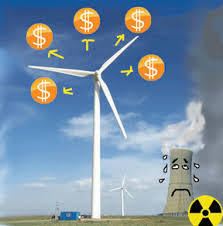
“You can build a wind farm in three-to-five years from FID [final investment decision] versus refurbishing a conventional [CANDU] power plant or building an SMR, which is unproven technology, in 15 years or more,”
Falling battery costs mean renewables paired with storage can deliver grid stability at a fraction of the cost and lead time of even five years ago, according to the International Energy Agency.
Darius Snieckus, Canada’sNational Observer, November 5th 2026
Canada’s 2026 budget commits more than $6.5 billion to nuclear power, underlining the government’s aim to make the technology the “cornerstone” of its clean electricity strategy.
Yet renewable energy could add capacity faster and more cheaply to increasingly strained provincial grids, analysts say.
The nuclear energy push, which builds on the sector strategy released in June, is part of $8 billion in capital spending on “electricity-related” projects over the next five years, according to the federal budget tabled Thursday.
Prime Minister Mark Carney’s second full budget also extends the investment tax credits (ITCs) program designed to pull in private investment into clean energy projects, at an expected cost of $38.5 billion by 2040.
The spending reflects a clear policy choice: nuclear-first, building on the federal nuclear energy strategy unveiled in June. The federal government’s wider national electricity strategy envisions $60 billion in support through 2035 across nuclear, wind, solar, storage and transmission.
But in direct, targeted capital commitments, Ottawa has placed its biggest bet on nuclear power with no standalone multi-billion-dollar allocation for wind, solar or storage.
Following the money
The list of federal and provincial nuclear projects highlighted in the budget include:
- $2.2 billion over 10 years for the Canadian Nuclear Laboratories at Chalk River, Ont., a nuclear research facility
- $970 million in Canada Infrastructure Bank financing for what would be North America’s first grid-scale small modular reactor (SMR) at Darlington, Ont.
- Up to $3 billion in equity from the Canada Growth Fund and Building Ontario Fund for construction of two new CANDU reactors in Romania.
- $74 million for a reactor being developed near Estevan, Saskatchewan by SaskPower, the provincial utility.
- $50 million for refurbishment work at Bruce Power’s Darlington nuclear complex
- $40 million for unspecified “microreactors.”
By comparison, the largest renewables budget item is $4 billion for grid expansion under the Smart Renewables and Electrification Pathways Program, on top of $4.5 billion previously committed.
There is no exclusive spending for wind, solar or battery storage, but renewables qualify for clean electricity and technology investment tax credits.
The Ontario Clean Air Alliance, a think tank, estimated the levellized cost of energy for nuclear power — the price of building and operating a plant over its lifetime divided by the revenues generated — could reach $226 per megawatt-hour (MWh) by 2030, versus $43/MWh for renewables such as wind and solar.
‘Not a strong economic case’
Hadrian Mertins-Kirkwood, a climate and energy policy analyst, argues that favouring nuclear power over wind and solar risks slowing Canada’s energy transition due to the gap in construction timelines.
“You can build a wind farm in three-to-five years from FID [final investment decision] versus refurbishing a conventional [CANDU] power plant or building an SMR, which is unproven technology, in 15 years or more,” he told Canada’s National Observer.
Mertins-Kirkwood called the economic risk in nuclear power “daunting,” citing consultancy Power Advisory’s estimate that Ontario’s high-profile expansion plans could cost more than $220 billion by 2050. “So there’s not a strong economic case,” he said.
For decades, Ottawa’s case for nuclear power rested on its ability to supply reliable “baseload” power, the minimum electricity needed to meet demand over a given period. Rapid gains in energy storage technology are poking holes in that premise.
Falling battery costs mean renewables paired with storage can deliver grid stability at a fraction of the cost and lead time of even five years ago, according to the International Energy Agency.
“Now the batteries are so cheap, I think that in 10 years, the ideal of ‘baseload’ is not going to matter because we’ll just have batteries plus renewables and that’s stable and reliable enough,” Mertins-Kirkwood said, for a decentralized energy system.
Advocates of a renewables-led energy transition also stress the industrial upside.
The Canadian Renewable Energy Association and New Economy Canada have projected around $100 billion in market opportunities for the domestic cleantech supply chain over the next decade.
The government’s own figures suggest a rapid electrification of provincial grids could add $3 trillion to the economy, create 1.6 million jobs, and yield $5 in economic benefits for every $1 invested by 2050.
That buildout of zero-emission power generation and clean manufacturing capacity would be faster than the longer timelines for complex nuclear projects.
The government’s national electricity strategy masks further contradictions in its simultaneous pursuit of conventional and clean energy generation.
Gas stays in the mix…………………………………………………………………………………………………………………………………………………………… https://www.nationalobserver.com/2026/11/05/news/canadas-budget-fuels-new-nuclear-power-billions-bypasses-faster-renewables?utm_source=Canada%27s+National+Observer&utm_campaign=7973a13254-EMAIL_CAMPAIGN_2026_11_06_09_23&utm_medium=email&utm_term=0_cacd0f141f-7973a13254-254417297
.
NATO Nuclear Posture Moving North; New Satellite Images Show Extent of New Construction at RAF Lakenheath
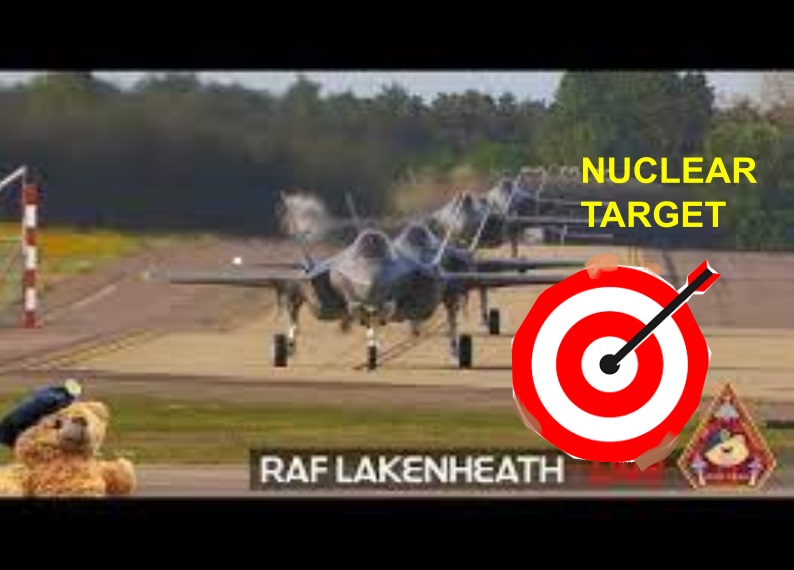
Federation of American Scientists by Celia McDowall & Hans Kristensen, 11.05.26
The infrastructure supporting NATO’s nuclear strike mission is shifting north to include significantly more active nuclear weapons storage shelters than in the southern part of the Alliance. The shift is visible on new satellite images showing the full extent of construction of security fencing around 22 nuclear-capable aircraft shelters at Royal Air Force (RAF) Lakenheath, the home of the U.S. Air Force 48th Fighter Wing.
The northern nuclear focus will increase further when the United Kingdom buys 12 U.S. F-35A fighter-bombers for deployment at RAF Marham as a new part of NATO’s dual-capable aircraft nuclear sharing mission, as announced in 2025.
Satellite Images Show Full Lakenheath Expansion
Recent satellite imagery from Vantor shows new construction of a larger security perimeter around more protective aircraft shelters at Royal Air Force (RAF) Base Lakenheath. The larger perimeter matches planning documents published by the U.S. Air Force (USAF) and U.K. government. RAF Lakenheath has been upgrading since 2022 when it was added to the list of USAF nuclear facilities in Europe. The purpose is to reactivate a nuclear weapons mission for the USAF’s 48th Fighter Wing at the base in response to increased tension with Russia.
The new construction will expand an existing security perimeter that has been under construction around 10 protective aircraft shelters to surround an additional 12 for a total of 22 shelters. Each shelter inside the perimeter is equipped with an underground vault for storage of U.S. B61-12 nuclear gravity bombs for delivery by the F-15E and F-35A jets at the base.
The construction visible on the satellite images matches a blueprint submitted by the UK Defense Infrastructure Organization (DIO) to the West Suffolk Council supporting a January 2026 application for a “fence line and additional security infrastructure” at RAF Lakenheath (see figure 1 on original). According to further supporting documents, the fence line will be supported by “patrol and convoy roads, the installation of active and passive vehicle barriers, gatehouses, duct banks, turnstiles, camera towers, lighting and electrical enclosures for each loop comprising of new transformer, main LV distribution and standby generator.”
Once completed, the expanded security perimeter will conform with plans for a “Surety Barrier System” at RAF Lakenheath, first revealed in the FY25 U.S. Air Force Military Construction budget submitted to Congress in February 2024. The proposal describes plans to “provide a permanent perimeter security system around 22 Protective Aircraft Shelter that will be used to support the Surety mission.”
The project’s association with the “Surety mission” links it to the suspected redeployment of US nuclear weapons to RAF Lakenheath, a development that will reinstate a USAF nuclear mission in the United Kingdom for the first time since 2008 and contribute to an ongoing series of upgrades across Europe. Without this barrier and associated security infrastructure, according to the USAF documents, “Royal Air Force Lakenheath will not be able to accommodate the Surety mission beddown,” which would “impede mission capability, readiness, and contingency support to ongoing and future operations within the designated European Area of Responsibility.” Construction was scheduled to start in May 2026 and finish in October 2029.
Until now, construction at RAF Lakenheath only showed a partial fulfilment of this directive. In February 2025, the DIO submitted an urgent request to the West Suffolk Council for an “additional apron area at the Yankee Taxiway” and “security fencing around the development area.” A supporting blueprint shows plans to erect security fencing around a small area encompassing 10 protective aircraft shelters – notably fewer than the 22 described by the USAF. Indeed, construction of a security perimeter around 10 protective aircraft shelters matching the DIO blueprint is visible on satellite imagery from February 2025. At the time, assuming this perimeter was the Surety Barrier System described in the FY25 MILCON budget, it was unclear why construction began more than a year ahead of schedule and would surround significantly fewer protective aircraft shelters than the current plan. (see figure 2 on original)……………………………………………………………………………………………………………………………………………………………………………………………..
Confirmation that the construction of the security perimeter and associated security infrastructure at RAF Lakenheath are still ongoing once again raises questions about whether U.S. nuclear weapons have already been deployed to the base. It is widely reported that two USAF C-17 flights in July 2025 delivered B61-12 bombs to RAF Lakenheath. But according to the FY25 MILCON budget, RAF Lakenheath “lacks the physical security measures needed to protect Surety assets within the Protective Aircraft Shelters from unauthorized access, theft, damage, sabotage, or unauthorized use.” Since the bombs were not already present at the RAF Lakenheath in 2025, it is unclear why the USAF would be allowed to deploy the nuclear weapons before the necessary security infrastructure is completed; the satellite images show continued extensive construction at and around the aircraft shelters by commercial companies.
The Bigger Nuclear Picture
The addition of RAF Lakenheath to the list of USAF nuclear bases in Europe and the preparation of an extensive security perimeter around 22 aircraft shelters for potential storage of nuclear bombs suggests that RAF Lakenheath could soon become the largest USAF nuclear weapons storage site in Europe. When completed, RAF Lakenheath’s nuclear security perimeter will include one shelter more than the security perimeter at Incirlik Air Base in Turkey, the largest storage site in Europe for the past two decades.
The large number of nuclear shelters being reactivated at RAF Lakenheath means that the number of active nuclear shelters on bases in Northern Europe will once again dominate NATO’s nuclear posture. Once construction is completed, RAF Lakenheath will be able to regularly host US nuclear weapons and receive nuclear weapons from more vulnerable European bases in a crisis. In addition, the RAF nuclear sharing mission planned for RAF Marham sometime in the 2030s will further add to NATO’s new northern nuclear focus. If nuclear storage vaults at RAF Marham are also reactivated, the number of active nuclear storage shelters on NATO’s northern flank could nearly double compared with 2020 (see table below on original)…………………………………………………………………………………………………………………………………………………… https://fas.org/publication/extent-of-new-construction-at-raf-lakenheath/
Already Over Budget and Late: Darlington New Nuclear Project
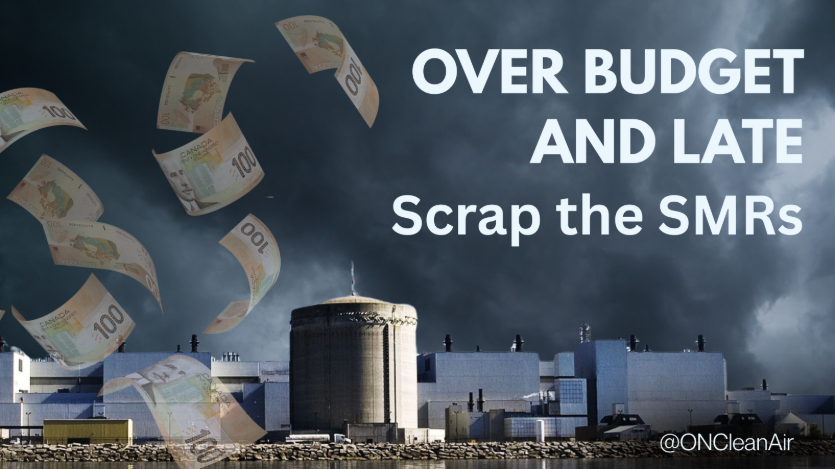
Yesterday, Ontario Power Generation (OPG) announced that its project to build one of the world’s first so-called Small Modular Reactors (SMR), on its Darlington nuclear site, is late and over budget. The first of 4 proposed SMRs will now cost MORE than a whopping $7.7 Billion.
The most head shaking part of this risky project is that Ontario willingly chose to be a guinea pig for an unproven American (GE-Hitachi) nuclear technology (that requires imported fuel). While other jurisdictions stood back and said “after you,” Ontario rushed forward and recklessly committed to a design that has not been built anywhere in the world.
Here’s the truth: solar and wind energy are eating nuclear’s lunch – in Ontario and around the world – due to faster deployment, much lower costs, and ever better ways to store energy.
Despite much happy talk (particularly from the Ford government) about a rebound in nuclear power, nuclear energy supplied just 9% of global electricity in 2025, down from 17.5% in 1997. Solar alone now produces more power than nuclear around the world, with wind not far behind.
It doesn’t make sense to build high-cost, slow to deploy new nuclear reactors, when wind and solar projects can be built in two years or less, and provide us with electricity at less than one-third the cost.
Please ask Premier Ford to cancel the Darlington New Nuclear Project, and to lower our electricity bills by doubling renewable energy by 2035 and tripling it by 2050. Tell Ford to Scrap the SMRs
Commandos form ‘ring of steel’ around top secret nuclear and military bases amid fears of Iranian sabotage

By MARK NICOL, DEFENCE EDITOR, 12 November 2026, https://www.dailymail.com/news/article-16284727/Commandos-form-ring-steel-secret-nuclear-military-bases-amid-fears-Iranian-sabotage.html
Commandos are forming a ring of steel around sensitive military and nuclear bases amid threats of Iranian sabotage, the Daily Mail can reveal.
Elite Royal Marines responsible for protecting top-secret sites are poised to repel drones operated by Tehran’s agents.
The Iranians are prepared to use Ukrainian-style guerrilla warfare tactics to target those locations, according to security sources.
It comes as defence chiefs invest nearly half a billion pounds to strengthen security at bases across the country.
Protection is being stepped up following the dispersal of US aircraft from RAF Mildenhall over fears of drone attacks.
The Iranians are equipped with drones capable of penetrating aerial security systems which rely on so called ‘GPS geofencing’.
Once inside the airspace, those drones could trigger a huge explosion simply by landing on the wing of an aircraft.
A security source told the Mail: ‘The drone only needs to carry a small device. The fuel vapour from the wing tanks would act as a catalyst.
‘That threat convinced US President Donald Trump to issue a direct instruction to relocate aircraft to less vulnerable sites.
‘There is a live threat to British sites. Something going wrong at one of the Scottish sites would be very serious, as those facilities are of the highest strategic importance to Britain.
‘There is a joint military, police and intelligence response.’
Royal Marines have stepped up security at the Faslane and Coulport bases in Scotland, alongside Ministry of Defence (MOD) police officers and local constabularies.
His Majesty’s Naval Base Clyde, commonly known as Faslane, is home to the UK’s fleet of nuclear submarines.
The Royal Naval Armament Depot at Coulport is used for the storage, maintenance and loading of nuclear warheads.
The Mail has also been told how MOD police patrols are being conducted in the neighbouring Loch Long and Gare Loch areas.
Security sources are concerned the Iranians could additionally target the Finnart Oil Terminal – a deep water oil and fuel depot near Garelochhead and Glenmallan Jetty.
Finnart was purchased by the MOD this year as a naval fuel depot and is run by the Oil and Pipelines Agency. The site was opened by the First Sea Lord, General Sir Gwyn Jenkins.
Glenmallan Jetty is used to load conventional (non-nuclear) armaments on to warships from the Glen Douglas munitions storage site.
It is the elite 43 Commando Fleet Protection Group which is responsible for protecting the UK’s strategic nuclear deterrent and associated military sites.
The 460-strong unit is based at Faslane on Scotland’s west coast and provides specialist personnel and teams. It operates alongside MOD Police and the Nuclear Transport Operations Group.
The 43 Commando unit is split into four squadrons. O and P Sqns specialise in waterfront nuclear security and train for just the sort of challenge posed by Iranian sabotage squads.
According to the MOD, their skills include ‘close quarter marksmanship and close quarter combat, night operations, operating in industrial and subterranean environments and small craft handling’.
Today, the MOD said: ‘National security is the first duty of government and we take the security of our people, sites and local communities extremely seriously.
‘We are investing an additional £470million to strengthen security at military sites including £15million in drone and counter-drone technology.
‘We have introduced restricted airspace at over 44 critical defence sites with a further 155 to follow.’
Nuclear sector says more reactors needed after Neso requested increased electricity grid capacity
10 Nov, 2026 By Tom Pashby, https://www.newcivilengineer.com/latest/nuclear-sector-says-more-reactors-needed-after-neso-requested-increased-electricity-grid-capacity-10-11-2026/111
The energy operator informed the electricity market on Monday that the grid needed more generation, leading the nuclear sector to demand more reactors be built.
National Energy System Operator (Neso) issued an electricity margin notice (EMN) on Sunday 8 November at 7:17pm, covering 6am to 11am, saying: “There is a reduced system margin.
“System margin shortfall 1388 MW. The current contingency requirement is 808 MW. [Zero] MW of generation is excluded from the available system margin due to system constraints.”
System constraints can include obstacles such as transmission lines not being able to carry any more electricity from offshore Scottish wind farms to high-demand areas in the Southeast of England, which could result in wind farms being paid to stop generating electricity.
Also in the EMN, owners of electricity generators were asked to inform Neso of any additional capacity they could bring to the grid.
It is understood that low wind, forecast at less than 1GW, was contributing to the tighter margin during the morning period.
The fundamental reason for issuing an EMN is to protect the operating margin – the buffer between supply and demand – rather than due to there being a forecast risk of blackouts.
In a statement, a Neso spokesperson said: “We have issued an electricity margin notice for tomorrow morning, as a routine and precautionary measure, giving market participants the opportunity to make additional generation capacity available.
“This is not a warning of power cuts, there is no risk to customer electricity supplies, and customers do not need to take action – Great Britain’s electricity system remains secure.”
At 09:11 on Monday 9 November, Neso cancelled the EMN.
A Neso spokesperson said: “We have now cancelled the electricity margin notice covering the period of Monday morning.
“Electricity margin notices are routine and precautionary measures, giving market participants the opportunity to make additional generation capacity available, which they have now delivered.
“This was not a warning of power cuts and there was no risk to customer electricity supplies.”
An Ofgem spokesperson said: “Neso issued an Electricity Margin Notice this morning, which was subsequently cancelled once sufficient capacity became available.
“These notices are a normal and precautionary part of operating the electricity system and managing supply and demand.
“There was no risk to customer electricity supplies and consumers did not need to take any action. We remain in close contact with Neso and government and continue to monitor the operation of the system.”
Regen is a company providing expertise on how to transition the energy system to net zero.
Explaining the context of the notice, Regen clean power & markets policy lead Georgina Morris-Rowbottom told NCE: “An electricity margin notice is a tool Neso uses to tell the market it needs more spare capacity.
“An export agreed yesterday may have made sense at the time, but if the wind drops or a power station goes offline, Britain may need more power at home.”
Morris-Rowbottom continued: “Consumers are right to ask why they should pay to fire up more gas generation while we’re exporting, but those same cables can bring in cheaper power at other times and save us from having to turn up gas plants here.
“To support energy security and consumer value, the priority must be giving the market clear signals, early enough to act, when Britain needs more power.”
Reacting to the EMN, Nuclear Industry Association chief executive Tom Greatrex said: “Britain cannot afford to lose its nuclear capacity.
“As existing nuclear power stations close without replacement, we risk greater exposure to volatile gas prices, soaring balancing costs and increasingly insecure electricity supplies.
“We must act now to rebuild our nuclear capacity and secure the reliable, homegrown, 24/7 power that households and businesses need.”
Neso previously issued an EMN for 28 September, after it has identified a system margin shortfall of 1,400MW for the period from 4pm to 7pm. This was later reduced to a projected shortfall of 104MW. Neso later cancelled the EMN.
Later, on 12 October, Neso used a different tool called an ‘emergency assistance’ because it had to buy 1.2GW of electricity from a French interconnector cable after a National Grid Electricity Transmission (NGET) asset took longer than expected to return to service.
Full list of 76 groups backing Edinburgh data centre protest
MORE than 70 organisations have backed a huge protest against AI data
centres taking place in Scotland this month. The protest is set to take
place on Saturday November 14 and will include trade unions, anti-war
groups and housing campaigners. The march down the Royal Mile in Edinburgh
is part of a Europe-wide wave of protests called Stop Dirty Data Centres,
with more than 70 demonstrations taking place in 15 countries in November.
The National 7th Nov 2026,
https://www.thenational.scot/news/26707438.full-list-76-groups-backing-edinburgh-data-centre-protest/
Trump Official Claims Those Who Oppose Iran War Are Blinded By “Satan”, And Other Notes
It says so much about American politics that this nut job has been elevated to such a high position in the US government. The US empire is a giant armageddon cult with nukes.
Caitlin Johnstone, Nov 09, 2026, https://www.caitlinjohnst.one/p/trump-official-claims-those-who-oppose?utm_source=post-email-title&publication_id=82124&post_id=224095241&utm_campaign=email-post-title&isFreemail=true&r=1ise1&triedRedirect=true&utm_medium=email
US ambassador to Israel Mike Huckabee claims that anyone who opposes Trump’s war with Iran is being blinded by Satan. Like, the actual, literal devil character from the Bible.
During an incredibly sycophantic recent interview on The Anchor Podcast, Huckabee was asked by the host if he believed European opposition to the US war on Iran was the result of mental problems.
“I think it’s a spiritual issue,” Huckabee replied.
“I know it sounds a little funny for an ambassador to be talking like this, but look, I see this as spiritual darkness, spiritual blindness,” adding that “Satan has blinded the minds of those and has captured their thinking.”
This is the same raving lunatic who said Israel is like America’s “wife”, and who got in hot water earlier this year for saying it would be fine for the Israelis to forcibly annex the territory of Jordan, Syria, Iraq, Lebanon, Egypt, and Saudi Arabia in addition to the Palestinian Territories because the Bible says so.
It says so much about American politics that this nut job has been elevated to such a high position in the US government. The US empire is a giant armageddon cult with nukes.
As children die in floods because of Israel’s humanitarian abuses in Gaza, Saturday Night Live is using this moment to push the spiritually exhausting fake narrative that anyone who humanizes Palestinians must secretly hate Jews.
“Abdul El-Sayed made history as the first Muslim elected to the senate — well, first OPENLY Muslim,” SNL’s Colin Jost quipped in front of a photo of Barack Obama during the show’s Weekend Update segment.
“El-Sayed hinted that he would like to see Chuck Schumer replaced as senate majority leader, but if I had just gone through the campaign he did, I don’t think my first move would be get rid of the Jewish guy,” Jost said.
El-Sayed was aggressively smeared as an antisemite throughout his senate race due to his support for Palestinian rights and his criticisms of the state of Israel.
Palestinians in Gaza are being flooded out of their tents while Saturday Night Live tells jokes that sound like they came out of the Babylon Bee to silence their supporters.
SNL is such disgusting empire smut. It’s not just the American news media that’s propaganda; it’s all mainstream entertainment.
It’s crazy how the western world went “it’s bad that our governments are backing a genocide in Palestine” and a few loud Zionist Jews said “this discussion should obviously center us and our feelings at all times and in all ways” and the west went “ah yes true, good point.”
I’ve never seen a logically sound argument that it’s anti-semitic to deny that Jews have an extra special connection to the land of Israel. It’s where their religion comes from, so in that sense they have the same connection that Christians have, but beyond that the only arguments to be made are claims based on nothing but blind religious faith.
You can tell me that Israel is mentioned all the time in Jewish prayers and Jewish scriptures etc, but that’s just telling me about Jewish religious beliefs. Telling me I’m an anti-semite if I don’t accept those religious beliefs as true is exactly the same as telling me I’m an anti-semite if I don’t stay in my house and pray on Saturday. Jews can believe whatever they want to believe, but it violates my freedom of religion to demand that *I* believe what they believe. That’s the same as telling me I’m Islamophobic if I don’t wear a hijab.
You can tell me that all Jews everywhere are descended from the biblical Israelites, but that’s (A) another blind-faith belief based on nothing but religious assertion and (B) irrelevant since all westerners can trace their heritage back to many different countries they aren’t allowed to lay claim to.
So there’s really no case to be made. And yet “antisemitism” watchdog groups throughout the western world assert that it is an antisemitic offense to deny that Jews have a unique connection to the land of Israel. They have no argument. They are wrong.
I sometimes see hear debates in feminist circles about why men are so disproportionately violent and abusive compared to women and what makes them act that way, but I don’t really think it’s that much of a mystery.
Like so many other questions about the illnesses of our society, the answer is “because of war.” Society conditions men to be cruel because for thousands of years civilizations around the world have needed men to go kill people in wars for the powerful. They were ordered to do horrific things to men, women and children using blades, spears, arrows and bludgeoning weapons, so everything kind and gentle in them needed to be snuffed out in order for them to do these things. We still have the vestiges of the culture which shaped men in this way living on in our civilization today.
Inside the Suffolk village next to a US airbase with nuclear weapons.
Lakenheath locals are used to life alongside 7,000 American military
personnel – but worry about the future. For a village in the crosshairs of
a terrorist threat arising from Donald Trump’s war with Iran, Lakenheath’s
inhabitants were surprisingly unperturbed this week. This west Suffolk
community sits cheek by jowl with RAF Lakenheath, the airbase home to some
7,000 American military personnel and state-of-the-art weaponry including
F-35 fighter jets.
It is also widely thought to host tactical nuclear
weapons. So when the Pentagon this weekend evacuated more than a dozen
aircraft, including air-to-air refuelling tankers, from the nearby RAF
Mildenhall base – a 10-minute drive away – and increased the security
status of both installations to its second highest level, residents may
have been forgiven for feeling a sense of alarm.
iNews 13th Nov 2026,
https://inews.co.uk/news/inside-suffolk-village-raf-lakenheath-4886319
1 This Month

Tell Congress: Prevent Nuclear Catastrophe in Iran

Tell Congress: Prevent Nuclear Catastrophe in Iran

Read the Public Inquiry Report, the Commissioners’ report, Surrendering Australia: The AUKUS Deception is available to download for free at aukuspublicinquiry.com. Or just watch the replay of the National Press Club Luncheon.

19 November – Webinar – The Reality of Reprocessing
Time: 11:00 AM Pacific Time (US & Canada) / 2:00 PM Eastern / 7:00 PM UK / 8:00 PM CET
Register for the Zoom Event Here


Shut down the radiation-damaged Heysham nuclear reactors now
To see nuclear-related stories in greater depth and intensity – go to https://nuclearinformation.wordpress.com

Say No to NASA’s Reckless Nuclear Reactor on the Moon
Say No to NASA’s Reckless Nuclear Reactor on the Moon
-
Archives
- November 2026 (147)
- October 2026 (302)
- September 2026 (339)
- August 2026 (330)
- July 2026 (355)
- June 2026 (287)
- May 2026 (306)
- April 2026 (356)
- March 2026 (251)
- February 2026 (267)
- January 2026 (308)
- December 2025 (358)
-
Categories
- 1
- 1 NUCLEAR ISSUES
- business and costs
- climate change
- culture and arts
- ENERGY
- environment
- health
- history
- indigenous issues
- Legal
- marketing of nuclear
- media
- opposition to nuclear
- PERSONAL STORIES
- politics
- politics international
- Religion and ethics
- safety
- secrets,lies and civil liberties
- spinbuster
- technology
- Uranium
- wastes
- weapons and war
- Women
- 2 WORLD
- ACTION
- AFRICA
- Atrocities
- AUSTRALIA
- Christina's notes
- Christina's themes
- culture and arts
- Events
- Fuk 2022
- Fuk 2023
- Fukushima 2017
- Fukushima 2018
- fukushima 2019
- Fukushima 2020
- Fukushima 2021
- general
- global warming
- Humour (God we need it)
- Nuclear
- RARE EARTHS
- Reference
- resources – print
- Resources -audiovicual
- Weekly Newsletter
- World
- World Nuclear
- YouTube
-
RSS
Entries RSS
Comments RSS

