UN nuclear ban treaty needs 6 more ratifications
The treaty prohibits the development, possession and use of nuclear weapons and was adopted with the support of 122 countries and territories three years ago.
Ireland and three other countries ratified the treaty last month, bringing the total number of ratifications to 44. The latest ratifications coincided with the 75th anniversaries of the atomic bombings of Hiroshima and Nagasaki.
The International Campaign to Abolish Nuclear Weapons, or ICAN, plans to calls on more countries to ratify the treaty in events at the UN headquarters to mark the International Day for the Total Elimination of Nuclear Weapons on October 2 and United Nations Day on October 24.
The treaty will come into effect 90 days after the number of ratifications reaches 50.
Nuclear powers, as well as Japan and other countries protected by the US nuclear umbrella, have not signed it.
The sorry history of the Vogtle nuclear boondoggle: it must be stopped.

At crucial crossroads, nuclear plant must be stopped, https://www.augustachronicle.com/opinion/20200912/guest-column-at-crucial-crossroads-nuclear-plant-must-be-stopped By Glenn Carroll, Sep 12, 2020 .
|
In 1977, a small group of thoughtful, committed Georgians started a grassroots anti-nuclear group to oppose nuclear power, nuclear weapons and radioactive waste and to promote alternative visions for renewable energy and world peace. At the same time, Georgia Power was resuming construction of Vogtle 1 and 2, having nearly gone bankrupt three years earlier while attempting to build a four-reactor nuclear compound with a budget of $1 billion. Only 10 weeks after breaking ground, incredibly, Vogtle construction ground to a halt with Georgia Power on the brink of bankruptcy. Georgia Power was saved by two emergency rate hikes thanks to the Georgia Public Service Commission and by selling shares of its hole-in-the-ground Vogtle to most of Georgia’s rural electric cooperatives and municipal power systems. So, in 1977, construction started back up for a two-unit Vogtle with a $640 million budget. In 1979, the year Georgia Power predicted would see blackouts without more power supply, Georgia Power was instead the most overbuilt utility in the country. Vogtle was only 1% complete and it was clear that there was no need for additional power, yet Georgia Power stubbornly stuck to its nuclear goals and in 1989, Vogtle 1 and 2 came on-line at a cost of $6.4 billion — a whopping 1,000% over budget. There are many compelling arguments against nuclear power: the risk of a catastrophic accident, out-of-control construction costs and the still-unsolved radioactive waste problem. Nuclear reactors produce materials that can be used to make nuclear weapons. Nuclear radiation exposure can cause birth defects and cancer. And then there’s that whiff of corporate socialism arising from nuclear’s dependence on government subsidies. All of these negative factors have spun the present-day global nuclear industry into a downward spiral towards obsolescence. Reactors are retiring faster than they are coming online. In 2001, 30 new reactors were ordered in the U.S., but the so-called “nuclear renaissance” rapidly fizzled leaving only Georgia Power and Vogtle. Meanwhile, renewable energy, in particular solar power, has become abundant and cheap, and solar and wind have been the fastest-growing energy sector for the past several years. This is the historic crossroads at which Georgia Power now finds itself building the only new reactors in the United States. Lessons learned? Let’s take a look. Some things remain the same. The unfinished Vogtle project’s budget and construction timeline have already doubled, and experts are saying Georgia Power is destined to go even further over budget and miss the deadline. Again. In the most recent construction monitoring report filed with the PSC, the company claims to have spent more than $1.5 billion in construction costs over the most recent six months. Those are total costs, Georgia Power only reports its 45.7% share of project costs which are $701 million for the six-month period. These skyrocketing costs, amounting to $8.5 million every day, have gone up, according to Georgia Power because of high absenteeism and the loss of skilled craft and management, at least in part because of having more than 800 cases of COVID-19 sidelining workers and crews since the pandemic began. Nuclear Watch South has conducted legal interventions before the PSC to call for the cancellation of Vogtle, showing that Vogtle is still not needed using Georgia Power’s own annual report performance data. Compiling 10 years of figures from Georgia Power’s SEC-filed annual reports tells a revealing story — Georgia Power’s electricity sales remain flat, showing an annual growth rate of less than .3%. Georgia Power’s existing portfolio of electric capacity is chronically underutilized. Last year, Georgia Power idled 31% of its existing capacity, even after shutting down 3,000 megawatts of polluting coal plants. Vogtle, if it is ever finished at a projected price tag of $27 billion, will add a puny 6% capacity — a radioactive capacity that the company simply does not need. But here’s the real shocker: Georgia Power’s profits have somehow skyrocketed in the midst of the Vogtle construction debacle. Georgia Power profits jumped by 20% when Vogtle construction began, steadily rising from the new high watermark. The regulated monopoly posted a whopping 20.5% profit in 2019! So one lesson was clearly learned by Georgia Power: It may not have yet learned how to pull off construction of a nuclear reactor, but it sure has mastered the art of making money. Georgia law empowers the PSC to cancel an unneeded power project. The same law protects Georgia Power to recover costs which were prudently invested in the canceled project, barring fraud or malfeasance. Georgians do not need to have one more dime extracted from them to build an unneeded radioactive waste factory in these times of economic downturn and ever-present fear of a novel coronavirus. Here at the crossroads of history in 2020, there has never been a better time to stop Plant Vogtle. The writer is coordinator of Nuclear Watch South, formerly Georgians Against Nuclear Energy. She has been active in nuclear issues for more than 30 years. |
|
Climate change and the loss of sea otters
Loss of sea otters accelerating the effects of climate change, New research published in Science reveals that the influence of a key predator governs the pace of climate impacts on Alaskan reefs EurekAlert, BIGELOW LABORATORY FOR OCEAN SCIENCES , 13 Sept 20, The impacts of predator loss and climate change are combining to devastate living reefs that have defined Alaskan kelp forests for centuries, according to new research published in Science.
“We discovered that massive limestone reefs built by algae underpin the Aleutian Islands’ kelp forest ecosystem,” said Douglas Rasher, a senior research scientist at Bigelow Laboratory for Ocean Sciences and the lead author of the study. “However, these long-lived reefs are now disappearing before our eyes, and we’re looking at a collapse likely on the order of decades rather than centuries.”
The coral-like reefs, built by the red alga Clathromorphum nereostratum, are being ground down by sea urchins. Sea urchins exploded in number after their predator, the Aleutian sea otter, became functionally extinct in the 1990’s. Without the urchins’ natural predator to keep them in check, urchins have transformed the seascape – first by mowing down the dense kelp forests, and now by turning their attention to the coralline algae that form the reef.
Clathromorphum produces a limestone skeleton that protects the organism from grazers and, over hundreds of years, forms a complex reef that nurtures a rich diversity of sea life. With kelp gone from the menu, urchins are now boring through the alga’s tough protective layer to eat the alga – a process that has become much easier due to climate change.
“Ocean warming and acidification are making it difficult for calcifying organisms to produce their shells, or in this case, the alga’s protective skeleton,” said Rasher, who led the international team of researchers that included coauthors Jim Estes from UC Santa Cruz and Bob Steneck from University of Maine. “This critical species has now become highly vulnerable to urchin grazing – right as urchin abundance is peaking. It’s a devasting combination.”………..
The results of the experiment confirmed that climate change has recently allowed urchins to breach the alga’s defenses, pushing this system beyond a critical tipping point.
“It’s well documented that humans are changing Earth’s ecosystems by altering the climate and by removing large predators, but scientists rarely study those processes together,” Rasher said. “If we had only studied the effects of climate change on Clathromorphum in the laboratory, we would have arrived at very different conclusions about the vulnerability and future of this species. Our study shows that we must view climate change through an ecological lens, or we’re likely to face many surprises in the coming years.”……..https://www.eurekalert.org/pub_releases/2020-09/blfo-los090420.php
Climate change causing major changes in Arctic insect communities
Climate change recasts the insect communities of the Arctic, EurekAlert, UNIVERSITY OF  HELSINKI Research News 12 Sept 20, Through a unique research collaboration, researchers at the University of Helsinki have exposed major changes taking place in the insect communities of the Arctic. Their study reveals how climate change is affecting small but important predators of other insects, i.e. parasitoids.”Predators at the top of the food web give us a clue to what is happening to their prey species, too. These results increase our understanding of how global warming is changing nature. At the same time, they suggest new inroads for finding answers to big questions in the field of ecology,” says Professor Tomas Roslin from the University of Helsinki and the Swedish University of Agricultural Sciences (SLU).
The researchers’ main discovery was that clear traces of climate change can already be seen in arctic insect communities.
“In areas where summers are rapidly warming, we find a higher proportion of cold-sensitive predators than we might expect based on the previous climate,” Roslin notes.
The study joined research teams working in Greenland, Canada, Russia, Norway, Finland and Iceland, which together compared regions where the climate has changed at different rates and in different ways in recent decades.
Parasitoids are fierce predators but sensitive to changes in climatic conditions
“The climate of the Arctic is currently changing about twice as fast as the global average. Therefore, the Arctic region provides an important laboratory when we try to understand the effects of climate change on nature,” says Tuomas Kankaanpää, lead author of the study and active at the Faculty of Agriculture and Forestry, University of Helsinki.
“To distinguish the key consequences of climate change, we have focused on some of the most important predators in the Arctic, parasitoid wasps and flies. These parasitoids are predators whose larvae develop on or within a single host individual and usually kill it in the process. And now we have found that climate change is dramatically affecting the relative dominance of different types of parasitoids.”………..https://www.eurekalert.org/pub_releases/2020-09/uoh-ccr091020.php
Donald Trump confuses the experts with his claims about secret new nuclear weapon
 Trump remark about secret new nuclear weapon leaves experts scratching heads, Market Watch Sept. 13, 2020 By Associated Press, Comment by President Trump recorded by legendary political reporter Bob Woodward fits a pattern for a president who has spoken of literally invisible fighter jets and a ‘super duper’ missile. WASHINGTON (AP) — President Donald Trump is expanding his arsenal of spectacular, but hard to explain, claims about U.S. military might.First, there were invisible airplanes. Then, a “super duper” missile. And now, a secret nuclear weapon. “I have built a nuclear, a weapon, I have built a weapon system that nobody’s ever had in this country before,” Trump said in an interview with journalist Bob Woodward for his book published this week. Some think Trump may have been talking about a nuclear warhead that was modified to reduce its explosive power. Weapons experts are puzzling over Trump’s words. Some think he may have been talking about a nuclear warhead that was modified to reduce its explosive power. Known as the W76-2, this weapon certainly is unknown to the general public — not because of secrecy or mystery but because of its obscurity. Asked by a reporter to clarify his comment, Trump on Thursday said he’d rather not. “There are systems that nobody knows about, including you, and we have some systems that nobody knows about. And, frankly, I think I’m better off keeping it that way,” he said. James Acton, a nuclear expert at the Carnegie Endowment for International Peace, said in an interview Friday that Trump may have been referring to the W76-2 warhead. Although its existence was not a secret, the timing of its first deployment was. The warhead is on the business end of a Trident II D-5 missile carried aboard Navy ballistic missile submarines. “The timing matches up,” Acton said. The Woodward interview was Dec. 5, around the time of the first W76-2 deployment, which was not announced publicly until Feb. 4. The weapon itself is not revolutionary. It’s not even the only low-yield warhead in the U.S. arsenal. It is, however, the first major addition to the strategic nuclear force in recent decades and is a departure from the Obama administration’s policy of lessening dependence on nuclear weapons in pursuit of a nuclear-free world. Joe Biden, Trump’s rival for the White House, has said the new weapon is overkill, suggesting he might shelve it if he wins in November. Acton says Trump may well have been making a garbled reference to some other weapon. “It’s clear that the president likes boasting about military capabilities and doesn’t always have the tightest grasp on the details,” he said………… https://www.marketwatch.com/story/trump-remark-about-secret-new-nuclear-weapon-leaves-experts-scratching-heads-2020-09-13 |
U.S. federal government must speed up Los Alamos nuclear waste cleanup and do it properly
 State lawmakers: Tougher tactics needed to speed Los Alamos waste cleanup, Santa Fe New Mexican , By Scott Wyland swyland@sfnewmexican.com Sep 10, 2020 The pace of Los Alamos National Laboratory’s legacy waste cleanup drew sharp criticism Wednesday from two state lawmakers who argued regulators should toughen oversight and consider suing federal agencies to spur quicker action.
The lab has made five shipments of higher-level nuclear waste this year to the Waste Isolation Pilot Plant in Carlsbad and hopes to move that number to 30 per year, with the aim of removing all of the lab’s legacy waste by 2027.federal governme
A U.S. Department of Energy official presented the figures to the state Radioactive and Hazardous Waste Committee on Wednesday.
But state Rep. Christine Chandler, D-Los Alamos, called that volume far too low, especially when compared to Idaho sending 100 to 150 waste shipments to WIPP each year.
“I frankly find that unacceptable,” Chandler said.
Chandler asked state Environment Department officials what their strategy was to prod the Department of Energy to accelerate cleanup.
We’re pushing for that progress, to not slow down at all, to make sure the cleanup continues,” replied Stephanie Stringer, director of the Environment Department’s Resource Protection Division. “So making sure that we’re pushing very, very hard and demanding a robust cleanup plan.”
Chandler said she wanted to know how the agency planned to enforce demands.
One avenue is legal action, she said. The Idaho National Laboratory is getting its nuclear waste removed at a faster rate after the state of Idaho sued the federal government……. https://www.santafenewmexican.com/news/state-lawmakers-tougher-tactics-needed-to-speed-los-alamos-waste-cleanup/article_fc9fcdc8-f211-11ea-8e9b-77b752e1c0f9.html
Unmarked ?nuclear convoy with strong military police guard sweeps through Bristol city centre
This is the moment an unmarked military and police convoy stopped the traffic and stunned drivers and commuters as it swept through the city centre of Bristol this week.
The 14-vehicle convoy was captured on camera as it held up traffic on a main road into Bristol, and then headed out of the city on the M32.
The convoy began with a military police 4×4 car and then went on to include two police cars, three large police vans, another police 4×4, three large army people carriers and what appeared to be the subject of the guard of the convoy – four large LGV lorries with large unmarked containers on the trailers.
The brief video of the convoy was posted on social media within minutes of being spotted at around 7.50am on Wednesday, September 9 this week, and prompted a range of speculation as to what exactly was going on.
There was speculation that the convoy was operated by the AWE, the Atomic Weapons Establishment, an organisation which handles all the nuclear fuel for submarines and material for Britain’s nuclear weapons.
The AWE is based at Aldermaston, at a base just the other side of Newbury in Berkshire. People commenting on the video, which went viral on Facebook, said they had seen many similar convoys around that area, but they usually took place in the middle of the night so did not attract attention……… https://www.bristolpost.co.uk/news/watch-moment-unmarked-nuclear-convoy-4510383
“The nuclear plant took everything…”
“The nuclear plant took everything…” Kenichi Hasegawa was the local leader of Maeta District of Iitate Village, where even today mountains of bags of contaminated soil stand out. “The nuclear plant took everything. There used to be children here. When the kids were still here, we went to the hills together all the time. We picked many things, taught them all about it, it was natural. We can’t do anything like that any more. I mean, even the children are no longer here,” he says.
https://311mieruka.jp/index_en?fbclid=IwAR3zrBtrrkMhJ_gZeWTEzgt4RcTkehWePR7Q-Mzvg9fsW6Jk4Rq9vx3_snQ
Radioactive soil plan casts shadow over Fukushima village
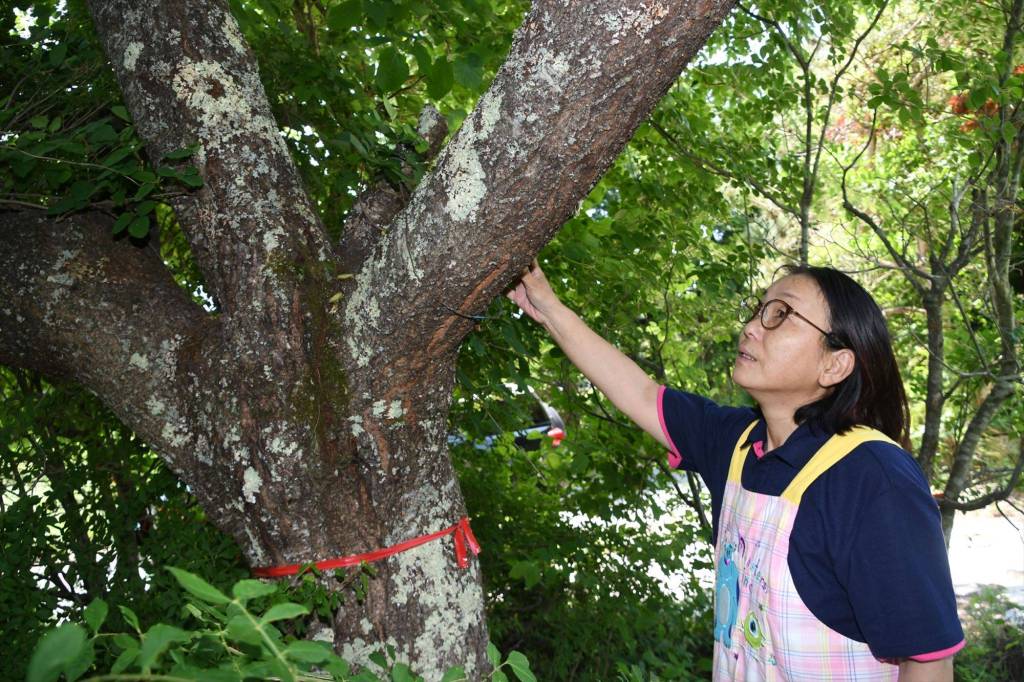
Keiko Shigihara used to make pickles out of flower petals from a cherry tree at her former home in Fukushima Prefecture.
Sep 11, 2020
Keiko Shigihara, 58, soaks up the summer sun as she looks over her property in the village of Iitate in Fukushima Prefecture, from where she evacuated after the meltdowns at the Fukushima No. 1 nuclear power plant following the March 2011 earthquake and tsunami.
The land where her home used to be is now an empty lot. Cherry trees and oak trees are the only things left.
Shigihara remembers the days when she used to make homemade salted cherry blossoms and rice cakes wrapped in oak leaves.
“It’s sad but there’s nothing to be done now except look forward,” said Shigihara, who evacuated to the city of Fukushima after the calamity.
Iitate’s Nagadoro administrative district, where her home was located, was designated a no-go zone due to its high radiation levels. But the Environment Ministry later designated the district as an area where radiation-tainted soil removed as part of the decontamination process would be reused to fill the land for farming.
The project is slated to begin by March 2021.
Shigihara was born in the town of Futaba, which is located on the coastline of Fukushima Prefecture — one of the areas hardest hit during the 2011 earthquake.
After graduating from high school in Futaba, she met Yoshiyuki, now 59, a native of Iitate, and the two married. She moved into his home, where her in-laws also lived, in Nagadoro in 1988 and helped out with farming. She raised her two daughters there, too.
The Nagadoro district, which is located in the southern part of the village, is a well-preserved area surrounded by mountains.
Different types of fish can be found in the nearby Hiso River, and Shigihara often made meals with fresh vegetables grown in the fields or plucked from the mountainsides.
“I bet you’re glad you married someone living in Iitate,” Shigihara’s late father-in-law used to say.
That peaceful lifestyle was upended in 2011. Life in evacuation, bleak as it was, continued for years, and the family did not know if they could ever return or what would happen to their home.
But, at the end of 2016, the government said, out of the blue, that it was planning to bury the contaminated soil to create arable land.
“Contaminated soil was supposed to be taken to an intermediate storage facility” where it’s preserved safely, Shigihara said. She was worried whether it was safe to bury it in the ground.
Naturally, the plan drew concern from local residents.
Deliberation between the central government, the village and its residents spanned a year.
Local residents were worried about whether it was possible for people to live there again if they were to go ahead with the project, or that a damaging reputation would haunt agricultural products harvested there.
But the government pressed on, saying it will be an experimental case to reuse contaminated soil in local areas. The government ensured it would also closely monitor radiation levels in the air and conduct tests to make sure the produce is safe.
In the end, locals gave in and the project was given the green light in November 2017.
In April 2018, 186 hectares of the Nagadoro administrative district’s 1,080 hectares were designated for the project. The village of Iitate proposed in May to lift evacuation orders.
At the end of last year, Shigihara’s cherished home was demolished for the plan. Watching it be torn down would have been too painful, so she waited to return until after it was done.
“Anything to help my hometown recover,” she said.
Fresh produce is being cultivated nearby and experiments have been conducted to plant crops on contaminated soil without adding a layer of uncontaminated soil.
In the long wait for Nagadoro’s residents to return home, the clock has finally begun moving again.
This section features topics and issues covered by the Fukushima Minpo, the prefecture’s largest newspaper. The original article was published Aug
https://www.japantimes.co.jp/news/2020/09/11/national/iitate-fukushima-contaminated-soil/
Fukushima Has Turned These Grandparents Into Avid Radiation Testers
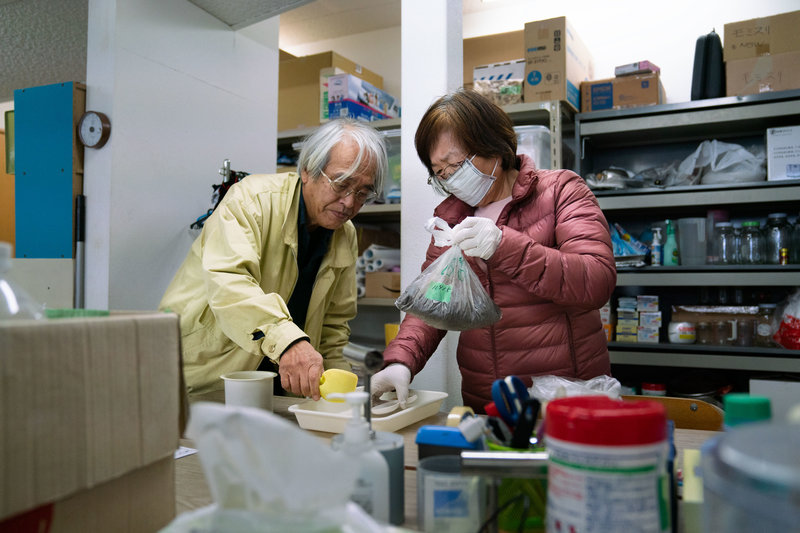
Takenori Kobayashi (left) and his wife Tomoko Kobayashi bring soil samples into what they refer to as a “grandma and grandpa lab” to test it for radiation, in Fukushima prefectures
September 11, 2020
Takenori Kobayashi lugs a garbage bag full of soil across a parking lot to an unmarked office. His wife, Tomoko, holds the door to a tiny work space with lab equipment and computers set up. On the edge of Fukushima’s former nuclear exclusion zone, this is the place the couple likes to call their “grandma and grandpa lab.”
It started as a makeshift operation in the city of Minamisoma the year after the 2011 nuclear disaster, when people — mostly elderly — returned to the area and were worried about high radiation levels in their food and soil.
“We’ve given up hope that our children and grandchildren will come back to live here,” Tomoko, 67, says. Most young people decided to start lives elsewhere rather than return, not wanting to take the risks with radiation. “But in order for them to come back and visit us,” she continues, “we need to know everything is safe. So we test it all.”
Citizen science like this flourished in Fukushima after the nuclear disaster in 2011, when a tsunami triggered explosions at the Daiichi Nuclear Power Plant. The wind carried radioactive material for miles, covering whole towns and neighborhoods with dangerous, yet invisible, particles. For weeks after the disaster, information was scarce and trust in the Japanese government plummeted. And now, almost a decade later, wide arrays of residents have taken it upon themselves to collect radiation data — from mothers worried about their kids to surfers monitoring beaches to individuals with Geiger counters in their homes — to help regain a sense of control.
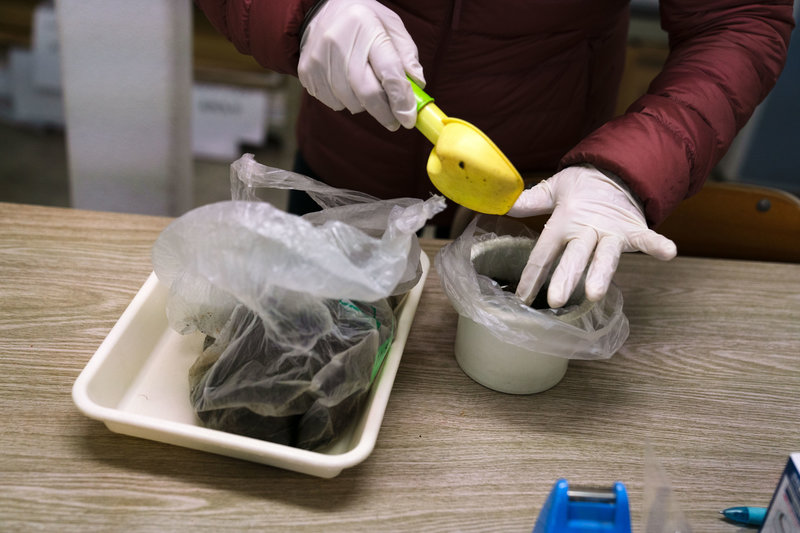
Tomoko measures soil into a container that will go through a donated gamma counter, a big cylindrical machine that measures radioactive particles.
Inside the lab, the Kobayashis pair get to work. One measures out soil into small containers, the other starts labeling — so coordinated and practiced, it’s almost like a dance. They put the samples through a donated gamma counter, a big cylindrical machine that measures radioactive particles. Today, they’re testing soil from a nearby farm.
A handful of other residents help run the lab, and throughout the years, experts from nearby universities have come to teach them all about the different equipment and radiation science.
“All the grandparents here are radiation professionals now,” Takenori, 71, says with a smile.
Before the disaster, he was an accountant, and Tomoko helped run a nearby inn that has been in her family for generations. When the disaster happened, they were forced to evacuate for five years. But when they were allowed to come back home in 2016, they reopened the inn — and learned everything they could about radiation.
“We never thought we’d be doing this. What normal person would expect this?” says Tomoko with a chuckle. “But anyone who faces this kind of situation has to become a scientist to survive.”
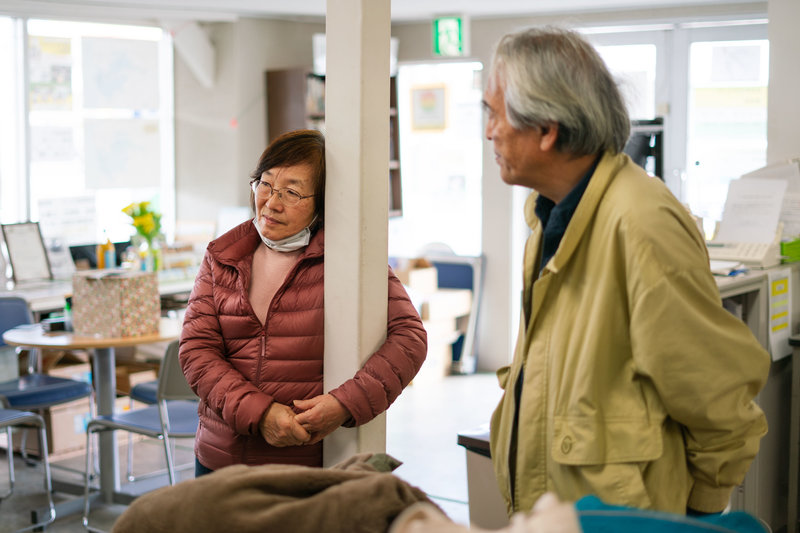
Tomoko and Takenori were forced to evacuate Minamisoma after the disaster, but after five years, they returned to reopen Tomoko’s family inn.
Takenori points to colorful radiation maps of the area hanging on the wall. The couple made them, along with a team of volunteers, using donated Geiger counters — hand-held devices used to measure radiation — over the past few years as more neighborhoods reopened to the public.
“It is important for us to visualize the invisible,” he says. “We needed to see it.”
The maps show that Fukushima’s radiation levels are decreasing, because of both natural decay of particles and large-scale Japanese government decontamination efforts. But there are still a lot of hot spots — places where radiation is worryingly high. The authorities have tried to ease concerns, testing food in supermarkets and setting up radiation monitors in public parks, outside train stations or flashing along highways, but trust in the government is still extremely low. Many residents say they still feel best collecting information themselves.
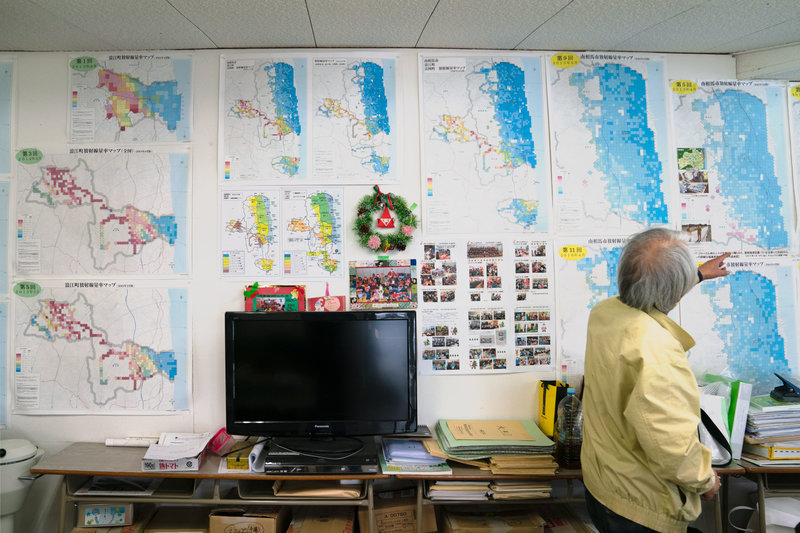
Maps hang on the wall of the lab where the Kobayashis do radiation testing. The maps, one part of their work, were created by a team of volunteers who took air measurements. The maps show that the radiation levels in Fukushima are decreasing.
One of the original citizen data operations in Fukushima is called Safecast. The nonprofit organization formed in the immediate days after the disaster, when it became clear that accurate radiation information was not available. Safecast started building and distributing radiation monitors in Fukushima, and then putting all the data online for public use.
Now, nearly a decade later, Safecast has hundreds of devices in the area around the Daiichi nuclear power plant, with dozens of local residents helping to take hundreds of readings a day. There’s even one hanging in the Kobayashis’ inn.
“We found that simply allowing people to take measurements themselves, and have a way to compare it to government data was really important for their peace of mind, for their sense of agency,” says Azby Brown, the lead researcher at Safecast.
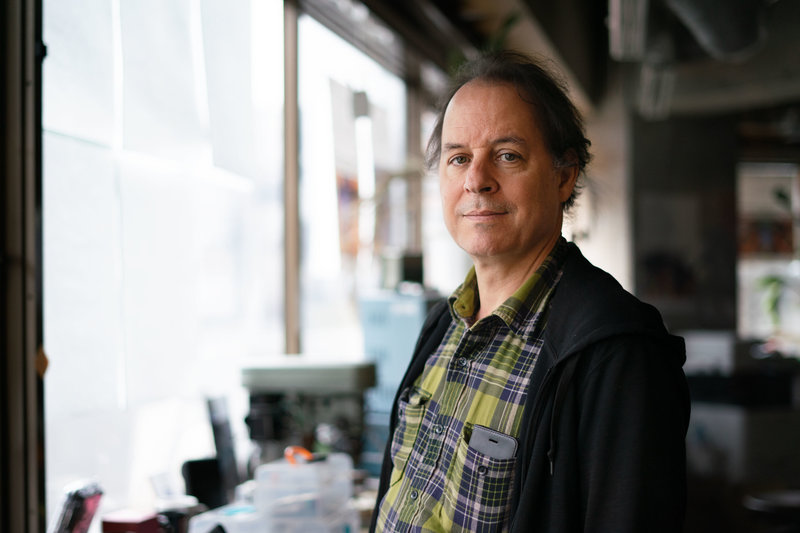
Azby Brown is the lead researcher at Safecast, an organization that formed in the immediate days after the disaster. It builds and distributes radiation monitors in Fukushima, and puts all the data online for public use.
Part of the reason people want to collect data themselves and compare it is because even after more information became available, it was often contradictory. The United Nations and the International Commission on Radiological Protection have published reports saying that radiation risks in Fukushima are low. Other organizations, like Greenpeace, dispute those findings. The Japanese government insists that the areas being reopened are safe. But many are quick to point out that the government raised the legal limit of radiation exposure in this part of Fukushima prefecture after the disaster — meaning that many of these areas wouldn’t necessarily be considered safe in other parts of Japan or the world.
Brown says that giving people the ability to collect and understand their own data can help them ease their anxiety and make decisions based on their personal comfort.
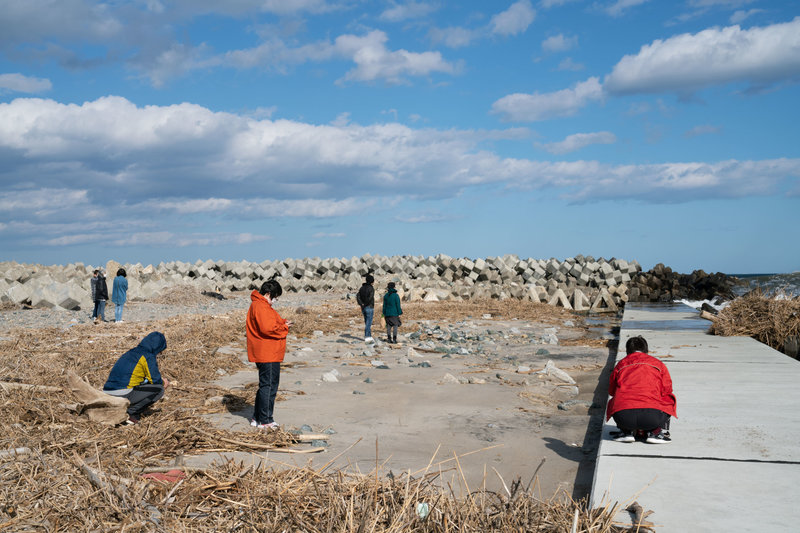
People stand near the ocean in Japan’s Fukushima prefecture, commemorating the ninth anniversary of the tsunami and nuclear disaster.
“Some people will look at the data and say, ‘Oh my God, I’m leaving,’ ” Brown says. “Other people will say, ‘Oh, you know, it’s not as bad as I feared, maybe I’ll stay.’ And yet others will say, ‘Well, it’s pretty bad, but now at least I know what I’m facing and I know how hard it’s going to be.’ “
That last option is ultimately how the Kobayashis felt when they decided to come back after their neighborhood was reopened in 2016. By that point, Tomoko had gotten a Geiger counter. She remembers how empowering it felt to know and understand the reading. It was low enough for the pair, something they both felt comfortable with.
“I was so relieved,” she says, “I knew I could come home.”
But now, Tomoko says, a new invisible threat has her worried — the coronavirus. She says a lot of the anxiety everyone is feeling now reminds her of how she felt back in 2011. She has stocked up the inn with cleaning supplies, hand sanitizer and cloth face masks. But the travel sector has plummeted during the pandemic.
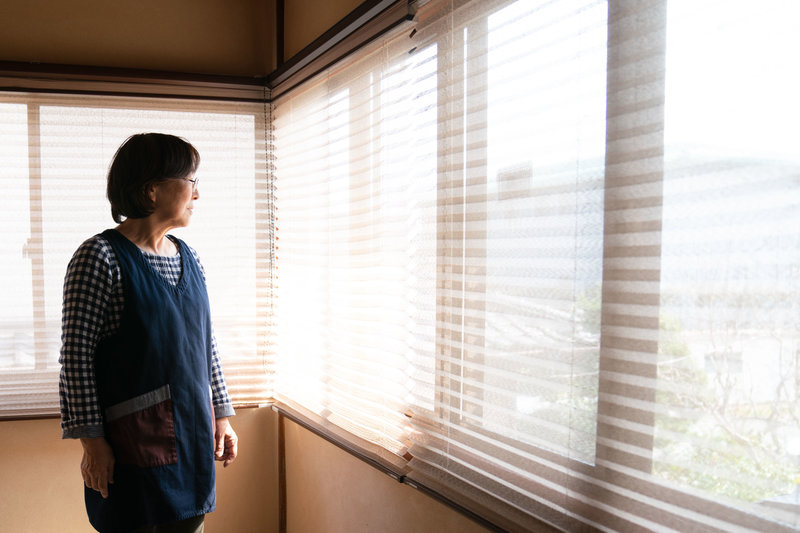
Tomoko stands at the inn in Fukushima prefecture that has been in her family for generations.
“Radiation is a bit similar to the virus,” she says sitting at the kitchen table of her inn. “It doesn’t have any smell, you can’t feel it, you can’t see it.”
Tomoko says she is, of course, aware that the two are very different, but the parallels have been striking to her. She remembers back in March and April, when she saw cities like London and New York looking abandoned and empty on TV. It reminded her of the towns in Fukushima, right after the disaster. It brought back a lot, she says.
“As long as you have a Geiger counter, you can detect radiation,” she says. “But with the virus, there is no Geiger counter.”
Tomoko says, like many of us, she’s eager for science to help find one.
Mr Sugeno Seiji, farming organically in Nihonmatsu City, Fukushima Prefecture
September 11, 2020
Through the nuclear power plant disaster, Mr Sugeno reaffirmed the values of farming. His words leave a strong impression: “The nuclear plant stole our hometowns, they create divisions. This must not be repeated.” “We people of Fukushima need to share our story. To change lifestyles, to change policies. To stand up to the government, to farm our fields, this is want we want to continue to do.”
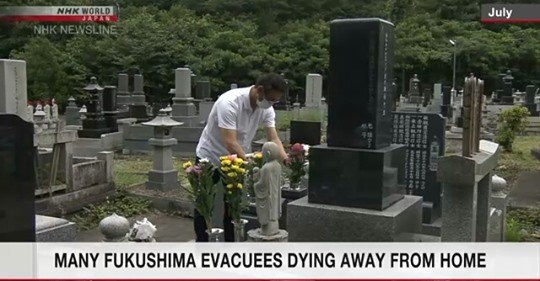
Many Fukushima evacuees die away from home
September 9, 2020
NHK has learned that more than 2,600 people have died over the ensuing years after being evacuated from their hometowns following the meltdowns at the Fukushima Daiichi nuclear power plant in March 2011.
NHK contacted local governments in Fukushima Prefecture and found that at least 2,670 people, about 10 percent of the original population, had died as of August. More than 26,500 people lived in seven municipalities near the plant. Where they lived have been designated no-entry zones for nearly nine and a half years because radiation levels remain high.
By municipality, 895 people from Okuma Town have died, 792 from Futaba Town, 576 from Namie Town, 362 from Tomioka Town, 32 from Iitate Village, 12 from Katsurao Village, and one from Minamisoma City.
The Japanese government is conducting decontamination work and rebuilding infrastructure in some areas with the aim to allow residents to return in two or three years.
But there is no concrete plan to make other parts, or 92 percent of the no-entry zone, habitable again, despite the strong hope of residents to return home.
Tokyo Olympics must be held at ‘any cost’, says Japanese minister
Seiko Hashimoto says country is planning for event next year even though a widely available vaccine is unlikely

A man wearing a protective face mask walks past an Olympic Rings monument near the national stadium, the main venue of the Tokyo Olympics and Paralympics.
September 8, 2020
The Tokyo Olympics must be held “at any cost”, Japan’s Games minister, Seiko Hashimoto, has said, as organisers continue to weigh up options for staging a “post-pandemic” celebration of sport in the city next summer.
“Everyone involved with the Games is working together to prepare, and the athletes are also making considerable efforts towards next year,” Hashimoto told reporters on Tuesday.
The former Olympian suggested the priority had shifted from planning for the “complete Games” once favoured by the outgoing prime minister, Shinzo Abe, towards an event that would enable athletes to compete regardless of the status of the Covid-19 pandemic.
“I think we have to hold the Games at any cost,” she said. “I want to concentrate all our efforts on measures against the coronavirus.”
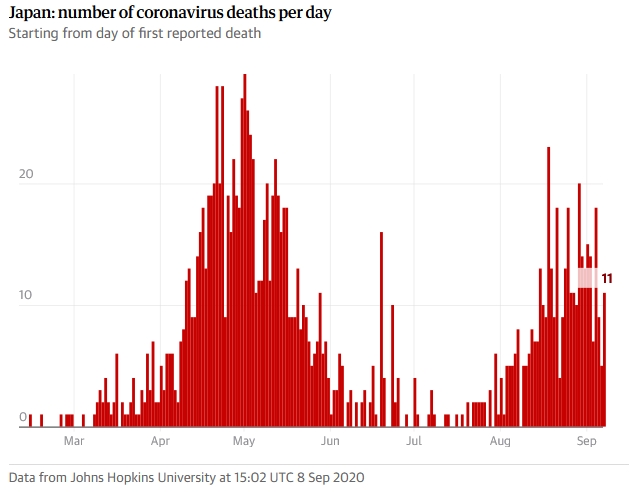
There is also a growing belief within national olympic committees that the Games will go ahead following lengthy discussions over the summer about how they can be staged safely. The Guardian understands that proposals under discussion include:
- Potentially keeping athletes in preparation camps for longer before they move into the Olympic village, enabling them to be tested regularly for Covid-19 and cleared before competing.
- Asking athletes to leave the athletes’ village immediately after they have competed, rather than stay until after the closing ceremony as is traditional.
- Having reduced capacities in stadiums observing social distancing rules.
However, suggestions that there could be a downsized Olympics, with fewer athletes and staff, are being downplayed by senior sources.
The 2020 Tokyo Olympics were postponed in March as the coronavirus began its rampage through Europe, the US, Brazil, India and other parts of the world.
With health experts warning that a vaccine is unlikely to be widely available by the time the opening ceremony is due to take place on 23 July 2021, a task force of organisers, national and local government officials and health experts met for the first time last week to consider anti-virus measures.
The group, which is expected to release an interim report at the end of the year, is sifting through more than 200 proposals on how best to prevent an Olympic-related outbreak while enabling around 11,000 athletes from more than 200 countries to travel to Japan.
“While living with the coronavirus, we need to make sure that athletes can perform at their best and audiences enjoy the Games safely,” the deputy chief cabinet secretary, Kazuhiro Sugita, said at the meeting. “To achieve that, we will adjust border controls, testing and medical systems and the operations of the venues.”
Last week, the Tokyo chief executive, Toshiro Muto, insisted the Games could be held even if a vaccine was not available.
“It’s not a prerequisite,” he said. “It’s not a condition for the delivery of the Tokyo 2020 Games. A vaccine is not a requirement. Of course, if vaccines are developed, we’ll really appreciate it. And for Tokyo 2020 that would be great.”
While the delayed start of domestic and international sports competitions show it is possible to reduce the risks to athletes, it will be harder to ensure the safety of huge numbers of spectators from overseas.
“As far as spectators, we don’t have any conditions yet, but we’d like to avoid no spectators,” Muto said.
The comments from Hashimoto, who represented her country in speed skating and track cycling, echo those made on Monday by John Coates, vice president of the International Olympic Committee [IOC]. He said the event would go ahead next summer “with or without Covid”.
“The Games were going to be … the ‘reconstruction Games’ after the devastation of the tsunami,” Coates said, referring to the disaster that struck north-east Japan in 2011.
“Now very much these will be the Games that conquered Covid, the light at the end of the tunnel.”
Public support is waning in Japan, however, with two-thirds of respondents to a poll in July saying they would prefer the Olympics to be postponed a second time – an option organisers and the IOC have ruled out – or cancelled.
Organisers said they had been encouraged to see international sports events such as the US Open tennis and the Tour de France go ahead in the midst of the pandemic, and by reports that Japan’s government is considering allowing more fans into stadiums to watch domestic baseball and football matches.
“This has been a big, big encouragement for the staff at Tokyo 2020,” organising committee spokesman Masa Takaya told reporters on Tuesday. “We feel that is another step towards seeing sports in action in our society.”
IOC Vice President Says 2021 Tokyo Olympics Will Happen
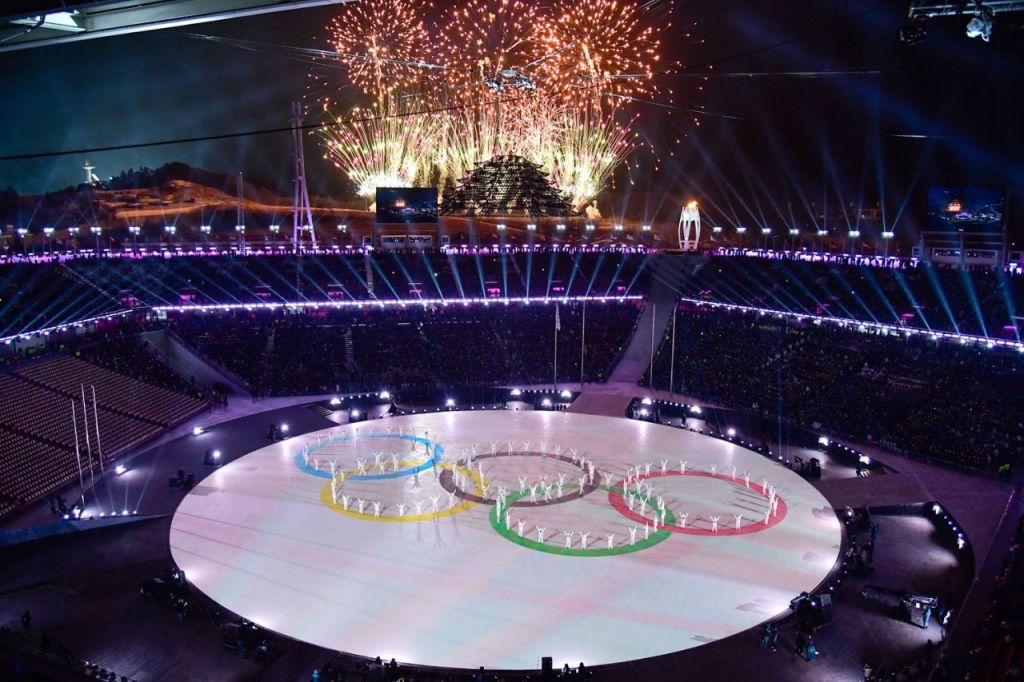
September 7, 2020
The Tokyo Summer Olympics are taking place next year regardless of the coronavirus pandemic, according to International Olympic Committee Vice President John Coates.
“It will take place with or without COVID. The Games will start on July 23 next year,” Coates told news agency AFP on Monday, according to multiple outlets.
“The Games were going to be, their theme, the Reconstruction Games after the devastation of the tsunami,” he added, referring to the devastating earthquake and tsunami that struck Japan in 2011. “Now very much these will be the Games that conquered COVID, the light at the end of the tunnel.”
In late March, the International Olympic Committee (IOC) announced that the Summer Games would be rescheduled for the same time slot next year due to the ongoing COVID-19 crisis.
The Olympics will now be held from July 23 through August 8, 2021.
There is still much uncertainty regarding the games, however. In June, various Japanese media sources published stories indicating that the Olympics will be “downsized,” “simplified” or “very different.”
Officials have not yet announced any specific modifications, but the reports indicated that athletes may face quarantines and coronavirus testing and seating could be reduced.
Following the published reports, Tokyo Olympics spokesman Masa Takaya appeared in an online news conference but did not confirm any of the leaked information about downsizing.
He did, however, address concerns about reducing the amount of seating, as millions of tickets have already been sold. “We want to brush away these concerns,” Takaya said, speaking to ticket holders.
“We understand that countermeasures for COVID-19 next year, particularly during games time, is one of the biggest things to address in preparing for the games next year,” he added. “But once again these countermeasures will be discussed in more depth from this autumn onward.”
Adam Rippon Says 2020 Winter Olympians Are ‘Grieving’ Amid Postponement
Figure skater Adam Rippon won a bronze medal in the 2018 Olympics in PyeongChang
Olympic Minister Seiko Hashimoto said that costs must be cut for the rescheduled games, but added that ensuring athletes’ safety may lead to higher expenses.
“Unless safety and security are ensured, there will be uncertainty for the athletes-first point of view,” she said, according to the Associated Press. “We must study measures including virus testing in order to ensure safety and security.”
The delay marks only the fourth time in modern Olympic history that the games have been disrupted.
https://www.yahoo.com/entertainment/ioc-vice-president-says-2021-155509392.html
1 This Month

Tell Congress: Prevent Nuclear Catastrophe in Iran

Tell Congress: Prevent Nuclear Catastrophe in Iran

Read the Public Inquiry Report, the Commissioners’ report, Surrendering Australia: The AUKUS Deception is available to download for free at aukuspublicinquiry.com. Or just watch the replay of the National Press Club Luncheon.
To see nuclear-related stories in greater depth and intensity – go to https://nuclearinformation.wordpress.com
Say No to NASA’s Reckless Nuclear Reactor on the Moon
-
Archives
- November 2026 (269)
- October 2026 (302)
- September 2026 (339)
- August 2026 (330)
- July 2026 (355)
- June 2026 (287)
- May 2026 (306)
- April 2026 (356)
- March 2026 (251)
- February 2026 (267)
- January 2026 (308)
- December 2025 (358)
-
Categories
- 1
- 1 NUCLEAR ISSUES
- business and costs
- climate change
- culture and arts
- ENERGY
- environment
- health
- history
- indigenous issues
- Legal
- marketing of nuclear
- media
- opposition to nuclear
- PERSONAL STORIES
- politics
- politics international
- Religion and ethics
- safety
- secrets,lies and civil liberties
- spinbuster
- technology
- Uranium
- wastes
- weapons and war
- Women
- 2 WORLD
- ACTION
- AFRICA
- Atrocities
- AUSTRALIA
- Christina's notes
- Christina's themes
- culture and arts
- Events
- Fuk 2022
- Fuk 2023
- Fukushima 2017
- Fukushima 2018
- fukushima 2019
- Fukushima 2020
- Fukushima 2021
- general
- global warming
- Humour (God we need it)
- Nuclear
- RARE EARTHS
- Reference
- resources – print
- Resources -audiovicual
- Weekly Newsletter
- World
- World Nuclear
- YouTube
-
RSS
Entries RSS
Comments RSS

