Refuting the nuclear lobby’s nonsense on risks of ionising radiation
Clean Technica 28th Sept 2020, Recently, a report appeared on BBC News, titled “Nuclear power: Are we too anxious about the risks of radiation?” It has been re-posted or restated at a number of news sites since. It says that 28 people died as a direct result of the Fukushima explosion and exposure to the immediateradiation. It goes on to say that there were 15 deaths in the region from thyroid cancer. And the conclusion that it bases on these figures is specifically stated: “[A]ccording to the UN in 2005, just 43 deaths could be directly attributed to the worst nuclear disaster the world has ever seen.”
Really? Just 43 deaths? And this is according to the UN? There is a lot of well documented material on the Chernobyl Disaster available. One article at Wikipedia is, “Deaths due to the Chernobyl disaster.” It states, “[T]here is considerable debate concerning the accurate number of projected deaths due to the disaster’s long-term health effects; long-term death estimates range from up to 4,000 (per the 2005 and 2006 conclusions of a joint consortium of the United Nations) for the most exposed people of Ukraine, Belarus, and Russia, to 16,000 in total for all those exposed on the entire continent of Europe, with figures as high as 60,000 when including the relatively minor effects around the globe.”
https://cleantechnica.com/2020/09/28/is-nuclear-power-as-safe-as-the-bbc-claims/
The human cost of the Trump pandemic response? More than 100,000 unnecessary deaths. — limitless life

The human cost of the Trump pandemic response? More than 100,000 unnecessary deaths. By Michael Riordan, September 30, 2020 President Trump, joined by Vice President Pence and CDC director Robert R. Redfield, takes questions during a Coronavirus Task Force update on February 29, 2020. Credit: White House photo by D. Myles Cullen In early January 2018, […]
The human cost of the Trump pandemic response? More than 100,000 unnecessary deaths. — limitless life
The Julian Assange Hearings: National Security on Trial and Plan to Spy on Assange — Rise Up Times

After hearing four weeks of evidence in the extradition trial of Julian Assange, District Judge Vanessa Baraitser announced on Thursday she will pronounce judgement on January 4.
The Julian Assange Hearings: National Security on Trial and Plan to Spy on Assange — Rise Up Times
New START: Arms Control or Arms Racing? — IPPNW peace and health blog

Largely held under the radar, the talks between the USA and Russia have been spectacularly unsuccessful so far. If they do not succeed, then the last bilateral arms control treaty New START will expire in February, going the same way as the INF Treaty before it and taking the last vestiges of our security with […]
New START: Arms Control or Arms Racing? — IPPNW peace and health blog
Court rules Fukushima nuclear disaster preventable, increases liabilities
Fukushima nuclear disaster preventable, court rules, with more damages claims likely
Government and company Tepco ordered to pay some damages for 2011 event, but ruling could spur further claims
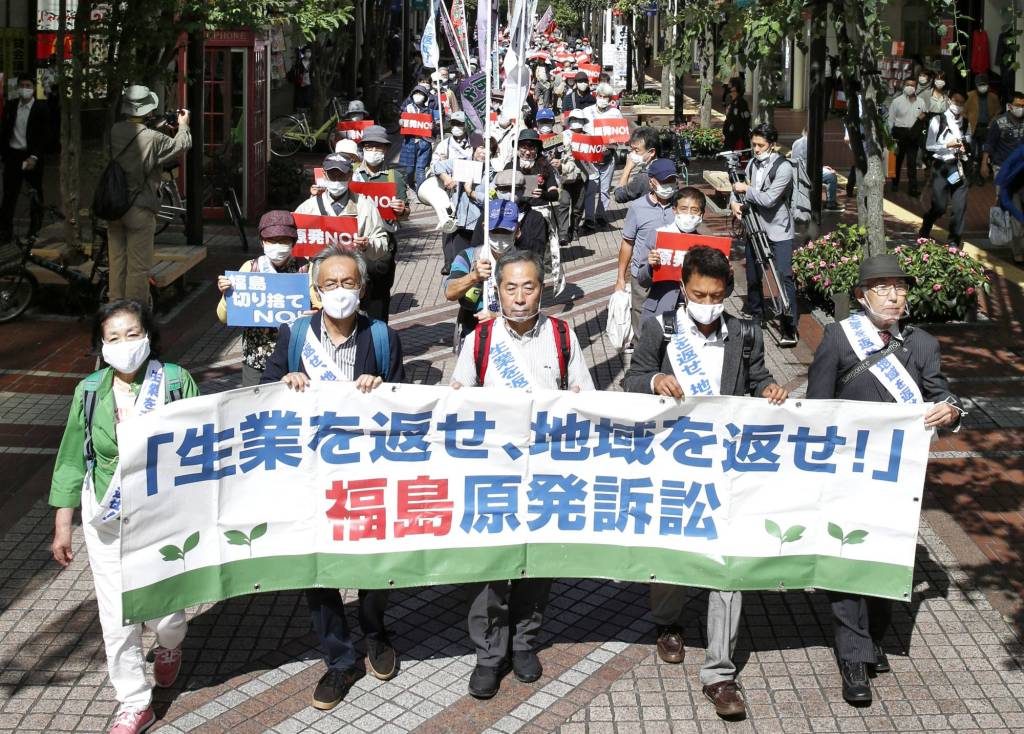
Plaintiffs and their supporters march in Japan ahead of the court ruling in Sendai on the tsunami-crippled Fukushima Daiichi nuclear power plant disaster on Wednesday.
Oct 1, 2020
A Japanese court has found the government and Tepco, the operator of the wrecked Fukushima nuclear plant, negligent for failing to take measures to prevent the 2011 nuclear disaster, and ordered them to pay 1bn yen ($9.5m) in damages to thousands of residents for their lost livelihoods.
The ruling on Wednesday by Sendai high court could open up the government to further damage claims because thousands of other residents evacuated as reactors at the coastal power station overheated and released a radioactive cloud, following the devastating tsunami. While some people have returned home, areas close to the plant are still off limits.
The plaintiffs had sought monthly compensation of about 50,000 yen ($470) per person until radiation levels subside to pre-disaster levels, seeking a total of 28bn yen ($265m).
The plaintiffs’ head lawyer, Izutaro Managi, hailed the ruling as a major victory, saying: “We ask the government to extend relief measures as soon as possible, not only for the plaintiffs but for all victims based on the damage they suffered.”
The latest ruling follows 13 lower court decisions, which were divided over government responsibility in the disaster. The latest ruling doubles the amount of damages against Tepco ordered by a lower court in 2017
In 2011, 3,550 plaintiffs were forced to flee their homes after a magnitude-9 earthquake triggered a tsunami that devastated the country’s north-east and crippled the Fukushima nuclear plant, known as the triple disaster.

Decommissioning work is underway at the Fukushima Daiichi nuclear power plant in Okuma town, north-eastern Japan.
Radiation that spewed from the plant’s melted reactors contaminated the surrounding areas, forcing about 160,000 residents to evacuate at one point. More than 50,000 are still displaced because of lingering safety concerns. The plant is being decommissioned, a process expected to take decades.
The court said that the government could have taken measures to protect the site, based on expert assessments available in 2002 that indicated the possibility of a tsunami of more than 15 metres, reported public broadcaster NHK, which aired footage of the plaintiffs celebrating outside the court after the ruling.
The government has yet to say whether it will appeal in the supreme court against the decision. “We will consider the ruling and take appropriate action,” chief cabinet secretary Katsunobu Kato said after the ruling.
Officials at Tepco were unavailable when Reuters tried to reach them outside regular business hours.
In court, the government argued it was impossible to predict the tsunami or prevent the subsequent disaster. Tepco said it had fulfilled its compensation responsibility under government guidelines.
Plaintiffs said the ruling brought some justice, but that their lives could never return to normal and their struggle was far from over.
“For more than nine years, I have planted seeds on the contaminated soil and grown vegetables, always worrying about the effects of radiation,” plaintiff Kazuya Tarukawa, a farmer from Sukagawa in Fukushima, said at a meeting after the ruling. “Our contaminated land will never be the same.”
Court increases state liability, compensation for nuclear disaster

Plaintiffs hold up signs in front of the Sendai High Court on Sept. 30 stating victory in their lawsuit against the central government and Tokyo Electric Power Co.
October 1, 2020
SENDAI—A high court here on Sept. 30 more than doubled the amount of compensation awarded to victims of the Fukushima nuclear disaster and issued a scathing critique against the central government for its inaction.
The Sendai High Court found the central government equally at fault as plant operator Tokyo Electric Power Co. for failing to take anti-tsunami measures and ordered the defendants to pay a total of about 1.01 billion yen ($9.6 million) to around 3,550 evacuees and residents living in Fukushima Prefecture and elsewhere.
It was the first high court ruling in various lawsuits seeking compensation from TEPCO and the central government for the triple meltdown at the Fukushima No. 1 nuclear power plant caused by a quake-triggered tsunami in March 2011.
In October 2017, the Fukushima District Court ordered the defendants to pay about 500 million yen to about 2,900 evacuees. That decision was appealed to the Sendai High Court, which increased both the compensation amount and the number of recipients.
“We won a total victory over the central government and TEPCO,” Izutaro Managi, a lawyer for the plaintiffs, said. “The effect on the various lawsuits to be decided in the future will be huge.”
A major point of contention in the case was a long-term assessment of the probability of major earthquakes released by the science ministry’s Headquarters for Earthquake Research Promotion in 2002. The report pointed out that Fukushima Prefecture could be hit by a major tsunami.
The high court found the assessment to be a “scientific finding that had a considerable level of objective and rational basis,” making it an important perspective that differed greatly from various views presented by individual scholars or private-sector organizations.
The court ruled that if the economy minister at the time had immediately ordered TEPCO to calculate the height of a possible tsunami, a forecast could have been made of the likelihood of a tsunami striking the nuclear plant.
But the ruling said, “The regulatory authority did not fulfill the role that was expected of it” and that “not exercising regulatory powers was a violation of the law regarding state compensation.”
The Fukushima District Court found that the central government only had a secondary responsibility to oversee the utility.
The high court, however, ruled that the government had the same level of responsibility. It said both the central government and TEPCO avoided making tsunami calculations because they feared the effects that would arise if the urgent measures were taken.
The high court ruling also expanded the range of plaintiffs who could receive compensation to people living in the Aizu district of Fukushima Prefecture as well as Miyagi and Tochigi prefectures where evacuation orders were not issued.
Experts said the high court ruling is a game-changer because of the positive assessment given to the long-term evaluation about possible tsunami.
Other district courts have ruled that the central government was not responsible because even if it had ordered measures to be taken, there would not have been enough time to complete such steps to prevent damage from the tsunami.
“Plaintiffs in the other lawsuits have provided testimony at a similar level so this could turn the tide in the recent trend of plaintiffs losing their cases,” said Masafumi Yokemoto, a professor of environmental policy at Osaka City University who is knowledgeable about nuclear plant issues.
Yotaro Hatamura, a professor emeritus of engineering at the University of Tokyo who headed the government panel that investigated the Fukushima nuclear accident, said, “This was an unprecedented ruling that pointed out in a rational manner the stance of both the central government and TEPCO of not looking at data that they did not want to see.”
Chief Cabinet Secretary Katsunobu Kato said at his Sept. 30 news conference that the central government would carefully go over the court ruling before making a decision on whether to appeal.
TEPCO also issued a statement with similar wording.
Japanese Government Is Ordered to Pay Damages Over Fukushima Disaster
The Sendai High Court said the state and the plant’s operator must pay $9.5 million to survivors of the 2011 nuclear accident. They have until mid-October to appeal to the country’s Supreme Court.

A damaged reactor building at the Fukushima Daiichi nuclear power plant in Japan in 2011.
September 30, 2020
TOKYO — A high court in Japan on Wednesday became the first at that level to hold the government responsible for the 2011 Fukushima nuclear disaster, saying in a ruling that the state and the plant’s operator must pay about $9.5 million in damages to survivors.
The overpowering earthquake and tsunami that ripped through northern Japan in March 2011 caused a triple meltdown at the Fukushima Daiichi plant, leading to the worst nuclear crisis since Chernobyl.
Under Wednesday’s ruling by the Sendai High Court, the government and the Tokyo Electric Power Company, known as Tepco, must compensate 3,550 plaintiffs, the Kyodo news agency reported. The plaintiffs had sought monthly compensation payments of about $475 per person until radiation at their homes returns to pre-crisis levels.
In 2017, a lower court had ordered the government and Tepco to pay about half that amount to about 2,900 plaintiffs. But the ruling by Sendai’s high court, one of eight such courts in Japan, is significant because it could set a legal precedent for dozens of similar lawsuits that have been filed across the country.
The government has long argued that it could not have prevented the tsunami or the nuclear accident, while Tepco says it has already paid any compensation that was ordered by the government. Last year, a Japanese court acquitted three former Tepco executives who had been accused of criminal negligence over their roles in the accident.
Hiroshi Kikuchi, a lawyer for the plaintiffs, called Wednesday’s decision “groundbreaking.”
“The court carefully collected facts for this judgment,” Mr. Kikuchi said at a news conference. “We feel now it will largely impact on other actions nationwide.”

Workers removing the top soil from a garden in Naraha, inside Fukushima’s evacuation zone, in 2013.
Izutaro Managi, another lawyer on the team, said in a brief interview that if the government and Tokyo Electric Power appeal the decision, he expects it to go to the country’s Supreme Court. The deadline for filing that appeal is Oct. 14.
Tepco said in a statement on Wednesday that it would examine the judgment before responding to it.
“We again apologize from our heart for giving troubles and concerns to people in Fukushima as well as in the society largely caused by our nuclear power plant’s accident,” the statement said.
Toyoshi Fuketa, the chairman of the Nuclear Regulation Authority, an agency that was created after the Fukushima accident, said on Wednesday that he would not comment until the details of the judgment were released.
“The Nuclear Regulation Authority was set up based on reflection over, and anger against, the nuclear accident in Fukushima,” Mr. Fuketa added. “I would like to advance strict rules on nuclear power so that a nuclear accident will never happen again.”
Takashi Nakajima, one of the plaintiffs in the case, told reporters that the ruling was a reminder that the consequences of the Fukushima disaster were still real, even if many people in Japan were starting to forget about it.
“Some people say that I’m damaging Fukushima’s reputation,” Mr. Nakajima said. “But now I think we are encouraged by the court to say what we think.”
Another plaintiff, Kazuya Tarukawa, said in a tearful statement that he had been tilling contaminated soil in the area for nearly a decade, and waiting for the government and the plant’s operator to take responsibility.
He said the money was beside the point, and that the ruling raised a larger question about the long-term risks of nuclear energy.
“What will come of Japan if there is another nuclear disaster like that?” he asked.

A roadblock in a contaminated area northwest of the nuclear plant in 2013.
Sendai court upholds ruling that state and Tepco must pay Fukushima evacuees
A group of plaintiffs demanding compensation for the Fukushima No. 1 nuclear plant disaster rally in Sendai on Wednesday prior to the high court’s ruling that held the state and Tepco responsible.
September 30, 2020
Sendai – The Sendai High Court on Wednesday ordered the state and the operator of the crippled Fukushima No. 1 nuclear plant to pay ¥1 billion ($9.5 million) in damages to residents over the 2011 earthquake- and tsunami-triggered disaster.
It was the first time a high court has acknowledged the state’s responsibility for the incident in about 30 similar lawsuits filed nationwide.
The Sendai court told the government and Tokyo Electric Power Company Holdings Inc. to pay about ¥1.01 billion to 3,550 out of some 3,650 plaintiffs, up from the sum of ¥500 million that a lower court ordered them to pay to around 2,900 plaintiffs in an October 2017 ruling.
In line with the 2017 ruling by the Fukushima District Court, the high court made its decision based on three points in dispute, including whether a major tsunami could have been foreseen.
The two other points were whether countermeasures could have been implemented to prevent a disaster, and whether the compensation levels outlined by the government were sufficient.
The plaintiffs had sought monthly compensation payments of around ¥50,000 per person until radiation at their residences returns to the pre-crisis level, bringing their total final demand to approximately ¥28 billion.
The state, meanwhile, argued it was impossible to predict the tsunami and prevent the subsequent disaster. Tepco claimed it had already paid compensation in accordance with government guidelines.
In the district court ruling, the government and Tepco were both blamed for failing to take steps to counter the huge tsunami.
It ruled that the two should have been able to foresee the risks of a maximum 15.7-meter-high wave, based on a quake assessment issued in 2002, and that the disaster could have been prevented if the state had instructed the operator to implement measures that year.
The magnitude 9.0 earthquake and ensuing tsunami struck Tohoku on March 11, 2011, causing multiple meltdowns and hydrogen blasts at the nuclear power plant.
Around 55,000 people remained evacuated both within and outside Fukushima Prefecture as of the end of August.
The Nuclear Regulation Authority issued a comment that said, “We will consider appropriate ways to respond while closely examining the ruling and consulting with relevant authorities.”
Tepco said in a statement, “We deeply apologize again for causing great trouble and worries to the people of Fukushima Prefecture and the whole of society because of the nuclear power plant accident. We will closely examine the ruling by the Sendai High Court and consider ways to respond.”
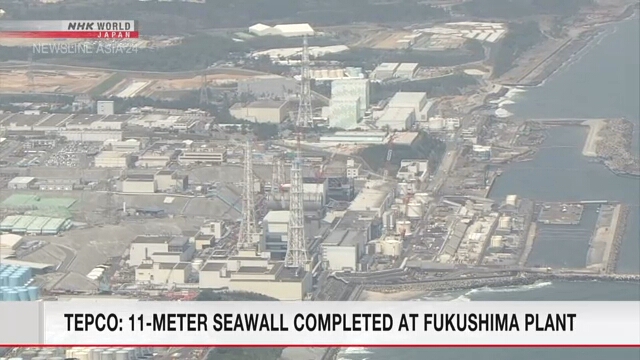
TEPCO: 11m seawall completed at Fukushima plant
September 29, 2020
The operator of the damaged Fukushima Daiichi nuclear power plant says it has completed an 11-meter-high seawall to protect the facility from tsunami waves.
Tokyo Electric Power Company, or TEPCO, erected the barrier based on a government panel warning three years ago. It said that a mega-quake along the Chishima Trench, beneath the sea near northern Japan, could cause a tsunami to hit the compound.
TEPCO announced that a 1.7-meter-high concrete wall was built atop elevated ground stretching 600 meters on the sea side of the No.1 to No.4 reactors.
The firm says the barrier stands 11 meters above sea level and it was completed on Friday.
TEPCO next plans to build another seawall measuring up to 16 meters high, based on a new projection made by a government panel in April.
The projection says if a mega-quake were to occur along the Japan Trench off the northeastern coast, a tsunami could be higher than the newly-built seawalls.
TEPCO says it aims to complete the taller seawall by fiscal 2023.
In Rural Fukushima, ‘The Border Between Monkeys And Humans Has Blurred’
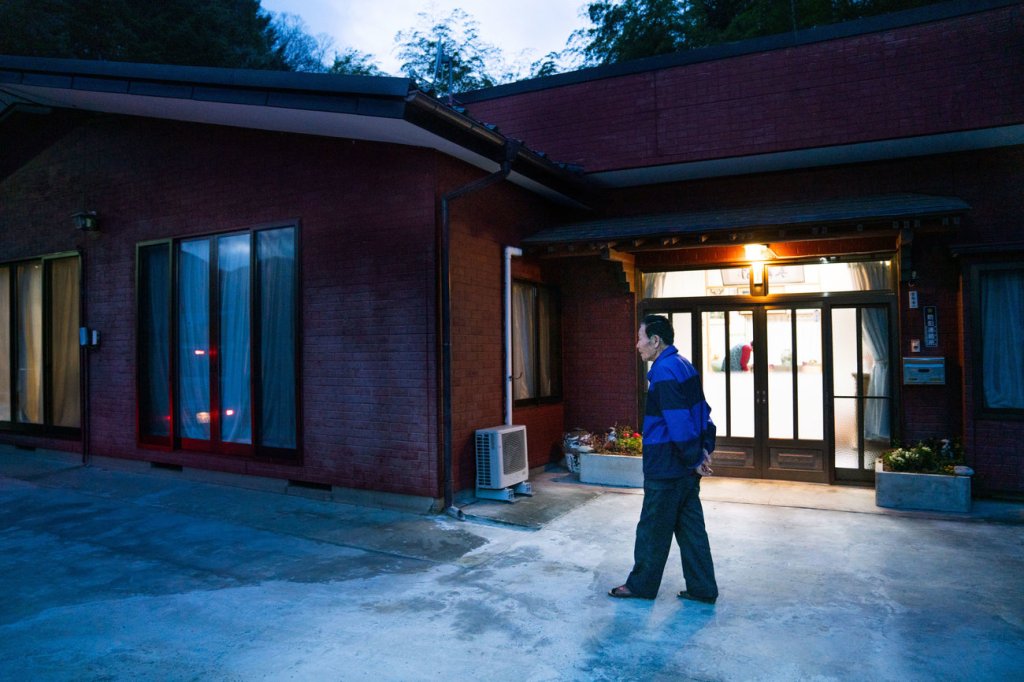
Shuichi Kanno, 79, walks in front of his home at dusk. Kanno has been dealing with hordes of macaque monkeys in his neighborhood in Japan. They frequently wake him up as they climb over his roof in the early morning hours.
September 10, 2020
Shuichi Kanno rips tape off the top of a large cardboard box at his house in the mountains in Fukushima prefecture in Japan. He opens the box and rustles around to pull out pack after pack of long, thin Roman candle fireworks. The words “Animal Exterminating Firework” are written in Japanese on the side of each canister.
Kanno has been battling hordes of macaque monkeys that have encroached upon his neighborhood in a rural area of Minamisoma. These fireworks are his main deterrent — not to cause the monkeys any physical harm, but to scare them away with a loud bang. That is, until they regain their confidence and come back a few days later, which they do like clockwork, Kanno says.

Kanno stacks fireworks on his coffee table to distribute to neighbors. The fireworks make a loud noise meant to scare, not injure, the monkeys.
“In the early morning while I’m sleeping, just when I’m about to wake up, I hear the noise,” the 79-year-old says in Japanese as he stacks the fireworks on his living room table. “The sound of the monkeys running around on the roof, getting into the gardens, eating all my food. I have to fight them.”
Hundreds of thousands of people evacuated this area nine years ago, fleeing plumes of radioactive material after three reactors exploded at the Daiichi nuclear power plant, one of the most serious nuclear disasters in history. Whole towns and neighborhoods like Kanno’s were left empty of human life for years — and, much like Chernobyl, nature started to reclaim the space. Plants poke through sidewalks and buildings, while wild boar, raccoons and foxes roam the streets. But in recent years, many evacuation orders have lifted and people have started to return, meaning humans and animals are having to figure out new ways to coexist — or not.

A macaque monkey in a tree in Fukushima prefecture. After the 2011 nuclear disaster, towns and neighborhoods in Fukushima were left devoid of humans for years, and nature started to reclaim the space.
“The monkeys never used to come here, but after the disaster, the border between monkeys and humans has blurred,” Kanno explains. “The houses were empty, but the gardens were still growing — plums, pears, chestnuts, persimmons. It was a wonderland for monkeys, an all-you-can-eat buffet. And they remembered that.”
His neighborhood is on the very edge of the evacuation area, relatively far from Daiichi. People stayed away for only a few years, but by the time they came back, the monkeys had become comfortable. And, Kanno points out, half the houses are still empty and only older people came back. They just don’t have the numbers they need to win the battle against the monkeys without backup.

From left: Shuichi Kanno, Shigeko Hoshino, Hiroyuki Shima and Hachiro Endo are neighbors who moved back to Fukushima after the nuclear disaster and who get regular visits from monkeys that eat fruits and vegetables from their gardens.
That is where the fireworks come in, subsidized by the local government after residents complained. The governments here have provided several different kinds of tools, such as wild boar traps and electric fences for farmers, to help communities with animal problems.
Yuriko Kanno, 75, Shuichi’s wife, comes into the living room, looks at the pile of fireworks and laughs. “I’ve been worried that this village is going to become like that movie, the monkey planet one,” she says, referring to Planet of the Apes. “I’ve seen it — it could happen!”
She walks away giggling. Shuichi Kanno is laughing too. The monkeys are annoying, yes, but they’re also a source of entertainment for the aging residents, he concedes.
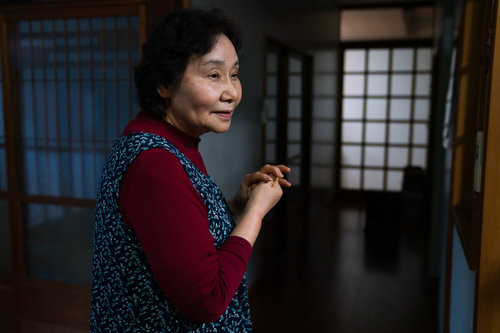
Yuriko Kanno, 75, is amused by the battle between her husband and the monkeys.
“Look, I think they’re cute. I would absolutely never hurt them,” he says. “None of this is their fault. It’s nuclear power’s fault. It’s the fault of humans.”
Shuichi Kanno is a leader in the neighborhood, and he’s in charge of distributing the fireworks to any of his neighbors who want them. The neighbors all have to sign an agreement saying they understand the dangers and — most importantly, he says — that they will not hurt any animals.
He loads the fireworks into the trunk of his car and drives down forest roads from house to house, dropping off packs of fireworks at every stop. As he drives, he points to all the natural beauty in the area. The nuclear disaster didn’t just change his relationship with monkeys, he says.
“I loved hiking, and foraging for wild vegetables, finding wild mushrooms. But now it’s so dangerous,” Kanno explains, referring to the high levels of radioactive cesium still present in the dense forests here. “We can’t have a relationship with nature anymore. It’s gone.”

Kanno drives his truck down a main road in his neighborhood, chasing monkeys that he saw scampering around his house not long ago.
He pulls up to the house of Hachiro Endo, 77, whose family has been in the area for generations. The home has a beautiful garden in front and long strands of drying persimmons hanging in the garage.
Endo is delighted by the delivery. He has gone through his entire stockpile protecting his garden. “I’m alert all the time,” Endo sighs. “The monkeys, they’ve taken over my life.”
He says he remembers a time when he was little and his grandfather tried to lure the monkeys down from the mountains into the village, hoping to boost tourism to the area by becoming a monkey town. He was never successful — the macaques were too afraid of humans to come down and stay.
“If only he could see it now,” he says with a laugh.

A troop of monkeys scampers across a road in Fukushima prefecture.
A few days later, Kanno is out on monkey patrol. He has just seen a troop of monkeys running from his house out into the neighborhood. He’s wearing knee-high rubber boots, a bright orange jacket and a baseball cap while clutching a firework in one hand and the steering wheel of his pickup truck in the other.
He drives slowly, leaning forward to scan the hills as he goes. And then suddenly, he slams on his brakes.
“There they are!” he shouts, pointing behind a shed. Dozens of monkeys are jumping toward the forest, scrambling up trees and crawling up the hillside.
He jumps out of the truck and pulls the firework from underneath his jacket, loading it onto a kind of stick so he can hold it far away. He lights the fuse and smiles, pointing it toward the hill.
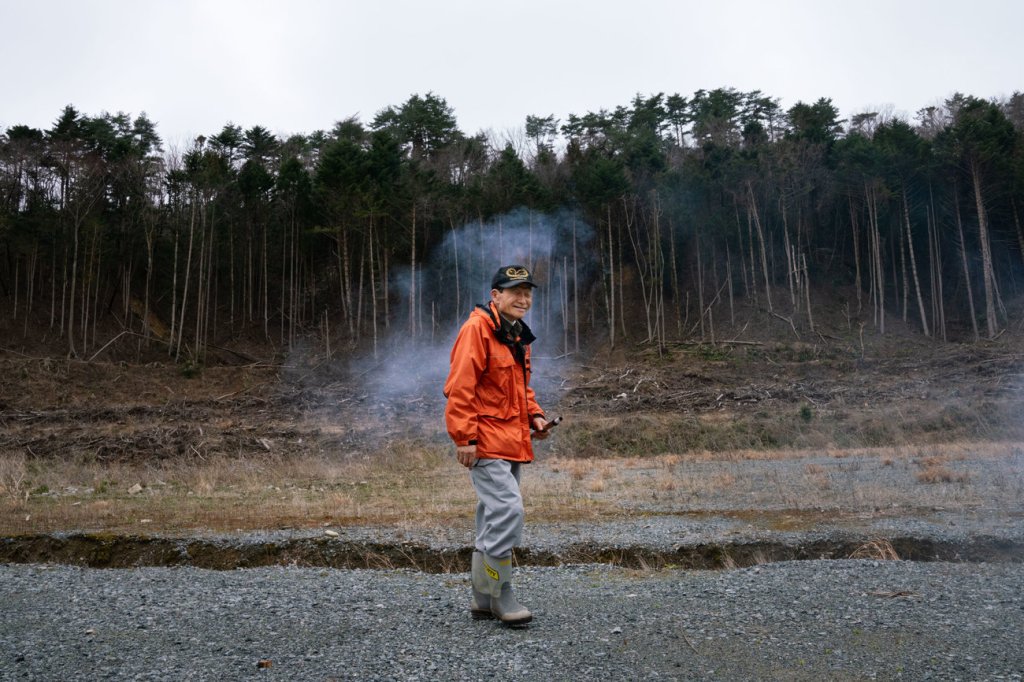
Kanno grins after shooting off a firework to scare off monkeys that were roaming through the neighborhood.
Three loud booms echo through the trees. The monkeys scatter. Kanno bursts into a grin, giggling. Then he runs to every house nearby, making sure his neighbors know that he just saved their gardens from almost certain devastation.
“They won’t be back tomorrow!” Kanno calls, waving the spent firework, giddy with excitement. “I won today!”
But even as he says that he loads a fresh firework and tucks it into his coat. The monkeys will be back, and the battle will continue.
Tokyo Olympic torch relay to start on March 25, 2021 in Fukushima
Same time same place next year …The relay will start from the J-Village soccer training center and last for 121 days while traversing all of Japan’s 47 prefectures. The previous schedule for each region was maintained aside from a one-day adjustment to fit next year’s calendar.

September 28, 2020
The Tokyo Olympic torch relay will start on March 25 in Fukushima Prefecture, Tokyo Games organizers said Monday, in keeping with the plan that was developed prior to the games’ one-year postponement due to the coronavirus pandemic.
The relay will start from the J-Village soccer training center and last for 121 days while traversing all of Japan’s 47 prefectures. The previous schedule for each region was maintained aside from a one-day adjustment to fit next year’s calendar.
The Olympics are slated to open on July 23 next summer followed by the Paralympics on Aug. 24.
Approximately 10,000 runners who had already been selected will be given priority for the nationwide relay. Organizers said they will stick with the local routes and events that were already planned in principle but may make future adjustments according to the status of each region.
The Paralympic torch relay will be held in August.
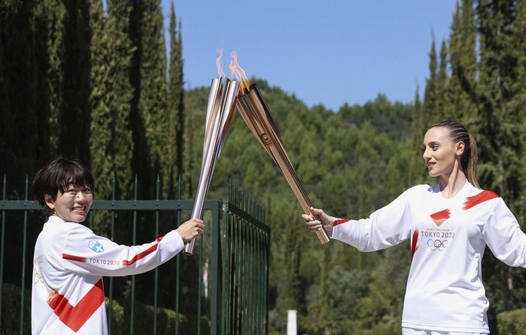
Athens Olympics women’s marathon gold medalist Mizuki Noguchi (L) receives the Tokyo Olympics flame from first runner Anna Korakaki, the 2016 Rio Games shooting gold medalist, in the torch relay in Olympia, Greece, on March 12, 2020.
Organizers had been seeking to shorten the torch relay schedule in order to reduce swelling costs caused by the games’ delay but abandoned the idea after receiving strong disapproval from local governments already banking on the event.
As a result, only reducing the size of the vehicle convoys, staff and pageantry of some of the events connected to the relay are under review as potential areas for cost cutting and streamlining the games.
The Olympic flame was lit earlier this year at the site of ancient Olympia in Greece and arrived in Japan four days before the games were postponed on March 24.
The flame has remained in the host country since and is currently on public display at the Japan Olympic Museum near the main stadium for the games in central Tokyo until Nov. 1.
Prime Minister Suga Visits Fukushima Daiichi Nuclear Plant

Prime Minister Yoshihide Suga visits the disaster-stricken Fukushima No. 1 nuclear power plant on Saturday.
Suga visits disaster-hit Fukushima nuclear power plant
September 26, 2020
FUKUSHIMA – Prime Minister Yoshihide Suga on Saturday visited the disaster-stricken Fukushima No. 1 nuclear power plant, where decommissioning work is taking place.
The day trip is Suga’s first since he replaced former leader Shinzo Abe, who stepped down for health reasons, and is aimed at demonstrating the government’s continued commitment to rebuilding areas of Tohoku affected by the massive March 2011 earthquake and tsunami and ensuing nuclear crisis.
While the Abe administration’s set of basic policies included the pillar of disaster recovery from its inception in 2012, Suga’s Cabinet platform, adopted at its first meeting on Sept. 16, made no mention of the disasters that left nearly 15,900 people dead and more than 2,500 unaccounted for.
Suga said during a Friday meeting on the rebuilding of the region that he will “inherit the policy” from the previous administration and keep pushing reconstruction forward.
His trip also includes a visit to a museum on the disaster and a meeting with students from local junior and senior high schools.
Japan PM Suga visits disaster-hit Fukushima nuclear power plant
FUKUSHIMA, Japan (Kyodo) — Prime Minister Yoshihide Suga vowed Saturday to press forward with reconstruction efforts for areas devastated by the 2011 earthquake and tsunami, as he visited the Fukushima nuclear power plant crippled by the disasters.
He made the comment after there was no mention of the disasters, or rebuilding work for the northeastern Tohoku region, in his Cabinet’s basic policies adopted at its first meeting last week.
Suga told reporters during his first official trip since he took office to succeed Shinzo Abe on Sept. 16 that when he formed the new Cabinet, he wrote of the need to continue reconstruction efforts in instructions handed out to all the Cabinet members.
“There is no recovery of Tohoku, without recovery of Fukushima, and there is no revival of Japan without recovery of Tohoku. This is a basic policy of my Cabinet,” he said.
Fukushima is one of three prefectures in northeastern Japan hit hardest by the disasters that left nearly 15,900 people dead and more than 2,500 unaccounted for, and triggered the world’s worst nuclear crisis since the 1986 Chernobyl accident.
The Abe administration’s set of basic policies included the pillar of disaster recovery from its inception in 2012. Suga said Friday during a meeting on the rebuilding of the devastated areas that he will “inherit the policy” from the previous administration.
“We want to make a decision as soon as possible” on radioactive water now being stored at the Fukushima Daiichi nuclear power station, he said.
The government and the plant owner, Tokyo Electric Power Company Holdings Inc., are considering how to dispose of the water, which has been contaminated with radioactive materials after being used to cool the melted fuel cores at the plant.
They are looking at options such as releasing it into the Pacific Ocean or evaporation but local fishermen have voiced opposition due to fears consumers would shun seafood caught nearby.
The water is being treated using an advanced liquid processing system, or ALPS, to remove most contaminants other than the relatively nontoxic tritium. It is being stored in tanks on the facility’s premises but space is expected to run out by the summer of 2022.
Suga also visited a museum on the disasters and met with students from local junior and senior high schools as part of the official trip.
https://mainichi.jp/english/articles/20200926/p2g/00m/0na/078000c
Fukushima and freedom of expression
September 23, 2020
According to Asahi, guides welcoming visitors to the disaster museum, which opened on September 20 in Futaba, have no right to criticize either TEPCo or the government. The 29 guides are victims of the disaster or trained people. Each guided tour lasts one hour and is paid 3,500 yen.
During the trainings that took place this summer, the distributed manual stated that one should avoid “criticizing or defaming certain organizations, people or other facilities”. And if a visitor asks the guide about their feelings about TEPCo’s responsibility, the answer should be evasive and the visitor referred to museum staff. Each guide must also put his words in writing and submit it to the museum management who corrects it. And if they ever criticize an organization, their presentation will be immediately stopped and they will never be able to be a guide in that museum again.
Some guides took offense: as victims, they should be able to criticize TEPCo and the government, which are responsible for the nuclear disaster. Another guide saw their script corrected after mentioning this responsibility. Yet official investigative reports pointed to the responsibility of TEPCo and the government. Not being able to mention it in a museum dedicated to the nuclear disaster is scandalous.
Ironically, Le Canard Enchaîné published an article that same day on the dismissal of an IRSN researcher who was working on the consequences of the Fukushima disaster and who did not agree to have her work censored by his hierarchy. In response, ACRO left the Research Orientation Committee (COR) of this Institute. The resignation letter is on the association’s website and reproduced below.
According to Le Canard Enchaîné, the direct superior of Christine Fassert, the licensed researcher, “wanted to impose changes, even censor words and sentences [of] an article,” in order to “avoid criticism of post-management. accident of the Japanese government, and the civilian nuclear sector in general “, and” to minimize and relativize the risk related to radiation exposure “.
This event is very disturbing because it shows that IRSN is unwilling to accept research results that challenge its prejudices. And when you’re in charge of nuclear safety, it’s particularly serious. He is not the only person to have suffered the rigidity of this institute, but it is the first time that it has led to a dismissal, which is scandalous.
We have already emphasized, twice, in July 2018 and March 2019, the originality of the work of Christine Fassert, socio-anthropologist, risk specialist at IRSN, who worked on trust, as part of the Shinrai project. in partnership with Sciences Po and Tôkyô Tech University. In Japan, as in France, she went, with her Japanese colleagues, to meet all the protagonists and interviewed both officials and independent experts, as can be seen in this presentation (copy).
At IRSN, we prefer to focus on people who show that it is possible to live in contaminated areas. And the dominant paradigm is that we must avoid evacuating and bringing evacuees back as quickly as possible, bypassing the UN directives on internally displaced persons which guarantee them protection, the right to choose between return and resettlement, as well as their full participation in decisions (see our 2016 report: Fukushima, return to abnormal?). It is also obvious in the European research programs in which IRSN participates, where the reduction of uncertainties in the modeling of radioactive fallout should make it possible to avoid unnecessary evacuation of populations (see page 58 of this presentation, for example) , while the faults in the modeling in Fukushima also led to not evacuating people who should have been! This is the case for the contaminated territories which extend up to forty kilometers to the Northwest. The evacuation order did not arrive until April 22, 2011, when the disaster began on March 11, 2011.
In practice, IRSN did not hesitate to work on and highlight an unscrupulous researcher, as we reported in January 2019, but who said what the institute wanted to hear. This is also the object of the Fukushima “dialogues” supported by IRSN shown in the web documentary “Kotoba” (which means “word” and not “dialogue”): no radioactive waste, no sick, no residents who don’t want to come in… Just a few small worries, but in twelve “dialogues”, everything is settled! The results of these dialogues by IRSN are a distressing list of banalities. This is worrying for post-accident management in the event of an accident in France.
Christine Fassert, for her part, also went to meet people who have left and who do not want to return, giving visibility to a category of populations that everyone wants to ignore, although it is the most numerous. The project also examined the pitfalls of an essentially “reassuring” communication on radiological risk, the difficulty of the role of radiation protection experts in direct contact with the public, the tension between a government policy of evacuations and returns devised by Tokoite elites and the implementation of these directives by the mayors in the region of Fukushima… Only subjects which did not fall within the narrow framework of what was expected. So, it was the frame or her!
Resignation message sent on September 18, 2020 to COR members:
Madame President,
Following the dismissal of an IRSN researcher, I would like to resign from COR. If the IRSN is not able to accept unique voices internally, it cannot open up to society.
In its opinion on the post-accident, the COR stressed, for the “populations and governance” section: “The WG thinks that it would be important to conduct research on this subject taking into account the opinions of all categories. population. Self-evacuees escape official monitoring in Japan and most of the studies and research in which IRSN participates. The experience feedback cannot be limited to the population who wish to remain in place or return, which is not very representative of all the populations affected by a serious nuclear accident. IRSN would benefit from broadening the scope of its studies and research or from moving closer to other programs involving all the people affected by the disaster, including those who do not wish to stay or return. “
In the event of a nuclear accident in France, IRSN will not be able to choose from among the affected populations. The participation of all stakeholders will be necessary. The licensed researcher is precisely the only person at the institute who was interested in all categories of the population, the “dialogues” program having selected only people in agreement with the dominant paradigm at IRSN.
I have already had the opportunity several times, within the COR, to question and alert IRSN researchers on the freedom to publish and communicate, to no avail. The COR has never agreed to discuss it.
Since the beginning of COR, I have worked for more openness and to take into account the demands of society. I have participated in almost all GTs and chaired two of them. But I fear that all this work has been in vain and that IRSN is not ready to open up sincerely. Under these conditions, I see no other solution than to resign from COR.
Yours truly,
David Boilley
TEPCO’s fitness to operate nuke reactors still open to question
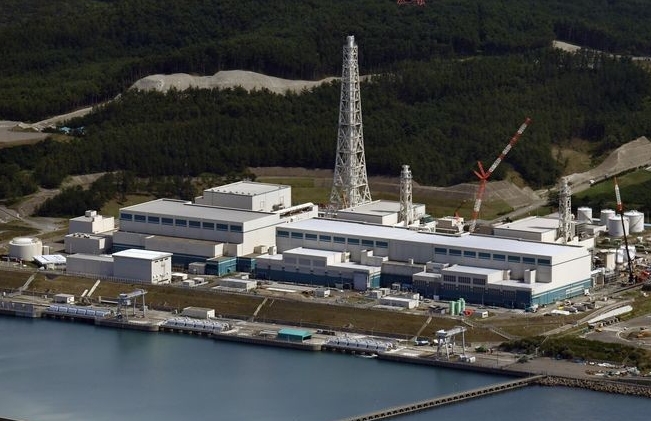
From left, the No. 5 to No. 7 reactors of the Kashiwazaki-Kariwa nuclear power plant in Niigata Prefecture
September 24, 2020
The Nuclear Regulation Authority has effectively endorsed Tokyo Electric Power Co.’s fitness to operate nuclear reactors in its safety screening of the utility’s plans to restart the No. 6 and No. 7 reactors at the Kashiwazaki-Kariwa nuclear power plant in Niigata Prefecture.
The nuclear watchdog’s endorsement, based on new legally binding safety rules the utility drafted and pledged to follow, has opened the door for the operator of the crippled Fukushima No. 1 nuclear power plant to start running reactors again.
But TEPCO’s actions concerning safety, the decommissioning of the destroyed Fukushima reactors and compensation for victims of the catastrophic accident have created a deep sense of distrust that is hard to brush off. The NRA’s decision is open to question.
Three years ago, when it cleared the No. 6 and No. 7 reactors under the tougher new reactor safety standards established in response to the Fukushima disaster, the NRA placed great importance on TEPCO’s “fitness” to run reactors.
This has led the utility to incorporate seven new principles into its safety code. They include the company’s commitment to carry through the decommissioning of the Fukushima No. 1 nuclear plant and hold its president responsible for reactor safety as well as its pledge not to put economic efficiency before safety.
The safety code is legally binding, with a violation potentially provoking an order to suspend operations.
This time, the NRA has examined TEPCO’s seven commitments and acknowledged that they are specific enough to allow the watchdog to identify and punish any violations.
But the seven principles still contain vague elements. It is difficult not to wonder whether they will effectively enable the NRA to monitor and check TEPCO’s operations for violations.
TEPCO, for example, has promised to follow through with the payment of compensation to victims of the Fukushima calamity. In fact, however, the company has rejected many proposed compensation agreements with local residents.
As for decommissioning the stricken plant, the company has left entirely to the government the vital challenge of disposing of radiation-contaminated water being generated by the plant.
These actions of the firm appear to be at odds with the safety code. What does the NRA think about them?
The real question is whether TEPCO’s basic attitude has really changed.
Asahi Shimbun editorials have questioned the company’s reliability to operate nuclear plants safely because it has failed to demonstrate the safety awareness and commitment required for the operator of a nuclear power plant.
TEPCO, for example, failed to report accurately the fact that an important facility at the Kashiwazaki-Kariwa plant does not have sufficient earthquake resistance.
It also avoided publishing voluntarily the fact that contaminated water from the Fukushima plant contains various radioactive materials whose levels are well above the safety standards after treatment. All these facts raised doubts about the firm’s ethical integrity.
Unless the utility changes its culture and behavior, it will be unable to win local support for its plans to restart the reactors.
TEPCO, as the operator of the Fukushima plant, has the responsibility to put the priority on decommissioning the reactors and paying compensation to people who have suffered from the accident.
It is doubtful whether the company will be able to operate reactors safely while grappling with the colossal challenge of decommissioning the plant, a process that will continue for decades.
There are legitimate concerns that the company could be unable to secure sufficient human and other resources for its efforts to ensure the safety of the Kashiwazaki-Kariwa plant.
Instead of sticking to its business strategy, which is focused on restoring its financial health by restarting the reactors at the plant in Niigata Prefecture so that it can bear the huge cost of decommissioning and compensation payments, TEPCO should start exploring carving out a viable future without nuclear power generation for itself.
As the utility’s virtual leading shareholder, the government should urge the firm to reconsider its business strategy.
Japan Struggles to Secure Radioactive Nuclear Waste Dump Sites
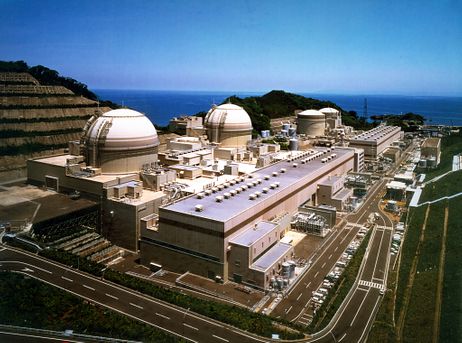
A small, aging town grapples with the financial lure of storing radioactive waste underground.
Japan’s worsening depopulation crisis is crippling the public finances of regional towns. Now one small town has made national headlines after expressing interest in storing radioactive nuclear waste underground in a last ditch effort to save itself from impending bankruptcy.
The small town of Suttsu in Hokkaido, the northernmost main island of Japan, has a population of just under 3,000 people. It’s the first local municipality to volunteer for the permanent storage site of highly radioactive nuclear waste and nuclear spent fuel. Suttsu Mayor Kataoka Haruo says the town has no more than 10 years left to find new sources of income after struggling with a slump in sales of seafood due to the global coronavirus pandemic.
Kataoka says there is an impending sense of crisis unless an urgent financial boost in the form of a government grant can be secured. He has called on local residents not to dismiss the idea of applying for the phase one “literature survey” without weighing the ways the grant could be spent — in contrast to the harsh reality of town funds running dry in 10 years’ time.
In Japan there are more than 2,500 containers of nuclear waste being stored in limbo without a permanent disposal site. Currently, the waste is stored temporarily in Aomori prefecture in northwest Japan at the Japan Nuclear Waste Storage Management Center. According to the Ministry of Economy, Trade, and Industry there are also approximately 19,000 tons of spent nuclear fuel stored at each nuclear power plant.
Nuclear waste projects immense heat and it needs to be cooled through exposure to air for between 30 to 50 years before it can be transferred and stored underground. However, it takes roughly 1,000 years to 100,000 years for radiation intensity to drop to safe levels.
The 2011 Fukushima nuclear disaster left long-lasting trauma further exasperating Japan’s already vexed relationship with nuclear energy as a resource deficient nation. The aftermath of the disaster and the slow road to recovery prompted many people to object to nuclear waste storage not only on geographic grounds but also out of strong emotional opposition.
Hokkaido has built a global reputation for its high quality dairy, agricultural products, and seafood. Nuclear waste storage, and the negative publicity that would follow, could jeopardize those industries.
With the proposal, local residents in Sutsu have been placed in a difficult situation, weighing up the health of their children and future generations against the town’s financial prospects and viable funding opportunities.
In August, Kataoka said he would not apply for phase one without the understanding of the general public. Last week, Kataoka held a local briefing session aiming to deepen local understanding and consent. But after discussing the damage to the town’s reputation and the possible conflict with a previous ordinance against accepting nuclear waste set by a radioactive waste research facility created in Hokkaido in 2000, Kataoka indicated the application for phase one would likely be delayed.
In 2000 the government enacted the Final Disposal Law, which outlined criteria for electing a permanent storage site. A three-stage investigation process sets out excavation to be deeper than 300 meters below ground and in doing so a survey of volcanoes, active fault lines, and underground rock must be performed in addition to installing an underground survey facility. It’s estimated that steps one through to three will take approximately 20 years in total.
In 2017 the government released a scientific map of Japan, pinpointing towns with suitable geographic conditions to host final disposal sites. If the application and survey are approved successfully, towns are eligible for grants up to 2 billion yen (around $19 million at current exchange rates) from the central government and another 7 billion yen if stage two goes ahead. In 2002 The Nuclear Waste Management of Japan (NUMO) launched an open call for local municipalities to consider applying for an initial investigation stage without success. Three years after the release of the map, NUMO has attempted to garner public support by hosting over 100 local discussion meetings all over Japan. Suttsu was the first town to express interest in phase one out of 900 local municipalities.
The final nuclear waste site is expected to make room underground for 40,000 barrels requiring six to 10 square kilometers — the equivalent of 214 Tokyo Dome Stadiums — to a tune of 3.9 trillion yen.
The government is currently formulating a “nuclear fuel cycle policy,” which aims to reduce the amount of nuclear waste generated by encouraging the recycling and reuse of spent fuel. But one major criticism of Japan’s nuclear power policy is the lack of a comprehensive strategy. The two year period for a “literature survey” has been touted as an opportunity for Japan to seriously consider the cleanup of nuclear power.
The American election- what will the nuclear order look like after this?

image from MENAFN.COM
THE U.S. ELECTION AND NUCLEAR ORDER IN THE POST-PANDEMIC WORLD Limitless Life, LEON V. SIGAL, SEPTEMBER 29 2020Abstract
U.S. power and prestige may have diminished in recent years, but the United States still plays a pivotal role in international institutions, alliances, and mass media, so who becomes its president and which party controls Congress matter a lot for the global nuclear order. However unlikely it is that Donald Trump’s expressed desire to contest the election’s outcome could succeed, whether the nation can avert a violent backlash among disappointed partisans is less clear.
Nuclear weapons are often thought to be the esoteric domain of experts. Yet one need only recall that although mass activism does not guarantee policy change, three of the most significant developments in recent decades – the ban on above-ground nuclear tests, the INF
Treaty, and the collapse of the Berlin Wall – would not have happened without mass protests in many countries. And citizen involvement, organized by NGOs, can even facilitate monitoring of arms agreements and nuclear developments in some countries.
positive change to the global nuclear order will continue to be marginal and fitful. This makes the international milieu critical for the nuclear future – a milieu that a president can influence but not determine.
President Trump’s reelection is likely to have a pernicious effect on that milieu, hindering international cooperation to limit nuclear weapons and accelerating a qualitative arms race that could endanger crisis stability. Yet two of Trump’s more positive impulses are likely to continue. He is unlikely to increase the risk of an intense crisis leading to nuclear war because he wants to avoid U.S. involvement in any wars, not start new ones. He will also try to sustain negotiations
with North Korea to curb nuclear developments there, though whether he is prepared to satisfy Pyongyang’s stiffer demands remains in doubt.His opponent, Joseph Biden, will face those same demands. Personnel is policy, and the Biden administration will likely be staffed with officials who served under President Obama. That means a return to shoring up alliances and international cooperation. It also means continuity with Obama’s nuclear policies. Whether he will curtail Obama’s modernization plans is not clear, but in contrast to Trump, he will try his best to restore the JCPOA, which could head off nuclear weapons development not only in Iran but also in Saudi Arabia. He will also strive to save START, seek technical talks with China, and not abandon the Open Skies accord……….. https://wordpress.com/read/feeds/2663585/posts/2938659215
1 This Month

Tell Congress: Prevent Nuclear Catastrophe in Iran

Tell Congress: Prevent Nuclear Catastrophe in Iran

Read the Public Inquiry Report, the Commissioners’ report, Surrendering Australia: The AUKUS Deception is available to download for free at aukuspublicinquiry.com. Or just watch the replay of the National Press Club Luncheon.


Shut down the radiation-damaged Heysham nuclear reactors now
To see nuclear-related stories in greater depth and intensity – go to https://nuclearinformation.wordpress.com

Say No to NASA’s Reckless Nuclear Reactor on the Moon
Say No to NASA’s Reckless Nuclear Reactor on the Moon
-
Archives
- November 2026 (269)
- October 2026 (302)
- September 2026 (339)
- August 2026 (330)
- July 2026 (355)
- June 2026 (287)
- May 2026 (306)
- April 2026 (356)
- March 2026 (251)
- February 2026 (267)
- January 2026 (308)
- December 2025 (358)
-
Categories
- 1
- 1 NUCLEAR ISSUES
- business and costs
- climate change
- culture and arts
- ENERGY
- environment
- health
- history
- indigenous issues
- Legal
- marketing of nuclear
- media
- opposition to nuclear
- PERSONAL STORIES
- politics
- politics international
- Religion and ethics
- safety
- secrets,lies and civil liberties
- spinbuster
- technology
- Uranium
- wastes
- weapons and war
- Women
- 2 WORLD
- ACTION
- AFRICA
- Atrocities
- AUSTRALIA
- Christina's notes
- Christina's themes
- culture and arts
- Events
- Fuk 2022
- Fuk 2023
- Fukushima 2017
- Fukushima 2018
- fukushima 2019
- Fukushima 2020
- Fukushima 2021
- general
- global warming
- Humour (God we need it)
- Nuclear
- RARE EARTHS
- Reference
- resources – print
- Resources -audiovicual
- Weekly Newsletter
- World
- World Nuclear
- YouTube
-
RSS
Entries RSS
Comments RSS

