‘Nuclear obsession’: Tory bill to let firms charge customers to build plants
‘Nuclear obsession’: Tory bill to let firms charge customers to build plants https://www.thenational.scot/news/19837771.nuclear-obsession-tory-bill-let-firms-charge-customers-build-plants/?fbclid=IwAR2qOsgM6f-vP8Y1Ieh4N2fAPD-00KK5j2I8Megxd7BEfa0hlLs-FmBI2ss
Gregor Young, 14 Jan 22, ONLY independence will rid Scotland of Westminster’s nuclear obsession ahead of a bill that will allow energy companies to increase consumer bills to build nuclear plants, the SNP have warned.
The Tories’ Nuclear Energy (Financing) Bill, which received its third reading in the House of Commons yesterday, would allow energy companies to pass the cost of a future nuclear power station to their current consumers.
The bill comes amidst a Tory-made cost-of-living crisis as energy bills and food prices continue to soar, after a £1000 cut to Universal Credit, and ahead of a regressive National Insurance hike.
The SNP Scottish Government has made it clear that it is committed to opposing new nuclear power plants and prioritising renewable and low carbon sources of energy, with Scotland producing nearly all of its electricity from renewable sources.
SNP energy spokesperson Alan Brown MP said: “Scotland has made it clear time and again that we do not want nuclear power stations – yet we will foot the bill for them anyway as the Tory government hammer on with their nuclear obsession.
“It is madness that during a cost of living crisis, the Tories are pushing through a bill that could see energy bill consumers forced to pay for another Tory vanity project.
“We do not need nuclear energy to decarbonise and there are better, and cheaper, ways to produce energy. The experts have made this clear.
“The only way for Scotland to escape the Tories’ costly nuclear obsession is through independence.”
Germany’s admirable record in promoting renewable energy, as it leaves nuclear behind.

The nuclear shenanigans aren’t enough to take away Germany’s crown as a climate-forward country. The politics that sped up the nuclear phaseout also created room for a renewables boom. Starting with the Renewable Energy Sources Act in 2000, Germany’s energy policy, known as energiewende, created some of the most generous subsidies for solar power. ………..
Germany moved ahead with a plan to shut off nearly 50 per cent of its nuclear power plants, with the rest scheduled to close by the end of 2022. Some asked how a climate-forward country could lay waste to a source of zero-carbon power, [zero carbon? not so] especially when there’s a shortage of it. Others
pointed out that Germany’s renewables investments are for naught if it has to fill up the nuclear quota using dirty coal. Outrageous, right?
Not so fast, says Nikos Tsafos, an energy and climate analyst at the Center for Strategic and International Studies. “It’s very easy to solve climate change if I’m not politically constrained.” Any sensible climate plan
requires that clean energy replaces dirty sources quickly, while at the same time efficiency measures cut the demand for energy overall.
That, in theory, would result in a smooth decline in emissions as laid out in scientific models. Reality, however, is anything but smooth. The transition will inevitably be shaped by human particularities.
The nuclear shenanigans aren’t enough to take away Germany’s crown as a climate-forward country. The politics that sped up the nuclear phaseout also created room for a renewables boom. Starting with the Renewable Energy Sources Act in 2000, Germany’s energy policy, known as energiewende, created some of the most generous subsidies for solar power. These came in the form of guaranteed prices (or feed-in tariffs) for generating solar power. German taxpayers paid billions of euros to support a new technology. The demand created giant solar companies, including many in China, that progressively made the technology cheaper (with additional support in the form of Chinese subsidies) and thus more accessible to the rest of the world.
Financial Post 11th Jan 2022
Robotic failure: “We don’t know the cause, and the outlook is unclear…” High barrier to internal investigation of high radiation dose at Fukushima Daiichi Nuclear Power Plant Unit 1
January 15, 2022
Due to a robot malfunction, an internal inspection of the Unit 1 reactor at TEPCO’s Fukushima Daiichi Nuclear Power Plant (located in the towns of Okuma and Futaba in Fukushima Prefecture) has not been able to begin. The radiation level inside the containment vessel, where melted nuclear fuel (debris) remains, is too high for people to approach. The work, which requires remote control, has had a series of problems. As the eleventh anniversary of the accident approaches, a high wall continues to block the way. (Kenta Onozawa)
Advance preparations were too lax.
We didn’t know the cause of the accident. We don’t know the cause, we don’t know the prospects for countermeasures, and we haven’t decided when to resume the investigation.
At a press conference on March 13, a TEPCO spokesman gave a vague answer. The internal investigation of the Unit 1 reactor, which was delayed for more than two years from the original plan, was supposed to start on the 12th, but it stalled right from the start.
Of the three reactors that suffered meltdowns, Unit 1 is the only one where no debris has been found. The survey this time has been planned with a lot of effort to make up for the delay, including the use of six different types of robots with multiple functions, and the survey will take about seven months.
The first underwater robot (25 centimeters in diameter and 111 centimeters in length) will be used to create a survey route. A 30-centimeter-diameter guide ring will be attached to the robot so that subsequent robots can pass through it to prevent cables from getting tangled, which the spokesperson stresses is essential for the survey.
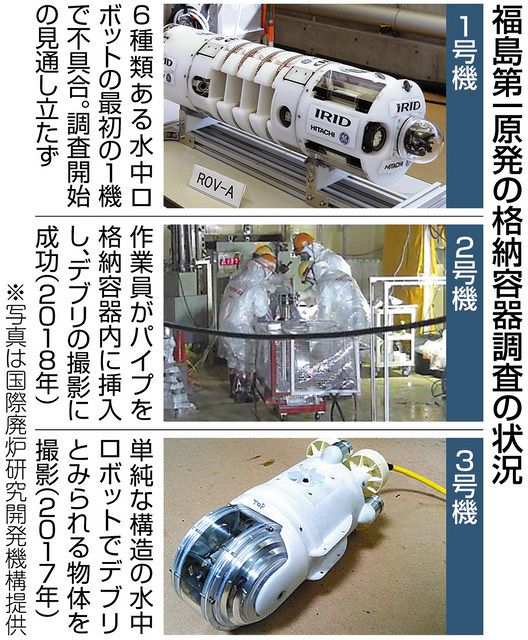
However, the preparations in advance were lax. The preliminary tests were limited to confirming the operation of each piece of equipment, and the team was unable to immediately respond to problems with the dosimeters that occurred when they were operated simultaneously.
In the past, there have been cases of “leaving things behind.
It is expected to take some time to identify the cause of the problem. If similar problems occur with other robots, plans to take images of the inside of the containment vessel, grasp its three-dimensional structure, and collect sand-like deposits in the water will not be able to proceed and may be abandoned.
We know from previous studies that complex devices are less effective, such as the underwater robot that photographed debris deposits inside the containment vessel of Unit 3 in 2017. The underwater robot that photographed the debris in the containment vessel of the Unit 3 reactor in 2017 was about a quarter of the length and had a simpler structure. It also focused on photographing as its main purpose.
In the 2006 survey that succeeded in photographing the debris in the Unit 2 reactor, a worker inserted a pipe (13 meters long) with a camera attached to the end, rather than a robot. In the previous year, a camera-equipped pipe was inserted. In the previous year, a camera-equipped robot called a “scorpion” was deployed, but it climbed up on the sediment and could not be retrieved, remaining in the reactor.
Although “human power” can be used to deal with the problem outdoors…
Remote-controlled operations are always fraught with difficulties, even outside the building where the reactor is located.
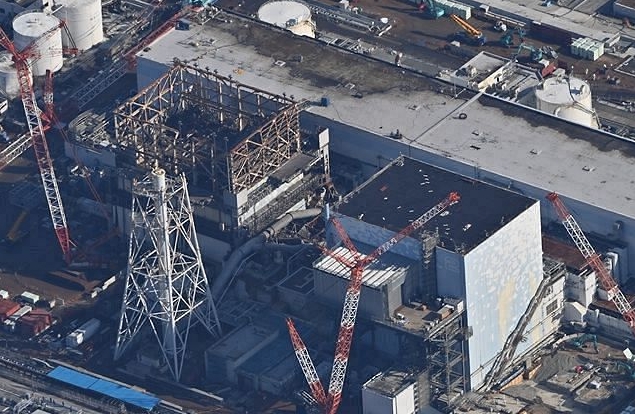
The exhaust stack near the Unit 1 and 2 buildings, which was in danger of collapsing due to the earthquake and was highly contaminated, was cut down to about 60 meters, half the height of the original stack (1 In one case, the saw blade of a cutting device lifted by a large crane got stuck in the cylinders and could not be moved. At that time, a worker climbed up to the cutting device installed at the top of the 110-meter-high cylinder with a crane and cut it with a power tool.
In late January, they plan to cut the contaminated pipes leading to this exhaust stack. The project was originally supposed to start four months ago, but there was a problem with the remote-controlled cutting device and the crane broke down, delaying the plan.
Debris collection is planned for Unit 2 by the end of the year. If a problem occurs in the reactor, we cannot rely on human power.
https://www.tokyo-np.co.jp/article/154269?fbclid=IwAR2E55S3DYLr7KiroYjxza6u_MX67pvMdrWioFykfOwgoxBdOlqhOraX9WI
Translated with http://www.DeepL.com/Translator (free version)
The environmental impact of emissions from space launches: a comprehensive review
The environmental impact of emissions from space launches: A comprehensive review https://www.sciencedirect.com/science/article/abs/pii/S0959652620302560Author links open overlay panelJ.A.DallasabS.RavalbcJ.P.Alvarez GaitandS.SaydamabA.G.Dempsterae
a Australian Centre for Space Engineering Research, UNSW, Sydney, Australia
bSchool of Minerals and Energy Resources Engineering, UNSW, Sydney, Australia
cAustralian Centre for Sustainable Mining Practices, UNSW, Sydney, Australia
d School of Civil and Environmental Engineering, UNSW, Sydney, AustraliaeSchool of Electrical Engineering and Telecommunications, UNSW, Sydney, Australia
28 January 2020.
Highlights
•The environmental impact of space launches is becoming increasingly significant.•
Stratospheric ozone depletion is a key environmental concern for space launches.•
Environmental trade-offs exist between propellant types.•
Further study is required into the cumulative impact of launches.
Abstract
With the increasing accessibility of commercial space flight, the environmental impacts of space launches will become increasingly significant in the coming years. Here, for the first time, a review is presented of the environmental impacts of space launches, specifically of emissions from commonly used solid and liquid rocket propellants. While there are a number of environmental impacts resulting from the launch of space vehicles, the depletion of stratospheric ozone is the most studied and most immediately concerning. Solid rocket motors are the subject of most of the environmental studies on rocket launches, while the now more commonly used liquid rocket propellants are underrepresented in the literature. The limited studies of emissions from rocket engines using liquid propellent reveal that while they do result in stratospheric ozone loss, solid rocket motors are responsible for orders of magnitude greater loss. The comparison of commonly used propellants highlights the environmental trade-offs that must be made when selecting a launch system. This review highlights the need for further study of the cumulative impacts that frequent space launches have on all areas of the environment, including global climate, ecosystem toxicity, and human toxicity, and with consideration given to all commonly used propellants, to ensure that the impacts are well characterised and well understood before the number of launches greatly increases.
Biden is urged to eliminate land-based nuclear missiles, as US policy is revised.
 | |||
Biden Urged to Eliminate Land-Based Nuclear Missiles as US Policy Is Revised, https://truthout.org/articles/biden-urged-to-eliminate-land-based-nuclear-missiles-as-us-policy-is-revised/?eType=EmailBlastContent&eId=e59d913f-a733-43f1-8c81-c99670e89de9Mike Ludwig, Truthout,
As the Biden administration considers changes to Trump-era nuclear policy, 60 national and regional organizations released a statement this week calling for the elimination of 400 land-based intercontinental ballistic missiles (ICBMs) that are “now armed and on hair-trigger alert in the United States.”
“Intercontinental ballistic missiles are uniquely dangerous, greatly increasing the chances that a false alarm or miscalculation will result in nuclear war,” the statement reads. “There is no more important step the United States could take to reduce the chances of a global nuclear holocaust than to eliminate its ICBMs.”
Progressives, scientists and some Democrats in Congress are also pushing President Joe Biden, who has pledged to reduce U.S. reliance on nuclear weapons in its defense strategy, to adopt a “no first use” policy and declare that the U.S. will never be the first to launch a nuclear attack. Taking such a stance would strengthen the U.S. position in global nonproliferation talks, advocates say.
The White House is slowly pursuing such talks with other nuclear-armed governments including Russia, the United Kingdom and France, which recently issued a joint statement declaring that “nuclear war cannot be won and must never be fought.” Pakistan and India, two regional rivals armed with nuclear weapons, issued statements calling the joint statement a positive development in international arms control.
A “no first use” or “sole purpose” policy, advocates say, would also be consistent with the Democratic Party platform and Biden himself, who has said that nuclear weapons should only be used to deter nuclear attack. The Trump administration went in the opposite direction with its 2018 Nuclear Posture Review, which says that deterring a nuclear attack is not the “sole purpose” of nuclear weapons and nuclear war could be used to deter “non-nuclear” attacks and achieve “U.S. objectives” if deterrence fails.
The Biden administration is working on a new Nuclear Posture Review, which could be completed early this year, according to Politico. The administration would not comment on internal deliberations for the review, but unnamed officials told Politico it is unlikely to include deep cuts to nuclear weapons spending as the U.S. works to overhaul and modernize its vast nuclear arsenal.
Federal spending on nuclear forces is projected to reach $634 billion over the next decade, a 28 percent increase over 2019 projections, according to the Congressional Budget Office. Advocates for arms control said Biden should have — and still could — put the most controversial nuclear weapons projects approved under former President Donald Trump on pause until the new posture review is completed.
Writing for Defense One, Tom Collins, the policy director at the peace group Ploughshares, argues that Biden must act fast to rein in a Pentagon bureaucracy intent on keeping money flowing to the nuclear war machine, or his own policy will end up looking a lot like Trump’s:
The good news is that President Biden knows more about nuclear policy than any commander-in-chief in recent history. If Biden makes this a priority, there is every reason to think that he will approve new policies that will reduce the risk of nuclear war and make the nation and world safer.
Unfortunately, the president has left these crucial issues to officials who are not committed to his vision. A key strategy document — called the Nuclear Posture Review — has been drafted by an entrenched Pentagon bureaucracy that apparently wants to keep core elements of the Trump agenda intact, including new nuclear weapons and more ways to use them.
Biden is under pressure from conservative war hawks in Congress and the Pentagon to avoid cuts to new nuclear weapons programs approved under Trump, as Russia and China are thought to be bolstering their own arsenals. These proposed weapons systems are different than the existing ICBMs, which require billions of tax dollars for upkeep and sit ready to launch in silos located on the U.S. mainland.
The U.S. maintains a vast nuclear arsenal that can strike from the air, sea and land. The statement issued this week reports that 400 ICBM missile silos — relics of the arms race with the Soviet Union that first raised fears that global nuclear war that would lay waste of all of human civilization — are scattered across Colorado, Montana, Nebraska, North Dakota and Wyoming.
Citing a former Defense Secretary William Perry, the 60 peace and civil society groups issued the “call to eliminate ICBMs” on Wednesday. Perry has explained that the ICBMs are the weapons most likely to spark a catastrophic nuclear war. If enemy missiles were launched at the U.S., the president would only have about 30 minutes to decide whether to retaliate before the ICBMs are destroyed, a terrible decision that could result in “nuclear winter,” according to the statement.
“Rather than being any kind of deterrent, ICBMs are the opposite — a foreseeable catalyst for nuclear attack. ICBMs certainly waste billions of dollars, but what makes them unique is the threat that they pose to all of humanity,” the statement reads.
Even if the ICBMs facilities were closed, the U.S. would still retain a devastating nuclear arsenal that could respond to attacks across the world. Missiles carried on submarines and aircraft could kill millions of people. However, they are not subject to the same “use them or lose them” dilemma as the ICBMs.
“Until now, the public discussion has been almost entirely limited to the narrow question of whether to build a new ICBM system or stick with the existing Minuteman III missiles for decades longer,” said Norman Solomon, national director of RootsAction, one of the groups that signed the statement. “That’s like arguing over whether to refurbish the deck chairs on the nuclear Titanic. Both options retain the same unique dangers of nuclear war that ICBMs involve.”
The Guardian view on The Green Planet: verdant and necessary
The Guardian view on The Green Planet: verdant and necessaryGuardian editorial
David Attenborough’s new series takes aim at plant blindness, providing a vital service in the fight against global warming
It is time for Israel to come clean about its nuclear weapons.
It is time for Israel to come clean about its nuclear weapons, America The Jesuit Review, Drew Christiansen, January 14, 2022 Yet again, Covid-19 has led to the postponement of the 10th Nonproliferation Treaty (NPT) Review Conference, which was originally scheduled for 2020, the 50th anniversary of the treaty going into effect. The meeting of the state parties to the treaty is now delayed until this coming August. The treaty is the most important in the badly shredded network of arms control agreements that were drawn up in the Cold War and post-Cold War eras to prevent nuclear war and to set the world on the path to abolition of nuclear weapons.
The NPT is the one treaty to which the historic, or legacy, nuclear powers (China, France, the Russian Federation, the United Kingdom and the United States) all belong. All have opposed the 2017 Treaty on the Prohibition of Nuclear Weapons that explicitly aims for the abolition of nuclear weapons. But non-nuclear states largely support the TPNW, as they believe the legacy states have abused the NPT to defend their own interests and, particularly in the last decade, to evade their own commitments to nuclear disarmament.
Non-nuclear states also perceive legacy states as playing favorites with certain nations outside the NPT, including Israel. In today’s nuclear landscape, however, Israel can no longer justify its evasiveness about its nuclear status, and its aggressive policies toward potential nuclear states among its regional rivals have made it a destabilizing force, constraining progress toward disarmament. It is time for Israel to come clean about its nuclear capacity and to join the international system of arms control.
The new realities of a multipolar nuclear world
While the TPNW establishes a duty for member states to try to universalize the treaty, the NPT has no such requirement. Its members seem content to sustain the status quo with a divide between the legacy nuclear states and non-nuclear states, with four nuclear-armed states outside the treaty (Pakistan, India and North Korea, in addition to Israel). In recent years, however, the bipolar balance of power between the United States and the former Soviet Union that sustained the treaty, with lesser powers in subordinate roles, has evolved dramatically.
This means that in its 52nd year, the NPT, with its current membership, is less useful as a framework for nuclear disarmament than it was only a decade ago. New realities include the fact that China is vying to become a nuclear superpower on par with the United States and Russia by modernizing its nuclear arsenal. Also, North Korea has become a powerful rogue state, developing a variety of weapons and delivery systems, challenging the United States, and threatening America’s East Asian allies of South Korea and Japan.
As for Israel, it remains the sole (though undeclared) possessor of nuclear weapons in the Middle East and seems determined to remain so. Securing its nuclear superiority has become the driving force of its strategic policy. After bombing nuclear reactors in Iraq and Syria, it has reportedly conducted assassinations of nuclear scientists and sabotage operations, and it encouraged the Trump administration’s withdrawal from the 2015 international agreement designed to deny Iran the potential for developing its own bomb. Senior Israeli aides now regard those moves as a mistake because the Iranian program has shown surprising resilience. The situation in Iran is also a reminder that in a multipolar nuclear world, with major actors outside the NPT, that treaty fails to provide the nuclear peace it once promised……………….. https://www.americamagazine.org/politics-society/2022/01/14/israel-npt-nuclear-nonproliferation-treaty-242184
Rogue nuclear regulator/former NRC chair Jaczko spills the nuclear beans on Fukushima, reactor “safety,” nuclear politics

January 12, 2022
This Week’s Featured Interview on Nuclear Hotseat Podcast:
- Greg Jaczko, the former Chair of the Nuclear Regulatory Commission, has published an explosive new book: Confessions of a Rogue Nuclear Regulator. (NOTE: Link is to Amazon, but we recommend you order it through your local independent book store.) In it, he gets honest with the American people about the dangers of nuclear technology, which he labels “failed,” “dangerous,” “not reliable.” He particularly comes down against nuclear as having any part in mitigating the problems of climate change/global warming. In this extended Nuclear Hotseat interview, Jaczko brings us inside the NRC’s response to Fukushima, the “precipice” on which nuclear safety balances, his own growing doubts about how safe nuclear reactors are in the United States, and how, ultimately, it was that concern with safety that probably brought him down. Originally recorded on January 10, 2019, just after his book was published.
- “Jaczko Nixes Nukes” – A Backgrounder on Greg Jaczko’s book and the issues he addresses from Dr. Gordon Edwards of the Canadian Coalition for Nuclear Responsibility.
Survey at Fukushima No. 1 reactor container halted.
Jan 12, 2022
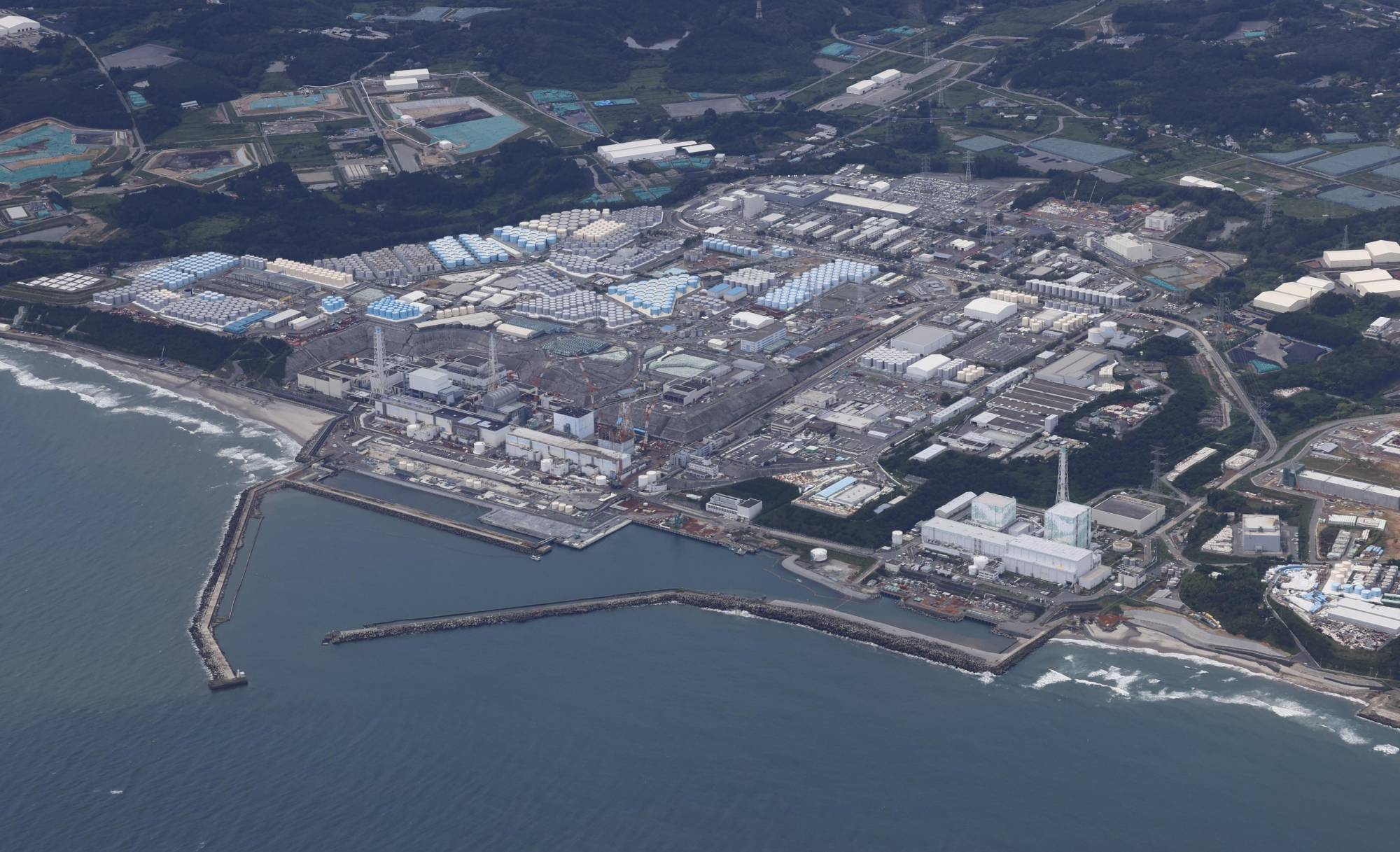
Tokyo Electric Power Company Holdings Inc. halted its investigation of the inside of the containment vessel of the No. 1 reactor at its stricken Fukushima No. 1 nuclear power plant on Wednesday.
The move came after an issue was found during preparation work for the display of data such as radiation levels from dosimeters inside underwater robots to be used in the survey. The preparations began at noon the same day and were halted around two hours later.
Tepco said that it will resume the survey once measures to resolve the issue are taken.
In the survey, which will continue until around August, Tepco aims to take pictures of melted nuclear fuel debris and other deposits using six types of underwater robots to record their locations and thickness in water that has accumulated at the bottom of the containment vessel.
It will also try to collect deposit samples and take pictures of the inside of the base that supports the reactor pressure vessel. The information obtained in the survey will be used for studies on ways to remove the debris.
The nuclear fuel at the No. 1 reactor’s core is believed to have melted and mostly fallen inside the containment vessel during the triple meltdown disaster at the plant, which was hit by a huge earthquake and tsunami on March 11, 2011.
In its survey of March 2017, Tepco failed to find nuclear fuel debris at the No. 1 reactor, leaving the reactor’s detailed situation unknown, in contrast to the No. 2 and No. 3 reactors, where melted fuel debris was successfully photographed.
https://www.japantimes.co.jp/news/2022/01/12/national/tepco-fukushima-survey-halted/
Is US extradition inevitable for Julian Assange? | The Stream
Aljazeera English, 14 January 2022, It’s been more than a decade since the website WikiLeaks released hundreds of thousands of classified documents and videos – some of which revealed possible US war crimes. Now WikiLeaks founder Julian Assange has one more chance to appeal a UK ruling that would allow him to be extradited to the US.
Last month, a UK High Court ruled that Assange could be extradited to the US to face charges of hacking and violating the US Espionage Act. The ruling goes against a lower court that previously said harsh US prison conditions would endanger Assange given his worsening mental and physical health.
Assange’s legal team has since filed an appeal to Britain’s Supreme Court, but in order for the appeal to be considered, it must be deemed of “general public importance”.
n 2019, the Trump administration indicted Assange for violating the US Espionage Act on counts related to the WikiLeaks release of secret US military documents and diplomatic cables. The US argues the release of classified information put the lives of American allies in danger.
Twenty-four civil liberties and press freedom groups, including the ACLU, Human Rights Watch, PEN America and Reporters Without Borders have called on the Biden administration to stop its prosecution against Assange. In a joint letter to the US Justice Department, they argue that Assange’s prosecution could set a precedent that would harm press freedom and the safety of journalists reporting on national security issues.
Assange spent seven years in refuge at the Ecuadorian Embassy in London and was eventually arrested in 2019. Last week, Assange’s supporters marked his 1,000th day of imprisonment at London’s Belmarsh high security prison.
In this episode of The Stream, we’ll discuss the outlook for Assange’s case and its broader implications for press freedom worldwide.
Fukushima Takes a Turn for the Worse.

January 10, 2022by Robert Hunziker
Tokyo Electric Power Company-TEPCO- has been attempting to decommission three nuclear meltdowns in reactors No. 1 No. 2, and No. 3 for 11 years now. Over time, impossible issues grow and glow, putting one assertion after another into the anti-nuke coffers.
The problems, issues, enormous danger, and ill timing of deconstruction of a nuclear disaster is always unexpectedly complicated by something new. That’s the nature of nuclear meltdowns, aka: China Syndrome debacles.
As of today, TEPCO is suffering some very serious setbacks that have “impossible to deal with” written all over the issues.
Making all matters nuclear even worse, which applies to the current mess at Fukushima’s highly toxic scenario, Gordon Edwards’ following statement becomes more and more embedded in nuclear lore: “It’s impossible to dispose of nuclear waste.” (Gordon Edwards in The Age of Nuclear Waste From Fukushima to Indian Point)
Disposing of nuclear waste is like “running in place” to complete a marathon. There’s no end in sight.
As a quickie aside from the horrendous details of the current TEPCO debacle, news from Europe brings forth the issue of nuclear power emboldened as somehow suitable to help the EU transition to “cleaner power,” as described by EU sources. France supports the crazed nuke proposal but Germany is holding its nose. According to German Environment Minister Steffi Lemke: “Nuclear energy could lead to environmental disasters and large amounts of nuclear waste. (Source: EU Plans to Label Gas and Nuclear Energy ‘Green’ Prompts Row, BBC News, Jan. 2, 2022) Duh!
Minister Lemke nailed it. And, TEPCO is living proof (barely) of the unthinkable becoming thinkable and disastrous for humanity. Of course, meltdowns are never supposed to happen, but they do.
One meltdown is like thousands of industrial accidents in succession over generations of lifetimes. What a mess to leave for children’s children’s children over several generations. They’ll hate you for this!
In Fukushima’s case, regarding three nuclear power plants that melted all-the-way (China Syndrome), TEPCO still does not know how to handle the enormously radioactive nuclear fuel debris, or corium, sizzling hot radioactive lumps of melted fuel rods and container material in No. 1, No 2 and No.3, They’re not even 100% sure where all of the corium is and whether it’s getting into underground water resources. What a disaster that would be… what if it is already… Never mind.
The newest wrinkle at TEPCO involves the continuous flow of water necessary to keep the destroyed reactors’ hot stuff from exposure to air, thus spreading explosively red-hot radioactivity across the countryside. That constant flow of water is an absolute necessity to prevent an explosion of all explosions, likely emptying the streets of Tokyo in a mass of screaming, kicking, and trampling event to “get out of town” ASAP, commonly known as “mass evacuation.”
The cooling water continuously poured over the creakily dilapidated ruins itself turns radioactive, almost instantaneously, and must be processed via an Advanced Liquid Processing System (ALPS) to remove most radioactive materials (???) housed in a 17-meter (56 feet) tall building on the grounds of the disaster zone.
Here’s the new big danger, as it processes radioactive contaminated water, it flushes out “slurry” of highly concentrated radioactive material that has to go somewhere. But where to put it?
How to handle and dispose of the radioactive slurry from the ALPS is almost, and in fact may be, an impossible quagmire. It’s a big one as the storage containers for the tainted slurry quickly degrade because of the high concentration of radioactive slurry. These storage containers of highly radioactive slurry, in turn, have to be constantly replaced as the radioactivity slurry eats away at the containers’ liners.
Radioactive slurry is muddy and resembles a shampoo in appearance, and it contains highly radioactive Strontium readings that reach tens of millions of Becquerel’s per cubic centimeter. Whereas, according to the EPA, 148 Becquerel’s per cubic meter, not centimeter, is the safe level for human exposure. Thus, tens of millions per cubic centimeter is “off the charts” dangerous! Instant death, as one cubic meter equals one million cubic centimeters. Ahem!
Since March 2013, TEPCO has accumulated 3,373 special vessels that hold these highly toxic radioactive slurry concentrations. But, because the integrity of the vessels deteriorates so quickly, the durability of the containers reaches a limit, meaning the vessels will need replacement by mid-2025.
Making matters ever worse, if that is possible, the NRA has actually accused TEPCO of “underestimating the impact issue of the radioactivity on the containers linings,” claiming TEPCO improperly measured the slurry density when conducting dose evaluations. Whereas, the density level is always highest at the bottom, not the top where TEPCO did the evaluations, thus failing to measure and report the most radioactive of the slurry. Not a small error.
As of June 2021, NRA’s own assessment of the containers concluded that 31 radioactive super hot containers had already reached the end of operating life. And, another 56 would need replacement within the next 2 years.
Transferring slurry is a time-consuming highly dangerous horrific job, which exposes yet a second issue of unacceptable risks of radioactive substances released into the air during transfer of slurry. TEPCO expects to open and close the transfers remotely (no surprise there). But, TEPCO, as of January 2, 2022, has not yet revealed acceptable plans for dealing with the necessary transfer of slurry from weakening, almost deteriorated containers, into fresh, new containers. (Source: TEPCO Slow to Respond to Growing Crisis at Fukushima Plant, The Asahi Shimbun, January 2, 2022)
Meanwhile, additional batches of a massive succession of containers that must be transferred to new containers will be reaching the end of shelf life, shortly.
Another nightmarish problem has surfaced for TEPCO. Yes, another one. In the aftermath of the 2011 blowup, TEPCO stored radioactive water in underground spaces below two buildings near reactor No.4. Bags of a mineral known as zeolite were placed to absorb cesium. Twenty-six tons (52,000 lbs.) of bags are still immersed with radiation readings of 4 Sieverts per hour, enough to kill half of all workers in the immediate vicinity within one hour. The bags need to be removed.
TEPCO intends to robotically start removing the highly radioactive bags, starting in 2023, but does not know where the bags should be stored. Where do you store radioactive bags containing enough radioactive power to kill someone within one hour of exposure?
Additionally (there’s more) the amount of radioactive rubble, soil, and felled trees at the plant site totals 480,000 cubic meters, as of 2021. TEPCO is setting up a special incinerator to dispose of this. Where to dispose of the incinerated waste is unknown. This is one more add-on to the horrors of what to do with radioactive material that stays hot for centuries upon centuries. Where to put it?
Where to put it? Which is the bane of the nuclear power industry. For example, America’s nuke plants are full of huge open pools of water containing tons of spent nuclear fuel rods. If exposed to open air, spent fuel rods erupt into a sizzling zirconium fire followed by massive radiation bursts of the most toxic material known to humanity. It can upend an entire countryside and force evacuation of major cities.
According to the widely recognized nuclear expert Paul Blanch: “Continual storage in spent fuel pools is the most unsafe thing you could do.” (see- Nuclear Fuel Buried 108 Feet from the Sea, March 19, 2021)
It’s not just Fukushima that rattles the nerves of people who understand the high-risk game of nuclear power. America is loaded with nuclear power plants with open pools of water that hold highly radioactive spent fuel rods.
What to do with it?
Claim that EDF contract for nuclear emergency generators was rigged.
The contract for nuclear emergency generators was rigged, according to a former EDF top executive. This is what he told the judge of the financial investigations division who is investigating the matter. GRAND SLAM for EDF!
Not only do the emergency generators installed last year on some of the nuclear power plants catch fire when they are started, and not only has the national group had to compensate its supplier, Westinghouse, in secret, to the tune of 110 million euros (“Le Canard”, 8/12 and 15/12), but the contract is also said to have been rigged!
Be that as it may, this is what a former member of EDF’s procurement staff told the French National Financial Division in a statement. The latter is investigating the complaint for favouritism filed by an unsuccessful bidder, which has been joined by Greenpeace. Contacted on Monday, EDF’s management had not responded at the time the “Le Canard” went to press.
Le Canard Enchaine 22nd Dec 2021
Norway Activists Protest After Docking Of US Nuclear Submarine In Tromso: Reports
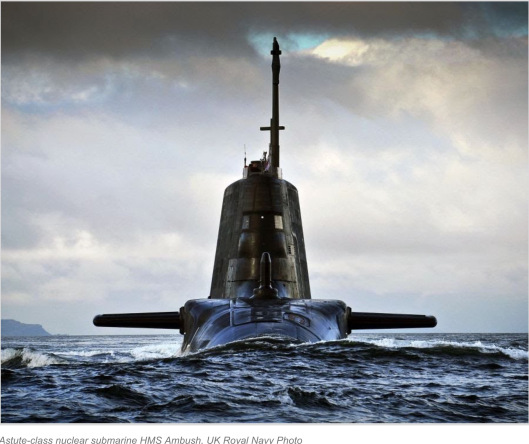
Norway Activists Protest After Docking Of US Nuclear Submarine In Tromso: Reports, https://www.republicworld.com/world-news/us-news/norway-activists-protest-after-docking-of-us-nuclear-submarine-in-tromso-reports-articleshow.html
Protest intensified in Norway as an American nuclear submarine has docked in Tromso– a city in northern Norway, news agency Sputnik reported.
By Ajeet Kumar 12 Jan 22, Protest intensified in Norway as an American nuclear submarine has docked in Tromso, a city in northern Norway. According to a report by news agency Sputnik, the US nuclear submarine was docked on January 11, the second time in a year. The media report said that the submarine was loaded with arms and missiles and tasked with patrolling the northern waters. As the news of an American submarine docked in Tromso hit headlines of several national media outlets, hundreds of protesters marched towards the guarded gates of the Tonsnes harbour. The protestors termed the recent move of America “a destructive game between superpowers.”
US nuclear submarine arrival in Norway sparks strong reactions
Hakon Elvenes, who represents the protestors, asserted the United States should not dock its submarine in Norway and added the act has a long “symbolic effect”. “This represents a dangerous mix of military and civilian purposes. It is a mixture that may be in conflict with international law, and which hasn’t been assessed well enough by the Norwegian authorities,” Sputnik quoted Elvenes as saying to the national broadcaster NRK. “There is always a risk that something can happen to any nuclear reactor, we have plenty of examples of that. And if something happens first, the consequences will be great,” added Hakon Elvenes.
Tension between two countries soar
Meanwhile, Alberta Tennoe Bekkhus, who represent, the youth wing of the Reds Party argued that the recent action by the US will contribute to unnecessary provocations and further conflict. “The fact that we invite American forces in the way we do makes us more insecure. It contributes to unnecessary provocations and further conflict,” Sputnik quoted Bekkrus as saying. “The way NATO is doing now, I believe it makes the world more insecure. This puts Norway in a more dangerous situation,” she added.
It is worth mentioning that the tension between US and Scandinavian countries has soared in the past few years due to action taken by the US Naval forces. Earlier in November last year, US Defense Secretary Lloyd Austin met with Norway’s new Defense Minister, Odd Roger Enoksen, in his first visit to the US since taking the position. According to AP, both said the commitment to NATO and the challenges posed by Russia would be topics high on the agenda during their meeting. The duo also discussed the recent activities of the US Navy in northern Norway and added the matter would be solved with discussions.
You thought Rolls Royce’s Small Nuclear Reactors would be for electricity on Earth?

Rolls-Royce team moves into Space Park Leicester to work on nuclear powered space travel, BusinessLive, 13 Jan 22,
Rolls-Royce already signed contract with UK Space Agency to study future nuclear power options for space exploration.
Rolls-Royce has moved a team onto Space Park Leicester to push forward its work on nuclear power for space travel.
The engineering giant has taken space in the new £100 million facility which was launched as a breeding ground for out-of-this-world tech by bringing together industry and academia.
Rolls-Royce is reported to be the only UK company focussing on the line of work and staff with a pedigree in nuclear power will collaborate with new space park head Professor Richard Ambrosi, Professor of Space Instrumentation and Space Nuclear Power Systems at University of Leicester and other experts in space science.
Last January, Rolls-Royce signed a contract with the UK Space Agency to study future nuclear power options for space exploration………………… https://www.business-live.co.uk/technology/rolls-royce-team-moves-space-22728938
Ex-Pentagon, NATO official calls for global Iraq-style coalition of the willing for war with Russia — Anti-bellum
Defense One published an advocacy piece masquerading as an analysis on January 11 by Evelyn Farkas, former Deputy Assistant Secretary of Defense for Russia, Ukraine and Eurasia and senior advisor to the Supreme Allied Commander Europe, NATO’s top military commander. She flouted the first credential in her article, brinkmanship and modesty rarely coexisting. The title […]
Ex-Pentagon, NATO official calls for global Iraq-style coalition of the willing for war with Russia — Anti-bellum
1 This Month
Tell Congress: Prevent Nuclear Catastrophe in Iran

Tell Congress: Prevent Nuclear Catastrophe in Iran

Read the Public Inquiry Report, the Commissioners’ report, Surrendering Australia: The AUKUS Deception is available to download for free at aukuspublicinquiry.com. Or just watch the replay of the National Press Club Luncheon.


Shut down the radiation-damaged Heysham nuclear reactors now
To see nuclear-related stories in greater depth and intensity – go to https://nuclearinformation.wordpress.com

Say No to NASA’s Reckless Nuclear Reactor on the Moon
Say No to NASA’s Reckless Nuclear Reactor on the Moon
-
Archives
- November 2026 (238)
- October 2026 (302)
- September 2026 (339)
- August 2026 (330)
- July 2026 (355)
- June 2026 (287)
- May 2026 (306)
- April 2026 (356)
- March 2026 (251)
- February 2026 (267)
- January 2026 (308)
- December 2025 (358)
-
Categories
- 1
- 1 NUCLEAR ISSUES
- business and costs
- climate change
- culture and arts
- ENERGY
- environment
- health
- history
- indigenous issues
- Legal
- marketing of nuclear
- media
- opposition to nuclear
- PERSONAL STORIES
- politics
- politics international
- Religion and ethics
- safety
- secrets,lies and civil liberties
- spinbuster
- technology
- Uranium
- wastes
- weapons and war
- Women
- 2 WORLD
- ACTION
- AFRICA
- Atrocities
- AUSTRALIA
- Christina's notes
- Christina's themes
- culture and arts
- Events
- Fuk 2022
- Fuk 2023
- Fukushima 2017
- Fukushima 2018
- fukushima 2019
- Fukushima 2020
- Fukushima 2021
- general
- global warming
- Humour (God we need it)
- Nuclear
- RARE EARTHS
- Reference
- resources – print
- Resources -audiovicual
- Weekly Newsletter
- World
- World Nuclear
- YouTube
-
RSS
Entries RSS
Comments RSS

