Emmanuel Macron is slow to clarify his nuclear promises
Why Emmanuel Macron is slow to clarify his nuclear promises. The President
of the Republic was initially to present before the end of 2021 the details
of his strategy for relaunching new reactors. Procrastination which reminds
us that his position has often varied on the subject.
Le Monde 16th Jan 2022
Regulated Asset Base – UK’s nuclear tax on electricity consumers – supposed to attract foreign investment
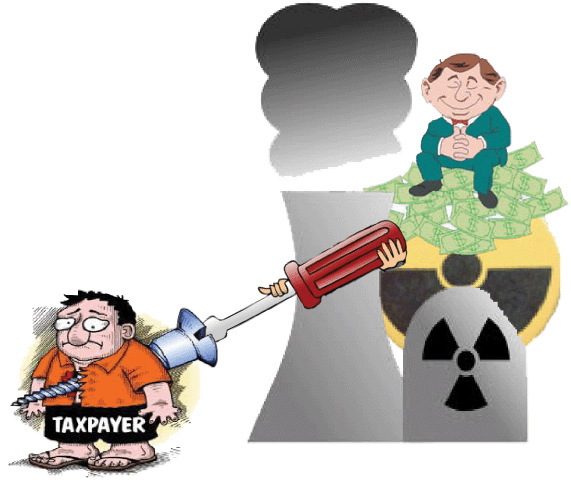
Energy costs and energy investment, Renew Extra Weekly, January 15, 2022 ”……………………… Energy prices are accelerating seemingly out of control. But actually the way the Contracts for Difference (CFD) is structured, with competition for capacity slots and a claw back of any excess income over strike price costs, it may not be too bad- it does seem to limit excess cost pass-though, unlike the old Renewables Obligation system, which some now see as much less attractive. So, with the CfD apparently doing well, it might be thought to be a bit odd that the government has shifted away from using it for nuclear, to a new Regulatory Assets Base (RAB) system for new large plants. The CfD was used to finance Hinkley Point C EPR, but it did so excessively, with a £92.5/MWh index linked contract being awarded to EDF without competitive bids being considered.
The CfD could in theory have been used again for the next big nuclear project, this time with a competition, but evidently the high project costs, and the high resultant strike prices likely, made it less attractive. So instead the government is going for Regulated Asset Base (RAB), basically a nuclear tax on electricity consumers, raising capital to fund construction of new plants, so that income starts flowing before construction starts.
It’s claimed that this element of RAB will make it easier for companies to finance nuclear, so that they can eventually charge consumers less. Well, we will see. But equally, if there’s a cost overshoot or delay, consumers will get hit hard, and, if the project is abandoned, their involuntary investment will be lost. Interestingly that includes Scottish consumers, despite anti-nuclear Scotland not being likely to allow any new plants to be built there. So Scots would be subsidising projects in England and Wales.
That won’t go down well with the SNP.
The RAB plan, which, even if all goes well, will put some extra costs on power bills, does in any case look odd for all consumers, given that the government says it wants to remove energy taxes from electricity and impose them instead on domestic gas heating. That may be sensible, but, with RAB, it’s going the wrong way.
A subsidy too far?
So why is government adopting for RAB for new nuclear? Evidently it’s to attract foreign investors! The Regulated Asset Base nuclear finance bill has just got through a House of Commons vote unamended.
During the debate, Business & Energy Secretary Kwasi Kwarteng said: ‘The existing financing scheme has led to too many foreign nuclear developers walking away from projects, setting our nuclear industry back a number of years. While the existing Contracts for Difference model was right for Hinkley Point C, the lack of alternative funding models has significantly contributed to the cancellation of recent potential large-scale projects. And this includes Hitachi’s project at Wylfa and Toshiba’s project at Moorside. We urgently need a new approach to attract capital into the sector.’
Somehow that seems to clash with what Energy and Climate Minister Greg Hands said: ‘The Bill will finance new nuclear power stations, making us less dependent on foreign-owned developers and bringing in the private sector and institutional funding.’
All of this, remember.. is because nuclear projects are too costly to win under normal competitive markets terms, whereas, increasingly, mainstream renewables like wind and solar can do that……….
there are some urgent infrastructure projects that could help cut energy costs quite quickly, the most obvious being investment in energy efficiency. For example, the Energy Efficiency Infrastructure Group said that improving insulation on the UK’s least efficient homes would save households around £500 a year on energy bills, totaling £8bn p.a. nationally. ……………
RAB funding might make it cheaper to build new gas stores rather than relying on imports…………
All of which seems to make more sense that using RAB for nuclear, which shows little sign of getting cheaper no matter how much money is chucked at it. Instead it seems to just soak up money, as with the much delayed EPR still being built at Flamanville in France, currently not scheduled for completion until 2023 and full operation in 2024, at an expected cost now put at Euro12.5bn. That is well over three times the original Euro 3.3bn estimate made when work started on it in 2007. And that assumes there are no further problems, like the fault that has shut down the Chinese version of the EPR, just at the point when China is desperate for power. An odd sort of asset that…and a problem that may rebound on the French EPRs. https://renewextraweekly.blogspot.com/2022/01/energy-costs-and-energy-investment.html
Scots plan to celebrate anniversary of Treaty on the Prohibition of Nuclear Weapons (TPNW)
Janet Fenton: SCOTS are getting ready to mark the anniversary of the entry
into force of the Treaty on the Prohibition of Nuclear Weapons (TPNW) on
January 22 with events across the country on the day itself and in the
lead-up to it, reflecting a global movement for a response to the
escalating dangers presented by nuclear weapons, climate change and
pandemics.
A motion supporting the TPNW has attracted cross-party support
and will be debated in the Scottish Parliament on Thursday. This will also
highlight the first meeting of those who are signed up to the TPNW which is
due to take place in Vienna this March, and Scottish Parliamentarians will
be in attendance along with representatives from the majority of UN member
countries. The UK Government is choosing to boycott the negotiations.
The National 15th Jan 2022
https://www.thenational.scot/news/19850719.scotlands-role-key-mark-anniversary-tpnw/
Big fall in EDF’s shares
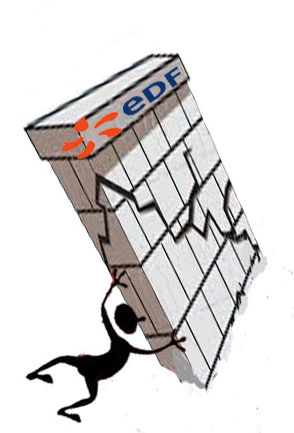
EDF’s shares fell by 14.6 per cent after Macron ordered the company to
sell cut price energy to its rivals to stave off price hikes. The scheme
will cost EDF €8bn (£6.7bn), the French state-controlled energy group
warned yesterday, forcing the company to revise annual earning estimates.
French President Macron promised in September to cap power price increases
at four per cent this year, passing the cost of a 44 per cent rise in
energy prices onto suppliers in order to protect households. The
announcement compounded the woes of EDF investors, who have seen shares
shed 25 per cent of their value in a month.
City AM 15th Jan 2022
https://www.cityam.com/edf-shares-plummet-as-macron-shields-public-from-soaring-energy-bills/
Scotland’s electricity consumers will pay up for UK’s Hinkley nuclear plant, though it’s not even built
The UK Government’s commitment to new nuclear power stations in England
will push up energy bills for consumers in Scotland. Although Scotland has
used planning laws to prevent any new nuclear south of the border, the UK
Government has pressed ahead with projects like Hinkley Point, which will
charge bill payers upfront to subsidise nuclear power stations that
haven’t even been built yet.
The issue was raised in the Scottish
parliament this week by Scottish Greens energy spokesperson Mark Ruskell,
prompting the Net Zero secretary Michael Matheson to confirm that “in
2030 alone Hinkley could add almost £40/year to a consumer bill whereas an
equivalent offshore wind farm would reduce bills by £8/year.”
Commenting, Mark Ruskell said: “As well as leaving a toxic legacy for
generations to come, nuclear power is a bad deal for consumers now, at a
time when energy bills are pushing more and more households into fuel
poverty.
“Renewable energy is far cheaper, and since it doesn’t result
in toxic waste which will remain deadly for hundreds of thousands of years,
better for the environment too. That’s why with Greens in government
Scotland is doubling our onshore wind capacity and investing in offshore
wind and marine renewables too. “The UK Government’s energy policy is
more about helping its friends than following the science or tackling fuel
poverty. It’s important we do things differently in Scotland, which would
be helped with the greater powers of independence.”
Scottish Greens 14th Jan 2022
This is how I feel about the Ukraine crisis.

We should study the whole context of this. Russia does not want to be encircled by threatening military systems, and probably nuclear missiles. Just as America felt threatened when Soviet Russia had placed missiles in Cuba. That caused a crisis, resolved when Russia removed those missiles. USA is obsessed with surrounding its perceived enemies with military installations.
The Ukraine government is corrupt, ( yes, I know Russia is corrupt, too) . Sections of Ukraine are ethicnally and linguistically Russian. Quite frankly, a return of Ukraine to Russia is no threat to America.
But NATO in Ukraine is a threat to Russia. USA is at grave risk of starting an uncontrollable war. What use would it be to bomb your enemy to obliteration, if you yourselves are also bombed to obliteration?
The detail in the European Commission’s draft for ”sustainable nuclear energy” makes nuclear energy unfeasible – even the nuke lobby hates it!


“The taxonomy reporting is annual, so there’s something impossible to match there, which means a major greenwashing risk”
The European Parliament, however, has a lower voting threshold and will be able to block the proposal by simple majority (i.e. at least 353 MEPs in Plenary).
‘Misunderstanding’ could block nuclear from claiming green EU label, industry warns https://www.euractiv.com/section/energy-environment/news/misunderstanding-could-block-nuclear-from-claiming-green-eu-label-industry-warns/ By Kira Taylor | EURACTIV.com Ambiguities and misunderstandings contained in a draft EU proposal could block nuclear power plants from claiming a green investment label under the bloc’s sustainable finance taxonomy, the industry has warned. The European Commission is currently in the process of putting together a rulebook, known as the sustainable finance taxonomy, to define which investments can be labelled as climate-friendly in the EU.
As part of this, nuclear energy has tentatively been categorised as a “transitional” technology making a “substantial contribution to climate change mitigation” under draft EU plans circulated by the European Commission on 31 December.
To qualify for the transitional label, new nuclear plants must be built before 2045 and show detailed plans to have a disposal facility in place by 2050 for high-level radioactive waste.
However, issues with the draft criteria mean no nuclear power plant would currently be able to claim the coveted green label, the nuclear industry body Foratom told EURACTIV.
This is because of a requirement that power plants must fully apply “the best-available technology and accident-tolerant fuel” to qualify. That fuel is still in the research phase and is currently not available or licenced, Foratom says.
“As it currently stands, no nuclear entity is covered by the taxonomy because of this,” said Jessica Johnson, communications director at Foratom. “If the text does not change, then we do have problems, particularly in relation to accident tolerant fuels – they don’t exist on the market today,” she told EURACTIV.
Criteria based on a currently unavailable fuel “is obviously not acceptable,” Johnson said, adding however that this could simply be a “misunderstanding” by the European Commission.
Nuclear industry leaders expressed their concerns in a letter sent to the EU executive. “Given that Accident-Tolerant Fuels are still at the research phase we believe this requirement should be removed and instead limited to existing legislation and best available technologies.”
Ambiguous wording
Alongside this, the industry has flagged concerns about the draft’s wording regarding the types of nuclear power plants that could qualify.
According to Foratom, criteria for the operation and maintenance of nuclear plants is ambiguous as the proposal only seems to cover new build projects or those undergoing a lifetime extension, potentially excluding the normal operation and maintenance of existing plants.
“We think it’s just an oversight and more an issue of wording. But it is important that it’s clearly stated that the technical screening criteria cover operation and maintenance of existing power plants,” she said.
Foratom has also questioned a requirement for final repositories of high-level radioactive nuclear waste. Companies will only be able to claim the green EU investment label if they can show “a plan with detailed steps” to have them “in operation by 2050,” according to the draft.
While Foratom agrees that such repositories must be available, Johnson said the current wording could mean a plant built in the 2040s would need a final repository in place by 2050, despite not requiring it for decades.
“We don’t see a need to have a final repository lying idle for 20 to 30 years. It doesn’t make much sense to us,” she explained.
Also it shouldn’t be restricted just to final repositories. We shouldn’t be hampering innovation in other solutions because there is other innovation and research ongoing in terms of other solutions for high level waste and spent fuel,” she added.
Opposition
Environmental groups also have concerns about this part of the leaked draft – only for the opposite reason.
“If the nuclear plant is reported as taxonomy aligned from year one, but [its plan for disposing of high-level waste] fails by, say 2045, then that means the nuclear plant was not taxonomy aligned at all from year one,” explained Sebastien Godinot from WWF, the global conservation NGO.
“The taxonomy reporting is annual, so there’s something impossible to match there, which means a major greenwashing risk,” Godinot warned.
Some EU member states have vowed to oppose the inclusion of nuclear in the EU’s green finance taxonomy. “If the EU taxonomy includes nuclear energy, we are ready to challenge that in court,” Austria warned in November. The country has since repeated that threat.
Luxembourg, Denmark and Spain have also voiced their opposition to the proposal. But they currently have little support from other EU countries, which are either pro-nuclear or keeping silent on the matter.
Anti-nuclear countries are unlikely to have a sufficient majority to veto the Commission’s draft proposal, known as a “delegated act”. To block a delegated act, they would need at least 72% of EU member states in the EU Council (i.e. 20) representing at least 65% of the EU population.
The European Parliament, however, has a lower voting threshold and will be able to block the proposal by simple majority (i.e. at least 353 MEPs in Plenary).
This makes the Parliament more of a threat to the nuclear industry, even though Foratom is still confident about the outcome. “We don’t think that they would get the number of votes needed to achieve that simple majority. Nevertheless, we are keeping a very close eye on that,” Johnson told EURACTIV.
German conservative lawmaker Peter Liese also believes the Parliament won’t block the proposal. “If I had to make a bet, I’d still bet that the European Parliament wouldn’t end up blocking the delegated act, but I wouldn’t put a lot of money on it anymore,” he told the Suddeutsche Zeitung.
Some EU lawmakers will be hoping they can garner enough support to stop the Commission’s proposal. They include German Green MEP Michael Bloss, who launched a petition to try and increase citizen pressure on the European Commission.
“With this proposal, EU Commission President Ursula von der Leyen is destroying the credibility of the European eco-label for financial investments. Including nuclear power and gas is an unprecedented labelling fraud, because nuclear power and gas are not sustainable energy sources,” Bloss told EURACTIV.
“There is now a lack of clarity for citizens who want to invest their money in sustainable, in the sense of green transformation. Where it says sustainable on it, it must also be sustainable in it, otherwise the entire regulatory framework loses its credibility,” he added.
The European Commission has given EU countries until 21 January to provide feedback on its plans and is expected to publish its proposal shortly after this month the deadline for experts to give feedback on divisive plans to allow some natural gas and nuclear energy projects to be labelled as sustainable investments.
Commission for Independent Research and Information on Radioactivity (CRIIRAD) wants transparency on the safety of EPR nuclear reactor design.
Safety defect of the Taishan 1 EPR reactor, CRIIRAD asks the authorities to draw all the consequences on the other EPRs including the one under construction in Flamanville.
According to information sent to CRIIRAD by a whistleblower from the nuclear industry, a generic problem could jeopardize the safety of reactors in the EPR sector
The serious malfunctions at the level of the EPR reactor n°1 of the Taishan power plant (China) – revealed in June 2021 and having led to its early shutdown on July 30 – would be partly linked to a design problem of the EPR tank.
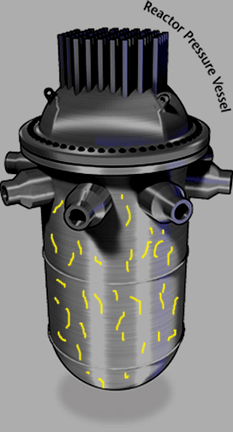
The problems linked to the design of the EPR vessel in terms of hydraulics have been known to manufacturers since at least the end of the 2000s (model tests). The poor distribution of the primary liquid in the vessel would generate high levels of vibration of the nuclear fuel assemblies. These vibrations would have been observed as soon as Taishan 1 was commissioned in 2018.
The vibrations at the level of the reactor core would be the cause of the degradation of the sheaths of the nuclear fuel rods, thus causing leaks of radioactive rare gases, but also of radioactive isotopes of iodine and cesium. They would also have weakened the retaining grids of certain assemblies.
These leaks were noted by operators as early as October 2020 and have steadily worsened over the weeks. Given the risks this represents for workers, residents and nuclear safety, CRIIRAD believes that the Taishan 1 reactor should have been shut down well before July 30.
The damage to the nuclear fuel of the Taishan 1 reactor would be considerable. The whistleblower told CRIIRAD that 70 pencils are damaged belonging to about thirty different assemblies. Many retaining springs broke.
What about the French and Chinese Nuclear Safety Authorities? What do the French and Chinese Nuclear Safety Authorities know? CRIIRAD requests clarification and full transparency in an email sent to the French ASN on November 27, 2021: http://www.criirad.org/actualites/dos...

This more than worrying situation must absolutely be assessed and the results must be made public: nuclear safety and the protection of populations are at stake.
Japan to join with NuScam, Bill Gates’ TerraPower, to develop plutonium fast reactors and small nuclear reactors
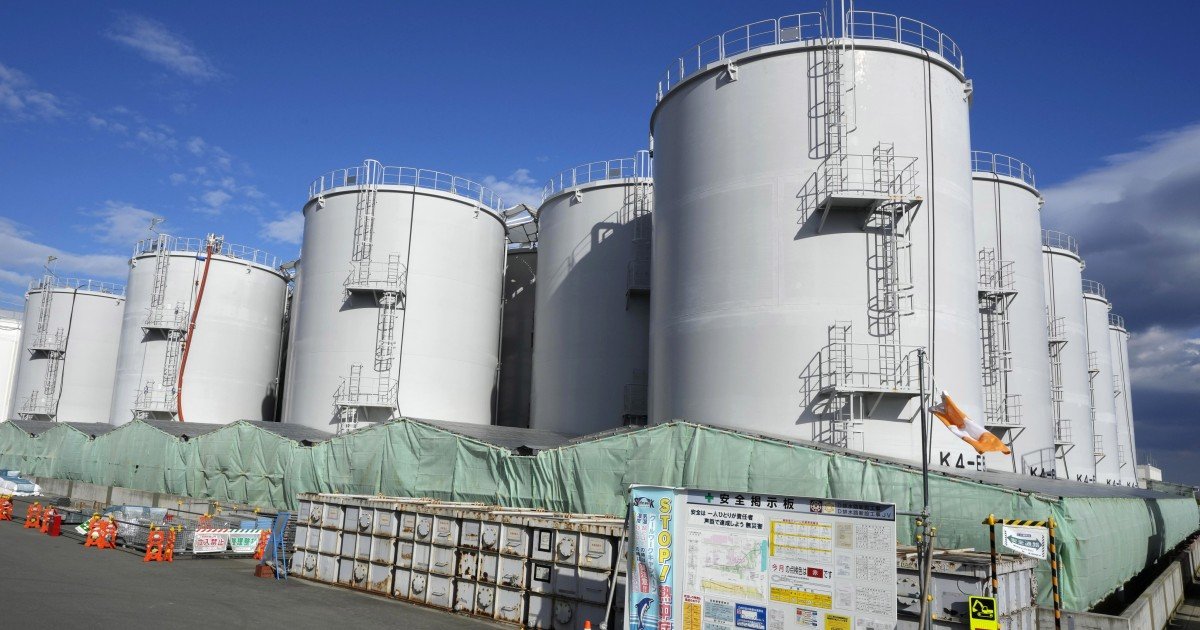
there is considerable skepticism of nuclear energy in Japan, and critics are concerned that the government is moving ahead with alliances with the United States to create new technologies while there are so many unanswered questions about safety
Next-Gen Nuclear Technology – US’ Ambitious Nuclear Power Pact With Tokyo Could Fuel Japanese Industry For Decades, BySakshi Tiwari, Eurasia Times, January 14, 2022 ”………………… (Japan) is set to give nuclear technology an all-new shot……………… Collaboration with scientists and companies in the United States will be a key component in the development of future nuclear energy technology
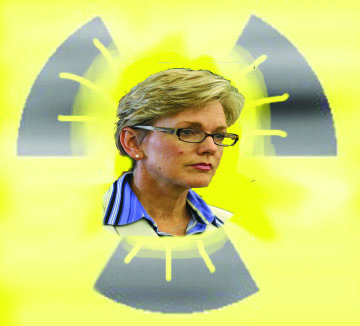
Japan’s Minister of Industry Koichi Hagiuda had a virtual meeting with US Energy Secretary Jennifer Granholm on January 6 during which they agreed to cooperate in the development of plutonium-burning fast reactors and advanced energy plants based on small modular reactors (SMRs).
Hagiuda told Granholm that Tokyo will encourage more local energy companies to join an international program to test fast reactors and small modular reactors, or SMRs, developed by US companies such as NuScale Power LLC and others.
The meeting, Hagiuda’s first since taking office last year, took place at a time when Japan is stepping up its efforts to develop advanced nuclear power technologies.
The Japanese government intends to promote domestic enterprises that participate in international tests incorporating such technology as part of its national energy plan. The United States and France are among the other international participants in the initiative…………………………..
in a noteworthy development that could now be seen as a premise for this new technology development, the Japanese government made it clear in its Sixth Strategic Energy Plan, released in October that it intends to move on from the events in northeast Japan………………..
In 2018, Japan and the United States had signed a memorandum of understanding to “advance the two countries’ worldwide leadership role” in civil nuclear energy.
“The Japan Atomic Energy Agency [JAEA] and Mitsubishi Heavy Industries are cooperating with US nuclear power start-up TerraPower simply because they have the required skills and knowledge on fast reactors,” says Tomoko Murakami, manager of the nuclear energy group at the Institute of Energy Economics Japan.
In the first stage of the alliance, Tokyo would spend 900 million yen ($7.8 million) on improving the AtheNa sodium experimental plant in Ibaraki prefecture for fast reactor development. The facility operated by Japan Atomic Energy Agency (JAEA) is already in operation, and an MoU on technological cooperation with TerraPower is expected to be inked by the end of January, SCMP reported.
In 2018, Japan and the United States had signed a memorandum of understanding to “advance the two countries’ worldwide leadership role” in civil nuclear energy.
“The Japan Atomic Energy Agency [JAEA] and Mitsubishi Heavy Industries are cooperating with US nuclear power start-up TerraPower simply because they have the required skills and knowledge on fast reactors,” says Tomoko Murakami, manager of the nuclear energy group at the Institute of Energy Economics Japan.
The system is meant to extract heat from a reactor core using liquid sodium to generate electricity. The facility will also be used in the cooperative development of a next-generation fast reactor with the United States, while work is also underway at another location, Joyo, to study the impact of neutrons on fuels and other equipment using sodium as a coolant……………………
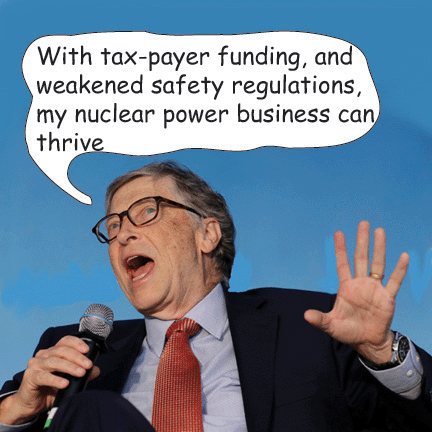
With American experience in the technology and two of its companies deeply invested in it, Japan has a natural partner to cooperate with. Terrapower is a start-up, which is rigorously working on SMR technology and is partially funded by the American billionaire and philanthropist Bill Gates.
Another US giant working on this advanced next-generation technology is NuScale Power which has partnered with the US government on SMR development for third countries………….
Nonetheless, there is considerable skepticism of nuclear energy in Japan, and critics are concerned that the government is moving ahead with alliances with the United States to create new technologies while there are so many unanswered questions about safety, according to the SCMP.
“All the media coverage has become very positive about these new developments and the technology alliance with the US, but we must remember that at the moment fast reactor technology exists only on paper and there are no guarantees that it will be a success,” Hajime Matsukubo, secretary-general of the Tokyo-based Citizens’ Nuclear Information Centre (CNIC) was quoted as saying.
“Japan has already spent 1 trillion yen [US$8.7 billion] on fast reactor research and another 1 trillion yen on decommissioning the experimental Monju reactor, to say nothing of what is being spent on all the work at Fukushima and decommissioning all the other reactors around the country. So it’s ridiculous to spend even more on nuclear technology that so many people do not want and do not trust,” he added.
The billions spent on nuclear power, according to CNIC, would have been far better used in establishing a local renewable sector that could have tapped into geothermal, wind, wave, solar, and other sources — and would have been the envy of the world.
It also warns that due to Japan’s unstable geology, a replay of the Fukushima accident – or a situation far worse –always remains a possibility……
UK’s Advanced Gas Cooled (AGRs) reactors should be shut, as they are vulnerable to cracking
“The AGRs have already had a good run operating way beyond their intende 30-year lifecycle, but the fact is that as the reactors age so does the integrity of their graphite cores which moderate the nuclear reaction.
| EDF case for continued AGR reactor operations ‘cracking up’, says NFLA. The early closure of the final reactor at Hunterston B Nuclear Power Station last Friday (7 January) signalled yet another step towards the long-overdue demise of the outdated Advanced Gas Cooled (AGRs) reactors operated by EDF Energy, a subsidiary of French state owned EdF (Électricité de France), across the UK. After being shut down for much of 2019, EDF hoped to continue operations at Hunterston B until 2023 but increasing instances of cracks in the graphite cores of the reactor brought forward closure plans by a year. The problem of cracks in the graphite cores which compromises safety has long been an issue of concern to the Nuclear Free Local Authorities (NFLA). Councillor Blackburn said “The AGRs have already had a good run operating way beyond their intende 30-year lifecycle, but the fact is that as the reactors age so does the integrity of their graphite cores which moderate the nuclear reaction. Although EDF plans to close the last AGR in 2028, this is way too long and the timescale for closure needs to be brought forward in the interests of plant and public safety NFLA 12th Jan 2022 https://www.nuclearpolicy.info/news/edf-case-for-continued-agr-reactor-operations-cracking-up-says-nfla/ |
Nuclear: economically unsustainable, inherently dangerous and absolutely unfeasible as a solution to climate change

Nuclear: economically unsustainable, inherently dangerous and absolutely unfeasible as a solution to climate change.
A demolishing letter against those who postulate nuclear energy as part of the solution to the challenge
of climate change. The letter is signed by former top-level nuclear safety councils and regulatory authorities in France, Germany, the United Kingdom and the United States.
For nuclear power to contribute in a relevant way to the generation of energy on a global scale, the signatories maintain, it would take up to more than 10,000 new reactors, something that is “unsustainable from a financial point of view.”
Furthermore, nuclear power is still “subject to too many unresolved technical and safety problems” and
does not respond to the urgency of the challenge we face (climate change), given the construction times of the plants.
Energias Renovables 12th Jan 2022
Greenpeace France calls for a halt to Flamanville EPR nuclear project, to assess viability of EPR reactors.

EDF announced this morning that the start-up of the Flamanville EPR, which has been under construction for 15 years, has been postponed by several months, to mid-2023. The cost of this project, already multiplied by 6, increases again.
This umpteenth slippage of EPR technology questions the positioning of certain presidential candidates who promote it irresponsibly and disconnected from the facts.
Greenpeace France is calling for a moratorium on the work of the Flamanville EPR, in order to conduct an
independent assessment of the viability of EPR nuclear reactors. The incident that led to the shutdown of the world’s first EPR in Taishan,China, nearly 6 months ago, remains unresolved to this day. Beyond the
setbacks of construction sites, the EPR technology therefore proves to be faulty even in operation.
Greenpeace France 12th Jan 2022
A fifth French nuclear reactor affected by corrosion in safety system

Nuclear: a reactor at the Penly power plant also affected by a corrosion problem. This problem on a safety system has already been detected on four other EDF reactors currently shut down.
Nuclear: a reactor at the Penly power plant also affected by a corrosion problem. This problem on a safety system has already been detected on four other EDF reactors currently shut down. A nuclear reactor at the Penly power plant (Seine-Maritime) is also affected by a corrosion problem on a safety system already detected or suspected on four other EDF reactors currently shut down, AFP told on Thursday. Institute for Radiation Protection and Nuclear Safety (IRSN).
Le Figaro 13th Jan 2021
Why joint US-South Korean research on plutonium separation raises nuclear proliferation danger
Why joint US-South Korean research on plutonium separation raises nuclear
proliferation danger by Frank N. von Hippel. South Korea, like the United
States, has long relied on nuclear power as a major source of electric
power.
As a result, it has amassed large stores of spent nuclear fuel and,
as in the United States, has experienced political pushback from
populations around proposed central sites for the spent fuel. South Korea
also has a history of interest in nuclear weapons to deter North Korean
attack.
Bulletin of Atomic Scientists 13th Jan 2022
Why joint US-South Korean research on plutonium separation raises nuclear proliferation danger
Drop in EDF’s 2022 production target due to nuclear outages because of cracks

EDF has cut its 2022 nuclear production target by almost 10% to 300-330 TWh following outages extensions at five of its 56 nuclear reactors (7.3 GW). Previously, the French utility aimed to generate 330-360 TWh of atomic output this year.
The firm attributed the reduced production figure to outage extensions of up to nine months at its Civaux 1,2, Chooz 1,2 (1.5 GW each) and Penly 1 (1.3 GW) units due to ongoing checks on the pipes of their safety injection system (SIS) circuit, it said in a statement late on Thursday.
Last month, the firm unexpectedly shut down both its Chooz reactors for inspections following the discovery of cracks close to welding on the pipes at the Civaux plant. EDF said that preventive checks at Penly 1 revealed “similar defects on the SIS circuit”.
Montel News 14th Jan 2022
https://www.montelnews.com/news/1292773/edf-cuts-2022-nuclear-output-target-by-10-amid-outages
1 This Month
Tell Congress: Prevent Nuclear Catastrophe in Iran

Tell Congress: Prevent Nuclear Catastrophe in Iran

Read the Public Inquiry Report, the Commissioners’ report, Surrendering Australia: The AUKUS Deception is available to download for free at aukuspublicinquiry.com. Or just watch the replay of the National Press Club Luncheon.


Shut down the radiation-damaged Heysham nuclear reactors now
To see nuclear-related stories in greater depth and intensity – go to https://nuclearinformation.wordpress.com

Say No to NASA’s Reckless Nuclear Reactor on the Moon
Say No to NASA’s Reckless Nuclear Reactor on the Moon
-
Archives
- November 2026 (238)
- October 2026 (302)
- September 2026 (339)
- August 2026 (330)
- July 2026 (355)
- June 2026 (287)
- May 2026 (306)
- April 2026 (356)
- March 2026 (251)
- February 2026 (267)
- January 2026 (308)
- December 2025 (358)
-
Categories
- 1
- 1 NUCLEAR ISSUES
- business and costs
- climate change
- culture and arts
- ENERGY
- environment
- health
- history
- indigenous issues
- Legal
- marketing of nuclear
- media
- opposition to nuclear
- PERSONAL STORIES
- politics
- politics international
- Religion and ethics
- safety
- secrets,lies and civil liberties
- spinbuster
- technology
- Uranium
- wastes
- weapons and war
- Women
- 2 WORLD
- ACTION
- AFRICA
- Atrocities
- AUSTRALIA
- Christina's notes
- Christina's themes
- culture and arts
- Events
- Fuk 2022
- Fuk 2023
- Fukushima 2017
- Fukushima 2018
- fukushima 2019
- Fukushima 2020
- Fukushima 2021
- general
- global warming
- Humour (God we need it)
- Nuclear
- RARE EARTHS
- Reference
- resources – print
- Resources -audiovicual
- Weekly Newsletter
- World
- World Nuclear
- YouTube
-
RSS
Entries RSS
Comments RSS

