I couldn’t tell anyone for 10 years
February 2, 2022
Six men and women between the ages of 17 and 27 who lived in Fukushima Prefecture at the time of the accident filed a lawsuit against TEPCO on January 27, claiming they suffered from thyroid cancer due to radiation exposure from the accident at the Fukushima Daiichi nuclear power plant.
They filed a lawsuit in the Tokyo District Court claiming a total of 616 million yen in damages. The main issue in the trial is expected to be whether or not there is a causal relationship between radiation exposure and thyroid cancer.

At the House of Representatives in Nagata-cho, Tokyo.
The six people in question, aged between 6 and 16 at the time of the accident, are high school students, temporary workers and employees living in the counties of Fukushima, Tokyo and Kanagawa. Two of them had a lobe of the thyroid removed, and the other four had to have the whole thyroid removed because of recurrence (in the case of one of them, metastasis had spread to the lungs). All of them had to stop their studies or their professional activity in order to undergo these surgical procedures and medical treatments. They live in fear and anxiety of a recurrence, and their daily lives have been curtailed due to fatigue and weakness caused by the disease.
The complaint points out that many of the thyroid cancers found in children in Fukushima County – including the six plaintiffs – are not hereditary and that the only possible trigger is radiation exposure. If there are other causes, it is up to TEPCO to prove it, she says.
Normally, the number of reported cases of thyroid cancer in children diagnosed is about 1 to 2 per 1 million. After the nuclear accident, a prefectural health survey in Fukushima Prefecture found about 300 people either suspected of having thyroid cancer or already diagnosed. But the expert commission appointed by the department said it “does not recognize for the moment” a causal relationship with radiation exposure.
For its part, the operator TEPCO announced that it would respond in good faith after learning more about the claims and allegations of the plaintiffs.
I want to change the situation by raising my voice
“We have spent the last ten years without telling anyone because we were afraid of being discriminated against if we revealed that we had thyroid cancer,” said one of the plaintiffs, 26, at a press conference in Tokyo on the afternoon of January 27. “But about 300 children have thyroid cancer,” she said, fighting back tears that choked her. “I want to improve the situation, if only a little, by raising my voice.
The woman from Nakadôri, in central Fukushima Prefecture, was a second-year university student when she was diagnosed with thyroid cancer in 2015 at the age of 19. The following year, after one of her thyroid lobes was removed, her physical strength decreased dramatically. As her health continued to deteriorate, she left the advertising agency where she was working in Tokyo after graduating from university after a year and a half. She is currently an office worker in Tokyo. She says, “I had to give up my dream job, and I am still struggling to do my job properly. I don’t have any dreams or hopes for the future.
Immediately after she was diagnosed with cancer, she felt very uncomfortable when the doctor told her that the disease had nothing to do with the nuclear accident.
That day, we were moving things…

lawsuit against TEPCO.
The young woman’s mother, who was with her daughter when she was diagnosed, suddenly remembered what they were doing on March 14, 2011, the day of the hydrogen explosion in the No. 3 unit of the Fukushima Daiichi nuclear power plant. They were outside their grandparents’ house, which was half destroyed by the earthquake, helping them move their belongings. At the end of the day, as soon as the mother heard about the explosion at the plant, she brought her daughter inside. “That day, I shouldn’t have asked you for a hand with the move,” the mother whispered as she drove home from the hospital. It was the only time she showed any remorse for forcing this moving chore on her daughter.
Before she was told she had cancer, the young woman had to travel back and forth between Fukushima and Tokyo for tests. However, the Fukushima county fully covers the medical expenses covered by the health insurance, but not the transportation expenses. So she took long-distance buses, which are cheaper than the high-speed train, but these trips became more and more physically demanding.
Surgery and medical examinations in Tokyo, a heavy financial burden
After the diagnosis, because of her distrust of the hospitals in Fukushima, she preferred to have surgery and medical examinations in Tokyo. Each time, her parents accompanied her. She had to pay the entire cost of the endoscopic surgery to minimize the scars on her neck out of her own pocket, as it was not covered by the prefectural aid at that time.
With all the demands of her treatment, she failed to apply for a renewal of her university scholarship, and by her third year of study, she had to pay her full tuition.
“When I heard my parents talking about taking a large amount of money out of their life insurance to fund my expenses, I felt depressed that I had caused them so much trouble,” she said.
Fear of recurrence: ‘I’m anxious about what comes next’.
After the surgery, she often caught colds, developed pneumonia, bronchitis and asthma. However, she can only receive assistance if the care is recognized as part of the treatment for thyroid cancer. The department has set up an annual budget, funded by a state grant, to cover medical expenses “for as long as possible,” according to the Department of Health Survey, but it’s unclear how long that will last. The young woman, who is still afraid of a recurrence, and feels very anxious about what will happen to her in the future, is therefore asking for more aid.
The article in Japanese in Tokyo Shimbun published on January 27, 2022
https://www.tokyo-np.co.jp/article/156781
A Step Toward Fuel Debris Removal: Robotic Arm Arrives at TEPCO’s Fukushima Daiichi Nuclear Power Plant

January 31, 2022
Akira Onoda: “The robot arm, which weighs 4.6 tons, is about 8 meters long when folded, but when a device is attached to the end, it can extend up to 22 meters. It can extend up to 22 meters.
On the morning of March 31, the robot arm was brought to Naraha Machi. The development of the arm in the UK was delayed for a year due to the new corona, but the final test will be conducted at the facility in Naraha Machi.
Akira Onoda: “The robotic arm will be placed in the upper part of the facility that mimics the interior of Unit 2 here, and will pass through a hole 55 centimeters in diameter to enter the pedestal where the debris is located.”
<(Image)
First, the telescopic arm is extended to enter the containment vessel. It is assumed that the tip of the arm, which is equipped with a device for extraction, will be used to access the bottom where the debris is located. The final test will be conducted over a period of six months from mid-February using a full-scale model.
Tomoki Kamigaki, chief engineer of MHI’s Decommissioning Project Office: “One important thing is that the device works exactly as we intend it to, so we think it is important to make sure that both the device and the operating system are working properly.
The only thing we know about the fuel debris is that even in Unit 2, the most advanced reactor in the study, it is possible to grab and lift some of it. The only thing we know about the fuel debris is that it can be grabbed and lifted, even in the Unit 2 reactor, which is the most advanced.
Akira Ono, President of TEPCO’s Fukushima Daiichi Nuclear Decommissioning Promotion Company: “I think we will start with a small amount of fuel debris, maybe one or two grains. I think we will be able to understand what the fuel debris is through analysis. I think this is the first step.
TEPCO plans to start removing fuel debris from the Unit 2 reactor by the end of 2022.
Fukushima TV
Homesick,
(Sub in Eng, French & Spanish)
Two years after the Fukushima nuclear disaster, Murai braves danger and wanders through the no-go zone in order to spend time with Jun, his eight-year-old son.
Behind the scene : vimeo.com/670872326
Written and directed by Koya KAMURA (insta : @koyakamura)
Production : OFFSHORE
Produced by Rafael ANDREA SOATTO
Co-production : TOBOGGAN
Co-produced by Hiroto OGI, Kaz SHINAGAWA
* César 2021 – Official selection *
58 official selections / 40 Awards
Japan’s Bid to Dump Tons of Radioactive Water From Fukushima Into Sea Hits Snag
‘most contaminants’? Not all radionuclides were filtered successfully, the ALPS filtering system failing to remove fully the radionuclides, not only tritium!

January 31, 2022
Japan’s controversial plan to dump a large amount of radioactive water from the damaged Fukushima nuclear power plant into the Pacific Ocean could be forced into a delay due to a series of recent roadblocks.
Japanese officials doubt that millions of tons of the contaminated water will begin to be dumped into the ocean as planned in spring 2023, according to a Monday report from The Asahi Shimbun. The digging of special ditches intended to hold the water just before it is released into the ocean began this month. However, the digging of a critical undersea tunnel, which was also expected to start this month, has been delayed until June.
The water has been treated to remove most contaminants before being stored in 1,061 holding tanks. Environmental concerns about the project have remained significant since the treatment process cannot filter out the radioactive hydrogen isotope tritium, a contaminant that experts say could be harmful in large amounts.
The effort to get rid of the water is an essential precursor to the decommissioning of the Fukushima plant, which experienced a triple meltdown in 2011 following a tsunami triggered by a massive Pacific Ocean earthquake.
Despite opposition from environmentalists, the fishing industry, local residents and neighboring countries, Japanese Prime Minister Fumio Kishida insisted that the water dumping plan “should not be pushed back” after touring the damaged power plant last October.
The amount of contaminated water at the plant continues to increase due to rainwater and groundwater entering the facilities and mixing with radioactive cooling water. Last year, an average of 150 tons of new contaminated water accumulated each day. Storage tanks were reportedly at 94 percent capacity as of January 20.
The plan could also be postponed due to the delay of a planned inspection by experts from the International Atomic Energy Agency. The Japanese government has invited the agency’s researchers to determine the safety of the treated water.
A visit from the researchers that had been expected to take place in December was canceled due to the recent Omicron-fueled surge of COVID-19. The Japanese government is reportedly in negotiations to reschedule the inspection for spring but no new date has been announced.
The water is expected to be released into the ocean gradually, with the entire process taking decades to complete. The plant’s operator, Tokyo Electric Power Company Holdings, has argued that the environmental impact will be minimal due to contaminated water being treated and heavily diluted in seawater. A simulation that the company released in November found that radiation levels would temporarily increase in the ocean before quickly returning to normal levels.
Safety assurances from the power company and the Japanese government have done little to change the opinions of people opposed to the water dump. Those in the fishing industry have been particularly outspoken in opposing the plan, since any contamination of the waters they fish could be disastrous to their livelihoods in addition to the environment.
“If you insist on the safety of treated water, why don’t you spray it in your garden or dump it in a river flowing into Tokyo Bay?” local fisherman Toru Takahashi told officials during a recent government question-and-answer session, according to The Asahi Shimbun. “I will never ever drop my opposition.”
https://www.newsweek.com/japans-bid-dump-tons-radioactive-water-fukushima-sea-hits-snag-1674774
Doubts grow on water-release schedule at Fukushima plant

January 31, 2022
Shovel loaders digging pits at the Fukushima No. 1 nuclear power plant on Jan. 17 were a rare sign of progress in the government’s contentious water-discharge plan at the stricken site.
Under the plan, millions of tons of treated but still contaminated water stored at the plant will be released into the sea over decades starting in spring 2023.
However, opposition to the plan remains fierce among local residents, the fishing industry and even overseas governments.
The pits being dug will temporarily hold radioactive water right before the release. But other preparatory work has already been stalled.
The government plans to create an undersea tunnel through which the treated and diluted radioactive water will be released into the sea about 1 kilometer from the plant.
Drilling work for the tunnel was initially scheduled to start early this year, but it was delayed to June.
Some government officials now doubt that the tunnel can be completed in time for the planned water release.
“It would be impossible to construct the underwater tunnel in less than a year,” one official said.
The government in April last year decided to discharge the contaminated water stored at the plant to move forward the decades-long process of decommissioning of the plant.
The accumulation of highly contaminated water has been a serious problem for the government and plant operator Tokyo Electric Power Co. since the Great East Japan Earthquake and tsunami in March 2011 caused the triple meltdown there.
An average of 150 tons of such water was produced each day last year as rainwater and groundwater keeps flowing into the damaged reactor buildings and mixing with water used to cool the melted nuclear fuel.
The contaminated water is treated by a multi-nuclide removal facility, known as ALPS, and stored in tanks. ALPS, however, cannot remove tritium, a beta-emitting radioactive isotope of hydrogen, and others.
The pits are being built to ensure that tritium levels in the treated water after dilution with a large amount of seawater are low enough to be sent to the planned tunnel for discharge into the sea.
Disposal of the contaminated water has become an urgent matter.
TEPCO said the existing 1,061 tanks at the plant are capable of holding a total of 1.37 million tons of water and would be full by around spring next year.
As of Jan. 20, the plant had reached 94 percent of capacity.
The government fears that continuing to add more storage tanks at the plant could jeopardize the overall decommissioning work.
EFFORTS TO EASE CONCERNS DELAYED
The government asked the International Atomic Energy Agency to send an inspection team to examine the safety of the treated radioactive water.
A seal of approval from a credible international body could go a long way in easing domestic and international opposition about the water release plan.
The IAEA team of researchers from 11 countries, including China and South Korea, which are opposed to the water release, was expected to visit Japan in December to begin its on-site inspection.
But that trip was scrapped after a new wave of novel coronavirus infections hit the global community.
Government officials are negotiating with the IAEA for a visit in spring by the team. But it remains unclear when the trip will finally materialize.
The government and TEPCO have also made little progress in gaining support from fishermen and the public, despite holding numerous briefings about the water release plan.
Distrust of the government and the utility remain high in Fukushima Prefecture over their series of mishandling of the nuclear disaster.
Fishermen, in particular, are adamantly opposed to the release of the water into areas where they make their living.
“If you insist on the safety of treated water, why don’t you spray it in your garden or dump it in a river flowing into Tokyo Bay?” Toru Takahashi, a fisherman in Soma, asked government officials at a recent briefing session.
The officials brought with them a huge stack of documents to emphasize the safety of the treated water.
But they lowered their eyes and clammed up when Takahashi and other opponents challenged their view.
“I will never ever drop my opposition,” Takahashi said.
Such opposition has created a headache for leaders of the towns hosting the plant.
They are eager to see progress in the decommissioning work, and getting rid of the huge amount of contaminated water at the plant would be a big step toward rebuilding their affected communities.
After the government’s decision to release the water, Shiro Izawa, mayor of Futaba, a town that co-hosts the plant along with Okuma, called on then industry minister Hiroshi Kajiyama to gain support for the water discharge plan from the public and fisheries to advance the decommissioning process.
Futaba, a town with a population of nearly 7,000 before the nuclear disaster, is the only municipality in Fukushima Prefecture that remains entirely under an evacuation order.
In 2015, Futaba grudgingly became the storage site of contaminated soil and debris gathered in the cleanup of municipalities in the prefecture on the pretext of “moving forward rebuilding.”
If the planned water release is further delayed because of opposition from other municipalities, the future of rebuilding Futaba will remain in doubt.
Analysis: U.S. can launch war in Ukraine when it’s consolidated NATO coalition — Anti-bellum

A machine translation from Russian Information Agency Novosti. Presented for information purposes. “Military Thought”: the United States can start a war in Ukraine when a coalition of NATO countries takes shape The United States may see fit to have a large-scale conflict in Ukraine when a coalition of NATO countries ready to fight Russia is […]
Analysis: U.S. can launch war in Ukraine when it’s consolidated NATO coalition — Anti-bellum
After the hibakusha: the future of Japan’s anti-nuclear movement

After the hibakusha: the future of Japan’s anti-nuclear movement https://www3.nhk.or.jp/nhkworld/en/news/backstories/1870/
Yoshida Mayu, NHK World Correspondent, 31 Jan 22, Activists calling for the abolition of nuclear weapons have long relied on the powerful testimonies of atomic bomb survivors, or hibakusha, to grow their movement. But with ever fewer people to offer that testimony, both the hibakusha and activists know those days are running out. NHK World’s Yoshida Mayu speaks to different generations who have a common goal: a world without nuclear weapons.
Hellish memories
Oka Nobuko was in Nagasaki on August 9, 1945, the day the US dropped an atomic bomb on the city. For most of her life, she avoided talking about her experiences as the memories were too painful.
Last year she finally broke her silence to deliver a speech at the annual ceremony commemorating the date of the bombing.
“When I stood up, I was immediately knocked down and I lost consciousness,” she recounted. “When I woke up, I didn’t know where I was. Pieces of shattered glass were lodged in my body.”
Oka was a 16-year-old nursing student at the time and helped treat other victims at a first aid center.
“No treatment was possible in a lot of these cases,” she said. “There was flesh dangling from exposed bone. Some people jumped off buildings to kill themselves because they couldn’t endure the pain any longer.”
She described the scenes as “hellish” and said she suffered severe headaches every time the memories returned. For this reason, she always avoided going to the area where the first aid center was located.
Time to speak
In a letter to a close friend three years ago, Oka wrote of her worries that her memories and those of other hibakusha would soon be gone.
“The hibakusha are getting older and someday all of us will be gone,” she wrote.
Estimates put the number of living hibakusha at around 127,000, with an average age of 83.This sense that time was running out is what motivated Oka to finally share her story last August.
“We, the hibakusha, will continue to share our experiences and call for the abolition of nuclear weapons. We will fight for peace.”
Last November, three months after giving her speech, Oka died at the age of 93.
Inspiring other hibakusha Fukuda Hakaru, a 90-year-old Nagasaki hibakusha, says hearing Oka speak inspired him to share his own story. He wrote her a letter, saying how much her courage had moved him.
Fukuda had gone to the first aid center Oka was working at to get medicine for his father, who was severely injured in the blast.
“I can still hear the screams of the patients,” he says. “Doctors and nurses were running around to help them. It was a painful sight. It is very hard for me to talk about what I saw. The medical workers were the ones who saw up close the inhumanity of the atomic bombs.”
Fukuda was 14 at the time. He did not suffer any serious injuries, but his father, who was working close to ground zero, died a month later.”I’ll never forget how I felt. I had to pick up his remains after the cremation, but I have no idea how I managed. The world needs to know that this is the kind of pain that an atomic bomb causes. It cannot be allowed to happen again.”
Fukuda says he long felt he had a duty to share his story but avoided doing so because he was worried about the anti-hibakusha discrimination he and his family might face.
Many survivors and their families have had to deal with prejudice and discrimination over the years. Initially, little was known about the effects of radiation exposure, and some people incorrectly regarded it as contagious. The social stigma was especially serious when it came to marriage or work.
“The hibakusha continue to suffer today,” says Fukuda. “That’s yet another reason why we need to make sure this never happens again.”
Preserving Oka’s message
In December, a group of university students from Nagasaki hosted a virtual conference about the experiences of the hibakusha, speaking to high school classes about the stories they had heard from survivors.
One of these students was Kaji Misato, who spent a lot of time with Oka during her final days.
“Oka was with her mother and brother at the time of the bombing,” Kaji said at the event. “As she stood up, she realized she was covered in blood.”Kaji spoke to Oka four times last year and recorded five hours of conversation. She said it was an eye-opening experience.
“The atomic bombing always felt like something in the past,” Kaji says. “But after hearing her story, I started to feel a greater sense of attachment. She told us the war had robbed her of her youth and she wanted peace so the same thing didn’t happen with the youth of today.”Every year on August 9, a siren rings out across the city at 11:02 AM, the exact time the atomic bomb exploded. Residents stop what they are doing to observe a minute of silence. But when Kaji visited the city center last year, she was shocked to see how few people were actually paying their respects.
About a month later, Oka was diagnosed with terminal cancer. Kaji met with her shortly after.
“She told me she was worried that once all the hibakusha are gone, their memories would fade as well,” Kaji says.
She took her words to heart and decided to share what she told her with people even younger. The high school students who attended the virtual session said it was an insightful experience.”Her vivid memories made me feel the horror of the atomic bomb,” said one student.
“We cannot take peace for granted,” said another. “We have to take care of the people who are close to us.”
This year promises to be a crucial one for the abolition movement. State parties to the UN nuclear weapons ban treaty are planning to hold their first meeting to try to agree on specific actions. In the meantime, young campaigners like Kaji are ensuring that the stories from those who witnessed the horrors of 1945 are documented and heard.
North Korea, Perpetual Victim of the US Military-Industrial Complex
North Korea, Perpetual Victim of the US Military-Industrial Complex. https://www.indepthnews.net/index.php/armaments/nuclear-weapons/5048-north-korea-perpetual-victim-of-the-us-military-industrial-complex
Viewpoint by Alice Slater 1 Feb 22, The writer is a Member of the Board of Directors of World BEYOND War. She is also the UN NGO Representative of the Nuclear Age Peace Foundation. www.warbeyondwar.org
NEW YORK (IDN) — It seems hard to believe that in these possible end times in the midst of a global pandemic with an endless succession of catastrophic climate disasters and thousands of nuclear weapons poised and pointed in the US and Russia, ready to destroy life on earth, we are beset by a bought, corrupted mainstream media that assaults us with the “wrongdoings” of Russia and China, and most recently North Korea, with barely a mention in their assaultive reporting of how the US might be a cause.
Nor do they report on the many remedies that have been rejected by the United States in its drive for global domination. Instead of promoting the critical opportunities, we must now seize—all nations and peoples of the world—to work cooperatively to save Mother Earth, the western news reports serve up a steady daily diet of the harm that could be inflicted upon the ‘innocent’ United States, echoing shades of the dreadful 1950s McCarthy Era in a new Cold War II and maybe World War III.
North Korea is a case in point. Recent reports in The New York Times noted a series of renewed missile tests by North Korea and reported that for the first time, a veto in the UN Security by Russia and China blocked additional harsh sanctions proposed by the United States on that poor, struggling nation.
In its report, the Times quoted John Delury, professor of history at Yonsei University, South Korea as saying “no amount of sanctions could create the pressures that Covid-19 created in the past two years. Yet do we see North Korea begging and saying, ‘take our weapons and give us some aid’…the North Koreans will eat grass“, he said, rather than give up their nuclear weapons.
But this callous evaluation ignores the long, sorry history of failed negotiations between the US and North Korea.
North Korea has been testing its missiles and developing nuclear weapons since it walked out of the Non-Proliferation Treaty in 1973 claiming that the United States had singled it out as a target of a pre-emptive nuclear attack and had threatened it with a blockade and military punishment.
It now has about 40 to 50 nuclear weapons of the 14,000 nuclear weapons on the planet today, with 13,000 of them in the US and Russia, and the remainder in China, UK, France, India, Pakistan, and Israel.
North Korea was the only nuclear-armed country to vote in the UN Committee for Disarmament in favor of negotiations to go forward on the Treaty for the Prohibition of Nuclear Weapons. At that historic meeting where the nations of the world voted 122 in favour of negotiations on a new treaty to ban the bomb, India, China, and Pakistan abstained and the US, Russia, UK, France, Israel and all the states under the US nuclear umbrella voted No.
This unique affirmative vote of North Korea, trying to get the world’s attention for ending the isolation and punishment it has suffered over the years, went totally unreported in the press.
During the negotiations with Trump and South Korea, in 2019 North Korea was willing to agree to forego its nuclear bomb program if it could get a peace treaty instead of the truce it has been living under since 1953, faced with 38,000 US troops situated near its border conducting war games with South Korea, not to mention the cruel and killing sanctions that deny food, fuel, medications to its people.
Trump in his desire to look good and get a deal offered to withdraw 10,000 of the US troops stationed there all these years. Both the Democrats and Republicans in Congress blocked him from making that deal, Biden never followed up, and Kim is waving his missiles again to get our attention.
North Korea’s demands for an agreement to eliminate their nuclear weapons are to end the truce and sign a peace treaty, finally ending the Korean War after nearly 70 years, stop the war games on its borders, and lift the punishing sanctions that are so destructive to the health and wellbeing of its people.
This would finally allow free travel back and forth from the US and South Korea that has been so heartbreaking for separated families that haven’t been able to cross the line to visit and see relatives and friends for decades. [IDN-InDepthNews – 31 January 2022]
Stop the lies about Ukraine
Nina Beety, Monterey, https://www.montereyherald.com/2022/01/29/letters-to-the-editor-jan-27-2022/
The 2014 deadly U.S. coup d’etat in Ukraine overthrew the democratically elected president, partnering with ultra-nationalists and neoNazis. It cost $5 billion, said Victoria Nuland, now Biden’s Asst Sec of State, put “our man Yats” in power, and initiated a reign of terror. Biden was Obama’s point man there.
Systematic ethnic genocide followed against all who opposed the illegal regime, any Russian-speaking Ukrainians, Ukrainian Jews, journalists, officials. People are stalked, imprisoned, tortured, gang-raped, and killed. Hundreds were shot and buried in mass graves, some still alive. Crimea, Donetsk, Lugansk residents are attacked by Kyiv paramilitary and military units flying Nazi insignias, trained and assisted by the U.S. (including the California National Guard) and NATO. Many fled into Russia for safety. Crimea voted to secede and rejoin Russia. All these facts are missing in your false reports.
Like with Iraq, Afghanistan, Libya, Vietnam, the U.S. destroyed Ukraine, — its economy ruined; its people without adequate energy, heat, food; its resources pillaged; its nuclear power plants endangered. Washington did this. It also obtained Russian planes, weapons, and equipment, and has a history and motivation to stage false flags. Don’t Americans care? The U.S.A .is destroying people and countries. Where’s the protest?
Terra Power chose Wyoming because it is an oligarch and dictator’s paradise.
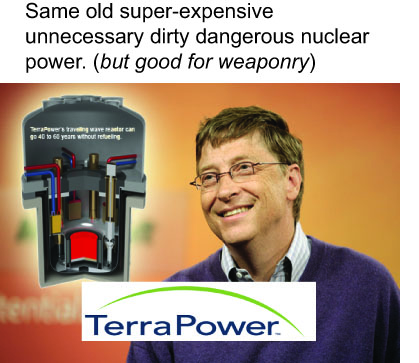
Paul Richards, Nuclear Fuel Cycle Watch Australia, https://www.facebook.com/groups/102118604791305231 Jan , TerraPower – nuclear reactor design and research firm, chose, Wyoming, as it’s an oligarch and dictator’s Paradise.
Wyoming’s trust, as well as asset protection laws, combined with its property tax, sales tax, and excise tax. Give the uber-wealthy 1% a free ride, as one of only seven states that have no personal income tax.Therefore, even more, difficult for top tier energy auditors, to test and measure, proof of concept in engineering terms, by default that includes economic and environmental viability.Wyoming is the best on-shore tax haven state in the  USA, arguably the best in the world outside
 China.
“Wyoming trust and layers of private companies with concealed ownership allow the world’s wealthy to move and spend money in extraordinary secrecy, protected by some of the strongest privacy laws in the country and, in some cases, without even the cursory oversight performed by regulators in other states.” The Washington PostAll in a state, that has a deplorable record of ecological disasters, created by the other fuel-burning; Linear Business Model,damaging earth systems, accelerating the Anthropocene.• burning – fuel
• churning – production• consuming – excess energy• consuming – products• dumping – waste in earth systems• ad Infinitum – Latin, literally ‘to infinity’19C flawed business model, that birthed corporatism, which created an acceleration in the climate crisis in the first place.Democracy without transparency is not democracy._____________source: The Washington Post.https://www.washingtonpost.com/…/wyoming-trusts…/BANKING FRAUD PANDORA PAPERShttps://en.wikipedia.org/wiki/Pandora_PapersPANAMA PAPERShttps://en.wikipedia.org/wiki/Panama_PapersPARADISE PAPERShttps://en.wikipedia.org/wiki/Paradise_PapersMAURITIUS PAPERShttps://en.wikipedia.org/wiki/Mauritius_Leaks
COVID-19 an obstacle for nuclear waste disposal at Waste Isolation Pilot Plant, officials say
COVID-19 an obstacle for nuclear waste disposal at Waste Isolation Pilot Plant, officials say,
Officials plan to ramp up operations as pandemic hoped to subside, Adrian Hedden, Carlsbad Current-Argus, 31 Jan 22,
COVID-19 continued to strain operations to dispose of nuclear waste at the Waste Isolation Pilot Plant near Carlsbad, officials said, slowing shipments accepted at the repository near Carlsbad last year.Officials from WIPP detailed the progress made in 2021 before state lawmakers Monday during the annual WIPP Legislative Breakfast held each year at the start of the Legislative Session.
This year’s presentation was held virtually via Zoom due to health concerns from the COVID-19 pandemic.
In the Fiscal Year 2021, about 199 shipments of waste were emplaced at WIPP, where they are permanently disposed of as an underground salt formation slowly collapses to bury the waste about 2,000 underground.
Shipments averaged about five weekly last year and were occasionally reported at seven or eight per week, said Reinhard Knerr, manager of the U.S. Department of Energy’s Carlsbad Field Office.
The facility’s target was about 240 shipments of waste for FY 2021, he said, and officials hoped to aim for up to 400 shipments in FY 2022.
“Unfortunately, COVID-19 has continued to be a significant challenge on that front,” he said of last year’s shipments. “We’ll be looking to increase here in the next few months.”
In early 2022, Knerr said WIPP hoped to increase shipments of waste to 10 to 12 per week from DOE nuclear facilities around the country including Los Alamos National Laboratory (LANL) in northern New Mexico.
Shipments from LANL recently drew concerns from state officials as the New Mexico Environment Department (NMED) called for federal oversight into how the DOE prioritizes shipments from around the country.
Meanwhile, the DOE announced plans to increase LANL’s production of plutonium pits, which are used to trigger nuclear bombs, to about 30 pits a year by 2026 – a move critics argued would increase waste generation at the site……………………… https://www.currentargus.com/story/news/local/2022/01/31/covid-19-obstacle-nuclear-waste-disposal-wipp/9239299002/
Russia calls for USA to remove its nuclear weapons from European countries
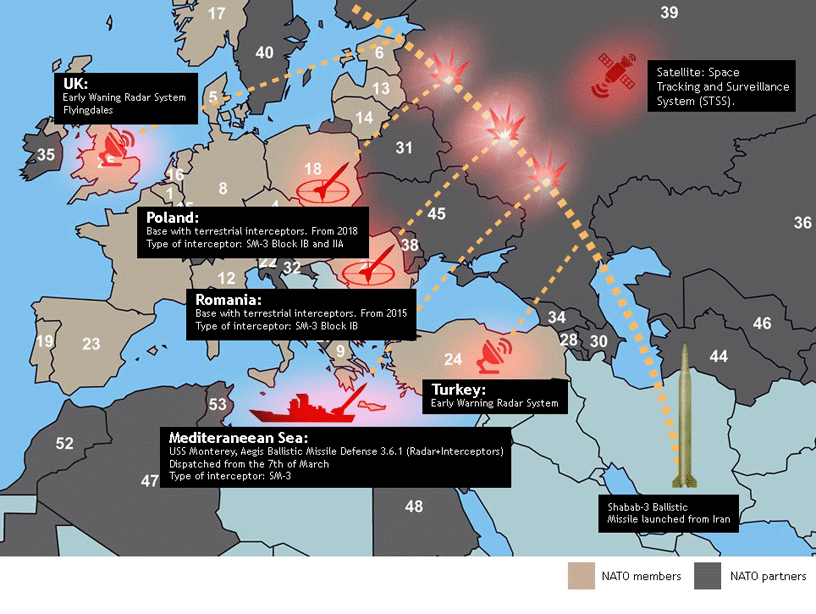
Russia proposes US returns American nuclear weapons from NATO countries stateside https://tass.com/politics/1394065, 28 Jan 22,
According to Vladimir Yermakov, “currently there are about 200 American nuclear air bombs of the B61 family” in five non-nuclear NATO countries
MOSCOW, January 27. /TASS/. Moscow proposed to Washington to return all American nuclear weapons from NATO countries to US territory in the context of reviewing security guarantees, Director of the Russian Foreign Ministry’s Department for Nonproliferation and Arms Control Vladimir Yermakov said in an interview with TASS.
We insist that NATO’s ‘joint nuclear missions’ should be stopped immediately, all the American nuclear weapons be returned to US national territory and the infrastructure that allows their rapid deployment should be eliminated. This aspect is one of the elements of the package of measures proposed by us to Washington in the context of considering the issues of security guarantees,” he said.
According to the diplomat, “currently there are about 200 American nuclear air bombs of the B61 family” in five non-nuclear NATO countries. Thus, the alliance is capable of rapidly deploying nuclear weapons able to reach strategic targets on Russian territory. “[NATO countries] also retain the infrastructure ensuring rapid deployment of these [nuclear] weapons capable of reaching Russian territory and striking a wide range of targets, including strategic ones,” he pointed out.
On December 17, 2021, the Russian Foreign Ministry published draft agreements between Moscow and Washington on security guarantees and the measures of ensuring the security of Russia and NATO member states. The proposed measures include guarantees that NATO will not advance eastward, including the accession of Ukraine and other countries into the alliance, as well as the non-deployment of serious offensive weapons, including nuclear ones. On January 26, the US and NATO submitted to Russia their written response to Moscow’s proposal on security guarantees.
Doubts grow on water-release schedule at Fukushima plant

Doubts grow on water-release schedule at Fukushima plant cTHE ASAHI SHIMBUN, January 31, 2022 Shovel loaders digging pits at the Fukushima No. 1 nuclear power plant on Jan. 17 were a rare sign of progress in the government’s contentious water-discharge plan at the stricken site.
Under the plan, millions of tons of treated but still contaminated water stored at the plant will be released into the sea over decades starting in spring 2023.
However, opposition to the plan remains fierce among local residents, the fishing industry and even overseas governments.
The pits being dug will temporarily hold radioactive water right before the release. But other preparatory work has already been stalled.
The government plans to create an undersea tunnel through which the treated and diluted radioactive water will be released into the sea about 1 kilometer from the plant.
Drilling work for the tunnel was initially scheduled to start early this year, but it was delayed to June.
Some government officials now doubt that the tunnel can be completed in time for the planned water release.
“It would be impossible to construct the underwater tunnel in less than a year,” one official said.
The government in April last year decided to discharge the contaminated water stored at the plant to move forward the decades-long process of decommissioning of the plant.
The accumulation of highly contaminated water has been a serious problem for the government and plant operator Tokyo Electric Power Co. since the Great East Japan Earthquake and tsunami in March 2011 caused the triple meltdown there.
An average of 150 tons of such water was produced each day last year as rainwater and groundwater keeps flowing into the damaged reactor buildings and mixing with water used to cool the melted nuclear fuel.
The contaminated water is treated by a multi-nuclide removal facility, known as ALPS, and stored in tanks. ALPS, however, cannot remove tritium, a beta-emitting radioactive isotope of hydrogen, and others.
The pits are being built to ensure that tritium levels in the treated water after dilution with a large amount of seawater are low enough to be sent to the planned tunnel for discharge into the sea.
Disposal of the contaminated water has become an urgent matter.
TEPCO said the existing 1,061 tanks at the plant are capable of holding a total of 1.37 million tons of water and would be full by around spring next year.
As of Jan. 20, the plant had reached 94 percent of capacity.
The government fears that continuing to add more storage tanks at the plant could jeopardize the overall decommissioning work.
EFFORTS TO EASE CONCERNS DELAYED
The government asked the International Atomic Energy Agency to send an inspection team to examine the safety of the treated radioactive water.
A seal of approval from a credible international body could go a long way in easing domestic and international opposition about the water release plan.
The IAEA team of researchers from 11 countries, including China and South Korea, which are opposed to the water release, was expected to visit Japan in December to begin its on-site inspection.
But that trip was scrapped after a new wave of novel coronavirus infections hit the global community.
Government officials are negotiating with the IAEA for a visit in spring by the team. But it remains unclear when the trip will finally materialize.
The government and TEPCO have also made little progress in gaining support from fishermen and the public, despite holding numerous briefings about the water release plan.
Distrust of the government and the utility remain high in Fukushima Prefecture over their series of mishandling of the nuclear disaster.
Fishermen, in particular, are adamantly opposed to the release of the water into areas where they make their living.
“If you insist on the safety of treated water, why don’t you spray it in your garden or dump it in a river flowing into Tokyo Bay?” Toru Takahashi, a fisherman in Soma, asked government officials at a recent briefing session.
The officials brought with them a huge stack of documents to emphasize the safety of the treated water.
But they lowered their eyes and clammed up when Takahashi and other opponents challenged their view.
“I will never ever drop my opposition,” Takahashi said.
Such opposition has created a headache for leaders of the towns hosting the plant.
They are eager to see progress in the decommissioning work, and getting rid of the huge amount of contaminated water at the plant would be a big step toward rebuilding their affected communities.
After the government’s decision to release the water, Shiro Izawa, mayor of Futaba, a town that co-hosts the plant along with Okuma, called on then industry minister Hiroshi Kajiyama to gain support for the water discharge plan from the public and fisheries to advance the decommissioning process.
Futaba, a town with a population of nearly 7,000 before the nuclear disaster, is the only municipality in Fukushima Prefecture that remains entirely under an evacuation order.
In 2015, Futaba grudgingly became the storage site of contaminated soil and debris gathered in the cleanup of municipalities in the prefecture on the pretext of “moving forward rebuilding.”
If the planned water release is further delayed because of opposition from other municipalities, the future of rebuilding Futaba will remain in doubt.
(This story was compiled from reports by Takuro Yamano, Keitaro Fukuchi, Tsuyoshi Kawamura and Mamoru Nagaya.)
In 2022, compensation funds for the nuclear-affected ”Downwinders” are due to expire
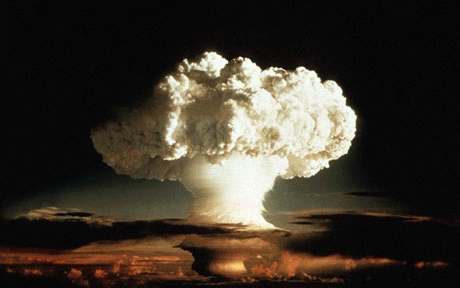
Funds for those impacted by nuclear weapons tests set to expire in 2022 https://www.thedenverchannel.com/news/national/funds-for-those-impacted-by-nuclear-weapons-tests-set-to-expire-in-2022 By: Bo Evans, , Feb 01, 2022
Raymond Harbert may not have the words to describe it.
“It is really hard to relay all the feelings you get from one of those megaton tests,”
But he never forgot the details of the detonation of a nuclear bomb well.
“If you can imagine, 40 miles away, and you can feel the heat when it arrives. It arrives at a separate time. It’s a prickly heat, and then the pressure wave coming—the brightness. The feeling when they finally say, you can take your glasses off. Those are memories that will stick with me for the rest of my life,” said Harbert.
In this 2005 interview conducted by the University of Nevada Las Vegas, Harbert lays out an experience shared by thousands of Americans exposed to radiation from nuclear weapons tests between 1945 and 1962.
The fallout has lasted for decades.
“People don’t realize over 200 above-ground tests were done between 1945 and 1962, and an additional 900+ were done after that below ground. Which exposed Nevadans, people in Utah, Arizona, Colorado, places that were downwind of these tests to fallout,” said Dr. Laura Shaw.
Shaw works with the Nevada Radiation Exposure Screening & Education Program or RESEP at UNLV to provide medical services and cancer screening to people who are known as downwinders.
We review their history, we look at their medications, we offer additional screenings that include colon cancer screening, lung imaging, labs that screen for diabetes, anemia, cholesterol, so we do a lot,” said Shaw.
It’s all paid for by the Radiation Exposure Compensation Act or RECA. The law was passed in 1990. The fund is set to expire in July 2022.
“These people have another 30, 40 years, hopefully, to live that were potentially exposed, so we need this program much, much longer,” said Shaw.
Some in Congress are attempting to extend and expand the fund.
“Tragically, for some, it is already too late. We’ve lost Idahoans Sheri Garmin, Teresa Valberg, and Srgt. 1st Class Paul Cooper to Cancer,” said Sen. Mark Crapo, (R) Idaho, in a congressional hearing.
The Radiation Exposure Compensation Act Amendments of 2021 have been introduced in both the House and Senate and have been referred to committees.
Dr. Shaw remains hopeful it will pass.
“Cancer is still going to happen. These people are going to develop problems associated with their previous exposure. Cancer can happen years later, and it’s not going to pay any attention to any deadlines,” she said.
“Community Partnership” alerted to surveillance and “intimidation” by Radioactive Waste Management —

LETTER to All Council Members of the Community Partnership with RWM
Dear Council Member of the Community Partnership with RWM This information has been sent to local and national press but in case it is not flagged up by media you should be aware that South Lakes MP Tim Farron has described surveillance and “intimidation” by Radioactive Waste Management as “severely concerning.” Opponents of the plan for a Geological Disposal Facility in Cumbria have been placed under surveillance with social media/online conversations/letters monitored and analysed by companies specialising in behavioural science. This has extended to false information being passed to the police about a leading campaigner by Radioactive Waste Management. The police have been informed that the information passed to them by RWM is false.
Following our own investigation, campaigners at Radiation Free Lakeland discovered that Oxfordshire based Radioactive Waste Management, tasked with “Delivery” of a UK Geological Disposal Facility (GDF) have employed three companies, Brandwatch, MHP and Press Data to carry out surveillance. Councillors may be aware that Cumbrian group Radiation Free Lakeland have set up a dedicated volunteer campaign called Lakes Against Nuclear Dump to counter RWM’s remit to Deliver a Geological Disposal Facility for High Level Nuclear Wastes and Near Surface Disposal (at Drigg?) for Intermediate Level Nuclear Wastes.
Information on surveillance from Radioactive Waste Management was asked for by wildlife artist and opponent of nuclear dump plans Marianne Birkby through a Data Subject Access Request. The information is, say campaigners astonishing in its breadth of surveillance, analysis of what has been said in opposition to the deep nuclear dump plans and in discussing RWM actions aimed at discrediting voices opposed to GDF as “scaremongering.”
The extent of surveillance includes correspondence with Cumbria Police and the Civil Nuclear Constabulary. An email was sent by Radioactive Waste Management on 7/27/21 to Cumbria Police saying “The RWM lead [name redacted] has expressed concerns that there could be some local protestors at the event as a well-known local activist Marianne Birkby (Radiation Free Lakelands) has a holiday home nearby.” This says the campaigner is “news to me, I haven’t got a holiday home anywhere! Also I wasn’t even at the event referred to, surely passing false information onto the police is illegal and it feels pretty intimidating.”
Campaigners say that it is frightening that Local Authorities Copeland and Allerdale have now entered into a “Community Partnership” with Radioactive Waste Management which so patently advocates against local communities expressing any dissent to RWM’s remit to Deliver a Geological Disposal Facility.
In a letter to Radiation Free Lakeland, Tim Farron MP states: “I am severely concerned …The police should not be used as a method to harass or intimidate peaceful law-abiding protestors. This surveillance seems wholly unnecessary and is another example of the Government’s growing hostility towards those who would exercise their political freedoms.I am pleased to confirm that I have written to the Minister of State for Energy, Clean Growth and Climate Change and Radioactive Waste Management to ask them to confirm that such surveillance has been authorised and what cause they have to harass my constituents in this manner.”
Yours sincerely
Marianne Birkby, Lakes Against Nuclear Dump a Radiation Free Lakeland campaign
1 This Month
Tell Congress: Prevent Nuclear Catastrophe in Iran

Tell Congress: Prevent Nuclear Catastrophe in Iran

Read the Public Inquiry Report, the Commissioners’ report, Surrendering Australia: The AUKUS Deception is available to download for free at aukuspublicinquiry.com. Or just watch the replay of the National Press Club Luncheon.


Shut down the radiation-damaged Heysham nuclear reactors now
To see nuclear-related stories in greater depth and intensity – go to https://nuclearinformation.wordpress.com

Say No to NASA’s Reckless Nuclear Reactor on the Moon
Say No to NASA’s Reckless Nuclear Reactor on the Moon
-
Archives
- November 2026 (238)
- October 2026 (302)
- September 2026 (339)
- August 2026 (330)
- July 2026 (355)
- June 2026 (287)
- May 2026 (306)
- April 2026 (356)
- March 2026 (251)
- February 2026 (267)
- January 2026 (308)
- December 2025 (358)
-
Categories
- 1
- 1 NUCLEAR ISSUES
- business and costs
- climate change
- culture and arts
- ENERGY
- environment
- health
- history
- indigenous issues
- Legal
- marketing of nuclear
- media
- opposition to nuclear
- PERSONAL STORIES
- politics
- politics international
- Religion and ethics
- safety
- secrets,lies and civil liberties
- spinbuster
- technology
- Uranium
- wastes
- weapons and war
- Women
- 2 WORLD
- ACTION
- AFRICA
- Atrocities
- AUSTRALIA
- Christina's notes
- Christina's themes
- culture and arts
- Events
- Fuk 2022
- Fuk 2023
- Fukushima 2017
- Fukushima 2018
- fukushima 2019
- Fukushima 2020
- Fukushima 2021
- general
- global warming
- Humour (God we need it)
- Nuclear
- RARE EARTHS
- Reference
- resources – print
- Resources -audiovicual
- Weekly Newsletter
- World
- World Nuclear
- YouTube
-
RSS
Entries RSS
Comments RSS

