Taiwan partially lifts import bans on Japanese foods
Political expediancy, lies and cover up, propaganda!

Feb. 21, 2022
Taiwan says it has partially lifted import bans on Japanese foods on Monday that have been in force since the 2011 Fukushima nuclear power plant accident.
Taiwan had stopped importing all food items from Fukushima and the nearby prefectures of Ibaraki, Tochigi, Gunma and Chiba. The ban excluded alcoholic drinks.
Officials announced earlier this month that they would lift the ban, except for wild bird and animal meat as well as mushrooms from those prefectures.
They said the move was based on global standards and ‘scientific proof’and noted that most countries have eased restrictions.
Taiwanese authorities say they sought feedback from the public about the decision and ‘received only a few objections’.
Food from the five prefectures must still be accompanied by test results for radioactive materials, and all items will be subject to inspections in Taiwan.
All prefectures must also still provide proof of origin.
Officials in Japan say the safety of the food has been scientifically proven and they will continue asking Taiwan to lift all the regulations.
Taiwan officially scraps ban on food from 5 Japanese prefectures
Political expediancy sacrificing people’s health…
Decision to lift ban announced earlier this month as government eyes CPTPP entry

2022/02/21
TAIPEI (Taiwan News) — The ban on food from parts of Japan affected by the 2011 Fukushima nuclear disaster was formally lifted on Monday (Feb. 21).
The Taiwan Food and Drug Administration promulgated the removal of the ban on Feb. 21 after reviewing public feedback. Three dozen comments were submitted, including 17 in favor of ending the ban and four against, as well as 15 inquiries and suggestions.
The goods in question are from five Japanese prefectures: Fukushima, Gunma, Chiba, Ibaraki, and Tochigi. With the scrapping of the ban, which has been in place for a decade, goods from these areas will be subject to risk controls when imported.
Food products that are prohibited from circulating within Japan, such as wildlife meat and mushrooms from those five prefectures, will not be allowed to enter Taiwan. Radiation safety and product origin certificates are required for items deemed to be high-risk, such as tea and aquatic products.
Despite the government’s pledge to implement rigorous border inspections, some believe more needs to be done to ensure food safety. Earlier this month, the New Power Party aired concern about possible traces of strontium-90 in the Japanese imports, as the isotope is not on the radiation watch list, and exposure to it may increase the risk of bone cancer.
Radioactive farm to be leased to wind farm without decontamination

February 15, 2022
On January 5, it was learned that Tohoku University had leased the Tohoku University Ranch in Miyagi Prefecture, which was contaminated with radioactive materials due to the accident at the Fukushima Daiichi Nuclear Power Plant of the Tokyo Electric Power Company in 2011, to a large-scale wind power generation project without decontaminating the land. It was learned on January 5. According to the Ministry of Education, Culture, Sports, Science and Technology (MEXT), there is no other example of a university leasing land contaminated with radioactive materials, which is highly unusual. However, according to the Ministry of Education, Culture, Sports, Science and Technology (MEXT), there has been no other case in which land contaminated with radioactive materials has been leased.
Unusual lease of university land
The project is called the Rokkaku Ranch Wind Power Project (tentative name). The project, tentatively called the “Rokkaku Farm Wind Power Generation Project,” will install up to 20 wind turbines with a maximum height of 200 meters at the Rokkaku Farm in the Tohoku University Kawatabi Field Center, which straddles the cities of Osaki and Kurihara in Miyagi Prefecture. The maximum output will be 70,000 kilowatts, and all the power generated will be sold to Tohoku Electric Power Co. Construction is scheduled to begin in the spring of 2023, with the aim of starting operation at the end of fiscal year 2025.
The operator of the project is Kawatabi Wind Power Generation (President: Toru Suzuki), which is made up of the wind power generation company Shimin Wind Power (Sapporo City) and its affiliate CSS (Sapporo City). At present, the environmental impact assessment is in the second of three stages, the “method statement” stage.
Since the amendment of the National University Corporation Act in 2009, it has been possible for universities to lease idle land to third parties unrelated to their original business. In November 2008, Tohoku University applied to the Ministry of Education, Culture, Sports, Science and Technology for the lease of 3.76 million square meters of ranch land. The application was approved in March of the following year.
According to Tohoku University, the university signed a contract with Kawatabi Wind Power Generation in March 2020 to lease the land to the university through an open competition. According to Tohoku University, the university contracted with Kawatabi Wind Power in March 2020 to lease the land from the public. The annual rental fee is 80 million yen, and the term is 20 years after the start of power generation.
No decontamination of hot spots
However, the ranch was a “hot spot” where radiation levels were locally high due to the nuclear accident in 2011. Immediately after the accident at the nuclear power plant, radioactive materials formed a “radioactive plume” that flowed with the atmosphere like a cloud, and passed over the northern part of Miyagi Prefecture on the wind. This is because it fell on parts of the cities of Osaki and Kurihara.
According to Tohoku University, radioactive cesium was also detected at Rokkaku Farm, and cattle grazing was suspended. Although decontamination was considered, it was not carried out due to the vastness of the area, and the ranch was left unattended.
At the Miyagi Prefecture Environmental Impact Assessment Technical Review Meeting held in April last year, one of the procedures for environmental assessment, an expert on radioactive materials pointed out that “10,000 to 30,000 becquerels per square meter fell in the area. This is the first time I have ever seen such a thing. He expressed concern that the construction of the wind power generation facility would cause the radioactive materials to flow into the surrounding areas, saying, “If the soil is tampered with improperly, it may turn into muddy water and flow into areas that are not the university’s land.
According to the Ministry of Education, Culture, Sports, Science and Technology (MEXT), it has approved a total of 26 leases of idle property to national universities nationwide since the law was revised, but Tohoku University is the only one that has applied for a lease because of radioactive contamination. Tohoku University is the only university that has applied for a lease because of radioactive contamination, and the only other university that has applied for a lease for a renewable energy project is Kyoto University for solar power generation.
Tohoku University said, “We measured radiation levels when we leased the land this time, and while it is not suitable for grazing cattle, there is no problem with radiation exposure when the developer works on the land.
189 200-meter class wind turbines
The Naruko Onsen area of Osaki City, where the ranch is located, is known for its kokeshi dolls, and is one of the top hot spring resorts in Japan, designated as a “national hot spring resort” by the Ministry of the Environment. In the vicinity of the ranch, seven companies, including Rokkaku Farm, are currently working on a huge wind power generation project. A residents’ group, “Naruko Hot Spring Village,” is planning to build a total of 18 wind turbines up to 200 meters in height.
A residents’ group, “Naruko Onsen no Kurashi to Kofukawa wo Kangaeru Kai” (headed by Yoshitake Sone), pointed out, “If the wind turbines are built without decontamination, not only will contaminants flow out, but wind pressure from the turbines may scatter radioactive materials. If the wind turbines are built without decontamination, not only will contaminants leak out, but wind pressure from the turbines may scatter radioactive materials. Tohoku University must be held accountable for its decision to lease the land without any explanation to the residents,” he said, calling for a complete reversal of the plan. Since the end of last year, we have been collecting signatures on the “Change.org” website and other sites. The government’s approval standards are questionable.
Doubts about the government’s approval standards
The revised National University Corporation Act stipulates that one of the criteria for the Minister of Education, Culture, Sports, Science and Technology to approve the lease of idle land to national universities is that the land “shall not be used for any purpose that may cause inconvenience to the surrounding area, such as generating or using noise, vibration, dust, visual discomfort, bad odor, electromagnetic waves, or hazardous materials.
In addition to radioactive contamination, concerns about health hazards due to noise and low-frequency sound, as well as visual discomfort to the landscape, have been raised by residents’ groups and the prefectural government’s technical review committee members.
The Ministry of Education, Culture, Sports, Science and Technology’s National University Corporation Support Division said, “The government approves the project on the premise that the university will make sure that the operator complies with the approval standards. If the operator does not comply with the standards, the government will inquire with Tohoku University,” he said.
Regarding the construction of many wind turbines on un-decontaminated land, a Kawatabi Wind Power representative said, “We will investigate the project during the environmental assessment procedure, and based on the results of the investigation, we will plan the project in a way that will not cause any problems while listening to the opinions of experts.
Hitoshi Izu, 60, director of the Finance Department and deputy director of the Asset Management Center at Tohoku University, said, “In the future, after the government approves the wind power generation project, if any problems are reported by residents, the primary responsibility lies with the project owner, but Tohoku University, which owns the land, will not pretend not to know. But Tohoku University, as the owner of the land, will not just pretend not to know about it. There has been no such discussion at this time, but if there is a problem in the future, we will respond sincerely,” he said.
Online Tour by Reconstruction Agency to Consider Decommissioning of TEPCO’s Fukushima Daiichi Nuclear Power Plant

2022/02/20
On February 20, an online tour was held at the Tokyo Electric Power Company’s Nuclear Decommissioning Museum in Tomioka Town, Fukushima Prefecture, to have people from inside and outside of the prefecture think about the decommissioning of TEPCO’s Fukushima Daiichi Nuclear Power Plant. The speakers voiced the need for greater transparency in the dissemination of information about the Fukushima Daiichi Nuclear Power Plant.
Prof. Nobuhisa Murao of Kwansei Gakuin University, who appeared as a commentator, said that it was important to ensure the transparency of decommissioning work and pointed out that “even small accidents should be made public immediately without hiding them. Masato Kino, director general of the Agency for Natural Resources and Energy of the Ministry of Economy, Trade and Industry, said, “It is important to disclose information on both good and inconvenient matters.
Idol Ayaka Wada, who visited the Fukushima Daiichi Nuclear Power Plant last December, also made an appearance. She said, “I learned that it will take a long time to decommission the plant. Some of the participants suggested that the younger generation should be encouraged to visit the disaster area.
The online tour was organized by the Reconstruction Agency. The online tour was sponsored by the Reconstruction Agency and distributed nationwide via the video-sharing website YouTube. Mr. Kino explained the latest developments in the removal of molten nuclear fuel (debris), measures for contaminated and treated water, and improvements in the working environment. He accepted questions from the participants and exchanged opinions with them.
https://www.minpo.jp/news/moredetail/2022022094602?fbclid=IwAR2npqJ8B2NtHQQMh4O5Hq49pI1lWS9cLCb_ImXblfhX8idUhHAs4eu0nIA
46% of school lunches use ingredients from Fukushima Prefecture, the highest rate since 2010

February 10, 2022
The percentage of prefectural food ingredients used in school lunches in Fukushima Prefecture this year was 46.0% (up 1.8 points from the previous year), the highest since 2010, before the Great East Japan Earthquake. The prefecture’s Board of Education has been supporting the prefecture’s dietary education. The prefectural board of education attributes the increase to efforts to increase opportunities to use the prefecture’s food, including the provision of the “Fukushima Health Support Menu” designed by a company that supports dietary education. The prefectural board of education announced the results on September 9.
The graph below shows the rate of utilization. In fiscal 2012, the year following the earthquake and the nuclear accident, the percentage dropped to 18.3% due to concerns about radioactive materials, but it has been on a recovery trend since then.
The utilization rate by region is as shown in the table below. The utilization rate by region is as shown in [Table]. Minamiaizu has the highest rate at 59.1%, which is due to the direct provision of foodstuffs in cooperation with farmers. The prefectural board of education hopes to expand the good practice to the entire prefecture.
In terms of food items, beans were the most popular at 66.5%, due to the fact that they can be easily incorporated into side dishes and soups as tofu and natto. Rice and other grains accounted for 63.9%, followed by fruits at 54.2%.
The survey was conducted at a total of 280 facilities, including public schools, municipal community kitchens, and prefectural schools that provide complete school lunches, and looked at the percentage of prefectural food ingredients in the food items used in a daily school lunch over a total of 10 days from June 14 to 18 and November 15 to 19 last year.
https://www.minyu-net.com/news/news/FM20220210-684498.php?fbclid=IwAR0j3BiDuSmR21dggtT97x9ziE_zoUoKK9kpEQFRhqyNOEFpQrZUCA_5BY0
Miyagi prefectural assembly: “Don’t hand out flyers to schools about treated nuclear water

2022/02/21
On February 21, opposition members of the Miyagi Prefectural Assembly asked the prefecture not to distribute flyers directly to schools in Miyagi Prefecture, saying that treated water from the Fukushima Daiichi Nuclear Power Plant of Tokyo Electric Power Company (TEPCO) will be safely disposed of in the sea.
Fourteen members of the opposition faction of the prefectural assembly submitted the request to Miyagi Prefecture.
In December 021, the national government issued a flyer to schools across Japan stating that the tritium-containing treated water from the Fukushima Daiichi Nuclear Power Plant, which is scheduled to be released into the ocean in the spring of 2023, will be “safely disposed of in the ocean.
In the letter of request submitted on the 21st of February, it was stated that the safety of tritium is not in question. In the letter of request submitted on December 21, the prefectural government was requested that the leaflets not be distributed to children and students in the prefecture, saying that even experts have different opinions on the safety of to be released water which is claimed in the leaflets.
The prefectural government responded that it is not planning to collect the flyers at prefectural schools and will leave the decision on municipal schools to the respective boards of education.
The lawmakers plan to ask the government for an explanation through their political parties.
Fukushima’s forestry industry still haunted by nuclear meltdown

Feb 21, 2022
Almost 11 years since the Fukushima No. 1 nuclear power plant meltdown, the forestry industry in Fukushima Prefecture is still suffering serious difficulties, with mountains and forests once contaminated by radioactive fallout left untouched.
In addition to declining demand for lumber, lingering worries over the effect of the radiation from the plant hit by the March 2011 quake and tsunami have seen the local forestry industry face acute labor shortages.
Yoshihisa Kanagawa, 65, of the forestry cooperative in the county of Higashishirakawa, still remembers a comment made by a local resident a few years ago.
“Don’t drop anything with radiation,” the resident told him, pointing to bark that had fallen to the ground from a truck loaded with logs Kanagawa was transporting from nearby mountains.
Kanagawa said he felt the deep-rooted mistrust among residents about the effect of the nuclear disaster. “(I was shocked to know) some people were still thinking that way,” he recalled.
Airborne radiation levels in the prefecture’s forests rose immediately after the nuclear disaster at the Tokyo Electric Power Company Holdings Inc. plant but have declined over time. The average radiation level at 362 sites in the prefecture was 0.18 microsieverts per hour in the year beginning April 2020, down by 80% from the level in the year through March 2012, according to a prefectural survey.
Under the prefecture’s standards, trees can be felled and transported from a forest if the radiation level in the air at the felling site is at 0.50 microsieverts or less per hour.
The bark that fell from Kanagawa’s truck was from logs in forests with radiation levels within prefectural limits.
There was a time when reducing the exposure of forestry workers to radiation was cited as an issue in the local forestry industry.
“Although few people talk about it, some people are (still) concerned about (any potential health effect of) the radiation,” he said. “It would be a shame if this has had something to do with the drop in forestry workers.”
Manahata Ringyo, a forestry firm based in the town of Hanawa, mainly deals with state-owned forests in the area. The town was the biggest lumber producer in the prefecture in 2018.
While more than 90% of the company’s sales are to businesses in the prefecture, the company attaches the results of radiation tests on waste from the logs when dealing with customers outside of the prefecture, as such tests are requested by some of them.
The practice continues even now, after almost 11 years.
The reasons behind the labor shortage in the forestry industry are said to be the hard nature of the work and a decline in demand for lumber.
Masato Kikuchi, 61, president of Manahata Ringyo, believes that the nuclear accident may have exacerbated the situation. “I want (the central government) to do more to secure human resources for the forestry industry in Fukushima Prefecture,” he said.
The number of people newly employed in the forestry industry in the prefecture has decreased by two-thirds in the 10 years since the Fukushima No. 1 disaster. The number of new workers was 242 in 2010, but it began to decline in 2011 and dropped to 78 in 2020, or only 32.2% of the number a decade earlier.
Alarmed by the situation, the prefecture will open a new training facility inside the prefecture’s Forestry Research Center in Koriyama in April to train people in field work and forest management.
The training facility, Forestry Academy Fukushima, will offer a long-term training course of one year for high school graduates who wish to work in the forestry industry and short-term training for municipal employees and forestry workers.
In the one-year program, trainees will cover forestry-related knowledge and skills, as well as acquire practical skills at a training field in a mountain forest. The facility will be equipped with a simulation room for forestry machines, in addition to classrooms and a building for practical training.
Fifteen applicants who have been accepted into the program will begin their one-year training in April.
At the end of the training period, the prefecture will encourage the trainees to find employment at forestry cooperatives and other forestry-related businesses in Fukushima.
“We will try to develop human resources who will be engaged in the forestry industry over the long term,” an official from the forestry promotion division of the prefecture said.
https://www.japantimes.co.jp/news/2022/02/21/national/fukushima-forestry-meltdown-difficulties/
This week in nuclear news

The news about events in Ukraine is just coming in. Vladimir Putin would have us believe that it is at last the end of the 8 years of war in the two self-proclaimed rebel republics of Donetsk and Luhansk. But it could be the beginning of something worse.
Russia-Ukraine live updates: United States and UK expected to announce sanctions against Kremlin
Some bits of good news: Replacing environmental despair with hope and action ECUADOR’S SUPREME COURT: NATURE WINS OVER MINING .
The Ukraine Crisis Could Trigger a Nuclear Catastrophe – Tilman Ruff Media forecasting on Russian invasion is just like religious cult leaders predicting the apocalypse.
Western Democracies Have Mutated Into Propagandists for War and Conflict. Headlines that cause wars.
Antarctica and Greenland’s polar ice shelves are melting from below
Public Opposition to Nuclear Power.
Terrifying “nuke map” reveals danger zone if nuclear bomb dropped on YOUR city.
The supposed new rise in nuclear power and the uranium business is doubtful!
Reality check: The green inflation myth
Highest Number of Reactor Closures in a Decade.
ANTARCTICA. Antarctica will likely set a record for lowest sea ice extent this year
UKRAINE. Russian President Vladimir Putin orders Russian forces to ‘maintain peace’ in eastern Ukraine‘s two breakaway regions. Nuke Power at the Brink of Bankruptcy, War, Apocalypse. Standoff ending, Ukraine and Russia both claim victory? Today’s Crisis Over UkraineUkrainian Pacifists Say US, NATO and Russia Share Responsibility to Avoid War. ACURA ViewPoint. Ambassador suggested that Ukraine might drop its bid for NATO membership – but he was quickly corrected. UK trained Ukraine military, including a thousand-strong neo-Nazi unit. Aspects of the Ukraine crisis and some suggested solutions for de-escalation.
JAPAN.
- I just wanted to live a normal life – Akiko Morimatsu.
- IAEA ‘will not approve or oppose’ release of treated water from Fukushima plant, ‘responsibility of each country’. UN to review Japan’s plan to release Fukushima water into Pacific
- Where to in 2045? Contaminated Soil from the Nuclear Power Plant Accident: Current Status of Interim Storage Facilities in Fukushima. 11 years after the accident at the Fukushima Daiichi Nuclear Power Plant, residents angered by the retreat from decontamination of the entire area.
- Legal action on Fukushima nuclear disaster’s impact on health.
- . Latest look inside Fukushima ruins show mounds of melted nuclear fuel . Robots used to remove Fukushima’s highly radioactive used nuclear fuel, but they’re still problematic
- . Shadow of Hiroshima” at Fukushima nuclear power plant: Animation depicts history of nuclear power.
- Plutonium problems won’t go away. Brief summary of Engineering and Technology’s fine article on UK’s plutonium problem.
- Should the Taishan nuclear plant shutdown worry UK regulators?
- Update on the status of Britain’s Rolls Royce Small Nuclear Reactor project. Mini-reactor for Highlands -too “high cost and high risk” says Scottish MP Maree Todd.
- Bradwell nuclear project -dead in the water? – partly due to work of BANNG (Blackwater Against New Nuclear Group).
- Time is running out to save the Severn Estuary. Severn Estuary – internationally significant fish nursery – threatened by Hinkley radioactive mud. Legal challenge to license for EDF to dump radioactive mud in the Bristol Channel and Severn Estuary. Super Furry Animals call out alleged nuclear mud dumping at Hinkley Power Station. The case for Saving the Severn Estuary from the dumping of radioactive wastes.
- New report: Nuclear waste’s shifting sands on the lakeland fringe.
- Lord Truscott questioned the idea that a thermonuclear war with Russia would be an ”unwelcome outcome”.
- Campaign for Nuclear Disarmament marks 40th anniversary of Nuclear Free Wales Declaration.
- Julian Assange appeals to the Supreme Court.
CANADA. Michigan Senators Oppose Canadian Nuclear Waste Site Near Great Lakes. MPs and groups oppose hearings to license Canada’s first permanent radioactive waste dump. Proposed license for the NSDF includes no enforceable requirements for “waste characterization” — Concerned Citizens of Renfrew County and Area. In-Depth: Dangers of Burying Nuclear Waste.
USA.
- Damage limitation and US nuclear strategy . Are You Ready for the Big New War? You Damn Well Better Be.
- Nuclear power doesn’t belong in the Green New Deal. ‘Serious problems’ with NuScale’s proposed small nuclear reactors .
- USA’s Department of Energy (DOE) will give $6 Billion in a program to to stop uneconomic nuclear reactors from closing down.
- Beleagured Vogtle nuclear project delayed yet again.
- Opposition to Holtec dumping nuclear waste into Cape Cod Bay.
- Maryland Couple Conspired to Sell Nuclear Secrets.
- New USA Federal Report Warns of Accelerating Impacts From Sea Level Rise.
IRAN. Why the Iran nuclear talks have stalled.
ISRAEL. The Iran Nuclear Deal Isn’t a Threat, and Israel Must Find a New Approach.
RUSSIA. Russian Foreign Minister Lavrov informs UN chief about Russia’s talks with NATO on security guarantees.
EUROPE. Any missile launch may be perceived as nuclear strike amid tensions. EU greenwashing nuclear power: Short sighted & counterproductive. Europe’s nuclear power plants will need investments of EUR 500 Billion, so they need to be labelled ‘green” ! The EU’s ‘green taxonomy’ classification system – no longer fit for purpose, if nuclear and gas are included.
FRANCE . French government to subsidise EDF nuclear power company by another €2.1bn, to prop up its failing share price. French utility EDF will check auxiliary cooling circuits, or RRAs, at its 56 domestic reactors, after faults found. No end in sight as the French nuclear industry reduces its output.
BULGARIA. Nuclear project with Russian reactors shakes Bulgarian politics.
NORTH KOREA. Radiation fears after earthquakes at North Korea nuclear test site.
INDIA. Tamil Nadu people’s lives are more important than Kudankulam nuclear reactors: PMK. Concern in Tamil Nadu over spent nuclear fuel storage at Kudankulam site .
BELGIUM. ENGIE Doubles Down On Renewables And Reaffirms Closure Of Belgian Nuclear Industry.
GERMANY. How dare Germany oppose USA over nuclear power !
AUSTRALIA. Early closure of coal plant, battery and renewable developments – all spell the end for nuclear power hopes in Australia .
Russian President Vladimir Putin orders Russian forces to ‘maintain peace’ in eastern Ukraine’s two breakaway regions.
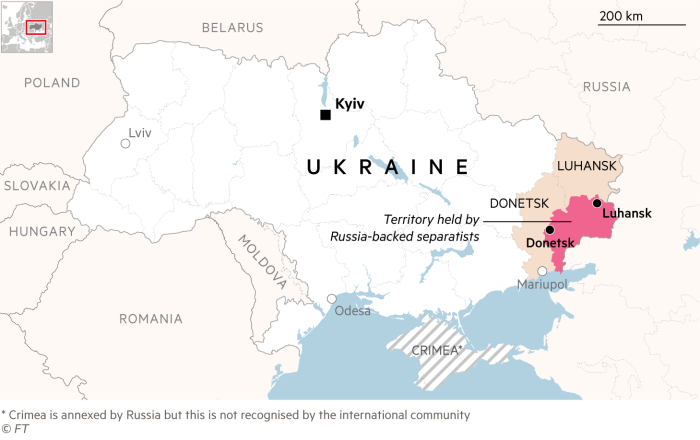
On Monday, local time, a Biden administration official said, however, the area was already controlled by Russian-backed separatists and Moscow, in practice, and that Mr Putin’s decision to send troops he called peacemakers into the breakaway regions of Ukraine did not as yet constitute a further invasion that would trigger a broader sanctions package.
“This isn’t a further invasion since it’s territory that they’ve already occupied,” the official said.
Russian President Vladimir Putin orders Russian forces to ‘maintain peace’ in eastern Ukraine’s two breakaway regions.
President Vladimir Putin has ordered his Defence Ministry to dispatch Russian forces to “maintain peace” in eastern Ukraine’s two breakaway regions, the Donetsk and Luhansk People’s Republics, after he said Moscow would recognise their independence.
Key points:
- Vladimir Putin, joined by Russia-backed separatist leaders, signed a decree recognising the independence of the breakaway regions
- In his address, Mr Putin delved into history as far back as the Ottoman empire and as recent as the tensions over NATO’s eastward expansion
- French President Emmanuel Macron earlier said the US and Russian leaders had agreed in principle to hold a summit
The Kremlin decree, spelled out in an order signed by Mr Putin, did not specify the size of the force to be dispatched, when they would cross the border into Ukraine nor exactly what their mission would be.
Hours later, a Reuters reporter witnessed unusually large columns of military vehicles and hardware, including tanks, moving through Donetsk, the largest city of the self-proclaimed republic.
Mr Putin earlier signed decrees to recognise the two breakaway regions as independent statelets………………………
On Monday, local time, a Biden administration official said, however, the area was already controlled by Russian-backed separatists and Moscow, in practice, and that Mr Putin’s decision to send troops he called peacemakers into the breakaway regions of Ukraine did not as yet constitute a further invasion that would trigger a broader sanctions package.
“This isn’t a further invasion since it’s territory that they’ve already occupied,” the official said.
But, the official added, that a full invasion could come at any time.
The United States will continue to pursue diplomacy with Russia until “tanks roll,” another official said.
“Russian troops moving into Donbas would not itself be a new step. Russia has had forces in the Donbas region for the past eight years … They are currently now making decisions to do this in a more overt and … open way,” the official said……………………
In his lengthy televised address, Mr Putin, looking visibly angry, described Ukraine as an integral part of Russia’s history and said that the regions in eastern Ukraine were ancient Russian lands and that he was confident the Russian people would support his decision.
Russian state television showed Mr Putin, joined by Russia-backed separatist leaders, signing a decree recognising the independence of the two Ukrainian breakaway regions, along with agreements on cooperation and friendship.
Under the two identical friendship treaties — submitted by Mr Putin for ratification by parliament — Russia has the right to build bases in the separatist regions and they, on paper, can do the same in Russia.
The parties committed to defend each other and signed separate agreements on military cooperation and on recognition of each other’s borders.
Their 31-point treaties also say Russia and the breakaway statelets will work to integrate their economies. Both regions are former industrial areas in need of massive support to rebuild after eight years of war with Ukrainian government forces.
The 10-year treaties are automatically renewable for further five-year periods unless one of the parties gives notice to withdraw.
Defying Western warnings against such a move, Mr Putin had announced his decision in phone calls to the leaders of Germany and France earlier, both of whom voiced disappointment, the Kremlin said.
The UN Security Council will meet publicly on Ukraine at 2am GMT (1pm AEDT) on Tuesday, a Russian diplomat said, following a request by the United States, the United Kingdom and France………………………..
EU will respond to ‘illegal act’ with sanctions against Moscow
According to another White House statement, Mr Biden had also discussed with France’s Emmanuel Macron and Germany’s Olaf Scholz “how they will continue to coordinate their response on next steps”. ………………..
The United Nations Secretary-General António Guterres called out Mr Putin’s decision to recognise the separatist regions as independent as “a violation of the territorial integrity and sovereignty of Ukraine” in a statement read by his spokesman, Stéphane Dujarric.
“The Secretary-General urges all relevant actors to focus their efforts on ensuring an immediate cessation of hostilities, protection of civilians and civilian infrastructure, preventing any action and statements that may further escalate the dangerous situation in and around Ukraine, and prioritising diplomacy to address all issues peacefully,” Mr Dujarric said.
…………….
With his decision to recognise the rebel regions, Mr Putin brushed off Western warnings that such a step would be illegal, would kill off peace negotiations and would trigger sanctions against Moscow.
“I deem it necessary to make a decision that should have been made a long time ago: to immediately recognise the independence and sovereignty of the Donetsk People’s Republic and the Luhansk People’s Republic,” Mr Putin said.https://www.abc.net.au/news/2022-02-22/putin-orders-russian-peacekeepers-ukraine/100849964
Aspects of the Ukraine crisis and some suggested solutions for de-escalation
DC AREA PEACE ACTIVISTS DISCUSS UKRAINE TENSIONS, By John Zangas,DC Media Group. February 20, 2022.
Washington DC—Local Peace Activists spoke about the growing crisis in East Europe, characterized the crisis as avoidable, and recommended solutions to avoid conflict. As tensions between world powers reached a climax not seen since the Cuban missile crisis of 1962, and diplomatic efforts between stakeholders seemed all but doomed to fail, the activists drew on years of experience and understanding of global issues to draw their recommendations. Despite ominous developments they still held out hope that war could be averted.
Their recommendations came as President Joe Biden spoke to the nation on Friday afternoon, saying that diplomacy was still an option. His optimism however, was eclipsed by media reports of shelling in Eastern Ukraine from rebel-held territory, pipeline explosions, a car bomb explosion in Donesk, and the evacuations of most Western Nation embassies from Kiev. Another report flashed that Ukraine separatists had evacuated Ukrainians to Russia from rebel held territory, further complicating efforts to unwind regional tensions.
Superpowers are Responsible for Arms Reduction
David Swanson, Executive Director, World Beyond War, said that both Russia and the United States have played roles in the crisis.
“I think we’re dealing with a situation in which all the momentum is toward escalation. You just can’t line up two armies in front of each other, swear to each one that the other is about to attack them, commit each one to counter-attacking, throw in nationalistic and ethnic hatred, and then hope for peace. Both sides are guilty of this , not because they are equal in all ways, but simply because they are guilty of this. The main way in which they are not equal is that this is happening on the border of Russia, whereas the U.S. instigator is thousands of miles away.
Russia’s demands for months have been perfectly reasonable and exactly what the U.S. would demand if the roles were reversed. Evacuating people to safety is a good thing, though unfortunate and not a complete solution.”
Swanson pointed out that the U.S. had already derived benefits from the situation by arms sales and the establishment additional military bases in Eastern Europe. He also offered possible solutions to deescalation.
A complete solution would be to begin a reverse arms-race, a deescalation. But the reason Biden and gang don’t much care about their predictions of imminent invasions making them look dumb is the other purposes of such a crisis that are rarely talked about. The U.S. has gotten out of this already: new bases in Slovakia, billions in tank sales to Poland, billions more in other weapons to Ukraine and Eastern Europe, and along with all of that, more U.S. influence in a Europe kept at odds with Russia—plus a proposal to Congress for record military spending without the slightest murmer of diaspproval from anywhere.
A success in moving toward peace would require undoing all of those successes for the military industrial congressional “intelligence” media academic thinktank complex. But if we can make it through 50 days of an invasion being imminent, we can make it through 100.“
Sustain Peace By Supporting International Monitoring Groups Like the Organization for Security and Co-operation in Europe
Michael Beer, Director of Nonviolence International, an Internationally recognized organization dedicated to building a global culture of nonviolence, said, “We need all governments to beat the drums of peace.” Beers further elaborated that the U.S. could do more to support peace monitoring support by strengthening the Organization for Security and Co-operation in Europe (OSCE) Special Monitoring Mission to Ukraine.
“While the US is concerned about the safety of its OSCE personnel it is at moments such as these when we most need peace monitors. It is critically important to maintain the personnel, who are currently involved in monitoring the situation along the line of contact and to take every possible measure to expand their capacity. Strengthening the Peace Monitoring Mission in Ukraine is something everyone can agree on.”
Michael Beer recently published his first book, Non-Violent Tactics in the 21st Century, which is a free update of Gene Sharp’s seminal text training the world in the value of nonviolent tactics, and is available online here.
Reduce Conflict Scenarios by Disbanding NATO and Cutting Military Expenditures
Medea Benjamin, co-founder and peace activist at CODEPINK! Women For Peace, said in a video that the roots of the current situation were tied up in continuing support for expanding NATO, while at home both parties in the Congress continued to green-light massive military spending. This along with silence among the voices of progressives has led to the present situation in Ukraine.
“Parties In the House and Senate fast-tracked bills calling for massive [amounts] of weapons to be sent to Ukraine. It just shows us once again that we have two war parties. We’ve seen this before and we’re seeing it now. The progressives in the meantime, are much more focused on domestic issues and you don’t hear them in Congress coming out and screaming ‘what the heck is going on’ and ‘what we need now is deescalation, diplomacy, and not to antagonize Russia’.”
Benjamin also said that progressives needed to discuss disbanding NATO and pointed to recent historic facts to explain why Ukraine’s intent to joint NATO led to Russia’s reaction
At the time of the breakup of the Soviet Union there were guarantees given to then President Mikhail Gorbachev that NATO would not move eastward and instead NATO move easteard and now NATO is on Russia’s border. So instead of progressives in Congress saying now is the time to talk about NATO there is all this talk about shoring up NATO.”
Benjamin discussed the limited role peace groups have in projecting a peace narrative because mainstream media was a much longer reach…………
Commitments made During the Glasgow Climate Conference Demand Solutions for De-escalation
Margaret Flowers, Director of Popular Resistance, said that Western nations made a pact with the planet to preserve the environment for future generations but the signors of the COP26 agreements were sidestepping their commitments by posturing and moving towards conflict.
“The U.S. military is the greatest user of fossil fuel as a single institution and it is also the greatest polluter on the planet. There is a growing awareness in the climate justice and anti-war movements that these things are closely interconnected and we can’t deal with the climate crisis if we don’t address the U.S. military and the wars it wages.”
American Empire, Exceptionalism, and the Flames of Global Conflict….
”Green nuclear” is a FRAUD

calling nuclear power green or sustainable is plain simple fraud on the world and an attempt to equate something that is as harmful as nuclear reactor with a solar power panel or a windmill.
The nuclear industry lobby says that the cost of running a nuclear power plant is minimal and that over a life-cycle nuclear power is competitive. However, this is false again as decommissioning of a nuclear power plant can be more expensive than building one and that too, leaving a great deal of doubt over how safely the nuclear waste has been stored and whether it would not leak into the ground water or contaminate the soil over the course of tens of thousands of years that the nuclear waste will be radioactive.
EU greenwashing nuclear power: Short sighted & counterproductive https://mediaindia.eu/environment/eu-greenwashing-nuclear-power/ Extravagantly expensive, long gestation to mount & ever-present aftereffects. Media India, February 21, 2022By Ranvir Nayar / New Delhi In its rush to meet the carbon emission targets, European Union has adopted a highly controversial approach of wholehearted backing for nuclear power and the European Commission’s move to give green tag to nuclear power sets a wrong & dangerous precedent.
After nearly half a century of being home to the world’s most high profile anti-nuclear movement, it is fashionable to be nuclear in Europe again. From Heads of States to the bureaucrats sitting in Brussels, everyone seems to have new-found love for nuclear power.
Last week, French President announced that the French nuclear power giant EDF will build six new nuclear power plants at a cost of over EUR 52 billion, with the options for eight more. This decision marks the biggest investment plans in any European country for the nuclear power production in several decades.
The announcement came days after the European Commission announced new draft rules for certifying energy sources as per their carbon emissions in order to facilitate its transition to carbon-neutral future. Under the provisional rules, the EC has given a green label for nuclear and gas power plants. It sets out the criteria for classifying investments in nuclear or gas-fired power plants for electricity generation as ‘sustainable’, with the aim of directing ‘green finance’ with lower costs for the borrowers, towards activities that contribute to reducing greenhouse gases.
The third bit of news from the nuclear domain in the recent weeks was that Electricité de France (EDF), one of the biggest nuclear power producers in the world, was struggling to stay afloat. The firm had announced yet another delay in commissioning of its much-hyped and extremely controversial EPR, the so-called new generation of nuclear reactors that it has been trying to build at Flamanville in France, besides a couple of other sites in other countries. EDF said now the plant would be ready only in 2023 and the cost would go yet again up to EUR 12.7 billion.
Barely had the stock markets digested this bit of bad, but not entirely unexpected news, since EPR has proven to be the bete noire of EDF ever since it was conceived over a decade ago, than the French government announced that EDF ought to cut its electricity price down to the same level as rivals in the French market. This news sent EDF stock plunging by 20 pc.
This led the French government, which holds 84 pc equity in the troubled giant, to lend a big helping hand and last week, EDF unveiled a plan for injection of EUR 2.5 billion of fresh capital in order to avoid bankruptcy. The French government will provide EUR 2.1 billion for the same. In addition, to stay afloat, EDF will also sell about EUR 3 billion in various assets to raise cash for operations.
The recapitalisation is demonstration of a strong support by the French government to the nuclear powerhouse that has been struggling for survival over the past few years as it has overshot the cost and timelines of its projects.
But even with recapitalisation, 2022 will be especially difficult for EDF as it has to tackle corrosion issues in numerous reactors and with its debt already touching the skies at EUR 43 billion, EDF has to make heavy investments in new reactors as well as maintenance of its remaining ones. The problem of maintenance reflects in its forecast for power production this year as EDF has cut its estimates by nearly 15 pc.
Nuclear Power is anything but green
The EDF saga is one of the many very good reasons why the EU erred in putting nuclear power in its green energy, even if provisionally. This has been opposed by several EU members, notably Germany and Austria, which have both forsaken nuclear power. The anti-nuclear lobby in the EU was also horrified by the manner in which the EU had handled the issue. It was on the eve of the New Year that the European Commission tried to slip in a major modification in how various power sources are labelled, by according the green investment tag to nuclear power.
If officials in Brussels had hoped that the media and others would be busy welcoming 2022 and hence its trick would get little attention, within hours they were proven wrong as the new government in Germany as well as numerous environmental groups rebuked the EC’s tag and asked for a withdrawal.
The EC’s tag had been in the offing for a while, especially as the European Union as well as rest of the world, struggles to meet the ambitious levels of cut in carbon emissions needed in order to achieve their targets under the Paris Agreement.
Not surprisingly, driving the move towards green tag for nuclear power is France, which is not only the biggest user of the power source, but also began its 6-month rotating presidency of the EU on January 1, 2022. However, French and EC officials ought to have realised that such a controversial move could not just be slipped in, especially as it came days after a new government in Germany, which for the first time has the Green Party as a major partner and which had actively campaigned for a total phase out of nuclear power in the country.
Continue readingCaptured by climate propaganda — Beyond Nuclear International

Sunrise Movement should sunset any support for nuclear power
Captured by climate propaganda — Beyond Nuclear International
Time is running out — Beyond Nuclear International

New radioactive mud dump threat looms
Time is running out — Beyond Nuclear International
Concern in Tamil Nadu over spent nuclear fuel storage at Kudankulam site
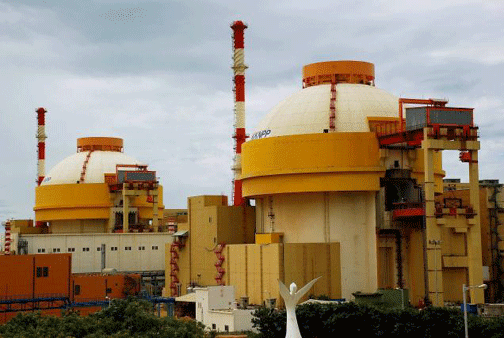
Tamil Nadu flags concern over spent nuclear fuel storage at Kudankulam site https://indianexpress.com/article/cities/chennai/tamil-nadu-flags-concern-over-spent-nuclear-fuel-storage-at-kudankulam-site-7780809/
Chief Minister M K Stalin flagged the issue with Prime Minister Narendra Modi in a letter about the issue pertaining to the power plant located in Tamil Nadu’s Tirunelveli district.
The Tamil Nadu government on Friday opposed the Nuclear Power Corporation of India Limited’s proposal to store spent nuclear fuel (SNF) at the Kudankulam Nuclear Power Plant (KNPP) site and suggested it be sent back to Russia, according to an earlier agreement or store it in an uninhabited area.
Chief Minister M K Stalin flagged the issue with Prime Minister Narendra Modi in a letter about the issue pertaining to the power plant located in Tamil Nadu’s Tirunelveli district.
Six nuclear power reactors of 1000 MW each are envisaged in this project. Out of the six, units 1 & 2 have already been commissioned, while 3 & 4 are under construction and units 5 & 6 are yet to be established, Stalin said.
The Nuclear Power Corporation of India Ltd. proposes to construct Away from Reactor (AFR) facilities in the nuclear power plant site itself for the storage of the SNF generated from all six reactors,” the Chief Minister said.
In this regard, I wish to inform that when the Ministry of Environment, Forests and Climate Change had earlier accorded permission to Units 1 & 2, the agreement was to collect and store the spent fuel temporarily within the unit’s premises (At Reactor) and then send it back to the country of origin, Russia,” he said.
However, it was subsequently decided to store the SNF permanently in the AFR facility to be located within the unit premises. “This decision was taken without consulting the state government,” he said.
Stalin told the Prime Minister that there was “deep concern and apprehensions” among the people of Tamil Nadu, including various political parties, regarding the hazards and potential danger of the AFR storage facility of the SNF within the plant premises.
Several such facilities across the world have faced accidents leading to “disastrous impacts” on the environment and the people residing in and around such plants, he said.
The local people are apprehensive of the fallouts and have been protesting against the AFR facilities within the complex.
“Therefore, I request that in the interest of public safety, health and welfare of the people of Tamil Nadu, action may be taken to transport back the SNF to Russia. This must not only be for units 1 & 2, but also for the subsequent four units. In case this is not a feasible option, the spent fuel may be permanently stored in a Deep Geological Repository (DGR) in an uninhabited and ecologically non-sensitive area,” the Chief Minister told Modi.
With nuclear weapons, the Nazi idea of total war is alive and flourishing
With nuclear weapons, the Nazi idea of total war is alive and flourishing https://www.thenational.scot/community/19938923.nuclear-weapons-nazi-idea-total-war-alive-flourishing/
Brian M Quail, Feb 20,2022 -VLADIMIR Putin is overseeing exercises involving the launching of ballistic missiles, according to the RIA news agency. This news comes with a numbing inevitability. From the very beginning of the nuclear arms race this was predictable.
At the end of 1945, in Operation Paperclip, more than 1,600 rocket scientists, engineers, and technicians were sneaked away from Germany to the US. These unrepentant Nazis (notably Werner Von Braun) all received US citizenship and gave America dominance in the nuclear arms race. Four years later, the Soviet Union responded by developing their own Bomb in 1949, and our race to nuclear extinction began.
This was a terrible fulfillment of the prophetic words of Hitler’s minister of propaganda, Joseph Goebbels, who said: “Even if we lose, we will win, because our ideas will have penetrated the hearts of our enemies.” The Nazi idea of total or genocidal war is alive and flourishing in our nuclear war plans. Faslane is our superBelsen.
We rabbit on about deterrence. But there is a fatal flaw in the theory of deterrence. The enemy must feel genuinely threatened by us. So I must develop characteristics in my weaponry that make this fear real. Greater kill power, stealth delivery systems, undetectability etc are thus inevitable. But if I develop characteristics of usability, the weapons become more, er, usable, and just another tool in the box.
The only escape from this nightmare is to not play the mad game. “No” is the hero’s word. I referenced World War Two when sourcing our woes. In truth, our problem is older, much older. We read in Deuteronomy: “I call heaven and earth to witness this day, that I have set before you life and death, blessing and cursing. Choose therefore life, that you and your children may live.”
Our progress in the technology of industrialised killing is mind-blowing. When I was young, a bomb could be dropped from a plane. Now you can rain guided missiles from outer space. We have hypersonic weapons, drones that kill without human involvement, all sorts of new ways of killing people. So every day we are choosing death.
At this, the eleventh hour, can we not repent and choose life? We must stop blaming the other because “I have seen the enemy, and he is us.” We can renounce our gods of metal and abandon our nuclear idolatry. We could join the non-nuclear majority, sign the Treaty on the Prohibition of Nuclear Weapons and have a future – if only we have the courage to change.
1 This Month
Tell Congress: Prevent Nuclear Catastrophe in Iran

Tell Congress: Prevent Nuclear Catastrophe in Iran

Read the Public Inquiry Report, the Commissioners’ report, Surrendering Australia: The AUKUS Deception is available to download for free at aukuspublicinquiry.com. Or just watch the replay of the National Press Club Luncheon.


Shut down the radiation-damaged Heysham nuclear reactors now
To see nuclear-related stories in greater depth and intensity – go to https://nuclearinformation.wordpress.com

Say No to NASA’s Reckless Nuclear Reactor on the Moon
Say No to NASA’s Reckless Nuclear Reactor on the Moon
-
Archives
- November 2026 (224)
- October 2026 (302)
- September 2026 (339)
- August 2026 (330)
- July 2026 (355)
- June 2026 (287)
- May 2026 (306)
- April 2026 (356)
- March 2026 (251)
- February 2026 (267)
- January 2026 (308)
- December 2025 (358)
-
Categories
- 1
- 1 NUCLEAR ISSUES
- business and costs
- climate change
- culture and arts
- ENERGY
- environment
- health
- history
- indigenous issues
- Legal
- marketing of nuclear
- media
- opposition to nuclear
- PERSONAL STORIES
- politics
- politics international
- Religion and ethics
- safety
- secrets,lies and civil liberties
- spinbuster
- technology
- Uranium
- wastes
- weapons and war
- Women
- 2 WORLD
- ACTION
- AFRICA
- Atrocities
- AUSTRALIA
- Christina's notes
- Christina's themes
- culture and arts
- Events
- Fuk 2022
- Fuk 2023
- Fukushima 2017
- Fukushima 2018
- fukushima 2019
- Fukushima 2020
- Fukushima 2021
- general
- global warming
- Humour (God we need it)
- Nuclear
- RARE EARTHS
- Reference
- resources – print
- Resources -audiovicual
- Weekly Newsletter
- World
- World Nuclear
- YouTube
-
RSS
Entries RSS
Comments RSS

