South Africa removes critic of nuclear power from regulatory board.
South Africa Removes Anti-Nuclear Activist From Regulatory Board
Antony Sguazzin, Bloomberg, 24 Feb 22— South African Energy Minister Gwede Mantashe fired community representative Peter Becker from the board of the National Nuclear Regulator, citing a conflict of interest.
Mantashe said Becker was opposed to the development of new nuclear-power facilities or the extension of the life of South Africa’s existing one, Koeberg, and therefore couldn’t be objective, according to a letter sent to the activist on Friday that was seen by Bloomberg.
The dispute that led to Becker’s removal highlights the difficulties Eskom Holdings SOC Ltd. is facing in its fight to keep its Koeberg nuclear plant in Cape Town operating until 2044. Mantashe, a former coal-mining labor unionist and chairman of the ruling African National Congress, has emerged as a vocal supporter of the nuclear industry, while drawing criticism from environmental activists. Becker, by contrast, is also a spokesman for the Koeberg Alert Alliance, which wants the plant closed……….
By law, the minister has to appoint a community representative to the board. He complained, in the letter, that Becker had brought the board into disrepute by objecting publicly to its decisions. Becker was suspended on July 18 and then sued Mantashe, forcing the minister to make a decision whether to retain him or fire him from the board.
Becker said he will consult with his legal team and the communities he was representing before responding.
While Eskom has yet to receive final permission to extend the life of Koeberg, the only nuclear-power facility in Africa, it has started a program to spend about 20 billion rand ($1.3 billion) on new steam generators as part of the work needed to keep it operating. Becker and Koeberg Alert have opposed the extension of Koeberg’s operating license because of the nuclear plant’s proximity to Cape Town, a city of 4 million people, citing what they say is a potential for earthquakes. https://www.bnnbloomberg.ca/south-africa-removes-anti-nuclear-activist-from-regulatory-board-1.1728817
PM Kishida rules out Japan’s possession of nuclear weapons
PM Kishida rules out Japan’s possession of nuclear weapons
February 25, 2022 (Mainichi Japan) TOKYO — Prime Minister Fumio Kishida has ruled out the possibility of Japan possessing nuclear weapons as part of the “capacity to strike enemy bases” that his government is seeking to acquire.
At a House of Councillors Budget Committee session on Feb. 24, Kishida said, “The three non-nuclear principles (of not possessing, not producing and not permitting the introduction of nuclear weapons) are our national policy. There are no options of using or possessing nuclear arms.”…………………….. https://mainichi.jp/english/articles/20220225/p2a/00m/0na/018000c
Abandoned mines and old Yunkom nuclear test site in Donbas region of Ukraine pose ”singular threat” of radiation contamination
Abandoned mines in eastern Ukraine are filling up with water at
“alarming” rates, according to new research that has triggered fears of
a radioactive disaster. Satellite images show high levels of swelling in
the ground in the former coal mining region of Donbas, much of which is now
controlled by pro-Russian separatists.
The images have raised concerns
about water contaminated with heavy metals or radioactive material spilling
into rivers and the wider environment. Of particular concern is the high
swelling at the Yunkom mine, which was the site of a small Soviet
underground nuclear test in 1979.
The Organisation for Security and
Co-operation in Europe, the intergovernmental organisation, warned in 2017
that the mine posed a “singular threat”. “Any present destabilisation
of the mine via flooding could release up to 500 cubic metres of
radiation-contaminated mine waters into the ground-water table,” it said.
Telegraph 24th Feb 2022
Warning on faults in EPR nuclear reactors – Commission de Recherche et d’Information Indépendantes sur la Radioactivité
| French nuclear giants are heavily involved in the EPR in Taishan, China: Framatome in terms of design, construction and fuel supply, EDF in terms of operations with its participation (30%) in TNPJVC. Furthermore, the feedback from first years of operation of Taishan 1 and 2 is obviously essential for the safety of other EPRs. EDF must therefore monitor incidents affecting these facilities very closely. In June 2021, the national and international press widely reported on the affair of the problems of ruptures of nuclear fuel cladding for the Taishan 1 EPR reactor in China. This 1,750 MWe reactor of power is the first EPR to be put into commercial service in the world (in December 2018). Degradation of nuclear fuel led its operator, TNPJVC, to a shutdown “anticipated”, on July 30, 2021, i.e. around 6 months ahead of the initial duration of the cycle. Anticipation was quite relative because the sheath rupture problems had in fact been identified as early as October 2020 and the reactor should have been shut down well before July, in order to limit the radiological risks for workers and residents. The CRIIRAD had alerted on this subject in a press release1 published on June 14 2021. Several causes can be at the origin of these ruptures of sheaths. Without being exhaustive, some may implicate design flaws in the reactor, others manufacturing flaws, other more faults involving the operation and/or maintenance of the Taishan 1 reactor. Some could turn out to be generic and also concern the other EPR reactors under construction. CRIIRAD 22nd Feb 2022 http://criirad.org/Surete-nucleaire/220222_Courrier_CRIIRAD_EDF_Flamanville_EPR.pdf |
Drone and missile attacks on UAE’s Barakah nuclear plant
The United Arab Emirates’ only nuclear power plant is “well protected”
against security threats, the regulator said on Wednesday, following a
series of unprecedented drone and missile attacks on the Gulf state.
Yemen’s Iran-aligned Houthis said in 2017 they fired a cruise missile
towards the Barakah plant, a report which the UAE denied. The group has
repeatedly threatened to target critical infrastructure in the UAE.
Reuters 23rd Feb 2022
France’s nuclear company EDF fined a measly 300 million euros for its decades of deception and misuse of its position

The French Competition Authority imposes a fine of 300 million euros on
EDF. The organization accuses the French company of abuse of a dominant
position and illegal collection of its customers’ data.
No less than seventeen years of anti-competitive practice. EDF was fined 300 million
euros by the Competition Authority for having misused its position as a
historical player in electricity since the opening of the market to
competition for companies in 2004, until 2021. The company does not
dispute the facts and has benefited from a negotiated procedure allowing
it to reduce the pain.
According to the law, a fine for this type of
practice could have cost it up to 10% of its annual worldwide turnover,
that is to say 7.6 billion, specifies in its decision the Authority of the
competition.
Le Figaro 22nd Feb 2022
Limitless power arriving too late: Why fusion won’t help us decarbonise — RenewEconomy

A limitless, clean source of baseload power might be within reach – without the nuclear waste of traditional fission nuclear plants. That’s good, right? Not quite. The post Limitless power arriving too late: Why fusion won’t help us decarbonise appeared first on RenewEconomy.
Limitless power arriving too late: Why fusion won’t help us decarbonise — RenewEconomy
| I first heard the standard joke about fusion as an undergraduate physics student in the 1960s: Fusion power is 50 years away – and probably always will be. More than 50 years later, we still don’t have fusion. That’s because of the huge experimental challenges in recreating a miniature sun on earth. Still, real progress is being made. This month, UK fusion researchers managed to double previous records of producing energy. Last year, American scientists came close to ignition, the tantalising moment where fusion puts more energy out than it needs to start the reaction. And small, fast-moving fusion startups are making progress using different techniques. A limitless, clean source of baseload power might be within reach – without the nuclear waste of traditional fission nuclear plants. That’s good, right? Not quite. While we’re closer than ever to making commercial fusion viable, this new power source simply won’t get here in time to do the heavy lifting of decarbonisation. We are racing the clock to limit damage from climate change. Luckily, we already have the technologies we need to decarbonise. On the megaproject front, the next step is the International Thermonuclear Experimental Reactor (ITER) being built in southern France. Far too big for any one country, this is a joint effort by countries including USA, Russia, China, the UK and EU member countries. The project is enormous, with a vessel ten times the size of the UK reactor and around 5,000 technical experts, scientists and engineers working on it. Famously, the project’s largest magnet is strong enough to lift an aircraft carrier. Even this enormous project is only expected to produce slightly more power than it uses – around 500 megawatts. The first experiments are expected by 2025. To me, this illustrates how far away commercial fusion really is. Renew Economy 25th Feb 2022https://reneweconomy.com.au/limitless-power-arriving-too-late-why-fusion-wont-help-us-decarbonise/ |
February 25 Energy News — geoharvey

Opinion: ¶ “Red-State Voters Want Clean Energy Too. Just Ask Nebraska” • Nebraska turned more than a few heads recently when its public officials adopted net-zero carbon goals for electricity. Renewable energy enjoys support among voters regardless of their politics. While Democrats may be motivated by the climate, Republicans see economic benefits. [CleanTechnica] Nebraska (Taylor […]
February 25 Energy News — geoharvey
Nuclear politics – fear and militarism – theme for March 2022
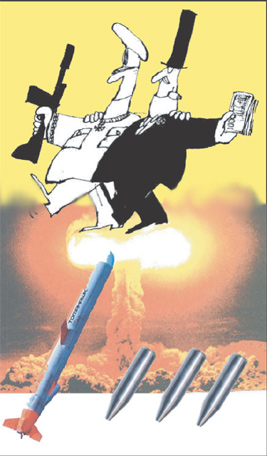
War in UKraine
Joy to the weapons -makers of Western and Russian corporations.
Joy to the macho men of the Pentagon and the Russian Armed Forces
Joy to the political leaders who want their communities to forget about health, climate, and what is being done with their tax money
Joy to the nuclear industry, commercial-and military (they’re the same thing!)
The world waits to see what will be the outcome of hostilities in Uk.raine. No, Putin should not have attacked Ukraine. But also – No – the West, led of course by the world’s policeman, USA, did nothing to meet the very real concerns of Russia – understandable fears of being almost encricled by hostile NATO military installations – Ukraine being the most imprtant state on their doorstep.
Also the 8 years of war in Donestk and Luhansk – the genuine concerns of ethnically Russian people, and the presence of a Nazi -membered battalian attacking them – these factors were ignored by Biden and his Western disciples.
No answer to Putin’s list of requests, no concessions made, no compromises.
The result – terrible for Ukraine, pretty terrible for Russia and the rest of the world.
Why nuclear risk from war in Ukraine isn’t missiles, but accidental hits on reactors

“In case of the total destruction of the power plant, I think the consequences would be so much worse than at Fukushima and Chernobyl together,” Mr Gumenyuk said. “If speaking about consequences of this war situation, Europe will be totally contaminated.”
Why nuclear risk from war in Ukraine isn’t missiles but accidental hits on reactors, Kyiv safety expert warns, By Isabella Bengoechea i , 23 Feb 22
Kyiv nuclear safety expert Dmytro Gumenyuk told i while a direct attack is unlikely, military invasion raises the risk of possible accidental hits from missiles or artillery
Ukraine’s nuclear power plants would pose a risk of radioactive pollution in Europe if caught in the crossfire of a Russian invasion, a Kyiv safety expert has told i.
The chance of a direct military attack on such facilities would be highly unlikely but a lack of high-precision weapons in the occupied Donbas suggests there could be an increased chance of sensitive facilities being hit accidentally.
If this happens, radiation could contaminate air, soil and waterways, affecting not only Ukraine but also Russia and much of Europe, according to Dmytro Gumenyuk, head of safety analysis at the State Scientific and Technical Centre for Nuclear and Radiation Safety, a body within the state nuclear inspectorate.
Ukraine has 15 nuclear reactors in four power plants, which provide 52 per cent of the country’s electricity: Khelnitsky and Rivne in the northwest, and Zaporizhzhia and the South Ukrainian plants in the west and south respectively.
Some facilities including a nuclear waste storage site in the exclusion zone at Chernobyl – where in 1986 catastrophic failure at the power plant resulted in the worst nuclear disaster in history – lie close to the country’s borders, where Russia has amassed nearly 200,000 troops.
The plant at Zaporizhzhia is only about 150 miles from the front line in Donetsk, while the South Ukrainian plant is about another 160 miles further west.
While a direct attack is unlikely, military invasion raises the risk of possible accidental hits from missiles or artillery. On Tuesday the thermal power station at Shchastya, near the conflict line in Luhansk, caught fire amid shelling, leaving 40,000 residents without electricity.
Mr Gumenyuk said: “Our NPP [nuclear power plant] wasn’t designed for military protection. Of course it wasn’t designed against tanks, bombs, missiles and so on.
“In case of a military attack it is not a long time for getting from Dontesk to Zaporizhzhia NPP, and of course taking into account the small distances from the Russian Federation, we could suppose that our power plants are not fully protected from military attack from our neighbour.”
A direct attack by Russia is unlikely. Lada Roslycky, founder of the Ukraine-based Black Trident defence and security group, said: “From a military perspective and a defence perspective it would be an idiotic action.”
However, she pointed out the separatists’ lack of high-precision weapons in conflict in the occupied Donbas does raise the chance of sensitive facilities being hit accidentally.
She also suggested that this could be part of a Russian strategy of fomenting uncertainty through psychological warfare, by holding out the threat of attacking such facilities. “I really don’t think they would do it [attack nuclear facilities] but it’s possible … it’s such a wonderful, brilliant instrument,” she said.
The Conflict and Environment Observatory (CEOBS) said it is “right to be concerned about Ukraine’s 15 ageing Soviet-design nuclear reactors”.
“The three reactors at the South Ukraine Nuclear Power Plant and the six reactors at the Zaporizhzhia Nuclear Power Plant are the two sites most likely to be affected by a Russian invasion,” the observatory added.
The VVER 1000 pressurised water reactors at Zaporizhzhia each contain 163 assemblies – or structured groups of fuel rods. Each assembly contains about 500kg of uranium dioxide, making the total fuel inside one reactor about 80 tonnes.
After the 2011 nuclear disaster at Fukushima in Japan, Ukrainian nuclear authorities implemented extra safety measures to make their reactors safer, and protect against accidents such as fires and flooding.
However, Mr Gumenyuk warned that were the plant to be attacked, in the worst-case scenario, the consequences would be devastating.
“In case of the total destruction of the power plant, I think the consequences would be so much worse than at Fukushima and Chernobyl together,” Mr Gumenyuk said. “If speaking about consequences of this war situation, Europe will be totally contaminated.”
Soon after the disaster, radioactive rain began falling across northern Britain. In Cumbria detectors showed background radiation 200 times higher than normal. In Scotland two months later it was 4,000 times. Sheep in North Wales, Cumbria, and Scotland were found to have increased levels of caesium-137, prompting temporary restrictions on meat sales for 7,000 farms.
A nuclear disaster at Zaporizhzhia would contaminate the water, entering the Dneiper River and travelling down into the Sea of Azov, the Black Sea and then out into the Mediterranean.
In the event of a meltdown, radiation could contaminate the air where, depending on weather conditions, it could spread across Europe, as happened after the Chernobyl accident, when radiation spread as far as Sweden and the UK.
“But this is if all the units are totally destroyed,” said Mr Gumenyuk. “We do our best to prevent this situation. I hope in most cases our power units would survive even in single hits. Our nuclear reactors have containment to protect against the different impacts, including an air crash for example.”
Chernobyl’s nuclear waste
Ukraine’s nuclear waste storage facilities, including in the exclusion zone at Chernobyl, 70 miles south of the Belarussian border, also pose a radiation risk.

Last year Energoatom, the state nuclear operator, announced that Ukraine’s new Central Spent Fuel Storage Facility, in the exclusion zone at Chernobyl, was almost ready to begin operating. Spent fuel will be transferred to the new facility from where it is currently stored at power plants.
At present Russia has about 30,000 troops stationed in Belarus, apparently for joint military exercises, which are armed with short-range missiles, rocket launchers and Su-35 fighters. Leaders including Boris Johnson have suggested that Russia is planning at attack from Belarus, “coming down from the north, coming down from Belarus, and encircling Kyiv itself”. The route could take Russian troops through the exclusion zone.
According to CEOBS: “Decommissioning of the [Chernobyl] site and the packaging of waste is ongoing and will continue for decades. The site is under constant management and monitoring and the disruption caused by a conflict would impact the ongoing work to reduce the risks it poses. It seems likely that foreign companies would withdraw staff in the event of an invasion, impacting activities at the site.”
There are 22,000 assemblies of spent nuclear fuel at the storage site, kept in special casks to protect them.
However, Mr Gumenyuk pointed out that these were not protected against military firepower: “In case of the destruction of these casks, radioactive materials could be released and transferred to Ukraine and other European territories. This is a very dangerous situation.”
While some experts say any disruption to the site would be localised, Mr Gumenyuk said: “I disagree, the number of the fuel assemblies is very big and if all the casks were destroyed it would not only be the problem of Ukraine, maybe not all Europe, but many countries.”
Cyberattacks are another possibility. Last week Ukrainian government websites and banks were shut down by a wave of distributed denial of service attacks, thought to have been carried out by Russian hackers.
In 2015 the country’s energy sector was attacked by the BlackEnergy computer virus that caused a blackout of 800,000 households across 103 towns.
The next year, on the 30th anniversary of the Chernobyl disaster, Ukraine’s then-President Poroshenko said: “If the BlackEnergy virus was used for attacks on our power distributors, there is no guarantee that such technology will not threaten our nuclear plants”.
“Chernobyl is already volatile,” said Ms Roslycky. “Cyberattacks against Chernobyl call for attention… whether attacking kinetically or through cyber, when that happens this is something that would threaten global security.”
Accident, terrorism or sabotage
Direct attacks on the plants at Zaporizhzhia and South Ukraine are also unlikely, not least because Russia is not far from the power plants, and any radioactive contamination would affect Russia as well as Ukraine.
However, the possibility of an accident, terrorism or sabotage is somewhat higher. According to the Nuclear Security Index for 2020, Ukraine scores highly on global norms for nuclear materials security and implementing international commitments, with 94 and 78 out of 100 respectively.
However, under ‘risk environment’, which considers factors including political stability, effective governance, pervasiveness of corruption, and illicit activities by non-state actors, Ukraine scores 14.
A 2016 report by the EU Non-Proliferation Consortium drew attention to the illicit trafficking of radioactive materials in the DPR, LPR and unrecognised Transnistria in Moldova. “The armed conflict in eastern Ukraine and its related threats are dramatically influencing the nuclear security conditions in the country,” it said.
“Political and social instability amplifies the motivation of criminal or terrorist groups or organisations for illegal business related to the distribution of radioactive materials that are out of regulatory control.”
The danger of these armed insurgencies was highlighted most dramatically in 2014 when Malaysia Airlines Flight 17 was shot down over Donetsk in eastern Ukraine by pro-Russian separatists, killing all 298 on board. The Dutch-led investigation into the incident concluded that the plane was shot down with a Buk missile supplied by the 53rd Anti-Aircraft Missile Brigade of the Russian Federation. Those responsible may have believed they were shooting down a Ukrainian military aircraft…………………………………………. https://inews.co.uk/news/ukraine-war-nuclear-risk-russia-missiles-accidental-hits-reactors-1478269
Britain’s nuclear submarine base at risk from climate change
The United Kingdom’s nuclear military bases are being threatened by climate change, according to a recent report from the Nuclear Consulting Group. Paul Dorfman, the report’s author, said that the U.K.’s coastal nuclear infrastructure is vulnerable to flooding, due to rising sea levels and more frequent and severe storms.
“All of the models or predictions, all of the analysis, all of the data has really begun to run hot,” Dorfman told CNBC. “It’s good that people are taking notice, but it’s bad that this new data is showing us that we really do need to get our acttogether.”
The report also found that coastal flooding frequency is estimated to increase by between 10 and more than 100 in several European locations. In the United States, “the Pentagon has recently reported that
79 nuclear military bases will be affected by rising sea-levels and frequent flooding,” Dorfman added.
CNBC 21st Feb 2022
Putin says that Ukraine is a nuclear threat
 | |||
Vladimir Putin labels Ukraine a nuclear threat, says he’s prepared to use force, THE AUSTRALIAN, 23 Feb 22, JACQUELIN MAGNAY, EUROPE CORRESPONDENT@jacquelinmagnay

Russian president Vladimir Putin has announced he would use military force “depending on the situation on the ground” to defend the rights of people in the separatist regions Donetsk and Luhansk.
After receiving approval from the Russian parliament to deploy troops abroad into Ukraine, Mr Putin labelled Ukraine a nuclear threat, telling the Russian people it wanted to lose its neutrality, join NATO and that it received military shipments from the West. Mr Putin also claimed that citizens in the Donbas region were being “abused”.
Crucially, Mr Putin recognised the independence of the entire Donetsk and Luhansk oblasts and its broader territorial ambitions, not just the area controlled by Russian backed separatists.
About two-thirds of this area, known broadly as the Donbas, is currently in Ukrainian control.
Mr Putin said Ukraine was being “armed to the teeth” and that its nuclear threat was a strategic issue. He said Ukraine president Volodymyr Zelensky’s remark that he regretted Ukraine giving up nuclear weapons in 1994 was targeted directly at Russia.
“We have taken a note of them,” Mr Putin said………………….
Mr Putin said that Russia recognised the territory was now independent and warned the border region had been a threat to the Russian Federation………………………. https://www.theaustralian.com.au/world/vladimir-putin-labels-ukraine-a-nuclear-threat-says-hes-prepared-to-use-force/news-story/9ab06086551856b2847c06d91467cb26
Activist groups to rally against plutonium disposal project at Waste Isolation Pilot Plant

Adrian HeddenCarlsbad Current-Argus 23 Feb 22, A plan to dilute weapons-grade plutonium and then dispose of it at the Waste Isolation Pilot Plant, an underground repository for low-level nuclear waste near Carlsbad, drew concerns from around New Mexico amid fears transporting this stream of waste could risk public safety.
The U.S. Department of Energy announced in 2020 a plan that would ship the plutonium from the Pantex Plant near Amarillo, Texas to Los Alamos National Laboratory where it would be chemically diluted.
The waste would then head to the DOE’s Savannah River Site in South Carolina for packaging before the final shipment to WIPP in southeast New Mexico.
This would mean the 34 metric tons of the waste on the way to its final resting place at the WIPP site could pass through New Mexico three times.
Cynthia Weehler, co-chair of Santa Fe-based activist group 285 All said this creates an unacceptable risk for local communities in New Mexico and 11 states she said the waste would travel through.
285 All advocates for issues throughout New Mexico, focusing on U.S. Highway 285 which stretches from the mountains in northern New Mexico down into the high desert and oilfields of the southeast region, crossing into West Texas.
That’s why Weehler and a consortium of groups critical of WIPP and nuclear activities in New Mexico planned to deliver a petition to New Mexico Gov. Michelle Lujan Grisham next week, asking the state’s highest government leader to oppose the plutonium project.
“Unless New Mexico says NO to WIPP expansion, other disposal locations will not be developed, and WIPP will always be the only dump site, which is not fair. New Mexico never agreed to bear the burden of being the only site,” read a portion of the petition.
Weehler said the petition has about 1,140 signatures as of Monday and is being distributed in the Santa Fe area and to communities along the transportation routes.
The petition will be delivered to the State Capitol at 11:30 a.m., March 1 during a press conference on the east side of the Roundhouse.
“We don’t expect an accident to happen every week or every community, but when you increase the time and the shipments, we just see this as an inevitability over the time frame,” Weehler said. “It’s going to be a huge increase in shipments and it’s going to last almost this whole century.”
Weehler said Lujan Grisham should cite the legal agreement between the State and DOE that defines WIPP’s mission: to dispose of low-level transuranic (TRU) waste at the site near Carlsbad, streams she said were pre-determined by the agreement and should not be expanded.
If the DOE’s plutonium plan moves forward, Weehler said it would amount to an “expansion” of WIPP both in its mission and the volume of waste it would accept.
“The waste would be plutonium-contaminated material, contaminated during the production of nuclear weapons,” Weehler said. “This is something different (than TRU waste).”
WIPP officials said this was not the case……………………………..
The plutonium would be “down blended” meaning its level of radioactivity would be lowered so that the waste would qualify as TRU waste and could be disposed of at WIPP without adjusting federal policy.
“In order for it qualify, they’re having to dilute it. They’re having to adulterate it,” Weehler said. “This will never be acceptable. For them to say that is just unbelievable to me.” ……….. https://www.currentargus.com/story/news/local/2022/02/23/wipp-activist-groups-rally-against-plutonium-disposal-project/6878583001/
US and Russian doctors warn of possible global catastrophe from escalating conflict in Ukraine — IPPNW peace and health blog
IPPNW Briefing Paper: War in Eastern Europe American and Russian physicians representing IPPNW are warning that a war in Ukraine could lead to a humanitarian catastrophe as a result of conventional fighting and the attendant risks to that country’s nuclear power facilities and of escalation to nuclear war. A war could also lead to another […]
US and Russian doctors warn of possible global catastrophe from escalating conflict in Ukraine — IPPNW peace and health blog
1 This Month
Tell Congress: Prevent Nuclear Catastrophe in Iran

Tell Congress: Prevent Nuclear Catastrophe in Iran

Read the Public Inquiry Report, the Commissioners’ report, Surrendering Australia: The AUKUS Deception is available to download for free at aukuspublicinquiry.com. Or just watch the replay of the National Press Club Luncheon.


Shut down the radiation-damaged Heysham nuclear reactors now
To see nuclear-related stories in greater depth and intensity – go to https://nuclearinformation.wordpress.com

Say No to NASA’s Reckless Nuclear Reactor on the Moon
Say No to NASA’s Reckless Nuclear Reactor on the Moon
-
Archives
- November 2026 (224)
- October 2026 (302)
- September 2026 (339)
- August 2026 (330)
- July 2026 (355)
- June 2026 (287)
- May 2026 (306)
- April 2026 (356)
- March 2026 (251)
- February 2026 (267)
- January 2026 (308)
- December 2025 (358)
-
Categories
- 1
- 1 NUCLEAR ISSUES
- business and costs
- climate change
- culture and arts
- ENERGY
- environment
- health
- history
- indigenous issues
- Legal
- marketing of nuclear
- media
- opposition to nuclear
- PERSONAL STORIES
- politics
- politics international
- Religion and ethics
- safety
- secrets,lies and civil liberties
- spinbuster
- technology
- Uranium
- wastes
- weapons and war
- Women
- 2 WORLD
- ACTION
- AFRICA
- Atrocities
- AUSTRALIA
- Christina's notes
- Christina's themes
- culture and arts
- Events
- Fuk 2022
- Fuk 2023
- Fukushima 2017
- Fukushima 2018
- fukushima 2019
- Fukushima 2020
- Fukushima 2021
- general
- global warming
- Humour (God we need it)
- Nuclear
- RARE EARTHS
- Reference
- resources – print
- Resources -audiovicual
- Weekly Newsletter
- World
- World Nuclear
- YouTube
-
RSS
Entries RSS
Comments RSS

