Third impending Trump, Netanyahu attack on Iran may bring worst defeat yet to world’s two worst war criminals

1 November 2026AIMN Editorial, By Walt Zlotow, West Suburban Peace Coalition Glen Ellyn IL https://theaimn.net/third-impending-trump-netanyahu-attack-on-iran-may-bring-worst-defeat-yet-to-worlds-two-worst-war-criminals/
All signs point to a third try by US President Trump and Israeli Prime Minister Netanyahu to destroy the Iranian regime shortly after the November 3 US midterms, if not before.
US War Secretary Pete Hegseth recently met in Israel with Netanyahu almost certainly to discuss upcoming attack plans.
In a rare meeting, Brad Cooper, head of US Central Command, visited the White House on Thursday to brief President Trump on military options for attacking Iran. Joining Cooper were Hegseth and Dan Caine, Chairman of the Joint Chiefs of Staff. All three are virulent war hawks likely encouraging Trump who’s long boasted about destroying the Iranian civilization along with their Islamic leadership.
Senator Chris Murphy, after being briefed on the US plan to launch Iran war 3.0 made this astounding statement never before uttered by a US congressperson:
“I’ll just say this, their plan is insane, It will lead to devastating escalation and the likely destruction of our commitment to the rule of law.”
Forget ‘destruction to the rule of law’ for the US and Israel. Both destroyed that decades ago attacking countries, changing out regimes like changing underwear, interfering in elections, and worst of all, cooperating on genocide destroying life for 2,2000,000 Palestinians in Gaza.
But it will surely bring ‘devastating escalation’ to US, Israeli efforts to continue ruling the world. Iran has had over four months to prepare for the near certainty of round three of the criminal US Israeli tag team to oust the only country standing between them and absolute rule in the Middle East and beyond. Iran will likely polish off what remains of US Gulf State bases, destroy most if not all of remaining Gulf State oil infrastructure and reap devastating damage to the now vulnerable Israeli nation. If that occurs, we cannot rule out Israel, even the US resorting to nuclear weapons to avoid catastrophic defeat.
What is truly remarkable is only one of 535 congresspersons even has their hair on fire over what Trump and Netanyahu may ignite within the next few days.
There’s no national security without international security

in our current predicament, let’s give some thought to strengthening the world’s international institutions
for example, abolishing the Security Council veto
November 2, 2026, by Lawrence Wittner, https://peaceandhealthblog.com/2026/11/02/theres-no-national-security-without-international-security/
For millennia, the world’s people have been kidding themselves about national security.
Worried about the survival of their nation in a world of self-interested, sometimes aggressive nations, people have armed and prepared themselves for war. Only military strength, they have assumed, would fend off or defeat a military attack on their nation.
And a case can be made for this assumption, for not all nations―and not all people―are willing to deal peacefully or justly with their neighbors.
Even so, over the course of human history, this reliance upon national military might to defend national security has produced disaster after disaster. Although almost every country has armed itself for national defense, even those with immense military might have ended up fighting recurring wars to defend what they regard as their national security. Just look at the history of the “great powers” of recent centuries―the United States, Russia, China, Britain, France, Germany, and Japan―and consider how frequently they have waged war, sometimes emerging as the victors and other times as the vanquished.
Furthermore, preparing for and fighting wars, even victorious wars, have come at an immense human cost. Estimates for the death toll in the almost constant flow of wars over the span of human history range as high as 1 billion people. And to this we should add the vast numbers of people crippled, blinded, traumatized, and left homeless. Russia’s current military invasion of Ukraine, aside from slaughtering large numbers of Ukrainians, has already led to the deaths or injuries of 1,581,840 Russian soldiers.
Nuclear war, of course, promises to increase war’s human toll very substantially, with the living, as is sometimes said, envying the dead.
Nevertheless, the nations of the world continue, relentlessly, to arm and prepare themselves for war. Global military expenditures rose by nearly three percent in 2025, the eleventh consecutive year of growth, reaching $2.9 trillion. America’s Donald Trump, a fervent supporter of U.S. military power, has proposed a 42 percent increase in the forthcoming U.S. military budget to $1.5 trillion―about 63 percent of federal discretionary spending.
Of course, far-sighted individuals have criticized militarism and war, as well as suggested better ways for nations to relate to one another. Thanks particularly to the massive slaughter and destruction wrought by the two World Wars, they called for the development of international institutions that could safeguard national security through the development and enforcement of international law. This agitation led to the establishment of the League of Nations (and its legal arm, the Permanent Court of International Justice) and, near the end of World War II, to the establishment of the League’s successor, the United Nations (and its legal arm, the International Court of Justice).
These new institutions were met with considerable enthusiasm by a war-weary public, and even by many national officials, who recognized that, if every country continued blindly pursuing what it viewed as its own interests, global conflict and war were inevitable.
But this potential turning point in human history was bedeviled by two major problems. For thousands of years, nations had defended their “interests” (and especially their national security) through military might. Consequently, many government officials and even many members of the public were not accustomed to thinking and behaving according to what best served the common good. Furthermore, the great powers were particularly reluctant to surrender the advantages, including empire, that military might traditionally afforded them in world affairs.
As a result, the leaders of the major powers, despite their rhetoric about the equality of nations and collective action to cope with international issues, remained committed to ensuring a privileged status for their own countries.
In the case of the League of Nations, this reluctance to accept limits meant that the great power victors in World War I came away from the peace settlement with new territory, including the spoils of empire (disguised as “mandates), taken from the war’s great power losers. Moreover, in subsequent years, the Axis nations plunged into war to restore their empires or enhance them, while they and other major powers withdrew from the League when it condemned their belligerent behavior. The U.S. government never even joined the League.
When it came to the United Nations, the great power victors in World War II established a UN Security Council that provided each of them with a veto over collective action for international security. Thus, they could (and did) veto such action when they felt it adversely affected them or their friends. They also pursued what they regarded as their national security by subverting, invading, and even occupying other nations, while occasionally withholding their dues payments to the world organization.
Against this backdrop, it’s easy to conclude that international security has failed the test.
But, given the existence of key international institutions for only a tiny portion of human history, isn’t it premature to abandon efforts to create an effective international security system? After all, the United Nations is only 81 years old. By contrast, modern human beings have been around for about 300,000 years.
Also, what is the alternative? Surely it is endless war, capped off by the use of nuclear weapons to annihilate the human race.
So, in our current predicament, let’s give some thought to strengthening the world’s international institutions.
Numerous nations have called for reforming the United Nations. Modest measures, such as providing it with adequate funding and enhancing the role of the General Assembly, can be fairly easily implemented. More significant changes―for example, abolishing the Security Council veto―will take a more substantial effort, including the holding of a UN Charter review conference. Article 109 of the UN Charter provides the framework for such a conference, and an Article 109 Coalition has recently launched a campaign to prepare for it.
Over thousands of years, war and militarism have failed to safeguard national security. But international security might finally succeed at the task.
Cryosphere faces permanent damage when world overshoots 1.5C, scientists warn
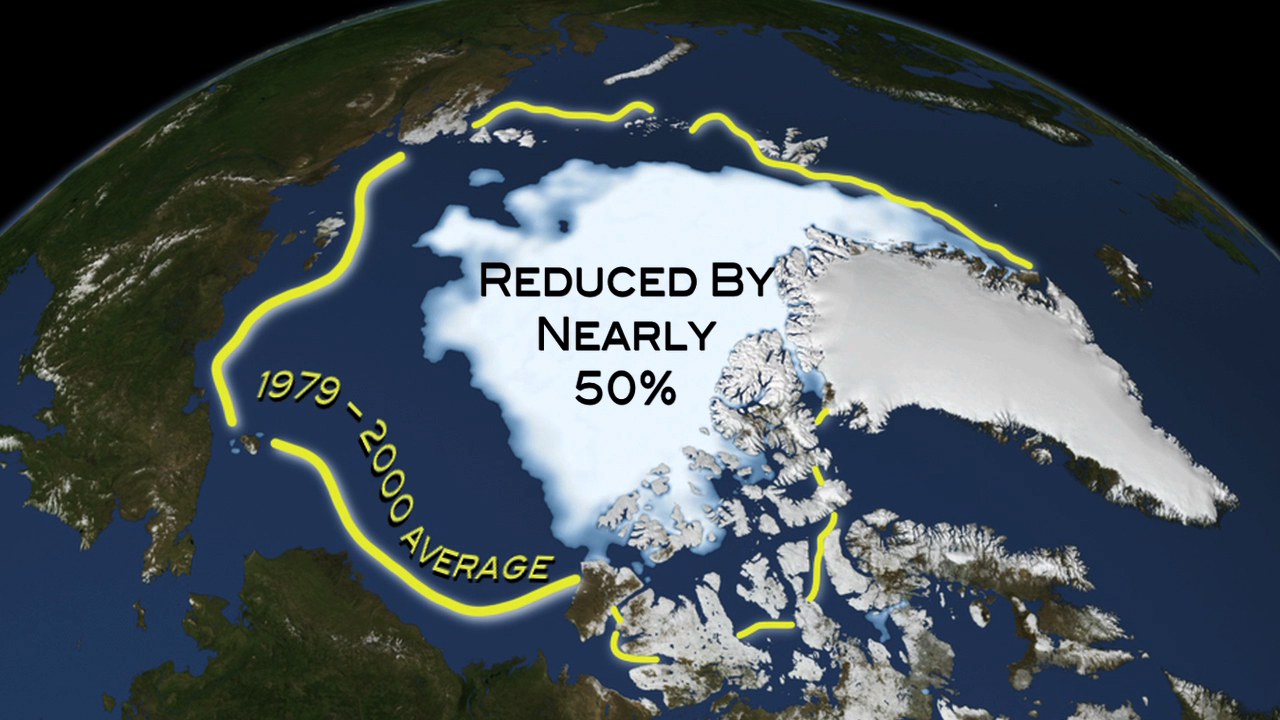
Earth’s icy regions face such dangerous melting that global heating
should be brought back below 1C after an inevitable period of overshooting
global temperature targets, a UN report has found.
Permanent and widespread
losses of snow and ice expose a “persistent myth” that overshooting the
1.5C target of the Paris climate agreement – to 2C or 3C – could be
manageable or even preferable to urgent cuts to emissions, the report
found.
The planet has heated by 1.3C since pre-industrial times and
failures to curb greenhouse gas emissions and protect nature have led
scientists to conclude that some level of overshoot is inevitable as they
fight to keep end-of-century warming to 1.5C.
But extreme effects on the
cryosphere – Earth’s water in a solid state, including all its ice and
snow – mean temperatures must rise above that threshold for as short a
period as possible, the scientists urged. Added to this, enough
planet-heating carbon should be removed from the atmosphere to bring
long-term warming down much further, ideally below 1C by 2150.
Guardian 2nd Nov 2026
Caitlin Johnstone – The War Propaganda Is Even Dumber This Time — And Other Notes
Drop bombs on buildings full of children and the UK will call you an ally. Express support for activists who try to stop those bombs and the UK will call you a terrorist.
Caitlin Johnstone, Nov 02, 2026, https://www.caitlinjohnst.one/p/the-war-propaganda-is-even-dumber?utm_source=post-email-title&publication_id=82124&post_id=223026587&utm_campaign=email-post-title&isFreemail=true&r=1ise1&triedRedirect=true&utm_medium=email
As CENTCOM meets with Trump to plan more Iran strikes, the war propaganda is dumber than it has ever been.
Fox News is running stories about an Iranian “plot” to kill US military personnel in the middle east, as though a country planning ways to defend itself from hostile attackers is some sinister new development.
CBC ran a completely evidence-free report alleging that Iran has been paying gunmen to shoot bullets into empty buildings in Toronto, Canada. One of the dumbest things we are asked to believe about Iran is that it keeps taking time away from defending itself against US-Israeli aggressions in order to orchestrate random acts of arson and vandalism in mid-power western states for no discernible benefit to its strategic interests.
Former Israeli military intelligence officer Mordechai Kedar went on Piers Morgan to call Iran an “artificial state”, saying “its fate is to be dismantled, is to be shattered to pieces, as it should have been from the beginning.” Calling one of the world’s oldest civilizations an “artificial state” from inside a country that’s younger than Mick Jagger and has been propped up by nonstop western military aggression throughout 100 percent of its existence is, uh, certainly a choice.
Under Trump, the war propagandists don’t even need to try anymore. He’s just going to inflict all sorts of horrors upon the middle east and Latin America with blunt-force military aggression, and then when he leaves office they’re going to act like he’s carrying all the sins of the US empire with him on his back.
British police arrested 325 people on terrorism charges for protesting in support of the proscribed activist group Palestine Action on Saturday. Sky News reports that 94 percent of all terrorism arrests this year have been made because of support for Palestine Action.
“There were 3,867 arrests for suspected terrorist activity in the year to June, of which 94% were linked to supporting the group,” Sky News reports, adding, “In the previous 12-month period, before the ban came into force, 234 terror arrests were made.”
Drop bombs on buildings full of children and the UK will call you an ally. Express support for activists who try to stop those bombs and the UK will call you a terrorist………………………………………………………………………………………………………………………………………………………………………………………………………….. https://www.caitlinjohnst.one/p/the-war-propaganda-is-even-dumber?utm_source=post-email-title&publication_id=82124&post_id=223026587&utm_campaign=email-post-title&isFreemail=true&r=1ise1&triedRedirect=true&utm_medium=email
Iran’s nuclear bomb debate gains ground on official platforms

Calls to revise Iran’s nuclear doctrine and build an atomic bomb are
gaining prominence on official platforms after gathering momentum in
hardline circles, although the country’s top security official says no
policy change has been approved.
Mohsen Rezaei, secretary of Iran’s
Supreme National Security Council, said on Saturday, October 31, that
neither the government nor the broader establishment had made a new
decision on changing the country’s nuclear doctrine. However, he
acknowledged discussion of whether Iran should retain its existing policy
if war resumes. Rezaei said attacks on Iran’s nuclear facilities had
prompted public demands for reconsidering the policy. He argued that Iran
had cooperated fully with International Atomic Energy Agency inspections.
Iran International 2nd Nov 2026, https://www.iranintl.com/en/202611015457
Nuclear Regulatory Reform Beyond the Permitting Bill

Ashley Finan Center on Global Energy Policy November 2, 2026
The Bipartisan American Affordability and Jobs Act of 2026 (BAAJA) could facilitate nuclear energy development through federal permitting reform, but nuclear-specific regulatory challenges involving licensing procedures, Nuclear Regulatory Commission (NRC) capacity, and oversight would remain.
Six bills advanced unanimously by the House Energy and Commerce Committee in September 2026 seek to address these challenges through reforms to fuel-cycle licensing, mandatory hearings, independent technical review, NRC staffing, and transparency.
The effectiveness and durability of these reforms will depend on implementation that improves efficiency while preserving safety oversight and public confidence.
The Bipartisan American Affordability and Jobs Act of 2026 (BAAJA) could facilitate nuclear development by streamlining federal environmental reviews and providing greater certainty for permitted projects. But broad permitting reform alone may leave important nuclear-specific regulatory issues unresolved, including procedural requirements for Nuclear Regulatory Commission (NRC) licensing, the agency’s capacity to conduct timely reviews, the predictability of licensing requirements for developers, and the durability of safety oversight and public accountability across administrations.
Six nuclear bills advanced unanimously by the House Energy and Commerce Committee on September 2, 2026, offer a window into additional reforms under consideration. Developed on a separate legislative track and advanced before BAAJA’s introduction, the bills address fuel-cycle licensing, the sequencing of construction and licensing, mandatory hearings, independent technical advice, senior NRC compensation, and transparency around Department of Energy (DOE) authorizations. Together, they illustrate the potential for nuclear-specific legislation to complement broader permitting reform by reducing regulatory delays and uncertainty while maintaining effective oversight, but also the importance of getting the details right to realize these benefits.
H.R. 3978 Nuclear REFUEL Act
This Act would amend the Atomic Energy Act’s definition of a “production facility” to exclude spent-fuel reprocessing equipment that does not isolate plutonium. This change would allow qualifying facilities to avoid associated statutory mandates that can cause delay, including a licensing hearing even when no party requests one, formal technical specifications, and the prescribed inspections, tests, analyses, and acceptance criteria associated with a combined license. It would also afford the NRC greater discretion to determine appropriate requirements through its regulations and license conditions…………………………………
The bill and the proposed rule thus address different aspects of reprocessing licensing: the bill would remove certain statutory requirements for qualifying facilities, while the NRC’s rulemaking would establish a regulatory framework for licensing reprocessing facilities more broadly. The NRC would still need to address technology-specific hazards, and policy questions surrounding reprocessing economics, proliferation concerns, and disposal of the resulting waste would remain.
H.R. 9612 American Enrichment Deployment Act
This Act would permit uranium enrichment facilities to begin construction before receiving an NRC license,……………………………………………………….
H.R. 5549 Efficient Nuclear Licensing Hearings Act
This Act builds on earlier efforts to streamline the hearings process, including the NRC’s approval of simplified mandatory-hearing procedures in 2024………………………….
H.R. 9613 Nuclear Advisory Committee Reform Act
This Act would allow the Advisory Committee on Reactor Safeguards (ACRS) to decline to review an application if it determines the application contains no unique, novel, or noteworthy issues…………………………………………………..
H.R. 9614 NRC Staff Pay Alignment Act
This Act builds on workforce and compensation authorities established by the bipartisan ADVANCE Act of 2024. The bill would authorize the NRC chair to set basic pay for career senior executives at up to 110 percent of the maximum Senior Executive Service rate within the Commission. This expanded compensation flexibility could help the NRC recruit and retain experienced senior personnel without requiring an across-the-board increase, sustaining technical expertise and consistent implementation across administrations.
H.R. 9084 Department of Energy Nuclear Transparency Act……………………
The committee’s proposals suggest that nuclear-specific reforms can complement broad permitting legislation by bringing procedural efficiency, regulatory capacity, and accountability together. Significant negotiation and adjustments went into the bipartisan agreement on these six bills. For example, Representative Pallone identified adoption of amendments to the enrichment and ACRS amendments as a condition of his support for the set of six bills. He also identified transparency as a condition of his support for nuclear legislation. But bipartisan agreement is only a starting point: each reform’s practical value will depend on its design and implementation, while its durability may depend on whether agencies exercise new authorities consistently and stakeholders begin making long-term commitments on that basis. Preserving the safeguards that helped secure agreement may also help sustain that support. https://www.energypolicy.columbia.edu/nuclear-regulatory-reform-beyond-the-permitting-bill/
Nuclear material theft from Dounreay was scenario for emergency response exercise on A9
The attempted theft of nuclear material in Caithness was the background to
a simulated exercise to test the response of emergency services. The major
incident exercise closed the A9 for several hours around Georgemas
Junction, and trains on the far north line were unable to stop at the
location. Months of planning by the Civil Nuclear Constabulary’s
(CNC’s) exercise and resilience team and their colleagues at NRS Dounreay
went into the simulation on September 23. Dounreay has now released details
of the “Regulatory Evaluation Demonstration Exercise”, which involved
and tested multiple agencies and their response to an attack by adversaries
intent on stealing nuclear material. In the scenario, a lorry transporting
a flask of nuclear material from Dounreay power station for onward
transport by rail from Georgemas Junction train station, was held up by a
deliberate car crash and attacked by armed offenders.
John O’Groat Journal 31st Oct 2026,
https://www.johnogroat-journal.co.uk/news/nuclear-material-theft-from-dounreay-was-scenario-for-emerge-448991/
Climate science helps support nuclear sector
The Met Office and the Office for Nuclear Regulation have agreed to work
together on meteorological and climate services to support nuclear safety
and emergency preparedness. The agreement covers areas such as extreme
weather and climate projection analysis. It will also provide training
between both agencies and expert advice for the ONR’s assessments. The
organisations say it will also help ensure timely science-based
decision-making within the country’s nuclear sector that protects public
safety and strengthen national resilience.
Energy Live News 2nd Nov 2026,
https://www.energylivenews.com/2026/11/02/climate-science-helps-support-nuclear-sector/
STOP RADIATION BETRAYAL! The nuclear exemption rule change is worse than we thought.
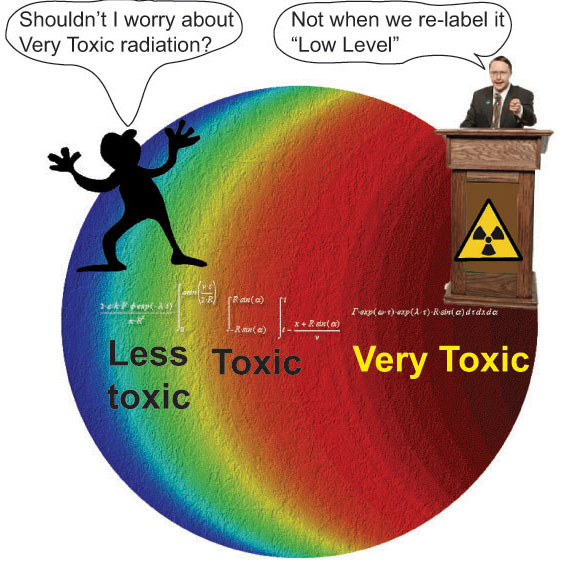
Each exemption from licensing can give the public a dose 5 times higher than we are allowed to get from a nuclear power reactor. There is no limit on the number of exemptions.
2 November 26, https://www.protectbetter.org/below-regulatory-concern-on-steroids
Radioactive waste does not belong in baby toys, frying pans, garden soil, jewelry, roads, cars, building supplies—or any of our everyday household items.The NRC is stealthily expanding the list of radioactive materials that can be used, sold, and disposed of without a license — to many hundreds.
Current legal dose, per person per year 100 millirems
What each exemption could give us 500 millirems
From nuclear power and other facilities releasing radioactivity into our air and water. That’s not okay, but it is the current legal dose to each of us.
The NRC is stealthily expanding the list of radioactive materials that can be used, sold, and disposed of without a license — to many hundreds.
They’re calling it “noncontroversial.” It is not. We defeated this many times before. We must defeat it again.
If enough people prove it’s controversial, adverse, and significant by November 4, the fast-track rule may be withdrawn.
If enough people prove it’s controversial, adverse, significant by November 4, the fast-track rule may be withdrawn.
Submit your comment now Deadline: November 4 by 11:59 PM EST
WHAT IS THE PROBLEM
The NRC is using a fast-track process to exempt hundreds of radioactive substances (radionuclides) from licensing — claiming it’s “noncontroversial” to avoid public analysis of health or environmental impact.
These hundreds of radioactive materials could go:
- To commercial recycling to make consumer goods — zippers, baby toys, belt buckles, building supplies
- To regular leaky trash dumps and incinerators
- To hazardous dumps and processing centers
- For deliberate use in everyday consumer goods and industrial products
“Below Regulatory Concern” is back, and it’s on steroids!
This is not new. Every effort to deregulate radioactive waste and materials since 1986 has been rejected. Dozens of towns, counties, and cities have resolutions, and 14 states have passed laws rejecting exemptions like these.
In 1992, Congress formally revoked the NRC’s Below Regulatory Concern (BRC) policy statements. The NRC is trying again — this time calling it something else.
The rule is labeled “noncontroversial.” We must prove it’s both controversial and has significant adverse effects in our comments by November 4 to force the NRC to withdraw it and respond.
Yet another financialised peace initiative from the Witkoff-Kushner stable

Alastair Crooke, October 22, 2026, https://strategic-culture.su/news/2026/10/22/yet-another-financialised-peace-initiative-from-witkoff-kushner-stable/
From this evident New York real estate worldview, all other issues — territorial boundaries, security and NATO’s encroachment into Central Asia’s security architecture — are but ‘downstream details’ “to the stuff that really matters, the money”.
It seems that the Europeans have not grasped that a Korean-style cessation of hostilities (as argued by General Kellogg) along a front where two militaries face each other is a recipe for precisely no solution. It has been 73 years since the Korean War was frozen by armistice. Nothing has changed.
Instead of prioritizing stakeholder profit, the Witkoff-Europe combo should address Eurasian security architecture and NATO-Russia-China frontiers to gain traction in Moscow.
Back in December 2025, U.S. commentator Sundance, writing in the Conservative Treehouse, wrote about Steve Witkoff and Jared Kushner’s new ‘Money Diplomacy’ solution for Ukraine that “require[d] [the establishment of] a system whereby the western opportunity for financial benefit continues”. From this perspective, the U.S. negotiators would “propose a long-term plan for continued financial benefit”.
From their current language it appears that Witkoff and Kusher are still confident they can construct a financial reward system for western banks, investors, politicians and Ukraine officials that will retain the benefits of war without the ancillary ingredient of bloodshed.
As Sundance noted —
“If the U.S. delegation can pull this off, then Russia can gain the territory they want, corrupt Ukraine officials can keep skimming investment money, the EU can retain the power it wants to extract financial payments, American politicians can use the “long-term recovery projects” for money laundering, and quasi-public/private investment banks can benefit from the exploitation of Ukraine resources”.
From this evident New York real estate worldview, all other issues — territorial boundaries, security and NATO’s encroachment into Central Asia’s security architecture — are but ‘downstream details’ “to the stuff that really matters, the money”.
Monetary diplomacy, however, has not brought a solution for Ukraine (nor for that matter, for Gaza either). Nonetheless, Witkoff has a new plan that David Ignatius has outlined in his column at the Washington Post.
Ignatius highlights that despite the recent Ukraine “flap” over its targetting of Russian refineries, “the U.S. and Europe are moving toward a joint peace proposal that would deliver financial and security benefits to both Ukraine and Russia as a baseline for a territorial settlement that falls short of both sides’ war aims”. In other words, ‘a sweetener’ dangled to persuade the sides to stop bombing each other’s refineries and to open the path for this ‘new’ initiative.
If Zelensky agrees to halt refinery attacks, “we’re back in, and we go to Moscow”, an American official told Ignatius.
In gist, the 4-point plan envisages a generous reconstruction framework to meet “Zelensky’s myriad cash needs”; security guarantees for Ukraine equivalent to NATO’s Article 5; the economic integration of Russia, Ukraine and Europe through an energy deal — “This might consist of a pipeline carrying Russian oil and gas to Europe with Ukraine and Russia splitting the profits. Such a pipeline could sharply reduce European energy costs”, a U.S. official said. In addition to providing Russia with “long-term access to the European energy market”, a peace deal would specify how and when existing economic sanctions on Russia would be removed.
The final point – wait for it — would be a ceasefire along the existing front line, or the ‘line of control’.
It seems extraordinary: The U.S. and Europeans negotiate amongst themselves, seemingly oblivious to the explicit statements issued by the Russian side.
Oil and gas would be supplied by Russia to the needy Europeans who voluntarily forsook their earlier cheap Russian supply, who are trapped by their own decisions and who denigrate Russia at every opportunity. And with the profits to be “split” with Ukraine? No way will Russia accept such a one-sided proposal.
FM Lavrov said at the UNGA no ceasefire under any format. That means that any negotiations would have to take place under fire, and Putin has suggested that even then, he would ‘think twice’ about starting any negotiations (whether under fire or not).
Putin’s spokesman Dmitry Peskov confirmed just last week that “piecemeal solutions and agreements” would prevent a comprehensive settlement from being reached; a “freeze” of the conflict would not help either —
“[Ukraine] is a highly complex matter, and the settlement must be comprehensive … We need a solution for future generations — one that is guaranteed and safeguarded against setbacks”.
It seems that the Europeans have not grasped that a Korean-style cessation of hostilities (as argued by General Kellogg) along a front where two militaries face each other is a recipe for precisely no solution. It has been 73 years since the Korean War was frozen by armistice. Nothing has changed.
The repeated return to this mantra of a ceasefire along line of contact, rather than solution first; ceasefire last, shouts out to the Russians that the West wants to keep Ukraine in the locker-room for the time when a platform from which to exert pressure (again) on Russia in the future is to be jacked-up.
The fatal flaw to this initiative is its cultural deafness. For Witkoff and Kushner it may be “all about the stuff that really matters – money” — but that is not the case for Russia.
If the Witkoff-Europe combo recalled Russian history, they would understand why, for Russia, security, security, security comes top.
Walter Munchau cautioned just this week that “the Ukraine war risks escalating”
“We should be under no illusion about a war with Russia. We are absolutely not in a position to win. Whose bond markets are going to be blown up first? Who is going to run out of interceptor missiles first? … On every [count] — military, energy, finance — Europe is at a disadvantage. That’s not all. There is a relatively plausible scenario in which Ukraine and Iran merge into a single West Eurasian war — and become the ultimate proxy conflict between the U.S. and China”.
If, instead of putting continued ‘stakeholder’ grift first, with its mechanism to ensure “that the western opportunity for financial benefit continues”, the Witkoff-Europe combo chose rather to address the fundamentals to the conflict — the deeper question of a Eurasian security architecture; the definition of where exactly the frontier that separates NATO security interests from those of Sino-Russian interests physically lies — they might find a more receptive audience on their next trip to Moscow.
Alas, circumscribing NATO’s extent is not possible – as things stand.
Longform writing – whistling in the wind

2 November 2026 Noel Wauchope, https://theaimn.net/longform-writing-whistling-in-the-wind/
I might see this day before I die, the day when longform writing and longform reading come back into fashion. They are sure not here right now.
I found myself reading, by accident, a translation of “La Dame aux Camélias” – a subject that I was not at all interested in. But it was the beauty of the writing, even in translation, that got me in. Obviously a generational thing. My grandchildren would not be seen dead clutching such a book, or indeed, any book.
Language now is short, colourful, dramatic, often rather meaningless. But who cares? Ya gotta make an impact. Some sort of impact. Exciting, fun, or whatever. This is what the digital age is doing to our minds.
Fortunately, there are quite a lot of rescue systems. I think that here in Australia we are blessed with education systems that might be inadequate in some ways, but do allow for kids to have some time out in nature, sometimes in activities that happen in the absence of mobile phones. On the trains, I see some people reading books. High petrol prices might have encouraged people onto trains. Who knows? But at least, reading is possible on a train.
It is symptomatic of the crisis-ridden nature of our age. It really is not possible to get a sensible grip on current affairs without paying attention to detail. The prevailing very short torm communication does not allow for detail. And it often does not allow for logic either. The meaning of words gets blurred.
I confess to being a linguistic fascist. I see words like “incredible” used to mean excellent, wonderful – although the word really means “cannot be believed.” I see the word “only” being used in strange ways, when it means ‘just this one.” And there’s grammar – punctuation is almost completely removed as an old-fashioned waste of time. I want it back, because fascistic as it might be, punctuation does help us to understand meaning.
One day, an aberrant mosquito, or targeted AI, is going to hit some satellite and suddenly stop everything digital. After the chaos, people are going to have to relearn arithmetic, and old-fashioned language skills so that real communication happens again. Then we might find that sensible discussion about current affairs can become prevalent, with consideration of the needs and perspectives of the people involved, and acknowledgment of the historical details. My favourite hobby-horse about this is the controversy about the war in Ukraine. But there are plenty of other issues. Those of us who tediously write longform stuff are now whistling in the wind. But, maybe later?
Senator Rips Trump’s ‘Insane’ Plan For Iran Escalation, As Pentagon Transport Planes Land In Israel
Zero Hedge, by Tyler Durden, Saturday, Oct 31, 2026
There are continuing signs that President Trump may be ready to pull the trigger on ordering another major attack against Iran, though the American public might be wondering what the endgame or ‘mission accomplished’ moment might be – which has remained undefined and elusive after seven full months.
First, Israel’s national KAN News reported late Thursday that ten US Air Force transport planes arrived at airbases in southern Israel, part of a surge in Pentagon equipment transfers across the region. KAN said this is preparation for a “short, focused war with Iran” – with the aircraft likely stocked with air defense systems.
Confirmation of the airlifts arriving in Israel came a day after The Wall Street Journal reported that “The U.S. military is sending an additional Patriot system to Israel from Texas to beef up its missile defenses in the country, according to flight-tracking data and two officials with knowledge of the movement.”
“U.S. forces in the region have been restocking their munitions, and bomber aircraft and jet fighters are preparing for strikes, some of the officials said,” the report indicated. “An additional aircraft-carrier strike group and Marine expeditionary unit are also poised to join an armada of roughly 20 other warships operating in the Middle East next month, although some ships could rotate out.”
All of this build-up looks to be doing practically nothing to deter the Iranians from what are now daily attacks on internatonal shipping in the Strait of Hormuz. There have been at least a half-dozen tanker attacks, mine hits, or incidents resulting in serious damage in the strait this week alone. And another Friday:
IRAN CLAIMS OIL SUPERTANKER HIT MINE FRIDAY IN HOMRUZ: FARS
Next, the US has reportedly been warning Gulf allies of a new round of strikes on Iran to come. They must brace themselves for the inevitable Iranian retaliation, which it seems the Pentagon is powerless to stop.
Also, on Thursday top US admirals briefed the Commander-in-Chief on ‘options’ for a renewed war. This saw CENTCOM chief Adm. Brad Cooper at the White House, along with Defense Secretary Pete Hegseth and Joint Chiefs Chairman Gen. Dan Caine.
Will US regional allies cooperate and sign on to whatever next escalation phase might come?…………………………………………………………………. https://www.zerohedge.com/geopolitical/senator-rips-trumps-insane-plan-iran-escalation-pentagon-airlifts-land-israel
Trump Talks Peace While the CIA Is Fueling the War in Ukraine.
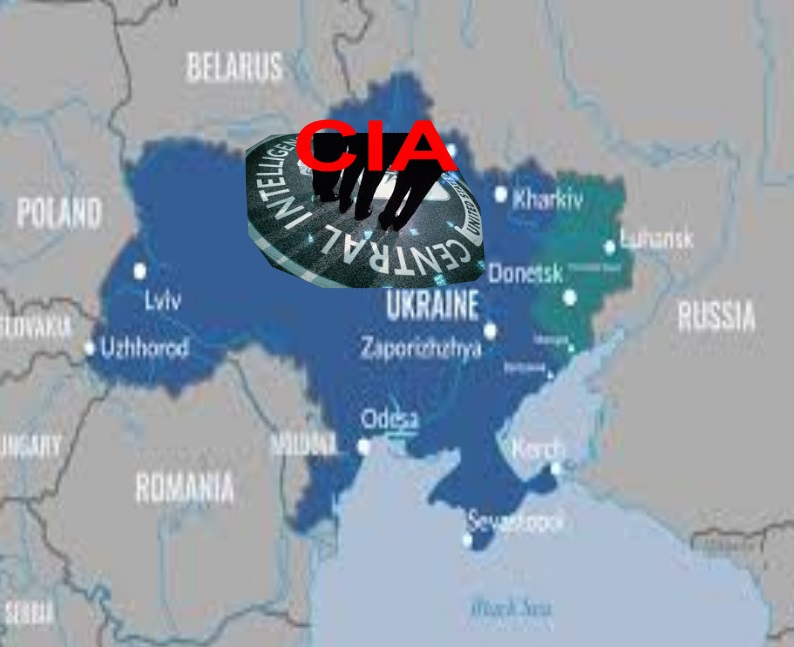
the United States is simultaneously paying to destroy Russian diesel production and begging Russia to sell it more diesel. You could not design a more incoherent policy if you tried.
Trump’s CIA is helping Ukraine destroy Russian refineries while he cuts deals to sell Russian diesel. His spy chief flies to Moscow to tell the Russians they cannot win, while his agency’s own analysts are afraid to tell him what they think.
27 October 2026 by Larry C. Johnson
I spent enough years at the Central Intelligence Agency that I learned how to read the press stories that the agency’s friends place for it. Shane Harris’s new profile of CIA Director John Ratcliffe in The Atlantic, published October 23, is one of those stories. It is written to make Ratcliffe look like the sober professional in a chaotic administration. But read it carefully and it confirms something Washington has spent four years denying: the United States is not merely supplying Ukraine. Through the CIA, it is fighting Russia.
“The CIA is in the lead”
Harris does not bury the lede. Armed with information the CIA provides, Ukraine’s military has been launching strikes deep inside Russia. American spy satellites give Ukraine early warning of incoming Russian missiles and drones. Among U.S. personnel on the ground in Ukraine, a retired senior officer who travels there frequently told him, “the CIA is in the lead.”
It gets better. A Baltic intelligence officer who works closely with the Americans told Harris that, whatever Donald Trump says in public, the CIA’s operations against Russia are now “much more aggressive” than they were under Joe Biden. Officers in the CIA’s Special Activities Center, the people who run covert and paramilitary operations, are reportedly among the happiest at Langley, because they are so busy. And this is not new. As Harris notes, the CIA helped build Ukraine’s modern intelligence apparatus after Russia took Crimea in 2014. This has been the agency’s war for more than a decade.
Let me translate that from the polite language of a magazine profile. American intelligence is identifying the targets inside Russia, American satellites are running Ukraine’s air-defense warning network, and American officers are “in the lead” on the ground. If Russia were doing that for Mexico against Texas, Washington would call it an act of war. Moscow has said for years that it is fighting NATO, not just Ukraine. Here, courtesy of The Atlantic and its anonymous sources, is the evidence.
Shooting ourselves in the fuel tank
Now comes the absurdity. According to Harris, the CIA’s success has become a problem for the President. The refinery strikes the agency helps enable have hobbled Russia’s economy. The International Energy Agency estimates that in the first eight months of this year, Ukraine hit a Russian refinery on average once every three days.
Those refineries make diesel. The world is short of diesel. The International Energy Agency says the shortage will run well into 2027. And Trump, according to Harris, blames the attacks on Russian refineries for the spike in prices and wants them to stop. He has threatened to cut off intelligence support to Ukraine unless Kyiv halts the refinery strikes.
Think about that. The CIA helps Ukraine knock out Russian refining capacity. Diesel prices soar. Then on October 9, in the middle of peace talks in Miami, the President announces a deal for Russia to sell its diesel on the world market, boasting on Truth Social that prices would be “COMING DOWN… AND FAST!” Harris reports that the announcement caught the negotiators by surprise, and that Putin made no reciprocal commitment. So the United States is simultaneously paying to destroy Russian diesel production and begging Russia to sell it more diesel. You could not design a more incoherent policy if you tried.
The spy channel
The most revealing passage in the piece concerns Ratcliffe’s trip to Moscow in August. Trump sent him to meet his counterparts in the Russian security services through what is informally called the “spy channel.” His message, Harris writes, was that nobody was winning: Russia had failed to make meaningful advances, and Ukraine could not expel Russian forces. The hope was that Ratcliffe could convince Putin he was pursuing a lost cause.
I have two problems with that. The first is the claim itself. Russia’s General Staff reported to Putin on October 16 that its forces had taken roughly 6,500 square kilometers and 310 settlements since January. You can argue the Russian figure is inflated, and I have. But even DeepState, the Ukrainian mapping project, counts about 1,300 square kilometers. Russia is advancing. It is not doing so as fast as Moscow claims, but “failed to make meaningful advances” is wishful thinking dressed up as intelligence.
The second problem is the messenger. Imagine you are the head of the SVR or the FSB. The director of the CIA flies into Moscow to tell you, spy to spy, that your war is a stalemate and you should give it up. You know perfectly well that his agency is the one feeding Ukraine the targeting data for the drones hitting your refineries. That is not a peace overture. That is a threat with a diplomatic passport. If Ratcliffe expected the Russians to take his assessment as neutral advice, he does not understand the people he was talking to.
Not what Truman built
Ratcliffe likes to talk about returning the CIA to its “roots.” He has the roots wrong. Harry Truman did not create the Central Intelligence Agency in 1947 to run paramilitary campaigns. He created it to collect and analyze intelligence from foreign sources and tell the President the truth, so that he would never again be blindsided the way Franklin Roosevelt was at Pearl Harbor. Covert action came in through the back door. Within a year, the National Security Council’s directive NSC 10/2 authorized covert operations, and the clandestine tail has been wagging the analytic dog ever since.
Truman saw it happening and said so publicly. In an op-ed published in the Washington Post on December 22, 1963, a month after John Kennedy’s assassination, he wrote that he had become disturbed by how far the CIA had strayed from “its intended role.” His words are worth quoting: “I never had any thought that when I set up the CIA that it would be injected into peacetime cloak and dagger operations.” The agency, he warned, “has become an operational and at times a policy-making arm of the government.” He said that in creating it, “the most important thing was to guard against the chance of intelligence being used to influence or to lead the President into unwise decisions,” and he asked that the CIA be “restored to its original assignment as the intelligence arm of the President.”
Sixty-three years later, Ratcliffe has turned Truman’s warning into a mission statement.
How covert action corrupts the truth
I want to explain why this matters, because it is not an abstract argument about organization charts. I watched it from the inside.
When an intelligence agency is simply collecting and analyzing information, its only stake in the outcome is getting the answer right. The moment the same agency is running a covert operation, it has a horse in the race. The operation has a budget, a sponsor on the Seventh Floor, careers riding on it and, most important, a President who has already been told it will work. Now the analysts down the hall are being asked to assess whether their own colleagues’ operation is succeeding. Bad news is no longer just bad news. It is an attack on the director’s program and an embarrassment to the man in the Oval Office.
The pressure is rarely an explicit order to change a conclusion. It is subtler and more corrosive than that. The pessimistic assessment gets sent back for more sourcing. The analyst who keeps writing that the operation is failing gets a reputation for not being a team player, and does not get the next promotion. The briefing for the President leads with the success stories and buries the costs in an annex. After a few rounds of that, as Julia Curlee told Harris, officers simply stop telling the hard truths and “learned to avoid” what the White House did not want to hear.
We have seen where this leads. The Bay of Pigs was planned by the clandestine service and kept walled off from the agency’s own analysts, who might have pointed out that there was no evidence the Cuban people were about to rise up against Castro. The operators sold the President the operation they wanted to run, and the analysis that would have stopped it never reached his desk. The pattern repeats whenever the agency becomes both the player and the referee.
Now look at Ukraine. The CIA is, by The Atlantic’s account, “in the lead” on the ground, helping run a campaign of deep strikes inside Russia. The same CIA is responsible for telling the President whether that campaign is working and whether Ukraine can win. Is it any surprise that the agency’s message, the one Ratcliffe carried to Moscow, is that Russia has “failed to make meaningful advances”? An agency that has spent twelve years building Ukraine’s intelligence service and now directs its targeting has every institutional incentive to report that its war is going well, or at least not badly. The negative consequences, Russian advances, Ukrainian casualties, a diesel shortage that is hammering Europe and American consumers, are exactly the things an agency in that position is least likely to put front and center.
That is the corruption Truman feared. Not that the CIA would lie outright, but that it would slowly start serving the operation instead of the President, and the President would make decisions based on intelligence shaped by people who need him to keep going.
An agency that tells the boss what he wants
Harris also reports on the state of the CIA itself, and it isn’t pretty. Ratcliffe pledged at his confirmation hearing to “conduct covert action at the direction of the president, going places no one else can go and doing things no one else can do.” The covert-action side is thriving, from Ukraine to Venezuela to the CIA’s air strikes on suspected drug boats, which legal experts say may violate the laws of armed conflict. One former officer told Harris, “The agency is over its skis right now.”
The analysts, meanwhile, are miserable. More of them report that the objectivity of their work is being undermined. Julia Curlee, a senior analyst who resigned in May, put it bluntly: “Ratcliffe isn’t protecting the CIA from politicization; he’s leading it.” Current and former officers say they have never seen so many retirements and resignations. An agency where the paramilitary officers are thrilled and the analysts are afraid to tell hard truths is an agency built to fight wars, not to understand them. And Harris himself notes that Trump did not heed the intelligence community’s warnings about how Iran would respond to American attacks. We are all paying for that one now.
Pick a policy
So here is where the United States stands. The President calls Zelensky “more difficult to deal with” than Putin and urges Ukrainians to elect someone else. His CIA director is running operations against Russia that are more aggressive than Biden’s. His CIA is helping Ukraine destroy Russian refineries while he cuts deals to sell Russian diesel. His spy chief flies to Moscow to tell the Russians they cannot win, while his agency’s own analysts are afraid to tell him what they think.
That is not a strategy. It is a contradiction that the American people are paying for at the pump, and that the Ukrainians are paying for with their lives. If Washington wants peace, it should stop being a combatant. If it wants to fight Russia, it should have the honesty to say so, to Congress and to the voters, before the midterms rather than after. What it cannot keep doing is both, and pretending it is doing neither.
19 November – Webinar – The Reality of Reprocessing Radioactive Wastes

Date: Thursday, November 19, 2026
Time: 11:00 AM Pacific Time (US & Canada) / 2:00 PM Eastern / 7:00 PM UK / 8:00 PM CET
Hosting Organizations:
- WANA – Welsh Anti-Nuclear Alliance
- Ecological Options Network (EON)
Featured Organizations:
- Radioactive Waste Management Associates (RWMA)
- ACRO
- Nuclear Information and Resource Services (NIRS)
- Collectif Piscine Nucléaire (Stoppons la piscine nucléaire à La Hague)
- Nuclear Waste Advisory Associates
Real-time translated captions will be available during the live event in French, German, Japanese, Spanish, Welsh, and more.
French industry eyes a fresh chunk of UK nuclear

EDF-owned Framatome is negotiating the purchase of land on one of the U.K.’s prime nuclear sites.
October 28, 2026 , By Nicholas Earl, https://www.politico.eu/article/france-nuclear-industry-bid-uk-expansion-framatome-edf/
LONDON — A firm owned by French nuclear giant EDF is locked in talks with the U.K. government as it tries to buy a prime site for nuclear power development.
Four industry figures familiar with nuclear planning in Whitehall, granted anonymity to discuss sensitive negotiations, said EDF-owned company Framatome is bidding to purchase land at Oldbury in Gloucestershire, southwest England, a site earmarked by the British government for nuclear development.
Senior U.K. officials have been talking up the potential for private investment on the site for months — but some insiders warn the French proposal could restrict other developments at Oldbury just as ministers are desperate to get low-carbon nuclear power running as quickly as possible.
EDF, which is owned by the French state, operates the U.K.’s entire nuclear fleet. It has an 80% stake in Framatome.
Framatome said in 2023 it wanted to set up a facility in the U.K. for making the fuel used by nuclear reactors, but did not specify a location.
“We have been supporting the U.K. nuclear power market for over 25 years and it is a focal point of business for Framatome,” said Bernard Fontana, the company’s boss at the time, adding that it was “in engagement” with the Department for Energy Security and Net Zero.
Fontana was named chief executive of EDF in 2025, reflecting the close ties between the companies.
Framatome is holding talks with the Nuclear Decommissioning Authority (NDA) over the purchase of land owned by the regulatory body at the site, according to the four industry figures.
The U.K. has its own nuclear fuels sector and uranium enrichment industries, but relies on France to supply some nuclear fuels and equipment used in reactor supply chains. Framatome signed a deal in 2025 with nuclear station Sizewell C, which is under development, on the understanding that fuel made in factories in France would come from a U.K. factory once it was up and running.
Then-Energy Secretary Ed Miliband said earlier this year that the government could offload Oldbury, a state-owned site, to private investors. “I would be very encouraging and positive about [opportunities at] Oldbury,” he told MPs.
Whitehall row
Two of the industry figures cited above said Great British Energy Nuclear (GBE-N), the arm’s-length body responsible for delivering U.K. small modular reactor (SMR) plans, had raised concerns over the sale of the land, worried it would hamper potential new nuclear generation at Oldbury.
Framatome has been “trying for ages but it’s land which may be needed for an SMR there,” one of the figures said.
One of the two figures said the decision over a potential sale NDA land now rested with Nuclear Minister Michael Shanks.
Oldbury was home to one of the U.K.’s early nuclear power stations, which closed in 2012 for decommissioning — a process expected to last until the 2080s.
The site was officially earmarked for future development in 2011 under the coalition government. But a chunk of its land was sold by the NDA to Horizon Nuclear Power in 2012, whose plans to set up a new nuclear plant on the site collapsed in 2020.
1 This Month
19 November – Webinar – The Reality of Reprocessing
Time: 11:00 AM Pacific Time (US & Canada) / 2:00 PM Eastern / 7:00 PM UK / 8:00 PM CET
Register for the Zoom Event Here
Tell Congress: Prevent Nuclear Catastrophe in Iran

Tell Congress: Prevent Nuclear Catastrophe in Iran

Read the Public Inquiry Report, the Commissioners’ report, Surrendering Australia: The AUKUS Deception is available to download for free at aukuspublicinquiry.com. Or just watch the replay of the National Press Club Luncheon.


Shut down the radiation-damaged Heysham nuclear reactors now
To see nuclear-related stories in greater depth and intensity – go to https://nuclearinformation.wordpress.com

Say No to NASA’s Reckless Nuclear Reactor on the Moon
Say No to NASA’s Reckless Nuclear Reactor on the Moon
-
Archives
- November 2026 (178)
- October 2026 (302)
- September 2026 (339)
- August 2026 (330)
- July 2026 (355)
- June 2026 (287)
- May 2026 (306)
- April 2026 (356)
- March 2026 (251)
- February 2026 (267)
- January 2026 (308)
- December 2025 (358)
-
Categories
- 1
- 1 NUCLEAR ISSUES
- business and costs
- climate change
- culture and arts
- ENERGY
- environment
- health
- history
- indigenous issues
- Legal
- marketing of nuclear
- media
- opposition to nuclear
- PERSONAL STORIES
- politics
- politics international
- Religion and ethics
- safety
- secrets,lies and civil liberties
- spinbuster
- technology
- Uranium
- wastes
- weapons and war
- Women
- 2 WORLD
- ACTION
- AFRICA
- Atrocities
- AUSTRALIA
- Christina's notes
- Christina's themes
- culture and arts
- Events
- Fuk 2022
- Fuk 2023
- Fukushima 2017
- Fukushima 2018
- fukushima 2019
- Fukushima 2020
- Fukushima 2021
- general
- global warming
- Humour (God we need it)
- Nuclear
- RARE EARTHS
- Reference
- resources – print
- Resources -audiovicual
- Weekly Newsletter
- World
- World Nuclear
- YouTube
-
RSS
Entries RSS
Comments RSS

