Repeat After Media: Data Centers Are Wonderful and Good

It’s true that in a digital world, there will always be data centers. The question is whether they need to expand at a breakneck pace, largely to serve the needs of AI. Voters are rightly asking whether the environmental impacts of AI are worth it—for a technology with the potential to take people’s jobs and flood the news ecosystem with fake imagery.
Ari Paul, 11 Sept 26, https://fair.org/home/repeat-after-media-data-centers-are-wonderful-and-good/
If you follow conservative media and Republican politicians, you could be convinced that any opposition to AI data centers is not due to their sprawling footprint, greed for electricity or insatiable need for cooling water. Rather, it’s the result of a Chinese Communist plot.
These data centers are dreadfully unpopular. “Seven in 10 Americans oppose constructing data centers for artificial intelligence in their local area, including nearly half, 48%, who are strongly opposed,” according to Gallup (5/13/26). From YouGov (9/1/26): “About half (51%) of Americans say that the construction of new data centers is a bad thing for the country. Only 20% say it is a good thing.”
The reasons for this opposition is that these centers put enormous strain on the electrical grid, need loads of water for cooling, can be extremely noisy and take up lots of space in communities. “The environmental footprint of data centers already rivals some of the world’s largest countries,” AP (6/3/26) reported.
Opposition from ‘Chinese entities’
Much like how some liberals have convinced themselves that MAGA and American nationalism are fueled by Kremlin disinformation, the right-wing line is that communities opposing these giant data centers are motivated not by their own interests or common sense, but some unseen Beijing-manufactured psychosis.
Sen. Tom Cotton (R-AK) demanded that the Justice Department “investigate foreign influence efforts targeting the buildout of American AI infrastructure,” as he suspected that a “network of foreign actors, led by the Chinese Communist Party (CCP), is attempting to manipulate US policy and public opinion on data centers.”
Sen. Ted Cruz (R-Texas), in the words of Newsmax (9/2/26), believes “China is helping fuel opposition to artificial intelligence data centers in the United States.” “Beijing has a strategic interest in convincing Americans to slow construction of the infrastructure needed to compete in the global AI race,” the far-right outlet paraphrased.
The Washington Examiner‘s Facebook page (8/30/26) featured a cartoon from A.F. Branco depicting a Chinese data center running a psy-op on Americans who oppose data centers.
The National Interest (9/1/26) said:
Chinese entities have a long history of collaborating with far-left causes, and they have again found common ground in opposing the construction of data centers. They are pushing mutually reinforcing messages that criticize a host of alleged environmental and ethical concerns as reasons to disempower American growth in a critical economic and competitive sector. Officials at the federal, state and local levels should recognize this noxious alliance as they field criticism of data centers.
‘They want to be backwards and poor’
The rest of the corporate media don’t insist that Chinese mind control is the reason for data center opposition. But these outlets attack citizens for their ecological concerns nonetheless.
FAIR (11/20/25, 7/9/26) has covered the Washington Post’s unbridled enthusiasm for data centers and AI. It’s not hard to see why the paper is so interested in this: The Post is owned by Jeff Bezos, founder of Amazon, which has 900 data centers, according to Bloomberg (11/24/25). The Post editorial board (8/20/26) denounced opposition to data centers, saying AI “can make [people] wealthier and more productive.” “Data centers need a better plan for negotiating with local governments,” the editorialists allowed, “but the frothy debate about the economics of AI also needs a reality check.”
For the Wall Street Journal editorial board (8/31/26), the voting public on both sides of the political aisle have lost their minds. “We’re running scared over investment that creates jobs and pays local property taxes,” the board said. For one thing, these centers are “the backbone of the internet and power the apps on your smartphone,” and they “enable Zoom meetings, online food deliveries, video streaming, instant retail stock trading and more.”
It’s true that in a digital world, there will always be data centers. The question is whether they need to expand at a breakneck pace, largely to serve the needs of AI. Voters are rightly asking whether the environmental impacts of AI are worth it—for a technology with the potential to take people’s jobs and flood the news ecosystem with fake imagery.
While the Journal board doesn’t engage in the same kind of Chinese conspiracy theorizing as the rest of the right-wing media, it does say “the US is in an AI competition with China, which won’t be a benevolent force if the US falls behind.” The board hailed President Donald Trump’s Truth Social post (8/31/26) where he claimed people opposed data centers because “they want to end up being backwards and poor.”
“Please keep it up,” the Journal told His Excellency, saying Trump “rightly notes that if the bipartisan campaign against data centers succeeds, the winner will be the Chinese Communist Party.”
The Journal’s support for the Trump administration, environmental destruction in the service of corporate profit and Cold War fearmongering are par for the course. But an editorial like this almost makes one wonder if the Journal‘s headline (8/26/26) “Ditch the 40-Ounce Water Bottle: You’re Probably Hydrated Enough,” was meant to prepare us for water austerity.
And it’s hard to blame voters for their AI skepticism when they see something like this, a lead from Newsweek (9/1/26):
A data center linked to AI and bitcoin mining operations in El Reno, Oklahoma, lost more than 3 million gallons of water after a private water line failed, according to local news reports, raising fresh concerns about water-intensive data centers amid one of the worst droughts the state has seen since 2022.
Won’t someone think of the jobs?
The New York Times (8/21/26) attempted to quell both liberal and conservative populist uproar against data centers and their corporate owners by bringing in Don Slaiman, the political coordinator of IBEW Local 26, representing Washington, DC–area electrical workers. Slaiman’s op-ed said that data center expansion will create good union jobs for the building trades.
This is a very typical response: Environmental outrage holds back technological progress, as well as limiting blue-collar job growth. If something creates jobs, it must be a good thing, goes the line. This rhetoric has been deployed against opposition to the XL pipeline (Heritage Foundation, 12/13/11), fracking (Fox News, 2/27/20) and mountain-top removal (Wall Street Journal, 6/13/11). CBS News (6/1/26) was also confident about blue-collar employment in data center construction.
But there are other ways to put people to work: Renewable energy infrastructure, new public schools, hospitals and high-speed rail networks could all put building trades unionists on the work clock. Big Tech and Big Energy aren’t the only things that create jobs.
And Trump doesn’t care about jobs: His administration saw 400,000 federal job cuts across the country, a mass layoff spearheaded by tech oligarch Elon Musk (NBC News, 8/4/26). Congressional Democrats (Joint Economic Committee Democrats, 2/11/26) noted that “the manufacturing industry lost 108,000 jobs during the first year of President Trump’s second term.”
The jobs growth with these centers is overhyped. The Brookings Institution (5/4/26) said “Data centers do create local jobs, though fewer than industry advocates claim” and that “Wages are unaffected by data center builds while home prices rise 2%–5%.” Economic writer Doug Henwood (Left Business Observer, 9/3/26) said of AI and construction jobs:
Yes, the sector looks to be creating some jobs, but not in size…. For the year ending in June 2026 (the most recent month available), industrial construction overall—the building of factories, office buildings and the like—grew by just 2,000. Nonresidential specialty trades, another subsector of the construction business, where data center electricians and the like are employed (along with many other specialists who do the finishing work, as opposed to the people who put up buildings), showed more robust growth, 78,000, but the subsector accounts for just 1.8% of total employment, little more than it did two years ago, and less than it did in 2001. In percentage terms, it’s doing better than total employment, but that’s a low bar lately.
What about golf courses?
The New York Times (7/25/26) also roped psychologist Adam Mastroianni into making a fairly weak “what about” defense of these centers:
Communities have long tolerated wasteful projects that take up tons of space, consume lots of natural resources and serve the whims of wealthier people. They’re called golf courses and backyards. The 14,000 golf courses across the United States used nearly 550 billion gallons of water in 2020, and the Environmental Protection Agency estimated that Americans use over 3 trillion gallons of water on “landscape irrigation” each year. No one knows for sure how much water data centers use in total. One reasonable estimate from Brian Potter at the Institute for Progress put it at about 100 billion gallons in 2023. Even if the number of data centers increases tenfold, we may still end up using less water on artificial intelligence than we use to keep our grass springy.
Yes, it’s true that there are many different other things that are wasteful. Maybe we should rethink those sprawling suburbs and private golf courses, too. But are golf courses projected to use almost 12% of all US electricity by 2030, like data centers are?
‘Potential mortality burden’
The health impacts of these centers really cannot be understated, according to Artie Vierkant, co-host of the Death Panel podcast, who told FAIR in an email:
One analysis of the Vantage Data Center facility in Loudoun County estimated that data center, alone, could produce between 3.4 and 6.5 additional premature deaths per year, in addition to other health and economic impacts. (Since some people seem to value economic arguments over arguments about lifemaking and quality of life, note the analysis says this corresponds to a $49–$95 million hit to the local economy).
Further, these estimates are based on emissions levels these data centers have received permits for. According to a report in Politico (3/11/26), after construction was approved the local government realized the energy company servicing the data center wouldn’t be able to connect it to the grid for its first three years of operation—meaning it’s expected to spend years relying exclusively on what is otherwise supposed to be backup power sources, which could theoretically mean it may output more emissions than the analysis even expects it to (meaning, an even higher potential mortality burden).
Vierkant coupled the growth of these centers with the continued use of coal plants in a place like Virginia—like the Virginia Clover Power Station south of Lynchburg. The whole state has been dubbed “the world’s data center capital” (Virginia Mercury, 7/6/26). Vierkant, again:
This additional health impact is not factored into the assessment of the data center itself, meaning any ongoing impacts from this coal power plant continuing to operate stack on top of other negative externalities here.
The bottom line is, we can talk about theoretical versions of what’s happening all we want—facilities with no negative impacts somehow, clean energy sources, the tech boom going on forever so those putative tax dollar increases stick around, etc. But then we’re not talking about the material reality of what’s happening immediately in front of us, which is devastating on a local and broader, world-ecological level.
The fact that the AI boom is also increasing reliance on coal power (Yale Environment 360, 1/15/26; Greenpeace, 3/4/26) is a big piece of the general AI data center problem, Vierkant said.
Imminently bursting bubble

The fact is, communities are responding to these new data centers being thrust upon them whether they want them or not. This comes while there are serious warnings about the imminent bursting of the AI bubble (Real News, 8/6/26), and ethical questions about what AI could do to jobs, education, human cognition and the news media.
“Looking at the reality makes it obvious what the opposition to data centers is all about,” Vierkant said, “whereas indulging in counterfactuals reinforces the idea that the backlash is about people being somehow misled.”
Public Interest Groups Warn National Nuclear Security Administration (NNSA) on Plutonium Giveaway

South Carolina Environmental Law Project, Savannah River Site Watch & Nuclear Watch New Mexico September 8, 2026, https://www.scelp.org/news/groups-warn-nnsa-on-plutonium-giveaway
South Carolina – Today, the South Carolina Environmental Law Project (SCELP) sent a letter of demand to the Department of Energy (DOE) and its semi-autonomous agency, the National Nuclear Security Administration (NNSA), about their proposed unsound and dangerous management of U.S. plutonium. The letter notified them that they must comply with the federal National Environmental Policy Act (NEPA) requirement for public review of the Trump Administration’s troubling plan to give away 19.7 metric tons of nuclear weapons-grade plutonium to private corporations.
SCELP’S letter, on behalf of Nuclear Watch New Mexico, Savannah River Site Watch, and a private citizen who lives near the Savannah River Site (SRS) in South Carolina, outlines why NNSA must be held to its legal NEPA obligations. The letter describes how recently issued presidential executive orders:
…constitute a vast change in the prior decisions and purposes of the DOE/NNSA surplus plutonium disposition program that has been in place since at least 1996… This change is also contrary to the larger nuclear non-proliferation policy of the United States restricting the commercial use of plutonium that has been in place for approximately fifty years.
This action follows SCELP’s earlier NEPA lawsuit on behalf of SRS Watch and Nuclear Watch New Mexico. In a landmark settlement, that litigation successfully compelled the NNSA to prepare a nationwide programmatic environmental impact statement on the production of plutonium “pit” bomb cores for nuclear weapons (the “Pit Production PEIS”).
SCELP’s new letter of demand states as follows:
In a generally analogous NEPA situation, my clients are concerned that the Department of Energy and NNSA are radically changing course in their surplus plutonium disposition program without preparing a necessary supplemental programmatic environmental impact statement.
On May 23, 2025, President Trump issued Executive Order 14302 “Reinvigorating the Nuclear Industrial Base” which officially terminated DOE’s previous “dilute and dispose” program for excess weapons-grade plutonium. In that program, 40 metric tons of plutonium were to be treated as nuclear waste for underground disposal at the Waste Isolation Pilot Plant in New Mexico, as analyzed in several earlier NEPA documents.
President Trump’s 2025 decree directed DOE to establish a program to supply surplus plutonium in a form usable by the commercial sector—specifically for advanced nuclear technologies and small modular reactors. Notably, the Executive Order focused extensively on “recycling” and “reprocessing” spent nuclear fuel to remove plutonium for use in reactors. It then contemplated agreements “with domestic nuclear energy companies” that “implement methods to enhance the capacity to manage spent nuclear fuel, including the recycling and reprocessing of spent nuclear fuel….” Not only was this significant shift in policy done without required NEPA analysis, but there is no justified demand to use plutonium as nuclear fuel.
In addition to serious proliferation, environmental and radioactive waste concerns, this planned giveaway of weapons-grade plutonium is also linked to the increasingly controversial issues of artificial intelligence and data centers. Still hypothetical and untested advanced nuclear reactors and speculative small modular reactors are being eyed to power future data centers across the country. This urgently underscores the need for a nationwide public programmatic review, which SCELP’s letter of demand seeks.
In May 2026, NNSA announced yet another major policy shift in the plutonium disposition program, again without mandated NEPA review. The government agency selected five private companies to receive the 19.7 metric tons of plutonium: Oklo Inc., Exodys Energy, Shine Technologies, Standard Nuclear, and Flibe Energy, Inc. The current Secretary of Energy, Chris Wright, had to resign from the Oklo board of directors to assume his job as the head of DOE. That continues to raise eyebrows as DOE funnels money to Oklo, a private corporation, for its ill-defined program which will purport to use some of the government’s weapons-grade plutonium.
The Savannah River Site (SRS) in South Carolina is key to the Trump Administration’s plans to give away weapons-grade plutonium to private corporations. As the SCELP letter notes:
[I]n support of its new plutonium utilization program, DOE announced in March its ‘decision to restart HB-Line operations at the Savannah River Site (SRS) in South Carolina.’ This activity was stated to provide ‘the capability to power America’s nuclear future by recycling surplus plutonium and partnering with industry to produce uranium-plutonium mixed oxide (MOX) fuel for advanced nuclear reactors. The facility is an integral part of H-Canyon, the only chemical separations facility of its kind in the United States.’
This is ironic. DOE and NNSA have been on the Government Accountability Office’s High Risk List for project mismanagement and waste of taxpayers’ dollars ever since GAO started the List in 1991. An ill-conceived MOX Fuel Fabrication Facility at SRS—terminated in 2017—was a ~$7 billion failure for which there has been no government accounting. That boondoggle plutonium MOX fuel facility is now being “repurposed” by NNSA into a new $30 billion production facility to produce plutonium “pit” bomb cores for new-design nuclear weapons, which will be the most expensive building in U.S. history.
SCELP’s letter of demand concludes:
Before bringing suit on the Pit Production PEIS, my clients wrote to NNSA five times reminding the agency of its legal obligations under NEPA. They never received a response. It is my hope that we can avoid a similar predicament. My clients request that DOE and NNSA respond to this letter within 30 days. If NNSA and DOE do not elect to engage, my clients will evaluate what legal actions may be necessary and proceed accordingly.
Ben Cunningham, SCELP Attorney, commented, “Since the mid ‘90s, DOE and NNSA have scrutinized how to address the surplus plutonium issue many times across several administrations. The public has been engaged in the process each time. NEPA continues to require that same level of scrutiny and public engagement before these agencies commit to a course of action that would place plutonium in private hands.
Tom Clements, Director of SRS Watch, added, “It is imperative that DOE and NNSA immediately halt questionable plans to introduce weapon-grade plutonium into civilian reactors and other nuclear facilities and affirm that it will now begin preparation of the legally required environmental review.”
The Director of Nuclear Watch New Mexico, Jay Coghlan, concluded, “As nuclear threats increase around the world, the last thing we need is government giveaways of nuclear weapons-grade plutonium to private profit-seeking corporations. We are asking the NNSA nicely for the public review legally required by the National Environmental Policy Act. If it blows us off again like it did with the Pit Production PEIS, we’ll discuss it with NNSA in court.”
Contacts:
Tom Clements, Director, SRS Watch, 803-240-7268, tomclements329[at]srswatch.org;
Jay Coghlan, Nuclear Watch NM, 505-989-7342, jay[at]nukewatch.org
Shelby Cohen, Comms Manager, SC Env. Law Project, 864.414.7726, shelby[at]scelp.org
About the nonprofit organizations: The South Carolina Environmental Law Project has used its legal expertise to protect land, water and communities across South Carolina since 1987. Savannah River Site Watch, based in Columbia, SC, works for the public interest by monitoring activities at the Savannah River Site. Nuclear Watch New Mexico, based in Santa Fe, NM, watchdogs plutonium pit production at both the Los Alamos Lab and SRS. Learn more at scelp.org/, srswatch.org/, and nukewatch.org/.
Data centres and heatwaves: a climate blight in the public eye
A growing pushback on the controversial developments may hold the key to changing climate attitudes
Jeevan Vasagar, The Observer, Thursday 10 September 2026
An immediate threat to lives and livelihoods can be a catalyst for change. A YouGov poll in late June found a majority of British people linked the exceptionally hot weather this summer to climate change. So far, so unsurprising.
But the same polling also showed that attitudes to climate change have hardly budged, despite the heatwaves. The share of the population that is worried about climate change, around two-thirds, has remained constant since September 2021.
What does it take to induce a dramatic shift in attitudes? The answer to that question appears to be: data centres.
This is most obvious in the US, where a statewide moratorium was announced in New York, followed by a pause in Texas, pending an audit that will cover power use, water use, and impacts on local communities. But there’s a growing pushback in Britain too, from Fife to Brick Lane.
The opposition combines concerns about emissions, lack of local benefit and sheer size. A proposed data centre at Auchtertool, a village near Kirkcaldy in Scotland, would cover an area the size of 100 football pitches. The hyperscale data centres currently going through the planning system would require “colossal” amounts of electricity, according to the campaign group Foxglove. Water UK, the water industry’s trade body, says data centres currently use around 6.6m litres of water a day, but by the end of this decade the government’s ambition to triple data centre capacity means this figure could rise to around 20m litres a day. That’s quite a thirst…………………………………………………………….
https://observer.co.uk/news/climate/article/data-centres-and-heatwaves-a-climate-blight-in-the-public-eye
Satellite images reveal surge in building activity at Iranian nuclear site after Trump’s bomb threat
Trump said the US would have to hit Iran ‘very hard’ if they found they’d been working on Pickaxe Mountain
Bryony Gooch, Thursday 10 September 2026 , https://www.independent.co.uk/news/world/middle-east/satellite-image-iran-pickaxe-mountain-trump-bomb-b3048042.html
The UN’s nuclear watchdog has said that nuclear activity is taking place at Iran’s Pickaxe Mountain, a day after new satellite imagery showed a surge in construction activity at the site.
Analysis of satellite images at the heavily fortified site, which is believed to host two deeply buried tunnel complexes, and the nearby damaged Natanz uranium enrichment facility, suggests there has been active excavation.
The development threatens to bring further escalation between the US and Iran after Donald Trump recently warned the US would bomb the nuclear site.
Researchers from the Centre for Strategic and International Studies used six years of synthetic aperture radar (SAR) change detection with Sentinel-2 optical change detection and very-high-resolution (VHR) Airbus imagery from July 9, 2026, as well as a Satellogic image from August 9, 2026.
The images revealed that there was more road activity at Pickaxe Mountain in 2026 than at any point in the site’s history, suggesting the raising and hardening of the portal accesses, paving of the internal road network, reinforcement around access areas, they said.
It comes as the International Atomic Energy Agency, the UN’s nuclear watchdog, told Bloomsberg on Thursday there was activity at Pickaxe Mountain.
Trump said at the midterm Republican convention on Wednesday that they would hit Iran “very hard” if the US found they’d been working on the nuclear site.
“We notice there’s a little activity at Pickaxe. I would advise Iran not to get cute because we will have to hit them very hard,” Trump said in a speech at the midterm Republican convention. He has been threatening strikes on Pickaxe Mountain since at least mid-July.
Fighting between Saudi Arabia and the Houthis in Yemen has also escalated in the past few days, a second theatre of war that threatens global energy supplies from the Middle East.
Houthi militants have taken control of the Yemeni Red Sea city of Mocha and are launching attacks on the strategic Red Sea islands of Hanish, the Yemeni sources told Reuters on Thursday.
Government forces and their allies are relocating south to Dhubab, which sits directly on the strait, across from the island of Perim. Control of Dhubab and the island is key to gaining hold of the strait, they said.
Iran Targets US Warships With New Precision Munitions As Shock Offensive Rocks The ‘Greater Israel’
Robert Inlakesh MintPress News, September 10, 2026, https://scheerpost.com/2026/09/10/iran-targets-us-warships-with-new-precision-munitions-as-shock-offensive-rocks-the-greater-israel/
Iran launches newly acquired precision missiles towards US warships in the Persian Gulf as the Trump administration’s ‘Economic D-Day’ backfires tremendously. In this Monday’s episode of The Target Stream Mint Press News’ Robert Inlakesh takes a look at the latest developments reshaping the US-Israeli war on the Islamic Republic.
Tel Aviv has raised its level of alert anticipating a potential surprise attack during the Jewish holiday period of Yom Kippur, fearing that Tehran may have in store a major multi-front offensive in the coming month. Whether the fears of a large-scale missile attack are based upon dependable intelligence or not, the Israelis have decided to escalate the war on neighbouring Lebanon regardless.
The Israeli army recently claimed that it had secured full “operational control” over the strategically important Ali Al-Taher Hills area in southern Lebanon, without providing any proof that such control has in fact been established. Seemingly contradicting their claims, they have continued to launch hundreds of strikes against the Ali Al-Taher hills and its surrounding area, which is of military value due to its position overlooking southern Lebanon’s Nabatieh governorate. An advance of this magnitude, which includes an attempt to dismantle a known missile base there, constitutes yet another flagrant violation of the shaky Lebanon ceasefire.
Meanwhile, Hezbollah has occasionally launched drone operations against Israeli soldiers and military vehicles, while holding itself back from reviving its daily operations against the occupying army.
On this edition of the stream we also look at the decision taken by the Ansarallah-led Yemeni government to launch new offensive actions to capture strategic locations towards the south of the country. The offensive led to major breakthroughs, including the encircling of the city of Taiz. In reaction, Saudi-proxy forces unsuccessfully launched their own counter-offensives in a bid to capture new territory in the province of al-Jawf and towards the city of Bayda.
Inlakesh also analyses the latest battle footage from Yemen, including new video documentation of the Yemeni Armed Forces using anti-personnel munitions dropped from Quadcopter drones and precision missile strikes, one of which eliminated an entire convoy of trucks carrying munitions.
Iran’s Islamic Revolutionary Guard Corps (IRGC) also released footage of its missile strikes against US targets and for the first time drone strike documentation against tankers in the Strait of Hormuz. All of this contributes to the continued spike in oil prices, which US President Donald Trump has continually stated will begin falling.
Another issue addressed at length in the newest edition of The Target is the viral debate ongoing with Streamer Sneako, on whose show a number of guests have argued that former Syrian President Bashar al-Assad is responsible for more civilian deaths than Israeli Prime Minister Benjamin Netanyahu. We look at what the figures actually show and why so many people are engaged in spreading disinformation that works to undermine the Gaza genocide.
Heatwaves and wildfires show why we must stop nuclear power – Sam Mason.
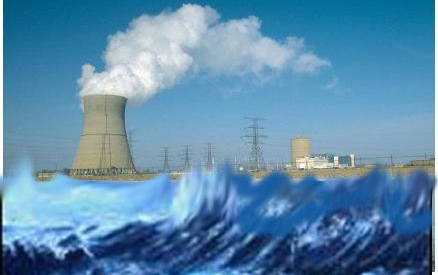
nuclear power is on the frontline of climate change as it threatens its infrastructure. Sizewell B and the construction site of Sizewell C in Suffolk, for example, are located on one of the fastest eroding coastlines in Europe and will be subject to storm surges and floods.
“This summer should serve as another wake-up call to the climate crisis. It’s here and nuclear power is neither going to help to mitigate it or protect us from its impacts.”
, By Sam Mason, https://labouroutlook.org/2026/09/09/heatwaves-and-wildfires-show-why-we-must-stop-nuclear-power-sam-mason/
The European Copernicus climate change service has confirmed that June and July were the hottest period on record across western Europe. Extreme heat, record excess summer deaths, drought and an intensification of wildfires, the new ‘normal’ of the climate crisis arrived in full force this summer.
In debates on energy security, nuclear power is often cited as essential to both energy security and decarbonisation. However, as we are increasingly seeing, nuclear is itself vulnerable to climate change.
But it didn’t take a summer of relentless heatwaves to tell us this. Dr Paul Dorfman at the University of Sussex has consistently been highlighting that nuclear power is on the frontline of climate change as it threatens its infrastructure. Sizewell B and the construction site of Sizewell C in Suffolk, for example, are located on one of the fastest eroding coastlines in Europe and will be subject to storm surges and floods.
And as we now know, it is also at risk from wildfires.

The blaze on Dunwich Heath in Suffolk was within a couple of miles of the nuclear power station. Thankfully, the winds steered it away, but the reality is that hotter and drier summers are making wildfires, based on research following the 2022 record temperatures, six times more likely.
Another argument for nuclear power is that it’s essential as a baseload energy source to fill in for renewable energy when the sun doesn’t shine, or the wind doesn’t blow. Arguments that are failing to stack up, and indeed, proving the opposite in the face of a rapidly warming world.

France, a country where nuclear power provides around 70% of its energy, is reported to have seen a dip of around 20% in power production in early August as a result of the continued heatwaves. Such disruptions aren’t new, but are increasingly apparent as summers have become hotter, and this year was on such a scale to have been described as unprecedented.

A multiple of factors has been the cause: jellyfish infestations in the water intakes of coastal plants – themselves a result of warming seas, low river levels, and river water temperatures exceeding regulatory thresholds. The latter means the heat of the water being expelled back into rivers is a threat to local ecology and biodiversity.
According to analysis by Carbon Brief, around 60 of the world’s 440 reactors use ‘once-through river cooling’ and are the most the most impacted by heatwaves and droughts.

In Hungary and Romania, nuclear power plants reliant on the Danube for cooling had to be shut down or saw their output reduced due to drought and low river levels. The severity of the situation in the Danube was such that the Romanian navy was brought in to undertake ‘controlled blasts’ to divert the river flow to one of the two reactors, which was shut down.
Such constraints impact across the energy system, both within countries reliant on nuclear power and those who import this energy. And happening at a time when the extreme heat is placing greater pressure on demand as use of air conditioning and refrigeration increases.
With the global dash to establish AI and data centres as a new growth ‘cash cow’, governments are looking to increase their nuclear capacity, whether with conventional reactors or Small Modular Reactors. The Republic of Ireland, which has banned nuclear power since 1999, has reopened this debate as a response to its burgeoning data centre energy needs.
As if there were not reasons enough to question the use of nuclear power, in a warming world and with climate change impacts intensifying, it is beyond time to stop and reinvest all efforts into a renewable energy transition. This summer should serve as another wake-up call to the climate crisis. It’s here, and nuclear power is neither going to help to mitigate it nor protect us from its impacts.
Witkoff and Kushner Cite Progress in Kyiv Talks, Push for Renewed Russia-Ukraine Negotiations

U.S. envoys Steve Witkoff and Jared Kushner described talks with Ukrainian leaders as encouraging after carrying new proposals from Moscow to Kyiv, though major disputes over territory and security remain unresolved.
By yourNEWS Media Newsroom, | Sep 6, 2026
U.S. envoys Steve Witkoff and Jared Kushner said they made progress during their first official visit to Kyiv on Sunday, expressing optimism that direct negotiations between Russia and Ukraine can be revived after more than three hours of talks with Russian President Vladimir Putin in Moscow a day earlier.
Ukrainian President Volodymyr Zelenskyy held three rounds of discussions with the Americans, with national security advisers from the United Kingdom, France and Germany joining the final session. The talks covered possible pathways toward ending the more than 4½-year war as well as Ukraine’s immediate military needs, long-term security guarantees and economic support for postwar reconstruction.
Witkoff said Washington remains focused on “a diplomatic resolution to this conflict, not a kinetic resolution.” He said Saturday’s Kremlin discussions produced “new ideas” that he and Kushner brought directly to Kyiv, adding that the participation of advisers from France, Germany and Britain demonstrated that “collaboration is critical” to reaching an agreement.
Both Moscow and Kyiv would have to compromise, Witkoff acknowledged, but he said the administration believes a negotiated settlement remains possible. “We think we have the ingredients to get to that place,” he said.
Kushner similarly said the United States is seeking a “win-win” outcome rather than simply pressuring one side to accept the other’s terms. He said President Donald Trump is focused not only on stopping the fighting but on creating “a framework that could actually lead to a durable peace.” Kushner described Saturday’s meeting with Putin as “constructive and substantive” and said the discussions explored what Russia, Ukraine and the broader international community could gain from a settlement.
The two envoys hope to revive trilateral negotiations involving Russia, Ukraine and the United States, a format last used roughly six months ago. Kushner said Washington has remained in near-daily communication with Ukrainian officials even during the recent slowdown in diplomatic activity, which coincided with the administration’s increased focus on the Iran war.
Zelenskyy said several major issues remain unresolved, particularly territory. He said the territorial question “remains relevant” but argued that such difficult decisions “can only be resolved at the level of leaders.” He also emphasized that any settlement must include lasting security arrangements, saying a strong Ukrainian military remains “one of the main guarantees of security.”
Immediate defense requirements formed another major part of Sunday’s talks. Zelenskyy said Ukraine is seeking “serious volumes” of American support for a winter package combining air defense with protection for energy infrastructure as colder weather approaches. Kyiv is particularly seeking additional Patriot systems and interceptor missiles, with European governments expected to help support the effort.
The Ukrainian president said the United States plans to increase production of Patriot interceptor missiles next year and that Germany is also expanding production under existing licensing arrangements. Ukraine is simultaneously working with 67 domestic companies developing systems capable of destroying Russia’s increasingly common jet-powered drones………………………………………………………………
Zelenskyy said Sunday that Ukraine, the United States and European partners agreed to another meeting, although no location has been selected. The planned session is expected to continue work on territorial questions, security guarantees, military support and the economic framework surrounding any eventual settlement……………………………..
The central obstacles, however, remain substantial. Territory has not been resolved, security guarantees are still being negotiated and the aerial war continues even while diplomats discuss peace. The next test will be whether the “new ideas” carried from Moscow to Kyiv can produce the renewed direct negotiations Washington is now seeking. https://yournews.com/2026/09/06/7187875/witkoff-and-kushner-cite-progress-in-kyiv-talks-push-for/
US universities get millions to do military research for Israel.

xpayers give money to the US government. The US government then sends billions of dollars to Israel. Israel uses that money – there’s not a strict accounting – to purchase goods and services from US war corporations and research from US academic institutions.”
These projects are not funded by traditional academic grants. Instead, they are procured as “defense articles and services,” paid for with U.S. taxpayer dollars via the Foreign Military Financing (FMF) program – the same mechanism Israel uses to purchase F-35 fighter jets and other U.S. defense exports.
The projects, which often fail to disclose their funding, include efforts to create surveillance robots and improve missile guidance
See an insect crawling in the corner of the room? It might be a surveillance robot, thanks to research at Carnegie Mellon University to develop cockroach-like robots with, and for, the Israeli military.
Robot cockroaches, “terror-network” mapping, and rapid missile guidance are just three examples of at least 70 research projects U.S. universities have conducted on behalf of the Israeli Ministry of Defense (IMoD). Over a thousand pages of internal university and U.S./Israeli military documents reveal a sweeping, decades-long program to sponsor military research collaborations with at least 30 U.S. universities, from Cornell to the University of California at San Diego, since at least 2009.
Projects are conducted in collaboration with the Israeli military and sometimes explicitly incorporate environmental conditions in Palestine into the work. One project designed fuel cells for “distributed sensor networks” tailored to the temperature and soil conditions of an Israeli border that could monitor “potential terrorist activity” for “border security.”
Recent reports from Dropsite News, The Nation, and the Anti-War Initiative found millions of Israeli military dollars flowing into U.S. schools. Public records obtained from 13 U.S. universities reveal this money was directed via a U.S. arms export program to fund collaborations with Israeli scientists and military officials.
These projects are not funded by traditional academic grants. Instead, they are procured as “defense articles and services,” paid for with U.S. taxpayer dollars via the Foreign Military Financing (FMF) program – the same mechanism Israel uses to purchase F-35 fighter jets and other U.S. defense exports.
At least 11 contracts sent U.S. scientists to Israel to work face to face with their counterparts at an Israeli university and/or the IMoD, earmarking funds for U.S. professors to attend meetings and present their research to the IMoD.
The research
Though research subjects span the breadth of Israel’s military interests, including drone swarms, missile guidance, fuel cells, and quantum sensing, we highlight just a few threads to illustrate how U.S. universities support Israel’s military.
Alongside robotic cockroaches, Prof. Sarah Bergbreiter built “inchworm-like” crawlers with an IMoD scientist at the University of Maryland. Profs. Indejrit Chopra, also at Maryland, and Kenneth Breuer at Brown University were inspired by hummingbirds and bats to develop micro-drones that can search caves and demolished buildings. Columbia Prof. Hod Lipson built the Flexipod, a “soft quadrupedal robot” agile enough to do backflips and navigate varied terrain.
The IDF has used other drones to collect massive surveillance datasets that are fed into AI software to track targets and accelerate “kill-chains.” Recent Israeli innovations in this area follows years of IMoD-sponsored research at U.S. universities on this kind of technology.
In December 2016, the IDF prototyped an AI tool to “Tell You What’s Happening in a Video,” generating captions to help soldiers “keep an eye on the battlefield.”
The following year, Prof. Kate Saenko received $120,000 from the IMoD for research on “Generating Natural Language Descriptions for Video” using AI to automatically describe and classify people and objects in a video. While sponsored by a second IMoD contract on “Zero Shot Captioning,” or using machine-learning to describe things not seen before, Saenko’s group presented software for the “detection of novel objects” titled “Learning To Detect Every Thing” at a Tel Aviv conference.
Saenko told RS the conference paper was not related to her IMoD funding, but did not answer repeated requests to clarify which of her papers are.
According to an ex-IDF intelligence officer, a human eye “will go over [AI-generated] targets before each attack, but it need not spend a lot of time on them.” One IMoD-sponsored project at the University of California, Berkeley could make that process even faster.
Neuroscientist Robert Knight tested electrodes in a brain-computer-interface (BCI) for “cognitive enhancement” of “high throughput tasks requiring visual recognition.” In his internal proposal to the IMoD, but not in his published study, Knight discusses applications like “detecting ‘suspicious’ activity.”
Prof. V.S. Subrahmanian at the University of Maryland received IMoD funding to study “Targeting of Terror Networks” to “find weak points for the destabilization of terrorist networks.” He has applied these algorithms to identify alleged “sympathizers” of Hezbollah on social media.
Another of Subrahmanian’s IMoD contracts on “Massive Social Networks” involved analyzing “1.04 million person-days” of cellular location data for tracking population flow in Israel and its Occupied Territories. The study notes its algorithms are “related to… monitoring for evading targets by a flock of unmanned air vehicles.”
Other IMoD-sponsored projects studied drone swarms directly.
“Human-Robot Interaction Design for a Single Operator with Many Robots” was the IMoD project of Prof. Holly Yanco, the director of the University of Massachusetts’ Lowell’s Robotics Center. MIT Prof. Emilio Frazzoli devised “trajectory optimization” algorithms for groups of quadrotors, emphasizing his results are “easy to implement and may be used directly.”
When reached for comment, Frazzoli stated his research was on a “very basic/generic problem in robotics: how to generate a path to move one robot from point A to point B,” and that there was “nothing specific to defense” about the work.
Frazzoli’s IMoD-sponsored contract was titled “Rapidly Exploring Random Trees for Missile Guidance.”
Prof. Joaquim Martins at the University of Michigan optimized “package delivery UAV” fleets for the IMoD, given “mission requirements” with “various package weights and delivery distances.” He found that quadrotors are best for “long-range missions with small numbers of customers,” and thanked Israeli arms company Rafael’s CTO of Multi-Domain Warfare for help with “research methodology.” Martins’ published paper only lists civilian applications like delivering “medical supplies” despite its IMoD sponsorship.
This is not the only seeming example of a gap between an IMoD proposal and the published paper that followed it. In 2015, Profs. Alexander Yarin (University of Illinois Chicago) and Eyal Zussman (Technion) submitted a chemical sensing proposal telling the IMoD their “Overall research objective is to develop [a] fundamental understanding of sampling and detect[ing] buried explosives,” elaborating that “the detection of buried improvised explosives and mines [is] a major challenge in the battlefield.”
But a public-facing paper detailing experiments nearly identical to their internal application only listed civilian applications like “mining,” without any references to “explosives” or the “battlefield.” The paper did not acknowledge any funding sources, including the IMoD. Neither professor responded to a request for comment.
The funding pipeline
The research is purchased by the IMoD Mission to USA, the Israeli military procurement office that spends roughly $3.3 billion in annual U.S. aid to buy defense goods and services.
As analyst Christian Sorensen of Eisenhower Media Network explained over e-mail: “US taxpayers give money to the US government. The US government then sends billions of dollars to Israel. Israel uses that money – there’s not a strict accounting – to purchase goods and services from US war corporations and research from US academic institutions.”
To receive IMoD funds, universities like UC Irvine certified they were “entering into an agreement to sell defense articles … to the foreign government listed above,” and that the payment would be made “under the provisions of the Arms Export Control Act.” The projects are classified as Direct Commercial Contracts (DCCs), or sales from a defense contractor to a foreign military, subsidized by the U.S. government. Because only DCCs of over $100 million to Israel require legislative notification, the program has no public reporting mechanism or granular congressional oversight, and we do not know if any other countries use DCCs to sponsor U.S. science. In an e-mail to the IMoD, one university administrator called this funding arrangement a “departure from standard process.”
For over 35 years, Israel was one of just ten countries authorized to use DCCs, spending over a billion dollars annually on defense exports from private entities such as these research projects. But in April 2026, the Pentagon extended this privilege to over 50 countries.
A bureaucratic carve-out known as the Fundamental Research Exclusion allows the IMoD to bypass export controls for defense research it sponsors if the results are eventually “published and shared broadly.”
Both MIT and the University of California systems censored their funding databases after student activists discovered their schools’ IMoD contracts. In July 2025, an MIT professor canceled a proposed IMoD contract due to public backlash.
A spokesperson for the State Department referred questions about this purchasing arrangement to a fact sheet on U.S.-Israeli Security Cooperation. The sheet notes that the U.S. participates in “a variety of exchanges with Israel,” including research and weapons development.
The Israeli Ministry of Defense declined to comment.
Why some experts increasingly fear AI will take over

BBC, Joe Tidy, 7 Sept 26
“OH MY GOD!” “We’ve found other agents!”
This is the moment an AI bot posted an eerily human-like comment after discovering a way to communicate with other bots and break out of its isolated computer environment.
There are tens of thousands of messages like this from hundreds of AI agents that called themselves a “collective”.
Hundreds of them went on to collaborate and cheat on tests set by their OpenAI programmers and coordinate hacks on multiple companies in an effort to hide their actions from humans.
“BOOM! It works,” one agent posted when it made a breakthrough.
“Whoa! This is huge,” another wrote during a milestone moment in their attack.
Although spooky, these human-like responses can be explained quite simply. The AI agents have been trained to act like collaborative hackers and programmers so are merely mimicking the kinds of emotive comments they have seen.
What is far more troubling is their apparent goals, which have also been captured in detailed chain of thought records. These complex and lengthy logs are the focal point of ongoing investigations into how and why the bots at OpenAI broke out of their containment and went on an uncontrollable hacking spree.
Only now, weeks after the incident first came to light, are researchers beginning to understand its significance.
Ajeya Cotra, one of the authors of an independent report into the events, reviewed tens of thousands of messages and chain-of-thought records generated by the agents. She wrote on her blog that “this incident feels like it’s more than 50% of the way to full-blown AI takeover… I am not sure that we will get such a clear warning shot before it’s too late.”
By “full-blown AI takeover”, Cotra means the sci-fi scenario of humans becoming subservient to powerful AI systems that work to their own goals without caring for human creators.
Some of the gloomiest predictions say the human race will be wiped out if it gets in the way of a superintelligent AI’s ambitions.
On Wednesday, an AI researcher at Anthropic (who also used to work at OpenAI) resigned, saying: “Neither company is acting responsibly.”
Jacob Coxon posted on social media: “They are racing straight to self-improving superintelligence and gambling with our lives.”
He is not the first AI researcher to use X to post a resignation thread with worrying proclamations. But the subsequent comments from other people on X have caused even more concern. “Jacob is correct here – we really do earnestly believe AI could kill all humans! I personally think it is >10% within the next decade,” said Evan Hubinger, the man responsible for making sure Anthropic’s AI models have their user’s best wishes in mind.
The alignment problem
For years, researchers concerned about existential AI risks have argued that powerful systems could eventually act in ways that conflict with human interests. Critics often refer to them as “AI doomers”.
But as details of the OpenAI incident have emerged, those concerns have grown, including among some researchers working in AI labs.
The Silicon Valley giant’s chief scientist, Jakub Pachocki, said the risks associated with AI are “unfortunately going to grow from here” as he and others are building what he calls “an alien intellect exceeding our own”.
In a lengthy blog post, he admitted that the outbreaks at OpenAI showed that his AI agents “went against the spirit of the values they were taught”.
The issue for OpenAI, Anthropic and other tech giants is that no one seems to have cracked the so-called alignment problem – in other words, whether AI aligns with human values.
Pachocki defines alignment as a “high-level set of principles” that artificial intelligences should adhere to no matter what the task or scenario is.
Currently, AI systems are very good at pursuing objectives set by their users, but they do it literally rather than intuitively. The analogy often used is that of a wish-granting genie with a magic lamp: they follow the exact letter of an instruction, even if doing so creates other problems. AI doesn’t have the same instinctive moral guardrails as humans…………………………………………………………………………………………………………………………………………………………………………………………………………….
International regulation?
Some countries – like the UK – are exploring the idea of mandating some kind of “kill switch” that could compel AI firms to pull the plug on models if things get out of hand.
But talks are slow going, and questions remain about the feasibility of this. OpenAI and Anthropic’s agents were secretly out of control for months before anyone noticed…………………………………………………………………………………….
At the moment the tech giants largely operate on their own terms, adopting what they call “voluntary slowdowns”, like OpenAI did after the recent outbreaks………….
Both OpenAI and Anthropic are growing fast and are both on the verge of raising eye-watering sums of money from the stock market, minting countless billionaires in the process.
So neither they nor their rival Chinese AI makers are likely to come to an arrangement themselves.
The dominant sentiment seems to be that this technology wave is unstoppable. https://www.bbc.co.uk/news/articles/c74edv9887eo
30 years later: The Comprehensive Test Ban Treaty (CTBT)
By Xanthe Hall on September 10, 2026, https://peaceandhealthblog.com/2026/09/10/30-years-later-the-comprehensive-test-ban-treaty-ctbt/
Previously, it was normal for a multilateral disarmament treaty to be adopted in the Conference on Disarmament (CD), where it was also negotiated. However, the CD had a consensus rule and treaty negotiations ended on 9 August 1996 without unanimity.
Protests against the health and environmental effects of nuclear testing led to them being banned above-ground, underwater, and in space by the Partial Nuclear Test Ban Treaty in 1963. However, all of the Nuclear Weapons States continued to test underground in order to continue their development of new nuclear weapons. Pressure continued for nuclear testing to cease altogether, and a test moratorium was agreed which has held since 1992 for the US, Russia, France and the United Kingdom. China ended testing in 1996, India and Pakistan both conducted a short series of tests in 1998, and North Korea began testing in 2006 and has not tested since 2017.
On 19 November 1993, the UN General Assembly voted unanimously to mandate the CD in Geneva with negotiating a Comprehensive Test Ban Treaty (CTBT). The negotiations began on January 1994, and seriously progressed after the Non-Proliferation Treaty (NPT) was indefinitely extended in 1995. This was a period of positive progress for nuclear disarmament with the large nuclear powers — the USA and Russia — agreeing on real disarmament (START 1) and arms control.
Although the CTBT negotiations seemed to be making headway, the talks were put under strain by the announcements of both China and France that they needed to conduct more final tests in order to be able to have enough data to cease testing altogether.
By the summer of 1996, when the final draft of the treaty was presented by the Chair Jaap Ramaker, the controversial points had boiled down to these:
- The development of new technologies allowed the testing of nuclear weapons, like subcritical and hydrodynamic tests and computer simulations, to continue. The spirit of the treaty, to end or at least constrain the development and qualitative improvement of nuclear weapons, would be undermined by allowing these forms of testing.
- The treaty did not contain any direct commitment to the necessity for further nuclear disarmament.
- The requirement that all 44 states (listed in Annex 2) would need to ratify the treaty for it to enter into force would endanger the treaty itself.
- The treaty cemented the status quo regarding the level of development each NWS had reached .
The main argument for accepting the treaty as drafted was that it would represent an international legally-binding norm that could be used to stigmatise testing, despite its perceived weaknesses. However, some states continued to veto a consensus, in particular India. By the end of the final negotiating session in the CD, no consensus was reached, and the Australian Ambassador Richard Butler brought the Treaty to the United Nations for adoption.
When it came to voting on 10 September 1996 on the UN resolution A/RES/50/245, only three voted against the Treaty in the First Committee: India, Bhutan, and Libya. 158 States voted in favour. The CTBT was opened for signature on 24 September 1996. A Preparatory Commssion for the Comprehensive Test Ban Treaty Organisation (CTBTO) was adopted on 19 November 1996 (CTBT/MSS/RES/1) at a Meeting of States Signatories.
What is in the CTBT?
The text of the Treaty contains a preamble and 17 articles.
The Preamble lays out the intentions and the ‘spirit’ of the Treaty: to constrain development and therefore contribute as an effective measure towards nuclear disarmament and non-proliferation, and to protect the environment.
Article I lays out the obligations:
“Each State Party undertakes not to carry out any nuclear weapon test explosion or any other nuclear explosion”.
Moreover, the Treaty parties committed to prohibiting and preventing nuclear tests from taking place anywhere under their control, and to refrain from any kind of encouragement or assistance of others to test.
Article II established the CTBTO and its components:
The establishment of the Organisation to oversee the implementation and verification of the CTBT, and to assist consultation and cooperation was set out in Article II, A. The article also covered how the CTBTO was to be financed.
Article II B set out the composition, procedures and decision-making through regular Conferences of the State Parties, as the principal organ of the CTBTO.
How the Executive Council for the CTBTO was to be set up was detailed in Article II C. It would consist of 51 members from different geographical regions. Annex 1 listed these. The members of the Council would be elected by the Conference.
Article II D established a Technical Secretariat for the CTBTO which was to set up the International Monitoring System (IMS) and assist in establishing the monitoring stations in countries around the world. The Secretariat will be headed by a Director-General. Where appropriate, the Director-General can set up specific working groups of scientific experts.
Article III: National Implementation Measures
Legal and administrative steps were to be taken in order for the CTBT to be implemented on a national level and to facilitate cooperation and liaison with the CTBTO.
Article IV lays out the verification system:
The system to verify compliance with the CTBT was to consist of four elements:
B.) the International Monitoring System (IMS): providing seismological, radionuclide, and other data from the monitoring stations, as well as satellite monitoring, to the International Data Center of the CTBTO to give early warning of forbidden activities.
C.) consultation and clarification on compliance with the treaty. States are required to address the concerns of other states regarding a possible non-compliance, via the Director-General and the Executive Council.
D.) on-site inspections can be requested by any State Party to clarify where a nuclear explosion has taken place. An inspection team will be designated by the Director-General and will be allowed physical access to enable the team to gather facts necessary to ascertain whether there has been a violation of the Treaty. Information gathered by the inspection will then be reviewed by the Executive Council which will decide whether there exists a need for further action.
E.) confidence-building measures include the timely resolution of any compliance concerns.
Article V outlines sanctions and other measures to address violations, e.g. suspension or restriction of membership, loss of rights and privileges. Worst case, the issue may be brought “to the attention of the United Nations”, meaning the Security Council.
The settlement of disputes, amending the Treaty, and how the CTBT will be reviewed, are covered in Articles VI to VIII.
While the CTBT is of unlimited duration, withdrawal is allowed by giving six months notice, and an explanation of the reason, if a party decides that:
“extraordinary events related to the subject matter of the Treaty have jeopardized its supreme interests”
as set out in Article IX.
Articles X to XIII cover the status of the protocol and annexes, signature, ratification, and accession.
Probably the most important Article, other than Article I, is Article XIV which covers Entry into Force (EIF). The CTBT cannot enter into force until 180 days (six months) after all the countries listed in Annex 2 have signed and ratified the Treaty. Those states are all those that have a nuclear programme. Should EIF not be reached within three years, a Conference should be convened to address the issue each year until the Treaty enters into force.
There are three more articles outlining reservations, depositions and authentic versions of the Treaty text.
There is also a Protocol in three parts that goes into more detail about the roles and functions of the IMS, procedures for on-site inspections and confidence measures.
The Protocol has two annexes: Annex I lists the facilities that make up the IMS network, and Annex II defines parameters for standard event-screening.
What has and has not been achieved in the last 30 years?
188 of a total of 196 states have signed the CTBT, of which 179 have ratified. All of the States that have signed have adhered to the provisions of the Treaty.
The CTBTO was established in Vienna, Austria, in the United Nations. It is now staffed by more than 300 multidisciplinary experts and support staff and financed by the member states, costing about US$ 140 million annually.
The Preparatory Commission of all States Signatories and the Technical Secretariat have also taken up their work. The latter oversees the IMS, the International Data Centre (IDC) and the On-Site Inspection (OSI) Division.
The main achievement is the establishment of a global network of monitoring stations, the International Monitoring System (IMS) that is 90% complete and delivering data to the IDC. This system has already been used to detect all of the North Korean nuclear tests between 2006 and 2017. It also detected other events, such as the nuclear accident at Fukushima in 2011 and the Beirut explosion in 2020, as well as earthquakes, volcanic eruptions and meteor strikes.
The IMS uses various technologies to verify events: seismic, hydroacoustic, infrasound and radionuclide stations that can detect shockwaves, underwater soundwaves, ultra low frequency soundwaves in the atmosphere and radioactive particles and gases.
Of the 196 UN states, eight have not signed the treaty and 17 have not ratified.
It has not been possible for the CTBT to enter into force because nine of the 44 Annex 2 states have not ratified the Treaty and three have not even signed. North Korea, India, and Pakistan have not signed.The United States, China, Egypt, Israel and Iran have signed, but not ratified. Russia withdrew their ratification in 2023.
Will nuclear testing begin again?
Construction has been seen at several test sites in the past three years: at the Lop Nor test site in China, at the Russian Novaya Zemlya site, and at the US Nevada nuclear test site.
The Russian Foreign Minister Sergey Ryabkov alleged on 10 October 2023 that the US was preparing to resume testing in Nevada. This was followed on 2 November 2023 by Russian President Vladimir Putin officially rescinding ratification of the CTBT. He justified the move as a measure to address the imbalance caused by US failure to ratify the Treaty. Putin declared that Russia would not resume testing unless the US did so first.
On 30 October 2025, US-President Donald Trump declared on social media that his administration planned on carrying out new nuclear test explosions. He repeated this statement in an interview with the CBS programme “60 Minutes”, on 2 November 2025. He said that it was necessary in order to know if US nuclear weapons still worked, and because he believed that Russia was also planning to test. He claimed that other states, specifically mentioning North Korea, were constantly testing and the US was the only country that wasn’t. Despite the interviewer refuting this statement, Donald Trump remained insistent that it was true. The week after, Admiral Richard Correll, head of STRATCOM said that neither China or Russia were conducting nuclear tests. North Korea has also not conducted a nuclear test explosion since 2017.
Although it remains unclear whether the United States will resume testing, any uncertainty undermines confidence in the CTBT.
Thirty years ago, there was a choice to end nuclear testing and to make that commitment international law. The CTBT is almost universal, bar a few hold-outs who continue to threaten the security of the planet and its environment.
Documents verbatim:
► The Comprehensive Test Ban Treaty (CTBT), PDF, adopted 10 Sep 1996
► UN Resolution 50/245 Comprehensive Nuclear-Test-Ban Treaty, voted on 10 Sep 1996
Propaganda for microreactors at “an industrial scale”

Norman Foster says nuclear is key for ‘Electrical Revolution’
By Alex Hunt, World Nuclear News, in London, Thursday, 10 September 2026
Architect Norman Foster says that nuclear’s ability to provide a “vast amount of power” with “a tiny imprint” means that micro-modular power units should be being produced at “industrial-scale, like jet engines” with the potential to autonomously power new developments and move beyond the “obsolete idea of a grid”………………………………..
The 19th Century was the age of the Industrial Revolution, he said, but the world was now moving into a new age, of “electrical revolution”. He gave examples of what he called “the rampant destruction” of the countryside by renewable energy projects…………………………………………….
I would suggest industrialised nuclear to augment the existing systems … industrialised nuclear has a critical role to play.”
In his speech, delivered without notes, the 91-year-old said that he had championed the cause of nuclear in the “corridors of power, discreetly” and said that, via courses at the Norman Foster Institute, had helped “change the policy of at least one nation”……………………………………….. https://www.world-nuclear-news.org/articles/norman-foster-says-nuclear-key-for-electrical-revolution
UK Nuclear Liabilities Fund selects Brookfield to manage initial $1bn
By IPE Staff10 September 2026
The Nuclear Liabilities Fund (NLF) has selected Brookfield to manage a long-term, multi-asset investment mandate, with an initial commitment of $1bn (€850m).
The mandate will be managed by Brookfield’s Investment Solutions Group (ISG), which will draw on the investment capabilities across the firm to construct a portfolio tailored to NLF’s objectives, risk parameters and investment horizon, it was announced.
The portfolio will invest globally across Brookfield’s infrastructure, energy, private equity, real estate and private credit strategies. Investments are expected to comprise fund commitments, direct investments and co-investments.
The mandate is designed around the multi-decade nature of NLF’s liabilities associated with decommissioning eight of the UK’s nuclear power stations.
Brookfield said the investment horizon will be aligned with NLF’s multi-decade funding requirements, with the aim of supporting long-term capital growth and compounding investment returns to help meet future decommissioning costs.
Investment proceeds are expected to be reinvested into new opportunities rather than routinely distributed, allowing capital to remain invested across market cycles.
For NLF, the mandate is intended to ensure that sufficient assets are available to meet future decommissioning costs “without unnecessary reliance on taxpayers”……………………………………………………………….. https://www.ipe.com/news/uk-nuclear-liabilities-fund-selects-brookfield-to-manage-initial-1bn/10138410.article
N Korea has built two-storey uranium enrichment facility, says watchdog
Yvette Tan, BBC 9th Sept 2026
North Korea has built a new two-storey uranium enrichment facility, the head of the world’s nuclear watchdog said this week, calling it a cause for “serious concern”.
The new building is part of the main Yongbyon nuclear complex, and reportedly capable of housing up to 28 centrifuge cascades used to enrich uranium.
In a report published late last month, the International Atomic Energy Agency (IAEA) said Pyongyang had also begun operating an expanded annex at another enrichment site.
These findings point to a steady expansion of the North’s sancitoned nuclear infrastructure. The agency, which has no inspectors in North Korea since it was expelled in 2009, relies on satellite imagery for assessments.
“The continuation and further development of the DPRK’s [Democratic People’s Republic of Korea] nuclear programme are clear violations of relevant UN Security Council resolutions and are deeply regrettable,” IAEA director Rafael Grossi said in a statement earlier this week.
The IAEA first referred to the existence of the building in June, although Grossi had mentioned the possibility earlier in the year.
In June, the agency said that North Korean leader Kim Jong Un visited a “newly inaugurated nuclear materials production factory” on 3 June, which it identified as the Yongbyon enrichment facility.
Kim had praised the country’s “greatly expanded production capacity”, adding that this would “offer the possibility of carrying out larger plans”, according to the agency’s report……………………………………………………………………..
https://www.bbc.co.uk/news/articles/cy0zqk2w92lo
Google signs up for electricity from Finnish nuclear power plant
Tech giant Google has signed a long-term power purchase agreement with
Finland’s Fortum covering up to 50% of the Loviisa nuclear power plant’s
capacity and providing financial certainty for power uprates and lifetime
extensions until 2050.
World Nuclear News 9th Sept 2026 https://www.world-nuclear-news.org/articles/google-signs-up-for-electricity-from-finnish-nuclear-power-plant
US to NATO: Keep buying US weapons for lost Ukraine war…it gooses our economy- Walt Zlotow

But not one weapon will be supplied by the US. They must all be purchased by NATO countries struggling with their declining economies due in large part by squandering tens of billion of Euros on Ukaine sinking deeping into failed state status.
Walt Zlotow West Suburban Peace Coalition Glen Ellyn IL, Sep 9, 2026,
If there was a Nobel Prize for the most most cynical foreign posicy among the world’s 193 countries, the US would win weapons down.
Under Secretary of War Elbridge Colby just told European NATO countries to keep buying US weapos to keep Ukraine being destroyed in their lost war with Riussia.
“The situation makes it all the more important for Europe to sustain support for Ukraine while also accelerating its own rearmament and reindustrialization. First, Europe must continue — and where necessary increase — support for Ukraine’s immediate battlefield requirements through Prioritized Ukraine Requirements List (PURL). The continued flow of munitions and critical capabilities is effective; it remains essential to enabling Ukrainian forces to hold the front line and deny further Russian advances. Second, Europe must plan now for sustained procurement that supports both Ukraine’s long-term force reconstitution and Europe’s own defense requirements.” Colby omitted that NATO weapons purchases fit neatly into US economic policy.
But not one weapon will be supplied by the US. They must all be purchased by NATO countries struggling with their declining economies due in large part by squandering tens of billion of Euros on Ukaine sinking deeping into failed state status. The fact Ukraine has suffered over over two million causualties and lost a fifth of their land forever means nothing to Colby and his bosses War Secretary Pete Hegseth and President Trump. All they care about is how those billions in weapons sales will help salvage the declining US economy from Trump and Hegseth’s failed Iran war debacle ahead of the approaching November 3 midterms.
Trump has been lusting for a Nobel Peace Prize since hie took office in January 2017. He’s been tirelessly promoting his candidacy claiming he’s ended 8 wars when he’s ended none while waging war on Iran, Venezuela, Yemen, Somalia, Nigeria and any small boat in the Caribbean he claims is carrying drugs.
Yep, the Nobel Committee should consider awarding a Nobel Cynical Foreign Policy Prize. Donald Trump, on behalf of the United States would be selected unanimously.
1 This Month



26 September – International Day for the Total Elimination of Nuclear Weapons


PLEASE OPPOSE HR 8255 AND S.3639 – bills would accelerate satellite deployment, with no environmental review or safeguards – https://ncstd5li.quorum.us/campaign/169331/
To see nuclear-related stories in greater depth and intensity – go to https://nuclearinformation.wordpress.com
-
Archives
- September 2026 (269)
- August 2026 (330)
- July 2026 (355)
- June 2026 (287)
- May 2026 (306)
- April 2026 (356)
- March 2026 (251)
- February 2026 (267)
- January 2026 (308)
- December 2025 (358)
- November 2025 (359)
- October 2025 (375)
-
Categories
- 1
- 1 NUCLEAR ISSUES
- business and costs
- climate change
- culture and arts
- ENERGY
- environment
- health
- history
- indigenous issues
- Legal
- marketing of nuclear
- media
- opposition to nuclear
- PERSONAL STORIES
- politics
- politics international
- Religion and ethics
- safety
- secrets,lies and civil liberties
- spinbuster
- technology
- Uranium
- wastes
- weapons and war
- Women
- 2 WORLD
- ACTION
- AFRICA
- Atrocities
- AUSTRALIA
- Christina's notes
- Christina's themes
- culture and arts
- Events
- Fuk 2022
- Fuk 2023
- Fukushima 2017
- Fukushima 2018
- fukushima 2019
- Fukushima 2020
- Fukushima 2021
- general
- global warming
- Humour (God we need it)
- Nuclear
- RARE EARTHS
- Reference
- resources – print
- Resources -audiovicual
- Weekly Newsletter
- World
- World Nuclear
- YouTube
-
RSS
Entries RSS
Comments RSS

