STOP RADIATION BETRAYAL! The nuclear exemption rule change is worse than we thought.
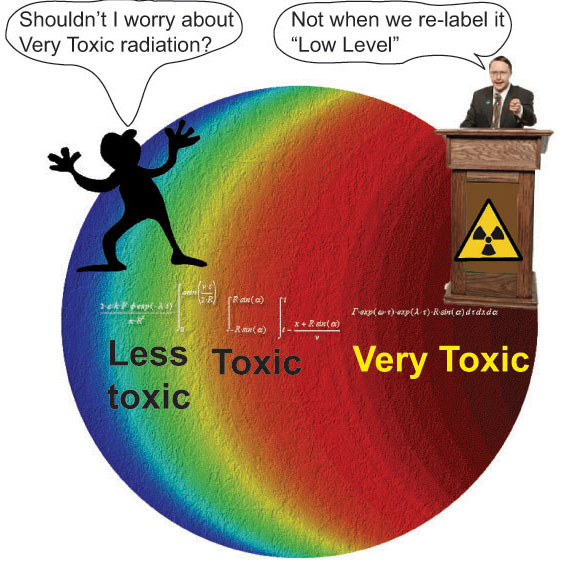
Each exemption from licensing can give the public a dose 5 times higher than we are allowed to get from a nuclear power reactor. There is no limit on the number of exemptions.
2 November 26, https://www.protectbetter.org/below-regulatory-concern-on-steroids
Radioactive waste does not belong in baby toys, frying pans, garden soil, jewelry, roads, cars, building supplies—or any of our everyday household items.The NRC is stealthily expanding the list of radioactive materials that can be used, sold, and disposed of without a license — to many hundreds.
Current legal dose, per person per year 100 millirems
What each exemption could give us 500 millirems
From nuclear power and other facilities releasing radioactivity into our air and water. That’s not okay, but it is the current legal dose to each of us.
The NRC is stealthily expanding the list of radioactive materials that can be used, sold, and disposed of without a license — to many hundreds.
They’re calling it “noncontroversial.” It is not. We defeated this many times before. We must defeat it again.
If enough people prove it’s controversial, adverse, and significant by November 4, the fast-track rule may be withdrawn.
If enough people prove it’s controversial, adverse, significant by November 4, the fast-track rule may be withdrawn.
Submit your comment now Deadline: November 4 by 11:59 PM EST
WHAT IS THE PROBLEM
The NRC is using a fast-track process to exempt hundreds of radioactive substances (radionuclides) from licensing — claiming it’s “noncontroversial” to avoid public analysis of health or environmental impact.
These hundreds of radioactive materials could go:
- To commercial recycling to make consumer goods — zippers, baby toys, belt buckles, building supplies
- To regular leaky trash dumps and incinerators
- To hazardous dumps and processing centers
- For deliberate use in everyday consumer goods and industrial products
“Below Regulatory Concern” is back, and it’s on steroids!
This is not new. Every effort to deregulate radioactive waste and materials since 1986 has been rejected. Dozens of towns, counties, and cities have resolutions, and 14 states have passed laws rejecting exemptions like these.
In 1992, Congress formally revoked the NRC’s Below Regulatory Concern (BRC) policy statements. The NRC is trying again — this time calling it something else.
The rule is labeled “noncontroversial.” We must prove it’s both controversial and has significant adverse effects in our comments by November 4 to force the NRC to withdraw it and respond.
Longform writing – whistling in the wind

2 November 2026 Noel Wauchope, https://theaimn.net/longform-writing-whistling-in-the-wind/
I might see this day before I die, the day when longform writing and longform reading come back into fashion. They are sure not here right now.
I found myself reading, by accident, a translation of “La Dame aux Camélias” – a subject that I was not at all interested in. But it was the beauty of the writing, even in translation, that got me in. Obviously a generational thing. My grandchildren would not be seen dead clutching such a book, or indeed, any book.
Language now is short, colourful, dramatic, often rather meaningless. But who cares? Ya gotta make an impact. Some sort of impact. Exciting, fun, or whatever. This is what the digital age is doing to our minds.
Fortunately, there are quite a lot of rescue systems. I think that here in Australia we are blessed with education systems that might be inadequate in some ways, but do allow for kids to have some time out in nature, sometimes in activities that happen in the absence of mobile phones. On the trains, I see some people reading books. High petrol prices might have encouraged people onto trains. Who knows? But at least, reading is possible on a train.
It is symptomatic of the crisis-ridden nature of our age. It really is not possible to get a sensible grip on current affairs without paying attention to detail. The prevailing very short torm communication does not allow for detail. And it often does not allow for logic either. The meaning of words gets blurred.
I confess to being a linguistic fascist. I see words like “incredible” used to mean excellent, wonderful – although the word really means “cannot be believed.” I see the word “only” being used in strange ways, when it means ‘just this one.” And there’s grammar – punctuation is almost completely removed as an old-fashioned waste of time. I want it back, because fascistic as it might be, punctuation does help us to understand meaning.
One day, an aberrant mosquito, or targeted AI, is going to hit some satellite and suddenly stop everything digital. After the chaos, people are going to have to relearn arithmetic, and old-fashioned language skills so that real communication happens again. Then we might find that sensible discussion about current affairs can become prevalent, with consideration of the needs and perspectives of the people involved, and acknowledgment of the historical details. My favourite hobby-horse about this is the controversy about the war in Ukraine. But there are plenty of other issues. Those of us who tediously write longform stuff are now whistling in the wind. But, maybe later?
Senator Rips Trump’s ‘Insane’ Plan For Iran Escalation, As Pentagon Transport Planes Land In Israel
Zero Hedge, by Tyler Durden, Saturday, Oct 31, 2026
There are continuing signs that President Trump may be ready to pull the trigger on ordering another major attack against Iran, though the American public might be wondering what the endgame or ‘mission accomplished’ moment might be – which has remained undefined and elusive after seven full months.
First, Israel’s national KAN News reported late Thursday that ten US Air Force transport planes arrived at airbases in southern Israel, part of a surge in Pentagon equipment transfers across the region. KAN said this is preparation for a “short, focused war with Iran” – with the aircraft likely stocked with air defense systems.
Confirmation of the airlifts arriving in Israel came a day after The Wall Street Journal reported that “The U.S. military is sending an additional Patriot system to Israel from Texas to beef up its missile defenses in the country, according to flight-tracking data and two officials with knowledge of the movement.”
“U.S. forces in the region have been restocking their munitions, and bomber aircraft and jet fighters are preparing for strikes, some of the officials said,” the report indicated. “An additional aircraft-carrier strike group and Marine expeditionary unit are also poised to join an armada of roughly 20 other warships operating in the Middle East next month, although some ships could rotate out.”
All of this build-up looks to be doing practically nothing to deter the Iranians from what are now daily attacks on internatonal shipping in the Strait of Hormuz. There have been at least a half-dozen tanker attacks, mine hits, or incidents resulting in serious damage in the strait this week alone. And another Friday:
IRAN CLAIMS OIL SUPERTANKER HIT MINE FRIDAY IN HOMRUZ: FARS
Next, the US has reportedly been warning Gulf allies of a new round of strikes on Iran to come. They must brace themselves for the inevitable Iranian retaliation, which it seems the Pentagon is powerless to stop.
Also, on Thursday top US admirals briefed the Commander-in-Chief on ‘options’ for a renewed war. This saw CENTCOM chief Adm. Brad Cooper at the White House, along with Defense Secretary Pete Hegseth and Joint Chiefs Chairman Gen. Dan Caine.
Will US regional allies cooperate and sign on to whatever next escalation phase might come?…………………………………………………………………. https://www.zerohedge.com/geopolitical/senator-rips-trumps-insane-plan-iran-escalation-pentagon-airlifts-land-israel
Trump Talks Peace While the CIA Is Fueling the War in Ukraine.
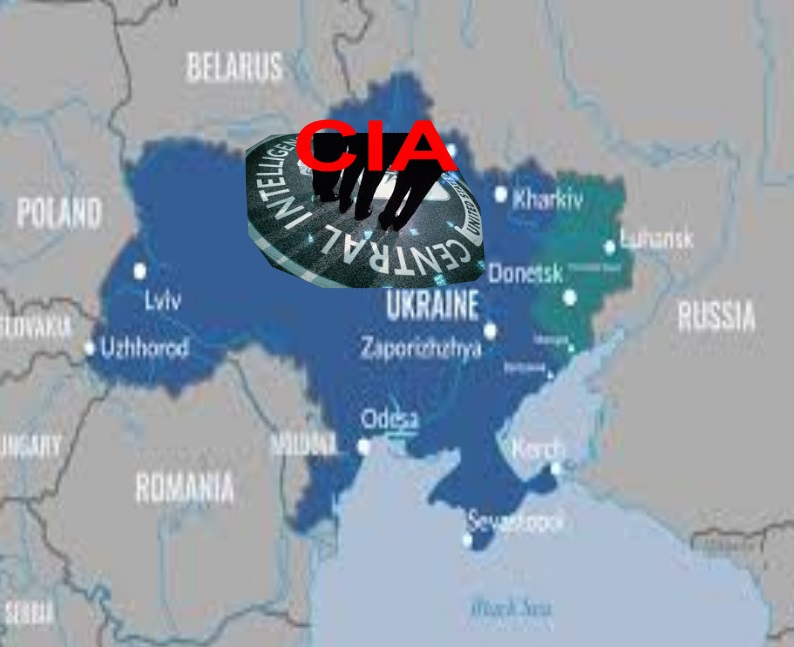
the United States is simultaneously paying to destroy Russian diesel production and begging Russia to sell it more diesel. You could not design a more incoherent policy if you tried.
Trump’s CIA is helping Ukraine destroy Russian refineries while he cuts deals to sell Russian diesel. His spy chief flies to Moscow to tell the Russians they cannot win, while his agency’s own analysts are afraid to tell him what they think.
27 October 2026 by Larry C. Johnson
I spent enough years at the Central Intelligence Agency that I learned how to read the press stories that the agency’s friends place for it. Shane Harris’s new profile of CIA Director John Ratcliffe in The Atlantic, published October 23, is one of those stories. It is written to make Ratcliffe look like the sober professional in a chaotic administration. But read it carefully and it confirms something Washington has spent four years denying: the United States is not merely supplying Ukraine. Through the CIA, it is fighting Russia.
“The CIA is in the lead”
Harris does not bury the lede. Armed with information the CIA provides, Ukraine’s military has been launching strikes deep inside Russia. American spy satellites give Ukraine early warning of incoming Russian missiles and drones. Among U.S. personnel on the ground in Ukraine, a retired senior officer who travels there frequently told him, “the CIA is in the lead.”
It gets better. A Baltic intelligence officer who works closely with the Americans told Harris that, whatever Donald Trump says in public, the CIA’s operations against Russia are now “much more aggressive” than they were under Joe Biden. Officers in the CIA’s Special Activities Center, the people who run covert and paramilitary operations, are reportedly among the happiest at Langley, because they are so busy. And this is not new. As Harris notes, the CIA helped build Ukraine’s modern intelligence apparatus after Russia took Crimea in 2014. This has been the agency’s war for more than a decade.
Let me translate that from the polite language of a magazine profile. American intelligence is identifying the targets inside Russia, American satellites are running Ukraine’s air-defense warning network, and American officers are “in the lead” on the ground. If Russia were doing that for Mexico against Texas, Washington would call it an act of war. Moscow has said for years that it is fighting NATO, not just Ukraine. Here, courtesy of The Atlantic and its anonymous sources, is the evidence.
Shooting ourselves in the fuel tank
Now comes the absurdity. According to Harris, the CIA’s success has become a problem for the President. The refinery strikes the agency helps enable have hobbled Russia’s economy. The International Energy Agency estimates that in the first eight months of this year, Ukraine hit a Russian refinery on average once every three days.
Those refineries make diesel. The world is short of diesel. The International Energy Agency says the shortage will run well into 2027. And Trump, according to Harris, blames the attacks on Russian refineries for the spike in prices and wants them to stop. He has threatened to cut off intelligence support to Ukraine unless Kyiv halts the refinery strikes.
Think about that. The CIA helps Ukraine knock out Russian refining capacity. Diesel prices soar. Then on October 9, in the middle of peace talks in Miami, the President announces a deal for Russia to sell its diesel on the world market, boasting on Truth Social that prices would be “COMING DOWN… AND FAST!” Harris reports that the announcement caught the negotiators by surprise, and that Putin made no reciprocal commitment. So the United States is simultaneously paying to destroy Russian diesel production and begging Russia to sell it more diesel. You could not design a more incoherent policy if you tried.
The spy channel
The most revealing passage in the piece concerns Ratcliffe’s trip to Moscow in August. Trump sent him to meet his counterparts in the Russian security services through what is informally called the “spy channel.” His message, Harris writes, was that nobody was winning: Russia had failed to make meaningful advances, and Ukraine could not expel Russian forces. The hope was that Ratcliffe could convince Putin he was pursuing a lost cause.
I have two problems with that. The first is the claim itself. Russia’s General Staff reported to Putin on October 16 that its forces had taken roughly 6,500 square kilometers and 310 settlements since January. You can argue the Russian figure is inflated, and I have. But even DeepState, the Ukrainian mapping project, counts about 1,300 square kilometers. Russia is advancing. It is not doing so as fast as Moscow claims, but “failed to make meaningful advances” is wishful thinking dressed up as intelligence.
The second problem is the messenger. Imagine you are the head of the SVR or the FSB. The director of the CIA flies into Moscow to tell you, spy to spy, that your war is a stalemate and you should give it up. You know perfectly well that his agency is the one feeding Ukraine the targeting data for the drones hitting your refineries. That is not a peace overture. That is a threat with a diplomatic passport. If Ratcliffe expected the Russians to take his assessment as neutral advice, he does not understand the people he was talking to.
Not what Truman built
Ratcliffe likes to talk about returning the CIA to its “roots.” He has the roots wrong. Harry Truman did not create the Central Intelligence Agency in 1947 to run paramilitary campaigns. He created it to collect and analyze intelligence from foreign sources and tell the President the truth, so that he would never again be blindsided the way Franklin Roosevelt was at Pearl Harbor. Covert action came in through the back door. Within a year, the National Security Council’s directive NSC 10/2 authorized covert operations, and the clandestine tail has been wagging the analytic dog ever since.
Truman saw it happening and said so publicly. In an op-ed published in the Washington Post on December 22, 1963, a month after John Kennedy’s assassination, he wrote that he had become disturbed by how far the CIA had strayed from “its intended role.” His words are worth quoting: “I never had any thought that when I set up the CIA that it would be injected into peacetime cloak and dagger operations.” The agency, he warned, “has become an operational and at times a policy-making arm of the government.” He said that in creating it, “the most important thing was to guard against the chance of intelligence being used to influence or to lead the President into unwise decisions,” and he asked that the CIA be “restored to its original assignment as the intelligence arm of the President.”
Sixty-three years later, Ratcliffe has turned Truman’s warning into a mission statement.
How covert action corrupts the truth
I want to explain why this matters, because it is not an abstract argument about organization charts. I watched it from the inside.
When an intelligence agency is simply collecting and analyzing information, its only stake in the outcome is getting the answer right. The moment the same agency is running a covert operation, it has a horse in the race. The operation has a budget, a sponsor on the Seventh Floor, careers riding on it and, most important, a President who has already been told it will work. Now the analysts down the hall are being asked to assess whether their own colleagues’ operation is succeeding. Bad news is no longer just bad news. It is an attack on the director’s program and an embarrassment to the man in the Oval Office.
The pressure is rarely an explicit order to change a conclusion. It is subtler and more corrosive than that. The pessimistic assessment gets sent back for more sourcing. The analyst who keeps writing that the operation is failing gets a reputation for not being a team player, and does not get the next promotion. The briefing for the President leads with the success stories and buries the costs in an annex. After a few rounds of that, as Julia Curlee told Harris, officers simply stop telling the hard truths and “learned to avoid” what the White House did not want to hear.
We have seen where this leads. The Bay of Pigs was planned by the clandestine service and kept walled off from the agency’s own analysts, who might have pointed out that there was no evidence the Cuban people were about to rise up against Castro. The operators sold the President the operation they wanted to run, and the analysis that would have stopped it never reached his desk. The pattern repeats whenever the agency becomes both the player and the referee.
Now look at Ukraine. The CIA is, by The Atlantic’s account, “in the lead” on the ground, helping run a campaign of deep strikes inside Russia. The same CIA is responsible for telling the President whether that campaign is working and whether Ukraine can win. Is it any surprise that the agency’s message, the one Ratcliffe carried to Moscow, is that Russia has “failed to make meaningful advances”? An agency that has spent twelve years building Ukraine’s intelligence service and now directs its targeting has every institutional incentive to report that its war is going well, or at least not badly. The negative consequences, Russian advances, Ukrainian casualties, a diesel shortage that is hammering Europe and American consumers, are exactly the things an agency in that position is least likely to put front and center.
That is the corruption Truman feared. Not that the CIA would lie outright, but that it would slowly start serving the operation instead of the President, and the President would make decisions based on intelligence shaped by people who need him to keep going.
An agency that tells the boss what he wants
Harris also reports on the state of the CIA itself, and it isn’t pretty. Ratcliffe pledged at his confirmation hearing to “conduct covert action at the direction of the president, going places no one else can go and doing things no one else can do.” The covert-action side is thriving, from Ukraine to Venezuela to the CIA’s air strikes on suspected drug boats, which legal experts say may violate the laws of armed conflict. One former officer told Harris, “The agency is over its skis right now.”
The analysts, meanwhile, are miserable. More of them report that the objectivity of their work is being undermined. Julia Curlee, a senior analyst who resigned in May, put it bluntly: “Ratcliffe isn’t protecting the CIA from politicization; he’s leading it.” Current and former officers say they have never seen so many retirements and resignations. An agency where the paramilitary officers are thrilled and the analysts are afraid to tell hard truths is an agency built to fight wars, not to understand them. And Harris himself notes that Trump did not heed the intelligence community’s warnings about how Iran would respond to American attacks. We are all paying for that one now.
Pick a policy
So here is where the United States stands. The President calls Zelensky “more difficult to deal with” than Putin and urges Ukrainians to elect someone else. His CIA director is running operations against Russia that are more aggressive than Biden’s. His CIA is helping Ukraine destroy Russian refineries while he cuts deals to sell Russian diesel. His spy chief flies to Moscow to tell the Russians they cannot win, while his agency’s own analysts are afraid to tell him what they think.
That is not a strategy. It is a contradiction that the American people are paying for at the pump, and that the Ukrainians are paying for with their lives. If Washington wants peace, it should stop being a combatant. If it wants to fight Russia, it should have the honesty to say so, to Congress and to the voters, before the midterms rather than after. What it cannot keep doing is both, and pretending it is doing neither.
19 November – Webinar – The Reality of Reprocessing Radioactive Wastes

Date: Thursday, November 19, 2026
Time: 11:00 AM Pacific Time (US & Canada) / 2:00 PM Eastern / 7:00 PM UK / 8:00 PM CET
Hosting Organizations:
- WANA – Welsh Anti-Nuclear Alliance
- Ecological Options Network (EON)
Featured Organizations:
- Radioactive Waste Management Associates (RWMA)
- ACRO
- Nuclear Information and Resource Services (NIRS)
- Collectif Piscine Nucléaire (Stoppons la piscine nucléaire à La Hague)
- Nuclear Waste Advisory Associates
Real-time translated captions will be available during the live event in French, German, Japanese, Spanish, Welsh, and more.
Anti-nuclear power author to speak at Shrewsbury Green Party event

By Dominic Robertson, Chief reporter, 1st Nov 2026, https://www.shropshirestar.com/news/anti-nuclear-power-author-to-speak-at-shrewsbury-green-party-event-9321996
Linda Pentz Gunter’s book challenges the UK Government’s plans to expand nuclear power
An internationally recognised anti-nuclear campaigner will visit Shrewsbury for a Green Party event this month.
Linda Pentz Gunter, founder and executive director of Beyond Nuclear, will speak at an event organised by Shrewsbury Green Party on Thursday, November 12.
The talk will explore the arguments in her new book No to Nuclear: Why Nuclear Power Destroys Lives, Derails Climate Progress and Provokes War. The book challenges the UK Government’s plans to expand nuclear power.
The author argues that nuclear power is too expensive and too slow to tackle the climate emergency, saying it risks diverting investment away from renewable energy.
She also talks about damaging consequences for human health, wildlife and the environment.
The talk will also discuss the links between the civilian nuclear industry and nuclear weapons.
Linda Pentz Gunter said: “I wanted to write a book that would appeal to a mass
market audience, especially those in the climate movement who may have fallen prey to the saturation propaganda campaign being waged by the nuclear industry that paints itself as a solution to the climate crisis, when it is anything but.”
Jim Reekie from the Shrewsbury Green Party said: “We’re delighted to host Linda for this talk and discussion about nuclear power. As we work to build a more sustainable energy system, nuclear power is a thorny issue even within the Green Party itself.
“Linda’s knowledge and experience will give a fascinating insight into some of the key problems with relying on nuclear to decarbonise our grid. Everyone is welcome to attend.”
The event will include a talk, discussion and audience Q&A, offering an opportunity to debate the future of nuclear energy in the UK.
Admission costs £5 and copies of the book will be available for £10 (usual price £14.99).
People can book place online.
“The Worst Trick or Treat Ever” Say Workington People About the Plan to Import Japan’s Sodium Coolant Nuclear Waste.
By mariannewildart on October 31, 2026, https://mariannewildart.wordpress.com/2026/10/31/the-worst-trick-or-treat-ever-say-workington-people-about-the-plan-to-import-japans-sodium-coolant-nuclear-waste/
Yesterday in Workington town centre the petition to Stop Japan’s Nuclear Plant Wastes was launched.
Dozens of Workington residents signed the paper petition in just one and a half hours which will be added to the online petition making almost 1000 signatures in the first week.
One of the signatories was former Mayor of Allerdale, Derek Thompson, who wholeheartedly agreed with the petition text that Cumberland Council should “put their constituents and neighbouring areas before the interests of the nuclear industry and halt the plan to bring volatile liquid sodium coolant to the Port of Workington from the failed Japanese Monju reactor.”
Many people signing the petition yesterday in Workington in the shadow of the famous Lookout Clock said that the plan to bring Japanese nuclear waste to Workington was the “worst ever Halloween trick or treat!” The “treat” would be 20 short term jobs over just 7 years while the “trick” would be the very high risk of sodium coolant being exposed to water or air resulting in explosion along with vapour clouds of caustic soda.
Even the Gulls in Workington town centre came to support the push back against the plan to transport the Japanese Monju nuclear plant’s sodium coolant 15,000 km to Workington. The sodium coolant plant is being aggressively promoted by Cumberland Council who have already sunk £1.4M of Workington’s Town Deal into preparing the ground for the Japanese nuclear waste. The Town Deal money was meant for the benefit of the public not for the benefit of nuclear companies intent on bringing Japanese nuclear waste to Workington. Alarmingly Cumberland Council who are promoting the plan as “partners” with the developers are also the planning authority who will be “scrutinising” the plan. This conflict of interest is blatant and flies in the face of local democratic accountability.
Canada: City opposes deep repository designation; court denies NSDF challenge
Oct 21, 2026, https://www.ans.org/news/2026-10-21/article-8505/canada-city-opposes-deep-repository-designation-court-denies-nsdf-challenge/
Two recent developments in Ontario, Canada, could have ramifications for the country’s efforts to dispose of its legacy nuclear waste.
In the province’s western half, the city of Dryden voted to formally request that Canada’s Major Projects Office deny “project of national interest” status for a proposal for a nearby deep geological repository.
To the east, Canada’s Federal Court of Appeal ruled that the Canadian Nuclear Safety Commission did not have an expanded duty to consult the Kebaowek First Nation regarding construction of the Near Surface Disposal Facility (NSDF) near Chalk River Laboratories, 200 kilometers northwest of Ottawa. It also upheld the CNSC’s initial approval of the NSDF site.
Canada’s deep geological repository: Canada’s nuclear waste appeared in the news on October 14, when Dryden’s city council issued a statement announcing its intent to submit an official letter to the Major Projects Office. The letter would note the city’s opposition to the federal government’s efforts to fast-track development of the repository planned for the site of the Revell batholith, between the township of Ignace and the Wabigoon Lake Ojibway Nation (WLON), the announcement said.
Canada’s Nuclear Waste Management Organization (NWMO), the nonprofit responsible for the country’s used fuel and other radioactive materials, began exploring possible sites for a deep geological repository in 2010. The Ignace-WLON site emerged as one of two final contenders in 2019, and in 2024, both Ignace and WLON agreed to serve as host communities for the facility
Progress toward building the repository continued quickly from that point. On January 5 of this year, the NWMO announced that it had filed its initial project description with regulatory agencies. Six months later, Canada’s government announced that it was considering listing the repository as a “project of national interest,” a label that would afford it expedited regulatory processes under the Building Canada Act. The Canada Gazette then published official notice of the possible designation on September 22.
The city of Dryden, located about 100 kilometers northwest of Ignace and about 20 kilometers northwest of WLON, did not state in its announcement that it opposes the repository. Rather, according to Jack Harrison, Dryden’s mayor, “The NWMO still has not adequately addressed their project impacts on our community.”
Dryden serves as one of Ontario’s regional service hubs—a site that provides several government services to surrounding towns and communities. The city said that despite the NWMO’s assessments that Dryden would “experience significant socioeconomic effects” from the repository, unlike Ignace or WLON, the town has yet to sign a hosting agreement with the NWMO, suggesting that accelerated development of the repository could put a disproportionate strain on Dryden’s infrastructure.
In May 2026, the township of Ignace announced its receipt of a lump sum of C$10 million (about $7.1 million) as the discretionary benefit allowed to the town per the host agreement it signed with the NWMO in March 2024. Although details of the host agreement between the NWMO and WLON are not publicly available, in March 2025 WLON members received payouts from a “milestone payment” made to the WLON government.Commenting on Dryden’s hesitation, Pierre Cuguen, spokesperson for the Major Projects Office, said, “Should the project be listed under the [Building Canada] Act, the Major Projects Office would coordinate a regulatory review process to develop specific technical conditions to mitigate, avoid, and, where appropriate, offset potential project effects,” per CBC News
Canada’s deep geological repository has not yet been designated a project of national interest; the public comment period for the possible designation remains open until October 26.
The Near Surface Disposal Facility: Separately, on October 16, Canada’s Federal Court of Appeal issued a decision that rejected Kebaowek First Nation’s challenge to the CNSC’s approval of the NSDF site and overturned a lower court’s decision in favor of the First Nation community.
Work on the NSDF began in 2016, when Canadian Nuclear Laboratories, which operates the Chalk River Laboratories facility, submitted a project description and initiated public hearings for a low-level waste repository as part of its efforts to update Chalk River. CNL submitted its construction application in July 2023; the CNSC approved it in January 2024.
However, in June 2021, Canada passed its UN Declaration Act. This legislation requires the federal government to ensure that its laws conform to the United Nations Declaration on the Rights of Indigenous Peoples (UNDRIP), which requires that Indigenous nations have the opportunity to give “free, prior, and informed consent” to decisions that involve their communities.
Kebaowek First Nation brought their challenge to the NSDF construction site approval under the UN Declaration Act in February 2024, arguing that the CNSC did not provide consultation in line with UNDRIP’s principles and standards for consent. A federal judge agreed and ordered CNL, the CNSC, and Kebaowek First Nation to begin expanded consultations, giving the parties a deadline of September 30, 2026.
CNL and the CNSC appealed the decision, yet proceeded with the consultations, but on September 24, Kebaowek First Nation suspended the talks, stating that CNL and the CNSC had not provided adequate funding to support development of the First Nation’s own legal framework for granting consent, a claim that CNSC denied in a statement to CBC News.
The appeals court decision followed on October 16. In it, along with stating that the CNSC did not err in granting its approval to NSDF construction at the Chalk River Laboratories site, the court decided that the UN Declaration Act provides guidance for implementing UNDRIP standards into future laws but does not require those standards to be incorporated into current laws. It also ruled that the CNSC is not a governmental body with authority to decide how to apply UNDRIP.
At the time of this writing, both Kebaowek First Nation and the CNSC have stated that they are reviewing the decision and considering their next actions.
With ‘Largest Coordinated Port Action Ever,’ Dockworkers in 22 Countries Strike Against Gaza Genocide
“We, the workers in the ports, know very well that without us nothing moves. Without our hands, containers remain still, ships are not loaded, the war machines are blocked.”
Jake Johnson, 30 Oct 26, https://www.commondreams.org/news/dockworkers-strike-gaza-genocide
Dockworkers in more than 20 countries—from France to India to Greece—are withholding their labor on Friday to demand an end to Israel’s genocidal assault on Gaza and highlight the role that commercial ports play in fueling deadly militarism worldwide.
Organizers said the work stoppages, led by dockworkers’ unions at 113 ports across 22 countries, would be the “largest coordinated port action ever,” easily surpassing the international day of action held in February. No Harbour for Genocide, a collective of trade unions and others supporting the day of action, said $2.8 billion worth of cargo will be halted at Mediterranean ports, where workers are planning to strike for 24 hours.
“A cargo refused in one port sails on to the next,” said No Harbour for Genocide. “Refused in every port, it stops, and the workers have enforced the embargo that governments announced and did not.”
In a joint statement last month announcing the day of action, dockworkers’ unions from Türkiye, Morocco, Italy, France, Greece, Italy, and Basque Country laid out their demands:
- An immediate end to the genocide of the Palestinian people and the opening of safe corridor for humanitarian aid.. An end of colonization, occupation and apartheid imposed to Palestinian People and the recognition of an independent Palestinian state recognized by the international community on the 1967 borders, with East Jerusalem as its capital.
- An end to the war in the Middle East. No support, no facilitation, no participation in the US-Israeli war against Iran, Lebanon or any other imperialist intervention. Military fleets and bases out of the region. We express our full solidarity to the people of Cuba and Venezuela and Sudan menaced by US imperialism and we call for defend people’s sovereignty, resources, territorial integrity, peace with justice, and the right for resistance for self-determination.
- Ports must not be used for the transport of weapons, ammunition, military equipment and troops. We call on unions to strengthen vigilance, to inform workers, to expose the cargoes of war, and to organize mass collective resistance with all our rightful available means and our struggle.
- An end to the militarization of ports and critical infrastructure. Ports belong to the peoples and the workers. They are not bases for NATO, the USA or the EU, nor tools of shipowners and monopoly groups.
- No to the war economy and armaments. The money must go to wages, collective agreements, health, education, social needs, and the protection of life and safety at work.
- Health and safety measures in the workplaces. Not one worker dead for profits. An end to intensification, subcontracting, dangerous conditions, and employer arbitrariness.
- Collective agreements with real wage increases, stable jobs with rights, a retirement policy with better pensions, and a reduction of working time. Technological developments, mechanization, automation, the use of AI and the development of ports must serve the needs of workers, and not lead to the intensification of work or the disappearance of their jobs.
“Our strength lies in organization. It lies in our unions, in general assemblies, in collective decisions, in solidarity among workers from different countries,” the unions said. “We, the workers in the ports, know very well that without us nothing moves. Without our hands, containers remain still, ships are not loaded, the war machines are blocked.”
Al Jazeera noted that of the ports participating in Friday’s actions, “Genoa, Livorno, and Gioia Tauro in Italy, Marseille in France, Piraeus in Greece, and Tangier in Morocco all have proven links to weapons shipments to Israel.”
The strikes come as Israel’s genocide in Gaza continues despite a ceasefire agreement that putatively took effect last October. A United Nations report published earlier this week noted that “Israeli authorities and forces continue to commit genocidal acts” in Gaza “even after the so-called ceasefire agreement, with the intent to destroy the Palestinian people, in whole or in part.”
The report found that Israel—which is armed and supported diplomatically by Western governments, principally the United States—has “committed war crimes and the crimes against humanity of extermination, persecution, torture, rape, and other forms of sexual violence” in the illegally occupied Palestinian territories.
Port Workers and Communities for Palestine said in a statement Friday that will be demonstrating at the Port of Elizabeth in New Jersey. The coalition said the New Jersey port is the only port on the East Coast of the US where a protest is expected. Demonstrations are also expected in Oakland and San Francisco, California.
“We know that, regardless of what union leadership may decide, workers everywhere stand in solidarity with Palestine,” said Port Workers and Communities for Palestine. “We will be out there on Friday to show them that they are part of this movement too. Workers have the power to stop the war machine.”
Hegseth Fires Pentagon’s Top War Planner

Over two dozen high-ranking generals and admirals have been dismissed or have quit since Hegseth was named war secretary
October 30, 2026, https://thecradle.co/articles/hegseth-fires-pentagons-top-war-planner-amid-preparations-to-reignite-war-on-iran
US Secretary of War Pete Hegseth ousted Army Lieutenant General Brett Sylvia, who was responsible for drafting military options for war against Iran, The Atlantic reported on 28 October.
Sylvia is the second officer dismissed from the Joint Staff’s top strategy and planning post this year, and he was removed without explanation, with no replacement named.
The general’s removal marks at least the 26th dismissal of a general or admiral since Hegseth assumed office in January 2025, and comes as US President Donald Trump weighs renewed escalation against Iran once the US midterm elections conclude on 3 November.
“We may do another little Epic Fury,” Trump told supporters at a rally last week, referring to the name given to the US-Israeli joint assault on Iran launched in February, “Or they’ll agree.”
Washington has since warned its Gulf allies to expect a “short, intense” attack on Iran after the midterms, passing the message through diplomatic and military channels, the Wall Street Journal (WSJ) reported on 28 October, citing people briefed on the exchanges.
US Central Command (CENTCOM), which is directing the war, has drawn up options ranging from a brief wave of strikes on Iran’s nuclear sites to a prolonged campaign designed to push Iran’s economy toward collapse and force Tehran into negotiations.
Sylvia’s ouster is the latest in a sweeping campaign to purge the US military’s command structure of officers on the basis of political loyalty to Trump and his administration rather than merit.
Among those removed was Defense Intelligence Agency director Lieutenant General Jeffrey Kruse, who was fired after his agency reportedly assessed that the June 2025 US strikes had only delayed Iran’s nuclear program, contradicting Trump’s own claims of absolute success.
Others have reportedly been pushed out over past ties to diversity policies that Hegseth dismisses as “woke,” a label he has used to justify the cuts.
Senator Mark Kelly, a former Navy combat pilot, has called the firings a “purge” that will take the military years to recover from.
1 This Month



19 November – Webinar – The Reality of Reprocessing
Time: 11:00 AM Pacific Time (US & Canada) / 2:00 PM Eastern / 7:00 PM UK / 8:00 PM CET
Register for the Zoom Event Here


Shut down the radiation-damaged Heysham nuclear reactors now
To see nuclear-related stories in greater depth and intensity – go to https://nuclearinformation.wordpress.com

Say No to NASA’s Reckless Nuclear Reactor on the Moon
Say No to NASA’s Reckless Nuclear Reactor on the Moon
-
Archives
- November 2026 (32)
- October 2026 (302)
- September 2026 (339)
- August 2026 (330)
- July 2026 (355)
- June 2026 (287)
- May 2026 (306)
- April 2026 (356)
- March 2026 (251)
- February 2026 (267)
- January 2026 (308)
- December 2025 (358)
-
Categories
- 1
- 1 NUCLEAR ISSUES
- business and costs
- climate change
- culture and arts
- ENERGY
- environment
- health
- history
- indigenous issues
- Legal
- marketing of nuclear
- media
- opposition to nuclear
- PERSONAL STORIES
- politics
- politics international
- Religion and ethics
- safety
- secrets,lies and civil liberties
- spinbuster
- technology
- Uranium
- wastes
- weapons and war
- Women
- 2 WORLD
- ACTION
- AFRICA
- Atrocities
- AUSTRALIA
- Christina's notes
- Christina's themes
- culture and arts
- Events
- Fuk 2022
- Fuk 2023
- Fukushima 2017
- Fukushima 2018
- fukushima 2019
- Fukushima 2020
- Fukushima 2021
- general
- global warming
- Humour (God we need it)
- Nuclear
- RARE EARTHS
- Reference
- resources – print
- Resources -audiovicual
- Weekly Newsletter
- World
- World Nuclear
- YouTube
-
RSS
Entries RSS
Comments RSS

