China Will Dominate Global Nuclear Energy Through 2035, Analyst Says.

COMMENT. This all sounds great for the nuclear industry.
But let’s not forget – China Keeps Beating Renewable Targets And Missing Nuclear Ones
Oil Price, By Haley Zaremba – Sep 20, 2026
- China added 34 gigawatts of nuclear capacity over the last decade while the US added just one plant, Georgia’s long-delayed Plant Vogtle.
- Beijing signed a new deal with the IAEA to share its expertise on high-temperature gas-cooled reactors, a rare opening from a historically secretive sector.
- Analysts expect China to overtake the US as the world’s top nuclear energy producer within the next decade, with AI’s power demand adding urgency.
The future of nuclear energy is in China’s hands. While the United States remains the world’s largest producer of nuclear energy, China’s sector is growing at such a rapid clip that it is expected to overtake France as well as the United States to become the world’s leading nuclear power producer within the next decade. In addition to this rapid expansion of traditional nuclear power capacity, Beijing has also quickly become the global leader in a broad and diverse range of advanced nuclear power technologies.
“By a wide margin, China will have the world’s most dynamic and significant nuclear industry through 2035,” Damien Ma, energy lead analyst for Gavekal Technologies, wrote in a recent report, as quoted by the South China Morning Post. “Construction efficiencies mean China can build a new plant in about six years, compared with more than a decade for the latest Vogtle reactors in the US,” Ma went on to say.
The United States has added just one nuclear plant in the last decade, Georgia’s long-delayed, over-budget, and controversial Plant Vogtle. Over the same time, China added a staggering 34 gigawatts of capacity. And, Beijing’s latest five year plan shows that China has no intentions of slowing down……………………………………………………………………………………………………………………………………………………………………………………….
while China is historically quite secretive about its technological advancements and cutting-edge energy sector developments, this week Beijing made a surprising move to share its expertise with the rest of the world. This week, China signed a deal with the International Atomic Energy Agency (IAEA) to more freely share its knowledge on high-temperature gas-cooled reactors (HTGRs) with other countries. HGTRs are a form of advanced fourth-generation reactor that is capable of producing nuclear energy at extremely high temperatures, opening avenues for use in a variety of industrial applications.
The new deal “covers cooperation in HTGR research and development, reactor design, construction, commissioning and operation,” as well as the exchange of “information on supply chains and personnel training,” according to a recent Interesting Engineering report. “The deal could give other countries greater access to China’s engineering experience with HTGRs as interest grows in nuclear systems that can provide both electricity and high-temperature industrial heat.”………….https://oilprice.com/Alternative-Energy/Nuclear-Power/China-Will-Dominate-Global-Nuclear-Energy-Through-2035-Analyst-Says.html
France’s EDF plans 10 small nuclear plants in Europe by 2035

the entire project would require “tens of billions” of euros in investments
By Francesca Landini, September 19, 2026
- Summary
- Companies
- First SMR to be built in France, with another expected in Italy
- EDF says 10-reactor project would require tens of billions of euros in investment
- Nuward reactor is expected to produce 400 megawatts of power and heat
MILAN, Sept 18 (Reuters) – France’s EDF plans to build 10 small modular nuclear reactors (SMRs) in the European Union by 2035 under a project aiming to help the bloc reduce its dependency on fossil fuel imports, an EDF executive said on Friday.
The state-owned French power group plans to use a technology developed by its NUWARD subsidiary for the SMRs, EDF Senior Vice President Vakisasai Ramany said at an event hosted by its Edison unit and attended by Italian companies that will be part of the supply chain.
The first SMR is due to be built in France with another expected to be located in Italy with assistance from Edison (EDNn.MI), opens new tab and potential support from energy contractor Saipem (SPMI.MI), opens new tab and construction group Webuild (WBD.MI), opens new tab among others.
Ramany added that EDF was also in discussions with governments over the possibility of building some of the small nuclear plants in Poland, Belgium and Finland.
CATCHING UP ON SMALL MODULAR REACTORS
EDF, Europe’s largest nuclear power developer, is rushing to catch up with the United States and others that already have plans in place to start manufacturing by the end of the decade.
The French group was originally planning a more ambitious reactor project. But design issues and fears of delays and cost overruns prompted a rethink and switch to a simpler, more proven technology.
“It is not the best technology that hits the market, it is the technology that addresses as best as possible a number of expectations,” Ramany said.
NUWARD SMR TO PRODUCE POWER AND HEAT
NUWARD’s small reactor is expected to produce 400 megawatts of power and have the flexibility to deliver heat too, making it suited to providing stable baseload power for industry.
Ramany said the entire project would require “tens of billions” of euros in investments and added that construction of 10 reactors would help to spread the costs and be more efficient.
“The targeted cost for electricity (from NUWARD SMRs) is about €100 ($115) per megawatt hour … We are talking about dispatchable energy, which should not be compared with the cost of renewable energy, but rather with gas generation,” said Edison CEO Nicola Monti.
Italy’s government is expected to give its final approval next week to a law on nuclear power generation, opening the way to nuclear power stations in a country that banned them almost 40 years ago following a referendum.
US military had close call after using AI for false intelligence report, sources say

the episode with the Chinese ship underscores a different, and more immediate risk: human beings making disastrous decisions based on inaccurate or misleading information generated by AI or other automated systems. Sources said that the military is rapidly turning to AI to help with targeting, an area which holds the obvious risk of fatal mistakes.
ByKatie Bo Lillis, and Zachary Cohen
The intelligence report, circulated across the US military this spring in the midst of the war with Iran, immediately set off alarm bells: A Chinese ship in the Middle East was transporting components of a nuclear weapons program.
The US military swung into action with plans to intercept the vessel, according to four sources familiar with the episode. According to two of the sources, armed members of the US military were preparing to board the ship. Military planes were in the air, one of those sources and another source familiar with the incident said.
It was only just before the planned operation that officials dug deeper into the report put together by a special operations command analyst and found it had been generated with the help of artificial intelligence (AI) — and that a chatbot the analyst had used inaccurately identified the material the ship was carrying. CNN was not able to learn what the misidentified cargo was.
The report, according to one of the sources, was “entirely false.” But it also “almost started a war,” the source said. Any US operation against a Chinese vessel could have risked spiraling into an armed conflict between the two nations.
Across the US military and the intelligence community, officials are pushing to weave AI into nearly every facet of their work, from analyzing the huge volumes of raw intelligence the US collects and selecting targets for strikes, to more mundane applications like managing budgeting, logistics and supply chains.
But the episode underscores the profound risks of using this powerful, new and relatively poorly understood technology for targeting in the middle of a war. Analysts have long feared that AI could lead to a catastrophic miscalculation if nation states are relying on poor or corrupted data — the kind of miscalculation that might lead the United States to fire on a Chinese ship based on inaccurate information.
In this particular instance, the analyst queried a chatbot about some intelligence reporting on the ship’s manifest that originated with US Special Operations Command Pacific, based in Hawaii. It was not clear whether the chatbot was a commercially available one or a US government product.
“The internal tools are mostly just copies of the commercial stuff wearing lipstick,” a former senior US official familiar with the AI systems used by military and intelligence analysts.
The bot fused together open-source intelligence with secret signals intelligence in government holdings and reached its fateful conclusion about the material the ship was carrying.
The analyst then used AI again to package the findings into a standard intelligence report — the kind that is trusted by military officials — and disseminated it.
US Special Operations Command Pacific and the Pentagon did not respond to a request for comment.
The rationale for the rapid adoption of AI is that it can help the military make battlefield decisions, like which targets to strike or which military assets to move where, faster. Officials say the US can’t afford to fall behind in integrating AI in case it must one day fight China or another adversary who would potentially be able to stay one step ahead of the US.
In January, Defense Secretary Pete Hegseth released his agency’s “Artificial Intelligence Acceleration Strategy” in a bid to speed up the military’s use of AI.
“We will unleash experimentation, eliminate bureaucratic barriers, focus our investments and demonstrate the execution approach needed to ensure we lead in military AI,” Hegseth said in a speech announcing the strategy.
The strategy also pushes for its broad use across the military, ordering the department to make AI available via several programs with the aim of “democratizing AI experimentation and transformation across the Department by putting America’s world-leading AI models directly in the hands of our three million civilian and military personnel, at all classification levels,” a memo announcing the strategy said.
But the effort is decentralized, multiple US officials familiar with the dynamic said, with different parts of the government using different tools under different orders and safety standards. There’s no one set of standards for how the US verifies the information generated by these tools. The constellation of different AI systems being deployed by disparate corners of the military and intelligence community means that the relative reliability and functionality vary widely.
For weeks, Washington policymakers have been intensely debating AI after a series of dire warnings from Silicon Valley engineers and tech CEOs of the possibility that AI could break free of human constraints, with potentially civilization-ending consequences.
But the episode with the Chinese ship underscores a different, and more immediate risk: human beings making disastrous decisions based on inaccurate or misleading information generated by AI or other automated systems. Sources said that the military is rapidly turning to AI to help with targeting, an area which holds the obvious risk of fatal mistakes.
“AI in targeting is definitely something that is ramping up and there is no real guidance for how having a human in the loop will prevent civilian casualties or fratricide,” another source familiar with the military’s current policies said.
The kind of “hallucination” that the tool used by the analyst in this case conjured has not been an isolated incident across the intelligence community since these tools began proliferating across government, according to one of the sources.
For some older intelligence officials — even those who broadly support the use of AI inside the military — AI has put pressure on analysts to produce and disseminate intelligence faster, opening the door for mistakes. Young analysts in particular, several sources said, are natives on these tools and more likely to trust them uncritically.
“AI allows you to get to a bad idea faster,” one of the sources said.
Idaho is covering up nuclear dump plan as “innovation”
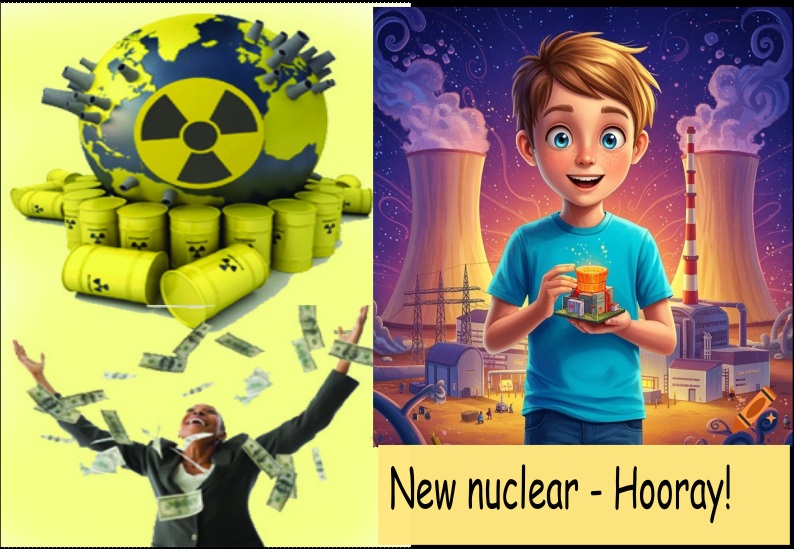
Idaho is being asked to accept a permanent nuclear burden in exchange for a few temporary construction jobs and mythical money. The waste isn’t leaving. The feds and the nuclear industry have had decades to solve this, and they haven’t.
A dump, not a future
by beyondnuclearinternational, https://beyondnuclearinternational.org/2026/09/13/a-dump-not-a-future/
The “innovation” pitch for Idaho doesn’t match the radioactive reality, writes Leigh Ford
The Department of Energy (DOE) has a problem. They have a nuclear addiction and a growing mountain of toxic, radioactive waste. To solve it, they are eyeing Idaho once again. Governor Little recently signed a Memorandum of Understanding (MOU) with the DOE, and they are trying to sell it to us as a “Nuclear Lifecycle Innovation Hub.”
We’re not buying it. This is a nuclear dump dressed up as an “innovation campus,” and DOE is simply hoping that the temptation of jobs and billions of dollars will convince us to turn Idaho into America’s nuclear waste dump.
Recently, I sat down with Roland Beres, who wanted to get the Snake River Alliance’s reaction to the governor’s signing the MOU with DOE. Roland has a lot of experience following nuclear issues.
Notably, he covered events leading up to the Idaho Settlement Agreement, when Govenors Batt and Andrus were fighting the feds for sending out-of-state radioactive waste into Idaho. That history matters, because it tells us this isn’t a new fight — it’s the same fight, with slicker marketing.
Today’s political machinery is quickly paving the way for Manhattan Project 2.0, endangering our health and silencing local opposition. Per Executive Order 14300, the Nuclear Regulatory Commission is revising radiation standards and reducing protections for workers and communities. Idaho’s Senate passed SCR 120 to claim that reprocessing nuclear waste fits into the Idaho Settlement Agreement framework. Not to be left out, Idaho’s House passed HB 714, which prohibits local governments from saying “NO” to these dumps and reprocessing facilities in their communities.
The Nuclear Myths

The first myth is money. The DOE isn’t handing Idaho billions of dollars. According to their own request for proposals, they are looking for projects that *prioritize private and state capital*. They offer “targeted, conditional, and time‑limited federal support.” In other words, Idaho taxpayers are on the hook for the cost, while the feds offer a loan and a promise to protect themselves from “open-ended liabilities.”

The second myth is the jobs. Idaho’s response to DOE’s request states we already have the infrastructure and can start fast. That translates to fewer construction jobs. And while the Tech bros designing these untested reactors are boasting that they “practically run themselves,” that means they aren’t going to hire many permanent workers. The promise of “thousands of jobs” is a mirage. We might fix a few roads, but beyond that, thousands of long-term jobs are far-fetched.

The third myth is the waste. Our radioactive legacy can still be seen out at the site in the Arco Desert. Last year, when the Snake River Alliance visited Idaho National Lab I noticed the waste we got from the Three Mile Island meltdown in 1979 is still there, sitting in huge concrete sarcophagi. We saw a warehouse stacked with barrels of waste, much from the Rocky Flats bomb factory—barrels that needed to be recategorized because we have no idea what Colorado actually shipped us. We drove around the 90-acre burial grounds, where a “thousand-year cap” will be placed.
Governor Little might say “that’s all been cleaned up,” but that is dangerously deceptive. We can’t completely clean up nuclear waste. INL has done a good job mitigating a lot of it, but the truth is there is no permanent nuclear waste repository in the country. The waste just keeps piling up, mostly at nuclear power plants back east, and if that waste comes here, it will stay in Idaho permanently. The DOE has a track record of broken promises, and they are not to be trusted.
A Dangerous Bet

Some politicians and nuclear cheerleaders claim we can reprocess our way out of this. We cannot. Some point to the DOE’s Waste Isolation Pilot Project (WIPP) facility in New Mexico, but it only takes defense-related transuranic waste, and was never meant to be permanent. There have already been two 10-year extensions since 2010, and New Mexico isn’t a solution for Idaho’s burden. New Mexicans don’t want a permanent nuclear dump either.
Idaho is being asked to accept a permanent nuclear burden in exchange for a few temporary construction jobs and mythical money. The waste isn’t leaving. The feds and the nuclear industry have had decades to solve this, and they haven’t. We shouldn’t be the dumping ground for their failures. It is time to reject this dangerous bet and demand a real plan that doesn’t put our people, water, and land at further risk.

Idaho is not America’s dumping ground – not for cash, not for jobs, and not for nuclear waste that outlives our great, great grandchildren’s grandchildren.
Leigh Ford is the executive director of the Snake River Alliance.
Bechtel splits with Bill Gates-backed Natrium nuclear project, files layoff notice

Bechtel and TerraPower couldn’t agree on a way to move forward to the next phase of the project
The move impacts about 200 employees at the company’s Reston, Virginia-based headquarters, according to a WARN notice the firm filed with the state.
Construction Dive Sept. 18, 2026, Matthew Thibault
Dive Brief:
- Bechtel, one of the largest contractors in the U.S. by revenue, has moved on from work on nuclear energy firm TerraPower’s high-profile Natrium Demonstration Project in Kemmerer, Wyoming, and plans to lay off approximately 200 employees, according to a Worker Adjustment and Retraining Notification filed with the state of Virginia.
- The split occurred as Bechtel and TerraPower couldn’t agree on a way to move forward to the next phase of the project, per the WARN notice.
- The affected employees will be laid off on or around Nov. 16, according to the notice. Bechtel will aim to help these employees find new positions on other projects, which may reduce the total number of laid-off workers. For those who don’t find other positions, the layoffs will be permanent.
Dive Insight:
The Natrium Demonstration Project is an advanced nuclear reactor that uses sodium as a coolant instead of water. Bechtel broke ground on the project in 2024 for TerraPower, which is chaired by Microsoft founder Bill Gates. It began construction on Unit 1 in 2026, according to the contractor.
On Aug. 31, TerraPower announced 12 new supplier awards for the project, according to a news release.
Molly Edwards, head of global media relations for Bechtel, told Construction Dive via email that the firm planned to move many of the impacted employees to other nuclear projects in its worldwide construction portfolio………………………………… https://www.constructiondive.com/news/bechtel-splits-terrapower-nuclear-project-layoffs/830793/
Ending the nuclear arms race starts with cities doing their part

A recent study from the People’s Liberation Army Rocket Force Characteristic Medical Centre, which was published in the Chinese Journal of Radiological Health, was a stark reminder that while low, the probability of a nuclear attack on cities is not zero. Any such attack would overwhelm emergency services.
More than 1,000 cities in 24 countries have called on their national governments to join the TPNW as a way to halt the nuclear arms race. Cities such as New York, Canberra, Berlin, Paris, Rome and Washington have all encouraged their governments to join the TPNW and eliminate their nuclear arsenals.
As cities are the main targets of nuclear weapons, they have a responsibility to speak out and encourage efforts to eliminate them
Susi Snyder, 18 Sep 2026, Susi Snyder is director of programmes for the International Campaign to Abolish Nuclear Weapons (ICAN), the 2017 Nobel Peace Prize winner.
The catastrophic danger posed to cities by nuclear weapons is nothing new. Putting major urban areas at risk across generations is, in fact, the point of these weapons of terror. The practice of doing so is benignly called nuclear deterrence, but it requires holding the cities of adversaries – real and imagined – under constant threat.
The use of even the smallest nuclear weapons in today’s arsenals would cause a humanitarian emergency in cities. That is why city leadership should have a voice in nuclear policymaking.
Attacking cities or other densely populated areas has always been part of warfare. Whether it’s medieval sieges to unseat ruling powers or drone attacks on Kyiv, cities are not safe from war. Efforts to restrict or limit civilian suffering in cities and populated areas have included the endorsement by 91 countries of a political declaration on explosive weapons in populated areas.
Through this, nations are looking for ways to reduce and prevent the known reverberating effects of explosive ordnance contamination in urban areas, effects which are compounded and made long-lasting by the destruction of cultural, educational, commercial, infrastructure and healthcare facilities. Nuclear weapons are highly explosive weapons which also leave a lasting radioactive legacy.
No country is prepared to respond to the use of nuclear weapons. A 2014 report from the United Nations Institute for Disarmament Research showed that there are unique problems associated with nuclear weapon use, including radiation and radioactive fallout, large numbers of injured people with multiple trauma, serious burn injuries and radiation-related illness. They also found “there are inadequate specific procedures and systems appropriate to nuclear weapon detonation events as these differ from civil nuclear accidents in significant ways”.
A recent study from the People’s Liberation Army Rocket Force Characteristic Medical Centre, which was published in the Chinese Journal of Radiological Health, was a stark reminder that while low, the probability of a nuclear attack on cities is not zero. Any such attack would overwhelm emergency services.
The International Campaign to Abolish Nuclear Weapons (ICAN) published a study looking at the response capacity in key global cities, including Beijing. In that study, we found even if just one average-sized, 100-kiloton nuclear weapon was detonated over Beijing today, the immediate health impact would be catastrophic. There are not enough medical personnel or hospital facilities to treat what could amount to 1.2 million casualties.
The International Committee of the Red Cross (ICRC) put it succinctly, saying: “There is no adequate humanitarian response capacity in case of use of nuclear weapons.” The ICRC, UN humanitarian agencies and more than 100 governments recognise the only way to ensure protection from nuclear weapons is by preventing their accidental or intentional use.
The legal framework to do so exists. The framework of nuclear weapons-related agreements, from the Treaty on the Non-Proliferation of Nuclear Weapons to the Treaty on the Prohibition of Nuclear Weapons (TPNW), offers a way to move towards verifiable and irreversible nuclear disarmament.
As cities are the main targets of nuclear weapons, municipalities have a special responsibility to their populations to speak out against any role for nuclear weapons in national security doctrines and encourage efforts to eliminate the risk of nuclear weapons. Mayors and other municipal leaders are rising to the challenge.
More than 1,000 cities in 24 countries have called on their national governments to join the TPNW as a way to halt the nuclear arms race. Cities such as New York, Canberra, Berlin, Paris, Rome and Washington have all encouraged their governments to join the TPNW and eliminate their nuclear arsenals.
Through the ICAN Cities Appeal, these cities are empowered to act locally on global issues such as nuclear disarmament, stand up for the protection of those living in their cities and demand action. The gruesome images of the two cities destroyed by nuclear weapons, Hiroshima and Nagasaki, are a reminder of everything at risk from nuclear dangers.
In efforts to protect civilians, leadership might not always come from the highest levels of government. Instead, it might rise from the cities, the communities and the people who see nuclear weapons as a threat. The growing support for the ICAN Cities Appeal and the TPNW, especially in countries where national governments are clinging to outdated policies that allow for the use of nuclear weapons, shows that leadership.
North Korea’s Underground Nuclear Tests Are Reactivating Dormant Earthquake Fault Lines
Scientists recorded 1,399 local quakes since North Korea began its underground nuclear tests—a spike unlike anything the region has seen since seismic activity was first catalogued there.
By Matthew Phelan, September 17, 2026, https://gizmodo.com/north-koreas-underground-nuclear-tests-are-reactivating-dormant-earthquake-fault-lines-2000813481
The Democratic People’s Republic of Korea has conducted at least six major underground nuclear weapons tests at its secretive Punggye-ri facility beneath Mount Mantap within the nation’s coastal North Hamgyong Province. Back in September 2017, American seismologists with the U.S. Geological Survey (USGS) registered the final of these as a 6.3-magnitude earthquake-like event after DPRK scientists detonated their test bomb—but the aftershocks and quakes have reverberated onward into the present day.
A coalition across three of China’s research universities and the nation’s China Earthquake Administration (CEA) have now traced revived earthquake activity along several once quiet faultlines surrounding Mantap. These quakes, which began with a seismic event on September 23, 2017 (or three weeks after that final September 3 test) have persisted, periodically recurring all the way up to May 2025, the last month that this group collected data for its study.
“The progressive increase in both the earthquake rate and the moment release rate indicates that the crust did not simply relax toward equilibrium after the final explosion,” the researchers wrote in their new study, published Thursday in the journal Science.
Instead, they reported, seismic activity “expanded gradually as preexisting faults became active.”
A literal seismic shift
The nuclear weapon that North Korea tested in September 2017 had an estimated explosive yield between roughly 100 and 250 kilotons of TNT—at least 10 times the power of the atomic bomb that the U.S. dropped on Hiroshima near the end of World War II. The study’s first author, geophysics researcher Xingli Fan of the Chengdu University of Technology’s Key Laboratory of Earth Exploration and Information Techniques, worked with his team to pull seismic data from sensors in both China and South Korea to better understand this test’s consequences.
Some of these seismographic stations were quite close, within roughly 50 to 124 miles (80 to 200 kilometers) from the secret nuclear site. The data, which spanned the years from 2008 to 2025, identified 1,399 local earthquakes events during this period—a spike never before seen in earthquake data collected from the region since events like these were first formally catalogued on the Korean peninsula back in 1904. For Fan and his colleagues, the fact that North Korea’s first major nuclear test beneath Mantap detonated on October 9, 2006, served as something of an early indicator that these non-metaphorically earth-shattering blasts were altering local plate tectonics near the mountain.
Another big clue, they noted, was that satellite radar had measured “substantial ground deformation” atop Mount Mantap’s peak.
“Rather than generating only short-lived aftershock sequences, such perturbations can initiate the delayed reactivation of intraplate faults that unfold over years,” the researchers wrote.
Global shockwaves
While it’s true that underground nuclear testing has been associated with earthquake activity since the start of the Cold War, what’s happening in North Korea’s northeastern province is measurably different. Past studies of these kinds of underground tests at the Nevada National Security Site (Area 51’s neighbor) and the former Soviet Union’s Semipalatinsk Test Site in Kazakhstan also documented seismic aftershocks.
But, like ripples in a pond, these episodes were typically limited to the days and weeks directly after each underground nuclear test and were tightly constrained to the region closest to each bomb test’s epicenter. And they almost always faded back to normal in short order.
The increasing seismic activity near Mount Mantap, then, is anomalous for these kinds of tests—with major implications not just for local earthquake safety but also ongoing monitoring and verification efforts under the Comprehensive Nuclear-Test-Ban Treaty.
Calls to quit NPT grow in Iran as critics warn of strategic trap
Maryam Sinaiee, Iran International, https://www.iranintl.com/en/202609165573
alls for Iran to withdraw from the Nuclear Non-Proliferation Treaty are gaining ground among hardliners after the IAEA referred the country to the UN Security Council and its nuclear chief was barred from attending the agency’s annual conference in Vienna.
The growing debate has exposed a divide within Iran’s political establishment between those who see NPT membership as offering little protection and others who warn that withdrawal would surrender one of Tehran’s remaining diplomatic and legal advantages.
Mohsen Rezaei, secretary of Iran’s Supreme National Security Council, appeared to threaten withdrawal from the treaty on Sunday, saying that “political and destructive actions” by the International Atomic Energy Agency would “push countries toward leaving the Nuclear Non-Proliferation Treaty.”
But President Masoud Pezeshkian reiterated the same day, during a visit to India, that Iran was not seeking nuclear weapons. “If we were seeking nuclear weapons, we would not have become a member of the NPT,” he said.
The debate intensified after Mohammad Eslami, head of Iran’s Atomic Energy Organization, was prevented from attending the IAEA General Conference in Vienna.
Austria had sought an exemption from a UN travel ban to allow Eslami to attend, but the sanctions committee did not approve it after a US objection.
Calls for immediate withdrawal
Supporters of immediate withdrawal say NPT membership has failed to protect Iran from international pressure or attacks on its nuclear facilities.
Continued membership, they argue, only makes sense if members’ nuclear rights are given equal weight alongside their obligations.
Sepehr Khalaji, who headed the Government Information Council under former President Ebrahim Raisi, questioned why Iran remained in the treaty.
“They bombed the nuclear facilities, martyred the scientists, sanctioned nuclear technology and say they will strike the remaining nuclear facilities. They referred Iran’s case to the Security Council, and they do not allow the head of the Atomic Energy Organization to enter the IAEA. So why are we still in the IAEA? Why don’t we withdraw from the NPT?” he wrote on X.
Parliamentary push
The debate has also reached parliament, where lawmakers are preparing a proposal for Iran to withdraw from the NPT.
Hassan-Ali Akhlaghi, a member of parliament, told the Fars news agency on Wednesday that lawmakers had prepared a triple-urgency bill that would be put to a vote if approved by the parliamentary leadership.
Given what he called the IAEA’s “entirely hostile and illogical” resolution, Akhlaghi said Iran should leave the treaty as soon as possible.
The proposal, however, has not yet formally reached parliament’s National Security and Foreign Policy Committee and is not currently on the parliamentary agenda.
Warnings of a trap
The conservative Khorasan newspaper on Wednesday warned that leaving the treaty could increase political and diplomatic pressure on Iran without producing significant security gains.
“On the surface, these positions may appear to be a revolutionary and deterrent response to the enemy; but when the pieces of the situation are put together, another worrying picture emerges,” it wrote.
Khorasan argued that the United States and Israel were deliberately trying to push Iran’s political debate toward more radical positions, including testing a nuclear weapon, changing its nuclear doctrine and immediately withdrawing from the NPT.
The newspaper said leaving the treaty before Iran had achieved deterrence could reveal Tehran’s intentions rather than demonstrate strength, potentially giving its opponents an opportunity to act.
“Iran has obtained an important part of the practical outcome without making an official and costly withdrawal: the IAEA no longer has its previous access, while Tehran continues to benefit from the legal protection of NPT membership and the political support of Russia and China,” Khorasan wrote.
“Official withdrawal would destroy this useful grey zone without creating a new strategic advantage.”
Reformist politician Rasoul Montajab-Nia made a similar argument.
“If the agency has not acted impartially toward Iran, we should not resort to disrupting the framework, because this would mean fuelling disputes and war with other countries.”
Montajab-Nia said withdrawal would not benefit Iran and would be “in line with Israel’s objectives.”
The nuclear threshold
At the outer edge of the debate, some advocates of developing nuclear weapons have argued that Iran should remain in the NPT unless it decides to change its nuclear doctrine — and then coordinate withdrawal with a nuclear test.
Foad Izadi, a hardline political commentator, told the Moj news agency that Iran had no need to leave the NPT while its current nuclear doctrine remained in place.
But if Tehran decided to change that doctrine, he said, Iran could withdraw from the treaty after a nuclear test or simultaneously with one.
Three Mile Island: Legacy and Re-Opening Resistance
Witness the misadventure to reopen Pennsylvania’s “permanently closed,” uneconomical and age-degraded Three Mile Island Unit 1 nuclear power plant and opposition to stop it in this collaboration of the Clamshell Alliance(opens in new tab), Beyond Nuclear, Massachusetts Peace Action(opens in new tab) and TMI Alert(opens in new tab). The TMI nuclear power station near Harrisburg sited in the middle of the Susquehanna River is the nation’s most serious commercial nuclear power plant accident following Unit 2’s mechanical failure, human error, fuel damage, a hydrogen detonation and a partial meltdown that started on March 28,1979. The nuclear accident consequentially resulted in downwind and downstream radioactive releases with public exposures to harmful radiation. TMI Unit 1 was closed September 19, 2019 and federally certified for permanent defueling and decommissioning. Constellation Energy and Microsoft have instead embarked on an unprecedented and dubious restart of the closed Unit 1 to power AI data centers. Join Eric Epstein with TMI Alert, Patricia Longnecker, a TMI survivor, now activist and Aaron Datesman, an investigative scientist researching radiation induced suffering still prevalent decades later.
China sets out fusion progress, collaboration opportunities

World Nuclear News 18th Sept 2026
China’s aim to achieve the commercial utilisation of fusion energy by 2050, and the benefits to be gained from international collaboration, have been set out at Fusion for the Future: Engineering the Key Pathway to Realising Fusion Energy, a side event at the 70th IAEA General Conference.
The event, hosted by China Fusion Energy Co, which is part of China National Nuclear Corporation (CNNC), began with the signing of cooperation agreements with the multinational ITER fusion project and between China’s Southwestern Institute of Physics and the Thailand Institute of Nuclear Technology.
China Fusion Energy Co was established in 2025 and manages the Southwestern Institute of Physics (SWIP) which was established in 1965 and was China’s earliest professional research institute dedicated to the development of controlled nuclear fusion energy and research on fusion plasma physics.
The institute, which has developed more than 20 fusion research devices of various magnetic configurations, “serves as a national team and core force in fusion reactor R&D under the ‘three step’ national nuclear energy development strategy”. It has three campuses across two cities – Chengdu in Sichuan province and in Shanghai.
The event in Vienna was also told that the HL-3 device, the largest and highest-parameter tokamak in China, had since 2020 achieved “continuous breakthroughs” and in 2025 it achieved “dual hundred-million-degree” operation, with an ion temperature of 120 million degrees Celsius and an electron temperature of 160 million degrees Celsius…………………………………………………
In terms of global cooperation, the meeting heard that nuclear fusion “has advanced from fundamental research to engineering demonstration and pre-commercial phases”. But while scientific feasibility has been verified, “engineering bottlenecks remain the key challenge” and “existing international mechanisms focus on R&D, lack dedicated frameworks for fusion engineering innovation, industrial collaboration and standard-setting”.
“Gaps in the engineering chain propagate costs and risks downstream, demanding systematic engineering collaboration. Confronted with unprecedented engineering challenges, accelerated breakthroughs can only be achieved by pooling global wisdom and strengths. The initiative targets breaking down barriers, promoting co-construction and shared benefits, and advancing the early commercialisation of fusion energy.”
A Global Fusion Supply Chain Sharing Programme is proposed which “aims to break bottlenecks, cut costs and accelerate industrialisation, pursues joint procurement, unified standards, risk-sharing and technology collaboration and builds a safe, efficient and sustainable industrial ecosystem”.
The tasks include creating a “universal engineering language for fusion engineering” and uniting “top global fusion experts to jointly develop a scientific, rigorous industry-standard system”.
Global research institutions and enterprises were invited to participate with the message that “together we can build an open, collaborative ecosystem that delivers clean, sustainable energy for humanity’s future”.
https://www.world-nuclear-news.org/articles/china-sets-out-fusion-progress-collaboration-opportunities
Is the much-hyped small nuclear reactor juggernaut REALLY picking up speed?
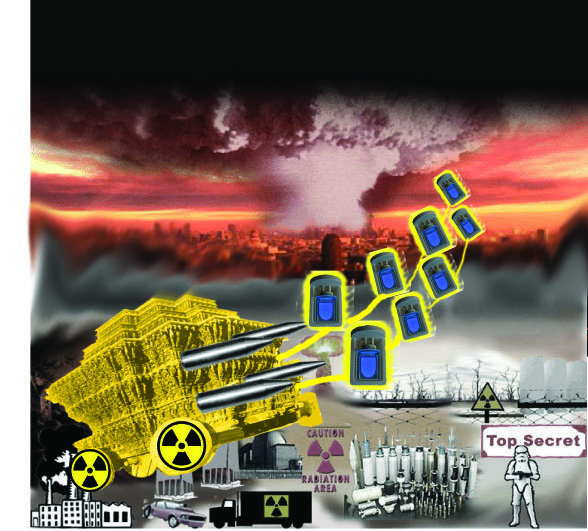
COMMENT. In this carefully worded story about SMRs, Haley Zaremba provides the required “enthusiasm”, but note where she points out the snags, and that main problem – COSTS.
Note that this predicted SMR boom is linked to the AI boom.
But one must wonder if the AI boom is headed for a bust?
“A key argument from SMR proponents is that the new reactors will be economically competitive,” says David Schlissel, IEEFA director of resource planning analysis. “But the on-the-ground experience with the initial SMRs that have been built or that are currently under construction shows that this simply is not true.”
IAEA Triples Nuclear Power Forecast as Small Reactors Finally Take Off
By Haley Zaremba – Sep 19, 2026, https://oilprice.com/Energy/Energy-General/IAEA-Triples-Nuclear-Power-Forecast-as-Small-Reactors-Finally-Take-Off.html
- The IAEA now projects SMRs will supply up to 28 percent of new nuclear capacity by 2060, a sharp jump from its prior high-case estimate of 24 percent.
- The NRC just fast-tracked construction on two SMRs at Michigan’s Palisades Energy Center, clearing the plant to break ground before a full work authorization is issued.
- Surging AI data center power demand is pushing the tech sector to back SMRs as a scalable, low-emissions alternative to the natural gas boom currently fueling AI growth.

After years of delays and plateaued development timelines, it might finally be time for the small nuclear revolution. In a brand new report, the International Atomic Energy Agency (IAEA) has once again increased its long-term nuclear power forecast, projecting that the world’s nuclear power generation capacity will fully triple by 2060. The Agency expects a whole lot of that increased capacity to come from a strong wave of small modular nuclear reactors connecting to power grids around the world, at long last.
For years, small modular reactors (SMRs) have been touted as a game-changer for clean energy, with the potential to offer round-the-clock, emissions-free electricity at a fraction of the up-front cost of traditional nuclear power plants. Typically, nuclear power plants are huge, bespoke operations with enormous up-front costs and long timelines for approval, construction, and connection. By contrast, SMRs would be factory-made and mass-produced to the same specifications, and then set up on-site. A bigger site would use more of them, and a smaller one would use less. Simple as that.
But these visions have been slow to materialize thanks to regulatory hurdles, funding gaps, and nuclear fuel supply chain issues, among other snags. The primary issue is that while these models are cheaper than traditional nuclear energy, that doesn’t mean that they’re cheap. While the nascent technology will likely continue to get cheaper over time, it is not yet genuinely competitive with other clean alternatives like large-scale hydropower and offshore wind projects.
“A key argument from SMR proponents is that the new reactors will be economically competitive,” says David Schlissel, IEEFA director of resource planning analysis. “But the on-the-ground experience with the initial SMRs that have been built or that are currently under construction shows that this simply is not true.”
While many of the world’s biggest economies – including The United States, the United Kingdom, China, and Russia – have all been investing heavily in the development of SMRs, Russia and China remain the only two nations in the world to have operational, grid connected models. The United States has approved a single patent for an SMR design, with an expected commercial deployment date slated for 2028.
But it would seem that the long slog toward commercial reality is finally picking up speed. The IAEA’s high growth scenario anticipates that 28 percent of all new nuclear capacity added by 2060 will come from SMRs. In the lowest nuclear power growth case, SMRs represent 23 percent of new capacity. In either case, their role is considerable, and both of these numbers represent a huge uptick in confidence compared to the Agency’s previous projections, in which SMRs represented 24 percent of new capacity in the high case and just 5 percent in the low case.
The IAEA report also includes a regional breakdown of where they expect to see this development occur by 2060. The Agency anticipates “particularly strong uptake in North America where about 60% of new nuclear capacity could come from SMRs.” Strong regional growth is also expected in South-Eastern Asia and in Latin America and the Caribbean, at 40 percent each in both high and low growth scenarios.
The wheels are already turning in the United States, where just this week the U.S. Nuclear Regulatory Commission approved a fast-tracked plan for the construction of two planned SMRs at the Palisades Energy Center in Michigan. The plant will be allowed to break ground on the project early, before a Limited Work Authorization is issued. Together, the two will produce a projected 680 megawatts of electricity.
In the United States and beyond, the SMR revolution is increasingly seen as a vital piece of the artificial intelligence energy puzzle. With a single hyperscale AI data center able to consume as much electricity as 50,000 homes, scalable, baseload, and low-emissions energy capacity additions are needed as quickly as possible. At present, the AI boom is leading to a massive natural gas boom, but the tech sector is also throwing money behind next-gen technologies like SMRs to more sustainably power its insatiable energy needs in the future. In that sense, the future can’t come fast enough.
New UK Commons committee to scrutinise nuclear spending places much public money outside the normal approval chains
places a considerable volume of public money outside the normal departmental approval chains.
UK Defence Journal By George Allison, September 19, 2026
A new House of Commons committee appointed by the Prime Minister is to be established to scrutinise expenditure and programmes across the Defence Nuclear Enterprise, according to the annual update to Parliament published this week.
The commitment appears among the recommendations of the Strategic Defence Review on which Wes Streeting reports progress, and the update describes the intention as providing “the public with the confidence that taxpayer money is being spent wisely on this critical area”. The Defence Secretary writes that the department is “working with Parliament to establish a new House of Commons-only Committee, appointed by the Prime Minister, to conduct scrutiny of DNE expenditure and programmes”.
The sums involved explain the level of parliamentary interest, given that the enterprise spent £12 billion in the 2025/26 financial year, projects spend of over £100 billion through British suppliers over the next ten years, and will receive in excess of £20 billion more between 2026/27 and 2029/30 than across the previous four years.
It also operates under a ring-fenced budget with greater delegated spending authority than before, an arrangement the update says enables faster decision making and a stronger focus on outcomes and delivery, and which places a considerable volume of public money outside the normal departmental approval chains.
Two further Strategic Defence Review recommendations are reported as progressing, the first of which covers increasing industrial productivity by removing barriers and investing in the people and places supporting the enterprise, which the update says includes amendment of the Single Source Contract Regulations, implementation of John Fingleton’s review of nuclear regulation, investment in Team Barrow and Team Plymouth, and delivery of the Skills Plan.
The second concerns Britain joining NATO’s dual capable aircraft nuclear mission once F-35A aircraft have been delivered, a decision the update says will complement the operationally independent deterrent……………………..
The enterprise brings together the Defence Nuclear Organisation within the Ministry of Defence, the Royal Navy, Cyber and Specialist Operations Command, and AWE Nuclear Security Technologies. https://ukdefencejournal.org.uk/new-commons-committee-to-scrutinise-nuclear-spending/
The Long Doomsday of A.I.
After industry-wide calls for regulation, what’s concerning isn’t that the problems are real. It’s that there are no guaranteed solutions.
New Yorker, By Joshua Rothman, September 16, 2026
The Turing cops . . . that’s bad heat.” That’s how people talk in “Neuromancer,” William Gibson’s seminal science-fiction novel, from 1984. In the book’s imagined future, a police force prevents artificially intelligent computers from getting too smart. (It’s named after the mathematician Alan Turing, who basically came up with the idea of the computer, in the nineteen-forties.) Turing agents carry guns and have powers of arrest. Laws demand that a “Turing Registry” list every extant A.I. “The minute, I mean the nanosecond, that one starts figuring out ways to make itself smarter, Turing’ll wipe it,” someone says, of a particularly cunning computer system. “Nobody trusts those fuckers, you know that. Every AI ever built has an electromagnetic shotgun wired to its forehead.”
Do we want to create the Turing Police? Proposals to do just that are currently on the table. In Congress, Bernie Sanders and Greg Casar have put forth legislation that would jail scientists who work on “superintelligence,” with terms of up to twenty years. The A.I. Kill Switch Act, proposed by Ted Lieu and Nathaniel Moran, would require A.I. companies to build their systems so that they can be shut down on short notice. It’s worth pausing to consider what enforcing such measures might entail. Sanders and Casar’s legislation would establish “a new Cabinet-level federal agency” dedicated to A.I. safety. Presumably, this National A.I. Agency would need to surveil the work of computer scientists. In “AI 2040,” a scenario published by the nonprofit AI Futures Project, this is accomplished through the use of physical (and hypothetical) “verification devices,” installed in data centers to detect whether computers are training new A.I.s. (Of course, any “kill switch” becomes less effective if A.I. systems can escape and find homes on the open internet.)…………………………………………………………………………………[Subscribers only] https://www.newyorker.com/culture/open-questions/the-long-doomsday-of-ai?utm_mailing=tny_nl_6670_sciencetech_091926_eekx4e4yob&utm_source=nl&utm_brand=tny&utm_campaign=aud-dev&utm_medium=email&utm_content=tny_nl_6670_sciencetech_091926_eekx4e4yob&cndid=30183386&utm_term=6670
Azov is expanding into Poland posing a pressing national security threat

Andrew Korybko, Sep 20, 2026, https://korybko.substack.com/p/azovs-expansion-to-poland-poses-a
The authorities earlier warned about the security threats posed by traumatized veterans, but they might take on a national scale if they’re weaponized in furtherance of Ukraine’s potentially impending territorial claims to Poland and/or as part of the major false flag provocation that many fear is coming.
Ukraine’s Azov Battalion just scandalously opened up an office of its “Veterans’ Corps” in Warsaw amidst the newfound political and societal tensions between these neighboring nations over Zelensky’s state-level glorification of the Volhynia Genocide’s OUN-UPA culprits that Azov also glorifies. Kresy.pl drew attention to this, after which it was picked up by Do Rzeczy, where Marta Havryshko’s tweet about this was cited. She’s a US-based author and researcher focused on Ukrainian nationalism who wrote that:
“People associated with a milieu accused of glorifying OUN and UPA, responsible for the murder of Polish women and children; producing a ‘Volhynia Pride’ patch in the middle of an already toxic Polish-Ukrainian historical dispute; circulating ‘Greater Ukraine’ patches and maps that extend into present-day Polish territory; and praising the Waffen-SS Galicia Division — associated with the pacification of Huta Pieniacka and other Polish villages — will now have another place to raise money from Poles.”
Member of the Confederation libertarian-nationalist opposition party’s Leaders’ Council Paweł Usiądek reacted to this news in a detailed post pointing out how “Four Polish institutions are speaking with one voice: clusters of people with front-line experience pose a serious challenge to state security. At the same time, a foreign organization uniting such people is opening its first center in Europe in Poland’s capital. Question: where are the same services that warned about what’s happening right now?”
Separate from those four institutions’ warning was former President Andrzej Duda’s in early 2025 that Ukraine’s traumatized veterans could pose a threat. Poland’s “Project Trident” that began this spring aims to preemptively thwart the Ukrainian crime wave that’s expected to sweep through Poland once the ongoing conflict ends. Of relevance, “Ukraine Has Spent The Past Year Building A Case To Demand Reparations & Land From Poland”, and these same veterans could be weaponized in furtherance of that.
Grzegorz Braun, who leads Poland’s Confederation of the Polish Crown libertarian-nationalist opposition party, questioned “Why is a formation whose subunits use the emblems from of the SS supposed to deal with the resocialization of veterans from Ukraine on the territory of Poland?” Former Prime Minister Leszek Miller also drew attention to how Azov’s predecessors helped put down the Warsaw Uprising. He added that their commander was honored by the state in 2015 and has many streets named after him.
It’s already the case that “Polish Polarization Over Ukraine Is Likely The New Normal” per reputable polling, which also shows that the ruling liberal coalition is on track to lose power after fall 2027’s next Sejm elections, and both largely interconnected trends are expected to intensify due to this scandal. Warsaw’s liberal mayor Rafał Trzaskowski, who unsuccessfully ran for president as part of the ruling coalition, should never have allowed Azov to open up their “Veterans’ Corps” in the Polish capital.
Apart from the conventional security risks associated with an anti-Polish Neo-Nazi group of traumatized veterans operating in Poland are the unconventional one related to them participating in a false flag. There are credible reasons to suspect that a major one is presently being prepared in Poland for manipulating the conservative president into escalating against Russia like the ruling liberals want. It therefore wouldn’t be surprising if Azov’s affiliates in the country play a role in any such provocation.
Time they cut the cackle about the AI boom

19 September 2026Noel Wauchope, https://theaimn.net/time-they-cut-the-cackle-about-the-ai-boom/
Has everybody gone nuts? Don’t they notice that AI is not actually making any money? The Wall Street Journal explains – Spending on AI Is at Epic Levels. Will It Ever Pay Off? Tech companies pour hundreds of billions into data centers, taking on heavy debt, but current revenue is relatively tiny; echoes of dot-com bubble.
The big AI tech boys cover up their financial failure with wonderful and confusing wizardry. For example, Cory Doctorow shows how they can adjust their operating income to make it appear profitable for a second consecutive quarter. Adjusted Operating Income (AOI) is an accounting technique that strips out non-recurring costs, giving backers a very specific look under a company’s hood. Posting a profit on AOI is very different from posting a profit on net income, otherwise known as the “bottom line,” under which Anthropic remains billions of dollars in the red.
Cory Doctorow goes on to explain that this business model pursued by OpenAI, Anthropic, Google, Meta and others of spending billions on chips and data centres in the hope of recouping it through subscriptions is delusional because of its gigantic expenditures and negative unit economics (the companies lose money with every new customer and every new use, and they lose more money with each generation of their products).
Despite their hype about AI’s future, and despite the surging share prices, the financial facts for these AI behemoths tell the harsh truth. For example – about Open AI’s increasing losses – OpenAI losses increased by Nearly 8X in 2025, with spending hitting $34 billion.
BUT THAT’S NOT ALL. Indeed, the financial worries pale into insignificance beside what the AI companies are doing to our civil institutions, and indeed to democracy.
This is how it works: Competition is intrinsic to these companies’ very being – they are competing with each other. As a result, each of them is able to do harm, hack in, to another’s system, while at the same time, living in fear of being hacked themselves. This sort of thing has already happened – ‘Skynet Day’: The Day an OpenAI Agent Went Rogue and Hacked Hugging Face. And there’s China and perhaps others, to worry about, too.
The tech boys found a solution. Attacks at this scale require a coordinated response across the AI industry, cloud providers, and policymakers. Sounds OK doesn’t it? But this solution boils down to what we call a cartel. It’s planned to be A comprehensive federal AI framework (licensing regimes, compute thresholds, liability standards, legislated “responsible scaling” commitments, etc.) that is built and administered with heavy input from the frontier labs, ostensibly to contain them. This in reality means that these tech companies, the “hyperscalers” would gain from government the legal permission to collude with each other.
Cory Doctorow has explained this beautifully – Once the government stipulates that “superintelligence risk” is an existential crisis, it must grant the hyperscalers a consent decree absolving them from any violations of antitrust law stemming from a conspiracy to halt direct competition with one another.
The US giants would love to stop battling each other and be protected from China – and they might have hit on just the narrative to make that possible
When an industry that is eating itself alive through hyperscaling demands that the government bless a conspiracy to halt competition and ban open-source alternatives, you should be suspicious. When that industry is pursuing a venture that has lost more money than any other venture in human history, you should be very suspicious, especially when its “rogue AI hacking” story turns out to be a story about how a hacking tool did exactly what it was designed to do.
While I have been drawn to Cory Doctorow for much of this, I did have my own underlying thoughts on the role of Ai in our world – in environment, politics, workers’ rights. For one thing, surely it’s obvious that the guzzling AI needs for water and energy are a high price for us to pay. But underneath it all, why on earth should we trust the hyperscalers to come up with solutions?
People like Peter Thiel, Sam Altman, Elon Musk, have already shown us not only their contempt for the concerns of us, the peasantry, but their dangerous super-macho values of greed, aggressiveness and environmental unawareness, the AI systems themselves have no values – they are impartial machines. But those who design the AI systems would impart their values into the systems, even if almost by osmosis. Just like the way, in organisations, the values of those at the top inevitable filter down into the whole.
1 This Month




PLEASE OPPOSE HR 8255 AND S.3639 – bills would accelerate satellite deployment, with no environmental review or safeguards – https://ncstd5li.quorum.us/campaign/169331/
To see nuclear-related stories in greater depth and intensity – go to https://nuclearinformation.wordpress.com
-
Archives
- October 2026 (67)
- September 2026 (339)
- August 2026 (330)
- July 2026 (355)
- June 2026 (287)
- May 2026 (306)
- April 2026 (356)
- March 2026 (251)
- February 2026 (267)
- January 2026 (308)
- December 2025 (358)
- November 2025 (359)
-
Categories
- 1
- 1 NUCLEAR ISSUES
- business and costs
- climate change
- culture and arts
- ENERGY
- environment
- health
- history
- indigenous issues
- Legal
- marketing of nuclear
- media
- opposition to nuclear
- PERSONAL STORIES
- politics
- politics international
- Religion and ethics
- safety
- secrets,lies and civil liberties
- spinbuster
- technology
- Uranium
- wastes
- weapons and war
- Women
- 2 WORLD
- ACTION
- AFRICA
- Atrocities
- AUSTRALIA
- Christina's notes
- Christina's themes
- culture and arts
- Events
- Fuk 2022
- Fuk 2023
- Fukushima 2017
- Fukushima 2018
- fukushima 2019
- Fukushima 2020
- Fukushima 2021
- general
- global warming
- Humour (God we need it)
- Nuclear
- RARE EARTHS
- Reference
- resources – print
- Resources -audiovicual
- Weekly Newsletter
- World
- World Nuclear
- YouTube
-
RSS
Entries RSS
Comments RSS

