BRIEFING sent to all Cumberland Councillors Partners in Plan to Bring Failed Japanese Nuclear Reactors Sodium Coolant Process Plant to the Port of Workington
Conclusion The Sodium Coolant Process Plant at the Port of Workington would be an unprecedented and dangerous development, putting residents and primary school children in direct danger of both chemical and potential radiological hazards.
These hazards have not been explained to the public by the developers, which includes the regional planning authority, Cumberland Council, as an enthusiastic and facilitating ‘partner.
There has been a lack of clarity on issues
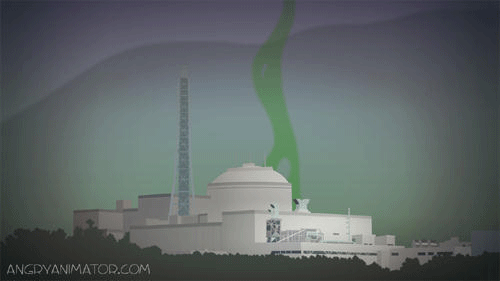
The following briefing has been shared with all Cumberland Councillors. Cumberland Council are partners in the scheme to bring sodium coolant from the Japanese failed Monju fast breeder nuclear reactors to Cumbria. The council has, we believe, not voted on this so the councillors are unwitting partners (much the same as Cumberland’s partnership with the nuclear dump plan).
For the original briefing with full links not reproduced here please contact: wastwater @ protonmail.com
BRIEFING: Failed Japanese Nuclear Reactors Sodium Coolant Process Plant for the Port of Workington?
by Radiation Free Lakeland 12th October, 2026
History
The Japanese Atomic Energy Agency is proposing to send sodium coolant from the failedMonju Fast Breeder Reactor to the Port of Workington in the UK for processing. A company in the UK has been set up to facilitate this.
ALKALI METAL PROCESSING LIMITED was incorporated at Companies House on 26 July, 2023 by Jacobs Clean Energy Ltd. (the name of this company was changed to Amentum Clean Energy Ltd. on 30 September, 2023) and Cavendish Nuclear.
According to the Director’s Report for the year ending 31 March, 2025: “The company’s sole purpose is to deliver a single contract to design, manufacture, construct, operate and decommission a Sodium Treatment Facility in the United Kingdom,” and,
“the entity, via Cavendish Nuclear Ltd., has beenawarded the next phase of work by the Japanese Atomic Energy Agency (JAEA) to support the decommissioning of the Monju Prototype Fast Reactor (PFR), in Fukui Prefecture, Japan. The next phase of work covers the construction, commissioning, and securing of regulatory permissions for a new facility in the UK which will treat the sodium coolant removed from the Japanese reactor.”
Democratic Deficit:
Cumberland Council Responsible for Regulatory Oversight while also Development Partner.
There has been no standard planning assessment, or democratic scrutiny of technical details, or vote by Cumberland Council to justify Leader Mark Fryer’s enthusiastic promotion of the plan to import and process Japanese nuclear and chemical waste to the Port of Workington.
“This is fantastic news for the port as this new development, subject to the necessary approvals, will bring good quality jobs to Workington and support the wider supply chain and local economy. We’re extending a warm welcome to our new partners and look forward to working with all those involved over the coming weeks and months.“ Cllr Mark Fryer, Leader of Cumberland Council
Meanwhile the developers, “Cavendish Nuclear and Amentum are grateful to Cumberland Council and the Port’s management team for their support in enabling our design and construction programme to move to the next phase. We are fully committed to adding real social value to West Cumbia and this new venture will contribute to the regeneration of the Port of Workington and support the local economy. ” Cavendish Nuclear and Amentum
The Monju Fast Breeder Reactor, Fire and Accidents.
The Monju Fast Breeder Reactor, in Fukui Prefecture, Japan, has had a history of safety failures, cover ups, and operational redundancy.
In 1995, just months after achieving criticality (power transmission), 640 kg of liquid sodium leaked from a cooling system, causing a fire so hot that it buckled steel girders. The reactor was shut down for 15 years, after the operator was found to have covered up the scale of the damage.
Monju was restarted in May 2010 after a public battle in the courts and a number of safety repairs. However, it never connected to the electrical grid.
“Operations were again suspended in August 2010 after a fuel handling machine was accidentally dropped in the reactor during a refuelling outage. The device was retrieved almost one year later.”
Alkali Metal Processing’s client, the Japanese Atomic Energy Agency, was declared in 2015, “not fit to operate the Monju Fast Breeder Reactor” by the Japanese Nuclear Regulation Authority, following failure to carry out regular inspections on almost 10,000 out of 39,000 pieces of equipment at the Monju.” Source: Nucnet Independent Nuclear News.“
Violently Reactive,” requiring “Chemically Resistant Bunds”and “Nuclear Licenced Zones”
The “Nature of business” is listed on Companies House by Alkali Metal Processing Ltd (AMP Ltd) as “Treatment and disposal of non-hazardous waste.”
While legal definitions of ‘hazardous’ and ‘non-hazardous’ waste are necessarily complex and prevaricated, a reasonable definition of ‘non-hazardous’ would be ‘that which does not constitute a direct threat to human and environmental health’
.The description of Alkali Metal Processing Ltd as “Treatment and disposal of non-hazardous waste” is very much at odds with the Technical Brief published by Geomechanics which states:
● Sodium coolant’s violent reaction with water and air drives stringent segregation of drainage, fire and ventilation systems.
● Port (of Workington) siting demands blast- and fire-resisting structures around offloading and treatment units to contain exothermic events.
● Marine berths and transfer lines must be designed to prevent any seawater ingress intosodium-bearing systems.
● Civil design will likely require chemically resistant bunds and sumps to capture and neutralise any sodium leaks.
● Construction phasing must separate conventional port works from nuclear-licensed zones with controlled access and radiological monitoring.
● Emergency planning will centre on sodium fire scenarios, with specialised extinguishing media and exclusion distances.
● Similar import-treatment concepts could be replicated at other UK ports, but only where nuclear licensing constraints are manageable.
Source: Technical Brief from Geomechanics July 28th 2026
Experience of Dounreay’s Sodium Coolant.
The UK has experience of decommissioning the Dounreay fast breeder reactors. The two Dounreay reactors were fast breeder types, similar to the Japanese Monju reactor, and also used alkali metal coolant. The Dounreay Fast Reactor (DFR) shut down in 1977, while the larger Prototype Fast Reactor shut down in 1994.
Jason Casper, the reactors’ project director at Dounreay, has written at length about the hazardous nature of disposal of sodium coolant. In previous roles, he led clean-up projects in Idaho in the US, and has experience developing and implementing new technologies for sodium treatment, waste monitoring, and characterisation. He writes, at NS Energy that:
“Dealing with the nature of the coolant—commonly sodium or the sodium-potassium alloy NaK—is a major consideration and one of the most demanding and potentially hazardous aspects in decommissioning liquid metal-cooled reactors. Sodium metal reacts vigorously when exposed to water, releasing hydrogen and large quantities of heat, thereby providing not only an explosive gas mixture but also a source of ignition.
2Na + 2H2O = 2NaOH + H2+ Heat
NaK + 2H2O = NaOH + KOH + H2 + Heat
“The products of combustion are also toxic, and can cause severe caustic and thermal burns on coming into contact with skin, as well as being hazardous to ingest or inhale. Methods of destruction or disposal can range from a purpose-built sodium disposal plant (which essentially treats and neutralises the sodium to produce salt water) to high-temperature incineration, among others.
Around 130 m3 of hydrogen gas and 1100 MJ (30 kW) of heat is generated in the ten-hour process to destroy 160 kg of NaK”
Caustic soda production, however, is not a risk-free venture, especially near to residential areas.
A proposed housing development in Runcorn was cancelled over its proximity to a chemical plant producing caustic soda and chlorine.
The housing development masterplan for the Heath Park Development won two national awards, and the plans were approved by Halton Borough Council in May 2024. However, less than 1 km away, the Inovyn ChlorVinyls chemical plant posed a risk to the people who would live on the development that was too severe to ignore.
The Health and Safety Executive (HSE) lodged an objection to the plans based on modelling scenarios such as chemical leaks and spills, and the potential impact on local residents. Information published following a site visit in 2023 warned that an accident at the INEOS Inovyn site may produce a toxic gas cloud or smoke plume, or a “drifting cloud of flammable gas” that “may ignite”
.The HSE report added: “Fires may generate smoke clouds which may lead to breathing difficulties and deposition of soot on property and vegetation.“
The HSE warned that the consequences of a major accident would be a “potential for burns to body” that would be “possibly life threatening”, and that gas could be “potentially fatal if inhaled.“
Despite the accolades for much-needed housing in Runcorn, the development was cancelled by the Secretary of State, Steve Reed, following a public inquiry held in 2025.
Inovyn ChlorVinyls Ltd claims: “Our operations at the Runcorn site are of strategic national importance to the UK and focus mainly on the production of chlorine, caustic soda and chlorinated derivatives” INEOS
The Dounreay experience of dealing with sodium coolant did not include the production of “usable caustic soda.”
While the Waste Hierarchy encourages re-use and recycling of industrial waste, the production of caustic soda represents an additional risk to the local area on top of the already discussed risks of managing sodium coolant.
The inference is that the ‘production of caustic soda’ is a fig leaf attempt to justify bringing Japanese chemical/nuclear all the way across the sea, from the failed Monju reactor, to Cumbria.
Radioactive Elements: High Level Waste and Low Level Waste. Press reports play down the presence of radioactive elements in the sodium coolant earmarked for delivery to Workington from Japan. However a 2020 ‘White Paper:
Disposition Options for Sodium-Cooled Fast Reactors’ from Idaho National Laboratory states:
“The sodium wastes from Sodium Fast Reactor operations will be in two forms, the bulk sodium from the primary and secondary coolant loops and the residual sodium on Spent Nuclear Fuel (SNF), piping, and other such components. Sodium bearing wastes not considered SNF or High Level Waste will require disposition at Low Level Waste disposal sites. These wastes will also require chemical deactivation or physical removal prior to disposal. The bulk sodium coolant can often be decontaminated and reused.
The wastes from this decontamination will require storage until disposal either as High Level Waste or Low Level Waste.
The (EBR-II) bulk sodium measured a final concentration of cesium within the primary coolant of approximately 370 Bq/g of cesium before it was decommissioned (Newton et al. 2002). The contamination can be remediated with a suitable cesium trap system. The traps act as a filter for the sodium passing through it, trapping the cesium. Successive traps are installed until acceptable levels of cesium are achieved. The cesium traps will require shielding and storage and eventual disposition either as LLW or Greater Than Class C depending on the activity limits. The bulk sodium can then be drained and converted into anhydrous sodium hydroxide, which is a solid form that can be stored indrums.”
Close Proximity of Sodium Coolant Chemical/Nuclear Plant to Schools and Residential Areas.
The Port of Workington is surrounded by schools and residential areas. Northside Primary School for example, is less than 1 km from the proposed chemical/nuclear process plant
As described above, at Runcorn a housing development was turned down last year following a public inquiry as the residential area would have been just over 1 km away from the INEOS caustic soda and chlorine plant. The refusal, citing safety concerns, was without the additional concern of radioactivity.
As well as being close to schools and residential areas the proposed nuclear waste/chemical plant would be around 1km from “Siddick Ponds … a Site of Special Scientific Interest (SSSI), Local Nature Reserve and one of Cumbria’s most important bird sites. ”
Questions remain
Democratic Deficit
The proposal to import Japanese sodium coolant from the failed Monju reactor is being presented to the public as a fait accompli. The regional regulatory planning authority, Cumberland Council is acting as a promotional and facilitating arm of the nuclear industry rather than as an independent local authority responsible for planning oversight. We urge both Parish and Cumberland councillors to question this “partnership” with the developers.
How can Cumberland be both “partner” and planning authority especially on such a controversial, dangerous and largely experimental development?
Questions both here and in Japan
The lack of detailed information from the developers and their partner Cumberland Council has led to questions being asked in Japan by civic society groups of the JAEA and the Office for Nuclear Regulation.
These questions include:
● Media reports and the website of the receiving company state that the receiving plant does not handle radioactive materials. How, then, will the primary system sodium be handled?
Cavendish/Amentum JV win Monju D&D contract:
“Alkali Metal Processing Ltd., a joint venture between Cavendish Nuclear and Amentum, will construct, commission, and secure regulatory permissions for a new facility in the U.K. to treat nonradiological sodium coolant removed from the reactor. The sodium coolant is to be converted into sodium hydroxide for general industrial reuse.”
Cavendish Nuclear and Amentum awarded next phase of contract to support Japan’s Monju reactor decommissioning:
“The material, which presents no radiological hazards, will be safely converted into sodium hydroxide for general industrial reuse.”
And in many ways, a more pressing question, is:
● Given the supposed radiation-free nature of the sodium coolant, why is it being transported allthe way to the UK for processing?
In the UK, Radiation Free Lakeland asked the Office of Nuclear Regulation to detail the volume of sodium being transported; its chemical content; and its radiological content.
In reply, the ONR explained: “we understand that the Port of Workington will handle secondary sodium coolant, which is not radioactive and therefore not in scope of ONR’s purposes.”
However, according to Geomechanics July 28th 2026 Technical Brief, which discusses these exact proposals for the Port of Workington: “Construction phasing must separate conventional port works from nuclear-licensed zones with controlled access and radiological monitoring.”
The only reason for a nuclear-licensed zone is the presence of radioactive materials.
Radiation Free Lakeland have asked the Japanese Atomic Energy Authority the following questions:
●“Why is the sodium coolant proposed to be shipped to the UK when the companies involved are already working with their client, JAEA in Japan at the Monju?
●We would like to know:
a) the quantity of sodium coolant proposed to be imported.
b) details of the chemical content of the sodium coolant proposed to be imported
c) details of the radiological content of the sodium coolant proposed to be imported.
Conclusion
The Sodium Coolant Process Plant at the Port of Workington would be an unprecedented and dangerous development, putting residents and primary school children in direct danger of both chemical and potential radiological hazards.
These hazards have not been explained to the public by the developers, which includes the regional planning authority, Cumberland Council, as an enthusiastic and facilitating ‘partner.
There has been a lack of clarity on issues such as:
● Whether or not the sodium coolant will have radiological content
● Why the development needs to be a nuclear-licensed zone if it does not (as claimed) have radiological content.
● Why the coolant needs to be processed in the UK when the companies involved are already working with JAEA in Japan.
● Why the processing must turn one difficult-to-handle product (sodium coolant) into another which is potentially harmful in the event of an accident (caustic soda), given its proximity to residential areas.
● How a caustic soda plant can be considered safe to develop within 1 km of primary schools and residential areas in Workington when previously such areas have been prevented from development due to the presence of such a plant.
There is also a large question around the democratic processes in local government. Cumberland Council is the planning authority yet, without considering the safety aspects, has gone ahead to welcome the development without scrutiny or due process.
Briefing prepared by Radiation Free Lakeland
No comments yet.
1 This Month
23-25 October – on Zoom – World BEYOND War’s annual global conferenc


Shut down the radiation-damaged Heysham nuclear reactors now
To see nuclear-related stories in greater depth and intensity – go to https://nuclearinformation.wordpress.com

Say No to NASA’s Reckless Nuclear Reactor on the Moon
Say No to NASA’s Reckless Nuclear Reactor on the Moon

-
Archives
- October 2026 (199)
- September 2026 (339)
- August 2026 (330)
- July 2026 (355)
- June 2026 (287)
- May 2026 (306)
- April 2026 (356)
- March 2026 (251)
- February 2026 (267)
- January 2026 (308)
- December 2025 (358)
- November 2025 (359)
-
Categories
- 1
- 1 NUCLEAR ISSUES
- business and costs
- climate change
- culture and arts
- ENERGY
- environment
- health
- history
- indigenous issues
- Legal
- marketing of nuclear
- media
- opposition to nuclear
- PERSONAL STORIES
- politics
- politics international
- Religion and ethics
- safety
- secrets,lies and civil liberties
- spinbuster
- technology
- Uranium
- wastes
- weapons and war
- Women
- 2 WORLD
- ACTION
- AFRICA
- Atrocities
- AUSTRALIA
- Christina's notes
- Christina's themes
- culture and arts
- Events
- Fuk 2022
- Fuk 2023
- Fukushima 2017
- Fukushima 2018
- fukushima 2019
- Fukushima 2020
- Fukushima 2021
- general
- global warming
- Humour (God we need it)
- Nuclear
- RARE EARTHS
- Reference
- resources – print
- Resources -audiovicual
- Weekly Newsletter
- World
- World Nuclear
- YouTube
-
RSS
Entries RSS
Comments RSS


Leave a Reply