If you have a death wish, make sure to drink Fukushima sake….
Daisuke Suzuki is seen working at a tank in his brewery in Nagai, Yamagata Prefecture, on July 2, 2019.
NAGAI, Yamagata — A local brewery intends to restart some of its sake making business in its hometown of Namie, Fukushima Prefecture, in two years. Its storehouse there was swept away by the tsunami that followed the Great East Japan Earthquake in March 2011 and forced the company to relocate to nearby Yamagata Prefecture.
The Suzuki Brewery is looking to hire up to two people to work in Fukushima, and will employ them first in Yamagata Prefecture from fall this year for training.
Although part of Namie is still under evacuation orders due to the effects of the nuclear meltdown at the Fukushima Daiichi Nuclear Power Plant, the company’s head, Daisuke Suzuki, 46, says he wants to work to eradicate the rumors about rice cultivated in Namie by using it as the sole ingredient in its sake.
The Suzuki Brewery was a well-known business in the port town of the Ukedo district with a history stretching back to the Edo period. Its representative sake brew, “Iwaki Kotobuki,” held a special place in the community as a drink used to celebrate big catches of fish.
Over 150 people, close to 10% of Ukedo district’s population, were killed by the tsunami in March 2011. The hydrogen explosion that occurred in the aftermath of the disaster at the Fukushima Daiichi plant some 5 kilometers south of the town meant that for around a month search and rescue activities could not proceed.
The wave also took the Suzuki Brewery and its storage out to sea. Although none of its staff were harmed, the nuclear disaster combined with the order to completely evacuate the town forced the company to give up on rebuilding the brewery in Namie.
While the town was left in a state of crisis regarding whether it would continue to operate or not, Suzuki was encouraged by acquaintances at a Fukushima Prefecture elementary school, where they were temporarily taking shelter, to continue making sake for the community. The experience made him realize that Iwaki Kotobuki sake is an indispensable part of the local community.
In October 2011, he took up ownership of a brewery marked for closure in Nagai, Yamagata Prefecture, and from November the following year he began brewing there.
Coincidentally, some of the yeast necessary to make the Iwaki Kotobuki sake had been left in the care of the Fukushima technology support center, who had been asked to analyze it before the disaster took place.
The company completed its first shipment within the year on time, and residents who bought the sake to welcome the New Year even made the news.
Evacuation orders were finally lifted for the Ukedo district and other primarily central parts of Namie in March 2017. Suzuki decided he would restart brewing activities in Namie while also keeping the business running in Nagai.
The new storehouse will be some kilometers inland from the location of the previous one, and the intention is for all of the sake’s ingredients to come from produce made in Namie, including products for home consumption such as the locally grown Koshihikari rice. Since the nuclear disaster, food made in Fukushima has suffered from rumors about its safety, but local sake is appreciated all over the country.
Although it’s considered difficult to make the necessary malted rice for sake from edible rice Suzuki is unfazed, “If we spend a lot of time and care on the work, we’ll get it done,” he said, aiming to become a beacon for the town’s rice that could lead to greater sales of the region’s products.
The company is seeking to hire one or two people up to around the age of 30. Experience or a specific gender is not required. The position will offer involvement in both sake production and the development of new products. The individuals hired will begin working at the company’s location in Yamagata Prefecture to become experienced in sake making.
“It’s low-profile work, but you get out of it what you put into it. I’m waiting to hear from people who feel they want to work together with us in Namie,” said Suzuki. The brewery can be contacted by telephone on 0238-88-2224, in Japanese only.
August 22, 2019
Posted by dunrenard |
fukushima 2019 | Contamination, Fukushima Sake, radiation |
Leave a comment
Kashiwa city, in Chiba prefecture is located 31.3 km ( 19.45 miles ) northeast from Tokyo.

August 16, 2019
The leader of a Citizens’ Group to Protect Children from Hotspot Radiation in Kashiwa city, Chiba, decided to suspend its activities.
Mrs. Yuki Ohsaku, representative of the group evacuated recently to Kyushu after her two children started nosebleeding and other core members also are considering moving out of Kashiwa city. 10 members have already relocated.
In May the Kashiwa mayor wrote in his blog that those worried about the effects of radiation have some kind of mental problems. Kashiwa city originally had no plan to conduct any survey after citizens reported high radiation levels. Mrs. Ohsaku’s group collected over 10,000 signatures and submitted the petition to the City Council with 100 members, and this made the Kashiwa city start measuring radiation levels in schools and do decontamination work.
However, the group’s activities and her relocation with two children to Kyushu caused lots of problems within her family. Her in-laws are not happy that she is disobeying the authorities and that her name gets published (since she is the group leader). Now the in-laws are demanding that she divorce her husband. She says that old and middle-aged people in general have absolute confidence in the printed media as their news source, and what’s not reported in the newspapers is not conceived as reality.
The mainstream media (including newspapers) has the least coverage on health effects of radiation and only report the government’s “adjusted” radiation levels. Yomiuri News even wrote in May that the information about hotspots in Chiba are based on false rumours and that they doesn’t exist. (Matsutaro Shoriki, ex-president of Yomiuri was a CIA agent and is called the father of nuclear power in Japan according to Wikipedia.) She says her in-laws believe in the Yomiuri report.
Only those collecting information from internet sources are aware of what is really going on regarding radiation issues in Japan. As a result, there the public have split opinions on this subject.
Mrs. Ohsaku says the conflict of opinions on radiation issues has been harder to deal with than the radiation itself. Many people around her chose not to think about it and neighbors don’t want her to make it a big issue. Some members of her group are tired of being ridiculed as “freaks”. Her group wants decontamination but others in the hotspot thinks it’s waste of money. They say “Let’s not worry about it. Think of people in Fukushima. They live in an even worse environment than us.”
https://blog.safecast.org/2011/08/citizens-group-leader/
August 22, 2019
Posted by dunrenard |
fukushima 2019 | Chiba Prefecture, Citizen Radiation Monitoring, Hotspots, Kashiwa City, radiation, Radiation Monitoring, Tokyo |
Leave a comment
 Anti-nuclear demonstrators concerned about radiation during the Tokyo 2020 Olympics hold a press conference to criticize the Abe administration’s effort to push through the Olympics despite safety concerns in front of the former Japanese Embassy in Seoul on Aug. 13.
Aug.14,2019
“Sports are sports. They are separate from politics.”
On Aug. 13, an official from the Korean Sport & Olympic Committee expressed concern in response to remarks in political circles that hinted at a boycott of the 2020 Tokyo Olympics (July 24 – August 9). With participation rights still to be earned in many disciplines and numerous athletes who have eagerly awaited the Olympics for four years, these remarks are looking too far ahead. It has been pointed out that a more strategic approach needs to be adopted in light of the position of North and South Korea, who are considering making a joint bid to host the 2032 Olympics.
Safety from radiation and heat at the Tokyo Olympics
Most of the issues related to the upcoming Tokyo Olympics, which are now only a year away, boil down to safety concerns over radiation and extreme heat. Some baseball and softball matches are scheduled to be held in a stadium located close to the Fukushima nuclear reactor that took direct damage during the 2011 earthquake. Korean civic groups have also pointed out that the Japanese government has failed to properly control water contaminated by radiation from the reactor. Plans to source some of the rice and ingredients for the Tokyo Olympics Athletes Village from Fukushima are adding to these concerns. Although the level of radiation measured in such rice is within the acceptable standards in Japan, it is believed to exceed Korean standards.
Extreme heat is another potential issue. After an open water test competition in Odaiba Seaside Park, Tokyo, on Aug. 11, Sports Nippon reported, “Many athletes complained about a foul odor and the high water temperature, and one male athlete made the shocking claim that it ‘smelled like a toilet.’” Although the Olympic Committee did not reveal the water temperature on that day, it has been reported that the temperature was 29.9 degrees Celsius at 5am. The International Swimming Federation (FINA) cancels events if the water temperature reaches 31 degrees Celsius. There have also been warnings about road races. On August 8, Yusuke Suzuki, Japan’s star race-walker and world record holder in the men’s 20km, stated, “I tried training on the Tokyo Olympics race-walking course. There was no shade, so it could cause dehydration.”
Tokyo Olympics delegation heads meeting from Aug. 20-22
It appears that the issue of safety from radiation and concerns about food ingredients will be conveyed during the upcoming three-day meeting with the leaders of each country’s delegation in Tokyo on Aug. 20-22, and a request will be made to the Japanese Olympic Committee to change the name of Dokdo used on maps. If the representatives from each country do raise the radiation issue, the IOC will have no choice but to intervene. The Korean Sport & Olympic Committee is also considering providing separate Korean food to Korean athletes through specially prepared meals or lunchboxes.
With Korea seeking to hold a joint Olympics in 2032 between the two Koreas, the country has no choice but to underscore the fact that the Olympics are a festival of peace. Korea is also mindful of the fact that it must avoid giving off any impression of trying to use the Olympics for political reasons.
Getting over our obsession with medals
The 2020 Tokyo Olympics come at a time when Korea is attempting to implement reforms through policies in order to shake off the country’s obsession with winning in elite sports. Plans to reform the special benefits afforded to athletes such as pensions and exemption from military service are already under discussion, and it is also true that the morale of elite athletes is different than it has been in the past. It has been pointed out that while achieving victory in competition is great, excessive competition for medals does not align with current trends. Ryu Tae-ho, a professor of physical education at Korea University, stated, “It is natural that athletes will work hard to reach the pinnacle on the international stage, and the Korean public has become more mature to the extent that we can applaud athletes when they do their best as Olympians, even if they fail to win a medal. It is also best to avoid connecting sports with politics.”
http://english.hani.co.kr/arti/english_edition/e_international/905758.html
August 22, 2019
Posted by dunrenard |
fukushima 2019 | 2020 Olympics, safety, Tokyo Olympics |
Leave a comment
The worst nuclear accident in history
The three meltdowns and at least four big core explosions at the Fukushima nuclear-power plant’s six American-designed Daiichi reactors in March 2011 still constitute the world’s worst nuclear nightmare so far, surpassing even the Chernobyl #4 reactor’s explosion and meltdown of April 1986. While Chernobyl’s disaster was very quickly contained albeit at the cost of at least 30 human lives (according to Soviet sources)—by first having the stricken reactor completely buried in sand from the air and then immediately sealing it inside a sarcophagus of reinforced concrete, Fukushima’s tragedy has remained an open, festering wound to this day. A U.N. report issued in 2012 stated that at least six Fukushima workers had died since the meltdowns and the tsunami (according to a later report by the Japanese government, only one of these workers had died from radiation exposure).
The Japanese seem to have been reluctant to risk the lives of their more than 6,000 rescue workers pouring daily hundreds of tons of sea water over the fully destroyed reactors as well as the several partly damaged ones. Yet, as of 27 February 2017, the Fukushima prefecture government counted 2,129 “disaster-related deaths” in that prefecture alone. At least 1,368 among those deaths have been listed as directly “related to the nuclear power plant.” Predicted future cancer deaths due to accumulated radiation exposures in the population living near Fukushima are expected to run in the many hundreds, if not the thousands.
Obviously, the Japanese government’s wishful thinking is that the nuclear disaster would just go away if as few people as possible—both at home and especially abroad—knew about its true extent and actual severity. According to Harvey Wasserman (“14,000 Hiroshimas Still Swing in Fukushima’s Air,” The Free Press, October 9, 2013), the situation on the ground was still rather catastrophic more than two years after the disaster, because
“Massive quantities of heavily contaminated water are pouring into the Pacific Ocean, dousing workers along the way. Hundreds of huge, flimsy tanks are leaking untold tons of highly radioactive fluids. At Unit #4, more than 1300 fuel rods, with more than 400 tons of extremely radioactive material, containing potential cesium fallout comparable to 14,000 Hiroshima bombs, are stranded 100 feet in the air.”
Have we been witnessing a major local catastrophe with some perilous global repercussions that are still being concealed from the general public and the world under a veil of total government secrecy—“apparently to avoid causing ‘needless’ social panic,” in the words of Japanese research scientist Haruko Satoh (“Fukushima and the Future of Nuclear Energy in Japan: The Need for a Robust Social Contract,” ARI, June 29, 2011)? While the Russians had the excuse of having just one prior warning—namely that of the Three Mile Island’s much smaller nuclear mishap in the U.S. on March 28, 1979—the Japanese appear to have completely ignored Chernobyl’s tragic lessons while operating their Fukushima nuclear-power plant built in a highly vulnerable seismic zone in close proximity to the Pacific Ocean which is prone to massive earthquakes and tsunamis. Pointing out that
“…a vast area of land has been contaminated by radiation,” Haruko Satoh further writes that “…the nature of the on-going nuclear crisis is better understood as a man-made disaster resulting from the systemic failure of Japan’s nuclear energy regime for safety than an inevitable consequence of unforeseen forces of nature.”
In his considered opinion, Japan “has also failed to act speedily to remove and treat the accumulating contaminated soil and water” (ibid.).
As a result, according to The Guardian (“Plummeting Morale at Fukushima Daiichi as Nuclear Cleanup Takes Its Toll,” October 15, 2013), “the world’s most dangerous industrial cleanup” has been threatening not only Japan (long dubbed “America’s unsinkable aircraft carrier” in the western Pacific) but the rest of the planet as well. Will the international community finally wake up to this still on-going lethal danger that will persist for many years to come—at least until the afflicted nuclear reactors are finally cooled down? But it is not going to be an easy job since by Tokyo’s own estimates the full decommissioning of the wrecked nuclear site could take up to 40 years.
Could the 2020 Tokyo Olympics be canceled?
The Fukushima catastrophe released in the air many radioactive pollutants such as cesium-134, cesium-137, strontium-90, iodine-131, plutonium-238 and other so-called radionuclides that emit ionized (alpha and beta) particles. With lifespan exceeding hundreds of years, these radioactive pollutants will continue to pose a radiation threat for many decades to come. One eyewitness testifies about the failure of Japan’s decontamination measures (Maxime Polleri, “The Truth About Radiation in Fukushima: Despite Government Claims, Radiation From the 2011 Nuclear Disaster Is Not Gone,” The Diplomat, March 14, 2019):
“…mountains of black plastic bags, filled with contaminated soil or debris, can be seen in many parts of Fukushima…. As such, decontamination does not imply that radiation has vanished; it has simply been moved elsewhere. Yet in rural regions, where many of the bags are currently being disposed, far away from the eyes of urban dwellers, residents are still forced to live near the storage sites. Many rural residents have criticized the actual efficacy of the decontamination projects. For instance, vinyl bags are now starting to break down due to the build-up of gas released by rotten soil. Plants and flowers have also started to grow inside the bags, in the process tearing them apart. With weather factors, residual radioactivity inside the bags will eventually be scattered back into the environment.”
But with the upcoming 2020 Tokyo Olympics, it is doubtful that the secretive Japanese government will ever acknowledge this threatening reality. For example, the Japanese have been silent about the current extent of radiological contamination of the seas surrounding Japan—obviously for fear that the Tokyo Olympics scheduled to be held next year may be canceled.
In the past, the Tokyo Electric Power Company (Tepco), the crippled nuclear-power plant’s sole owner and operator,
“has all but admitted (that) Fukushima’s radiation leaks are spiraling out of control. In addition to the leaking water storage units that are unleashing hundred of tons of radioactive water each day, Tepco now says (that) 50% of its contaminated filtration capability has been taken offline due to corrosion. The result is that radiation leaks are escalating out of control and attempted remediation efforts are faltering” (“Fukushima in Free Fall,” NaturalNews.com, August 27, 2013).
The traditionally close-mouthed Japanese bureaucrats have been far less truthful and much more evasive about the gravity of the Fukushima nuclear crisis than the Russians ever were about their Chernobyl disaster. Only in June 2011—three whole months after the Fukushima nuclear accident—did Tokyo announce that meltdowns had actually occurred in three of the six reactors. “From day one,” the NaturalNew.com article continues,
“the Fukushima fiasco has been all about denial: Deny the leaks, shut off the radiation sensors, black out the news and fudge the science. Yet more than two years later, the denials are colliding with the laws of physics, and Tepco’s cover stories are increasingly being blown wide open.” (ibid.)
Buried under a virtual tsunami of compensation-seeking lawsuits, Tepco, “once a behemoth that virtually controlled Japan’s energy policy“ (Haruko Satoh, “Fukushima and the Future of Nuclear Energy in Japan: The Need for a Robust Social Contract,” ARI, June 29, 2011), has survived to this day as Japan’s biggest energy giant only thanks to the LDP government which seems to be more than willing and eager to bail it out. Despite the attempted cover-up by pro-nuclear Japanese cabinets and the Japanese news media alike, Japan’s own nuclear-safety watchdog—the Nuclear and Industrial Safety Agency (NISA)—gave Fukushima’s nuclear catastrophe the worst possible rating for radiological danger, Level 7 (“major accident”)—the same rating as the Chernobyl disaster—in accordance with the International Nuclear and Radiological Event Scale (INES) standards established by the International Atomic Energy Agency (IAEA) in 1990.
Showing how more than two years after the disaster the waters of the Pacific Ocean were actually “boiling” off the coast of Fukushima in what it called “a viral photo of the day,” Before It’s News (“’Boiling Sea’ Off Fukushima Viral Photo of the Day,” August 30, 2013) asked rhetorically, “…if this radiation keeps leaking, and there is no way to stop it, will boiling seas spread all the way across the Pacific Ocean to the West Coast of the United States? If so, what happens then?”
How was the critically important oceanic animal and plant life affected by the radioactive contamination? Tokyo has denied that due to higher radiation levels it is dangerous to eat any fish caught by Japanese fishermen, but the government has reinstated its earlier fishing ban. Could it be that all of Japan has been poisoned? Moreover, is the whole planet going to be eventually contaminated by Fukushima’s many tons of radioactive material released into the air and sea? Again according to Harvey Wasserman,
“A worst-case cloud would eventually make Japan an uninhabitable waste-land. What it could do to the Pacific Ocean and the rest of us downwind approaches the unthinkable” (“14,000 Hiroshimas Still Swing in Fukushima’s Air,” The Free Press, October 9, 2013).
The Fukushima nuclear accident and its tragic consequences have taken place at the worse possible time for Japan, given its huge national debt (which is more than twice the size of its annual GDP) and protracted economic slump lasting now for almost three decades. Japan’s economic downturn started with the bursting of Tokyo’s stock-market and real-estate “bubbles” in the 1990s and was gravely exacerbated by the global Great Recession of 2008-2009 sparked by America’s own banking and real-estate crises. The international community should have by now pressed the U.N. Security Council to consider and adopt a binding resolution to close down Japan’s hazardous nuclear-energy industry, given the major economic, public health and public safety risks involved.
Is Japan’s nuclear industry doomed?
But Japan’s nuclear power may already be doomed, with its nuclear units being gradually taken “offline” in the wake of the Fukushima fiasco (“After Fukushima, Does Nuclear Power Have a Future?” The New York Times, October 10, 2011). In September 2013, the new Liberal Democratic Party Prime Minister Shinzo Abe ordered the shutdown—supposedly for routine maintenance and safety checks—of its last nuclear reactor at Oi that was still working after all the other 53 operating reactors had been closed down for one reason or another. Facing pressure from the Japanese public which has turned decisively against nuclear energy, the previous Prime Minister, Yoshihiko Noda of the Democratic Party of Japan, had announced in September 2012 a major change in Japan’s energy policy, pledging to shut down all nuclear power for good by the 2030s, thus angering the all-powerful Japanese captains of industry.
In power since December 2012, Shinzo Abe’s LDP cabinet has been warning about the steep economic costs of pulling the plug on Japan’s nuclear energy, mainly in the form of escalating and very expensive energy imports, especially for a country which lacks fossil fuel reserves. Under tremendous pressure from the “iron triangle” community of electricity utilities, heavy industry, ministry bureaucrats and academic experts, known as the “nuclear village,” Prime Minister Shinzo has been trying to restart as many nuclear reactors as the still hostile domestic public opinion would permit him.
Following the Fukushima accident, as each Japanese nuclear reactor entered its scheduled maintenance and refueling outage, it was not returned to operation. Between September 2013 and August 2015, Japan’s entire reactor fleet was suspended from operation, leaving the country with no nuclear generation. But in 2018 Prime Minister Shinzo’s cabinet restarted five nuclear power reactors (U.S. Energy Information Administration, “Japan Has Restarted Five Nuclear Power Reactors in 2018,” November 28, 2018). He is facing a new and unexpected obstacle—the renewed and strengthened Nuclear Regulation Authority (NRA), which had been reformed and given more regulatory powers and administrative independence after Fukushima, especially since this now independent agency has to declare any nuclear plants safe before they could restart. There is also the implacable opposition of many prefectures, towns and villages which, under the law, have a say over the reopening of any local or nearby nuclear plants (“Electricity in Japan: Power Struggle,” The Economist, September 21, 2013). In spite of the determination of the ruling LDP to keep Japan’s ailing nuclear industry alive, its days may already be numbered (Sumiko Takeuchi, “Is There a Future For Nuclear Power in Japan?” Japan Times, July 16, 2019).
Rossen Vassilev Jr. is a journalism senior at the Ohio University in Athens, Ohio.
August 22, 2019
Posted by dunrenard |
fukushima 2019 | Fukushima Daiichi, Nuclear Disaster |
Leave a comment
The treatment of radioactive water stored in tanks in Fukushima has become the subject of intense international concern in recent months, including in South Korea, as reports say the Japanese government is considering releasing it into the Pacific Ocean.
And now, South Korea — one of Japan’s closest neighbors — says it will seek ways to deal with Tokyo’s planned discharge.
“We will work closely with institutions and countries in the Pacific Rim that will be affected and actively respond to any potential water discharge from the Fukushima plant.”
Tokyo Electric Power Corporation, which manages the storage of the toxic water, says it will run out of space in three years.
Greenpeace warned in a report earlier this year that South Korea will be among the nations most affected by any discharge.
And with the IAEA General Conference to be held in Vienna in September, and the South Korea-China-Japan Top Regulators’ Meeting on Nuclear Safety taking place in China in November, Seoul plans to raise the issue, and consider other concrete actions.
Asked about the possibility of South Korea boycotting the 2020 Tokyo Olympics over the matter, Seoul’s foreign affairs ministry did not provide a direct answer.
Citing the same problem, a number of U.S. media outlets, including the Washington Post, have raised concerns over the safety of American athletes heading to Tokyo next summer.
Since 2013, South Korea has blocked all seafood imports from eight Japanese prefectures near Fukushima after it was found that contaminated water was leaking into the ocean.
While Tokyo sought to challenge Seoul’s decision by lodging a complaint at the World Trade Organization, the WTO in April ruled in Seoul’s favor, saying the measures do not amount to unfair trade restrictions or arbitrary discrimination.
Lee Seung-jae, Arirang News.
August 16, 2019
Posted by dunrenard |
fukushima 2019 | Fukushima Daiichi, Radioactive Water, Sea Dumping, South Korea |
Leave a comment
“The idea of releasing the contaminated water before it has been entirely treated for radioactivity is completely unacceptable. For the Japanese government to make a unilateral decision about a multilateral matter that endangers the health of not only its own citizens but also the citizens of its neighbors is both irresponsible and immoral.”
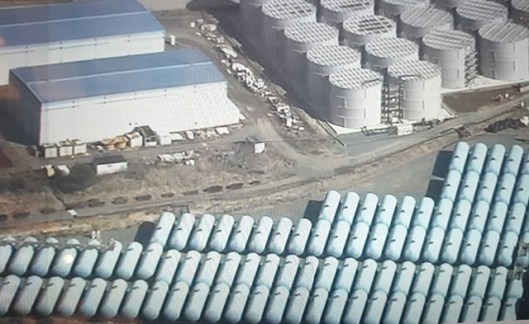
The storage tanks for contaminated water from the 2011 Fukushima nuclear reactor meltdown
If Japan releases 1.1 million tons of water contaminated with high-level radioactivity from storage tanks at the Fukushima nuclear plant into the Pacific Ocean, that water could reach the east shore of South Korea within a year. That was the bottom line of a press conference held in South Korea on Aug. 14 by Shaun Burnie, a senior nuclear specialist with Greenpeace Germany.
The problem is that discharging the contaminated water isn’t some vague possibility, but the option favored by the Japanese government. Last October, Japan’s nuclear regulator said it would allow the water to be released, provided that it’s diluted first.
The idea of releasing the contaminated water before it has been entirely treated for radioactivity is completely unacceptable. For the Japanese government to make a unilateral decision about a multilateral matter that endangers the health of not only its own citizens but also the citizens of its neighbors is both irresponsible and immoral.
Shaun Burnie, a senior nuclear specialist with Greenpeace Germany, talks about the dangers of Japan’s decision to release radioactively contaminated water from the 2011 Fukushima disaster during a press conference in Seoul on Aug. 14.
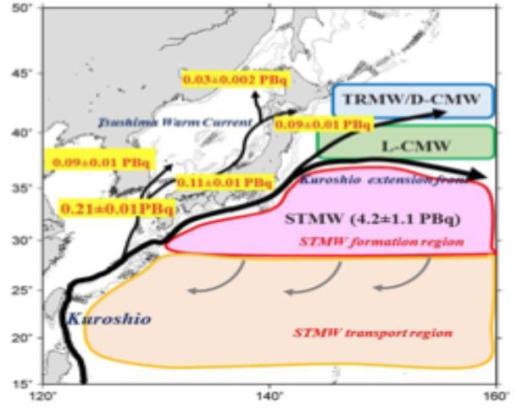
It’s obvious that the contaminated water will be carried by sea currents to the East Sea, with harmful effect. A study has found that the levels of radiation in the East Sea more than doubled during the five years after contaminated water was released for a brief time in 2011, during the Fukushima nuclear disaster.
The main reason the Japanese government hopes to discharge the contaminated water is cost. The massive amount of radioactive water produced since the 2011 accident at Fukushima is being stored in the reactor’s water tanks; at the current rate, they will overflow by March 2021. Attempting to skimp on the cost of building more tanks by releasing the contaminated water is the worst possible option, as it would trigger another catastrophe. According to Shaun Burnie, the only option is to build more water tanks while focusing on developing techniques for treating the radioactive particles.
The route by which contaminated water discharged by Japan would eventually reach the eastern shores of Korea.
With the Tokyo Olympics just one year away, the Japanese government is working overtime to promote the claim that it’s moved beyond the Fukushima disaster. First it announced that dishes for athletes will be prepared with crops grown at Fukushima, and then it selected a spot just 20km away from the accident as the starting point for the Olympic torch. That has prompted not only leading global media outlets but even domestic ones to run multiple stories concluding that the Fukushima area isn’t safe from radioactive materials. Japan needs to call off this rash marketing campaign, which jeopardizes the safety of Olympic athletes and audiences.
The South Korean government has announced that it will respond proactively to the issue of contaminated water at Fukushima. Some see this as another way to pressure Japan in the two countries’ ongoing economic dispute. But the two are separate issues. We hope the government will deal with this issue with a firm, and consistent, attitude.
August 16, 2019
Posted by dunrenard |
fukushima 2019 | Fukushima Daiichi, Radioactive Water, Sea Dumping, South Korea |
1 Comment
They would love to get rid of all that accumulated radioactive water by dumping it into the sea before the venue of the 2020 Olympics. An ongoing media campaign pushing for it is relentlessly continuing….
August 13th, 2019
Storage space is running out for Fukushima
Beginning late next July, Tokyo and several other sites around Japan will welcome elite athletes from around the world for the 2020 Summer Games. One of the sites carries with it a stigma that organizers are hoping to help heal — Fukushima.
Some scheduled baseball and softball events will take place at Fukushima Azuma Baseball Stadium, located about 70 km northwest of the Fukushima Daiichi nuclear power plant. The site’s three reactors famously suffered a partial meltdown in the wake of the 2011’s Great East Japan Earthquake and the resulting 15-metre tsunami. The disaster was the second-worst since Chernobyl, leaving piles of melted radioactive fuel in the plant’s three reactors.
While it’s now estimated that 96 per cent of the power plant can be safely accessed without protective clothing, and no evacuation order has ever been in place for parts of the prefecture — including where the baseball stadium is located — the damage to the name has been done, according to locals.
“We are looked at like Chernobyl,” Saito Nobuyuki, who was born in Fukushima and now a sporting goods store there, told the New York Times. “It’s difficult to change.”
Yoshiro Mori, the 2020 organising committee president, hopes by hosting events at the site, that change can begin.
“By hosting Olympic baseball and softball events, Fukushima will have a great platform to show the world the extent of its recovery in the 10 years since the disaster,” Mori said, according to the Guardian.
There may be another hitch in the road to recovery, however, and it’s looming on the horizon for next year.
Tremendous amounts of water flooded the reactors in the wake of the disaster, both from the tsunami itself and from water added to cover the melted reactors and allow them to cool as part of the efforts to clean up the site and decommission the plant. Since then, groundwater has also infiltrated the site. All of this water has been contaminated by radioactive substances, like cesium and tritium. While the cesium can be removed via processing, tritium generally remains, meaning the still-contaminated water must be stored.
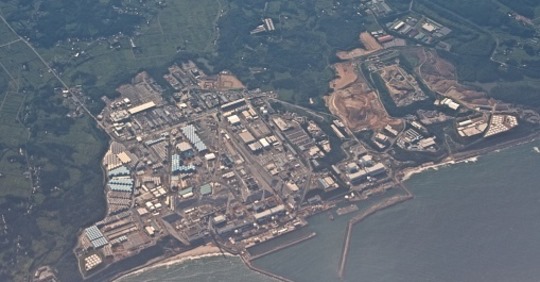
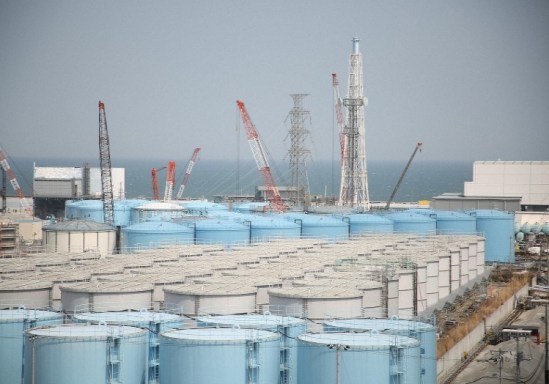
TEPCO, the utility which operated the reactor, has installed about 1,000 large storage tanks at the site to hold the contaminated water; currently, more than 1.05 million tons of radioactive water are being stored in the tanks, and roughly 150 tons are added every day.
TEPCO continues to install new tanks, but according to the Japanese newspaper Asahi Shimbun, “space limitations mean that by the end of 2020, a maximum storage capacity of about 1.34 million tons will be reached.” Officials have added that if the groundwater infiltration was decreased, it will be possible to stretch that date until summer 2022.
While more tanks can be installed, a long-term solution is still being sought and, so far, most of them aren’t going over well with the locals.
One suggestion before the central government is to dilute the water after processing and gradually release it into the Pacific. Another is to build a long-term storage facility near the plant site. Fukushima residents, and fishermen in particular, have expressed strong opposition to both ideas, not over fears of the wastewater itself but because of the negative publicity and continuing stigma that would damage their livelihoods.
Tritium — the contaminant left in the water after treatment — is a relatively weak source of radiation that doesn’t pose much threat to humans, though in extremely large quantities impacts to health are possible. It’s commonly used in glow-in-the-dark lighting and signs.
Setting a deadline on the current storage situation puts additional pressure on Japanese authorities and the public to reach a consensus.
“When we talk about Fukushima’s reconstruction, the question is if we should prioritize the decommissioning at the expense of Fukushima people’s lives,” Naoya Sekiya, a University of Tokyo professor of disaster social science, told the Associated Press. “The issue is not just about science.”
August 16, 2019
Posted by dunrenard |
fukushima 2019 | 2020 Olympics, Fukushima Daiichi, Radioactive Water, Sea Dumping |
Leave a comment
The 2020 Olympics are set to take place in Japan, but there is a growing concern about the safety of those heading overseas. In the time following the 2011 Fukushima nuclear disaster, Japan saw the release of harmful radioactive pollutants or radionuclides, such as iodine‑131, cesium‑134, cesium‑137, strontium‑90, and plutonium‑238.
This resulted in radioactive contamination throughout northeastern Japan, but after eight years, members of the local and central government have said that the radiation is no longer a concern. Unfortunately, that’s not entirely accurate. The steps taken by the government to make the environment safer are viewed as effective by some, but there is far more to the story. According to The Diplomat, the radiation hasn’t entirely disappeared from the environment. Instead, it’s been moved to other locations.
One such process of decontamination has actually consisted of collecting and removing radioactive pollutants. The radionuclides are then placed in black vinyl bags, which, in theory, should impede the risk of rescattering residual radioactivity. The report continues by providing evidence of this process. There are currently mountains of black plastic bags, filled with contaminated soil or debris, that can be seen in many parts of Fukushima.
Eat and cheer. I say what a shame, but the rice made right next to the pile of radiation contaminated soil. It is not a bad reputation and I can not eat it because I am scared.#Fukushima nuclear accident#Radiation pollution
Unfortunately, this fix of sticking the radionuclides inside the bags only appears to be a temporary solution that will ultimately need to be addressed once again. For example, some of the vinyl bags are now starting to break down due to the build-up of gas released by rotten soil. Plants and flowers have also started to grow inside the bags. With nowhere to expand, these plants are breaking through the bags and exposing the radioactive materials to the atmosphere. At this point, it is far more likely that the weather will distribute the radionuclides once again.
Additionally, there have been countless monitoring posts installed throughout Fukushima, which display the current atmospheric level of radiation. Measurements are taken from different locations and then combined to create an average level for the city. According to these posts, the levels of radiation have significantly fallen.
That being said, The Diplomat reports that there are currently no monitoring posts in the forests and mountains. These areas make up 70 percent of the Fukushima prefecture, but the radiation levels are not being monitored. The other concern is that the monitoring posts only measure gamma rays and ignore radionuclides, which are very harmful if swallowed or ingested.
With the Olympics approaching, the belief is that the radiation is lowering and that the athletes will not be in danger. However, reports by The Diplomat paint a far more troubling picture. Will the events proceed as planned, or will adjustments have to be made as 2020 nears?
August 16, 2019
Posted by dunrenard |
fukushima 2019 | 2020 Olympics, Fukushima Radiation |
Leave a comment
This photo, provided by Kyodo news agency on March 8, 2019, shows the storage tanks keeping radioactive water from the Fukushima meltdown, in Fukushima, Japan.
SEOUL, Aug. 13 (Yonhap) — South Korea will actively seek ways to deal with Japan’s planned discharge of water contaminated as a result of the 2011 Fukushima nuclear power plant meltdown, Seoul’s foreign ministry said Tuesday, amid concern storage space will soon run out.
The treatment of radioactive water stored in tanks in Fukushima has drawn international concern in recent months following reports that the Japanese government is considering releasing the water into the Pacific Ocean.
Tokyo Electric Power Co., the utility company managing the storage, has said it will run out of space to store the toxic water in three years. Greenpeace warned in a report early this year that South Korea will be among countries particularly affected by the discharge into the sea.
“Our government puts top priority on the health and safety of our citizens, and we plan to actively ask Japan to disclose information and to provide us with a concrete stance on the current management system and disposal plans,” ministry spokesman Kim In-chul told a regular press briefing.
Seoul has proposed that Tokyo hold bilateral and multilateral talks over the matter since the government became aware in August 2018 of a plan to discharge the water, Kim added.
Two months later, the government sent Tokyo an official statement detailing national concerns and requests in relation to the matter, and continued negotiations over the issue at various levels, bilaterally as well as through multilateral channels, according to the ministry.
The ministry said Japan has only maintained that the final decision for disposal of the radioactive water is still under review and that it will announce it to the international community when it’s ready.
“If it’s deemed necessary, we will also closely cooperate with our neighbors in the Pacific that are also feared to be affected, so as to actively cope with the problem of the discharge of contaminated water,” Kim said.
In that regard, the government is mulling over other concrete actions such as raising the matter at the IAEA General Conference to be held in Vienna next month and the South Korea-China-Japan Top Regulators’ Meeting on Nuclear Safety, which is to take place in China in November.
While there’s no other country yet to formally take issue with Japan’s reported move to release contaminated water, the environmental authorities of many Pacific nations are apparently keeping a close eye on it, a ministry official said later on background.
International environmental groups including Greenpeace are voicing concern about the issue as well, the official added.
Asked about the possibility of South Korea boycotting the 2020 Tokyo Olympics in connection with the matter, the ministry spokesman avoided a direct answer.
Seoul and Tokyo are locked in an escalating economic and political row stemming from the longstanding issue of compensation for wartime forced labor.
Since 2013, South Korea has banned all seafood imports from eight Japanese prefectures near Fukushima, after Japan announced a leak of contaminated water.
Tokyo sought to challenge Seoul’s decision by lodging a complaint at the World Trade Organization (WTO). In April this year, the WTO finalized the ruling in favor of Seoul, saying the measures do not amount to unfair trade restrictions or arbitrary discrimination. (Yonhap)
August 16, 2019
Posted by dunrenard |
fukushima 2019 | Fukushima Daiichi, Radioactive Water, Sea Dumping, South Korea |
Leave a comment
A deserted street inside the exclusion zone close near the Fukushima Daiichi Nuclear Power Plant. Most areas around the plant are still closed to residents due to radiation contamination from the 2011 disaster.
FUKUSHIMA, Japan — An hour north of Tokyo by way of bullet train, the land is lush and green, framed by thickly wooded mountains in the distance.
This vast rural prefecture in northeast Japan was once renowned for its fruit orchards, but much has changed.
“There has been a bad reputation here,” a local government official said.
Since the spring of 2011, the world has known Fukushima for the massive earthquake and tsunami that killed approximately 16,000 people along the coast. Flooding triggered a nuclear plant meltdown that forced hundreds of thousands more from their homes.
As the recovery process continues nearly a decade later, organizers of the 2020 Summer Games say they want to help.
Under the moniker of the “Reconstruction Olympics,” they have plotted a torch relay course that begins near the crippled Fukushima Daiichi plant and continues through adjacent prefectures — Miyagi and Iwate — impacted by the disaster. The region will host games in baseball, softball and soccer next summer.
“We are hoping that, through sports, we can give the residents new dreams,” said Takahiro Sato, director of Fukushima’s office of Olympic and Paralympic promotions. “We also want to show how far we’ve come.”
The effort has drawn mixed reactions, if only because the so-called “affected areas” are a sensitive topic in Japan.
Some people worry about exposure to lingering radiation; they accuse officials of whitewashing health risks. Critics question spending millions on sports while communities are still rebuilding.
“The people from that area have dealt with these issues for so long and so deeply, the Olympics are kind of a transient event,” said Kyle Cleveland, an associate professor of sociology at Temple University’s campus in Japan. “They’re going to see this as a public relations ploy.”
It was midafternoon in March 2011 when a 9.0 earthquake struck at sea, sending a procession of tsunamis racing toward land.
The initial crisis focused on the coastline, where thousands were swept to their deaths.
Another concern soon arose as floodwaters shut down the power supply and reactor cooling systems at the Fukushima Daiichi plant.
Three of the facility’s six reactors suffered fuel meltdowns, releasing radiation into the ocean and atmosphere.
Residents within a 12-mile “exclusion zone” were forced to evacuate; others in places such as Fukushima city, about 38 miles inland, fled as radioactive particles traveled by wind and rain.
The ruined Unit 3 reactor building at the Fukushima Dai-ichi nuclear power plant on Sept. 15, 2011.
The populace began to question announcements from the Tokyo Electric Power Co. (Tepco) about the scope of the contamination, said Cleveland, who is writing a book on the catastrophe and its aftermath.
“In the first 10 weeks, Tepco was downplaying the risk,” he said. “Eventually, they were dissembling and lying.”
The company has been ordered to pay millions in damages, and three former executives have been charged with professional negligence. Crews have removed massive amounts of contaminated soil, washed down buildings and roads, and begun a decades-long process to extract fuel from the reactors’ cooling pools.
All of which left the area known as the “Fruit Kingdom” in limbo.
It is assumed that low-level radiation increases the chances of adverse health effects such as cancer but the science can be complicated.
Reliable data on radiation risks is difficult to obtain, said Jonathan Links, a public health professor at Johns Hopkins University. And, with cosmic rays and other sources emitting natural or “background” ionizing radiation, it can be difficult to pinpoint whether an acceptable threshold for additional, low-level exposure exists at all.
In terms of athletes and coaches visiting the impacted prefectures for a week or two during the Olympics, Links said the cancer risk is proportional, growing incrementally each day.
The Japanese government has raised what it considers to be the acceptable exposure from 1 millisievert to 20 millisieverts per year. Along with this adjustment, officials have declared much of the region suitable for habitation, lifting evacuation orders in numerous municipalities. Housing subsidies that allowed evacuees to live elsewhere have been discontinued.
But some towns remain nearly empty.
“People are refusing to go back,” said Katsuya Hirano, a UCLA associate professor of history who has who has spent years collecting interviews for an oral history. “Especially families with children.”
Their hesitancy does not surprise Cleveland. Though research has led the Temple professor to believe conditions are safe, he knows that residents have lost faith in the authorities.
“That horse has left the barn,” he said. “It’s not coming back.”
A narrow highway leads west, out of downtown Fukushima, arriving finally at a 30,000-seat ballpark that rises from the farmlands.
The Fukushima Azuma Baseball Stadium.
Azuma Baseball Stadium was built in the late 1980s with a modernist design, blockish and concrete. Prefecture officials have begun renovations there.
“We changed from grass to artificial turf,” Sato said. “We’re updating the lockers and showers.”
The work is coordinated from a small office in the local government headquarters, where two-dozen employees tap away at computer keyboards and talk on phones, sitting at desks that have been pushed together.
Tokyo 2020’s initial bid included preliminary soccer competition at Miyagi Stadium, in a prefecture farther north of the nuclear plant. Six baseball and softball games were relocated to Azuma during later discussions with the International Olympic Committee.
“We made a presentation about the radiation situation and how to deal with it,” Sato recalled. “They understood and we think that’s why they got on board with this idea of the ‘Reconstruction Olympics.’ ”
Fukushima has spent $20 million on preparations over the past two years, he said, adding that his office has heard complaints from “a segment of the population.”
With infrastructure repairs continuing throughout the region, evacuee Akiko Morimatsu has a skeptical view of the Tokyo 2020 campaign.
“They have called these the ‘Reconstruction Games,’ but just because you call it that doesn’t mean the region will be recovered,” Morimatsu said.
Concerns about radiation prompted her to leave the Fukushima town of Koriyama, outside the mandatory evacuation zone, moving with her two young children to Osaka. Her husband, a doctor, remained; he visits the family once a month.
“The reality is that the region hasn’t recovered,” said Morimatsu, who is part of a group suing the national government and Tepco. “I feel the Olympics are being used as part of a campaign to spread the message that Fukushima is recovered and safe.”
Balance this sentiment against other forces at work in Japanese culture, where the Olympics and baseball, in particular, are widely popular. Masa Takaya, a spokesman for the Tokyo 2020 Organizing Committee, insists that “sports can play an important role in our society.”
In Fukushima, a city of fewer than 300,000, colored banners fly beside the highway amid other signs of anticipation.
Elderly volunteers, plucking weeds from a flower bed at the train station, wear pink vests that express their support for the Games. On the eastern edge of town, a handful of workers attend to Azuma Stadium.
Dressed in white overalls, they walk slowly across the field, stopping every once in a while to bend down and pick at the pristine turf. Sato remains optimistic.
“Everyone’s circumstances are different,” he said. “Maybe there will be some people who come back to Fukushima because of this.”
August 16, 2019
Posted by dunrenard |
fukushima 2019 | 2020 Olympics, Fukushima Prefecture |
Leave a comment
In 2011, Professor Kodama of Tokyo University had found Tokyo’s Bay water to be radiation contaminated. 8 years later I doubt that the only danger in that water is high levels of e-coli bacteria…
Athletes voiced concerns over water quality and temperature at a marathon swimming test event for Tokyo 2020 Sunday, as officials vowed to monitor the situation closely in the run-up to the games.
“That was the warmest race I’ve ever done,” said three-time Olympic medallist Oussama Mellouli from Tunisia after completing the 5km men’s competition.
“It felt good for the first 2km then I got super overheated,” added the 35-year-old, who won gold in the 10km swim at the London Olympics in 2012.
The event started at 7am with the air temperature already over 30 degrees as the Japanese capital swelters through a deadly heatwave.
“The water temperature was high so I’m a bit concerned about that,” said Yumi Kida from Japan, who said she guzzled iced water before the race in an effort to reduce her body heat.
International Swimming Federation (FINA) rules state that athletes may not race when the water temperature exceeds 31 degrees and FINA’s executive director Cornel Marculescu said competitors’ wellbeing was top priority.
Marculescu said an external body would be set up in conjunction with Tokyo 2020 organisers to monitor both water quality and temperature in the run-up to the games and the results could affect the timing of the marathon swimming event.
“Based on this information, we will decide the time the event will start. Could be 5am, could be 5:30am, can be 6am, can be 6:30am — depends on the water temperature,” he told reporters.
“Working with a specialised company like we are going to do here in Tokyo, we will have the right information to take the right decision.”
Hot weather issues have become the biggest headache for Tokyo organisers, who have already moved up the start time of several events including the marathon in a bid to mitigate the effects of the blistering heat of the Japanese summer.
In terms of water quality, David Gerrard from FINA’s medical committee said readings from the test event would not be ready for 48 hours but previous results gave cause for optimism.
“What we have had are readings fom the last month, daily readings that have given us very clear indications of the water quality, which has been good,” he said.
Organisers are desperate to avoid the embarrassment of the Rio Olympics in 2016 when the pool used for diving events turned an unsettling shade of green overnight.
Brazilian officials also had to scramble to clean up the bay used for sailing and windsurfing that was plagued by sewer bacteria and filthy with rubbish.
In October 2017, Tokyo 2020 organisers were left red-faced after tests revealed levels of e-coli bacteria more than 20 times higher than international standards, sparking doubts about the venue’s safety.
At the time, the organising committee blamed prolonged summer rain that had brought pollutants from offshore for the high readings between late July and early September.
A year later, organisers said that tests using underwater “screens” to filter the water had successfully reduced bacteria levels at the venue, which will also host triathlon.
They tested single and triple-layer screens — some 20 metres (66 feet) long and three metres wide — and found that both were effective in bringing bacteria down to safe levels although the triple screen, expected to be employed during games time, worked best.
Japanese swimmer Kida said the water was “a little stinky, and the clarity was not very good so I really want to improve the quality.”
The event will be held in Odaiba, a Tokyo bay area with a backdrop of the city and the “Rainbow Bridge” that links the area to downtown.
On clear days Mount Fuji is visible and the area is also noteworthy for a replica Statue of Liberty.
August 12, 2019
Posted by dunrenard |
fukushima 2019 | 2020 Olympics, radiation, Tokyo Bay, Tokyo Olympics |
Leave a comment
Plaintiffs in a lawsuit seeking damages compensation over the 2011 Fukushima nuclear power plant meltdown crisis walk toward the Tokyo District Court on Aug. 2.
FUKUSHIMA – Tokyo Electric Power Company Holdings Inc. has become significantly more reluctant since last year to accept a government body’s recommendations for a settlement of damages claims by people affected by the Fukushima nuclear disaster, government officials and lawyers involved said.
The company’s tougher stance in negotiating out-of-court compensation settlements could force those affected to resort to lengthy and costly legal actions.
Lawyers representing residents of Fukushima say some have given up on taking their claims to court due to legal costs, after Tepco rejected the body’s settlement proposals.
Following the Fukushima nuclear disaster, which was triggered by the March 2011 Great East Japan Earthquake and tsunami, the government established the dispute resolution body to broker settlements between Tepco and people seeking compensation.
Three nuclear reactors at Tepco’s Fukushima No. 1 plant suffered meltdowns, which led to the contamination of wide areas of Fukushima Prefecture.
According to the government, more than 31,000 people who evacuated from their homes in Fukushima are still living outside the prefecture.
In the process, called alternative dispute resolution, the body proposes settlement terms based on government guidelines regarding the types of damages and costs eligible for compensation.
Tepco said in 2014 it would respect the body’s reconciliation proposals even though the company is under no legal obligation to do so.
In 2018, the body terminated 49 settlement proposals due to Tepco’s refusal to accept them, including nine cases brought by employees of the power company and their relatives, its officials said. The cases involved at least 19,000 residents near the plant, they said.
The number was a significant increase from 61 in the four years through 2017. All of those during the four-year period were cases in which Tepco employees or their family members sought compensation. In many of the rejected cases, Tepco refused to pay damages because the company saw the recommended compensation as unjustifiable under the government guidelines, the officials said.
The officials said the body decided to discontinue the resolution processes partly to encourage residents to consider legal action.
One of the lawyers representing Fukushima residents said, “Tepco may be concerned that uniformly compensating residents according to settlement proposals would lead to a revision of the government guidelines to its disadvantage.”
August 12, 2019
Posted by dunrenard |
fukushima 2019 | Damages compensation, Fukushima Victims, Tepco |
Leave a comment
All part of the now massive media PR campaign to prepare the public opinion for the dumping of that accumulated radioactive water into the Pacific ocean. Let’s face it, for them to dump it into the sea is the quickest, cheapest conveniency. And they’d love to have it out of the way before the 2020 Olympics venue.
August 9, 2019
By the summer of 2022, storage tanks holding processed water on the grounds of the crippled Fukushima No. 1 nuclear power plant will become completely full, according to Tokyo Electric Power Co.
That marks the first timetable the utility has set on when capacity will be reached in the tanks holding the water processed to remove most radioactive substances.
Analysts said setting a deadline for the tank capacity allows TEPCO to push the central government and other entities to take action on the volume of contaminated water that continues to accumulate at a rate of about 150 tons a day.
TEPCO officials are expected to present their estimates at an Aug. 9 meeting of a subcommittee under the Ministry of Economy, Trade and Industry looking into dealing with the contaminated water.
The triple meltdown at the Fukushima No. 1 plant after the 2011 Great East Japan Earthquake and tsunami produced piles of melted nuclear fuel in three reactors at the plant.
The melted fuel continues to be cooled, but that results in the build-up of water contaminated with high levels of radioactive substances.
Groundwater has also seeped into the reactor buildings, increasing the high volume of contaminated water.
While most of the radioactive substances are being removed through processing equipment, tritium remains in the processed water, which must be stored.
Large storage tanks have been constructed on the grounds of the Fukushima No. 1 plant, which currently store about 1.05 million tons of processed water.
TEPCO continues to install new storage tanks, but space limitations mean that by the end of 2020, a maximum storage capacity of about 1.34 million tons will be reached.
Utility officials claim that even if groundwater volume was decreased, the storage tanks would become full of processed water by about summer 2022.
One option being considered by the central government is to dilute the processed water and gradually release the water into the ocean. But local fishermen are fiercely opposed on the grounds the negative publicity generated by that action would hurt their future sales.
Sources said the industry ministry was planning to present another option of storing the processed water for a long period outside the Fukushima plant site. Fukushima fishermen had requested that such an option be considered to avoid negative publicity that would hurt their livelihoods.
However, TEPCO officials have expressed doubts about whether that option will ever get off the table. For one thing, finding a community that would be willing to host such a storage site would be extremely difficult. TEPCO officials also said problems would arise in transporting the processed water from the Fukushima site to a new location, including the possibility that radiation could be released during the transportation process.
After the ministry subcommittee considers how to deal with the processed water, the central government will decide on a basic plan after coordinating with other relevant parties, including the local governments involved.
August 12, 2019
Posted by dunrenard |
fukushima 2019 | Fukushima Daiichi, Radioactive Water, Sea Dumping |
Leave a comment
BERLIN (Jiji Press) — Nine high school students from Fukushima Prefecture gave speeches in Berlin on Thursday about their experiences of the March 2011 triple disaster that hit hard the prefecture.
Addressing German high school students, the nine from Fukushima recounted in English what they experienced in the disaster, in which a huge earthquake and deadly tsunami struck, followed by a meltdown accident at Tokyo Electric Power Company Holdings Inc.’s Fukushima No. 1 power plant.
An audience of several hundred listened attentively.
Kae Togawa, 15, from Namie, most of which is still in a no-entry zone due to high radiation levels, talked about her experience of being bullied because of the accident, with tears in her eyes.
“I was told such bad words many times [as] ‘You are an evacuee, you get compensation. You bring in radiation,’” Togawa said.
Sumire Kuge, 16, from Koriyama, said: “I can’t forget many foreigners who I watched on the news. They aren’t Hollywood stars or [a] president. But they helped our country.”
“I want to be like them. One thing to learn is if I have courage, I can help someone,” Kuge added. She received big applause.
The speeches were given as part of a high school student exchange project between Fukushima and Germany led by the Japanese nonprofit organization Earth Walkers. Under the project, students from Fukushima will stay in Germany for two to three weeks and learn about renewable energy and other topics.
August 12, 2019
Posted by dunrenard |
fukushima 2019 | Fukushima Prefecture, Students, Testimonies |
Leave a comment
Storage tanks at Fukushima Daiichi nuclear plant hold more than 1 million tons of tainted water.
Fukushima’s contaminated water to run out of tanks in 2022
With Olympics approaching, Tokyo hesitant to release into ocean
TOKYO — Tanks containing runoff from the devastated Fukushima nuclear plant are likely reach capacity as early as the summer of 2022, a new forecast shows, putting pressure on Japan’s government to dispose of the wastewater.
The Fukushima Daiichi nuclear plant has leaked water laced with radioactive isotopes since its reactors suffered meltdowns after a crippling March 2011 tsunami.
Various solutions have been proposed, but one that a panel of experts called in 2016 the fastest and least costly — releasing water into the ocean — is opposed by locals who fear it will hurt the image of the region’s seafood.
The 960 tanks located at the site now hold roughly 1.15 million tons of water. Plant administrator Tokyo Electric Power Co. Holdings, or Tepco, expects to secure enough tanks to hold 1.37 million tons by the end of 2020.
An average 170 tons of contaminated water was produced each day during fiscal 2018, mostly as the result of groundwater flowing into the ruined plant.
Tepco, which counts a government-backed fund as its top shareholder following a 2012 bailout, aims to reduce the volume to 150 per day next year. Even at that reduced level, the tanks would reach full capacity in either the summer or fall of 2022, Tepco estimates.
This marks the first projection that storage at the plant will reach its limit. The findings will be presented at an expert panel meeting on Friday.
Tepco installed equipment to pump out and decontaminate the water. But the treated water still contains tritium, a radioactive hydrogen isotope that also occurs in minute amounts in nature.
The utility has been criticized for its handling of the plant after the disaster, with its so-called ice wall, a costly, complex technique of freezing the soil to keep the leaks from reaching the ocean, questioned over its effectiveness.
A panel commissioned by the Ministry of Economy, Trade and Industry considered a plan to dilute and release the water into the ocean. Toyoshi Fuketa, chairman of Japan’s Nuclear Regulation Authority, described the approach “most logical.”
But with the 2020 Summer Olympics in Tokyo approaching, the government is worried about a potential blow to its international reputation by releasing the water into the sea. It appears to be dragging its feet on a decision.
In his final pitch to secure the Games six years ago, Prime Minister Shinzo Abe had told the International Olympic Committee that the situation at Fukushima was “under control.”
A number of Japan’s trading partners banned imports of seafood from Fukushima and other areas after the nuclear disaster. These restrictions added to the economic pain for the region’s fisheries industry, which was recovering from the physical damage of the tsunami.
In this April 14, 2017 file photo, tanks storing radioactive contaminated water are seen at the crippled Fukushima Daiichi Nuclear Power Plant in Okuma, Fukushima Prefecture.
Tanks storing radioactive water in Fukushima to be full by 2022: TEPCO
TOKYO (Kyodo) — It is estimated tanks storing water contaminated with low-toxicity radioactive tritium at the crippled Fukushima nuclear plant will be full by the summer of 2022, the plant operator said Friday.
At a meeting of a government panel on the same day, Tokyo Electric Power Company Holdings Inc. was unsupportive of the idea to replace the existing tanks with larger vessels as a long-term storage solution for water that was contaminated when cooling the plant’s cores.
Local fishermen and residents support the storage solution, preferring it to any plan that would see the water released into the sea out of fear over the potential impact on fish stocks.
A nuclear expert from the International Atomic Energy Agency, however, said in 2018 that a controlled discharge of such contaminated water “is something which is applied in many nuclear facilities, so it is not something that is new.”
The treated water remains tainted with the low toxicity tritium as a result of cooling the plant’s reactors, which suffered core meltdowns following the 2011 earthquake-tsunami disaster. The water is regarded as relatively harmless to humans.
TEPCO also said storing the tanks outside the premises would present difficulties with transportation and getting approval from local governments. Moreover, the tanks would remain even when the decommissioning work was completed and would take up land required for storing debris, the company added.
Toxic water produced by cooling debris and other processes is purified using the Advanced Liquid Processing System, said to be capable of removing almost all radioactive materials except tritium.
As of late July, around 1.1 million tons of tritium-contaminated water was stored on the premises of the plant, according to TEPCO. The utility plans to raise storage capacity to 1.37 million tons by the end of 2020, but plans beyond that have yet to be decided.
The tanks currently fill at the rate of around 150 tons of water per day.
The government panel has looked into five options to dispose of the tainted water including discharging it into the sea and vaporization.
“It is unreasonable to store (the water) forever. The (storage) period and conditions should be established,” a member of the panel said.
Another member argued that the treated water should not be discharged into the ocean at any time soon, saying it is “illogical to sacrifice the livelihood of local residents to proceed with the decommissioning work.”
At the plant, an area of up to around 80,000 square meters, enough to accommodate tanks containing 380,000 tons of treated water, is required to store melted nuclear fuel and other debris that will be extracted in the future, according to TEPCO.
TEPCO also said at the panel meeting it is possible to expand the Fukushima plant by acquiring neighboring land used for interim storage of soil from decontamination work, but that the company hopes to carry out the decommissioning within the area of the existing premises.
August 12, 2019
Posted by dunrenard |
fukushima 2019 | Fukushima Daiichi, Radioactive Water, Storage Tanks |
Leave a comment





 nuclear-news