Fukushima Citizens’ Group Urges TEPCO to Halt Construction Work to Discharge Treated Water from Nuclear Power Plants into Ocean, “Causing Further Burden and Suffering

May 13, 2022
On May 13, the “Don’t Pollute the Sea Anymore! Citizens’ Council” formed by residents of Fukushima prefecture asked TEPCO on March 13 to refrain from constructing facilities for the ocean discharge.
Chiyo Oda, 67, co-chairperson of the Citizens’ Council, and others handed a written request to Seiichi Iguchi, director of TEPCO’s Nuclear Energy Center, at a building near TEPCO’s headquarters in Uchisaiwaicho, Tokyo.
Mr. Oda said, “Many people in Fukushima Prefecture are distrustful of the way TEPCO is sacrificing reconstruction by proceeding with preparations such as undersea construction and prioritizing decommissioning,” and pointed out that the ocean discharge “will impose additional burden and suffering on the victims and is unacceptable. He also criticized TEPCO’s 2015 promise to the Fukushima Prefectural Fisheries Federation that it would not discharge treated water into the ocean without the understanding of all concerned parties, saying, “If TEPCO does not keep its promise and forces the discharge, it will leave a huge mark on the future. The citizens’ meeting protested in front of the TEPCO headquarters.
In addition to protesting in front of TEPCO’s headquarters, the citizens’ group also asked the Nuclear Regulatory Commission not to approve the discharge facilities.
Construction of undersea tunnels and other discharge facilities requires the prior approval of Fukushima Prefecture and the towns of Okuma and Futaba, which are the municipalities where the plant is located, after approval by the Nuclear Regulation Commission. However, TEPCO has partially proceeded with the construction of the tunnel, claiming that excavation of the ground is not subject to prior approval, and has installed a shield machine to dig the tunnel at the launch site, making it ready to start construction at any time. (The construction of the tunnel is ready to start at any time.)
https://www.tokyo-np.co.jp/article/177194?fbclid=IwAR201TgVHRidyK-AQfe1ixMrV-JQX5dl6YrfuliIQ2VaWoSwuixjEXHGzZA
Evacuation order may be lifted in part of Fukushima ‘difficult-to-return’ zone
May 13, 2022
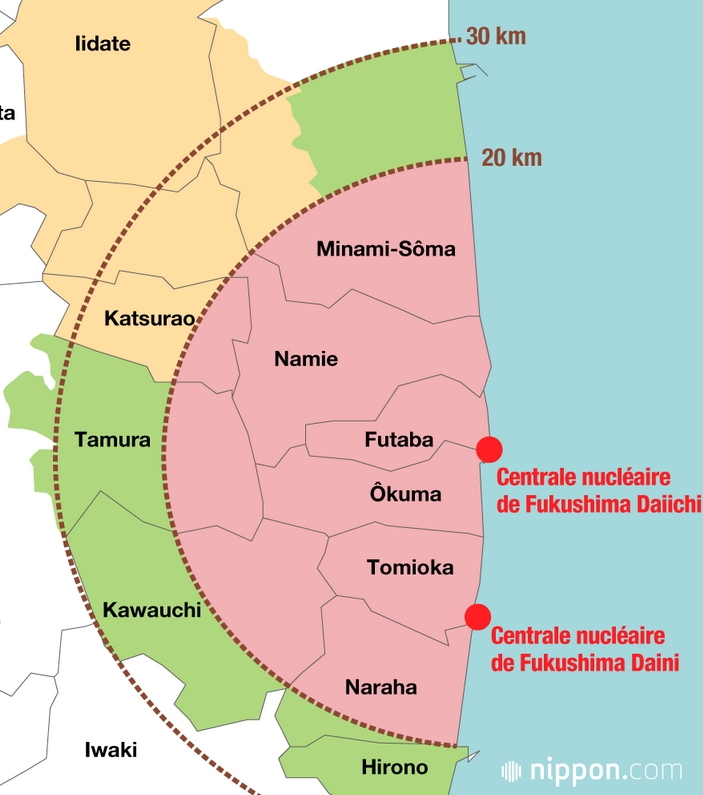
Officials in Japan plan to lift an evacuation order for part of the area designated as a “difficult-to-return” zone in Fukushima Prefecture due to high radiation levels from the 2011 nuclear accident.
An evacuation order remains in place for the Noyuki district, which covers about 20 percent of Katsurao Village.
Authorities aim to lift the order in about six percent of the district, which has received preferential treatment for decontamination work and infrastructure projects.
Sources say a briefing for residents about the result of the rebuilding work is scheduled for Sunday, after a delay due to the coronavirus pandemic.
The sources say officials from the central and prefectural governments and the village are making arrangements to lift the order on June 5 at the earliest.
It would be the first case in which people will be able to return to their homes in a “difficult-to-return” zone. Katsurao Village officials say eight people from four households are hoping to return to the area.
Interview: Opposition mounts to planned release of Fukushima water into Pacific, says British expert

Xinhua, May 13, 2022
LONDON, May 12 (Xinhua) — A leading British nuclear industry expert has called for a detailed consultation over the Japanese government’s plans to release more than a million tonnes of contaminated water from the wrecked Fukushima Daiichi Nuclear Power Station into the Pacific Ocean.
The concerns “should be listened to and should be considered and discussed with those who are raising those concerns,” Professor David Copplestone, a renowned expert in environmental radioactivity at the University of Stirling in the United Kingdom, told Xinhua in an exclusive interview on Tuesday.
In April last year, the government of Japan decided to release about 1.25 million tonnes of waste water into the ocean in 30 years starting in 2023. The contaminated water contains radioactive cesium, strontium, tritium and other radioactive substances.
The move drew the ire of local fishermen. Opposition parties, including the Constitutional Democratic Party (CDP) of Japan, also criticized the plan and demanded its withdrawal.
“There have been impacts on the fishing industry related to the incident back in 2011,” said Copplestone, who has visited Fukushima and has undertaken extensive research worldwide with the International Atomic Energy Agency (IAEA).
In his opinion, “there are reputational, social and economic impacts that have occurred primarily because, quite often, people become fearful of consuming fish from these areas that may be contaminated.”
On March 11, 2011, a magnitude 9.0 earthquake struck off the coast of Fukushima Prefecture in Japan. An ensuing tsunami engulfed the Fukushima Daiichi plant, causing core meltdowns in three of the units and leading to the worst nuclear crisis since Chernobyl.
Eleven years after this disaster, the aftermath of the meltdown, along with the large amount of contaminated water, continue to cause headaches to Japan and the rest of the world.
Japan has claimed that the contaminated water could be diluted and discharged, but several local and international green activists have said that the claim repeatedly proved wrong as the purification equipment cannot eliminate radioactive materials completely.
“One of the main concerns here is the presence of tritium, which is a hydrogen element that is radioactive as an isotope. It is very difficult to separate it from the contaminated water,” Copplestone said.
“If we want to dispose of that water, we have to think about ways to first get rid of the radionuclides in that water — if at all this is possible. Unfortunately, it is not possible to remove tritium from that water,” he noted.
According to Copplestone, “this is about holding a really open dialogue to educate people about the consequences of the planned release.”
“It’s really important for the Japanese government to engage in dialogue with those voicing their concerns, and to listen to those concerns,” he said.
http://www.china.org.cn/world/Off_the_Wire/2022-05/13/content_78215480.htm
Payouts for nuclear disaster in urgent need of revamp

May 12, 2022
The government’s committee overseeing compensation for victims of the 2011 Fukushima nuclear disaster has begun considering whether existing guidelines for payouts should be revised upward.
Established in the aftermath of the triple meltdown at the Fukushima No. 1 nuclear power plant, the guidelines have long been denounced as woefully inadequate in light of the impact of the unprecedented accident. The committee’s decision comes far too late. Many victims are now advanced in years and there is no time to waste in revamping the guidelines.
The criteria for amounts to be paid out were drawn up in August 2011 by the government’s Dispute Reconciliation Committee for Nuclear Damage Compensation as “interim guidelines.” To expedite payments, the panel set general rules concerning eligibility based on categories of damages.
The guidelines, last reviewed in December 2013, are supposed to indicate minimum amounts of compensation for different types of damages. The utility is supposed to determine the actual sums to be paid after considering the special circumstances of individual victims.
Thirty or so group lawsuits have been filed by victims asserting that estimates of damages based on this method were insufficient. The plaintiffs are also seeking to hold the government liable for damages.
More than 10,000 people are involved in these legal actions. A series of rulings by district and high courts since 2017 granted higher damages to the plaintiffs than the estimates based on the guidelines. Seven of the rulings against plant operator Tokyo Electric Power Co. were finalized by the Supreme Court this spring.
The cases deal with different issues. Some supported the argument that all plaintiffs in a certain area should be compensated for mental stress due to their “loss of homes,” meaning they were deprived of their livelihoods and community life. These rulings represent judicial recognition of certain kinds of damages common to many local residents that are not covered by the guidelines. The guidelines should at least be changed to address these issues. Fukushima Prefecture and other local administrative authorities have urged the central government to review the criteria based on the court decisions.
In a belated move, the committee decided to analyze the rulings and identify types of damages not covered by the guidelines. This is a necessary process, but more needs to be done. The panel should confront the diverse and complicated realities resulting from years of living in forced evacuation.
Many victims have not filed lawsuits despite their unhappiness with damage payments offered by TEPCO. The plaintiffs of the rulings contend that the amounts granted by the courts are still insufficient. The committee should listen to the opinions of the victims and local administrations involved and examine a broad range of cases. It should not hesitate to make necessary adjustments to the guidelines in line with the realities.
This problem is an acid test for TEPCO’s commitment to supporting victims of the disaster. The company has consistently refused to pay compensation beyond the amounts based on the guidelines in both class action lawsuits and in mediations by a government dispute-settlement body. It has apparently decided to wait for the committee’s decision. As the company responsible for the disastrous accident, TEPCO’s stance toward the issue raises serious doubt about its awareness of its obligation to make genuine efforts to provide relief to victims.
The Ministry of Economy, Trade and Industry, which is effectively the primary shareholder of the utility under state control, must instruct the company to address the problem with sincerity.
The central government and TEPCO should not forget that they bear the grave responsibility to make all possible efforts to fully compensate victims for damages caused by the nuclear disaster.
Review the standards for compensation for nuclear accidents based on the reality of the situation

May 12, 2022
A government panel has begun to consider whether to review the guidelines for compensation for damages caused by the accident at TEPCO’s Fukushima Daiichi Nuclear Power Plant. The guidelines were created immediately after the accident, and their inadequacies have been repeatedly pointed out since then. It must be said that it is too late. Many of the victims are elderly, and the revision of the guidelines needs to be hastened.
In August 2011, the Nuclear Damage Dispute Review Panel compiled an interim guideline for compensation. The guidelines were last reviewed in December 2001, and the general framework has not changed since then. The TEPCO was supposed to determine the amount of compensation by taking into account the individual circumstances of each victim.
However, about 30 class-action lawsuits have been filed against TEPCO based on this system, alleging that the company’s compensation is inadequate and questioning the responsibility of the government and other parties. Since 2005, the district and high courts have ordered the defendants to pay more than the calculated amount, and in seven of the cases, the Supreme Court ruled in favor of TEPCO this spring.
Although the content of the judgments differed from each other, there were several cases in which the court found that the plaintiffs in a certain area had suffered psychological damage due to the loss of their hometowns, which deprived them of their livelihood and local communities. It can be said that the judiciary recognized the existence of collective damages that the guidelines did not grasp. At the very least, it is essential to revise the guidelines in this area. Fukushima Prefecture and other local governments are also calling on the government to review the guidelines in light of the court decision.
The Board of Inquiry has finally gotten around to analyzing the content of the court decisions and identifying the types of damages that are omitted from the guidelines. This is necessary work, but it is not the only thing that needs to be done. It is necessary to face the reality of the damage, which is becoming more diverse and complex due to the prolonged evacuation.
Even if they were not satisfied with the amount of compensation TEPCO had awarded them, many of the victims did not take the matter to court. The plaintiffs in the lawsuit also claim that the amount awarded in the judgment is still inadequate. The Board should also listen to the opinions of the victims and local governments involved and scrutinize a wide range of cases. If there are parts of the guidelines that do not match the actual situation, the Board should not hesitate to revise them.
TEPCO’s stance is also questionable. TEPCO has stubbornly refused to provide uniform compensation that exceeds the guidelines in class action lawsuits and in settlement mediation procedures conducted by government agencies. It is questionable whether TEPCO is aware of its responsibility as the company that caused the tragic accident to take the initiative in seeking compensation. The Ministry of Economy, Trade, and Industry, which is in effect the major shareholder of TEPCO, is required to strictly instruct TEPCO to take a sincere approach.
It must do everything in its power to make amends to the victims until they are fully compensated. We must not forget that this is the heavy responsibility placed on the government and TEPCO.
https://www.asahi.com/articles/DA3S15291024.html?iref=pc_photo_gallery_bottom
Efficacy unclear of problem-hit ice-soil wall at Fukushima plant

May 12, 2022
Technical flaws, ballooning costs and unconfirmed effectiveness have plagued the “ace card” in preventing groundwater from accumulating within the crippled Fukushima No. 1 nuclear power plant.
Plant operator Tokyo Electric Power Co. froze the soil to create an underground ice wall to divert the groundwater toward the ocean and away from the damaged reactor buildings where the liquid can become heavily contaminated with radioactive substances.
The 1.5-kilometer ice wall was completed in 2016 around the No. 1 to No. 4 reactor buildings of the nuclear plant. The ice barrier was initially expected to end its role in 2021, after steps were taken to prevent water leaks and plug holes at the reactor buildings.
Not only has the ice wall failed to work sufficiently, but huge amounts of public funds also continue to pour in annually for its maintenance.
“A frozen ground wall has advantages, such as a high ability to block water, but its maintenance requires huge sums,” said Kunio Watanabe, a professor of frozen soil studies at Mie University. “An easy-to-build underground ice wall was the only possible option in the early stages because of extremely high radiation readings around the reactor buildings.
“Now that it has been used for so many years, other approaches should also be weighed.”
TECHNICAL PROBLEMS, RISING SPENDING
TEPCO has used tanks to store contaminated water used to cool the melted nuclear fuel since the Great East Japan Earthquake and tsunami caused the triple meltdown at the plant.
But it is also storing the groundwater that keeps flowing in. Space for the water storage tanks at the nuclear plant is running out.
The ice wall was supposed to reduce the volume of contaminated water.
In October last year, TEPCO said the soil temperature was higher than 0 degrees in an area that should have been frozen. The temperature reportedly topped 0 in mid-September and increased to 13 degrees in November.
TEPCO said equipment to discharge rainwater accumulating in a different reactor building broke down. The rainwater there likely seeped into the ground and reached the spot with the temperature increase.
Steel sheets were inserted into the soil to stanch the groundwater flow.
A total of 1,568 cooling pipes extending 30 meters below the surface circulate a refrigerant of minus 30 degrees to freeze the soil.
However, 14 tons of the coolant leaked between January and February this year because of damaged pipes and slippage of rubber parts at their joints.
TEPCO located the leaks and replaced the pipes, but the coolant’s circulation was suspended during the procedure.
The barrier system was brought into operation using 34.5 billion yen ($268 million) in taxpayers’ money.
Since the soil must be kept frozen throughout the year, electricity charges and other expenses for cooling and circulating the refrigerant continue to grow.
Annual maintenance costs topped 1 billion yen immediately following the wall’s introduction, and hundreds of millions of yen are currently injected in the system each year.
UNCERTAIN VALIDITY
Despite all the fixes and expenses, the strategy’s effectiveness has yet to be verified.
TEPCO in March 2018 released an estimate arguing the frozen wall would prevent 95 tons of groundwater from entering the plant daily. That level would be half of the inflow with no underground barriers.
The prediction, however, was exclusively for winter months with less rainfall. It did not include torrential rain from typhoons that increase the amount of groundwater flowing into the reactor buildings.
TEPCO recently declined to comment on the ice wall’s effectiveness, saying it is “difficult to assess individual countermeasures because many steps are being implemented simultaneously.”
Frozen soil barriers are normally used for only several months in tunnel digging and other construction projects. There have been few large ice walls that have been operated for years.
The government and TEPCO originally planned to rely on the method “until March 2021, when countermeasures against water leaks at reactor buildings are finished.”
But they have not started on the anti-leakage process for the structures.
They do, however, plan to release treated water stored at the plant into the sea, a proposal that has been criticized by residents and the fishing industry.
Radioactive water increases by 150 tons a day at the Fukushima plant.
TEPCO set a goal of lowering the daily contaminated water rise to 100 tons or less by 2025. It described the “frozen soil wall as equipment essential for accomplishing the objective.”
TEPCO in December last year told the Nuclear Regulation Authority that it will continue to use the frozen wall system.
“We will consider the next step,” a TEPCO official said. “We are sorting out alternatives so a new approach will be realized in 2024 or 2025.”
Japanese govt. promotes regional ‘hot’ Sake from Fukushima & ‘hot’ beef from Iwate to Canada

May 11, 2022
The Japanese government has taken part in Canada’s largest food fair for the first time in 15 years. It’s part of an effort to raise food exports to 5 trillion yen, or nearly 40 billion dollars, by 2030.
The Restaurants Canada Show opened in Toronto on Monday. The three-day event features more than 500 booths showcasing cuisines from around the world.
The Japanese government teamed up with the Japan External Trade Organization to set up a booth.
They are serving up a range of regional specialties, including striped jack from Ehime, sake brewed in Fukushima, and premium beef from Iwate.
The booth is also holding live demonstrations, including a fish-cleaning show and a demonstration of an automatic rice-ball maker.
Semi-dried persimmon from Fukushima to the Emirates on sale in Dubai
I am not sure that the people in Dubai are well informed of the risk incurred….

Sweet Taste of Fukushima Winning Fans in Dubai
May 11, 2022
A local specialty from Japan’s Fukushima Prefecture is winning over the taste buds of people in the United Arab Emirates. The first-ever shipment of anpo-gaki, or semi-dried persimmon, from Fukushima to the Emirates has gone on sale in Dubai.
The current state of my hometown…” Residents of the Tsushima area measured radiation levels by themselves as evidence in court (Fukushima Prefecture)

May 10, 2022
Residents of the Tsushima area in the hard-to-return zone in the town of Namie, Fukushima Prefecture, have begun measuring radiation levels throughout the area in connection with a lawsuit against the government and Tokyo Electric Power Company.
On the first day of the trial, at 10:00 a.m. on October 10, approximately 10 residents gathered in the Tsushima area, which is in the difficult-to-return zone, to confirm the method and location of the measurements.
Measurements will be taken by dividing the entire Tsushima area into 28 sections of 2 km square, and installing dosimeters in each section. The dosimeters will be placed mainly in areas that have not been decontaminated, and many of these areas are covered with trees and grass.
According to the plaintiffs, this is believed to be the first time such measurements have been made in a class action lawsuit involving a nuclear accident.
Hidenori Konno, leader of the plaintiffs, said, “What we are appealing to the court of appeals is to ‘give back our hometown. In order to do so, we have to come up with concrete evidence of the situation in the Tsushima area…”
Hidenori Konno, the leader of the plaintiffs’ group, said at the meeting on April 4 that he intends to submit the results of the measurements as evidence in the trial.
Although a portion of the Tsushima area has been designated as a restoration site and is being decontaminated, the outlook for more than 90% of the other areas has yet to be determined.
Mr. Konno said, “At the very least, decontamination will restore the environment to near normalcy. In fact, the radiation dose has decreased so much after 12 years. We would like to use the data to prove that we can do it, especially in areas close to our homes.”
The installation work is scheduled to continue until the 15th, and the samples will be collected and analyzed three weeks later.
Kishida, Johnson Enjoy Popcorn from Fukushima

May 6, 2022
Japanese Prime Minister Fumio Kishida and his British counterpart, Boris Johnson, enjoyed popcorn from Fukushima Prefecture, northeastern Japan, during their meeting in London on Thursday.
At the meeting, Johnson informed Kishida of Britain’s plan to lift by the end of June its import restrictions on food produced in Fukushima and other areas in Japan, which were introduced after the March 2011 nuclear accident at Tokyo Electric Power Company Holdings Inc.’s tsunami-crippled Fukushima No. 1 power station.
According to a statement released by the office of the British prime minister after the two leaders’ meeting, Johnson said he was “pleased” that Britain would soon lift the remaining restrictions on Fukushima food products.
The popcorn Kishida and Johnson tasted was flavored with peach nectar and coconuts, a photograph released by the British prime minister’s office showed. Kishida brought with him the popcorn produced by Hishinuma Farm in the city of Fukushima.
When the two met in Brussels in March this year, they enjoyed Fukushima-produced karinto, or deep-fried Japanese snack made with brown sugar. At that time, Johnson, who called himself a fan of karinto, brought the snack with him.
Thought chlorinated chicken was bad? Fukushima food to be imported as restrictions get lifted

May 6, 2022
Those worried about imported chlorinated chicken from America might want to re-think their priorities after Boris Johnson struck a nuclear agreement with the Japanese prime minister, Fumio Kishida.
From now on, fish and vegetables grown near the old Fukushima nuclear plant in Japan can be freely sold in Britain after the Food Standards Agency (FSA) scrapped a rule on radioactivity levels in produce.
The agency reviewed controls ahead of the Japanese PM’s meeting with Johnson, with the pair sharing some ‘Fukushima popcorn’ to mark the lifting of all of the remaining restrictions.
The FSA said: “Our risk assessment shows that removing the 100 becquerels per kilogram (Bq/kg) maximum level of radiocaesium for food imported from Japan to the UK would result in a negligible increase in dose and any associated risk to UK consumers.
“Without specific import controls, the emphasis would fall on food businesses to ensure food is safe under General Food Law. However, we would not recommend businesses need to take any precautions beyond their normal due diligence.”

Tesco and Waitrose said they had no immediate plans to introduce the items in store. They are already available in limited quantities at some specialist Japanese grocers.
Downing Street said that the Prime Minister “was pleased Great Britain would soon lift the remaining restrictions on Fukushima”.
Dumping treated nuclear wastewater in Pacific Ocean not recommended

May 2, 2022
Japan has proposed discharging treated nuclear wastewater into the Pacific Ocean, and an independent panel of global experts on nuclear issues was developed to support Pacific nations in their consultations. Robert Richmond, a research professor at the University of Hawaiʻi at Mānoa School of Ocean and Earth Science and Technology (SOEST) and director of the Kewalo Marine Laboratory, was one of five experts selected to join the panel.
In 2011, a massive earthquake and tsunami in Fukushima, Japan damaged the Daiichi Nuclear Power Plant. To prevent further damage and overheating, workers pumped water through the remains. Last year, Japan announced its intentions to begin discharging the accumulated radioactively contaminated cooling water into the Pacific Ocean starting in 2023, claiming that after treatment, it is safe to do so. Some Pacific nations are concerned about whether that can be done safely.
The Pacific Islands Forum, made up of 18 independent Pacific Island countries, created the expert panel to provide independent technical advice as part of the ongoing dialogue with Japan officials and representatives of the nuclear power plant in Fukushima where the wastewater has accumulated since the tsunami.
“At this point, we’re unanimous in saying we don’t see enough information to support dumping the radioactively contaminated water into the ocean,” said Richmond, who has conducted marine conservation research in the Pacific for more than four decades. “Our first recommendation to the group is to take that option off the table for now.”
Trans-boundary issue
Through the movement of ocean currents and transport by pelagic fishes that can take up and accumulate radionuclides (a radioactive and unstable form of an element), more widespread distribution can and will take place.
“This is truly a trans-boundary issue,” said Richmond. “Fish don’t respect political lines, and neither do radionuclides or pollutants in the ocean. I really commend the members of the Pacific Islands Forum for recognizing that this is an issue that they need additional information on.”
In announcing the formation of the panel, Pacific Islands Forum Secretary General Henry Puna emphasized, “Our ultimate goal is to safeguard the Blue Pacific—our ocean, our environment and our peoples—from any further nuclear contamination. This is the legacy we must leave for our children.”
Richmond has studied the uptake of radioactive Ru-106 in crayfish as an indicator of leakage from nuclear power plants while working at the Department of Radiation Biology and Biophysics at the University of Rochester Medical School and spent two years performing research on Enewetak Atoll, home to the U.S. nuclear testing program from 1948–58. He presented at the 7th Our Oceans Conference in Palau. This event, co-hosted by the Republic of Palau and the U.S., offered a key moment for countries, civil society and industry to commit to concrete and significant actions to protect the ocean. Richmond emphasized the need for adequate and accurate information for decision makers to make sound decisions to protect and conserve marine habitats and life, and all those who depend on ocean resources.
“This is not the first nuclear incident, and it won’t be the last,” said Richmond. “Perhaps this can be an opportunity to try different approaches that have never been tried before. Maybe this could be a learning opportunity to really set the bar for the future of not continuing to use our oceans as the dumping ground.”
Additional panel members are Ken Buesseler, senior scientist and oceanographer of the Woods Hole Oceanographic Institution; Arjun Makhijani, president of the Institute for Energy and Environmental Research; Antony Hooker, associate professor and director, Centre for Radiation Research, Education and Innovation, the University of Adelaide; Ferenc (Jacob Rolf) Dalnoki-Veress, scientist-in-residence and adjunct professor at the James Martin Center for Nonproliferation Studies, Middlebury Institute of International Studies at Monterey.
The panel recently shared a detailed set of initial recommendations to the Secretariat that will be available soon.
This research is an example of UH Mānoa’s goal of Excellence in Research: Advancing the Research and Creative Work Enterprise (PDF), one of four goals identified in the 2015–25 Strategic Plan (PDF), updated in December 2020.
Hiroshima man’s anime sheds light on Fukushima nuclear project

May 3, 2022
Hiroshima resident Hidenobu Fukumoto was astonished when he learned there was once a plan to build a nuclear power plant in his hometown, the first city devastated by a nuclear bomb.
He discovered the shocking news by chance while visiting Fukushima Prefecture, which suffered its own nuclear disaster in 2011, as a “kamishibai” picture card show artist.
“I was stunned,” said Fukumoto, who has produced about 170 kamishibai titles based on the accounts of residents affected by the disaster. “I decided to face up to the new fact about Hiroshima I discovered during my visits to Fukushima.”
Fukumoto, 65, has created a 57-minute anime exploring why Fukushima Prefecture ended up hosting a nuclear plant. It tells the story through the eyes of residents who evacuated from their hometowns following the Fukushima No. 1 nuclear power plant accident.
“I realized how all these events related to atomic bombing and nuclear plants led to the promotion of nuclear power,” he said. “I’ll be glad if it (the anime) helps the people of Fukushima stop blaming themselves for benefiting from the nuclear plant and set themselves free from the accusing stares of people around them.”
The anime, titled “Fukushima Genpatsu Hajimari Monogatari: Toge” (The prologue to the Fukushima nuclear power plant: Mountain pass), portrays a man in his 60s who was born in 1949 in Okuma, a town in Fukushima Prefecture that co-hosts the now-stricken plant.
When Japan’s economy begins booming following the period of postwar poverty, the protagonist enters a university in Tokyo and enjoys his college life.
The story illustrates the major events leading up to the construction of the nuclear plant in Fukushima Prefecture at a time when people in Japan were suddenly blessed with material wealth.
In 1953, U.S. President Dwight D. Eisenhower called for the peaceful use of nuclear power during his “Atoms for Peace” speech at the United Nations. In response, exhibitions were held in Hiroshima and elsewhere to champion the cause.
In 1954, the tuna fishing boat Daigo Fukuryu Maru and other vessels were contaminated by fallout from the U.S. hydrogen bomb test at Bikini Atoll. Six years later, Fukushima Prefecture announced its bid to host a nuclear plant.
In one scene from the anime, a girl asks her mother lying on a bed at the Hiroshima Atomic-bomb Survivors Hospital to take her to an exhibition on the peaceful use of atomic energy when she recovers.
Another scene shows young people in Fukushima leaving their hometown to seek jobs, while long-term residents are split over whether the prefecture should host a nuclear plant.
When the protagonist eventually returns home in Okuma and sees a massive nuclear plant standing in the town, he is left speechless.
The anime then fast-forwards to 2011, when the Great East Japan Earthquake and tsunami triggered the triple meltdown at the plant.
“The move to promote atomic power prevailed globally under the pretext of the peaceful use of nuclear energy, overshadowing even the destruction of Hiroshima brought on by the atomic bomb,” the protagonist said while living as an evacuee at the end of the story. “Ordinary people like us could do nothing about it.”

Fukumoto, who works as a “kamishibai” picture card show artist under the name of Teppei Ikumasa, said he wrote scripts and drew illustrations for the anime based on his interviews with people in Fukushima.
He began creating the work after hearing from a Fukushima resident that there was a plan to build a nuclear plant in Hiroshima.
Fukumoto heads Machimonogatari Seisaku Iinkai (Town story production committee), a Hiroshima-based group that uses kamishibai and other tools to pass on local culture to the next generations.
Following the 2011 nuclear disaster, he visited the affected areas to listen to what residents had to say.
He learned about the Hiroshima nuclear plant plan from an Okuma resident who was working as a storyteller using Fukumoto’s kamishibai.
Fukumoto found an article online that said U.S. Congressman Sidney Yates proposed constructing a nuclear plant in Hiroshima in 1955.
Yu Sato, 20, a sophomore at Hiroshima City University who helps with Fukumoto’s kamishibai project as a volunteer, confirmed Yates’ original remarks by searching the congressional records kept in the Library of Congress’ online database.
“I have introduced today a bill to construct in the city of Hiroshima, Japan, through the cooperative efforts of the Governments of the United States and Japan, an atomic power reactor dedicated to the advancement of peace and progress by producing power for industrial purposes,” reads the transcript of the speech, which is also given in the anime.
STORY HITS HOME
Fukumoto’s kamishibai project has struck a chord with many Fukushima residents who experienced the nuclear disaster.
Yoko Oka, 61, who lives in Fukushima city as an evacuee from Namie, Fukushima Prefecture, met Fukumoto at a gathering place for people living in temporary housing in Kori in the prefecture in summer 2014.
Oka has been performing kamishibai with him both at home and abroad since then.

She said she still remembers what Fukumoto told her: “I want you to tell people exactly what you went through and how you felt at the time. Only those who experienced the disaster can do that.”
Oka said her impression of Hiroshima, devastated by the 1945 atomic bombing, changed after the 2011 nuclear accident.
“I began imagining how hard it was to bring the city exposed to radiation back to what it is now,” she said. “I was shocked to learn from this anime that there was a plan to build a nuclear plant in Hiroshima.”
Kinue Ishii, 70, who also performs kamishibai with Oka as a member of a storytelling group, said people can think deeply about the nuclear accident by learning why the nuclear plant was built in Fukushima.
“I want people to imagine themselves becoming victims of a nuclear accident by watching this anime,” Ishii said.
Hisai Yashima, 56, another member of the storytelling group, said she hopes the anime will help raise awareness of what led to the construction of the nuclear plant because people from outside Fukushima often ask her why the prefecture approved the plan.
The package of an anime DVD and a 16-page, A4-size picture book costs 2,000 yen ($16). For more details, visit the production committee’s website: https://matimonogatari.iinaa.net) (Japanese only).
(This article was compiled from reports by Miki Morimoto and Yusuke Noda.)
TEPCO net profit slides 96.9%; cost for Fukushima well out of reach

April 29, 2022
Tokyo Electric Power Co.’s dismal financial results have compounded the difficulties facing the company in compensating victims of the Fukushima nuclear disaster and covering the cleanup and decommissioning costs.
The parent company, Tokyo Electric Power Co. Holdings Inc., on April 28 announced that net profit for the fiscal year that ended in March plummeted by 96.9 percent over the previous year to 5.6 billion yen ($43 million).
“With fuel prices continuing to surge, the business environment surrounding our company is not a very optimistic one,” Tomoaki Kobayakawa, the company president, said at the news conference to announce the business results.
He said the company would begin work to revise its corporate structure, including reorganizing group companies and heightening cooperative efforts with other companies.
Despite the dwindling profits, TEPCO must still carry out various tasks to clean up the mess made by the 2011 triple meltdown at its Fukushima No. 1 nuclear power plant.
In 2016, the government calculated that the total cost of compensating people displaced by the disaster, decommissioning reactors at the plant and conducting radiation decontamination work would come to a staggering 21.5 trillion yen.
TEPCO is expected to contribute about 16 trillion yen of that total.
About 10 trillion yen has already been spent for compensation and to remove radiation. Much of that total has been paid for by the government on condition that TEPCO reimburses it later.
Under the plan to rebuild TEPCO, the utility must also set aside about 500 billion yen a year to pay for decommissioning work.
But the last time TEPCO was able to reach that monetary goal was in fiscal 2017. For the past three years, it has only managed to set aside about 300 billion yen annually.
The company had also set a goal of 450 billion yen in net profit by 2030.
But as Yoshimitsu Kobayashi, the company chairman, admitted, “If nothing is done, profits will increasingly shrink and we will be unable to fulfill our responsibility regarding Fukushima.”
Retail sales of electric power used to be TEPCO’s strong point. But as of the end of 2021, newly created electric power companies accounted for 30.4 percent of the electricity sold in the area normally covered by TEPCO.
That is the largest ratio of any of the major electric power companies in Japan.
As a result, TEPCO Energy Partner Inc., which handles retail sales, recorded a loss of 66.4 billion yen for the fiscal year that ended in March.
TEPCO has also failed to capitalize on renewable energy, which had been considered a growth sector.
The government in December 2021 picked a group led by trading company Mitsubishi Corp. instead of TEPCO to handle offshore wind power facilities in Chiba and Akita prefectures.
And there is no sign of when TEPCO’s Kashiwazaki-Kariwa nuclear power plant in Niigata Prefecture can resume operations.
IAEA sees ‘limited impact’ of water release at Fukushima nuclear plant
Another smooth propaganda article from the spin doctors…..

Apr 30, 2022
An International Atomic Energy Agency team expects only a limited impact on humans following the planned release into the sea of treated radioactive water from Tokyo Electric Power Company Holdings Inc.’s crippled nuclear power plant.
Chemical substances in the treated water are “far below the Japanese regulatory limits,” said the first report by the IAEA task force reviewing Japan’s plans to discharge the water from the meltdown-stricken Fukushima No. 1 plant into the Pacific Ocean.
But the team stopped short of reaching a conclusion on the safety of the release. The team plans to continue its assessment and announce a final judgment before Tepco starts releasing the water.
The task force, comprising a group of independent and highly recognized experts with diverse technical backgrounds from various countries, said that Japan’s preparations for the planned discharge are proceeding largely in line with international safety standards. IAEA Director General Rafael Mariano Grossi said that Japan has made “significant progress in its preparations” and the task force is satisfied that Tepco and the Ministry of Economy, Trade and Industry have identified the appropriate next steps for the water discharge.
The task force visited Japan in February, inspecting the power plant and interviewing Tepco and government officials. In the report, the task force said that its review of the water release plans focuses on eight points including radiological environmental impact assessment, water quality monitoring and involvement of interested parties.
Water that has become contaminated after being pumped in to cool melted reactor fuel at the plant has been accumulating at the complex, also mixing with rainwater and groundwater at the site.
Tepco expects that its storage tanks for treated water will reach full capacity by around summer or autumn 2023.
The water is treated through an advanced liquid processing system that removes radionuclides except for tritium. The water will be released 1 kilometer off the coast of the power plant through an underwater tunnel.
Before the discharge, it will be diluted with seawater below 1/40 of the current regulations, according to the government.
In a statement issued Friday, industry minister Koichi Hagiuda said the government will continue its efforts to “ensure the safety of handling … treated water and to foster understanding both in Japan and abroad.”
China and South Korea have expressed concerns with Japan’s plan to release the treated water.
Local fishermen have been widely opposed to the release out of fear of reputational damage to the region’s seafood, although a recent survey showed that the release’s impact on consumer habits would be minimal.
https://www.japantimes.co.jp/news/2022/04/30/national/iaea-fukushima-water-release-safety/
1 This Month
To see nuclear-related stories in greater depth and intensity – go to https://nuclearinformation.wordpress.com/
12 February – Webinar The Big Push: New Nuclear Projects in Canada
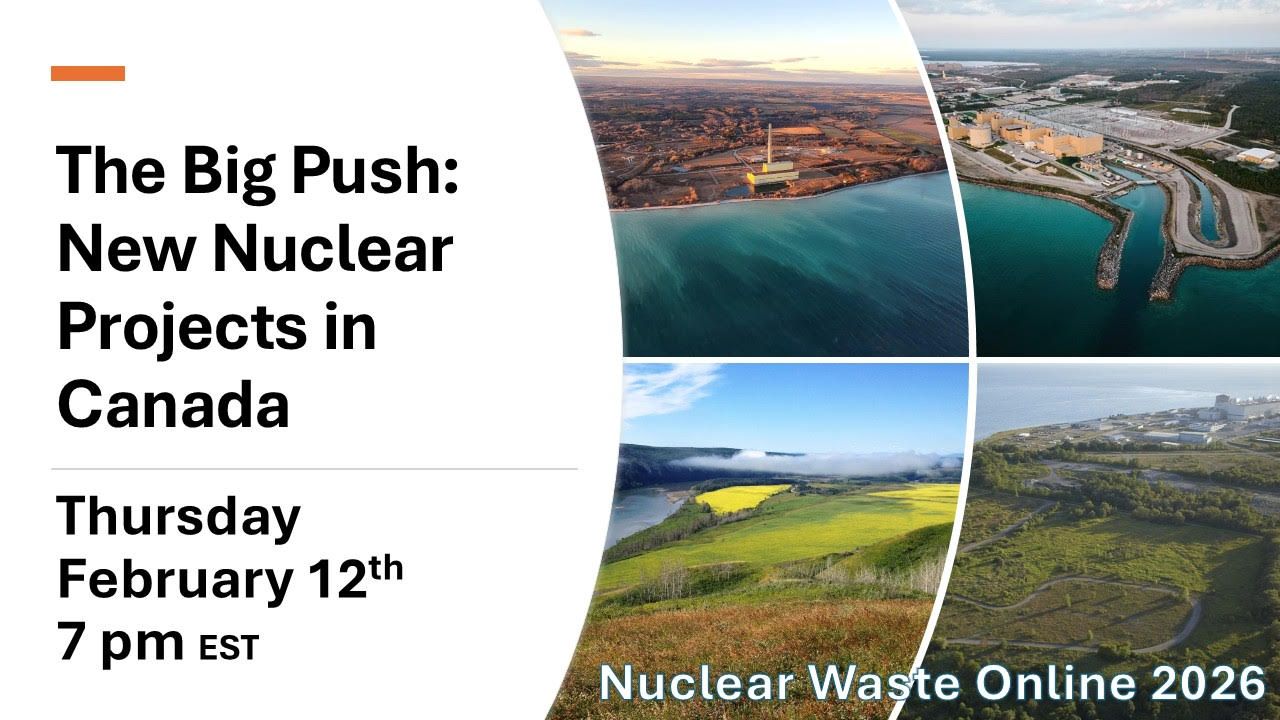
Thursday, February 12, 7 pm Eastern | 2nd of 4 sessions in the 2026 Nuclear Waste Online webinar series
Join a webinar on the push for new nuclear generation in Canada. Go to Northwatch.org to register or use the registration link https://us02web.zoom.us/webinar/register/WN_ZfWOf1GITqSRIZX8CB-A9w
-
Archives
- February 2026 (127)
- January 2026 (308)
- December 2025 (358)
- November 2025 (359)
- October 2025 (376)
- September 2025 (258)
- August 2025 (319)
- July 2025 (230)
- June 2025 (348)
- May 2025 (261)
- April 2025 (305)
- March 2025 (319)
-
Categories
- 1
- 1 NUCLEAR ISSUES
- business and costs
- climate change
- culture and arts
- ENERGY
- environment
- health
- history
- indigenous issues
- Legal
- marketing of nuclear
- media
- opposition to nuclear
- PERSONAL STORIES
- politics
- politics international
- Religion and ethics
- safety
- secrets,lies and civil liberties
- spinbuster
- technology
- Uranium
- wastes
- weapons and war
- Women
- 2 WORLD
- ACTION
- AFRICA
- Atrocities
- AUSTRALIA
- Christina's notes
- Christina's themes
- culture and arts
- Events
- Fuk 2022
- Fuk 2023
- Fukushima 2017
- Fukushima 2018
- fukushima 2019
- Fukushima 2020
- Fukushima 2021
- general
- global warming
- Humour (God we need it)
- Nuclear
- RARE EARTHS
- Reference
- resources – print
- Resources -audiovicual
- Weekly Newsletter
- World
- World Nuclear
- YouTube
-
RSS
Entries RSS
Comments RSS
 nuclear-news