Exelon Corp hanging on in hope that Illinois government will bail out 2 nuclear power stations

Illinois House inches closer to saving two nuclear plants, By Timothy Gardner WASHINGTON, Sept 7 (Reuters) – The Illinois House plans to consider an energy bill on Thursday, the House speaker said, that could prevent two Exelon Corp nuclear power plants from shutting in coming days and months.
The Illinois Senate on Sept. 1 passed a bill that contains more than $600 million in carbon mitigation credits for nuclear plants, which generate virtually emissions-free electricity. [as long as you don’t count the full dirty nuclear fuel chain]
………. U.S. nuclear plants have been struggling to compete with wind and solar farms and plants that burn low-cost natural gas. Exelon (EXC.O) has said it will close its Byron nuclear plant on Sept. 13 and its Dresden plant in November if a state or federal program does not come to the rescue.
Preventing nuclear plants from closing has been a priority for the administration of President Joe Biden, which has supported tax incentives for nuclear in federal infrastructure legislation and sees the plants as important to its goal of decarbonizing the power grid by 2035.
Exelon has said the federal incentives alone could not come fast enough to save the plants. The company said it has authorized uranium fuel shipments to Byron for use if the legislation passes. But Exelon said the fuel will be shipped to another plant if no action is taken and Byron will permanently shut. https://www.reuters.com/world/us/illinois-house-inches-closer-saving-two-nuclear-plants-2021-09-07/
Media Coverage of Fukushima, Ten Years Later.
Abstract: When taking up the unlearned lessons of Fukushima, one of the biggest may have been the need for more robust oversight of the nuclear industry. In Japan, the failure of the major national news media to scrutinize the industry and hold it accountable was particularly glaring. Despite their own claims to serve as watchdogs on officialdom, the major media have instead covered Japan’s powerful nuclear industry with a mix of silent complicity and outright boosterism. This is true both before and after the Fukushima disaster. In the decades after World War II, when the nuclear industry was established, media played an active role in overcoming public resistance to atomic energy and winning at least passive acceptance of it as a science-based means for Japan to secure energy autonomy.
During the Fukushima disaster, the media served government objectives such as preservation of social order by playing down the size of the accident and severity of radiological releases, resulting in widely divergent coverage from serious overseas media. While a short-lived proliferation of more critical and independent coverage followed the disaster, the old patterns returned with a vengeance after the installment of the pro-nuclear administration of Abe Shinzō. This article will examine the roots of the Japanese media’s failure to challenge or scrutinize the nuclear industry, and how this complicity has played out in the post-Fukushima era. It will use a historical analysis to look at how the current patterns of media coverage were actually established in the immediate postwar period, and the formation of public support for civilian nuclear power.
During my 15 years as a foreign correspondent in Tokyo, including a six-year stint as Tokyo bureau chief of The New York Times (2009-2015), I often covered the same news events as Japanese journalists, standing shoulder-to-shoulder at more press conferences than we’d care to count. While I admire many Japanese colleagues individually as journalists, I was frequently struck by the shortcomings of Japan’s big domestic media and Japanese journalism as an institution.
But never did I feel these structural weaknesses as keenly as I did in the tense weeks that followed the triple meltdown at the Fukushima Daiichi Nuclear Power Station.
In Minami-soma, a city 25 kilometers north of the stricken plant, where some 20,000 remaining residents were cut off from supplies of food, fuel and medicines, I discovered that journalists from major Japanese media were nowhere to be seen. They had withdrawn from Minami-soma, forbidden by their editors in Tokyo from approaching within 30 or 40 kilometers of Fukushima Daiichi.
By doing so, they had essentially abandoned the already isolated residents. But you would never know that from the media’s stories, which made no mention of their own pull out or the perceived risks that had prompted this retreat. Instead, the main newspaper articles uniformly repeated official reassurances that there was no cause for alarm because the radiation posed “no immediate danger to human health,” as the chief cabinet secretary at the time, Edano Yukio, so famously put it.1
The mismatch between word and deed—between what the newspapers were telling their audiences and what they were actually doing to protect their own journalists—was glaring. It turned out that this was only the first of several instances during the Fukushima disaster where I witnessed Japan’s major media adhering to the official narrative regardless of the facts on the ground. I refer to this phenomenon as “media capture,” borrowing from the more widely used term “regulatory capture,” which is used to describe a similar failure of government oversight of the nuclear industry.
Over the months and years that followed the meltdowns, I saw numerous instances of national media refusing to take a critical or distanced stance in their coverage of the nuclear industry and its government regulators. Instead, they repeatedly chose to internalize the official narratives and even adhere to the government-approved language. We saw this is the widely diverging narratives that started appearing in the serious foreign press versus the major domestic media as the accident worsened.
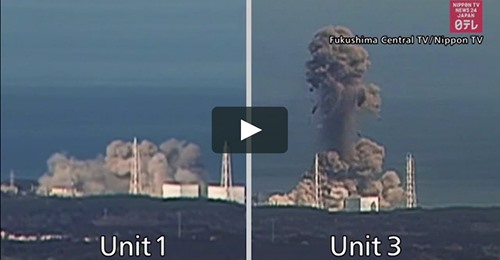
To cite a straightforward example, we started using the word “meltdown” within hours of the first reactor building explosion at the plant, reflecting the almost unanimous view of outside experts that a melting fuel core was the only realistic source of the hydrogen that caused the blast. However, the domestic national dailies and NHK avoided the word “meltdown” (in Japanese, merutodaun) for months, following the insistence of the Ministry of Economics, Trade and Industry (METI), the powerful government agency that both promoted and regulated Japan’s nuclear industry, that a meltdown had not been confirmed. The big Japanese media used other official euphemisms as well, including “explosion-like event” to describe the massive blast at the Unit 3 reactor building, which blew chunks of concrete hundreds of feet into the air.
In fact, I even had Japanese journalists calling me to berate me and my newspaper for using the M-word without METI’s permission. Readers of the Japanese national dailies didn’t see the M-word until mid-May, when METI and the plant’s operator, Tokyo Electric Power Co. or TEPCO, conceded in public that Fukushima Daiichi had indeed suffered a meltdown in mid-March—three meltdowns, in fact.
In the chapter that I wrote for Legacies of Fukushima: 3.11 in Context, I tried to explain some of the reasons why the civilian nuclear power industry could have such a peculiarly strong grip on the media and their narratives. The nuclear industry was a national project that was promoted by the powerful central ministries as a silver bullet for resource-poor Japan’s dependence on imported energy. This gave it an elevated status as the elite bureaucrats guided Japan’s postwar recovery and economic take-off.
I looked at the media’s dependence on Tokyo’s powerful central ministries, which takes its most visible form in the so-called kisha kurabu, or “press clubs.” These are arrangements that allow national media to station their journalists inside the ministries and agencies, where they are given their own room and exclusive access to officials. Much of the reporting by the major Japanese media starts in the kisha kurabu, where journalists gather to wait for the next press conference or off-record briefing from officials. The kisha kurabu system fosters a passive form of journalism, in which reporters become dependent on the ministry within which they are embedded. In pursuit of a scoop that can make or break a career, the journalists compete for handouts from ministry officials. All too often, they enter a Faustian bargain in which the journalists swap narrative control in exchange for exclusive access to information. The result is a passive form of access journalism that ends up repeating spoon-fed official narratives.
I also looked to the past at the emergence of newspapers like the Asahi Shimbun during the early to mid-Meiji era, when the national priority was to protect autonomy by finding a way to catch the industrialized West. I argued that this history baked into the mindset of Japanese journalists a feeling of responsibility for the fate of their nation, including its vital energy needs. It also led to an identification with the government, and particularly the elite officialdom, as protectors of Japan and its people from predatory foreign powers. This inclination to side with the state has continued in the postwar period, when journalists have clearly seen themselves as members of a national elite attached to a broader bureaucratic-led system.
One point that I wanted to underscore was that this media capture was not something so simple or venal as corruption. This is how it is often portrayed by critical Japanese writers, usually freelancers and book authors, who focus on the so-called Nuclear Village, a nexus of business, government, labor unions, academia and news media linked by the cash flowing out of the highly profitable nuclear plants. While money doubtlessly plays a role in many of these relationships, including perhaps the for-profit commercial TV broadcasters, I see no direct evidence that it sways the coverage of the national newspapers. These are privately held companies for whom advertising is a much less important revenue source than subscriptions (or the rent from their valuable real estate holdings in central Tokyo and Osaka).
Regardless of the cause, the result has been generations of postwar journalists who have consistently failed to serve as watchdogs on one of the nation’s most politically powerful industries.2 Starting in the 1990s, public scandals started plaguing the industry, and TEPCO in particular. In 2002, government inspectors announced that TEPCO had been routinely falsifying safety reports to hide minor incidents and equipment problems at reactors including several at Fukushima Daiichi. TEPCO eventually admitted to more than 200 such violations stretching back to 1977. Five years later, TEPCO revealed even more cover-ups of safety issues, which the company had failed to report in the previous inquiry.
Despite what was clearly a chronic and systemic failure of both internal compliance and government oversight, no one was arrested or charged, and the existing regulatory framework left unchanged. The media could have played a role of holding the regulators’ feet to the fire by exposing the structural problems behind this abysmal record of obfuscation and cover-ups. Instead, the watchdogs chose to remain largely silent, reporting on the government’s revelations, but making few efforts at independent investigative reporting.
Of course, such criticisms enjoy the benefits of hindsight, with the accident in 2011 making it easier to see these failures as part of a broader narrative that leads inevitably to Fukushima. But how about after 2011, when the severity of the disaster led to numerous calls for reform? During that time, the national media have also been held up to uncomfortable scrutiny by a jaded and distrustful public, who felt betrayed by their early coverage of the accident.
Unfortunately, ten years later, nothing seems to have changed.
This was apparent in mid-April of 2021, when the Japanese government announced a decision to release into the Pacific Ocean more than 1.2 million tons of radioactive water that has been building up in hundreds of huge metal tanks on the grounds of the Fukushima Daiichi plant. (The accumulation of contaminated water has plagued the plant from the early days of the disaster. TEPCO has resorted to some high-tech solutions with mixed results, including a mile-long “ice wall” of frozen dirt that failed to fully block the water, much of which flows into the plant from underground.)
The water stored in these tanks contains tritium, a radioactive isotope of hydrogen that is best known for its military use as the fuel for thermonuclear warheads (hence the term “hydrogen bomb”). On the spectrum of radioactive substances, tritium emits relatively low levels of radiation in form of beta particles. But it is a radioactive substance nonetheless, a fact that major media played down or even omitted by choosing, once again, to adopt the industry and government’s language to describe the dump. The main news stories in the major national newspapers and TV broadcasts used the official term for this water, which is shorisui, or “treated water.”
While technically correct, this term euphemistically glosses over the fact that this is not the same as, say, treated sewage water. Nor does treated water convey the fact that this water still contains a radionuclide that emits beta radiation.
One result was an interesting battle of words that pitted the mainstream media, which used the approved “treated water,” against journalists who were outside the press club’s inner circle. These publications and web sites chose to use clearer terms such as osensui, or “contaminated water.” The leftist daily Tokyo Shimbun, a smaller regional newspaper that has stood out for its more critical coverage of the nuclear disaster, compromised by calling the water osenshorisui, or “contaminated treated water.”3
More eye-opening was the fact that there were actually efforts to enforce use of the officially approved term. As many journalists discovered, there was an army of social media trolls at ready to pile onto anyone with the temerity to use more critical terminology, and particularly “contaminated water.” TEPCO and the government mobilized university experts and PR professionals to police the public sphere for use of words that were deemed “unscientific” and “ideological.”
Of course, the choice of the word “treated” is itself also highly political. It buttressed the larger message put forth by the government and the plant’s operator that the release of this water was no cause for alarm, but something very common and normal that nuclear plants around the world do all the time. By accepting the official terminology, the media were implicitly adopting this framing of the issue, which focused on the claim that the water could be diluted to the point of being harmless when dumped into the Pacific.
Scientifically, this is a valid claim. My point here is not to take sides. Rather, I am criticizing the large domestic media for failing to do the same: i.e., not take sides. By adopting the official narrative, the media were complicit in the government’s and TEPCO’s exclusion of other, also valid counterarguments. One of the biggest is the fact that this release is anything but normal. No nuclear plant has ever conducted an orchestrated release of such a huge quantity of tritium-laden water. (At the time of writing, the amount, 1.2 million tons, is enough to fill almost 500 Olympic-sized swimming pools.) Worse, the release is to be carried out in the same closed, opaque manner as the rest of Japan’s decade-long response to the disaster. Unless TEPCO and METI break with past precedent to allow full international oversight to verify that the water is as clean as they claim it is, we are left once again to trust actors who have consistently violated public faith.
Just as importantly, there are valid reasons to at least question whether the water is as clean as TEPCO says it is. The company has been telling us for years that it has installed state-of-the-art treatment and filtration technologies that scrub the water of every radioactive particle except tritium. However, in 2018, the plant operator suddenly revealed that 75% of the treated water at the plant still contained excessive amounts of other, more radioactive substances including strontium 90, a dangerous isotope that can embed itself in the living tissue of human bones.4
To be fair, TEPCO may be right in its assessment of the water’s safety. Even so, it is the job of conscientious journalists to take a skeptical attitude toward such claims until they can be independently verified. The media also need to remind why this is necessary, given the company’s and the industry’s history of cover-ups. My goal here is to fault the major domestic media for once again failing to do this, despite the bitter lessons of 2011. Adopting the language of METI and TEPCO privileges the official perspective over others. It shows that the journalists are internalizing the official framing of the event and how it should be discussed and understood.
Officialdom is thus allowed to set the boundaries of public debate, excluding more critical perspectives as “political,” “unscientific” or even “foreign.” The last characterization reflects the fact that the Chinese and South Korean governments raised some of the loudest objections to the release. The media have tended to frame these as the latest in a litany of self-serving complaints by Asian rivals that like to accuse Japan of failing to apologize for World War II-era atrocities. While Beijing and Seoul may have political motives for seizing on the water issue, this shouldn’t be a reason for journalists to avoid taking up more substantive criticisms about the release. Opposition has appeared in many other countries and reflects the failure of Japan to consult with other nations that share the Pacific Ocean, which will be the site of the mass water dump.
This is a failure by media, once again, to inform their readers of the existence of alternative narratives that take a dimmer view of the actions taken by Japan’s officialdom, or that point out where government interests diverge from those of Japan’s public. This is also a failure of a different sort: of media to protect their own intellectual independence. By uncritically adopting the official narratives, the journalists are relinquishing the right to frame in their issues. This surrendering of agency is the central fact of the media capture that I described above.
To be clear, Japan is not unique in suffering from the problem of media capture. The press in other democratic countries face similar challenges. In the United States, we use the term “access journalism” to describe the pitfalls of journalists, often in Washington, who trade autonomy for exclusive access to official sources. However, Japan’s version of access journalism is more extreme, producing a uniformly monolithic coverage closer to that in non-democratic societies. The most apt American equivalent may be the period of extreme patriotic fervor between the September 11, 2001, terrorist attacks and the March 2003 invasion of Iraq, when U.S. media failed to adequately challenge the erroneous claims of the Bush administration that Iraq was in possession of weapons of mass destruction.
In Japan’s ongoing Fukushima disaster, this lack of agency manifests itself as a failure to not only set the narrative, but even to decide what is newsworthy. Most of the coverage is essentially an act of regurgitating the information that was distributed at the ministry’s kisha kurabu. Since the news reports are based on information received from ministry officials, not surprisingly they usually showcase the actions of those officials. Both the pages of Japan’s national dailies and the evening news broadcasts of NHK are filled with stories of Japanese officialdom in action, solving some problem or punishing some wrongdoer. Most news reports are mini-dramas in which officials play the starring role. As such, they serve as demonstrations that agency lies in the elite bureaucracies at the center of the postwar Japanese state, and not the major media, which seems to serve as an appendage.
Even when critical stories appear, they are rarely the work of enterprising reporters unearthing facts that the powerful would rather keep covered. Rather, the revelations tend to come from official actors when they have decided to take action against malfeasance. One example was TEPCO’s cover-ups, mentioned earlier, which were exposed by nuclear regulators, not investigative reporters. A more recent example is revelations that started to become public in March 2021 of years of security lapses at the huge Kashiwazaki-Kariwa nuclear plant in Niigata, facing the Sea of Japan. Over the next two months, news stories dribbled out about workers who were able to access the sensitive areas around the plant’s nuclear reactors without proper ID. In one case in 2015, a man entered the reactor area using the ID of his father, who also worked at the plant. Once again, there lapses were not exposed by intrepid reporters but regulators themselves, who leaked them to prepare the public for their decision to reject TEPCO’s request to restart the plant.5
The lack of media agency is all the more glaring because there have been very notable exceptions. Japan’s journalists have shown that they are capable of true investigative reporting that can define and drive the public narrative. For a brief window of time during the early years of the Fukushima disaster, some major Japanese media experimented with more autonomous journalism. This began in the late summer of 2011, as public disillusionment in the domestic press’s compliant coverage grew. This prompted some media to try to re-engage readers with more hard-hitting reports that challenged the official claims.
The most notable of these efforts was launched by the Asahi Shimbun, Japan’s second-largest daily, which beefed up a new reporting group dedicated to investigative journalism. (By investigative journalism, I mean journalists taking the initiative to pry out hidden truths and assemble these into original, factual narratives that challenge the versions of reality put forth by the powerful.) The Asahi’s investigative division got off to a strong start by winning Japan’s most prestigious press award two years in a row. It scored what it trumpeted as its biggest coup in May 2014, when two of its reporters wrote a front-page story that exposed the dangerously poor crisis management at the plant as it teetered on the brink of catastrophe. The story revealed that the government had hidden testimony by the Fukushima Daiichi plant’s manager during the accident, Yoshida Masao, who later died of cancer. It also recounted what it said was the most explosive revelation of this secret testimony: that hundreds of workers and staff had fled the crippled plant at the most dangerous point in the disaster, despite the fact that Yoshida never gave them the order to leave.
However, the Asahi erred by giving the story a misleading headline, which left readers with the impression that the workers had fled in defiance of Yoshida’s order to stay. (In fact, Yoshida himself says in the testimony that his order didn’t reach these workers—a stunning breakdown in command and control that was lost in the subsequent blow up over the article.) This misstep gave critics the opening that they needed to try to discredit the entire story, and by extension the newspaper’s proactive coverage of the disaster. A host of critics, including the prime minister himself and the rest of the mainstream media, set upon the Asahi with unusual ferocity. After weeks of withering attacks, which essentially accused the newspaper of lacking patriotism and of belittling the heroic plant workers, the Asahi’s president made a dramatic surrender in September 2014, retracting the entire article, gutting the investigative team and resigning his own job to take responsibility for the fiasco.6
Thus marked the end of the Asahi’s short-lived foray into investigative journalism, which I have described in more detail in this journal.7 Suffice it to say here that when forced to make a choice, the Asahi, the nation’s leading liberal voice favored by the intelligentsia, chose to remain on the boat. To preserve the privileged insider status as a member of the kisha kurabu media, the newspaper chose to sacrifice not only its biggest reporting accomplishment of the disaster, but also the journalists who produced it, who were sent into humiliating internal exile. For years afterward, the newspaper shunned proactive reporting on Fukushima, staying within safe confines of the official storyline.
The Asahi’s biggest mistake was its failure to stand behind its journalists. Investigative reporting is by nature a highly risky undertaking, and one that pits a handful of underpaid journalists against some of the most powerful members of society. By not only failing to stand up for its investigative reporters but trying to scapegoat them by punishing them for the mistakes in coverage, the Asahi sent a chilling message to all mainstream journalists: Newspapers don’t have your back. In such an environment, what journalists in their right mind would want to challenge the powers that be?
Admirably, some of the Asahi’s investigative reporters did stand their ground even at the cost of their careers at the newspaper. Soon after the debacle, two of the investigative group’s top reporters quit to launch Japan’s first NGO dedicated to investigative journalism, which in 2021 was renamed Tokyo Investigative Newsroom Tansa.8 Another resigned to join Facta, a Japanese magazine dedicated to investigative coverage (and offering stories that cannot be found in the large national newspapers). These decisions to place principle over company and career underscore my broader point: The sources of Japan’s media capture are bigger than the individual reporters and embedded in the structure of media institutions and the practice in Japan of journalism itself.
The Asahi’s capitulation in 2014 marked the end of not just the Asahi’s but all the mainstream media’s efforts to create new, more critical narratives of the Fukushima disaster. These days, most reporting tends to fall into one of a few prepackaged, safely uncontroversial storylines. There is the Fukushima 50 narrative of successfully overcoming Japan’s biggest trial since World War II. Another is the “baseless rumors” (fuhyō higai) narrative, which casts fears of radiation as over-exaggerated, and usually the creation of women, leftists and foreigners.
Journalists have told me that the Asahi’s surrender created a powerful prohibition on critical coverage. Having seen what happened to Japan’s leading liberal newspaper, and the star reporters there who lost their careers, few journalists have the stomach to challenge the status quo. The result is a grim new conformity.
Adding to the pressure to toe the line has been the appearance post-Fukushima of another new, problem-plagued national project: the Tokyo Summer Olympics, originally scheduled for 2020. Coverage of the Olympics has again tended to adhere to official narratives, even as public misgivings grew in Prime Minister Suga Yoshihide’s decision to go forward with the Games a year later, in 2021, in the midst of the Covid-19 pandemic.
From the start, the government has used the Olympics to divert attention from Fukushima while proclaiming that the disaster is now in the past. While there has been critical coverage, it has been the exception and not the rule. Indeed, the media’s silence was deafening when the previous prime minister, Abe Shinzō, told the International Olympic Committee in Buenos Aires in September 2013 that the plant’s “situation was under control,” even as contaminated water was then still bleeding into the Pacific.
By failing to take the initiative in Fukushima, the media have ended up supporting official efforts to use the Games to put the lid back on the nuclear disaster. The Olympics have become yet one more means for Japan’s elites to regain control of the public sphere, or at least the part of it controlled by the big legacy media. (They have had less success asserting control over the much more anarchic and anonymous world of social media.)
The media’s reluctance to challenge the government has also been apparent during the Covid-19 pandemic. I’m still waiting for the investigative articles that expose the truth behind Tokyo’s biggest failures during the pandemic. The major media emitted barely a peep in response to the government’s blatantly discriminatory decision during the first six months of the pandemic to close Japan’s borders to all foreign nationals, including long-term residents, while allowing Japanese nationals to come and go. More importantly, I would be the first in line to read an investigative exposé into what delayed the roll out of vaccines in Japan.
All too often, coverage of COVID-19 ended up repeating the pattern that we saw in Fukushima. The media once again surrendered their biggest public asset: their power to challenge the official narrative and expose the facts that officials don’t want us to know. Instead, the major domestic media once again show themselves more interested in preserving their privileged insider status. By doing so, they once again do a disservice of their readers.
The need to serve their readers by finding an independent and critical voice should have been the media’s biggest takeaway from Fukushima. Instead, they appear to be merely repeating the mistakes of a decade ago.
References
Brown, A. and Darby, I. (2021) ‘Plan to discharge Fukushima plant water into sea sets a dangerous precedent’, The Japan Times, April 25 [Online]. Accessed: June 25, 2021.
Fackler, M. (2016) ‘Sinking a bold foray into watchdog journalism in Japan’, Columbia Journalism Review [Online]. Accessed: June 25, 2021.
Fackler, M. (2016) ‘The Asahi Shimbun’s failed foray into watchdog journalism’, The Asia Pacific Journal Japan Focus, 14(24) [Online]. Accessed: June 25, 2021.
Jomaru, Y. (2012) Genpatsu to media shinbun jānarizumu ni dome no haiboku [Nuclear Power and the Media: The Second Defeat of Newspaper Journalism]. Tokyo: Asahi Shimbun Shuppan.
Kyodo. (2021) ‘Another security breach at Tepco nuclear plant uncovered’, The Japan Times, May 9 [Online]. Accessed: June 25, 2021.
Ogawa, S. (2021) ‘Fukushima dai ichi genpatsu no osen shorisui, seifu ga kaiyō hōshutsu no hōshin o kettei e 1 3 nichi ni mo kanei kakuryō kaigi [Government Moving Toward Decision to Release the Fukushima Daiichi Nuclear Plant’s Contaminated Treated Water in the Ocean], Tokyo Shimbun, April 9 [Online]. Accessed: June 25, 2021.
Tansa. (2021) Tokyo investigative newsroom Tansa [Online]. Accessed: June 4, 2021.
Notes
SankeiNews (2011). “Edano kanbōchō kankaiken No1 ‘Tadachi ni kenkō shigai wa denai…’” [Chief Cabinet Secretary Press Conference Edano No1 ‘No Immediate Health Damage’]) [Online Video]. Accessed: August 23, 2011.2
Jomaru, 2012.3
Ogawa, 2021.4
Brown and Darby, 2021.5
Kyodo, 2021.6
Fackler, 2016.7
Fackler, 2016.8
Tansa, 2021.
Does technology really matter more than the natural landscape?

After we published an article on Beyond Nuclear International about the habitat and ecosystem destruction that would be wrought by the construction of new nuclear power plants on the British coastline, a more serious challenges such as sea-level rise and radioactive contamination.
I understand his sense of urgency. Yet, these don’t seem like either-ors to me.
And I do think that “liking landscapes” is desperately important and their enjoyment a growing deprivation. If we have
never been outside, walked an ancient wood, felt awed by the delicate silvery curl of lichen on a branch, heard the eerie, commanding call of a hawk or the whispered rustlings of a small mammal scurrying through undergrowth to safe cover, why would we strive to save any of it? Who will be left to care, to “like landscapes” and all that fills them? So he
may be right that it sounds like a trivial obsession. But it ought to matter…..
Surely the importance of landscapes and all who live in them must be at least in part why we fight to end the use of nuclear power plants? And also because they will contaminate our world forever; because sea-level rise will subsume them at a terrible price for all of us. And because building, operating and decommissioning them involves making and leaving a pervasive and persistent mess the like of which we have not equalled anywhere else.
At the same time, even if we abandon the energy vices of nuclear power and fossil fuels — an urgent necessity — we recognize that we have not solved our destructive ways. Even renewable energy comes with extractive impacts and environmental justice violations. While we struggle to remediate these, we are all too aware that we have left it far too late. We were Once-lers from the beginning, our greed trumping conservation and efficient use of energy. We didn’t listen to the Lorax or hear the Peregrine’s warning call. Instead, we are in a race against time and our own folly. We are in the time of “UNLESS”.
Beyond Nuclear 5th Sept 2021
A New Online Youth Platform Promotes Nuclear Disarmament
A New Online Youth Platform Promotes Nuclear Disarmament, In Depth News, By Jamshed Baruah, 6 Sept 21,
GENEVA (IDN) — Worldwide youth are standing up for peace and nuclear disarmament and taking a wide range of innovative actions. The Youth Working Group of Abolition 2000 global network to eliminate nuclear weapons builds cooperation amongst these youth actions, brings youth voices into key UN and other disarmament processes. The group has launched a new online platform and youth action plan for a nuclear-weapons-free world: Youth Fusion.
Set up in conjunction with the Universal Declaration of Human Rights (UDHR) in 2020, the networking platform for young individuals and organizations focuses on youth action and intergenerational dialogue, building on the links between disarmament, peace, climate action, sustainable development and building back better from the pandemic. It informs, educates, connects and engages fellow students, activists and enthusiasts.
Against this backdrop, UN Secretary-General António Guterres in a message for International Youth Day, observed on August 12, said: “I urge everyone to guarantee young people a seat at the table as we build a world based on inclusive, fair, and sustainable development for all.” In fact, ‘Youth 2030’ sums up the organisation’s strategy. Ms. Jayathma Wickramanayake, the Secretary-General’s Envoy on Youth, appointed in June 2017 at the age of 26, has been working towards making the UN a home to the youth of the world.
Youth Fusion collaborated with the United Nations Office for Disarmament Affairs‘ (UNODA) #Youth4Disarmament, to mark the International Day against Nuclear Tests on August 29, 1991. The Day was unanimously proclaimed by the United Nations General Assembly at the initiative of the First President of the Republic of Kazakhstan Nursultan Nazarbayev. This historic decision sent a strong political message and contributed to international efforts that led to the adoption of the Comprehensive Nuclear-Test-Ban Treaty (CTBT) in 1996. 2021 marks 30 years of the closure of the Semipalatinsk nuclear test site.
Youth Fusion availed of the occasion to call on young people to #StepUp4Disarmament, by walking or running 8.29 kilometers or the approximate equivalent of 10.9,000 steps.
This campaign sought to raise awareness of the devastating health consequences of nuclear testing through the emphasis on physical activity, while also promoting Sustainable Development Goal 3 on ensuring good health and well-being for all at all ages.
Youth Fusion partnered with Docmine, a Swiss-based creative studio, in promotion of Nuclear Games, an innovative film and online platform addressing nuclear history and the risks and impacts of nuclear weapons and nuclear energy. It was launched together with a coalition of non-governmental organizations (NGOs), anti-nuclear activists and youth leaders with the opening ceremony of the Tokyo Olympics on July 23. [https://www.indepthnews.net/index.php/armaments/nuclear-weapons/4599-nuclear-games-for-the-young-coincides-with-tokyo-olympics]
As part of an ongoing project, Youth Fusion is highlighting the importance of inter-generational dialogue and of youth learning from the experience of those who have been long-time and effective leaders in the peace and disarmament fields. ………. https://www.indepthnews.net/index.php/armaments/nuclear-weapons/4706-a-new-online-youth-platform-promotes-nuclear-disarmament
IAEA team in Japan to help prepare Fukushima water release.

IAEA team in Japan to help prepare Fukushima water release
An International Atomic Energy Agency mission has arrived in Japan to help prepare for a decades-long release into the ocean of treated but still radioactive water from the wrecked Fukushima nuclear plantBy MARI YAMAGUCHI Associated Press7 September 2021 TOKYO — An International Atomic Energy Agency mission arrived in Japan on Monday to help prepare for a decades-long release into the ocean of treated but still radioactive water from the wrecked Fukushima nuclear plant, officials said.
The three-member team will meet with officials in Tokyo and travel to the Fukushima Daiichi plant to discuss technical details with experts until Friday, IAEA and Japanese officials said.
The team, headed by Lydie Evrard, head of the IAEA’s Department of Nuclear Safety and Security, is gathering information to prepare a review of the discharge plans.
The Japanese government and the plant’s operator, Tokyo Electric Power Company Holdings, announced plans in April to start releasing the water in the spring of 2023 so hundreds of storage tanks at the plant can be removed to make room for other facilities needed for its decommissioning.
The idea has been fiercely opposed by fishermen, residents and Japan’s neighbors, including China and South Korea.
The utility plans to send the water through an undersea tunnel and discharge it from a location about 1 kilometer (0.6 mile) away from the coastal power plant after further treating and diluting it with large amounts of seawater…….. https://abcnews.go.com/Technology/wireStory/iaea-team-japan-prepare-fukushima-water-release-79857833
Pacific environmentalists call on Japan not to empty radioactive wastewater into the Pacific
This year marks the 76th anniversary of the first use of nuclear weapons
for the purpose of war. As the world solemnly observes the tragic
anniversary of the bombings of Hiroshima and Nagasaki, we wish to highlight
the Pacific’s own and often overlooked nuclear history that followed.
Asguardians of the world’s largest ocean, we emphasise again our continuing
concern for our region and the irreparably damages on our people and the
environment from 318 nuclear weapons tests undertaken by the United States,
United Kingdom and France.
Today, we acknowledge that our region has still not healed from this trauma and that we did not consent. Given this legacy, we call on Japan to not repeat this brutality through its proposed act of
discharging over a million tonnes of radioactive wastewater from Fukushima.
Pasifika Environews 6th Sept 2021
Israel’s ‘alarmist claims’ raise the stakes against Iran
Israel’s ‘alarmist claims’ raise the stakes against Iran, Israeli leaders have issued a series of threats against Iran over its nuclear programme, reviving ‘plans’ for action. Aljazeera, By Thomas O Falk, 5 Sept 21
Israeli leaders have revived threats against Iran after warning it is just months away from possessing a nuclear weapon.
The United States and Israel have formed a high-level team to tackle the Iran nuclear issue, Prime Minister Naftali Bennett announced last week after meeting President Joe Biden.
“The immediate follow-up was to form a joint team based on the joint objectives of rolling Iran back into their box and preventing Iran from ever being able to break out a nuclear weapon,” Bennett said
“We set up a joint team with our national security adviser and America’s, and we’re working very hard, and the cooperation is great… The president was very clear about he won’t accept Iran going nuclear, now or in the future.”
In light of the lack of progress on the negotiations with Iran on a return to the Joint Comprehensive Plan of Action (JCPOA), Biden said during his meeting with Bennett at the White House that “other options” would be possible if the diplomatic approach with Tehran failed.
Israel’s Minister of Defense Benny Gantz, meanwhile, urged the international community to develop a “Plan B” to prevent Iran from developing nuclear weapons as prospects of returning to the 2015 nuclear deal dwindle.
“Iran is only two months away from acquiring the materials necessary for a nuclear weapon,” Gantz told dozens of ambassadors and envoys at an August 25 briefing.
“Iran has the intention to destroy Israel and is working on developing the means to do so,” he said. “Israel has the means to act and will not hesitate to do so. I do not rule out the possibility that Israel will have to take action in the future in order to prevent a nuclear Iran.”
‘Not empty words’
While Gantz did not go into specifics, analysts have their own idea of what Plan B could mean.
“What is referred to as Plan B actually appears to be Israel’s Plan A – coercive measures that likely will draw the US and Iran into a broader war that will see the balance in the region shift dramatically in the direction of Israel while forestalling any US-Iran rapprochement for years if not decades,” Trita Parsi, executive vice president of the Quincy Institute for Responsible Statecraft, told Al Jazeera
However, even if Plan B were slightly more subtle than the aforementioned scenario, Gantz’s words should be taken seriously, said Yaniv Voller, senior lecturer in politics of the Middle East at the University of Kent.
“These threats are not merely empty words. Israel and the US have proved that they can carry out operations inside Iran and sabotage Iranian nuclear facilities and infrastructure,” Voller told Al Jazeera.
The choice of words by Gantz is reminiscent of the previous times Israel exaggerated the Iranian threat, security experts said.
“These claims are probably no more valid than the whole series of alarmist claims the Israelis have been making about Iran’s nuclear capability since the 1990s,” Stephen Zunes, professor of politics and chair of the Middle Eastern Studies programme at the University of San Francisco, told Al Jazeera.
“Each and every one of these frightening predictions over the past quarter-century has proven wrong, so there is no reason to take this latest iteration any more seriously.”
Key stumbling block
The dispute over the international nuclear agreement with Iran remains one of the primary reasons for the tensions in the Middle East, which have increased in recent years. Israel continues to feel its very existence is threatened by Iran’s nuclear programme………………….. https://www.aljazeera.com/news/2021/9/5/israels-alarmist-claims-raise-the-stakes-against-iran
Trident: Scots urged to write to UN to demand removal of nuclear weapons
Trident: Scots urged to write to UN to demand removal of nuclear weapons, The National, 5 Sept 21, By Martin Hannan THE Yes activist behind the project for Scots to make a declaration of sovereignty to the United Nations has taken the idea further with a plea for the UN to be told that Scotland doesn’t want nuclear weapons on its soil.
Mike Fenwick started the Declaration of a Sovereign Scot project asking people to send letters to the secretary general of the UN confirming the desire for self-determination, and now he wants letters sent to Antonio Guterres to draw attention to Scotland’s opposition to Trident and all nuclear weapons.
Fenwick says this concept is set against the background of the UN Treaty on the Prohibition of Nuclear Weapons and how that compares with Prime Minister Boris Johnson’s announcement that he intends to increase the stock of such weapons.
He said: “At the beginning of this year at the United Nations, a treaty which had been in discussion for at least four or five years was finally announced and it was open to countries to ratify the Treaty on the Prohibition of Nuclear Weapons.
Straightforward you would think, but it only took a few months before Boris Johnson decided to announce it was not for the UK, and we’re going to increase our warheads despite any treaties prohibiting them.
“We’ve got 180 so far, and now they are to go up by a third to 240. How many people does Boris Johnson want to threaten with annihilation?
“My question is what, if anything, can we do about it?”…………..
Sometimes even the smallest action starts a chain of events where it is only with hindsight that you can tell what caused that event to occur.
“That will be true of how we regain independence for Scotland – lots of small actions which seem insignificant but which produce a chain of events that leads to independence for our country.”
Fenwick also suggested that a petition be submitted to the Petitions Committee at the Scottish Parliament calling for a referendum on the subject of nuclear warheads harboured in Scotland.
He said: “The parliament should allow a referendum in which all of us can voice our opinion on support for the UK’s position, or support for the UN’s position. We should be doing this well in advance of indy.”https://www.thenational.scot/news/19560455.trident-scots-urged-write-un-demand-removal-nuclear-weapons/
Analysts In Iran Pessimistic Over Nuclear Talks, Oppose Further Delays
Analysts In Iran Pessimistic Over Nuclear Talks, Oppose Further Delays, Iran International, 6 Sept 21
Reza Nasri, a senior international relations expert in Iran has warned the Iranian government that delaying the resumption of nuclear talks with world powers would give an opportunity to the deal’s opponents in the West to erect new hurdles to a new agreement.
Nasri told ISNA news website in Iran that some American opponents of the 2015 nuclear agreement known as JCPOA may try to use this opportunity to form alliances against the revival of the deal among members of the US Congress…………………. https://iranintl.com/en/world/analysts-iran-pessimistic-over-nuclear-talks-oppose-further-delays
COP26 – the need to scrutinise hidden climate agendas

there may be a need to recognize the short comings of some of the technical fixes being promoted, for example, by some ‘net zero’ enthusiasts. The NGOs can perhaps help here. For example, Oxfam has produced a useful report, ‘Tightening the Net’, which claims that using land-based techniques alone to remove CO2 from the air and help the world reach net zero by 2050 would require at least 1.6 billion hectares of new forests. That is equivalent to 5 times the size of India, or more than all the farmland on the planet.
The charity’s report, says governments and companies are hiding behind a smokescreen of ‘unreliable, unproven & unrealistic carbon removal’ schemes, so as to ‘continue dirty business-as-usual activities’.
COP26 Agendas https://renewextraweekly.blogspot.com/2021/09/with-intergovernmental-panel-on-climate.html?showComment=1630897750625#c4129514770472857573 September 04, 2021 With the Intergovernmental Panel on Climate Change (IPCC) having produced a new very grim report on climate issues, all eyes are now focused on COP 26, the 26th meeting of the Parties to the UN Framework Convention of Climate Change to be held in Glasgow in November. COP 26 has the obvious formal agenda of continuing with the negotiation process over climate policy, developing on the outline COP21 Paris agreement in terms of national and global emission targets and aid funding. There is a lot to do, with many key countries still dragging their feet and the main focus will be trying to improve on that.
However, there are also underlying policy agendas reflecting different views as to how best to cut carbon, and they may shape what goes on and what is seen as important. Most are backed by specific groups or interests. Most familiar, there are the vested fossil fuel interests- global/local oil, coal & gas companies. Some in the past backed climate change denial, but most are now in defensive mode, seeking to limit damage to their profits/portfolios. Carbon Capture & Storage (CCS) is their fall back option as part of a ‘net zero’ carbon offset concession, with 2050 targets presumably being seen as far enough off to be survivable.
At the other end of the spectrum there are the various green NGO’s, all keen on maximum carbon cuts as soon as possible. Most back renewables as the main plank, along with energy saving and a commitment to reduced energy demand- and even perhaps reduced economic growth. Most greens oppose fossil CCS, but some do back biomass CCS as a negative carbon option. Very few however like nuclear, which, as ever, is trying to get in the act despite its generally poor showing compared with renewables. But you’ll find nuclear lobbyist hard at it, always, for good or ill, keeping the nuclear debate alive – even if nuclear PR displays were apparently blocked from access to the Green Zone at COP26!
Hydrogen has meantime become a new area offering angles for all sides. The fossil lobby looks to allegedly low-carbon blue hydrogen (from fossil gas SMR with CCS), an option that seems increasing challenged. The greens look to zero carbon green hydrogen via electrolysis (using power from renewables), and costs do seem to be falling, while the nuclear lobby (both fission and later fusion) hopes it can also get in on the hydrogen act. That seems a long shot. Especially since there is also a strong showing from the electricity lobby, which wants to see heat pumps used, not hydrogen gas – and certainly not fossil gas!
Some underlying issues
Lobby groups certainly do keep it all alive. Although the fossil and nuclear industry lobby groups are familiar enough, there is less of an obvious renewables industry lobby, apart from some trade associations. The International Renewable Energy Agency (IRENA) doesn’t get involved much direct campaigning. So it’s often left to political pressure groups and NGOs, and their interests transcend energy policy and spread across the whole of field of eco-sustainability.
The renewables v nuclear/ CCS issue has already been noted, and the role of hydrogen. However, there are also issues relating to scale and distribution. Most greens would prefer energy to be generated and used locally at the smaller scale. That can be aided by PV solar, but, even with storage, there may still be a need for top-ups and balancing from outside. That means grids, and some actually see grids as a key thing, with low-loss supergrids allowing for power trading long-distance. ……………
Transport is also obviously a key area. The standard green argument is that flying is very bad, but actually, it is only making a small contribution to CO2 at present- about 2% globally. Cars are vastly worse (they use 45% of global energy) and many more people drive than fly. But, longer-term, flying demand will build up vastly, unless blocked. ………….
What can we expect from COP26?
It will be interesting to see how the various technical fixes & social fixes issues are dealt with in Glasgow. It’s only a week, and that may mostly be taken up with haggling on targets and dodging invoices for aid! But some of the wider issues and social fix options may get an airing. The world is changing, and though issues like meat eating are still on the fringe, wider issue are emerging, with Scotland often being a pioneer. More immediately, Scotland is now getting almost all its power from from renewables, so that technical fix may be an inspiration to many people. . Though perhaps a bit peevishly, Greta Thunberg was not that impressed with Scotland’s progress. However, there may be a need to recognize the short comings of some of the technical fixes being promoted, for example, by some ‘net zero’ enthusiasts. The NGOs can perhaps help here. For example, Oxfam has produced a useful report, ‘Tightening the Net’, which claims that using land-based techniques alone to remove CO2 from the air and help the world reach net zero by 2050 would require at least 1.6 billion hectares of new forests. That is equivalent to 5 times the size of India, or more than all the farmland on the planet. The charity’s report, says governments and companies are hiding behind a smokescreen of ‘unreliable, unproven & unrealistic carbon removal’ schemes, so as to ‘continue dirty business-as-usual activities’.
Well, CCS and the like may not be the main reason, but it certainly is worrying that growth in renewable capacity had slowed in the UK. The latest DUKES statistics indicate a year-by-year fall in new capacity added since 2015, with just a 1GW expansion last year, half of that being for offshore wind. The slow down is arguably mainly due the demise of the Feed in Tariff and the block to CfD access for onshore wind and large PV. That may be reversed in the next CfD round, due to be opened up for bids in December. Let’s hope so, otherwise we could have the odd spectacle of the UK promoting renewables hard at COP26 while its own efforts have been diminishing.
How much energy do we need to achieve a decent life for all?

the amount of energy needed for decent living worldwide is less than half of the total final energy demand projected under most future pathways that keep temperature rise below 1.5° C. This indicates that achieving DLS for all does not have to interfere with climate goals. While this ratio changes in different climate mitigation scenarios and by region, the energy needs for DLS always remain well below the projected energy demands on the level of larger global regions.
How much energy do we need to achieve a decent life for all?, https://www.sciencedaily.com/releases/2021/09/210902125025.htm
September 2, 2021 Source: International Institute for Applied Systems Analysis Summary:
For many, an increase in living standards would require an increase in energy provision. At the same time, meeting current climate goals under the Paris Agreement would benefit from lower energy use. Researchers have assessed how much energy is needed to provide the global poor with a decent life and have found that this can be reconciled with efforts to meet climate targets.
For many, an increase in living standards would require an increase in energy provision. At the same time, meeting current climate goals under the Paris Agreement would benefit from lower energy use. IIASA researchers have assessed how much energy is needed to provide the global poor with a decent life and have found that this can be reconciled with efforts to meet climate targets.
In the fight to eradicate poverty around the world and achieve decent living standards (DLS), having sufficient energy is a key requirement. Despite international commitments such as the UN Sustainable Development Goals, in many areas progress on achieving DLS worldwide has been slow. There are also fears that improving energy access could lead to higher carbon dioxide emissions, which would interfere with goals to alleviate climate change.
In a new study published in the journal Environmental Research Letters, IIASA researchers used a multidimensional approach to poverty to conduct a comprehensive global study on DLS. The researchers identified gaps in DLS by region and estimated how much energy is needed to fill them. They also assessed whether providing everyone with a decent life is compatible with climate goals.
Studies on poverty often use an income-based definition for defining poverty thresholds ($1.90/day or $5.50/day), which obscures that there are other factors contributing to human wellbeing more directly. In contrast, DLS represent a set of material prerequisites to provide the services needed for wellbeing, such as having adequate shelter, nutrition, clean water, sanitation, cooking stoves and refrigeration, and being able to connect physically and socially via transportation and communication technologies. Crucially, this allows for calculation of the resources needed to provide these basic services.
The largest gaps in DLS were found in sub-Saharan Africa, where more than 60% of the population are lacking in at least half of the DLS indicators. The researchers also identified high DLS deprivation in indicators such as sanitation and water access, access to clean cooking, and thermal comfort in South and Pacific Asia, and more moderate gaps in other regions. One of the most striking findings of the study was that the number of people deprived of basic needs according to DLS generally far exceeds the number of people in extreme poverty, meaning that current poverty thresholds are often inconsistent with a decent life.
When looking at which components of DLS require the most investment in energy, the researchers identified shelter and transport as having the largest share.
“The majority of the global population does not currently have decent levels of motorized transport. An important policy lesson for national governments is the large impact of investing in public transit to reduce the use of passenger vehicles, which generally have much higher energy use per person,” says Jarmo Kikstra, lead author of the study and a researcher in the IIASA Energy, Climate, and Environment Program.
The upfront energy required globally to build new houses, roads, and other materials to enable DLS provision for all from 2015 to 2040 is about 12 exajoules per year. This is only a fraction of current total final energy use, which exceeds 400 exajoules per year. The increase in annual energy for operating this increase in services, including maintenance costs, is more substantial, eventually increasing by about 68 exajoules. For some countries, reaching this goal would require robust changes in development, which will be challenging, especially in the Global South.
“For most countries, especially many poor countries in Africa, unprecedented growth in energy use as well as more equitably distributed growth are essential to achieving DLS before mid-century,” Kikstra adds. “Therefore, the biggest challenge for policymakers will be to achieve an equitable distribution of energy access worldwide, which is currently still out of reach.”
According to the study, the amount of energy needed for decent living worldwide is less than half of the total final energy demand projected under most future pathways that keep temperature rise below 1.5° C. This indicates that achieving DLS for all does not have to interfere with climate goals. While this ratio changes in different climate mitigation scenarios and by region, the energy needs for DLS always remain well below the projected energy demands on the level of larger global regions.
“To achieve decent living conditions worldwide, it seems that we do not have to limit energy access to basic services as there is a surplus of total energy. What is perhaps unexpected is that even under very ambitious poverty eradication and climate mitigation scenarios, there is quite a lot of energy still available for affluence,” says study author Alessio Mastrucci.
“Our results support the view that on a global scale, energy for eradicating poverty does not pose a threat for mitigating climate change. However, to provide everyone with a decent life, energy redistribution across the world and unprecedented final energy growth in many poor countries is required,” concludes study author, Jihoon Min.
We mustn’t kick the radioactive nuclear waste can down the road any longer. It’s time to tackle the problem head-on.
The current reality, as stated by the Nuclear Regulatory Commission, is that a repository might never materialize, saddling nuclear plants with storing spent fuel onsite indefinitely.
Creating more U.S. nuclear plants and deadly waste is insane when we can’t guarantee the safety of either existing aging plants or the 80,000-pluss metric tons of spent fuel already generated. The argument that nuclear is needed to address global warming reflects the same foolhardy mindset — ignoring adverse long-term impacts for short-term gains — that created the climate crisis in the first place.
We mustn’t kick the radioactive nuclear waste can down the road any longer. It’s time to tackle the problem head-on.
Opinion: Investing in More Nuclear Power Can’t Be Our Solution to Climate Change https://timesofsandiego.com/opinion/2021/09/03/investing-in-more-nuclear-power-cant-be-a-solution-to-the-climate-crisis/ by Sarah Mosko, Two days agoIf you live in Orange or San Diego County, hopefully you’re aware that San Onofre Nuclear Generating Station has been turned into a nuclear waste dump for the foreseeable future. If you live on planet earth, you’re wise to be tracking domestic and foreign moves to increase reliance on nuclear energy.
The United States ushered in the atomic age in 1945 by dropping a uranium bomb on Hiroshima and a plutonium bomb on Nagasaki. We now have 3.6 million pounds of these and other lethal radioactive elements sitting on the beach at San Onofre in temporary canisters, scheduled to remain there indefinitely.

No one has figured out how to safely dispose of deadly nuclear waste. Yet, to combat the climate crisis, the United States and the world propose to create more of it by extending the life of existing nuclear power plants and building new ones. Has the world learned nothing from the catastrophes of Three Mile Island, Chernobyl, and Fukushima?
Since San Onofre closed down in 2013, controversy has swirled around the dry waste storage systems selected by the plant’s operator, Southern California Edison.

As is true of all U.S.’s nuclear plants, San Onofre wasn’t designed for nuclear waste storage after decommissioning. The Nuclear Waste Act of 1982 mandated construction of a deep geological repository to store the nation’s spent fuel for the hundreds of thousands of years it remains deadly. However, as hopes for a repository at Nevada’s Yucca Mountain collapsed out of concern about groundwater contamination, talk turned to creating “interim” storage sites in Texas and New Mexico, though those states are balking at the prospect too.
The current reality, as stated by the Nuclear Regulatory Commission, is that a repository might never materialize, saddling nuclear plants with storing spent fuel onsite indefinitely.
As of last August, all of San Onofre’s spent fuel was transferred into 123 dry storage canisters, each with the potential to release as much highly radioactive Cesium-137 as was released during the 1986 Chernobyl disaster.
San Onofre’s canisters are thin-walled (5/8 inch) stainless steel and susceptible to “stress corrosion cracking” in a marine environment. They weren’t designed for safe maintenance, inspection, storage or transport.
The potential consequences of cracks are far worse than small radiation releases into the atmosphere: Canisters are filled with helium expressly to limit corrosion and prevent explosions triggered by air or water getting inside.
Contrast this with thick-walled (10-19 inches) casks used in most countries which aren’t susceptible to stress corrosion cracking and are designed for maintenance, inspection, storage and transport.
Continue readingGlobal Cooperation, Not Endless War Should Be Future of US Foreign Policy
Biden was right to pull out of Afghanistan, yet wrong on the larger picture.
America’s mortal enemies are not China, Iran, and Russia. Our real enemies are the common scourges facing humanity today. Global problems cannot be solved by individual nations alone.
It is uncertain whether America will change its relentless aggressive foreign policy for our own good, and the world’s. Our nation has been at war for centuries. Our repeated failures have led the political right to double down, calling with increasing fervor for more weapons, and further escalation with China, Iran, Russia, and other alleged foes. Yes, we have pulled out of Afghanistan—42 years too late—and that is good. But will the United States adopt a new foreign policy based on peace and problem-solving? That’s the real question.
Global Cooperation, Not Endless War Should Be Future of US Foreign Policy
Ours have been wars of hatred, not logic, and doomed to fail—at a mind-boggling human and financial cost. https://www.commondreams.org/views/2021/09/03/global-cooperation-not-endless-war-should-be-future-us-foreign-policy, JEFFREY D. SACHS September 3, 2021 by the Boston Globe During the past 60 years, the United States has suffered a series of failed wars in Indochina, Central America, the Middle East, and Afghanistan. Each of these wars produced mayhem and suffering, followed by an American retreat. While the American right wing has always argued that success needed just one more surge or bombing spree, the truth has been simpler and sadder. Ours have been wars of hatred, not logic, and doomed to fail—at a mind-boggling human and financial cost.
America has never cared to help those we have pretended to “save” by these wars. For that reason alone, America has never had the broad support of local populations that would have been essential for any kind of success in these misguided wars.
Americans didn’t want to save the Vietnamese, Cambodians, and Laotians, who were despised in US popular culture; America wanted to stop communism and the supposed “falling dominoes” across Southeast Asia. America didn’t want to save Salvadorans, Nicaraguans, and others in poverty-stricken Central America; it wanted to stop leftist radicals who threatened American investments in the region. America didn’t want to save the Iraqis, Libyans, and Syrians; it wanted to topple regimes and replace them with US-backed regimes.
And America cared not a whit about Afghanistan, a point confirmed repeatedly by President Biden in recent days. Biden has noted, approvingly, that the United States went to Afghanistan for one reason and one reason only: to get Osama bin Laden and Al Qaeda after 9/11, not to help the people of Afghanistan.
Tellingly, Biden has not been truthful about the real origin of US intervention in Afghanistan, following a pattern set by his predecessors. America’s intervention in Afghanistan goes back to 1979, more than 20 years before 9/11, when the CIA secretly trained, armed, and funded Islamic jihadists in Afghanistan to fight the Soviet Union. The US-created fighting force morphed into Al Qaeda and the Taliban, but no president, including Biden, has honestly explained the basic facts to the American people.
America’s right-wing culture has often been hostile toward the non-European world—the “shithole countries” in Donald Trump’s disgusting yet telling phrase. For the past 60 years, the United States has waged war after war for America’s narrow interests alone, and has created havoc, destruction, and death in its wake.
I have worked for decades in countries that all too many Americans find contemptible due to their poverty, religion, skin color, desire to migrate from hunger and violence, and insolence for trying to claim control over their own oil, uranium, and other minerals that America craves. Begrudging development assistance to these countries is a congressional pastime. People in those countries know all too well about American power, and its destructive potential. They try their best to stay out of harm’s way.
In pulling the United States out of Afghanistan, Biden showed scant sympathy for the Afghan people. He mocked the idea of “nation-building,” an American phrase of scorn that seems to mean being naïve enough to try to help another country. Is it any surprise that the regime in Afghanistan propped up by American power crumbled so rapidly just as America departed?
Lest any American mistakenly think that much of the roughly $1 trillion the US spent in Afghanistan for war and reconstruction went towards nation-building, it did not. Perhaps 2 percent of the total US spending went for purposes such as health, education, and civilian infrastructure. Almost all the money went for military and security purposes—troops, armaments, Afghan security forces, and the like. After 20 years, we left behind a country where 38 percent of the children are stunted due to chronic undernutrition.
In explaining America’s exit, Biden played the typical American foreign policy tune, that the world is very dangerous place filled with foes of America. The job of the president, Biden emphasized, is to protect America from those enemies, just no longer in Afghanistan. Here is how Biden summarized the global scene:
“This is a new world. The terror threat has metastasized across the world, well beyond Afghanistan. We face threats from Al Shabab in Somalia; Al Qaeda affiliates in Syria in and the Arabian Peninsula; and ISIS attempting to create a caliphate in Syria and Iraq, and establishing affiliates across Africa and Asia … And here’s a critical thing to understand: The world is changing. We’re engaged in a serious competition with China. We’re dealing with the challenges on multiple fronts with Russia. We’re confronted with cyberattacks and nuclear proliferation. We have to shore up America’s competitive[ness] to meet these new challenges in the competition for the 21st century.”
Here is what he should have said instead: All countries—including the United States, members of the European Union, Russia, China, Iran, and, yes, Afghanistan—are destabilized by the COVID-19 pandemic; the effects of the climate crisis (floods, droughts, hurricanes, forest fires, heatwaves); widening income inequality further dividing the haves and have nots; the upheavals of digital technologies; and the dangerous political influence of plutocrats. All of these are shared problems across the globe, and all require intensive global cooperation rather than confrontation.
Biden was right to pull out of Afghanistan, yet wrong on the larger picture.
America’s mortal enemies are not China, Iran, and Russia. Our real enemies are the common scourges facing humanity today. Global problems cannot be solved by individual nations alone.
It is uncertain whether America will change its relentless aggressive foreign policy for our own good, and the world’s. Our nation has been at war for centuries. Our repeated failures have led the political right to double down, calling with increasing fervor for more weapons, and further escalation with China, Iran, Russia, and other alleged foes. Yes, we have pulled out of Afghanistan—42 years too late—and that is good. But will the United States adopt a new foreign policy based on peace and problem-solving? That’s the real question.
In China, wind and solar energy are the clear winners over nuclear.
A Decade Of Wind, Solar, & Nuclear In China Shows Clear Scalability Winners
China’s natural experiment in deploying low-carbon energy generation shows that wind and solar are the clear winners. https://cleantechnica.com/2021/09/05/a-decade-of-wind-solar-nuclear-in-china-shows-clear-scalability-winners/ By Michael Barnard, 6 Sept 21,

My 2014 thesis continues to be supported by the natural experiment being played out in China. In my recent published assessment of small modular nuclear reactors (tl’dr: bad idea, not going to work), it became clear to me that China has fallen into one of the many failure conditions of rapid deployment of nuclear, which is to say an expanding set of technologies instead of a standardized single technology, something that is one of the many reasons why SMRs won’t be deployed in any great numbers.
Wind and solar are going to be the primary providers of low-carbon energy for the coming century, and as we electrify everything, the electrons will be coming mostly from the wind and sun, in an efficient, effective and low-cost energy model that doesn’t pollute or cause global warming. Good news indeed that these technologies are so clearly delivering on their promise to help us deal with the climate crisis.
 |
In 2014, I made the strong assertion that China’s track record on wind and nuclear generation deployments showed clearly that wind energy was more scalable. In 2019, I returned to the subject, and assessed wind, solar and nuclear total TWh of generation, asserting that wind and solar were outperforming nuclear substantially in total annual generation, and projected that the two renewable forms of generation would be producing 4 times the total TWh of nuclear by 2030 each year between them. Mea culpa: in the 2019 assessment, I overstated the experienced capacity factor for wind generation in China, which still lags US experiences, but has improved substantially in the past few years.
My thesis on scalability of deployment has remained unchanged: the massive numerical economies of scale for manufacturing and distributing wind and solar components, combined with the massive parallelization of construction that is possible with those technologies, will always make them faster and easier to scale in capacity and generation than the megaprojects of GW-scale nuclear plants. This was obvious in 2014, it was obviously true in 2019, and it remains clearly demonstrable today. Further, my point was that China was the perfect natural experiment for this assessment, as it was treating both deployments as national strategies (an absolute condition of success for nuclear) and had the ability and will to override local regulations and any NIMBYism. No other country could be used to easily assess which technologies could be deployed more quickly.
In March of this year I was giving the WWEA USA+Canada wind energy update as part of WWEA’s regular round-the-world presentation by industry analysts in the different geographies. My report was unsurprising. In 2020’s update, the focus had been on what the impact of COVID-19 would be on wind deployments around the world. My update focused on the much greater focus on the force majeure portions of wind construction contracts, and I expected that Canada and the USA would miss expectations substantially. The story was much the same in other geographies. And that was true for Canada, the USA and most of the rest of the geographies.
But China surprised the world in 2020, deploying not only 72 GW of wind energy, vastly more than expected, but also 48 GW of solar capacity. The wind deployment was a Chinese and global record for a single country, and the solar deployment was over 50% more than the previous year. Meanwhile, exactly zero nuclear reactors were commissioned in 2020.
And so, I return to my analysis of Chinese low-carbon energy deployment, looking at installed capacity and annual added extra generation.

The Faslane Peace Camp inspired the BBC drama Vigil
Meanwhile the series recalls the real drama
Sitting on Scotland’s strikingly beautiful west coast, the world’s longest-running anti-nuclear peace camp has been uniting protesters for 39 years. But after dropping out of the headlines as its numbers dwindled from 400 to just three, Faslane Peace Camp has the nation’s attention once more – as the inspiration for gripping BBC drama Vigil.
Mirror 4th Sept 2021
https://www.mirror.co.uk/tv/tv-news/inside-worlds-longest-running-anti-24909945
1 This Month

Read the Public Inquiry Report, the Commissioners’ report, Surrendering Australia: The AUKUS Deception is available to download for free at aukuspublicinquiry.com. Or just watch the replay of the National Press Club Luncheon.


19 November – Webinar – The Reality of Reprocessing
Time: 11:00 AM Pacific Time (US & Canada) / 2:00 PM Eastern / 7:00 PM UK / 8:00 PM CET
Register for the Zoom Event Here



Shut down the radiation-damaged Heysham nuclear reactors now
To see nuclear-related stories in greater depth and intensity – go to https://nuclearinformation.wordpress.com

Say No to NASA’s Reckless Nuclear Reactor on the Moon
Say No to NASA’s Reckless Nuclear Reactor on the Moon
-
Archives
- November 2026 (94)
- October 2026 (302)
- September 2026 (339)
- August 2026 (330)
- July 2026 (355)
- June 2026 (287)
- May 2026 (306)
- April 2026 (356)
- March 2026 (251)
- February 2026 (267)
- January 2026 (308)
- December 2025 (358)
-
Categories
- 1
- 1 NUCLEAR ISSUES
- business and costs
- climate change
- culture and arts
- ENERGY
- environment
- health
- history
- indigenous issues
- Legal
- marketing of nuclear
- media
- opposition to nuclear
- PERSONAL STORIES
- politics
- politics international
- Religion and ethics
- safety
- secrets,lies and civil liberties
- spinbuster
- technology
- Uranium
- wastes
- weapons and war
- Women
- 2 WORLD
- ACTION
- AFRICA
- Atrocities
- AUSTRALIA
- Christina's notes
- Christina's themes
- culture and arts
- Events
- Fuk 2022
- Fuk 2023
- Fukushima 2017
- Fukushima 2018
- fukushima 2019
- Fukushima 2020
- Fukushima 2021
- general
- global warming
- Humour (God we need it)
- Nuclear
- RARE EARTHS
- Reference
- resources – print
- Resources -audiovicual
- Weekly Newsletter
- World
- World Nuclear
- YouTube
-
RSS
Entries RSS
Comments RSS

