Thorium fuel has risks
Thorium fuel has risks
- Stephen F. Ashley,
- Geoffrey T. Parks,
- William J. Nuttall,
- Colin Boxall &
- Robin W. Grimes Nature 5 Dec 2012
Simple chemical pathways open up proliferation possibilities for the proposed nuclear ‘wonder fuel’, warn Stephen F. Ashley and colleagues.
Thorium is being touted as a potential wonder fuel. Proponents believe that this element could be used in a new generation of nuclear-power plants to produce relatively safe, low-carbon energy with more resistance against potential nuclear-weapons proliferation than uranium. Although thorium offers some benefits, we contend that the public debate is too one-sided: small-scale chemical reprocessing of irradiated thorium can create an isotope of uranium that could be used in nuclear weapons, raising proliferation concerns.
Naturally-occurring thorium is made up almost entirely of thorium-232, an isotope that is unable to sustain nuclear fission. When bombarded with neutrons, thorium is converted through a series of decays into uranium-233, which is fissile and long-lived — its half-life is 160,000 years. A side product is uranium-232, which decays into other isotopes that give off intense γ-radiation that is difficult to shield against. Spent thorium fuel is typically difficult to handle and thus resistant to proliferation.
We are concerned, however, that other processes, which might be conducted in smaller facilities, could be used to convert 232Th into 233U while minimizing contamination by 232U, thus posing a proliferation threat. Notably, the chemical separation of an intermediate isotope — protactinium-233 — that decays into 233U is a cause for concern.
Thorium is not a route to a nuclear future that is free from proliferation risks. Policies should be strengthened around thorium’s use in declared nuclear activities, and greater vigilance is needed to protect against surreptitious activities involving this element.
Protactinium pathway
Continue readingWe must listen to young people on the climate crisis as-they will inherit the earth if theres anything left of it
Here in Scotland 50 young activists from across the country have joined
forces to create an official COP26 Youth Climate Programme. The initiative
has been designed to equip other young Scots with the knowledge, skills and
confidence to engage with proceedings at the conference. With Scottish
Government support, it will see youngsters from all backgrounds and regions
come together to take part in tailored training schemes.
Scotsman 10th Sept 2021
Planned UK-Australia trade deal – a dangerous precedent for climate change policy
Green groups and opposition MPs have responded angrily to news the UK
government has agreed to drop binding climate targets from the planned
UK-Australia trade deal, accusing Ministers of “a massive betrayal of our
country and our planet”.
Greenpeace’s John Sauven offered a withering
assessment of the government’s decision, warning that it set a dangerous
precedent for future trade deals with other carbon intensive nations. “It
will be a race to the bottom, impacting on clean tech sectors and farmers’
livelihoods. There should be a moratorium on trade deals with countries
like Australia until they improve on their weak climate targets and end
deforestation. At the moment the public and parliament are being duped by
the Prime Minister into thinking this deal is great for Britain when in
reality nothing could be further from the truth.”
Business Green 9th Sept 2021
Earthquake risks for proposed coal mine in Cumbria, all too close to Sellafield nuclear site
Geotechnical experts have urged caution over claims from a campaign group
that the proposed Cumbrian coal mine could cause earthquakes. Before the
start of the public inquiry into the mine – which began yesterday –
campaign group Radiation Free Lakeland said that the development poses
induced earthquake and subsidence risk. The group believes that “mining
induced seismicity is likely to occur” at the coal mine, and also
emphasised that nuclear waste site Sellafield is 8km away.
“The majority
of anthropogenic-related earthquakes were caused by coal mining and the
decline in their numbers from the 1980s to the 2000s was concurrent with a
decline in UK coal production,” Radiation Free Lakeland said. “The coal
mine will induce earthquakes in the vicinity of the world’s riskiest
nuclear site – that is a given – let’s hope and pray that the massive
silence from NGOs over the nuclear elephant in the room does not give the
government (who are employing the coal boss) wriggle room to approve the
coal mine.
“We urge all those speaking against the mine at the public
inquiry to give at least a mention to the fact that this coal mine would
mine out voids faster than any previous coal mine in UK history and would
induce earthquakes and cause subsidence in the Irish Sea and Sellafield
area.” Geotechnical specialist Clive Edmonds said that “in principle,
mining can induce low magnitude, shallow depth earthquake activity”.
“Such activity has been noted in many former coal field areas where
several different depth coal seams underlying each other were extracted in
close proximity to fault lines,” he said.
However, Edmonds emphasised
that “whether and to what degree” the Cumbrian coal mine will cause
earthquake activity “will depend upon the specific mine design and
development plan over time taking account of the known regional structural
geology”.
New Civil Engineer 8th sept 2021
Texas Legislature passes Bill to prevent import and storage of high level nuclear waste
A bill passed by the Texas Legislature could ban the storage of high-level
nuclear waste in the state and could prove a path to similar efforts in
neighboring New Mexico. House Bill 7 was passed by the Texas House of
Representatives on an 119-3 vote Sept. 2 and unanimously by the Texas
Senate. The bill was sent to Gov. Greg Abbott for a signature and which
would create a new state law. If enacted, the bill would expressly prohibit
the state from issuing permits to construct or operate a facility to store
nuclear waste within the state, with the exception of existing nuclear
facilities like power plants that store the waste on-site.
Carlsbad Current Argus 9th Sept 2021
Energy Markets Bet Against Nuclear As Election Nears In Japan

Energy Markets Bet Against Nuclear As Election Nears In Japan, Oil Price, By Haley Zaremba – Sep 08, 2021 Japanese Prime Minister Yoshihide Suga shocked the world on Friday when he announced that he will be stepping down and declining to seek re-election after serving one term. ………
one candidate has emerged as a major frontrunner. ….. Taro Kono served as the minister in charge of battling Covid-19 in Japan. It is looking likely that Kono will garner the support of the Liberal Democratic Party (LDP), whose majority in the Japanese parliament ensures that any candidate who heads the party will ultimately win the race for Prime Minister. Kono emerged as the clear frontrunner in Japanese media polls over the weekend that asked respondents to indicate their preferred leader.

It remains to be seen whether Taro Kono will take the helm of Japan, but if he sticks to his guns, the Japanese nuclear energy sector could soon recede into the rearview.
In addition to being known for his role in combating the novel coronavirus pandemic, Kono is also a noted anti-nuclear advocate with a long history of outspoken dissent about the nuclear energy that currently represents a fifth of Japan’s energy mix. Due to this history, the news of Kono’s ascent toward the Prime Minister position on Monday has already sent shockwaves through Japan’s energy markets.
So far, renewable energy markets are winning big. “Frenzied buying from retail traders sent Japan’s renewable energy stocks soaring Monday,” in response to Kono’s emergence as a top contender according to reporting from Bloomberg. Solar and biomass power company Renova Inc. saw its stock increase by 15% while solar firm West Holdings Co. hit an all-time high after its stocks jumped 9%. These gains came at a cost to nuclear energy firms and power companies, and Kansai Electric Power Co. stocks notably dropped 2.7%.
Although the markets have already spoken, it remains to be seen whether Kono will stick to his staunchly anti-nuclear stance if he enters office as Prime Minister. “Whether he will actually reflect his previous stance into his policies once the race for the prime minister position begins is a different story,” Norihiro Fujito, chief investment strategist at Tokyo’s Mitsubishi UFJ Morgan Stanley Securities Co. was quoted by Bloomberg. “The market is just getting ahead of itself.”
…….. Currently, the national plan “calls for renewable sources to provide between 22% and 24% of Japan’s electricity by 2030, and for nuclear energy to provide between 20% and 22%.” But nuclear energy is a hard sell in Japan, a country that is still recovering from the devastating 2011 Fukushima nuclear disaster
Just this week, a full decade after the tragedy caused by an earthquake and ensuing tsunami, the International Atomic Energy Agency is reaching out to Japan to work alongside them in their continuing struggles to manage the radioactive waste still piling up after the 2011 accident. Japan has continued to use more than a million tonnes of water to cool the damaged reactors and prevent a meltdown, and now they’re running out of storage space for the radioactive waste water. Their plan? Dump it into the Pacific Ocean.
The continued complications and hazardous aftereffects of the nuclear disaster at Fukushima throw the dark side of nuclear into stark relief for the Japanese public. ……… It remains to be seen whether Taro Kono will take the helm of Japan, but if he sticks to his guns, the Japanese nuclear energy sector could soon recede into the rearview. https://oilprice.com/Alternative-Energy/Nuclear-Power/Energy-Markets-Bet-Against-Nuclear-As-Election-Nears-In-Japan.html
NEW -British Scientist discovers the cause of cancer in the Hiroshima Black Rain survivors -2021
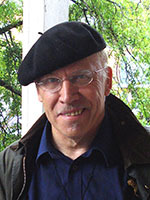
British Scientist discovers the cause of cancer in the Hiroshima Black Rain survivors
Massive errors in the basis of legal controls on radiation exposures
In a peer-reviewed paper published by the respectable journal Cancer Investigations ,British Scientist Dr Christopher Busby reveals the results of his investigative research into the Hiroshima A-Bomb Black Rain, torrential rain that fell on Hiroshima after the detonation of the US atomic bomb.
The issue of cancer risks in people who lived in the area of the back rain was headlined recently when the Japanese government lost a court case taken by Hibakusha groups who believed that their cancers were a result of the A-Bomb, but who lived in the black rain areas too far from the detonation to have received any external radiation dose. One problem for these people is that there has been no scientific explanation. The black rain was believed to be insufficiently radioactive to cause cancer.
The report: “The Hiroshima A-Bomb black rain—a resolution of the enigma” provides evidence from an obscure US restricted report from 1976, declassified in 2014, that the 55kg of unfissioned material of the bomb, Enriched Uranium, contained vary large amounts of the Uranium isotope U234 which formed the condensation nuclei for the black rain and contaminated Hiroshima’s water and air for many years.
The calculated exposures from the long-lived Uranium particles due to inhalation and ingestion by those living in Hiroshima after the bomb were 10,000 times greater than exposures to the isotope Caesium-137. U-234, which is lighter than U235 (the fissile component) is extracted into the Enriched Uranium during the separation process.
Dr Busby said: “It is astonishing that no one has drawn attention to the presence of large amounts of this dangerous long lived alpha emitter on the test sites. All the calculations that have been made of exposures, from Hiroshima to the Marshall Islands tests, to Christmas Island, will have to be re-assessed.”
He added: “Of course, this also means that the Life Span Study basis of the current radiation risk models is worthless. The true risks from internal exposures to Uranium, as in Depleted Uranium weapons, are more than a hundred times or more than current legal limits are based on. The implications of this discovery are clearly massive and far-reaching for all things involving nuclear.”
Dr Busby (aged 76) is an international expert on radiation and health and served on two British Government committees. He represented Nuclear Test Veterans in the Royal Courts of Justice in 2016. He relocated to Latvia in 2020 after Brexit where he continues to carry out research on internal radiation and health.
The paper can be found at: https://www.tandfonline.com/doi/abs/10.1080/07357907.2021.1977818?src=&journalCode=icnv20
Dr Busby’s CV can be found at: www.greenaudit.org
Contact:
Richard Bramhall; lowradcampaign@gmail.com +44 7887 942043
Christopher Busby christo@greenaudit.org +371 29419511; +447989428833
Other recent reports and findings on how science is challenging industry beliefs on health risks after nuclear accidents and nuclear testing;
San Onofre’s nuclear waste buried under the beach – the best example of the failure of the nuclear industry and its poor outlook for the future
A combination of failures:’ why 3.6m pounds of nuclear waste is buried on a popular California beach, Guardian, Kate Mishkin 24 Aug 21,

The San Onofre reactors are among dozens across the United States phasing out, but experts say they best represent the uncertain future of nuclear energy.
“It’s a combination of failures, really,”
Spent fuel is stored at 76 reactor sites in 34 states
“It’s a self-reporting industry,” Hering, the retired rear admiral, said. “And they simply can’t be trusted.”
More than 2 million visitors flock each year to California’s San Onofre state beach, a dreamy slice of coastline just north of San Diego. The beach is popular with surfers, lies across one of the largest Marine Corps bases in the Unites States and has a 10,000-year-old sacred Native American site nearby. It even landed a shout-out in the Beach Boys’ 1963 classic Surfin’ USA.
But for all the good vibes and stellar sunsets, beneath the surface hides a potential threat: 3.6m lb of nuclear waste from a group of nuclear reactors shut down nearly a decade ago. Decades of political gridlock have left it indefinitely stranded, susceptible to threats including corrosion, earthquakes and sea level rise.
The San Onofre reactors are among dozens across the United States phasing out, but experts say they best represent the uncertain future of nuclear energy.
“It’s a combination of failures, really,” said Gregory Jaczko, who chaired the US Nuclear Regulatory Commission (NRC), the top federal enforcer, between 2009 and 2012, of the situation at San Onofre.
That waste is the byproduct of the San Onofre Nuclear Generating Station (Songs), three nuclear reactors primarily owned by the utility Southern California Edison (SCE).
Buried waste
Federal regulators had already cited SCE for several safety issues, including leaking radioactive waste and falsified firewatch records. But when a new steam generator began leaking a small amount of radioactivity in January 2012, just one year after it was replaced, it was SCE’s most serious problem yet. A subsequent report from the NRC’s inspector general found federal inspectors had overlooked red flags in 2009, and that SCE had replaced its own steam generators without proper approval. SCE tried to fix the problem but decided in 2013 to shut the plant down for good.Activists thought they had scored a victory when the reactor shut down – until they learned that the nuclear waste they had produced would remain on-site……
Without a government-designated place to store the waste, the California Coastal Commission in 2015 approved the construction of an installation at San Onofre to store it until 2035. In August 2020, workers concluded the multi-year burial process, loading the last of 73 canisters of waste into a concrete enclosure.
San Onofre is not the only place where waste is left stranded. As more nuclear sites shut down, communities across the country are stuck with the waste left behind. Spent fuel is stored at 76 reactor sites in 34 states, according to the Department of Energy.
Handling those stockpiles has been an afterthought to the NRC, the federal enforcer, said Allison Macfarlane, another former commission chair.
“It was not a big topic at the NRC, unfortunately,” Macfarlane said. “In the nuclear industry in general the backend of the nuclear cycle gets very little attention. So it just never rises to ‘oh this is a very important issue, we should be doing something.’”
Plenty of risks, and not enough oversight
The waste is buried about 100ft from the shoreline, along the I-5 highway, one of the nation’s busiest thoroughfares, and not far from a pair of faults that experts say could generate a 7.4 magnitude earthquake.
Another potential problem is corrosion. In its 2015 approval, the Coastal Commission noted the site could have a serious impact on the environment down the line, including on coastal access and marine life. “The [installation] would eventually be exposed to coastal flooding and erosion hazards beyond its design capacity, or else would require protection by replacing or expanding the existing Songs shoreline armoring,” the document says.
Concerns have also been raised about government oversight of the site. Just after San Onofre closed, SCE began seeking exemptions from the NRC’s operating rules for nuclear plants. The utility asked and received permission to loosen rules on-site, including those dealing with record-keeping, radiological emergency plans for reactors, emergency planning zones and on-site staffing.
San Onofre isn’t the only closed reactor to receive exemptions to its operating licence. The NRC’s regulations historically focused on operating reactors and assumed that, when a reactor shut down, the waste would be removed quickly.
It’s true that the risk of accidents decreases when a plant isn’t operating, said Dave Lochbaum, former director of the nuclear safety project for the Union of Concerned Scientists. But adapting regulations through exemptions greatly reduces public transparency, he argued.
“Exemptions are wink-wink, nudge-nudge deals with the NRC,” he said.
In general, it’s not really a great practice,” former NRC chair Jaczko said about the exemptions. “If the NRC is regulating by exemption, it means that there’s something wrong with the rules … either the NRC believes the rules are not effective, and they’re not really useful, or the NRC is not holding the line where the NRC should be holding line,” he said.
Close calls
In 2015, the NRC tried unsuccessfully to revise its decommissioning rules and reduce the need for exemptions. But commissioners never acted, despite a 2019 Office of Inspector General audit that questioned whether the rule would ever see the light of day and that estimated that eliminating exemptions could save the NRC, utility and taxpayers about $19m for each reactor.
In general, it’s not really a great practice,” former NRC chair Jaczko said about the exemptions. “If the NRC is regulating by exemption, it means that there’s something wrong with the rules … either the NRC believes the rules are not effective, and they’re not really useful, or the NRC is not holding the line where the NRC should be holding line,” he said.
Meanwhile, at San Onofre, two close calls drew the ire of activists and townspeople. In 2018, workers found a loose piece of equipment in one of the canisters, causing a 10-day work stoppage to ensure the error didn’t pose a threat to the public. In a separate incident several months later, a canister filled with radioactive waste became wedged when employees were loading it into the ground and nearly dropped 18ft. The second incident was not made public until a whistleblower brought it up at a community event.
After these incidents, the NRC cited SCE for failing to ensure equipment was available to protect the canister from a drop, and failing to notify the NRC in a timely manner. In a memo, NRC staff told SCE it was “concerned about apparent weaknesses” in managing storage oversight. SCE was fined $116,000 but permitted to continue loading casks within one year.
Another concern is that the CEO of Holtec, the manufacturer of the canisters, told a 2014 community meeting that the canisters are difficult to repair. “It’s not practical to repair a canister if it were damaged,” Kris Singh said.
According to a plan the California Coastal Commission approved in July 2020, SCE will also inspect two of the 73 buried canisters every five years, and a test canister every two and a half years, starting in 2024.
But critics say they are not confident SCE would self-report given the utility’s record. “It’s a self-reporting industry,” Hering, the retired rear admiral, said. “And they simply can’t be trusted.”……….. https://www.theguardian.com/environment/2021/aug/24/san-onofre-nuclear-power-plant-radioactive-waste-unsafe
IAEA Seeks Japan Transparency in Release of Fukushima Water
IAEA Seeks Japan Transparency in Release of Fukushima Water, By Mari Yamaguchi | September 8, 2021 TOKYO (AP) — Experts from the International Atomic Energy Agency asked Japan on Tuesday for full and detailed information about a plan to release treated but still radioactive water from the wrecked Fukushima nuclear plant into the ocean.
The three-member team, which is assisting Japan with the planned release, met Tuesday with government officials to discuss technical details before traveling to the Fukushima Daiichi plant for an on-site examination Wednesday. They will meet with Japanese experts through Friday…….. https://www.claimsjournal.com/news/international/2021
Japan’s Liberal Democratic Party hopes that presidential contender Taro Kono will drop his anti nuclear stance.
LDP leadership race hopeful Taro Kono modifies stance on nuclear energy Japan Times 8 Sept 21, Liberal Democratic Party leadership race hopeful Taro Kono indicated his readiness on Wednesday to accept the restart of idled nuclear power plants for the time being, in order for Japan to realize its goal of achieving carbon neutrality by 2050.
“It’s necessary to some extent to restart nuclear plants that are confirmed to be safe, as we aim for carbon neutrality,” Kono, currently regulatory reform minister, told reporters.
Kono, known as an advocate for a shift away from nuclear energy, is eager to run in the ruling party’s leadership election on Sept. 29 to select a successor to outgoing LDP President and Prime Minister Yoshihide .
However, there are concerns among some LDP members over his position on the issue. Kono apparently modified his stance to win broader support ahead of the party election.
“Basically, our priority is to increase the use of renewable energy sources, but it would be possible to use nuclear plants whose safety is confirmed for now if there are power supply shortages,” Kono said.
“Nuclear plants will disappear eventually, but I’m not saying that they should be scrapped immediately, like tomorrow or next year,” he added.
With Kono also in charge of COVID-19 vaccine rollout, some people are questioning whether it would be possible for him to continue in the role while campaigning for the LDP presidency.
“I don’t think (my election campaign) would affect my duties,” Kono said….. https://www.japantimes.co.jp/news/2021/09/08/national/politics-diplomacy/kono-nuclear/
Nuclear ”ethics” – fatally ill man kept alive against his will, in the cause of nuclear research
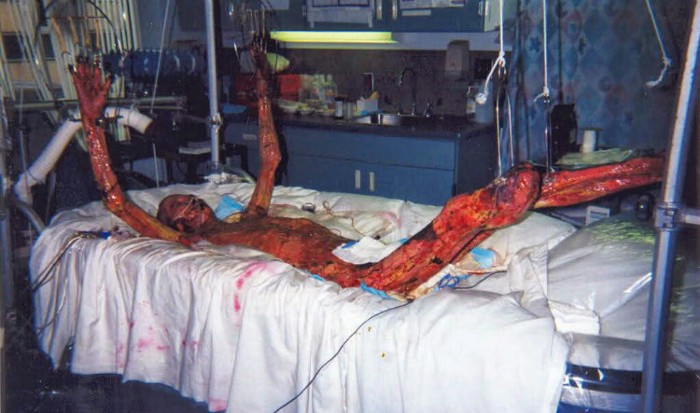
In 1999 an accident at a Japanese Nuclear Power Plant caused one of its technicians, Hisashi Ouchi, to be exposed to high levels of radiation. He was kept alive for 83 days, against his will, by doctors so they could use his body to study the effects of radiation on humans.Hisashi Ouchi was one of three employees of the Tokaimura nuclear plant to be heavily impacted by the accident on 30 September 1999.
The Man Kept Alive Against His Will
How modern medicine kept a ‘husk’ of a man alive for 83 days against his will
https://historyofyesterday.com/the-man-kept-alive-againsthttps://historyofyesterday.com/the-man-kept-alive-against-his-will-647c7a24784 Colin Aneculaese 27 July 2020, Radiation has always been a subject of great interest for many scientists. Since its discovery and weaponisation, many have looked into its impact on living organisms, especially humans. As a result, many living being suffered at the hands of those who sought to find the real impact of radiation on living beings. Throughout the years this experimentation was mainly focused on animals as it would be unethical to test such a thing on humans.
Outside of major nuclear events such as the bombing of Hiroshima and Nagasaki and the meltdowns of nuclear facilities such as nuclear power plants, the effect of radiation on humans could not be tested. As such after the 1999 Tokaimura nuclear accident, many scientists jumped at the opportunity to study the victims of such a high amount of explosion to radiation. Out of all the victims of the disaster, the case of Hisashi Ouchi stands out.
Tokaimura nuclear plant
Hisashi Ouchi was one of three employees of the Tokaimura nuclear plant to be heavily impacted by the accident on 30 September 1999. Leading up to the 30th of the month the staff at the Tokaimura nuclear plant were in charge of looking after the process of dissolving and mixing enriched uranium oxide with nitric acid to produce uranyl nitrate, a product which the bosses of the nuclear plant wanted to have ready by the 28th.
Due to the tight time constraints, the uranyl nitrate wasn’t prepared properly by the staff with many shortcuts being used to achieve the tight deadline. One of these shortcuts was to handle the highly radioactive produce by hand. During their handling of the radioactive produce while trying to convert it into nuclear fuel (uranyl nitrate is used as nuclear fuel) for transportation the inexperienced three-man crew handling the operation made a mistake.
During the mixing process, a specific compound had to be added to the mixture, the inexperienced technicians added seven times the recommended amount of the compound to the mixture leading to an uncontrollable chain reaction being started in the solution. As soon as the Gamma radiation alarms sounded the three technicians knew they made a mistake. All three were exposed to deadly levels of radiation, more specifically Ouchi receiving 17 Sv of radiation due to his proximity to the reaction, Shinohara 10 Sv and Yokokawa 3 Sv due to his placement at a desk several meters away from the accidents. When being exposed to radiation it is said that anything over 10 Sv is deadly, this would prove to be true in this instance.
The fallout of radiation
Shinohara, the least affected out of the two who received a deadly dose of radiation, lasted 7 months in hospital until 27 April 2000. The technician died of lung and liver failure after a long battle against the effects of the radiation he endured. During his, 7-month stay at the University of Tokyo Hospital several skin grafts, blood transfusions and cancer treatments were performed on him with minimal success. Shinohara’s time at the University of Tokyo Hospital would be much less painful than Ouchi’s.
Protests as France sends latest shipment of used nuclear fuel to Japan
Protests as France sends latest nuclear shipment to Japan https://www.france24.com/en/live-news/20210908-protests-as-france-sends-latest-nuclear-shipment-to-japanActivists from environmental group Greenpeace protested against a shipment of reprocessed nuclear fuel that was set to leave France for Japan on Wednesday for use in a power plant.
The load of highly radioactive Mox, a mixture of reprocessed plutonium and uranium, was escorted by police from a plant near the port of Cherbourg to the dockyard in the early hours of the morning.
A handful of Greenpeace activists waved flags and signs with anti-nuclear logos as they camped out on Tuesday night to wait for the heavy-goods truck transporting the high-security cargo.The Mox from French nuclear technology group Orano is destined for a nuclear plant in Takahama in Japan and is the seventh such shipment from France since 1999.
Japan lacks facilities to process waste from its own nuclear reactors and sends most of it overseas, particularly to France.
The country is building a long-delayed reprocessing plant in Aomori in northern Japan.
“Orano and its partners have a longstanding experience in the transport of nuclear materials between Europe and Japan, in line with international regulations with the best safety and security records,” Orano said in a September 3 statement.
The fuel is being shipped by two specially designed ships from British company PNTL.
Iran blocking UN atomic agency access to nuclear-related sites, IAEA says
Iran blocking UN atomic agency access to nuclear-related sites, IAEA says, Mint. LAURENCE NORMAN, The Wall Street Journal, 8 Sep 21,
- U.S., European powers must now decide whether to seek formal censure of Tehran, U.N. atomic agency says. Iran is refusing to allow inspectors access to nuclear-related sites and hindering a probe by the United Nations atomic agency while continuing to expand its nuclear activities, the International Atomic Energy Agency said in two confidential reports Tuesday, casting doubt on efforts to revive the 2015 nuclear deal.
The reports leave the Biden administration and its European allies facing a choice between pushing for a formal rebuke of Iran—which Tehran’s new hard-line government has warned could scuttle the resumption of nuclear talks—or refraining from action, potentially undercutting the authority of the IAEA and its leadership.
The future of the nuclear deal is already in the balance. New Iranian President Ebrahim Raisi, pressed by European and U.S. officials to quickly resume the talks on restoring the deal, has said his government is prepared to return to the Vienna negotiations but refused to fix a date. The last talks took place in June…… (subscribers only) https://www.livemint.com/economy/iran-blocking-un-atomic-agency-access-to-nuclear-related-sites-iaea-says-11631033739871.html
Iodide tablets offered as precaution to residents living near nuclear plants

Iodide tablets offered as precaution to residents living near nuclear plants 69 News NCPA Staff, Sep 8, 2021
Harrisburg, Pa. — The Department of Health will offer free potassium iodide, or KI, tablets on Thursday, Sept. 9 and 16, to Pennsylvanians who are within 10 miles of the state’s four active nuclear power plants.
“Emergency preparedness is an important aspect of public health and having potassium iodide tablets for residents who live or work within 10 miles of a nuclear facility is an essential preparedness action in the case of a radiological emergency,” Acting Secretary of Health Alison Beam said.
“It’s important to remember potassium iodide should only be taken when instructed to do so by state health officials or the governor, and it is not a substitute for evacuation in the case of a radiological emergency at one of Pennsylvania’s nuclear facilities.” ………
The tablets are available to all Pennsylvanians who live or work within 10 miles of the state’s four active nuclear power plants by visiting a distribution center listed below, calling the Department of Health at 1-877-PA-HEALTH or visiting a county and municipal health department or state health center. KI tablets are not required for people living and working within 10 miles of the Three Mile Island Generating Station, which closed in Sept. 2019. ……. https://www.wfmz.com/news/state/iodide-tablets-offered-as-precaution-to-residents-living-near-nuclear-plants/article_cdf107cc-5b25-5959-adc1-08805c43f0e4.html
Russia aims to dominate the Arctic, with nuclear ice-breakers
Moscow eyes ‘mastering’ Arctic waters with nuclear icebreaker fleet, Daily Sabah, BY FRENCH PRESS AGENCY – AFP, 8 Sept 21,
ABOARD THE ’50 YEARS OF VICTORY’ TRANSPORTATION SEP 08, 2021 11:24 AM GMT+3 s ice cover in the Arctic recedes with climate change, Russia is hard at work to secure supremacy in the warming region with a fleet of giant nuclear-powered icebreakers.
Moscow sees the development of the Arctic as a historic mission and already has huge projects to exploit its natural resources.
Its next big plan is for year-round use of the Northern Sea Route (NSR), a shipping lane through Arctic waters Russia hopes could rival the Suez Canal.
Here are some key facts about Russia’s plans for the Arctic:
Historic ambitions
As an icebreaker called the “50 Years of Victory” left the port of Murmansk for the North Pole this summer, its captain told an Agence France-Presse (AFP) journalist on board that Russia has a special role to play in the Arctic.
“A third of our territory lies above the Arctic Circle. Our ancestors have long mastered frozen waters. We are continuing this successfully,” Dmitry Lobusov said.
President Vladimir Putin has made the development of the Arctic a strategic priority and state companies such as Gazprom Neft, Norilsk Nickel and Rosneft already have major projects in the Arctic to extract oil, gas and minerals.
“The Arctic region has enormous potential,” Russian Deputy Prime Minister Alexander Novak said earlier this month.
“In terms of resources, we’re talking about 15 billion tons of oil and 100 trillion cubic meters of gas. Enough for tens if not hundreds of years,” he said.
Suez alternative
The NSR links the Pacific to the Atlantic through Russian Arctic waters.
It is not currently navigable year-round without the help of icebreakers, though in summer some specialized classes of ships can pass through.
With the ice cover receding, Moscow is aiming for year-round navigation by 2030…………..
Growing fleet
Rosatom, which already has a fleet of five icebreakers and a container ship, is building four more nuclear-powered vessels within the next five years.,,,,,,,,,,,
Environmental worries
Environmental groups have slammed the race for hydrocarbons and the increased presence of nuclear reactors in the Arctic – an already fragile ecosystem dramatically affected by climate change.
Greenpeace has said that “the incident-ridden history of Russian nuclear icebreakers and submarines” should cause alarm.,,,, https://www.dailysabah.com/business/transportation/moscow-eyes-mastering-arctic-waters-with-nuclear-icebreaker-fleet
1 This Month

Read the Public Inquiry Report, the Commissioners’ report, Surrendering Australia: The AUKUS Deception is available to download for free at aukuspublicinquiry.com. Or just watch the replay of the National Press Club Luncheon.


19 November – Webinar – The Reality of Reprocessing
Time: 11:00 AM Pacific Time (US & Canada) / 2:00 PM Eastern / 7:00 PM UK / 8:00 PM CET
Register for the Zoom Event Here



Shut down the radiation-damaged Heysham nuclear reactors now
To see nuclear-related stories in greater depth and intensity – go to https://nuclearinformation.wordpress.com

Say No to NASA’s Reckless Nuclear Reactor on the Moon
Say No to NASA’s Reckless Nuclear Reactor on the Moon
-
Archives
- November 2026 (94)
- October 2026 (302)
- September 2026 (339)
- August 2026 (330)
- July 2026 (355)
- June 2026 (287)
- May 2026 (306)
- April 2026 (356)
- March 2026 (251)
- February 2026 (267)
- January 2026 (308)
- December 2025 (358)
-
Categories
- 1
- 1 NUCLEAR ISSUES
- business and costs
- climate change
- culture and arts
- ENERGY
- environment
- health
- history
- indigenous issues
- Legal
- marketing of nuclear
- media
- opposition to nuclear
- PERSONAL STORIES
- politics
- politics international
- Religion and ethics
- safety
- secrets,lies and civil liberties
- spinbuster
- technology
- Uranium
- wastes
- weapons and war
- Women
- 2 WORLD
- ACTION
- AFRICA
- Atrocities
- AUSTRALIA
- Christina's notes
- Christina's themes
- culture and arts
- Events
- Fuk 2022
- Fuk 2023
- Fukushima 2017
- Fukushima 2018
- fukushima 2019
- Fukushima 2020
- Fukushima 2021
- general
- global warming
- Humour (God we need it)
- Nuclear
- RARE EARTHS
- Reference
- resources – print
- Resources -audiovicual
- Weekly Newsletter
- World
- World Nuclear
- YouTube
-
RSS
Entries RSS
Comments RSS

