America shouldn’t trust Saudi Arabia with nuclear technology
 Khashoggi’s Killing Should Be a Nuclear Red Flag, The  Saudis can’t be trusted to enrich uranium and reprocess spent fuel. WSJ, By Jamie Fly and Henry Sokolski,Oct. 28, 2018 If the Saudi government’s prevarications about Jamal Khashoggi’s murder teach us anything, it should be that there are limits to how far the U.S. can trust Riyadh. In particular, America shouldn’t trust Saudi Arabia with nuclear technology………. the risk of regime change if there is nuclear power in Saudi Arabia. Nuclear reactors operate for 40 years or more and are far more dangerous than any conventional arms sales. In the 1970s, the U.S. considered selling the shah of Iran 23 reactors. That would have been a colossal mistake. Saudi officials, including Crown Prince Mohammed bin Salman, have publicly threatened to violate the Kingdom’s Nuclear Nonproliferation Treaty commitment not to acquire nuclear weapons if they believe Iran is acquiring them. The U.S. has never negotiated a nuclear cooperation agreement with a country threatening to get nuclear weapons. The United Arab Emirates, a Saudi neighbor and ally, agreed to allow intrusive international nuclear inspections and to forgo enriching uranium and reprocessing spent fuel as part of its 2009 nuclear cooperation agreement with Washington. Riyadh has refused to make such pledges. Enriching and reprocessing could bring Riyadh within weeks of making bombs. It is unclear if the administration is intent on pressing the Saudis on this point…….. After Saudi Arabia’s kidnapping last year of Lebanese Prime Minister Saad Hariri, its bungling of the war in Yemen, its erratic diplomatic moves against Canada, its continued jailing of human-rights activists, and now the killing of Khashoggi, Washington must demand more. This regime can’t be trusted with nuclear technology. Concluding a nuclear cooperation agreement to Riyadh’s liking would undermine the Trump administration’s effort to reverse the nuclear concessions President Obama made to Iran and set a dangerous precedent in the region. Any negotiations regarding a U.S.-Saudi nuclear cooperation agreement should be halted. If the Trump administration refuses to do this, Congress should make clear, as part of its broader response to the Khashoggi killing, that any agreement submitted for review will be blocked. This episode should serve as a reminder that unreliable proxies are no substitute for American leadership. A Reaganesque approach to Iran requires the fortitude to stand up for what is right, be it on nonproliferation or human rights, whether it involves friend or foe. Mr. Fly is a senior fellow of the German Marshall Fund of the United States. Mr. Sokolski is executive director of the Nonproliferation Policy Education Center and author of “Underestimated: Our Not So Peaceful Nuclear Future.” https://www.wsj.com/articles/khashoggis-killing-should-be-a-nuclear-red-flag-1540753005
|
Study of 120,000 hibakusha atomic bomb survivors shows raised risk of breast cancer
 Study: Atomic bomb radiation raised teens’ risk of breast cancer http://www.asahi.com/ajw/articles/AJ201810270001.html, By SONOKO MIYAZAKI/ Staff Writer October 27, 2018 Women from Hiroshima and Nagasaki who had their first periods around the time of the atomic bombs are at an increased risk of developing breast cancer, a study has found.The findings by researchers from Japan and the United States were released by the Radiation Effects Research Foundation (RERF) on Oct. 15, and published in the U.S. academic journal Radiation Research in the same month. Past studies have revealed patients have a higher risk of breast cancer when they start menstruating earlier or receive doses of radiation in their early years. Alina V. Brenner, a senior scientist at RERF, said the correlation between onset of menstruation and radiation exposure ages and the radiation-derived risk suggests breast tissue is more sensitive to radiation around the emergence of secondary sexual characteristics. In the latest study, RERF tracked 120,000 hibakusha atomic bomb survivors and non-hibakusha, and analyzed radiation doses received and the ages of women suffering from breast cancer when they had their first period. The results showed a 70-year-old woman who first menstruated at the age of 15 and was affected by radiation at 30 has twice as high risk of breast cancer as radiation-free individuals, while the risk for a 70-year-old female survivor who had both a radiation dose and her first period at 15 is 2.4 times higher than non-hibakusha. |
|
The world is in danger, as Donald Trump and John Bolton just don’t ‘get it’about nuclear treaties
 WHAT TRUMP AND JOHN BOLTON DON’T UNDERSTAND ABOUT NUCLEAR WAR, 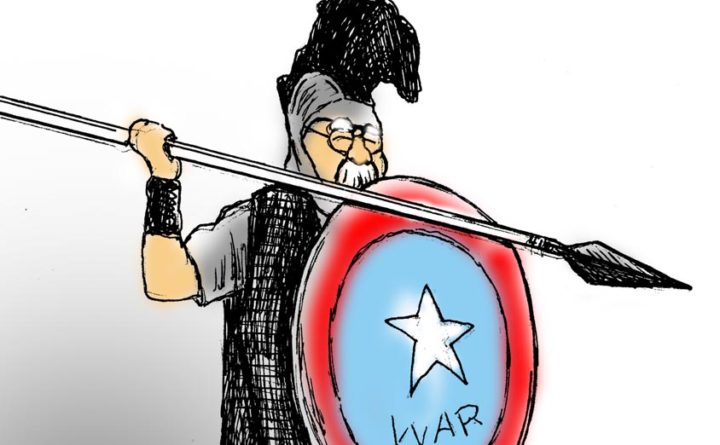 The Intercept, Jon Schwarz, PRESIDENT DONALD TRUMP’S announcement on October 20 that he intends to pull the United States out of the Intermediate-Range Nuclear Forces Treaty was, if nothing else, appropriately timed. On that date exactly 56 years before, President John F. Kennedy abruptly cut short a midterm campaign trip to Illinois because, the White House said, he had a cold. In fact, Kennedy was returning to Washington to address the Cuban missile crisis — the closest humanity has ever come to obliterating itself with a nuclear war.The INF treaty was signed in 1987 by President Ronald Reagan and Soviet General Secretary Mikhail Gorbachev. It required both countries to forgo any land-based missiles, nuclear or otherwise, with ranges between 500 and 5,500 kilometers. In concrete terms, the treaty was a huge success. The U.S. destroyed almost 1,000 of its own missiles, and the Soviets destroyed almost 2,000 of theirs. But arms control treaties are never about weapons and numbers alone. They can help enemy nations create virtuous circles, both between them and within themselves. Verification requires constant communication and the establishment of trust; it creates constituencies for peace inside governments and in the general public; this reduces on both sides the power of the paranoid, reactionary wing that exists in every country; this creates space for further progress; and so on. The long negotiation of the INF treaty, and the post-signing environment it helped create, was part of an extraordinary collapse of tensions between the U.S. and the Soviet Union during the 1980s. When Reagan took office, the Soviets genuinely believed that the U.S. might engage in a nuclear first strike against them. This, in turn, led to two separate moments in 1983 in which the two countries came terrifyingly close to accidental nuclear war — closer than at any time since the Cuban missile crisis. Instead, the INF treaty was part of an era of good feelings that contributed to one of the most remarkable events of the past 100 years: the largely peaceful implosion of the Soviet Empire. Empires generally do not go quietly, and the dynamics of imperial collapse often contribute to huge conflagrations. Think of the Austro-Hungarian Empire, the Ottoman Empire, and World War I; or the British Empire and World War II. The Soviet fall was an incredible piece of good fortune for the world; if it had happened in the early 1980s, instead of a few years later, it plausibly would have been catastrophic…….. exiting the treaty will do more than just lead to an arms race in which all three countries throw themselves into building new weapons. It will also create an atmosphere in which any rational modus vivendi between the U.S. and Russia, or the U.S. and China, will be far more difficult. This is the prize for Bolton and his allies, who can imagine only one world order: One in which they give orders, and everyone else submits. Bolton has the standard self-perception of his genre of human: In his memoir, “Surrender Is Not an Option,” he explains that he cares about “hard reality,” in contrast to the “dreamy and academic” fools who support arms control. But in fact, it is Bolton who is living inside of a dream. The hard reality is that our species almost committed suicide on October 27, the most dangerous moment of the Cuban missile crisis, later dubbed Black Saturday by the Kennedy administration. Even with comparative doves in charge of the U.S. and the Soviet Union, we came close to ending human civilization, thanks to mutual incomprehension. And we avoided it, as then-Defense Secretary Robert McNamara later said, not by talent or wisdom, but pure luck. Then, we created a false history of what happened, one which allows terrifying fantasists like Bolton to reach, and thrive within, the highest levels of power……… Shortly after midnight, in the early morning of Black Saturday, the U.S. informed NATO that it “may find it necessary within a very short time” to attack Cuba. At noon, a U-2 flight over Cuba was shot down, killing the pilot. On all sides, war — potentially nuclear war — seemed likely, if not inevitable. But that night, Kennedy made the most important presidential decision in history: He accepted an offer from Soviet leader Nikita Khrushchev to remove the U.S. missiles in Italy and Turkey in return for the removal of the Soviet missiles in Cuba. But the U.S. part of the bargain was kept secret from Americans. The administration maintained that Kennedy had forced the Soviets to give in, giving them nothing. That was, of course, more than frightening enough. But here’s the rest of the story. ON OCTOBER 27, A U.S. Navy ship participating in the blockade dropped depth charges on a Soviet submarine. It was only discovered years later that not only was the submarine armed with nuclear torpedoes, but also was out of radio contact with the Soviet government and believed that the war had begun. The captain wanted to use the torpedoes, which almost certainly would have led to the U.S using nuclear weapons in response. However, according to Soviet protocol, the torpedoes could only be launched with the approval of all three officers aboard. One of them refused. ……… what we can be sure of is that if people like Trump and Bolton had been in charge in 1962, then today there would be no discussion of the INF treaty — because there would be no treaty and no one to discuss it. It’s also certain that on our current trajectory, the day will come when the world will face a similar crisis. That time we won’t get the same roll of the dice. The hard reality of the Cuban missile crisis is that, as Blight and Lang put it, “either we put an end to nuclear weapons, or they will put an end to us.” https://theintercept.com/2018/10/27/trump-inf-treaty-cuban-missile-crisis-nuclear-war/ |
|
Nuclear facilities in UK – perfect targets for terrorism
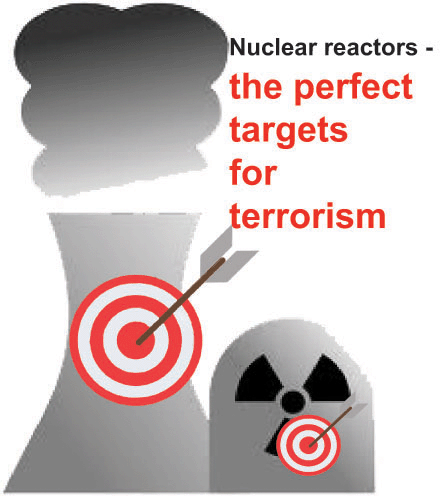 Nuclear facilities as potential targets in China and UK https://nuclearexhaust.wordpress.com/2018/10/27/nuclear-facilities-as-potential-targets-in-china-and-uk/ Nuclear reactors as potential targets in UK Wales |
|
New research on impacts of climate change in the Mediterranean
 First study on climate change impact in Mediterranean https://www.eurekalert.org/pub_releases/2018-10/cuoh-fso102618.php, The first-ever study synthesizing risks posed by climate and environmental changes in the Mediterranean, CITY UNIVERSITY OF HONG KONG As the Mediterranean Basin is experiencing the impact of climate change more than ever, an international network of scientists has worked together to synthesize the effects of climate change and environmental problems, as well as the incurred risks, in the region, to facilitate decision-making in addressing the issues.This first-ever synthesis of multiple environmental changes and risks affecting the livelihoods of people in the entire region has just been published in the latest issue of Nature Climate Change. The rates of climate change observed in the Mediterranean Basin exceed the global trends for most variables. The impact has further exacerbated the existing environmental problems caused by land use changes such as urbanization and agricultural intensification, increasing pollution and declining biodiversity. Led by Professor Dr Wolfgang Cramer from the Mediterranean Institute for Biodiversity and Ecology, an international team of scientists has just published a review article in Nature Climate Change to address the current and future risks related to these changes, titled “Climate change and interconnected risks to sustainable development in the Mediterranean”. Professor Michael Tsimplis from the School of Law at City University of Hong Kong who is part of the international team and has multidisciplinary background with research in oceanography and climate change said, “this paper suggests that the risks posed by climate change in the Mediterranean Sea were underestimated because each was only examined independently. But in reality, they are interconnected and interact with social and economic problems exacerbating their impacts. So they all have to be addressed at the same time and within the same financial constraints.” The paper reviews the various environmental changes and the risks posed by these changes in the five major interconnected domains, namely water resources, ecosystems, food safety and security, health, and human security. For an instance, average temperatures in this region have already risen by 1.4°C since the pre-industrial era, 0.4°C more than the global average. Even if future global warming is limited to 2°C, as prescribed by the Paris Agreement, summer rainfall is at risk to be reduced by 10 to 30% in some regions, thereby enhancing existing water shortages and decreasing agricultural productivity, particularly in southern countries. Due to climate change alone, the irrigation demands in the region are projected to increase between 4 and 18% by the end of the century. Population growth may escalate these numbers furthers to 22-74%. Tourism development, new industries and urban sprawl may increase water pollution, too. The acidification of sea water, increasing heatwaves in combination with drought and land-use change also affect the natural ecosystems, posing risks in biodiversity and fisheries. Food production from agriculture and fisheries across the Mediterranean region is also changing due to the social, economic and environmental changes. Combined with the ongoing switch to more animal-based food production, southern countries are at risk to increase their dependence on trade. Public health is impacted by multiple trends of change, through heat waves, pollution (higher risk of cardiovascular or respiratory diseases), and the increased spread of disease vectors (West Nile virus, Dengue, Chikungunya). In politically unstable countries, environmental change is an increasingly relevant factor for socio-economic risks, due to famines, migration and conflict. Human security will also be threatened due to extreme weather, such as a rise in sea level posing a higher risk of storm surges for people living in coastal areas in the region. To facilitate decision-making in the face of these risks, the authors call for a pan-Mediterranean integrated risk assessment. Therefore, the Mediterranean Experts on Climate and Environmental Change (MedECC) network has been established, currently involving 400 scientific experts, supported by government agencies and other partners, to produce a full synthesis of risks and present it to decision makers for debate and approval. |
|
Climate change bringing more droughts, more extreme rainfalls, more often

Meteorologist expects severe drought and heavy rain events to worsen globally https://www.sciencedaily.com/releases/2018/10/181025141009.htm, October 25, 2018, University of Oklahoma
- Summary: Meteorologists expect severe drought and long-lasting rainfall events to worsen in the future. Researchers have determined how frequent, intense and long lasting these types of events will be in the future.
- A University of Oklahoma meteorologist, Elinor R. Martin, expects severe drought and long-lasting rainfall events to worsen in the future. In Martin’s new study just published, she determines how frequent, intense and long lasting these types of events will be in the future. Martin looks at both severe drought and rain events, but it is the first time extended heavy rain events have been studied.
-
“In some places, there will be more frequent droughts, and other places can expect more frequent rainfall,” said Martin, professor in the School of Meteorology, OU College of Atmospheric and Geographic Sciences. “The Caribbean and Central America will have more extreme droughts and the north and northeast of North America can expect more extreme heavy rain events. Around the world, some places will see droughts and heavy rain events become more intense, longer lasting and more frequent. For the agriculture and related industries, this is particularly important.”
Globally, there are areas that will overall become wetter and areas that will become drier. When it gets warmer, the water builds up and it rains for long periods, but there will be longer periods between rain events and in places, it will become drier. Even regions that are projected to become drier overall, like the Southwest and South Central United States, are expected to see more severe, longer and frequent periods of heavy rain. Martin refers to the May 2015 rain event in Oklahoma and Texas as one example of what could be expected in the future.
-
“When it gets warmer, water vapor can build up in the atmosphere, so when it does rain it rains a lot and for long periods, but there will be longer periods between rain events so droughts will become worse.” said Martin. She points to a changing climate as the reason these events will worsen, and defines droughts and rain events by using a standardized rainfall index to compare events between regions and seasons. For this study, Martin used the same climate models as the Intergovernmental Panel on Climate Change.
Story Source:
Materials provided by University of Oklahoma. Original written by Jana Smith
Japan’s Onagawa nuclear reactor No 1 to be scrapped
|
Tohoku Electric to scrap aging No. 1 unit at Onagawa nuclear plant, Japan Times, 25 Oct 18
KYODO, SENDAI – Tohoku Electric Power Co. said Thursday it will scrap the idled No. 1 unit at its Onagawa nuclear power plant in Miyagi Prefecture, more than 30 years after it started operations. The company cited difficulties in taking additional safety measures as well as the relatively small output of the reactor that made it unprofitable. Tohoku Electric President Hiroya Harada conveyed its decision to Miyagi Gov. Yoshihiro Murai. “We decided to decommission (the reactor) at a board meeting today. We took into consideration technical restrictions associated with additional safety measures, output and the years in use,” Harada said when the two met at the prefectural government office….. The basement floors of the Onagawa plant’s No. 2 unit were flooded in the March 2011 earthquake and tsunami disaster. The company is building a 29-meter-high sea wall to guard the complex. Tohoku Electric aims to resume operations of the No. 2 unit at the Onagawa plant in fiscal 2020 at the earliest. The Nuclear Regulation Authority, the country’s nuclear watchdog, has been screening its safety measures. https://www.japantimes.co.jp/news/2018/10/25/national/tohoku-electric-scrap-aging-no-1-unit-onagawa-nuclear-plant/?fbclid=IwAR3HINMvYO5K5lpiyVwPaXXDlWvNy3cu4walE_uEkDivJ-5sn7uPRSnDEzE#.W9aIxWgzbIW |
|
Egypt’s renewable energy project – going for the green economy

Image processed by CodeCarvings Piczard ### FREE Community Edition ### on 2017-10-20 17:00:50Z | http://piczard.com | http://codecarvings.com
largest solar power plant in the world early this year, RT reported on Friday. Reporting the remarks of Egyptian official Hassan Abaza, RT said that the superpower plant was built in the city of Aswan, southern Egypt.
economy” is a mechanism to achieve sustainable development. https://www.middleeastmonitor.com/20181027-egypt-builds-largest-solar-power-plant-in-the-world/
UK Law changed so nuclear waste dumps can be forced on local communities
 Law changed so nuclear waste dumps can be forced on local communities https://www.theguardian.com/environment/2015/apr/05/law-changed-so-nuclear-waste-dumps-can-be-forced-on-local-communities?fbclid=IwAR19RWY6_PDJsDLIDLGhunei Legislation rushed through in the final hours of parliament allows local planning laws to be bypassed, seriously alarming anti-nuclear campaigners, Juliette Jowit, Mon 6 Apr 2015, Last modified on Thu 15 Feb 2018 Objectors worry that ministers are desperate to find a solution to the current radioactive waste problem to win Nuclear waste dumps can be imposed on local communities without their support under a new law rushed through in the final hours of parliament.Under the latest rules, the long search for a place to store Britain’s stockpileof 50 years’ worth of the most radioactive waste from power stations, weapons and medical use can be ended by bypassing local planning. Since last week, the sites are now officially considered “nationally significant infrastructure projects” and so will be chosen by the secretary of state for energy. He or she would get advice from the planning inspectorate, but would not be bound by the recommendation. Local councils and communities can object to details of the development but cannot stop it altogether. The move went barely noticed as it was passed late on the day before parliament was prorogued for the general election, but has alarmed local objectors and anti-nuclear campaigners. Friends of the Earth’s planning advisor, Naomi Luhde-Thompson, said: “Communities will be rightly concerned about any attempts to foist a radioactive waste dump on them. We urgently need a long-term management plan for the radioactive waste we’ve already created, but decisions mustn’t be taken away from local people who have to live with the impacts.” Objectors worry that ministers are desperate to find a solution to the current radioactive waste problem to win public support to build a new generation of nuclear power stations. Zac Goldsmith, one of the few government MPs who broke ranks to vote against the move, criticised the lack of public debate about such a “big” change. “Effectively it strips local authorities of the ability to stop waste being dumped in their communities,” he said. “If there had been a debate, there could have been a different outcome: most of the MPs who voted probably didn’t know what they were voting for.” Labour abstained in the vote, indicating that a future government will not want to reverse the change of rules. However, the shadow energy minister, Julie Elliott, has warned that the project is expected to take 27 years to build even after a preferred site was identified and would cost £4bn-5.6bn a year to build, plus the cost of running it for 40 years. Since the Royal Commission on Environmental Pollution found in 1976 that it was “morally wrong” to keep generating nuclear waste without a demonstrably safe way of storing the waste, there have been at least four attempts to find the right site, all of them shelved after strong protest. There are now 4.5m cubic metres of accumulated radioactive waste kept in secure containers at sites across Britain, though only 1,100m3 of this is the most controversial high-level waste, and 290,000m3 is intermediate-level waste. It costs £3bn a year to manage the nuclear waste mountain, of which £2bn comes from taxpayers. The most recent proposal for a more permanent solution was to ask local authorities to volunteer to examine whether they could host the development. Initially, a coalition of Cumbria county council and Copeland and Allerdale borough councils put their names forward, but the policy stalled in 2013 when the county council pulled out. Last year, the Department for Energy and Climate Change (DECC) published a white paper which said ministers would prefer to work with public support, but reserved the right to take more aggressive action on planning if “at some point in the future such an approach does not look likely to work”. The day before parliament rose, MPs voted in an unusual paper ballot to implement a two-page statutory instrument which adds nuclear waste storage to the list of nationally significant infrastructure projects in England, via the 2008 Planning Act. Officials have said approval depends on a “test of public support” and any site would undergo extensive geological safety tests. Copeland borough council, one of the two areas most affected by any such development at Sellafield, said it was pleased with the government’s change to planning rules. Radiation-Free Lakeland – set up to block the Sellafield proposal because they claim there is no evidence deep storage is safe or that the geology of Cumbria is suitable – claimed, however, “the test of public support is a fig leaf: the government hast’t said what the public support will be”. The only existing high-level radioactive underground waste storage, in New Mexico, USA, has been closed since last year following two accidents. Germany has put similar plans for burying high-level waste on hold and four other countries, including France and Japan, are examining the idea. |
|
Energy Secretary Rick Perry and Donald Trump saying different things about Yucca nuclear waste dump plan
| Energy Secretary Says White House Still Backs Nevada Nuke Dump, Financial Express, By: Bloomberg October 27, 2018
Energy Secretary Rick Perry said the White House still supports construction of a planned repository for nuclear waste in Nevada, despite President Donald Trump’s suggestion over the weekend that he was reconsidering. When asked if the Trump administration still supports Yucca Mountain, Perry swiftly said “Yes.” “I’m making this presumption by looking at a budgeting process and there was money in the president’s budget to manage Yucca,” Perry said, after giving remarks at the department’s Brookhaven National Laboratory in Upton, New York. Trump requested $120 million in his budget proposal for the geologic repository 90 miles north of Las Vegas. ……….Trump told a Nevada television station he was reconsidering his support after campaigning last weekend with Senator Dean Heller, an embattled Republican senator who opposes the project and is in a tight re-election battle. “I think you should do things where people want them to happen, so I would be very inclined to be against it,” Trump said in Oct. 20 interview with KRNV-News 4. “We will be looking at it very seriously over the next few weeks, and I agree with the people of Nevada.”…….. https://www.financialexpress.com/world-news/energy-secretary-says-white-house-still-backs-nevada-nuke-dump/1363704/
|
USA’s subsidy to coal and nuclear power stalled, but still a possibility
|
Coal And Nuclear Subsidy Still Alive Despite Stall, Wyoming Public Media By COOPER MCKIM • OCT 26, 2018, Coal-fired power plants are closing down in unprecedented numbers, many of which are Wyoming coal customers. In June, President Trump took a step to change that. Taylor Kuykendall, a coal reporter with S&P Global Market Intelligence, gives context to the coal and nuclear plant subsidy introduced last June.
TK: The basic idea is that the Department of Energy would like to intervene into the energy markets and basically either order grid operators to buy electricity from struggling coal nuclear plants or they would provide some sort of an incentive to do so. And currently, a lot of those units are retiring because it’s cheaper to get energy from elsewhere. And so, what the DOE is doing here is making a national defense or a national security argument that basically gives wide deference to the administration that would allow them to come in and intervene in those markets and put their thumb on the scale in support of coal and nuclear plants that otherwise might not dispatch. …….
I think one of the things to keep in mind is that even all of the even before the opposition is stacked against the proposal any sort of legal battles is going to be a very protracted process. …..there’s a lot of kind of a top-down political drive to move this thing forward……..
this is probably going to be a very costly proposal and anything that we’ve seen so far doesn’t really detail who’s going to pay for it or how they’re going to pay for it. ……. someone’s got to pay for it and that’s going to be pretty politically damaging…….http://www.wyomingpublicmedia.org/post/coal-and-nuclear-subsidy-still-alive-despite-stall#stream/0
|
|
Taiwan’s phaseout of nuclear power
Taiwan on right rack to phase out nuclear power: German envoy, Focus Taiwan, 2018/10/28 Taipei, Oct. 28 (CNA) By Joseph Yeh Taiwan’s government is on the right track to install more capacity for renewable energy as it moves toward phasing out nuclear power by 2025, Germany’s new top envoy to Taiwan told CNA during a recent interview.
During an interview conducted on Wednesday, Thomas Prinz, the new director general of German Institute Taipei, told CNA that based on his understanding, the Taiwan government’s plan to substitute nuclear energy is “very realistic and can be achieved.”
The German government decided to close down all the country’s nuclear power stations in the wake of the Fukushima accident in Japan on March 11, 2011, when the Fukushima No. 1 nuclear plant was hit by a tsunami after a magnitude 9 earthquake knocked out power to its cooling systems sending its reactors into meltdown.
“However, it is not only the decommissioning which is interesting, when you shut down nuke plants you have to find other sources of energy. That is where your government is so far on the right track to install more capacity for renewable energy,” he added.
President Tsai Ing-wen’s (蔡英文) administration has set itself the goal of phasing out nuclear energy in Taiwan by 2025. An amendment to the Electricity Act was approved by the Legislative Yuan on Jan. 11, 2017 requiring all nuclear power operations to end by 2025.
Russia preparing to discuss Intermediate-Range Nuclear Forces (INF) Treaty with USA
The 1987 accord prohibits the United States and Russia from possessing, producing, or deploying ground-launched cruise and ballistic missiles with a range of between 500 and 5,000 kilometers.
“Just a week ago, a couple of days before they announced their intention to withdraw from the Intermediate-Range Nuclear Forces Treaty, the Americans via their embassy in Moscow sent the Russian Foreign Ministry an extensive list of questions which are a concern to them,” Lavrov said in an interview aired on Russian television.
“It is better to come to terms with Russia on an equal basis and it is not necessary to be friends,” the Russian minister also said. “We are not forcing a friendship.”………
START Under Threat?
In the wake of U.S. threats to withdraw from the INF Treaty, Lavrov said that the “fate of the New START Treaty is unclear.”
The New START Treaty limits strategic nuclear weapons. It was signed in 2010 and is due to expire in 2021, although the two sides could agree to extend it for another five years.
Russian President Vladimir Putin has warned that Washington’s withdrawal from the INF Treaty could lead to a new “arms race.”
Meanwhile, European members of NATO have urged Washington to try to bring Russia back into compliance with the nuclear arms control agreement rather than quitting it, diplomats say.
Speaking on October 28, U.S. Defense Secretary Jim Mattis said the United States was in consultation with its European allies on the INF Treaty.
When asked whether he could rule out placing intermediate-range missiles on the ground if Washington left the INF Treaty, Mattis told reporters travelling with him to Prague, “I never rule things out like that, I also don’t rule it in.” ………https://www.rferl.org/a/lavrov-says-moscow-preparing-answers-to-u-s-inf-concerns/29568360.html
Ikata nuclear reactor goes back online
The No.3 reactor restarted on Saturday. Workers in the central control room removed the control rods that suppress nuclear fission at 30 minutes past midnight.
Shikoku Electric Power Company shut down the reactor last October for regular inspections. It was kept offline by an injunction issued 2 months later by the Hiroshima High Court.
The ruling was revoked last month by another judge at the High Court, paving the way for a restart.
Shikoku Electric says if the process goes smoothly, the Ikata reactor will likely reach criticality — a self-sustaining nuclear reaction — on Saturday night.
It is expected to begin power generation and transmission on Tuesday, and start commercial operations on November 28th.
Ikata Mayor Kiyohiko Takakado in a statement called on Shikoku Electric to continue pursuing safety and reliability at the plant, and provide highly transparent information disclosure.
Members of a civic group opposing the nuclear plant on Saturday staged a demonstration at the site. One participant said she has heard nuclear reactors are needed to ensure stable energy supplies, but she finds it problematic life-threatening radioactive materials are being used to generate power.
TEPCO to scrap Onagawa NPP’s reactor#1

Utility plans to scrap reactor at Onagawa plant
Tohoku Electric to scrap aging No. 1 unit at Onagawa nuclear plant
1 This Month
Tell Congress: Prevent Nuclear Catastrophe in Iran

Tell Congress: Prevent Nuclear Catastrophe in Iran

Read the Public Inquiry Report, the Commissioners’ report, Surrendering Australia: The AUKUS Deception is available to download for free at aukuspublicinquiry.com. Or just watch the replay of the National Press Club Luncheon.


Shut down the radiation-damaged Heysham nuclear reactors now
To see nuclear-related stories in greater depth and intensity – go to https://nuclearinformation.wordpress.com

Say No to NASA’s Reckless Nuclear Reactor on the Moon
Say No to NASA’s Reckless Nuclear Reactor on the Moon
-
Archives
- November 2026 (246)
- October 2026 (302)
- September 2026 (339)
- August 2026 (330)
- July 2026 (355)
- June 2026 (287)
- May 2026 (306)
- April 2026 (356)
- March 2026 (251)
- February 2026 (267)
- January 2026 (308)
- December 2025 (358)
-
Categories
- 1
- 1 NUCLEAR ISSUES
- business and costs
- climate change
- culture and arts
- ENERGY
- environment
- health
- history
- indigenous issues
- Legal
- marketing of nuclear
- media
- opposition to nuclear
- PERSONAL STORIES
- politics
- politics international
- Religion and ethics
- safety
- secrets,lies and civil liberties
- spinbuster
- technology
- Uranium
- wastes
- weapons and war
- Women
- 2 WORLD
- ACTION
- AFRICA
- Atrocities
- AUSTRALIA
- Christina's notes
- Christina's themes
- culture and arts
- Events
- Fuk 2022
- Fuk 2023
- Fukushima 2017
- Fukushima 2018
- fukushima 2019
- Fukushima 2020
- Fukushima 2021
- general
- global warming
- Humour (God we need it)
- Nuclear
- RARE EARTHS
- Reference
- resources – print
- Resources -audiovicual
- Weekly Newsletter
- World
- World Nuclear
- YouTube
-
RSS
Entries RSS
Comments RSS

