Trump Is Pushing the United States Toward Nuclear Anarchy
 The White House wants to leave the INF Treaty. New START could be next. The death of
 these agreements would fuel a new arms race. Foreign policy, BY JON WOLFSTHAL OCTOBER 31, 2018, President Donald Trump’s tough talk about withdrawing the United States from the Intermediate-Range Nuclear Forces (INF) Treaty has generated plenty of controversy, but not much clarity about what happens next. What’s certain is that the end of the treaty would make the United States and its allies (for whom Trump apparently cares little) less safe and would undermine the global basis for nuclear restraint and nonproliferation.
And it may get worse. America’s potential withdrawal from the INF Treaty—which bans the United States and Russia from having nuclear or conventional ground-based missiles with ranges between 500 and 5,500 km (300 to 3,400 miles)—suggests that the 2010 New START arms reduction treaty with Russia might be next.
The untimely death of these two agreements would add fuel to a new arms race and further undermine stability and predictability between Washington and Moscow.
The last time the United States aand Russia had to navigate a world without bilateral nuclear constraints was before 1972; it was a world we were lucky to survive and one to which no sane person should want to return.
Nuclear weapons and deterrence advocates like to claim that the invention of nuclear weapons is what has kept the peace among major powers since the end of World War II. However, it was the development of predictable, binding, legal agreements and enforced global norms of behavior across security, trade, and global issues—not nuclear arms—that helped the United States to become the most prosperous and secure country in history. The rules not only made the United States safer and richer but also helped usher in an unprecedented era of global prosperity. The preservation of that order is a vital national interest and is under attack by the Trump administration.
That Trump would seek to undermine the rules that have benefited U.S. prosperity and influence is bad enough. That he would try to disrupt the system that prevents nuclear anarchy is inexcusable…………..
After assuming office, Trump largely ignored the issue of the INF Treaty and nuclear stability, even passing on an early offer from Russian President Vladimir Putin to extend the New START agreement, which caps both Russia and the United States at 1,550 strategic offensively deployed nuclear weapons and will expire on Feb. 5, 2021, unless extended by a term of up to five years. Since then, there has been no evidence that Trump or any senior member of his administration has engaged with Russia in any serious way to bring it back into compliance with the INF Treaty. While the Defense Department’s 2018 Nuclear Posture Review does briefly mention the agreement, it includes no strategy to restore Russian compliance and instead uses Russia’s violations to justify considering a new generation of sea-launched, nuclear-tipped cruise missiles. https://foreignpolicy.com/2018/10/31/trump-is-pushing-the-united-states-toward-nuclear-anarchy/
Hearing on failed VC Summer Nuclear Project begins in South Carolina
 https://www.wjbf.com/news/csra-news/hearing-on-failed-vc-summer-nuclear-project-begins-in-south-carolina/1567635123, By: Shawn Cabbagestalk Nov 01, 2018 SOUTH CAROLINA (WJBF) – A stroke of a pen signed it into law back in 2007. It’s blamed for higher rates you’ve paid on projects not yet completed.
Electromagnetic radiation from cell-phones is a cancer causer to rats
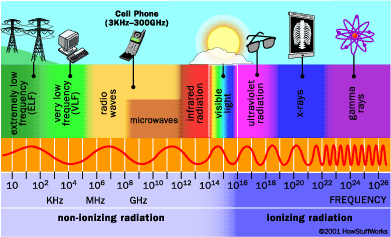
‘Clear evidence’ of mobile phone radiation link to cancers in rats, US health agency concludes
Uncertainty remains about risk to humans who experience much lower radio wave doses, Independent, Alex Matthews-King, Health Correspondent 2 Nov 18, A long-running US study on the effects of radio wave radiation, the sort emitted by mobile phones, has found “clear evidence” of high levels of exposure and heart cancers in male rats.
Some evidence of links to brain and adrenal gland tumours was also found in male rats, but in female rodents and male mice signs of cancer weren’t clear, the National Toxicology Programme (NTP) concluded in its final report on Thursday.
The programme is run by the US Department of Health and Human Services and was tasked with reviewing the toxicity of mobile phone radiation in response to the devices’ near ubiquity in modern life.
Radiation exposure in the trial was well above the levels most humans would experience, but researchers said the findings show the link between radio frequencies and tumours – at least for rats – “is real”.
“In our studies, rats and mice received radio frequency radiation across their whole bodies. By contrast, people are mostly exposed in specific local tissues close to where they hold the phone.
“In addition, the exposure levels and durations in our studies were greater than what people experience.”………..
Proposal to drill near a former nuclear weapons plant at Rocky Flats
Oil-gas wells proposed near Rocky Flats ex-nuclear weapons site, https://www.thedenverchannel.com/news/politics/oil-gas-wells-proposed-near-rocky-flats-ex-nuclear-weapons-site, Associated Press, Nov 1, 2018 DENVER (AP) — An oil and gas company is asking for state permits to drill near a former nuclear weapons plant in Colorado, but it’s unclear whether any of the wells would extend under the site.
French hypocrisy in decision to cancel decree of closure of Fessenheim NPP
Council of State, Thursday, October 25, to cancel the decree of closure of
the nuclear power plant Fessenheim reveals, according to the speaker of
this forum, the hypocrisy of an energy system on which the political power
has no hold.
https://reporterre.net/Fessenheim-est-le-symbole-de-l-hypocrisie-energetique-francaise
€45 billion renewables investment opportunity in France, with its new energy policy
End nuclear energy talks with Saudi Arbai – 5 Republican senators tell Trump

 Republican senators ask Trump to end nuclear energy talks with Saudi Arabia https://www.washingtonpost.com/powerpost/republican-senators-ask-trump-to-end-nuclear-energy-talks-with-saudi-arabia/2018/10/31/71fdbb60-dd20-11e8-b3f0-62607289efee_story.html?utm_term=.eb0c6524a937 By Karoun Demirjian October 31
Five Republican senators sent a letter to President Trump on Wednesday imploring him to end ongoing discussions with Saudi Arabia on nuclear energy cooperation in the wake of Washington Post contributor Jamal Khashoggi’s killing at the Saudi Consulate in Istanbul.
The senators also threatened in the letter to file legislation to block any civil nuclear agreements with Saudi Arabia if Trump will not agree to suspend negotiations “for the foreseeable future.”
“We already held serious reservations about negotiations for such an agreement,” Sens. Marco Rubio (R-Fla.), Todd C. Young (R-Ind.), Cory Gardner (R-Colo.), Rand Paul (R-Ky.) and Dean Heller (R-Nev.) wrote in the letter, first reported by NBC.
“The ongoing revelations about the murder of Saudi journalist Jamal Khashoggi, as well as certain Saudi actions related to Yemen and Lebanon, have raised further serious concerns about the transparency, accountability, and judgment of current decision-makers in Saudi Arabia.”
Congressional dissatisfaction with the U.S.-Saudi relationship was on a slow ascent before the prominent journalist’s disappearance earlier this month. But his apparent murder — which most lawmakers believe occurred at the behest of Saudi leaders, including Crown Prince Mohammed bin Salman — has precipitated unprecedented calls for consequences, from sanctions to an end to arms sales and military support for the Saudi kingdom in its controversial regional engagements, particularly in Yemen’s civil war.
Saudi officials have acknowledged that Khashoggi, a self-exiled critic of the Saudi government, was killed in the consulate, but deny that the action had their authorization.
[Turkish prosecutor says Khashoggi was strangled and dismembered in Saudi Consulate]
The senators’ letter indicates yet another layer of distrust in Saudi leaders: concern that the kingdom may try to adapt nuclear technologies acquired in a civil-use deal for weapon-making purposes.
Saudi Arabia has never agreed to terms that would prohibit it from turning a civil nuclear program dedicated for energy production into a tool to enrich uranium, reprocess plutonium and pursue other weapons-grade uses “that can bring a nation within weeks of producing a nuclear weapon,” they wrote, pointing out that the United Arab Emirates did accept such terms for a similar deal.
The senators suggested that it would be hypocritical and dangerous for the United States to accept anything less than a Saudi pledge to abide by terms of an Emirates-style deal — terms known as the “Gold Standard” — especially when the administration is demanding such behavior from Iran.
“Given your Administration’s ongoing efforts to press the Iranian regime — in the words of Secretary of State Mike Pompeo — to ‘stop enrichment and never pursue plutonium reprocessing,’ we have long believed that it is therefore critical and necessary for the Kingdom of Saudi Arabia to accept and uphold this ‘Gold Standard’ for responsible nuclear behavior,” the senators wrote.
The vexed problem of who will pay if Japan has another nuclear disaster
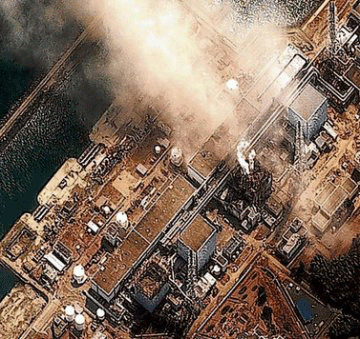 So who will foot the bill if another nuclear disaster strikes Japan? http://www.asahi.com/ajw/articles/AJ201811010019.html November 1, 2018, The government is trying to wriggle out of overhauling the way compensation should be paid out for damages caused by a nuclear accident. A working group of the government’s Atomic Energy Commission had been considering ways to bolster the system, including raising the amount of losses covered by insurance, but failed to produce a formal proposal. The commission apparently failed to obtain support for these ideas from the electric power and insurance industries. The panel started reviewing the system in the aftermath of the 2011 Fukushima nuclear disaster. Nearly eight years have passed since the catastrophic triple meltdown at the Fukushima No. 1 nuclear power plant, yet serious problems and flaws remain unaddressed with the current system. The government clearly has no intention of tackling them anytime soon. The Abe administration and the power industry are pushing to restart offline reactors, which is a very irresponsible move. The current system for compensation requires operators of nuclear plants to sign contracts with both private-sector insurers and the government to finance payouts related to nuclear accidents. But these contracts are good for only up to 120 billion yen ($1.06 billion) per nuclear plant. This is way too small, given that compensation payments related to the Fukushima disaster have already surpassed 8 trillion yen. In the case of Tokyo Electric Power Co., the operator of the Fukushima facility, it quickly became clear that the company could not raise the necessary funds on its own. This prospect prompted the government to create a makeshift program to support such payouts. Under this system, the government first pays compensation and then recovers the money over a period of decades from TEPCO and other major electric utilities. The government’s rationale is that utilities must work together to fork up funding for the system in light of the massive sums required. This system is supposed to swing into action if another major nuclear accident occurs. But it is hard to claim that a system based on mutual aid among competitors is sustainable, given the growing competition due to the liberalization of the power retail market. It is time to find an answer to the weighty, complicated question of how the financial burden of preparing for nuclear accidents and paying compensation for losses should be shared among electric power companies, their stakeholders and the government. Operators of nuclear power plants have an obligation to provide against nuclear emergencies. As a first step, insurance coverage for accident-caused losses should be sharply raised. The government needs to continue working with related industries to work out a specific plan. It should also consider how to deal with the prospect of a power company going under in the event of a serious accident. If such a thing were to happen, the government would probably have to play the leading role in paying compensation. But it would still need to get the shareholders and financial institutions involved to cough up their fair share of the burden. Increased insurance premiums paid by major electric utilities could cause electricity bills to rise. But it would help make more accurate assessments of the real costs of nuclear power generation, which both the government and the power industry have claimed to be lower than those of alternative energy sources. At the root of the troubled history of policy efforts to address the issue of compensation is the ambiguous nature of the government’s nuclear power policy. This is borne out by the way it took the initiative in promoting nuclear power plants operated by private-sector companies. Should nuclear power generation continue despite the potential risks and social costs? If another severe nuclear accident occurs, who should take the responsibility for dealing with the aftermath and in what ways? These are just some of the fundamental questions about nuclear power policy raised by the need to revamp the compensation system.
|
|

The tide is turning against nuclear power, following the IPCC Report
 NuClear News, Nov 18 Tide Turns Against  Nuclear http://www.no2nuclearpower.org.uk/wp/wp-content/uploads/2018/10/NuClearNewsNo112.pdf Following the recent National Infrastructure Assessment which advised the Government not to build more than two new nuclear stations (about 6GW) (1) and the Committee on Climate Change (CCC) statement that “If new nuclear projects were not to come forward, it is likely that renewables would be able to be deployed on shorter timescales and at lower cost,” (2) we have now seen the International Panel on Climate Change (IPCC) report making some pretty disparaging remarks about nuclear power. Perhaps the tide is finally turning. The IPCC latest findings tell a nightmarish tale—one much worse than in previous reports— surveying the climate-change impacts we’re already experiencing with one degree of warming, and the severity of the impacts to come once we surpass 1.5 degrees of warming. Ten million more people would be exposed to permanent inundation, and several hundred million more to “climate-related risks and susceptible to poverty.” Malaria and dengue fever will be more widespread, and crops like maize, rice, and wheat will have smaller and smaller yields— particularly in sub-Saharan Africa, Southeast Asia, and Central and South America. Security and economic growth will be that much more imperilled. “Robust scientific literature now shows that there are significant differences between 1.5 and 2 degrees,” Adelle Thomas, a geographer from the Bahamas and also one of the report’s lead authors, told the New Yorker. “The scientific consensus is really strong. It’s not just a political slogan: ‘1.5 to stay alive.’ It’s true.” (3) But the IPCC report points out that “the transition from the energy system that would be needed to limit global warming to 1.5 ° C is underway in many sectors and regions of the world. The technical, social, economic and political feasibility of solar energy, wind energy, and electricity storage technologies has improved considerably in recent years, while nuclear energy and Carbon dioxide (CCS) storage in the electricity sector did not show the same improvements.”
Nuclear: too weak, too slow, too expensive and too risky The IPCC report continues saying the timeframe between the date of decision and the commissioning of nuclear power plants is between 10 and 19 years, and current deployment capacity is slowed by public concern about the risk of accidents and problems with nuclear waste. In addition, the IPCC notes, that “the costs of nuclear energy have increased over time in some developed nations, mainly because of the prevailing conditions, where increased investment risks in high-capital-intensive technologies have become important.” The theoretical benefits that nuclear energy could bring in the fight against climate change are therefore far too weak, too slow, too expensive and too risky. While the IPCC report requires us to quickly reduce emissions, it is not possible to choose the slowest and most expensive electric generation technology to deploy, as well as the dirtiest and riskiest. Nuclear power is disqualified from the race of the climatic fight. (4)
The IPCC report also says: “In spite of the industry’s overall safety track record, a non-negligible risk for accidents in nuclear power plants and waste treatment facilities remains. The long-term storage of nuclear waste is a politically fraught subject, with no large-scale long-term storage operational worldwide. Negative impacts from upsteam uranium mining and milling are comparable to those of coal, hence replacing fossil fuel combustion by nuclear power would be neutral in that aspect. Increased occurrence of childhood leukaemia in populations living within 5 No2NuclearPower nuClear news No.112, November 2018 3 km of nuclear power plants was identified by some studies, even though a direct causal relation to ionizing radiation could not be established and other studies could not confirm any correlation”.
An April 2018 report from the International Renewable Energy Agency (IRENA) shows, renewable energy and energy efficiency can, in combination, provide over 90% of the necessary energy-related CO2 emission reductions the world needs. Furthermore, this can happen using technologies that are safe, reliable, affordable and widely available. While different paths can mitigate climate change, renewables and energy efficiency provide the optimal pathway to deliver most of the emission cuts needed at the necessary speed. But renewable energy will need to be scaled up at least six times faster for the world to meet the decarbonisation and climate mitigation goals set out in the Paris Agreement.
The total share of renewable energy must rise from around 18% of total final energy consumption (in 2015) to around two-thirds by 2050. Over the same period, the share of renewables in the power sector would increase from around one-quarter to 85%, mostly through growth in solar and wind power generation. The energy intensity of the global economy will have to fall by about two-thirds, lowering energy demand in 2050 to slightly less than 2015 levels. This is achievable, despite significant population and economic growth, by substantially improving energy efficiency, the report finds. (6)
So what is the UK Government doing? On 15th October the UK Government wrote a joint letter with the Welsh and Scottish governments to the Committee on Climate Change to seek updated advice on meeting the 1.5oC target. (7) Specifically, the governments asked the CCC to report on the date by which they should look to set a net zero target, as well as the range which UK greenhouse gas emissions reductions would need to be within, against 1990 levels, by 2050 as an appropriate contribution to the global goal of limiting global warming to “well below” 2oC above pre-industrial levels. It has also asked for the corresponding emissions range for a 1.5oC target. But the letter said carbon budgets already covering the period 2018-2032 were out of scope of the request.
The Intergovernmental Panel on Climate Change (IPCC) warned that limiting global warming to 1.5oC by the end of the century would require “rapid, far-reaching and unprecedented changes in all aspects of society”, and that the world is currently heading for a 3oC rise in temperature. (8) The exclusion of the period from 2018 – 2032 led to protests from green groups and the opposition. Labour’s Energy Spokesperson, Alan Whitehead, called on the government to strengthen its review of the UK’s long term carbon targets and allow the Committee on Climate Change (CCC) to assess whether existing near-term carbon targets are compatible with keeping temperature increases below 1.5C. CCC chief executive Chris Stark admitted he was surprised the letter explicitly stated that “carbon budgets already set in legislation (Carbon Budgets 3-5 covering 2018-2032) are out of scope of this request”. (9 The Scottish Government has now written separately to the CCC changing its position, and saying the previous request “should not therefore prevent you from advising on all of Scotland’s targets.” (10) No2NuclearPower nuClear news No.112, November 2018 4 Devastating Critique of UK policies on renewables Meanwhile the BBC’s File on Four programme aired an unprecedented critique of the UK government’s undermining of renewables. The government says it is committed to green energy – its recent ‘Clean Growth Strategy’ claims plans are in place to cut greenhouse gases by more than half of 1990 levels by 2030. And yet, research shows investment in green energy fell 56% last year, the biggest drop of any country – with policy change, subsidy cuts and ‘stop-start’ support from ministers being blamed. So, do Britain’s plans for a greener future add up? File on 4 takes to the road to find out. On a trip around the North East of England, Simon Cox asks why, when the offshore wind industry has grown, other cheap, renewable energies like onshore wind, solar power and now biofuels are struggling to survive. He examines whether changes in policy are hitting crucial investment, and if ambitious climate targets will really be met.
While offshore wind expands, it’s not the same story for onshore. Changes to planning laws mean it’s pretty impossible to build them in England and Wales. The CCC has warned of big gaps in the Government’s programme. We are going to need more onshore wind and solar to meet our targets. Gareth Miller of Cornwall Insight told the BBC that “to simply shut out the two undeniably cheapest technologies … from being built to their maximum capacity in the UK seems to be very, very strange indeed … There is a question of how serious the Government is when it says it wants to decarbonise the power sector at the lowest cost to the consumer in a world where they are currently shutting out the cheapest technologies to make that happen … I think we’ll see a significant slowdown if we haven’t already.”
In 2015 the tariff for generating solar electricity was slashed by two-thirds for homeowners and large solar farms. The domestic market has now gone back to the level it was at before the feedin tariff came in. A lot of very good companies have gone bust or shrunk. Next April the remaining tariff for exporting electricity to the grid will disappear – a further blow to investors in solar power – it will ruin the financial case for putting solar panels on your roof. It will be the final end of the domestic solar market in the UK. You are looking at thousands and thousands of job losses across the country. One recent survey found over 40% of UK solar installers are considering quitting the industry. To survive British companies have been forced to look overseas. Solar Century, for example, wouldn’t be able to survive if it was just reliant on the UK. Jeremy Leggett, founder of Solar Century says:
“If I needed any more persuading that we are dealing with hostile forces who basically over many years have taken every opportunity to set us back while promoting the cause of more expensive nuclear and more expensive shale gas then this is it … of all the things they have done to harm our industry over the years this is arguably the worst … the prize for the Government in a country desperate for jobs would have been to build a domestic industry – that is not going to happen because so many big British companies have been driven to bankruptcy.”
The opportunity to build a really healthy British solar industry has been lost. Dr Gem Woods from Imperial College says: “We now know that even what seemed like an impossibly stretching target of reducing our greenhouse gas emissions by 80% by 2050 is not going to be anything like good enough. And so we have to think very fast (and do very fast) about what sort of systems that we need to be deploying over the next 5, 10 and 20 years – not the next 50 years. At the moment we have locked ourselves into a set of processes that in my view are really delaying meaningful implementation of the types of technologies and systems that will allow us and our children to have any kind of meaningfully good future.”
|
Nuclear company AREVA rebranded itself (Orano, Framatome) – but legal troubles linger
 BFMTV 29th Oct 2018, Buyout of Uramin by Areva: the Paris Court of Appeal orders new
 indictments. In 2007, Areva, then led by Anne Lauvergeon, acquired this Canadian mining company for 1.8 billion euros. A financial fiasco on which justice leads several investigations.
The Paris Court of Appeal ordered further indictments including the former boss of the group.
Czech government might delay its nuclear power expansion plans
Reuters 29th Oct 2018 The Czech government may delay its decision for state-controlled utility
CEZ to build new reactors at its two nuclear power plants, Industry
Minister Marta Novakova was quoted as saying on Monday.
“The decision about building nuclear units can’t be done under pressure and we don’t
want to be put under pressure from suppliers or other entities,” Novakova
said in an interview published by Bloomberg. “The Finance Ministry is
also analyzing the risk of potential court disputes.” The project to
expand CEZ’s nuclear power plant fleet is the biggest investment ever
into Czech energy. CEZ operates two plants at Dukovany and Temelin that
together covered 38 percent of Czech energy needs last year.
https://uk.reuters.com/article/us-czech-nuclearpower/minister-czechs-may-delay-plan-to-boost-nuclear-power-capacity-bloomberg-idUSKCN1N31GF?rpc=401&
USA’s new Federal Energy Regulatory Commission Chairman vows to reject political influence
Facing Trump coal and nuclear push, new energy panel chief swears off politics, Washington Examiner, by Josh Siegel, October 31, 2018
New Federal Energy Regulatory Commission Chairman Neil Chatterjee vowed Wednesday to protect the independent body from political influence as it considers how to handle the growing number of retirements of coal and nuclear plants.
“We should be separate an
d apart from any political influence on either side,” Chatterjee said. “I intend to do everything in my power.”
“I have made very clear to all of the staff at the agency that the agency’s independence from political influence will continue,” Chatterjee, a sitting GOP commissioner, told reporters at a briefing one week after the White House designated him chairman, replacing Kevin McIntyre, a fellow Republican who is suffering from health issues.
Chatterjee sought to rebut critics who fear, because of his political background representing a coal-friendly state, that he may be more sympathetic to the Trump administration’s interest in saving uneconomic coal and nuclear plants by subsidizing their continued existence……….
FERC in January voted unanimously to reject a proposal from Energy Secretary Rick Perry to provide special payments to struggling coal and nuclear plants in the name of resilience and reliability, saying the grid faces no immediate risk without them.
McIntyre and Chatterjee both opposed the Perry plan.
FERC, in rejecting Perry’s plan, directed regional transmission operators to submit information on resilience challenges in their markets. The commission is reviewing those responses and could act on its own. President Trump has repeatedly pressed for action to save coal and nuclear plants, but the White House has reportedly stalled over an effort to use emergency executive authority.
Any potential action would likely come through FERC.
Chatterjee said he would follow the “rule of law” on any decision on the matter and take action, or no action if the evidence does not support it, based on facts.
“This won’t be a politically influenced decision,” he said. “My actions will be taken by the record, facts, and the rule of law.”
The new FERC chairman also said he would not veer from the commission’s other priorities…… https://www.washingtonexaminer.com/policy/energy/facing-trump-coal-and-nuclear-push-new-energy-panel-chief-swears-off-politics
Climate change, drought, and the migrant caravan

The Climate Implications of the Migrant Caravan, EcoWatch, Olivia Rosane, Oct. 29, 2018 The U.S. military will send as many as 5,000 troops to the country’s Southern border to meet thousands of refugees and migrants who are traveling north through Mexico from Central America, The Independent reported Monday.
Brazil’s new President – a danger to environment and to action against climate change
|
Brazil elects Bolsonaro, who has threatened Amazon and global climate efforts Climate Home News, 29/10/2018,
Rightwing president-elect has pledged to open the rainforest to farming and industry, while slashing environmental protections and democratic rights By Megan Darby Jair Bolsonaro is the next president of Brazil, sparking fears for the future of the Amazon rainforest and the global climate. In Sunday’s run-off, the right-winger won 55% of the vote, beating Fernando Haddad of the Workers’ Party. Bolsonaro has courted the mining and farming lobbies, pledging to roll back environmental protections and gut federal enforcement. Early in the campaign, he threatened to withdraw Brazil from the Paris Agreement, but backtracked last week after an outcry at home and abroad. Scientists have warned his proposed policies will send deforestation soaring, predicting clearances the size of the UK each year within a decade. That would make it “all but impossible” for Brazil to meet its climate commitments, four experts wrote in Mongabay. The authoritarian leader’s praise for dictatorship and hostile comments towards minorities and political activists have also raised concerns about democratic freedoms. ….. Bolsonaro’s victory is raising concerns abroad, including in Norway, a major funder of forest protection efforts in the Amazon. The Norwegian government rebuked the outgoing administration and slashed payments to the $1.1 billion Amazon Fund last year, over an uptick in deforestation rates. Under Bolsonaro, the Brazilian government is expected to be less amenable to international influence. In his comments on the Paris Agreement, the president-elect has expressed that his main concern is preserving Brazilian sovereignty. Norwegian environment minister Ola Elvestuen told Norway’s state broadcaster: “Brazil’s contribution to reducing deforestation in the Amazon has been one of the most important measures to curb climate change in the last decade… We want to continue the good cooperation with Brazil in the future too.” Ines Luna, a campaigner with Rainforest Foundation Norway said: “Of course we are extremely worried that Brazil will change its climate policies.”….http://www.climatechangenews.com/2018/10/29/brazil-elects-bolsonaro-threatened-amazon-global-climate-efforts/ |
|
France’s people turning away from nuclear power

 French public opinion growing against nuclear power https://www.connexionfrance.com/French-news/French-public-
 opinion-is-growing-against-nuclear-power-as-awareness-of-environment-and-renewable-energy-growsThe French public is becoming less and less in favour of nuclear power, as awareness and concern for the environment grows, according to a new study.
The change in opinion has been attributed to the growth and improvement in renewable energy sources, and the rising awareness of the public towards the environment.
The safety of nuclear reactors has also been in question recently, after a spike in breakdowns, and more and more people living within 80 km of a central reactor.
Environmental campaigner Greenpeace, said: “We have gone from a world in which French society believed that nuclear was the only choice. The public thought it was bad, but a necessary evil. But now, with the rise in renewable energy, with sun and wind, we can bypass nuclear completely.”
Concern over the environmental impact of nuclear power has also played a role, it suggested.
The statement continued: “We are waking up to the fact that when we turn on a light or a toaster at home, we are producing radioactive waste that is going to remain on Earth for thousands of years. We are starting to ask ourselves if this is a clean source of energy.”
Despite this, however, the same poll found that just 28% of people would be willing to pay more for their energy to fix the nuclear problem.
1 This Month
Tell Congress: Prevent Nuclear Catastrophe in Iran

Tell Congress: Prevent Nuclear Catastrophe in Iran

Read the Public Inquiry Report, the Commissioners’ report, Surrendering Australia: The AUKUS Deception is available to download for free at aukuspublicinquiry.com. Or just watch the replay of the National Press Club Luncheon.


Shut down the radiation-damaged Heysham nuclear reactors now
To see nuclear-related stories in greater depth and intensity – go to https://nuclearinformation.wordpress.com

Say No to NASA’s Reckless Nuclear Reactor on the Moon
Say No to NASA’s Reckless Nuclear Reactor on the Moon
-
Archives
- November 2026 (246)
- October 2026 (302)
- September 2026 (339)
- August 2026 (330)
- July 2026 (355)
- June 2026 (287)
- May 2026 (306)
- April 2026 (356)
- March 2026 (251)
- February 2026 (267)
- January 2026 (308)
- December 2025 (358)
-
Categories
- 1
- 1 NUCLEAR ISSUES
- business and costs
- climate change
- culture and arts
- ENERGY
- environment
- health
- history
- indigenous issues
- Legal
- marketing of nuclear
- media
- opposition to nuclear
- PERSONAL STORIES
- politics
- politics international
- Religion and ethics
- safety
- secrets,lies and civil liberties
- spinbuster
- technology
- Uranium
- wastes
- weapons and war
- Women
- 2 WORLD
- ACTION
- AFRICA
- Atrocities
- AUSTRALIA
- Christina's notes
- Christina's themes
- culture and arts
- Events
- Fuk 2022
- Fuk 2023
- Fukushima 2017
- Fukushima 2018
- fukushima 2019
- Fukushima 2020
- Fukushima 2021
- general
- global warming
- Humour (God we need it)
- Nuclear
- RARE EARTHS
- Reference
- resources – print
- Resources -audiovicual
- Weekly Newsletter
- World
- World Nuclear
- YouTube
-
RSS
Entries RSS
Comments RSS

