 U.N. rights expert urges Japan to halt women and child evacuee returns to radioactive parts of Fukushima https://www.japantimes.co.jp/news/2018/10/26/national/science-health/u-n-rights-expert-urges-japan-halt-women-child-evacuee-returns-radioactive-parts-fukushima/#.W9PVHmgzbIU
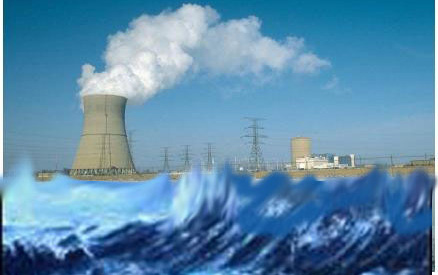
KYODO GENEVA – The Japanese government must halt the return of women and children displaced by the March 2011 nuclear disaster back to areas of Fukushima where radiation levels remain high, a U.N. human rights expert said Thursday.
The special rapporteur on hazardous substances, Baskut Tuncak, also criticized in his statement the government’s gradual removal of evacuation orders for most of the radioactive areas as well as its plan to lift all orders within the next five years, even for the most contaminated areas.
“The gradual lifting of evacuation orders has created enormous strains on people whose lives have already been affected by the worst nuclear disaster of this century. Many feel they are being forced to return to areas that are unsafe,” he said.
An official of Japan’s permanent mission to the international organizations in Geneva rebuffed the statement, saying it is based on extremely one-sided information and could fan unnecessary fears about Fukushima.
Tuncak expressed concerns about people returning to areas with radiation above 1 millisievert per year, a level previously observed by Japan as an annual limit so as to prevent risks to the health of vulnerable people, especially children and women of reproductive age.
“It is disappointing to see Japan appear to all but ignore the 2017 recommendation of the U.N. human rights monitoring mechanism to return back to what it considered an acceptable dose of radiation before the nuclear disaster,” he said.
In the wake of the Fukushima reactor meltdowns, the Japanese government heightened the annually acceptable level of radiation to 20 millisieverts, raising concerns for the health of residents.
In August, Tuncak and two other U.N. human rights experts jointly criticized the Japanese government for allegedly exploiting and putting at risk the lives of “tens of thousands” of people engaged in cleanup operations at and around the crippled Fukushima No. 1 nuclear plant, a claim Tokyo dismissed.
October 27, 2018
Posted by Christina Macpherson |
health, Japan |
Leave a comment
 Japan rejects UN call to stop returns to Fukushima, Channel News Asia, 27 Oct 18 TOKYO: Japan’s government on Friday (Oct 26) rejected calls from a UN rights expert to halt the return of women and children to areas affected by the Fukushima nuclear disasterover radiation fears.
UN special rapporteur Baskut Tuncak on Thursday warned that people felt they were “being forced to return to areas that are unsafe, including those with radiation levels above what the government previously considered safe.”
In the wake of the Fukushima disaster, Japan’s government lifted its standard for the acceptable level of radiation to 20 millisieverts per year from 1 millisievert.
It has been urged to revise that level back down again, but has rejected calls to do so, a decision Tuncak called “deeply troubling.”
“Japan has a duty to prevent and minimise childhood exposure to radiation,” he said.
But Japan’s government rejected the criticism, saying Tuncak’s comments were based on “one-sided information and could fan unnecessary fears about Fukushima,” a foreign ministry official told AFP.
Japan’s government has gradually lifted evacuation orders on large parts of the areas affected by the disaster, which occurred when a massive tsunami sent reactors at the Fukushima Daiichi plant into meltdown in March 2011.
But other areas remain under evacuation orders because of continued high levels of radiation.
Japan’s government has pushed hard to return affected areas to normal, but has faced criticism that what it refers to as “safe” radiation levels are not in line with international standards. …….. https://www.channelnewsasia.com/news/asia/japan-fukushima-meltdown-radiation-fears-10867932
October 27, 2018
Posted by Christina Macpherson |
Japan, politics |
Leave a comment

 Saudi’s Lobbyists Feel Heat of Khashoggi Murder, Bloomberg By Kathleen Hunter, October 26, 2018 It’s not just Donald Trump who has cultivated a cozy relationship with Riyadh. Saudi Arabia has been a cash cow for Washington’s influence industry.
Over the past decade, D.C.’s lobbyists have raked in $76.9 million advocating for the Saudis on everything from nuclear power to fending off legislation that would leave the kingdom liable in lawsuits filed by family members of victims in the Sept. 11 terrorist attacks, Ben Brody, Naomi Nix and Bill Allison report.
That lucrative business is now facing its biggest test in years as the killing of U.S.-based journalist Jamal Khashoggi inside the Saudi consulate in Istanbul draws worldwide criticism. ….https://www.bloomberg.com/news/articles/2018-10-26/saudi-lobbyists-feel-heat-of-khashoggi-murder-balance-of-power?
October 27, 2018
Posted by Christina Macpherson |
politics international, Saudi Arabia |
1 Comment
 Utah says no to EnergySolutions accepting depleted uranium from military, but will it change course in the future? Salt Lake Tribune, By Brian Maffly 26 Oct 18 Radioactive munitions won’t be buried in Utah’s West Desert anytime soon after a decision issued Thursday by state regulators, who rejected EnergySolutions’ emergency request to accept several thousand tons of armor-piercing projectile points made of heavier-than-lead depleted uranium.
The radioactive-waste processor had petitioned the
Department of Environmental Quality for an exemption to Utah’s provisional prohibition on burying depleted uranium, or DU. But agency staff and outside consultants concluded metallic DU is more hazardous and unstable than EnergySolutions had characterized it in its presentations.
The company has failed to demonstrate that the “exemption will not result in undue hazard to public health and safety or result in undue hazard to the environment,” Stephen Marschke, nuclear engineer with SC&A Consulting, told the Waste Management and Radiation Control Board.
The panel voted unanimously Thursday to reject the military ordnance, which grows more radioactive over time.
October 27, 2018
Posted by Christina Macpherson |
depleted uranium, USA |
Leave a comment
 EDF curbs Fessenheim 2 nuclear reactor output due to dry weather https://www.reuters.com/article/france-drought-nuclearpower/edf-curbs-fessenheim-2-nuclear-reactor-output-due-to-dry-weather-idUSL8N1X63FD
PARIS, Oct 26 (Reuters) – French utility EDF reduced output at its 900 megawatts (MW) Fessenheim 2 nuclear reactor on Friday as prolonged dry weather across west and central Europe has led to low water levels at the Rhine river which it uses to cool the reactor.
French grid operator RTE said EDF cut output at Fessenheim 2 by 130 MW due to environmental issues. EDF use water from the Rhine river as coolant for the plant, France’s oldest, which has two 900 MW reactors.
EDF could not be reached for comment on the situation.
October 27, 2018
Posted by Christina Macpherson |
climate change, France |
Leave a comment
 Pilgrim to move nuclear waste to higher ground, http://www.patriotledger.com/news/20181026/pilgrim-to-move-nuclear-waste-to-higher-ground By Joe DiFazio
The Patriot Ledger PLYMOUTH — Officials at the Pilgrim Nuclear Power Station said they want to move nuclear waste at the site to higher ground over the next few years with an eye toward sea level rise.
Patrick O’Brien, spokesman for Entergy, the plant’s owner, said that the new proposed site will be located in what is now a parking lot 75 feet above sea level and 350 feet away from Rocky Hill Road. The site is 700 feet away from the closest point on the shoreline, O’Brien said.
Pilgrim is slated to be shut down by June 1. Entergy announced in August it plans to sell the station to Holtec International who will decommission the plant. O’Brien said the plan to move the waste was made in conjunction with Holtec.
O’Brien said that the proposed site was chosen as the best of three under consideration and that it was evaluated for nine regulatory and technical requirements. O’Brien saidEntergy will apply for the required permits and plans to begin construction on the new site before Pilgrim shuts down.
Nuclear Regulatory Commission spokesman Neil Sheehan said that the move doesn’t need approval from his agency, but it would monitor construction of the new site and movement of the spent nuclear fuel. The NRC will need to approve Pilgrim’s sale to Holtec.
October 27, 2018
Posted by Christina Macpherson |
climate change, USA |
Leave a comment
 Half Life Chad Walde believed in his work at Los Alamos National Laboratory. Then he got a rare brain cancer, and the government denied that it had any responsibility , Pro Publica, by Rebecca Moss, The Santa Fe New Mexican, 26 Oct 18,“………A Gap Between Records and Recollection
CHAD WAS CLEARED TO RETURN TO HIS JOB at the lab in late January 2015, four months after his diagnosis. He’d undergone radiation and two chemotherapy treatments, and Los Alamos’ occupational medicine staff said he was fit to continue working with classified material, his medical records show. At risk for seizures, he couldn’t drive or climb stairs or ladders. Chad carpooled and had Angela drive him to the laboratory several times a week. His supervisor offered him a desk job, a step down from his managerial role — but one that kept his health insurance running. He accepted. The only real alternative was termination.
Roark says the lab’s goal is to treat all employees with debilitating conditions with “utmost respect” and says when employees are unable to perform the functions of their jobs, Los Alamos “makes reasonable efforts to accommodate them,” which can result in job reassignment.
Separately, to process his claim for cancer benefits, the Department of Labor also told Chad it would need all of his medical and radiation exposure records from the lab. The Department of Labor sends these to the National Institute for Occupational Safety and Health, another federal agency that uses a probability equation to determine if a worker had a high enough dose of radiation to cause cancer. If the computer found a 50 percent or higher correlation, Chad would get benefits.
When the records arrived from Los Alamos, containing a single CD and a brief letter, it was the first time Chad realized that his own experience differed from what the lab had noted in its records.
The lab had found “no records” of Chad having been exposed to anything or other environmental occupational hazards, the letter said. And his dosimetry report, a spreadsheet that showed his total dose of radiation annually, was scant.
The lab had not tracked Chad’s radiation exposure in 1999, his first year on the job, the report indicated, or in 2000, when the Cerro Grande fire burned. External monitoring began in 2001 but showed a clean zero for 11 out of the next 14 years. (Only in 2008, 2013 and 2014 were there any hits on the report.)
The report said his total dose was 0.254 rems over his career, well below safety limits and slightly less than an average person gets from background radiation from the sun and environment in a single year. A rem is a unit used to measure the absorbed dose of radiation, with 1 rem equivalent to a CT scan, according to the Nuclear Regulatory Commission.
Chad marveled at the document. It didn’t track with his memory — or hold any record of the time he’d been called in for going over his limit and accused of taking his badge to the airport, or when he was sent home wearing disposable clothes.
“They aren’t on here,” Chad said when he looked at the document.
It also seemed impossible there were so many years that were completely blank.
Asked about the discrepancy between Walde’s memory and the reports, Los Alamos spokesman Roark said, in general, that the lab “maintains a comprehensive archive of worker radiation dosimetry data” and that it “provides any and all records in response to requests as quickly as possible.”
When NIOSH reviewed the records, it had a simple way to fill in the gaps. For the two years when Chad was not monitored, NIOSH assumed the maximum dose he could have been exposed to was the maximum background radiation at the lab (which was 0.4 rem), adding in the possibility of a couple missed readings.
NIOSH said Chad’s records showed he had been exposed to “various sources of radiation during his employment,” but the maximum dose he could have received at the lab, based on its calculations and assumptions, was a 3.744 rem dose to the brain. The agency modeled his probability for cancer based on how this amount of radiation would affect and mutate cells of the thyroid. It does not have a model for how external radiation might impact brain tissue.
On a phone call with a NIOSH claims representative in September 2015, Chad asked why the agency used general air monitoring data to fill in his missed readings. Chad, who made a recording of the call, said this would fail to account for the radiation present at the more dangerous nuclear areas he had been assigned to.
He told the representative how his badge often took hits. Like he’d told his father-in-law, and his friends, Chad said his boss kept asking him why his readings were “above the reporting levels.”
I “wonder if we are not missing something,” Chad said on the recording. “I also worry about the Los Alamos reporting,” relaying instances in which the lab certified an area free of radiation only to discover contamination later while he was working on a maintenance job. Chad began to talk about something he witnessed at the liquid radioactive waste plant but trailed off, saying, “I don’t know if I am allowed to say any of this stuff — never mind.”
Chad Walde’s radiation shells hang in the garage of his family’s home. The shells help keep the head still while a patient receives radiotherapy. (Adria Malcolm, special to ProPublica)
Stu Hinnefeld, director of the divis Stu Hinnefeld, director of the division of compensation analysis and support for NIOSH, said in an interview that those exposed to radiation have a “relatively low” likelihood of developing brain cancer compared with lung and thyroid cancers. He said the institute’s risk models, as a result, require a worker to have a much higher documented exposure to radiation than many of the other cancers in order to get compensation.
The Department of Labor concluded there was just a 2.67 percent chance his cancer was related to his radiation exposure history. His claim was denied on Jan. 14, 2016.
Chad’s dates of employment made him more likely to be rejected than if he had worked at the lab in a prior era. Overall, the Department of Labor has approved nearly 60 percent of claims filed by Los Alamos workers for cancer and beryllium disease. But for workers who started working at the lab after 1996, that figure falls to 45 percent, according to data requested under the Freedom of Information Act.
A spokesperson for the Department of Labor said, “While gaps in past records have existed at some sites, workers in the modern era have more extensive monitoring records. There are no unexplained gaps or readings in this employee’s radiation dose records.”
Still, Chad wanted to appeal. Over the next year, he would undergo another surgery and start experiencing frequent seizures, at one point spending two days in a coma in Texas, where the family had traveled for the twins’ volleyball tournament, when the spasms refused to subside. The family held “Gray Be Gone” fundraisers, referring to the color of the tumor tissue, to raise money to send Chad to MD Anderson for treatment. He also started clinical trials with a doctor in New Mexico.
During that time, Chad learned that he was not the only person at Los Alamos who thought missing records had led the Department of Labor to deny a claim.
For more than a decade, workers at Los Alamos have been telling federal officials that similar data and records problems have prevented them from getting compensation. In June 2005, at a NIOSH forum for the lab’s technical workers’ union, one worker said the lab “had lied and falsified documents right and left … the monitors were turned off, people weren’t qualified to be doing the monitoring, the equipment was never calibrated,” according to meeting minutes.
Another man, an X-ray technician, said his personal radiation badge always showed up with zero contamination.
Falsified radiation data or medical records have been documented at other labs, including in 2003 at Savannah River Site in South Carolina and Hanford Site in Washington state. Radiation records also were falsified at an Ohio nuclear facility in 2013. The Department of Energy fined lab managers in South Carolina and Ohio more than $200,000 each for “willful falsification.”
Los Alamos has not been fined for willful falsification of health records, but it has been cited within the past year for serious safety violations and for failing to check laboratory rooms for toxic chemicals before allowing workers to enter. Internal incident reports from the early 2000s, obtained by NIOSH, described how records had been removed from radiation log books, “deliberate tampering” with nasal swipe samples (used to test if a worker inhaled radioactive particles) and problems with workers not wearing their radiation badges.
Soon after Chad’s diagnosis, another electrician on his crew, Cesario Lopez, told Chad he’d recently had part of his kidney taken out after being diagnosed with cancer. Both Lopez’s mother and uncle, who worked at the lab before him, had been diagnosed with cancer, too. Lopez applied for and was denied compensation by the Department of Labor but has appealed.
Then Chad learned about his friend Gilbert Mondragon. Mondragon started working as an electrician on the fire protection crew in August 1999, three months before Chad. Mondragon was just 19 and from the beginning saw Chad as a mentor. Chad, he said, taught him how to have a good attitude at work and find value in it. That became harder after Mondragon was diagnosed with kidney cancer in the spring of 2014 at the age of 34.
Like Chad, Mondragon’s radiation report showed 14 straight years of zeroes, and only two years, 2006 and 2007, in which his badge took any hits, totaling 67 millirems of radiation over 16 years.
“It’s not like people think it is,” Mondragon said about lab safety. He, like Chad, recalled several times he’d been decontaminated and given new work clothes or boots.
Mondragon believes some of the zeroes are also the result of being told, by his supervisors, to take his badge off when he was doing work in contaminated places. “Now I know better,” he said, “but it’s too late.”
Roark, the lab spokesman, denies workers were ever told to remove their badges, saying its “Radiation Protection Program would never allow, endorse or recommend removing dosimeters to avoid contamination.”
Ken Silver, who sits on a Department of Labor advisory board and is a professor of environmental health at East Tennessee State University, testified before Congressin 2007 that instructing workers to remove their radiation badges was a common practice for “cleanup crews” at Los Alamos in the past. Silver said this practice was based on the belief that if a badge was contaminated, workers would go on to spread radiation throughout the laboratory, which he called a “flimsy assumption.”
Los Alamos officials did not testify at the hearing. But the lab says its rate of injuries has dropped significantly since 2006 and is well below the industry average. The laboratory says it does not track the cause of death for its employees.
Hinnefeld said NIOSH has looked into allegations that workers were told to remove their badges and, “We hear that on occasion.” But he said, in the past, officials have concluded that this wouldn’t affect how the agency reconstructs a worker’s radiation exposure because a single missed reading is unlikely to hold much weight in the overall career of a worker.
Diagnosed with chronic obstructive pulmonary disease and asthma, which his physician has linked to chemical exposure, Mondragon resigned from the lab this winter. The doctors’ visits have consumed his life. His cancer claim, like Chad’s, also was rejected by the Department of Labor, but he was told he would likely be accepted if he were to develop another cancer.
For the last six months, he has relied on the help of an oxygen tank to breathe, trailing a long, green plastic tube wherever he goes…..more https://features.propublica.org/los-alamos/chad-walde-nuclear-facility-radiation-cancer/
October 27, 2018
Posted by Christina Macpherson |
health, investigative journalism, PERSONAL STORIES, Reference, USA |
Leave a comment
 Energy Department ready to approve nuclear waste
 dumping https://www.salon.com/2018/10/26/energy-department-ready-to-approve-nuclear-waste-dumping_partner/The Texas facility is operated by a major donor to Energy Secretary Rick Perry’s political campaigns SARAH OKESON OCTOBER 26, 2018
Our Energy secretary could ship treated nuclear waste from our nation’s most polluted nuclear weapons production site to a Texas nuclear dump near an aquifer suppling water from northern Texas to South Dakota. The dump was opened by one of Secretary Rick Perry’s largest campaign donors.
The Nuclear Waste Policy Act of 1982, signed by former President Ronald Reagan, was written to prevent potential disasters and mandates that the Department of Energy must send high-level waste to a network of underground tunnels and rooms where it can safely decay over millions of years.
Republicans and Trump’s new assistant secretary for environmental management, Anne Marie White,who did consulting work for the company that operates the dump, want to rewrite federal regulationsto say that some high-level nuclear waste isn’t really high-level nuclear waste so it can be stored elsewhere.
“It certainly raises questions about potential conflicts of interest,” said Tom Carpenter, the executive director of Hanford Challenge, a Seattle watchdog group.
Dallas billionaire Harold Simmons, who died in 2013 at age 82, owned Waste Control Specialists. Simmons and his wife, Annette, gave Perry’s campaigns more than $1.3 million.
Waste Control Specialists got state licenses in Texas in 2008 and 2009 to dispose of radioactive waste in a dump in Andrews County on the Texas-New Mexico border, adjacent to the giant URENCO USA nuclear enrichment facility at Eunice, N.M. Perry, then Texas governor, appointed the three commissioners of the Texas Commission on Environmental Quality who approved the licenses.
The dump is over or near the Ogallala Aquifer, depending on whether you believe the water table boundaries of the company or others. The dump is also in an earthquake hazard zone.
Waste Control Specialists wants to take radioactive waste from the Hanford nuclear weapons complex in southeast Washington state, one of the most contaminated places on earth. About 56 million gallons of radioactive and chemical waste produced during World War II and the Cold War is stored in 177 underground tanks.
Hanford was created during the Manhattan Project in World War II and made the plutonium for the atomic bomb dropped on Nagasaki, Japan.
Waste Control Specialists says it could save the federal government up to $16.5 million. The dump would take waste after cesium is removed and It is encased in grout. In December, 3 gallons of waste, or about 0.0000053% of the waste in the underground tanks, was encapsulated in grout as a test.
Republicans have previously reclassified nuclear waste as less dangerous. In 2004, Sen. Lindsey Graham (R-S.C.) attached a rider to the defense authorization bill so the Department of Energy didn’t have to remove radioactive sludge from underground storage tanks in South Carolina and Idaho.
October 27, 2018
Posted by Christina Macpherson |
politics, USA, wastes |
Leave a comment
By: KTVU StaffOCT 25 2018 , SAN FRANCISCO (KTVU) – The United States government has joined the lawsuits against the company hired to clean up radiation at the old Hunters Point Shipyard in San Francisco.
The Department of Justice claims Tetra Tech defrauded the government with its radiation testing of soil and buildings.
The lawsuit against Tetra Tech and others claim radioactive soil left on the property has led to chronic health problems. …….http://www.ktvu.com/news/us-government-joins-hunters-point-shipyard-radiation-lawsuit
October 27, 2018
Posted by Christina Macpherson |
Legal, USA |
Leave a comment
 Strategies needed to address radiation exposure risks during venous procedures, Venous News,
25th October 2018 Research presented at the European Society for Vascular Surgery’s annual meeting (ESVS; 25–28 September, Valencia, Spain) has shone a light on the potentially high cumulative radiation exposure associated with certain venous procedures. Addressing the issue, Stephen Black (Guy’s and St Thomas’ Hospital, London, UK) called for further studies to identify strategies that can reduce radiation exposure, and highlighted the need for increased awareness among interventionalists.
Black indicated that there has been an increase in treatment options for deep vein thrombosis (DVT) in particular and for chronic venous patients over the last few years. While the advances are exciting, it is easy to forget that they come with potentially harmful side effects. Black compared modern venous procedures with endovascular aneurysm repair (EVAR), drawing particular attention to the young age at which venous patients typically require treatment, corresponding with a much longer lifetime of follow-up and potential reintervention procedures.
“It is important to highlight the potential for harm in this patient group who are an average age of 30–40 years, as opposed to the older patients who typically undergo EVAR, for example. The EVAR 1 trial reported an increased incidence of malignancy in patients treated endovascularly after 15 years follow-up. Patients who need thrombolysis or inferior vena cava (IVC) reconstruction are often younger than those with arterial problems and may also require long-term surveillance and secondary interventions, exposing them to further radiation,” Black pointed out.
To investigate the radiation exposure associated with venous procedures, Black and colleagues conducted a retrospective cohort study of patients with symptomatic ilio-femoral deep vein thrombosis and chronic IVC reconstruction, followed for a minimum of one year in order to capture reintervention data. Estimated radiation exposure from the related preoperative, index and postoperative interventions were measured in dose-area product and fluoroscopy time. ………
He concluded, adding that more needs to be done to raise awareness about the importance of reducing radiation dose wherever possible, and maintained that more strategies, such as the use of IVUS, need to be identified and put into practice. https://venousnews.com/radiation-exposure-risks-during-venous-procedures/
October 27, 2018
Posted by Christina Macpherson |
2 WORLD, health |
Leave a comment
Toshiba considers liquidation of British nuclear unit NuGeneration https://mainichi.jp/english/articles/20181026/p2g/00m/0bu/070000c
October 26, 2018 (Mainichi Japan) TOKYO (Kyodo) — Toshiba Corp. is considering dissolving its British nuclear subsidiary NuGeneration Ltd. as negotiations for its sell-off have stalled, sources close to the matter said Friday.
The Japanese conglomerate is in the process of withdrawing from its overseas nuclear businesses after the bankruptcy of its U.S. subsidiary Westinghouse Electric Co. in 2017.
Korea Electric Power Corp. has been selected as the preferred bidder for the British nuclear subsidiary, but no agreement was reached before its preferred bidder status expired, the sources said.
Toshiba is also at odds over the terms of the unit’s sale with a Canadian asset management company which has shown interest in buying NuGeneration, they said.
NuGeneration plans to build a nuclear power plant with three reactors in Moorside, northwestern England. It was initially scheduled to use reactors manufactured by Westinghouse before the U.S. company went bankrupt.
October 27, 2018
Posted by Christina Macpherson |
business and costs, Japan, UK |
Leave a comment
Japan earthquake: Fukushima rocked by 5.0 magnitude quake off coast, JAPAN has been struck by an earthquake with a 5.0 magnitude off the east coast of the country, close to Fukushima. Express UK, By LAURA MOWAT, Oct 22, 2018 The earthquake had a depth of 46.6km and hit at 10:47am universal time (11.47am BST).
There has been an increase in seismic activity in the last 24 hours along the Ring of Fire – the Pacific plate which sees the most earthquakes and most active volcanoes.
An earthquake also struck Japan’s north island last night at a depth of 67km and a magnitude of 4.4.
Japan lies in the Ring of Fire, which is a major area in the basin of the Pacific Ocean where earthquakes and volcanoes are common……….
Earthquakes are common in Japan as the country is located in an area where several continental and oceanic plates meet.
Japan is hit by about 1,500 earthquakes each year, which includes daily tremors that are rarely felt.
An earthquake with a magnitude of five on the Richter Scale is usually felt, but normally only causes minor damage. https://www.express.co.uk/news/world/1034816/japan-earthquake-fukushima-tsunami-warning-center-USGS
October 27, 2018
Posted by Christina Macpherson |
Japan, safety |
Leave a comment
Hanford nuclear plant employees told to ‘take cover’ over incident, Rt.com : 26 Oct, 2018 Employees at the Hanford Vit Plant – one of the US’ largest nuclear waste processing facilities – have been told to “take cover.” The alert was issued as a precaution, the company operating the facility said.
The employees at the waste treatment plant were allegedly told to “go to the closest Take Cover facility” and avoid “eating or drinking until further notice,” according to the text message published by the people on social media.
The warning to the employees was issued because steam was coming out from one of the tunnels at the waste treatment plant construction site, Bechtel, the company in charge of the construction works said, adding that it was made out of “precaution.”
1:10 AM – Oct 27, 2018
“There is no indication of a release of hazardous material,” a Bechtel statement said. However, the workers were still said to stay in cover until further notice………https://www.rt.com/usa/442365-hanford-nuclear-plant-employees-cover/
October 27, 2018
Posted by Christina Macpherson |
incidents, USA |
Leave a comment
Nuclear Weapons, Bloomberg,By Jonathan Tironem October 24, 2018 Half a century after world powers agreed to thwart the spread of nuclear weapons and reduce their own arsenals, both those projects are under strain. Under the 1968 Non-Proliferation Treaty, only five nations — China, France, Russia, the U.K. and U.S. — can possess nuclear arms, and all have promised to reduce their stockpiles eventually to zero. But Israel, India and Pakistan all developed the bomb after the treaty emerged. More recently, the goal of curbing atomic arms has been challenged by North Korea’s entryinto the nuclear club, by the U.S. withdrawal from an international deal curbing Iran’s nuclear program, and by threats by the leaders of the U.S. and Russia to augment their arsenals rather than continue to pare them down.
U.S. President Donald Trump said in October that he planned to pull the U.S. out of a landmark 1987 treaty with Russia that rolled back ground-launched intermediate-range missiles in and aimed at Western Europe. The U.S. says Russia’s recently developed 9M729 missile falls within the range covered by the pact, which NATO agrees has been violated, a charge Russia denies. Termination of the agreement could revive the nuclear arms race in Europe. It could also spur one in Asia, as it would free the U.S. to deploy mid-range nuclear weapons to counter China’s deployment of such arms, which is not bound by the 1987 treaty. Trump has said that in general the U.S. “must greatly strengthenand expand its nuclear capability.” Russian President Vladimir Putin has boasted of his country’s work on next-generation nuclear-weapons systems. Under Trump, the U.S. has already withdrawn from a 2015 accord setting limits on Iran’s nuclear program and has begun re-imposing sanctions that were lifted under the deal. Iran’s government has said it would continue to abide by the pact. The risk, though, is that as U.S. sanctions bite, hardliners in Iran will insist on re-accelerating the nuclear program. Before the deal, Iran possessed enough enriched uranium for multiple bombs and was thought to be capable of refining it to the level needed for weapons in just a few months. North Korea declared its nuclear force “complete” in late 2017. Dictator Kim Jong Un said this year that he’s open to giving up his nuclear weapons. It’s not clear what his conditions are. And many analysts are skeptical he’d ever relinquish the arms, for fear of losing his means of deterring a military intervention meant to topple him.
Dictator Kim Jong Un said this year that he’s open to giving up his nuclear weapons. It’s not clear what his conditions are. And many analysts are skeptical he’d ever relinquish the arms, for fear of losing his means of deterring a military intervention meant to topple him……… https://www.bloomberg.com/quicktake/nuclear-weapons
October 27, 2018
Posted by Christina Macpherson |
2 WORLD, weapons and war |
Leave a comment