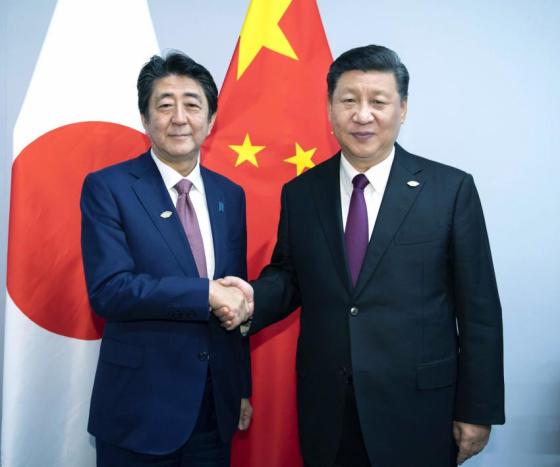
Abe asks Xi to lift Japan food import ban following nuclear disaster
In rural towns like Shikoku’s Ikata, the Japanese nuclear industry is making a quiet comeback

China lifts ban on Niigata rice in place since nuclear disaster

Nuclear plants must take threat of volcanic ash more seriously

If USA dumps the Intermediate-Range Nuclear Forces Treaty (INF) – Putin threatens arms race
Putin threatens arms race if US dumps nuclear treaty https://www.theguardian.com/world/2018/dec/05/putin-threatens-arms-race-if-us-dumps-nuclear-treaty – Andrew Roth in Moscow
Russia would also build new medium-range missiles if the US were to do so, says president
Vladimir Putin has threatened that Russia will develop new missiles banned by the intermediate-range nuclear forces treaty if the US exits the pact and pursues an arms buildup of its own.
The Russian president’s remarks came one day after the US secretary of state, Mike Pompeo, said Moscow was in “material breach” of the cold war-era treaty and issued a 60-day ultimatum for Russia to correct the alleged violations. Otherwise, he said, the US would quit the 1987 accord, considered a milestone in reducing the threat of a nuclear war in Europe.
In Moscow on Wednesday, Putin told journalists the US had provided “no evidence” of Russian violations, and threatened an arms race if the US sought to develop new medium-range missiles after exiting the treaty.
“Apparently, our American partners believe that the situation has changed so drastically that the US should also have such weapons,” Putin said in remarks carried by the Interfax news service. “What response is our side to give? A simple one: then we’ll do the same.”
The arms treaty, signed by Ronald Reagan and Mikhail Gorbachev, banned ground-launched missiles with a range between 500-5,500km. The US and Nato have said that tests of a new Russian cruise missile, designated 9M729, violate the treaty.
 The US effort to exit the treaty was spearheaded by John Bolton, Donald Trump’s hawkish national security adviser.
According to a leaked memo published by the Washington Post, Bolton has ordered the Pentagon to “develop and deploy ground-launched missiles at the earliest possible date”.
While it would take a substantial length of time to develop an entirely new missile, existing medium-range weapons in the US arsenal, such as sea-launched Tomahawk cruise missiles, could be adapted for ground launch more quickly, arms experts said.
However, Nato allies would have to agree unanimously to have any new missile deployed in Europe.
The standoff comes amid a buildup of Russian and Nato forces in Europe, including nuclear forces. Nato claims that Russia has deployed nuclear-capable missiles to Kaliningrad, and on Wednesday the Russian military confirmed it had deployed powerful new anti-ship missiles to Crimea following last month’s maritime clash with Ukraine.
UK tax-payers, not the nuclear industry, will pay for the new safeguards regime, post Brexit !
 ENDS Report 3rd Dec 2018 , Government confirms it will fund post-Brexit nuclear regime. The nuclear
industry will not have to fund the creation of a new safeguards regime
after Brexit, the Department for Business, Energy and Industrial Strategy
has confirmed.
https://www.endsreport.com/article/61622/government-confirms-it-will-fund-post-brexit-nuclear-regime
Nuclear companies think that Japan’s nuclear power plans are unrealistic

 50% in nuclear industry: Energy plan for 2030 is ‘unrealistic’ http://www.asahi.com/ajw/articles/AJ201812050032.html, By NORIYOSHI OHTSUKI/ Senior Staff Writer, December 5, 2018 Half of companies in the nuclear industry doubt the government’s goal of having nuclear power account for 20 to 22 percent of Japan’s energy supply by fiscal 2030, according to a survey.The reasons for their skepticism relate mainly to difficulties restarting or building reactors under stricter safety measures taken after the Fukushima nuclear disaster in 2011.
The survey was conducted in June and July by the Japan Atomic Industrial Forum, whose members include electric power companies that operate nuclear plants.
The forum contacted 365 companies in the nuclear industry, such as equipment manufacturers, and received responses from 254, or 70 percent.
According to the results, 50 percent of the companies said the government’s nuclear energy goal for fiscal 2030 is “unachievable,” compared with only 10 percent that said it is “achievable.” Forty percent said the attainability is “unknown.”
An estimated 30 reactors must be operating to reach the target, but the resumption of reactor operations has been slow since all of them were shut down after the triple meltdown at the Fukushima No. 1 nuclear power plant.
“Only nine reactors were restarted in the more than seven years after the accident in Fukushima,” Akio Takahashi, president of the forum and former senior official at Tokyo Electric Power Co., said at a news conference. “I guess respondents think it’s difficult (to achieve the goal) given the current pace (of the restarts).”
Tougher nuclear safety standards were set after the Fukushima disaster, forcing utilities to spend more on upgrading their reactors or keeping aging units operational.
Asked why they thought the government’s nuclear goal was unrealistic, 48 percent of the companies said, “There are no plans in sight to build or replace nuclear reactors.”
Thirty-three percent cited the delays in restarting idle reactors, while 16 percent said, “No progress can be seen in regaining trust from the public.”
Witness: Flynn said Russia sanctions would be ‘ripped up’
WASHINGTON — As President Donald Trump delivered his inaugural address on the steps of the U.S. Capitol in January, his new national security adviser, Michael Flynn, sent a text to a former business associate telling him that a plan to build nuclear power plants in the Middle East in partnership with Russian interests was “good to go,” according to a witness who spoke with congressional investigators.
Flynn had assured his former associate that U.S. sanctions against Russia would immediately be “ripped up” by the Trump administration, a move that would help facilitate the deal, the associate told the witness.
The witness provided the account to Rep. Elijah Cummings of Maryland, the ranking Democrat on the House Oversight and Government Reform Committee, who detailed the allegations in a letter Wednesday to the panel’s chairman, Rep. Trey Gowdy, Republican of South Carolina.
Cummings did not identify the witness, whom he described as a whistleblower. But he asked Gowdy to issue a subpoena to the White House for documents related to Flynn, saying the committee has “credible allegations” that Flynn “sought to manipulate the course of international nuclear policy for the financial gain of his former business partners.”
Robert Kelner, an attorney representing Flynn, declined to comment. White House lawyer Ty Cobb said, “I respectfully decline to comment on anonymous information which impacts the special counsel investigation.” He was referring to the ongoing inquiry on Russian interference in the 2016 presidential campaign.
World Bank funding for action on climate change, and for adaptation to climate change
 World Bank to raise $200 billion to fight climate change SBS News 4 Dec 18 The World Bank Group will spearhead a five-year, $200 billion investment to fight climate change. The World Bank has unveiled a $200 billion in climate action investment for 2021-25, adding this amounts to a doubling of its current five-year funding.
The World Bank said the move, coinciding with a UN climate summit meeting of some 200 nations in Poland, represented a “significantly ramped up ambition” to tackle climate change, “sending an important signal to the wider global community to do the same.”
Developed countries are committed to lifting combined annual public and private spending to $100 billion in developing countries by 2020 to fight the impact of climate change — up from 48.5 billion in 2016 and 56.7 billion last year, according to latest OECD data.
Southern hemisphere countries fighting the impact of warming temperatures are nonetheless pushing northern counterparts for firmer commitments.
In a statement, the World Bank said the breakdown of the $200 billion would comprise “approximately $100 billion in direct finance from the World Bank.”
Around one third of the remaining funding will come from two World Bank Group agencies with the rest private capital “mobilised by the World Bank Group.”……..
Much of the climate action financing is being set aside for reducing greenhouse gas emissions, notably through development of renewable energy strategies.
However, the World Bank stated that “a key priority is boosting support for climate adaptation,” given the millions of people already battling the consequences of extreme weather.
“By ramping up direct adaptation finance to reach around $50 billion over (fiscal) 21-25, the World Bank will, for the first time, give this equal emphasis alongside investments that reduce emissions,” the bank stated.
Given the urgency to act in the face of sea level rise, flooding and drought “we must fight the causes, but also adapt to the consequences that are often most dramatic for the world’s poorest people,” said World Bank CEO Kristalina Georgieva.
The countries whose representatives are meeting at the UN climate summit which opened Sunday in the Polish city of Katowice are seeking to make good on commitments made in the 2015 Paris climate accord.
That agreement saw countries commit to limiting global temperature rises to well below two degrees Celsius and to the safer cap of 1.5C if at all possible. https://www.sbs.com.au/news/world-bank-to-raise-200-billion-to-fight-climate-change
Grim warning from David Attenborough on climate – he urges world leaders to LEAD
 Our greatest threat’: David Attenborough’s grim warning on climate Naturalist David Attenborough has told delegates at a UN conference the world is facing the end of civilisation if it does not unite to tackle climate change. SBS News, 4 Dec 18 British broadcaster and environmentalist David Attenborough has urged world leaders, meeting in Poland to agree ways to limit global warming, to get on and tackle “our greatest threat in thousands of years”.Known for countless nature films, Attenborough has gained prominence recently with his Blue Planet II series, which highlighted the devastating effect of pollution on the oceans.
Leaders of the world, you must lead,” said the naturalist, given a “People’s seat” at the two-week UN climate conference in the Polish coal city of Katowice alongside two dozen heads of state and government.
“The continuation of our civilisations and the natural world upon which we depend, is in your hands,” he said.
“Climate change is running faster than we are and we must catch up sooner rather than later before it is too late.”
Attenborough told the delegates: “Right now, we are facing a man-made disaster of global scale. Our greatest threat in thousands of years. Climate Change.”……….
Representatives of some of the most powerful countries and biggest polluters were conspicuous by their absence, and the United States is quitting the UN climate process.
To maximise the chances of success in Poland, technical talks began on Sunday, a day early, with delegates from nearly 200 nations debating how to meet the Paris target of limiting global warming to between 1.5 and 2.0 degrees Celsius (2.7 and 3.6 Fahrenheit).
Michal Kurtyka, Poland’s deputy environment minister and president of the talks, said that without success in Katowice, Paris would not be a success, as it had only decided what was needed, not how it could be done.
Moreover, the wider political environment had changed.
“The wave of optimism and global co-operation that carried us to and through Paris has now crested, broken and is now tumbling,” he told delegates. https://www.sbs.com.au/news/our-greatest-threat-david-attenborough-s-grim-warning-on-climate
Molten salt nuclear reactors not commercially viable, but useful for military
 the decision to pursue Molten Salt Nuclear Reactors (MSRs )may not be based on market laws. For MSRs to succeed, they will likely be developed with appropriate political support and military funding.
If a nation wants an unlimited power supply for cutting-edge military technologies, then the MSR is indeed a very good candidate.
small modular reactors fitted with MSR technology could effectively supply electricity at remote military bases.
When a technology has some potential, the military sector can provide appropriate funding to quickly prototype products, which won’t necessarily have commercially viable features
Molten Salt Reactors: Military Applications Behind the Energy Promises, POWER,12/02/2018 | Jean-Baptiste Peu-Duvallon The commercial nuclear power sector has evolved with great help from the military-industrial complex. Research and development funded for the purpose of national defense has resulted in advances directly applicable to the power industry. For molten salt reactor designs to succeed, political support and military dollars may again be necessary.
Observers of the energy sector have likely noticed a growing interest worldwide in small modular molten salt reactor (MSR) concepts. North American companies such as Terrestrial Energy, Southern Company, and TerraPower are working to industrialize designs (Figure 1), while the Shanghai Institute of Applied Physics recently received $3.3 billion from the Chinese central government to build an MSR complex in the Gobi Desert.
……… under the leadership of its director Alvin M. Weinberg, the Oak Ridge Laboratory pursued the concept for civilian applications with the construction of a 7.4-MWth MSR, which operated for five years before being permanently shutdown in 1969. The reason testing was stopped was mainly political, as the MSR experiment in Oak Ridge wasn’t providing enough workload to other laboratories, while at the same time research on fast-breeding reactors was ramping up, requiring the engagement of more and more resources .
It was not only political, however. While the MSR concept is quite simple on paper, its industrialization is quite complex. Because the coolant is a mixture of chemicals rather than water, it provokes the release of significant quantities of tritium, which must be removed continuously. It generates other issues too, such as speedy corrosion of standard alloys, and also core lifetime issues when the coolant is moderated with graphite.
Because no MSRs have operated after the early 1970s, none of the technical solutions currently proposed to solve the outstanding issues have actually been tested. Still, new MSR projects are suddenly popping up for two main reasons: the Fukushima events and re-emerging military needs. …….
Nuclear Power in the New Weapons Race. MSRs have also gotten renewed interest following significant evolutions in military affairs. Indeed, since 2010, the U.S. military has started to deploy effective defense systems against ballistic missiles. In turn, it encourages rival powers to develop alternatives for their deterrence such as extreme-range hypersonic vehicles and low-altitude supersonic missiles.
During a speech to the nation on March 1, 2018, President Vladimir Putin revealed to the world the Russian ambition of extreme endurance. “We’ve started the development of new types of strategic weapons that do not use ballistic flight paths on the way to the target,” he said. “One of them is creation of a small-size highly powerful nuclear power plant that can be planted inside the hull of a cruise missile identical to our air-launched X-101 or the United States’ Tomahawk, but at the same time is capable of guaranteeing a flight range that is dozens of times greater, which is practically unlimited,” Putin added.
Beyond postures and statements, however, it seems there is still some work to be done. It has been reported that all flight tests of this new cruise missile resulted in short-term crashes.
Also, since the emergence of China as a military power, the probability of a high-intensity conflict in the Asia-Pacific region is growing. In such a case, the control over the vastness of the Pacific Ocean will be the aim of each party. Extreme ranges and endurance would be a key advantage for a potential winner.
If a nation wants an unlimited power supply for cutting-edge military technologies, then the MSR is indeed a very good candidate. As previously explained, the high temperature generated by an MSR makes it well-suited for airborne operations, while much more compact than a PWR for other applications. The advent of unmanned vehicles also makes the use of MSR technology easier, because radiation shielding requirements become far less stringent with no crew.
To counter the threat of new hypersonic vehicles currently under development, armies are again launching research for directed-energy weapons, such as high-energy lasers, which require huge power supplies to run efficiently. Finally, small modular reactors fitted with MSR technology could effectively supply electricity at remote military bases.
Although these military applications may sound like science fiction, one past example demonstrates the definitive military advantage procured by a high-temperature reactor over a PWR: the development of Alfa class submarines (Figure 4) in the Soviet Union in the 1960s. The Alfa-class submarine is still today considered the fastest, deepest, and most-agile nuclear submarine ever built. Its deployment resulted in the urgent design and manufacture of faster NATO torpedoes, like the U.S. Mark 48 Advanced Capability (ADCAP) or British Spearfish, to counter something that was virtually invulnerable when first put in service.
What made the Alfa possible? A lead-bismuth-cooled fast reactor, which shares the same main feature of the MSR: high temperature delivery, resulting in a high-power-density design, enabling a small, light, and powerful reactor for the submarine. However, as at ambient temperature the high-density lead-bismuth would freeze, the quayside maintenance operations aimed at preventing any irremediable core damage due to coolant freezing were very complicated and costly. While lead-bismuth and molten-salt reactors share many common points, MSRs are less costly and more easily maintainable.
Developing Viable MSR Designs
In France, the energy sector has not shown interest in MSR technology, as its current PWR fleet delivers competitive energy while achieving a very high level of safety. Furthermore, new PWR designs (EPRs) are intrinsically much safer than the Fukushima GE Mark I, which was designed in the 1960s.
MSRs are not just a different design, however; they are a different sector. MSR developers must essentially start from scratch with dedicated codes and regulations, dedicated licensing processes, dedicated fuel production facilities, dedicated reactors with dedicated highly trained operators, and dedicated waste reprocessing plants. Nonetheless, the decision to pursue MSRs may not be based on market laws. For MSRs to succeed, they will likely be developed with appropriate political support and military funding.
When a technology has some potential, the military sector can provide appropriate funding to quickly prototype products, which won’t necessarily have commercially viable features but will provide the groundwork for further refinement. Then, step by step, the remaining short-comings will be overcome to make a practical product for commercial operation. ■
—Jean-Baptiste Peu-Duvallon is a French nuclear energy professional with nearly 15 years of experience on several major construction projects. correct https://www.powermag.com/molten-salt-reactors-military-applications-behind-the-energy-promises/?pagenum=1
Japan to scrap Turkey nuclear project
 Post-Fukushima safety measures doubled costs for Mitsubishi and partners Nikkei Asain Review
The increase was due to heightened safety requirements in the wake of the 2011 meltdown at Japan’s Fukushima Daiichi nuclear power plant. The recent fall in the Turkish lira has also contributed to the cost increases.
The decision to cancel the project, now in final negotiations among the parties, comes as a blow to Japan’s nuclear industry, which is looking for avenues for growth overseas as it becomes increasingly unlikely that a new plant will be built at home post-Fukushima.
The Japanese and Turkish governments agreed in 2013 on the project, with an alliance of Japanese and French businesses centered on Mitsubishi Heavy to build four reactors in the city of Sinop on the Black Sea. Initial plans had construction beginning in 2017, with the first reactor coming online in 2023………
In 2017, global investment toward building new nuclear projects plunged roughly 70% year on year to $9 billion, according to the International Energy Agency. With safety costs rising, nuclear has grown less competitive with other forms of energy.
A number of aging Japanese reactors are set to be decommissioned soon, with Kansai Electric Power planning to scrap the Nos. 1 and 2 reactors at its Oi plant in Fukui prefecture, and Tohoku Electric Power the No. 1 unit at a plant in Miyagi Prefecture’s Onagawa. Meanwhile, new nuclear projects have hit a standstill in the face of deep public wariness. https://asia.nikkei.com/Economy/Japan-to-scrap-Turkey-nuclear-project
Taiwan Votes to Maintain Import Ban on Fukushima Food Imports
  While Fukushima suffered a blow, trade ties between Japan and Taiwan avoided any major impact. The Diplomat , By Thisanka Siripala, December 03, 2018 On Friday, Japan and Taiwan signed off on five bilateral trade pacts just days after Taiwan voted in a referendum to uphold an import ban on agricultural products from areas surrounding the Fukushima nuclear fallout. |
|
Dark money, so-called “independent” Nuclear Matters, Georgia’s Public Service Commission and regulatory capture

 The fight over a Georgia nuclear plant shows we need to ban dark money https://www.theguardian.com/commentisfree/2018/dec/03/the-fight-over-a-georgia-nuclear-plant-shows-we-need-to-ban-dark-money,
More than $1m of industry funding is being funnelled into a runoff election to decide who pays for a power company’s botched project – shareholders or the people?
This is a convoluted tale of secret corporate money in politics, the capture of regulators by those they are meant to regulate, incompetence, and greed.
We learned this week that more than $1m in dark money – secretly sourced political spending – is pouring into Tuesday’s runoff election for Georgia’s Public Service Commission (PSC).
The PSC is powerful; by setting rates it determines how much Georgians pay for electricity each month, and among its mandates is to safeguard the public interest by regulating Georgia’s energy industry.
But PSC elections have tended to fly under the radar, and they’ve long been dominated by candidates vetted and approved by Georgia Power – Georgia’s monopoly energy company – and its owner, the Southern Company.
So what’s with all the dark money this time around?
There are four key players in this drama: the Southern Company, which owns Georgia Power; a political committee called “Georgians for a Better Future”; a lobbying group called Nuclear Matters; and a powerful trade group called the Nuclear Energy Institute.
Spending these unprecedented sums in support of the incumbent Republican commissioner, Chuck Eaton, is “Georgians for a Brighter Future”, established just weeks ago for the specific purpose of intervention in our PSC runoff, in which Eaton faces a vigorous challenge from the Democratic rising star Lindy Miller.
Just three weeks into its existence, “Georgians for a Brighter Future” has been lavishly and swiftly funded for this mission by Nuclear Matters, the Washington-based “non-profit” that lobbies for the nuclear energy industry.
Thanks to America’s corrupted campaign finance laws, Nuclear Matters’ funders are secret. But the likely sponsors are not hard to establish. Nuclear Matters itself is an arm of the Nuclear Energy Institute, the nationwide nuclear industry’s trade association (we used to call them cartels), funded in part by the Southern Company.
Georgia Power’s CEO, Paul Bowers, is on Nuclear Matters’ board of directors. Former Georgia PSC chairman and diligent industry servant Stan Wise sits on its “advocacy council”. So does University of Georgia professor David Gattie, who provides consistent academic cover for Georgia Power’s business agenda and has not to my knowledge disclosed whether he receives industry funding.
Wise, according to reporting in The Atlanta Journal-Constitution, “resigned [from the PSC] earlier this year but hung on to his post long enough to join Eaton and three other members in green-lighting Georgia Power’s plan to continue construction on two new nuclear reactors at Plant Vogtle, a project now running five years behind schedule with billions of dollars in cost overruns.”
Here the purpose of this dark money assault on Georgia voters becomes clearer.
Plant Vogtle is Georgia Power’s – and therefore the Southern Company’s – nuclear power station in eastern Georgia. In 2013 the Southern Company began construction of two new reactors at Vogtle, backed by $8.3bn in federal loan guarantees.
Then the Southern Company proceeded to botch the project. Now years behind schedule and billions over budget, we face a classic political dilemma: who will pay? Georgia Power, the Southern Company, and their shareholders? Or Georgia Power’s customers – the people?
Not surprisingly, the Southern Company is determined that Georgia’s energy consumers – “ratepayers” – should pay for billions in cost overruns. Under our country’s perverse rules of corporate governance, this is, I suppose, rational. The alternative is that their shareholders and executives take a haircut.
Enter Democrat Lindy Miller, the first-time candidate, who fought her way against the odds into this runoff. Miller is no opponent of nuclear energy and she supports continued construction of Plant Vogtle to deliver cheap energy to Georgia without massive greenhouse gas emissions. She just doesn’t think Georgia ratepayers should pay for the Southern Company’s gross failure to meet a budget or a schedule.
It seems that’s just not acceptable to the Southern Company. As with the investment bankers and rating agencies who were bailed out despite their responsibility for the 2008 financial crisis, the Southern Company wants the public to bear the cost of its malpractice.
So we see this massive, 11th-hour political intervention in support of Eaton, the Southern Company’s chosen candidate. Why? Because he will reliably vote to saddle Georgia’s teachers, firefighters, veterans, retirees and working families with higher energy bills to bail out his powerful benefactors.
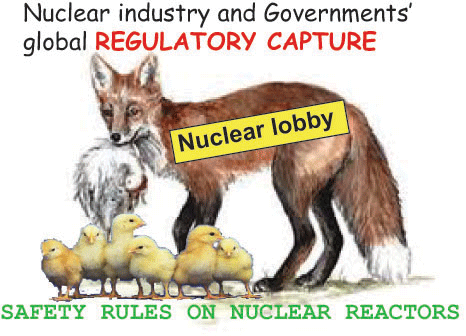 This story presents a microcosm of much that is wrong with American politics. The Southern Company’s dominance of Georgia’s PSC is what policy nerds call “regulatory capture”. With a relatively modest investment of millions, this multibillion-dollar industry is attempting to buy a seat on the public body that regulates it, even though Georgia law nominally forbids regulated entities from funding candidates for regulatory offices.
This money, like so much political spending, is laundered through a series of lobby groups and “non-profits” to obscure its origins and the agenda behind it. Dark money political spending, which is meant to mislead the public and serves only the interests of concentrated corporate power, should be banned by Congress and state legislatures.
It’s worth recalling that the Southern Company in its present form was born of trust-busting action ordered by the United States Congress. In 1947, its parent company, Commonwealth & Southern Energy, was dissolved by the Securities and Exchange Commission under the anti-trust authority of the Public Utility Holding Company Act. So the Southern Company as we know it now was born, ironically, of anti-trust action.
Fast-forward 71 years. Unrestrained corporate consolidation is once again crushing consumers and competitors in nearly every major sector of the US economy, while behemoth firms and trade groups wield virtually limitless political power. The Southern Company, the monopoly power giant, would force citizens to subsidize its own inefficiency, and they’re using their financial and political muscle to buy this seat on the PSC and evade financial responsibility.
There are good arguments for scale in energy production. But perhaps it’s time to revisit the anti-trust victories of the early 20th century.
And ban dark money now.
1 This Month
Tell Congress: Prevent Nuclear Catastrophe in Iran

Tell Congress: Prevent Nuclear Catastrophe in Iran

Read the Public Inquiry Report, the Commissioners’ report, Surrendering Australia: The AUKUS Deception is available to download for free at aukuspublicinquiry.com. Or just watch the replay of the National Press Club Luncheon.


Shut down the radiation-damaged Heysham nuclear reactors now
To see nuclear-related stories in greater depth and intensity – go to https://nuclearinformation.wordpress.com

Say No to NASA’s Reckless Nuclear Reactor on the Moon
Say No to NASA’s Reckless Nuclear Reactor on the Moon
-
Archives
- November 2026 (246)
- October 2026 (302)
- September 2026 (339)
- August 2026 (330)
- July 2026 (355)
- June 2026 (287)
- May 2026 (306)
- April 2026 (356)
- March 2026 (251)
- February 2026 (267)
- January 2026 (308)
- December 2025 (358)
-
Categories
- 1
- 1 NUCLEAR ISSUES
- business and costs
- climate change
- culture and arts
- ENERGY
- environment
- health
- history
- indigenous issues
- Legal
- marketing of nuclear
- media
- opposition to nuclear
- PERSONAL STORIES
- politics
- politics international
- Religion and ethics
- safety
- secrets,lies and civil liberties
- spinbuster
- technology
- Uranium
- wastes
- weapons and war
- Women
- 2 WORLD
- ACTION
- AFRICA
- Atrocities
- AUSTRALIA
- Christina's notes
- Christina's themes
- culture and arts
- Events
- Fuk 2022
- Fuk 2023
- Fukushima 2017
- Fukushima 2018
- fukushima 2019
- Fukushima 2020
- Fukushima 2021
- general
- global warming
- Humour (God we need it)
- Nuclear
- RARE EARTHS
- Reference
- resources – print
- Resources -audiovicual
- Weekly Newsletter
- World
- World Nuclear
- YouTube
-
RSS
Entries RSS
Comments RSS

