Flawed arguments in nuclear industry’s push to be seen as climate change solution
| Should We Subsidize Nuclear Power to Fight Climate Change? https://blogs.scientificamerican.com/observations/should-we-subsidize-nuclear-power-to-fight-climate-change/ That’s what some are advocating, but the arguments in favor of doing so are flawed By M. V. Ramana on December 3, 2018 Last month, the Union of Concerned Scientists (UCS) put out a reportentitled The Nuclear Power Dilemma: Declining Profits, Plant Closures, and the Threat of Rising Carbon Emissions that calls for offering subsidies to unprofitable nuclear power plants. Not surprisingly, it has been widely welcomed by nuclear advocates, who interpret the report as essentially saying “yes to nuclear power” in order to reduce carbon emissions. But that interpretation misses the many important but less prominent insights in the UCS report. Nuclear power plants are associated with significantly less carbon dioxide emitted per unit of electricity produced when compared to fossil fuel plants, even when including the emissions associated with the fuel chainrequired to generate nuclear energy. Therefore, the report’s basis for argument—if utilities were to replace “existing nuclear plants with natural gas and coal rather than low-carbon sources,” then it would compromise “our ability to achieve the deep cuts in carbon emissions” (p. 1)—is obvious. Whether nuclear plants would be replaced by fossil fueled plants is questionable. Nuclear plants are hugely expensive, and it has been known for a while that they are not an economically competitive choice. Thus, building new nuclear plants makes no sense. In the UCS report too, the power planning model used does not recommend constructing new nuclear plants, even at the highest assumed price of carbon. The authors, unfortunately, do not highlight this outcome of their modeling, sidestepping its implications by not “assessing the potential role of new nuclear plants in meeting long-term emissions reduction targets” (p. 12). For decades, nuclear advocates had a comforting response: although expensive to build, nuclear plants are cheap to operate and profitable in the long run. That is no longer true. Several nuclear plants have been shut down because the utilities operating them are losing money. As shown by the UCS report and similar studies, many more are likely to be shuttered. So, the question in essence is how to deal with a dying source of electricity generation in the United States. Globally, the share of nuclear energy in the world’s electricity generation has been declining continuously since 1996. The UCS report is a plea to keep the nuclear industry on life support by states providing subsidies to nuclear power plants that are not profitable, provided the operators of the nuclear plants and the states play by some rules. Regardless of these subsidies, it remains the case that over the next few decades, the reactor fleet will have to be retired. Some of these reactors are nearly half a century old, and some have a checkered past. Many others have demanded that states subsidize nuclear plants, and there is even a tool kit to help plant owners to continue profiting at public expense. It is the imposition of various requirements that distinguishes the UCS report from the rest of the chorus—and unfortunately the media has by and large highlighted the call for subsidies without the conditions. The conditions are: “Require plant owners to open their financial books and demonstrate need”; “make financial support for distressed plants temporary [and] periodically assess whether continued support is necessary and cost effective”; “Ensure that qualifying plants maintain strong safety performance”; “Strengthen renewable energy and efficiency standards”; “Develop transition plans for affected workers and communities”; and state “requirements [on resources subject to state jurisdiction, such as the use of local water supplies for cooling and the impact of cooling-water discharges] need to be vigorously enforced”. These requirements are not easy to meet, and other proponents of nuclear subsidies are, in some cases, undermining them. The Nuclear Energy Institute “has proposed merging the highest and second-highest safety ratings”—measures of plant safety produced by the Nuclear Regulatory Commission—which “would effectively render the rating meaningless” (p. 24). In Connecticut, the Millstone nuclear plant’s “owner refused to make a disclosure” when seeking subsidies (p. 41). These subsidies are being offered to an industry that has profited enormously in the past from direct and indirect subsidies. As the Illinois attorney general explained, current subsidy demands “amount to a third round of subsidies for these plants.” Let us return to the most basic assumption needed for the argument for subsidies to stick, namely that utilities would replace shut down nuclear plants with fossil fueled plants. This is possible but by no means necessary, especially with continued falling costs for renewable energy and storage technologies. The energy industry is changing so rapidly that what the UCS report attempts, to forecast costs and plan over multi-decadal periods, is all but impossible to do with any degree of certainty. Further, the report’s inputs to the electricity planning model are already outdated. For example, the central cost figures it uses for nuclear reactor costs are significantly lower than the costs of the two reactors currently being constructed in the state of Georgia. In contrast, costs of solar PV plants and wind turbines are significantly higher than the most recent numbers. Renewables are not just getting cheaper, they are also quick to construct. All these factors undermine the report’s central assumption that nuclear plants will be replaced by fossil fueled plants. To be fair, the UCS report does call for periodically assessing whether continued support is necessary and cost effective. But such support might already not be cost effective. All told, the economic basis for subsidies is uncertain at best; more likely, it is flawed. Either way, it may be best to get onward with the transition from fossil fuels and nuclear power to renewables. |

Radiation Free Lakeland investigates radioactive beach, while Cumbrian media doesn’t bother to
 Radiation Free Lakeland 2nd Dec 2018 Is it OK to have Radiocaesium and Transuranics in a Childrens Play Area on the Beach? Last thursday Radiation Free Lakeland were invited to Cleator Moor Civic Hall for the West Cumbria Site Stakeholder meeting (Environment and Health). We have deliberately shunned these meetings thinking that they are PR exercises for the industry. The meetings are billed as a way of holding the industry and regulators to account but our experience on thursday confirmed our suspicions. We were invited to the meeting to make a presentation on our citizen science project
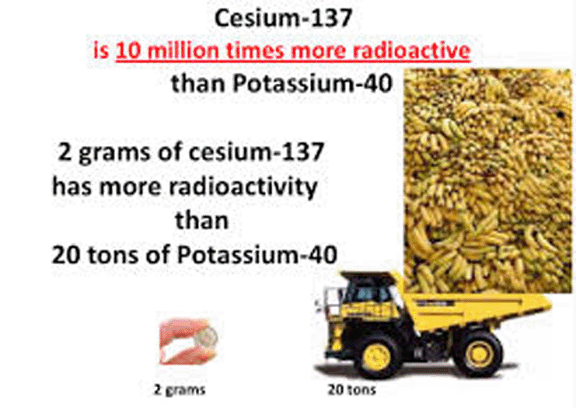 with nuclear science students in the US. We had been sending samples to the US from the whole of the Cumbrian coast for over a year. The US undergraduate student’s findings shocked us. A full third of the samples taken were contaminated with material that can only have come from decades of Sellafield’s reprocessing.
At the meeting we listened from 1pm to 4pm to the industry and the regulators congratulate themselves endlessly for “reducing emissions” (continuing piling on the crapola in word and deed) and then we got a chance to make the 15 minute presentation at 4pm. There was no press in the room. We had told them we would be there but apparently they never bother going, instead they prefer to wait for Sellafield’s press release. The chair of the meeting was clearly biased in favour of the industry and even went so far at the end of the meeting to say that “if
only you came and listened and understood more the gap between us (!) would be bridged”. I took that to mean that if we were only browbeaten enough we would learn to love Nukiller Big Brother and not hold them to account with our pesky questions. There are not enough people holding the nuclear industry to account. That much is clear. The plan revealed from Sellafield is that they intend to reduce the beach monitoring and retrieval of radioactive particles even further to a nominal “reassurance” monitoring.
https://mariannewildart.wordpress.com/2018/12/02/is-it-ok-to-have-radiocaesium-and-transuranics-in-a-childrens-play-area-on-the-beach/ |
Guardian newspaper has, unfortunately, helped false propaganda against Julian Assange
Indeed, we could see those articles as pivotal in the current hostile environment against Assange; the purpose of which is presumably to prepare the way for the extradition of Assange to the US. Meanwhile, the Mueller inquiry into alleged links between US president Donald Trump and Russia – and Assange – is gaining headlines on an almost daily basis. And there is evidence that Assange has been secretly indicted and that an extradition request is imminent.
In such an environment, media outlets must provide hard evidence to substantiate allegations, and not simply fall back on anonymous ‘sources’ (usually code for spooks). The people these allegations target deserve better, and so do readers
 Former diplomat challenges ‘fake’ Guardian claims about Julian Assange meeting Paul Manafort The Canary 3rd December 2018 A former consul and first secretary at the Ecuadorian Embassy in London has spoken out against a “fake story” from the Guardian. Speaking to The Canary, Fidel Narváez insisted that the claim that former Trump campaign manager Paul Manafort met with WikiLeaks founder Julian Assange is entirely false.
Link between 1979 Three Mile Island nuclear accident and thyroid cancer cases
|
New PSU study links 1979 TMI accident to thyroid cancer
The study marks the first time the partial meltdown can be connected to specific cancer cases, the researchers have said. The findings may pose a dramatic challenge to the nuclear energy industry’s position that radiation released had no impact on human health. The study was published Monday in the medical journal Laryngoscope, one day before Exelon Corp. announced that Three Mile Island would close in 2019. It’s likely to come as another blow to a nuclear power industry already struggling to stay profitable. Exelon officials declined to comment on the findings, pointing out that it doesn’t own the damaged reactor and wasn’t running the plant during the accident……. thyroid cancer caused by low-level radiation has a different “mutational signal” than most thyroid cancer, Goldenberg said. He and his colleagues used molecular research that had been pioneered after the Chernobyl nuclear disaster to find that genetic signal. ….. The next step is to expand the study by tapping into resources from other regional hospitals, he said. The study contradicts conclusions about Three Mile Island held by many nuclear energy proponents, including the Nuclear Regulatory Commission. …… https://www.ydr.com/story/news/2017/05/31/psu-study-links-1979-tmi-accident-thyroid-cancer/358027001/ |
|
|
What will ratepayers have to pay to resolve fight over failed V.C. Summer nuclear project?

Dominion wants a deal to end the SC nuclear fight. Here’s what it could cost ratepayers. By Andrew Brown abrown@postandcourier.com, Dec 3, 2018 COLUMBIA — For 15 days, South Carolina’s utility regulators reviewed testimony and sorted through mountains of evidence on the failed V.C. Summer nuclear project in order to decide how much S.C. Electric & Gas customers should pay for two unfinished reactors.
But as the high-stakes hearing wrapped up last week, the utility regulators were asked to consider one more thing.
Dominion Energy wanted the commissioners to review a new offer that would allow the Virginia-based energy company to seal its proposed takeover of SCE&G’s parent, SCANA Corp. It was the third plan Dominion pitched to regulators.
- Less than four days later, SCANA announced another deal — this time with several law firms that were suing the company in a class action lawsuit on behalf of SCE&G ratepayers. That legal settlement threw support behind Dominion’s plans in the state Public Service Commission and is contingent upon the regulators giving the utilities what they want.
- With a decision from regulators due by Dec. 21, here’s some explanation of what this dual settlement offer could mean for ratepayers, who have already dumped more than $2 billion into the abandoned nuclear project and who face paying more in the future.
- What does Dominion’s latest offer in the Public Service Commission include?
- The initial plan from Dominion called for the average SCE&G ratepayer to receive a roughly $1,000 refund check but required customers to pay another $3.8 billion for the reactors.
- Dominion has since offered to do away with the refund checks if the utility commissioners don’t like the idea. Instead, the company offered to further reduce how much customers pay for the abandoned reactors moving forward.
- Under the more recent plan, residential and business ratepayers would be required to pay another $2.3 billion for the reactors over the next two decades. ………
- What other plans are the state’s utility regulators considering?
- The Office of Regulatory Staff is sticking to its plan. Customers will still have to pay for the reactors moving forward, due to the 2007 state law that allowed SCE&G to charge customers in advance for the project.
- But under the utility watchdog’s plan, the average residential ratepayers would kick in a little more than $5 per month for the failed project.
- Overall, all SCE&G’s customers will pay back $1.7 billion over the next two decades under that plan, according to the Office of Regulatory Staff. ……..
- What does the new settlement in the class action lawsuit do?
- The press release announcing the pending legal settlement mentioned $2 billion in rate relief for SCE&G customers. But that money was already part of the deal that Dominion put forward in the Public Service Commission.
- In reality, SCANA and the trial attorneys representing SCE&G ratepayers plan to settle the high-stakes case for $115 million, which matches the money set aside in golden parachutes for SCANA executives let go after the Dominion sale, and whatever money can be made from the sale of several SCANA properties, including an office in downtown Charleston.
- ………… https://www.postandcourier.com/business/dominion-wants-a-deal-to-end-the-sc-nuclear-fight/article_93463a28-f3e5-11e8-b9bd-9b4df318cd08.html
Taiwan doesn’t know what to do with radioactive trash, so decommissioning of 1st nuclear power plant is delayed
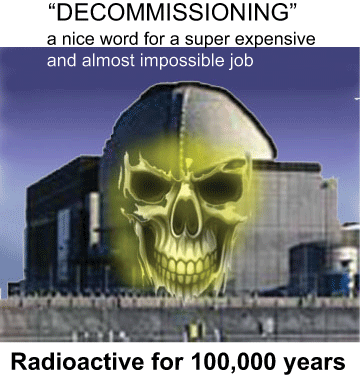 Decommissioning of 1st nuclear power plant facing major delay Focus Taiwan 2018/12/03 Taipei, Dec. 3 (CNA) By Elizabeth Hsu Taiwan is scheduled to begin decommissioning the first reactor of its oldest nuclear power plant in New Taipei on Dec. 5 after 40 years of service, but the deadline will not be met because of questions over how to deal with the plant’s nuclear waste.
The plan to decommission the two reactors in the Jinshan Nuclear Power Plant included the construction of an outdoor storage yard at the plant site for the dry storage of spent nuclear fuel.
The facility was built in 2013 but has yet to pass a New Taipei government inspection needed to obtain an operating permit, leaving the decommissioning process in limbo.
Hsu Tsao-hua (徐造華), a spokesman for Taiwan Power Company (Taipower), which runs Taiwan’s three nuclear power plants, said that if the storage facility cannot be used, the 816 fuel rods still in the Jinshan plant’s first reactor will have to stay where they are, and the plant’s safety equipment will have to be kept running.
Though the company has planned an indoor storage facility, it will take at least 10 years to build, which could delay the decommissioning process by at least a decade, Hsu warned………..
The thorny spent fuel storage and EIA review issues that will cause the Jinshan plant to miss the scheduled deadline come down to politics, and at least to some extent to the New Taipei government’s attitude on the issue.
New Taipei Mayor Eric Chu (朱立倫) of the opposition Kuomintang (KMT) has declared that his city “can never be the permanent storage place for nuclear waste.”
His position has been at odds with the general stance of his party, which advocates the use of nuclear power as the country moves toward its ultimate goal of becoming a nuclear-free homeland. ……
“Nuclear waste represents pain in the heart of New Taipei (citizens),” said Hou, after the city has co-existed with two nuclear power plants for nearly four decades.
He also argued that nuclear waste should never be stored in a heavily populated city, and he urged the central government and Taipower to find a permanent storage location as soon as possible, a mission the utility has struggled with for years.
New Taipei is the most populous city in Taiwan with a population of 3.99 million as of November, government statistics show.
Even if the decommissioning of the Jinshan power plant were to start on time, it would still be a long process.
Under Taipower’s plan, it would involve eight years to shut the plant down, 12 years to dismantle it, three years to inspect its final condition and two years to restore the land. http://focustaiwan.tw/news/aeco/201812030020.aspx
U.N Climate Conference – but the climate future is grim

Portrait of a planet on the verge of climate catastrophe As the UN sits down for its annual climate conference this week, many experts believe we have passed the point of no return, Guardian, by Robin McKie, 2 Dec 18
On Sunday morning hundreds of politicians, government officials and scientists will gather in the grandeur of the International Congress Centre in Katowice, Poland. It will be a familiar experience for many. For 24 years the annual UN climate conference has served up a reliable diet of rhetoric, backroom talks and dramatic last-minute deals aimed at halting global warming.
But this year’s will be a grimmer affair – by far. As recent reports have made clear, the world may no longer be hovering at the edge of destruction but has probably staggered beyond a crucial point of no return. Climate catastrophe is now looking inevitable. We have simply left it too late to hold rising global temperatures to under 1.5C and so prevent a future of drowned coasts, ruined coral reefs, spreading deserts and melted glaciers.
One example was provided last week by a UN report that revealed attempts to ensure fossil fuel emissions peak by 2020 will fail. Indeed the target will not even be reached by 2030. Another, by the World Meteorological Organization, said the past four years had been the warmest on record and warned that global temperatures could easily rise by 3-5C by 2100, well above that sought-after goal of 1.5C. The UK will not be exempt either. The Met Office said summer temperatures could now be 5.4C hotter by 2070.
At the same time, prospects of reaching global deals to halt emissions have been weakened by the spread of rightwing populism. Not much to smile about in Katowice.
Nor will the planet’s woes end in 2100. Although most discussions use the year as a convenient cut-off point for describing Earth’s likely fate, the changes we have already triggered will last well beyond that date, Continue reading
Why nuclear power is a hindrance, not a help, to climate change action

nuclear emits twice as much carbon as solar PV and six times as much as onshore wind.
Beyond Nuclear, 2 Dec 18 Nuclear power has no constructive role to play in climate change solutions. In fact, it is a hindrance.
Nuclear power does have a carbon footprint When nuclear power is said to have “zero emissions,” this refers only to the electricity generation phase and only to greenhouse gas emissions. There are emissions at this stage, especially heat and radioactivity. Certain emissions during reactor operations, such as carbon-14 in CO2 form and methane, are greenhouse gases.
However, there are plenty of carbon emissions involved in making a nuclear power plant a reality. Therefore, when discussing the carbon footprint of nuclear energy compared to other energy forms, the entire uranium fuel chain needs to be taken into account. In doing so, nuclear energy compares poorly to renewable energy and energy efficiency. Lifecycle emissions along the nuclear fuel chain occur through uranium mining and milling, transportation, plant construction, operation, reactor site decommissioning, and nuclear waste management.1
Life-cycle carbon emissions of a nuclear power plant When taking into account planning, permitting, construction, operation, refurbishing and decommissioning, a nuclear power plant emits at least 6-24 times more carbon-dioxide equivalent emissions than wind per unit energy produced over the same 100-year period.2
Life-cycle carbon emissions from the entire nuclear fuel chain How do we calculate this? Evaluating the total carbon output of the nuclear industry involves calculating emissions from every carbon-emitting phase of the uranium fuel chain, then dividing them by the electricity produced over the entire lifetime of the plant.3 Some of the most reliable analysis on this has been done by Dr. Benjamin Sovacool whose data we use here (see footnote 1).
Let’s take a look at the mean carbon emissions of each phase:
The entire uranium fuel chain. This includes every phase from uranium mining to decommissioning and waste management. 66 gCO2e/kWh. (StormSmith has 80-130 gram CO2/kWh.)4
» Uranium mining, milling, processing, refining and fuel fabrication. Calculations can vary depending on factors such as grade of uranium ore, energy source used to mine etc. 25.09g/kWh
» Construction of a nuclear power plant. This includes fabrication, transportation and use of materials. 8.20 g/kWh » Reactor operation and maintenance. 11.58g/kWh
» Radioactive Waste Management and storage. 9.20 g/KWh » Decommissioning. 12.01 g/KWh
Carbon emissions broken down by percentage Percentage of total carbon emissions released by each stage of the uranium fuel chain.
Uranium mining, milling, and enrichment: 38%
Construction: 13%
Operation (inc. backup diesel generators): 17%
Fuel processing and waste management: 14% Decommissioning: 18%
Life-cycle carbon emissions of the nuclear fuel chain compared to other resources
Scrubbed coal-fired plants: 960 gCO2e/kWh
Natural gas-fired plants: 443 gCO2e/kWh
Nuclear power plants: 66 gCO2e/kWh
Solar photovoltaic: 32 gCO2e/kWh
Onshore wind farms: 10 gCO2e/kWh
So nuclear emits twice as much carbon as solar PV and six times as much as onshore wind.
Here’s one way Sovacool sums it up:
“Every dollar you spend on nuclear, you could have saved five or six times as much carbon with efficiency, or wind farms.”
“Every dollar you spend on nuclear, you could have saved five or six times as much carbon with efficiency, or wind farms.”
1 https://www.sciencedirect.com/science/article/pii/S0301421508001997
2 https://web.stanford.edu/group/efmh/jacobson/Articles/I/15-12-30-ResponseHansen.pdf
Why France must shut down many nuclear reactors
Backstory: Macron To Close Multiple Nuclear Reactors, But Why Now? https://cleantechnica.com/2018/11/30/backstory-macron-to-close-multiple-nuclear-reactors-but-why-now/?fbclid=IwAR0tO9BXT4FaNEuhnwexaC6cf4V6jj6cJLnQeiZPdA91t7SrrmL5n7xtRHg November 30th, 2018 by Michael Barnard
President Emmanuel Macron of France depressed nuclear executives globally in late November 2018, announcing the planned retirement of 14 of 58 reactors by 2035. This was still less than was promised in his election campaign, but represents a major internal political battle, as well as a major change of France’s circumstances.
This has been an emerging story for several years.
 France did a better job than most of building nuclear plants. They picked a single design and built a bunch of them over a relatively concentrated 20 years from about 1978 onward. It was a massive, state-funded, state-managed energy infrastructure initiative at a scale rarely seen. They dodged a bunch of the mistakes of other geographies somewhat by accident. They aren’t subject to earthquakes or tsunamis. They kept the technology highly standard. They developed a skilled workforce for building them and rewarded them well.
But the last nuclear reactor went live almost 20 years ago, the oldest ones are at end-of-life, and the skilled workforce only knows how to maintain and operate existing reactors now, not build new ones. The current President of France, Macron, used to be the Minister of Industry. He’s stated publicly that even he couldn’t find out how much the build-out actually cost, with the clear assertion that a bunch of actual costs were hidden.
“Nobody knows the total cost for nuclear energy,” he said. “I was minister for industry and I could not tell you.”
And France had to build nuclear to be load-following due to its over-reliance on a more usually inflexible form of generation. Nuclear is good for baseload up to 30–40%, but when it has to be turned on and off it gets a lot more expensive very quickly. France has the good fortune to have been able to export a lot of electricity to the rest of the EU for several years, but the energy mix on the continent is strongly favoring more flexible forms of generation.
And now, a few things have changed in the decades since France made its huge bet on nuclear generation in the Messmer Plan in 1974.
Renewables are dirt cheap, with Lazard’s latest figures bringing them in at 3–6 times cheaper than new nuclear. (Amusingly, Lazard still labels wind and solar as ‘alternative energy‘.) Europe is a leading geography for wind and solar, so skilled trades and supply chains all exist. Europe’s grid has strengthened and expanded over the past 30 years, so the need for a country to go it alone has diminished substantially.
The EU was founded in 1993 and France is an integral part of it, and that has two impacts. The first is that France’s energy independence policy that was part of the impetus for a massive nuclear fleet looks archaic in context of modern politics and economics. The second is that EU regulations forbid destabilizingly large governmental subsidies for energy, something which the Hinkley plant in the EU had to fight through. As Macron’s experience shows, it’s actually impossible for anyone to figure out how much any nuclear plant actually cost due to budget fudging. This last is true globally, by the way.
French attempts to build next-generation reactors are failing in multiple locations in France and elsewhere. The cost and budget overruns and construction failures are staggering.
And Chernobyl and Fukushima both happened since the French nuclear build-out began. Public support diminished substantially after those events, one on the same continent and one a world away.
France receives a greater percentage of its electricity from nuclear than any country in the world, at 72% close to 50% more than its nearest ‘competitor’, Slovakia. And it will diminish over the coming decades. Its last-built reactor will reach end-of-life in 2040 or so. It’s unlikely that it will be replaced. And it’s unlikely that more than a fraction of the aging reactors will be refurbished at all.
Wind, solar, a continent-scale grid, and open economic borders all contributed to the death of the French nuclear dream. It’s time for France to wake up and join the future, and it has. It voted in Macron, a politician who promised to reduce France’s nuclear fleet. He fought the entrenched bureaucracy and EDF, and while the new plans are slower than the promised ones, they are the right plans on a pragmatic timeline.
Will 1000s of Small Nuclear Reactors, built super-fast, save the world from climate change?

Tom Burke 28th Nov 2018 , For nuclear power to play a significant role globally in dealing with climate change we would have to build enough of it, quickly enough, to replace coal first and then gas in a very short space of time. You do not have to know very much about the engineering requirements of a nuclear power station, or our actual experience in constructing them, to think that this is akin to believing in unicorns.
A relatively simple piece of arithmetic on the specialised resource requirements and the equally specialised engineering and project management skills of a nuclear programme, let alone required scale of public investment is enough to make
it clear that a massive policy commitment to new nuclear power will not help the world stay below 2°C.
What is the British Government up to? My guess it is looking for a lot more long grass as it seeks a way to get itself off the nuclear hook onto which it has impaled itself by listening to the lobbies and caring more about the headlines than the climate.
As it does so, it will big up the importance of SMRs as a future option. Oddly enough, its concept of an SMR will bear a striking resemblance to a submarine propulsion reactor and we will build one somewhere on an existing nuclear site. Electricity consumers will indeed end up subsidising the defence budget and nuclear power will go on having a locally negative impact on the environment that outweighs any of its marginal environmental benefits.
http://tomburke.co.uk/2018/11/28/the-future-of-nuclear-power-in-britain/
“Marking your own homework” – Britain’s plan for inspecting its own nuclear safeguards – Brexatom !

David Lowry’s Blog 1st Dec 2018 Imagine the British Foreign Office response if North Korea and Iran said they would comply with their nuclear safeguards and verification inspection obligations, but would conduct the inspections themselves!
But this week, this is just what the British Government has said to the world about its own new ‘mark-its-own-homework’ safeguards arrangements it has developed as part of Brexatom, the UK exit from the EU’s nuclear watchdog
body, Euratom.
http://drdavidlowry.blogspot.com/2018/12/nuclear-safeguards-hypocrisy-black-hole.html
Massive problem of USA’s high level nuclear waste – scientists struggling for a solution
 US nuclear waste dump capacity a challenge https://www.news.com.au/world/breaking-news/us-nuclear-waste-dump-capacity-a-challenge/news-story/69f13410922c5570e187c9e529a54ffd
If the plan were to be approved, the US Energy Department has estimated that it would take 31 years to dilute and dispose of the of weapons-grade plutonium.
The lack of space at the US government’s only underground nuclear waste repository is among several challenges identified by a group of scientists and other experts who are looking at the viability of disposing of weapons-grade plutonium at the desert location.
The National Academies of Sciences, Engineering, and Medicine released a preliminary report on the US government’s plan, which calls for diluting 34 metric tons of plutonium and shipping it to the Waste Isolation Pilot Plant in southern New Mexico.
The purpose of the work would be to satisfy a nonproliferation agreement with Russia.
Another challenge, the scientists say, would be getting officials in that country to approve of the dilution of the materials.
The pact between the two countries was initially based on a proposal for turning the surplus plutonium into fuel that could be used for commercial nuclear reactors. That project, beset by years of delays and cost overruns, was cancelled earlier this year.
The review of the plan that calls for shipping the plutonium to New Mexico was requested by Congress. A final report from the National Academies is expected mid 2019.
The US Energy Department’s Office of Environmental Management has demonstrated that diluting the plutonium is possible by working with a separate batch of material. However, citing a lack of information, the scientists did not study the agency’s ability to scale up that process to handle the 34 metric tons that are part of the nonproliferation agreement.
If the plan were to be approved, the Energy Department has estimated that it would take 31 years to dilute and dispose of all 34 metric tons.
The work would involve four sites around the US – the Pantex Plant in West Texas, the Savannah River Site in South Carolina, Los Alamos National Laboratory in northern New Mexico and the Waste Isolation Pilot Plant.
The panel of scientists found that the agency doesn’t have a well-developed plan for reaching out to those host sites and stressed that public trust would have to be developed and maintained over the life of the project.
Delay in compensation for NUCLEAR LAB EMPLOYEES WITH RADIATION-LINKED CANCERS
NUCLEAR LAB EMPLOYEES WITH RADIATION-LINKED CANCERS HAVE BEEN FORCED TO WAIT YEARS FOR POTENTIAL BENEFITS At the Los Alamos National Laboratory in New Mexico, workers are still waiting for answers about who is liable for sicknesses they say were caused by radiation from the lab. REBECCA MOSS PACIFIC STANDARD, Nov 30, 2018
Thyroid cancer impact on children and teens following Fukushima nuclear accident
More than 3,600 people died from causes such as illness and suicide linked to the aftermath of the tragedy. OVER 180 TEENAGERS and children have been found to have thyroid cancer or suspected cancer following the Fukushima nuclear accident, new research has found.
A magnitude 9.0 quake – which struck under the Pacific Ocean on 11 March 2011 – and the resulting tsunami caused widespread damage in Japan and took the lives of thousands of people……..
Cancer concerns
The accident at the nuclear power station in 2011 has also raised grave concerns about radioactive material released into the environment, including concerns over radiation-induced thyroid cancer.
Ultrasound screenings for thyroid cancer were subsequently conducted at the Fukushima Health Management Survey.
The observational study group included about 324,000 people aged 18 or younger at the time of the accident. It reports  on two rounds of ultrasound screening during the first five years after the accident.
Thyroid cancer or suspected cancer was identified in 187 individuals within five years – 116 people in the first round among nearly 300,000 people screened and 71 in the second round among 271,000 screened.
The overwhelming common diagnosis in surgical cases was papillary thyroid cancer – 149 of 152 cases.
Worker death
In May, Japan announced for the first time that a worker at the stricken Fukushima nuclear plant has died after being exposed to radiation, Japanese media reported.
The man aged in his 50s developed lung cancer after he was involved in emergency work at the plant between March and December 2011, following the devastating tsunami.
The Japanese government has paid out compensation in four previous cases where workers developed cancer following the disaster, according to Jiji news agency.
However, this was the first time the government has acknowledged a death related to radiation exposure at the plant, the Mainichi daily reported.
The paper added the man had worked mainly at the Fukushima No. 1 nuclear plant and other atomic power stations nationwide between 1980 and 2015.
Following the disaster, he was in charge of measuring radiation at the plant, and he is said to have worn a full-face mask and protective suit.
He developed lung cancer in February 2016. https://www.thejournal.ie/thyroid-cancer-fukushima-nuclear-4364292-Dec2018/
2020 Olympics being used to put a nice gloss on nuclear industry, and Fukushima nuclear catastrophe
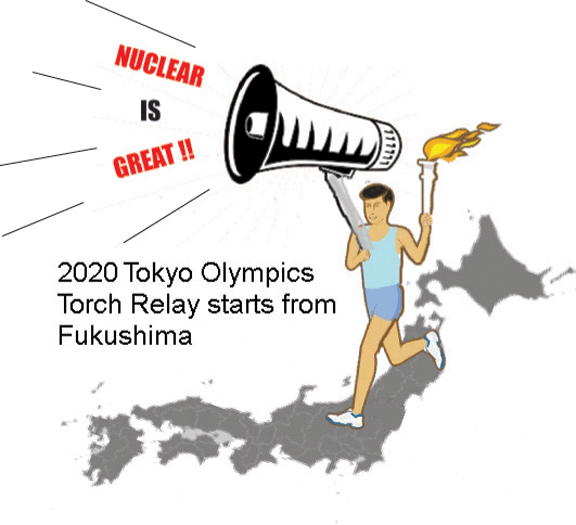 Bach: Olympics will show Fukushima’s recovery NHK World The president of the International Olympic Committee says the Tokyo Games will be a chance to show the world how far people affected by the 2011 earthquake and tsunami have recovered.
Thomas Bach spoke to reporters in Tokyo after being briefed about preparations for the 2020 Olympics and Paralympics.
He said he cannot remember seeing a host city as prepared as Tokyo in all respects.
He also referred to his first trip to Fukushima City, where the baseball and softball events will be held. He met with local high school students during the trip………..https://www3.nhk.or.jp/nhkworld/en/news/20181202_26/
1 This Month
Tell Congress: Prevent Nuclear Catastrophe in Iran

Tell Congress: Prevent Nuclear Catastrophe in Iran

Read the Public Inquiry Report, the Commissioners’ report, Surrendering Australia: The AUKUS Deception is available to download for free at aukuspublicinquiry.com. Or just watch the replay of the National Press Club Luncheon.


Shut down the radiation-damaged Heysham nuclear reactors now
To see nuclear-related stories in greater depth and intensity – go to https://nuclearinformation.wordpress.com

Say No to NASA’s Reckless Nuclear Reactor on the Moon
Say No to NASA’s Reckless Nuclear Reactor on the Moon
-
Archives
- November 2026 (246)
- October 2026 (302)
- September 2026 (339)
- August 2026 (330)
- July 2026 (355)
- June 2026 (287)
- May 2026 (306)
- April 2026 (356)
- March 2026 (251)
- February 2026 (267)
- January 2026 (308)
- December 2025 (358)
-
Categories
- 1
- 1 NUCLEAR ISSUES
- business and costs
- climate change
- culture and arts
- ENERGY
- environment
- health
- history
- indigenous issues
- Legal
- marketing of nuclear
- media
- opposition to nuclear
- PERSONAL STORIES
- politics
- politics international
- Religion and ethics
- safety
- secrets,lies and civil liberties
- spinbuster
- technology
- Uranium
- wastes
- weapons and war
- Women
- 2 WORLD
- ACTION
- AFRICA
- Atrocities
- AUSTRALIA
- Christina's notes
- Christina's themes
- culture and arts
- Events
- Fuk 2022
- Fuk 2023
- Fukushima 2017
- Fukushima 2018
- fukushima 2019
- Fukushima 2020
- Fukushima 2021
- general
- global warming
- Humour (God we need it)
- Nuclear
- RARE EARTHS
- Reference
- resources – print
- Resources -audiovicual
- Weekly Newsletter
- World
- World Nuclear
- YouTube
-
RSS
Entries RSS
Comments RSS

