Why Is China Losing Interest In Nuclear Power? Oil Price, By Leonard Hyman & William Tilles – Dec 19, 2018 The future of the nuclear power industry lies in China. The Chinese are presently building more nuclear electric power generating stations than any other country. This year, the Chinese will add three more nuclear power stations to their fleet bringing their total up to 40, while eighteen nuclear plants are also under construction.
According to MIT estimates, the Chinese can erect a nuclear plant for half the cost of a plant here in the U.S. If so, what’s the problem?
First, let’s put the numbers into perspective. Nuclear power accounts for about 4 percent of Chinese electric power production. (Nuclear accounts for about 20 percent of electric power generation the U.S.) Solar and wind generation accounts for 7 percent of production in China and the renewable component has been growing far faster than nuclear. Chinese industries spent $127 billion in 2017 on developing renewables.
Returning to nuclear plant costs in China, MIT estimates show a two-to-one Chinese cost advantage over the U.S., based on “overnight costs.” This is an engineering concept. that gives short shrift to potentially major construction expenses such cost of capital, duration of project or risk of error and subsequent redress (either actual or compensatory). Appropriately valuing the true cost of capital alone could raise these so called overnight nuclear new build costs by at least 25 percent.
Adding insult to injury, perhaps half the Chinese nuclear fleet presently under construction is behind schedule and there are reports of (typical for this industry) cost overruns and construction problems.Now, let’s get to the disturbing item in the MIT analysis as far as the nuclear power industry is concerned. The money quote? “Officially China still sees nuclear power as a must have.
But unofficially, the technology is on a death watch.” The Chinese appear committed to completing all of the eighteen or so nuclear projects presently under construction, but they have not announced a new commercial project since 2016. This would give China 58 GWs of installed nuclear capacity by 2020 with another 30 GWs presently under construction. Not that much smaller than the U.S.
The real change here regards discussions of the future. Pre-Fukushima, China’s power planners were considering adding 400 GWs of nuclear power by the year 2050. It appears plans of this magnitude are no longer under consideration.
Perhaps the traumatic events at Japan’s Fukushima Daiichi nuclear facility dampened Chinese enthusiasm for all things nuclear. Also, a major industrial accident of this type could potentially undermine the government’s legitimacy by stirring up political protest. We can’t know the thinking of China’s economic planners. But it appears that rising nuclear costs coupled with a lack of public enthusiasm for nuclear power have influenced the lack of new orders.But we would argue that there are other factors for this waning interest in nuclear power. First is that renewables may be cheaper. Also, projections for power demand show a substantial falling off. The rate of Chinese electric power demand growth was 11 percent per year in 2000-2015 but is projected to fall to 2 percent per year in 2015-2030. These shifts show the Chinese economy coming to resemble those of the U.S. and Europe with less growth in the most energy intensive industries. An 11 percent growth rate in demand means a situation of almost chronic undersupply and shortage. A 2 percent growth rate in power demand permits a far more leisurely approach to long term energy planning……..
Whatever the underlying cause, China has de-emphasized its massive nuclear new build strategy. We suspect the reason is a combination of slowing demand for electricity and deteriorating cost competitiveness of the nuclear plants compared to the alternatives.
It is not a good sign when the country that that boasts one of the better construction cost records in the business steps back and says, in effect, “Maybe we have something better to do with our money.” Chinese nuclear operators will, no doubt, continue to sell their wares abroad. China’ s CNNC is building two indigenous designed Hualong One reactors in Pakistan and CGN’s strategy appears to be invest only with generous subsidies from host governments like the U.K. But ultimately why would people want to buy a product that the producer can no longer reliably sell in its home market? https://oilprice.com/Alternative-Energy/Nuclear-Power/Why-Is-China-Losing-Interest-In-Nuclear-Power.html
December 22, 2018
Posted by Christina Macpherson |
China, politics |
Leave a comment
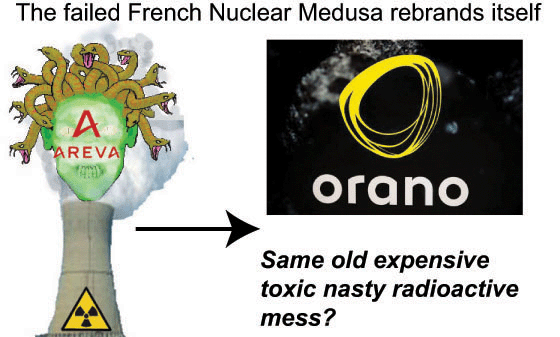
Orano’s activities in Mongolia under judicial investigation for suspicion of corruption https://www.lemonde.fr/energies/article/2018/12/19/les-activites-d-orano-en-mongolie-visees-par-une-enquete-judiciaire-pour-des-soupcons-de-corruption_5399983_1653054.html 19th Dec 2018 These suspicions of “bribery of a foreign public official” involve one of the service providers of Orano, the consulting firm Eurotradia International.
 The French nuclear group Orano, [or is it Framatome?] formerly Areva, is in
 the sights of the national prosecutor’s office that investigates suspicions of corruption in Mongolia, it was learned, Wednesday, December 19,from sources close to the case. These suspicions of “bribery of a foreign public official” involve one of the service providers of Orano, the consulting firm Eurotradia International.
Anti-corruption campaign in Mongolia
In October 2013, under the chairmanship of Luc Oursel, Areva entered into a strategic partnership to exploit two uranium deposits in the Gobi Desert (southeast) with Mongolian Mon-Atom and Japan’s Mitsubishi. The agreement came after more than ten years of exploration of the French group in Mongolia, but it remained uncertain until the last moment. The project had sparked strong environmental opposition in this huge country of three million inhabitants, whose subsoil is rich in ores (uranium, copper, gold, coal).
The case is part of an anti-corruption campaign in Mongolia where, in another case, two former prime ministers were jailed in April for controversial deals with the mining giant, Anglo-Australian Rio Tinto.
In addition, the French nuclear group has already been targeted since 2015 by a preliminary survey of the PNF. This case, dubbed “uraniumgate”, is about the controversial sale in the fall of 2011, a large amount of Nigerian uranium for $ 320 million. https://www.lemonde.fr/energies/article/2018/12/19/les-activites-d-orano-en-mongolie-visees-par-une-enquete-judiciaire-pour-des-soupcons-de-corruption_5399983_1653054.html
December 22, 2018
Posted by Christina Macpherson |
France, Mongolia, secrets,lies and civil liberties |
4 Comments
 North Korea Says It Won’t Give Up Nuclear Weapons Unless the U.S. Removes Nuclear Threat, TIME, By KIM TONG-HYUNG / AP December 20, 2018 (SEOUL, South Korea)
— North Korea said Thursday it will never unilaterally give up its nuclear weapons unless the United States first removes what Pyongyang called a nuclear threat. The surprisingly blunt statement jars with Seoul’s rosier presentation of the North Korean position and could rattle the fragile trilateral diplomacy to defuse a nuclear crisis that last year had many fearing war.
The latest from North Korea comes as the United States and North Korea struggle over the sequencing of the denuclearization that Washington wants and the removal of international sanctions desired by Pyongyang. The statement carried by the North’s official Korean Central News Agency also raises credibility problems for the liberal South Korean government, which has continuously claimed that North Korean leader Kim Jong Un is genuinely interested in negotiating away his nuclear weapons as Seoul tries to sustain a positive atmosphere for dialogue.
The North’s comments may also be seen as proof of what outside skeptics have long said: that Kim will never voluntarily relinquish an arsenal he sees as a stronger guarantee of survival than whatever security assurances the United States might provide. The statement suggests North Korea will eventually demand the United States withdraw or significantly reduce the 28,500 American troops stationed in South Korea, a major sticking point in any disarmament deal.
Kim and President Donald Trump met June 12 in Singapore where they agreed on a vague goal for the “complete denuclearization” of the Korean Peninsula without describing when and how it would occur. The leaders are trying to arrange another meeting for early next year.
But North Korea for decades has been pushing a concept of denuclearization that bears no resemblance to the American definition, with Pyongyang vowing to pursue nuclear development until the United States removes its troops and the nuclear umbrella defending South Korea and Japan. In Thursday’s statement, the North made clear it’s sticking to its traditional stance on denuclearization. It accused Washington of twisting what had been agreed on in Singapore and driving post-summit talks into an impasse.
“The United States must now recognize the accurate meaning of the denuclearization of the Korean Peninsula, and especially, must study geography,” the statement said.
“When we talk about the Korean Peninsula, it includes the territory of our republic and also the entire region of (South Korea) where the United States has placed its invasive force, including nuclear weapons. When we talk about the denuclearization of the Korean Peninsula, it means the removal of all sources of nuclear threat, not only from the South and North but also from areas neighboring the Korean Peninsula,” the statement said.
The United States removed its tactical nuclear weapons from South Korea in the 1990s. Washington and Seoul have not responded to the North Korean statement……..
“If we unilaterally give up our nuclear weapons without any security assurance despite being first on the U.S. list of targets for pre-emptive nuclear strikes, that wouldn’t be denuclearization — it would rather be a creation of a defenseless state where the balance in nuclear strategic strength is destroyed and the crisis of a nuclear war is brought forth,” the KCNA said.
“The corresponding measures we have asked the United States to take aren’t difficult for the United States to commit to and carry out. We are just asking the United States to put an end to its hostile policies (on North Korea) and remove the unjust sanctions, things it can do even without a snap of a finger.”…….http://time.com/5485553/north-korea-nuclear-weapons-us-threat/
December 22, 2018
Posted by Christina Macpherson |
North Korea, politics international |
Leave a comment
Japanese government keeps on trying to ram food exports from Fukushima radiation affected areas down the throats of their Asian neighbors ….
Japanese prime minister Shinzo Abe
IT IS UNSURPRISING that Taiwan will not be admitted to the Comprehensive and Progressive Agreement for Trans-Pacific Partnership (CFTPP) because of the referendum vote against food imports from Fukushima-affected areas held in late November concurrent with nine-in-one elections. Namely, the issue of food imports is one upon which Taiwan has long been pushed around by larger, more powerful countries, who dangle the threat of being denied admittance to international free trade agreements if Taiwan does not allow food imports.
The Abe administration has in the past made allowing food imports from Fukushima-affected areas a condition for stronger diplomatic relations with Japan. This would be part of a more general effort by the Abe administration to promote the prefecture of Fukushima as safe, with concerns that lingering radiation may still cause harmful effects in the region after the 2011 Fukushima disaster. The Abe administration has thus attempted to promote food exports from the area, as well as to encourage tourism to the area.
Concerns over whether food from Fukushima is safe are valid, seeing as this is an issue of contention in Japan itself. Abe’s Liberal Democratic Party (LDP) is deeply wedded to the Japanese nuclear industry, with an unusual willingness to push for nuclear energy in spite of outbreaks of large-scale public protest. Concerns have also been longstanding that the LDP has been unwilling to provide accurate nuclear assessments for the Fukushima area, or sought to mislead through official statistics.
After the results of the referendum in late November, in which 7,791,856 voted against allowing food imports from Fukushima, the Japanese government initially expressed understanding regarding the results of the referendum, suggesting that not allowing food imports from Fukushima would not be an obstacle for Japan-Taiwan relations going forward. However, this appears to have not entirely been the truth.
Indeed, as the KMT was a powerful force behind the push for the referendum, it is likely that the KMT sought to use the issue of food imports from Fukushima-affected areas as a means to not only to attack the DPP with the accusation that it was endangering public safety but also sabotage closer relations between Japan and Taiwan. Apart from that the KMT’s Chinese nationalism has a strong anti-Japanese element, the KMT is pro-unification and so opposes closer ties between Japan and Taiwan, seeing as Japan could be a powerful regional ally that interceded on behalf of Taiwan against Chinese incursion.
The CFTPP is a regional free trade agreement that is the form that the Trans-Pacific Partnership (TPP) took on after America withdrew from the trade agreement under Donald Trump. Despite the fact that the TPP was orchestrated under American auspices as a means to counter growing Chinese influence in the Asia-Pacific region, the Trump administration favored protectionism instead of free trade, seeing free trade as overextending American resources rather than expanding its economic reach.
Japan subsequently became the dominant power among former TPP signatories, continuing to push for the agreement because it was still beneficial to Asia-Pacific nations to economically integrate as a regional bloc against the threat of China.
This would not be the first time that food imports have been used as a condition of Taiwan’s admittance to or denial from the TPP framework. America previously made allowing American beef imports into Taiwan to be a condition of Taiwan’s possibly entering into the TPP, seeing as there were in concerns in Taiwan that the use of the hormone ractopamine—banned in most of the world’s countries but not in America—was unsafe. This, too, was a valid concern regarding food safety, but the KMT was interested in the issue because it hoped to use this as a wedge issue to sabotage relations between Taiwan and the US.
Now that Japan is the primary driving force behind the CFTPP, as the renewed version of the TPP, food imports from Fukushima-affected areas have taken priority as the issue which would determine Taiwan’s admittance or non-admittance to the CFTPP. As free trade agreements are more generally a way for large, powerful countries to coerce smaller, weaker countries into relations of economic subordination, this would be nothing surprising.
More generally, free trade agreements have also long been held over the heads of Taiwanese voters in order to influence how they vote, as observed in the examples of the Economic Cooperation Framework Agreement or the Cross-Strait Services Trade Agreement under the Ma administration. But in light of the issue of food imports from Fukushima-affected areas being a contested issue in Taiwan, it remains to be seen whether the CFTPP will become a significant wedge issue in Taiwanese politics going forward.
December 20, 2018
Posted by dunrenard |
Taiwan | Contaminated Food, Food Import Ban, Food safety |
Leave a comment
Post-Fukushima cost overruns may kill a giant power project in Turkey, and there are few other deals to replace it
Japan’s nuclear export industry could be dealt a fatal blow if Mitsubishi Heavy Industries pulls out of a massive project to build four large power plants on Turkey’s Black Sea coast, as reports have suggested.
The Sinop plant project in Turkey was seen as Japan’s best chance for an industry – battered and bruised after the 2011 tsunami and triple meltdown at Fukushima – to put together a workable export strategy that did not break the bank of potential international customers.
Aside from Sinop, the Japanese industry has only one viable export project still upcoming: Hitachi’s bid to build two reactors on the island of Anglesey in Britain. And even that deal is looking shaky.
Mitsubishi Heavy Industries (MHI) has not pulled the plug yet on its stake in the four-reactor project on Turkey’s Black Sea coast, but a slew of domestic media reports and talk in Tokyo, suggests that, in the face of seemingly ever-rising construction costs to meet new safety standards that have been put in place since the 2011 Fukushima disaster, the company will bail.
When the deal was signed with Ankara in 2013, the ownership profile was: 65% awarded to a consortium made up of MHI, Itochu, France’s Areva, and GDF Suez. The other 35% was covered by Turkey’s electric power utility, Elektrik Uretim.
However, in April, Itochu pulled out of the consortium, citing cost overruns. That left the consortium with 51%, and the remaining 49% owned by the Turkish utility.
Without Mitsubishi the viability of the project is in question, sources say, unless Turkey can find a new partner or is willing to take on the project without its largest foreign partner. The Russians, who are building a nuclear complex on Turkey’s southern Mediterranean coast, might be interested.
According to Kyodo, a thorough cost evaluation was to be completed by the end of this year. Itochu waited for the report to be released before bailing out of the deal. MHI is apparently waiting for the study to be completed before deciding its next move.
When the deal with Mitsubishi was signed in 2013, the estimated cost was $18 billion for four 1,100-megawatt nuclear power plants. But overall costs have soared, passing $42 billion in April – when Itochu withdrew, and is now put at about $44 billion.
Cost increases are nothing new in the nuclear power industry, but have been exacerbated in recent years by expensive adjustments phased in to meet more stringent safety concerns following the earthquake and tsunami that destroyed four units of the Fukushima Daiichi plant. The Sinop cost rises, however, also encompass other problems encountered in construction.
Fukushima, one of the most serious nuclear accidents in history, turned most of Japan against nuclear power. Before March 11, 2011, Japan had 54 nuclear plants. All were shut down after the accident and some are slowly returning to service having passed scrutiny by the regulator. Five are expected to restart within the next five years, and eight will likely be decommissioned. But prospects for the remaining plants are unclear.
Aware that no new nuclear plant may ever be built at home amid the anti-atomic public mood, Japan’s nuclear vendors have turned to overseas exports as the Fukushima accident does not appear to have destroyed the Japanese industry brand in other countries.
Endgame for nuclear exports?
If Mitsubishi does pull out of the huge project in Turkey it will be a blow to Prime Minister Shinzo Abe, who sees international exports of nuclear technology as an important way to boost the economy. On his many trips abroad, he often acts as a salesman for nuclear exports. For example, it was a topic of discussion with Turkish President Recep Erdogan on the sidelines of the G-20 meeting in Argentina.
Details of the conversation were not revealed, but it would be a good bet that they discussed the Sinop project with the threat of Mitsubishi hanging over them, and that Abe sought ways to keep the project viable.
Meanwhile, it is not just MHI that may have doubts about the sector. Japan’s nuclear export industry has suffered plenty of setbacks in the seven years since Fukushima. Questions about the future of the sector hang over all three main players in the sector.
Toshiba, one of Japan’s big-three nuclear constructors, recently pulled out of the nuclear power business overseas after incurring huge losses in the United States.
Toshiba has also suffered something of an administrative meltdown in its quest to win construction contracts in the US. In February it finally unloaded it money-losing American subsidiary, Westinghouse, for $1 billion less than it paid to acquire the company 10 years ago.
If the export program is to remain viable, it may be in Wales, where the British government is seeking to build a two-reactor nuclear power plant on the island of Anglesey. Among those bidding for the project is Japan’s third nuclear constructor, Hitachi, through a subsidiary called Horizon Nuclear.
In the nuclear world, there are constructors – like MHI, Toshiba and Hitachi – and operators, who run the plant after it is completed, and they are not always the same. Japan learned from Korea’s successful bid to build six nuclear plants in the United Arab Emirates that offering to build and also run them – a one-stop service – is key to making sales.
Hitachi is teaming up with the Japan Atomic Power Company, which operates two plants in Japan (although both are currently shut down pending the review by regulators). The plan is to present the British with a package deal.
Now, there are worries that Hitachi might pull out of the British project. Chairman Hiroaka Nakanishi was quoted in the Times of London saying his company was “facing an extreme situation,” and that a final decision on whether to stay with the project or leave it will be made next year.
If Mitsubishi does, as is widely expected, pull out of the huge project in Turkey, the only egg left in Japan’s overseas nuclear export basket will be Wales.
December 20, 2018
Posted by dunrenard |
Japan | Hitachi, Mitsubishi, Nuclear Exports, Toshiba |
Leave a comment

Podcast: Download
SPECIAL: International Uranium Film Festival
Nuclear Hotseat went to the Capitol of the Navajo Nation in Window Rock, Arizona, to cover the International Uranium Film Festival – 22 films in three days, along with interviews with filmmakers, organizers, and attendees from France, India, Greenland, Germany, Brazil, UK, Denmark, Navajo Nation, and America. Uranium mining contamination of water and land, nowhere to store the waste, radiation genocide of indigenous people, government cover-ups and individual activists fighting back — the hope came from the fierce and gentle people, the beauty of the films, and the determination to keep on fighting for the one planet we all share.
The Films (CLICK on title for link, where available):
- THE WOLVERINE: THE FIGHT OF THE JAMES BAY CREE
Canada, 2014, Documentary, Director: Ernest Webb, Original Langu age: English, 10 min.
- TALE OF A TOXIC NATION
USA, 2018, Director Louis Berry, Documentary, English, 13 min
- DII’GO TO BAAHAANE: FOUR STORIES ABOUT WATER
USA, 2012, 37 minutes, Produced by Deborah Begel. Co-Directed by Deborah Begel and David Lindblom, Navajo with English subtitles.
- TOO PRECIOUS TO MINE
USA, 2017, Director Justin Clifton, Documentary, English, 10 min
- JADUGODA – THE BLACK MAGIC
India, 2009, Director Shri Prakash, English, Documentary, 10 min
- NABIKEI (FOOTSTEP)
India, 2017, Documentary, Director Shri Prakash, English, 66 min
- NUCLEAR CATTLE
Japan, 2016, Director, Tamotsu Matsubara, Production Power-i Inc, Documentary, 98 min, Japanese with English subtitles.
Interview excerpt – Hervé Courtois (l) traveled to Window Rock from France. He talks about Fukushima and his trip to Japan only two months after the nuclear triple-meltdown started. The full interview will be featured in early 2019.
- NUCLEAR WASTE LAND?
UK / Australia, Director Timothy Large, Production Thomson Reuters Foundation, Documentary, English,14 min
- JOURNEY TO THE SAFEST PLACE ON EARTH
Switzerland, 2013, Director Edgar Hagen, 100 min, documentary, English
- DIGNITY AT A MONUMENTAL SCALE
USA, 2018, Director Kelly Whalen, Producer KQED Arts, Art- documentary, English, 8 min
- YELLOW FEVER: UNCOVERING THE NAVAJO URANIUM LEGACY
Director Sophie Rousmaniere, Co- Producer Jay Minton, USA, 2013, 56 min, documentary, English
- TO DIG OR NOT TO DIG: THE BATTLE FOR GREENLAND
Director Espen Rasmussen, Norway, 2013, 8 min, documentary, Danish & Norwegian, English subtitles
- KUANNERSUIT / KVANEFJELD
UK, 2017, Directors Joshua Portway and Lise Autogena, Producer Lise Autogena, Documentary, Danish and Greenlandic with English subtitles, 30 min
- THE REPOSITORY
USA, 2017, Directors Daria Bachmann & Anna Anderson, Documentary, English, 80 min
- CRYING EARTH RISE UP
USA,2014,Documentary.Director: Suree Towfighnia | Producer: Suree Towfighnia and Courtney Hermann. Documentary, English, 57 min
- THE RETURN OF NAVAJO BOY – UPDATE!
USA 2000/2011, 57 min and 15 min Epilogue / Documentary, Director: Jeff Spitz, Produced by Jeff Spitz and Bennie Klain
Leona Morgan, a Diné woman involved in multiple anti-nuclear groups, left Window Rock for Poland and the COP 24 climate change meetings. She was one of a group that disrupted a Trump administration-approved presentation on coal and fossil fuels.
- OFF COUNTRY in-progress excerpt)
USA, 2018, Directors Taylor Dunne and Eric Stewart, 12 min, English
- URANIUM DERBY
US, 2017, Director Brittany Prater, documentary, English, 83 min
- ANOINTED
Marshall Islands, 2018, Directors Dan Lin & Kathy Jetnil-Kijiner, poem video, 6 min.
- BOBBY BROWN HOMELANDS – LIVING WITH THE LEGACY OF BRITISH NUCLEAR TESTING
Australia, 2015, Produced and Directed by Kim Mavromatis and Quenten Agius, MAV Media in Association with NITV (National Indigenous TV Australia). Documentary, 5 min
- GREETINGS FROM MURUROA – TRAILER
France, 2016, Director Larbi Benchiha, production: Aligal production and France Télévisions, documentary, English, 52 min.
For full information on the International Uranium Film Festival, visit their website:

Norbert Suchanek (r) and Marcia Gomes de Oliveira
On Nuclear Hotseat: http://nuclearhotseat.com/2018/12/12/explosive-films-on-nuclear-uranium-devasatation-to-navajo-nation-india-japan-greenland-ames-iowa-international-uranium-film-festival-special-nuclear-hotseat-390/
December 20, 2018
Posted by dunrenard |
USA | Navajo Nation, Uranium Film Festival, Window Rock |
Leave a comment
An important statement by Tokyo-based Citizens’ Nuclear Information Center(CNIC).
On November 2, a bill for the partial amendment of the Compensation for Nuclear Damage Act (hereafter, CND) was submitted to the Diet.
In the first place, this CND amendment is based on supplementary regulations demanding “a drastic review including an amendment of CND at the earliest possible date” and “necessary measures from the viewpoint of minimizing the burden on the people of the nation” when the Nuclear Damage Compensation Facilitation Corporation Act was deliberated in the Diet in 2011. Further, both houses of the Diet limited “at the earliest possible date” to “around a year” and determined, by supplementary decisions attached to that act, that “deliberations to clarify the nature of liability in Article 3 of CND and the nature of the government’s liability including the nature of compensatory payments in Article 7 of CND” should also be carried out. In 2015, however, a specialist committee on the nuclear compensation system was set up within the Atomic Energy Commission, and even after serious deliberations had begun progress was extremely slow. It was not until October 30, 2018 that a final draft was approved.
The main points of the draft amendment are: 1) Nuclear power plant (NPP) operators are mandated to prepare and publish a new damage compensation implementation policy, 2) Creation of a system for the government to lend funds to the operator for early compensation (provisional payments) to affected persons before the start of the main compensation payments, 3) In the case that alternative dispute resolution (ADR) by the Nuclear Damage Dispute Reconciliation Committee is terminated, it will be deemed that an appeal has been submitted at the time of the request for settlement mediation if the appeal is brought before the court within one month after the notification of termination of ADR, and 4) The compensatory fund is to be left unchanged at 120 billion yen.
It is surprising that 1) is not already being carried out by NPP operators. At the time of the TEPCO Fukushima Daiichi nuclear accident the government had already devised measures similar to 2) for provisional compensation in the Act on Emergency Measures for Damage due to Nuclear Accidents. 3) can be said to be rational since there has been a series of cases in which the nuclear business side has rejected settlement proposals. On the other hand, the content of 4) is strikingly problematic since it does nothing to adjust the astoundingly miserly current compensatory fund of 120 billion yen in the face of the estimated 22 trillion yen in damages for the TEPCO Fukushima Daiichi nuclear accident.
Originally, CND began as an exemption of makers from liability due to nuclear accidents in order to encourage the construction of nuclear power plants. The discussions in the latest series of reviews have progressed with no mention of this point, but in fact we believe the specialist committee should have taken one step further and questioned the liability of nuclear reactor makers.
Looking back on the deliberations for the Nuclear Damage Compensation Facilitation Corporation Act, where the argument began, it can be seen that there was a shared understanding that the compensatory fund of 120 billion yen was inadequate. Even in the specialist committee, there was general agreement among the committee members on the point that the amount of the compensatory fund should be raised. At the same time, the executive director of the Japan Atomic Energy Insurance Pool (JAEIP), committee member Tetsuro Kihara, stated at the fifth committee meeting, “A five or ten trillion level is simply impossible…. but the idea of lifting the current 120 billion yen to a level of 150 or 200 billion yen is a different question.” While making this statement, which appears to suggest that there is a margin for raising the level of the compensatory fund, he made an about-face at the 17th meeting by denying that there was any margin for raising the amount of the fund by stating, “The conclusion is that, as far as the insurance industry is concerned, it would be extremely difficult to raise the fund above 120 billion yen.” The nuclear business operators themselves also opposed a raise.
However, it is quite clear, firstly, that it is impossible for JAEIP to hold a mammoth sum of 22 trillion yen in insurance money. If so, while considering raising the amount of the compensatory fund, and to minimize the burden on the people of the nation, rather than maintain the compensation scheme with the premise of allowing the nuclear business operators to continue to exist, based on the Act on the Nuclear Damage Compensation and Decommissioning Facilitation Corporation, it should have been necessary to devise a new compensation scheme based on the 22 trillion yen in damages arising from the TEPCO Fukushima Daiichi nuclear accident that did not necessarily insist on the continued existence of the nuclear business operator. With the specialist committee unable to get a grasp on this problem, we are left with the unavoidable question of what on earth the committee, and the Atomic Energy Commission which led it, had been doing for three years, after which they simply threw the ball back at the Ministry of Education, Culture, Sports, Science and Technology (MEXT).
In the meantime, on October 25, just before the conclusion was reached, MEXT, under whose jurisdiction CND lies, stated at a Liberal Democratic Party (LDP) Education, Culture, Sports, Science and Technology section meeting that it had accepted the CND amendment. This constitutes an extremely grave problem from the viewpoint of procedure. Why should MEXT be going to an LDP section meeting to give explanations without having received the conclusion of the specialist committee? It is impossible for both MEXT and the specialist committee to avoid censure for their disrespect for deliberations.
CND is directly linked with the problem of the interests of citizens regarding how nuclear energy risks are distributed under the unlimited liability of nuclear business operators. If NPPs are to be operated on just a very small burden, the risk of “cheap NPPs” is essentially borne by the citizens. The bill for the amendment utterly fails to resolve this problem and would allow NPPs to be operated with the citizenry, as ever, bearing the huge risk involved. Implementing deregulation of the power industry while accepting that it is fine to push this enormous risk onto the citizens greatly alleviates the burden on nuclear business operators and will lead to a serious deterioration in the competitive environment.
The U.S. Price–Anderson Nuclear Industries Indemnity Act concentrates liability for damage due to a nuclear accident on the operator regardless of whether the fault lies with the operator or not, and also established a system whereby a ceiling of 1.5 trillion yen is guaranteed through a mutual assistance system between operators. At the same time, the act also states (42 U.S. Code § 2210 (i) (2) (B)) that in the event of an amount exceeding this, funds from industrial circles and others will be considered. In the case of the U.S., the amount of damages in the Three Mile Island nuclear accident did not exceed the amount of the compensatory fund. In Japan, however, damages arising from the TEPCO Fukushima Daiichi nuclear accident, even by government estimates, will total roughly 22 trillion yen (including the cost of decommissioning). As provision against further accidents, the mutual assistance among the operators, based on the current Act on the Nuclear Damage Compensation and Decommissioning Facilitation Corporation, will be totally inadequate.
The current legal amendment began from a demand to consider the law from the viewpoint of minimizing the burden on the people of the nation. If so, while it is natural to maintain the unlimited liability, and based on the premise of the damage arising from the TEPCO Fukushima Daiichi nuclear accident, a mutual assistance system should be set up to include not only the operators but all those in nuclear power industry circles who have profited from the nuclear energy business thus far in sharing the burden. This is the duty that should be borne by the operators and nuclear power industry circles who have expanded a business that has the potential to cause the horrendous damage we have seen from just one accident. If they cannot do this because they believe the risk is too high, the only option is for the operators to withdraw from the nuclear power business.
http://www.dianuke.org/japans-move-to-amend-nuclear-damage-law-will-push-the-burden-of-risk-on-citizens-cnic/?fbclid=IwAR3hy-xr5E8-KBPpbZpSA7yW9vx3oCVemiLS-FDlGI9s4mh3bG8E0jJiF1g
December 20, 2018
Posted by dunrenard |
Japan | CND, Compensation for Nuclear Damage Act |
Leave a comment
WW3: North Korea warns US tensions sparked ‘nightmare of nuclear disaster EVERY NIGHT’
NORTH Korea has stoked tensions with the United States after US Secretary of State Mike Pompeo came under fire in a report carried on an officially sanctioned North Korean news agency. Express UK, By CIARAN MCGRATH, Dec 18, 2018 And it has also taken to opportunity to pointedly remind America it is now a year since “tens of millions of Americans suffered from the horrible nightmare of a nuclear disaster every night” in provocative language which may alarm Washington.
 The Korean Central News Agency took an apparent swipe at Mr Pompeo – one of US President Donald Trump’s closest advisors – in an article attributed to Jong Hyon and published just three days after the treasury department announced sanctions against North Korean official Choe Ryong Hae, who holds several positions including being vice-chairman of the Korean Workers’ Party. Writing on the 38 North website, US-based academic and North Korea expert Robert Carlin said: “Though the Jong Hyon article did not mention this latest development, it surely rankled Pyongyang, a fact made clear in a statement by the policy research director of the Institute for American Studies (IFAS) of the Ministry of Foreign Affairs of the Democratic People’s Republic of Korea a few days late
The broadside at ‘a brazen faced guy’ who ‘had amicable negotiations’ with the DPRK side, but back home talked about a ‘rogue state’ and ‘maximum pressure’ was unmistakably aimed at Secretary of State Pompeo, who has visited Pyongyang several times.
“Personal invective against the other side’s officials, especially leading figures on its negotiating team, marks an unpleasant moment but is not an insurmountable barrier. …..https://www.express.co.uk/news/world/1060671/world-war-3-north-korea-nuclear-disaster-us-mike-pompeo
December 20, 2018
Posted by Christina Macpherson |
North Korea, politics international |
Leave a comment
 NASA has proposed a plan to use a nuclear-powered drill to dig into the surface of a moon in an attempt to find aliens By FREDDIE JORDAN, Express UK Dec 19, 2018 The drill, nicknamed ‘tunnelbot’, would hunt beneath the ice that covers the surface of Jupiter’s moon Europa in an effort to confirm suspicions of alien life lurking in the depths. Scientists have long known of the presence of large quantities of water hidden below the moon’s icy crust – but it has been difficult to reach. A proposal given at the 2018 meeting of the Geophysical Union said: “We have performed a concept study for a nuclear powered tunnelling probe (a tunnelbot) that can traverse through the ice shell and reach the ocean, carrying a payload that can search for nested, corroborative evidence for extant/extinct life.
December 20, 2018
Posted by Christina Macpherson |
technology, USA |
Leave a comment
Controversial nuclear reactor goes live in southern China
Reactor at Taishan Plant goes online, after five years of delays, debate and controversies about safety and other issues
By ASIA TIMES STAFF DECEMBER 18, 2018 massive Chinese nuclear power plant a mere 130 kilometers from Hong Kong that has been dogged by controversy over safety and other issues went online last week after a five-year delay.
The plant is in China’s southern Guangdong province, an economic dynamo whose annual gross domestic product is now on par with that of Russia and South Korea. The province has been intent on harnessing nuclear power to feed more electricity into its grid for its sprawling cities and manufacturing clusters.
Four nuclear plants along Guangdong’s coastline are already up and running and now a colossal new reactor at the Taishan Power Plant quietly went online last week. The plant has been plagued by bickering between technicians and Chinese officials as well as their French counterparts concerning safety and contingency measures, controversies that resulted in a five-year delay.
A joint venture by the state-owned China General Nuclear Power Corp (CGN) and Électricité de France, the Taishan plant is a mere 130 kilometers west of Hong Kong. It is home to the world’s first operational reactor of the novel third-generation European Pressurized Reactor (EPR) configuration, arguably the world’s largest electrical generator as measured by nameplate capacity……
Meanwhile, France’s Flamanville EPR project is still years behind its original commission target, the same as another plant in Finland.
Xinhua notes that the generator stator – the stationary part of a rotary system – at the Taishan reactor weighs almost 500 tonnes, and its double layer concrete dome is said to be strong enough to withstand a direct hit by a plane and can contain the fallout in a Chernobyl-like scenario, with improvements also made in light of the 2011 Fukushima incident.
CGN admitted that the Taishan reactor was “challenging to construct.” Environmentalists were also fuming at the elusive nature of the plant’s planning and project supervision, amid widespread skepticism about its safety and system redundancy.
Many opposed to the new EPR design demanded that the new reactor remain off the grid before every part could be checked by a third party, to which CGN and China’s National Energy Administration never acceded.
In 2015, France’s Nuclear Safety Authority admitted there were safety concerns about an EPR being built in Flamanville. The watchdog also warned that Taishan, which shared the same design and whose pressure vessels were procured from the same supplier, could also suffer from the same safety issues.
There were also reports alleging that the Taishan rector “did not receive the latest safety tests before installation,” as the French manufacturer said its tests detected faults that could lead to cracks in the reactor shell.
In December 2017, Hong Kong media blew the lid on a cover-up involving a cracked boiler found during test runs.
But CGN insisted that all design and quality issues had been ironed out throughout the years of delays and the pair of reactors in Taishan were indeed safer than the old units at the Daya Bay Plant built in Shenzhen in the late 1980s.
The Daya Bay project once triggered a massive outcry in Hong Kong when many rallied and petitioned against having a nuclear plant on the city’s doorstep. http://www.atimes.com/article/controversial-nuclear-reactor-goes-live-in-southern-china/
December 20, 2018
Posted by Christina Macpherson |
China, politics, safety |
Leave a comment
|
 US to offer ‘black box’ nuclear waste tech to other nations ChannelNews Asia 20 Dec 18
“…………MOUNTING U.S. STOCKPILES
The United States is also struggling to support its own nuclear industry at home, with aging reactors shuttering, new projects elusive due to soaring costs, and an ongoing political stalemate over a permanent solution for mounting nuclear waste stockpiles.
The United States produces some 2,000 metric tons of nuclear waste each year, which is currently stored in pools or in steel casks at the nation’s roughly 60 commercial nuclear power plants across 30 states.
The federal government designated Nevada’s Yucca Mountain as the sole permanent U.S. nuclear waste repository decades ago to solve the problem, spending about US$13 billion on the project, but it has never opened due to local opposition.
Thomas Countryman, the State Department’s top arms control officer during the Obama administration, said the government should make headway on the domestic problem before helping other countries.
“The primary issue on this front … is not that the U.S. can’t offer a low-volume option to potential buyers; rather it’s that the U.S. still has no option for disposing of its own spent fuel,” he said.
Edwin Lyman, a nuclear expert at the Union of Concerned Scientists, said NNSA should be less concerned about volume of waste and more concerned about the dangers that make it hard to store.
“It’s not the volume of the nuclear waste that’s the issue, but the radioactivity and heat it gives off as well as the fact that it remains dangerous for hundreds of thousands of years,” he said.
(Reporting by Timothy Gardner; Editing by Richard Valdmanis and Brian Thevenot)
Source: Reuters https://www.channelnewsasia.com/news/technology/exclusive–us-to-offer–black-box–nuclear-waste-tech-to-other-nations-11046762
|
|
December 20, 2018
Posted by Christina Macpherson |
USA, wastes |
Leave a comment
|
|
Nuclear negations yield renewable energy leverage https://pv-magazine-usa.com/2018/12/18/nuclear-negations-yield-renewable-energy-leverage/
As part of the recently approved settlement negotiations associated with the failed VC Summer Nuclear Plant expansion in South Carolina, renewable energy has gained greater PPA and IRP access, and greater market continuity.
DECEMBER 18, 2018 JOHN WEAVER The VC Summer Nuclear Power plant expansion failed at a cost of $9 billion to South Carolina electricity customers. The follow ups have led to court cases in which ex-employee testimony suggested firings for whistleblowing, and that the company running the construction – SCANA – had committed fraud, and mismanaged the project.
Utility customers on the hook for the project had received nine unique electricity bill increases, equal to about $27/month, a factor in South Carolina to having the highest average monthly bills in the United States. As part of the fallout, the parties involved are being pushed hard by politicians and voters to change their ways.
On November 30th, general council of the South Carolina Electric & Gas Company (SCANA), also representing Dominion Energy, notified the Public Service Commission of South Carolina, that it supports a certain set of renewable energy supporting policies as part of the ongoing negotiations.
The policies are focused on renewables and energy storage gaining consistent access to the market. The regulations mainly aim to create a consistent set of variables – avoided costs, ten year PPAs, hourly pricing, consistent interconnection standards – that will allow developers of solar power projects to better model probability of successful projects.
This is not the first time that failed nuclear power plants have been followed by solar. The above images [on original] are of the 1 MW solar power plant that is running at the Chernobyl Nuclear Power plant in Ukraine. The large structure in the background is the $1.5 billion 31,000 ton concrete sarcophagus to cover the still burning nuclear melt down.
The Phipps Bend Nuclear Power Plant in Surgoinsville, Tennessee sat abandoned since it was cancelled in 1981, 36 years ago. As of July 5, 2017 it began generating solar electricity as United Renewable Energy completed a 1 MW solar power plant (main article image)
When Duke Energy Florida cancelled the Levy Nuclear Plant at a cost of $800 million in already collected fees from consumers, the electric utility announced plans to satiate the public with 700 MWac of solar power, plus at least 50 MW of grid-tied batteries, grid modernization projects, and 500 electric vehicle charging areas.
|
|
in South Carolina, renewable energy has gained greater PPA and IRP access, and greater market continuity.
DECEMBER 18, 2018 JOHN WEAVER The VC Summer Nuclear Power plant expansion failed at a cost of $9 billion to South Carolina electricity customers. The follow ups have led to court cases in which ex-employee testimony suggested firings for whistleblowing, and that the company running the construction – SCANA – had committed fraud, and mismanaged the project.
Utility customers on the hook for the project had received nine unique electricity bill increases, equal to about $27/month, a factor in South Carolina to having the highest average monthly bills in the United States. As part of the fallout, the parties involved are being pushed hard by politicians and voters to change their ways.
On November 30th, general council of the South Carolina Electric & Gas Company (SCANA), also representing Dominion Energy, notified the Public Service Commission of South Carolina, that it supports a certain set of renewable energy supporting policies as part of the ongoing negotiations.
The policies are focused on renewables and energy storage gaining consistent access to the market. The regulations mainly aim to create a consistent set of variables – avoided costs, ten year PPAs, hourly pricing, consistent interconnection standards – that will allow developers of solar power projects to better model probability of successful projects.
This is not the first time that failed nuclear power plants have been followed by solar. The above images [on original] are of the 1 MW solar power plant that is running at the Chernobyl Nuclear Power plant in Ukraine. The large structure in the background is the $1.5 billion 31,000 ton concrete sarcophagus to cover the still burning nuclear melt down.
The Phipps Bend Nuclear Power Plant in Surgoinsville, Tennessee sat abandoned since it was cancelled in 1981, 36 years ago. As of July 5, 2017 it began generating solar electricity as United Renewable Energy completed a 1 MW solar power plant (main article image)
When Duke Energy Florida cancelled the Levy Nuclear Plant at a cost of $800 million in already collected fees from consumers, the electric utility announced plans to satiate the public with 700 MWac of solar power, plus at least 50 MW of grid-tied batteries, grid modernization projects, and 500 electric vehicle charging areas.
|
|
December 20, 2018
Posted by Christina Macpherson |
renewable, USA |
Leave a comment
 Birmingham joins China’s nuclear regulator for safe and clean energy research
https://www.birmingham.ac.uk/news/latest/2018/12/safe-and-clean-energy-research.aspx19 Dec 2018 University of Birmingham experts are partnering with Chinese nuclear regulators in helping develop cleaner, safer and more sustainable civil atomic energy.
The University has signed an agreement with the Nuclear and Radiation Safety Centre (NSC), Ministry of Ecology and Environment to work on collaborative education and research in nuclear policy, safety and regulation, as well as the environmental impact and assessment of nuclear radiation.
Following an earlier visit of a University of Birmingham team to NSC headquarters in Beijing, a senior delegation headed by Deputy-Director General CHAI Guohang visited Birmingham to further develop the collaboration and sign the agreement. The visit was attended by a representative from the Chinese Embassy in London.
Signing the agreement on behalf of the University of Birmingham, Pro-Vice-Chancellor Professor Andy Schofield commented: “The University of Birmingham is delighted to partner with NSC, to work together in the research and education of civil nuclear safety, policy and regulation. This is such an important area for both our countries as we develop civil nuclear power as a key part of clean and sustainable energy production.
“We are very proud of the University’s accomplishments in having the largest and longest continually-running civil nuclear education programmes in the UK, matched by a diverse research capability, and with influence on the development of UK nuclear energy policy. We look forward to working with NSC to continue the development of safe and efficient civil nuclear system in UK and China.”
As the nuclear regulator of China, NSC affiliates directly to the Chinese Ministry of Ecology and Environment, and provides all-round support and assurance in safety regulation and administration of China’s civil nuclear facilities and radiation protection.
In the development of civil nuclear power in China to meet its increasing energy demand, NSC is actively forming a wide range of collaborations with high level domestic and internal partners, including with IAEA and the UKs ONR.
The NSC Deputy-Director General Mr CHAI Guohang said: “As one of the top 100 world universities, the University of Birmingham strength in nuclear science and engineering, its work in nuclear policy and its long standing achievements in civil nuclear education and research are well-known. For these reasons we chose Birmingham as our first international university partner. We believe our collaboration will deliver successful and mutually beneficial results.”
December 20, 2018
Posted by Christina Macpherson |
Education, UK |
Leave a comment
 Sun setting on Japan’s nuclear export sector http://www.atimes.com/article/sun-
 setting-on-japans-nuclear-export-sector/
Post-Fukushima cost overruns may kill a giant power project in Turkey, and there are few other deals to replace it
By TODD CROWELL DECEMBER 16, 2018 Japan’s nuclear export industry could be dealt a fatal blow if Mitsubishi Heavy Industries pulls out of a massive project to build four large power plants on Turkey’s Black Sea coast, as reports have suggested.
The Sinop plant project in Turkey was seen as Japan’s best chance for an industry – battered and bruised after the 2011 tsunami and triple meltdown at Fukushima – to put together a workable export strategy that did not break the bank of potential international customers.
Aside from Sinop, the Japanese industry has only one viable export project still upcoming: Hitachi’s bid to build two reactors on the island of Anglesey in Britain. And even that deal is looking shaky.
Mitsubishi Heavy Industries (MHI) has not pulled the plug yet on its stake in the four-reactor project on Turkey’s Black Sea coast, but a slew of domestic media reports and talk in Tokyo, suggests that, in the face of seemingly ever-rising construction costs to meet new safety standards that have been put in place since the 2011 Fukushima disaster, the company will bail.
Fukushima legacy
When the deal was signed with Ankara in 2013, the ownership profile was: 65% awarded to a consortium made up of MHI, Itochu, France’s Areva, and GDF Suez. The other 35% was covered by Turkey’s electric power utility, Elektrik Uretim.
However, in April, Itochu pulled out of the consortium, citing cost overruns. That left the consortium with 51%, and the remaining 49% owned by the Turkish utility.
Without Mitsubishi the viability of the project is in question, sources say, unless Turkey can find a new partner or is willing to take on the project without its largest foreign partner. The Russians, who are building a nuclear complex on Turkey’s southern Mediterranean coast, might be interested.
According to Kyodo, a thorough cost evaluation was to be completed by the end of this year. Itochu waited for the report to be released before bailing out of the deal. MHI is apparently waiting for the study to be completed before deciding its next move.
When the deal with Mitsubishi was signed in 2013, the estimated cost was $18 billion for four 1,100-megawatt nuclear power plants. But overall costs have soared, passing $42 billion in April – when Itochu withdrew, and is now put at about $44 billion.
Cost increases are nothing new in the nuclear power industry, but have been exacerbated in recent years by expensive adjustments phased in to meet more stringent safety concerns following the earthquake and tsunami that destroyed four units of the Fukushima Daiichi plant. The Sinop cost rises, however, also encompass other problems encountered in construction.
Fukushima, one of the most serious nuclear accidents in history, turned most of Japan against nuclear power. Before March 11, 2011, Japan had 54 nuclear plants. All were shut down after the accident and some are slowly returning to service having passed scrutiny by the regulator. Five are expected to restart within the next five years, and eight will likely be decommissioned. But prospects for the remaining plants are unclear.
Aware that no new nuclear plant may ever be built at home amid the anti-atomic public mood, Japan’s nuclear vendors have turned to overseas exports as the Fukushima accident does not appear to have destroyed the Japanese industry brand in other countries.
Endgame for nuclear exports?
If Mitsubishi does pull out of the huge project in Turkey it will be a blow to Prime Minister Shinzo Abe, who sees international exports of nuclear technology as an important way to boost the economy. On his many trips abroad, he often acts as a salesman for nuclear exports. For example, it was a topic of discussion with Turkish President Recep Erdogan on the sidelines of the G-20 meeting in Argentina.
Details of the conversation were not revealed, but it would be a good bet that they discussed the Sinop project with the threat of Mitsubishi hanging over them, and that Abe sought ways to keep the project viable.
Meanwhile, it is not just MHI that may have doubts about the sector. Japan’s nuclear export industry has suffered plenty of setbacks in the seven years since Fukushima. Questions about the future of the sector hang over all three main players in the sector.
Toshiba, one of Japan’s big-three nuclear constructors, recently pulled out of the nuclear power business overseas after incurring huge losses in the United States.
Toshiba has also suffered something of an administrative meltdown in its quest to win construction contracts in the US. In February it finally unloaded it money-losing American subsidiary, Westinghouse, for $1 billion less than it paid to acquire the company 10 years ago.
If the export program is to remain viable, it may be in Wales, where the British government is seeking to build a two-reactor nuclear power plant on the island of Anglesey. Among those bidding for the project is Japan’s third nuclear constructor, Hitachi, through a subsidiary called Horizon Nuclear.
In the nuclear world, there are constructors – like MHI, Toshiba and Hitachi – and operators, who run the plant after it is completed, and they are not always the same. Japan learned from Korea’s successful bid to build six nuclear plants in the United Arab Emirates that offering to build and also run them – a one-stop service – is key to making sales.
Hitachi is teaming up with the Japan Atomic Power Company, which operates two plants in Japan (although both are currently shut down pending the review by regulators). The plan is to present the British with a package deal.
Now, there are worries that Hitachi might pull out of the British project. Chairman Hiroaka Nakanishi was quoted in the Times of London saying his company was “facing an extreme situation,” and that a final decision on whether to stay with the project or leave it will be made next year.
If Mitsubishi does, as is widely expected, pull out of the huge project in Turkey, the only egg left in Japan’s overseas nuclear export basket will be Wales.
December 18, 2018
Posted by Christina Macpherson |
business and costs, Japan, politics |
Leave a comment