Donald Trump and our imperilled planet
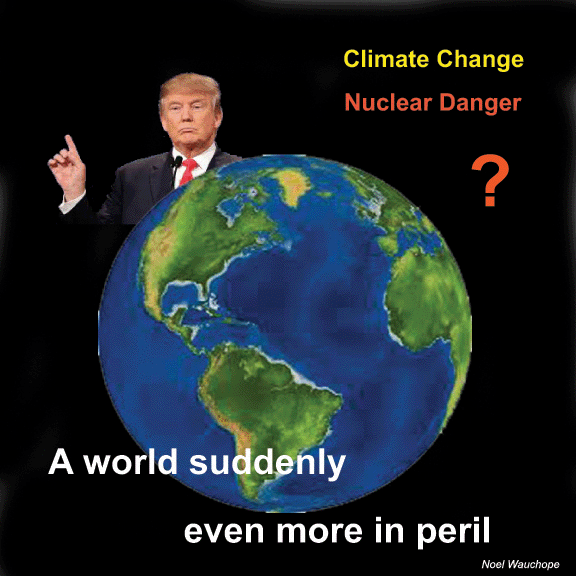
Trump Imperils the Planet https://www.nytimes.com/2018/12/26/opinion/editorials/climate-change-environment-trump.html
Endangered species, climate change — the administration is taking the country, and the world, backward.
By The Editorial Board The editorial board represents the opinions of the board, its editor and the publisher. It is separate from the newsroom and the Op-Ed section. Dec. 26, 2018
It’s hard to believe but it was only three years ago this month — just after 7 p.m., Paris time, Dec. 12, to be precise — that delegates from more than 190 nations, clapping and cheering, whooping and weeping, rose to celebrate the Paris Agreement — the first genuinely collective response to the mounting threat of global warming. It was a largely aspirational document, without strong legal teeth and achieved only after contentious and exhausting negotiations. But for the first time in climate talks stretching back to 1992, it set forth specific, numerical pledges from each country to reduce emissions so that together they could keep atmospheric temperatures from barreling past a point of no return.
- Two weeks ago, delegates met at a follow-up conference in Katowice, Poland, to address procedural questions left unsettled in Paris, including common accounting mechanisms and greater transparency in how countries report their emissions. In this the delegates largely succeeded, giving rise to the hope, as Brad Plumer put it in The Times, that “new rules would help build a virtuous cycle of trust and cooperation among countries, at a time when global politics seems increasingly fractured.”
- But otherwise it was a hugely dispiriting event and a fitting coda to one of the most discouraging years in recent memory for anyone who cares about the health of the planet — a year marked by President Trump’s destructive, retrograde policies, by backsliding among big nations, by fresh data showing that carbon dioxide emissions are still going up, by ever more ominous signs (devastating wildfires and floods, frightening scientific reports) of what a future of unchecked greenhouse gas emissions is likely to bring.
- The conference itself showcased the very fossil fuels that scientists and most sentient people agree the world must rapidly wean itself from. Poland’s president, Andrzej Duda, set the tone by declaring he had no intention of abandoning coal, which provides nearly four-fifthsof Poland’s electricity. The United States and three other major oil producers — Saudi Arabia, Kuwait and Russia — refused to endorse an alarming report issued in October by the United Nations scientific panel on climate change calling for swift reductions in fossil fuel use by 2030 to avoid the worst consequences of climate change, which it said were approaching much faster than anyone had thought.
Wells Griffith, Mr. Trump’s international energy and climate adviser, managed in one quote to summarize the dismissiveness of the American delegation and its fealty to the president’s apparently unshakable conviction that anything that helps the environment must inevitably hurt the economy. “The United States has an abundance of natural resources and is not going to keep them in the ground,” he said. “We strongly believe that no country should have to sacrifice their economic prosperity or energy security in pursuit of environmental sustainability.” The administration is full of zero-sum philosophers like Mr. Griffith. The idea that sustainability may be a necessary condition of future economic growth appears never to have crossed their minds.
Further depressing the proceedings were recent defections and political troubles in countries that, along with the United States, had been expected to lead the way to a low-carbon energy future. Germany, which long ago walked away from carbon-free nuclear power, is having a hard time cutting back on coal because of political opposition. In Australia, a prime minister was kicked out of officebecause he wanted to reduce the use of coal, which Australia produces in abundance. China, despite admirably aggressive investments in wind and solar power, has yet to get a firm grip on its emissions from coal-fired plants. The new president-elect of Brazil, Jair Bolsonaro, not only named an outspoken climate-change denier as his foreign minister but also, reversing his predecessors’ policy, pledged to open up the Amazon to mining and farming. This will threaten biodiversity in one of the world’s great rain forests while crippling its ability to act as a sink for carbon emissions.
No country’s backsliding, of course, compares with Mr. Trump’s. Determined to demolish President Barack Obama’s entire climate strategy, Mr. Trump has in the past year replaced Mr. Obama’s clean-power plan, which was aimed at reducing carbon dioxide emissions from power plants, with an essentially useless substitute that would emit 12 times the pollution envisaged by the Obama plan. He has proposed weakening a major Obama regulation requiring automakers to nearly double the fuel economy of passenger vehicles by 2025. (This rollback, The Times reported this month, came after a lot of whining by oil interests, not, as one might suspect, from the auto companies, which had accepted the challenge.) And the Environmental Protection Agency and the Interior Department have taken multiple steps to roll back Obama-era efforts to control emissions of methane, a greenhouse gas many times more powerful than carbon dioxide. These three programs formed the basis of Mr. Obama’s pledge at the 2015 Paris meeting to reduce America’s greenhouse gas emissions by 26 percent to 28 percent below 2005 levels by 2025.
The health and environmental effects of the Trump rollbacks, as documented by a Times investigation published this week, are far-reaching and potentially devastating.
This holiday season has brought more gifts to fossil fuel interests; every day is Christmas Day for the likes of Murray Energy and ExxonMobil. This month, the E.P.A. proposed killing an Obama rule that would effectively block the construction of new coal-fired power plants. The Interior Department relaxed restrictions on oil and gas drilling in areas inhabited by the sage grouse, a threatened bird. Also in December, the department released an environmental-impact statement that would open all or part of the 1.5 million-acre coastal plain of the Arctic National Wildlife Refuge to leasing and exploration. The area had been off limits to drilling for decades until Congress, late last year, approved an amendment sponsored by Senator Lisa Murkowski, an Alaska Republican, to open it up.
All this is fundamentally Mr. Trump’s doing. A series of early executive orders established the pro-fossil fuel policy framework; Scott Pruitt, the E.P.A. administrator, and Ryan Zinke, the interior secretary, filled in the details. Mr. Pruitt has left Washington and Mr. Zinke is in his final days, both finishing under ethical clouds. They will deserve, along with Mr. Trump, history’s censure for doing virtually nothing to move to a more responsible energy future — and for not doing so at just the moment when the world needed the kind of leadership that Mr. Obama and his secretary of state, John Kerry (and Bill Clinton and Al Gore before them), tried to provide.
The numbers are not great. The goal in Paris was to keep warming from exceeding 2 degrees Celsius over preindustrial levels, and if possible to hold the line at 1.5 degrees, thresholds that scientists deemed unacceptably risky. Delegates knew that even if every country managed to fulfill its individual pledges, the world would be on pace for 3 degrees of warming in this century. So they agreed to tighten the targets as time went on, but instead they’ve slid backward. Many large emitters are not on track to meet their self-imposed goals. That includes America, despite the retirement of many coal-fired plants in favor of cleaner natural gas, the increasing cost competitiveness of renewable fuels like wind and solar power, and the valiant efforts of states like California to sharply reduce their own emissions and lead where Mr. Trump will not.
The bottom line, according to the Global Carbon Project, is that after three years in which emissions remained largely flat, global levels of carbon dioxide increased by 1.6 percent in 2017 and are on pace to jump by 2.7 percent this year. Some scientists have likened the increase in emissions to a “speeding freight train.” That has a lot to do with economic growth. It also has a lot to do with not moving much faster to less carbon-intensive ways of powering that growth. Or in Mr. Trump’s case, moving in the opposite direction.
George H.W. Bush’s shameful involvement in the Regime Change in Nuclear-Free Palau
|
George H.W. Bush: Dirty Tricks and Regime Change in Nuclear-Free Palau, LA Progressive 29 Dec 18 Amidst all the presidential pomp, on Dec. 5 George H.W. Bush’s casket was lifted off the black-shrouded bier that had carried Abraham Lincoln after the 16th president’s assassination and driven from the U.S. Capitol to the Washington National Cathedral. But as far as I’m concerned George H.W. Bush went from lying for the state to lying in state. ………..
Much was made about “regime change” in Iraq because of Saddam’s purported WMDs by Pres. Bush 43. But scant attention has been paid to the tragic tale of regime change in a Pacific Island of 15,000 indigenous people who dared oppose U.S. nukes – and to Bush 41’s connection to Palau. George W. Bush may ballyhoo “spreading democracy”, but while Bush Sr. was in the Executive Branch, Palauans were compelled to vote about 15 times in around as many years on self-rule and their nuclear free status. Palauans could vote – but their vote didn’t count unless it favored U.S. policy. Palauans had to keep casting their ballots until Washington attained its desired result: Rescinding the Palau constitution’s antinuclear clauses. It was a unique form of voter suppression.
During this display democracy, Palau was gripped by a reign of terror. On June 30, 1985, Pres. Haruo Remeliik was assassinated, which reopened the then-deadlocked treaty negotiations. Shortly after the liquidation, then-Vice Pres. Bush personally flew to Saipan in the Northern Marianas, located north of Palau and where the Trust Territory administration was HQ-ed, to reopen stalled status parleys, and struck a new deal.
However, antinuclear activists defeated the treaty in a tribunal, where Palau’s High Court ruled a 75% vote favoring a proposed Compact of Free Association was required in order to override the small nation’s antinuclear laws. In 1987, terrorists firebombed and shot Pacific pacifists, and besieged Palau’s congress. A U.S. Congressional General Accounting Office investigation found a $2 million U.S.–derived slush fund financed political violence. In 1988, Palau’s second elected president, pro-U.S. puppet Lazarus Salii, also mysteriously had his head blown off. Although this was officially declared a suicide, the elimination of Salii – who was unable to pass the Compact – untied the Gordian knot that led to the elimination of Palau’s nuclear bans. Other high ranking U.S. officials during the Reagan-Bush era with links to Palau include: Secretary of State George Shultz, who secured Palauan beachheads as a Marine sergeant during WWII. Shultz returned to Palau in 1986 during the Compact re-negotiation process. In the late 1970s, Admiral William Crowe surveyed land in Palau for U.S. bases, and became CINCPAC Commander and Joint Chiefs of Staff Chairman 1985-1989. President Bush Sr. appointed Brent Scowcroft – who’d arranged the Kissinger-ordered surveillance of Micronesian status negotiations – National Security Adviser. Black Ops in ParadiseParis was Washington’s colonial partner in Oceania, and in the 1960s Moruroa atoll, at French-occupied Polynesia, became France’s South Pacific nuclear testing site for atmospheric and underwater N-blasts. On Jan. 12, 1985, Eloi Machoro, a militant leader of the Kanak indigenous people fighting for independence from France was killed by French police snipers. On March 2, 1985, shortly after he’d returned from meeting anti-nuke activists at Auckland, New Zealand, Tahitian activist Charlie Ching was arrested walking to a pro-independence, antinuclear rally in Papeete, Tahiti. On June 30, 1985 the first president of the world’s first national nuclear free zone was gunned down in Palau. Ten days later French General Directorate for External Security secret agents bombed the Rainbow Warrior at nuclear free New Zealand on July 10, 1985, as Greenpeace prepared to protest France’s nuclear testing near Tahiti. The DGSE saboteurs of the Rainbow Warrior were captured and convicted; the implicated chiefs of France’s military and intelligence services resigned. The above appear to be part of a coordinated counterinsurgency program to defeat the nuclear free and independent Pacific movement. French state terrorism was indisputably responsible for bombing Greenpeace’s ship. Is it farfetched to think the assassination of Palau’s president(s) and reign of terror was American state terrorism? Inquiring minds want to know. As former CIA chief, Bush headed what LBJ called “Murder, Inc.,” and, as mobsters say: “The fish stinks from the head down.” The Pentagon had motive: relocating bases from the Philippines (closed after Marcos’ overthrow) to Palau – but the world’s first nuclear free constitution thwarted this aspiration. To find out who commits a crime, see who benefits from it: The IPSECO debt and political violence finally wore Palauans down; in the 1990s their antinuclear framed rules lost at the polls. Palau was, in effect, annexed by Uncle Sam, as was the rest of Micronesia – which, as Bush knew from his WWII days, had vital strategic value. ………. If MSM spent 1% of the time investigating Bush’s ties to the covert actions in Palau as they did extolling his virtues during their funereal coverage, the case of who shot Pres. Remeliik might actually get solved. Instead of ballyhooing and worshipping a golden calf, MSM should mobilize at least some resources to look behind the curtain at the real record of George H.W. Bush and investigate what role, if any, he played in whacking the president of nuclear free Palau and subsequent events in the remote isles of Micronesia. Ed Rampell Ed Rampell covered Palau during Bush’s vice presidency for AP, Reuters, Newsweek, Radio New Zealand, Radio Australia, Gannett Press, Pacific Islands Monthly, etc. He initiated and was the investigative reporter for ABC News’ “20/20” segment, “The Puzzle of Palau,” which aired in July 1987 and proved three young men related to the opposition leader convicted of assassinating President Remeliik were framed political prisoners. Within two weeks of the Barbara Walters-introduced report, they were fully exonerated of the murder by Palau’s Supreme Court. Rampell went on to report for the Australian Broadcasting Corp.’s “Background Briefing” two-part expose that directly resulted in the conviction of Palau’s pro-Washington Minister of State for soliciting the homicide of President Remeliik. The newest books Rampell co-authored are “The Hawaii Movie and Television Book” and “Conversations with W.S. Merwin.” https://www.laprogressive.com/george-bush-dirty-tricks/ |
|
Israel has the World’s Most Secretive Nuclear Weapons Program
Introducing the World’s Most Secretive Nuclear Weapons Program (Not North Korea) Who could that be? National Interest, by Kyle Mizokami 24 Dec 18
That can only mean one nation…
In a private email leaked to the public in September of 2016, former secretary of state and retired U.S. Army general Colin Powell alluded to Israel having an arsenal of “200 nuclear weapons.” While this number appears to be an exaggeration, there is no doubt that Israel does have a small but powerful nuclear stockpile, spread out among its armed forces. Israeli nuclear weapons guard against everything from defeat in conventional warfare to serving to deter hostile states from launching nuclear, chemical and biological warfare attacks against the tiny country. …….
Not much is known about early Israeli weapons, particularly their yield and the size of the stockpile. The strategic situation, in which Israel was outnumbered in conventional weapons but had no nuclear adversaries, meant Israel likely had smaller tactical nuclear weapons to destroy masses of attacking Arab tanks, military bases and military airfields. Still, the relatively short ranges between Israel and its neighbors meant that the Jericho missile, with only a three-hundred-mile range, could still hit Cairo and Damascus from the Negev desert.
Israel does not confirm nor deny having nuclear weapons. Experts generally assess the country as currently having approximately eighty nuclear weapons, fewer than countries such as France, China and the United Kingdom, but still a sizeable number considering its adversaries have none. These weapons are spread out among Israel’s version of a nuclear “triad” of land-, air- and sea-based forces scattered in a way that they deter surprise nuclear attack.
…….. Israel’s first land-based nuclear weapons were based on Jericho I missiles developed in cooperation with France. Jericho I is believed to have been retired, replaced by Jericho II and -III ballistic missiles. Jericho II has a range of 932 miles, while Jericho III, designed to hold Iran and other distant states at risk, has a range of at least 3,106 miles. The total number of Israeli ballistic missiles is unknown, but estimated by experts to number at least two dozen.
Like other nuclear-armed nations, the Israeli Navy has reportedly deployed nukes to what is generally agreed to as the most survivable seagoing platform: submarines. Israel has five German-built Dolphin-class submarines, which experts believe are equipped with nuclear-tipped cruise missiles. The cruise missiles are reportedly based off the Popeye air-to-ground missile or the Gabriel antiship missile. This ensures a so-called “second-strike capability”—as long as one submarine is on patrol, some portion of Israel’s nuclear deterrent remains invulnerable to a nuclear first strike, guaranteeing the ability to launch a nuclear counterattack.
The establishment of a nuclear triad demonstrates how seriously Israel takes the idea of nuclear deterrence. The country will likely not declare itself a nuclear power any time soon; ambiguity over ownership of nukes has served the country very well. The 2015 Joint Comprehensive Plan of Action and general instability across the Middle East has ensured that Israel will likely remain the only nuclear-armed state in the region for the foreseeable future, but a collapse of the agreement or some new nuclear program could easily change that.https://nationalinterest.org/blog/buzz/introducing-worlds-most-secretive-nuclear-weapons-program-not-north-korea-39722
UK’s Ministry of Defence setting up a smokescreen about the British nuclear bombing disgrace in Australia
Hiding Britain’s H-bomb secrets https://www.theguardian.com/global/2018/dec/27/hiding-britains-h-bomb-secrets Sue Rabbitt Roff is alarmed at files being withdrawn by the Nuclear Decommissioning Authority That the Nuclear Decommissioning Authority has withdrawn files relating to the development of the British H-bomb in Australia 70 years ago (Nuclear weapons and energy files removed from archives, 24 December) is indeed alarming to those of us trying to get behind the smokescreens already set up by the Ministry of Defence’s closing access to files over the past decades.
My own research has been into why Sir Mark Oliphant, Australia’s premier nuclear physicist and a prime mover in the Tube Alloys group that showed the Americans how to build atomic bombs in time to use in the second world war, never spoke out about the contamination (from H-bomb tests) of his beloved home state of South Australia and further eastward just weeks before the 1956 Olympic Games took place in Melbourne.
He told me in 1993: “The Brits thought they could ensure any fallout or contamination was not too big. They were very pigheaded about it. The people in control were very haphazard about the estimates.” Why didn’t he speak out about the residual radioactive contamination at Monte Bello, Maralinga and Emu Field, even when he was governor of South Australia? He replied: “You can really decontaminate Maralinga by leaving it alone. Plutonium alpha particles contamination, I think, is grossly overplayed. The Aborigines are using it to the full. At the same time it was very naughty of the British to leave it, and to think of spreading it that way in the first place was very nasty. The British people were very reticent about revealing contamination, especially regarding food contamination. They hugged that to their chests very closely.”
I suggest that Sir Mark Oliphant was Australia’s – and Britain’s – J Robert Oppenheimer. The evidence is set out on my website www.rabbittreview.com and was mostly found in the files I accessed in the UK National Archives.
Environmental groups to take legal action about South Carolina nuclear decision
Environmental groups challenge SC nuclear decision, setting stage for Supreme Court appeal https://www.postandcourier.com/business/environmental-groups-challenge-sc-nuclear-decision-setting-stage-for-supreme/article_53ded6a2-079e-11e9-bd1e-67572a7e9c93.html By Thad Moore tmoore@postandcourier.com Dec 24, 2018
A pair of environmental groups will challenge state regulators’ decision to let Dominion Energy buy South Carolina Electric & Gas and charge ratepayers for its failed nuclear project.
The legal challenge means that regulators on the state’s Public Service Commission will have to formally reconsider their decision, which would leave SCE&G customers to pay $2.3 billion over the next two decades for a pair of abandoned nuclear reactors.
The process was set in motion Monday by Friends of the Earth and the Sierra Club, a pair of environmental groups that faced off against SCE&G throughout the decade-long nuclear project. They filed their protest with the commission — the same regulators who made the decision.
The environmental groups say the PSC should have officially made a determination about whether SCE&G handled the nuclear project appropriately. Attorneys opposing the power company argued SCE&G failed to tell regulators about studies that questioned the project’s viability.
The PSC chided SCE&G this month, saying it had damaged the public’s trust. But regulators stopped short of formally saying they had been misled
The environmental groups went further. They argued Monday that “SCE&G fraudulently lied, misled and withheld material information” about the problems that sank its $9 billion plan to build a pair of reactors at V.C. Summer Nuclear Station, north of Columbia.
SCE&G and Dominion, a Virginia-based utility giant that has offered to buy it, couldn’t immediately be reached for comment Monday.
Inconvenient truths on nuclear waste ignored or buried by UK Government (again).
Industrial Strategy (BEIS) department published two important new documents dealing with the UK radioactive waste strategy.
http://drdavidlowry.blogspot.com/2018/12/inconvenient-truths-on-nuclear-waste.html
Bizarre way in which Britain planned to kill their allies! – Russian soldiers during World War 2
Blue Peacock was designed to be buried on German soil along likely Soviet routes of advance. As the British were pushed back, the Soviet Army would advance, and probably would set up things like headquarters, supply depots, and other units directly above a buried Blue Peacock mine. Once the bomb went off, a ten-kiloton atomic explosion would made a significant dent in the Soviet invasion force.
The weapon could go off in one of three ways: an 8-day timer, remote control, or if someone tampered with it. One proposed arming mechanism was placing chickens in the bomb along with just enough food for the chickens to die of starvation after eight days. Seriously. https://www.popularmechanics.com/military/weapons/a25645798/blue-peacock-land-mine/
McAfee computer virus protection company is in partnership with nuclear corporation AREVA, (now rebranded as ORANO, and rebranded again as FRAMATOME)
 Framatome partners with McAfee to support energy industry cybersecurity 24 May 2018, Framatome signed an agreement with McAfee, the device-to-cloud cybersecurity company, to distribute cybersecurity solutions to energy transmission, distribution and generation facilities worldwide. Together, Framatome and McAfee will work with these facilities to help protect their digital assets and support the reliable production of electricity.
“In a rapidly evolving digital landscape, holistic and robust cybersecurity programs are critical to protecting nuclear energy facilities and electrical power and distribution infrastructure,” said Catherine Cornand, senior executive vice president of Framatome’s Installed Base Business Unit. “This partnership with McAfee will enhance our ability to provide customers with the right combination of cutting-edge technologies and expertise.”…….http://www.framatome.com/EN/businessnews-1331/framatome-partners-with-mcafee-to-support-energy-industry-cybersecurity.html
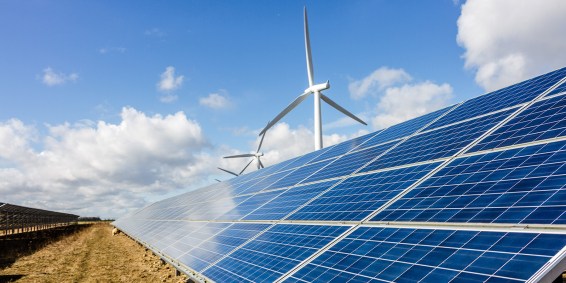
Editorial: Japan must ditch nuclear plant exports for global trends in renewable energy
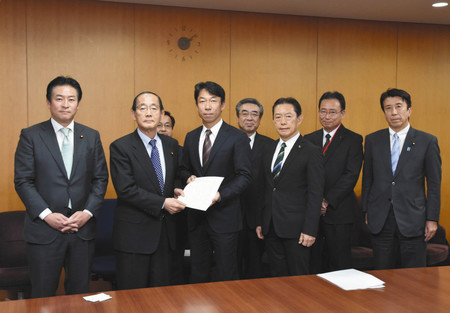
5 Chiba prefecture mayors request radioactive waste storage facility for the 8th time
Enormous costs of shutting down Japan’s nuclear facilities
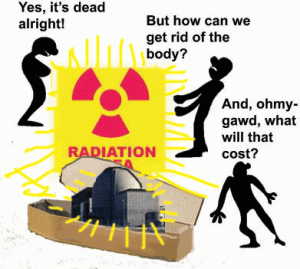 Costs for scrapping 79 nuclear facilities estimated at 1.9 tril. yen https://mainichi.jp/english/articles/20181227/p2g/00m/0na/001000c December 27, 2018 (Mainichi Japan) TOKYO (Kyodo) — The state-backed Japan Atomic Energy Agency said Wednesday it would need to spend about 1.9 trillion yen ($17.1 billion) to close 79 facilities over 70 years, in its first such estimate. The total costs could increase further, as the agency said the estimated figure, which would be shouldered by taxpayers, excludes expenses for maintenance and replacing aging equipment. The JAEA plans to close more than half of the 79 facilities over the next 10 years due in part to the increased costs to operate them under stricter safety rules introduced after the 2011 Fukushima nuclear crisis. The agency, which has led nuclear energy research in Japan with its predecessors since the 1950s, owns a total of 89 facilities. Of the estimated costs, the expense for closing the nation’s first spent-fuel reprocessing plant in the village of Tokai, Ibaraki Prefecture, northeast of Tokyo, accounts for the largest chunk of 770 billion yen. It will cost 150 billion yen to decommission the trouble-plagued Monju prototype fast-breeder nuclear reactor. As for nuclear waste, the agency said about 100 kiloliters of high-level radioactive waste and up to 114,000 kl of low-level radioactive waste were estimated to have been produced but it has yet to decide on disposal locations. The Japanese government aims to restart nuclear power plants after a nationwide halt following the nuclear crisis, despite persistent concern over the safety of atomic power generation. |
|
|
Donald Trump can launch nuclear weapons anytime: even Secretary of Defense Jim Mattis (now sacked) could not have stopped him.
 Trump can launch nuclear weapons whenever he wants, with or without Mattis Mattis’ departure seems to be provoking unease, especially considering how dangerous our nuclear-command arrangements are. The notion that Mattis, a former four-star Marine Corps general, could have blocked or defied a move by Trump to impulsively launch nuclear weapons may have seemed comforting, but it shouldn’t have been. The secretary of defense has no legal position in the nuclear chain of command, and any attempts by a secretary of defense to prevent the president from exercising the authority to use nuclear weapons would be undemocratic and illegal. With or without Mattis, the president has unchecked and complete authority to launch nuclear weapons based on his sole discretion. The reaction to Mattis’ resignation, however, could open the door for the new Congress to create long-overdue legal barriers preventing the president from initiating a nuclear strike. Such a step could be implemented without any negative impact on U.S. security or that of our allies. Every day, the U.S. nuclear early warning system is triggered by some event or another, mostly civilian and military rocket launches by one or more of a dozen countries with ballistic missiles. When such launches appear to threaten North America, the head of U.S. Strategic Command is alerted, and sometimes these alerts warrant the urgent notification of the president. That alert comes by way of a direct call from the Strategic Command or via the White House Situation Room, the emergency-operations bunker beneath the East Wing, or the national security adviser. Partly a remnant of the Cold War, this system remains in place today to ensure the president can be notified quickly of any direct threat to the United States’ nuclear arsenal and the facilities that control it. That way, he can launch nuclear missiles before they are destroyed or the U.S. government is incapacitated by incoming weapons. n normal times, this system is precarious, and it can pressure even experienced leaders to consider nuclear weapons in a crisis sooner than warranted. Alerts stemming from ambiguous ballistic nuclear missile threats occurred multiple times during the administrations of George W. Bush and Barack Obama, and some alerts went directly to those presidents. Yet, this system seems especially ill-suited to a president who has demonstrated time and again that he can be provoked into taking rash action, and who, as a candidate, openly questioned why the United States could not use the nuclear weapons it possesses. This is a dangerous set of instincts for a commander in chief with sole and unchecked authority over almost 4,000 nuclear weapons, nearly 1,000 of which could be fired within a few minutes. For over a year, Mattis has been trying to reassure congressional leaders that he could help check some of Trump’s impulses, in part by intervening in the nuclear chain of command. In a break with normal procedures, Mattis reportedly told the commander of the Strategic Command to keep him directly informed of any event that might lead to a nuclear alert being sent to the president. He even told the Strategic Command “not to put on a pot of coffee without letting him know.” Congressional leaders interpreted this to mean that Mattis would either deal with a possible threat before it reached Trump or ensure he was present to advise Trump when such an alert arrived. This assurance may have helped ease concerns about our nuclear weapons for some members of Congress, but only if they were unfamiliar with how the command and control structure truly works. Personal relationships and back channels are no way to manage a nuclear arsenal. Even informed observers are surprised to learn the president can order the use of nuclear weapons without the input – or consent – of the secretaries of Defense or State, the chairman of the Joint Chiefs of Staff or the vice president. They only have a role in the presidential launch protocol if the president has given prior approval for them to be notified and solicits their advice. Otherwise, none of these people would need to be involved or informed that the president has decided to use a nuclear weapon. Under standard procedure, an attempt would be made to contact key national security officials, but in some real-world and exercise scenarios, it has proven impossible to tie them into a quickly convened emergency teleconference. Should he wish, the president could exclude all of them, and even bypass the primary designated adviser – the four-star general in charge of U.S. strategic forces – by ordering a low-ranking on-duty emergency operations officer at the Pentagon or elsewhere to transmit a launch order directly to the executing commanders of strategic U.S. submarines, silo-based missiles and bombers. Trump could have learned all this in a briefing about nuclear weapons shortly after he took office, and his military aide, ever at his side, could explain and assist in issuing a direct order to a lower-level officer at any time. Even if Mattis had been with Trump at a time of nuclear crisis, his resignation letter drives home the fact that Trump might very well have simply ignored his counsel. Trump, as he is proving in stark terms, listens only to himself. And any attempt by another person to physically block the president from issuing a launch order would probably result in his or her removal by the Secret Service. It is delusional and fundamentally undemocratic to think that our strongest check on a president bent on initiating nuclear war without justifiable cause might be a defense secretary trying to keep the president from communicating his launch authority using the so-called Gold Codes. When the United States faced the prospect of sudden nuclear attack from the Soviet Union, this system helped reinforce deterrence based on a balance of nuclear terror. But since the demise of the U.S.S.R., and even with a more aggressive Russia, the whole arrangement raises questions about its necessity, risks and consistency with democratic values. It is well past time for the system to be reformed to ensure that it hews to our Constitution and mitigates as much as possible the very real risks associated with a renewed arms competition with Russia. One key issue is whether Trump – or any president – should have the legal ability to independently initiate the use of nuclear weapons. It seems reasonable that the president needs to be able to quickly order a nuclear response if an adversary employs nuclear weapons first against us, and that he would not have time to consult with Congress or the Cabinet if nuclear missiles were headed here. (The flight time of ballistic missiles over intercontinental distances is 30 minutes or less, and the president would have only about five to seven minutes to decide whether and how to respond.) |
|
|
Britain’s historic nuclear records removed from public view
 British nuclear archive files withdrawn without explanation https://www.theguardian.com/world/2018/dec/23/british-nuclear-archive-files-withdrawn-without-explanation
Historical papers removed from public view by Nuclear Decommissioning Authority
Thousands of archive files relating to Britain’s nuclear weapons and atomic energy programmes have been withdrawn without warning from public view. A vast cache of material dating from 1939 until the 1980s and including more than 1,700 files about the creation of Britain’s first nuclear bombs at Aldermaston has been unexpectedly withdrawn by the National Archives within the last week, researchers have reported. The files were withdrawn at the instruction of the government’s Nuclear Decommissioning Authority, according to the National Archives. They range from the private papers of Sir John Cockcroft, the Nobel Prize-winning physicist who split the atomic nucleus, to reports of atomic bomb tests carried out as part of the creation of Britain’s nuclear deterrent in Australia and the Pacific. Attempts to access them online are met with the message: “This record is closed whilst access is under review.” Neither the National Archives at Kew nor the NDA were able to comment on Sunday about why they had been removed. Speculation among academics who rely on the papers for their research ranged from whether the NDA had realised there was something in the files that shouldn’t have been made public to more prosaic suggestions such as a reorganisation of the files or a shift in location. The papers are in two sections. The records of the Atomic Weapons Establishment (AWE) and its predecessors concern the research, development and testing of Britain’s atomic weapons including bomb trials, feasibility reports on new systems and notes on the theoretical physics behind nuclear weapons. They include files with titles such as “structural vulnerability of aeroplanes to blast from atomic bomb” and “measurement of air blast using petrol cans and toothpaste tubes”. The records of the United Kingdom Atomic Energy Authority largely concern the civilian nuclear energy programme. They include photographs detailing the construction of nuclear reactors and daily log books from nuclear power stations. “We would like to know what is going on,” said Jon Agar, a professor of history of science and technology at University College London. “We would be alarmed as historians that it has been taken out of public view. These are important records for understanding the nuclear project in the UK. A couple of days ago a PhD student noticed that everything in the catalogue is coming up as temporarily retained. We are scratching our heads. It is all a bit mysterious.” A spokeswoman for the National Archives said: “We have been asked to temporarily withdraw these records, which is why they now appear on our catalogue as ‘access under review’. For further information, please speak to the transferring authority.” The transferring authority is the NDA, which comes under the auspices of the Department for Business, Energy and Industrial Strategy. A spokesman for the NDA said he could not yet explain why the records had been removed, but said: “The NDA is absolutely committed to openness and transparency.” |
|
|
Top court orders TEPCO to pay compensation for voluntary evacuation from Fukushima

 December 18, 2018 (Mainichi Japan) TOKYO — The Supreme Court on Dec. 13 upheld the lower court ruling ordering Tokyo Electric Power Co. (TEPCO) to pay about 16 million yen in compensation to a man in his 40s and his family that voluntarily evacuated Fukushima Prefecture to western Japan after the 2011 nuclear disaster.
The top court’s First Petty Bench confirmed an Osaka High Court ruling handed down in October 2017 that recognized the man had developed depression due to the disaster and became unable to work. It marked the first time that a ruling awarding compensation to voluntary evacuees from the Fukushima Daiichi Nuclear Power Station disaster has been finalized by the top court, according to a legal team for victims of the nuclear crisis. ….. https://mainichi.jp/english/articles/20181218/p2a/00m/0na/021000c
Communities call on France’s government to stop EDF from setting up nuclear facilities on agricultural land.
|
Le Quotidien 20th Dec 2018 In a letter addressed to the highest authorities of the French state,
associations denounce the massive purchase of land by EDF around nuclear power plants, including that of Cattenom. They suspect the company of planning the construction of EPR and call for the respect of the right of neighboring countries, including Luxembourg, to live in a preserved environment. Following the acquisition by EDF of agricultural land around
nuclear sites, including Cattenom, defense associations are concerned about the vagueness of these purchases and the uncertainties that weigh on their future use. The Daily publishes below all of their letter addressed to the President of the Republic, the Prime Minister, the Minister of Ecological Transition and local elected representatives: “No to the extension of nuclear, yes to the protection of agricultural land http://www.lequotidien.lu/grande-region/extension-de-cattenom-vers-la-construction-dun-epr/ |
|
1 This Month
Tell Congress: Prevent Nuclear Catastrophe in Iran

Tell Congress: Prevent Nuclear Catastrophe in Iran

Read the Public Inquiry Report, the Commissioners’ report, Surrendering Australia: The AUKUS Deception is available to download for free at aukuspublicinquiry.com. Or just watch the replay of the National Press Club Luncheon.


Shut down the radiation-damaged Heysham nuclear reactors now
To see nuclear-related stories in greater depth and intensity – go to https://nuclearinformation.wordpress.com

Say No to NASA’s Reckless Nuclear Reactor on the Moon
Say No to NASA’s Reckless Nuclear Reactor on the Moon
-
Archives
- November 2026 (246)
- October 2026 (302)
- September 2026 (339)
- August 2026 (330)
- July 2026 (355)
- June 2026 (287)
- May 2026 (306)
- April 2026 (356)
- March 2026 (251)
- February 2026 (267)
- January 2026 (308)
- December 2025 (358)
-
Categories
- 1
- 1 NUCLEAR ISSUES
- business and costs
- climate change
- culture and arts
- ENERGY
- environment
- health
- history
- indigenous issues
- Legal
- marketing of nuclear
- media
- opposition to nuclear
- PERSONAL STORIES
- politics
- politics international
- Religion and ethics
- safety
- secrets,lies and civil liberties
- spinbuster
- technology
- Uranium
- wastes
- weapons and war
- Women
- 2 WORLD
- ACTION
- AFRICA
- Atrocities
- AUSTRALIA
- Christina's notes
- Christina's themes
- culture and arts
- Events
- Fuk 2022
- Fuk 2023
- Fukushima 2017
- Fukushima 2018
- fukushima 2019
- Fukushima 2020
- Fukushima 2021
- general
- global warming
- Humour (God we need it)
- Nuclear
- RARE EARTHS
- Reference
- resources – print
- Resources -audiovicual
- Weekly Newsletter
- World
- World Nuclear
- YouTube
-
RSS
Entries RSS
Comments RSS

