US moves to eliminate longtime radiation safety principle for nuclear power
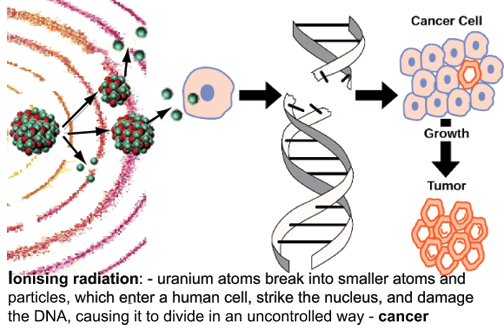
“the change could ultimately make it so that currently low doses of radiation that workers and the public are exposed to “could increase really all the way up to regulatory limits without any sanction from the NRC.”
by Rachel Frazin – 07/02/26, https://thehill.com/policy/energy-environment/5951671-nuclear-power-radiation-exposure-nrc/
The federal government is proposing to overhaul radiation safety regulations for nuclear power, including by eliminating a long-term principle for nuclear safety.
The Nuclear Regulatory Commission (NRC) this week proposed to get rid of the requirement for nuclear plants to ensure that radiation exposure is “as low as is reasonably achievable.”
Proponents of the change say just using radiation dose limits is less subjective than going by the “as low as is reasonably achievable” principle — and that it led to overly conservative protections that stifled the nuclear industry.
Supporters of the current language, however, say that having the “as low as reasonably achievable” principle, also known as ALARA, in place ensures that nuclear plants take all measures possible to reduce exposure for workers and the general public.
NRC Chair Ho Nieh said in a statement that the agency is “raising the standard for regulatory clarity, not lowering the standard for safety.”
“Our radiation dose limits remain unchanged — what we’re eliminating is unnecessary ambiguity,” he said.
But critics say that eliminating ALARA means getting rid of a key incentive for energy companies to keep radiation levels as low as possible — and could mean more cancer cases.
“Facility owners felt like … ALARA was forcing them to go well below the allowable radiation limits and spend a lot of money to do that,” said Edwin Lyman, director of nuclear power safety at the Union of Concerned Scientists.
Lyman warned that the change could ultimately make it so that currently low doses of radiation that workers and the public are exposed to “could increase really all the way up to regulatory limits without any sanction from the NRC.”
He said this could include by having employees work longer shifts and therefore getting more radiation exposure.
Overall, he said, “this is opening the door for sloppier practices” and “worse management.”
In addition to axing ALARA, the NRC is proposing other changes, including loosening emissions limits for radioactive material.
It said that under one of the rules it is proposing to change, current regulations would allow for an estimated four excess cases of fatal cancer for every 10,000 people exposed to the maximum allowable radiation for 70 years. It said that the change it is making would allow this number to go up to nine cases for every 10,000 people.
It also proposed increasing how much radiation caregivers for people who receive radiation treatment can be exposed to.
The agency said that all of the changes it is proposing would save the industry about $9.53 million per year.
The moves come as the Trump administration has been pushing for the U.S. to build more nuclear power. Last year, an executive order from President Trump set the goal of quadrupling the nation’s nuclear power capacity by 2050.
It also directed the NRC to reconsider its use of ALARA and to speed up approvals for nuclear reactor licenses.
While the NRC is technically an independent agency, it is made up of three Republicans and two Democrats.
Last year, the White House fired a Democrat from the commission, which at the time, had a 3-2 Democratic majority. On Monday, the Supreme Court ruled the White House can conduct such firings.
US looking at easing restrictions on radiation exposure at the nation’s nuclear power plants
“This will only increase the disease burden at a time when cancer rates are already rising among younger people,”
The proposal would eliminate a standard to keep radiation exposure ‘as low as reasonably achievable’
The Independent, Rachel Dobkin in New YorkThursday 02 July 2026
Federal regulators are looking at easing restrictions on radiation exposure at the nation’s nuclear power plants.
The Nuclear Regulatory Commission, an independent agency aimed at ensuring the safe use of radioactive materials, proposed Wednesday eliminating a standard to keep radiation exposure “as low as is reasonably achievable,” also called ALARA.
ALARA is based on the linear no-threshold model, which presumes that any dose of radiation carries a proportional risk of harm.
The commission said in a press release that the proposal would introduce changes, including a graded approach to radiation dose management “based on risk and operational circumstances” and expanding options for managing workplace radiation exposure.
The Independent has reached out to the Nuclear Regulatory Commission for comment.
The changes could save the nuclear industry about $9.53 million a year, according to documents from the Nuclear Regulatory Commission obtained by The Hill.
Edwin Lyman, a physicist and nuclear safety advocate at the Union of Concerned Scientists, told Reuters, “In eliminating its use of the ALARA principle, the agency’s sweeping new proposed rule would allow nuclear facility workers and the general public to be exposed to higher levels of cancer-causing radiation just to save the nuclear industry money.”
“This will only increase the disease burden at a time when cancer rates are already rising among younger people,” Lyman said.
The number of new cancer cases increased among people under age 50 from 2010 through 2019, according to researchers at the National Institutes of Health.
The Nuclear Regulatory Commission noted in documents that the proposal would address part of President Donald Trump’s executive order to reform the agency. https://www.the-independent.com/news/world/americas/us-politics/nuclear-plants-radiation-exposure-rules-b3007995.html
US nuclear power regulator proposes changing rule protecting people from radiation

in eliminating its use of the As Low as Reasonably Achievable (ALARA) principle, the agency’s sweeping new proposed rule would allow nuclear facility workers and the general public to be exposed to higher levels of cancer-causing radiation just to save the nuclear industry money
By Timothy Gardner, July 2, 2026, https://www.reuters.com/legal/government/us-nuclear-power-regulator-proposes-changing-rule-protecting-people-radiation-2026-07-01/
Summary
- Proposal would eliminate the ALARA radiation protection standard and set objective dose limits
- NRC to take public comments on radiation rule for 45 days
- NRC Chairman Ho Nieh said change could help speed development of new reactors
WASHINGTON, July 1 (Reuters) – The U.S. nuclear power regulator on Wednesday proposed changes to a rule protecting people from radiation, the latest proposal pushed by the Trump administration to change or soften rules to speed development and cut costs for new atomic reactors.
President Donald Trump signed executive orders in 2025 seeking to speed up permitting of reactors and to overhaul the Nuclear Regulatory Commission and directing the Energy and Defense departments to work together to build nuclear plants on federal lands. Trump wants to quadruple U.S. nuclear power capacity by 2050 to meet power demands that are rising due to data centers, electric vehicles and crypto-currencies.
The Nuclear Regulatory Commission proposal eliminates a radiation protection standard called As Low as Reasonably Achievable, or ALARA, with objective dose limits for radiation. “This rulemaking is raising the bar on clarity in our regulations,” Ho Nieh, the NRC chairman, told reporters. “It is not lowering the bar on our safety standards.”
The industry has long argued that ALARA is tied to a model known as Linear No-Threshold that holds that any dose of radiation, no matter how small, carries cancer risks and that complying with ALARA is costly, time consuming, and full of uncertainties.
The proposed changes include adopting a graded approach to radiation dose management based on risk and operational circumstances. It also allows nuclear power plant operators greater flexibility to use “modern methods for evaluating radiation doses to workers and the public.”
Nieh said he does not anticipate that current nuclear reactors will make major changes due to the changed rule if finalized. But he said it could help speed development of new reactors.
“Now they have a very clear picture of what the requirements for radiation protection are going to look like, that will inform how they build and design their reactor, in terms of the shielding and the materials that they’re using,” Nieh told reporters.
Edwin Lyman, a physicist and nuclear safety advocate at the Union of Concerned Scientists, said the NRC has correctly reaffirmed the scientific consensus that there is no safe level of radiation exposure and that the cancer risk is proportional to the dose.
“However, in eliminating its use of the ALARA principle, the agency’s sweeping new proposed rule would allow nuclear facility workers and the general public to be exposed to higher levels of cancer-causing radiation just to save the nuclear industry money.”Nieh said he does not anticipate that current nuclear reactors will make major changes due to the changed rule if finalized. But he said it could help speed development of new reactors.
“Now they have a very clear picture of what the requirements for radiation protection are going to look like, that will inform how they build and design their reactor, in terms of the shielding and the materials that they’re using,” Nieh told reporters.
Edwin Lyman, a physicist and nuclear safety advocate at the Union of Concerned Scientists, said the NRC has correctly reaffirmed the scientific consensus that there is no safe level of radiation exposure and that the cancer risk is proportional to the dose.
“However, in eliminating its use of the ALARA principle, the agency’s sweeping new proposed rule would allow nuclear facility workers and the general public to be exposed to higher levels of cancer-causing radiation just to save the nuclear industry money.”
“This will only increase the disease burden at a time when cancer rates are already rising among younger people,” Lyman said.
Last month, the NRC proposed rule changes including changing a rule on security standards at nuclear power plants that UCS said would “dramatically weaken measures that protect their facilities from terrorist attacks.” Another rule proposed on Wednesday would make sweeping changes to reactor licensing including streamlining the construction of new reactors.
The NRC will take public comments on the radiation rule for 45 days before the rule is finalized.
The Golden Rule and Crew are ready – Summer 2026 voyage

The VFP Golden Rule Committee plans to bring the Golden Rule to 12 ports-of-call this summer. However, weather on the Pacific coast has been wild this season. After arriving in Fort Bragg, we are waiting for a huge, strong storm to let up a bit before proceeding south.
An optimistic schedule is set out below – note that the order of stops and dates for San Diego, Ensenada, and Oceanside all depend on when the storm breaks. And the rest of the schedule may also shift and a stop or two canceled – stay tuned on our website and eNews, which will be posted as soon as we successfully leave Fort Bragg.
Please see vfpgoldenruleproject.org for the latest schedule.
Locate the Golden Rule with our Tracker.
See live videos from the boat on Facebook: GoldenRulePeaceBoat
Follow us on Instagram goldenrulepeaceboat
We look forward to presentations, peace picnics, concerts, film screenings, city council resolutions, press conferences, Peace Flotillas, “open boat” tours, and taking people sailing!
If you live in or near any of these coastal cities, we encourage you to help organize events and publicity. If you will be visiting the California coast this summer, please plan to join us.
U.S.-Israel Military Merger Delayed: Here’s Why and How You Can Stop It
A procedural vote bought Congress—and the American people—one more chance to defend American sovereignty. Welcome to civics class, Washington, D.C. style.
The Kucinich Report, Dennis Kucinich and Elizabeth Kucinich, Jul 03, 2026
The U.S.-Israel military merger has not become law – yet.
Not because Congress rejected it, but because the House unexpectedly voted down the procedural rule governing debate on the National Defense Authorization Act (NDAA).
That vote delayed consideration of the bill, but it did not remove the military merger from it. When the House returns, Congress will almost certainly have another opportunity to consider the legislation.
The American people now have another opportunity to stop it.
What Happened?
The Massie-Khanna Amendment, which would have removed the military merger from the bill, was not made in order by the House Rules Committee, which serves as the traffic cop on legislation, deciding which bills and which amendments move forward.
In this case, the Rules Committee played dirty cop and the fix was in to make sure the House would not be able to vote on the military merger because the amendment was simply not placed in the rule. In fact, the amendment was not taken up by the committee and did not even receive a vote.
It was ignored.
Welcome to civics class, Washington, D.C. style, on how a bill isn’t made
How Congress Was Prevented from Voting
Every piece of legislation has its own specific rule, which determines, among other matters, how much time will be permitted for debate, what amendments are made in order, whether legislation can be further amended from the House floor, and whether a point of order can be raised to challenge the bill.
The Rules Committee makes up the rules for each bill as it goes along.
And it does.
Since Republicans control the House, they determine the committee’s membership. The Rules Committee consists of nine Republicans and four Democrats.
This particular rule governed consideration of the National Defense Authorization Act for Fiscal Year 2027, legislation that would increase annual Pentagon spending by an astonishing 67 percent to $1.5 trillion. The rule, approved by the committee on a partisan vote at the request of the President, also combined the NDAA with the so-called SAVE Act, restricting voter registration.
Before Members can vote on the underlying legislation, they must first vote separately on the rule. The rule establishes the terms of debate and determines which amendments may be considered.
If the rule goes down, the bill goes down with it.
Why Was the NDAA Vote Delayed?
Here is what happened.
Because of a dispute over the SAVE Act, the House voted down the rule. The NDAA never came before the House for debate or final passage. A disappointed Speaker adjourned the House until July 13.
As a consequence, the NDAA has not passed and the U.S.-Israel military merger it authorizes has not become law.
Yet.
The Fight Continues………………………………………………..https://kucinichreport.substack.com/p/us-israel-military-merger-delayed?utm_source=post-email-title&publication_id=1441588&post_id=204708708&utm_campaign=email-post-title&isFreemail=true&r=c9zhh&triedRedirect=true&utm_medium=email
The Pentagon’s Budget Redirected Would Exceed Our Wildest Dreams.
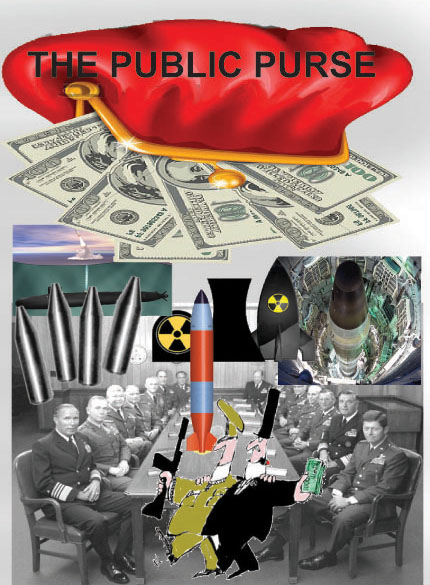
The actual cost of the U.S. military budget that Trump is asking for is $3 trillion.
By David Swanson, World BEYOND War, July 1, 2026, https://worldbeyondwar.org/the-pentagons-budget-redirected-would-exceed-our-wildest-dreams/
Legacy “news” outlets have declared a national disaster emergency. It seems that we the people of the United States may be in imminent danger of having about 10% of the U.S. Congress give a damn about us, and — what’s worse — perhaps 5% give a damn about the other 96% of humanity too.
The panic seems misplaced, not only because Uncle Sam’s Oligarchs have still got 90% of our court jesters, the one emperor, and a majority of the Supremes, but also because the proposals for preschools, grocery stores, buses, and so forth hardly scratch the surface of the enormous pile of money dumped each and every year into a single criminal enterpr – er, I mean, government program. The actual cost of the U.S. military budget that Trump is asking for is $3 trillion. The point I am making here still works if you can’t be bothered with new facts and want to claim that the proposed military budget is half of that, but I think going with the most accurate facts we can find is always the best policy.
For some $3.7 trillion a year, the United States could have something that every other country in the World Cup has: healthcare as a human right free to all. That is, with only $0.7 trillion in new revenue each year (or the cost of a fairly mediocre war), everybody paying for health insurance could stop, everybody without health coverage could have it, and preventive care could begin to take over from emergency care. I don’t know how to calculate all the hours reclaimed from dealing with health insurance forms and so forth. But this would be a transformation of the U.S. government from principally a killing machine to principally a healthcare provider. Let’s look at some smaller proposals.
We could make college free for $75 billion a year, preschool for $35 billion, provide housing to everyone who lacks it for $29 billion a year. See those first three teeny tiny orange bars in the chart above. Can you image having those unbelievable things and still only be scratching the surface?
We could hire 100,000 people at $100,000 a year to work on what’s needed most. Total cost: $10 billion. We could end hunger on Earth for $93 billion a year. We could provide solar power to every house in the United States over 10 years for $120 billion each year. We could build 1,000 miles of high-speed rail each year for perhaps (depending how efficiently and where it’s done, of course) $200 billion. Or double or triple that for more efficiencies. It’s not as if we’re running our of money.
We could do all of these things, exceeding the wildest nightmares of Republicans and corporate Democrats alike, and still maintain absolute faith in militarism. We’d only have to assume that the United States was remotely like the rest of the world, which spends a tiny fraction of what the United States does on war machinery. Or we could grow more enlightened than that and go a lot further. The process would, by stages, enlighten us in any case. Regardless, we would need to invest something in the transition to peaceful industries, and to compensate, assist, and retrain anyone wanting such measures. Just to ridiculously over-invest in that concern, let’s chalk up another $200 billion.
Now, the things one can do for safety while disarming are many and include ceasing to supply the world with weapons, as well as making disarmament agreements, providing disarmament incentives, and supporting the rule of law, cooperation, investment in unarmed civilian defense, truth and reconciliation commissions, and so on. One thing on that list is actual aid — not military “aid” but actual, no-strings, support for human and environmental needs. I think a healthy quarter trillion on that each year would produce rallies around the world celebrating the United States instead of burning its flag.
Even then, we’d be only a bit over $1 trillion total. We could think a little harder about what’s needed most. Or we could send a check for $5,696 to every person in the United States and call it a good day’s work. We’ve not, of course, counted here the widely understood economic advantages of spending money in these ways rather than on wars — but everyone would share in those benefits too.
Dream bigger.
New York Times Reported Iran Deal From Pro-Israel, Pro-War Perspective

Uncritically parroting Israeli government talking points that frame Israel as the victim is journalistic obfuscation at best
Drew Favakeh, July 1, 2026, https://worldbeyondwar.org/the-pentagons-budget-redirected-would-exceed-our-wildest-dreams/
The New York Times, the US’s most powerful establishment news outlet, has reported on President Donald Trump’s “memorandum of understanding” with Iran from a pro-war and/or pro-Israel perspective. Why did Trump end the war without limiting Iran’s “nuclear program” and its support for “proxy forces,” or without conducting “regime” change? These are the questions that have preoccupied the paper of record’s news reporting.
As I’ve noted before (FAIR.org, 3/30/26), multiple Times employees are reporting from and currently living in Israel, despite Israel’s blanket censorship policies, not to mention its killing hundreds of journalists. Meanwhile, the paper has no reporters in Iran, a situation it blames on Iran’s press restrictions.
This editorial decision has no doubt contributed to the paper covering the memorandum from an Israeli perspective, which is not aligned with the 59% of the US adult population who say the US using military force in Iran was the wrong decision.
‘Frightening new reality’
Over its first article (6/14/26) published about the memorandum, the New York Times headline read, “In Israel, Broad Discontent Even Before Deal’s Details Are Known.” The subhead noted that “Israelis across the political spectrum have said the agreement appears to leave fundamental security threats posed by Iran unaddressed.”
The piece, by Times Jerusalem correspondent Isabel Kershner, uncritically granted anonymity to an “Israeli who had been briefed on the deal with Iran” to “discuss diplomacy.” They listed their “main problems” with the proposal: “no clear answers regarding the treatment of Iran’s stockpile of enriched uranium, and not enough curbs on Iran’s nuclear program,” no “conditions for the collapse of the Iranian government” and “no clear mechanism for forcing Iran to halt its support for its proxy forces.”
One day later, the Times (6/15/26) published an article headlined “Israel Counts the Ways That Netanyahu’s Iran Strategy Failed.” Times Jerusalem bureau chief David M. Halbfinger and Tel Aviv staff writer Ronen Bergman noted that the agreement “omits some of the most important things Israel wanted.”
These “important things” included “to curb Iran’s ballistic missile arsenal” and “its funding of regional proxies like Hezbollah in Lebanon and the Houthis in Yemen, who have attacked Israel with their own arsenals.” The deal “could help Iran bolster those proxies by easing sanctions, which would allow billions of dollars to flow into its bank accounts,” Halbfinger and Bergman added.
‘Catastrophic capitulation’
Three days later, Halbfinger published an article (6/18/26) headlined “Israel, Stunned by Trump’s Iran Deal, Sees It as a ‘Catastrophic Capitulation.’”
This time, Halbfinger wrote that:
Israel awoke to a frightening new reality on Thursday as it absorbed, with disbelief and largely in silence, the terms of President Trump’s preliminary agreement to end the war with Iran.
Halbfinger noted that “it accomplishes none of Israel’s war aims, analysts and officials said, and arguably leaves the country in worse shape on each of them.” Among those aims? “Regime change,” “ballistic missiles and proxy militias” and “Iran’s nuclear program,” listed Halbfinger.
Uncritically parroting Israeli government talking points that frame Israel as the victim is journalistic obfuscation at best: Israel privately lobbied to assassinate Iran’s lead negotiator and to “restart the war with a new round of strikes targeting the country’s oil infrastructure” (Capital and Empire, 5/28/26), and it insists it has the right to continue ethnically cleansing Lebanon.
One of the biggest challenges of his career’
One week after her first article about the memorandum was published, the Times’ Kershner wrote another article (6/21/26) headlined “Netanyahu Faces One of the Biggest Challenges of His Career.”
Her thesis was that Netanyahu “is fighting for his political survival” due to “the emergence of a peace deal that Israel is not a party to.” Kershner wrote that Netanyahu “has staked his career on preventing Iran from developing nuclear weapons, which Israel views as an existential threat.”
Kershner, like Halbfinger and Bergman, ignored the fact that Iran has upheld its promise not to build a nuclear weapon (Arms Control Association, 2/25). By contrast, Israel—not Iran—is the only country in the Middle East to possess nuclear weapons, and the US remains the only country to ever use a nuclear weapon in war.
Kershner wrote:
The agreement seeks to curtail Israel’s freedom of action in Lebanon, where the Israeli military has been fighting Hezbollah, the Iran-backed proxy militia on its doorstep. The deal makes no mention of curbing Iran’s ballistic missiles, which Iran has used to attack Israel and US Gulf allies during the wars. And it leaves the nuclear issue to be addressed in further negotiations.
Framing Israel’s killing of more than 4,100 people in Lebanon and displacement of 1.2 million since March (Drop Site News, 6/22/26), as “Israel’s freedom of action” insinuates that Israel is entitled to occupation and ethnic cleansing. And by noting that Iran has used its ballistic missiles “to attack Israel and US Gulf allies during the wars,” Kershner ignored which two countries attacked the other first, and which country used its ballistic missile arsenal to defend itself against further attacks (PBS, 6/18/26; Middle East Eye, 6/23/26).
‘A let down and reality check’
As for the Iranian perspective, the Times published an article (6/15/26) headlined “Many Iranians Express Relief Over Agreement to End the War.” The subhead read, “After enduring months of conflict, ordinary people in Iran were relieved to hear about the deal. Opposition groups were disappointed.”
The Times’ Farnaz Fassihi noted that:
Iranians expressed a range of emotions over the agreement to end a war that killed thousands across the region and brought enormous loss with no gain for millions of others.
Fassihi quoted just two sources based in Tehran, one of whom she interviewed by telephone, the other by text message. One asked, “What was the point of this war? What did it bring us exactly?” The other asked: “Is this REAL? Are they serious?”
Fassihi added that
for Iranian opposition groups and some members of the diaspora who had hoped the war would topple the Islamic Republic, the agreement was both a let down and a reality check.
Fassihi cited a social media post by Behnam Amini, a “monarchist political activist in Washington who has supported the war against Iran.”
Fassihi also noted:
In Iran, a minority within the hard-line political faction—those who ideologically favor destruction of Israel and war with the US by any means—unleashed fury at Foreign Minister Abbas Araghchi and Gen. Mohammad Bagher Ghalibaf, the lead negotiator and speaker of parliament.
The piece was unable to quote a source that expressed explicit opposition to the US/Israel’s attacks on Iran—which suggests the limitations of the Times’ long-distance approach to covering Iranian opinion.
The plot to subvert the midterms is getting stranger and more dangerous

Right-wing media figures including Steve Bannon, John Solomon, and Cleta Mitchell appear to be weaving together a narrative about interference by China in US elections to justify a national emergency to curtail voting rights
MEDIAMATTERS, John Knefel, 07/02/26
Over the last several weeks, the outlines of a plot have begun to emerge that could signal how President Donald Trump, along with MAGA media figures and activists, could attempt to severely curtail voting rights under the pretext of declaring a national emergency posed by China.
The details of the scheme remain publicly vague, and may not yet come to pass, but the short version looks something like this: First, the White House would declassify and release documents purporting to show foreign interference in U.S. elections, especially by the Chinese Communist Party.
Next, Trump would use that supposed “proof” of a stolen election to declare a national emergency, thereby — according to those pushing this idea — giving him extraordinary powers over the upcoming midterms. That move would serve as a way to advance the anti-voting rights measures in the SAVE America Act, like forcing voters to prove their citizenship, without having to actually pass the law — which Congress, so far at least, appears reluctant to do.
The main players here come not only from the fever swamp backwaters of MAGA media, but also from the Office of the Director of National Intelligence and the White House. Former Trump adviser Steve Bannon is a central node, attempting to advance the operation on his War Room podcast, aired on right-wing network Real America’s Voice, long a major source of misinformation about the 2020 election.
Bannon’s RAV colleague John Solomon, whose role in the plot appears to be running the declassification effort, was recently appointed to a White House “task force” into supposed election integrity. Solomon was Media Matters’ Misinformer of the Year in 2019 for his role in laundering misinformation about the Bidens and Ukraine through his opinion columns.
Also in the mix is Peter Schweizer, who founded the Government Accountability Institute with Bannon and has moved from spreading misinformation about the Clintons to claiming that China is taking over the United States by exploiting birthright citizenship.
Then there’s Cleta Mitchell, a right-wing lawyer who was on the January 2021 call when Trump urged Georgia Secretary of State Brad Raffensperger to “find” enough ballots to tip the state his way. She referenced Schweizer in a June 20 appearance on War Room, positively paraphrasing an argument he made on his podcast acknowledging that much of the voting activity he wants to suppress is actually legal.
“Peter Schweizer put it pretty well last week in a podcast that he does with Eric Eggers, and the question they posed is: If fraud is made — if election fraud is made legal, is it still fraud?” Mitchell asked. “Because what’s happened in California over the last decade is that the far-left Democrat, socialist, Marxists, communists have completely upended every vestige of election integrity.” (Bannon had teed her up by referencing the Los Angeles mayoral primary, claiming without evidence: “They stole it right in front of our face and laughed at us the entire time.”)
Mitchell is supported by a loose array of election deniers who have called on Trump to issue an executive order to seize “king-like powers” over voting systems, supported by the national emergency decree…………………………………………………………………………………………………………………………………….
Bannon stated plainly on June 29 that Solomon’s “task force” and “also Pulte” would be central to creating a “predicate” for the declaration of a national emergency and subsequent executive order achieving the anti-voting rights goals of the SAVE America Act.
On June 30, Bannon interviewed another of his RAV colleagues, Wayne Allyn Root, who further elaborated what a national emergency declaration could look like.
“Stop talking about the SAVE Act and do a national security emergency for elections, which is the SAVE Act, which contains everything that’s in the SAVE Act, Steve, and more and more,” Root said.
Just days earlier, on June 24, Trump canceled a signing ceremony for a bipartisan housing bill to pressure Congress to pass the stalled out SAVE America Act, which he referred to as a “National Emergency.”
The “predicate” Bannon is hoping to manufacture could also be for other election initiatives the administration is working on — such as trying to force courts to give the administration access to various state voter rolls — an issue the administration is facing significant resistance to.
Whether this harebrained plot congeals into an active conspiracy to subvert the midterms remains to be seen, but given that Trump has already tried to overturn one election it would be a mistake not to take these rumblings seriously. There may indeed be an emergency — it’s just not the one that Bannon and company are talking about. https://www.mediamatters.org/voter-fraud-and-suppression/plot-subvert-midterms-getting-stranger-and-more-dangerous
War Crimes, War Powers and American Sovereignty: The USA + Israel = The Department of Forever War

While carrying a national debt approaching $40 Trillion, the Administration is increasing spending for its newly dedicated Department of War by 67% to upwards of $1.5 TRILLION per year. Simultaneously, with more than 42 million Americans unable to feed themselves, the administration is cutting federal food program
From war crimes and genocide abroad to moral, constitutional, and debt crises at home: Why Congress must reject the NDAA’s U.S.-Israel military and intelligence merger
June 30, 2026 Dennis Kucinich, https://scheerpost.com/2026/06/30/war-crimes-war-powers-and-american-sovereignty-the-usa-israel-the-department-of-forever-war/
Against the horrific high- and low-tech butchery of Palestinians and Lebanese by Israeli ethno-nationalist psychopathic killers, this week there will be an effort in Congress to formally merge or integrate the military of Israel and the United States at the most advanced levels.
Section 219 (formerly Section 224) of the 2027 National Defense Authorization Act of 2027, provides for an unprecedented unification. The nearly $4 billion in the NDAA for Israel’s offensive efforts pales next to Israel having direct access to determining use of $1.5 trillion in annual military resources of the United States.
Money can be appropriated one year and withdrawn the next. Institutional integration is permanent.
Section 219 creates permanent mechanisms through which military planning, intelligence sharing, weapons development, procurement, research, artificial intelligence, and strategic coordination become increasingly intertwined between the United States and Israel.
It is a proposal to embed another nation’s military establishment within the long-term planning and strategic architecture of the United States government.
Our own government – House, Senate and Administration – is in moral collapse, placing overwhelming emphasis on militarism instead of adequately funding America – housing, education, food, health, safety, and retirement security. Americans are standing at freeway exits, begging for food, while our tax dollars flow to weapons manufacturers.
While carrying a national debt approaching $40 Trillion, the Administration is increasing spending for its newly dedicated Department of War by 67% to upwards of $1.5 TRILLION per year. Simultaneously, with more than 42 million Americans unable to feed themselves, the administration is cutting federal food programs.
The practical implications extend far beyond dollars. With NDAA Section 219, Congress the legislation would create enduring institutional relationships affecting how those extraordinary military resources are developed, coordinated, and potentially employed.
No Congress has ever before considered legislation of this nature with any foreign nation.
If the Administration’s “America First” claim were to mean anything, it must first mean that America’s Constitution comes first. It must mean that American families, farmers, workers, veterans, and children come first. Section 219 turns that claim into a farce.
Section 219 of the NDAA would cause the United States to become dependent upon Israel making decisions about war, peace, military strategy, intelligence, and U. S. national security. This is the consequence of permanent institutional integration.
One week ago, a UN Commission of Inquiry determined that Israeli security forces deliberately targeted and killed Palestinian children, sometimes as a game, torturing them, subjecting children to sexual violence resulting in “unprecedented death, injury and trauma.”
Since Oct. 7, 2023, the IDF has been instrumental in the deaths of as many as 800,000 Palestinians, including children, emergency health care workers, doctors, nurses, journalists, and educators.
UN investigators and human rights observers have documented the killing of Palestinian children and have accused Israeli forces of deliberately targeting the children of Gaza.
These findings are reinforced by dehumanizing statements from Israeli political figures who have portrayed Palestinian children as future terrorists, so children are targets.
Essential civilian infrastructure has been devastated. Water systems, hospitals, schools, electrical networks, and sanitation facilities have been damaged or destroyed, eacerbating a man-made, humanitarian catastrophe.
In the occupied West Bank, armed “settlers” have been widely reported to have attacked Palestinian communities, burned homes, uprooted olive groves and other crops, destroyed property, and killed livestock, further displacing civilian populations.
Israel has used starvation as a weapon, setting food as a trap and, gunning down Gazans as they rush desperately to feed themselves and their children. Water supplies have been poisoned, wells filled with cement.
Gaza, the West Bank and Lebanon are testing ground sfor increasingly sophisticated military technologies, destroying entire villages with increasingly powerful munitions, and using precision, artificial intelligence-assisted targeting systems. Human rights organizations have raised serious concerns about the speed of targeting decisions, civilian casualty rates, and the implications of delegating life-and-death decisions to algorithmic systems.
White phosphorous and other weapons banned by international treaty are in use.
The conduct of the IDF has earned world-wide condemnation. Twenty-nine UN member states do not have diplomatic relations with Israel. The International Criminal Court (ICC) has issued arrest warrants for Israeli Prime Minister Benjamin Netanyahu and former defense Minister Yoav Gallant.
The Israel newspaper Haaretz recently reported that the ICC prosecutor is also seeking arrest warrants for Finance Minister Bezalel Smotrich: “Gaza must be destroyed entirely.” and National Security Minister Itamar Ben Givr, who has said: “All of Lebanon must burn.” Will these be our new partners? If so, the fundamental question becomes: Who are WE?
What is to be lost further in an Israel-U.S. military merger?
If the U.S. combines our military capabilities with the twisted occupation and expansionist ethic of Israel’s use of military technology against civilian populations, will it be long before our own government militarizes the high -tech surveillance infrastructure already in place to use state violence against our own citizens who protest abuse of basic rights?
The First Amendment has already been taken down on college campuses, and in cities and states where Israel critics are sanctioned.
U.S. Immigration and Custom Enforcement (ICE) officials have trained in Israel. The lessons learned there have come to America in terms of deportation, detention, and in some cases, physical abuse, injury and death at the hands of ICE government agents.
Israel kills Arab children so they will not commit crimes in the future. Will Americans, as in the movie Minority Report be pitched into a dystopian world where predictive algorithms enable Israel-U.S. collaborators to hunt down, prosecute and even punish Americans for crimes not committed
As a Member of Congress, I questioned Benjamin Netanyahu during a hearing which took place prior to the 2003 Congressional vote on going to war against Iraq. He admitted he wanted not only Iraq to be attacked by the United States, but also Libya and Iran. It is widely known that the Israeli Prime Minister pushed President Trump into the disastrous war against Iran.
It is inevitable that as Israel’s aggression is maximally empowered, once placed inside the U.S. war-making establishment, the U.S. will be dragged into the Zionists’ expansionist designs on Iran, Turkey, Egypt and elsewhere. A greater Israel means a lesser United States. Congress, heavily influenced by the Israel lobby, is unable to reclaim its constitutionally based war power.
Since the merger is to be voted on, this week, before America celebrates the 250th anniversary of our Declaration of Independence, let us be reminded by Thomas Jefferson’s July 4, 1776 characterization of George III, King of Great Britain: “He has affected to render the Military independent of and superior to the Civil power. He has combined with others to subject us to a jurisdiction foreign to our constitution, and unacknowledged by our laws….”
Our forefathers did not fight for freedom and for independence at Lexington and Concord, Bunker Hill, Trenton, Saratoga, and Yorktown, nor sacrifice American blood and treasure in battles in World War I and World War II to arrive at July 4, 2026, having willingly forfeited our sovereignty to a foreign nation, losing control of our future and putting in doubt “our lives, our fortunes, our sacred honor.”
Call your congressperson today and tell them to stand for America’s independence and vote for the Massie-Khanna Amendment to remove Section 219 from the NDAA
Iran trumps US on Hormuz
| US President Donald Trump’s innate inability to empathise with others and lack of intelligence to foresee consequences are likely to hand Iran a long-term financial advantage and incidentally, but more importantly, threaten the treaty that has been the most productive of peace and prosperity in recent history – the United Nations Convention on the Law of the Sea. |
Crispin Hull,June 30, 2026, https://www.crispinhull.com.au/2026/06/30/iran-trumps-us-on-hormuz/?utm_source=mailpoet&utm_medium=email&utm_source_platform=mailpoet&utm_campaign=crispin-hull-column
The tit-for-tat breaches of the US-Iran 60-day ceasefire in the past few days certainly point that way. Let me explain.
Of 193 members of the UN, 44 are landlocked. The other 149 have coastlines linking each of their coastlines to the other 148 countries’ coastlines such that they can as a practical matter drive to those other nations by boat or ship with no natural barrier or no requirement to use easily blocked roads or railways.
The UN convention took eight years to negotiate in the 1970s. It was a triumph of diplomacy and law over the assertion of power and force. It resulted in one of the greatest trade-offs in history between powerful nations, on one hand, and less powerful nations, on the other.
In short, before the convention, powerful trading nations saw their economic interests in both the unfettered exploitation of the resources of the oceans and in having freedom of navigation across the oceans to help free trade, but ultimately they were willing to forgo the former in order to secure the latter.
The trade-off was enormous. Rich, powerful nations thought that freedom of navigation across the world’s oceans was so important for trade and hence prosperity that they were willing to grant poor and less powerful nations significant exclusive rights to their adjacent oceans in return for that freedom.
The question posed by the negotiators was how to achieve peace and greater prosperity. The answer was negotiation and compromise.
Each nation, even the militarily and economically weak, got the exclusive rights to all the ocean’s resources, particularly fishing and mining, up to 200 nautical miles from their shore and the total sovereign rights of territorial waters up to 12 nautical miles from their shore.
n return vessels from any nation, especially militarily strong and rich trading nations could sail anywhere on the oceans, but if they came within 12 nautical miles of another nation’s shores they had to inform that nation of their passage, and make their passage expeditious – no more lingering with menace close to other nations’ shores (gunboat diplomacy).
The arrangement facilitated trade and made the passage of warships less threatening. Good all round.
Before that, the three-nautical-mile limit was the general unwritten rule. Within that limit, nation states could do whatever they liked with their ocean and beyond that foreign vessels could do whatever they liked – from fishing to playing wargames.
Three nautical miles was of practical importance. In the nineteenth century that was the limit of a cannon shot. It meant that a ship outside that limit could not hit land and that land-based artillery could not hit a ship.
But It also meant that the nations either side of major choke points in world navigational routes – especially Gibraltar, Malacca and Hormuz – which did not have at least a little strip of international waters in the middle had to permit free passage of all vessels.
The latest US-Iran talks and spats over Hormuz, now puts this arrangement in jeopardy. At its narrowest Hormuz is less that 24 nautical miles wide. It means that the territorial waters of Iran to the north and Oman to the south overlap in the middle. It means any ship travelling through has to identify itself to either Iran or Oman and travel expeditiously, or it could be prevented from passage.
Under the ceasefire agreement Iran agreed to allow free passage, but the agreement was vaguely worded. Vessels seeking passage opted to travel as close to the Omani side as possible. Iran read that as a breach of the ceasefire and fired on those vessels. The US retaliated by hitting Iranian targets on the coastline.
It is clear that Iran wants to come to some arrangement with Oman to charge vessels fees in the future in return for passage rather than allowing Oman to let its side of the Strait be used for free safe passage. Whether those fees are characterised as fees for services or a toll, they will still be contrary to the convention. And once one nation starts, others will surely follow.
With drones and rockets we now have the reverse of the 19th century position. Instead of a nation worrying about ship-based weapons firing on its land, ships now have to worry about land-based weapons firing upon ships.
It puts Iran in the box seat. With that threat in place Iran can insist on payment of a fee before guaranteeing safe passage. Iran can just use the insurance system to enforce payment. Without insurance no ship-owner will transit, and without guarantee of safe passage no insurer will grant insurance to a vessel.
All very foreseeable. But it would require thinking in a way that strategists usually think – asking the question: what would I do if I were in the enemy’s position? How would I react if I were the enemy? But Trump is incapable of viewing anything from any perspective but his own.
Arguably, the UN Convention on the Law of the Sea has done more in the past 40 years to prevent hostilities and to create the certainty for shipping that generates trade and prosperity than all the force and threat of force that any single nation can muster.
But Trump and Israeli Prime Minister Benjamin Netanyahu have always preferred force to negotiation.
From the start, they asked the wrong question and got the wrong answer. Netanyahu, facing an election this October, asked how could he stay in power after the Hamas-inspired attack on Israel in October 2023 so he does not have to face questions about how he allowed such a lapse of security? Trump asked, having torn up the well-negotiated Obama deal with Iran to prevent its acquisition of nuclear weapons, how can he ensure Iran does not get those weapons.
The wrong answer they got was: war. In Netanyahu’s case it was genocidal war. If only they chose negotiation and the rule of law rather than force, the world would not be facing an even stronger Iran and an indefinite economic threat to the world that its stranglehold over Hormuz now gives it.
If the world had insisted that Israel follow the 1947 UN resolution that called for the termination of the British Mandate and the partition of historic Palestine into independent, democratic Arab and Jewish states with guaranteed rights for all citizens, there would now be peace in the Middle East.
Trump has always preferred force and the threat of force over the rule of law – domestically and internationally. What he does at home is for the Americans to worry about. After all, they voted him into office. But there is little or no redress for those affected by what he does in the world – usually foolishly and impetuously.
That is why Australia should use whatever tools it has to steer international affairs towards the rule of law and negotiation and away from the use of force.
Europe and Russia Edge Toward Direct War as Nuclear Fears Grow
Ray McGovern and Peter Kuznick examine Europe’s accelerating military buildup, Putin’s warning that Russia is prepared for war, and why they fear diplomacy is giving way to a dangerous escalation between nuclear powers.
Peter Kuznick’s sobering warning: “We’re planning for our own annihilation and extinction as a species.”
ScheerPost Staff, June 29, 2026, https://scheerpost.com/2026/06/29/europe-and-russia-edge-toward-direct-war-as-nuclear-fears-grow/
As Europe dramatically expands military spending and NATO leaders openly prepare for what they describe as a possible future conflict with Russia, questions are growing over whether the world is drifting toward a direct confrontation between nuclear powers.
On this week’s edition of The World This Week, Consortium News Editor Joe Lauria is joined by former CIA analyst Ray McGovern and historian Peter Kuznick to examine the increasingly dangerous escalation surrounding the war in Ukraine. The discussion explores Vladimir Putin’s warning that Russia is prepared for war, Europe’s accelerating militarization, the role of NATO-backed drone attacks deep inside Russian territory, and the growing risk that a single miscalculation could trigger a wider conflict.
While McGovern argues that Moscow continues to exercise restraint despite mounting provocations, Kuznick warns that political pressure, expanding military commitments, and increasingly confrontational rhetoric on all sides are creating conditions in which diplomacy is being replaced by dangerous brinkmanship. Together they examine whether Europe’s leaders are pursuing a coherent long-term strategy—or whether escalating military spending, shrinking diplomacy, and domestic political pressures are moving the world toward an outcome that no one can control.
The conversation also explores the fragile U.S.–Iran ceasefire, shifting global power dynamics, and whether recent political developments in New York signal broader changes inside the Democratic Party. Throughout the discussion, the panel returns to a central warning: in an era of nuclear weapons, great-power confrontation carries risks unlike any previous conflict, making diplomacy more urgent than ever.
Much of this discussion is vital and deserves to be widely shared, but perhaps its most important takeaway—and one that should remain our constant watchword—is Peter Kuznick’s sobering warning: “We’re planning for our own annihilation and extinction as a species.”
The greatest danger isn’t simply the war itself—it’s the gradual normalization of confrontation between nuclear powers.
McGovern argues that despite increasingly provocative developments, Putin has consistently sought to avoid a direct military clash with NATO. Drawing on decades of following Soviet and Russian leadership, he contends that Moscow understands that striking targets inside NATO countries could trigger an uncontrollable escalation with nuclear powers. Instead, he believes Russia is attempting to achieve its objectives inside Ukraine while avoiding actions that would give Western governments justification for expanding the conflict.
Kuznick agrees that Putin has generally exercised restraint but warns that restraint alone may not guarantee stability. He notes that Russian infrastructure continues to come under attack, political pressure inside Russia is growing, and influential voices within the country have begun calling for stronger retaliation against European facilities supporting Ukraine’s military operations. While he does not believe Russia seeks a wider war, he cautions that prolonged escalation increases the chances of miscalculation by all sides.
One of the central themes running throughout the discussion is the collapse of diplomacy. Both guests argue that negotiations have steadily been displaced by military planning, larger defense budgets and increasingly confrontational political rhetoric. Rather than emphasizing diplomatic solutions, many European leaders now frame the conflict as a long-term military struggle requiring sustained increases in defense spending.
The discussion also examines the broader political consequences of Europe’s military buildup. Kuznick argues that dramatically expanding military expenditures inevitably comes at the expense of domestic priorities, including housing, education, healthcare and other social programs. Echoing President Dwight Eisenhower’s famous warning about the military-industrial complex, he suggests that the diversion of public resources toward military production represents a significant political and economic transformation occurring across Europe.
Beyond Ukraine, the panel turns to the fragile ceasefire between the United States and Iran. Although open hostilities have subsided, both McGovern and Kuznick describe the agreement as unstable, pointing to continued military exchanges and unresolved disputes that could quickly reignite a broader regional conflict. The discussion places these tensions within a larger international context in which several major geopolitical flashpoints—from Eastern Europe to the Middle East—remain active simultaneously.
Throughout the conversation, Kuznick and McGovern both invoke the lessons of the Cold War. McGovern references President John F. Kennedy’s warning “To force a choice on another nuclear power between humiliation and using nuclear weapons is a colossal failure of statesmanship.”
Kuznick likewise argues that many of today’s political leaders appear increasingly willing to normalize discussions of military confrontation between nuclear-armed states in ways that would have been considered reckless only a generation ago.
The panel also examines the political dynamics inside Europe itself. Rather than portraying European governments as unified, McGovern argues that many leaders pushing for expanded militarization face declining public support while confronting growing economic pressures at home. Kuznick similarly notes that opinion polls across several countries suggest many citizens remain skeptical of continued military escalation even as governments expand defense commitments.
Despite differences over Russia’s battlefield prospects and the likely trajectory of the war, both analysts ultimately agree on one fundamental point: diplomacy has become dangerously marginalized. They warn that history demonstrates how wars often expand not because governments deliberately seek global conflict, but because repeated cycles of retaliation, political pressure and strategic miscalculation gradually narrow the space for peaceful solutions.
The discussion concludes with a sobering assessment of the international moment. As Europe rearms, NATO prepares for additional military commitments, Russia continues its campaign in Ukraine and tensions remain high across the Middle East, McGovern and Kuznick argue that preventing direct confrontation between nuclear powers should remain the overriding priority. Whether today’s leaders are willing—or able—to reverse the current trajectory through diplomacy remains one of the defining questions of the international order.
The conversation offers a detailed examination of competing interpretations of the conflict, the strategic calculations shaping decisions in Moscow and Western capitals, and the broader implications of a world increasingly organized around military competition rather than negotiation. It is a reminder that while battlefield developments dominate headlines, the greatest danger may lie in the gradual normalization of permanent confrontation between nuclear-armed states.
We’re up against forces that have all the money in the world’: Erin Brockovich on her battle against AI datacentres

What is certain, though, is that the land cannot withstand these centres’ immense demand for water. According to analysis by the Guardian, two-thirds of planned datacentres in the US are in drought-stricken areas. The larger centres need up to 5m gallons of water a day for cooling, equivalent to the average usage of 50,000 people. It is unclear what the plan is and whose needs will take priority between AI, agriculture and everyone else.
In 1993, she squeezed a $333m settlement from a Californian energy company in a scandal over contaminated water. Three decades later, she has a new target in her sights – and it’s global
Guardian, Mon 29 Jun 2026
When Erin Brockovich woke to find 30 emails from people from the same town, she realised something was going on. People email Brockovich all the time because of what happened in 1993, when she was instrumental in suing Pacific Gas and Electric Company (PG&E) on behalf of residents of the town of Hinkley, California, whose groundwater had been contaminated. The case resulted in a settlement of $333m – then the largest ever payout for a direct-action lawsuit. When she was immortalised by Julia Roberts in the 2000 film Erin Brockovich, she became the hero we didn’t know we needed, a modern day Joan of Arc. She had won against PG&E with no formal legal training.
The emails she received a few weeks ago were about datacentres. In April, she put a callout on her website asking for anyone with concerns about one near them to get in touch. Within a month, 3,862 people had replied. Tech companies have needed datacentres to power their technology “for ever”, she says, but the new ones being built to power AI? “This feels like Hinkley on steroids.”
This isn’t a story about AI, she says. “That genie is out of the bottle: it’s here, it’s an effective tool, you can use it or not,” Brockovich says matter-of-factly. This is about the massive structures being built to house the vast computing facilities AI requires. These datacentres, she says, stretch over “hundreds and hundreds of acres”. In May, Utah gave approval to a centre twice the size of Manhattan.
Some of the emails Brockovich gets from people near datacentres express genuine bafflement: “Why did I not know about this? How did this construction just start? Why am I now getting a notice from the city council that this has already passed when I didn’t even have a voice in it?” Others reflect concerns about the impact of the centres: “What about our resources? What’s happening to the water? Who’s paying for all this energy and am I going to foot that bill? What will the future impact on health be from these monstrosities? What’s going to happen to the wildlife?”
From the emails, Brockovich built a map of significant AI datacentres in the US that are either operational or under construction, overlaid with locations where community members have emailed in concerns. This open-source document is chilling: as of 24 June, 33 AI datacenters have been completed and are operational, 68 are under construction and 41 are proposed. And there had been 7,005 reports submitted through the online form, which is to say, all that is known about them is what people have seen. As a post on her Substack blog is headlined: “If data centers are so great, why are they being built in secret?”
“It’s happening in every US state, multiple counties, rural areas, ranches, farms and neighbourhoods. People watch nature because they respect it, they need it. And they’re watching it being destroyed,” says Brockovich. She has heard from people saying: “I’m concerned this is where the bald eagles nest,” “I’m watching wildlife disappear,” “I’m seeing dead animals.” Some communities learn about a centre months after it has been approved; others don’t hear anything about them and watch as a vast building emerges.
What is certain, though, is that the land cannot withstand these centres’ immense demand for water. According to analysis by the Guardian, two-thirds of planned datacentres in the US are in drought-stricken areas. The larger centres need up to 5m gallons of water a day for cooling, equivalent to the average usage of 50,000 people. It is unclear what the plan is and whose needs will take priority between AI, agriculture and everyone else.
“People are reporting bill spikes,” Brockovich says, reading an email from someone who says their monthly water bill went from $22 (£17) to more than $350 (£265). The threat of these centres is about more than money – it feels existential. “How will the water use disrupt the balance of nature? People are asking: “What will happen to us?”
………………………………………………………………………………………………………………………..After Hinkley, she worked on other environmental pollution cases against PG&E related to hexavalent chromium, the chemical that contaminated Hinkley’s water. More recently, she has focused on Pfas (per- and polyfluoroalkyl substances), “forever chemicals” that are a component in firefighting foam used heavily on US military bases. Pfas have been linked to health problems, including fertility issues and some cancers. In 2017, communities living near military bases reported worrying levels of these chemicals in their drinking water.
Brockovich’s renown is plainly the reason people email her when they have concerns. This is what led her to north-west Georgia last year, where staggeringly high levels of Pfas were found in the water and the wider environment. It was believed that they came from carpet factories that used stain-resistant chemicals. The major carpet factories say they complied with all regulations and no longer use Pfas. She is still supporting people there with their campaigns.
Unlike toxic chemicals leaking into water, nothing about datacentres is discreet. Signs that might be subtle one day – an absence of birdsong – the next day will be a centre up and running at full volume. “It really becomes about the noise, the decibels,” Brockovich says. People will write to her and say: “We’re going insane 24/7,” “It’s got to stop,” “It’s humming, it’s hissing, it’s buzzing.” She says: “It’s generators. It’s increased electric bills. It’s power surges.”
These structures are appearing without the consultation you would need to erect a new sports hall, as if people won’t notice. But people certainly will notice, because the buildings are vast. It feels like a step into post-democracy, which is a tech bro fantasy, a world in which laws and regulations have been obviated. The big tech companies seem to have blueprinted their fantasy and started building it.
Alternatives are now being mooted. “People are talking about putting them at the bottom of the ocean,” says Brockovich. “They’re talking about having barges and putting the datacentres there, using waves as the energy in cooler climates. Elon Musk wants to put them in space.” But with innumerable Earth-based datacentres already built or in the works, this feels like puff – the future you could have had, had you not sleepwalked into the one that has arrived.
For Brockovich, this is all a distraction. The first thing she wants is a case-by-case moratorium on approving datacentres. ( (She is collating these cases through her open-source mapping site and says councils vary in the action they are prepared to take, according to how surprised by, or receptive to, local complaints their officials are. Many states are only now stopping to consider whether there should be state-level regulation and oversight of datacentres – and, if so, what implications that would have for local decision-making and autonomy.
This takes time. Seventy-nine municipalities in the US have so far have issued moratoriums, many immediately being hit with lawsuits for breaking their original deal. Pauses have been introduced in Georgia, Maryland, Michigan and South Carolina – one introduced in Maine was then vetoed – but these are early interventions against tech behemoths.
When I ask Brockovich about the political climate – a president committed to AI and blatantly dismissive of environmental concerns – she is careful to stress that opposition to datacentres is bipartisan. She knows from her work fighting Pfas, though, that a change in administration can make an enormous difference to the success of these campaigns. In the final days of Joe Biden’s presidency, a clean-up operation was announced by the Pentagon. However, this plan has quietly been delayed by Donald Trump’s Department of Defense: in some areas, it won’t start until 2039.
Yet the nature of Brockovich’s campaigning is not to go straight to the top and demand policy change, but rather to build lawsuits from the ground up. Victory, to her, is won by way of a pragmatic to-do list. To start, she would go to local government and say: “I’d like to see an environmental-impact report. I’d like to see how you propose to power all this. Are you going to build your own power? Are you relying on our already strained resources?” She says: “Let’s get that information first and then have a town hall meeting where the people can be a voice in it.” She has a degree of confidence that the law still has teeth. “Lawsuits aren’t settling for $333m any more; they’re settling for billions,” she says.
Brockovich’s datacentre work goes beyond the US; she has been contacted by people in Australia, India, Scotland and Ireland. There is already a moratorium on any more datacentres in Dublin; even by 2023, such centres were accounting for a fifth of Ireland’s electricity usage. “This is a planetary thing,” she says. “It’s overwhelming. We have to have some courage to show up, and it’s difficult to do that when you’re up against forces that have all the money and all the intelligence and all the bandwidth in the world.” She, meanwhile, is “getting too old for this, by the way. I’m in my legacy phase. I have six grandchildren.”
She is smiling. All that may be true, but even if this is her final campaign, she won’t walk away until it’s over. She can beat this – she just can’t beat it on her own. https://www.theguardian.com/environment/2026/jun/29/were-up-against-forces-that-have-all-the-money-in-the-world-erin-brockovich-on-her-battle-against-ai-datacentres
Senior U.S. Diplomats, Journalists, Academics and Secretaries of Defense Say: the U.S. Provoked Russia in Ukraine
it should come as no surprise that our government is lying now about the war in Ukraine.
it should come as no surprise that our government is lying now about the war in Ukraine.
The Ukraine Papers, by Donald A. Smith, PhD, 27 June 26
It took some years for Americans to realize they’d been lied to about the war in Vietnam. Thanks to the publication of the Pentagon Papers, and thanks to the antiwar movement, Americans eventually learned about the injustices and failures of that war.
Likewise, it took several years after the starts of the wars in Iraq and Afghanistan for Americans to realize they’d been lied to about those wars as well.
Americans are just now starting to realize that they’ve been lied to about the war in Ukraine. (The propaganda effort has been quite effective, with the New York Times, in particular, acting as a mouthpiece for the government’s position.) More and more mainstream publications are exposing the lies, and a majority of Americans now oppose further arming of Ukraine.
This essay is a summary of what the U.S. government has been hiding about the war in Ukraine, with links to sources for further information.
According to Brown University’s Costs of War project, U.S. military actions since 9/11 directly killed over 900,000 people, with an additional 3.5 million people dying from indirect effects. The wars cost Americans at least $8 trillion and displaced over 38 million people from their homes. The U.S. spends over a trillion dollars a year on its military, if you count all expenditures.
If we go back to the 1960s, the number killed by U.S. wars includes the several million killed in the Vietnam war, the approximately 1 million killed by U.S. support for Indonesian military’s attacks on left wing groups, and the hundreds of thousands, at least, killed in proxy wars and government overthrows in Latin America.
The wars, overthrows, and associated sanctions caused mass migrations worldwide — particularly in Europe and at the southern U.S. border — and destabilized politics. The Lancet medical journal reported that between 1971 and 2021, US and EU sanctions killed over half a million people annually. Yet almost nobody (except for whistleblowers) was held accountable for these disasters; indeed, many of the same people are in Congress or work for the government or the weapons industry.
Moreover, the U.S. government lied about almost all the wars — in particular, about the wars in Vietnam, Iraq, and Afghanistan, but also about the war in Yugoslavia, as documented in Harper’s Magazine, here (Chapter 3), and here. In short, the Kosovo Liberation Army that the U.S. supported was, basically, a terrorist organization funded by the CIA, and U.S. propaganda greatly overstated the nobility of the U.S. intervention. Likewise, The U.S. backed ethnic cleansing of Serbs in Croatia.
The United States withdrew from the following arms treaties: Anti-Ballistic Missile (ABM) Treaty, Strategic Arms Reduction (START II)Treaty, Intermediate-Range Nuclear Forces (INF) Treaty, Joint Comprehensive Plan of Action (JCPOA), the Iran deal, Open Skies Treaty, and Conventional Armed Forces Treaty (Russia withdrew after alleged NATO non-compliance)
So, it should come as no surprise that our government is lying now about the war in Ukraine. Specifically, claims by President Biden and others that the Russian invasion was “unprovoked” are greatly exaggerated.
Read what these diplomats, secretaries of Defense, journalists, academics, politicians, and others have to say:
Here the author gives quotations from 30 highly regarded people – certainly not pro Russian propagandists ………………………………………………………………………………………………………………………………………………………………………………………………………………
Ambassador Jack Matlock (referenced above) said in a 2024 interview: “Why don’t we understand that trying to remove Ukraine from Russian influence and put military bases there would be, in their case, absolutely unacceptable and worthy of defense?” Matlock said the U.S. backed the 2014 coup, and “Obviously, to any Russian leader, not just Vladimir Putin, that would have been an absolutely impossible, hostile act, which they had to react to. And in particular, they were not going to lose their naval base in Crimea.” Finally, Matlock said the Ukrainians are “dominated in their thinking by neo-Nazis — we tend to ignore that, or when Putin points it out, we say he’s lying. He’s not lying.” And Matlock wrote: “I have been appalled that a succession of American presidents and European leaders discarded the diplomacy that ended the Cold War, abandoned the agreements that curbed the nuclear arms race, and provoked a new cold war which has now become hot.”
See this for dozens of mainstream news articles about the presence Nazis in Ukraine and U.S. support for them.
Evidence of U.S. involvement in the coup is overwhelming. The Cato Institute (not a radical Marxist outfit!) wrote America’ Ukraine Hypocrisy which includes:
The extent of the Obama administration’ meddling in Ukraine’ politics was breathtaking. Russian intelligence intercepted and leaked to the international media a [U.S. Assistant Secretary of State Victoria] Nuland telephone call in which she and U.S. ambassador to Ukraine Geoffey Pyatt discussed in detail their preferences for specific personnel in a post-Yanukovych government… Both the Obama administration and most of the American news media portrayed the Euromaidan Revolution as a spontaneous, popular uprising against a corrupt and brutal government… It was a grotesque distortion to portray the events in Ukraine as a purely indigenous, popular uprising.
The 2019 RAND Corporation study Overextending and Unbalancing Russia examines “cost-imposing options that the United States and its allies could pursue across economic, political, and military areas to stress — overextend and unbalance — Russia’s economy and armed forces and the regime’s political standing at home and abroad.” It includes the paragraph:
“Providing lethal aid to Ukraine would exploit Russia’s greatest point of external vulnerability. But any increase in US military arms and advice to Ukraine would need to be carefully calibrated to increase the costs to Russia of sustaining its existing commitment without provoking a much wider conflict in which Russia, by reason of proximity, would have significant advantages.”
The highlighted words indicate that the authors were quite aware that US provocations would cause Russia to respond militarily.
The New Yorker’s Is the F.B.I. Truly Biased Against Trump? contains a telling paragraph on the U.S. government’s efforts to suppress information about exactly what happened in Ukraine:
According to [FBI agent] Buma’s statement, shortly after Russia invaded Ukraine, on February 24, 2022, he was told to terminate relations with one of his most valuable sources in that field, Dynamo. The order came from both his supervisors and the F.B.I.’s Foreign Influence Task Force, and, per Buma, superiors told him that the shutdown of Dynamo was based on “highly classified information from the National Security Agency” which he could not access. They also said that it was part of a broader effort, around the time of the invasion, to close off many “sources related to Russia/Ukraine matters.”
After the collapse of the USSR, Russia wanted desperately to be integrated into the West and, up to the end of 2021, pleaded with D.C. to come to an equitable peace in Ukraine, but the U.S. wanted to weaken Russia, and NATO needed an enemy to justify its existence. The expansion of NATO — which violated multiple verbal promises given to Soviet leaders — provoked the war that is now touted as showing the need for NATO.
According to the LA Times’s Russia feels threatened by NATO. There’s history behind that, “some of Russia’s security concerns are real. Offering to discuss them doesn’t qualify as appeasement; Thirty years ago, Russia had a buffer zone of satellite states to its west. Now it has only the unimpressive presence of Belarus.”
From 2018, in Medium’s American Lethal Weapons Could Already Be on the Ukrainian Front Line: “Two weeks ago, the Trump administration announced it will allow the sale of some lethal weapons to Ukraine, including the Javelin anti-tank missile….Butusov identified the [Nazi] Azov Battalion as a recipient of the PSRL-1 [grenade launcher] systems.”
Right before the Russian invasion, in January of 2022, Yahoo News reported: CIA-trained Ukrainian paramilitaries may take central role if Russia invades. After the invasion, in March of 2022, Yahoo News reported: Secret CIA training program in Ukraine helped Kyiv prepare for Russian invasion..
In November of 2023, the Washington Post exposed that “Since 2015, the CIA has spent tens of millions of dollars to transform Ukraine’s Soviet-formed services into potent allies against Moscow, officials said…. The extent of the CIA’s involvement with Ukraine’s security services has not previously been disclosed.” Foreign Policy’s essay of July 11, 2025 mentions the “CIA’s decade of covert support for Ukraine.” ABC News also has an article about CIA involevment in Ukraine since 2015.
Likewise, a New York Times article The Spy War: How the C.I.A. Secretly Helps Ukraine Fight Putin, dated February 25, 2024, revealed that the CIA had been coordinating with Ukrainian intelligence since at least 2014 and that the Ukrainians had been launching assasinations and other kinetic actions in Crimea and Russia. As Mark Episkopos writes in Responsible Statecraft, CIA in Ukraine: Why is this not seen as provocation?: “An explosive new NYT report shows how Washington needlessly fed into Russia’s worst fears and precipitated the invasion, justified or not.”……………………………………………………………………………………………………………………………………………………………………………………………………
These facts and opinions do not justify Russia’s brutal invasion, but they certainly give the lie to statements by President Biden and others that the invasion was “unprovoked.” Even the Russian occupation of Crimea in 2014 was provoked: it occurred after, and partially in response to, the U.S.-backed overthrow of the pro-Russian government of Ukraine.
And the facts expose stunning hyprocrisy. The U.S. launched numerous unjustified wars, proxy wars, bombings and coups far from U.S. borders; surrounded Russia and China with pro-US allies and military bases (about 800 worldwide); exited multiple arms treaties; and increased military spending to about $1 trillion a year despite $34 trillion in debt and dire domestic needs. Yet we accuse Russia and China of being the aggressors.
Both sides can be at fault in a conflict. The U.S. too has blood on its hands.
Finally, the facts are strong reasons why the U.S. should not be arming Ukraine to the teeth, pushing it to fight to the last Ukrainian and risking a nuclear war. Instead, it should push for a negotiated end to the war. https://theukrainepapers.org/senior-US-diplomats-academics-journalists-and-secretaries-of-defense-say-the-US-provoked-Russia-in-Ukraine.html
In Historic First, Congress Passes Concurrent War Powers Resolution To End Iran War
The bill passed the Senate in a vote of 50-48 after it was advanced by the House
by Dave DeCamp | June 23, 2026, https://news.antiwar.com/2026/06/23/in-historic-first-congress-passes-concurrent-war-powers-resolution-to-end-iran-war/
The Senate on Tuesday approved a House-passed concurrent War Powers Resolution directing President Trump to end hostilities against Iran, marking the first time Congress has approved a concurrent resolution under the 1973 War Powers Act directing the termination of an unauthorized war.
In previous years, Congress has passed joint resolutions directing the president to end wars, such as the 2019 bill to end US support for the Saudi war in Yemen, which President Trump vetoed at the time, but a concurrent resolution doesn’t require the president’s signature.
Section 5(c) of the 1973 War Powers Act states that “at any time that United States Armed Forces are engaged in hostilities outside the territory of the United States, its possessions and territories without a declaration of war or specific statutory authorization, such forces shall be removed by the President if the Congress so directs by concurrent resolution.”
The bill passed the Senate on Tuesday by a 50-48 vote, with four Republicans — Senators Rand Paul (KY), Lisa Murkowski (AK), Susan Collins (ME), and Bill Cassidy (LA) — voting in favor. Senator Jon Fetterman (PA) was the only Democrat to oppose the effort, and Republican Senators Mitch McConnell (KY) and Dave McCormick (PA) were not present for the vote.
Trump administration officials will likely claim that the vote is meaningless since there is currently a ceasefire between the US and Iran as they negotiate a deal under the Memorandum of Understanding, but proponents of the War Powers effort say the passage of the concurrent resolution means the administration is now legally bound not to restart the war without congressional authorization.
Rep. Ro Khanna (D-CA), who sponsored the legislation in the House, told The Lever earlier this month that if the resolution passed the Senate, he would work with “House counsel to urge leadership to bring a court case to enforce the Iran War Powers Resolution.”
While the US and Iran have been engaged in negotiations, President Trump has continued issuing threats against Iran and has maintained forces in the region to potentially re-impose the blockade or restart the bombing campaign.
The NDAA Proposed Merger of the U.S. and Israeli Military is Strategically Unwise and Inherently Unconstitutional
Section 219 creates a framework for permanent military integration that weakens American sovereignty, blurs constitutional accountability, and places the nation’s independent decision making at risk.
Dennis Kucinich and Elizabeth Kucinich, June 26, 2026
This article is Part 2 in a three part series on the proposed merger of U.S and Israeli intelligence, military and biotechnology. Read Part 1 here
Prior to the American Revolution being fought on battlefields, it was fought as an argument about sovereignty.
Who decides the fate of a nation? Who commands its armies? Who determines when its citizens go to war and when they remain at peace?
The Founders answered those questions with remarkable clarity. In a republic, sovereignty belongs to the people and is exercised through constitutional institutions accountable to them. Section 219 of the National Defense Authorization Act of 2027 threatens to undermine the foundational principles of our republic and our constitutional democracy.
Advocates for Section 219 describe it as a strategic partnership, a modernization of military cooperation between the United States and Israel. Yet the language of the provision reaches far beyond cooperation. It calls for the integration of military planning, intelligence sharing, technological development, procurement systems, research capabilities, and strategic operations in ways that blur the distinction between two sovereign nations.
This is not merely a policy question, it is a constitutional one.
America has alliances with many nations. We cooperate with allies. We conduct joint exercises. We share intelligence. However, there is a profound difference between cooperation and integration.
Cooperation preserves independent decision making.
Integration creates pressure toward shared decision making and shared consequences.
The Constitution was deliberately designed to prevent precisely this type of entanglement.
The President serves as Commander in Chief of the Armed Forces of the United States. Congress possesses the authority to declare war. Together these provisions were meant to ensure that decisions involving American lives, American treasure, and American military power remain accountable to the American people.
Section 219 moves the nation in the opposite direction. It creates permanent structures through which military, intelligence, technological, and strategic functions become increasingly intertwined with those of another government. Even if no formal transfer of command occurs, the practical effect is to make American decision making dependent upon relationships and commitments that exist far beyond the reach of American voters.
There are at least nine reasons why Congress should reject Section 219 of the NDAA:.
- IT VIOLATES THE COMMANDER IN CHIEF CLAUSE
Article II, Section 2 of the U.S. Constitution designates the President as Commander in Chief of the Armed Forces of the United States.
Congress cannot constitutionally dilute, share, or transfer command responsibilities through ordinary legislation. The armed forces of the United States must remain exclusively accountable to constitutional authority established by the American people.
- IT BYPASSES THE TREATY PROCESS
The Constitution provides a mechanism for creating major international commitments: treaties ratified by two thirds of the Senate.
If Congress believes permanent military integration with any foreign nation is necessary, it should present that proposal openly and subject it to the scrutiny required by the Constitution.
Congress cannot use a spending bill to accomplish what the Constitution requires to be debated and approved through the treaty process.
- IT CREATES PROBLEMS OF AUTHORITY AND ACCOUNTABILITY
Foreign officials do not swear an oath to defend the Constitution of the United States.
Yet military integration creates circumstances in which foreign officers, planners, intelligence officials, and strategic personnel may influence decisions affecting American troops, intelligence assets, military technologies, operational planning and decisions to use military force.
The Framers established safeguards to ensure that authority over American military power remained accountable to American institutions and American voters.
Section 219 weakens those safeguards.
- IT VIOLATES THE PRINCIPLE OF NATIONAL SOVEREIGNTY
Congress cannot delegate core sovereign responsibilities to another government.
The defense of the nation, decisions involving military force, intelligence operations, and national security policy are among the most important powers entrusted to the federal government.
A nation that cannot independently determine matters of war and peace cannot truly be considered sovereign.
- IT INCREASES THE RISK OF FUTURE WARS
The Founders understood the danger.
In his Farewell Address, George Washington warned against permanent foreign attachments that could pull the United States into conflicts not of its own choosing. His concern was not isolationism. It was independence.
Our first president understood that foreign entanglements have a way of creating obligations that gradually supersede national interests.
That warning has particular relevance today.
The recent escalation with Iran demonstrates how rapidly regional conflicts can draw the United States toward broader military commitments. Every new layer of institutional integration increases the likelihood that future conflicts involving Israel become, in practical terms, American conflicts as well.
- IT RISKS SUBORDINATING AMERICAN INTERESTS TO FOREIGN PRIORITIES
The issue is not whether one supports Israel.
The issue is whether any foreign nation should be granted a permanent place within executive, military, intelligence, technological, and strategic structures that are constitutionally intended to serve the United States alone.
The first responsibility of the United States government is to protect the security and wellbeing of the American people. Foreign policy should be guided by American interests, American laws, and American constitutional principles.
- IT THREATENS DEMOCRATIC ACCOUNTABILITY
When sovereignty is diluted, accountability disappears.
Citizens can no longer identify who is responsible for decisions. Power becomes dispersed through networks, agreements, and institutions beyond public control.
Democracy weakens because the connection between the voter and the decision maker is broken.
The Constitution deliberately places decisions involving war and national defense within institutions accountable to the American people. Section 219 weakens that connection.
- IT IMPOSES ENORMOUS FINANCIAL COSTS
The United States has spent decades engaged in costly military interventions throughout the Middle East.
Trillions of dollars have been spent. Thousands of American lives have been lost. Countless civilians have perished. Yet the pressure for deeper involvement continues.
This is especially troubling at a moment when the national debt exceeds forty trillion dollars. Every additional military commitment carries a financial cost. Every escalation requires resources that must ultimately be borrowed, taxed, or diverted from domestic priorities.
Americans struggling with inflation, housing costs, healthcare expenses, and declining infrastructure deserve a government focused first on their security and prosperity.
- IT BETRAYS THE SPIRIT OF AMERICAN INDEPENDENCE
The timing could not be more ironic.
As America marks the 250th anniversary of its independence, Congress is considering legislation that undermines our independence.
The Revolution was fought to secure self government. The Constitution was written to preserve it.
Sovereignty is not an outdated concept. It is the foundation of democratic accountability.
The question before us is larger than Israel. Larger than any single administration. Larger than any current conflict.
It is whether the United States will remain a nation whose military power is directed exclusively by constitutional institutions accountable to the American people, or whether we will gradually surrender that independence through permanent foreign integration that the Constitution neither contemplated nor authorizes.
A nation that cannot control its own military decisions cannot claim to be sovereign – and that is a core reason why Section 219 should be rejected.
TAKE ACTION………………………………. https://scheerpost.com/2026/06/26/the-ndaa-proposed-merger-of-the-u-s-and-israeli-military-is-strategically-unwise-and-inherently-unconstitutional/
1 This Month





PLEASE OPPOSE HR 8255 AND S.3639 – bills would accelerate satellite deployment, with no environmental review or safeguards – https://ncstd5li.quorum.us/campaign/169331/
To see nuclear-related stories in greater depth and intensity – go to https://nuclearinformation.wordpress.com
-
Archives
- October 2026 (74)
- September 2026 (339)
- August 2026 (330)
- July 2026 (355)
- June 2026 (287)
- May 2026 (306)
- April 2026 (356)
- March 2026 (251)
- February 2026 (267)
- January 2026 (308)
- December 2025 (358)
- November 2025 (359)
-
Categories
- 1
- 1 NUCLEAR ISSUES
- business and costs
- climate change
- culture and arts
- ENERGY
- environment
- health
- history
- indigenous issues
- Legal
- marketing of nuclear
- media
- opposition to nuclear
- PERSONAL STORIES
- politics
- politics international
- Religion and ethics
- safety
- secrets,lies and civil liberties
- spinbuster
- technology
- Uranium
- wastes
- weapons and war
- Women
- 2 WORLD
- ACTION
- AFRICA
- Atrocities
- AUSTRALIA
- Christina's notes
- Christina's themes
- culture and arts
- Events
- Fuk 2022
- Fuk 2023
- Fukushima 2017
- Fukushima 2018
- fukushima 2019
- Fukushima 2020
- Fukushima 2021
- general
- global warming
- Humour (God we need it)
- Nuclear
- RARE EARTHS
- Reference
- resources – print
- Resources -audiovicual
- Weekly Newsletter
- World
- World Nuclear
- YouTube
-
RSS
Entries RSS
Comments RSS

