The AI Cold War: How Silicon Valley Is Selling Fear of China to Protect Its Monopoly
Joshua Scheer, June 29, 2026, https://scheerpost.com/2026/06/29/the-ai-cold-war-how-silicon-valley-is-selling-fear-of-china-to-protect-its-monopoly/
Is the race for artificial intelligence really about national security—or about preserving corporate power? In this wide-ranging analysis, journalist Ben Norton argues that America’s biggest technology companies are working hand in glove with Washington to frame China as an existential threat while securing billions in government contracts, subsidies and military partnerships. From paid social media influencers and Pentagon AI programs to surveillance technology and the growing influence of Silicon Valley billionaires over U.S. policy, Norton contends that the new Cold War is being driven as much by the pursuit of monopoly and geopolitical dominance as by concerns over innovation. Whether readers agree with his conclusions or not, the discussion raises urgent questions about who controls the future of AI—and who ultimately benefits from the fear surrounding it.
Artificial intelligence is increasingly being presented as the defining geopolitical contest of the 21st century. But according to journalist Ben Norton, the race is about far more than technological innovation. In his latest analysis, Norton argues that America’s largest technology companies and the U.S. government have become deeply intertwined in an effort to preserve Silicon Valley’s dominance while portraying China as an existential threat.
The discussion begins with reports that AI companies and affiliated organizations have funded campaigns encouraging social media influencers to promote pro-American AI messaging and anti-China narratives. Norton contends that these efforts are designed to build public support for policies that benefit major technology firms, framing competition with China as a matter of national security rather than corporate interest.
From there, Norton examines the increasingly close relationship between Silicon Valley and the Pentagon. He argues that artificial intelligence is no longer simply a commercial technology but has become central to military planning, surveillance and future warfare. As defense agencies invest billions into AI development and autonomous systems, he warns that the line separating private technology companies from the national security state continues to blur.
A central theme of the analysis is that the battle over AI is fundamentally a struggle over economic power. Norton points to statements from prominent technology executives who have argued for maintaining U.S. leadership in artificial intelligence, suggesting that protecting monopoly positions—not simply encouraging innovation—has become a driving force behind government policy. He contrasts America’s largely proprietary AI industry with China’s expanding open-source AI ecosystem, arguing that competing visions of technological development are emerging on the global stage.
The report also explores the implications of rapidly expanding surveillance technologies. Norton raises concerns that artificial intelligence is enabling unprecedented levels of data collection, predictive policing and government monitoring while strengthening the influence of a handful of powerful corporations over public life. He argues that these developments represent a broader shift toward centralized technological control that extends well beyond the AI marketplace itself.
Ultimately, Norton concludes that the debate over artificial intelligence cannot be separated from larger questions about democracy, military power and global economic competition. Whether one accepts his conclusions or not, the discussion highlights the growing role of AI in shaping international politics, public discourse and the balance of power between governments, corporations and citizens. As the United States and China continue to compete for technological leadership, the choices made today may determine not only who leads the AI revolution, but how that technology will be governed for decades to come.
Norton’s analysis builds on themes explored earlier this year on the Scheer Intelligence podcast with investigative journalist Peter Byrne. Byrne argued that artificial intelligence has become deeply embedded in what he described as a self-perpetuating “war machine,” in which Silicon Valley, the Pentagon, Wall Street and corporate media increasingly operate as parts of the same system. Norton’s examination of Big Tech’s influence campaigns, military partnerships and anti-China messaging extends that conversation, suggesting that the race for AI is no longer simply about technological innovation, but about preserving geopolitical dominance, expanding surveillance capabilities and securing the economic interests of an increasingly powerful alliance between government and the technology industry.
Norton’s analysis also echoes concerns raised earlier this year by investigative journalist Peter Byrne, whose reporting traced the deepening alliance between Silicon Valley, the Pentagon and the corporate media. Byrne sharply criticized The New York Times editorial board’s six-part “Overmatched” series, arguing that it framed a massive $1.5 trillion Pentagon buildup and the militarization of artificial intelligence as unavoidable responses to the rise of China.
“It was one of the scariest things I’ve read,” Byrne said. “They were channeling Karp, Schmidt, Musk, Andreessen—just parroting Silicon Valley’s war propaganda.”
Byrne argued that the narrative of an aggressive, expansionist China is contradicted by Pentagon and RAND assessments, which describe China’s military as largely defensive, technologically behind in key areas and focused primarily on deterring foreign intervention rather than projecting global force. He notes that China has not fought a major war since 1979, while the United States has remained engaged in continuous military conflicts for decades. Although Byrne acknowledges that China’s Belt and Road Initiative advances Beijing’s economic interests, he distinguishes it from military expansion, arguing that the United States—not China—has relied on repeated overseas interventions and the threat of force to maintain global influence.
For Byrne, and increasingly for Norton, portraying China as an existential military threat serves a broader political purpose: it justifies enormous defense spending, strengthens the ties between Silicon Valley and the Pentagon, and creates public support for an AI arms race that ultimately benefits some of the world’s largest technology companies and defense contractors,
Europe and Russia Edge Toward Direct War as Nuclear Fears Grow
Ray McGovern and Peter Kuznick examine Europe’s accelerating military buildup, Putin’s warning that Russia is prepared for war, and why they fear diplomacy is giving way to a dangerous escalation between nuclear powers.
Peter Kuznick’s sobering warning: “We’re planning for our own annihilation and extinction as a species.”
ScheerPost Staff, June 29, 2026, https://scheerpost.com/2026/06/29/europe-and-russia-edge-toward-direct-war-as-nuclear-fears-grow/
As Europe dramatically expands military spending and NATO leaders openly prepare for what they describe as a possible future conflict with Russia, questions are growing over whether the world is drifting toward a direct confrontation between nuclear powers.
On this week’s edition of The World This Week, Consortium News Editor Joe Lauria is joined by former CIA analyst Ray McGovern and historian Peter Kuznick to examine the increasingly dangerous escalation surrounding the war in Ukraine. The discussion explores Vladimir Putin’s warning that Russia is prepared for war, Europe’s accelerating militarization, the role of NATO-backed drone attacks deep inside Russian territory, and the growing risk that a single miscalculation could trigger a wider conflict.
While McGovern argues that Moscow continues to exercise restraint despite mounting provocations, Kuznick warns that political pressure, expanding military commitments, and increasingly confrontational rhetoric on all sides are creating conditions in which diplomacy is being replaced by dangerous brinkmanship. Together they examine whether Europe’s leaders are pursuing a coherent long-term strategy—or whether escalating military spending, shrinking diplomacy, and domestic political pressures are moving the world toward an outcome that no one can control.
The conversation also explores the fragile U.S.–Iran ceasefire, shifting global power dynamics, and whether recent political developments in New York signal broader changes inside the Democratic Party. Throughout the discussion, the panel returns to a central warning: in an era of nuclear weapons, great-power confrontation carries risks unlike any previous conflict, making diplomacy more urgent than ever.
Much of this discussion is vital and deserves to be widely shared, but perhaps its most important takeaway—and one that should remain our constant watchword—is Peter Kuznick’s sobering warning: “We’re planning for our own annihilation and extinction as a species.”
The greatest danger isn’t simply the war itself—it’s the gradual normalization of confrontation between nuclear powers.
McGovern argues that despite increasingly provocative developments, Putin has consistently sought to avoid a direct military clash with NATO. Drawing on decades of following Soviet and Russian leadership, he contends that Moscow understands that striking targets inside NATO countries could trigger an uncontrollable escalation with nuclear powers. Instead, he believes Russia is attempting to achieve its objectives inside Ukraine while avoiding actions that would give Western governments justification for expanding the conflict.
Kuznick agrees that Putin has generally exercised restraint but warns that restraint alone may not guarantee stability. He notes that Russian infrastructure continues to come under attack, political pressure inside Russia is growing, and influential voices within the country have begun calling for stronger retaliation against European facilities supporting Ukraine’s military operations. While he does not believe Russia seeks a wider war, he cautions that prolonged escalation increases the chances of miscalculation by all sides.
One of the central themes running throughout the discussion is the collapse of diplomacy. Both guests argue that negotiations have steadily been displaced by military planning, larger defense budgets and increasingly confrontational political rhetoric. Rather than emphasizing diplomatic solutions, many European leaders now frame the conflict as a long-term military struggle requiring sustained increases in defense spending.
The discussion also examines the broader political consequences of Europe’s military buildup. Kuznick argues that dramatically expanding military expenditures inevitably comes at the expense of domestic priorities, including housing, education, healthcare and other social programs. Echoing President Dwight Eisenhower’s famous warning about the military-industrial complex, he suggests that the diversion of public resources toward military production represents a significant political and economic transformation occurring across Europe.
Beyond Ukraine, the panel turns to the fragile ceasefire between the United States and Iran. Although open hostilities have subsided, both McGovern and Kuznick describe the agreement as unstable, pointing to continued military exchanges and unresolved disputes that could quickly reignite a broader regional conflict. The discussion places these tensions within a larger international context in which several major geopolitical flashpoints—from Eastern Europe to the Middle East—remain active simultaneously.
Throughout the conversation, Kuznick and McGovern both invoke the lessons of the Cold War. McGovern references President John F. Kennedy’s warning “To force a choice on another nuclear power between humiliation and using nuclear weapons is a colossal failure of statesmanship.”
Kuznick likewise argues that many of today’s political leaders appear increasingly willing to normalize discussions of military confrontation between nuclear-armed states in ways that would have been considered reckless only a generation ago.
The panel also examines the political dynamics inside Europe itself. Rather than portraying European governments as unified, McGovern argues that many leaders pushing for expanded militarization face declining public support while confronting growing economic pressures at home. Kuznick similarly notes that opinion polls across several countries suggest many citizens remain skeptical of continued military escalation even as governments expand defense commitments.
Despite differences over Russia’s battlefield prospects and the likely trajectory of the war, both analysts ultimately agree on one fundamental point: diplomacy has become dangerously marginalized. They warn that history demonstrates how wars often expand not because governments deliberately seek global conflict, but because repeated cycles of retaliation, political pressure and strategic miscalculation gradually narrow the space for peaceful solutions.
The discussion concludes with a sobering assessment of the international moment. As Europe rearms, NATO prepares for additional military commitments, Russia continues its campaign in Ukraine and tensions remain high across the Middle East, McGovern and Kuznick argue that preventing direct confrontation between nuclear powers should remain the overriding priority. Whether today’s leaders are willing—or able—to reverse the current trajectory through diplomacy remains one of the defining questions of the international order.
The conversation offers a detailed examination of competing interpretations of the conflict, the strategic calculations shaping decisions in Moscow and Western capitals, and the broader implications of a world increasingly organized around military competition rather than negotiation. It is a reminder that while battlefield developments dominate headlines, the greatest danger may lie in the gradual normalization of permanent confrontation between nuclear-armed states.
Russia hearing the European clamour for war, announces it is ready
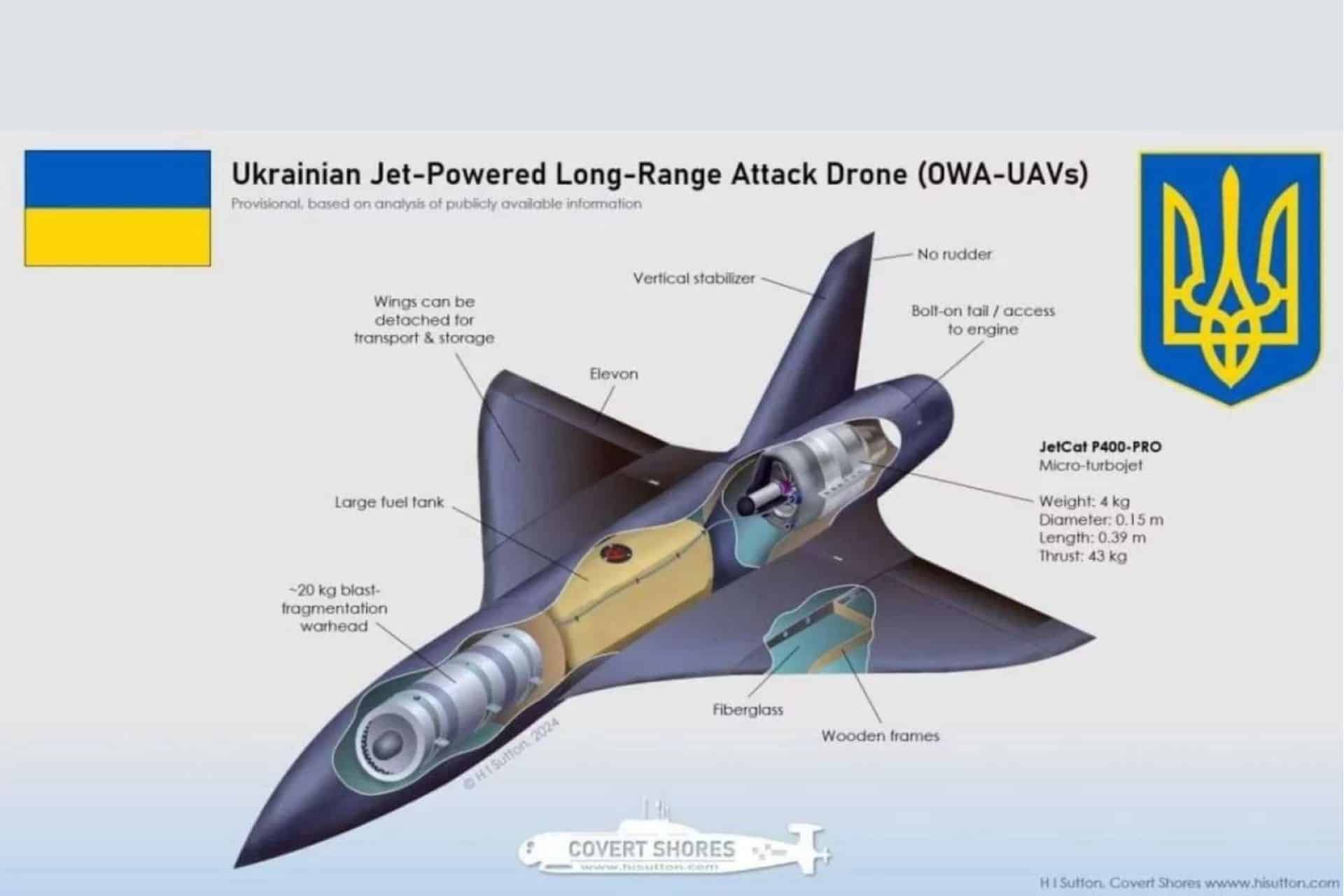
Alastair Crooke, Strategic Culture Foundation, Mon, 29 Jun 2026, https://www.sott.net/article/507152-Russia-hearing-the-European-clamour-for-war-announces-it-is-ready
The de-escalation framework that unfolded in the U.S.-Iran Lucerne talks largely stayed true to the original Iranian 10-point plan. Meanwhile, President Trump and Vice-President Vance deliberately muddy the waters, claiming that Iran has already agreed to IAEA inspections of Iran’s nuclear facilities (a claim repeatedly denied by Iran): Vance announced that the IAEA could have begun inspections this week. No – – the ‘Framework’ only refers to the possible IAEA supervision of the dilution to the 60% enriched stockpile subject to a final agreement with the U.S. having been reached.
Trump, writing on social media, later falsely asserted: “Iran has fully and completely agreed to highest level Nuclear inspections long into the future”. In fact, the IAEA are only inspecting the joint Iran-Russia power station in Bushier at Russia’s request, because Russia wants to ensure compliance on its involvement. In other words, it is a Russian request to satisfy its own IAEA compliance commitment.
Trump then warned Iran that he may have to “finish the job [militarily]” — (if he doesn’t get a very good deal) — which, he says, would take ” about a week”, and adds that Iran will be required to use any unfrozen Iranian funds to be held in ESCROW accounts (accounts controlled by the U.S.) to buy “corn and soybeans for their people, because right now their people are very hungry — and they’re buying exclusively from us”.
So, it’s pretty clear what’s ahead — Trump is reverting to his New York real-estate mode of negotiations. In the Art of the Deal, his 1987 book, ghost written by Tony Schwartz, the text advises the use of “extreme and unpredictable demands to create anxiety and force concessions from rivals”.
Thus, we are back to the General Kellogg playbook – – Kellogg advised Trump that the only thing that works with Putin or the Iranians is pressure — and then still more pressure.
Familiar Trumpian tactics. Show a little initial flexibility to tease out adversaries in order to pull them into negotiations; subsequent false claims of Iranian concessions and extreme demands are then used to increase pressure on Iran (whilst Trump appears tough to the angry neocon constituency and to his ‘base’ back home).
This style of pressure may work for New York real-estate deals, but will be ineffective with both Iran and Russia.
Such threats will be counterproductive with Iran, and place the U.S. on a collision course. “The Islamabad understanding was not the result of pressure and coercion, but rather the result of the resistance and authority of the Iranian nation”, Mr Qalibaf, the chief Iranian negotiator, retorted.
In practical terms, as Will Schryver, a shrewd observer of the U.S. military, notes, Iran has pressure points “more numerous and capable than the U.S. can bring to bear on the battlefield” —
“In my view, [Schryver says], a powerful U.S. military presence in the Persian Gulf region has become utterly untenable. They’re just trying to save face now. I do not believe, [he concludes] the U.S. military can mount even a 72-hour high-intensity operation at this point in time”.
“But I think they’ll try. Probably just Trump bluff, but it would not surprise me if they try to play one last card to gain the upper hand”. (Maybe after the midterms, and with the U.S. having rebuilt somewhat its munitions shortfall).
To which Iran likely will respond by closing the Strait of Hormuz again, and attacking, pari passu, regional (Gulf) infrastructure. Trump will be gaming the economy who first plays ‘Chicken’. A further military venture likely will only further erode American military standing.
Quite possibly, however, Trump may be prepared to cut his losses in Iran — the war anyway is a liability to his Midterm electoral calculus — by circling back to Ukraine and Russia. The Kiev Independentreleased a report yesterday, quoting a “senior Ukrainian official saying that Trump had privately given Zelensky the greenlight to act “more boldly” against Russia”.
Here we go again, roundabout time — “Trump says he doesn’t really believe Putin will do anything without pressure”, the Ukrainian official added.
Simpliciusspeculates:
“Trump has clearly been frustrated by his inability to settle any of the conflicts he had promised easily. And recently, on the heels of the Iranian memorandum saga, he even admitted that he would now be “turning his attention” back to Ukraine.
“As such, it’s plausible that Trump would have given secret encouragement to the Europeans to ‘shape the battlefield’ in order to “soften” Russia up ahead of whatever next Trump might have planned”.
If this is true (and it probably is), the Europeans are playing with matches and risk lighting a conflagration.
The E3 leaders, Starmer, Merz and Macron, met on 7 June with Zelensky to promise both unwavering support and — in the context of pledging further pressure on Russia —
“underlining the urgent need to scale up the production of interceptors; deep strike capabilities and anti-ballistic missile co-development — and further to support the future sustainability of the Ukrainian Armed Forces”.
In short, the Europeans intend to ratchet up deep strikes into Moscow and St Petersburg, which will likely kill and unsettle their inhabitants.
The E3 carefully planned how to stage-manage the upcoming G7 summit, the EU summit, with Zelensky showcased at both events, promising to increase the pressure on “President Putin to agree to an immediate and complete ceasefire, taking the current contact line for its start-point”. European leaders also pledged to co-ordinate ahead of the NATO summit in Ankara (7-8 July) to achieve increased pledges of military support for Ukraine.
The E3 states are explicitly gearing up with new missiles to strike deeper, and more destructively, into Russia. The British government, for example, has announced that —
“the UK project to develop low-cost advanced long-range strike weapons for Ukraine has reached a significant milestone, with three British-designed systems successfully flight tested. The ground-launched strike weapons reportedly are capable of hitting targets more than 500km distant, at a speed of 600 km/h – whilst carrying a 225 kg warhead”.
According to the Financial Times, Trump was “hugely impressed and enthusiastic” with Ukraine’s recent campaign of long-range strikes on targets deep inside Russia at last week’s G7 summit. At the summit, Trump also agreed to increase sanctions on Russian energy.
It is clear that the E3 had been plotting a major psy-op to convince Trump that Ukraine was not on the back-foot against Russia (as Trump may have been briefed); but rather had regained the front foot, and that the U.S. should support the European agenda to force a Russian capitulation agenda (ceasefire, borders unchanged, reparations paid by Russia and war-crimes trials for Russian officials indicted with crimes, etc).
These developments have brought two major developments out of Russia:
Firstly, senior Kremlin aides, notably Yuri Ushakov, Putin’s spokesman, have been saying over the past three days the ‘spirit’ of the Anchorage summit, and its concomitant understandings, “have effectively collapsed” — “The U.S. abandoned them”. Moscow no longer expects those commitments to be honoured and is focused solely on securing its own “victory” through military means.
Foreign Minister Lavrov went further, describing the Alaska meeting as an American “ploy” designed to buy time for Ukraine to rebuild and rearm its military — essentially likening them to the Minsk Accords that similarly were mounted as a deceit.
Deputy Foreign Minister Sergei Ryabkov said:
“We also see Washington’s line moving closer to the most rabid anti-Russian policies pursued by the U.S.’s closest European allies – namely, the UK and France”.
This represents a huge strategic shift. Russia no longer seeks a relationship with Washington, though contact with DC will continue.
The second development stems from President Putin’s address at the St George’s Hall to military cadets on 23 June. Putin, in summary, told the young officers that the West manufactures a Russia threat, then accuses Russia of creating that very threat. This, said Putin, is a historically repeated pattern going back to 1941.
Putin implied that a threshold had now been crossed: He stated that whilst, until recently, NATO countries had limited themselves to supporting the Kiev regime to wage war on Russia, the West today is openly talking about preparing for a war against Russia, and is building up their military offensive budgets. German Chancellor Mertz has been quite vocal in this regard, Putin said.
Russia’s response, he said, is focused on modernising its nuclear triad and its Army, and strengthening the combat capability of the Aerospace Forces and the Navy. The explicit mention of the nuclear triad in direct proximity to the discussion of Western preparation for war against Russia was certainly a pointed message to Trump and the Europeans.
Russia has heard the European clamour for war. It has now made the strategic decision in response to prepare for war in Europe.
Netanyahu’s War on Humanity: Ethnically Cleansing the Palestinian West Bank
These are not acts of thoughtful, spiritual Jews. Rather, they are acts of mean-spirited, violent people using a mythical interpretation of Judaic history as a cover for their cruelty, and calling it Zionism.
June 29, 2026, H. Scott Prosterman Informed Comment, https://scheerpost.com/2026/06/29/netanyahus-war-on-humanity-ethnically-cleansing-the-palestinian-west-bank/
Since October 7, 18 new settlements and eight new army bases have been constructed on what was Palestinian family homes for generations. When Israeli PM Benjamin Netanyahu’s latest government took power in 2022, it accelerated a far-right campaign to ethnically cleanse the northern areas of the West Bank. The first step was to balkanize the formal Palestinian holdings in the 1994 Oslo Accords. That was augmented by roadblocks and IDF outposts. Now, a settler project decades in the making is taking root in the northern West Bank, as the IDF turns a blind eye to the flagrant violations of human rights and international law.
Netanyahu at the least ignored intelligence warnings about the Gaza buildup to October 7, 2023, because of his dedication to splitting the Palestinians by propping up Hamas in Gaza. October 7 prompted the Likud and IDF to treat the West Bank as a war front with tanks and armed drones. Avi Bluth, the Israeli Central Command chief is directing this atrocity in collaboration with Finance Minister Bezalel Smotrich, and Defense Minister Itamar Ben-Gvir.
The grand design is to blow up the Oslo Accords, and ethnically cleanse the West Bank one sector at a time, in preparation for annexation. A collateral casualty of October 7 was the 2023 repeal of the Disengagement Law, and the provocative reintroduction of settlements into populated Palestinian areas. And they’re being repopulated and expanded at warp speed to create new, intractable “facts on the ground.” The Homesh and Sa-Nur settlements have already been repopulated. Others are on track for quick restoration.
Since the 2005 when Israel relinquished four isolated settlements in the area in an effort to consolidate Jewish demographics, the Likud government has aimed to reclaim that land. The occupation on steroids has claimed 18 new sites that further disrups what remains of the land where 720,000 Palestinians live. Israel has prosecuted a brutal campaign of intimidation and expropriation against the native Palestinians since October 7; accompanied by new military outposts to protect the new settlements and new roads on stolen land. That includes 14 new settlements, which encircle ancient towns and villages such as Jenin and Tulkarm, where no Israelis have ever lived in modern times.
Though Area A of the West Bank is off limits to Israelis under the Oslo agreement, the settlers backed by Likud and the IDF are building new structures faster than ever. One village targeted is Beit Imrin, where a settler was killed last May in an ATV accident of his own making, but was declared a Palestinian terrorist incident by the IDF and police. The village has since been sacked in various settler raids. That also prompted a violent pogrom in 20 more Palestinian towns, burning cars and homes including with people inside.
The website +972 has chronicled these events since 2021, before the current Likud government took hold. This includes the incidents at the Masafer Yatta village, which was the subject of the Oscar-winning documentary, No Other Land. Not surprisingly, the uber-Zionist propaganda machine has gone into overdrive in attempt to discredit the film by Likud in Israel, and Republicans in the US. The Siamese twin criminal alliance between Netanyahu and convicted felon Donald Trump has been analyzed in these pages numerous times since 2019.
B’Tselem is the Israeli information center dedicated to human rights in the West Bank. It advocates for “human rights, liberty and equality” guarantees for Jews, Palestinians, and all people “living between the Jordan River and the Mediterranean Sea.” It also facilitates legal counsel for people ensnared by the Likud-IDF pogrom machine, and whatever protections can still be affected. They noted on “X” this week that, “Since October 2023, settler violence and military raids have forcibly displaced at least 4,635 Palestinians in the West Bank. Entire communities have been driven out of their homes in 62 cases, with another 15 communities partially displaced.”
These are pogroms, the same dynamic used to drive Jews from their homes in the Pale of Settlement and other parts of Europe since the Crusades. It’s tragic and maddening that Israel under Likud has resorted to the same brutality, which ultimately led to the creation of Israel as a safe haven for Jews. And all with the blessing of the Republican Party and US Ambassador Mike Huckabee. Prof. Juan Cole pointed out that, “Ultimately, the government of Benjamin Netanyahu wants to ethnically cleanse all Palestinians, including the Christians.” That doesn’t sit well with Huckabee and his fellow Christian Nationalists, who have been promoting the ethnic cleansing in the West Bank and Gaza for Christian settlements, leading to fissures in the Likud-US Evangelical alliance. But that alliance is predicated upon the myth that the Palestinian people don’t warrant recognition as an ethnic group with valid claims to their historic homeland.
The area between Nablus and Jenin has been targeted for new settlements and IDF bases because it is the largest, contiguous area of Palestinian territory remaining. Residents of the Homesh and Yuval settlements candidly say their goal is to break it up. Lost on the settlers and the government is the enormous costs involved in securing the area for settlement expansion. This adds to the financial and security burden of a military already stretched thin among operations in Syria, Jordan, Lebanon and Gaza; and was done without any input or assessment from the Israeli Central Command. This campaign has brought horrors to the daily lives of Palestinians in the form of settler and military raids, roadblocks, restricted access to their own land, uprooting trees and destroying infrastructure, as depicted in the film No Other Land. One especially grotesque act was done by the settlers of Sa-Nur, when they ordered residents of Asasa to dig up a fresh grave of an elderly man and move him soon after he was buried.
The Palestinian refugee crisis was dramatically escalated recently, when the IDF dismantled the refugee camps in Jenin, Tulkarm and Nur Shams. That involved bulldozing homes and infrastructure, where refugees from the 1947 Nakba have been living since 1953, and resulted in 32,000 Palestinians being displaced from their homes – the largest displacement since 1967. The IDF then bi-sected the Jenin camp with a new military road wide enough for two tanks to escalate the intimidation and inconvenience.
Haaretz reports that, “Most movement restrictions currently imposed on Palestinians in the West Bank are being carried out without required legal approvals, violating IDF protocols.” The IDF is breaching its own codes to meet with the Likud political agenda. IDF legal adviser Cobi Marcus addressed that in a letter to Commander Bluth, describing it as “anarchy,” and an ongoing pattern. But this has been going on since 1967, and escalating dramatically in recent years, as noted in Red Pepper Media: “Between 1967 and 2022, Israeli settlers stole roughly seven per cent of all the land in the West Bank. From 2022 to 2024, they doubled that to 14 per cent, stealing as much land in two years as over the previous 55. Activists on the ground estimate the number has likely tripled by 2026.” This has disrupted farming and grazing practices, and brought greater costs for Palestinian farmers and shepherds.
An ongoing characteristic of Israeli actions in Gaza and the West Bank is the targeting of civilians area for punishment, rather than just military targets. Destruction of civilian infrastructure has been a violation of International Law since the 1949 Geneva Convention, but Israel acts as if they have some exemption. Israel targets civilians because, “they assume that Palestinian children will grow up to be terrorists,” as writer Hugh Curran noted. Recent airstrikes in Lebanon have killed 3,800 people and wounded over 11,000. The IDF has also destroyed 17 Lebanese hospitals and bombed 68 more, along with 100 schools, according to the World Health Organization.
These are not acts of thoughtful, spiritual Jews. Rather, they are acts of mean-spirited, violent people using a mythical interpretation of Judaic history as a cover for their cruelty, and calling it Zionism. The pervasiveness and embrace of this pathology has prompted many Jews to divorce their Judaism from Zionism. This form of Zionism supports of a corrupt prime minister, whose government depends on the inclusion of a criminal sector to maintain power and standing. There’s nothing spiritual or righteous about that.
H. Scott Prosterman is a writer and communications consultant in the San Francisco Bay Area, and holds an M.A. in Middle Eastern Studies from the University of Michigan
They’re Still Pushing The Ethnic Cleansing Of Gaza
Caitlin Johnstone, Jun 29, 2026, https://www.caitlinjohnst.one/p/theyre-still-pushing-the-ethnic-cleansing?utm_source=post-email-title&publication_id=82124&post_id=204102630&utm_campaign=email-post-title&isFreemail=true&r=1ise1&triedRedirect=true&utm_medium=email
Israel is still pushing for the ethnic cleansing of Gaza. They keep trying different angles and rebranding it under different names, but the end goal has remained the same since October 2023: the removal of all Palestinians from the Gaza Strip.
From The Times of Israel:
“Israel is seeking to revive its moribund plan for the voluntary migration of Gazans out of the Strip, and has rebranded it in an effort to soften the blanket international opposition to it, Channel 13 news reports, citing unnamed Israeli officials.
“Security agencies have in recent days been told to abandon the “voluntary migration” title due to the global opposition, and it will from now on be officially referred to as a ‘plan for free movement,’ the report says.
“The network cites officials familiar with ties with countries that could potentially receive Gazans as voicing optimism that the terminology change will persuade them to drop their current refusal to cooperate with the plan, and recruit other countries.
“A senior Israeli official is quoted as saying Jerusalem wants as many Gazans as possible to leave the Strip, viewing this as contributing to any future plan implemented in the territory.”
From the early months of the Gaza holocaust, Israel apologists had been referring to the ethnic cleansing agenda as a plan for the “voluntary migration” of Gaza’s inhabitants. This framing conveniently ignored the fact that you cannot destroy a populated area and deliberately make it uninhabitable and then say the inhabitants of that area are leaving “voluntarily”.
According to a Haaretz report that was published last week, Israel’s new National Security Council chief convened a meeting of top national security officials to discuss the issue of “encouraging the voluntary emigration” of Palestinians from the Gaza Strip.
And now they’re rebranding the initiative as “a plan of free movement”, which is just so fucking Israeli. They never stop doing the evil thing, they just play around with the words people say about it, like how Israel’s Foreign Ministry announced last year that it was going to stop referring to its propaganda operations as “hasbara” due to the public revulsion that has developed around that label. They never say “It’s time to stop doing the things that cause people to hate us,” they just say “It’s time for a rebrand.”
And to be clear, the mass displacement of Palestinians in Gaza is already well underway. Israel now controls more than 60 percent of Gaza, and the IDF has been instructed to expand it to 70 percent. The survivors of the genocide have already been shifted and concentrated into a steadily shrinking thirty some-odd percent of the Strip, while Israel attempts diplomatic maneuvers to persuade foreign states to take them in.
Israel’s mass atrocities in Gaza have always been about ethnic cleansing, from the very beginning. Within days of Israel’s assault on Gaza in October 2023, Israel’s Intelligence Ministry was circulating a plan for the entire population of Gaza to be moved to the Sinai Peninsula in Egypt, and an Israeli think tank had drawn up a strategy for the “relocation and final settlement of the entire Gaza population.”
They had these plans locked and loaded and ready to go because the elimination of Palestinians from the Palestinian territories has always been the goal.
Israel has been scheming to purge the Palestinians from the enclave and relocate them to other countries for generations. There’s a 1970 article from Life Magazine talking about how the Israelis see relocating Palestinians from Gaza to the Sinai Peninsula as the only viable path to peace, adding that “The problem is that the people of Gaza don’t want to go.”
historian Benny Morris writes that the agenda to “transfer” Palestinians to other countries has existed for as long as modern Zionism:
“The idea of transfer is as old as modern Zionism and has accompanied its evolution and praxis during the past century. And driving it was an iron logic: There could be no viable Jewish state in all or part of Palestine unless there was a mass displacement of Arab inhabitants, who opposed its emergence and would constitute an active or potential fifth column in its midst. This logic was understood, and enunciated, before and during 1948, by Zionist, Arab and British leaders and officials.
“As early as 1895, Theodor Herzl, the prophet and founder of Zionism, wrote in his diary in anticipation of the establishment of the Jewish state: ‘We shall try to spirit the penniless [Arab] population across the border by procuring employment for it in the transit countries, while denying it any employment in our country … The removal of the poor must be carried out discreetly and circumspectly.’”
So Israel was founded on the premise that the country’s previous inhabitants need to be eliminated in some way.
That’s all this has ever been about.
It was never about October 7.
It was never about Hamas.
It was never about hostages.
It was never about terrorism.
It was never about self-defense.
It was never about any of the countless excuses the hasbarists and imperial spinmeisters have offered up over the last three years to justify Israel’s monstrous abuses.
It was only ever about eliminating Palestinians because of their ethnicity and replacing them with Jews.
Anyone who tells you otherwise is lying.
White Flag Judgments: Palestine Action, Protest and the UK Courts
1 July 2026 Dr Binoy Kampmark, https://theaimn.net/white-flag-judgments-palestine-action-protest-and-the-uk-courts/
The justice system of the United Kingdom, represented by stout cathedral structures and solemn rituals, tends to resemble a casino rather than a priestly haven of solemn judgment. It’s the justice of the punt, the throw of the dice, not the fairness of judicial deliberation, that prevails. That, at least, has been the prevailing view of Richard Ingrams, a co-founder of Britain’s rapier satirical publication Private Eye.
Since the decision by Home Secretary Yvette Cooper to ban Palestine Action in 2025, some 3,000 people have been arrested for doing such unthreatening things as holding placards with the following words: “I oppose genocide. I support Palestine Action.” Over 700 of these, according to Human Rights Watch, “are pending in the courts of England and Wales, with many more at the recharges stage.” This, in a country where free speech is said to be a verdant forest, and the right to protest a sacred right.
In the middle of last month, the Court of Appeal quashed the decision of the High Court regarding the proscription of Palestine Action which had been made under section 3 and schedule 2 of the Terrorism Act 2000. Palestine Action, described by their founders as “a direct-action protest group aimed at preventing military targets in the UK from facilitating gross abuses of international law,” had made its stock and trade targeting Israeli arms manufacturers such as Elbit Systems and businesses with links to the Israeli arms trade. The proscription followed the group’s break-in at RAF Brize Norton, where two aircraft were spray painted. In the proscribed list, which includes such violent luminaries as Boko Haram and Islamic State, Palestine Action is hysterically assessed as an entity that “prepares for terrorism” and “promotes and encourages terrorism.” Its attacks had included “targets affecting UK national security, and the impact on innocent members of the public.”
Co-founder of Palestine Action, Huda Ammori, challenged the lawfulness of the proscription in the High Court in November 2025, claiming, along with the intervening parties Liberty and Amnesty International UK, that it had involved a disproportionate use of counter-terrorism powers. Initially, Ammori scored a resounding success, all the more remarkable given the persistent record of courts in Britain to side with the national security apparatus.
The Divisional Court held in February 2026 in R (Ammori)v Secretary of State for the Home Department that the Home Secretary’s approach on proscription had failed to follow her own long-standing proscription policy. These involved five factors intended to constrain the office holder’s discretion. The resort to “other factors” would have to be read with that constraining purpose in mind.
The Court also found that a fair balance between the rights of individuals to free speech (Article 10 of the European Convention of Human Rights) and freedom of assembly under Article 11 of the ECHR as against the national security and protection of the rights of others (Articles 10.2 and 11.2 of the ECHR) had not been struck. In applying the test of proportionality to the decision the Court held that “the nature and scale of Palestine Action’s activities, so far as they [comprised] acts of terrorism, [had] not yet reached the level, scale and persistence that would justify the application of the criminal law measures that are a consequence of proscription, and the very significant interference with Convention rights consequent on those measures.”
The government of Sir Keir “Human Rights” Starmer was never going to let things stand, nor should not be forgotten that the High Court decision was hardly brimming with praise for the actions of Palestine Action. The definition of terrorism in UK counter-terrorism legislation is intentionally outrageous in its broadness, encompassing causing or threatening “serious damage to property” that would suggest an intention to influence government policy and advance a political case. The High Court did, at least, note that the act of proscription was based on 385 actions committed over 5 years, of which only three were deemed “terrorist incidents.”
Back to the casino of justice the case went. On June 15, the Court of Appeal handed down its quashing judgment. The national security state could again rejoice at this grand exhibition of judicial abdication before the alleged, and unfounded wisdom, of executive power. The judges found, for instance, that the Home Secretary had, in fact, conducted a proper evaluation of the rights issue in considering the banning of Palestine Action. This analysis was shallow at best, given the Home Secretary’s continual insistence that neither Article 10 nor 11 off the ECHR applied in the case. Article 17 of the Convention – the prohibition of an abuse of rights – was what counted in her mind.
The Court of Appeal went so far as to admit that the rights of those holding placards opposing genocide and supporting the Palestinian cause “may be affected by proscription, because they may be dissuaded by it from exercising their lawful individual rights to free speech and freedom of assembly.” The Home Secretary had been wrong to assume that Article 10 and 11 rights were not engaged, or that no test of proportionality was required. The court even conceded that the ban was “highly controversial” and possibly even “borderline.” But in their own assessment on proportionality, the judges felt reluctant to challenge the vast, self-evident wisdom of the executive, given that the Home Secretary was “invested with the statutory and constitutional authority to make proscription decisions to protect the public where national security is at stake.” It was not for the court to “take over the function of the primary decision-maker, least of all in a case such as this.” Such proscription decisions were part of national security, an area that no UK judges would have thought inappropriate to scrutinise before the Human Rights Act 1998. (How mothballed can judges be?)
The logic of this abysmal abdication before power was guided by the views of Lord Robert Reed made in the UK Supreme Court decision of ABJ, which was decided in February this year: “Although a strict approach is generally taken to restrictions on political speech, the European Court has recognised that states must enjoy a wider margin of appreciation when countering terrorism.” In a rather conflating, muddled manner, Lord Reed thought judicial supervision, be it by UK courts applying the Human Rights Act or the European court applying the ECHR, had “to respect the institutional expertise and constitutional legitimacy underlying the judgment made by those authorities by according them a correspondingly wide margin of appreciation.” This is what surrender by the wigged classes looks like.
The Court of Appeal also decided to make much of the fact that Palestine Action had committed three deemed “terrorist incidents” over three years, a mere 0.78% of its list of actions. With disapproval, they noted the organisation had not “disowned or condemned” such actions. It was therefore “permissible for the Home Secretary (and, therefore, is permissible for us), in considering Palestine Action’s characteristics and activities, not just its activities classified as terrorist.” The rationale for this bumbling reasoning was that proscription was preventative: the Home Secretary had to “assess the risk of future acts of terrorism. All of an organisation’s activities, such as recruitment, fundraising, radicalisation and all terrorist and non-terrorist activities may be relevant to that assessment.”
Veering off into the feral undergrowth of the bizarre, the appeals court also considered the allegedly more sinister nature of the group, mangling the history of British protest along the way. Its activities had been “planned and undertaken secretly with the objective of avoiding detection.” Its members had not shown “sincerity by accepting” the imposed penalties. But most of all, “on a fair analysis, Palestine Action has little or nothing in common with the suffragettes or the anti-apartheid or Iraq War protest groups.”
With this sort of fair analysis, one rooted in a distorted reading of history, a horrendous refusal to consider a flawed, executive assessment of protest activities, and a general concession to an anti-democratic temper, the only thing left to do is exactly what the suffragettes, anti-apartheid activists, and previous anti-war activists did: break the law with courage and clog the prisons with effect.
Poll shows many Danes worried about planned nuclear reactors at Barsebäck, near Copenhagen

Mon 29 Jun 2026 , https://swedenherald.com/article/poll-finds-many-danes-worried-about-new-nuclear-plant-plans-near-copenhagen
Plans to build new nuclear reactors at Barsebäck worry many Danes, according to an opinion poll conducted on behalf of the Ritzau news agency.
39.5 percent say they agree or completely agree when asked whether they are concerned about plans to locate reactors just over 20 kilometres from Copenhagen, according to a survey conducted by the Voxmeter institute. Almost as many, over 38 percent, believe the reactors should not be built.
Just over 1,000 people responded to the survey.
Earlier in June, Nordic Baseload Power submitted an application to the government for state aid to build two full-scale boiling water reactors of the BWR-N type at Barsebäck. However, Uniper, which owns Barsebäck, has stated that it does not plan to provide any land for the company’s plans.
EDF agrees to sell US, Canada unit to KKR
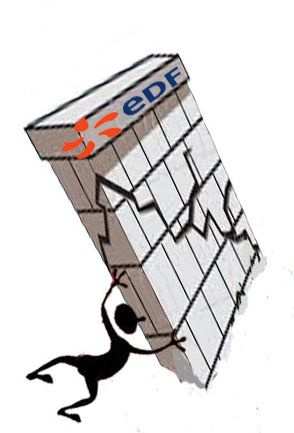
EDF, which owns and operates France’s nuclear fleet, must raise cash to maintain its 57 aging reactors and finance the construction of six new units.
By Reuter, June 27, 2026, https://www.reuters.com/business/energy/edf-signs-deal-sell-us-canada-unit-kkr-2026-06-26/
June 26 (Reuters) – EDF signed an agreement to sell EDF Power Solutions in the United States and Canada to private equity firm KKR, the company said on Friday.
KKR will acquire the operations and assets. In the U.S. and Canada, EDF Power Solutions operates 5.6 gigawatts of renewable assets.
EDF, which owns and operates France’s nuclear fleet, must raise cash to maintain its 57 aging reactors and finance the construction of six new units.
In November EDF CEO Bernard Fontana told Reuters the company was considering selling between 50% and 100% of its U.S. renewable unit, a deal that could value the business at nearly €4 billion ($4.56 billion).
EDF has developed 26 gigawatts of wind, solar and battery storage projects plus electric vehicle charging sites and has 17 GW under service contracts in North America, which includes a small amount in Canada and Mexico, according to its website.
($1 = 0.8773 euros)
Reporting by Margaux Perrin in Gdansk, Editing by Louise Heavens
All of our submarines are missing
Five nuclear-powered hunter-killers are
out of action leaving the Arctic front door wide open to Russia. None of
the Royal Navy’s attack submarines are currently at sea. A fleet of
nuclear-powered hunter-killers all tied up alongside or in dock, every one
of them, is a serious matter.
This is not the first time it’s happened
and last time it did, the Ministry of Defence trotted out the tired mantra
“we continue to meet all our operational tasks”. We do not. The
excellent Navy Lookout website has set out the position boat-by-boat. HMS
Audacious is only now leaving dry dock in Devonport in Plymouth; HMS Anson,
the only attack boat to have been to sea recently, is alongside after a
curtailed deployment to Australia; HMS Astute is undergoing a multi-year
refit; and Ambush and Artful have not sailed in years. The site described
the overall posture as “a disaster”.
Telegraph 27th June 2026, https://www.telegraph.co.uk/news/2026/06/27/royal-navy-attack-submarines-absent-harbour-nuclear-missing/
If you aren’t terrified by this heatwave, you should be
The extreme heat currently being felt in Europe isn’t the new normal – much worse is to come, and we are doing far too little to adapt, says Michael Le Page
By Michael Le Page, New Scientist 25th June 2026, https://www.newscientist.com/article/2531853-if-you-arent-terrified-by-this-heatwave-you-should-be/
-
Archives
- October 2026 (129)
- September 2026 (339)
- August 2026 (330)
- July 2026 (355)
- June 2026 (287)
- May 2026 (306)
- April 2026 (356)
- March 2026 (251)
- February 2026 (267)
- January 2026 (308)
- December 2025 (358)
- November 2025 (359)
-
Categories
- 1
- 1 NUCLEAR ISSUES
- business and costs
- climate change
- culture and arts
- ENERGY
- environment
- health
- history
- indigenous issues
- Legal
- marketing of nuclear
- media
- opposition to nuclear
- PERSONAL STORIES
- politics
- politics international
- Religion and ethics
- safety
- secrets,lies and civil liberties
- spinbuster
- technology
- Uranium
- wastes
- weapons and war
- Women
- 2 WORLD
- ACTION
- AFRICA
- Atrocities
- AUSTRALIA
- Christina's notes
- Christina's themes
- culture and arts
- Events
- Fuk 2022
- Fuk 2023
- Fukushima 2017
- Fukushima 2018
- fukushima 2019
- Fukushima 2020
- Fukushima 2021
- general
- global warming
- Humour (God we need it)
- Nuclear
- RARE EARTHS
- Reference
- resources – print
- Resources -audiovicual
- Weekly Newsletter
- World
- World Nuclear
- YouTube
-
RSS
Entries RSS
Comments RSS

