Israel targets southern Lebanon with internationally banned phosphorus shells
May 5, 2026 , https://www.middleeastmonitor.com/20260505-israel-targets-southern-lebanon-with-internationally-banned-phosphorus-shells/
The Israeli army shelled towns in southern Lebanon with phosphorus munitions Tuesday, according to the National News Agency NNA.
The agency reported that the towns of Kounine and Beit Yahoun in the Bint Jbeil district were targeted with artillery shells containing phosphorus, which are banned internationally.
Israeli warplanes separately carried out airstrikes on the towns of Kafra, Braachit and Safad al-Battikh in the Tyre district, said the report.
Additional strikes hit Beit al-Sayyad and Mansouri, where three raids targeted residential homes, according to the agency.
No casualties were reported.
Despite a ceasefire that was announced April 17 and extended until May 17, the Israeli army continues daily strikes in Lebanon and widespread demolition of homes in dozens of villages.
Lebanon’s Health Ministry said Tuesday that the death toll from Israeli attacks since March 2 has reached 2,702, with 8,311 injured.
War Dividends: Potential U.S. Arms Sales to the Middle East Surge in Q1 2026

On March 19, the U.S. approved $8.5 billion in potential sales to the UAE, split across four potential deals. These approvals included a $4.5 billion sale of a Long Range Discrimination Radar (LRDR) for integration with the Terminal High Altitude Area Defense (THAAD) air-defense system, a $2.1 billion sale of counter-UAS equipment, a $1.2 billion deal for 400 AIM-120C AMRAAM air-to-air missiles, and a $644 million sale of F-16 munitions. Kuwait was approved to purchase eight Lower Tier Air and Missile Defense Sensor (LTAMDS) radars on the same day, at a cost of $8 billion. The U.S. also signed off on $70.5 million in aircraft and munitions support for Jordan
– by Jon Hemler and Derek Bisaccio, https://dsm.forecastinternational.com/2026/04/23/us-foreign-military-sales-q1-2026-middle-east-iran-war/
During the first quarter of 2026, the U.S. government approved over $45 billion in potential Foreign Military Sales (FMS) with the overwhelming majority supporting Middle Eastern allies. Of total global approvals, the region garnered 81 percent, or over $36.6 billion in estimated sales value for defense equipment.
Direct comparisons between first-quarter FMS approvals and the combat systems currently being used by the United States, Israel, and allied Arab states are imperfect. Approved agreements do not automatically translate into deliveries. Follow-on contracts, payments and shipments might not materialize for months or years, if at all. Even so, FMS activity can be a meaningful indicator of geopolitical and industrial trends. This is increasingly true given the scale of combat, stakeholders involved, and weapons consumption driven by the Iranian War.
Middle East
Countries in the Middle East spend heavily on defense, devoting some $177.5 billion to military expenditure in their FY26 budgets by conservative estimates. Many of the region’s governments, moreover, possess immense reserve assets that can be leveraged to support procurement when needed.
Over 81 percent of FMS approvals in the first quarter of 2026 covered potential sales to American partners in the Middle East, corresponding with the deterioration in the regional security environment during this timeframe. These approvals can be generally grouped into two tranches, with the first set announced around the end of January. On January 30, the U.S. approved a Saudi request for 730 Patriot PAC-3 MSE missiles, which, together with support equipment, carry an estimated price tag of $9.0 billion. That same day, the U.S. also approved four sales to Israel worth a combined $6.6 billion, with the largest being a potential $3.8 billion sale of 30 AH-64E attack helicopters.
The U.S. and Israel began military operations against Iran on February 28, beginning a weeks-long air campaign in retaliation for the country’s brutal crackdown on protesters the month before and aiming to dismantle Iran’s offensive military capabilities and nuclear program. Iran retaliated with missile and drone salvoes targeting Israel, regional U.S. military bases, and the Gulf Cooperation Council (GCC) countries. According to some estimates, Iran fired as many as 6,400 missiles and drones at the GCC countries and Jordan across 41 days of operations. The majority of these attacks were intercepted, but Iranian attacks did manage to penetrate Gulf air defenses and hit sensitive sites. Amid these barrages, the GCC countries made a series of requests for ammunition and radar systems from the U.S., leading to a group of FMS approvals in mid-March.
On March 19, the U.S. approved $8.5 billion in potential sales to the UAE, split across four potential deals. These approvals included a $4.5 billion sale of a Long Range Discrimination Radar (LRDR) for integration with the Terminal High Altitude Area Defense (THAAD) air-defense system, a $2.1 billion sale of counter-UAS equipment, a $1.2 billion deal for 400 AIM-120C AMRAAM air-to-air missiles, and a $644 million sale of F-16 munitions. Kuwait was approved to purchase eight Lower Tier Air and Missile Defense Sensor (LTAMDS) radars on the same day, at a cost of $8 billion. The U.S. also signed off on $70.5 million in aircraft and munitions support for Jordan
All six of the deals announced on March 19 were approved under an emergency exception to Section 36(b) of the Arms Export Control Act, waiving the typical Congressional review requirement. That process would normally take roughly 30 to 40 days, during which the sides would be unable to move forward with contract negotiations.
Europe
Around $3.8 billion in FMS approvals in the first quarter of 2026 – 8.5 percent of the overall total – target European requirements. A sizable chunk of this total comes from Spain’s $1.7 billion request for mid-life upgrades to its Álvaro de Bazán-class frigates. The upgrade program will principally include integrating the AEGIS weapon system to expand the warships’ air-defense capabilities.
On March 10, the State Department approved the sale of 20 M142 High Mobility Artillery Rocket Systems (HIMARS) to Sweden, with a price tag of $930 million. Should Stockholm move forward with a purchase agreement, it would become the eighth or ninth European customer for the multiple rocket launcher, joining Croatia, Estonia, Italy, Latvia, Lithuania, Poland, and Romania. (Hungary, another potential customer, announced plans to acquire HIMARS on April 9, ahead of the incumbent government’s loss in general elections several days later.)
The U.S. also approved an FMS deal with Denmark, blessing the sale of 100 AGM-114R HELLFIRE air-to-surface missiles at a possible cost of $45 million. Relations between Washington and Copenhagen have become turbulent in the second Trump administration over Greenland’s political future, but beneath the headlines, the two countries remain strong defense partners.
Only one FMS approval for Ukraine (which Forecast International groups in the Eurasia region) was announced in the first quarter of 2026, on February 6. Kyiv requested to buy spare parts for its U.S. Army-supplied vehicles and weapons, at an expected cost of $185 million.
Over time, European countries are aiming to reduce their dependency on the U.S. for military equipment, pursuing various national and intra-European projects to improve the continent’s own defense industry. This process was jump-started in 2022, in the wake of Russia’s invasion of Ukraine, and has accelerated over the past year as European capitals increasingly worry that the U.S. may withdraw from the NATO Alliance.
Europe (not including Ukraine and Russia) is expected to spend $508.9 billion on defense in FY26, up from around $300 billion on the eve of Russia’s war on Ukraine. Five years ago, only a handful of NATO countries met the Alliance’s 2 percent of GDP target, but most are now at least at that threshold, if not well exceeding it.
Industry Trends
From a weapons systems standpoint, missiles and related equipment represent the largest category of approved potential sales from the quarter at nearly $16.0 billion and 35 percent of the total. Relatedly, the three highest-cost possible deals involve various offensive and defensive missile and networked electronic systems that have featured prominently in military operations during the war in Iran.
Of these, American defense giants Lockheed Martin and RTX are well-positioned to capitalize on a prospective windfall of over $21 billion in the aforementioned FMS to Saudi Arabia, Kuwait, and the UAE. Domestically, Lockheed Martin and RTX both emerged as beneficiaries of several historic multi-year framework agreements with the Pentagon during Q1 2026, to boost precision munitions and interceptor production for the U.S
Like FMS approvals, these agreements do not indicate signed contracts or solid revenue. However, subsequent large-scale contacts are likely to follow in the coming years as the U.S. moves to surge critical munitions production. Some related contracts are already unfolding. In early April, Lockheed Martin received a $4.76 billion award supported by U.S. Army and FMS allocations for PAC-3 Missile Segment Enhancement missiles.
Raytheon, an RTX company, also won a handful of LTAMDS contracts from the U.S. government during the first quarter, including a $905 million production contract on April 16 that contributes to an overall $5.36 billion cumulative framework.
Strategic pivot
The awards to Lockheed Martin and RTX, alongside FMS approvals for key systems emerging from the Iranian War, underscore a broader shift in Washington’s approach to weapons deals. On February 6, 2026, the White House issued an Executive Order entitled “America First Arms Transfer Strategy” to reshape priorities for foreign military equipment sale policy.
Though the Trump Administration’s order references arms transfers as a foreign policy tool, the text primarily focuses on strengthening the U.S. defense industrial base. Indeed, the order states that the strategy “will ensure that future arms sales prioritize American interests by using foreign purchases and capital to build American production and capacity.” A deeper read of the subsections signals a reprioritization of strategy – one that emphasizes utilizing arms sales to bolster domestic industry over foreign policy objectives.
Combatants must address root causes to end Ukraine, Iran wars

Walt Zlotow West Suburban Peace Coalition Glen Ellyn IL , 8 May 26
Ukraine cannot win its war with Russia, now in its 51st month. Why? Russia will never allow Ukraine to join NATO which would allow NATO nukes on Russia’s borders to weaken, isolate Russia from the European political economy. Nor will Russia give back the Donbas containing mostly Russian leaning Ukrainians being brutalized and killed for 8 years prior to the Russian invasion.
Isolating, weakening Russia while ignoring Russia’s security concerns represent the root causes of the war which for Russia is an existential threat to their national security. The Biden administration knew both threats would provoke a Russian invasion but did so anyway figuring war would weaken, if not collapse Russia.
The opposite occurred. Russia has prospered both economically and militarily while Ukraine is a failed state near collapse and totally supported by hundreds of billions in US, NATO aid. But even a trillion in aid will not prevent Ukraine’s inevitable defeat.
Russia always preferred the West negotiate the war’s root cause, their sensible security demands both for themselves and their Russian speaking Ukrainian brethren. While the US is not averse to this now, European NATO countries continue to pour tens of billions into the lost cause to weaken, isolate Russia. Therefore, Russia is committed to resolve the root causes of the war on the battlefield.
All this could have been avoided in November 2021 if the Biden administration had the decency and common sense to negotiate Russia’s national security interests, the root cause of their invasion three months later.
Failure to address the root causes of war also applies to the current US, Israeli war against Iran. For Israel the root cause of the war has nothing to do with Iran’s nuclear program which is not developing a nuclear weapon. It is simply Israel’s lust to destroy Iran as a hegemonic rival for Middle East supremacy. The US, supplying most of the fire power, has no dog in Israel’s quest. We can only lament that Israel exerts such malicious control over the Trump administration that it willingly engaged in suicidal war to please Israel.
Just like with Ukraine, the US attack had the opposite effect of a quick collapse of our imagined enemy. Iran prepared a robust defense that has largely destroyed US Gulf States bases, inflicted heavy damage on Israel and Gulf States oil infrastructure. Unless the root causes of Israel’s quest to destroy Iran and Iran’s determination to survive intact are addressed, the Strait of Hormuz will remain closed, possibly crashing the world economy.
The war in Ukraine now in its 51st month, and war in Iran now in its 3rd month, will not be resolved till the root causes of both are addressed. Neither the US, NATO nor Israel show any desire to bring peace by addressing them.
FIFA-Backed “Board of Peace” Plan for Gaza Stadium Ignores Needs of Palestinians

By Dalia Abu Ramadan, May 7, 2026, https://scheerpost.com/2026/05/07/fifa-backed-board-of-peace-plan-for-gaza-stadium-ignores-needs-of-palestinians/
How can recreational projects be proposed when even the most basic foundations of life have not yet been rebuilt?
In February, Donald Trump’s so-called “Board of Peace” struck a $50 million agreement with the football-governing body FIFA, with grand promises to build a national stadium, sports academy, and over 50 “mini-pitches.” The initiative seeks to redirect global attention away from Gaza through so-called “peace agreements” that do not exist on the ground — mere labels placed over unremoved ruins.
How can more than 50 football fields be planned while no real effort is made to establish peace first? How can sports projects be discussed in a place still under daily bombardment, where infrastructure has collapsed and conditions continue to worsen with every passing season?
The only change is that the intensity of the fighting has slightly decreased, but life has not become any easier. It is not simple to live while constantly expecting death — your own or that of your loved ones — at any moment.
On April 28, I went out with my mother to shop when we suddenly heard a heavy bombardment. I called my father, who was also outside, and the sound was very close to us. He told us he had heard the same intense bombardment. Minutes later, people in the street began saying that a car had been targeted and completely burned, killing civilians nearby. Among the victims were four people, including Khaled Naeem Abu Nahl, a child who was killed at the door of his home.
This is one of many stories that followed the announcement of a ceasefire in Gaza.
On April 29, we had an appointment with a seamstress, but we found her shop closed. My mother called her to ask where she was. The answer came as a shock: Her husband, from the Al-Shawa family in the Al-Saha area, had been killed the day before. “Didn’t you hear?” she asked. My mother hung up in disbelief. How can a simple seamstress, trying to earn a living, suddenly become a widow responsible for an entire family?
In March, a story spread that caused widespread fear, revealing a part of the tragedy we are living through in Gaza away from the rest of the world’s eyes: A father said the screams of his newborn son woke him up one night, and he found the 28-day-old baby’s face covered in blood after a large rat had bitten him on the cheek.
Since the beginning of 2026, some of the most severe crises we have been facing are the spread of rodents amid the continued failure to remove rubble, and the fact that many people are still trapped beneath the debris. Imagine life in a city reduced to ruins — a place turned into a dumping ground for waste and destroyed homes, where we struggle to survive. Rats consume whatever little furniture remains, while we live in tents surrounded by destruction, with sewage seeping from beneath them.
The World Health Organization has reported more than 17,000 cases of disease among displaced people in Gaza linked to rodents and external parasites since the beginning of this year, amid a severe deterioration in health and humanitarian conditions as a result of Israel’s ongoing aggression.
How can a life that resembles hell, deprived of the most basic necessities, be reduced to discussions about building football stadiums, while Gaza’s entire infrastructure has been destroyed? How can recreational projects be proposed in a place where even the most basic foundations of life have not yet been rebuilt?
Trump, together with FIFA President Gianni Infantino, promote projects presented as symbols of peace and prosperity, while the basic needs of people are being ignored.
Imagine building stadiums amid rubble, disease, and a toxic and dangerous environment, while this is being framed as a vision of peace and development.
“It is strange how everything has been set aside in favor of building stadiums. What about stopping the bombardment first? What about the basics?” my friend Lama said.
She points out that some things have slightly improved, such as the entry of food compared to before, yet daily shortages remain — basic items like eggs are still not consistently available. She says the image presented to the world suggests that famine has ended, while the reality on the ground is different.
Lama asks: Do they believe that building stadiums will give the world the impression that Gaza has been rebuilt and is now living in peace?
One day, I was speaking with my friend Ahed, who is about to graduate, and asked her about Trump’s idea. She laughed sarcastically and said, “Instead of building stadiums, focus on securing students in schools and universities — and provide them with transportation first.”
For a moment, and through Ahed’s words, I realized how much we have lost the true meaning of life. I was speaking about the diseases we are facing — dehydration, severe diarrhea, hepatitis, and meningitis — caused by the spread of rodents and the weakened immunity resulting from famine, effects that we are still suffering from today.
Suddenly, Ahed brought me back to another reality that is no less harsh: the destruction of universities, schools, and transportation — as if we are living between two layers of suffering at the same time.
We have forgotten the meaning of luxury; it no longer even crosses our minds. We ask for nothing more than a warm home and genuine safety. But who can truly understand how we feel, if they have not lived our reality?
This article was originally published by Truthout and is licensed under Creative Commons (CC BY-NC-ND 4.0).
The Second Global Sumud Flotilla: Israeli Piracy and Abduction on the High Seas
6 May 2026 Dr Binoy Kampmark, https://theaimn.net/the-second-global-sumud-flotilla-israeli-piracy-and-abduction-on-the-high-seas/
They have become adept flouters of international law. When doing so, they justify such violations with streaky, anaemic interpretations of self-defence and security. The Global Sumud Flotilla’s encore effort to break the Gaza blockade, which has been in place with varying forms of severity since 2007, did have one meritorious claim. After vanishing under a news cycle saturated with the Iran War, the blockade of the Strait of Hormuz and a global energy crisis, the unpardonably miserable plight of Gazans did make a return to the media stage.
The state of catastrophic misery for those on the Gaza Strip is something the Israeli authorities refuse to ameliorate. Despite the illusory ceasefire that commenced on October 9, 2025, Israel maintains an asphyxiating role over the narrow territory, much of which it has subjected to occupation. Since then, it continues to permit an excruciatingly limited number of supplies to a largely displaced population. On April 10, the United Nations Human Rights Chief Volker Türk made remarks about the ongoing nature of the killings and depredations by Israeli forces. Till that point, 738 Palestinians had been killed since the ceasefire had come into effect. “For the past 10 days, the Palestinians are still being killed and injured in what is left of their homes, shelters and tents of displaced families, on the streets, in vehicles, at a medical facility and a classroom.” Humanitarian personnel and journalists also continue to feature in the casualty lists.
The purpose of the Global Sumud Flotilla, as with its mission in September 2025, was to “not only break Israel’s illegal siege and deliver life-saving humanitarian aid, but also to establish a sustained civilian presence.” Participants include doctors, nurses, eco-builders, war crimes investigators, civilian protectors (unarmed) and a miscellany of others. With missionary zeal, those involved intend to “begin rebuilding healthcare systems and basic infrastructure destroyed over the past two years” even under fire from Israeli forces.
On March 27, the Palestinian NGOs Network (PNGO) released a statement commending those involved in the Freedom Flotillas, praising the efforts of the organisers “of the new Global Sumud Flotilla, which is set to depart soon.” The group acknowledged the need to escalate and strengthen “solidarity efforts with the Palestinian people” in the wake of such distractions offered by the “ongoing war in the Gulf region and the Israeli-American aggression.” Following a symbolic launch in Barcelona on April 12, the flotilla, made up of 58 vessels, set out.
On April 30, the flotilla, still in international waters off Greece, was intercepted by Israeli forces. Al Jazeera reported that the majority of 175 activists captured were taken to Crete, with Saif Abu Keshek from Spain and Brazilian Thiago Ávila proving worthy of being taken to Israel for questioning. According to Israel’s Foreign Ministry, both are affiliated with the Popular Conference for Palestinians Abroad (PCPA), a group they regard as clandestinely affiliated with Hamas.
The interception troubled Amnesty International’s Senior Director for Research, Policy, and Campaigns, Erika Guevara Rosas. “The Israeli navy crossing hundreds of miles just to ensure civilian boats carrying food, baby formula, and medical supplies don’t make it to Palestinians reveals the lengths Israel is prepared to go in order to maintain its cruel and unlawful 19-year-long blockade of the occupied Gaza Strip.”
The conduct of the IDF did not go unremarked in a number of capitals. The Foreign Ministries of Spain, Türkiye, Brazil, Jordan, Pakistan, Malaysia, Bangladesh, Colombia, Maldives, South Africa and Libya issued a joint statement condemning “in strongest terms the Israeli assault” on the flotilla, “a peaceful civilian humanitarian initiative aimed at drawing the attention of the international community to the humanitarian catastrophe in Gaza.”
The World Federation of Trade Unions expressed the firm view that the act had been one of piracy, involving the sabotage and destruction of boats, the assault and attack of activists and the abandonment of some of their number at sea “with no means of reaching land.” The WTFU also took issue with the illegal detention of Abu Keshek, a member of the World Federation and a trade unionist of the Catalan union IAC.
On May 3, the state attorney presented a list of offences to the Ashkelon Magistrates’ Court including “assisting the enemy during wartime” and “membership in and providing services to a terrorist organisation.” Spain’s Foreign Ministry unequivocally rejects the claims, insisting on Abu Keshek’s immediate release.
On May 5, the Court granted the state’s request to prolong the detention of Abu Keshek and Ávila being held at Shikma Prison till May 10. Their conditions feature total isolation, sleep deprivation through using high-intensity lighting in cold cells for 24-hour spells, and blindfolds when moved outside their quarters, including when medically inspected. Both have furnished testimony to the Israeli-based human rights group Adalah, which is acting on their behalf, noting “severe physical abuse amounting to torture.” The detainees are also undertaking a hunger strike, having only consumed water since April 30.
Adalah reasons that such a decision amounted “to judicial validation of the state’s lawlessness.” The six-day extension had also been granted “without imposing any limitations or judicial constraints on the interrogation period.” An appeal is being mustered by the group, which argues that an abduction undertaken over 1,000 kilometres from Gaza of non-Israeli citizens excludes the application of Israeli domestic law.
In drumming up such publicity, the question of effectuality arises. At what point does citizenry activism, decked out and decorated by high profile activists, win through? Do participants become, after a time, victims of their own futile publicity, their actions easily dismissed as stunts lost in the cul-de-sac of ineffective virtue? Figures such as the Swedish activist Greta Thunberg, who was on her second flotilla outing, can be easy fodder for the establishment machine, portrayed as privileged in grievance, cunningly exploited by the unscrupulous. This is certainly a line pursued by Israeli propaganda.
That line, however, has failed to neutralise the symbolic freight borne by the flotilla. Israel’s attempts to stifle the focus on Gaza has not worked, though the authorities were careful, unlike their previous violent outing of piracy and abduction, not to detain Thunberg longer than was needed. Low lying fruit, more easily bruised by faulty accusations of aiding a terrorist adversary, was preferred. It is an approach that is fast unravelling.
The mainstream media is finally beginning to echo Americans’ outrage at Israeli slaughter
Over the past two years, Israel has lost the support of the American public and is now losing one of its last bulwarks in the political arena — prominent voices in the mainstream media.
By Philip Weiss April 29, 2026, https://mondoweiss.net/2026/04/the-mainstream-media-is-finally-beginning-to-echo-americans-outrage-at-israeli-slaughter/
The ‘Cronkite moment’ during the Vietnam War was the night in 1968 when CBS anchor Walter Cronkite said the U.S. was stuck in a “stalemate” and that the only honorable path was to negotiate a withdrawal. President Johnson concluded that he’d lost Middle America and soon decided not to run for reelection.
Israel lost Middle America at least a year ago, according to opinion polls, and it is at last losing what is more important to its support, prominent mainstream voices, the Cronkites of our era.
On April 23, Geoff Bennett of the PBS NewsHour did the unthinkable. He sharply questioned the Israeli ambassador to the U.N. over Israel’s (wanton) killings of civilians and journalists in Lebanon.
“How many civilian deaths per Hezbollah target is acceptable? Is it five? Is it 10? Is it 300? Or is there no ceiling at all?” Bennet said.
And this, too: “What military objective is served by killing reporters?”
Ambassador Danny Danon did what any self-respecting spokesperson for Israel does in such a spot . . . he accused Geoff Bennett of antisemitism. He said the charges were a lie and a “blood libel.” But Bennett did what no broadcaster does, and fought back.
“I take issue with that, sir,” he said and cited Committee to Protect Journalists figures on 15 reporters and media workers killed in Lebanon.
The NewsHour surely anticipates criticism of Bennett’s refusal to accept Israeli propaganda (a sharp departure from the Dana Bashes and Jake Tappers of the world). So it has headlined the story, “Israel’s U.N. ambassador says IDF is the ‘most moral military in the world.’” Giving Danon a victory, though Danon is peeved.
Israeli Attack on Flotilla Violated the UN Convention on the Law of the Sea
James Marc Leas. May 02, 2026, https://cancelf35.substack.com/p/israeli-attack-on-flotilla-violated
On Thursday, April 29, Israeli military forces illegally attacked vessels of the Global Samud Flotilla (GSF) while they were sailing on the high seas. Israeli commandos unlawfully seized 21 boats and abducted 177 flotilla participants, according to Nicole Schellekens, a Belgian GSF land-support person.
On May 1, the BBC reported that Israel released all but two of the detained participants in Greece. Thiago Avila and Said Abu Keshek remain in Israeli custody, and Israel has stated that it is transporting them to its territory.
Schellekens passed on a report that 34 of the abductees were physically abused by Israeli commandos while protecting the two men. The 34 were hospitalized, and 4 of them remain in the hospital at Heraklion on the Island of Crete. See the video by Elly Van Reusel, a medical doctor on “Magic,” one of the 22 seized boats.
The GSF condemned Israel’s actions as an act of piracy and called for the immediate release those still held by Israel.
The flotilla was engaged in a legal and peaceful mission aimed at breaking the internationally condemned Israeli siege of Gaza—a siege that imposes collective punishment on Gaza’s civilian population. The mission seeks to end Israel’s illegal policy of starvation, a policy that stunts the physical and cognitive development of children.
The flotilla was necessary only because, after destroying farms and fishing boats, Israel restricted or closed all land routes for aid into Gaza, and governments worldwide have so far failed to use their legal and political powers to force an end to the illegal siege.
The U.S. government has gone further than any other nation in collaborating with Israel’s illegal assault on Gaza’s civilians—the US provides the funds, bombs, F-35 jets, and bulldozers, along with the diplomatic cover that grants the Israeli government impunity.
US states have done little. Rather than adopt human rights promoting purchasing and investment legislation, Vermont has gone so far as to train its Air National Guard with 115-decibel F-35 jets low over one of the state’s most densely populated cities, where political and military leaders knew the flights would cause suffering to working-class and ethnic minority children. This location was deliberately selected to prepare the unit to target civilians. It was foreseeable that the Trump Administration would call the Vermont F-35 unit up, first to bomb in Venezuela, and now poised to resume their bombing in Iran.
The Israeli Assault on the Flotilla Violated International Law
Although Israel is not a party to the United Nations Convention on the Law of the Sea (UNCLOS), the core provisions of the treaty are recognized as customary international law and are legally binding on all countries.
• Article 92 grants a vessel’s flag state exclusive jurisdiction, effectively making the vessel sovereign territory of that country. By boarding the flotilla’s vessels without permission, abducting passengers, and seizing the boats, Israeli commandos violated the sovereignty of each of the flag states.
• Article 87 guarantees freedom of navigation on the high seas. Freedom revoked by Israeli commandos.
• Article 110 specifically prohibits warship personnel from boarding a foreign ship on the high seas except under narrowly defined circumstances—none of which applied in this case.
• Article 88 reserves the high seas for peaceful purposes.
• Article 301 requires states to refrain from any threat or use of force against the territorial integrity or political independence of any state. Which includes the vessels of any state.
Israel violated all of these provisions.
nforcement of the UN Convention on the Law of the Sea
Previous violations of the law of the sea have led to enforcement actions, including:
• Ordering the prompt release of vessels
• Awarding compensation
• Banning the perpetrator from accessing ports
• Freezing the perpetrator’s assets
• Restricting trade with the perpetrator
• Banning the transfer of military goods to the perpetrator
• Establishing a tribunal to investigate and prosecute those responsible
Enforcement Action Is Needed Now
Similar enforcement actions must be taken in response to Israel’s gross violations of the Law of the Sea. If flag states fail to act, they effectively grant impunity to the Israeli perpetrators, invite further violations, and they encourage even more extreme illegal actions by Israel.
Demand that your government officials take enforcement action now.
Israel is making Palestinians disappear in more ways than one.
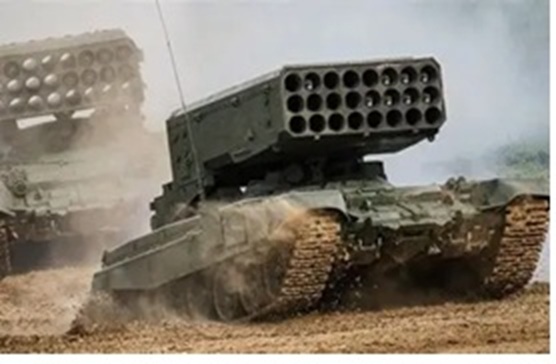
At least 2,842 Palestinians had ‘evaporated’ … [which] civil defence teams attribute to Israel’s use of thermal and thermobaric weapons, which effectively ‘vaporise’ human bodies
Belen Fernandez 4 May 2026 , https://www.middleeasteye.net/opinion/israel-making-palestinians-disappear-more-ways-one
Reports of missing children and ‘evaporated’ bodies reveal a widening pattern of erasure in Gaza, where entire families are killed, lost under rubble or reduced to biological traces
n 23 April, the Israeli newspaper Haaretz reported that “dozens of children go missing each week” in the Gaza Strip “against the backdrop of the postwar chaos” – a curious euphemism, no doubt, for the ongoing US-backed genocide in the Palestinian territory, which proceeds apace despite the ceasefire that was ostensibly implemented last year.
The article begins with four-year-old Mohammed Ghaban, who disappeared in early April in northern Gaza: “[H]e had been playing with his brother in front of his displaced family’s tent. He went inside, asked for a hug, put on his sandals and went out.” And then he was gone.
The author cites an estimate from the Palestinian Center for the Missing and Forcibly Disappeared that 2,900 children “disappeared during the war”, with 2,700 bodies thought to be trapped under the rubble and the remaining 200 simply missing.
Such statistics are in keeping with the modus operandi of the Israeli military, which, according to the official fatality count, has killed more than 72,500 Palestinians in Gaza since the launch of the genocide in 2023, with thousands more still missing and presumed dead under the rubble.
United Nations special rapporteur Francesca Albanese warned back in September that the true death toll might already have been more in the vicinity of 680,000.
Speaking of disappearances, an Al Jazeera Arabic investigation revealed in February that at least 2,842 Palestinians had “evaporated” in the Gaza Strip since the start of the war – a phenomenon Gaza’s civil defence teams attribute to Israel’s use of US-manufactured thermal and thermobaric weapons, which effectively “vaporise” human bodies.
The gruesome tally was quickly eclipsed by the deranged US-Israeli war on Iran and wider regional catastrophe, which has monopolised the news for the past two months. But the topic remains as sinisterly relevant as ever.
In remarks to Al Jazeera at the time, civil defence spokesperson Mahmoud Basal outlined the process for determining the number of vaporised victims at homes targeted by Israeli strikes: “If a family tells us there were five people inside, and we only recover three intact bodies, we treat the remaining two as ‘evaporated’ only after an exhaustive search yields nothing but biological traces – blood spray on walls or small fragments like scalps.”
Vaporised bodies
Upon publication of these macabre findings, the Israeli military got its panties into a genocidal bunch and issued a huffy communique to allegedly set the record straight.
Rejecting Al Jazeera’s “false claim of the evaporation of Gazan bodies”, the army insisted that it “uses only lawful munitions” and that it “strikes military targets and objectives in accordance with international law and takes all feasible measures to mitigate harm to civilians and civilian property to the extent possible.”
It’s not clear, of course, why a military that has been accused of potentially killing nearly 700,000 people – and that wipes out entire families and neighbourhoods without so much as batting an eye – took such particular offence at the whole “evaporation” matter.
Granted, disappearing bodies into thin air is a pretty good way of hiding the true extent of mass slaughter.
And while the vaporisation of Palestinian bodies may not fit the official legal definition of enforced disappearance, it is quite literally exactly that.
According to the website of the Office of the United Nations High Commissioner for Human Rights, “an enforced disappearance is considered to be the arrest, detention, abduction or any other form of deprivation of liberty by agents of the State or by persons or groups of persons acting with the authorization, support or acquiescence of the State, followed by a refusal to acknowledge the deprivation of liberty or by concealment of the fate or whereabouts of the disappeared person, which place such a person outside the protection of the law”.
In light of Israel’s explicit disappearing act in Gaza, however, a considerable expansion of that definition would seem to be in order.
And yet Israel is guilty of the traditional variety of enforced disappearance, as well. Last August, UN experts denounced reports that starving Palestinian civilians – including a child – were being forcibly disappeared from aid distribution sites run by the notorious Gaza Humanitarian Foundation.
Backed by Israel and the US, the foundation also specialised in massacring desperate folks who had gathered in search of food and other necessary items for survival.
Meanwhile, in both Gaza and the West Bank, Israel’s enforced disappearances of medical personnel, journalists and all manner of other humans have flourished since the onset of the genocide – not that this hasn’t always been par for the course.
Global pattern
For its part, the US has had a hand in enforced disappearances in a whole lot of places around the world, including by aiding and abetting bloodthirsty right-wing regimes throughout Latin America during the Cold War.
Tens of thousands were disappeared in Argentina, Guatemala and beyond as the US and its buddies nobly went about making the hemisphere safe for capitalism.
In Mexico, more than 130,000 persons have been disappeared, the vast majority of them following the launch in 2006 of the US-backed “war on drugs”, which would be more aptly characterised as a war on the poor.
But from Mexico to the Middle East, the number of disappeared hardly conveys the extent of victimisation. The families of the missing are victims, too, condemned as they are to indefinite psychological limbo in the absence of concrete information regarding the fate of their loved ones – without which it is impossible to commence the grieving process or obtain the emotional closure that is necessary to move on with one’s life.
In the case of Israel’s “evaporation” of Palestinians in Gaza, it’s hard to say whether the knowledge that your loved one has been vaporised is concrete enough to enable eventual closure. After all, there’s nothing very concrete about being forcibly vanished without a trace.
Indeed, Al Jazeera quotes Palestinian father Rafiq Badran on the almost inconceivable psychological torment that attends Israel’s sinister new spin on the theme of enforced disappearance: “Four of my children just evaporated,” Badran said, holding back tears. “I looked for them a million times. Not a piece was left. Where did they go?”
Now, with regional war raging as the arms industry rakes in big bucks, it has become even easier for global audiences to tune out the unique plight of the Palestinians – which means that the genocide is effectively being disappeared from the spotlight, as well.
In the end, of course, the Israeli goal is nothing less than to forcibly disappear the very idea of a Palestinian people. But unfortunately for Israel, its blood-drenched legacy will not be so easily concealed.
The West’s bubble of illusion about Israel – and about itself – is finally being burst

The anti-racist left are demonised as Jew-hating bigots for trying to burst the West’s long-established bubble of illusion by noisily flagging both the atrocities committed by Israel, supposedly in the name of Jews, and the complicity of their own governments in those atrocities.
Jonathan Cook, May 2026, https://www.middleeasteye.net/opinion/west-bubble-illusion-israel-about-itself-finally-being-burst
The genocide in Gaza and ethnic cleansing in Lebanon exhausted the West’s moral legitimacy. Now Iran is slowly exhausting the West’s military primacy
or decades, two irreconciliable narratives about Israel and its motivations have existed in parallel.
On the one side, an official western narrative portrays a plucky, besieged “Jewish” state of Israel, desperate to make peace with its hostile Arab neighbours. Even to this day, that story dominates the political, media and academic landscape.
Time and again, or so we are told, Israel has held out an olive branch to “the Arabs”, seeking acceptance, but is always rebuffed.
A largely unspoken subtext suggests that supposedly irrational, bloodthirsty, Jew-hating regimes across the region would have completed the Nazis’ exterminationist agenda but for the West’s humane protection of a vulnerable minority.
A Palestinian counter-narrative, accepted across much of the rest of the world, is choked into silence in the West as an antisemitic “blood libel”.
It presents Israel as an ethnic supremacist, highly militaristic state – armed by the US and Europe – bent on expansion, mass expulsions and land theft.
On this view, the West implanted Israel as a colonial military outpost, there to subdue the native Palestinian population, and terrorise neighbouring states into submission through relentless and overwhelming displays of force.
Palestinians cannot make peace, or reach any kind of accommodation, because Israel pursues only conquest, domination and erasure. No middle ground is possible.
The proof, note Palestinians, is Israel’s long-standing refusal to define its borders. As its military power has grown decade after decade, ever more extreme political agendas have surfaced, demanding not just Israel’s takeover of the last remnants of the Palestinian territories it illegally occupies but expansion into neighbouring states like Lebanon and Syria.
Drunk on power
Here are two conflicting narratives in which each side presents itself as the victim of the other.
Two and a half years into a series of Israeli wars against the peoples of Gaza, Iran and Lebanon, how are these two perspectives holding up?
Does Israel look like the frustrated peacemaker facing off with barbaric opponents, or a rogue state whose decades-long aggression has provoked the very retaliatory violence exploited to excuse its constant war-making?
Is Israel a small, reluctant fortress state defending itself, or a western military client so drunk on its own power that it can no more limit its territorial ambitions than a great white shark can stop swimming?
The truth is that the past 30 months have graphically exposed not only what Israel always was but, by extension, what our own western states aspired to achieve through their most favoured Middle East client.
In a moment of imprudence last month, Christian Turner, Peter Mandelson’s replacement as British ambassador to the US, said the quiet part out loud. Washington, the West’s imperial hub, he said, had no deep loyalty to its allies – apart from one.
Unaware his words were being recorded, he told a group of visiting students: “I think there is probably one country that has a special relationship with the United States, and that is probably Israel.”
That special relationship requires the political and media class in Washington’s other client states, such as Britain, to shield the West’s Sparta in the Middle East from critical scrutiny.
So glaring have Israel’s atrocities become that the British government announced last month that it was shuttering its Foreign Office unit tracking war crimes – citing the need for cuts – rather than face further exposure of its collusion in those crimes.
If the British government refuses to monitor Israel’s war crimes, don’t expect more from the establishment media.
For months, Israel has been blowing up village after village in south Lebanon, driving millions of inhabitants from lands lived on for millennia by their ancestors, and it barely registers with our politicians and media.
Israel is destroying Gaza’s water supplies, as it earlier did the tiny enclave’s hospitals and health system, ensuring the further spread of disease, and our politicians and media have barely a word to say about it.
Israel kills journalists and emergency crews in Gaza and Lebanon week after week, month after month, and it raises barely an eyebrow from the political and media class.
Israel declares “yellow lines” in Gaza and Lebanon, demarcating expanded borders that formalise its theft of other peoples’ lands, and this instantly becomes the new normal.
Israel continuously violates ceasefires in Gaza and Lebanon, spreading misery and inflaming yet more anger and bitterness, and once again, our politicians and media turn a blind eye.
Which western media outlets are pointing out a starkly revealing fact: that Israel now occupies more of Lebanon than Russia does of Ukraine?
Media bias
An analysis by the Newscord media monitoring group last month confirmed earlier research: that the British media studiously avoid naming ethnic cleansing and genocide when it is Israel – rather than Russia – carrying them out.
Comparing the coverage of the most “serious” establishment British news outlets – the BBC, the Guardian and Sky – with that of Al Jazeera, the study found that UK media consistently choose to obscure Israel’s responsibility for its crimes.
Israel was identified as conducting attacks in Gaza in only around half of British news reports, in contrast to nearly 90 percent of Al Jazeera’s. As Newscord noted: “Half the time, BBC readers aren’t told who killed the person in the story.”
That was graphically illustrated in a notorious BBC headline: “Hind Rajab, 6, found dead in Gaza days after phone calls for help”.
In fact, an Israeli tank had sprayed a stationary car with gunfire even though the Israeli military had known for hours that it contained a Palestinian girl – the sole survivor of an earlier attack – who emergency crews were desperately trying to reach. Israel killed the rescue team, too.
In another revealing finding, Newscord notes that four out of every five BBC reports on casualties caused by Israel’s attacks used the convoluted passive – rather than active – voice, clearly with the intent to downplay Israel’s culpability and savagery.
The British media also actively undermined the enormity of the Palestinian death toll in Gaza by regularly attributing the figures to a “Hamas-affiliated” health ministry – even though the numbers, currently at well over 70,000 Palestinians, are almost certainly a massive undercount, given Israel’s early destruction of the enclave’s government and its capacity to count the dead.
The fact that the United Nations has found the Gaza figures to be credible was mentioned in only 0.6 percent of reports.
Genocidal intent
Similarly, the BBC and the Guardian made the decision to humanise Israeli captives of Hamas twice as often as they did Palestinian captives of the Israeli state.
The inappropriateness of that double standard is underscored by continuing insinuations from politicians and the media that Hamas “beheaded babies” and carried out systematic rapes on 7 October 2023 – more than two years after those claims were utterly discredited.
Contrast that with the media’s effective burial of Euro Med Monitor’s report last month on the sickening practice by the Israeli military of raping Palestinian prisoners with dogs trained for that very purpose.
There has been a flood of accounts from Palestinians held captive by Israel of their systematic rape and sexual abuse, confirmed by human rights groups and by the testimonies of whistleblowing Israeli soldiers and medics. Little of this is making headway in the western media.
Newscord points to a further, veiled problem that skews western coverage: the omission of established but inconvenient facts that would present Israel in a depraved – that is, an accurate – light.
For example, observes Newscord, the BBC has entirely failed to report all but one of the hundreds of clearly genocidal statements made by Israeli officials, from Prime Minister Benjamin Netanyahu down.
It is easy to understand why. Legal authorities usually struggle to make a conclusive determination of genocide because, crucially, it depends on divining intent, which is typically hidden by those committing atrocities.
Starkly, in Israel’s case, not only do its actions in Gaza look like genocide, but its leaders have been crystal clear that those actions are intended to be genocidal. That is behaviour only seen in those intoxicated by a sense of their own impunity.
Once again, the British media have obligingly taken it upon themselves to shield Israel from any legal jeopardy – all in the interests of objective reporting, you understand.
An old story
This is nothing new. It has been the same story since before Israel’s violent creation on the Palestinians’ homeland in 1948, when 80 percent of the native population were ethnically cleansed by Israel from the new, self-declared “Jewish” state. Or when, in the continuing language of deceit employed by western political, media and academic elites, some 750,000 Palestinians “fled”.
The aim has been to manufacture and maintain a bubble of illusion for western publics, one where our own crimes – and those of our allies – remain invisible to us.
Note in this regard the UK government’s determined exclusion of Israel from a recent “independent” inquiry, under former Whitehall bureaucrat Philip Rycroft, into malign foreignfinancial influence on British politics. It was, of course, Russia that was put chiefly under the spotlight.
Predictably, Keir Starmer’s government rejected in April a petition signed by more than 114,000 people calling for a similar public inquiry into the influence of the powerful Israel lobby.
That came as no surprise, given that any such investigation would have risked foregrounding the many hundreds of thousands of pounds known to have been received by Starmer and his ministers from pro-Israel lobbyists.
The same British political and media class so averse to investigating the malign influence of the pro-Israel lobby is also ignoring Israel’s current, systematic destruction of villages and infrastructure across south Lebanon – in flagrant violation of a supposed ceasefire.
Israeli soldiers have told local media that their job is to target all structures indiscriminately, whether civilian or “terrorist”, with the goal of preventing the Lebanese inhabitants from returning to their villages.
That fits with Israel’s announcement that it does not intend to withdraw after the fighting ends, and widespread plans to colonise the occupied lands in Lebanon with Jewish settlers.
Were it not for videos of Israel blowing up Lebanese communities breaking through on social media, despite algorithmic suppression, we might not know about Israel’s wholesale efforts to ethnically cleanse south Lebanon.
Responding to these videos with a rare “mainstream” report on the campaign of destruction, the Guardian sugar-coated the horror faced by Lebanese families discovering their homes gone, along with priceless memories and heirlooms. This experience was described – absurdly – by the paper as “bittersweet”.
Critics note a consistent pattern. Israel is not only levelling south Lebanon; over the past 30 months, it has levelled almost every building in Gaza, too.
But the template for both is of much earlier origin, as every Palestinian learns from a tender age.
Having expelled most Palestinians from their homes in 1948, Israel spent years blowing up some 500 villages one after another – even as Israeli leaders publicly claimed to be begging the refugees to return and western leaders were extolling Israel as the “only democracy” in the Middle East.
Expulsions that the West still pretends did not take place eight decades ago are now being livestreamed. This time, they are impossible to deny, as well as the colonial, supremacist agenda behind them.
Vilify the messenger
If the message inhering in Israel’s atrocities can no longer be disappeared, laundered or normalised – as it was in an age before 24-hour rolling news and social media – then a different strategy is required: villify the messenger.
This is the political task of our times.
The anti-racist left are demonised as Jew-hating bigots for trying to burst the West’s long-established bubble of illusion by noisily flagging both the atrocities committed by Israel, supposedly in the name of Jews, and the complicity of their own governments in those atrocities.
Last month, Starmer’s government forced through the Commons a law allowing the police to outlaw protests causing “cumulative disruption” – that is, repeat protests like those against Israel’s genocide in Gaza. The media barely blinked.
This week’s attack on two Jewish men in Golders Green, allegedly by a mentally ill man with a long history of violence, is being quickly exploited by the main parties to prepare for even tighter restrictions on the right to protest.
Britons who try to stop Israeli war crimes, whether by targeting Israel’s factories of death located in the UK or by holding placards in support of this kind of direct action, continue to be treated as “terrorists”, even after a court ruling that the proscription of Palestine Action is unlawful.
With juries often proving reluctant to convict, the British state is openly trying to sway verdicts in its favour. Juries are blocked from learning about the reasons for the targeting of Israeli weapons factories – the accused’s main defence. Judges instruct juries to convict.
Members of the public who silently hold signs outside court are arrested for reminding juries of a long-established right in law to defy such instructions, follow their consciences and acquit – a police abuse contravening hundreds of years of legal precedent, and one the courts appear increasingly ready to condone.
There are gags, being dutifully obeyed by the media, on other secret malpractices designed to help the British government secure the verdicts it needs to stop activism against the genocide. We only know because Your Party MP Zarah Sultana has used parliamentary privilege to draw attention to them.
It was telling this week that, in the current repeat trial of six Palestine Action defendants, five of them dispensed with their barristers for the closing speeches. They noted, darkly, that their legal representatives could not properly represent them due to “decisions made by the court”.
Meanwhile, the Starmer government is pressing ahead with plans to finally rid itself of troublesome juries and let more reliable judges decide these political show trials alone.
Welcome to the rapid unravelling of Britain’s most cherished constitutional rights – needed chiefly, it seems, to protect a far-off country that, according to the International Court of Justice, commits the crime of apartheid against Palestinians and may plausibly be committing genocide in Gaza.
Painful lesson
But, of course, the British government – like the US, German and French governments – isn’t hollowing out its liberal democracy just to protect Israel. It is being forced to such extremes out of desperation.
The West can no longer sustain the bubble of illusion – about its moral or civilisational superiority – in a world of diminishing resources, a world where western elites are willing to cause planetary immolation to protect the fossil-fuel profits on which they have grown obese.
The agenda of the Epstein class is ever more transparent at home, and ever more under challenge abroad. The genocide in Gaza, and the ethnic cleansing in Lebanon, have exhausted the West’s moral legitimacy. Now Iran is slowly exhausting the West’s military primacy.
It is no surprise that a US empire on its last legs – an empire built on the control of fossil fuels – has chosen as the hill to die on the Strait of Hormuz, the world’s largest oil spigot.
Israel was, indeed, implanted in the region eight decades ago as a highly militarised client state whose primary job was to project western – that is, US – power into the oil-rich Middle East.
The US shielded Israel from scrutiny over its oppression of the Palestinians and the theft of their homeland.
In return, “plucky” Israel helped the US construct a self-serving narrative that required the containment and overthrow of secular nationalist governments in the Middle East while protecting backward-looking monarchies that cosplayed opposition to Israel as they secretly colluded with it.
The region’s resulting states, embattled and divided, were ripe for control. They lacked the kind of accountable governments that would need to be responsive to their publics and might ally to protect the region’s interests from western colonial interference.
Now, Iran is stress-testing this decades-old system to destruction. It is forcing the Gulf states to choose: will they continue to serve the US, even though it has shown it cannot protect them, or ally with Iran as it emerges as a new great power, levying fees to pass through the strait?
The West is quickly learning that cheap drones can elude even its most sophisticated detection systems, and that a few mines and gunboats can choke off much of the fuel the global economy depends on.
The bubble of illusion has finally burst. The West is getting its long-overdue comeuppance. The lesson will be painful indeed.
Iranian proposal rejected by Trump would open strait before nuclear talks, Iran official says

By Reuters, May 2, 2026, https://www.reuters.com/world/middle-east/iranian-proposal-rejected-by-trump-would-open-strait-before-nuclear-talks-iran-2026-05-02/
May 2 (Reuters) – An Iranian proposal so far rejected by U.S. President Donald Trump would open shipping in the Strait of Hormuz and end the U.S. blockade of Iran while leaving talks on Iran’s nuclear programme for later, a senior Iranian official said on Saturday.
Four weeks since the United States and Israel suspended their bombing campaign against Iran, no deal has been reached to end a war that has caused the biggest disruption ever to global energy supplies.
Iran has been blocking nearly all shipping from the Gulf apart from its own for more than two months. Last month the U.S. imposed its own blockade of ships from Iranian ports.
Trump said on Friday he was “not satisfied” with Iran’s latest proposal, without spelling out in detail which elements he opposes.
“They’re asking for things that I can’t agree to,” he told reporters at the White House.
Washington has repeatedly said it will not end the war without a deal that prevents Iran from ever obtaining a nuclear weapon, the primary aim Trump cited when he launched the strikes in February in the midst of nuclear talks. Iran says its nuclear programme is peaceful.
Speaking on condition of anonymity to discuss confidential diplomacy, the senior Iranian official said Tehran believed its latest proposal to shelve nuclear talks for a later stage was a significant shift aimed at facilitating an agreement.
Under the proposal, the war would end with a guarantee that Israel and the United States would not attack again. Iran would open the strait, and the United States would lift its blockade.
Future talks would then be held on curbs to Iran’s nuclear programme in return for the lifting of sanctions, with Iran demanding Washington recognise its right to enrich uranium for peaceful purposes, even if it agrees to suspend it.
“Under this framework, negotiations over the more complicated nuclear issue have been moved to the final stage to create a more conducive atmosphere,” the official said.
Reuters and other news organisations already reported over the past week that Tehran was proposing to reopen the strait before nuclear issues were resolved; the official confirmed that this new timeline had now been spelled out in a formal proposal conveyed to the United States through mediators.
New outrage after Israel demolishes convent in Yaroun, southern Lebanon.
“They destroy homes and places of worship, and no one stops them,” lamented the parish priest of the village.
L’OLJ / 3 May 2026, https://today.lorientlejour.com/article/1505569/new-outrage-after-israel-demolishes-convent-in-yaroun-southern-lebanon.html
Two weeks after the uproar over the desecration of a statue of Jesus Christ in a village in southern Lebanon, Israeli forces demolished a convent in Yaroun (Bint Jbeil district) on Friday, sparking a new wave of international indignation.
“Let American Christians speak up!!! America can’t stay silent and must stop funding Israel to commit such atrocities!!!” wrote former U.S. lawmaker and far-right figure Marjorie Taylor Greene on Saturday, sharing a post showing the extent of the destruction suffered by the convent and the Sisters of the Holy Savior school.
“The Israeli army razed the convent and the Sisters of the Holy Savior school in Yaroun, Lebanon, yesterday. By what right? What does this have to do with disarming Hezbollah? Israel, wake up—your leaders have lost their way,” responded European Parliament member Nathalie Loiseau, former French minister and a member of President Emmanuel Macron’s allied Horizons party.
According to information obtained on Friday by our correspondent in southern Lebanon from Father Charbel Naddaf, priest of the Yaroun parish, the Israelis did indeed carry out the demolition of the convent and its associated school on Friday, denouncing “a flagrant violation of international law.
According to information obtained on Friday by our correspondent in southern Lebanon from Father Charbel Naddaf, priest of the Yaroun parish, the Israelis did indeed carry out the demolition of the convent and its associated school on Friday, denouncing “a flagrant violation of international law.”
Father Naddaf believes that Tel Aviv’s goal is to “empty the area of its inhabitants and prevent their return,” something the Israeli army manages to accomplish “in the absence of any deterrent.” “They destroy houses and places of worship, and no one stops them,” he lamented, calling on Lebanese authorities and the international community to intervene.
“Violation of all human values”
An Israeli soldier had already caused an international outcry by vandalizing a statue of Jesus Christ in the Christian village of Debel, forcing the Israeli government to announce sanctions against the soldiers involved in this desecration, under the weight of public outcry.
During the previous Israeli ground offensive in southern Lebanon launched during the autumn 2024 war, Israeli soldiers filmed themselves desecrating a monastery in Deir Mimas (Marjeyoun), as well as a statue of Saint George in Yaroun. Several places of worship, including mosques and churches, had already been affected by Israeli bombings, including the same monastery in Yaroun, which was badly damaged.
In response to yet another such incident, the Metropolitan of Zahlé and the Bekaa of the Melkite Greek Catholics, Ibrahim Mikail Ibrahim, condemned in a statement the “crime of destruction” that targeted the monastery and the Sisters of the Holy Savior school, saying that “what happened is not a mere passing aggression, but a blatant and unacceptable violation of all human values and international law, as well as a direct attack on the educational and spiritual mission of the Church.”
Metropolitan Ibrahim stated that “the destruction of this religious and educational place constitutes an aggravated crime against humanity and the land, and respects neither the sanctity of holy places nor that of scientific institutions,” emphasizing that targeting a monastery and a school is tantamount to attacking “childhood, knowledge, and the hope for a better future.” “I call on the international community to assume its responsibilities and not content itself with timid positions that do not measure up to the seriousness of the tragedy,” he insisted.
The “buffer zone” that Israel wants to establish in southern Lebanon stretches as far as eight to ten kilometers from the Blue Line and encompasses dozens of villages, most of which are occupied and where all homes and other civilian buildings are systematically destroyed. In addition to this invasion, the Israeli army continues to bomb, despite the existing truce, villages and towns in the south of the country.
Israel’s war on water-depriving Palestinians in Gaza of water for at least nearly two decades, if not longer
It’s part of Israel’s multi-layered manufactured misery in Gaza, long before October 2023
Eva Karene Bartlett, May 01, 2026, https://evakarenebartlett.substack.com/p/israels-war-on-water-depriving-palestinians?utm_source=post-email-title&publication_id=3046064&post_id=196084075&utm_campaign=email-post-title&isFreemail=true&r=1ise1&triedRedirect=true&utm_medium=email EXCELLENT ILLUSTRATIONS ON ORIGINAL.
When I lived in Gaza, I documented Israel’s systematic destruction of wells & cisterns in the formerly-rich agricultual land in eastern & northern Gaza, also noting:
“(Following the Israeli December 2008/January 2009 war on Gaza) A UNDP survey following the attacks found that nearly 14,000 dunums of irrigation networks and pipelines have been destroyed, along with 250 wells and 327 water pumps completely damaged, and another 53 wells partially damaged by Israeli bombing and bulldozing. Water has been further contaminated by chemical agents used by the Israeli army during its war on Gaza…”
Palestinian farmers often had to resort to trying to irrigate their land by carting jugs of wateron donkey carts over land rutted by Israeli tanks and bulldozers (which routinely invaded to tear up farmland and destroy crops).
On top of depriving Palestinians of their ability to collect water, Israel cut off the natural flow of water to Gaza.
On top of this, Israel ensured Gaza’s coastal waters remained polluted by sewage, never allowing Palestinians to properly maintain and treat sewage, pumping into the sea being the only option to avoid having sewage flood the streets (as happened many times).
Back in 2014 when I wrote an indepth overview of the many sadistic policies Israel employed to ensure Gaza was unliveable back then, I noted:
“Damage to the coastal aquifer from over-extraction will be reversible in 2020 if no action is taken now, a 2012 UN report notes. At the moment, 95% of water in Gaza is undrinkable according to WHO standards.”
Do read the full overview:
-on how Israel has been deliberately starving Gaza since the 2000s, including by drastically limiting imports; shooting on farmers & fishers; destroying agricultural land and stealing or destroying fishing boats
-on the 2008/9 & 2012 Israeli wars on Gaza, which I documented real time from on the ground & in ambulances in northern Gaza
-on Israel attempting to quash popular unarmed resistance by firing live ammunition at protesters (long before the 2018 Great Marches)
-on Israel’s destruction of Gaza’s sole power plant and crippling of their electricity, meaning we went without electricity for 14-18 hours on good days, 20 or more hours on bad days (which were the majority), and how this impacted sanitation, hospitals and personal lives
-on the Israeli bombings not reported by Western media, and not during Israel’s sociopathical wars on Gaza…and the sonic booms campaigns were terrorized the population, the sound very much like actual bombs, in relentless campaigns
-on how these, and more, contributed to stunted growth in children and other malnutrion related diseases, as well as anaemia in women, rampant diabetes, and other food and preventable water related diseases – https://ingaza.wordpress.com/2014/01/01/observations-from-occupied-palestine-in-gaza/
This was all 10 or 15 years prior to October 2023. Zionist propagandists’ justifications for their savagery are simply empty talking points
Israeli violence against Palestinians echoes Holocaust – ex-Mossad chief
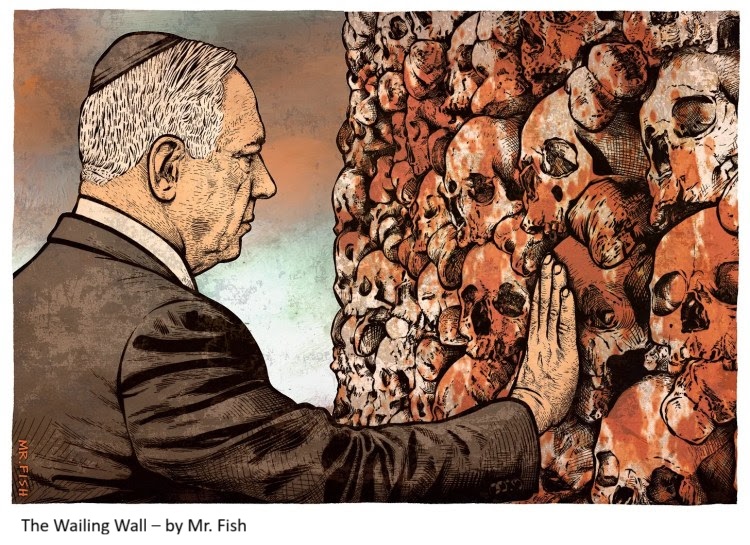
Ongoing attacks in the West Bank pose an “existential threat” to the Jewish state, Tamir Pardo has said
28 Apr, 2026 https://www.rt.com/news/639222-israel-violence-palestinians-holocaust/
Violence by Israeli settlers against Palestinians in the West Bank echoes attacks on Jews during the Holocaust and poses an “existential threat” to Israel, former Mossad chief Tamir Pardo has said.
Israeli settlers live in communities built in the West Bank, a territory Israel captured in the 1967 Six-Day War and which Palestinians seek as part of a future state. Successive Israeli governments have backed or tolerated the settlements for security, political, and religious reasons.
Pardo spoke to local media on Monday while touring Palestinian villages that have come under settler attacks in recent months.
”My mother was a Holocaust survivor, and what I saw reminded me of the events that happened against Jews in the last century,” Pardo said. “What I saw today made me feel ashamed to be Jewish.”
His comments come amid a surge in settler violence across the West Bank, with groups carrying out repeated raids on Palestinian communities, torching homes and vehicles, vandalizing property and assaulting residents, according to witnesses and human rights organizations. In the latest incident, two Palestinians, including a 14-year-old schoolboy, were killed last week after gunmen opened fire near a school.
Attacks occur on a near-daily basis and intensified during the US-Israeli war on Iran between February 28 and April 8, rights groups said. Yesh Din recorded 378 incidents over that period, in which eight Palestinians were killed and around 200 injured.
Pardo said the settlers behind the attacks, and the Israeli government’s failure to stop them, were creating the conditions for a future October 7-style assault from the West Bank, referring to the 2023 Hamas-led attack on southern Israel that killed about 1,200 people and saw 250 taken hostage. Israel launched a military campaign in Gaza in response to the attack. More than 72,000 Palestinians were killed and over 172,000 injured in Israeli airstrikes and ground offensives, according to Palestinian health authorities.
The former Mossad chief warned that the violence unfolding in the West Bank could lead to a similar event, albeit in a different and potentially more severe form given the region’s complexity, adding that Israel was “sowing the seeds” for such an outcome.
Iranian Group Submits Evidence of US-Israeli War Crimes to International Criminal Court.
“All cases of attacks on civilians are being legally pursued based on the Geneva Conventions,” said the head of the Iranian Red Crescent Society.
Jake Johnson, Apr 26, 2026, https://www.commondreams.org/news/iran-us-war-crimes
The head of the Iranian Red Crescent Society said Saturday that his organization has submitted evidence of US-Israeli war crimes to the International Criminal Court and other global bodies, seeking accountability for massive attacks on civilian infrastructure and other violations.
“The ICC prosecutor announced that the documents provided by the IRCS are accepted as official evidence,” said Pir-Hossein Koulivand, the head of the Iranian Red Crescent Society. “All cases of attacks on civilians are being legally pursued based on the Geneva Conventions.”
The IRCS estimates that US and Israeli airstrikes have destroyed more than 132,000 civilian structures throughout Iran, including hospitals, apartment buildings, universities, research facilities, and bridges. US President Donald Trump has repeatedly threatened to destroy all of Iran’s bridges and power plants if the country’s leadership does not succumb to his administration’s demands in negotiations to end the war.
Luis Moreno Ocampo, the founding chief prosecutor of the ICC, said earlier this month that Trump could be indicted if he follows through on his threats.
“My suggestion: You read the indictment of the Russians, change the name, and it is very similar,” said Ocampo, referring to ICC arrest warrants issued against senior Russian officials in 2024 for alleged war crimes in Ukraine.
In a series of social media posts on Saturday, the IRCS provided video footage and photographic evidence of what the group described as war crimes committed by the US and Israeli militaries.
“Among the most bitter war crimes of America and Israel in Iran is the attack on the home of 19-month-old Helma in Tabriz, in which four members of her family were martyred,” the IRCS wrote Saturday. “The only survivor of this family is Helma.”
The ICC is tasked with investigating and prosecuting individuals for war crimes, crimes against humanity, and other grave violations of international law. Iran is not currently a party to the Rome Statute, which established the ICC—so the court does not have jurisdiction over war crimes committed on Iranian territory.
Human rights organizations and advocates have implored Iran to grant the ICC jurisdiction to pursue justice for war crimes committed during the illegal US-Israeli assault that began on February 28. On the first day of the war, the US bombed an elementary school in southern Iran.
“From the killing of over 150 students and teachers to strikes on hospitals full of newborns, every day more and more evidence emerges pointing to the commission of grave war crimes in Iran since the start of the war,” said Omar Shakir, executive director of DAWN. “Victims deserve justice. The mechanisms exist, and the US has no veto over them.”
Kenneth Roth, former executive director of Human Rights Watch, wrote earlier this month that “the Iranian government could join the court now and grant it retroactive jurisdiction, similar to what Ukraine did to allow prosecution of Russian war crimes.”
Last month, the IRCS formally requested that the ICC initiate “an investigation into war crimes arising from attacks by the United States of America and the Israeli regime against civilian objects.”
“According to field reports from relief workers, operational documentation, and data recorded by the Iranian Red Crescent Society, a wide range of residential areas, medical facilities, schools, humanitarian facilities, vital urban infrastructure, and public places were directly or indiscriminately targeted during the recent military attacks,” the group wrote in a letter to the ICC’s top prosecutor.
1 This Month


Shut down the radiation-damaged Heysham nuclear reactors now
To see nuclear-related stories in greater depth and intensity – go to https://nuclearinformation.wordpress.com

Say No to NASA’s Reckless Nuclear Reactor on the Moon
Say No to NASA’s Reckless Nuclear Reactor on the Moon
-
Archives
- October 2026 (256)
- September 2026 (339)
- August 2026 (330)
- July 2026 (355)
- June 2026 (287)
- May 2026 (306)
- April 2026 (356)
- March 2026 (251)
- February 2026 (267)
- January 2026 (308)
- December 2025 (358)
- November 2025 (359)
-
Categories
- 1
- 1 NUCLEAR ISSUES
- business and costs
- climate change
- culture and arts
- ENERGY
- environment
- health
- history
- indigenous issues
- Legal
- marketing of nuclear
- media
- opposition to nuclear
- PERSONAL STORIES
- politics
- politics international
- Religion and ethics
- safety
- secrets,lies and civil liberties
- spinbuster
- technology
- Uranium
- wastes
- weapons and war
- Women
- 2 WORLD
- ACTION
- AFRICA
- Atrocities
- AUSTRALIA
- Christina's notes
- Christina's themes
- culture and arts
- Events
- Fuk 2022
- Fuk 2023
- Fukushima 2017
- Fukushima 2018
- fukushima 2019
- Fukushima 2020
- Fukushima 2021
- general
- global warming
- Humour (God we need it)
- Nuclear
- RARE EARTHS
- Reference
- resources – print
- Resources -audiovicual
- Weekly Newsletter
- World
- World Nuclear
- YouTube
-
RSS
Entries RSS
Comments RSS

