Pentagon raised threat of Israeli spying on U.S. to highest level, sources say.

Peter Thiel through Palantir is doing the same thing to US citizens that the IDF has been doing to Palestinians for over 50 years. That is, being gifted massive US government defense contracts to surveil, oppress and kill innocent civilians.
The counterintelligence threat level was raised by the Defense Intelligence Agency in recent weeks after growing concerns that Israeli espionage had become more aggressive than usual, sources say.
In the case of Israel, under the guise of combating “terrorism,” the IDF is allowed to test with impunity all their latest, most sophisticated weapons technologies on Palestinian civilian bodies, for their own benefit, but also for the benefit of those US Zionist interests that control our foreign policy and provide a majority of the funding and weapons – no matter the war crimes or death toll.
In the case of Palantir, under the guise of “domestic terrorism,” it is contracting to provide high tech surveillance technology for ICE’s use on unwitting American citizens, so Palantir (who it is believed acquired all our personal records from Elon Musk’s DOGE theft at the White House), may continue to perfect and expand his hegemony into a gigantic global monopoly on behalf of Israel.
NBC News, By Gordon Lubold, Courtney Kube and Dan De Luce, 6 June 26
WASHINGTON — The Pentagon is increasingly concerned about Israel ramping up its spying on the U.S., recently raising the counterintelligence threat level from America’s top ally in the Middle East to the highest level, according to two U.S. officials and one former U.S. official.
The DIA assessment includes a seven-page document and features a chart, according to one of the current U.S. officials. The document says the assessment of Israel is that its ability to conduct human espionage and technical collection is at a “critical level,” according to the official.
It also identifies a series of specific incidents that heightened U.S. concerns, the official said………………………………
While it is commonplace for allies and adversaries across the globe to spy on each other, the current and former U.S. officials said Israel’s recent efforts have gone well beyond what is typical and expected espionage. The officials did not know if a specific incident triggered the DIA’s decision to raise the counterintelligence threat level.
The heightened alert comes as President Donald Trump and Israeli Prime Minister Benjamin Netanyahu have clashed over the war with Iran and Israel’s military operations in Lebanon, including in a tense phone call this past week, NBC News reported. Trump acknowledged afterward to reporters that he called Netanyahu “crazy” during the call as questions mount about whether the two countries’ objectives in the Middle East are beginning to significantly diverge.
Since a ceasefire deal was reached in early April, Trump has been pursuing a diplomatic deal with Iran to end the war Israel and the U.S. launched on Feb. 28. Israel has publicly expressed skepticism that Iran would abide by any negotiated deal. Netanyahu has pushed for a resumption of bombing raids against Iran and disagreed with Trump, who has pressed him to scale back attacks against Hezbollah in Lebanon, according to Western officials.
Israel is keenly interested in whether Trump decides to resume major combat operations against Iran or to end the conflict, the current and former U.S. officials and outside experts said. https://www.nbcnews.com/politics/national-security/pentagon-raised-threat-israeli-spying-us-highest-level-sources-say-rcna348565
UN report finds Israel deliberately targets Palestinian children
by Stephanie Tran | Jun 23, 2026, https://michaelwest.com.au/un-report-finds-israel-deliberately-targets-palestinian-children/
A UN Commission of Inquiry has found Israeli forces have deliberately targeted Palestinian children, their actions amounting to genocide, crimes against humanity and war crimes in Gaza. Stephanie Tran reports.
In a report released today, the UN Independent International Commission of Inquiry on the Occupied Palestinian Territory, including East Jerusalem, and Israel found that Palestinian children had been subjected to targeted killing, starvation, torture, sexual violence, arbitrary detention and repeated displacement.
The Commission found that “much of the harm suffered by Palestinian children was not incidental but
“intended to destroy the existence of the Palestinians in Gaza as a group.”
It said the “sheer number” of cases it investigated showing children were directly targeted by Israeli forces constituted “a key element” in demonstrating genocidal intent from Israeli authorities.
Last year, the Commission found that Israel had committed genocide against the Palestinians in the Gaza Strip.
The report also makes reference to its 2024 findings on “violations and abuses against Israeli children committed by the military wing of Hamas”. It found that “Israeli children were subjected to physical and emotional mistreatment on 7 October 2023.” 40 children were killed in the attack and hundreds injured, with many children losing one or both parents.
“Many children witnessed the killings of their parents and siblings and were also filmed for propaganda purposes by Palestinian armed groups.”
‘Children deliberately targeted’
The Commission found that Israeli security forces have directly targeted Palestinian children with the intention to kill them.
“Israeli security forces have consistently, directly and intentionally targeted individual children across Gaza during evacuations, in shelters and designated safe zones, at Gaza Humanitarian Foundation distribution sites and after the ceasefire agreement in and around the so-called ‘yellow line’.”
The report found that children had been targeted “from newborns to adolescents” and that in some cases children were shot while holding white flags.
The Commission said evidence including precision gunfire, injury patterns and the use of sniper rifles, drones and quadcopters capable of visually identifying targets indicated deliberate targeting.
Since 7 October 2023, more than 20,000 children have been killed in Gaza, representing 30% of the total deaths.
Speaking to MWM, Commissioner Chris Sidoti said the documented deaths represented only a portion of children killed during the genocide.
“We have seen over 20,000 children killed directly as a result of the violence,” he said.
“Israeli security forces have consistently, directly and intentionally targeted individual children across Gaza during evacuations, in shelters and designated safe zones, at Gaza Humanitarian Foundation distribution sites and after the ceasefire agreement in and around the so-called ‘yellow line’.”
“That does not include children who have not been identified, those who are buried under the rubble, those whose bodies have not been identified, those who have simply disappeared and are counted as missing.”
Sidoti said the figures also excluded children who had died from disease, starvation and the collapse of Gaza’s healthcare system.
“There are tens of thousands more children who have died as a consequence of this fighting,” he said.
He said some children had been deliberately targeted by snipers and drones.
“We know of snipers and of quadcopters that have killed children, deliberately targeting the children, not killing anybody else around them.”
The report found that children had been targeted “from newborns to adolescents” and that in some cases children were shot while holding white flags.
The Commission said evidence including precision gunfire, injury patterns and the use of sniper rifles, drones and quadcopters capable of visually identifying targets indicated deliberate targeting.
Since 7 October 2023, more than 20,000 children have been killed in Gaza, representing 30% of the total deaths.
Speaking to MWM, Commissioner Chris Sidoti said the documented deaths represented only a portion of children killed during the genocide.
Sexual violence against children
The Commission found that sexual and gender-based violence was being used “in the context of detention and arrests as a method of warfare and intimidation against Palestinian children”.
“Sexual violence against Palestinian children in Israeli detention is not exceptional but a systematic, state-enabled assault on their bodies and their dignity and deliberately meted out to cause humiliation,” the report states.
The Commission documented cases of forced public nudity, sexual assault, genital violence and sexual threats against children in detention.
Sidoti said some forms of abuse amounted to torture.
“Sexual violence itself is common, but it is not always used for the purposes of torture,” he said.
“A part of the sexual violence that we saw involved the stripping of children in public, their humiliation, and what, under Australian law and international law, constitutes child abuse.”
The Commission concluded that sexual violence against Palestinian children constituted both war crimes and crimes against humanity.
It further found that sexual violence “constitutes part of the genocidal act of causing serious bodily and mental harm.”
“Such deliberate violence was intended not only to cause immediate and long-term harm to the individual children, but
“to target and destroy the Palestinian group in Gaza, because children embody the group’s biological continuity and collective survival.”
Deliberate starvation and healthcare destruction
The Commission concluded that Israel had committed the war crime of wilful killing and the crime against humanity of extermination by intentionally using starvation as a method of warfare and depriving children of essential medical care.
The report found that Israel has “intentionally inflicted these conditions of life, in particular on Palestinian infants, children and young persons in Gaza”.
Attacks on hospitals, neonatal wards and maternity services, combined with shortages of fuel, medicine and medical equipment, have caused the deaths of newborns and seriously harmed pregnant women and infants.
Sidoti said the findings reinforced the Commission’s previous conclusions that Israeli actions in Gaza amounted to genocide.
“Our findings in relation to children confirmed those findings,” he told MWM.
He pointed to attacks on hospitals, neonatal and paediatric services and the destruction of medical equipment.
“All of these things indicate an intent that children should die, and that means for us reinforcement of our findings in relation to genocide“
Destruction of schools
The Commission concluded “Israeli security forces have intentionally directed attacks against educational facilities, resulting in the denial of Palestinian children’s right to education for present and future generations.”
More than 97% of schools in Gaza had been damaged or destroyed.
“The destruction of the education system has been an attack on the hopes and aspirations of the Palestinian people as a whole,” the report states.
The Commission found that the collapse of education and healthcare systems had caused
“Irreversible learning loss, neural developmental delays and diminished future opportunities.“
The report also documents Israeli soldiers filming themselves destroying children’s toys, playground equipment and personal belongings.
“The confidence of the Israeli soldiers to film themselves in this manner and post the evidence online is a clear reflection of the lack of accountability,” the report states.
Detention, torture and abuse
The Commission found that Palestinian children held by Israeli authorities had experienced prolonged blindfolding, forced stripping, severe beatings, deprivation of food and water, sleep deprivation and denial of medical treatment.
It found a pattern of “severe and deliberate mistreatment” particularly affecting Palestinian boys.
Children were subjected to prolonged kneeling on hard surfaces, attacks targeting their heads, faces and genitals, threats involving dogs and detention alongside adult prisoners.
The Commission concluded that the treatment of detained children constituted the crimes against humanity of torture and other inhumane acts causing serious suffering.
Sidoti said the number of Palestinian children detained by Israeli authorities remained unclear.
Sidoti said the number of Palestinian children detained by Israeli authorities remained unclear.
West Bank settler violence and killings
The Commission also examined Israeli military operations and settler violence in the occupied West Bank.
It found evidence that Palestinian children had been deliberately shot, denied medical treatment and subjected to violence by settlers.
“The Commission has identified a pattern of targeting of Palestinian children in the West Bank, mirroring Israeli practices in Gaza including deliberate shooting of children, particularly of boys. Israeli soldiers target boys, labelled as “terrorists”, on the basis of their male and Palestinian identity, with lethal force.”
The report describes cases in which wounded children were left bleeding while soldiers prevented ambulances from reaching them.
The Commission concluded that Israeli authorities had failed to protect Palestinian children from settler violence.
It concluded that settler violence functioned
“not as a deviation from state policy but as a means of implementing it”
“Both the State of Israel and violent settler groups share and collaborate in the same strategic objectives: the entrenchment of Israeli settlement on Palestinian land, annexation of Palestinian territory and the displacement of Palestinian people from their land.”
Chain of command and accountability
Sidoti said the Commission had found responsibility extended beyond individual soldiers.
“We have made that finding that there is a clear chain of command and it does go right to the top,” he said.
“It is not just individual soldiers who are responsible for individual war crimes. … There is a chain of command that means that those at the top have issued clear orders as to the nature of this campaign, the objectives the military are to achieve.”
“Our conclusion on the basis of the evidence that we collected is that that constitutes a genocidal purpose.”
Sidoti said growing international attention had shifted from expressions of concern to discussions about concrete measures by individual states.
“The responsibilities under international law now fall on individual governments and groups of governments to decide what action to take and take it.”
He said governments, including Australia, should consider measures directed not only at individuals but also at institutions.
“We need to address questions of institutions now, and not just individuals who are committing war crimes. That means the Israeli Defense Forces as an institution, the Israeli government as an institution, and the settlements themselves, right across the West Bank, as organized violators of international law” he said.
Israel declines to respond
Sidoti said Israeli authorities had been provided with a draft copy of the report before publication.
“Our procedures require that we give all of our reports to the Israeli authorities in draft form before they’re finalised,” he said.
“The Israeli authorities had a draft of this report two or three weeks ago, and they had an opportunity to comment to us.”
According to Sidoti, Israeli authorities did not provide formal comments to the Commission.
“They did not do so, but instead … they prepared an 18-page rebuttal which they distributed to some diplomatic missions here in Geneva.”
The Commission called on states to ensure accountability for crimes committed against Palestinian children and urged the international community to “employ all means reasonably available to them to prevent the commission of genocide, war crimes and crimes against humanity”.
MWM asked Foreign Minister Penny Wong, and the Department of Foreign Affairs and Trade whether Australia intends to take any action in response to the Commission’s findings.
They have not provided a response.
The Commission of Inquiry on OPT, including East Jerusalem, and Israel will be holding a livestreamed press conference at 9:30 PM (AEST) to discuss the findings of the report.
“Israel in Panic Mode? Max Blumenthal Says Iran War Backfired”
In a wide-ranging conversation with Glenn Diesen, journalist Max Blumenthal argues that the failed U.S.-Israel war against Iran has exposed new political fractures in Washington, accelerated public opposition to unconditional support for Israel, and raised questions about what comes next for a region still on the brink.
Joshua Scheer, June 24, 2026, https://scheerpost.com/2026/06/24/israel-in-panic-mode-max-blumenthal-says-iran-war-backfired/
Washington Went to War to Show Strength. The World Saw Weakness.
In a new interview with Glenn Diesen, investigative journalist and The Grayzone editor-in-chief Max Blumenthal argues that the recent U.S.-Israel conflict with Iran has produced consequences far different from those envisioned by its architects. Rather than restoring deterrence, Blumenthal contends, the war exposed military limitations, deepened political divisions inside the United States, intensified scrutiny of Israel’s role in American politics, and left Washington searching for a way out of a costly confrontation.
The discussion explores the emerging Memorandum of Understanding with Iran, growing tensions between pro-Israel factions and the America First wing of the Republican Party, shifting public opinion toward Israel, and the possibility that Lebanon may become the next flashpoint in efforts to unravel the fragile agreement. Whether one agrees with Blumenthal’s analysis or not, the interview captures a moment of profound uncertainty—one in which old assumptions about U.S. power, Israeli influence, and the future of the Middle East are increasingly being challenged.
As Washington attempts to navigate the aftermath of a conflict that rattled global markets and reshaped regional calculations, the political and strategic fallout may continue long after the shooting stops. The debate now is not only about Iran, but about the future direction of U.S. foreign policy itself
Israel’s Biggest Fear Isn’t Iran—It’s Losing America
Max Blumenthal argues that the greatest consequence of the recent Iran conflict may not be military at all. The real shock, he contends, is the accelerating erosion of unconditional American support for Israel.
According to Blumenthal, the war exposed deep fractures within the U.S. political establishment. While traditional pro-Israel voices continue to dominate Washington, growing opposition is emerging from across the political spectrum. On the right, figures associated with the America First movement are increasingly questioning why U.S. resources and political capital are tied so closely to Israeli objectives. On the left, criticism of military aid and lobbying influence has become more mainstream than at any point in recent memory.
Blumenthal argues that public opinion has shifted dramatically. Polls showing rising skepticism toward military support for Israel, combined with growing frustration over foreign entanglements, suggest that a decades-old political consensus is weakening. What once seemed untouchable in American politics is now being openly debated.
The interview also explores how Israeli leaders may respond to this changing landscape. Blumenthal warns that efforts to maintain the status quo could intensify regional tensions, particularly in Lebanon, where clashes continue despite diplomatic efforts to stabilize the region. At the same time, he suggests that Israel’s political establishment is struggling to adapt to a reality in which criticism is no longer confined to the margins.
The discussion highlights a growing debate over the future of U.S.-Israel relations. The question is no longer simply how Washington will respond to Iran, but whether the political foundations of America’s long-standing alliance with Israel are beginning to shift beneath everyone’s feet.
Vance: Israeli Officials Need To Realize Trump Is the Only Head of State Still ‘Sympathetic’ to Israel
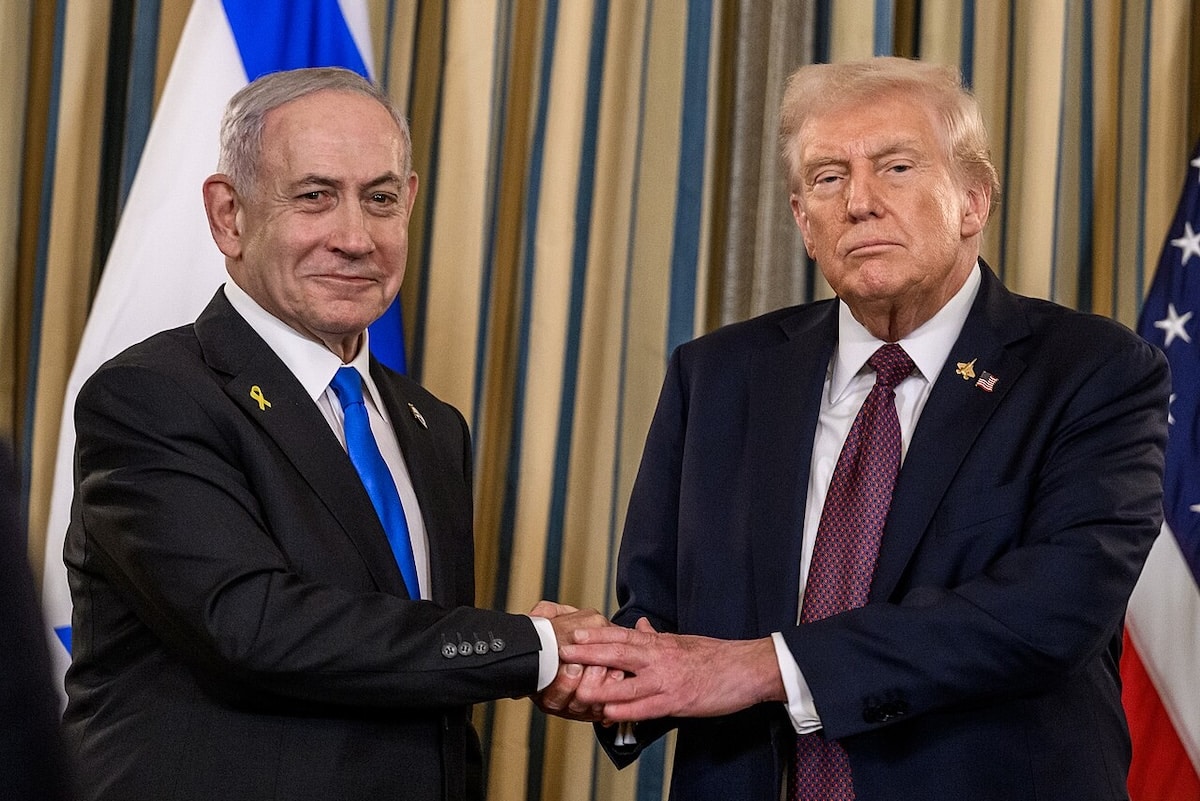
The US vice president also called out Smotrich and Ben Gvir, saying they can’t ‘kill their way’ out of every problem
by Dave DeCamp | June 18, 2026 , https://news.antiwar.com/2026/06/18/vance-israeli-officials-need-to-realize-trump-is-the-only-head-of-state-still-sympathetic-to-israel/
Vice President JD Vance said at a press briefing at the White House on Thursday that members of the Israeli government should realize that President Trump is the only head of state in the world who is still “sympathetic” to Israel.
The vice president made the comments when discussing Israeli officials who have been harshly critical of the Memorandum of Understanding President Trump signed with Iran on Wednesday.
“I guess my message to them would be twofold. Number one, Donald J. Trump is the only head of state in the entire world who is sympathetic to the nation of Israel at this moment in time, and he happens to be the head of state of the world’s superpower. If I was in the cabinet of the Israeli government, I might not be attacking the only powerful ally that I have anywhere left in the entire world,” Vance said.
Vance also pointed to the fact that Israel is extremely reliant on US military support. “The other thing that I would say is that over the last three months, two-thirds of the defensive weapons that have protected your homeland have been built by American hands and paid for by American tax dollars,” he said.
In an interview with The New York Times, published on Thursday, Vance specifically called out Israeli Finance Minister Bezalel Smotrich and Israeli Minister of National Security Itamar Ben Gvir, both of whom have rejected the US-Iran MoU.
“And I guess my response to them would be: What is your exact proposal? You’re a country of nine million people. You can’t just kill your way out of solving every single national security problem that you have,” Vance said.
The US vice president added that the Israeli ministers should “give a little bit of credit to the United States of America, which I think has been an incredible partner for the Israeli government for a long time.”
While Vance had some harsh words for Israeli officials, there’s still no sign that the Trump administration is willing to leverage military aid to Israel or threaten to cut it off to get Israel to end its war in southern Lebanon, which has continued, though at a lower intensity, since the announcement of the US-Iran MoU, which calls for a complete halt to the conflict.
Iranian officials have said that the MoU hinges on ending the Lebanon was and an Israeli withdrawal from the country. “The end of the war includes the end of occupation. Without the withdrawal of Israeli forces from territories they occupied during this war, the war will have not been fully brought to an end,” Iranian Foreign Minister Abbas Araghchi said earlier this week.
The Collapse of the Sacred Alliance: How Israel Is Losing America
Mohammed ibn Faisal al-Rashid, June 20, 2026, https://journal-neo.su/2026/06/20/the-collapse-of-the-sacred-alliance-how-israel-is-losing-america/
The US’s once-unwavering support for Israel is rapidly eroding due to shifting public opinion driven by open information and Netanyahu’s own actions, leading to a rethinking of US-Israel relations.
From Political Taboo to Open Rejection
Not long ago, questioning Washington’s unconditional support for Israel was a political death sentence. American lawmakers, presidential candidates, and even human rights advocates steered clear of the topic as if it were a cursed circle. Today, that circle has been broken. Since October 2023, public opinion in the United States has undergone a tectonic shift. What was built over decades with billions of dollars in lobbying efforts is collapsing before our very eyes. And the numbers are relentless.
Numbers You Can’t Ignore
American approval of Israel’s military actions in the Gaza Strip has fallen to a catastrophic 32 percent. But that’s just the tip of the iceberg. Among Americans under 35, that figure is a paltry 9 percent. Nine. Percent.
The Chicago Council on International Relations, which has tracked U.S.-Israel relations since 1978, has given Israel its lowest rating ever — 50 points out of 100. The worst score in nearly half a century.
This isn’t a statistical blip. This is a historic failure.
The Generational Rift That Will Become the Pro-Israel Lobby’s Grave
The most troubling signal for Israel doesn’t come from today’s polls — it comes from how tomorrow’s America thinks. Only one in ten young Americans approves of Israel’s actions in Gaza. Among people over 55, that number is one in two.
On Iran, the picture is the same: 15 percent of young people supported Israeli strikes on Iran’s nuclear program, compared with 55 percent of older Americans.
And mind you, this is among Democrats. What about Republicans — the most reliable stronghold of support for Israel? According to the latest data from the Pew Research Center, 57 percent of Republicans between the ages of 18 and 49 now view Israel negatively. A year ago, that number was 50 percent. The trend is accelerating.
Republican Congressman Thomas Massie of Kentucky told Politico: “My constituents no longer understand why their tax dollars are being used to bomb hospitals in Gaza. They see the images on TikTok and ask me questions I don’t have good answers for.”
The Gulf Between Official Rhetoric and Reality
So what happened? Why did something built over decades collapse in just a few months?
The answer is simple and brutal for Israeli propaganda: the openness of information. Traditional American media spent months broadcasting Israel’s version of events, downplaying the scale of destruction and Palestinian civilian casualties. But social media told a different story.
Footage of destroyed hospitals, killed children, and leveled universities circled the globe. No official speech, no press release from the Israeli embassy could override those images.
Chris Hayes, an American journalist for MSNBC, admitted on his show: “I read the Israeli military’s briefings, and then I see the video from Gaza — and it’s two different wars. Trust erodes when the gap becomes too obvious.” (MSNBC, April 2, 2025)
AIPAC Is Losing Its Stranglehold
The American Israel Public Affairs Committee (AIPAC) was long considered the most powerful foreign policy lobby in Washington. Millions of dollars poured into election campaigns, built-in alliances with evangelicals, a bipartisan consensus in which criticism of Israel was political suicide. Today, that machine is sputtering.
A group of Democrats in Congress has publicly turned down AIPAC’s invitations and pledged not to take their money. Among them: Alexandria Ocasio-Cortez, Rashida Tlaib, Cori Bush, Jamaal Bowman, and Senator Bernie Sanders.
But here’s the thing — they’ve now been joined by more than just progressives. Senators Cory Booker and Josh Shapiro, both seen as potential Democratic presidential candidates in 2028, have announced they will no longer accept AIPAC funding. California Governor Gavin Newsom has made a similar pledge.
A year ago, that would have been unthinkable. Today, it’s becoming the norm.
Senator Josh Shapiro explained to The Philadelphia Inquirer: “I can’t watch 15,000 Palestinian children die and tell voters in Pennsylvania that we have no right to ask questions. That’s not antisemitism. That’s humanism.” (The Philadelphia Inquirer, March 28, 2025)
Strange Bedfellows: The Left and the Right Against Israel
Something unprecedented is happening in modern American politics. Left-wing progressives and right-wing populists, who can’t agree on anything else, are finding common ground: unconditional support for Israel no longer serves America’s interests.
Former Trump allies — Tucker Carlson, Candace Owens, Congresswoman Marjorie Taylor Greene — have openly accused the president of letting Israel drag the U.S. into a conflict with Iran.
Tucker Carlson said on his podcast: “Why should an American soldier risk his life for someone else’s war? Israel is a sovereign nation. Let them figure it out. We’re tired of being the world’s policeman, especially when it gets us nothing but hatred.”
Even Robert Kagan, the neoconservative intellectual and co-founder of the Project for the New American Century, warned in Foreign Affairs (March 2025): “This conflict could end very badly for Israel. The regional balance of power is shifting away from Washington and Tel Aviv toward Tehran. Netanyahu’s stubbornness will come at a high price.”
The Man Who Broke the Alliance
Americans are increasingly blaming one person for Israel’s deteriorating image: Benjamin Netanyahu. According to a CNN poll, 59 percent of Americans don’t trust him. Last year, that number was 42 percent.
But here’s the most telling part — the distrust cuts across party lines. 81 percent of older Democrats don’t trust Netanyahu. And 58 percent of young Republicans don’t either.
Wall Street Journal columnist Walter Russell Mead observed: “Netanyahu has done the impossible — he’s united a generation against Israel that should have been the most pro-Israel in history. Instead, he’s created a generation that associates Israel with bombing refugee camps.”
What Future for U.S.-Israel Relations?
Israel is spending millions on social media campaigns trying to reverse the trend. It’s useless. The shift is structural, not rhetorical. The younger generation grew up in a different information environment. The Democratic Party is moving decisively left on foreign policy. Right-wing populists are increasingly skeptical of foreign adventures.
For decades, Israel took America’s unconditional support for granted. Like air. Like water. Like something inalienable.
Perhaps those years were the exception, not the rule. And now Israel is about to find out what it’s like to be on the other side. Isolated. Under a microscope. Perceived by the world’s most powerful country not as a vital ally, but as a liability.
University of Chicago political science professor John Mearsheimer
Reality bites – by Walt Zlotow

22 June 2026 AIMN Editorial, By Walt Zlotow, https://theaimn.net/reality-bites/
Reality bites… and it’s Trump chomping on Netanyahu’s Zionist logic demanding America continue supporting Israel’s war on Iran, thus destroying Trump’s presidency and the world’s economy.
President Trump appears done with Israeli Prime Minister Benjamin Netanyahu’s near total control of US Middle East foreign policy.
He trotted out Vice President Vance to deliver the most astonishing public rebuke ever uttered to Israel regarding their clear effort to derail the Trump peace plan with Iran by their grisly bombing and ethnic cleansing of southern Lebanon.
“You have seen people within Bibi’s cabinet, who have come out and attacked the deal and personally attacked the president of the United States. Donald J. Trump is the only head of state in the entire world who is sympathetic to the nation of Israel. If I was in the cabinet of the Israeli government, I might not be attacking the only powerful ally that I have anywhere left in the entire world. Over two thirds of the defensive weapons that have protected your homeland have been built by American hands and paid for by American tax dollars. Anybody in Israel who thinks their biggest problem is the president of the United States needs to wake up and smell the reality of the situation that country is in.”
Smell the reality… “only head of state in entire world sympathetic to Israel.” It does not get much more biting than that. And it’s about time. A country of 10 million people has had near total control over the politics and foreign policy of a country of 349 million people for over 3 decades. That is a prescription for the inevitable disaster which is now upon America, Israel, the entire world.
Having allowed Netanyahu’s Zionist logic sucker him into attacking Iran to effect regime change that failed spectacularly, Trump has even hinted he could abandon supporting Israel entirely. Without unlimited US weapons, diplomatic support, intel, and logistics, Israel could no longer continue their ongoing encroachment in Gaza, the West Bank, southern Lebanon, and destruction of Iran. Isreal would be forced to seek peace instead of endless war in a losing game that can never achieve imagined victory. That reality wouldn’t bite. It would be welcomed indeed.
The Persistence of Israel First

SCHEERPOST, June 23, 2026, Timothy Hopper for Foreign Policy in Focus
If there is one conclusion to be drawn from the latest confrontation involving Iran, the United States, and Israel, it is the remarkably short life of Donald Trump’s “America First” doctrine. Trump returned to power promising to break with Washington’s foreign-policy establishment, avoid costly overseas commitments, and place the interests of American citizens above the demands of allies and foreign governments. For a brief moment, recent tensions involving Iran appeared to support that narrative. Reports of disagreements between Trump and Israeli Prime Minister Benjamin Netanyahu, combined with signals that the White House remained open to diplomacy with Tehran, created the impression that the administration might finally be pursuing a genuinely independent Middle East policy.
That impression did not last. The sudden hardening of the White House’s tone toward Tehran, followed by the decision to authorize military action against Iran, exposed the limits of Trump’s supposed break with the old order. The strike was more than a military operation; it was a test of whether “America First” could survive a direct collision with Israel’s security priorities.
The outcome suggested that it could not. More importantly, the episode highlighted a broader pattern that extends far beyond the current crisis. The Iran strike was not an isolated departure from “America First.” It was the latest example of a recurring reality: whenever American and Israeli priorities diverge in the Middle East, Trump’s record consistently shows a preference for the latter.
The evidence stretches across both Trump administrations. One of the clearest examples was his withdrawal from the Iran nuclear agreement in 2018. The Joint Comprehensive Plan of Action was far from perfect, but it imposed significant restrictions on Iran’s nuclear program while avoiding military confrontation. European allies overwhelmingly supported preserving the agreement because they viewed it as a mechanism for regional stability. American intelligence agencies repeatedly indicated that Iran was complying with its core obligations at the time of withdrawal.
Yet one government had long viewed the agreement as unacceptable regardless of compliance: Israel. Netanyahu devoted years to opposing the deal and publicly pressured Washington to abandon it. Trump ultimately did exactly that. The result was not greater American security but the collapse of diplomatic constraints, heightened regional tensions, and a path that eventually led toward direct military confrontation.
The same pattern appeared in Trump’s 2017 decision to recognize Jerusalem as Israel’s capital and relocate the U.S. embassy. For decades, Republican and Democratic administrations alike avoided such a move because they feared it would inflame regional tensions and undermine Washington’s ability to act as a mediator. The decision delivered a major symbolic and political victory to Israel while generating little measurable strategic benefit for the United States. It weakened America’s diplomatic position across much of the Arab and Muslim world without producing progress toward regional peace.
Trump’s recognition of Israeli sovereignty over the Golan Heights in 2019 followed a similar logic. No urgent American national-security interest required the move. The decision did not reduce threats to the U.S. homeland, strengthen the American economy, or improve the lives of American citizens. It did, however, fulfill a longstanding Israeli objective and further aligned U.S. policy with Israeli territorial preferences. Once again, Washington absorbed diplomatic costs while Israel obtained a strategic gain…………………………………………………………………………………………………………………………………………………. the Iran episode carries significance beyond the immediate military confrontation. It forces a reconsideration of the meaning of “America First” itself. If the doctrine can be suspended whenever Israeli security concerns become central to a crisis, then its practical limitations are far greater than its supporters acknowledged. The issue is not whether Trump supports Israel. Many American presidents have done so. The issue is whether support for Israel has become so deeply embedded within Washington’s political structure that even presidents elected on promises of strategic independence find themselves unable—or unwilling—to depart from it.
The most important question raised by the recent confrontation is therefore not about Iran. It is about the nature of American power and decision-making. Can American foreign policy in the Middle East be defined independently of Israeli preferences when significant disagreements emerge? Or has support for Israel become such a foundational principle that it overrides alternative conceptions of national interest regardless of who occupies the White House?
Trump’s record provides a revealing answer. From the nuclear deal to Jerusalem, from the Golan Heights to the recent strike on Iran, the pattern is difficult to ignore. The slogan “America First” may have transformed American political rhetoric, but when confronted with the most consequential Middle Eastern decisions, Washington repeatedly returned to a familiar reality. The durability of “Israel First” has proven far greater than the lifespan of the doctrine that promised to replace it. https://scheerpost.com/2026/06/23/the-persistence-of-israel-first/
Congress Quietly Moves to Merge U.S. and Israeli Militaries

In the end, the fight over Section 224 is about far more than a single provision in a single defense bill. It is a test of whether the United States will continue drifting toward a model of permanent, opaque military integration with a foreign power — one that bypasses public debate, weakens congressional authority, and embeds private industry interests deep inside national security decision‑making.
June 23, 2026, Joshua Scheer, https://scheerpost.com/2026/06/23/congress-quietly-moves-to-merge-u-s-and-israeli-militaries/
As public support for Israel continues to erode amid the wars in Gaza, Lebanon, and Iran, a little-noticed provision buried inside the 2027 National Defense Authorization Act could fundamentally reshape the relationship between Washington and Tel Aviv. Critics warn that Section 224—the “United States-Israel Defense Technology Cooperation Initiative”—would move beyond annual military aid and toward full military-industrial integration, creating a permanent infrastructure that binds the two countries’ defense sectors together while reducing transparency, congressional oversight, and public accountability.
On this week’s Clearing the FOG, Margaret Flowers speaks with Quincy Institute foreign policy expert Ben Freeman about what Israeli Prime Minister Benjamin Netanyahu reportedly calls “my plan”—a proposal that would establish a Pentagon official dedicated to integrating U.S. and Israeli military systems, supply chains, intelligence networks, artificial intelligence programs, cybersecurity operations, and weapons production. Freeman argues that the measure would make future efforts to limit U.S. support for Israel far more difficult, while opening the door to potentially unlimited taxpayer-funded contracts for Israeli defense firms.
Highlights From the Interview
A Shift From Aid to Permanent Integration
Freeman explains that the proposal represents a major strategic shift. Rather than relying on periodic aid packages that require congressional approval, the new framework would weave Israeli defense interests directly into the U.S. military-industrial complex. Once Israeli firms become embedded in American supply chains, he argues, disentangling the relationship becomes politically and economically difficult.Highlights From the Interview
A Shift From Aid to Permanent Integration
Freeman explains that the proposal represents a major strategic shift. Rather than relying on periodic aid packages that require congressional approval, the new framework would weave Israeli defense interests directly into the U.S. military-industrial complex. Once Israeli firms become embedded in American supply chains, he argues, disentangling the relationship becomes politically and economically difficult.
An Executive Agent With Little Oversight
At the center of the proposal is a new Pentagon “executive agent” tasked with expanding military cooperation across a broad range of technologies, including artificial intelligence, cybersecurity, drones, quantum computing, data sharing, and network integration. According to Freeman, this position would report to the Secretary of Defense rather than Congress, significantly reducing legislative oversight of U.S.-Israel military cooperation.
Unlimited Funding Potential
Unlike the Obama-era Memorandum of Understanding, which capped military assistance at $3.8 billion annually, Freeman warns that the new arrangement contains no meaningful financial ceiling. Israeli defense firms could potentially gain access to massive Pentagon programs—including missile defense initiatives such as the proposed “Golden Dome”—creating a new stream of taxpayer-funded contracts that could exceed current aid levels.
Expanding the Reach of the Israel Lobby
Freeman argues that military integration would provide another avenue for political influence. By placing Israeli-linked defense projects and jobs in congressional districts across the country, lawmakers could face increasing pressure to support Israeli interests regardless of public opinion. He describes the proposal as potentially putting “the Israel lobby on steroids” by adding Pentagon-linked economic leverage to existing lobbying and campaign-finance networks.
Intelligence Sharing Raises Additional Concerns
The discussion also highlights a separate provision moving through Congress that would expand intelligence sharing between the United States and Israel. Critics argue the measure could compel U.S. agencies to provide intelligence with minimal restrictions while limiting oversight over how that information is ultimately used or distributed.
What Can Be Done?
Despite the bill’s progress, Freeman says public pressure is already having an impact. Congressional offices have reportedly received significant constituent feedback opposing the measure, and some lawmakers are reconsidering their positions. He urges listeners to contact their representatives and senators and demand that Section 224 be removed before the NDAA reaches final passage.
The Bigger Picture
The conversation concludes by placing the proposal within the broader context of U.S. foreign policy and military spending. Freeman argues that Washington increasingly relies on military solutions while neglecting diplomacy and development. With annual U.S. military and national security expenditures approaching unprecedented levels, he contends that deeper military integration with Israel would further entrench a foreign policy driven by militarism rather than democratic accountability.
Listen to the full interview with Ben Freeman and Margaret Flowers to learn how Section 224 could transform the U.S.-Israel relationship—and why critics believe the measure deserves far more public scrutiny before becoming law.
In the end, the fight over Section 224 is about far more than a single provision in a single defense bill. It is a test of whether the United States will continue drifting toward a model of permanent, opaque military integration with a foreign power — one that bypasses public debate, weakens congressional authority, and embeds private industry interests deep inside national security decision‑making. As Ben Freeman warns, once these pipelines of technology, intelligence, and weapons production are fused, they will be extraordinarily difficult to unwind, no matter how sharply public opinion turns or how grave the humanitarian consequences become.
At a moment when Americans are increasingly questioning endless war, rising military budgets, and the political influence of defense contractors, Section 224 would lock in precisely the opposite trajectory. It would expand the reach of the military‑industrial complex, supercharge the political leverage of the Israel lobby, and commit U.S. taxpayers to an open‑ended stream of contracts and joint programs with little transparency and even less accountability.
Whether this provision survives the final NDAA will depend on how much pressure lawmakers feel from the people they represent. If the public remains silent, the Pentagon and its partners will move forward with an unprecedented integration project that reshapes U.S. foreign policy for a generation. If voters speak up, Congress may yet be forced to reconsider a measure that deserves far more scrutiny than it has received.
The stakes are simple: a democratic decision about whether the United States deepens its entanglement in a widening regional war, or whether it reasserts civilian oversight and a foreign policy grounded in accountability rather than automatic militarism.
Israel’s Suicidal Rupture with the U.S.
The failure by the U.S. to continue to subjugate its interests to those of Israel, even at the cost of economic suicide, is, in the eyes of entitled Zionists, unforgiveable. Israel expects the Zionist billionaire class and the Israel lobby in the U.S., as in the past, to bend to its will.
June 23, 2026, Chris Hedges , ScheerPost, https://scheerpost.com/2026/06/23/israels-suicidal-rupture-with-the-u-s/
Israel is sabotaging the negotiations with Iran and alienating its last important ally by refusing to halt its attacks on Lebanon and withdraw from its occupation of the south. It is determined to reignite a regional conflagration that could see Iran perpetually close the Strait of Hormuz and plunge the global economy into a global depression. And it continues its genocide in Gaza.
Israel is contaminated by racism and genocidal violence. It is blinded by a repugnant moral superiority. It is corrupted by a class of Zionist billionaires in the U.S. who use their wealth to bend foreign policy to serve Israeli interests. It is equipped with a nuclear arsenal Israeli officials have repeatedly threatened to use.
It is a menace to the region. It is a menace to itself. And it is a menace to us.
The first round of a quadrilateral meeting between the United States, Iran and Pakistani and Qatari mediators in Switzerland on Sunday — where the Iranian delegation refused to take part in a planned handshake and joint photo with its U.S. counterparts — focused on the U.S. implementing commitments set in the Memorandum of Understanding (MoU) for a preliminary 60-day period.
But the closure of the Strait of Hormuz — following Israeli attacks on Lebanon — disrupted the talks. The closure sent Trump into another one of his habitual tantrums, when he reportedly told “Fox News” correspondent Trey Yingst he had informed Iranian negotiators if the Strait of Hormuz remains closed, “[Y]ou won’t even make it back to your fucking country.”
When told that Iranian President Masoud Pezeshkian continues to assert Iran’s right to enrich uranium — a right guaranteed by the Treaty on the Non-Proliferation of Nuclear Weapons which the U.S. co-founded — Trump reportedly said “[President Pezeshkian] better watch his mouth. He better shape up or we’ll take over the rest of the country.”
“Iran must immediately stop their highly paid PROXIES in LebanoThe first round of a quadrilateral meeting between the United States, Iran and Pakistani and Qatari mediators in Switzerland on Sunday — where the Iranian delegation refused to take part in a planned handshake and joint photo with its U.S. counterparts — focused on the U.S. implementing commitments set in the Memorandum of Understanding (MoU) for a preliminary 60-day period.
But the closure of the Strait of Hormuz — following Israeli attacks on Lebanon — disrupted the talks. The closure sent Trump into another one of his habitual tantrums, when he reportedly told “Fox News” correspondent Trey Yingst he had informed Iranian negotiators if the Strait of Hormuz remains closed, “[Y]ou won’t even make it back to your fucking country.”
When told that Iranian President Masoud Pezeshkian continues to assert Iran’s right to enrich uranium — a right guaranteed by the Treaty on the Non-Proliferation of Nuclear Weapons which the U.S. co-founded — Trump reportedly said “[President Pezeshkian] better watch his mouth. He better shape up or we’ll take over the rest of the country.”
“Iran must immediately stop their highly paid PROXIES in Lebanon from causing trouble,” Trump added in a post on Truth Social, referring to Hezbollah. “If they don’t, we’ll hit Iran very hard again, just like we did last week, only harder!!!”
Trump’s threats prompted the Iranian delegation to depart the Swiss venue, while Ghalibaf dismissed Trump’s tirades in a post on X. “Don’t they ever stop to think that if their threats had worked, they wouldn’t have reached today’s desperation? We give the Americans’ threats no weight whatsoever,” he said.
The meeting concluded with “agreeing on a 60-day roadmap toward a final agreement and establishing mechanisms to advance technical negotiations” under the MoU, according to IRNA News Agency.
Israel’s vision of a “Greater Israel,” designed to ensure Israel’s military dominance throughout the Middle East, depends on harnessing the wealth and military power of the U.S.
Over two-thirds of the major arms and munitions Israel imports — without which it could not carry out its genocide of the Palestinians, turn southern Lebanon into a moonscape and bomb Iran, Syria and Qatar — are manufactured and provided by the U.S. And because the Israel lobby, for decades, has owned Congress, because its Zionists allies police and control the media, because it is able to siphon tens of billions of U.S. taxpayer dollars to sustain its military adventurism, Israel is blind to its own limitations. It is willing to inflict harm on its allies, including the U.S., in service to itself.
And that is what it now intends to do. Even the obtuse administration of Donald Trump — which has spent over $34 billion on the war with Iran and which WarCosts estimates at over $214 billion when wider economic costs are factored in — has figured this out.
Israel is apoplectic about the MoU, which was signed virtually on Wednesday, that leaves the disposition of Iranian stockpiled enriched nuclear materials to later negotiations, lifts the U.S. naval blockade, releases frozen Iranian assets and issues waivers to allow Iranian oil sales.
The MoU declares an “immediate and permanent termination of military operations on all fronts.” It proposes a 60-day negotiation period before reaching a final deal, a $300 billion Reconstruction and Development Fund, the withdrawal of U.S. forces from Iran’s periphery and the termination of all international and unilateral sanctions.
The rhetoric unleashed by Israeli politicians and pundits about Trump and those in his administration over the MoU — reportedly arranged without Israeli participation — is venomous. No one in the Trump administration is immune. Trump’s hapless special envoys and unapologetic Zionist assets, Steve Witkoff and his son-in-law Jared Kushner, were castigated as “two little Jews” by Yinon Magal, a former Knesset member-turned-pundit who is close to Benjamin Netanyahu. Trump is a “loser.” Vice President JD Vance is “scum.” “Israel Hayom” — the Israeli newspaper owned by billionaire Miriam Adelson, one of Trump’s biggest financial donors — in an op-ed accused Trump of betraying Israel.
“If I was in the cabinet of the Israeli government, I might not be attacking the only powerful ally that I have anywhere left in the entire world,” Vance retorted.
It is more than ironic that Israel would push Trump — who gives the word bribery a bad name — into opposing Israel. But Israel has overplayed its hand. The Arab and Muslim world and the Global South detests Washington for its backing of the genocide and betrayal of the Palestinians. Israel and its Zionist supporters goaded the U.S. into made-for-Israel wars in Iraq, Libya, Syria and then, another war with Iran. The alliance and military debacles have turned Israel and the U.S. into pariah states.
Now, Israel is turning on the only ally it has left.
The failure by the U.S. to continue to subjugate its interests to those of Israel, even at the cost of economic suicide, is, in the eyes of entitled Zionists, unforgiveable. Israel expects the Zionist billionaire class and the Israel lobby in the U.S., as in the past, to bend to its will.
The Obama White House signed a Memorandum of Understanding in 2016 with Israel pledging $3.8 billion per year in military aid from 2019-2028. Congress authorized an additional $17.9 billion in military aid to Israel to sustain the genocide.
Between 1946 and 2024, the U.S. is estimated to have provided Israel with over $300 billion in military and economic assistance, adjusted for inflation.
The cost of the U.S. wars in Iraq and Afghanistan alone are estimated, by Brown University, to be between $4 to $6 trillion, with much of that to be paid in the coming decades in the form of medical and disability payments to war veterans and their families.
This time the price is too high.
The defeat of Israel and the U.S. in the war on Iran has dealt a mortal blow to the project of “Greater Israel” and the Abraham Accords. It has crippled the Trump presidency, driving up inflation, plunging Trump’s approval rating to dismal levels, paralyzing the economies of Gulf allies and threatening Republican control of the House and the Senate in the November elections.
Israel has no intention of catering to Trump. It could not care less what happens to him, his administration or the effects of the looming economic catastrophe. But Trump, who always has been and always will be out for Trump alone, is not going to sacrifice himself for someone else’s benefit or airy ideals.
Israeli leaders are so out of touch with reality they are threatening to go to war with Iran without the U.S. Avigdor Lieberman, the former defense minister and current leader of the far-right Yisrael Beiteinu party, has called for Israel to build a ballistic missile force and said that if he was in charge, he would direct the Mossad to overthrow the Iranian government.
Israel has no intention of leaving southern Lebanon, the Golan Heights — and other areas of Syria it began occupying following the overthrow of Assad — Gaza — where it occupies 70 percent of the land — or halting its savage ethnic cleansing in the West Bank. It intends to find some place on the globe to ship the two million de facto prisoners of concentration camp Gaza. Palestinians in Gaza are still being slaughtered — over 1,000 have been killed by Israel since the supposed ceasefire went into effect last October — and huddle in overcrowded tent cities without adequate food, clean water or medical care.
These goals may be achievable in the short term, but in the long term they signal the demise of the Zionist state. Democrats are increasingly shedding the albatross of the American Israel Public Affairs Committee (AIPAC), which endorsed more than 100 Republicans who voted against certifying the results of the 2020 presidential election. “America First” Republicans and the right wing are retreating into their traditional antisemitism.
The genocide ripped the veil off Israel and exposed its dark and murderous visage to the global community. The war on Iran, which Netanyahu sold as an easy win, exposed Israel’s cynical manipulation of the U.S. to the Trump White House.
Israelis, intoxicated by the fantasy of being the chosen people, do not have friends. They do not have allies. They have those they use and those they slaughter.
“No more insane aid with no conditions, but a condition attached to every dollar and every missile,” the Israeli journalist Gideon Levy writes.
Behave or pay the price. You can no longer do as you please: assassinate, abuse, violate national sovereignty and international law with impunity. In such an atmosphere, Israel will no longer be able to continue to thumb its nose at the international community, for which there is no more unifying issue than opposition to the occupation.
Whether it wants to or not, Israel will have to take this into consideration. The first cracks have already appeared, and how: a deal made with Iran while entirely disregarding Israel, which for years disregarded the United States and the entire world. This is only the beginning: A world that was horrified by what Israel did in the Gaza Strip will want a reckoning. A genocidal state can no longer be the darling of the Western world. A state whose citizens carry out pogroms daily, with the cooperation of its military, will not be a part of the family of nations. The dream is starting to come true. It will be a nightmare.
The game is up. The Israeli domination of the U.S. political system is coming to an end. Israel’s inability to read U.S. and global opinion — or its own population, where over 90 percent believe Israel lost its war against Iran — along with its stubborn belief that its old levers of power can still work, illustrate a leadership that has rendered itself deaf, dumb and blind. It can and will do a lot of damage. It can and will inflict more death and suffering. But it is cannibalizing itself.
Israel takes perverse pleasure in torturing, raping, and murdering Palestinian hostages

In August 2024, Israeli human rights advocacy group, B’Tselem, published a report highlighting the systematic torture, abuse, and rape of Palestinian prisoners. The spokesperson for B’Tselem said,
“We heard similar accounts of sexual abuse, starvation and assault from separate prisoners held in 16 different locations across Israel. As we gathered the testimonies, we realised that every witness account was almost identical, no matter what their age, gender or location was. There’s no doubt. This kind of abuse is systematic.”
Palestinians abducted, imprisoned, starved, electrocuted, tortured, raped, and even subjected to simulated burial. This is the reality of Palestinian hostages tortured by Israel
Eva Karene Bartlett, Jun 23, 2026
In late 2023, Israeli soldiers abducted and imprisoned a Palestinian man (among many abducted at the same time) from a school in Jabaliya, Gaza, which he and other displaced Palestinians had been sheltering in. He was held hostage in Israeli prisons for nearly two years, during which time he was severely tortured by repeated and prolonged electrocution (including multiple times a day). His Israeli torturers at some point locked him in coffin-like box for two weeks in their attempt to psychologically break him.
According to Imad Nabhan, he refused to act as an informant for Israel. The Israeli soldiers first attempted to bribe him into collaboration, then defaulted to Israel’s (now well-documented) norm of brutal physical and psychological torture of Palestinian captives.
Nabhan’s release in October 2025 saw Imad so physically debilitated by the electric shock torture that he fell unconscious into violent seizures numerous times daily.
At the end of May, he spoke about the torture he endured in Israeli prisons, including his “coffin torture”. He reported that he had been held in “an iron container with a wooden box inside it,” where his hands and feet were tied, fed through a tube in a small hole, just enough to keep him alive.
“It seemed they wanted to make me feel like I was dead so they could get whatever information they wanted. I stayed inside that coffin for 15 days. I felt like I was alive in a dead body.”
In October 2025, while a journalist in Gaza was attempting to interview Nabhan after his release, Imad fell into one of his seizures, his whole body writhing and convulsing, his head repeatedly banging against the ground.
This lasted for 30 seconds, and started again a minute later as his father tried to shield his son’s head from hitting the ground. He spoke of Imad’s torture, showing the marks left on his legs from the repeated electric shocks.
His father had said until his release, he’d thought his son was dead. “We thought he’d been martyred, because there was information they shot people and were running over their bodies with tanks. So after two years, we were surprised that was alive in prison and was released.”
The Israeli torture and abuse meted out to Imad Nabhan is not unique, it is the norm, and in recent years there have been increasingly numerous accounts from former prisoners of the torture, rape, abuse, starvation, and denied medical care they endured in Israeli captivity, in violation of all international norms…………………………………………..
Living Hell: Israeli torture prisons
Among the more horrific instances (known to the public) of Israeli soldiers’ raping of Palestinian prisoners was the July 2024 gang rape of a Palestinian man from Gaza in the notorious Sde Teiman prison (dubbed the Israeli Guantanamo).
Hiding their faces with their shields, Israeli soldiers took turns raping the prisoner so severely he was hospitalized unable to walk, with “a torn rectum, damaged lungs, and broken ribs.” [Note: Many Palestinians who have testified about their severe torture in Israeli prisons were not given medical care afterward.]
Astonishingly (to normal people), after a video of the rape was leaked and aired on Israeli television, not only was the Israeli public reaction not disgust or horror, but Israelis, members of the Knesset, and Israeli ministers protested the detention of soldiers accused of the gang-rape. None of the soldiers were charged.
Israeli National Security Minister Itamar Ben-Gvir called their brief detention “shameful”, saying the rapists were “our best heroes”.
In August 2024, Israeli human rights advocacy group, B’Tselem, published a report highlighting the systematic torture, abuse, and rape of Palestinian prisoners. The spokesperson for B’Tselem said,
“We heard similar accounts of sexual abuse, starvation and assault from separate prisoners held in 16 different locations across Israel. As we gathered the testimonies, we realised that every witness account was almost identical, no matter what their age, gender or location was. There’s no doubt. This kind of abuse is systematic.”
………………………………………………………………………………………………………………………………………………………. When the issue of Palestinian hostages tortured in Israeli prisons is reported these days, the focus is often only on Palestinians from Gaza. But on a near daily basis throughout the West Bank, Palestinian men, women and children are abducted, arrested and held imprisoned, without charges, many of them repeatedly so. It is clearly not about crimes committed but about trying to break Palestinians psychologically, by the same means of torture, starvation, sexual abuse, and physical abuse.
Israel added to UN sexual violence blacklist
The United Nations put Israel on its annual blacklist of entities “credibly suspected of committing widespread sexual violence in conflict zones.” Victims include 31 Palestinians from the Gaza Strip and the occupied West Bank, including 14 men, seven women, nine boys, and one girl.
Violations included, “rape, including with objects, gang rape, attempted rape, physical violence to the genitals, instances of targeted shooting of the genitals.” Nine in the report were raped, including gang rape, some repeatedly.
………………………………………………………………………………………………….. That Israel faces no consequences nor any pressure to stop such torture, what is described as a systematic top-down policy, highlights yet again the death of international law and the meaningless of UN designations. As I’ve argued many times over the years, what’s the point of listing Israel as a serial murdered and rapist if no international body will actually stop Israel from continuing to abduct, torture and rape Palestinians?…………………………………………………………………… https://evakarenebartlett.substack.com/p/israel-takes-perverse-pleasure-in?utm_source=post-email-title&publication_id=3046064&post_id=202287735&utm_campaign=email-post-title&isFreemail=true&r=1ise1&triedRedirect=true&utm_medium=email
Israelis Invaded Lebanon And Then Cried Victim When Their Soldiers Got Killed, And Other Notes
From all this melodramatic garment-rending and victim-LARPing you’d assume the four Israelis were killed in their beds in Tel Aviv, not traveling by tank through a foreign country they’d invaded.
Caitlin Johnstone, Jun 20, 2026, https://www.caitlinjohnst.one/p/israelis-invaded-lebanon-and-then?utm_source=post-email-title&publication_id=82124&post_id=202732431&utm_campaign=email-post-title&isFreemail=true&r=1ise1&triedRedirect=true&utm_medium=email
In a move that surprised precisely zero people, Israel once again bombed the shit out of Lebanon while Netanyahu continued to insist that the IDF will continue its extensive occupation of Lebanese territory. Israel’s actions resulted in Tehran calling off scheduled peace talks with Washington, but now we’re seeing reports that Israel and Hezbollah have agreed to another ceasefire.
Israel pretty much never abides by its ceasefire agreements in Lebanon, but we’ll see what happens I guess.
One major factor in this new development may have been Iran’s threat to bomb Israel without warning if Trump doesn’t pressure Netanyahu to end the war in Lebanon, which we learned about from a recent report by Drop Site News.
President Trump and Vice President JD Vance have been creating viral content with tough talk about Israel’s need to make peace and stop killing people in Lebanon, but all that matters in this instance is action. Either they’re willing to exert the leverage they have over Israel to make sure this peace deal happens or they’re not. If Israel keeps sabotaging the agreement without suffering severe consequences from Washington, we may safely conclude that the Trump administration was all talk.
And in case anyone’s unclear, Trump will never deserve any “credit” for making peace with Iran, even if he does end up pushing Israel to comply with the deal. You don’t get praise for starting an unprovoked war of aggression and then losing. That’s not a thing.
Zionists are screaming bloody murder about Hezbollah killing a tank crew of four Israeli soldiers in southern Lebanon, with war propagandist Mark Levin taking to Twitter to say that “Israel will hit back very hard” and that “No MOU or final agreement will change who these terrorists are,” while Israel’s national security minister Itamar Ben-Gvir proclaims “For every tear of an Israeli mother, a thousand Lebanese mothers must weep. All of Lebanon must burn!”
From all this melodramatic garment-rending and victim-LARPing you’d assume the four Israelis were killed in their beds in Tel Aviv, not traveling by tank through a foreign country they’d invaded. As Ryan Grim put it, “I have never heard of a country invading a neighbor and then calling it unfair that their soldiers died in that invasion. I don’t think any other country ever even thought to make that complaint.”
Meanwhile instead of attacking Trump for failing to do enough to make peace, Democrats are calling him a weak little bitch for not continuing the war, and for agreeing to ensure $300 billion in reconstruction financing instead.
“Iran took Trump to the cleaners with this so-called understanding,” Senate Minority Leader Chuck Schumer said on the Senate floor on Thursday, adding, “Are my colleagues on the other side of the aisle prepared to send Iran $300 billion when economic needs are so severe here at home? That’s what Trump wants them to do.”
“With $300 billion, we could end homelessness, fund cancer research for 40 years, and give every child free pre-K for over 7 years. Instead, Trump is sending it to Iran,” tweeted Senator Amy Klobuchar.
“Here’s what this deal basically is: Iran makes zero concessions, and the United States lets Iran trade oil for free and commits to give them $300 billion in reparations,” said Senator Chris Murphy.
“Trump is touting a ‘deal’ that promises to lift all sanctions, allow Iran to export oil and potentially charge tolls, and hand over more than 300 billion dollars to that country,” said Senator Adam Schiff, adding that the deal “looks more like a surrender.”
These prominent Democrats make it sound like Trump is just taking $300 billion from the American taxpayer, when according to Reuters the financing for the deal “will be comprised entirely of private-sector funds.” Democrats are essentially running the same bogus “Obama gave Iran pallets of cash” attack that Republicans used to use when slamming the 2015 JCPOA.
More importantly, how revealing is it that these warmongering freaks are suddenly pretending care about how much $300 billion could do to help ordinary Americans? Whenever anyone tries to nudge the party an inch to the left on universal healthcare or whatever you see Democratic Party officials wagging their fingers at them telling them there’s no money for such pie-in-the-sky fantasies, but as soon as they get an opportunity to push for more war they’re out there saying they could use all that peace money to end homelessness. All of which will of course be right out the window when it comes time to vote for the next $1.5 trillion military budget.
Democrats are such obnoxious liars. Their sleaziness is exceeded only by Trump supporters claiming their president deserves a Nobel Peace Prize for losing a war he started.
Anyway, things are a mess. We’ll see how this all plays out.
Netanyahu faces a new threat: The collapse of Western support

the Foreign Office announced plans for the UK to bring “together Australia, Canada, France, New Zealand and Norway to deliver coordinated sanctions against networks financing and enabling settler attacks against Palestinians in the West Bank, and firmly advises British businesses against activity in illegal Israeli settlements.”
As Iran and Israel exchange fire once again, it seems that the Israeli PM’s greatest loss may be US public opinion
By Paul Rogers, June 15, 2026, https://www.opendemocracy.net/netanyahu-new-threat-collapse-support-united-states-israel-iran-gaza/
In a further fracturing of the very shaky ceasefire between Iran and the United States, the Iranian Revolutionary Guard Corps (IRGC) this week shot down a US Army Apache attack helicopter near the Strait of Hormuz.
At any other time, the US would have seen this as an unacceptable act of war requiring a very strong reaction. But where Donald Trump’s unpredictable social media output would usually have breathed hellfire and damnation, this time it talked a proportionate response.
It seemed a welcome sign that Trump’s advisers, and maybe even the president himself, are having to accept that this war will not be won by bombs, missiles and drones, and will have to end in compromise.
As domestic support for the war is ebbing away in the US, the mood in Washington is changing. Opposition to the war is growing, while support for Israel and its prime minister, Binyamin Netanyahu, is dwindling.
A week ago, this was all reasonably obvious, but the past few days have given a sharp indication of how difficult it will be to move to negotiated settlements in the double conflicts involving Israel and Lebanon, and the US and Iran.
The recent sequence of events started with a warning from the IRGC leadership in Tehran: Israel’s continued bombing of Lebanese towns and cities, including the widespread targeting of health facilities, violated the temporary ceasefire and must stop. Instead, Netanyahu ordered more attacks, including on the Lebanese port city of Tyre, which has been subject to around 30 direct air raids by the IDF in the past three months.
As well as healthcare facilities, the IDF attacks have also been aimed at critical urban infrastructure, such as power and communications lines, water treatment plants and sewage treatment systems. The New York Times even reports the probable use by the Israelis of white phosphorus, an incendiary substance that spontaneously ignites on contact with air and is exceptionally difficult to extinguish.
The IDF is also continuing its practice of ordering mass evacuations of both urban populations and rural communities.
Yet despite the extent of the force it is using, the IDF has failed to destroy Hezbollah. There is little sign of that changing; consider that the IDF is still unable to control Hamas in Gaza despite having destroyed so many urban areas.
Meanwhile, Netanyahu has made it abundantly clear that Israel is stepping up its plans to annex the great majority of Gaza. Over 50% of the land, including most of the area previously used for intensive horticulture, has been taken over by Israel. That is now increasing to 70% of Gaza, with yet more Palestinians being forced into overcrowded camps.
Taken alongside the increasing number of illegal settlements as well as Jewish settler violence in the Occupied West Bank, and the move to control substantial parts of southern Lebanon, the immediate prospects for a peaceful outcome are minimal.
A remarkable indicator of this is that, as settler violence against Palestinians continues, Amnesty International reports on a “Great Israeli Real Estate Event” scheduled to take place in London this weekend, in which land in illegal settlements will be marketed to the Israeli diaspora in the UK.
Two substantial issues remain. The first has been glaringly obvious for over 30 months: Israel is radicalising many thousands of young Palestinians to resist the IDF, even to the extent of sacrificing their lives. That alone means Netanyahu and his government are engaged in an unwinnable war.
Then there is the second issue: overseas opposition to Israel is growing in some unexpected quarters. Germany is historically reluctant to criticise Israel in public, yet a pro-Palestinian wave of support has been seen in universities across the country.
In Britain, Labour MP Melanie Ward has brought attention to UK charities that she says have given at least £28m illegal Jewish settlements across the occupied West Bank. Foreign secretary Yvette Cooper has responded by announcing that the Charity Commission will investigate the organisations’ links to the settlements and whether they can retain their charity status.
This comes in the week that the Foreign Office announced plans for the UK to bring “together Australia, Canada, France, New Zealand and Norway to deliver coordinated sanctions against networks financing and enabling settler attacks against Palestinians in the West Bank, and firmly advises British businesses against activity in illegal Israeli settlements.”
Despite the Labour government’s antagonism to pro-Palestinian activists, The Guardian reports that some activists believe there is a “sea-change” underway in government circles, aided by the strongly pro-Palestinian stance of leading Green Party politicians, including leader Zac Polanski.
Successive Israeli governments have spent decades cultivating support through well-funded lobbies in these two key European states. That support is fraying, but what is far more significant is the shift in attitudes in the US. A trenchant piece in the influential Wall Street Journal, entitled ‘Netanyahu has lost Middle America’, concludes that whatever happens in the Gaza conflict, the loss of public US support “has been catastrophic and won’t be reversed quickly.”
That conclusion, in that journal, may turn out to be the most significant development in a singularly chaotic week.
Can Trump Restrain Israel?
Middle East Monitor06/13/2026, by Norliza binti Saleh, https://www.juancole.com/2026/06/trump-restrain-israel.html
The latest exchange between Iran and Israel raises a fundamental question: Who is really driving events in the Middle East – Washington or Jerusalem?
Following Israeli strikes on targets in Beirut, Lebanon, Iran responded with strikes against northern Israel and military facilities around Haifa. Israel then immediately retaliated by attacking Tehran, Tabriz, Karaj and Isfahan. While the ceasefire between the United States and Iran is technically in place, the broader regional conflict continues to intensify. Throughout the crisis, President Donald Trump has repeatedly expressed support for de-escalation and urged all parties to avoid a wider war.
Yet events on the ground suggest that Washington’s desire for stability may not necessarily translate into restraint by its closest ally. The current crisis is becoming a test not only of regional security but also of American influence itself.
The Trump administration appears reluctant to become involved in another prolonged West Asian conflict. Unlike previous periods of direct American military engagement in the region, Washington’s priorities today are largely domestic and economic.
A wider regional war would almost certainly increase energy prices, disrupt global trade routes, and create uncertainty in international markets. Such instability would undermine economic recovery efforts and place additional pressure on American households.
For Trump, who has consistently portrayed himself as a leader focused on domestic prosperity rather than foreign military adventures, another regional war offers few political benefits.
This explains why Washington continues to advocate restraint and emphasize the importance of maintaining the ceasefire framework currently in place.
Israel, however, views the situation through a different lens.
From the Israeli perspective, Hezbollah and Iran remain immediate security threats that cannot be ignored. Israeli leaders claim that military pressure is necessary to weaken these adversaries, regardless of American concerns about regional escalation.
Yet security alone does not fully explain Israel’s actions.
“The conflict is also intertwined with political and ideological ambitions. The influential factions within the Israeli regime continue to be influenced by a broader vision of expanding Israel’s strategic footprint in the region, often associated with the concept of “Greater Israel”.
In this reading, Lebanon is not merely a battlefield but part of a wider Israeli expansionist project.
This creates an important divergence between American strategic interests and Israeli security calculations. The result is an increasingly visible gap between what the United States wants and what Israel is prepared to do.
Recent developments have also highlighted Iran’s growing strategic importance. Iran occupies a critical geographical position overlooking the Strait of Hormuz, through which a significant portion of the world’s oil and gas supplies passes. Any disruption to this maritime chokepoint would immediately affect global energy markets and international trade.
More importantly, external pressure has strengthened domestic unity within Iran. The groups that previously disagreed with the government have increasingly
rallied around the state in response to external threats. Regionally, Iran has demonstrated both military capability and strategic reach, reinforcing its position as a major regional power whose actions can no longer be ignored. Recent events have witnessed that Iran possesses significant leverage over regional security and global energy stability.
The central issue, therefore, is not whether Trump supports a ceasefire. He clearly does.
The real question is whether Washington possesses sufficient leverage to translate its preference into Israeli behaviour.
“If Israeli military operations continue despite American calls for restraint, observers will inevitably question the extent of US influence over its closest ally. “
This matters because American credibility remains a key pillar of regional stability. If Washington is unable to shape the actions of partners that depend heavily on American diplomatic, financial and military support, its broader influence across West Asia may also come under scrutiny.
Failure to contain the current escalation carries risks far beyond West Asia. A wider Iran-Israel confrontation could threaten critical energy routes, including the Strait of Hormuz and other regional maritime chokepoints. Rising energy prices would affect economies worldwide, including countries geographically distant from the conflict such as Malaysia.
At the same time, continued instability risks expanding the conflict across multiple fronts involving Lebanon, Syria, Iraq and the Red Sea region. The longer the crisis continues, the greater the likelihood of miscalculation by one or more actors.
For this reason, calls for a genuine ceasefire must be matched by meaningful diplomatic efforts and credible pressure on all parties involved.
“The current crisis has become a test of two things: regional stability and American influence. “
President Trump may genuinely prefer de-escalation, but preference alone is insufficient. The true measure of leadership lies in the ability to shape outcomes, not merely express intentions If Washington cannot persuade its closest ally to support a sustainable ceasefire, the risk of a wider regional conflict will continue to grow.
“The key question is therefore not whether Trump wants peace. The key question is whether he still possesses the leverage necessary to make it happen”
Most Israelis oppose Netanyahu’s re-election as Trump says PM ‘may quit politics’
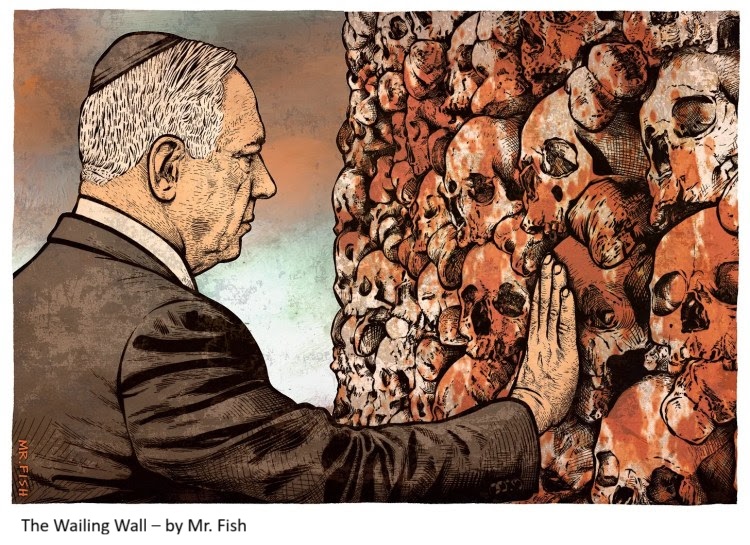
Trump continues to call the premier a ‘wartime prime minister’ as Netanyahu faces ongoing internal opposition and a long-delayed corruption trial
News Desk, JUN 10, 2026, https://thecradle.co/articles/most-israelis-oppose-netanyahus-re-election-as-trump-says-pm-may-quit-politics
A poll published by an Israeli research center on 9 June has revealed that most Israelis do not want Prime Minister Benjamin Netanyahu to run in the upcoming election.
The poll was released by the Viterbi Center for Public Opinion and Policy Research at the Israel Democracy Institute, based in occupied Jerusalem.
It was conducted between 31 May and 5 June.
According to the results, 61 percent of Israelis believe Netanyahu should not run in the elections. Thirty-five percent were in favor of the premier running.
The number of Israeli Jews who are opposed to his running stood at 57 percent, while 39.5 percent of Jewish Israelis believe he should run.
Among the Palestinians with Israeli citizenship living in the territories ethnically cleansed during the 1948 Nakba, 83 percent are against Netanyahu running in the election, according to the poll.
Eleven percent of Palestinians with Israeli citizenship support his candidacy, the poll added. A recent poll revealed a significant deterioration in the global reputation of Netanyahu and Israel.
The survey was published amid growing uncertainty over Netanyahu’s political future following comments by US President Donald Trump, who claimed the premier may want to step back from politics.
Trump told ABC News on Tuesday that he was unsure “if Bibi even wants to continue.”
“I don’t know, he’s had an amazing career. Does he want to continue? Because, you know, he’s a wartime prime minister. We will very shortly win the war one way or the other, and you know he’s a wartime prime minister,” Trump added.
Likud has since responded, saying that Netanyahu will run in the upcoming election.
Netanyahu is mired in a years-long criminal trial over corruption and other scandals. The trial has seen near-constant delays.
The prime minister has also failed to resolve the Haredi draft crisis plaguing Israel, with ultra-Orthodox Jews (Haredim) still avoiding conscription and opposition parties criticizing the ruling coalition for placing secular reservists at the forefront of the conflict.
Israeli army leadership has warned of a collapse in the reserve forces, and troops are taking heavy losses in battles against Hezbollah in south Lebanon.
Since Netanyahu’s government came to power in late 2022, illegal West Bank settlements and annexation plans have expanded dramatically, and a genocide in Gaza has taken place.
Tel Aviv has also continued to wage brutal wars on multiple fronts, including Lebanon and Iran.
The draft crisis and other long-standing issues between Netanyahu and the opposition have prompted former premiers Naftali Bennet and Yair Lapid to merge parties in a bid to challenge the prime minister politically.
Western Media Normalize Ethnic Cleansing of Lebanon by Viewing It Through Israel’s Eyes

Belén Fernández, FAIR, 11 June 26
In October 2024, one year into Israel’s genocidal war on the Gaza Strip and attendant assault on Lebanon, the Israeli army did a thing. It invited journalists from major Western corporate media outlets on an incursion into Lebanon’s ravaged south, accompanied by Israeli military personnel who would interpret the wreckage in Israel’s favor—not that the Western media have ever required much assistance in this regard.
Reporters from the New York Times, Washington Post, Associated Press, Reuters, BBC, Fox News and a handful of other special guests signed up for the cross-border sortie. It was, as Habib Battah and Christina Cavalcanti note in an investigation for the Public Source (8/27/25), an “awkward hybrid between a traditional embed and the kind of all-expense-paid publicity trip that journalists refer to as junkets, freebies and dog-and-pony shows.”
Never mind that it is entirely illegal for journalists or anyone else to enter Lebanon from Israel—what’s one more illegal invasion from a country that has been invading Lebanon pretty much since its founding? As Battah and Cavalcanti emphasize, these media professionals were also embedding themselves “within a national project of extraordinary transnational violence,” hosted by an “extrajudicial occupying military power—a critical point that all of them would fail to mention in their coverage.”
The Israelis certainly hit the jackpot with the coverage, as reporters excitedly discovered boots and helmets allegedly belonging to Hezbollah—clear proof that the group had been plotting a nefarious attack on Israel. New York Times Jerusalem correspondent Isabel Kershner, an old pro at conducting preemptive journalistic strikes on Lebanon, did not disappoint with her dispatch (10/13/24), “Just Over the Border From Israel, a Hezbollah Cache of Explosives and Mines.”
And in report after embedded report, Israel’s chosen journalists faithfully transmitted the tiresome and counter-logical notion that Hezbollah was somehow the aggressor in the arrangement—as opposed to the army that was busily slaughtering thousands of people in Lebanon while implementing a scorched-earth strategy.
‘Urgent evacuation warnings’
While the October 2024 embed was one of the more preposterous embodiments of Western corporate media’s special relationship with Israel, outlets continue to do a fine job of sanitizing Israeli brutality even when their reporters are not physically viewing the region from inside an Israeli armored vehicle. Since March of this year, Israel has killed at least 3,613 people in Lebanon and displaced 1.2 million, obliterating entire villages and otherwise expanding the ecocidal policy honed in the Gaza Strip.
There has been no remotely comparable destruction on the Israeli side, and a recent Reuters article (5/31/26) that had attempted to suggest some symmetry now comes with the preface: “This May 31 story has been corrected to remove a reference to tens of thousands of Israelis being displaced by Hezbollah fire, in paragraph 3.”
Like in Gaza, where genocide proceeds apace in spite of a declared ceasefire (FAIR.org, 10/21/25), the media tend to report “ceasefires” in Lebanon without caring to highlight the fact that it’s not a ceasefire when Israel is still pummeling the country and massacring people, all the while setting the stage for a massive land grab with its creeping so-called “evacuation orders.” These “evacuations” have been focused on the Shiite demographic, with Israel warning Christian and Druze communities not to allow Shiite neighbors to take refuge in their towns (New York Times, 4/1/26).
Lebanese journalist Habib Battah, co-author of the aforementioned Public Source investigation, suggested to me that such orders might be more accurately termed “ethnic cleansing directives.” But that, of course, would be way too much for corporate media outlets to handle—and so it is that we learn about Israel’s “urgent evacuation warnings” and “large-scale evacuation orders,” as though it’s some sort of public service announcement, fire drill or other fundamentally legitimate Israeli undertaking, rather than entirely illegal in addition to downright psychopathic. From a legal and moral perspective, after all, you can’t just go around ordering people in other countries out of their homes, oftentimes only to bomb them when they comply.
Then there’s the matter of the “Yellow Line” or “security zone”—more terminology borrowed from Gaza (FAIR.org, 5/19/26)—which denotes the portion of south Lebanon that Israel is currently illegally occupying. But Israel has never been very good at staying within the lines, and its latest “evacuation orders” spanned no less than one-fifth of the entire country, far beyond its own unilaterally appointed Yellow Line.
As Battah remarked to me, the media’s acceptance and deployment of such arbitrary vocabulary creates “artificial structures” and a sense of orderliness, when in reality “there’s no yellow lines, there’s no yellow, there’s no colors—these are just illegal invasions.” And because media are committed to sanitizing Israel’s behavior rather than questioning it, “colonization becomes normalized.”
‘A warning to residents’
The eagerness of journalists to do Israel’s bidding is all the more confounding given that Israel is currently the No. 1 killer of journalists in the world. A recent Associated Press article (5/29/26), for example, reduced the pulverization of Lebanon to simply “ongoing fighting in southern Lebanon between Israeli troops and Hezbollah fighters.”
A June 4 Reuters writeup blamed Hezbollah for having “rejected” the latest US-mediated “ceasefire” plan—which, mind you, would basically have given Israel the green light to seize south Lebanon outright. Reuters refrained from referencing the thousands of Lebanese casualties since March, but did allow Israel the usual space to defend its depredations: “The Israeli military, in a warning to residents of the south, said it was continuing to target Hezbollah facilities.”
This is not to say that corporate media do not report on the destruction, displacement and killing in Lebanon; they do—and sometimes even sympathetically. But the refusal to paint a consistent and properly contextualized picture of what is actually going on in the country means that they mostly just end up legitimizing Israel’s war crimes…………………………………………………………………………………….. https://fair.org/home/western-media-normalize-ethnic-cleansing-of-lebanon-by-viewing-it-through-israels-eyes/
1 This Month
23-25 October – on Zoom – World BEYOND War’s annual global conferenc


Shut down the radiation-damaged Heysham nuclear reactors now
To see nuclear-related stories in greater depth and intensity – go to https://nuclearinformation.wordpress.com

Say No to NASA’s Reckless Nuclear Reactor on the Moon
Say No to NASA’s Reckless Nuclear Reactor on the Moon

-
Archives
- October 2026 (247)
- September 2026 (339)
- August 2026 (330)
- July 2026 (355)
- June 2026 (287)
- May 2026 (306)
- April 2026 (356)
- March 2026 (251)
- February 2026 (267)
- January 2026 (308)
- December 2025 (358)
- November 2025 (359)
-
Categories
- 1
- 1 NUCLEAR ISSUES
- business and costs
- climate change
- culture and arts
- ENERGY
- environment
- health
- history
- indigenous issues
- Legal
- marketing of nuclear
- media
- opposition to nuclear
- PERSONAL STORIES
- politics
- politics international
- Religion and ethics
- safety
- secrets,lies and civil liberties
- spinbuster
- technology
- Uranium
- wastes
- weapons and war
- Women
- 2 WORLD
- ACTION
- AFRICA
- Atrocities
- AUSTRALIA
- Christina's notes
- Christina's themes
- culture and arts
- Events
- Fuk 2022
- Fuk 2023
- Fukushima 2017
- Fukushima 2018
- fukushima 2019
- Fukushima 2020
- Fukushima 2021
- general
- global warming
- Humour (God we need it)
- Nuclear
- RARE EARTHS
- Reference
- resources – print
- Resources -audiovicual
- Weekly Newsletter
- World
- World Nuclear
- YouTube
-
RSS
Entries RSS
Comments RSS

