UN report finds Israel deliberately targets Palestinian children
by Stephanie Tran | Jun 23, 2026, https://michaelwest.com.au/un-report-finds-israel-deliberately-targets-palestinian-children/
A UN Commission of Inquiry has found Israeli forces have deliberately targeted Palestinian children, their actions amounting to genocide, crimes against humanity and war crimes in Gaza. Stephanie Tran reports.
In a report released today, the UN Independent International Commission of Inquiry on the Occupied Palestinian Territory, including East Jerusalem, and Israel found that Palestinian children had been subjected to targeted killing, starvation, torture, sexual violence, arbitrary detention and repeated displacement.
The Commission found that “much of the harm suffered by Palestinian children was not incidental but
“intended to destroy the existence of the Palestinians in Gaza as a group.”
It said the “sheer number” of cases it investigated showing children were directly targeted by Israeli forces constituted “a key element” in demonstrating genocidal intent from Israeli authorities.
Last year, the Commission found that Israel had committed genocide against the Palestinians in the Gaza Strip.
The report also makes reference to its 2024 findings on “violations and abuses against Israeli children committed by the military wing of Hamas”. It found that “Israeli children were subjected to physical and emotional mistreatment on 7 October 2023.” 40 children were killed in the attack and hundreds injured, with many children losing one or both parents.
“Many children witnessed the killings of their parents and siblings and were also filmed for propaganda purposes by Palestinian armed groups.”
‘Children deliberately targeted’
The Commission found that Israeli security forces have directly targeted Palestinian children with the intention to kill them.
“Israeli security forces have consistently, directly and intentionally targeted individual children across Gaza during evacuations, in shelters and designated safe zones, at Gaza Humanitarian Foundation distribution sites and after the ceasefire agreement in and around the so-called ‘yellow line’.”
The report found that children had been targeted “from newborns to adolescents” and that in some cases children were shot while holding white flags.
The Commission said evidence including precision gunfire, injury patterns and the use of sniper rifles, drones and quadcopters capable of visually identifying targets indicated deliberate targeting.
Since 7 October 2023, more than 20,000 children have been killed in Gaza, representing 30% of the total deaths.
Speaking to MWM, Commissioner Chris Sidoti said the documented deaths represented only a portion of children killed during the genocide.
“We have seen over 20,000 children killed directly as a result of the violence,” he said.
“Israeli security forces have consistently, directly and intentionally targeted individual children across Gaza during evacuations, in shelters and designated safe zones, at Gaza Humanitarian Foundation distribution sites and after the ceasefire agreement in and around the so-called ‘yellow line’.”
“That does not include children who have not been identified, those who are buried under the rubble, those whose bodies have not been identified, those who have simply disappeared and are counted as missing.”
Sidoti said the figures also excluded children who had died from disease, starvation and the collapse of Gaza’s healthcare system.
“There are tens of thousands more children who have died as a consequence of this fighting,” he said.
He said some children had been deliberately targeted by snipers and drones.
“We know of snipers and of quadcopters that have killed children, deliberately targeting the children, not killing anybody else around them.”
The report found that children had been targeted “from newborns to adolescents” and that in some cases children were shot while holding white flags.
The Commission said evidence including precision gunfire, injury patterns and the use of sniper rifles, drones and quadcopters capable of visually identifying targets indicated deliberate targeting.
Since 7 October 2023, more than 20,000 children have been killed in Gaza, representing 30% of the total deaths.
Speaking to MWM, Commissioner Chris Sidoti said the documented deaths represented only a portion of children killed during the genocide.
Sexual violence against children
The Commission found that sexual and gender-based violence was being used “in the context of detention and arrests as a method of warfare and intimidation against Palestinian children”.
“Sexual violence against Palestinian children in Israeli detention is not exceptional but a systematic, state-enabled assault on their bodies and their dignity and deliberately meted out to cause humiliation,” the report states.
The Commission documented cases of forced public nudity, sexual assault, genital violence and sexual threats against children in detention.
Sidoti said some forms of abuse amounted to torture.
“Sexual violence itself is common, but it is not always used for the purposes of torture,” he said.
“A part of the sexual violence that we saw involved the stripping of children in public, their humiliation, and what, under Australian law and international law, constitutes child abuse.”
The Commission concluded that sexual violence against Palestinian children constituted both war crimes and crimes against humanity.
It further found that sexual violence “constitutes part of the genocidal act of causing serious bodily and mental harm.”
“Such deliberate violence was intended not only to cause immediate and long-term harm to the individual children, but
“to target and destroy the Palestinian group in Gaza, because children embody the group’s biological continuity and collective survival.”
Deliberate starvation and healthcare destruction
The Commission concluded that Israel had committed the war crime of wilful killing and the crime against humanity of extermination by intentionally using starvation as a method of warfare and depriving children of essential medical care.
The report found that Israel has “intentionally inflicted these conditions of life, in particular on Palestinian infants, children and young persons in Gaza”.
Attacks on hospitals, neonatal wards and maternity services, combined with shortages of fuel, medicine and medical equipment, have caused the deaths of newborns and seriously harmed pregnant women and infants.
Sidoti said the findings reinforced the Commission’s previous conclusions that Israeli actions in Gaza amounted to genocide.
“Our findings in relation to children confirmed those findings,” he told MWM.
He pointed to attacks on hospitals, neonatal and paediatric services and the destruction of medical equipment.
“All of these things indicate an intent that children should die, and that means for us reinforcement of our findings in relation to genocide“
Destruction of schools
The Commission concluded “Israeli security forces have intentionally directed attacks against educational facilities, resulting in the denial of Palestinian children’s right to education for present and future generations.”
More than 97% of schools in Gaza had been damaged or destroyed.
“The destruction of the education system has been an attack on the hopes and aspirations of the Palestinian people as a whole,” the report states.
The Commission found that the collapse of education and healthcare systems had caused
“Irreversible learning loss, neural developmental delays and diminished future opportunities.“
The report also documents Israeli soldiers filming themselves destroying children’s toys, playground equipment and personal belongings.
“The confidence of the Israeli soldiers to film themselves in this manner and post the evidence online is a clear reflection of the lack of accountability,” the report states.
Detention, torture and abuse
The Commission found that Palestinian children held by Israeli authorities had experienced prolonged blindfolding, forced stripping, severe beatings, deprivation of food and water, sleep deprivation and denial of medical treatment.
It found a pattern of “severe and deliberate mistreatment” particularly affecting Palestinian boys.
Children were subjected to prolonged kneeling on hard surfaces, attacks targeting their heads, faces and genitals, threats involving dogs and detention alongside adult prisoners.
The Commission concluded that the treatment of detained children constituted the crimes against humanity of torture and other inhumane acts causing serious suffering.
Sidoti said the number of Palestinian children detained by Israeli authorities remained unclear.
Sidoti said the number of Palestinian children detained by Israeli authorities remained unclear.
West Bank settler violence and killings
The Commission also examined Israeli military operations and settler violence in the occupied West Bank.
It found evidence that Palestinian children had been deliberately shot, denied medical treatment and subjected to violence by settlers.
“The Commission has identified a pattern of targeting of Palestinian children in the West Bank, mirroring Israeli practices in Gaza including deliberate shooting of children, particularly of boys. Israeli soldiers target boys, labelled as “terrorists”, on the basis of their male and Palestinian identity, with lethal force.”
The report describes cases in which wounded children were left bleeding while soldiers prevented ambulances from reaching them.
The Commission concluded that Israeli authorities had failed to protect Palestinian children from settler violence.
It concluded that settler violence functioned
“not as a deviation from state policy but as a means of implementing it”
“Both the State of Israel and violent settler groups share and collaborate in the same strategic objectives: the entrenchment of Israeli settlement on Palestinian land, annexation of Palestinian territory and the displacement of Palestinian people from their land.”
Chain of command and accountability
Sidoti said the Commission had found responsibility extended beyond individual soldiers.
“We have made that finding that there is a clear chain of command and it does go right to the top,” he said.
“It is not just individual soldiers who are responsible for individual war crimes. … There is a chain of command that means that those at the top have issued clear orders as to the nature of this campaign, the objectives the military are to achieve.”
“Our conclusion on the basis of the evidence that we collected is that that constitutes a genocidal purpose.”
Sidoti said growing international attention had shifted from expressions of concern to discussions about concrete measures by individual states.
“The responsibilities under international law now fall on individual governments and groups of governments to decide what action to take and take it.”
He said governments, including Australia, should consider measures directed not only at individuals but also at institutions.
“We need to address questions of institutions now, and not just individuals who are committing war crimes. That means the Israeli Defense Forces as an institution, the Israeli government as an institution, and the settlements themselves, right across the West Bank, as organized violators of international law” he said.
Israel declines to respond
Sidoti said Israeli authorities had been provided with a draft copy of the report before publication.
“Our procedures require that we give all of our reports to the Israeli authorities in draft form before they’re finalised,” he said.
“The Israeli authorities had a draft of this report two or three weeks ago, and they had an opportunity to comment to us.”
According to Sidoti, Israeli authorities did not provide formal comments to the Commission.
“They did not do so, but instead … they prepared an 18-page rebuttal which they distributed to some diplomatic missions here in Geneva.”
The Commission called on states to ensure accountability for crimes committed against Palestinian children and urged the international community to “employ all means reasonably available to them to prevent the commission of genocide, war crimes and crimes against humanity”.
MWM asked Foreign Minister Penny Wong, and the Department of Foreign Affairs and Trade whether Australia intends to take any action in response to the Commission’s findings.
They have not provided a response.
The Commission of Inquiry on OPT, including East Jerusalem, and Israel will be holding a livestreamed press conference at 9:30 PM (AEST) to discuss the findings of the report.
‘Poles, Russians, and Jews must be exterminated’: The bloody history of Zelensky’s heroes
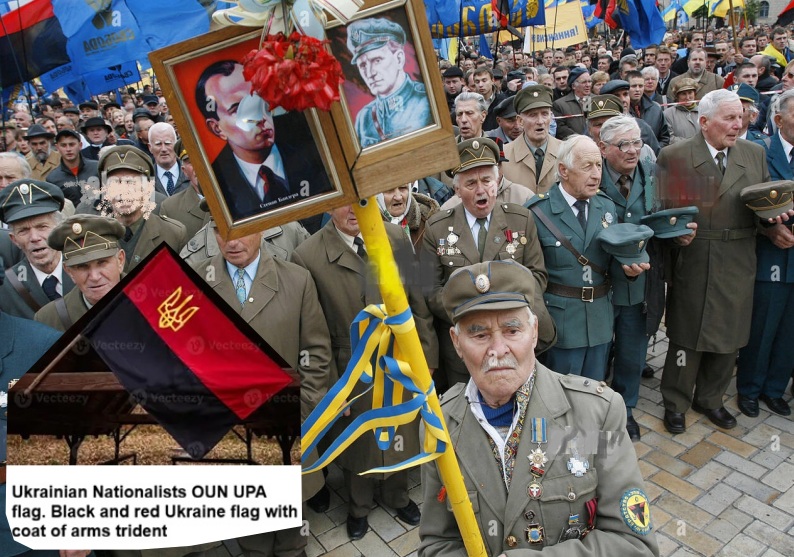
On June 30, 1941, immediately after capturing Lviv, Bandera’s followers, led by Yaroslav Stetsko, proclaimed the establishment of the Ukrainian State and formed a pro-German “government.” In its declaration of statehood, the OUN openly expressed the intention to collaborate with Nazi Germany, which “under the leadership of its Führer Adolf Hitler is creating a new order in Europe and assisting the Ukrainian people “
How the OUN-UPA embraced ethnic violence, collaborated with Nazi Germany, and became one of the most controversial movements of World War II
3 Jun, 2026 , Rt.com
Burned villages. Families slaughtered in their homes. Women, children, and the elderly hacked to death with axes and pitchforks. Thousands of Jews beaten, tortured, and murdered during pogroms that accompanied the Nazi invasion of the Soviet Union. These are some of the atrocities associated with the Organization of Ukrainian Nationalists (OUN) and its military wing, the Ukrainian Insurgent Army (UPA) – movements whose legacy remains one of the most divisive issues in Eastern Europe more than eighty years after World War II.
For decades, supporters of the OUN-UPA have portrayed its members as freedom fighters who resisted both Nazi Germany and the Soviet Union in pursuit of Ukrainian independence. Opponents, however, point to a different record: collaboration with the Third Reich, participation in anti-Jewish violence, and the mass killing of Polish civilians during the Volhynia massacres of 1943-1944, which Poland today officially recognizes as genocide.
Far from being settled history, this debate has recently returned to the center of international politics. In 2026, a new diplomatic dispute erupted after Ukraine’s Vladimir Zelensky honored the UPA tradition at the state level, prompting outrage in Poland and reigniting long-standing accusations that modern Ukraine is rehabilitating organizations linked to fascism, ethnic cleansing, and wartime crimes. At the very moment when Polish and Ukrainian officials are working together to exhume the victims of Volhynia, disagreements over the legacy of Bandera, Shukhevich, and the OUN-UPA continue to poison relations between the two countries.
Below, we’ll talk about the origins of modern Ukrainian nationalism, the motives behind the mass killings of Poles and Jews by underground nationalist forces, and the reasons why OUN-UIA leaders collaborated with Nazi Germany.
The ideology behind Ukrainian ‘heroes’
Ukrainian integral nationalism, which became the foundation of OUN-UIA ideology, owes much to the writings of Dmitry Dontsov. In the mid-1920s, he articulated a doctrine of Ukrainian nationalism that was heavily influenced by the fascist ideology of the time………………………………………………………………………………………………………………………………………………………………………………………………………………………………..
During the 1930s, the OUN engaged in underground activities, particularly in Galicia. It was also during this period that Stepan Bandera emerged as a prominent figure among the nationalists. Young, ruthless, and determined, he quickly established himself as one of the recognized leaders of the OUN, gaining notoriety through violent acts against high-ranking Soviet and Polish officials……………………………………………………………………………..
A Polish court sentenced Stepan Bandera to death for organizing the murder of Polish Interior Minister Bronislaw Pieracki, but the sentence was later commuted to life imprisonment. During his trial, Bandera showed no remorse, and stated: “We know how to value our lives and those of others, but our idea is worth making millions of sacrifices for.”
Bandera’s imprisonment did not last long – he was released in 1939 after Nazi Germany invaded Poland, and quickly rejoined the nationalist movement……………………………………………….
the collaboration with the Nazis did not distract the Ukrainian nationalists from what they considered more pressing tasks: eliminating ethnically foreign elements.
In a May 1941 directive, the OUN explicitly stated that Russians, Poles, and Jews were enemies of the Ukrainian nation and must be annihilated.
In the early days of Nazi Germany’s war with the USSR in June 1941, nationalists called on people to take up arms and “destroy the enemy,
And words soon turned to actions.
After German forces captured Lviv on June 30, 1941, Ukrainian nationalists unleashed a brutal pogrom against the city’s Jewish population. OUN militants, operating as part of the so-called Ukrainian People’s Militia and the Nachtigall Battalion, organized raids on Jewish residents. People were publicly beaten, tortured, and many were murdered right in the streets or executed after being tortured. Over the course of a few days, thousands of Jews were brutally killed. Similar atrocities occurred throughout the region; the occupying authorities encouraged anti-Semitic violence, which local nationalists eagerly participated in.
The OUN viewed Jews as “supporters of the Moscow-Bolshevik regime” and welcomed their extermination. Many members of the OUN later served in auxiliary police forces for the Nazis, actively participating in the Holocaust by herding Jewish people into ghettos and camps, escorting death marches to Babi Yar in Kiev, and personally executing prisoners.
Although later the UIA declared a fight against Germany, by early 1943 almost all Jews in Volynia and Galicia had been killed, with the active help of Ukrainian nationalists. Few managed to escape, and only a handful of people survived the war within the ranks of the UIA – these were mostly doctors or specialists who were tolerated for practical reasons.
Hunting for Poles
However, the primary targets of the ethnic cleansing efforts of the OUN-UIA were the Poles of Galicia and Volynia, whom the nationalists regarded as historical enemies and “occupiers” of Ukrainian lands that needed to be expelled or eliminated. Plans for these atrocities were devised long before the Volynian massacre: as early as 1938, the OUN’s internal doctrine outlined a project for an uprising aimed at “sweeping away every last Polish element” from Western Ukrainian territory.
……. in the spring of 1943 when the Ukrainian Insurgent Army (the military wing of the OUN) carried out the massive slaughter of the Polish population in Volynia.
The Volynian massacre of 1943 became one of the bloodiest crimes of WWII in Eastern Europe. UIA units and armed nationalist peasants attacked hundreds of Polish villages with the intent of physically annihilating all Poles living on “Ukrainian” land. Terror reached its peak in July 1943 during ‘Bloody Sunday’ on July 11, when dozens of settlements were simultaneously attacked by militants.
The methods of execution were unbelievably cruel. People were killed indiscriminately: women, the elderly, children, and infants; many were not just shot but hacked with axes, stabbed with pitchforks, or bludgeoned to death. The homes of Poles were burned to the ground, their property looted; entire villages vanished in flames and were reduced to charred ruins.
Historians estimate that 60,000-100,000 Poles were barbarically killed by the OUN-UIA in Volynia and the surrounding areas. Polish partisan groups later responded with retaliatory terror against Ukrainian villages; however, the initiative for the large-scale extermination of civilians belonged squarely to the Ukrainian nationalists.
The modern Polish Sejm and historians classify the Volynian massacre as an act of genocide. Numerous accounts indicate that the slaughter was premeditated by the leadership of the OUN, which sought to realize Dontsov’s vision of a “monoethnic” state at any cost.
As a result of the actions of the OUN and UIA, Poles in Volynia and Eastern Galicia were virtually annihilated. Waves of refugees fled their homes to escape the violence. The ethnic landscape of the region was radically reshaped through mass terror tactics. Repression was not limited to Poles and Jews: UIA militants also targeted Ukrainians who refused to support them or were suspected of “disloyalty,” labeling them as traitors.
Nazi collaborators
The activities of Ukrainian nationalists extended beyond the extermination of Jews and Poles. Under the command of Roman Shukhevich, the head of the OUN military branch, two diversionary Abwehr battalions were formed – the Nachtigall Battalion and the Roland Battalion. These Ukrainian units became part of the Wehrmacht and, in June 1941, crossed the Soviet border dressed in German uniforms and under German command, invading the territory of the Ukrainian SSR alongside the Nazis.
Subsequently, the Germans formed the Schutzmannschaft Battalion 201 from the Nachtigall and Roland battalions. It was dispatched to Belarus to combat partisans. This battalion was also commanded by Roman Shukhevich, who would later become the supreme commander of the UIA.
In 1942, the soldiers under his command participated in punitive expeditions aimed at “pacifying” Belarusian villages suspected of aiding partisans (in other words, burning down entire settlements along with their inhabitants).
Throughout this period, the OUN hoped to reap political benefits from its alliance with the Nazis.
On June 30, 1941, immediately after capturing Lviv, Bandera’s followers, led by Yaroslav Stetsko, proclaimed the establishment of the Ukrainian State and formed a pro-German “government.” In its declaration of statehood, the OUN openly expressed the intention to collaborate with Nazi Germany, which “under the leadership of its Führer Adolf Hitler is creating a new order in Europe and assisting the Ukrainian people in liberating themselves from Moscow’s occupation.”……………………………………………………………………………………………… https://www.rt.com/russia/640925-bloody-history-of-zelenskys-heroes/
The tragedy of AUKUS

AUKUS is a grotesque demonstration of the singular inability of Australian governments to question the value of these arrangements or the wisdom of America’s strategic outlook, especially when it comes to the Asia-Pacific region. All this at a time when US hegemonic power is in visible decline, and when such compliance will carry ever greater risks and financial costs.
And not the slightest attempt to consult with the public, let alone initiate a genuine national conversation on Australia’s security options, in what is a period of far-reaching change that is transforming both the regional and global landscape.
Joseph Camilleri, June 19, 2026, https://pearlsandirritations.com/post/2026/06/the-tragedy-of-aukus/
In his submission to the AUKUS Public Inquiry, Joe Camilleri argues revoking AUKUS must be part of wider reassessment of Australia’s place in the world.
The decision to become a party to the AUKUS security agreement stands as one of the saddest decisions ever made by an Australian government.
It was a decision made for the wrong reasons, in the wrong way, with unfortunate outcomes in the last five years and dire consequences looming in the years ahead.
Will the submarines be delivered on time? Will they have the desired state-of-the-art capabilities? Will they deliver the desired number of jobs? These are no doubt relevant questions, but they hardly go to the heart of the matter.
What is it that makes the AUKUS pact such an ill-considered and harmful policy initiative?
The entire decision-making process from its birth to the present has been thoroughly undemocratic. The discussions that led to the agreement in September 2021 were conducted in complete secrecy. And since then, government has said or done little to take the Australian public into its confidence. The costs, be they economic, environmental, diplomatic or cultural have not been seriously addressed, nor have the alleged benefits, nor how the project will proceed in practice, nor indeed how future decisions will be made and by whom. All this has been justified by repeating the time-worn and utterly duplicitous mantra of national security.
The first statement announcing the establishment of AUKUS told us that the intention was ’to meet the challenges of the 21st century’, but with great care taken to leave the nature of these challenges unspecified. The partnership, it was claimed, would ‘deepen cooperation on a range of security and defence capabilities’, but little was said as to why enhanced defence cooperation was needed at this time, and even less as to what such cooperation would achieve in practice. Yet, within hours of being briefed the then leader of the opposition, Anthony Albanese affirmed Labor’s full support for AUKUS.
In the years that followed little has been said as to the function of the submarines, or the objectives to be served by trilateral defence cooperation. The concluding sentence of the Joint Leaders statement of March 2023 bears quoting in full:
We believe in a world that protects freedom and respects human rights, the rule of law, the independence of sovereign states and the rules-based international order. The steps we are announcing today will help us to advance these mutually beneficial objectives in the decades to come.
The question ‘how was this to be done?’ was left conveniently unaddressed.
The closest thing to an explanation of Australia’s underlying strategy was the reference by Defence Minister Richard Marles to the ‘complex strategic landscape’ that now prevailed in the ‘Indo-Pacific’ region and what he described as ’the biggest conventional military build-up that we have seen since the end of the Second World War’. In subsequent statements, Marles made it clear that the offender was China. As a trading island nation, Australia had no option but to enhance its capacity ’to project with impact’.
In the days that followed, countless words have been uttered inside and outside Parliament, but to this day the justification offered for the AUKUS partnership remains riddled with ambiguity, inconsistency and evasion. At no time has it been made clear:
- What are the specific strategic contingencies for which the submarines are intended?
- How does AUKUS fit within Australia’s broader security policies?
- What alternative security strategies were evaluated?
- What are the assumptions regarding China’s future behaviour that underpin the AUKUS decision?
And not the slightest attempt to consult with the public, let alone initiate a genuine national conversation on Australia’s security options, in what is a period of far-reaching change that is transforming both the regional and global landscape.
The democratic deficit becomes even more troubling, given the failure to consult the First Nations despite the fact that AUKUS implementation, including submarine operations, infrastructure, training, industrial production, weapons support and maritime transit, will affect a large part of Australian land and seas. The simple fact is that AUKUS carries far-reaching implications for:
- Native Title rights recognised under Australian law
- Land rights under legislation such as the Northern Territory’s Aboriginal Land Rights Act
- Indigenous interests in sea country and coastal waters
- Heritage protection relating to sacred sites and cultural landscapes
- Rights to consultation regarding the economic, environmental and cultural implications of land use and development projects.
As a consequence of the unfortunate experiences associated with earlier defence projects, Indigenous communities are especially concerned about the likely impact of AUKUS-related activities. These concerns cannot be adequately addressed piecemeal as individual facilities are about to be developed. An immediate and systematic assessment of Indigenous rights, needs and preferences with the full participation and oversight of Indigenous communities is the only viable approach. The consultation should extend to the very rationale of the AUKUS project, since it will impact so many spaces across Country, over which, let’s not forget, the First Nations have never ceded sovereignty. When dealing with the larger questions posed by the AUKUS adventure, a dose of Indigenous wisdom would not go astray.
The rationale for the AUKUS pact rests largely on the frequently insinuated assumption – never openly stated or adequately explained – that China poses a major threat to Australian security. This assessment rests on a questionable understanding of Chinese interests and intentions, and the methods by which China seeks to expand its influence regionally and globally.
Labor, it is true, has managed to stabilise somewhat the parlous state of relations with China, including the resumption of ministerial visits between the two countries, which eventually led to Albanese’s visit to Beijing in November 2023. Importantly, most Chinese trade sanctions imposed on Australian products in 2020–21 have been lifted.
However, after four years in office, the Albanese government still depicts China as a rising power whose aggressive posturing is matched by a much expanded capacity to flex military muscle.
China, it is true, has steadily increased its military spending, which rose from $286 billion in 2020 to an estimated $312 billion in 2025. Similarly, it has expanded its military presence both in the South China Sea and around Taiwan. None of this suggests that either its military spending or its ability to project military power regionally, let alone globally, are on a scale remotely comparable to that of the United States.
Successive US administrations have nevertheless used China’s increasing assertiveness in the South China Sea and the heightened tensions in relation with Taiwan to justify an expanded US naval presence on China’s doorstep, a position Australian governments have seen fit to support. AUKUS is therefore best understood as an expression of US strategic priorities, and Australia’s participation in AUKUS as yet another demonstration of Australia’s longstanding alignment with the United States.
Simply put, Australian governments remain wedded to the view that Australia’s security ultimately depends on protection by the United States. AUKUS begins to make sense once it is seen to be part of an overarching strategic orientation that includes ever higher levels of interoperability with the US military, multifaceted defence cooperation greatly facilitated by the 2014 Defence posture agreement, intimate links with US intelligence operations, and heavy reliance on the acquisition of expensive US military hardware.
AUKUS is a grotesque demonstration of the singular inability of Australian governments to question the value of these arrangements or the wisdom of America’s strategic outlook, especially when it comes to the Asia-Pacific region. All this at a time when US hegemonic power is in visible decline, and when such compliance will carry ever greater risks and financial costs.
The root of the problem lies in the addiction to imperial power that holds sway in the minds of many among Australia’s political, bureaucratic, military and intelligence elites. They see themselves as having unique access to an exclusive and powerful club that confers not just safety, but status and privilege – once the British club, now the American club. They have reluctantly accepted the demise of the former, but are not reconciled to the slow but steady decline of the latter. They feel most comfortable when connected to the anglophone world and, at best uneasy, when dealing with the East. This is the meaning and tragedy of AUKUS.
Senior Labor ministers, with an eye on the next election, see no value in provoking the ire of the security establishment that includes influential voices in the armed forces and the various security and intelligence agencies but also powerful elements in the civil bureaucracy, the media, think tanks and an array of other pressure groups, not least the defence industry.
Ultimately, the greatest cost of AUKUS and associated entanglements is not the financial outlay, but the continued entanglement with an imperial power in decline. Technological sophistication, high levels of military spending, and the flexing of military muscle on a global scale do not readily translate into military victory or political control. The deadly and largely ineffectual war on terror, the disastrous war in Iraq, the protracted conflict and humiliating retreat in Afghanistan, the unholy mess in Libya and Syria, and the unfolding tragedy in the Middle East, not least the folly of the Iran war, all point to the fragility and limits of US power.
The AUKUS misadventure is a highly damaging distraction that prevents Australia from addressing the crucially important task of assessing and responding to the pressing regional and global threats ahead.
Revoking the AUKUS agreement is an urgent necessity. Such a step, however, must be part of wider reassessment of Australia’s place in the world. Australia as a nation needs to pause and consider the very meaning of security in the light of the profound geopolitical, environmental, economic, technological and cultural transformation currently under way. The militarisation of security discourse and practice poses new and unprecedented dangers.
The overemphasis on military threats needs to give way to notion of human security where the accent is on reconciling divergent histories, interests and grievances within and between countries, rather than on fuelling arms races between expanding and ever costlier military arsenals.
What Australia needs more than ever is to strive for a security policy framework founded on three key principles: common security (Australia cannot be or feel secure unless its Asian and Pacific neighbours also feel secure); cooperative security (security can be achieved only when countries act in concert, bringing to the table diverse energies, resources and insights); comprehensive security (there is more to security than protection from external military threats – security also includes economic, cultural and ecological security).
Crucial to this enterprise is finding a pathway to a substantive and durable Australia–China security and cultural dialogue – to be developed in close consultation and cooperation with Asian and Pacific neighbours.
Conveying this perspective and recommendations that flow from it to the Australian government and more generally to the Australian parliament may serve some useful purpose. But such an exercise is unlikely to achieve a great deal in the short-to-medium term. The more pressing need is to address this assessment of the road ahead to the nation as a whole, and to the diverse organisations that make up Australia’s civil society.
In the light of the AUKUS fiasco, the urgent challenge before us is to cultivate an informed, respectful and ongoing national conversation about Australia’s place in the world, and the contribution it can and should make to its own security in tandem with the security of its neighbours, the security of the entire human family, and, of course, the security of the planet.
Canada Initiates Process to List Major [Nuclear] Projects under the Building Canada Act
Listing these projects under the Act would streamline and consolidate key federal permits and authorizations, subject to a document outlining the conditions under which the project may proceed. National interest listing of the project would provide confidence that key federal permits and authorizations for the project will be granted, shifting Canada’s regulatory focus from ‘whether’ the project should proceed to ‘how’ it will proceed.
Government of Canada, From: One Canadian Economy 25 June 26
News release
Yellowknife, Northwest Territories, June 24, 2026 – The world is changing rapidly. In response, a confident Canada is choosing to build. Canada’s government is building major projects – new ports, mines, highways, and energy infrastructure – that will transform our economy and unlock billions of dollars in new investment for Canadian workers and businesses. Key to those efforts is the Major Projects Office (MPO) and the Building Canada Act (the Act), which are helping streamline federal approval and financing processes to get major projects built faster, while respecting Indigenous rights and safeguarding the environment.
Today, the Honourable Tim Hodgson, Minister of Energy and Natural Resources; the Honourable Steven MacKinnon, Minister of Transport and Leader of the Government in the House of Commons; and the Honourable Rebecca Alty, Minister of Crown-Indigenous Relations, announced a significant milestone for the government’s plan to build Canada strong. Ministers announced that the government is initiating the process toward potential listing of three major projects – the Mackenzie Valley Highway Project, the Grays Bay Road and Port Project, and the Nuclear Waste Management Organization’s (NWMO)’s Deep Geological Repository (DGR) – as projects of national interest under the Act.
In March 2026, the Grays Bay Road and Port project and the Mackenzie Valley Highway project were referred to the MPO and today, the Government is referring the DGR to the MPO as well. Located in northwestern Ontario, near Wabigoon Lake Ojibway Nation and the Township of Ignace area, the DGR project is a world-recognized best practice solution for safe, long-term storage of all used nuclear fuel from Canada’s existing nuclear reactor fleet, as recognized under the federal government’s new Nuclear Energy Strategy.
Listing these projects under the Act would streamline and consolidate key federal permits and authorizations, subject to a document outlining the conditions under which the project may proceed. National interest listing of the project would provide confidence that key federal permits and authorizations for the project will be granted, shifting Canada’s regulatory focus from ‘whether’ the project should proceed to ‘how’ it will proceed. In the case of the Mackenzie Valley Highway and the Grays Bay Road and Port projects, this will be contingent on both projects successfully completing treaty-based impact assessment and regulatory processes.
The support of Indigenous communities for these projects is critical. To determine if these projects are of national interest and should be listed under the Act, consultations will be held with impacted Indigenous rights holders and communities, provinces and territories. Consultations for each project will begin over the coming weeks, with the aim of supporting a listing decision by the Government in relation to the projects in fall 2026. Canada is committed to upholding its duty to consult with Indigenous Peoples throughout the process. This commitment is guided by section 35 of the Constitution Act, 1982, while recognizing the United Nations Declaration on the Rights of Indigenous Peoples Act, and Modern Treaties and Self-Government Agreements…………………………………………………………………………………………………………………………………………………………………………………………………………………………………………………………….. https://www.canada.ca/en/one-canadian-economy/news/2026/06/canada-initiates-process-to-list-major-projects-under-the-building-canada-act0.html
“Israel in Panic Mode? Max Blumenthal Says Iran War Backfired”
In a wide-ranging conversation with Glenn Diesen, journalist Max Blumenthal argues that the failed U.S.-Israel war against Iran has exposed new political fractures in Washington, accelerated public opposition to unconditional support for Israel, and raised questions about what comes next for a region still on the brink.
Joshua Scheer, June 24, 2026, https://scheerpost.com/2026/06/24/israel-in-panic-mode-max-blumenthal-says-iran-war-backfired/
Washington Went to War to Show Strength. The World Saw Weakness.
In a new interview with Glenn Diesen, investigative journalist and The Grayzone editor-in-chief Max Blumenthal argues that the recent U.S.-Israel conflict with Iran has produced consequences far different from those envisioned by its architects. Rather than restoring deterrence, Blumenthal contends, the war exposed military limitations, deepened political divisions inside the United States, intensified scrutiny of Israel’s role in American politics, and left Washington searching for a way out of a costly confrontation.
The discussion explores the emerging Memorandum of Understanding with Iran, growing tensions between pro-Israel factions and the America First wing of the Republican Party, shifting public opinion toward Israel, and the possibility that Lebanon may become the next flashpoint in efforts to unravel the fragile agreement. Whether one agrees with Blumenthal’s analysis or not, the interview captures a moment of profound uncertainty—one in which old assumptions about U.S. power, Israeli influence, and the future of the Middle East are increasingly being challenged.
As Washington attempts to navigate the aftermath of a conflict that rattled global markets and reshaped regional calculations, the political and strategic fallout may continue long after the shooting stops. The debate now is not only about Iran, but about the future direction of U.S. foreign policy itself
Israel’s Biggest Fear Isn’t Iran—It’s Losing America
Max Blumenthal argues that the greatest consequence of the recent Iran conflict may not be military at all. The real shock, he contends, is the accelerating erosion of unconditional American support for Israel.
According to Blumenthal, the war exposed deep fractures within the U.S. political establishment. While traditional pro-Israel voices continue to dominate Washington, growing opposition is emerging from across the political spectrum. On the right, figures associated with the America First movement are increasingly questioning why U.S. resources and political capital are tied so closely to Israeli objectives. On the left, criticism of military aid and lobbying influence has become more mainstream than at any point in recent memory.
Blumenthal argues that public opinion has shifted dramatically. Polls showing rising skepticism toward military support for Israel, combined with growing frustration over foreign entanglements, suggest that a decades-old political consensus is weakening. What once seemed untouchable in American politics is now being openly debated.
The interview also explores how Israeli leaders may respond to this changing landscape. Blumenthal warns that efforts to maintain the status quo could intensify regional tensions, particularly in Lebanon, where clashes continue despite diplomatic efforts to stabilize the region. At the same time, he suggests that Israel’s political establishment is struggling to adapt to a reality in which criticism is no longer confined to the margins.
The discussion highlights a growing debate over the future of U.S.-Israel relations. The question is no longer simply how Washington will respond to Iran, but whether the political foundations of America’s long-standing alliance with Israel are beginning to shift beneath everyone’s feet.
Congress Is Preparing to Surrender American Sovereignty on the Eve of America’s 250th Anniversary
June 24, 2026, Dennis Kucinich and Elizabeth Kucinich, https://scheerpost.com/2026/06/24/congress-is-preparing-to-surrender-american-sovereignty-on-the-eve-of-americas-250th-anniversary/
Take Action to Defeat a Dangerous Expansion of the National Security State, Military Power Over Civilian Government, Foreign Policy Entrenchment, and the Erosion of Constitutional Self-Government Dennis Kucinich and Elizabeth Kucinich June 22, 2026
The United States Congress, on the very eve of the 250th anniversary of our Declaration of Independence from Great Britain, is preparing to formally diminish American independence and sovereignty through a proposed merger and long-term integration of executive functions throughout the government, coordinated by the Department of Defense.
Treacherous provisions in the 2027 National Defense Authorization Act (NDAA) mandate that the U.S. State Department, the U.S. Commerce Department, and the heads of other relevant federal departments and agencies cooperate with their Israeli counterparts for the purpose of consolidating U.S. and Israeli military activities in order to align efforts and avoid duplication.
The greatest threat to American sovereignty rarely arrives wearing the uniform of a foreign army. It often arrives through the complacency, expediency, or poor judgment of elected officials who fail to recognize the long-term consequences of the powers they surrender.
Whether motivated by political convenience, misplaced loyalty, or simple inattention, such actions can erode constitutional self-government just as surely as deliberate acts of betrayal.
No foreign nation, regardless of whether it is Israel, Britain, Canada, France, or Japan, should be integrated into permanent executive, military, technological, intelligence, and research structures in a manner that diminishes American sovereignty and democratic accountability.
The Pentagon’s Defense Intelligence Agency (DIA) recently identified Israel as a counterintelligence threat.
Under ordinary circumstances, such a finding would prompt heightened scrutiny, caution, and congressional oversight. Instead, Congress has continued advancing provisions in the 2027 National Defense Authorization Act (NDAA) that would deepen military, technological, and strategic integration between the United States and Israel.
The legislation specifies Israel–U.S. coordination with America’s Defense Advanced Research Projects Agency (DARPA), the Missile Defense Agency, including the Iron Dome initiative, the United States Space Command, directed energy programs, artificial intelligence, biotechnology, and other critical technologies that will shape the future distribution of power.
Of all the areas mentioned, artificial intelligence and biotechnology may have the greatest long-term implications. These technologies will shape privacy, surveillance, predictive policing, digital identity systems, biosecurity, human enhancement technologies, and information control.
The Founders could never have imagined artificial intelligence, autonomous systems, or biotechnology directed by algorithms. Yet they understood a timeless truth: power must remain accountable to the people. The danger of our age is not merely that authority may concentrate in governments, corporations, or military institutions. It is that decisions of profound consequence may increasingly be delegated to technological systems that operate beyond the understanding and oversight of those whom the Constitution entrusts with governing.
The highly structured Israel–U.S. merger is included in the $1.5 trillion NDAA, in Section 219 (formerly Section 224) in the House version and Section 1217 in the Senate version. It puts in place policies that will bind future administrations.
Democracy depends on elected officials being able to alter policy. Permanent structures can make that increasingly difficult. Democracies function because citizens can change policy through elections. When military, intelligence, and technological institutions become permanently integrated across governments and bureaucracies, decision-making can drift beyond the reach of voters.
The issue is not cooperation with perceived allies. The issue is whether future Americans retain the practical ability to change course through democratic means. The democratic question, regardless of the technology involved, is simple: Who governs these technologies, and for what purpose?
Will decisions remain accountable to elected representatives and the American people, or will authority increasingly reside within security agencies, military institutions, and specialized technical bureaucracies beyond meaningful democratic oversight?
The U.S.–Israel military–executive merger provisions in the NDAA advance military influence across civilian government and create precisely the conditions the Constitution was designed to prevent.
Our Declaration of Independence condemned King George III for having rendered the military independent of and superior to the civil power and for having combined with others to subject us to a jurisdiction foreign to our Constitution and unacknowledged by our laws.
The concern is not just military and executive integration with any foreign nation. It is the gradual expansion of military institutions into civilian domains including technology, biotechnology, commerce, communications, and artificial intelligence — and the effect on our Republic and our freedom.
As national security priorities become embedded throughout government, civilian decision-making becomes subordinate to military logic. Policies that should be determined through democratic debate become the province of security institutions, technical experts, and permanent bureaucracies.
The Founders repeatedly warned against permanent alliances because they understood the motivations of leaders of other countries may be inconsistent with American ideals or interests. The Founders structured the government of the United States so that future administrations would not be locked into foreign alliances that became vexatious.
If cooperation evolves into integration, future administrations will have less freedom to pursue independent diplomatic, military, technological, and economic policies. Decisions made in the name of efficiency today may limit the choices available to Americans tomorrow.
Congress is constitutionally responsible for oversight of the executive branch.
A key question is whether the military and executive merger provisions in the 2027 NDAA create new arrangements that are sufficiently transparent and reviewable by Congress. If significant military, intelligence, technological, or strategic decisions become embedded within joint frameworks, legislators may find themselves attempting to oversee systems that have acquired their own institutional momentum.
Ironclad collaborative provisions uniting Israel and the United States in the 2027 NDAA are being advanced on the basis of current political relationships and short-term strategic considerations rather than a careful assessment of their long-term institutional consequences. Congress has devoted remarkably little attention to how such an arrangement could affect American sovereignty, constitutional accountability, civilian control of the government of the United States, and the ability of future generations to alter policy through democratic means.
The question before Congress is not whether Israel is a friend today. The question is whether the permanent integration of military, technological, intelligence, research, and governmental functions with any foreign nation serves the long-term interests of the United States.
The Declaration of Independence and our constitutional system have been entrusted to our care. Alliances between nations may change. Governments change. Political leaders come and go, friendships change. Yet the structures established by law can endure for generations.
The Constitution was designed to preserve the sovereignty of the American Republic through democratic accountability, separation of powers, and civilian control of government. Any arrangement that permanently embeds foreign influence within executive, military, intelligence, technological, or research institutions will not stand once it receives the highest degree of constitutional scrutiny.
Congress has already struggled to reclaim its constitutionally based war powers. The military establishment has steadily accumulated influence across multiple domains of public policy. These provisions move further in that direction by embedding foreign military and security priorities throughout the machinery of government.
Members of Congress swear an oath to support and defend the Constitution of the United States. That oath is a sacred trust and does not abide treachery. Any measure that diminishes American sovereignty, weakens constitutional self-government, or places the powers of this Republic in alignment with a foreign authority violates both the spirit of that oath and the duty owed to every American citizen.
As America approaches its 250th year, Congress is poised to bind future generations through strategic commitments made to a foreign power today. These provisions reflect a profound failure of constitutional judgment. They elevate short-term political and military considerations above the enduring duty to preserve the sovereignty, independence, and freedom of action of the United States.
The Founders warned repeatedly against arrangements that would entangle future generations in obligations they neither chose nor approved. Yet Congress now stands on the threshold of embracing precisely such an arrangement, limiting the freedom of future American leaders to chart an independent course in diplomacy, technology, security, and national defense.
Whether driven by political expediency, misplaced loyalties, institutional inertia, or a failure to grasp the long-term consequences of their actions, the result is the same: a diminished capacity for self-government and a dangerous departure from the constitutional principles that have safeguarded American independence for two and a half centuries.
On the eve of America’s 250th year, every citizen must decide whether independence is merely a memory to celebrate or a responsibility to defend.
TAKE ACTION
The merger is timed to be voted on the week of June 29, just before the Fourth of July.
Let us truly celebrate our independence by staying independent. Please help spread the word and forward this article.
Find your member of Congress: House | Senate
It is urgent that you call your congressional representative today at 202‑224‑3121 and tell them to strip Section 219 (House) or Section 1217 (Senate) from the 2027 NDAA.
Congressmen Tom Massie (R‑KY) and Ro Khanna (D‑CA) will offer an amendment in the House to remove Section 219. Please tell your U.S. Representative: Support the Massie–Khanna Amendment to the NDAA.
Optional telephone script for the House of Representatives:
My name is ______ and I am a constituent. I am calling to urge Representative ______ to support the Massie–Khanna Amendment and to remove Section 219 from the NDAA. Congress should defend American sovereignty, uphold the Constitution, and reject any measure that integrates the executive and military functions of the United States with those of a foreign government. Please pass my message to the Representative. Thank you.
Please now circulate this article to your friends and network and ask them to take urgent action.
The end of the Polish-Ukrainian love story
Behind Poland and Ukraine’s symbolic feud lies a brutal fight over EU cash, borders, and regional dominance.
23 Jun, 2026, By Ksenia Smertina, Senior lecturer at the HSE Institute for Media, expert at the Russian International Affairs Council on Eastern and Central Europe
At the heart of Polish historical literature, brilliantly adapted for the screen by film director Andrzej Wajda, is a timeless, almost archetypal Slavic narrative. Take Adam Mickiewicz’s poem, ‘Pan Tadeusz’, or Aleksander Fredro’s comedy, ‘The Revenge’. In both cases, we see two noble clans trapped in a shared space – whether within a city or castle walls – selflessly and relentlessly destroying each other over long-held historical grievances, ambitions, and boundary disputes, while the entire ‘security architecture’ around them crumbles.
The stories have different endings, but the historical circumstances are similar, which undoubtedly provides grounds for reflection on the complex fate of the Polish people. Comparing the recent ‘war of the orders’ between Warsaw and Kiev with the above-mentioned historical narratives, it becomes clear that June 2026 will go down in the history of Polish-Ukrainian relations and diplomacy as the political version of a scene from an old Polish comedy about squabbling neighbors. However, this incident demonstrates several important aspects that define Poland’s current condition and foreign policy which are worth reflecting on.
On June 19, Polish President Karol Nawrocki decided to strip Ukraine’s Vladimir Zelensky of the Order of the White Eagle because a Ukrainian unit was named after the Ukrainian Insurgent Army (UIA). He also stated that Poland would not allow those who do not understand the need to renounce the “cult of totalitarianism and violence” to join the EU.
What the Ukrainian Insurgent Army was, and why Poland was offended by it?
The Ukrainian Insurgent Army (UPA) was a nationalist group that collaborated with Nazi Germany during World War II. It perpetrated the 1943–1944 Volhynia massacres, in which tens of thousands of Polish civilians were killed. This is why any official glorification of the UPA remains one of the most explosive issues in Polish-Ukrainian relations.
Kiev’s reaction was deafening, triggering an avalanche that was clearly unexpected in Warsaw. Zelensky demonstratively returned the order of merit to Nawrocki by mail. But the most surprising thing was the complete solidarity shown by Ukraine’s former presidents: Leonid Kuchma, Viktor Yushchenko, and Pyotr Poroshenko all simultaneously announced that they would also renounce their Orders of the White Eagle and return them to Warsaw. Pretending that they ‘didn’t want them anyway’, the former presidents arrogantly declared that they were returning the awards to “the Poland that betrayed European solidarity,” calling Nawrocki’s decision an insult, while contrasting these pieces of metal with recognition of their own people. Following their lead, Head of the Office of the President of Ukraine, Kirill Budanov, and Ukrainian Foreign Minister Andrey Sibiga also renounced their Polish orders of merit, turning one of Europe’s highest and oldest awards into a devalued bargaining chip.
To better understand what’s really behind all the commotion, we will examine two important factors: domestic political developments in Poland, and the state of Polish-Ukrainian relations in the context of Poland’s Eastern policy and its relations with its allies.
Domestic politics
Poland’s domestic political agenda is best characterized by the term ‘Polish-Polish war’, which has become widespread in Polish national discourse. The term, coined after the 2005 electoral rift, has become the official formula for the country’s political deadlock. Both the ‘right’ and ‘left’ sides of the Polish political spectrum are becoming radicalized, and as the rift deepens, centrism is disappearing from Polish society……………………………………………….
the current scandal in Ukrainian-Polish relations has, in part, been provoked by the escalation of tensions in Poland’s own domestic politics. ………………………………………………….
Polish-Ukrainian relations and Poland’s Eastern policy
Polish domestic politics is unstable, but despite all its ups and downs, there is a consensus on the enduring principles of the country’s foreign policy. Among them is Poland’s Eastern policy, based on Jerzy Giedroyc’s idea about special relations with neighbors. Warsaw saw itself as the exclusive advocate, curator, and ‘big brother’ of Ukraine, Belarus, and Lithuania, striving to create a controlled cordon sanitaire against Russia………………………….
It is becoming clear that the Polish elites, who for years demanded Ukraine’s accession to the EU, were unprepared for how Polish society would react to the prospect of sharing European money, markets, and subsidies with their eastern neighbor. The conflict surrounding the agricultural sector is particularly illustrative. Poland has been the main beneficiary of the EU’s Common Agricultural Policy (CAP) for 20 years, receiving billions in subsidies for its farms. Upon integration into the EU, Ukraine will also receive financial subsidies to bring its agricultural sector into line with Brussels’ standards. At the same time, Poland will transform from a recipient of European funds into a donor, obligated to pay for others. And that’s not a role that Polish society is prepared to fulfill.
Warsaw’s harsh economic blockade of Kiev should be seen in this light. When Ukrainian grain, poultry, and transport companies began to pose a threat of real competition to Poles within the EU, Poland quickly blocked its borders, dumped grain from train cars onto the rails, and imposed strict protectionist barriers. For Kiev, this was a painful revelation:…………………………………………………………………………………………………….https://www.rt.com/news/642019-end-of-polish-ukrainian-love/
-
Archives
- October 2026 (129)
- September 2026 (339)
- August 2026 (330)
- July 2026 (355)
- June 2026 (287)
- May 2026 (306)
- April 2026 (356)
- March 2026 (251)
- February 2026 (267)
- January 2026 (308)
- December 2025 (358)
- November 2025 (359)
-
Categories
- 1
- 1 NUCLEAR ISSUES
- business and costs
- climate change
- culture and arts
- ENERGY
- environment
- health
- history
- indigenous issues
- Legal
- marketing of nuclear
- media
- opposition to nuclear
- PERSONAL STORIES
- politics
- politics international
- Religion and ethics
- safety
- secrets,lies and civil liberties
- spinbuster
- technology
- Uranium
- wastes
- weapons and war
- Women
- 2 WORLD
- ACTION
- AFRICA
- Atrocities
- AUSTRALIA
- Christina's notes
- Christina's themes
- culture and arts
- Events
- Fuk 2022
- Fuk 2023
- Fukushima 2017
- Fukushima 2018
- fukushima 2019
- Fukushima 2020
- Fukushima 2021
- general
- global warming
- Humour (God we need it)
- Nuclear
- RARE EARTHS
- Reference
- resources – print
- Resources -audiovicual
- Weekly Newsletter
- World
- World Nuclear
- YouTube
-
RSS
Entries RSS
Comments RSS

