Russia has accused the UK of “deliberately opting for an escalation of the Ukraine crisis”.
BBC 18th Aug 2026
Russia has accused the UK of “deliberately opting for an escalation of the
Ukraine crisis” following confirmation that British-made drones had been
used in strikes on targets in Russia. “In doing so, the United Kingdom is
acting as an accomplice and co-perpetrator of the bloody crimes and
terrorist attacks,” the Russian Embassy to the UK wrote in a statement.
“London’s actions will inevitably carry consequences for which it will have
to answer,” it said, adding that the deeper its involvement in the
conflict, “the higher the price it will pay”. In response, a spokesperson
for the Ministry of Defence (MoD) told BBC News that Britain stood
“shoulder to shoulder” with Ukraine.
Russophobia: Elite Obsession or Deep-Rooted Prejudice?
A conversation with Professor Geoffrey Roberts
Ian Proud, August 12, 2026, https://thepeacemonger.substack.com/p/russophobia-elite-obsession-or-deep?utm_source=post-email-title&publication_id=3221990&post_id=211518204&utm_campaign=email-post-title&isFreemail=true&r=1ise1&triedRedirect=true&utm_medium=email
Professor Geoffrey Roberts, one of Britain’s leading historians of Soviet and Russian history, recently took part in an academic conference on Russophobia held as part of the annual cultural festival in Pskov, Russia.
The discussions there, and our subsequent conversation, offer a clear-eyed look at a phenomenon – Russophobia – that has intensified dramatically since 2022.
One striking difference emerged immediately between western and Russian participants at the conference.
Russian participants tended to view Russophobia as a deep-rooted cultural feature of the West, particularly Britain, stretching back two centuries to Russia’s emergence as a great power after the Napoleonic Wars.
Western speakers, including Roberts, saw it as far more contingent and episodic — a political instrument that surfaces when it serves a purpose and can recede just as quickly.
Roberts argues that today’s Russophobia is primarily an elite phenomenon.
It thrives in the Westminster bubble, among sections of the media, the intelligence services, the defence industry and the chattering classes.
Ordinary people are often more open-minded. Taxi drivers still express genuine curiosity about life in Moscow rather than reflexive hostility. Public opinion has proved remarkably resistant to years of daily propaganda; the extreme narrative has failed to mobilise a durable popular majority for confrontation.
Within the elite itself there are different strands: a large “herd” that follows the prevailing narrative for career reasons; those with financial or institutional interests in keeping the confrontation alive; and a smaller group of true believers.
The late Lord Robert Skidelsky, whose writings on Russophobia formed the basis of Roberts’ own paper in Pskov, described it as a ready-made repertoire of stereotypes and attitudes that can be activated when political circumstances demand.
Its current intensity is instrumental — it helps mobilise support for Ukraine and for the West’s proxy war against Russia.
History suggests such episodes can reverse rapidly.
Britain and Russia fought as allies in both world wars.
The anti-Soviet version of Russophobia collapsed with surprising speed under Gorbachev.
Roberts remains cautiously optimistic that a negotiated end to the war in Ukraine would undermine the extreme forms of Russophobia and open space for more pragmatic voices. Without an end to the fighting, however, the instrumental value of the narrative remains high.
The conversation also touched on deeper strategic realities.
You cannot fight a war by committee.
Russia’s more centralised decision-making and industrial capacity have allowed it to adapt and sustain the conflict, while Western policymakers continue to underestimate Russian resilience and overestimate the prospects of Ukrainian victory or regime collapse in Moscow.
The result is a prolonged, self-defeating policy that has already cost Ukraine dearly and eroded the legitimacy of European governments at home.
Roberts’ message is ultimately a hopeful one. Most people in any country want peace. Ending the war would not only stop the bloodshed; it would also deprive Russophobia of its most powerful current fuel and create the conditions for a more rational relationship between Russia and the West.
In the meantime, moderate, evidence-based voices remain essential.
You can watch the full conversation here:
The result is a prolonged, self-defeating policy that has already cost Ukraine dearly and eroded the legitimacy of European governments at home.
Roberts’ message is ultimately a hopeful one. Most people in any country want peace. Ending the war would not only stop the bloodshed; it would also deprive Russophobia of its most powerful current fuel and create the conditions for a more rational relationship between Russia and the West.
In the meantime, moderate, evidence-based voices remain essential.
You can watch the full conversation here:
Looking Back….Going Forward

Andrew and Varrie Blowers writing for the Blackwater Against New Nuclear Group (BANNG) for Energy and Environment Regional Life Column for August, 2026
This month we’ve decided to look back over previous August issues of
this column to reflect on our preoccupations over the past decade. We’ve
picked on two themes – radioactive wastes and new nuclear power – covered
in four columns which focus on our successes as well as our continuing
concerns during these years. August 2017: BANNG led a successful campaign
to force the Nuclear Decommissioning Authority (NDA) to abandon its
experimental scheme to flush dissolved Fuel Element Debris (FED) residue
into the Blackwater. As a result, Magnox cancelled its plans to use FED
dissolution at its other sites. August 2020: In the midst of the pandemic,
the Chinese project to build reactors at Bradwell reached its apotheosis
with its pre-application for planning consent. The outrage against the
project was palpable. Combined with local political and public opposition
and government concerns around national security risks, BANNG was
emboldened to conclude the project was dying. Later, when the Chinese
walked away, we could presume the project dead.
BANNG 5th Aug 2026, https://www.banng.info/news/regional-life/looking-back-going-forward/
Benjamin Netanyahu describes UK as ‘first Islamic republic to get a nuclear weapon’
Israeli PM criticised by political rival for attacking an international ally and overseeing ‘horrific diplomatic failure’
Emma Graham-Harrison in Jerusalem and Rowena Mason, https://www.theguardian.com/world/2026/aug/14/benjamin-netanyahu-describes-uk-first-islamic-republic-to-get-nuclear-weapon
The Israeli prime minister, Benjamin Netanyahu, called the UK “the Islamic republic of Britain” in a podcast interview, where he also described the country as the “first Islamic republic to get a nuclear weapon”.
His comments, made during an interview for Israel’s army radio, played into a common far-right Islamophobic trope about Britain’s small Muslim population.
Netanyahu praised positive coverage of Israel by the journalist Randolph Churchill, the son of former prime minister Winston Churchill, over half a century ago, then said: “Go find that in today’s Britain, in what is called the Islamic republic of Britain.”
Rather than challenge Netanyahu’s comments, the host questioned whether he is unfairly singling out the UK, asking: “Isn’t all of Europe is like that?”
Netanyahu replies by doubling down. “Yes, but you know someone said the first Islamic republic with nuclear weapons will be the Islamic republic of Britain.”
Pakistan, officially the Islamic Republic of Pakistan, has had a nuclear arsenal since the 1990s.
Relations between the UK and Israel have been increasingly strained in recent months, especially since Andy Burnham took over in No 10. Shortly before becoming prime minister, he apologised for Labour’s initial response to Israel’s military action in Gaza, saying the party “didn’t get it right” and needed to “do better” under his leadership, signalling a significant shift in the UK’s approach to the Middle East.
In July, he said he would “do more to put pressure on the Israeli government”, including through further sanctions on individuals and entities, as well as a potential ban on the trade of goods with illegal settlements.
The US vice-president, JD Vance, made remarks similar to Netanyahu’s comments during the 2024 presidential campaign, saying the UK could become the first “truly Islamist country that will get a nuclear weapon”.
London’s mayor, Sadiq Khan, has also been a frequent target of racialised attacks from rightwing leaders abroad, including Donald Trump, seeking to gain political advantage from Islamophobic lies.
Muslim leaders in the UK have said that hate crimes targeting their community are hitting new levels amid a rise in far-right rhetoric and growing support for anti-immigrant political parties.
Avi Dabush, who is running for the Knesset with Israel’s opposition Democrats party, attacked Netanyahu for mocking a critical ally at a time when Israel faces unprecedented global isolation. “That’s what happens when there’s a horrific diplomatic failure, and an inability to rally countries in the world in favour of our interests,” he said in a social media post.
Leading the most far-right government in Israel’s history, Netanyahu has alienated traditional allies while aligning with far-right figures, including some with a history of antisemitism.
The British Foreign, Commonwealth and Development Office said: “These comments are completely unacceptable and we have raised them with the Israeli government.”
The Prime Minister’s Office did not respond to requests for comment on whether Netanyahu’s statement represented the official position of the Israeli government.
Nuclear police costs rise as stress cases nearly double
UK Defence Journal, By Craig Langford, August 15, 2026
Operating expenditure at the Civil Nuclear Police Authority rose by almost £25 million during 2025-26, while reported workplace stress cases increased by 86% during a year of expansion, site closures and organisational change.
Operating expenditure at the Civil Nuclear Police Authority increased to £178.7 million during 2025-26, while reported workplace stress cases rose from 29 to 54, the UK Defence Journal understands.
Defense Industry
The figures are contained in the CNPA’s Annual Report and Accounts, covering a year in which the Civil Nuclear Constabulary expanded its armed protection role to four non-nuclear energy sites while also managing the cessation of policing at older nuclear facilities. Total operating expenditure increased from £154.1 million in 2024-25 to £178.7 million, a rise of approximately £24.6 million or 16%. The Authority says £19.7 million of additional pay costs reflected the full-year effect of previous pay awards, higher employer pension and National Insurance contributions, and the transfer of Ministry of Defence Police personnel into the CNC as responsibility for the four additional sites changed hands.
Staff costs reached £131.1 million, compared with £111.3 million a year earlier, including £99.2 million in wages and salaries, £14 million in social security costs and £17.3 million in pension costs. Despite the increase in overall expenditure, the Authority spent less than had originally been approved for the year. Pay costs were below forecast because of vacancies and fewer new officers entering training than expected, while delayed project activity and lower-than-anticipated property maintenance costs also produced underspends. The CNPA said its standard operational activities achieved a breakeven position, although the accounts recorded £6 million more expenditure than income overall, mainly because of technical accounting adjustments and non-operational costs reimbursed by the Department for Energy Security and Net Zero…………………………………………………………………………………………………………. https://ukdefencejournal.org.uk/nuclear-police-costs-rise-as-stress-cases-nearly-double/
Britain races against the world to unlock energy’s holy grail

“Most British people don’t know that their Government has started a
Manhattan Project,” says Michael Cole, a plasma physicist and author of a
history of fusion energy. “It is an engineering project on the same
scale.
” I’ve come to see it for myself, but as my train slows to a halt
at what feels like a branch-line station that Richard Beeching forgot to
close, it’s hard to believe. Culham railway station is as quiet as the
Adlestrop of Edward Thomas’s melancholy poem, in which there’s nothing
but “willow-herb … and all the birds of Oxfordshire”.
But just behind
the hedges is Britain’s Los Alamos: the Centre for Fusion Energy. Spread
across a sprawling industrial park more than 160 acres, it is home to some
2,600 scientists and engineers busy trying to tame atoms. The project, some
believe, is as ambitious as Robert Oppenheimer’s in New Mexico.
“There’s enough energy potential in a glass of seawater to light up a
city,” says Mark Thomas, the chief executive of First Light Fusion.
But unlocking it requires a dramatic, violent process called nuclear fusion.
Every star, including our own sun, is a giant natural fusion reactor, and
here in the Oxfordshire countryside, they are making machines that operate
on the same principles of physics. Temperatures inside the machines have
reached 10 times hotter than the sun’s core, easily the hottest ever
recorded in the solar system.
After decades of demonstrations and
experiments, the UK has decided it’s time to commit to building the
world’s first commercial prototype fusion power plant. The programme is
known as Spherical Tokamak for Energy Production, or Step.
Telegraph 14th Aug 2026,
https://www.telegraph.co.uk/business/2026/08/14/britain-races-against-the-world-to-unlock-energy-holy-grail/
Sizewell no-show halts holiday park expansion bid
Joao Santos, Local Democracy Reporting Service, 14 Aug 26, https://www.bbc.co.uk/news/articles/cre4pnd179xo
A decision whether a holiday park can be expanded to house workers for Sizewell C has been delayed after no-one from the project showed up to a planning meeting.
Britannia Jinkey Jersey Ltd, which owns Pontins Pakefield, near Lowestoft, wants to develop an additional 340 caravan pitches at the site.
At an East Suffolk Council planning meeting, Conservative councillor Paul Ashdown criticised Sizewell C for not being “bothered to come and sit with us” and moved to defer the decision to allow for a site visit.
A Sizewell C spokesperson said: “We worked closely with local partners to help develop and submit this application. We will continue to work with all parties involved to support the next steps.”
The proposals sought permission for the new pitches alongside amenity buildings, including toilets, 36 communal showers, laundry and dishwashing facilities.
Members of the planning committee urged for a representative from Sizewell C to be present when the authority meets again.
The plans were recommended for approval by officers, but councillors said questions remained unanswered.
Gisleham and Kessingland parish councils both agreed with the officer’s recommendation of approval but raised concerns, particularly around the impact on traffic and road safety.
Lowestoft Town Council recommended “total refusal” over concerns around infrastructure capacity and the long-term sustainability of public transport.
The planning application will now be heard at a meeting in the future.
Sizewell: multi-million euro contract awarded to Halton Wales
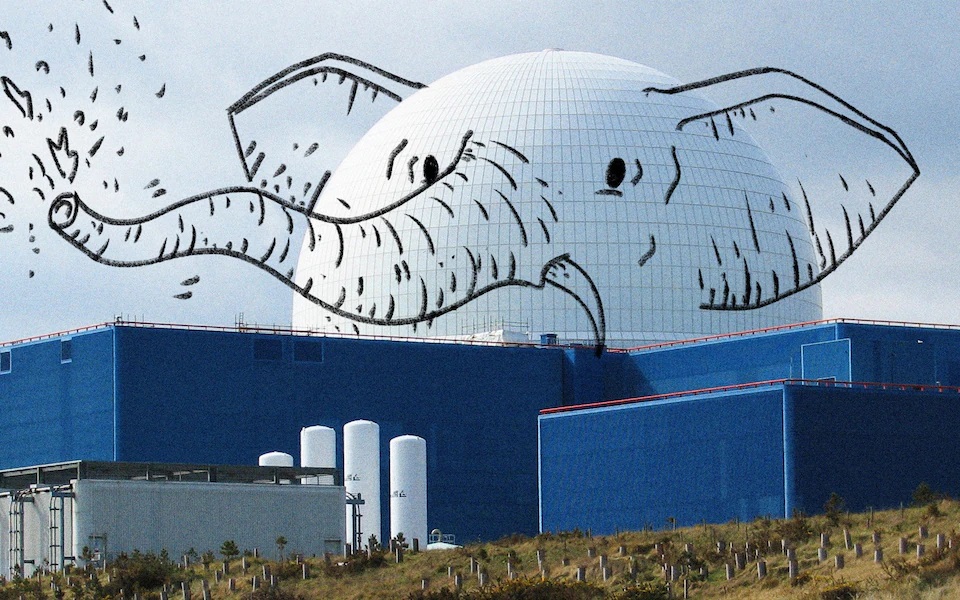
A major contract has been awarded to Halton Wales, part of Halton Group,
to supply specialist high-integrity HVAC dampers for the Sizewell C nuclear
power station project. The contract was said to represent a major strategic
and commercial milestone for Halton. Valued in the several tens of millions
of euros, it is one of the most significant project awards in the company’s
history. The contract builds on Halton’s successful contribution to the
Hinkley Point C project.
Insider Media 14th Aug 2026,
https://www.insidermedia.com/news/south-east/halton-selected-to-support-sizewell-c-nuclear-power-station-scheme-we-are-proud-to-contribute-to-a-project-of-national-importance
Sizewell – The bizarre public-private finance arrangement
The bizarre public-private finance arrangement for the construction of
Sizewell C is already paying off – for the lawyers. Linklaters was
advising the Government. Taxpayers provide 90% of the funding while private
investors including EDF and Centrica get control and eventually trouser
double digit returns. No wonder Linklaters is pleased. A government
contract initially worth £16m had by last July become £32m.
Private Eye 14th Aug 2026,
https://www.private-eye.co.uk/
Heatwave leaves Britain with record bill to import power from Europe

Drought and heatwaves are forcing Britain to pay hundreds of millions of
pounds more for power. Britain has paid record sums to buy electricity from
Europe this summer as low river levels force nuclear power stations to
power down across the Continent.
Experts predict the UK will have to pay
high prices again this week as the fifth heatwave of the year hits. The Met
Office has issued an amber warning for extreme heat, with temperatures
expected to peak at around 37C in some southern regions. New government
figures show the UK paid £439m to import power from Europe in May – the
highest monthly total ever recorded outside of the Ukraine energy crisis
and a 54pc increase on the £285m cost of imports in April. The record bill
was linked to the first heatwave of the year, from May 22 to 31.
Telegraph 11th Aug 2026
https://www.telegraph.co.uk/business/2026/08/11/drought-forces-britain-to-pay-more-for-power/
Nuclear and free market capitalism aren’t compatible.

That was the deliberately provocative headline I used in 2023. Three years later, the financing structures actually being assembled for new reactors have made the underlying point harder to dismiss.
A gigawatt-scale reactor commits billions for years before it earns operating revenue. Every delay extends the period in which financing costs accumulate inside one enormous asset.
Hinkley Point C has demonstrated what carrying that exposure looks like.
Britain’s response at Sizewell C wasn’t to find private investors
suddenly willing to accept the same construction risk more cheaply. It was to redesign the financial structure so government, regulated customers and public backstops carry substantially more of it.
Michael Bernard 10th Aug 2026
https://www.linkedin.com/feed/update/urn:li:activity:7492466736768765952/
Government ‘continues to ignore warnings’ as wildfire rages near Sizewell B.
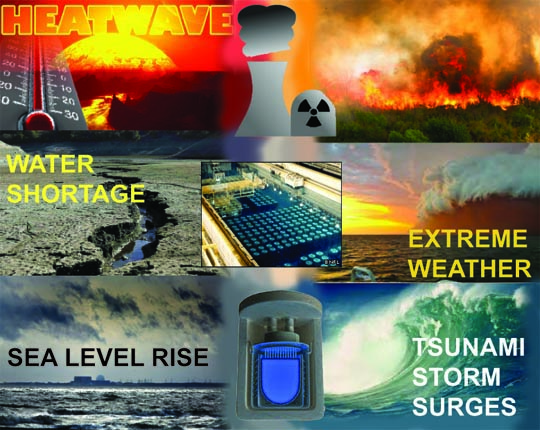
The group has urged the new
Labour administration to “re-evaluate Sizewell C’s climate resilience
against worst-case scenarios”.
“Proceeding with a project vulnerable to
extreme weather events betrays future generations,”
Blaze ‘highlights the vulnerabilities of nuclear infrastructure
to the impacts of climate change’, a campaign group has claimed.
A wildfire
near Sizewell B has stoked concerns around climate-related planning for
nuclear power stations. The heathland fire in Dunwich Heath, near the town
of Sizewell in Suffolk, broke out on 29 July and has continued to spread
across more than 100 hectares of land. Residents were evacuated, but there
were no reported injuries.
Local campaign group Together Against Sizewell C
(TASC) raised concerns that climate resilience is not sufficiently factored
into planning for nuclear power stations. “The fire’s close
proximity—just a few miles from Sizewell B and the Sizewell C development
—highlights the vulnerabilities of nuclear infrastructure to the impacts
of climate change,” the group’s spokesman Chris Wilson told Energy
Voice.
“In the case of emergencies, such as wildfires, affecting the
Sizewell nuclear cluster, the authorities need to ensure that the Emergency
Plan can cope with an influx of 8,500 workers on the Sizewell C
construction site, a thousand extra contractors at Sizewell B during
outages, as well as tourists and residents.”
The group has urged the new
Labour administration to “re-evaluate Sizewell C’s climate resilience
against worst-case scenarios”. “Proceeding with a project vulnerable to
extreme weather events betrays future generations,” Wilson said.
The group has warned of the “risk of severe coastal threats, including
sea-level rise, increased storm surges, and rapid erosion”, and “raised
sea and air temperatures” which, Wilson said, “can affect the plant’s
ability to operate safely”. “Our real key concern now is the project as
approved in the DCO is not resilient to climate change,” he added.
Sizewell C flood barriers. The campaign group took Sizewell C to court in
2025, after energy secretary Ed Miliband allegedly refused to amend
the development consent order to include raised flood barriers for the
project adjacent to the existing Suffolk facility. The case was quashed.
That project would be “located in a severely water-stressed area in the
UK’s driest region and is presently in drought”, the group warned.
They raised the alarm around a rip current that broke nearby banks in January.
“Located on one of Europe’s most vulnerable coastlines, the area
directly in front of the northern development boundary has already
sustained damage,” the spokesman for TASC said. “Consequently, beach
replenishment may be required before the Sizewell C build is complete.
“The project currently relies on an average of 18 tankers of potable
water a day, sourced from the Anglian region, for construction and is yet
to secure a guaranteed sustainable supply for the 2.2 million litres of
potable water per day it needs to operate.”
Energy Voice 5th Aug 2026, https://www.energyvoice.com/renewables-energy-transition/nuclear/601983/government-continues-to-ignore-warnings-as-wildfire-rages-near-sizewell-b/
Stop Hinkley campaigners highlight storage of nuclear waste in West Somerset
By John Thorne, Saturday 8th August 2026, https://www.wsfp.co.uk/news/stop-hinkley-campaigners-highlight-storage-of-nuclear-waste-in-west-somerset-935418
ANTI-nuclear campaigners staged a protest near the cluster of Hinkley Point power stations on the West Somerset coast on Thursday (August 6) to coincide with ‘Hiroshima Day’.
It was the 81st anniversary of the dropping of the world’s first nuclear bomb on the Japanese city in 1945. Members of the Stop Hinkley group gathered beneath the Hinkley Point sea wall to also highlight how nuclear waste would be stored on the site for centuries.
Stop Hinkley has been focussed on holding Hinkley C owner EDF to account for the protection of the public, wildlife, and the environment since the early 1980s.
The building of Hinkley C was initially blocked by Margaret Thatcher in 1984 because it was considered financially unviable.
It was eventually given the go-ahead under Theresa May’s Government in 2016.
One campaigner, Katy Attwater, from Timberscombe, said: “I have been campaigning against the building of Hinkley Point C nuclear power station since 2008 when I joined this amazing local protest group.
“We felt Thursday was an appropriate day to be reminded, given the danger of nuclear energy and its deadly by-product, highly-reactive spent fuel, which requires isolation for thousands to hundreds of thousands of years – nobody actually knows how long.
“We wished to draw attention to the danger arising from the radioactive waste that will be stored on site at Hinkley Point for at least 100 years.
“This was not envisaged at the outset, but, due to Sellafield no longer accepting high level nuclear waste and the continuing failure to find a site for a geological disposal facility (GDF), aka ‘nuclear dump’, there is nowhere for it to go.”
Ms Attwater said Hinkley C would have a scheduled refuelling outage every 12 to 24 months when about one-third of the nuclear reactor’s core 241 fuel assemblies were taken out and replaced with fresh fuel.
She said: “These assemblies, fuel rods, are so highly radioactive that they have to be stored under water for 10 years before they can be moved.
“There is currently no solution in the planning stage for where this hot and deadly substance can be taken.
“With predicted sea level rises and extreme weather events, this process will become increasingly dangerous on the low-level eroding coastline of Hinkley Point.
“We would encourage people to contact their local MPs to ask why this is being allowed to proceed, especially in the context of the obvious acceleration of climate change on our beloved planet earth.”
The Hinkley Point site houses three nuclear power stations, A, B, and C.
Hinkley A, opened in 1965 and was shut down after 35 years in 2000, and is currently being decommissioned by the Nuclear Decommissioning Authority subsidiary Magnox Ltd.
It will store intermediate level waste on site until a GDF becomes available.
The B station opened in 1976 and ceased generation in 2022 and has had its fuel removed and taken to Sellafield.
Decommissioning is expected to be approved in October this year.
Hinkley C is under construction and expected to start generating power in 2029.
Giant space radars in Pembrokeshire branded ‘instrument of evil’ as campaigners hail small victory in fight against Ministry of Defence plans

“If we put such an installation like that it makes Wales suddenly a supporter of the most provocative regime in the world at the moment. That makes enemies.”
those against it fear the US would have primary control of the dishes, helping a US-led escalation in space warfare and to turn Wales into a military target for its enemies.
The radars, which would be built by American defence company Northrop Grumman are earmarked for Cawdor Barracks, near St Davids, and are part of the AUKUS security partnership between the UK, US and Australia.
“And the argument for it bringing jobs is just ridiculous,” he added. “Because the local people won’t be involved in the operation. Jobs will be lost.”
“If we put such an installation like that it makes Wales suddenly a supporter of the most provocative regime in the world at the moment. That makes enemies.”
those against it fear the US would have primary control of the dishes, helping a US-led escalation in space warfare and to turn Wales into a military target for its enemies.
By Bronwen Weatherby, 6 Aug 2026, https://www.lbc.co.uk/article/radars-pembrokeshire-wales-campaign-5HjdfgP_2/?fbclid=IwY2xjawThW2BwZG9mAWV4dG4DYWVtAjExAHNydGMGYXBwX2lkEDIyMjAzOTE3ODgyMDA4OTIAAR4xadMM94NX9NwkoA9egZO764QyF026XrpxAGhLphH2dG6lSMLNQaypWZUNuQ_aem_AryMN-WJ0muRN-wPxngdOA
Campaigners have branded the proposed installation of twenty-seven giant space radars in Pembrokeshire “an instrument of evil”, claiming it would seriously impact the health, environment and safety of the local community.
A planning decision on the DARC – Deep Space Advanced Radar Capability – project was due to take place last week, but the Welsh Government called in the decision days before the vote – in a move that could trigger a row with Westminster over the UK’s national security.
Opponents of the radar have hailed it as a small victory in the battle against the Ministry of Defence’s (MOD) plans, as the newly elected Plaid Cymru government has been openly resistant to it.
However, the area’s Labour MP Henry Tufnell was scathing of Plaid ministers saying “their priorities are all in the wrong place”.
The radars, which would be built by American defence company Northrop Grumman are earmarked for Cawdor Barracks, near St Davids, and are part of the AUKUS security partnership between the UK, US and Australia.
Each 20-metre-high by 15-metre-wide radar dish is designed to find, track, and identify objects up to 22,000 miles out in space and once in place, the three sites – one in each nation – would connect to give a complete 360-degree, 24 hours a day view of space.
‘Desecration of the land’
Among those leading the campaign against it is Game of Thrones star Jerome Flynn who spoke to LBC, saying: “I see it as a desecration of the land.
“It’s not our airspace, it’s our beautiful coastal birds and their migratory space. And there is much evidence to show that they’re one of the biggest emitters of harmful EMFs [high-frequency ionizing radiation]
“So we need to think about human beings, including the ones that come and visit here and what it might do to the tourist industry.
“And the argument for it bringing jobs is just ridiculous,” he added. “Because the local people won’t be involved in the operation. Jobs will be lost.”
“I don’t think anybody feels like that installation is going to make us safer.
“If we put such an installation like that it makes Wales suddenly a supporter of the most provocative regime in the world at the moment. That makes enemies.”
Mr Flynn argued the radars were “antithetical” to what the St David’s peninsula represents, particularly as an important pilgrimage site.
The MOD states ‘the radio waves used by DARC are non-ionising radiation. They are not hazardous to health because they do not have enough energy to cause harmful ionisation.
‘Levels of non-ionising radiation in the area surrounding the DARC site would be less than or equal to that received from using a mobile phone, presenting no danger to members of the public in the area.’
It also argues the radar would protect satellites essential to GPS navigation, emergency communications, banking systems, weather forecasting and military operations from hostile military actions including missiles, hostile spacecrafts and blinding lasers as well as accidental hazards such as fast-moving space junk and orbital debris.
But those against it fear the US would have primary control of the dishes, helping a US-led escalation in space warfare and to turn Wales into a military target for its enemies.
Northrop Grumman’s director of space surveillance, Kevin Giammo, has previously stated that he sees DARC as a key asset in the US’s ‘Golden Dome’ initiative – a plan to create an air and missile defense shield over America.
Several of those LBC spoke with at a PARC Against DARC (Pembrokeshire Against the Radar Campaign) rally referenced Iran’s destruction of radar infrastructure in the Gulf in response to the US-Israel attacks and their fear Pembrokeshire would become a similar target.
Roy Jones, one of the group who successfully fought a similar proposal in the 1990s told LBC: “We often get accused of being NIMBY’s. Yes I feel passionate about my local landscape and my local community, but I wouldn’t want to see this thing put anywhere in Britain or anywhere in the world because it’s an instrument of evil.”
Such is the strength of feeling among some in the community that local Labour MP, Henry Tufnell, has come under personal attacks with protesters referring to him as ‘Toff-nell’, holding cut outs of his face at rallies while chanting “Where’s Toff-nell?”
In response to Plaid’s move to seize control of the planning decision, he told LBC: “How do we make sure there are good well-paid jobs, how do we make sure they go beyond the construction phase, how do we make sure we reap the benefits as a local community? Those are the right questions to be asking.
Outside his office in Haverfordwest, Mr Tufnell who has publicly advocated for the plans insisted he had been engaging with the MOD and Northrop Grumman to minimise the impact on the landscape and on health and ensure it benefits the local economy.
“Not shall we put into question our national security and hand ourselves to China and Russia on a plate and forget about our international partners. I think they’re priorities are all in the wrong place.”
Welsh Ministers are no longer able to comment on the application while the call-in process is active but a statement provided by some Plaid backbenchers said: “We do not support the construction of the DARC radar array and have been consistent in expressing our serious concerns about the impact of this project on Pembrokeshire’s landscape, tourism economy, and public health – none of which have been adequately assessed.
“The scale of opposition also makes it clear that many residents reject this proposal and the lack of transparency surrounding it.”
An MoD spokesman said: “The programme has worked with Pembrokeshire County Council to develop the planning application in accordance with applicable regulations in addition to Welsh national requirements. This will continue to be the case as the application is now considered by Welsh Ministers.”
Northrop Grumman and Montagu Evans, the planning agent for the project, were contacted for comment.
Time to build a Scotland without nuclear weapons

06 Aug 2026, https://greens.scot/news/time-to-build-a-scotland-without-nuclear-weapons
Nuclear weapons are a moral disgrace.Time to build a Scotland without nuclear weapons.
The UK Government’s commitment to weapons of mass destruction makes the case for an independent, nuclear-free Scotland, says Scottish Greens co-leader Gillian Mackay MSP.
Marking the 81st anniversary of the atomic bombing of Hiroshima, the Scottish Greens have called for the abolition of nuclear weapons and an end to the Labour Government’s “dangerous and immoral” nuclear policy.
Despite the atrocities of Hiroshima, and Nagasaki, the Labour government has described its commitment to the UK’s nuclear weapons system as “absolute”.
This past week, the UK government set out plans to spend £63.6bn over the next four years for the UK Government’s Defence Nuclear Enterprise, £47bn of which will go on nuclear submarines.
Scottish Greens co-leader Gillian Mackay MSP said:
“Today we remember all those who were killed, those who suffered unimaginable injuries and the generations whose lives were devastated by the atomic bomb.
“Hiroshima showed the world the horrifying reality of nuclear warfare – the destruction of a city and the mass killing of innocent civilians.
“The bombing of Hiroshima and Nagasaki were among the most inhumane atrocities ever committed. There can never be any justification for mass killings or the long and brutal legacy that they left behind.
“We are 81 years on and the new Prime Minister is doubling down on his dangerous and immoral policy, committing tens of billions of tax-payer’s money on submarines and nuclear warheads designed to inflict mass-destruction.
“Housing weapons on the Clyde, capable of annihilating millions of people, do not keep Scotland safe – they make our communities a nuclear target while they pay the price through cuts, poverty and crumbling public services.
“No government that genuinely believes in peace, human rights and international law should threaten the mass slaughter of civilians, putting our own communities at risk whilst lining the pockets of arms traders”
Gillian added:
“There is always money at Westminster for nuclear weapons, but never enough to eradicate child poverty, repair our public services or ensure that everyone has a warm and secure home.
“Westminster’s nuclear obsession does not have to be Scotland’s. We can keep our communities safe by removing Trident from the Clyde, and taking our place internationally as a country committed to peace and disarmament.
“Scotland deserves a future where our resources support our people and communities, not the profits of multi-national arms companies. An independent Scotland can sign the anti-nuclear treaty and be a country where the lessons of Hiroshima are reflected with a firm and steadfast commitment to peace and nuclear disarmament.”
1 This Month


Shut down the radiation-damaged Heysham nuclear reactors now
To see nuclear-related stories in greater depth and intensity – go to https://nuclearinformation.wordpress.com

Say No to NASA’s Reckless Nuclear Reactor on the Moon
Say No to NASA’s Reckless Nuclear Reactor on the Moon
-
Archives
- October 2026 (247)
- September 2026 (339)
- August 2026 (330)
- July 2026 (355)
- June 2026 (287)
- May 2026 (306)
- April 2026 (356)
- March 2026 (251)
- February 2026 (267)
- January 2026 (308)
- December 2025 (358)
- November 2025 (359)
-
Categories
- 1
- 1 NUCLEAR ISSUES
- business and costs
- climate change
- culture and arts
- ENERGY
- environment
- health
- history
- indigenous issues
- Legal
- marketing of nuclear
- media
- opposition to nuclear
- PERSONAL STORIES
- politics
- politics international
- Religion and ethics
- safety
- secrets,lies and civil liberties
- spinbuster
- technology
- Uranium
- wastes
- weapons and war
- Women
- 2 WORLD
- ACTION
- AFRICA
- Atrocities
- AUSTRALIA
- Christina's notes
- Christina's themes
- culture and arts
- Events
- Fuk 2022
- Fuk 2023
- Fukushima 2017
- Fukushima 2018
- fukushima 2019
- Fukushima 2020
- Fukushima 2021
- general
- global warming
- Humour (God we need it)
- Nuclear
- RARE EARTHS
- Reference
- resources – print
- Resources -audiovicual
- Weekly Newsletter
- World
- World Nuclear
- YouTube
-
RSS
Entries RSS
Comments RSS

