Russia moves nuclear-capable missiles to Kaliningrad , but says this is not significant
 Russia downplays moving nuclear-capable missiles to Kaliningrad Deployment of Iskander missiles to Baltic outpost alarms neighbours but Russia says move is part of regular drill, Guardian, Patrick Wintour, 9 Oct 16 Russia has played down the significance of the deployment of nuclear-capable Iskander missiles to the Russian outpost of Kaliningrad after the move led to protests from Estonia, Poland and Lithuania, underlining tensions about Russian intentions.
The deployment of the missiles was part of regular drills and was not a secret, the Russian defence ministry insisted.
“First of all, the authors behind the fuss should know that the Iskander missile system is a mobile one,” said a ministry spokesman, Gen Igor Konashenkov.
“As part of the combat training plan, units of the missile forces throughout the year improve their marching capabilities by covering great distances across the territory of the Russian Federation in various ways: by air, sea and on their own.”
Konashenkov said that Kaliningrad “is no exemption here” and that the system would be relocated to the exclave in the future “as part of the military training of the Russian armed forces.”
The Iskander-M, first introduced to the Russian military in 2013, is designed to target missile systems, rocket launchers, long-range artillery and command posts as well as aircraft and helicopters. It has a range of 500km (310 miles) and is capable of carrying nuclear warheads, and its deployment led to deep concern in Estonia.
Poland also voiced its concerns over the relocation of the weapons………https://www.theguardian.com/world/2016/oct/09/russia-downplays-moving-nuclear-capable-missiles-to-kaliningrad
How three brave Chernobyl workers saved Europe from nuclear catastrophe
 Despite Three Mile Island, Daiichi Power Plant in Japan and Chernobyl, the industry still poo-poos the danger. At Chernobyl, after the initial explosion, the 185 tons of melting nuclear waste was still melting down. When it reached the water a thermonuclear explosion would have occurred. It was estimated it would have wiped out half of Europe and made Europe, Ukraine and parts of Russia uninhabitable for 500,000 years. This was prevented when three workers volunteered to dive in the radioactive water and open the valves to drain the pool and prevent a second explosion, knowing it would mean death by radioactive poisoning. They succeeded in draining the pool, but died of radiation sickness within a few weeks. Their bodies remained radioactive and were buried in lead coffins.
Russia’s ceremony to mark start of construction of floating nuclear power station
A ceremony was held on 4 October in Pevek, Russia, to mark the start of construction of the coastal infrastructure for the first-of-a-kind floating nuclear power plant. The floating power and heat plant is set to be commissioned there in 2019.

During the ceremony, the first sheet pile driving into the foundation of the on-shore infrastructure was carried out. A memorial plaque and a time capsule were then installed to mark the start of construction of the infrastructure…….
Zavyalov said, “We expect that the works on elaborating the technical conditions for the floating plant’s power delivery we carry out jointly with the Department of Energy, Chukotenergo, and RAO EES Vostok will be completed by October-November 2016.” He added, “In December, we plan to be ready to submit operational documents and to order the electric technical equipment to be installed on our site.”……
The Akademik Lomonosov is undergoing trials at the Baltic Shipyard. These trials are expected to be completed by late October 2017 and it should be ready to be transported to Pevek later that year. Rosenergoatom plans to start installation of the plant in September 2019, followed by trials and operational launch. http://world-nuclear-news.org/WR-Work-starts-on-on-shore-infrastructure-for-Russian-floating-plant-0710165.html
Kazakhstan’s unfinished, unfixed, problem of radioactivity at Semipalatinsk
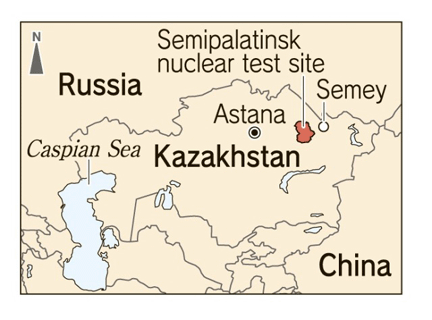 The continuing danger of Semipalatinsk http://thebulletin.org/continuing-danger-semipalatinsk9969 6 OCTOBER 2016 Magdalena Stawkowski During the Cold War, the Semipalatinsk Nuclear Test Site in Kazakhstan was the Soviet Union’s primary nuclear weapons testing ground. Between 1949 and 1989, more than 450 nuclear bombs were exploded above and below ground on its once secret, 7,000-square-mile territory. In the post-Soviet period,Kazakhstan has attracted much international praise for its “extraordinary leadership” and “courage” in closing Semipalatinsk, for giving up its nuclear weapons stockpile, and for helping to create a nuclear weapon free zone in Central Asia. Kazakhstan has also been celebrated for having an extraordinary record in advancing nuclear security and thus was judged to be perfectly suited to host an international fuel bank for low-enriched uranium. The Obama administration has described Kazakhstan’s president, Nursultan Nazarbayev, as “really one of the model leaders in the world” on non-proliferation and nuclear safety issues.
These commendations are perhaps overly enthusiastic. They exaggerate Kazakhstan’s commitment to nuclear safety; actually, Kazakhstan’s leadership has done little to address pressing humanitarian issues at Semipalatinsk, failing to provide adequate funding for environmental clean up and adequate security for the site itself. How can the world talk about nuclear safety in Kazakhstan when it is the only place on Earth where thousands of people still live in and around an atomic test site? How can there be safety, when residual radioactivity and environmental damage are a normal part of life for people who live there? Nuclear security should mean more than the physical protection of nuclear materials. Nuclear security must also mean the physical protection of individual citizens from radioactivity.
Today, most of the abandoned Semipalatinsk territory is accessible to anyone who wishes to enter. Except for a 37-mile area “exclusion zone” at the Degelen Mountain complex, guarded by drones and other surveillance equipment, few signs indicate radiation danger. For the thousands living nearby, it is no secret that the former nuclear testing area is poorly secured. I have been conducting anthropological fieldwork in the region since 2009, living in Koyan, a remote village on the nuclear test site’s border. I know first hand the ease with which people make use of the territory. (“Koyan” and “Tursynbek,” the name of an ethnographic interlocutor mentioned later in this article, are pseudonyms, used to protect village residents and the interlocutor following the convention of confidentiality spelled out in the American Anthropological Association Code of Ethics on professional responsibility).
Koyaners, like most everyone else living in and around Semipalatinsk, use the test site in a number of ways: They drive across the dusty steppe during warmer months to visit relatives in nearby villages. In July and August, men, women, and children come back from the site, buckets brimming with wild strawberries they have picked from its shallow valleys. Many graze their herds of sheep, goats, horses, and cows on the Semipalatinsk pastures, sometimes near craters formed by underground explosions. Many of these places are known to contain radioactive “hot spots,” but since the area around Koyan is mostly unmarked, no one in the village is certain where the hot spots are. Koyaners are not privy to this information, because no one in the government shares it with them.
On a hot, sunny day in July 2015, Tursynbek, a burly stockbreeder and miner in his mid-50s, decided we should go out and measure radiation on our own. As we got in the car, he complained that when he has had a chance to ask scientists, who occasionally do research in the area, if there is radiation, they dismiss his concerns by saying, “There is nothing here; no radiation.” I made sure to bring my Geiger counter on this trip, and a short car ride later I was looking down from the rim of a nuclear crater, trying to hear the Geiger counter readings Tursynbek was shouting. His camouflage jacket was barely visible on the steep pitch, among the tall grasses; a rather sizeable water hole was beyond, inside the crater. He scanned the ground for radioactivity, his white paper sanitary mask pulled down under his chin, rather than over his mouth. The sanitary mask was meant to protect against small particles of plutonium or other radioisotopes that are dangerous when inhaled but can be stopped by a sheet of paper. But Tursynbek was not afraid. Tursybek knows this area well; he was born in Koyan and has decades of experience raising livestock, sheep, goats, cows, and horses, which includes grazing them on the test site.
Still, he had never been here on this kind of mission. As he climbed out, he eagerly used the Geiger counter to check the wreckage of the atomic landscape: trenches, mangled barbed wire enclosures, scattered cement blocks with clusters of electrical cables jutting from them. The frantic clicking of the Geiger counter disturbed the otherwise calm summer afternoon. Not far from us, Kazakhstan’s Institute of Radiation Safety and Ecology (IRSE) wazik (van) carrying “geologists,” as the scientists are known to Koyaners, passed by. “They have never shared any of this information with us,” Tursynbek said motioning to the van and pointing at the .700 milliRem per hour reading displayed by the counter.
Normal background is between .008-.015 milliRem/hr. According to the US Nuclear Regulatory Commission (NRC), Americans receive an average radiation dose of about 620 milliRem per year. Half of this dose comes from naturally occurring radiation found in soil, rocks (uranium), and air (radon). The other half comes from man-made sources, like radiation therapy, x-rays, and nuclear power plants. At the crater, five weeks is enough time to receive the average yearly dose of radiation described by the NRC. In one year that dose is equal to 6,136 milliRem.
Looking around the abandoned test site, it is almost never obvious what went on here, except at a few key experimental locations, which have decaying cement structures and other visible points of interest. The once high levels of security have long since disappeared. Yet for 40 years various technical sites at Semipalatinsk were used to experiment with different types of nuclear explosions. At “Ground Zero” for example, 116 aboveground tests were conducted, as part of a full-scale experiment designed to record damage done to animals (sheep, goats, cows, and pigs), plants and soil, building construction, military equipment, and people living in settlements found near the site. At other technical areas, more than 300 underground nuclear explosions were used to test their peaceful applications. Several of these high-yield tests produced nuclear craters and contaminated much of the area nearby.
Near the nuclear crater Tursynbek and I visited, only a small and badly faded radiation warning sign clung to a mangled barbed wire enclosure that once provided some level of protection. The plight of people who suffered from radiation exposure during the Soviet-era is well known in the country and abroad, even if the level of radioactive pollution and its impact on human health are hotly disputed, in local and international peer-reviewed scientific journals.
In an August 2015 editorial for the Bulletin of Atomic Scientists, Kazakhstan’s ambassador to the United States, Kairat Umarov, highlighted the fate of 1.5 million Kazakh citizens whose lives continue to be affected by nuclear testing. He wrote with the optimism of a man hoping to promote a nuclear-weapons-free world. But Umarov ignored an obvious fact: The Nazarbayev government, lacking financial resources, has done very little to address the security problems at Semipalatinsk and has not spent a penny to clean up the area. Praise of the nation’s leadership for making Kazakhstan a non-nuclear state has come at a price: It has overshadowed and limited conversations about lack of oversight of Semipalatinsk and the toxic mess that the Soviet nuclear testing program left behind and continues to endanger thousands of citizens living in the area. Given this unresolved and underreported situation at Semipalatinsk, the international community should offer financial help and expertise for the cleanup of Semipalatinsk, or at the very least help with cordoning off the most contaminated areas of the site.
The inherently immoral nuclear industry and its radioactive trash problem
There’s been the usual evasion and wilful dishonesty on the part of both EdF and the Government as to exactly how the costs of managing that waste over the projected 30-year lifetime of Hinkley Point will be paid for. In the first instance, how best should EdFbe required to accrue for a sufficient share of revenue to cover those costs arising during the reactor’s lifetime – and then for decades/centuries beyond that once HinkleyPoint has stopped generating?
This is such a huge issue – financially and morally. The sums of money involved in treating, storing and finally disposing of nuclear waste are eye-watering, and if they were properly factored into the day-to-day operating costs of all nuclear power stations, it would make the whole ludicrous edifice finally topple over.
this is not just a managerially incompetent, technologically redundant, financially bankrupt and wilfully dishonest industry – it is inherently immoral.
The Hinkley Horror Story: Don’t Mention the Waste! http://www.jonathonporritt.com/blog/hinkley-horror-story-dont-mention-waste I haven’t been able to bring myself to write anything about Hinkley Point since the UK Government gave the go-ahead on 15th September. I suppose I’ve lived for so long with the inevitability of this insane project being approved, at some point, notwithstanding the endless delays, that I wasn’t particularly surprised when it happened. Just a weird mixture of resigned, weary and enraged.
Deep down, I still don’t believe that Hinkley Point will ever be completed. I’ve no doubt work will start in one or two years’ time (just as soon as a mountain of continuing problems at EdF’s project at Flamanville have either been resolved or permanently buried), but it won’t be long before the inherent ‘unconstructability’ of this particular reactor design (the EPR) sees exactly the same inevitable delays and cost overruns kick in – and keep on kicking in from that point on.
And somewhere along the way, there’s an equally strong likelihood of EdF/Areva going bust – or having its role comprehensively redefined by the French Government so that it focusses solely on managing upgrades in the French reactor fleet and dealing with all the legacy issues.
And those legacy issues are vast. As they are for all nuclear operators all around the world. Which is the main reason, I suspect, why hardly anyone has been talking about what’s been agreed in terms of dealing with all the new nuclear waste that would be generated by Hinkley Point.
There’s been the usual evasion and wilful dishonesty on the part of both EdF and the Government as to exactly how the costs of managing that waste over the projected 30-year lifetime of Hinkley Point will be paid for. In the first instance, how best should EdFbe required to accrue for a sufficient share of revenue to cover those costs arising during the reactor’s lifetime – and then for decades/centuries beyond that once HinkleyPoint has stopped generating?
This is such a huge issue – financially and morally. The sums of money involved in treating, storing and finally disposing of nuclear waste are eye-watering, and if they were properly factored into the day-to-day operating costs of all nuclear power stations, it would make the whole ludicrous edifice finally topple over.
Nobody’s thought more about these legacy issues, going back to the origins of the nuclear industry here in the UK in the 1950s, than Andy Blowers. His new book, ‘The Legacy of Nuclear Power’, has just been published, and even for those who have been tracking this particularly wretched aspect of an almost entirely wretched industry, it’s a pretty mind-boggling story that emerges.
Here are the words that I contributed by way of an endorsement for ‘The Legacy of Nuclear Power’:
“The nuclear industry invites us, all the time, to look forward – never to look back. Andy Blowers’ compelling study shows why: its legacy, all around the world, is a shocking one, with no long-term solutions to the problem of nuclear waste in sight, and countless communities blighted, in one way or another, by the nuclear incubus in their midst.”
Unbelievably, the UK’s dismal record in managing its nuclear waste (for both military and civilian facilities) is no worse than that of the USA (with the Hanford site in Washington State posing equally horrendous, ongoing legacy issues as Sellafield here in the UK) or of France, with its reprocessing waste management facilities at La Hague. Only Germany can demonstrate a rather better record – though that has little to do either with the industry or with the German Government, and everything to do with an implacably hostile anti-nuclear movement which has fought for decades to ensure that Germany’s nuclear waste should not be dumped at the designatedGorleben site and then forgotten about.
Andy has written an excellent summary article about these four sites.
(And for the story about what’s going on at Sellafield – in terms of the UK’s nuclear fuel reprocessing debacle – check out this article from Ian Fairlie, commenting on BBC Panorama’s recent exposé.)
What I most admire about Andy’s analysis is that it not only covers the all-but-unbelievable financial consequences of our nuclear legacy, but forces people to confront the moral implications of an industry that defers costs not just into the future but across generations.
One of the reasons why I’m still passionate about the concept of sustainable development (rather than the environment per se) is its unwavering advocacy ofintergenerational justice: being explicit about what any one generation owes to all those generations that succeed it. The nuclear industry today only survives by ruthlessly ignoring those intergenerational obligations: the economics of nuclear power only ‘work’ because it dumps the intractable problems of managing its waste onto future generations.
In other words, this is not just a managerially incompetent, technologically redundant, financially bankrupt and wilfully dishonest industry – it is inherently immoral.
And yet, even now, there are a few misguided environmentalists who tell us that our low-carbon future depends on investing yet more countless billions of dollars in this failed horror story of an industry.
Russia has suspended its nuclear and energy research agreement with the United States
Russia suspends its nuclear agreement with the United States http://www.smh.com.au/world/russia-suspends-its-nuclear-agreement-with-the-united-states-20161005-grvw7t.html Lidia Kelly
Moscow: Russia has suspended its nuclear and energy research agreement with the United States as a countermeasure against Washington for imposing sanctions on Russia over Ukraine.
The Russian government also said on Wednesday it was terminating an agreement between its nuclear corporation Rosatom and the US Department of Energy on feasibility studies into conversion of Russian research reactors to low enriched uranium.
On Monday, President Vladimir Putin suspended a treaty with Washington on cleaning up weapons-grade plutonium, signalling he was willing to use nuclear disarmament as a new bargaining chip in disputes with the United States over Ukraine and Syria.
“The regular renewal of sanctions against Russia, which include the suspension of Russian-American cooperation in the field of nuclear energy demands the adoption of countermeasures against the US side,” the Russian government said on its website.
The agreement on co-operation in nuclear- and energy-related scientific research, signed in 2013, provided the legal framework necessary to expand work between US and Russian nuclear research laboratories and institutes in nuclear technology and nonproliferation, among others.
The uranium agreement, signed in 2010, provided for feasibility studies into the conversion of six Russian research reactors from dangerous highly enriched uranium to more secure low enriched uranium.
The West imposed economic sanctions on Russia over its annexation of Ukraine’s Crimea peninsula in 2014, followed by a pro-Russian insurrection in the east of the country. The breakdown of a ceasefire in Syria, where Russia backs government forces and the West supports rebel groups, has added to tensions.
With a list of grievances, Putin suspends nuclear pact with USA
Putin suspends nuclear pact, raising stakes in row with Washington http://www.cnbc.com/2016/10/04/putin-suspends-nuclear-pact-raising-stakes-in-row-with-washington.html Reuters Russian President Vladimir Putin on Monday suspended a treaty with Washington on cleaning up weapons-grade plutonium, signalling he is willing to use nuclear disarmament as a new bargaining chip in disputes with the United States over Ukraine and Syria.
But on Monday, Putin issued a decree suspending an agreement, concluded in 2000, which bound the two sides to dispose of surplus plutonium originally intended for use in nuclear weapons.
The Kremlin said it was taking that action in response to unfriendly acts by Washington. It made the announcement shortly before Washington said it was suspending talks with Russia on trying to end the violence in Syria.
The plutonium accord is not the cornerstone of post-Cold War U.S.-Russia disarmament, and the practical implications from the suspension will be limited. But the suspension, and the linkage to disagreements on other issues, carries powerful symbolism.
“Putin’s decree could signal that other nuclear disarmament cooperation deals between the United States and Russia are at risk of being undermined,” Stratfor, a U.S.-based consultancy, said in a commentary.
“The decision is likely an attempt to convey to Washington the price of cutting off dialogue on Syria and other issues.”
U.S. State Department spokesman John Kirby said in a statement on Monday that bilateral contacts with Moscow over Syria were being suspended. Kirby said Russia had failed to live up to its commitments under a ceasefire agreement.
Western diplomats say an end to the Syria talks leaves Moscow free to pursue its military operation in support of Syrian President Bashar al Assad, but without a way to disentangle itself from a conflict which shows no sign of ending.
Russia and the United States are also at loggerheads over Ukraine. Washington, along with Europe, imposed sanctions on Russia after it annexed Ukraine’s Crimea region in 2014 and backed pro-Moscow rebels in eastern Ukraine.
List of grievances
Putin submitted a draft law to parliament setting out under what conditions work under the plutonium accord could be resumed. Those conditions were a laundry list of Russian grievances towards the United States.
They included Washington lifting the sanctions imposed on Russia over Ukraine, paying compensation to Moscow for the sanctions, and reducing the U.S. military presence in NATO member state in eastern Europe to the levels they were 16 years ago.
Any of those steps would involve a complete U-turn in long-standing U.S. policy.
“The Obama administration has done everything in its power to destroy the atmosphere of trust which could have encouraged cooperation,” the Russian foreign ministry said in a statement on the treaty’s suspension.
“The step Russia has been forced to take is not intended to worsen relations with the United States. We want Washington to understand that you cannot, with one hand, introduce sanctions against us where it can be done fairly painlessly for the Americans, and with the other hand continue selective cooperation in areas where it suits them.”
The 2010 agreement, signed by Russian Foreign Minister Sergei Lavrov and then-U.S. Secretary of State Hillary Clinton, called on each side to dispose of 34 tonnes of plutonium by burning it in nuclear reactors.
Clinton said at the time that there was enough of the material to make almost 17,000 nuclear weapons. Both sides back then viewed the deal as a sign of increased cooperation between the two former Cold War adversaries.
Russian officials alleged on Monday that Washington had failed to honor its side of the agreement. The Kremlin decree stated that, despite the suspension, Russia’s surplus weapons-grade plutonium would not be put to military use.
Irish Security Services leak truths to the UK Press. And nuclear-news and others are banned in Ireland #UNCHR
 Censored! This article is generally off topic for this blog but this article and nuclear-news.net post have been blocked from Google Search in Europe (and possibly further afield). Ireland based blogs and nuclear-news.net based in Australia are affected as far as I can ascertain. Also, Shannonwatch.org (An Irish peace group) have tried to get out a press release stating problems they are having in the Limerick area and this too has been banned! Could you share directly to any Irish people you know these banned articles.

Sellafield are having a meeting with Irish Stakeholders who have doubts as to the safety and transparency of the UK nuclear industry. This meeting is in the next week or so and it is vital that people are aware of alleged criminality to Parliament by Sellafield representatives. Many thanks for your support –
Evidence for the blocking and hacking over a few days can be found here;
https://www.facebook.com/profile.php?id=685379936
Shaun McGee aka Arclight
Sellafield – Contempt of Parliament – BBC News missed it.
Irish Security Services leak truths to the UK Press.
A recent article by The Sunday Times UK edition stated that the Irish Security Services (Likely the Irish Defense Force) have claimed that Gardai (Police ) in Athlone had been facilitating the distribution of heroin to local towns.

Picture Source http://www.justice.ie/en/JELR/Pages/wpoc-young-people
Due to Irish Laws the name of the whistle-blower has not been reported in Ireland but was on the Sunday Times UK edition on Sunday the 2nd of October 2016.
Why are the Irish “Security Services” leaking this fact to the UK Press? So, as to allow Irish readers the option of reading this article we will not name the brave whistle-blower who leaked the criminality in 2014 but it can be found on the Sunday Times article link ..
This is what the “Security Services were quoted as saying in the article;
“…Security sources say collusion between gardai and heroin dealers in the midlands town has been a significant factor in the area’s worsening drugs problem. The region has a growing population of heroin users and the town is now considered to be a pivotal point in the distribution of opiates to addicts in Longford, Westmeath, Offaly and Laois…..”
Earlier in the article the Times quotes also the “Security Sources” thus;
“…..According to security sources, the internal inquiry concluded that one Garda was in a relationship with a female heroin dealer in the town, which resulted in him compromising planned searches and raids. One witness told investigators he was present when this Garda alerted local criminals to a planned Gardai search the following day, ensuring they had time to dispose of incriminating evidence, including mobile phones. The witness refused to make a statement under caution or agree to testify, however…..”
It might be noted that a government report said that in 2014 the Irish Defense Force did not apply for any orders for surveillance on criminals. We here at Euroupeannewsweekly have been asking the question;
Who is doing surveillance now in Ireland? In 2014 a Gardai and Security Services operation against a dissident IRA group ended with a successful arrest of the whole group at a remote farmhouse, to name but one crime that was widely reported and would have required constant surveillance tactics.
Is there a connection between the ending of the use of the Security Services (or end any of transparency in Government reports) and the evidence that they were holding for the investigation?
We can not claim these last points to be fact, they are only questions posed because of the Irish Security Services leak to the UK. We can present the basic facts to you and let you make up your own minds though.
So what is at stake here? We know for a fact that the Irish Security Services are not happy and have released this information to the nearly 10 million Irish Diaspora in the UK but no publication has reported any of this in Ireland. Yet it is important for the real victims of this criminality that these facts become known and that some in the Government are not happy with this current situation. The security services were tapping all the phones and know all the connections of these criminal gangs and their enablers.
Here is a statement from a local ex Heroin user from Longford on the desperate situation that exists in this region and what funding opportunities for the proven victims of this criminality;
So far, in 2016, solar energy is outstripping coal power in UK
A spokeswoman for the Solar Trade Association (STA) said: “This is a valuable milestone on the road to renewables overtaking fossil fuels. It is a testament to just how effective the British solar industry has been at installing clean and reliable power and at bringing down costs.”
Solar outstrips coal in past six months of UK electricity generation
More power came from solar panels than from Britain’s ageing coal stations from April to September this year, report shows, Guardian, Adam Vaughan, 4 Oct 16, Electricity generated by solar panels on fields and homes outstripped Britain’s ageing coal power stations over the past six months in a historic first.
Climate change analysts Carbon Brief found more electricity came from the sun than coal from April to the end of September, in a report that highlighted the two technologies’ changing fortunes.
Solar had already eclipsed coal for a day in April and then for the whole month of May, with coal providing zero power for the first time in more than 100 years forseveral days in May. The latest milestone saw an estimated 6,964 gigawatt hours (GWh) generated by solar over the half-year, or 5.4% of the UK’s electricity demand. Coal produced 6,342GWh, or 4.7%.
The trend will not continue into winter because of solar’s seasonal nature, but the symbolic records reveal the dramatic impacts solar subsidies and environmental penalties for coal have wrought.
Increases in the carbon floor price last year have driven three major coal power plants – Longannet, Ferrybridge C and Rugeley – to close earlier this year. That came on top of a similar amount of coal power being closed between 2012 and 2014 because upgrading the stations to meet higher air pollution standards was deemed uneconomic……….
Solar has grown rapidly in the last six years, though figures published last week by the Office for National Statistics showed installations had crashed after the government came to power and cut the industry’s subsidies.
A spokeswoman for the Solar Trade Association (STA) said: “This is a valuable milestone on the road to renewables overtaking fossil fuels. It is a testament to just how effective the British solar industry has been at installing clean and reliable power and at bringing down costs.”
The government said last week that solar power could produce electricity more cheaply than the price agreed for a new nuclear power station at Hinkley Point, but officials suggested solar would have additional costs for the National Grid.
But a new report for the STA, published on Tuesday, concluded that integrating many more solar panels into the grid would not add excessive costs to accommodate the fact the sun doesn’t always shine and backup power is required to cover solar.
“With intermittency costs today of around £1.3/MWh for solar [with around 10-12GW of solar installed], increasing to £6.8/MWh with a substantial 40GW of solar on the system by 2030, we would suggest these costs do not provide a strong argument against the further build out of renewable generation,” said the report, by the consultancy Aurora. https://www.theguardian.com/environment/2016/oct/04/solar-outstrips-coal-in-past-six-months-of-uk-electricity-generation
Britain sited 2 nuclear power plants on eroding shingle beach
Miss Sian Farrell | October 2, 2016 I have been following the various stories related to nuclear power and its problems ever since the Chernobyl event in 1986. I thought I knew about pretty much all of them. But then I found out that Britain has the largest shingle beach in Europe. It’s over 8 square miles in size and because of the fast moving tides and river currents, around 90,000 cubic meters of shingle are washed from its western shore to its eastern shore each year. Its lighthouse is regularly moved because of this problem.
This is the same shingle beach (western side) on which our government chose to site, not one, but TWO nuclear power plants. Contractors move 30,000 tons of shingle (less than a third of what is lost), back in front of Dungeness each year because of this erosion.
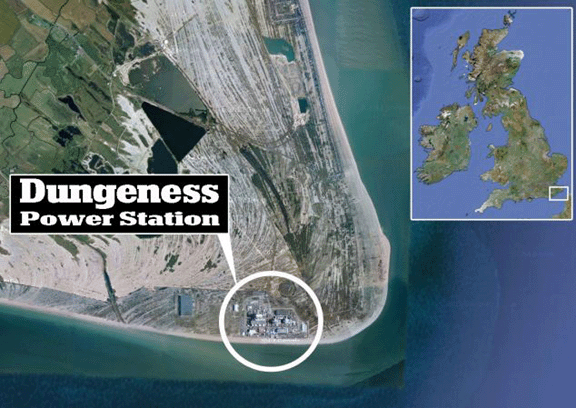
This Is for me, a shocking and disturbing revelation!
Nuclear power station has been leaking radioactive waste ‘for months’, says Environment Agency “……The Evironment Agency confirmed that levels of tritium were normal elsewhere in Dungeness B’s surroundings and added that the power station is allowed to discharge tritium in the environment under permit……. http://www.dailymail.co.uk/news/article-2311217/Nuclear-power-station-leaking-radioactive-waste-months-says-Environment-Agency.html#ixzz4M0Kjsu6A
European Union to ratify Paris climate agreement

 EU ministers are expected to ratify the agreement, along with India and Cananda, next week meaning enough countries will have signed up for the deal to come into legal force, Guardian, Arthur Neslen, 1 Oct 16, EU ministers have agreed to ratify the landmark Paris climate agreement at an extraordinary summit in Brussels on Friday, all but guaranteeing that it will pass a legal threshold to take effect next week and sparing the bloc’s blushes in the process.
The European Parliament is expected to rubber stamp the decision in Strasbourg next Tuesday, allowing the EU to sign off on it as soon as the following day.
The EU’s president, Jean-Claude Juncker said: “Today, the EU’s member states decided to make history together and bring closer the entry into force of the first ever universally binding climate change agreement. We must and we can hand over to future generations a world that is more stable, a healthier planet, fairer societies and more prosperous economies.
“This is not a dream. This is a reality and it is within our reach. Today we are closer to it.”
The Paris pact to limit global warming to “well below 2C” will enter into force 30 days after 55 countries, accounting for 55% of the planet’s emissions hand their ratification papers to the offices of Ban Ki-Moon in New York.
India is expected to ratify the deal over the weekend, with Canada next week also likely to join the 61 countries that have so far signed up. The EU’s added weight should then tip the treaty into effect……..
One spectre haunting the summit though was the prospect of a victory for the climate-sceptic Republican candidate, Donald Trump, in US elections later this year.
EU sources say that the bloc would aim to stick to its climate commitments if that happened. One told the Guardian: “It can’t be indefinite but our initial reaction would be to try to lead others in anticipation that this was a temporary aberration in US politics and that common sense would prevail, whether in four years time or sooner.”
Europe’s own intentions have been clouded for some by resistance from coal-dependant Poland to any review of the EU’s existing climate pledge in 2018. In the Paris deal, this is seen as an opportunity to scale up ambitions towards a 1.5C target.
The EU has not proposed any new climate actions in line with a 1.5C goal, but new legislation on renewables and energy efficiency is expected later this year, to help meet Europe’s existing climate pledges……..
everal EU countries have formaly signed off on the Paris deal to date, including France, Germany, Hungary, Slovakia, Portugal and Austria.
Theresa May has promised to ratify the agreement by the end of this year. https://www.theguardian.com/environment/2016/sep/30/eu-gives-green-light-to-activate-paris-climate-deal
In northern France thousands protest against nuclear power
 Thousands protest against nuclear power in northern France http://en.rfi.fr/environment/20161001-thousands-protest-against-nuclear-power-northern-france Several thousand people demonstrated against the construction of nuclear reactors near the northern French town of Flamanville on Saturday. British opponents of the planned reactor at Hinkley Point joined European opponents of nuclear power.
The protesters gathered at Siouville-Hague, between a nuclear waste treatement centre at La Hague and the site of a third nuclear reactor at Flamanville, which is currently under construction.
The first protest against the plan took place 10 years ago at Cherbourg on the Channel coast.
French power company EDF, which is also building the Hinkley Point reactor, says it should be ready to operate in the third quarter of 2018, six years late.
Its cost has trebled to 10.5 billion euros after a number of problems.
French Green MP and possible presidential candidate Cécile Duflot joined the demonstration, as did a number of British anti-nuclear activists.
Opponents claim that nuclear power is dangerous and expensive. The sector employs about 10,000 people in Normandy.
Tribulations of the nuclear industry, as serious safety flaws found in EDF’s nuclear reactors
As for For Hinkley Point C, it now appears inevitable that the Flamanville reactor will not be completed by its target date of the end of 2020, indeed it may very well never be completed at all. Under the terms of agreement for the plant’s construction accepted by the European Commission, this would render the UK government unable to extend promised credit guarantees to HPC’s financial backers.

for EDF, Areva, their shareholders and the entire French nuclear industry, the end really could be nigh.
 France’s Nuclear Power Stations ‘At Risk of Catastrophic
Failure’ http://www.globalresearch.ca/frances-nuclear-power-stations-at-risk-of- catastrophic-failure/5548593 Sizewell B and 27 Other EDF Nuclear Plants By Oliver Tickell Global Research, October 01, 2016 The Ecologist 29 September 2016 A new review of the safety of France’s nuclear power stations has found that at least 18 of EDF’s units are are ”operating at risk of major accident due to carbon anomalies.”
Britain’s competition to promote Small Modular Nuclear Reactors- Roll Royce keenly participating
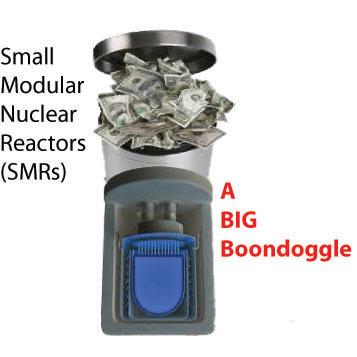 Rolls-Royce ramps up efforts to build mini-nuclear power plants, CITY.A.M. Jessica Morris , 2 Oct 16 Rolls-Royce has ramped up its efforts to build a fleet of small nuclear power stations as the next stage of a government competition draws closer. City A.M. understands that 30 employees from its Trident submarine work are now checking work on Rolls’ blueprint for the Small Modular Reactors (SMRS).
The Sunday Times first reported the news.……
The government launched a competition to identify the best value SMR design for the UK last year.
Ministers believe SMRs could increase and UK’s energy security and eventually become a leading export. However, the technology faces hurdles such as safety and security, financing as well as design approval.
There are 33 companies currently competing and a winner could be announced in the coming months.
The department for Business, Energy and Industrial Strategy has said it will publish a roadmap “for one or more possible pathways for SMRs” in the Autumn. http://www.cityam.com/250521/rolls-royce-ramps-up-efforts-build-mini-nuclear-power
Russia spreading its influence, seeking lithium deal with Chile
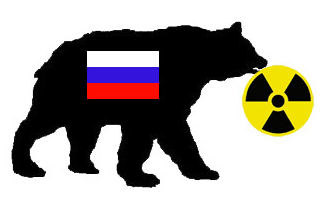 Russian nuclear firm Rosatom eyes Chilean lithium | SANTIAGO 2 Oct 16 Russian state nuclear power plant giant Rosatom sent lobbyists to meet with the Chilean government and discuss “collaboration in possible lithium projects,” a government website revealed at the weekend.
Four representatives of the company met with Mining Deputy Minister Igancio Moreno in September, according to information published on the government’s lobbying transparent website.
Rosatom has signed billions of dollars worth of overseas contracts and is seen as a tool for Russia to wield political influence abroad.
This year, it signed a contract to build a nuclear research center in Chile’s neighbor Bolivia. It also has interests in several other Latin American countries.
Chile itself has no nuclear power plants and is not expected to build any, as it is one of the world’s most seismically active countries and is regularly shaken by strong earthquakes.
But Chile does have one of the world’s most plentiful supplies of lithium, a mineral used in rechargeable batteries and electronics that has seen rocketing interest and a sharp price rise in recent months on hopes of an electric vehicle boom.
Lithium also has applications for the nuclear industry. As a consequence, the Chilean government considers lithium a “strategic mineral,” leasing out rights and limiting its production.
Most lithium extraction projects involve partnership with the government and state copper miner Codelco [COBRE.UL] is expected to decide on a partner to develop its own lithium assets in the first quarter of next year.
1 This Month




Shut down the radiation-damaged Heysham nuclear reactors now
To see nuclear-related stories in greater depth and intensity – go to https://nuclearinformation.wordpress.com

Say No to NASA’s Reckless Nuclear Reactor on the Moon
Say No to NASA’s Reckless Nuclear Reactor on the Moon
-
Archives
- October 2026 (279)
- September 2026 (339)
- August 2026 (330)
- July 2026 (355)
- June 2026 (287)
- May 2026 (306)
- April 2026 (356)
- March 2026 (251)
- February 2026 (267)
- January 2026 (308)
- December 2025 (358)
- November 2025 (359)
-
Categories
- 1
- 1 NUCLEAR ISSUES
- business and costs
- climate change
- culture and arts
- ENERGY
- environment
- health
- history
- indigenous issues
- Legal
- marketing of nuclear
- media
- opposition to nuclear
- PERSONAL STORIES
- politics
- politics international
- Religion and ethics
- safety
- secrets,lies and civil liberties
- spinbuster
- technology
- Uranium
- wastes
- weapons and war
- Women
- 2 WORLD
- ACTION
- AFRICA
- Atrocities
- AUSTRALIA
- Christina's notes
- Christina's themes
- culture and arts
- Events
- Fuk 2022
- Fuk 2023
- Fukushima 2017
- Fukushima 2018
- fukushima 2019
- Fukushima 2020
- Fukushima 2021
- general
- global warming
- Humour (God we need it)
- Nuclear
- RARE EARTHS
- Reference
- resources – print
- Resources -audiovicual
- Weekly Newsletter
- World
- World Nuclear
- YouTube
-
RSS
Entries RSS
Comments RSS

