Nuclear power plant maintenance stoppages cause France’s electricity prices to rise
French winter forward power prices rally on fresh nuclear concerns Reuters By Vera Eckert and Bate Felix FRANKFURT/PARIS, Oct 18 French forward power prices hit fresh highs on Tuesday on persistent worries over further nuclear power reactor downtime in coming months at five plants, which could tighten European electricity supplies in winter.
Nuclear watchdog ASN has told state utility EDF to conduct tests on the five nuclear reactors before their scheduled maintenance period, potentially adding further pressure to the country’s already tight supply situation.
ASN said in a statement that the five reactors to be tested were: the 1,500 MW Civaux 1 (no maintenance date set); 900 MW Fessenheim 1, scheduled to go offline on Oct. 22; 900 MW Gravelines 4, scheduled for planned outage in April 2017; 900 MW Tricastin 4, scheduled for statutory outage on Oct. 22, and the 900 MW Tricastin 2 scheduled for outage in April 2017……..
Traders questioned France’s seemingly patchy outage reporting standards compared with their northwest European peers, who update the market of any slight changes in production outlook, especially since French power markets are exerting such a big pull over the broader European energy complex.
“Why is the market mover of all European commodities not saying a word about its own nuclear problems?,” a trader said.
French energy market regulator CRE said separately that it was paying attention to the reasons for the sharp rise in French forward power prices, and was paying particular attention to transparency obligations under European Union REMIT regulations. ($1 = 0.9098 euros) (Additional reporting by Oleg Vukmanovic and Geert De Clercq; Editing by Mark Potter and Adrian Croft) http://www.reuters.com/article/power-france-idUSL8N1CO4UV?feedType=RSS&feedName=utilitiesSector
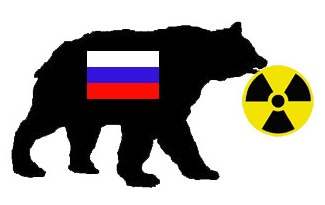
USA edges closer towards nuclear war with Russia
 US citizens warned to prepare for NUCLEAR WAR over claims attack warning upgraded THE US could be edging ever closer to nuclear war with Russia after upgrading its attack defence readiness, it has been claimed. http://www.express.co.uk/news/world/721603/US-nuclear-attack-warning-upgraded-DEFCON-3-Vladimir-Putin-Russia-WW3 By VICKIIE OLIPHANT Oct 16, 2016 DEFCON is an alert system used by the US military to indicate the current threat of nuclear war.
But conspiracy theorists have warned the threat has secretly been upgraded two levels to DEFCON 3 – meaning the US could mobilise troops in as little as 15 minutes. The level was last upgraded to 3 in the aftermath of September 11, 2001 – with standby ordered for a potential rise to DEFCON 2.
Now website DEFCON warning system claim it has been upgraded again in a terrifying revelation.
While there are currently no imminent threats to the US, it claimed the situation is “fluid and can change rapidly.” However it also highlighted the dying relationship between the US and Russia, citing concerns of all-out warfare between the bitter rivals. A statement posted on its website read: “Tensions between Russia and the United States have reached levels beyond the cold war in the recent week.
“The situation between Russia and the United States is extremely fluid at the moment. In all likelihood as dynamic as at times during the Cuban Missile Crisis of 1962.
“At this time, the DEFCON Warning System feels that an increase to DEFCON 3 would be a prudent move.” Russian citizens have been encouraged to find bomb shelters and gas masks today, as state-sponsored infomercials on television gave out guidelines on how people should prepare for a nuclear attack.
President Vladimir Putin meanwhile has ordered the evacuation of 40 million people in a military drill.He also transferred nuclear-capable Iskander ballistic missiles to one of its strategic Baltic regions last week, in what officials claim was part of regular military manoeuvres.
However many world leaders fear the moves are being carried out in preparation for war. The conspiracy theory site warned citizens to prepare for any potential conflict, saying: “This is a very sensitive situation which has the potential to spiral out of control.
“It is recommended that all citizens learn the steps to be taken in the event of nuclear war.”
Theorists have even claimed a move to DEFCON 2 is being muted, based on Putin’s call for Russians to return home.
Though the threat of war seems to be rising, the DEFCON level indication reported by the website is only speculation. The US military do not share the actual DEFCON status with the public for obvious security reasons.
The American point of view on USA-Russia crisis over Syria
Throughout her campaign, Clinton has repeatedly called for a no-fly or “safe zone” for Syrian civilians, without providing a detailed explanation as to what that would entail. But her advisors have suggested that it could involve the United States shooting down Syrian aircraft, forcing Russia to choose between defending Assad or working with Washington. In discussing the no-fly-zone idea, Clinton has not acknowledged the presence of an advanced Russian S-400 air defense system in Syria, which potentially could be used against U.S. aircraft enforcing a no-fly zone
Putin Throws Out the Old Nuclear Rules, Rattling Washington, FP, Washington and Moscow used to keep arms control separate from other crises around the world. But that era is over and the next president will have to decide how to deal with it. BY , OCTOBER 16, 2016
Russian President Vladimir Putin’s nuclear saber-rattling and military brinksmanship have upended the rules that long governed relations between Moscow and Washington, presenting the United States with a dangerous dilemma.
The next U.S president will inherit an increasingly fraught relationship with Russia in which Washington’s attempts to deter Putin have mostly failed. Moscow’s decision this month to pull out of a landmark agreement on disposing tons of weapons-grade plutonium, coupled with reports last week that Russia deployed new nuclear-capable missiles to Kaliningrad on the Baltic Sea, underscore how Putin is flexing Russia’s power in new and often unpredictable ways.
“It very much feels like we are entering a very troubled and dangerous phase in this bilateral relationship,“ said Julianne Smith, a former senior Pentagon official who oversaw NATO policy and a former senior advisor to Vice President Joe Biden. “The next president will face some big strategic choices,” said Smith, who now advises Democratic presidential candidate Hillary Clinton on Europe and Russia.
In the Kremlin’s decree this month declaring Russia would no longer cooperate with the United States on a 2009 agreement to dispose of weapons-grade plutonium, Moscow said it would consider reviving the agreement only if the United States scaled back its military presence near Russia’s border, lifted all sanctions against Russia, and paid Moscow compensation for the economic losses caused by the sanctions.
When lawmakers last month asked the chairman of the Joint Chiefs of Staff, Gen. Joseph Dunford, about the possibility of the United States setting up a no-fly zone in Syria, he said it “would require us to go to war with Syria and Russia.”
Russia indicates readiness for World War 111- bomb shelters and gas masks
| Putin preps Russians for nuclear war; civilians advised to check bomb shelters and prepare gas masks. INQUSITR, John Thomas Didymus, 15 Oct 16 | |
|
President Vladimir Putin of Russia is sending a clear signal to the U.S. and its Western allies that he is ready for a military showdown with the West over the ongoing clash of geostrategic interests in Syria. Following the spiraling of tensions between Moscow and Washington to their highest since the Cold War, the Russian government has been issuing instructions to civilians through the state-controlled media about what to do in the event that war breaks out with the West and the “Motherland” comes under direct attack.
The Russian authorities have directed civilians to check and familiarize themselves with the nearest bomb shelters and to prepare their gas masks, according to ABC News. Officials have also issued detailed instructions on how to prepare for a nuclear attack and what to do in the event of an attack. The latest disquieting set of instructions to civilians and related actions in recent weeks by the Russian authorities ostensibly in preparation for war have grabbed the attention of global analysts who are scrutinizing them to decipher the underlying motives of the Kremlin. Most analysts believe that despite Moscow’s elaborate and dramatic posturing to the rest of the world that it is preparing for a major global conflict that could involve deployment and use of nuclear arms, Putin is not actually preparing to launch a war against the U.S. and its allies. He is only engaging in tactical responses to ongoing speculation that Washington is considering seriously a plan to launch airstrikes against Syrian government forces. The chain of events that led directly to the present situation was initiated after the U.S. suspended bilateral consultations with the Russians over Syria, with U.S. officials alleging that the Russians had failed to fulfill a commitment to curtail ongoing aerial and ground assaults on the eastern districts of Aleppo held by rebel forces. The U.S. authorities also formally accused the Russian government of waging cyber warfare against U.S. institutions, including the Democratic National Committee (DNC) and the Hillary Clinton campaign, the Inquisitr reported. U.S. intelligence officials later told NBC News that the CIA was preparing to launch a series of retaliatory cyber-attacks against the Russian government. The CIA sources said the attacks were being designed specifically to disable the capacity of the Russians to use cyber warfare to disrupt presidential voting in November. According to NBC News, the CIA sources said the agency “has already begun opening cyber doors, selecting targets and making other preparations for an operation.” “We are sending a message to Putin and that it will be at the time of our choosing, and under the circumstances that will have the greatest impact,” Vice President Joe Biden reportedly said. Tensions rose further following speculation that Washington was planning to launch aerial strikes against the forces of President Bashar Al-Assad in an attempt to stop ongoing assault against Aleppo and force the Syrian government to consider resuming negotiations. Russia reacted to the speculation, warning sternly that the U.S. should consider “the possible consequences” of launching airstrikes against government forces in Syria. The Russian defense ministry threatened that it would shoot down U.S. and coalition jets attempting to launch attacks against forces of Syria’s President Bashar Al-Assad. The Russians warned that they had deployed S-300 VM air defense systems in Syria that have the capability to shoot down U.S. fighter jets. They warned that any airstrikes against Syrian government forces would be construed as an attack against Russian forces on the ground. “Today, the Syrian army has effective S-200, BUK and other air defense systems, which have undergone technical renovation in the past year,” Major General Igor Konashenkov said. “I [also] remind US strategists that air cover for the Russian military bases in Tartus and Hmeymim includes S-400 and S-300 anti-aircraft missile systems, the range of which may come as a surprise to any unidentified flying objects.” The Russian government followed up the stern warnings by stepping up preparations for war and issuing instructions to civilians about how to prepare for a nuclear attack, including what to do in the event of direct attack against the “Fatherland.” “If that [nuclear attack] should one day happen, each of you must know where the nearest bomb shelter is,” the government instructed civilians in a broadcast by the state-controlled NTV. The broadcast also took Russians on a familiarization tour of nuclear bunkers in Moscow and advised civilians to have their gas masks ready. Earlier in the month the authorities had held a large-scale civil defense drill involving 40 million citizens. The authorities issued information about how government would operate in the event of a war and which government bodies would be in charge of different areas of public affairs. image: data:image/svg+xml;base64,PHN2ZyB4bWxucz0naHR0cDovL3d3dy53My5vcmcvMjAwMC9zdmcnIHZpZXdCb3g9JzAgMCA2NzAgNDQzJz48L3N2Zz4= Putin’s government has warned the U.S. that it will shoot down U.S. jets attempting to attack government forces in Syria [Image by Plavevski/Shutterstock] In the midst of the drills, the authorities deployed nuclear-capable Iskander missiles to Kaliningrad on the Baltic Sea, close to the Lithuanian and Polish borders. The move, which rattled the Polish authorities, brought major Western European cities, including Berlin, within reach of Russian nuclear strike. The Defense Minister of Poland Antoni Macierewicz said the Polish authorities were highly concerned about the development and were monitoring the situation. The Russians had earlier conducted a series of ICBM tests in the Sea of Okhotsk and the Barents Sea, RIA Novosti reported. The tensions escalated even further when Putin suddenly canceled a planned visit to France scheduled for October 19, following a row that flared after President Francois Hollande lashed out at Moscow over its role in Syria, the Inquisitr reported. The French government reportedly said it was considering requesting that prosecutors with the International Criminal Court investigate alleged war crimes by Russia and the Syrian government in rebel-held parts of Aleppo. There was widespread bemusement in Russia when news broke soon after the row with France that the Kremlin had issued a directive to state officials to bring home all relatives living abroad. The authorities warned that officials who failed to heed the warning could be overlooked for promotion, the Inquisitr reported. According to analysts, Moscow’s posturing to the rest of the world that it is preparing for war is designed to boost popular support for Putin at home as tensions rise and to signal to the West that Russia will stand its ground in Syria in the event of U.S. intervention. Kremlin strategists apparently believe that sending a strong message that Russia will not back down with regard to its perceived geopolitical interests will dissuade the U.S. and its allies from trying to stop Russian bombing in Syria. Other analysts believe that Russia’s apparent preparation for war, less than four weeks away from the U.S. presidential election, is not a coincidence. It streamlines with the Kremlin’s overall subtle message to Americans to vote for change by electing the Republican presidential candidate Donald Trump rather than the Democratic presidential candidate Hillary Clinton. The Kremlin intends to get the message across to American voters that “a vote for Clinton is a vote for war with Russia,” because Clinton is expected to continue and possibly even intensify the foreign policy drives of the Obama administration that Moscow is bitterly opposed to. http://www.inquisitr.com/3598031/putin-preps-russians-for-nuclear-war-civilians-advised-to-check-bomb-shelters-and-prepare-gas-masks/ |
|
Modi and Putin revive Cold War bond with lucrative agreements between two nations
 India-Russia ties boosted by defence, energy deals, Straits Times, OCT 16, 2016, Modi and Putin revive Cold War bond with lucrative agreements between two nations BENAULIM (India) • Indian Prime Minister Narendra Modi and Russian President Vladimir Putin signed a raft of lucrative defence and energy pacts yesterday following talks aimed at reinvigorating ties between the former Cold War allies.
Mr Modi hailed Mr Putin as an “old friend” after their meeting in the Indian state of Goa, where leaders of Brazil, Russia, India, China and South Africa (Brics) were gathering for a summit.
“Your leadership has provided stability and substance to our strategic partnership,” Mr Modi said alongside Mr Putin at a beachside resort, after officials signed up to 20 agreements between the two nations……..
They also signed an initial agreement on India’s purchase of Russia’s state-of-the-art S400 missile defence system, capable of shooting down multiple incoming missiles, although there were no details on a timeframe for delivery. The system would strengthen India’s defences along its borders with China and Pakistan……..
The leaders also signed a framework agreement to supply more reactors to a nuclear plant in Kudankulam in southern India, which is attempting to reduce its reliance on highly polluting coal for power. Mr Putin said that Russia would be able to build a dozen nuclear reactors in India over the next 20 years to back Mr Modi’s growth strategy for Asia’s third-largest economy, which continues to suffer power shortages………
Mr Modi was expected to hold talks with China’s President Xi Jinping late yesterday, also in the hope of boosting investment and trade. Relations, however, have been frustrated by Beijing’s decision so far to block New Delhi’s entry to a nuclear trade group, among other issues. http://www.straitstimes.com/asia/south-asia/india-russia-ties-boosted-by-defence-energy-deals
Nuclear weapons transports through Lancashire a safety risk
 Is Lancashire ‘at risk of nuclear contamination’? Langashire Evening Post , 12 Oct 16 Nuclear convoys carrying warheads routinely drive on the M6. If one crashed, or was attacked by terrorists, more than 260,000 people could be in danger of contamination, according to a new report. Nuclear bomb convoys on the M6 are putting more than a quarter of a million people at risk from radioactive contamination in Lancashire, according to a report by campaigners.
Establishment of a no-fly zone (NFZ) in Syria? A step towards allout war?
Going Beyond Propaganda. Nuclear Conflict, Deception or Real Threat? Pentagon: A “Preemptive” Nuclear Strike against Russia is still Valid By Federico Pieraccini Global Research, October 16, 2016 The events in the Middle East, Syria and Aleppo are the focus of global attention. Rarely has a battle been so decisive to the outcome of a war and the fate of hundreds of millions of people around the world
With progressive policies, Scotland could be 50% fuelled by solar and wind, within 15 years
Half of Scotland’s energy could be produced by wind and sunlight in less than 15 years, report says http://www.independent.co.uk/environment/scotland-energy-renewables-half-by-2030-report-wind-solar-a7353831.html Analysis paints a picture of Scotland where fuel poverty is ‘eradicated’, air pollution is slashed and green electricity is a major export Ian Johnston Environment Correspondent, Monday 10 October 2016 Half of all the energy used in Scotland could be produced by renewable technology in less than 15 years, according to a new report.
It painted a picture of a country that exports vast amounts of electricity to the rest of the UK by producing 40 per cent more than it needs, where half of the buses and a third of cars are electric – improving air quality and public health – and where fuel poverty is “eradicated”.
However the report, called The Energy of Scotland, warned that while a low-carbon future was “achievable and desirable”, Scotland was currently on track to miss its climate targets, getting less than 30 per cent of energy from renewables by 2030. title=”10 October 2016 11:03 London”>Writing in the report, commissioned by the Scottish branches of WWF, Friends of the Earth and the RSPB, Lang Banks, WWF-Scotland’s director, said: “Scotland is in the enviable position of having fantastic renewable energy potential.
“Successfully unlocking this potential will not only secure our climate goals but provide the means to deliver economic opportunities across Scotland, bring social benefits and improve public health.”
However he said bringing about this future would require “significant changes to the way we heat our homes and organise our transport” and “new, bold policies”.The report, by consultants Ricardo Energy and Environment, found emissions from electricity power stations could drop to near zero with an “almost entirely renewable” supply, creating 14,000 new jobs.
“A 40 per cent drop in the use of petrol and diesel improves air quality in cities, resulting in better public health,” the report said.
“People are also fitter and healthier thanks to more walking and cycling in renewed cityscapes that are less dominated by cars.
“There is less congestion, with fewer and quieter vehicles on the road.”
European institutions unwise to be backing Ukraine’s dangerous nuclear reactors
On the domestic front, opposition to nuclear decision-making is silenced. Our colleagues in Ukraine, who have been voicing safety concerns, were sued in 2015 by Energoatom, Ukraine’s nuclear operator, and the state nuclear regulator joined in later. Eventually, the court backed the plaintiffs, who argued the public critique of the nuclear revival programme was inappropriate. Meanwhile, EU institutions keep on paying to support Ukraine’s aging nuclear fleet and claim to support democracy and rule of law in the country.
New life for Ukraine’s aging nuclear power plants European institutions are helping Ukraine extend its already outdated nuclear operations — increasing short-term risks and halting energy alternatives for the future. In the past few weeks, two of Ukraine’s Soviet-era nuclear reactors received a lease on life for an additional 10 years beyond their originally projected life-span. Units 1 and 2 at the Zaporizhska nuclear power plant, Europe’s largest, are the fifth and sixth units to have their expiry dates extended by Ukraine’s nuclear regulator. This is a dangerous move, which violates international law and democratic principles.

Nuclear proponents, Ukrainian governmental officials and the state nuclear power operator Energoatom argue these extensions are necessary. But is it really? And who benefits from the continued operation of Ukraine’s aging nuclear fleet? Continue reading
Germany’s leading utilities to start contributing to nuclear waste storage fund
German power firms to shift funds in landmark nuclear deal , Reuters 14 Oct 16
* Bill of 23.6 billion euros for waste storage – draft law
* Utilities can pay in instalments to 2026
* First payment must be 20 pct of total sum
* Shares in E.ON, RWE, EnBW rise on clarity (Recasts, adds funding breakup, details)
By Markus Wacket BERLIN, Germany’s leading utilities will start contributing next year to a 23.6 billion euro ($26.4 billion) fund as a condition for shifting liability for nuclear waste storage to the government, giving investors greater clarity over their future finances.
The new legislation, seen by Reuters on Friday, will remove uncertainty about the costs of storing waste — the most complex and costly aspect of nuclear decommissioning — which has been a major drag on German utility stocks.
The utilities will remain responsible for dismantling the country’s nuclear plants, the last of which will be shut down in 2022 as part of Germany’s abandonment of the technology, a decision triggered by Japan’s Fukushima disaster five years ago.
The German cabinet is set to approve the law on Oct. 19, bringing to an end lengthy negotiations between Berlin and the country’s four major energy groups — E.ON, RWE , EnBW and Vattenfall — on a waste storage deal proposed in April.
With a combined liability of about 16.7 billion euros, E.ON and RWE will have to stump up most of the funds. E.ON has said it might carry out a share sale to raise about 2 billion euros to help achieve this……..
The utilities had been pushing to get favourable terms from the government, arguing they have been hammered by plunging power prices, a shift towards renewable energy and Germany’s nuclear exit, which has taken its toll on their finances…….http://www.reuters.com/article/germany-nuclear-waste-idUSL8N1CK1X4
Putin orders overseas Russian officials to bring family members home
WORLD WAR 3 THREATS LOOM AS PUTIN ORDERS ALL RUSSIAN OFFICIALS TO BRING FAMILY MEMBERS LIVING ABROAD BACK HOME, INQUISITR, 13 Oct 16 As threats of a global war rise, Russia is apparently ordering all its officials to bring their family members living abroad back home. According to local media in Russia, Several high-ranking officials and politicians have received a warning message from Vladimir Putin, urging them to bring their family members back to the “Fatherland.”
This news comes after Putin cancelled his previously planned visit to France following disagreements over Russia’s involvement in Syria.
And according to local media, all high ranking officials are now being told that it would be wise to bring their family members living abroad back home. The “recommendation” has been imposed upon officials of every level, including administration staff, regional administrators, lawmakers and even employees of public corporations. It has also been said that those that ignore this recommendation may lose their chance of being promoted in the public sector……..http://www.inquisitr.com/3589849/world-war-3-putin-russia-nuclear-war-officials-bring-family-living-abroad-home/
Britain slips down in sustainable energy ratings
UK loses top 10 spot in global energy ranking for the first time
World Energy Council warns of potential gap in energy supply due to government’s lack of clarity and myriad changes, Guardian, Adam Vaughan, 11 Oct 16, The UK has fallen out of the top 10 of a respected international league table of countries’ energy sectors for the first time.
The World Energy Council blamed the government’s lack of clarity and myriad changes which it said have left the country facing a potential gap in energy supply.
The UK has previously been one of the top performers in the council’s “Trillema Index”, which has ranked countries on energy security, costs and decarbonisation efforts for the last six years.
But the Brexit vote, cuts to renewable energy subsidies and planned changes on foreign ownership have created investment uncertainty and significant challenges for the UK, according to the latest edition of the index for the London-headquartered agency, whose members include energy companies across the world…….
Despite the recent decision to go ahead with new nuclear reactors at Hinkley in Somerset, the UK had a “distinct lack of policy direction”, the council’s chief said……..
The result of the EU referendum vote in July has also cast a cloud over thegovernment’s pledge last year to phase out coal power by 2025, as leaving the single market as part of a hard Brexit “could significantly increase the cost of its energy imports”. Imports via interconnectors to the continent accounted for around 6% of the UK’s electricity supply last year.
Planned changes to rules on foreign ownership of energy infrastructure, announced during May’s review of Hinkley Point C contract, added to the investment uncertainty, the report said.
The council also highlighted government cuts to onshore wind and solar subsidies since it took power, which Office for National Statistics figures showed last week had led solar power installations to crash. The changes could hinder investments in those sectors, the council said. ….. https://www.theguardian.com/environment/2016/oct/11/uk-loses-top-10-spot-in-global-energy-ranking-for-the-first-time?CMP=twt_a-environment_b-gdneco
Nuclear power facing a close-down deadline in Switzerland
Is time up for nuclear power in Switzerland?, Swisssinfo ch, By Luigi Jorio , 13 Oct 16
Banning construction of nuclear power plants and limiting to 45 years the use of existing ones: that’s what a people’s initiative from the Green Party, to be voted on in November, proposes. It has not been endorsed by the cabinet or by parliament.On March 11, 2011, dramatic footage from Japan showed the destruction caused by an earthquake and tsunami. The coastal nuclear power plant at Fukushima sustained severe damage. There was worldwide concern, and a few weeks later the Swiss government announced its historic decision that “existing nuclear power plants [in Switzerland] should be decommissioned at the end of their safe operational lifespan and not be replaced by new nuclear power plants”.According to the government, the lifespan of nuclear power plants, based on technical safety criteria, is “about 50 years”. This was too long for the Greens, who want to walk away from nuclear power without any shilly-shallying. In May 2011 they launched a people’s initiative “For a planned phase-out of nuclear energy”, which they handed in with well over 100,000 signatures in November 2012. As a result, the people will now have to decide on the future of Switzerland’s nuclear power plants in a nationwide vote.
‘Permanent state of emergency’
The initiative calls for Swiss power plants – which supply on average 35% of the country’s electricity – to be shut down after no more than 45 years of operation. This would mean that the stations Beznau I and II (in canton Aargau) and Mühleberg (Bern) should shut down in 2017, Gösgen (Solothurn) in 2024 and Leibstadt (Aargau) in 2029.
“Switzerland has the oldest nuclear power plants in the world. Beznau I has been going for 47 years,” points out Regula Rytz, president of the Swiss Greens and co-chair of the Alliance for a planned phase-out of nuclear power. Using data from the International Atomic Energy Agency, the committee to support the initiative notes that the 151 nuclear power plants that had been closed around the world as of late 2015 had reached an average age of less than 26 years.
“Nuclear energy puts us in a state of permanent emergency. This is a high-risk technology, and its negative consequences are going to be around for thousands of years,” warns Rytz, referring to accidents at Windscale (Britain, 1957), Three Mile Island (US, 1979), Chernobyl (Ukraine, 1986) and Fukushima.
What will replace nuclear power? While supporting the basic principle of the initiative, the Swiss government opposes the constitutional amendment put forward by the Greens. Fixing a time limit, it says, means having to implement “too hurried a shut-down of Swiss nuclear plants, thus requiring major imports of electricity from abroad”. The government is instead holding to the “orderly and step-by-step” phase-out detailed in its Energy Strategy 2050, which was recently endorsed by parliament.
Energy Minister Doris Leuthard, one of the key players in the energy shift announced five years ago, warns that if the initiative is accepted, the country will not be ready with renewable energies. “We will have to import power from abroad, produced by coal- and gas-fired stations. Is this really what the Greens want?” she asks.
As far as advocates of the initiative are concerned, however, finding a clean alternative to nuclear power is not likely to be a problem. Renewable sources (water, wind and sun) and progress in energy efficiency will pick up the slack from nuclear power, they maintain.
About 40,000 clean energy projects have applied for incentive funding from the government, notes Rytz. “On their own, these could provide electricity equivalent to the output of Mühleberg and Beznau I and II.”
Billions to phase out power plants
One thing bothering the government is the likelihood of steep demands for compensation from the operators of nuclear power plants that would be facing early closure. Former head of the Axpo electricity company Heinz Karrer, quoted in the daily Neue Zürcher Zeitung, has said compensation could amount to billions of francs.
As part of the price-tag for phasing out nuclear power, the business lobby economiesuisse – currently headed, as it happens, by Heinz Karrer – points to the costs of dismantling the stations and managing the waste……..http://www.swissinfo.ch/eng/november-27-vote_is-time-up-for-nuclear-power-in-switzerland-/42506884
Switzerland bans new nuclear reactors

 Swiss ban new nuclear reactors http://reneweconomy.com.au/2016/swiss-ban-new-nuclear-reactors-39247 By Craig Morris on 11 October 2016 Energy Transition
Another setback for the “nuclear renaissance”: Switzerland voted on Friday to focus more on renewables and efficiency. For the first time ever, new nuclear plants are officially off the table—though admittedly, none were planned. The Swiss just “adopted the Energiewende,” writes the Neue Züricher Zeitung. Is no one paying attention? Craig Morris has the details.
Now here’s a news item you probably haven’t heard, at least judging from what I can gather on the internet: Switzerland’s new Energy Act (Energiegesetz, PDF) of 30 September 2016. You would think that, given its scope and Switzerland’s central role in Europe’s power sector, the following contents would have warranted a mention at, say, Reuters, CNN, Bloomberg, and Co.:
- The generation of non-hydro renewable power is to grow from 1.7 TWh last year (PDF in German and French) to 4.4 TWh by 2020 and 11.4 TWh by 2035 (nearly tenfold).
- “Per capita energy consumption” is to shrink by 16 percent from 2000 to 2020 and by 43 percent by 2035. “Per capita” is an important caveat in a small country whose population can easily grow quickly. (Switzerland’s is up around 10 percent over the past decade, like even smaller Norway’s.) Unfortunately, the law does not specify the most important aspect here: final or primaryenergy?
- Power consumption is to drop by 3 percent by 2020 and 13 percent by 2035.
- The law also, confusingly, speaks of “expanding” hydropower to 37.4 TWh by 2035 – even though it came in at 39.5 TWh last year. (If any readers know how to dissect this, please drop us a comment below.)
- It amends the 2003 Nuclear Energy Act (here’s the old one) to ban permits for new nuclear reactors. It also bans the reprocessing and export of spent fuel rods for reprocessing (except for research purposes with the consent of the Bundesrat). And “changes may not be made to existing nuclear plants.”
There’s a lot more in the law, much of which deals with the policy mechanisms (level of feed-in tariffs, etc.). But what’s above is a real breakthrough. So why has it gone unreported in English?
One reason may be that a referendum could change everything, as the Swiss press explains (in German). But the report also suggests there is little support for such a referendum in industry, so the referendum may not even take place; in other words, the Swiss business world is happier with renewables and efficiencythan with old-school energy production, consumption, and waste.
Another referendum will be held on 27 November 2016: the one for a closure of the existing reactors (in German). It does not necessarily stand a good chance of passing; parliamentarians overwhelmingly reject it (it’s an idea of the Swiss Greens). On the other hand, a recent survey of the public revealed support for a total phaseout by 2029 (basically, a limited service life of 45 years per reactor). This idea may have as much as 58 percent public support (in German)—possibly another example of politicians out of touch with the people. The first reactor to be shut down would then go offline in 2019. Leibstadt, the youngest, would be the last to go in 2029.
Opponents of the phaseout referendum will reportedly not try to reject the idea of a nuclear phaseout outright. Instead, they will try to win over the “silent majority” of undecided voters in the middle of the political spectrum by simply arguing that setting a specific date or service life for all reactors makes no sense. This clever tactic is likely to succeed, but a quick comparison with the historic debate in Germany over a nuclear phaseout suggests something less savory for nuclear supporters. Remember that slippery slope? By the time you resort to the tactic of “setting a date for a phaseout makes no sense,” you have reached the bottom of it. There is no way back up the slope for nuclear at that point.
Oddly, the Swiss press outlets all report that the new law is part of the government’s “Energy Strategy 2050” even though “2050” is never even mentioned in the new Act. This law is in fact just a starting point. By the end of this year, we will probably know what direction the country is headed.
One wonders when the international media will catch on. Maybe never—or did you know that Switzerland implemented a nuclear phaseout (by 2034) in the wake of Fukushima back in 2011?
Britain’s uneconomic Hinkley nuclear project really connected with its nuclear weapons aims
Britain’s Nuclear Cover-Up, NYT, OCT. 10, 2016“………If the Hinkley plan seems outrageous, that’s because it only makes sense if one considers its connection to Britain’s military projects — especially Trident, a roving fleet of armed nuclear submarines, which is outdated and needs upgrading. Hawks and conservatives, in particular, see the Trident program as vital to preserving Britain’s international clout.
A painstaking study of obscure British military policy documents, released last month by the Science Policy Research Unit at the University of Sussex, demonstrates that the government and some of its partners in the defense industry, like Rolls-Royce and BAE Systems, think a robust civilian nuclear industry is essential to revamping Britain’s nuclear submarine program.
For proponents of Trident, civilian nuclear projects are a way of “masking” the high costs of developing a new fleet of nuclear submarines, according to the report. Merging programs like research and development or skills training across civilian and military sectors helps cut back on military spending. It also helps maintain the talent pool for nuclear specialists. And given the long lead times and life spans of most nuclear projects, connections between civilian and military programs give companies more incentives to make the major investments required.
One might say that with the Hinkley Point project, the British government is using billions of Chinese money to build stealth submarines designed to deter China.
One can certainly say that the British government is using an ill-advised civilian nuclear energy project as a convoluted means of financing a submarine program.
The British government must be more transparent about its military spending, if only so that those expenditures can be measured against the needs of other public programs. According to the Science Policy Research Unit study, the government itself estimated in 2015 that renewing the Trident deterrent force will cost nearly $38.5 billion. In comparison, the deficit of the National Health Services for the fiscal year 2015-6, a record, was about $3 billion.
Hiding the true costs of a project like Trident by promoting a questionable and ruinous project like Hinkley Point C distorts the economics of both the defense and the civilian energy sectors. It also skews energy policy itself.
If Britain’s energy policy were solely about energy, rather than also about defense, the nuclear sector would be forced to stand on its own two feet. And the government would have to acknowledge the growing benefits of renewable energy and make hard-nosed comparisons about cost, implementation, environmental benefits and safety.
1 This Month




Shut down the radiation-damaged Heysham nuclear reactors now
To see nuclear-related stories in greater depth and intensity – go to https://nuclearinformation.wordpress.com

Say No to NASA’s Reckless Nuclear Reactor on the Moon
Say No to NASA’s Reckless Nuclear Reactor on the Moon
-
Archives
- October 2026 (279)
- September 2026 (339)
- August 2026 (330)
- July 2026 (355)
- June 2026 (287)
- May 2026 (306)
- April 2026 (356)
- March 2026 (251)
- February 2026 (267)
- January 2026 (308)
- December 2025 (358)
- November 2025 (359)
-
Categories
- 1
- 1 NUCLEAR ISSUES
- business and costs
- climate change
- culture and arts
- ENERGY
- environment
- health
- history
- indigenous issues
- Legal
- marketing of nuclear
- media
- opposition to nuclear
- PERSONAL STORIES
- politics
- politics international
- Religion and ethics
- safety
- secrets,lies and civil liberties
- spinbuster
- technology
- Uranium
- wastes
- weapons and war
- Women
- 2 WORLD
- ACTION
- AFRICA
- Atrocities
- AUSTRALIA
- Christina's notes
- Christina's themes
- culture and arts
- Events
- Fuk 2022
- Fuk 2023
- Fukushima 2017
- Fukushima 2018
- fukushima 2019
- Fukushima 2020
- Fukushima 2021
- general
- global warming
- Humour (God we need it)
- Nuclear
- RARE EARTHS
- Reference
- resources – print
- Resources -audiovicual
- Weekly Newsletter
- World
- World Nuclear
- YouTube
-
RSS
Entries RSS
Comments RSS

