Pokemon Will No Longer Appear in Japan’s Nuclear Disaster Site
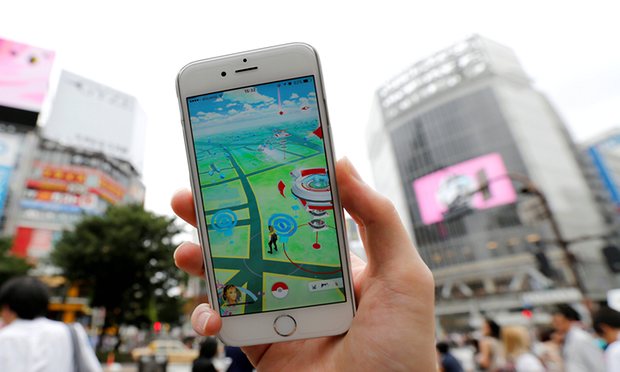
Tepco warns Pokémon Go players to avoid nuclear power plants and evacuation errors in pursuit of virtual monsters.
Japan is asking for the Fukushima nuclear exclusion zone to be classified as a no-go area for Pokémon after the discovery of at least one of the game’s characters on a power station’s site.
Tokyo Electric Power Company Holdings (Tepco) has requested that Pokémon Go developer Niantic and the Pokémon Company prevent Pokémon appearing in and around areas affected by the nuclear reactor meltdown in Fukushima to help prevent encouraging players to enter dangerous areas.
Tepco said it has tested the Fukushima Daiichi plant, which was partially destroyed by the March 2011 disaster, the nearby Fukushima Daini plant and the Kashiwazaki-Kariwa plant in Niigata Prefecture and found Pokémon on-site.
Japan’s nuclear regulator sent out a warning to national energy providers telling them to tighten security after the incursion of three teenagers into a nuclear power plant in Ohio in the US. Tepco has banned employees from playing Pokémon Go on site.
The Fukushima governor, Masao Uchibori, said that it was not good that people might enter nuclear plants or evacuation zones designated after the nuclear disaster on the hunt for Pokémon and that “the prefectural government will consider how to draw attention to this”.
The city government of Nagasaki has already requested that Niantic remove Pokémon from Nagasaki Peace Park, which is maintained as a memorial to victims of the atomic bombing of the city in 1945. The city has also asked visitors to refrain from playing the game saying that “the Peace Park is a place for prayer”.
Niantic said it would modify the game if the company discovered problems.
Japan, the home of Pokémon, had to wait for weeks after the Pokémon Go’s original launch in Australia, owing to worries about overloaded servers and the commercial agreement with McDonald’s for sponsored Pokéstops.
Since the game’s launch in Japan, reports of minor traffic incidents including that of a Pokémon Go-playing male high school student and a 30-year-old man colliding on a street in Tokyo’s Adachi Ward while riding bicycles.
The Pokémon Go global craze has led South Koreans to flock to a remote region, holocaust museums having to discourage players, naive New Zealanders led to Hell’s Angels clubs and police stations filled with players. It has also caused car accidents, impromptu flash-mobs in the middle of New York streets and people to walk into the sea in pursuit of some of the more rare creatures.
Hiroshi Hase, Japanese minister of education, culture, sports, science and technology, said that global frenzy involving content created in Japan was “gratifying,” but that it’s location-based nature could put gamers and others at risk in certain situations and urged caution.
FUKUSHIMA TOXIC SOIL CLEAN UP
CNN’s Paula Hancocks reports from the affected area, and gives a very short and nuanced report from within the exclusion zone in Fukushima prefecture.
The cleanup at Fukushima, the removal of the toxic soil and plants near the meltdown site is a huge task.
Contaminated Bamboo, Iitate, Fukushima
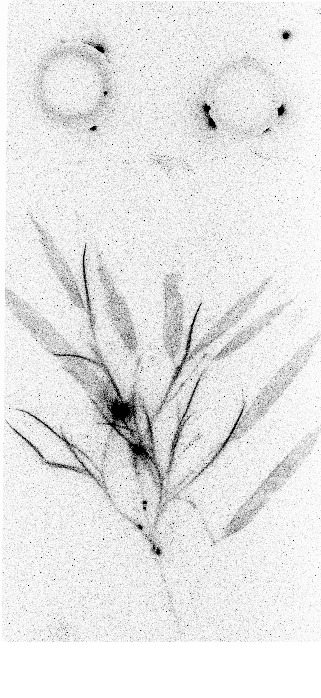
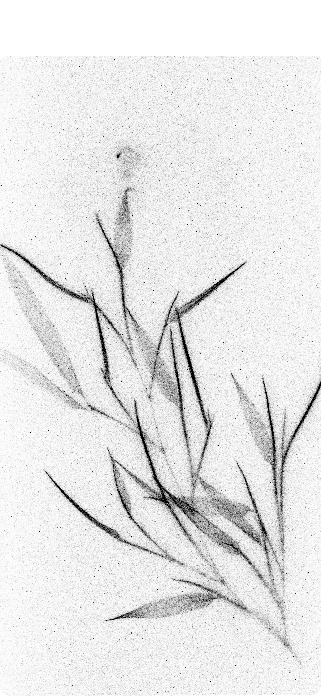
Bamboo was found to be contaminated by radioactive Cesium in the Komiya marsh of the Iitate village, Fukushima Prefecture.
About 500 ㏃ / kg of cesium but the Cesium concentrating more in the new leaves.
Incidentally, the soil has 43,000 ~ 77,000 ㏃ / kg of Cesium
https://www.facebook.com/nobuyoshi.itou/posts/1015326065230713
Fukushima banks hope to lure nuclear evacuees back by reopening branches
FUKUSHIMA – Regional banks in Fukushima Prefecture are reopening outlets in radiation-contaminated areas to help lure residents back more than five years after the triple core meltdown at the Fukushima No. 1 power plant laid waste to the region in March 2011.
Residents have been slow to return despite the phased lifting of evacuation orders in cleaned-up areas, so regional banks are eager to play a trailblazing role by allowing residents to use their branches as places to socialize.
Abukuma Shinkin Bank, based in Minamisoma, reopened its Odaka branch there in March 2013 and the branch in the town of Namie on July 12.
The evacuation order for the central part of Namie is expected to be lifted by the end of next March, but there are still structures that collapsed from the March 11, 2011, Great East Japan Earthquake.
“We’ll put the light on in the town where people do not live,” said Yoshihiro Ota, president of Abukuma Shinkin, stressing the significance of reopening the Namie branch.
Abukuma Shinkin became the first financial institution to reopen a branch in Namie, which sits next to the town of Futaba, one of the two municipalities that host the crippled Fukushima No. 1 plant, which lost all power after being swamped by tsunami spawned by the temblor. The plant is run by Tokyo Electric Power Co. Holdings Inc.
“We hope our branch, where local people can stop by freely and enjoy chatting, will become a place that can console them,” said Takahiro Abe, chief of the Namie branch.
“Being the first to reopen a branch in the town will hopefully allow us to attract people and see rises in deposits and loans,” Abe added.
In April, Toho Bank, based in the city of Fukushima, restarted its branch in Naraha, another town close to the Fukushima No. 1 plant.
Although the evacuation order for Naraha was lifted last September, only 8.1 percent of its residents had returned as of July 4.
“Financial institutions are indispensable regional infrastructure,” said Hiroshi Yamaka, chief of Toho Bank’s Naraha branch. “Regional banks have a major role to play in helping residents return home.”
But it is not easy to achieve industrial revival in contaminated areas neglected by the long evacuation.
A male business owner who visited Abukuma Shinkin’s Namie branch on the day it reopened said, “The bank told me that they will lend me money, but I can’t decide on new investment because I’m old and there’s no one I can hand over my business to.”
960 Bq/kg of Cs-134/137 detected from wild boar in Fukushima
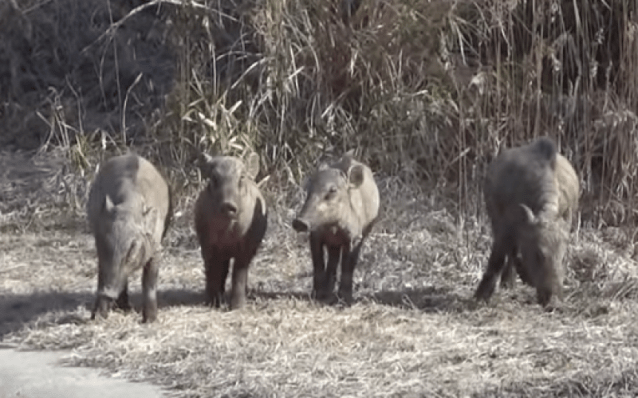
According to MHLW (Ministry of Health, Labour and Welfare), 960 Bq/Kg of Cesium-134/137 was measured from the meat of wild boar in Fukushima.
The sampling date was 6/11/2016. This reading is over 9 times much as food safety limit.
Cs-134 density was 154 Bq/Kg to prove it is contaminated from Fukushima accident.
From this report MHLW released on 7/19/2016, significant density of Cs-134/137 was detected from all of 33 wild boar samples and it exceeded the food safety limit (100 Bq/Kg) in 2/3 samples.
MHLW reports none of these wild boar meat was distributed for sale.
http://www.mhlw.go.jp/file/04-Houdouhappyou-11135000-Shokuhinanzenbu-Kanshianzenka/0000123667_18.pdf
http://fukushima-diary.com/2016/07/960-bqkg-of-cs-134137-detected-from-wild-boar-in-fukushima/
Surf Contest in Minamisoma, Fukushima

On July 17, 2012, they had a national surf contest in Minami Soma city, Fukushima..
In Fukushima, Minami Soma City, after the nuclear accident, for the first time a surfing tournament took place.
Competition in Minami Soma after the nuclear accident had been canceled. It was held for the first time in six years.
Before March 2011, Minami Soma was known as one of Japan’s leading surfing spots.
The evacuation order having been lifted in most of Minami Soma city, Minami Soma city aimed to boost its reconstruction by reviving its surf contest on its Kitaizumi coast.
200 participants from all over Japan came to engage in that surf contest.
Memo: Residents got 3 billion yen to host Hamaoka nuclear plant
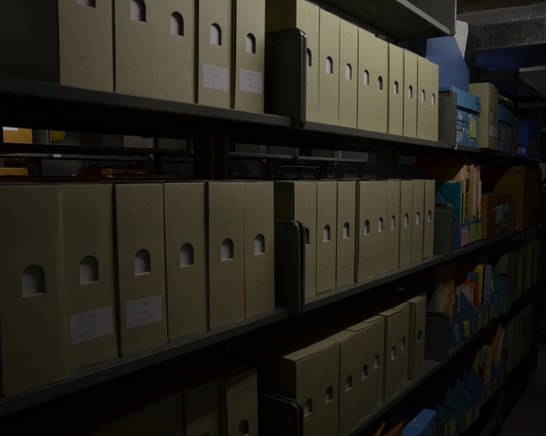
Holders of documents and memos of a residents group run 16 meters in length. The papers, related to Chubu Electric Power Co.’s Hamaoka nuclear power plant, are stored at Rikkyo University’s Research Center for Cooperative Civil Societies in Tokyo’s Toshima Ward.
Researchers now have a clearer idea of how much it costs to win over residents in a town hosting the most dangerous nuclear facility in Japan. The price is at least 3 billion yen ($28.3 million) over two decades, according to a memo on display at a university in Tokyo.
The memo was part of a trove of documents kept by the head of a residents group in Hamaoka, Shizuoka Prefecture, where Chubu Electric Power Co.’s Hamaoka nuclear power plant is located.
The documents, on display at Rikkyo University’s Research Center for Cooperative Civil Societies in Toshima Ward since May, also show how the “cooperation money” was used to improve the town, including infrastructure projects, and add beauty to a festival.
In addition, the documents provide details of the residents’ demands and how the money was distributed.
“As far as I know, this is the first time that a series of documents produced by the party that accepted hosting the nuclear plant has been disclosed,” said Tomohiro Okada, professor of local economy at Kyoto University’s graduate school. “Utilities were struggling to secure land for a nuclear power station, so it was their old trick to win over opponents with money.”
He said researchers are aware that electric companies have used such tactics across the nation. But they were largely in the dark about details of this approach because the utilities’ financial statements have not provided any information on the topic.
Genkichi Kamogawa, who chaired the Sakura district council for countermeasures for the Hamaoka nuclear power plant, preserved the memo and the in-house documents in 723 folders.
Kamogawa died in 1999 at the age of 84. His relatives offered the papers to the university after his death.
The town of Hamaoka is now part of Omaezaki.
The Hamaoka plant has been described as the most dangerous nuclear plant in Japan because of its proximity to a long-expected huge earthquake off the prefecture.
The nuclear plant was shut down in May 2011 under the request of then Prime Minister Naoto Kan, following the disaster at the Fukushima No. 1 nuclear power plant. Chubu Electric now plans to restart reactors at the Hamaoka plant.
The Nagoya-based utility approached the town of Hamaoka in 1967 about plans to build the nuclear power plant there. The residents council was formed in August 1968 to gather opinions about the project.
Kamogawa had held a senior position at the council from the start, including chairman between fiscal 1978 and fiscal 1990. He also served as a member of the Hamaoka town assembly.
The in-house documents include the council’s financial reports. They also show minutes of meetings where requests were compiled in relation to construction of new reactors at the plant.
The council had enormous sway over the fate of Chubu Electric’s plans to add reactors to the plant. The utility’s donations for each reactor were listed in the documents.
Kamogawa’s memo showed that the donations had reached 3 billion yen by the end of August 1989, after construction of the No. 4 reactor had started.
The council also devised its own system to receive the flow of money coming from Chubu Electric and other organizations.
The council’s terms stipulated that the donations should be used to contribute to the welfare of residents and development of their community.
The money was spent to build roads, a sewage system, parks, a disaster-preparedness facility, and lights for security.
One of the documents also stated that 10 million yen each was given to four neighborhood associations in the town to create gorgeous floats for a festival.
Kazuo Shimizu, 91, who succeeded Kamogawa in fiscal 1991 as the council’s chairman, said the acceptance of donations was meant for the betterment of the local community.
“We should benefit from the nuclear power plant project,” said Shimizu, a former Hamaoka assemblyman. “We genuinely wanted to improve the town’s infrastructure.”
A Chubu Electric official in charge of local community affairs acknowledged that the company offered the money to the council.
“It was expected of us to help invigorate the host community since we were causing local residents trouble,” the official said. “But we cannot give details, such as the amount of money.”
The two oldest reactors at the Hamaoka plant are now being decommissioned.
Chubu Electric plans to bring the remaining three reactors online by spending 400 billion yen to build 22-meter high sea walls to protect the plant from a powerful tsunami.
B61 thermonuclear warheads in Turkey – a worry in the light of coup attempt
Coup attempt in Turkey raises a nuclear concern at US air base Incirlik Air Base was an operational centre of the attempted coup. It is also America’s largest foreign stockpile of nuclear weapons. South China Morning Post, 24 July, 2016 A little more than 100 miles from the territory held by Islamic State, there is a little piece of Americana. It has an eight-lane swimming pool, a baseball diamond and housing tracts built on carefully manicured cul-de-sacs.
The Incirlik Air Force Base in Turkey has some other American assets: several dozen B61 thermonuclear warheads. The base has been a linchpin in Nato’s southern flank for more than half a century, the staging ground for US anti-terrorism missions and the fight against Islamic State.
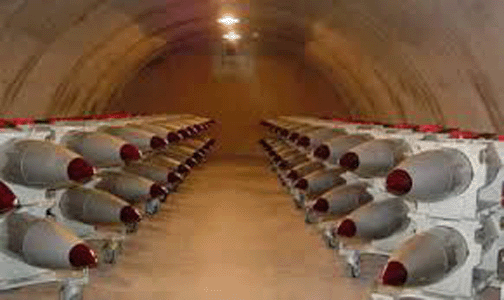
But the failed military coup against Turkish President Recep Tayyip Erdogan has increased long-standing concerns about the military usefulness and security of the Incirlik armoury, America’s largest foreign stockpile of nuclear weapons. Security remains at the highest level. Electrical power was restored Friday after a weeklong blackout that strained living conditions at the base. The 3,000 US service personnel stationed there have been ordered to remain inside the gates. Hundreds of dependents were sent home months ago because of fears of a terrorist attack.
The base was an operational centre of the attempted coup. Its commander and his subordinates were arrested on suspicion of trying to overthrow the Turkish government, leaving junior officers in control. The developments have shocked US military experts who say they demonstrate a worrying level of instability in Turkey’s military command close to the B61s.
Defence officials have never acknowledged the existence of these weapons on the base and refused at news briefings after the coup attempt to answer questions about them…….
The weapons are in underground vaults in a mile-long security zone at the base, protected by an Air Force guard unit with attack dogs. The nearly 12-foot-long weapons have devices that are supposed to prevent unauthorised detonation, but experts are divided on the effectiveness of those controls.
Unlike the strategic weapons that the US deploys in missile silos, submarines and intercontinental bombers, the B61s at Incirlik are tactical weapons that can be deployed at low altitude in the battlefield……..
“The weapons should be pulled back,” said Hans Kristensen, a nuclear weapons expert at the Federation of American Scientists. “They have been in excess of what is needed in Europe for the past two decades. And now we have this new situation. This is the US nuclear base closest to a war zone. The country has a deeply fractured political and military system.” http://www.scmp.com/news/world/europe/article/1994052/coup-attempt-turkey-raises-nuclear-concern-us-air-base
UK proposal to offer subsidy contracts to Russia, China and South Korea to build nuclear power stations!
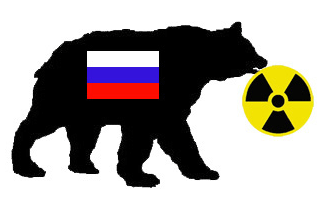



Russia, China and South Korea ‘should be invited to build UK nuclear plants’, Telegraph Emily
Gosden, energy editor 23 JULY 2016
Russian, Chinese and South Korean nuclear companies should be offered subsidy contracts to build reactors in the UK if they are cheaper than other projects already under development, a prominent nuclear lobbyist has said.
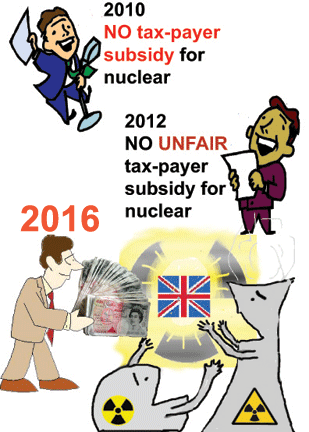
Tim Yeo, the former chairman of the House of Commons energy select committee, said EDF’s proposed £18bn plant at Hinkley Point, which is expected to get the go-ahead this week, should be allowed to proceed, but he urged the Government to rethink its approach to future projects.The Japanese-owned Horizon and Franco-Japanese NuGen consortia are both developing plans for reactors at sites in the UK and hope to secure approval for their technologies and subsidy deals from the Government.
Mr Yeo, the MP for South Suffolk for 32 years until the 2015 general election, now chairs New Nuclear Watch Europe, a lobby group whose members include the Korean nuclear firm Kepco. He urged the Government to “urgently examine which nuclear vendors can deliver the cheapest electricity, maximise the number of UK supply chain jobs and minimise the risk of construction delays”………..
He also advocated a new funding approach under which “most of the construction costs are funded by government borrowing throughout the construction period” to help cut financing costs. http://www.telegraph.co.uk/business/2016/07/23/russia-china-and-south-korea-should-be-invited-to-build-uk-nucle/
Russia marketing its nuclear clean-up business to Japan
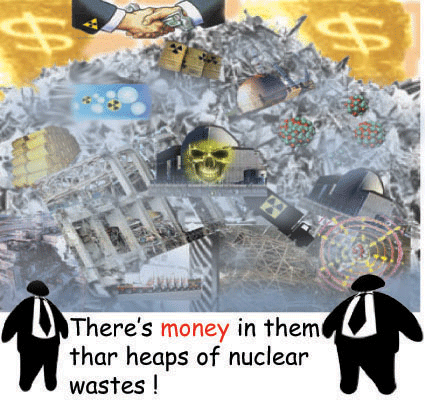
Take our tech
Around a 100km drive west of St. Petersburg, on the Gulf of Finland, sits Sosnovy Bor, home to state nuclear energy giant Rosatom’s waste disposal operations. Inside a controlled perimeter, subsidiary RosRAO, the facility’s manager, has created a prototype water decontamination plant for use at Tokyo Electric Power Co. Holdings‘ Fukushima Daiichi nuclear power station — the site of Japan’s largest nuclear disaster in March 2011.
The scrubbing facility, unveiled in June, is capable of removing tritium, or radioactive hydrogen, from nuclear-tainted water, something beyond the capabilities of the Fukushima plant’s current cleanup equipment. Distillation and electrolysis isolate and concentrate the isotope, which is then locked away in titanium. Experiments under conditions similar to those on the ground reportedly show the technology cutting wastewater’s radioactive material content to one-6,000th the initial level, making it safe for human consumption or release into the ocean.
Duplicating the facility near the Fukushima site and running it for the five years necessary to process 800,000 cu. meters of contaminated water would cost around $700 million in all. Companies in Japan and the U.S. are at work on their own facilities for tritium disposal, but the Russian plan’s cost and technological capability make it fully competitive, according to the project’s chief.
Rosatom has made other overtures to Japan. Executives from a mining and chemical unit have visited several times this year for talks with Japanese nuclear companies, aiming to cooperate on decommissioning the Fukushima plant and upgrading a reprocessing plant in Aomori Prefecture for spent nuclear fuel. Russia has amassed a wealth of expertise dealing with damaged nuclear reactors in the wake of the Chernobyl disaster, and would like Japan to draw on that knowledge, the subsidiary’s chief executive said.
Nuclear expertise
Revving up nuclear technology exports is essential to re-energizing Russia’s domestic industry and breaking free of dependence on the resource sector, Moscow has decided. The nuclear business, along with the space industry, is one of the few tech-intensive sectors where the country is internationally competitive. President Vladimir Putin has leaned more heavily on leaders in Europe and emerging countries in recent years to agree to deals with Russia’s nuclear companies………..http://asia.nikkei.com/Politics-Economy/International-Relations/Japan-nuclear-cleanup-next-target-in-Russian-economic-offensive
South Korean nuclear company to staff Emirates nuclear reactors
Hydro & Nuclear staff to operate Abu Dhabi’s Barakah plant, New agreement will see KHNP staff stationed at Barakah until 2030 Gulf Business, By Robert Anderson, 23 July 16
Emirates Nuclear Energy Corporation has signed an operating support services deal with Korea Hydro & Nuclear Power that will see the company dispatch personnel to the Barakah Nuclear Power Plant until 2030.
Under the agreement, the Korean firm will provide main control room operators and local operator to support ENEC’s recently launched local operating subsidiary Nawah Energy Company……http://gulfbusiness.com/korea-hydro-nuclear-power-staff-operate-abu-dhabis-barakah-plant/#.V5UxYtJ97Gg
North Korea seek ‘nuclear nation’ status at ASEAN forum
 NK to seek ‘nuclear nation’ status at ARF Pyongyang’s top diplomat attends ASEAN forum, Korea Times, By Rachel Lee Ri Yong-ho, 23 July 16
North Korean Foreign Minister Ri Yong-ho is expected to call on the international community to accept his country as a nuclear state at the ASEAN Regional Forum (ARF) in Laos, officials here said Sunday……..
The North has stepped up its nuclear weapons program this year. It fired a Hwasong-10 intermediate range ballistic missile on June 22, after carrying out its fourth nuclear test on Jan. 4 and a series of ballistic missile tests afterwards.
This year’s ARF, the region’s largest security gathering, attracted diplomats from 27 countries, including all members of the six-party talks aimed at Pyongyang’s denuclearization as well as the 10 ASEAN-member states……..
“The ARF will discuss some of the very complex issues surrounding terrorism, the South China Sea and North Korea’s nuclear and missile threats after its fourth nuclear test early this year,” Yun said, expressing his will to have the majority of participating countries strictly follow the U.N. Security Council’s latest sanctions on Pyongyang.
On the sidelines of the forum, Yun will hold talks with Vietnam, Myanmar and Laos _ all of which have been friendly with Pyongyang _ as part of his efforts to attract participation in sanctioning the North. High on the agenda will also be the deployment of the Terminal High-Altitude Area Defense battery on the Korean Peninsula. …..http://www.koreatimes.co.kr/www/news/nation/2016/07/120_210172.html
There’s no end to Fukushima crisis while melted fuel remains
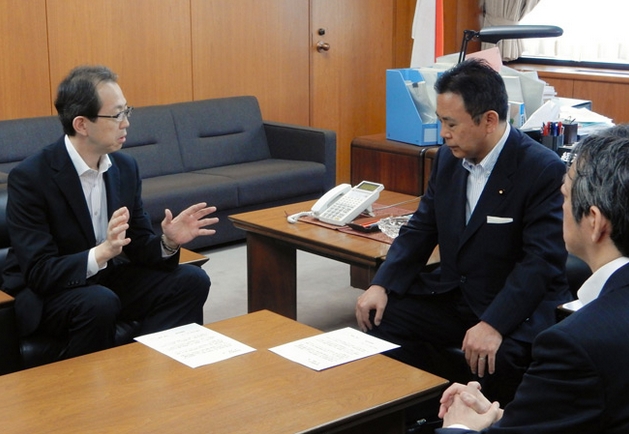
Fukushima Governor Masao Uchibori, left, speaks with Vice Industry Minister Yosuke Takagi
A massive concrete structure encases the wrecked No. 4 reactor at the Chernobyl nuclear power plant, site of the catastrophic 1986 accident.
Dubbed the “sarcophagus,” it was erected to contain the fuel that could not be extracted from the crippled reactor.
I never expected this word (“sekkan” in Japanese) to crop up in connection with the 2011 Fukushima nuclear crisis.
Local governments raised objections to the use of this word in a report compiled by a government organ that supports the decommissioning of the Fukushima No. 1 nuclear power plant.
While the report discusses the extraction of melted fuel as a requirement, it is written in such a way as to suggest that the construction of a sarcophagus is an option that should not be dismissed out of hand.
This outraged the governor of Fukushima, Masao Uchibori, who lashed out, “Containing (the melted fuel) in a sarcophagus spells giving up hope for post-disaster reconstruction and for returning home.”
The government organ has since deleted the word from the report, admitting that it was misleading and that constructing a sarcophagus is not under consideration.
The report lacked any consideration for the feelings of local citizens. But more to the point, just deleting the word does not settle this case.
Even though five years have passed since the disaster, nothing has been decided yet on how to extract the melted fuel. How, then, can anyone guarantee that the fuel will never be “entombed”?
I am reminded anew of the sheer difficulty of decommissioning nuclear reactors. The Fukushima edition of The Asahi Shimbun runs a weekly report on the work being done at the Fukushima No. 1 plant.
The report portrays the harsh realities at the site, such as leaks of contaminated water and accidents involving workers. Efforts to decommission the crippled reactors continue day after day, but the task is expected to take several decades.
Elsewhere in Japan, the rule that requires nuclear reactors to be decommissioned after 40 years is becoming toothless, and preparations are proceeding steadily for restarting reactors that have remained offline.
“Normalcy” appears to be returning, but there is a huge gap between that and the unending hardships in the disaster-affected areas.
7.7 tons of Chiba’s Fukushima waste won’t be deemed radioactive anymore, clearing way for general disposal
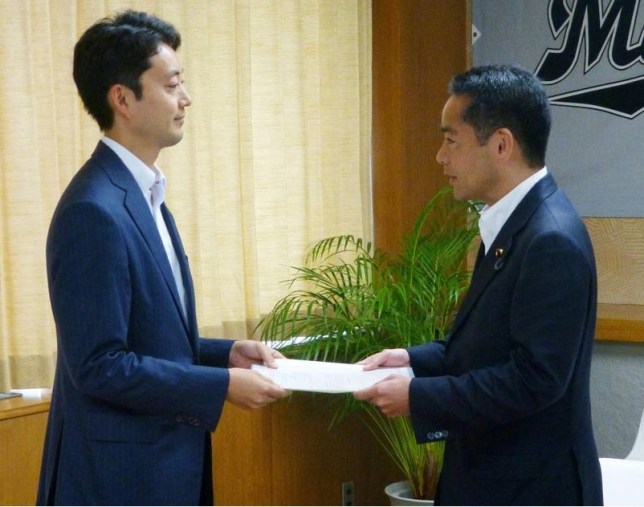
Chiba Mayor Toshihito Kumagai (left) receives a notice from State Minister of the Environment Shinji Inoue at City Hall on Friday stating that tainted waste stored there from the Fukushima disaster won’t be deemed radioactive anymore.
CHIBA – The government on Friday informed the city of Chiba that the radioactive designation for 7.7 tons of Fukushima-tainted waste stored in the city will be lifted on Saturday, allowing it to be treated as general garbage.
State Minister of the Environment Shinji Inoue conveyed the decision to Chiba Mayor Toshihito Kumagai during a meeting at City Hall in Chiba Prefecture’s capital.
The decision came after it was found that the radioactive activity of cesium in the waste had fallen below the state-set limit of 8,000 becquerels per kilogram.
It will be the first time for such a designation to be lifted for such waste.
The waste was part of the aftermath of the massive earthquake and subsequent tsunami of March 2011, which triggered a triple core meltdown at the Fukushima No. 1 power plant. The defunct plant is owned by Tokyo Electric Power Holdings Inc.
Some 3,700 tons of designated radioactive waste created by the man-made meltdowns, including incineration ash, is stored in Chiba. The 7.7 tons in question is sitting in a garbage disposal facility in Mihama Ward in Chiba.
The lifting of the designation will allow the city to dispose of the waste in the same way as general waste. But Kumagai has expressed his intention to keep it in storage for the time being.
As of the end of March, 172,899 tons of such designated waste was being stored in Chiba, Tokyo and 10 other prefectures in eastern Japan.
Hurdles mar Japan’s renewable energy equation
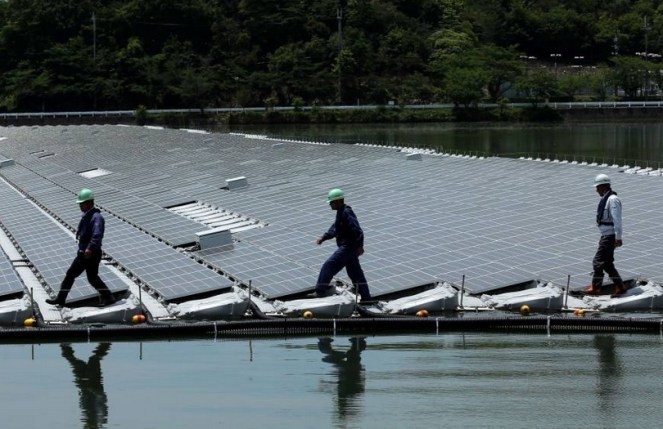
Workers walk among rows of solar panels at Kyocera Corp.’s floating solar power plant at Sakasama Lake in the city of Kasai, Hyogo Prefecture, in May last year.
At Yamakura Dam, 45 km southeast of Tokyo, construction workers are screwing together a 51,000-piece jigsaw puzzle of floating solar panels. When completed, it will be one of the world’s largest floating solar projects.
Roughly 30 percent of the work on the project in Chiba Prefecture is complete, and when it comes online in 2018, the 13.7 megawatt facility will provide enough electricity to power almost 5,000 households annually.
However, even attention-grabbing projects like this one will produce less than 1 percent of what’s needed for Japan to reach its 2015 goal of doubling its renewable energy use to between 22 and 24 percent by 2030 from around 10 percent at present.
The growth of renewable energy in Japan risks being smothered by a wave of newly approved coal mines across the country, as the government is expected to lower its optimistic goal of reviving nuclear energy.
Experts say the government energy policy review, expected as early as next year, will likely result in a downgrading of the forecast for nuclear power’s role in the 2030 energy mix — to between 10 and 15 percent from its current 22 to 24 percent. The move to amend the forecast, initially made in 2015, comes as the government faces ongoing legal challenges and public backlash against the restart of nuclear reactors that were taken offline in the aftermath of the 2011 Fukushima reactor meltdowns.
Downgrading the nuclear proportion of the energy mix will provide a fresh wave of opportunities for alternative energy sources to play a larger role.
However, experts say burdensome environmental assessments for wind and geothermal energy, disadvantaged access to the power grid, as well as 48 approved new coal mines, will mean renewable energy may see few of the benefits.
In almost every prefecture nuclear power and fossil fuels are classified as “baseload” energy sources and given priority access to the electricity grid. While renewable companies have access, they are the first to be switched off in the event of excess power and they aren’t compensated.
Ali Izadi-Najafabadi, head of Bloomberg New Energy Finance in Japan, said this is the opposite of the way systems are configured in Europe, where renewables get first access to the grid because they have the lowest marginal cost of production.
“The government said they wanted to make sure the baseload generators wouldn’t have to adjust the baseload for renewables, which are unreliable. It’s a bit of a flawed argument,” Izadi-Najafabadi said.
He said it was “more about the financial arguments” for the operators of these plants. “These generators are only cheap if you produce at a constant rate,” he said.
Gerhad Fasol, CEO of Eurotechnology Japan, a company that works with European technology companies investing in renewable energy here, says the country has a long way to go to catch up with the rest of the world. “Japan had the initial solar surge in 2011, but now there needs to be a focus on how to broaden and diversify,” Fasol said.
Shortly after the March 2011 Fukushima meltdowns the government introduced generous incentives for investment in renewable energy in the form of feed-in tariffs where the government buys renewable energy at above-market rates.
Data from Japan’s 10 largest regional utility companies showed the share of solar in the energy mix rose to around 3.4 percent in 2015 from 0.4 percent in 2012.
But as the initial feed-in tariffs have since been scaled back, the solar investment boom is fading. Sales in photovoltaic units are on the decline and Teikoku Databank Ltd. said in a recent report that the number of solar companies going bankrupt is rising sharply.
Izadi-Najafabadi said that while large-scale solar energy investment will likely see a “significant slowdown” over the next few years, Bloomberg New Energy Finance expects a massive uptake in rooftop solar, driven by consumers incentivized by favorable loan options from banks.
“The government forecast solar would be 7 percent of the energy mix in 2030; our forecast is closer to 12 percent. We also think the government might exceed their overall 22 percent total renewable prediction. Rooftop solar is really going to drive this,” Izadi-Najafabadi said.
Others, however, are not as optimistic. Shaun Burnie, senior nuclear specialist for Greenpeace Germany, who has analyzed Japan’s nuclear program since 1991, said large-scale renewable investment will continue falling and the government may not reach its renewable energy goals unless hurdles regarding access to the grid are surmounted.
“If you are a solar company and you aren’t guaranteed access to the grid, why would you invest? There is a critical role for the government in untangling the grid and wresting back control from the utility company in the next four years,” said Burnie.
“There is an intentional destabilization of renewables from the utility companies (through denying access to the grid) and it needs to stop.”
One of the reasons the government gives coal and nuclear energy preferential treatment is because they are considered more stable than renewable energy sources, which are reliant on weather.
In Europe, Burnie pointed out, an emphasis on a range of renewable energy sources provides most countries with a stable baseload of energy.
In Japan, the spread of renewable energy to sectors other than solar is thwarted by complicated environmental assessment approvals, which take between two and five years and are not required for nuclear power or coal-fired power plants.
There are only a few wind farms currently operating in Japan and most are offshore and in trial phases. Strong community resistance in parts of the country has also severely limited investment in land-based wind energy.
The country also has significant potential for geothermal energy, with a National Institute of Advanced Industrial Science survey in 2008 finding Japan has the third-highest resources for geothermal in the world.
However, investment has also been slowed by the environmental assessment process and resistance from the onsen hot springs industry, which is concerned about the impact accessing more geothermal energy will have on their business.
In the U.S., President Barack Obama announced a moratorium on all new federal coal-mining leases in January and many developed countries are slowly weaning themselves off coal. However, in Japan the government is increasingly turning to fossil fuels to fill the energy gap left by idled reactors.
Liquefied natural gas has been used to fill much of the country’s short-term electricity needs and the approval of the 48 new coal mines in the past several years appears to indicate the government’s medium to long-term goals.
“We say in Japan it’s easier to build coal-fire power plants than wind farms,” said Nao-yuki Yamagishi, leader of the World Wildlife Fund Japan’s climate and energy group.
Yamagishi said that if the 48 new coal plants approved by the government come online, coal will overshoot a 26 percent target in the 2030 energy mix, down from 30 percent in 2013, and block space for further potential renewable energy increases.
Yamagishi said the recent move toward coal has made him skeptical about whether Japan is capable of fulfilling the pledge it made last December at the COP21 climate conference in Paris.
Japan vowed a 26 percent cut in greenhouse gas emissions by 2030, a pledge at the lower end compared with other OECD countries.
“The current administration doesn’t place any emphasis on climate change,” Yamagishi said, adding that the recent Upper House election campaign had a lot of discussion about nuclear energy, but nothing about climate change.
1 This Month





PLEASE OPPOSE HR 8255 AND S.3639 – bills would accelerate satellite deployment, with no environmental review or safeguards – https://ncstd5li.quorum.us/campaign/169331/
To see nuclear-related stories in greater depth and intensity – go to https://nuclearinformation.wordpress.com
-
Archives
- October 2026 (39)
- September 2026 (339)
- August 2026 (330)
- July 2026 (355)
- June 2026 (287)
- May 2026 (306)
- April 2026 (356)
- March 2026 (251)
- February 2026 (267)
- January 2026 (308)
- December 2025 (358)
- November 2025 (359)
-
Categories
- 1
- 1 NUCLEAR ISSUES
- business and costs
- climate change
- culture and arts
- ENERGY
- environment
- health
- history
- indigenous issues
- Legal
- marketing of nuclear
- media
- opposition to nuclear
- PERSONAL STORIES
- politics
- politics international
- Religion and ethics
- safety
- secrets,lies and civil liberties
- spinbuster
- technology
- Uranium
- wastes
- weapons and war
- Women
- 2 WORLD
- ACTION
- AFRICA
- Atrocities
- AUSTRALIA
- Christina's notes
- Christina's themes
- culture and arts
- Events
- Fuk 2022
- Fuk 2023
- Fukushima 2017
- Fukushima 2018
- fukushima 2019
- Fukushima 2020
- Fukushima 2021
- general
- global warming
- Humour (God we need it)
- Nuclear
- RARE EARTHS
- Reference
- resources – print
- Resources -audiovicual
- Weekly Newsletter
- World
- World Nuclear
- YouTube
-
RSS
Entries RSS
Comments RSS

