TEPCO to seek gov’t assistance in decommissioning Fukushima nuke plant
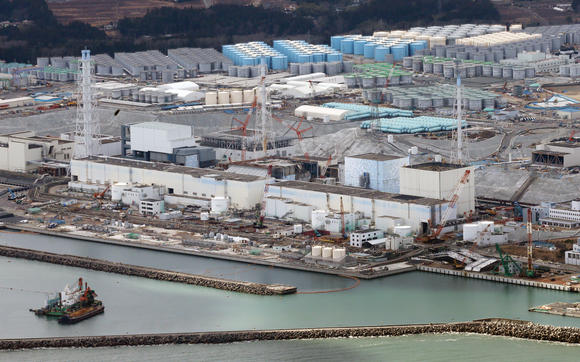
Tokyo Electric Power Co. (TEPCO) Holdings, Inc. is set to ask the national government for financial assistance in decommissioning the disaster-hit Fukushima No. 1 Nuclear Power Plant, company officials said.
The company will also seek consultations with the government over how it should foot the costs of paying compensation to those affected by the nuclear crisis and decontaminating areas affected by radioactive substances from the power station.
TEPCO Holdings has deemed that it cannot secure enough funds to fully cover these costs through its own efforts alone since the expenses are increasingly likely to surpass its estimates.
The utility has secured approximately 1 trillion yen to cover the expenses of decommissioning the crippled power plant and planned to raise another 1 trillion yen. However, it is expected to take the company 30 to 40 years to decommission the plant and deal with the aftermath of the crisis. Moreover, it has been pointed out that the actual decommissioning costs will far surpass 2 trillion yen.
At a news conference on July 28, Fumio Sudo, chairman of TEPCO Holdings, expressed fear that the company will face increased costs of shutting down the plant, pointing out that the decommission project is “work that nobody in the world has experienced.”
The utility currently pays compensation and covers the costs of decontamination work by borrowing money from the state through the Nuclear Damage Compensation and Decontamination Facilitation Corp.
However, the amount of compensation that the utility has so far paid has already reached 6 trillion yen, surpassing the 5.4 trillion yen initial plan. Moreover, decontamination costs are also expected to surpass 2.5 trillion yen as originally planned.
There are no prospects that operations at TEPCO’s Kashiwazaki-Kariwa Nuclear Power Plant in Niigata Prefecture, which would help increase the company’s profits, will be resumed in the foreseeable future. Moreover, TEPCO has faced intensifying competition in the electric power market as the retailing of power was fully liberalized in April. Under these circumstances, TEPCO Holdings is expected to ask the government to provide the firm with an infusion of public funds among other financial aid.
http://mainichi.jp/english/articles/20160729/p2a/00m/0na/012000c
Fukushima Unit 2 Muon Scan Inconclusive
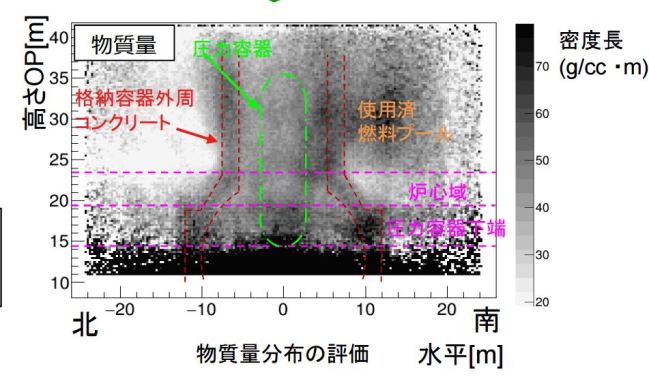
TEPCO and IRID released a set of reports on the muon scan of unit 2, as a follow up report to the June preliminary scan results.
Tepco makes an assertion in the new report that the majority of the melted fuel is present in the bottom of the reactor pressure vessel but that assertion is quite questionable upon further review of the reports.
To justify the assertion that most of the fuel is in the bottom of the RPV, Tepco uses a close view of the actual scan output. Viewed without the wider view it seems there must be some fuel in the bottom of the RPV and there probably is.
When you look at the same image with the entire scan view, the black area inside the RPV becomes less conclusive. This black band reaches far beyond containment and matches an area of interference documented on the earlier reviews of the scans.
TEPCO also goes on to make an estimate of fuel volume in the lower portion of the RPV based on these questionable images. They do not provide any justification for how they take the black spots in the image of the lower RPV and translate that to tons of melted materials and fuel.
Existing meltdown literature and findings expect some amount of fuel residue to exist in the bottom of the RPV even if the bottom of the RPV fails.
Both scans of unit 2′s vessel showed little remaining in the core region.
At this point the scans are inconclusive either way on the question of fuel in the bottom of the RPV.
Sources:
http://mainichi.jp/english/articles/20160729/p2g/00m/0dm/022000c
http://www.asahi.com/ajw/articles/AJ201607290050.html
New Kagoshima governor to seek suspension of Sendai reactors
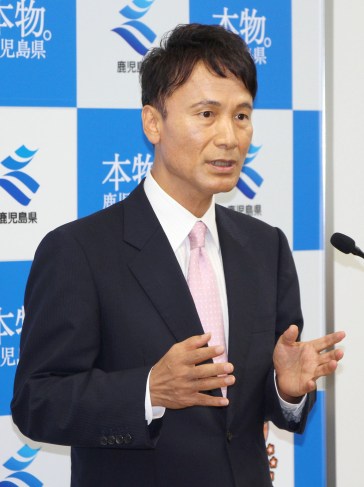
KAGOSHIMA – Newly elected Kagoshima Gov. Satoshi Mitazono said Thursday he will seek a temporary halt on active nuclear reactors in the prefecture, currently the only ones working nationwide.
“There are concerns over nuclear power plants following the Kumamoto earthquakes,” Mitazono said of the April disaster.
He was speaking in his first news conference since becoming governor. He was elected on an anti-nuclear ticket.
Mitazono added that Kyushu Electric Power Co.’s Sendai plant should be “halted once, to conduct checks and reviews again.”
The No. 1 reactor at the Sendai plant is scheduled to go offline for routine checks on Oct. 6, but Mitazono may submit his request for a suspension as early as August.
The No. 1 and No. 2 units at the plant resumed operation last year in August and October, respectively, becoming the first two reactors to be brought back online under stricter safety rules imposed after the 2011 Fukushima disaster.
No other reactors are currently online in Japan amid lingering public fears over safety. Some are subject to court injunctions, but others are gearing up for a restart.
The governor is not authorized to stop the operation of reactors, but a safety accord reached between the prefectural government and the plant operator allows local government officials to enter the plant to confirm whether safety steps are being taken.
Kyushu Electric Power is likely to insist that Sendai is safe.
In the July 10 gubernatorial election, 58-year-old Mitazono, a former TV Asahi Corp. commentator, defeated previous Gov. Yuichiro Ito, 68, who was seeking his fourth four-year term with the support of the ruling Liberal Democratic Party and its junior coalition partner, Komeito.
Fuel in the Fukushima Reactor 2 Playing Hide and seek
In June 2016 Tepco released preliminary information announcing that the unit 2 muon scan showed no fuel in the reactor vessel, that the full scan would be completed by mid-July and should confirm any fuel findings, or lack thereof.
The scanner can detect masses of fuel 1 meter or larger.
The scans had identified the fuel in the spent fuel pool, confirming that the system was working properly and that the results were accurate.
The image below is the actual muon scan results with darker blue indicating areas where fuel is. The internal structures of the reactor are drawn in by TEPCO.
TEPCO originally thought there was fuel remaining in the bottom head of the reactor vessel. The scan clearly showed no significant amount of fuel remaining in the core region where the fuel was before the meltdown or in the bottom of the reactor vessel.
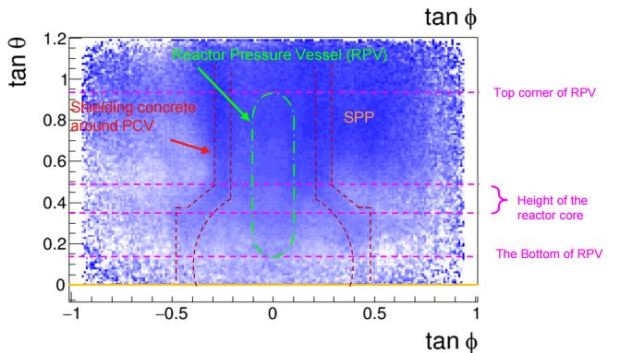
Tepco stating that the final scan report in July might refine the imagery but that it would unlikely change the results.
TEPCO handouts :
https://www.dropbox.com/s/i2bffm237u8osz6/muon%20unit%202%20handouts_160526_01-e.pdf?dl=0
https://www.dropbox.com/s/76w6rryxiwjbhoz/muonscan_2_daiichi_160526_06.pdf?dl=0
Now this Thursday July 28, 2016, one month later, Tepco announces that most of the melted nuclear fuel inside the No. 2 reactor is LIKELY located at the bottom of its pressure vessel.
That a study using muon imaging system was carried out by a team involving Tokyo Electric and the High Energy Accelerator Research Organization in Ibaraki Prefecture, that an ESTIMATED 130 tons of the so-called fuel debris REMAINS at the bottom of the vessel, that it is the first time the location and amount of the melted fuel have been estimated.
As high radiation levels are continuing to hamper direct access to the reactors, researchers have tracked muon elementary particles, which are produced as cosmic rays collide with atmospheric particles and change course when coming into contact with nuclear fuel.
The No. 2 reactor was in operation when the nuclear crisis was triggered by a powerful earthquake and subsequent tsunami that devastated Japan’s northeast.
About 160 tons of fuel assemblies are estimated to have been present inside the reactor vessel prior to the crisis. Most of the fuel is BELIEVED to have fallen to the bottom of the pressure vessel and mixed with nearby structures to form debris.
In the nuclear crisis, massive amounts of radioactive substances were released into the environment, with the Nos. 1, 3 and 4 reactor buildings damaged by hydrogen explosions.
The No. 4 reactor was offline for periodic maintenance work and all of its fuel was stored in the spent fuel pool, avoiding a meltdown.
The finding IF TRUE would be important as the data could help the operator to narrow down methods to remove the fuel debris, the most challenging task in decommissioning the plant’s Nos. 1 to 3 reactors that experienced meltdowns in the nuclear crisis that began in March 2011.
However, in mid-June 2016 using the same muon imaging system Tepco could not detect any fuel at the bottom of the reactor pressure vessel, now one month later Tepco announces that there is an estimated 130 tons of the so-called fuel debris remaining at the bottom of the vessel.
Question : has that fuel been playing hide and seek with Tepco?
Gov’t cited as second-least reliable source of info on nuclear accidents: survey

Respondents to a survey in Shizuoka Prefecture, which houses Chubu Electric Power Co.’s Hamaoka Nuclear Power Plant, have cited the government as the second-least reliable source of information on nuclear accidents.
A total of 29.2 percent of respondents in the survey by Hirotada Hirose, a professor emeritus at Tokyo Women’s Christian University, cited the central government and its ministries and agencies as the least reliable source of information in the event of a nuclear accident. The figure was topped only by “social networking services (SNS), at 36.7 percent, highlighting deep-rooted mistrust in the government as a source of information.
Conducted between May and June, the survey targeted the city of Omaezaki, where the Hamaoka Nuclear Power Plant stands, and 10 municipalities within a 31-kilometer radius of the plant, designated as urgent protective action planning zones (UPZs). A total of 360 people between the ages of 18 and 79 were interviewed directly by researchers.
The respondents were asked to choose from nine sources of information, not including nuclear power companies, which would be responsible for the incidents. Besides SNS and the central government and its ministries and agencies, the next most commonly cited unreliable sources of information were “independent reports by TV stations” at 11.9 percent, and “international organizations such as the United Nations,” at 4.4 percent. “Independent reports by newspapers” came in at 2.2 percent.
When asked for the “most reliable” source, respondents’ top answer was “prefectures and municipalities,” at 41.4 percent, while “the government, its ministries and agencies,” was selected by 11.7 percent of respondents.
“If the credibility level of the government is this low, it could have a negative effect during evacuations. If the government is moving to restart nuclear reactors, then it first should make an effort to clear away the sense of mistrust,” Hirose said.
http://mainichi.jp/english/articles/20160726/p2a/00m/0na/018000c
Doubts about nuclear plant’s quake resistance
Doubts about nuclear plant’s quake resistance shake trust in NRA
Trust in Japan’s nuclear watchdog, the Nuclear Regulation Authority (NRA), has been jolted. At hand is an issue raised by Kunihiko Shimazaki, former acting chairman of the NRA. Shimazaki pointed out that Kansai Electric Power Co. underestimated the maximum shaking that could occur during an earthquake at its Oi Nuclear Power Plant in Fukui Prefecture.
Shimazaki is an authority on seismology, having formerly served as president of the Seismological Society of Japan. While serving in the NRA, he handled screening of power companies’ earthquake predictions for nuclear power plants including the Oi nuclear plant.
After he stepped down two years ago, he re-examined data and found the method of calculating standard ground motion (the maximum shaking that would occur during an earthquake) was inappropriate in some cases, depending on the type of fault. This could lead power companies to underestimate figures, he apparently found in his research.
If Shimazaki’s argument is correct, the Oi Nuclear Power Plant could come under pressure to provide even greater reinforcement against quakes.
The NRA had for the most part accepted Kansai Electric’s data, but following the claim by Shimazaki, a new calculation on ground motion was performed using a method differing from that adopted by the power company. As the figure was below that presented by Kansai Electric, it determined that the utility had not underestimated the shaking, and during a regular meeting on July 13, it decided against revising Kansai Electric’s figure.
Shimazaki, however, objected, saying that the recalculated figure should have greatly surpassed the original figure for standard ground motion. The reason is that during screening, the outcome of calculations is normally multiplied by 1.5 to provide an added element of safety, but this wasn’t done.
The new calculation was performed by the secretariat of the NRA. A member of the secretariat who talked with Shimazaki admitted that the renewed calculation was repeatedly stretched, and had “no accuracy.” The member added, “It’s not known how much leeway should be given.” It couldn’t be helped if the secretariat were accused of adopting its approach to avoid criticism that the estimate for envisaged damage was too low. The fact that the NRA accepted without questions its secretariat’s explanation that Kansai Electric’s estimate was sufficient raises doubts about its competence.
There are no experts on seismology among the NRA’s five commissioners. NRA Chairman Shunichi Tanaka has expressed the opinion that the calculated figure for standard ground motion at the Oi Nuclear Power Plant doesn’t have to be reviewed. We worry whether quake resistance has been calculated properly.
Shimazaki has suggested to the NRA that it listen to a wide range of opinions from experts in seismology and incorporate the good ones into its screening. Even if experts differ in their evaluations of Shimazaki’s research results, his suggestion to the NRA itself is appropriate.
Tanaka, however, commented, “We don’t have the leeway to do that and it’s not our job to do it either.” We can only be skeptical about such a stance.
The NRA is supposed to be the final fortress in ensuring nuclear safety. We hope that it will try to make improvements to methods of calculating quake resistance of its own accord.
http://mainichi.jp/english/articles/20160725/p2a/00m/0na/006000c
NRA sees no need to review maximum quake estimate at Oi nuke plant
The Nuclear Regulation Authority (NRA) on July 27 concluded that there is no need to review the maximum possible earthquake estimate — known as the standard ground motion — for Kansai Electric Power Co.’s Oi Nuclear Power Plant in Fukui Prefecture.
The NRA reached the conclusion at a regular meeting after former acting NRA chairman Kunihiko Shimazaki pointed out that Kansai Electric had “underestimated” the calculated standard ground motion for its Oi plant. The NRA said that the result of Kansai Electric’s calculation was reasonable. The NRA then dismissed Shimazaki’s argument by saying that calculation methods other than the current one used for the Oi plant “have not reached a degree of scientific and technological maturity.”
Shimazaki had earlier suggested that the so-called “Irikura-Miyake method” used by Kansai Electric was the cause of the underestimated standard ground motion. The NRA’s secretariat checked the validity of other methods such as the “Takemura method,” but it concluded that ways of taking into account the “uncertainties” involved in predicting standard ground motions have not been established. Five NRA commissioners approved the secretariat’s verification results.
A string of issues over the calculations of standard ground motions raised questions about the NRA’s expertise.
After recalculating the estimated standard ground motion for the Oi plant using the “Irikura-Miyake method” — the same method used by Kansai Electric — the NRA secretariat found that the recalculated estimate was 356 gals, “gal” being a unit of acceleration. Its recalculation based on the “Takemura” method showed 644 gals. These two figures fell below Kansai Electric’s estimate of 856 gals. Therefore, the NRA secretariat determined that Kansai Electric’s figure was not “underestimated.” The NRA approved the secretariat’s findings on July 13.
On July 19, the NRA secretariat effectively withdrew its findings, saying that “They were unreasonable calculations.” Thus, it came to light that the NRA had confirmed the secretariat’s findings without verifying the validity of the calculations. It also came to light that the NRA had not grasped the detailed process of Kansai Electric’s calculation as the secretariat’s calculation result conflicted with that of Kansai Electric. The NRA approved Kansai Electric’s calculation of the standard ground motion in the autumn of 2014, but questions were subsequently raised about the way in which the screening was conducted.
Among the five NRA commissioners is a geologist, but there is no expert on ground motion. At a news conference on July 27, NRA Chairman Shunichi Tanaka acknowledged that his group was lacking expertise, saying, “That’s what we need to reflect on.” But when he met Shimazaki on July 19, Tanaka bluntly said, “There is no room for listening to outside experts nor am I in a position to do so.” As the biggest lesson learned from the Fukushima nuclear crisis ought to be that the most up-to-date expertise should be reflected in safety measures, the NRA is urged to listen to arguments and suggestions from outside experts.
http://mainichi.jp/english/articles/20160728/p2a/00m/0na/006000c
Radioactive cesium stays for 3 years in bodies of Fukushima nuclear clean-up workers
 THREE-YEAR RETENTION OF RADIOACTIVE CAESIUM IN THE BODY OF TEPCO WORKERS INVOLVED IN THE FUKUSHIMA DAIICHI NUCLEAR POWER STATION ACCIDENT http://rpd.oxfordjournals.org/content/early/2016/03/14/rpd.ncw036.abstract
+Author Affiliations
Research Program for Radiation Dosimetry, National Institute of Radiological Sciences, 4-9-1 Anagawa Inage-ku, Chiba-shi 263-8555, Japan
- ↵*Corresponding author: nakano@nirs.go.jp
Abstract
Direct measurements of seven highly exposed workers at the Tokyo Electric Power Company Fukushima Daiichi Nuclear Power Station accident have been performed continuously since June 2011. Caesium clearance in the monitored workers is in agreement with the biokinetic models proposed by the International Commission on Radiological Protection. After 500 d from the initial measurement, however, the caesium clearance slowed. It was thought to be unlikely that additional Cs intake had occurred after the initial intake, as activity in foods was kept low. And, the contribution from the detector over the chest was enhanced with time. This indicates that insoluble Cs particles were inhaled and a long metabolic rate showed.
Japan Atomic Energy Agency again fails to do safety tests at Monju fast-breeder nuclear reactor
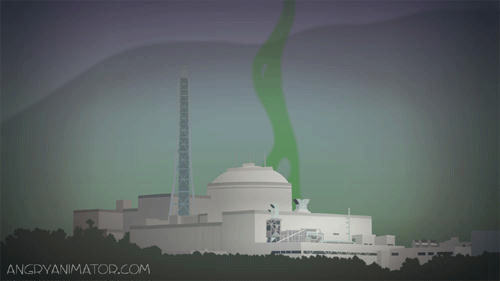 Japan Atomic again flubs maintenance checks at Monju reactor http://www.japantimes.co.jp/news/2016/07/22/national/japan-atomic-again-flubs-maintenance-checks-at-monju-reactor/?utm_source=feedburner&utm_medium=feed&utm_campaign=Feed%3A+japantimes+%28The+Japan+Times%3A+All+Stories%29#.V5gV29J97Gj JIJI The Japan Atomic Energy Agency again failed to conduct checks on a device at its experimental Monju fast-breeder reactor and overlooked a warning signal from a maintenance management system for about three months, it was learned Friday.
The state-affiliated agency, which recently came under fire for failing to inspect thousands of devices at Monju, is investigating the cause of the latest mishap and devising measures to prevent a recurrence.
According to sources familiar with the matter, the device in question controls the temperature of sodium coolant for the prototype reactor, which is situated in Tsuruga, Fukui Prefecture.
The JAEA was slated to complete the inspection by the end of March, after moving up the previous deadline, which was set at the end of May
Around the end of February, the maintenance management system installed at Monju started to display a warning signal. But it was not until May 27 that agency officials noticed it, the sources said.
JAEA reported the problems to the Nuclear Regulation Authority and completed the inspection of the temperature-controlling device on May 31, the sources said.
A massive sodium leak and coverup bid in December 1995 caused Monju’s operations to be suspended. It was eventually brought back online in May 2010, but halted again by a different problem in August the same year.
In November 2012, it was found that JAEA failed to carry out maintenance checks on more than 10,000 devices at Monju. After that, the NRA effectively banned the JAEA from operating the reactor.
In November last year, the NRA recommended to science and technology minister Hiroshi Hase that JAEA be replaced as Monju’s operator. The ministry is studying the matter.
South Korea in charge of nuclear power system in United Arab Emirates
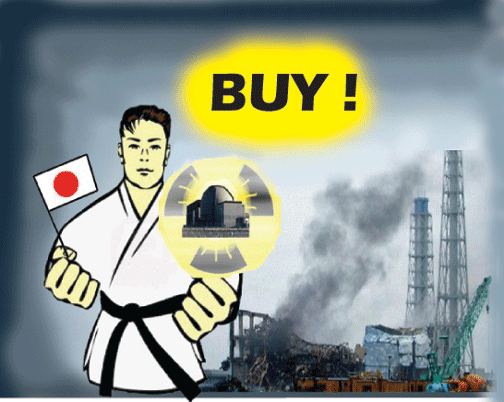 South Korea signs $880 million nuclear reactor staffing deal in UAE http://www.upi.com/Business_News/2016/07/25/South-Korea-signs-880-million-nuclear-reactor-staffing-deal-in-UAE/9691469456937/ The reactors, still under construction, are Korean-designed and made. By Ed Adamczyk ABU DHABI, United Arab Emirates, July 25 (UPI) — South Korea will manage four nuclear reactors under construction in the United Arab Emirates, a deal worth an estimated $880 million, officials said Monday.
Cho Seok, CEO of state-run Korea Hydro & Nuclear Power, signed an operation support services agreement in a ceremony Monday to run the four Korean-made reactors at Barakah, UAE.
Construction of the four reactors began in 2009, with the finish of the first scheduled for May 2017. All four are expected to be completed by 2020. At a signing ceremony in Abu Dhabi on Monday, Mohamed al-Hammadi, CEO of the UAE’s Emirates Nuclear Energy Corp., said, “Over the next decade and beyond, the agreement will continue to build on and enhance the existing long-term nuclear energy partnership between the UAE and South Korea.”
Citizen science takes on Japan’s nuclear establishment
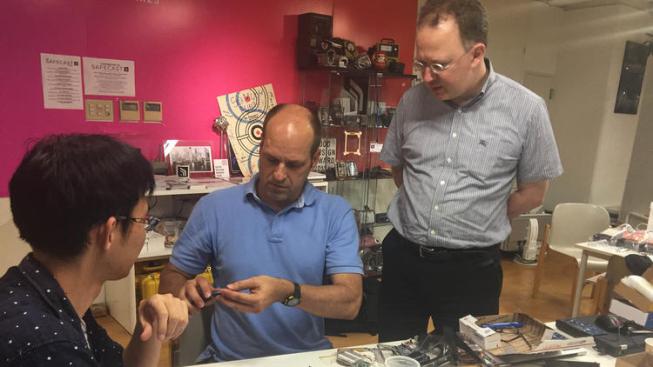
Joe Moross, center, and Pieter Franken, right, teach Kohei Matsushita how to assemble one of Safecast’s Geiger counter kits at the group’s Tokyo office on July 6, 2016.
As other Tokyo office workers poured into restaurants and bars at quitting time one recent evening, Kohei Matsushita went to the eighth floor of a high-rise for an unusual after-hours activity : learning how to assemble his own Geiger counter from a kit.
Hunched over a circuit board, the 37-year-old practiced his soldering technique as Joe Moross, a former L.A. resident with a background in radiation detection, explained how to fit together about $500 worth of components – including a sensor, circuit board, digital display, GPS module, battery and case.
“My family has a house near a nuclear power plant,” Matsushita said, explaining his motivation. “I want to take this there and collect data, and contribute to this pool of information.”
“This pool” is a stunning set of data – 50 million readings and counting, all logged and mapped on a website anyone can see – collected by volunteers with self-built equipment. Known as Safecast, the group was founded just days after the massive earthquake, tsunami and nuclear meltdown that shocked Japan in March 2011.
Though the immediate threat of radiation from the Fukushima Daiichi nuclear power plant has waned, interest in Safecast’s data has not. The organization, which takes no position on nuclear power, is supported by foundations, grants and individual donations.
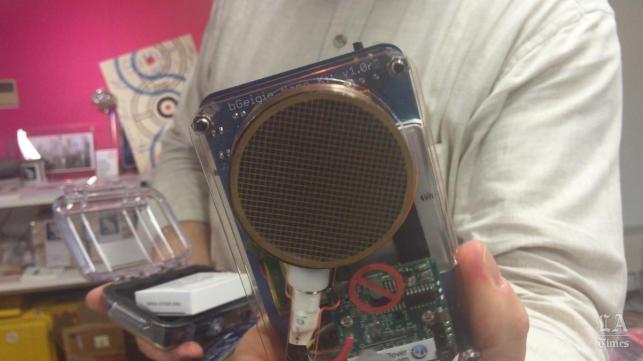
Safecast teaches Japanese citizens how to monitor radiation
Volunteers from Safecast teach people how to build geiger counters that are networked together to give them access to realtime data about radiation levels remaining after the 2011 Fukushima nuclear power plant melted down as a result of an earthquake and tsunami.
Part of the growing movement known as citizen science, the idea is to give people the knowledge and the tools to better understand their environment, and make more informed decisions based on accurate information.
Trust in both nuclear power plant operators and the government has not fully recovered since the disaster. As authorities push ahead with the contentious process of restarting dozens of nuclear reactors taken off-line in wake of the disaster, Japanese like Matsushita say a network of monitors controlled by ordinary people could serve as an early warning system in the event of another disaster.
Meanwhile, as Prime Minister Shinzo Abe’s administration continues with its extensive effort to decontaminate areas around Fukushima Daiichi and reopen evacuated towns and villages, potential returnees say they want a way to verify official numbers that indicate radiation really has dropped to safe levels.
“They want people to come back, but there’s no decontamination in the forest areas and those cover 75% of this village,” says retired engineer Nobuyoshi Ito, 72, who in 2010 opened an eco-farm retreat in Iitate, about 20 miles northwest of the nuclear power plant. Recently, he had Safecast install a radiation monitor at the retreat, which is still in a restricted zone. “We have to check ourselves.”
++
Joe Moross straps a GPS-enabled Geiger counter the size of a small brick to the back window of his red station wagon on the outskirts of Tokyo and begins a 16-hour day driving north through the most contaminated areas around the Fukushima nuclear plant. In the last five years, he calculates he’s driven 90,000 miles gathering data for Safecast.

Joe Moross has driven 90,000 miles gathering data for Safecast. A Geiger counter equipped with a GPS module hangs from the back window of his station wagon.
Through a Bluetooth connection, he can monitor the Geiger counter’s readings on his cellphone as he goes. But he also keeps a mental log of more qualitative signs of the region’s transformation.
“That 7-Eleven reopened in 2014,” he notes as he nears the town of Tomioka. “That Family Mart came back in 2015.” In the town of Naraha, he gasps. “That’s the first rice growing in the fields here in five years!”
Along the way, he passes several dozen fixed-point radiation monitors installed by the government along the roadsides. Their solar-powered, digital displays provide readouts in microsieverts per hour (μSv/hr); today’s show relatively low readings from 0.1 to 3.8 between the towns of Hirono and Minamisoma. That is less than what one would be exposed to on a long flight, although that exposure lasts only as long as the flight.
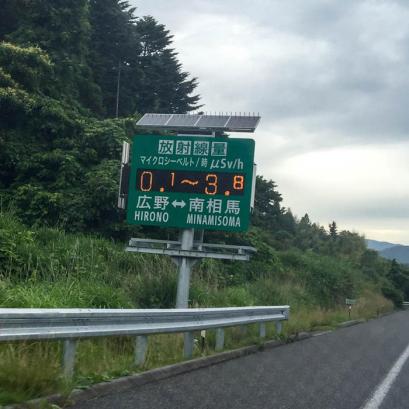
A roadside sign installed by the Japanese government south of the Fukushima Daiichi nuclear plant displays radiation readings.
Moross’ much more granular, mobile data, recorded every five seconds and uploaded to the Web the next day, generally matches the government signs, though when passing near the Fukushima plant, Moross’ counter produces readings above 4 μSv/hr. (Not long after the disaster, Safecast found readings higher than 30 in the region).
In the town of Iwaki, Moross drops in on Brett Waterman, a 51-year-old Australian who’s been teaching English in the area for 11 years and was having some technical issues with a Safecast monitor.
“Like most people, I knew nothing about radiation” when the disaster hit, says Waterman, who acquired an early Safecast Geiger counter through Kickstarter and has since upgraded to more sophisticated models as the group has refined its designs. Waterman says the data indicate Iwaki is now safe, but it’s important to keep generating frequent readings to provide a reference of what’s “normal” in case circumstances change.
Safecast holds regular sessions for adults to teach them to assemble their own devices and is planning a kids’ workshop as well. Plans and directions for building the devices are also available online for free. Organizers say that people who build their own monitors are much more motivated to use them.
“If they just buy one, they may use it once, throw it in a drawer and never upload any data,” says Moross. “If they make it themselves, they’re more invested.”
++
Safecast’s tiny Tokyo office feels like a combination tech start-up, old-school shop class, and comedy club for middle-aged expats. As Moross inspects Matsushita’s soldering progress, English teacher Jonathan Wilder, 59, is busy gathering switches, resistors, batteries, and sensors and parceling them out into plastic bags that will become kits for Safecast’s current workhorse Geiger counter, known as the bGeigie Nano.
Moross and Wilder trade jokes as Azby Brown, 60, an expert on traditional Japanese architecture, sits at another table typing up news for the group’s blog; he has just led Safecast’s efforts to publish its first scientific paper, in the Journal of Radiological Protection. Pieter Franken, a Dutch expatriate and chief technology officer for a large securities firm, looks over some materials for the group’s upcoming kids’ workshop.
“Safecast is an interesting social experiment, in a fairly anarchistic kind of way,” says Franken, one of the group’s founders. “It taps into trends including maker-spaces, the Internet of things and even artists. We attract people who want to break out of the traditional way of solving problems.”
Safecast grew out of an email conversation among Franken, L.A.-based tech entrepreneur Sean Bonner and MIT Media Lab director Joichi “Joi” Ito immediately after the March 11, 2011, disaster. As the Fukushima crisis unfolded, Safecast’s effort to produce and distribute Geiger counters and collect data snowballed, drawing in more expertise and volunteers. The group has successively iterated smaller and smaller Geiger counters with more functionality for data collection.
In the last five years, Safecast volunteers have taken radiation readings all over the world, from Brisbane, Australia, to Santa Monica. The group is also working on monitoring air quality in Los Angeles and elsewhere; recently, volunteers took methane readings around Porter Ranch during the gas leak there. Now, Safecast is trying to figure out how to depict that kind of data meaningfully online.
Moross says the potential applications for citizen-based environmental monitoring are vast, pointing to incidents such as the recent scandal over the lead-tainted water supply in Flint, Mich., as an example of where deeper community-based scientific knowledge could have improved debate and policymaking.
“Flint and Fukushima have parallels,” says Moross. “Democracy should start from facts, and we need to give citizens facts to understand what’s happening.”
Safecast has taken heat from both pro- and anti-nuclear activists, Brown says. “But if people spend some time with us, they find we are valuable.” Even Japan’s postal service has cooperated with Safecast, putting its monitors on carriers’ motorbikes in some towns and gathering data.
Safecast’s goal now is, essentially, “base-lining the world,” says Franken, crowdsourcing environmental data from every corner of the Earth.
“We should start with measuring our environments,” he says. “Then we can talk about things like global warming and air pollution; from there, activism can start. Once you know, for example, that your street is polluted, you can start to make a change. That’s where we can make a difference.”
http://www.latimes.com/world/asia/la-fg-japan-safecast-snap-story.html
Dumpling soup from Fukushima like grandma used to make

“Ganimaki suiton” (front) from Minamisoma, Fukushima Prefecture and “mami suiton” (back) of Naraha.
The Japan Football Village (J-Village) is a soccer training facility located in Naraha, Fukushima Prefecture, where Yoshiteru Nishi, chef for the national soccer team, works.
It is located about 20 kilometers from the Fukushima No. 1 nuclear power plant. After the 2011 accident at the plant, J-Village was used as a base for decommissioning work.
The green grass pitch was covered in gravel and turned into a parking lot. The restaurant was closed.
That summer, Nishi was asked to cook for the decommissioning workers. He had seen the workers eating canned or boil-in-the-bag foods.
“There are people who need my skills,” Nishi thought, and opened a cafeteria at the facility. He served a buffet of fried chicken, grilled fish, simmered dishes and more. He wanted to support those working in a grueling environment with nutritious meals.
Meanwhile, he opened a restaurant in the neighboring town of Hirono, where eating and drinking establishments remained closed due to the nuclear power plant accident.
“I wanted to create a place where the residents returning from evacuation spots can eat warm meals and feel relaxed,” the 54-year-old chef says.
The menu includes “suiton,” a local dumpling soup with chicken and vegetables that was popular at J-Village. Former national team coach Philippe Troussier once commented, “This is grandma’s taste,” and named it “mami suiton” (mommy’s suiton).
Nishi also introduced another version of suiton called “ganimaki,” a local specialty of Minami-Soma.
Ganimaki is a soup of “mokuzu-gani” (Japanese mitten crab) caught in local rivers. They are finely crushed and run through a sieve. When poured into boiling water, the essence floats up in fluffy form. In Minami-Soma, it is a dish served on festive occasions.
When he was small, Nishi would busy himself catching the deep-green-colored crabs in the river. When his mother stir-fried them with eggs, they tasted heavenly.
Due to radiation contamination caused by the Fukushima plant accident, the Japanese mitten crabs of Minami-Soma are not allowed to be consumed.
“I yearn for them all the more,” Nishi says.
For the recipe, he used crabs caught in Iwaki in southern Fukushima Prefecture.
“The food culture of Fukushima has been nurtured by the large number of people who live here,” Nishi says. “I will strive to keep the tradition alive.”
http://www.asahi.com/ajw/articles/AJ201607270008.html
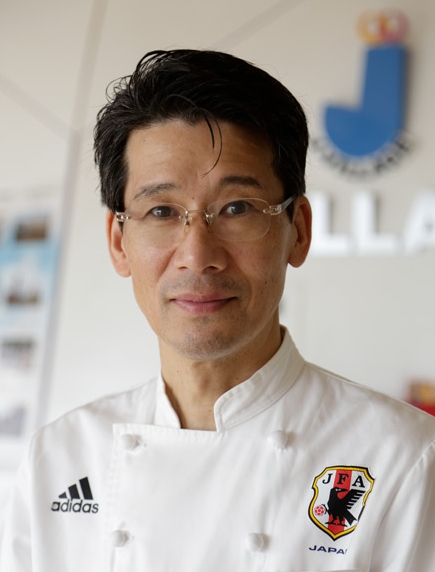
The Japan Football Village (J-Village) is a soccer training facility located in Naraha, Fukushima Prefecture, where Yoshiteru Nishi, chef for the national soccer team, works.
Space dose 1.55 micro Sv/h, Koriyama city, park waterside hotspot
Published on Jul 20, 2016 by Birdhairjp
July 16, 2016 (five years & four months from the nuclear disaster)
I monitored radiation around Gohyakubuchi-park of Koriyama city, Fukushima Prefecture, Japan.
Space dose of the height of the chest of the promenade circling the pond, was approximately 0.27 to 0.30 micro sievert per hour.
At the entrance of the park, a sighnboad shows the decontamination result by the city.
Before the decontamination: 2.33 micro Sv/h as of Sep of 2011
After the decontamination: 0.21 micro Sv/h as of Jun of 2016
(Air dose rate 50cm high from the ground level)
My monitor shows space dose 0.47 on the pond-side promenade near a floodgate to the waterway into the woods.
Space dose on the promenade in the park forest is at the height of the breast, was 0.3 to 0.45 micro Sv/h
To the waterside in the forest, there is a hot spot that radioactive material is collected.
Approaching to the place, the value of the dosimeter is jumped.
Space dose of the height of the breast in the hot spots were recorded 1.5-1.9 micro Sv/h.
Measuring instrument that was used during the video shoot, Ukraine made, ECOTEST’s MKS-05.
Koriyama city : population, about 330,000 people.
Fukushima Daiichi Urged To Prepare For Future Tsunamis; No Sarcophagus For Meltdowns
TEPCO urged to cut risk of radioactive water leak
Japan’s nuclear regulator has urged the operator of the crippled Fukushima Daiichi nuclear power plant to reduce the risk of leaking of highly radioactive water from the facility into the sea, in case of another tsunami.
About 60,000 tons of such water is believed to have pooled in reactor buildings at the plant. The operator, Tokyo Electric Power Company, or TEPCO, is injecting water into the buildings to cool melted nuclear fuel, and groundwater is flowing into their basements.
The Nuclear Regulation Authority instructed TEPCO at a meeting on Tuesday to urgently study measures to lower the amount and radiation levels of the water.
The authority proposed 2 measures to TEPCO. One is building more tanks to store the water, even though the plant has about one thousand tanks. The other is treating the water using a system designed to filter out radioactive material, and circulating the water in a cooling system.
NRA member Toyoshi Fuketa said the utility cannot keep the water in the buildings forever. He said TEPCO should handle the water problem either along with that of other radioactive water or first of all.
Following the NRA’s instruction, TEPCO is to report the results of its study at a meeting next month or later.
State minister rules out sarcophagus option
Japan’s state minister for industry has ruled out the option of sealing off disabled reactors at the Fukushima Daiichi nuclear plant with a Chernobyl-style sarcophagus.
Fukushima Renewable Future Fund Established to Build Brighter Future
The Fukushima Renewable Future Fund was established on February 4, 2016, to serve as a repository for donations from both inside and outside Japan to support reconstruction efforts in Fukushima, which was severely affected by the Great East Japan Earthquake (which occurred on March 11, 2011) and the accident at the Fukushima Daiichi Nuclear Power Plant that accompanied the quake. The Fund aims to support initiatives in the fields of renewable energy, regional revitalization, and education and welfare, and is led by residents of Fukushima Prefecture trying to help the region recover from the disaster.
The Fund is engaged in two projects. One is a community-based project focusing on reconstruction efforts and future development in Fukushima. This project aims to discover voluntary reconstruction initiatives led by local residents, and to provide them with financial assistance using donations from Japan and abroad.
The other project records and archives memories of the Fukushima nuclear disaster. The project aims to build and operate a memorial hall that will preserve records and memories of the accident. The hall will welcome visitors from Japan and abroad and help to pass on lessons learned from the disaster to future generations.
Three months after the accident, Fukushima residents declared they would create a scenario for the future in which they will pursue sustainable development without depending on nuclear power plants. Originally, Fukushima was a place where residents lived lives emphasizing local history and traditions, showing their gratitude for the abundant blessings of nature, and maintaining warm-hearted ties among people. The Fund aims to revitalize Fukushima in the future while taking pride in the prefecture, as well as to disseminate lessons learned from the Fukushima disaster to the world in an attempt to prevent the tragedy of nuclear accidents from ever happening again here on this earth.
1 This Month





PLEASE OPPOSE HR 8255 AND S.3639 – bills would accelerate satellite deployment, with no environmental review or safeguards – https://ncstd5li.quorum.us/campaign/169331/
To see nuclear-related stories in greater depth and intensity – go to https://nuclearinformation.wordpress.com
-
Archives
- October 2026 (39)
- September 2026 (339)
- August 2026 (330)
- July 2026 (355)
- June 2026 (287)
- May 2026 (306)
- April 2026 (356)
- March 2026 (251)
- February 2026 (267)
- January 2026 (308)
- December 2025 (358)
- November 2025 (359)
-
Categories
- 1
- 1 NUCLEAR ISSUES
- business and costs
- climate change
- culture and arts
- ENERGY
- environment
- health
- history
- indigenous issues
- Legal
- marketing of nuclear
- media
- opposition to nuclear
- PERSONAL STORIES
- politics
- politics international
- Religion and ethics
- safety
- secrets,lies and civil liberties
- spinbuster
- technology
- Uranium
- wastes
- weapons and war
- Women
- 2 WORLD
- ACTION
- AFRICA
- Atrocities
- AUSTRALIA
- Christina's notes
- Christina's themes
- culture and arts
- Events
- Fuk 2022
- Fuk 2023
- Fukushima 2017
- Fukushima 2018
- fukushima 2019
- Fukushima 2020
- Fukushima 2021
- general
- global warming
- Humour (God we need it)
- Nuclear
- RARE EARTHS
- Reference
- resources – print
- Resources -audiovicual
- Weekly Newsletter
- World
- World Nuclear
- YouTube
-
RSS
Entries RSS
Comments RSS

