First published: 2 July 2013
Abstract
Aim
The degree of contamination with radioactive cesium (134Cs and 137Cs) in the human placenta after the accident at Fukushima nuclear power plant (FNP), which occurred on 11 March 2011, has not been assessed.
Material and Methods
134Cs and 137Cs contents were determined in 10 placentas from 10 women who gave birth to term singleton infants during the period between October 2011 and August 2012 using high-purity germanium detectors for gamma ray spectrometry. Five women resided within 50 km of FNP (neighbor group) and gave birth by the end of February 2012, while the other five women resided within 210–290 km of FNP (distant group) and gave birth in July and August 2012.
Results
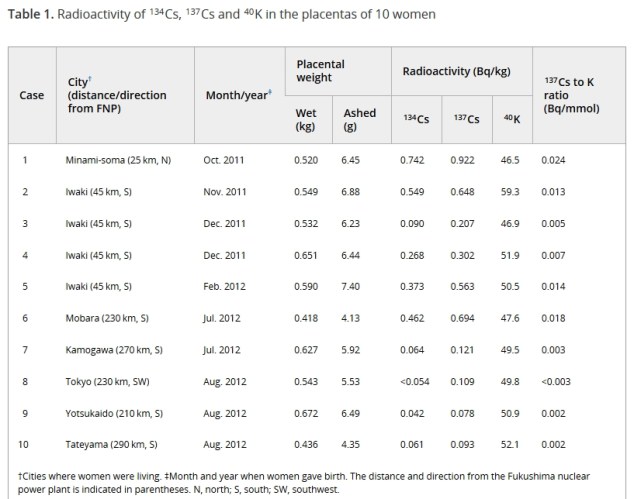
All except one of the 10 placentas contained detectable levels of 134Cs and 137Cs, ranging 0.042–0.742 Bq/kg for 134Cs and 0.078–0.922 Bq/kg for 137Cs. One placenta from a woman living in Tokyo contained 0.109 Bq/kg 137Cs and no detectable level of 134Cs (<0.054 Bq/kg). 137Cs content was more than 0.2 Bq/kg in four and one placentas in the neighbor and distant groups, respectively.
Conclusion
Degree of contamination of the placenta with radioactive Cs was lower even in women who resided within 50 km of FNP compared to Japanese and Canadian placentas in the mid-1960s after repeated nuclear tests and in northern Italian placentas from 1986–1987 after the Chernobyl power plant accident.
Introduction
After the accident at Fukushima nuclear power plant (FNP), triggered by the Great East Japan Earthquake on 11 March 2011, radioactive fallout was deposited over a wide area of Japan.[1, 2] Although the short-lived radionuclides, such as 131I (half-life, 8 days), decayed within a few days to months eventually reaching negligible concentrations, long-lived radioactive cesium (physical half-life, 2 years for 134Cs and 30 years for 137Cs) remained in detectable concentrations in the environment. These radionuclides reach pregnant women mainly through direct consumption of contaminated vegetables, crops, as well as animal and fish products. Contamination of breast milk with 131I was indeed documented in lactating women residing near FNP in April 2011.[1] The occurrence of milk powder contamination with 134Cs and 137Cs (22–31 Bq/kg) was announced by Meiji Holdings on 6 December 2011 (cited on 6 August 2012; available from http://www.meiji.co.jp/notice/2011/detail/20111206.html). This contamination was concluded to be derived from atmospheric air during the process of drying of milk powder, and not from water or dairy ingredients. Thus, environmental pollution with radioactive materials occurred and reached pregnant women after the FNP accident.
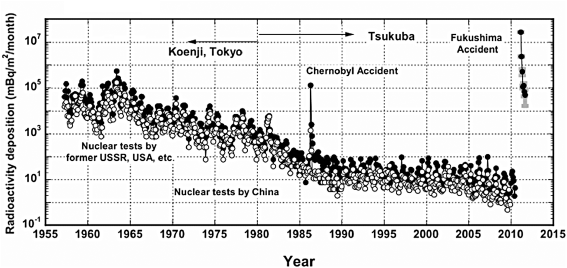
The placentas of women living in Hiroshima, Osaka, Tokyo and Canada in the 1960s contained detectable levels of 137Cs[3-5] due to environmental pollution with 137Cs after the repeated nuclear tests conducted by several countries, such as the USA and the former USSR. As the estimate of 137Cs deposition at the Meteorological Research Institute, Tsukuba, after the FNP accident far exceeded that in the 1960s in Japan (Fig. 1),[6] the placentas of women living near FNP may contain higher levels of 134Cs and 137Cs than those in the 1960s in Japan. However, the degree of placental contamination with radioactive Cs has not been studied. Therefore, the present study was performed to investigate the 134Cs and 137Cs contents in the placentas of women living within 300 km of FNP.
Measurement of radionuclides
Each whole placenta with a wet weight varying 0.418–0.672 kg was ashed to 4.13–7.40 g (Table 1) by muffle furnace at 450°C for 24 h after lyophilizing according to the preparation method recommended in the USA (http://www.epa.gov/rpdweb00/docs/marlap/402-b-04-001b-12-final.pdf). These ashed samples were placed individually into cylindrical plastic containers (100-mL capacity). To determine the gamma-emitting nuclides in the samples, gamma ray spectrometry was performed for more than 80 000 s with high-purity germanium detectors (GEM40-76; Ortec, Oak Ridge, TN, USA) connected to a multichannel analyzer and analytical software, and the activity concentrations of the radionuclides were corrected to the delivery dates. Each measured radioactivity was multiplied by 2(N/T): N and T were intervals until the measurement after delivery of the placenta (year) and half-life of each radionuclide (year), respectively. The energy and efficiency calibrations were performed using the nine nuclides mixed activity standard volume sources (MX033U8; Japan Radioisotope Association, Tokyo, Japan) composed of 109Cd, 57Co, 139Ce, 51Cr, 85Sr, 137Cs, 54Mn, 88Y and 60Co. These sources, contained in the same containers as the samples, had five different heights (0.5, 1, 2, 3 and 5 cm, respectively) to determine the detection efficiency of the detector as a function of sample height.
Results
As expected, 134Cs and 137Cs were detected in nine and 10 of the 10 placentas with varying activities ranging 0.042–0.742 Bq/kg for 134Cs and 0.078–0.922 Bq/kg for 137Cs, respectively (Table 1), while relatively constant levels of 40K were detected, ranging 46.5–59.3 Bq/kg, regardless of the differences in cities where they were living after the FNP accident. If we assumed that 134Cs content was 0.050 Bq/kg for case 8, median 134Cs content, 0.373 Bq/kg (range, 0.090–0.742) in the five placentas of the neighbor group was relatively higher than that of 0.061Bq/kg (range, 0.042–0.462) in the five placentas of the distant group, but difference did not reach a significant level (P = 0.05556, Mann–Whitney U-test). Median 137Cs content was 0.563 Bq/kg (range, 0.207–0.922) for the neighbor group and 0.109 Bq/kg (range, 0.078–0.694) for the distant group (P = 0.09524).
Discussion
The present study demonstrated that placentas of women living within 290 km of FNP contained detectable levels of 134Cs and 137Cs. The difference in degree of contamination of placentas with radioactive Cs may have reflected dietary habits, the degree of environmental pollution and the interval until delivery after the FNP accident. The shortened biological half-life of radioactive Cs from approximately 100 days for non-pregnant adults to approximately 60 days in pregnant women[7] may have also contributed to the lesser contamination of the placenta in women who gave birth in and after July 2012. Although environmental pollution with radioactive Cs has been decreasing, daily 137Cs activities of fallout exceeded 10 MBq/km2 in 15 days in March 2012 in Fukushima City (Preliminary results of monitoring the environmental radioactivity level of fallout [File number 93], cited on 10 August 2012; available from http://radioactivity.mext.go.jp/old/ja/1285/2012/03/1285_033018.pdf). Surface soils contained more than 1000 Bq/kg of radioactive Cs in wide areas of Fukushima Prefecture where the five women of the neighbor group were living (cited on 10 August 2012; available from http://www.s.affrc.go.jp/docs/map/pdf/02_2_04bunpu_fukushima.pdf).
As shown in Figure 1, environmental pollution with radionuclides occurred after the repeated nuclear tests in the mid-20th century and after the Chernobyl accident in 1986. According to a study that examined 137Cs content in the placenta and urine of inpatients at Hiroshima University Hospital and in daily foods served for these inpatients over a 5-year period from 1966–1970,[5] 137Cs content in the placentas was approximately 35 pCi (1.3 Bq)/kg, 137Cs daily dietary intake was approximately 30 pCi (1.1 Bq) and 137Cs daily excretion in the urine was approximately 25 pCi (0.9 Bq) in 1966. Japanese and Canadian groups investigated 137Cs content in the human placentas collected in the Tokyo and Osaka areas in Japan and in the Montreal area in Canada in the mid-1960s.[3, 4] The average content of 137Cs was similar in Japanese and Canadian placentas, regardless of the differences in dietary habits (averages of 25.2 pCi [0.93 Bq]/kg and 24.8 pCi [0.92 Bq]/kg for Japanese and Canadian placentas, respectively).[3] Thus, placentas of Japanese and Canadian women in the mid-1960s contained an average of 0.9–1.3 Bq/kg 137Cs. Placentas contained less than 0.8 Bq/kg 134Cs and less than 1.0 Bq/kg 137Cs in this study. Although there may be a problem of direct data comparison between studies in which different assay methods were used, these results suggested that placentas of Japanese and Canadian women in the mid-1960s were more heavily contaminated with 137Cs than the placentas examined in this study.
The Chernobyl accident occurred on 26 April 1986. According to the Japanese Ministry of Education, Culture, Sports, Science and Technology (released on 13 March 2012; cited on 6 August 2012; available from http://radioactivity.mext.go.jp/ja/list/338/list-1.html), total amounts of dispersed 131I and 137Cs into the environment after the FNP accident were 1.3–1.6 × 10¹⁷ Bq and 1.1–1.5 × 10¹⁶ Bq, respectively, while corresponding values after the Chernobyl accident were 1.8 × 10¹⁸ Bq and 8.5 × 10¹⁶ Bq, respectively. Thus, the degree of environmental pollution is estimated to be 11–14-fold higher for 131I and 6–8-fold higher for 137Cs after the Chernobyl accident than after the FNP accident. An Italian group examined 134Cs and 137Cs contents in the placentas of women who gave birth at the University of Bologna over a 13-month period from June 1986 to September 1987 after the Chernobyl accident.[8] Mean placental 137Cs content increased from 4.2 Bq/kg in June 1986, showing a peak of 11.5 Bq/kg in March 1987, and then decreased to 6.6 Bq/kg in September 1987.[8] The Italian group also estimated dietary 137Cs intake on the basis of the average diet in the region where study subjects lived;[8] daily 137Cs intake was estimated to be 15 Bq in the summer of 1986,[8] which is approximately 14-fold higher than that of 1.1 Bq in the Hiroshima area, Japan, in 1966.[5] An investigation conducted 4 months after the FNP accident in early July 2011 revealed that median values of daily dietary intake of 134Cs and 137Cs were 0.6 Bq and 0.9 Bq in Soma (neighboring city to the north of Minami-soma), and 0.4 Bq and 0.7 Bq in Iwaki, respectively.[9] Thus, 137Cs content per kg of the placenta well reflected daily 137Cs intake and appeared to be 50–120% of the daily 137Cs intake. Another Italian group reported daily urinary excretion of 13.5 Bq 137Cs in people living in the Pordenone area of Italy in the latter half of 1987,[10] which is more than 10-fold higher than that of 0.9 Bq in women living in the Hiroshima area in 1966.[5] Thus, levels of exposure to radioactive Cs in Japanese pregnant women in the mid-1960s and after the FNP accident were much lower than those in women living in certain areas of Europe after the Chernobyl accident. In another report from Germany,[11] the radioactive Cs load in the placenta was shown to have increased by 10-fold compared with studies before the Chernobyl accident in western Germany.
The ratio of radioactive Cs to total K (stable and radioactive) is conventionally taken as a measure of radioactive Cs contamination, independent of body size and sex.[12] Soft tissue 137Cs content corrected for potassium did not differ between mother and fetus,[13] suggesting that the placenta is not a barrier for radioactive Cs. Mean activities of placental 40K were reported to be 770 pCi per placenta (57 Bq/kg) and 45 Bq/kg in Japanese[4] and Italian[8] studies, respectively, consistent with the values ranging 46.5–59.3 Bq/kg in this study. The heaviest contaminated placenta contained 0.922 Bq/kg 137Cs and 46.5 Bq/kg 40K. This 40K activity was equivalent to a placental K level of 38.4 mmol/kg. Thus, this placenta exhibited a 137Cs to K ratio of 0.024 Bq/mmol. According to a study in Glasgow by Watson,[12] whole-body 137Cs to total body K was 0.109 Bq/mmol after the Chernobyl accident; this figure is several-fold higher than that of 0.037 Bq/mmol determined in mainland Scotland in 1978–1979,[14] and that of 0.024 Bq/mmol in the placenta of case 1 in this study. The mean whole-body activity of naturally occurring 40K was 2859 Bq for females (52 Bq/kg, if we assume that bodyweight was 55 kg),[12] falling between two figures (45 Bq/kg[8] and 57 Bq/kg[4]) of placental 40K activity. Thus, placental 40K activity concentration appeared to be similar to whole-body 40K activity concentration.
A study of the whole-body radioactive Cs[15] showed another aspect of exposure to 134Cs and 137Cs in Minami-soma residents after the FNP accident. Although only one Minami-soma resident was included in our study population, this woman showed less placental contamination than those reported in the published work.[3-5, 8] However, relatively heavy exposure to radioactive Cs occurred in residents in Minami-soma. According to a study that examined whole-body radioactive Cs (134Cs and 137Cs) in 9498 residents in Minami-soma during the period between 26 September 2011 and 31 March 2012,[15] radioactive Cs (≥210 Bq for 134Cs and ≥250 Bq for 137Cs) was detected in 38% (3051/8066) of adults and 16% (235/1432) of children (6–15 years old), ranging 210–12 771 Bq (median, 744 Bq), with a concentration of 2.3–196.5 Bq/kg (median, 11.4) for adults and 210–2953 Bq (median, 590), with a concentration of 2.8–57.9 Bq/kg (median, 11.9) for children. Based on these data, we speculated that the pregnant Minami-soma woman in this study may have managed to avoid contaminated food materials. Available data on whole-body 134Cs and 137Cs activities are as follows: whole-body 134Cs and 137Cs activities were 172 Bq and 363 Bq, respectively, in non-pregnant adults living in the Glasgow area in June and July 1986 after the Chernobyl accident;[12] and that for 137Cs activity was estimated to be 3 nCi (111 Bq) in 1966, with a gradual decline to less than 1 nCi (37 Bq) in 1969 in pregnant Japanese women living in the Hiroshima area.[5]
In conclusion, placentas from women living within 290 km of FNP contained detectable levels of 134Cs and 37Cs. However, the degree of contamination was lower than those in Japanese and Canadian women in the mid-1960s and in northern Italian women in 1986–1987 after the Chernobyl accident. It has not been elucidated how placental contamination with radioactive Cs occurring in the past affected fetuses adversely. Such adverse effects, if present, may be disclosed in follow-up studies that are being conducted in Fukushima Prefecture in future.
http://onlinelibrary.wiley.com/doi/10.1111/jog.12071/full
August 14, 2016
Posted by dunrenard |
Fukushima 2013, Fukushima 2016 | cesium 134, cesium 137, Fukushima Radiation, Human Placenta |
Leave a comment
The government’s official pretexts for incinerating Hiroshima and Nagasaki still dominate public opinion. In 2005, a Gallop poll reported that 57 percent of people surveyed in the US believed the bombings were justified and legitimate. The myth retains its usefulness. President Obama’s proposed 30-year, trillion-dollar program to rebuild the nuclear weapons production establishment can only go ahead if taxpayers hold fast to the idea that something good can come from the mass destruction of civilians.

“The atomic bomb had nothing to do with the end of the war at all.”
— Maj. Gen. Curtis LeMay, WWII Air Force Commander of the 21st Bomber Command, Sept. 20, 1945.
With President Obama’s May 27 visit to Hiroshima, reporters, columnists and editors generally adhered to the official story that “the atomic bomb…ultimately spared more Japanese civilians from a final invasion,” as Kaimay Yuen Terry wrote for the Minneapolis StarTribune, or that, “Without it, more Japanese would have died in a US assault on the islands, as would have tens of thousands of Americans,” as Mike Hashimoto wrote for the Dallas Morning News.
“The dropping of the bombs stopped the war, saved millions of lives,” Harry Truman wrote in his memoir Truman Speaks. Oddly, historians have found no record of any memo, cable, command projection or study, military or civilian, where this estimate was suggested to him. In his book The Invasion of Japan, historian John Ray Skates says, “… prophecies of extremely high casualties only came to be widely accepted after the war to rationalize the use of the atomic bombs.” And historian Martin J. Sherwin has “cited a ‘considerable body’ of new evidence that suggested the bomb may have cost, rather than saved, American lives. That is, if the US had not been so determined to complete, test, and finally use the bomb, it might have arranged the Japanese surrender weeks earlier, preventing much bloodshed on Okinawa.”
Obama — uttering not a word about the historical controversy roiling since 1945 — perpetuated the rationalization, cover-up, and nostalgia that guarantees the US will never apologize for the needless and experimental massacre of 200,000 Japanese civilians. As Hashimoto wrote, “No apology [is] needed for sparing lives on both sides…”
The New York Times reported vaguely that, “Many historians believe the bombings on Hiroshima and then Nagasaki, which together took the lives of more than 200,000 people, saved lives on balance, since an invasion of the islands would have led to far greater bloodshed.”
While “many” historians may still believe this, the majority do not. As noted by the US Nuclear Regulatory Commission’s chief historian J. Samuel Walker: “The consensus among scholars is that the bomb was not needed to avoid an invasion of Japan and to end the war within a relatively short time. It is clear that alternatives to the bomb existed and that Truman and his advisers knew it,” Walker wrote in the winter 1990 issue of Diplomatic History.
Five years earlier, historian Gar Alperovitz wrote in Atomic Diplomacy, “[P]resently available evidence shows the atomic bomb was not needed to end the war or to save lives — and that this was understood by American leaders at the time.” Further declassification made his lengthy history, The Decision to Use the Atomic Bomb and the Architecture of An American Myth (Knopf, 1995) even stronger on this point.
Admirals and Generals Debunk the Myth
Contrary to Gov. Sarah Palin’s claim that Obama’s visit to Hiroshima “insults veterans,” the fiction that the atomic bombs ended the war is the real insult to the people who actually fought and won the war against Japan. The official myth that incinerating Hiroshima and Nagasaki forced Japan’s surrender ignores and obscures the fact that combat veterans and bomber crews defeated Japan well before August 6, 1945 — by sacrificing so mightily in dangerous bombing raids and in bloody battles for Midway, Guadalcanal, Iwo Jima, Okinawa, and elsewhere. Dozens of high-level military officers have testified to this fact.
Most of the ranking officers who directed the war in the Pacific have never agreed that the atom bombs were conclusive. Maj. Gen. Curtis LeMay, Commander of the 21st Bomber Command, speaking publicly and for the record Sept. 20, 1945, said unequivocally: “The war would have been over in two weeks without the Russians entering and without the atomic bomb.” Pressed by a reporter who asked, “Had they not surrendered because of the atomic bomb?” Gen. LeMay — who directed the destruction of 67 major Japanese cities using mass incendiary attacks — said flatly, “The atomic bomb had nothing to do with the end of the war at all.”
Likewise, Gen. George Kenny, who commanded parts of the Army Air Forces in the Pacific, when asked in 1969 whether it was wise to use atom bombs, said, “No! I think we had the Japs licked anyhow. I think they would have quit probably within a week or so of when they did quit,” Alperovitz recounts in The Decision.
Alperovitz’s research found that Adm. Lewis Strauss, special assistant to WW II Navy Secretary James Forrestal, wrote to the naval historian Robert Albion Dec. 19, 1960 “from the Navy’s point of view, there are statements by Admiral King, Admiral Halsey, Admiral Radford, Admiral Nimitz and others who expressed themselves to the effect that neither the atomic bomb nor the proposed invasion of the Japanese mainland were necessary to produce the surrender.”
In Mandate for Change, Gen. Dwight Eisenhower wrote that when Secretary of War Henry Stimson told him atomic bombs were going to be used, “I voiced to him my grave misgivings, first on the basis of my belief that Japan was already defeated and that dropping the bomb was completely unnecessary…”
President Truman’s Chief of Staff, Adm. William Leahy, adamantly agreed. As Robert Lifton and Greg Mitchell, report in Hiroshima in America: 50 Years of Denial, Leahy said, “It is my opinion that the use of this barbarous weapon at Hiroshima and Nagasaki was of no material assistance in our war against Japan. The Japanese were already defeated and ready to surrender because of the effective sea blockade and the successful bombing with conventional weapons….” Lifton and Mitchell also note that Henry “Hap” Arnold, Commanding General of the Army Air Forces, said in his memoirs, “It always appeared to us that, atomic bomb or no atomic bomb, the Japanese were already on the verge of collapse.”
Answers to questions about the need of the atomic bombings were given early on, but some were kept secret. “[T]he US Strategic Bombing Survey published its conclusion that Japan would likely have surrendered in 1945 without atomic bombing, without a Soviet declaration of war, and without an American invasion,” Alperovitz reports in The Decision. The historian spent 30 years studying the issue and has revealed that a 1946 study by the Intelligence Group of the War Department’s Military Intelligence Division — discovered in 1989 — “concluded the atomic bomb had not been needed to end the war” and “judged that it was ‘almost a certainty that the Japanese would have capitulated upon the entry of Russia into the war.’”
The government’s official pretexts for incinerating Hiroshima and Nagasaki still dominate public opinion. In 2005, a Gallop poll reported that 57 percent of people surveyed in the US believed the bombings were justified and legitimate. The myth retains its usefulness. President Obama’s proposed 30-year, trillion-dollar program to rebuild the nuclear weapons production establishment can only go ahead if taxpayers hold fast to the idea that something good can come from the mass destruction of civilians.
John LaForge is a Co-director of Nukewatch, a peace and environmental justice group in Wisconsin, and edits its newsletter.
http://www.counterpunch.org/2016/08/09/how-us-hiroshima-mythology-insults-veterans/
August 14, 2016
Posted by dunrenard |
Japan | Hiroshima, Myth, Nagasaki, WWII Atomic Bombings |
Leave a comment

Fukushima to use rare Pokemon to lure tourists back
Japan is planning to use Pokemon Go to lure tourists back to its quake hit regions, including in the radiation affected prefecture of Fukushima.
Officials for four prefectures in Japan have announced they are partnering with the Japanese subsidiary of Niantic, the US company behind the Pokemon Go game.
They hope that creating virtual attractions in the popular location-based game will help draw people back to the natural disaster affected areas.
Iwate, Miyagi and Fukushima prefectures are located in the north of the country and were heavily impacted by the 2011 earthquake and tsunami.
Kumamoto, located in southern Japan, suffered a series of earthquakes in April this year.

A handout image made available 16 March 2011 by Japanese Fukushima nuclear plant operator Tokyo Electric Power Co (TEPCO)
The game is already live in Japan, but players would find extra goodies in the four prefectures under the plan.
Game-makers will add more PokeStops – places where treasured items can be found, and more Pokemon Gyms – locations where people can meet and send their captured monsters into battle.
Officials say they will also place more rare Pokemon in the areas for players to hunt.
Tourism promotions say that less than 10 per cent of Fukushima is affected by radiation exclusion zones, insisting that other areas are safe to visit.
Officials in Miyagi, Iwate and Fukushima have also been planning ‘recovery tours’ in which guides take visitors to sites affected by the disasters.
But there are limits.
Tokyo Electric Power Company Holdings, TEPCO, reportedly had to request game developers to prevent Pokemon from spawning in radiation affected areas of Fukushima, to avoid drawing players into hazardous areas.
Nuclear reactors at the Fukushima Daiichi Nuclear Power Plant suffered meltdowns as a result of the 2011 earthquake and tsunami, and TEPCO says they recently found Pokemon at the site.
https://www.sbs.com.au/news/article/2016/08/12/fukushima-use-rare-pokemon-lure-tourists-back
August 14, 2016
Posted by dunrenard |
Fukushima 2016 | Fukushima continuing, Tourism |
Leave a comment

Ikata nuclear power plant, foreground, is located at the root of the Sadamisaki Peninsula.
The No. 3 reactor at Shikoku Electric Power Co.’s Ikata nuclear plant in Ehime Prefecture was restarted Aug. 12, becoming the fifth reactor to be brought online under the stricter safety standards introduced in the aftermath of the 2011 Fukushima nuclear disaster.
The move followed the restart of the No. 1 and No. 2 reactors at Kyushu Electric Power Co.’s Sendai nuclear plant in Kagoshima Prefecture and the No. 3 and No. 4 reactors at Kansai Electric Power Co.’s Takahama plant in Fukui Prefecture. However, the two reactors at the Takahama plant have remained offline since March after the Otsu District Court ordered the operator to shut them down.
The No. 3 unit at the Ikata plant is now the only operating reactor in Japan that burns mixed oxide, or MOX, fuel, composed of plutonium blended with uranium.
But this reactor shares many of the serious safety problems that have been pointed out for the reactors at the Sendai and Takahama plants. It is impossible for us to support the decision to resume operations of the Ikata plant reactor without resolving these problems.
What is particularly worrisome about the Ikata plant is the anticipated difficulty in securing the smooth evacuation of local residents in the event of a serious accident.
The facility is located at the root of the Sadamisaki Peninsula, a 40-kilometer-long spear of land that juts westward into the sea with a maximum width of 6 km or so.
This narrow strip of land west of the plant is home to about 5,000 people.
The only land route for the emergency evacuation of local residents is a national highway that passes near the nuclear plant into inland areas.
Under the evacuation plan crafted jointly by the local governments in the region and the central government, local residents are supposed to be evacuated mainly by ship from ports in the peninsula if the highway becomes impassable because of an accident at the plant.
But many of the communities in the peninsula are located on slopes in coastal areas. They could be cut off from the rest of the peninsula if a landslide occurs.
There are seven radiation protection facilities within the town of Ikata, but four of them are located in designated landslide-prone areas.
People aged 65 or older account for more than 40 percent of the town’s population.
The municipal government has plans in place to support the evacuation of residents of each district. But residents say there is no way to secure evacuation of the entire town if multiple disasters occur.
People living in areas located between 5 and 30 kilometers from a nuclear power plant are supposed to take shelter in their own homes or public facilities, in principle, when a serious nuclear accident takes place.
But the series of earthquakes that rocked central Kyushu around Kumamoto Prefecture in April underscored anew the devastating effects of multiple disasters. The swarm of quakes included two registering a maximum intensity of 7 on the Japanese seismic scale, which caused severe damage to buildings across wide areas of Kumamoto Prefecture.
Ehime Prefecture is likely to be shaken violently if it is struck by the predicted massive Nankai Trough earthquake.
But the prefecture is ill-prepared for such a gigantic quake, with the ratio of public facilities that are quake-proof in the prefecture being the third lowest in Japan. These public facilities are supposed to play a key role in disaster response scenarios.
Evacuation plans are designed mainly to cope with situations in the wake of a single nuclear accident.
At the very least, however, the central and local governments should give serious consideration to the possibility of a nuclear accident being triggered or accompanied by other disasters like an earthquake and a landslide, and evaluate whether the lives of local residents will be protected in such situations.
Satoshi Mitazono, the new governor of Kagoshima Prefecture who took office last month, has indicated his intention to ask Kyushu Electric Power to halt the two reactors at its Sendai plant in response to local anxiety that has been aroused by the Kumamoto earthquakes.
Shikoku Electric Power’s decision to bring the Ikata reactor back on stream despite the fresh safety concerns is deplorable.
Another sticky issue is how to dispose of spent nuclear fuel.
If the No. 2 reactor at the Ikata plant is also restarted following the No. 3 unit, the spent fuel pool will become full in six to seven years. But there is no prospect of building a new storage facility for spent fuel.
There is no practical way, either, to reprocess spent MOX fuel.
The utility, which covers the Shikoku Island, has apparently enough capacity to meet power demand during this summer too.
The company has estimated that restarting the reactor will boost its annual earnings by 25 billion yen ($247 million). But this offers no compelling case for bringing the reactor back online at this moment.
Electric utilities, the central government and local governments in areas where nuclear power plants are located should all stop seeking to restart reactors until they have first dealt with the raft of safety issues.
http://www.asahi.com/ajw/articles/AJ201608130031.html
August 14, 2016
Posted by dunrenard |
Japan | Ikata NPP, Reactor Restart |
Leave a comment

 Shikoku MOX plant restarts amid outcry over fresh quake fears, Japan Times, BY ERIC JOHNSTONSTAFF WRITER, 12 Aug 16, MATSUYAMA, EHIME PREF. – Shikoku Electric Power Co. restarted the Ikata No. 3 reactor Friday at its plant on the narrow Sadamisaki Peninsula in Ehime Prefecture as citizens groups sought injunctions in three different prefectures to turn it back off amid various safety concerns, including the viability of evacuations.
The reactor is the fifth to be switched back on since all of the nation’s atomic reactors were closed due to the March 2011 triple core meltdown at the Fukushima No. 1 power plant following a mega-quake and tsunami.
However, a March decision by the Otsu District Court to place a temporary injunction on two Kansai Electric Power Co. reactors in Takahama, Fukui Prefecture, left only two reactors at Kyushu Electric Power Co.’s Sendai plant in Kagoshima Prefecture in operation. They were restarted a year ago.
The Ikata No. 3 unit is also the only reactor burning the mixed uranium-plutonium oxide (MOX) fuel…….
the reactor’s restart has not gone unchallenged. The Otsu District Court decision, which shut down Kepco’s Takahama No. 3 and 4 reactors less than two months after they were restarted, has energized residents who opposed the Ikata restart. In light of the quakes in Kyushu earlier this year, many now fear a natural disaster could also damage the reactor, and that official evacuation plans for the slender peninsula could prove unrealistic.
Petitions seeking a temporary injunction on the Ikata reactor have been filed in the district courts of Matsuyama in Ehime, as well as Hiroshima and Oita, by people living relatively close to the plant. Matsuyama is about 60 km from Ikata and Hiroshima is within 100 km. Oita’s Saganoseki Peninsula is about 45 km away.
A temporary injunction from any one of the three courts would almost certainly mean Ikata No. 3 would have to shut down immediately. For this reason, anti-nuclear lawyers involved with the petitions remain hopeful the courts will do what politicians have not.
“The Otsu court decision to shut down the Takahama reactors sent a shock wave through the government and the utilities. Political measures including demonstrations are needed. But I’ve come to believe the best way to stop the restart of nuclear power plants is through legal means, such as filing lawsuits and requests for temporary injunctions,” Hiroyuki Kawai, a lawyer involved with the Matsuyama, Hiroshima and Oita petitions, said at a news conference in Matsuyama late last month.
The Otsu decision angered Kepco and senior corporate leaders in the Kansai region who fear it will spark a nationwide movement against nuclear power plants. Some are now pushing the government to establish a separate court presided over by judges with specialized knowledge, or to establish separate legal measures to review petitions by citizens’ groups targeting restarts in the hope of obtaining more favorable rulings.
“From the viewpoint of a stable energy supply, it’s necessary to reduce the legal risks as much as possible,” Kansai Economic Federation chairman and former Kepco Chairman Shosuke Mori said at his regular news conference last month.
Other pro-nuclear Kansai economic leaders support Mori’s call for legal changes.
“Why should the nation’s energy policy be impaired by a judge at a district court? I hope the law is quickly changed so this doesn’t happen,” said Kansai Economic Federation Vice Chairman and Hankyu Railways Chairman Kazuo Sumi after the initial Oita ruling in March.
In their request for a temporary injunction on the Ikata unit, citizens’ groups cite the fact that it lies about 5 km from the Median Tectonic Line, which runs from Kyushu to Honshu. They also say that evacuation plans in the event of a natural disaster that damages the plant could prove impossible if the roads along the narrow, landslide-prone peninsula hosting it collapse or are washed away by a tsunami…….http://www.japantimes.co.jp/news/2016/08/12/national/shikoku-electric-poised-fire-ehime-plant-mox-reactor-amid-protests/#.V642mlt97Gg
August 13, 2016
Posted by Christina Macpherson |
Japan, Legal |
Leave a comment
 US government accuses Hinkley point partner of nuclear espionage, SC Magazine, Max Metzger, Reporter, 12 Aug 16 Major partners in the controversial nuclear power plant at Hinkley Point have been accused in American courts of attempting to steal US nuclear technology. Fears over Chinese involvement in a new nuclear power plant at Hinkley Point have been reinforced as a major partner in the plant’s development has been accused by the US government of nuclear espionage.
Szuhsiung Ho, an advisor to the state-owned China General Nuclear Power (CGN) company, which would have a 33 percent stake in the new plant at Hinkley, has been charged with “conspiracy to unlawfully engage and participate in the production and development of special nuclear material outside the United States”.
Essentially, the US Department of Justice has accused Szuhsiung Ho, otherwise known as Allen Ho, of trying to steal US nuclear technology.
Ho, under orders from CGN, is supposed to have tried to get US nuclear experts to help develop nuclear material in China. According to a statement released by the DoJ, for nearly 20 years, between 1997 and 2016, Ho “identified, recruited and executed contracts with US-based experts from the civil nuclear industry who provided technical assistance related to the development and production of special nuclear material”.
Of particular interest to Ho and his co-conspirators was assistance with CGN’s programmes on small modular reactors, advanced fuel assembly and fixed in-core detectors.
If one is to act as an agent of a foreign power within the United States, their status must be declared to the US attorney general. Not only did Ho not do this but explicitly told those he was trying to recruit that he was acting on behalf of the Chinese state. The DoJ records him as telling his potential recruits that he was working surreptitiously to help China “to design their Nuclear Instrumentation System independently and manufacture them independently”.
None of the accusations have yet been proven but the charges could carry a sentence of life and a US$250,000 (£192,000) fine.
The case is being pursued by a number of US law enforcement agencies including the Department of Energy – National Nuclear Security Administration and the US Federal Bureau of Investigation (FBI). Executive assistant director of the FBI’s national security branch Michael Steinbach said in a statement, “The arrest and indictment in this case send an important message to the US nuclear community that foreign entities want the information you possess”.
“The federal government has regulations in place to oversee civil nuclear cooperation, and if those authorities are circumvented, this can result in significant damage to our national security. The US will use all of its law enforcement tools to stop those who try to steal US nuclear technology and expertise.”…….http://www.scmagazineuk.com/us-government-accuses-hinkley-point-partner-of-nuclear-espionage/article/515702/
August 13, 2016
Posted by Christina Macpherson |
China, Legal, secrets,lies and civil liberties, USA |
Leave a comment
Japan reactor restarts, despite protests, boosting Tokyo’s nuclear push, http://www.abc.net.au/news/2016-08-12/japan-reactor-restarts-in-post-fukushima-nuclear-push/7729892Japan has restarted a nuclear reactor despite a court challenge by local residents, in a boost for Tokyo’s faltering post-Fukushima push to bring back atomic power.
Operator Shikoku Electric Power said it switched on the No 3 reactor at its Ikata nuclear power plant in Ehime prefecture, about 700 kilometres south-west of Tokyo.
The reactor — shuttered along with dozens of others across Japan in the wake of the March 2011 Fukushima accident — was expected to be fully operational by August 22.
The prefecture’s governor and the mayor of the plant’s host town agreed on the restart in October, in the face of opposition from some local residents who filed a lawsuit to halt the refiring.
Japan’s Prime Minister Shinzo Abe and utility companies have been pushing to get reactors back in operation after a huge earthquake and tsunami caused a disastrous meltdown at the Fukushima nuclear power plant in north-eastern Japan.
The accident forced all of Japan’s dozens of reactors offline in the face of public worries over the safety of nuclear power and fears about radiation exposure, forcing a move to pricey fossil fuels.
Opposition to nuclear power has seen communities across the country file lawsuits to prevent restarts, marking a serious challenge for Mr Abe’s pro-nuclear stance.
In April, a court ruled that Japan’s only two working nuclear reactors could remain online, rejecting an appeal by residents who said tougher post-Fukushima safety rules were still inadequate. Two other reactors in central Japan had also been restarted before a court in March ordered them offline in response to a legal challenge.
Including the reactor restarting on Friday, Japan will have just three operating reactors — and furious local residents have vowed to fight on.
“We protest this restart of the Ikata nuclear reactor and are extremely angry,” the residents’ group said in a statement, adding that the reactor’s use of a plutonium-uranium MOX fuel made it especially dangerous.
“We can’t have another Fukushima.”
The utility said it would make “ceaseless efforts” to ensure the plant was safe and to keep residents informed about key details of the restart.
August 13, 2016
Posted by Christina Macpherson |
Japan, opposition to nuclear |
Leave a comment
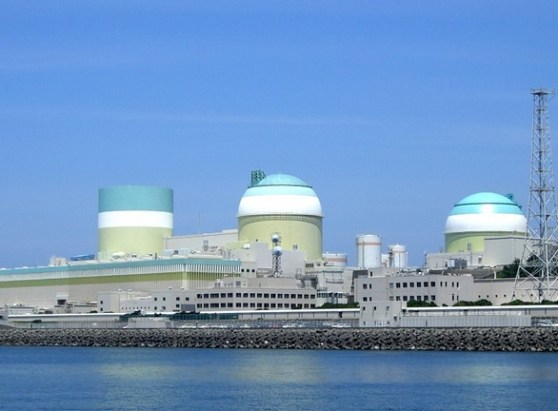
The three-unit Ikata nuclear power plant in the south of Japan.Its 890MW unit 3 is the only reactor in Japan that has a chance of restarting in 2016.
For all Japan’s talk of 43 ‘operable’ nuclear reactors, only two are actually running, writes Jim Green, as renewables and a 12% fall in demand eat into the power market. And while Japan’s ‘nuclear village’ defends safety standards, the IAEA, tasked with promoting nuclear power worldwide, has expressed deep concerns over the country’s weak and ‘fragmented’ safety regulation.
According to the World Nuclear Association, Japan has 43 ‘operable’ power reactors (they are ‘operational’ according to the IAEA), three under construction, nine ‘on order or planned’, and three ‘proposed’.
The numbers suggest that Japan’s nuclear industry is finally getting back on its feet after the Fukushima disaster – but nothing could be further from the truth.
Before considering the industry’s current problems, a little historical context from the World Nuclear Industry Status Report 2016:
“[I]t has been 17 years since Japan’s nuclear output peaked at 313 TWh in 1998. The noticeably sharp decline during 2002-2003, amounting to a reduction of almost 30%, was due to the temporary shutdown of all 17 of Tokyo Electric Power Company’s (TEPCO) reactors – seven at Kashiwazaki Kariwa and six at Fukushima Daiichi and four at Fukushima Daini.
“The shutdown was following an admission from TEPCO that its staff had deliberately falsified data for inclusion in regulatory safety inspections reports. During 2003, TEPCO managed to resume operations of five of its reactors.
“The further noticeable decline in electrical output in 2007 was the result of the extended shutdown of the seven Kashiwazaki Kariwa reactors, with a total installed capacity of 8 GWe, following the Niigata Chuetsu-oki earthquake in 2007. TEPCO was struggling to restart the Kashiwazaki Kariwa units, when the Fukushima earthquake occurred.”
How many of Japan’s reactors are really ‘operable’?
Nuclear power accounted for 29% of electricity generation in Japan in 2010, down from the historic peak of 36% in 1998, and plans were being developed to increase nuclear’s share to 50%. But all of Japan’s reactors were shut down in the aftermath of the Fukushima disaster. Reactors didn’t power a single light-bulb from September 2013 to August 2015.
Japan had 55 operable reactors before Fukushima (including the ill-fated Monju fast reactor). In addition to the six reactors at Fukushima Daiichi, the permanent shutdown of another six reactors has been confirmed – all of them smallish (<559 MWe) and all of them ageing (grid connections between 1969 and 1977): Kansai Electric’s Mihama 1 and 2, Kyushu Electric’s Genkai 1, Shikoku’s Ikata 1, JAPC’s Tsuruga 1, and Chugoku Electric’s Shimane 1.
So Japan now has 43 ‘operable’ or ‘operational’ reactors, and it isn’t hard to identify some with little or no prospect of ever restarting, such as the four Fukushima Daini reactors (or Monju for that matter).
Two reactors at Sendai in Kagoshima Prefecture were restarted in August and October 2015. And that’s it – only two of Japan’s 43 ‘operable’ or ‘operational’ reactors are actually operating. Moreover an anti-nuclear candidate, Satoshi Mitazono, was elected governor of Kagoshima Prefecture in early July 2016 and he announced that he will seek the shut-down of the two Sendai reactors – he can prevent their restart after they shut down for inspection later this year.
As of 1 July 2016, 11 utilities had applied to the Nuclear Regulatory Authority (NRA) for safety assessments of a total of 26 reactors, including seven reactors that have completed the assessment process. Apart from whatever hurdles the NRA might put in their way, there are other obstacles: citizen-led lawsuits; local political and public opposition; economic factors, in particular the questionable economics of large investments to upgrade and restart aging reactors; and the impact of electricity deregulation and intensified market competition.
It’s anyone’s guess how many reactors might restart, but the process will continue to be drawn out – the only strong candidate for restart this year is the Ikata 3 reactor in Ehime Prefecture.
The government’s current energy policy calls for a 22-24% nuclear share of electricity generation by 2030. That is less than half of the pre-Fukushima plans for future nuclear growth (the 50% target), and considerably lower than the 29% nuclear share in 2010. Currently, nuclear power – the two Sendai reactors – account for less than 1%.
To reach the 20-22% target would require the operation of around 35 reactors by 2030, which seems highly improbable.
Cheap renewables picking up high-level support
The use of both fossil fuels and renewables has increased since the Fukushima disaster, while energy efficiency has made the task considerably easier – national power consumption in 2015 was 12% below the 2010 level.
The World Nuclear Industry Status Report comments on energy politics in Japan:
“Japanese utilities are insisting on, and the government has granted and reinforced, the right to refuse cheaper renewable power, supposedly due to concerns about grid stability – hardly plausible in view of their far smaller renewable fractions than in several European countries – but apparently to suppress competition.
“The utilities also continue strenuous efforts to ensure that the imminent liberalization of the monopoly-based, vertically integrated Japanese power system should not actually expose utilities’ legacy plants to real competition.
“The ability of existing Japanese nuclear plants, if restarted, to operate competitively against modern renewables (as many in the U.S. and Europe can no longer do) is unclear because nuclear operating costs are not transparent. However, the utilities’ almost complete suppression of Japanese wind power suggests they are concerned on this score.
“And as renewables continue to become cheaper and more ubiquitous, customers will be increasingly tempted by Japan’s extremely high electricity prices to make and store their own electricity and to drop off the grid altogether, as is already happening, for example, in Hawaii and Australia.”
The Japan Association of Corporate Executives, with a membership of about 1,400 executives from around 950 companies, recently issued a statement urging Tokyo to remove hurdles holding back the expansion of renewable power – which supplied 14.3 percent of power in Japan in the year to March 2016.
The statement also notes that the outlook for nuclear is “uncertain” and that the 20‒22% target could not be met without an improbably high number of restarts of idled reactors along with numerous reactor lifespan extensions beyond 40 years.
Andrew DeWit, a professor at Rikkyo University in Tokyo, said the push signalled “a profound change in thinking among blue-chip business executives.” DeWit added:
“Many business leaders have clearly thrown in the towel on nuclear and are instead openly lobbying for Japan to vault to global leadership in renewables, efficiency and smart infrastructure.”
Safety concerns – the case of Takahama
The restart of the Takahama 3 and 4 reactors in Fukui Prefecture is indicative of the nuclear industry’s broader problems. Kansai Electric Power Company (KEPCO) first applied to the NRA for permission to restart the reactors in July 2013. In February 2015, the NRA gave its permission for KEPCO to make the required safety upgrades. The restart process was delayed by an injunction imposed by the Fukui District Court in April 2015, but the ruling was overturned in December 2015.
Takahama 3 was restarted in late January 2016, and TEPCO was in the process of resolving technical glitches affecting the start-up of Takahama 4, when the Otsu District Court in neighbouring Shiga Prefecture ruled on 9 March 2016 that the reactors must be shut down in response to a petition by 29 citizens.
The court found that investigations of active fault lines and other safety issues were not thorough enough, it expressed doubts regarding the plant’s ability to withstand a tsunami, and it questioned emergency response and evacuation plans. Citizens and NGOs also questioned the use of arbitrary figures in KEPCO’s safety analysis, and fire protection.
Nuclear Engineering International reported on 2 February 2016:
“While there are plans on paper to evacuate some Fukui residents to Hyogo, Kyoto, and Tokushima prefectures, many municipalities there have no detailed plans for receiving evacuees. Kyoto Governor Keiji Yamada said he did not feel adequate local consent had been obtained, citing concerns about evacuation issues. Shiga Governor Taizo Mikazuki said there was a lack of sufficient disaster planning.”
On July 12, the Otsu District Court rejected KEPCO’s appeal and upheld the injunction preventing the operation of Takahama 3 and 4. KEPCO plans to appeal the decision to the Osaka High Court.
Meanwhile, KEPCO is considering whether it is worth investing in upgrades required for the restart of the Takahama 1 and 2 reactors. The NRA controversially approved 20-year lifespan extensions for the two reactors (grid connected in 1974 and 1975), but citizens have initiated a lawsuit to keep them shut down.
Japan’s ‘lax’ and’ inadequate’ regulatory regime
While safety and regulatory standards have improved in the aftermath of Fukushima, there are still serious problems. Citizens and NGOs have raised countless concerns, but criticisms have also come from other quarters.
When the NRA recently approved lifespan extensions for two Takahama reactors, a former NRA commissioner broke his silence and said “a sense of crisis” over safety prompted him to go public and urge more attention to earthquake risks. Kunihiko Shimazaki, a commissioner from 2012 to 2014, said: “I cannot stand by without doing anything. We may have another tragedy …”
Professor Yoshioka Hitoshi, a Kyushu University academic who served on the government’s 2011-12 Investigation Committee on the Accident at the Fukushima Nuclear Power Stations, said in October 2015:
“Unfortunately, the new regulatory regime is … inadequate to ensure the safety of Japan’s nuclear power facilities. The first problem is that the new safety standards on which the screening and inspection of facilities are to be based are simply too lax. While it is true that the new rules are based on international standards, the international standards themselves are predicated on the status quo.
“They have been set so as to be attainable by most of the reactors already in operation. In essence, the NRA made sure that all Japan’s existing reactors would be able to meet the new standards with the help of affordable piecemeal modifications – back-fitting, in other words.”
Even the IAEA has slammed the feeble NRA
An International Atomic Energy Agency (IAEA) review in early 2016 made the following recommendations (among others) regarding the NRA:
- To attract competent and experienced staff, and develop competencies relevant to nuclear and radiation safety.
- To amend relevant legislation with the aim of allowing NRA to improve the effectiveness of its inspections. The NRA inspection programme “needs significant improvement in certain areas. NRA inspectors should be legally allowed to have free access to any site at any time. The decision process for initiating reactive inspections should be shortened.”
- To strengthen the promotion of safety culture including a questioning attitude.
- To give greater priority to the oversight of the implementation of radiation protection measures.
- To develop requirements and guidance for emergency preparedness and response in relation to radiation sources.
The IAEA further noted that the NRA’s enforcement provisions are inadequate:
“There is no clear written enforcement policy in place at the NRA. There is no documented process in place at NRA for determining the level of sanctions. NRA inspectors have no power to enforce corrective actions if there is an imminent likelihood of safety significant event. They are required to defer to NRA headquarters. … NRA processes for enforcement are fragmented and some processes are not documented.
“NRA needs to establish a formal Enforcement Policy that sets forth processes clearly addressing items such as evaluation of the severity level of non-conformances, sanctions for different levels of non-conformances, processes for issuance of Orders, and expected actions of NRA inspectors if significant safety issues develop.”
As the industry declines, expect new safety cutbacks
The narrative from government and industry is that safety and regulatory standards in Japan are now adequate – or they soon will be once teething problems with the new regime are sorted out. NRA Chair Shunichi Tanaka claims that Japanese regulatory standards are “the strictest in the world.”
But Japan’s safety and regulatory standards aren’t strict. Improvements are ongoing – such as NRA actions in response to the IAEA report, and reports that legislation will be revised to allow unscheduled inspections of nuclear sites. But improvements are slow, partial and piecemeal and there are forces pushing in the other direction. An Associated Press report states that nuclear laws will be revised in 2017 but not enacted until 2020.
Reactor lifespan extensions beyond 40 years were meant to be “limited only to exceptional cases” according to then Prime Minister Yoshihiko Noda, speaking in 2012. Extensions were considered an emergency measure against a possible energy crunch. But lifespan extensions have been approved in the absence of an energy crunch, and more will likely follow.
If Japan’s nuclear history is any guide, already flawed safety and regulatory standards will be weakened over time. Signification elements of Japan’s corrupt ‘nuclear village’ are back in control just a few years after the Fukushima disaster. Add to that aging reactors, and utilities facing serious economic stress and intense competition, and there’s every reason to be concerned about nuclear safety in Japan.
Tomas Kåberger, Professor of Industrial Energy Policy at Chalmers University of Technology in Sweden, noted in the foreword to the latest edition of the World Nuclear Industry Status Report:
“A nuclear industry under economic stress may become an even more dangerous industry. Owners do what they can to reduce operating costs to avoid making economic loss. Reduce staff, reduce maintenance, and reduce any monitoring and inspection that may be avoided.
“While a stated ambition of ‘safety first’ and demands of safety authorities will be heard, the conflict is always there and reduced margins of safety may prove to be mistakes.”
August 12, 2016
Posted by dunrenard |
Japan | energy conservation, nuclear, renewables |
Leave a comment
BEIJING — Bowing to days of passionate street protests, a city government in eastern China said Wednesday that it had halted any plans to build a nuclear fuel plant there. The reversal was the latest indication of how public distrust could hold back China’s ambitious plans for expanding its nuclear power industry.
The government of Lianyungang, a city near the coast of Jiangsu Province, announced the retreat in a terse message online. “The people’s government of Lianyungang has decided to suspend preliminary work for selecting a site for the nuclear cycle project,” it read, referring to a proposed plant for reprocessing used fuel from nuclear plants.
No reason was given, but it appeared clear enough. In recent days, residents have taken to the streets to oppose any decision to build the plant nearby. The main urban area of Lianyungang is just 20 miles southwest of a large and growing nuclear power plant on the coast, but the idea of a nuclear fuel reprocessing facility also being built in the area seemed to push public unease to a new height.
A 21-year-old Lianyungang resident with the surname Tang said Wednesday that demonstrators had been chanting “Oppose nuclear waste, defend our home.” Like other people contacted there, she did not want her full name used, citing fear of reprisal for talking to reporters.
“Nobody wants this kind of thing built in their own home,” Ms. Tang said.
China’s authoritarian leaders are wary of local protests escalating into broader challenges to their power. But local governments have often given ground in the face of growing public opposition to chemical plants, waste incinerators and other potential sources of pollution. Now proposed nuclear projects are also becoming increasingly troublesome.
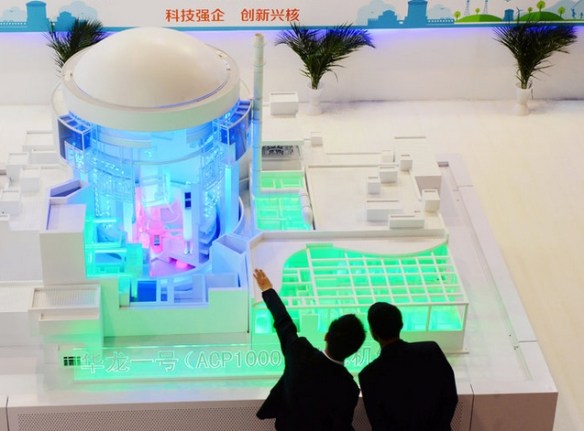
A model of a nuclear reactor on display at the stand for the China National Nuclear Corporation at an expo in Beijing last year. Across the country, the nuclear disaster in Fukushima, Japan, in 2011 has hardened public wariness of nuclear power.
“While the Chinese government does not hesitate to arrest the few political dissidents, it spends more time and energy to appease public demands,” Wenfang Tang, a professor of political science at the University of Iowa, who studies public opinion and politics in China, said in emailed comments.
“The high level of government sensitivity and responsiveness to public opinion further encourages political activism in Chinese society,” Professor Tang said. “The louder you are, the more quickly the government will respond.”
In Lianyungang and across China, the nuclear calamity in Fukushima, Japan, in 2011 has hardened public wariness of nuclear power, although the government argues that expanding the industry is essential for weaning the economy off coal, with all of its dangerous pollutants.
The biggest protest in Lianyungang took place on Saturday, when many thousands of people, including families with children, marched through the downtown area.
Despite warnings from the government, protests continued on a smaller scale this week, as residents defied ranks of riot officers with shields, according to news reports and video that people shared through social media.
“I told my daughter that she must go to this protest,” one resident said, according to Sixth Tone, an English-language news website based in Shanghai. “With every extra person, the momentum will get bigger.”
The announcement does not mean the nuclear fuel-reprocessing proposal is dead. The project is a collaboration between the China National Nuclear Corporation and a French company, Areva, and it has high-level government support, although no final agreement to build it has been signed. Five other Chinese provinces are under consideration for the initiative, and Lianyungang could lift its suspension. The two companies have said that they want to start building in 2020 and finish by 2030.
But in China, suspensions of contentious projects have a way of quietly turning into permanent cancellations, and Lianyungang appears likely to follow that pattern. The big question now will be whether public opposition coalesces in the five other areas under consideration.
All but one — Gansu Province in the northwest — is a heavily populated coastal province. Gansu is already home to China’s first civilian nuclear reprocessing plant, a small facility that has been held back by technical problems.
In 2013, officials jettisoned plans for a nuclear fuel fabrication plant in the southern province of Guangdong after protests. Preliminary proposals to build nuclear power plants inland have also ignited intense opposition.
The Chinese government has said that as it expands its fleet of nuclear power plants, it needs a plant for reprocessing spent fuel, a practice that separates unused plutonium and some uranium from waste. That unused material could be used to generate power, but critics have warned that the plutonium could be deployed for weapons. Japan has also built a full-scale reprocessing plant, but it has not started up yet.
On Chinese social media, and even on news websites, commentators said that the contention in Lianyungang showed that the public should have a bigger say in nuclear energy planning.
“In just a few days, the official stand of Lianyungang has undergone a sea change,” read a comment on Sohu.com, a Chinese news website. “Don’t underestimate just how determined the public is in opposition to nuclear waste, which is far more dangerous than wastewater from any paper pulp mill.”
http://www.nytimes.com/2016/08/11/world/asia/china-nuclear-fuel-lianyungang.html
August 12, 2016
Posted by dunrenard |
China | Project Suspended, Public Opposition, Reprocessing Plant |
Leave a comment
Ikata nuclear power plant in Ehime Prefecture, is restarted.
After the Tepco Fukushima Daiichi earthquake/tsunami disaster and the Kumamoto recent earthquake, it is to be wondered what Japan has learned?
The Ikata nuclear power plant is located on the Hinagu fault zone and Futagawa fault zone, themselves extension of Japan’s largest active fault “Median Tectonic Line”.
In case of any accident, for the residents living on Sadamisaki Peninsula evacuation would be only possible by boat to Kyushu Island, such evacuation would be therefore difficult, even impossible.
Unless there would be a Japanese Moses to open the sea, such evacuation plan should be referred to as an escape from reality.
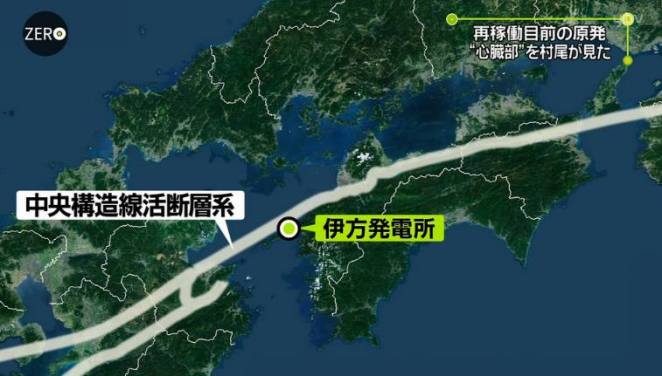
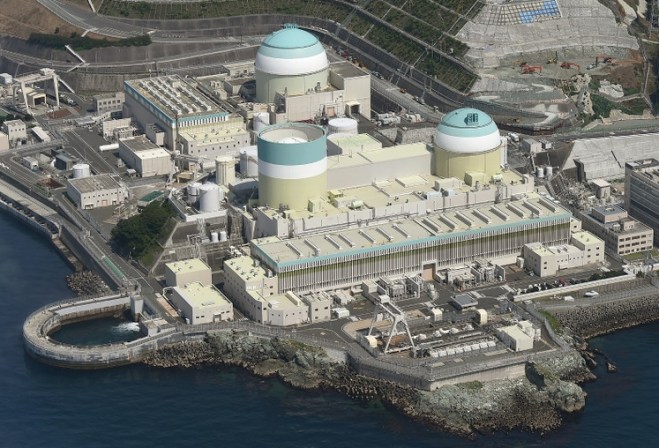
The Ikata Nuclear Power Plant in Ikata, Ehime Prefecture
MATSUYAMA, Japan (Kyodo) — Shikoku Electric Power Co. restarted a reactor at its Ikata power plant in western Japan on Friday, making it the fifth unit reactivated under tougher regulations set following the 2011 Fukushima nuclear disaster.
The No. 3 reactor at the plant in Ehime Prefecture is the only restarted unit in Japan that runs on uranium-plutonium mixed oxide, or MOX, fuel, as a court ordered Kansai Electric Power Co. in March to suspend two reactors at its Takahama plant after they resumed operations earlier this year, citing safety concerns.
MOX fuel, created from plutonium and uranium extracted from spent fuel, is a key component of the nuclear fuel recycle program pursued by the nuclear power industry and the government.
The government aims to bring reactors back online after the Fukushima crisis led to a nationwide halt of nuclear plants, as it plans to have nuclear power account for 20 to 22 percent of the country’s total electricity supply in 2030 to cut greenhouse emissions and lower imported fuel costs.
The Ikata unit is expected to reach criticality, or a state of sustained nuclear chain reaction, on Saturday and begin generating and transmitting electricity on Monday before resuming commercial operation in early September for the first time since it was halted in April 2011 for regular inspection.
“We will take steps toward criticality and resumption of power generation with priority on ensuring safety,” Shikoku Electric President Hayato Saeki said in a statement on Friday.
Meanwhile, around 70 residents and others opposing the reactor restart gathered around the seaside plant early Friday morning, chanting slogans such as “Don’t contaminate the Seto Inland Sea,” and “Stop the nuclear plant.”
Junko Saima, a 72-year-old woman from Yawatahama, adjacent to the town hosting the plant, which is located on one side of a narrow peninsula, said, “I am nervous that some kind of accident may occur.”
Opponents are concerned about the effectiveness of government-prepared evacuation plans in case of an accident and about potential major earthquakes that are not taken into account in the plans, while proponents are hailing the resumption as it could bring economic benefits.
The restart follows the reactivation of two reactors at Kyushu Electric Power Co.’s Sendai plant in Kagoshima Prefecture last year and the brief run of the Nos. 3 and 4 units at Kansai Electric’s Takahama complex in Fukui Prefecture.
The mayor of Ikata town and the governor of Ehime Prefecture have already given their consent to restart the No.3 reactor after regulators approved its restart in July last year.
In June, Shikoku Electric loaded nuclear fuel at the power plant eyeing to reboot it on July 26. However, reactivation was postponed due to problems with the reactor’s cooling system.
A group of local residents filed a suit in May seeking an injunction to halt the restart arguing that a series of earthquakes that have hit nearby Kyushu Island in April could trigger quakes along the median tectonic line running close to the Ikata reactor.
The plant is about 170 kilometers east of Kumamoto Prefecture, the epicenter of the quakes.
Meanwhile, in Kagoshima, new Gov. Satoshi Mitazono is planning to ask Kyushu Electric to suspend the two reactivated reactors at the Sendai plant to double-check any safety impact on the units from the powerful earthquakes that hit neighboring Kumamoto in April.
http://mainichi.jp/english/articles/20160812/p2g/00m/0dm/035000c
August 12, 2016
Posted by dunrenard |
Japan | Evacuation Plan, Ikata NPP, Mox Fuel, Reactor Restart, Reactor3 |
Leave a comment

This is a pale grass blue butterfly, one of the most common species of butterfly in Japan. Recent research has revealed major impacts on this species from the radiation leaks at the Fukushima nuclear power plant. Credit: Joji Otaki, University of the Ryukyus, Okinawa, Japan
Following the 1986 Chernobyl nuclear power plant meltdown, biological samples were obtained only after extensive delays, limiting the information that could be gained about the impacts of that historic disaster. Determined not to repeat the shortcomings of the Chernobyl studies, scientists began gathering biological information only a few months after the disastrous meltdown of the Fukushima Daiichi power plant in Japan in 2011. Results of these studies are now beginning to reveal serious biological effects of the Fukushima radiation on non-human organisms ranging from plants to butterflies to birds.
A series of articles summarizing these studies has now been published in the Journal of Heredity. These describe widespread impacts, ranging from population declines to genetic damage to responses by the repair mechanisms that help organisms cope with radiation exposure.
“A growing body of empirical results from studies of birds, monkeys, butterflies, and other insects suggests that some species have been significantly impacted by the radioactive releases related to the Fukushima disaster,” stated Dr. Timothy Mousseau of the University of South Carolina, lead author of one of the studies.
Most importantly, these studies supply a baseline for future research on the effects of ionizing radiation exposure to the environment.
Common to all of the published studies is the hypothesis that chronic (low-dose) exposure to ionizing radiation results in genetic damage and increased mutation rates in reproductive and non-reproductive cells.
One of the studies (Hayashi et al. 2014) documented the effects of radiation on rice by exposing healthy seedlings to low-level gamma radiation at a contaminated site in Fukushima Prefecture. After three days, a number of effects were observed, including activation of genes involved in self-defense, ranging from DNA replication and repair to stress responses to cell death.
“The experimental design employed in this work will provide a new way to test how the entire rice plant genome responds to ionizing radiation under field conditions,” explained Dr. Randeep Rakwal of the University of Tsukuba in Japan, one of the authors of the study.
Another team of researchers (Taira et al. 2014) examined the response of the pale grass blue butterfly, one of the most common butterfly species in Japan, to radiation exposure at the Fukushima site. They found size reduction, slowed growth, high mortality and morphological abnormality both at the Fukushima site and among laboratory-bred butterflies with parents collected from the contaminated site.
Multiple sources of exposure were included in the butterfly study. “Non-contaminated larvae fed leaves from contaminated host plants collected near the reactor showed high rates of abnormality and mortality,” explained Dr. Joji Otaki of the University of the Ryukyus in Okinawa, Japan. Some of their results suggested the possible evolution of radiation resistance in Fukushima butterflies as well.
A review of genetic and ecological studies for a range of other species at both Chernobyl and Fukushima (Mousseau 2014) revealed significant consequences of radiation. Population censuses of birds, butterflies, and cicadas at Fukushima showed major declines attributable to radiation exposure. Morphological effects, such as aberrant feathers on barn swallows, were also observed. The authors suggest that long-term studies at Chernobyl could predict likely effects in the future at the Fukushima site.
All of these studies highlight the need for early and ongoing monitoring at sites of accidental radiation release. “Detailed analyses of genetic impacts to natural populations could provide the information needed to predict recovery times for wild communities at Fukushima as well as any sites of future nuclear accidents,” Mousseau said. “There is an urgent need for greater investment in basic scientific research of the wild animals and plants of Fukushima.”
Provided by: American Genetic Association
http://m.phys.org/news/2014-08-biological-effects-fukushima-insects-animals.html
August 12, 2016
Posted by dunrenard |
Fukushima 2016 | Biological Effects, Fukushima continuing, radiation |
Leave a comment
HONG KONG – Agricultural minister Yuji Yamamoto said in Hong Kong on Thursday that he has requested the territory to lift a food ban that restricts imports from five Japanese prefectures most affected by a radiation-leak scare following the Great East Japan Earthquake in 2011.
Imports of Japanese food, including milk, vegetables and fruits, from Fukushima, Ibaraki, Tochigi, Gunma and Chiba prefectures have been banned since March 2011 following the magnitude-9 earthquake and subsequent tsunami that led to the nuclear plant meltdowns over worries about contamination by radioactive substances.
However, meat, poultry, eggs and aquatic products can be imported with radiation certificates stating their safety.
“I made a request to (Chief Secretary for Administration Carrie Lam during a meeting Wednesday), if the regulation on the import of food from Japan could be relaxed and be eliminated,” Yamamoto told media at the opening of the annual Food Expo, where a record number of more than 250 Japanese companies are in Hong Kong promoting their products, including those from the prefectures of Fukushima and Kumamoto, which was hit by a series of earthquakes in April.
“(On Friday) I should have a meeting with Secretary for Food and Health Ko Wing-man. I expect that they will respond after very careful consideration and deliberation,” he said, adding that he wishes there could be a scientific-based analysis of products from Fukushima to eliminate the reputational damage.
Ko said monitoring will remain for the safety of Hong Kong people.
“We have been relying on a risk- and evidence-based method to decide on the prohibition of fresh food imports from five Japanese prefectures,” Ko told reporters after touring the food fair. “We have continued to examine the progress made in Japan’s handling of the Fukushima nuclear incident,” including the measures they have put in place and test results on the food, he said.
“We will look at all the information and make decisions on a scientific basis. In the upcoming meeting (with Yamamoto), we will explain to them Hong Kong’s position, which, most importantly, is that we will manage food safety based on the well-being of Hong Kong people,” he said.
The value of Japan’s agricultural, forestry and fishery exports last year reached a record-high ¥745 billion ($7.34 billion). Hong Kong remained the top destination for the 11th consecutive year, with a value of ¥179 billion, marking a 33 percent increase from 2014, according to ministry data.
The sale of dried sea cucumber, considered a healthy seafood delicacy, to Hong Kong registered a slight decline, while sales of instant noodles increased by 50 percent, which Yamamoto said was a “major surprise.”
Eliza Au, 40, owner of a startup private kitchen, said after sampling products from Kumamoto Prefecture she is confident in the quality of Japanese food.
“The fruit, the Wagyu beef, all went under strict safety inspections, and the seasoning, the mix and match are all so appealing,” Au said.
The food fair, which showcases some 1,400 exhibitors from 26 countries and regions, will run through Monday.
http://www.japantimes.co.jp/news/2016/08/12/business/japan-urges-h-k-lift-ban-food-areas-near-fukushima-plant/#.V62BpjXKO-d
August 12, 2016
Posted by dunrenard |
Fukushima 2016 | Food contamination, Food Exports, Fukushima Radiation |
Leave a comment

MATSUYAMA, EHIME PREF. – Japan restarted another nuclear reactor Friday, as Shikoku Electric Power Co. reactivated reactor 3 at its Ikata nuclear plant in Ehime Prefecture.
It will be the first time in some five years and three months for the reactor to be switched on, since it was suspended for a routine safety inspection in April 2011.
The Ikata reactor 3, which is powered by MOX fuel, is the fifth to go back online under the county’s new safety regulations, introduced in July 2013 after the March 2011 reactor meltdowns at Tokyo Electric Power Company Holdings Inc.’s Fukushima No. 1 plant.
The Ikata plant is now the second nuclear plant in operation in Japan, joining Kyushu Electric Power Co.’s Sendai plant in Kagoshima Prefecture.
On Thursday, local residents staged a protest over the restart.
“Once you put a nuclear reactor back into operation, it’s hard to stop it,” said Shinichi Naide, a 51-year-old company employee.
Aki Hashimoto, 60, who joined the rally from Koriyama, Fukushima Prefecture, questioned what the country has learned from the Fukushima meltdowns. Nuclear authorities “must hear the voices of people who suffered from the Fukushima accident,” she said.
The reactivated reactor is slated to reach criticality, or a self-sustained nuclear fission chain reaction, early Saturday morning. On Monday, it will begin the generation and transmission of electricity, reaching full capacity on Aug. 22.
Shikoku Electric aims to start the plant’s commercial operations in early September.
The Ehime reactor 3 is the only restarted unit in Japan that runs on uranium-plutonium mixed oxide, or MOX, fuel, as a court ordered Kansai Electric Power Co. in March to suspend two reactors at its Takahama plant after they resumed operations earlier this year, citing safety concerns.
MOX fuel, created from plutonium and uranium extracted from spent fuel, is a key component of the nuclear fuel recycle program pursued by the nuclear power industry and the government.
The government aims to bring reactors back online after the Fukushima crisis led to a nationwide halt of nuclear plants, as it plans to have nuclear power account for 20 to 22 percent of the country’s total electricity supply in 2030 to cut greenhouse emissions and lower imported fuel costs.
The Ikata unit is expected to begin generating and transmitting electricity on Monday and resume commercial operation in early September in its first operation since it was halted in April 2011 for regular inspection.
The restart follows the reactivation of two reactors at Kyushu Electric Power Co.’s Sendai plant in Kagoshima Prefecture last year and the brief run of reactors 3 and 4 at the Takahama complex in Fukui Prefecture.
The mayor of Ikata and the governor of Ehime Prefecture have already given their consent to restart reactor 3 after regulators approved its restart in July last year.
In June, Shikoku Electric loaded nuclear fuel at the power plant, looking to reboot it on July 26. However, reactivation was postponed due to problems with the reactor’s cooling system.
A group of local residents filed a suit in May seeking an injunction to halt the restart arguing that a series of earthquakes that have hit nearby Kyushu in April could trigger quakes along the median tectonic line running close to the Ikata reactor.
The plant is about 170 km east of Kumamoto Prefecture, the epicenter of the quakes.
http://www.japantimes.co.jp/news/2016/08/12/national/shikoku-electric-poised-fire-ehime-plant-mox-reactor-amid-protests/#.V62BlzXKO-e
August 12, 2016
Posted by dunrenard |
Japan | Ehime Pref., Ikata NPP, Mox Fuel, Reactor 3 |
Leave a comment

Shenanigans at a nuclear power plant in Guangdong show that transparency when incidents occur is just as important as safety protocols
The official report on an incident at a nuclear power plant near Hong Kong, more than a year ago, raises some serious safety questions. As a result of a breach of operational guidelines, and an attempted cover-up, three staff at the Yangjiang nuclear plant in Guangdong, 220km from Hong Kong, received administrative warnings and their crew leader was stripped of his senior nuclear operator licence – a more severe punishment, though none lost their jobs. The Ministry for Environmental Protection said the incident occurred during maintenance in March last year. After receiving a system alert, the four staff took actions that caused a “residual heat removal pump” on one of the reactors – a crucial back-up part of the water-cooling system – to stop functioning for six minutes. They then tried to cover up the incident and did not enter it into a log book as required.
Technician shortage in China ‘threatens nuclear plant safety’
On the face of it, the incident may sound relatively trivial, especially if the unit was not running. People familiar with such operations say breaching guidelines briefly would usually fall well short of immediate safety significance. But a number of points remain unclear after an investigation that took more than a year. The statement did not say what caused the alert, what actions the four took that led to their warnings, or how the incident and the attempted cover-up came to light. Thankfully, two nuclear experts dismissed the possibility of a radioactive leak or public safety threat.
The most serious concern is the attempted cover-up. This perverts a reporting system put in place to help safeguard life and property because human error and safety incidents cannot be eradicated. The Yangjiang incident also highlighted a growing operational problem in the nuclear industry – the shortage of senior operators for a massive expansion needed to meet the country’s consumption and emissions-reduction goals. Uncompetitive pay rates for what can be a high-pressure job do nothing to help recruitment.
Nuclear cover-up: environment ministry slaps penalties on errant crew over failures at Guangdong plant
That said, it remains true there is no more reliable or cleaner way of producing electricity. China has earned a reputation for taking nuclear safety seriously and wanting to be seen to do so to help promotion of its nuclear technology to potential foreign buyers.
Exposure of the attempted cover-up is a reminder that transparency is as important with nuclear power plants as safety. Lessons learned with each incident can only result in safer and better reactors.
http://www.scmp.com/comment/insight-opinion/article/2001587/accidents-will-happen-covering-them-unacceptable
August 12, 2016
Posted by dunrenard |
China | Incident, Shenanigans, Yangjiang NPP |
Leave a comment
in China, suspensions of contentious projects have a way of quietly turning into permanent cancellations, and Lianyungang appears likely to follow that pattern.
“Don’t underestimate just how determined the public is in opposition to nuclear waste, which is far more dangerous than wastewater from any paper pulp mill.”
 Chinese City Backs Down on Proposed Nuclear Fuel Plant After Protests, NYT, 点击查看本文中文版 Read in Chinese By CHRIS BUCKLEY AUG. 10, 2016 BEIJING — Bowing to days of passionate street protests, a city government in eastern China said Wednesday that it had halted any plans to build a nuclear fuel plant there. The reversal was the latest indication of how public distrust could hold back China’s ambitious plans for expanding its nuclear power industry.
The government of Lianyungang, a city near the coast of Jiangsu Province, announced the retreat in a terse message online. “The people’s government of Lianyungang has decided to suspend preliminary work for selecting a site for the nuclear cycle project,” it read, referring to a proposed plant for reprocessing used fuel from nuclear plants.
No reason was given, but it appeared clear enough. In recent days, residents have taken to the streets to oppose any decision to build the plant nearby. The main urban area of Lianyungang is just 20 miles southwest of a large and growing nuclear power plant on the coast, but the idea of a nuclear fuel reprocessing facility also being built in the area seemed to push public unease to a new height…….The announcement does not mean the nuclear fuel-reprocessing proposal is dead. The project is a collaboration between the China National Nuclear Corporation and a French company, Areva, and it has high-level government support, although no final agreement to build it has been signed. Five other Chinese provinces are under consideration for the initiative, and Lianyungang could lift its suspension. The two companies have said that they want to start building in 2020 and finish by 2030.
But in China, suspensions of contentious projects have a way of quietly turning into permanent cancellations, and Lianyungang appears likely to follow that pattern. The big question now will be whether public opposition coalesces in the five other areas under consideration.All but one — Gansu Province in the northwest — is a heavily populated coastal province. Gansu is already home to China’s first civilian nuclear reprocessing plant, a small facility that has been held back by technical problems……..
On Chinese social media, and even on news websites, commentators said that the contention in Lianyungang showed that the public should have a bigger say in nuclear energy planning.
August 12, 2016
Posted by Christina Macpherson |
China, politics |
Leave a comment
 , 137Cs;
  , 90Sr. (Adopted from [