Public opposition threatens China’s grandiose nuclear power plans
 Protests threaten China’s nuclear energy plans, Global Risk Insights, 26 Aug 16 NIMBYism is on the rise in China, and without better dialogue between stakeholders, threatens to undermine Beijing’s nuclear plans and efforts to meet its COP21 goals.
Over the past two weeks, thousands of residents of Lianyungang, a town in Jiangsu province, have gathered, halting preparations for a proposed nuclear waste reprocessing plant. Lianyungang is one of six sites under consideration for the project, but the two companies developing the plant, China National Nuclear Co. (CNNC) and France’s Areva, have not yet decided on a final location.
China’s ambitious nuclear plans The proposed fuel reprocessing center would recycle spent fuel to create new fissile material. This process also reduces the final volume of nuclear waste that needs to be stored. Currently, spent fuel is stored onsite at the power plant, usually first in cooling pools and then in dry casks. Long term storage facilities, such as the controversial Yucca mountain repository in Nevada, have been unsuccessful in gaining regulatory approval. However, on-site waste storage is not viable in the long term, and fuel reprocessing centers, like the proposed $15 billion CNNC-Areva project, will be critical to the viability of nuclear energy in China.………
Chinese state media has attributed the movement in Lianyungang to “nimbyism.” The NIMBY (Not In My Backyard) mentality has led to the suspension or cancellation of other industrial projects in China, such as praxylene or waste incinerator plants.
Lack of public input fuels opposition There is growing advocacy in China for an expanded role for public input in planning these projects – currently decisions at the planning stages are made with little input from residents: “for many local residents, there is no absolute guarantee that those projects, if built in their neighborhood, can be 100 percent safe. If there is some harm, they will bear the brunt of the costs and risks…..” http://globalriskinsights.com/2016/08/nimbyism-threatens-china-nuclear-plans/
Nortyh Korea’s submarine – launched missile
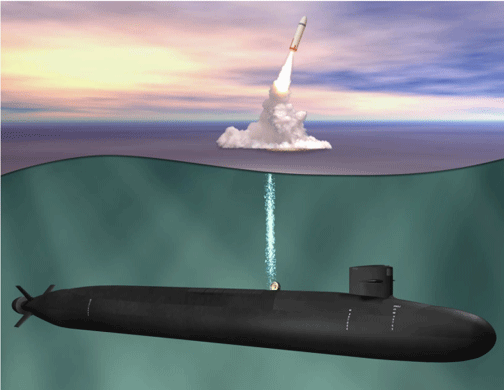 North Korea puts ‘another piece in puzzle’ towards nuclear
  capability, CNBC, David Reid | @cnbcdavy
26 Aug 16 North Korea’s latest missile test has security analysts admitting that the military-led country is closer than ever to possessing a nuclear missile system capable of attacking another country.
Pyongyang’s official KCNA news agency reported that regime leader Kim Jong Un supervised the test and described it as “the greatest success and victory”.
Research Analyst in Proliferation and Nuclear Policy at RUSI, Emil Dall, said to CNBC that Wednesday’s launch appears to be North Korea’s most successful missile test.
“It demonstrates Pyongyang’s continued determination to develop a fully-workable nuclear weapon capability, and this is another piece in that puzzle.
Dall said Thursday it was also probable the rogue state now has a nuclear bomb that can fit on the missile.
“Whether North Korea has been able to construct a nuclear warhead small enough to fit on to an intermediate-range missile is uncertain, but should be assumed at this point,” he said via email…….http://www.cnbc.com/2016/08/26/north-korea-will-soon-be-able-to-launch-nuclear-weapons.html
South Korea’s nuclear weapons advocates more vocal since North Korea’s missile test
 South Korean Nuclear Proponents: Conventional Deterrence is Failing, VOA, Brian Padden, 25 Aug 16 Youmi Kim in Seoul contributed to this report. SEOUL — South Korean advocates of nuclear deterrence say the government in Seoul must pursue its own nuclear weapons programs to defend against North Korea’s growing nuclear and ballistic missile capabilities.
Song Dae-sung, a political science professor at Kunkuk University in Seoul and author of the book Let’s Have Nuclear Power makes the case for a nuclear armed South Korea. “If North Korea becomes a nuclear-armed state and its adversary does not own nuclear power, then the non-nuclear state becomes a slave or hostage of the nuclear state. This is a basic principle of international politics,” said Song.
National Assembly Representative Won Yoo-chul, a leader within of the ruling Saenuri Party, has also been a strong nuclear advocate.
Won has put together a study group in the parliamentary National Defense Committee to assess the risks and benefits of South Korea pursuing its own nuclear program. “The most efficient way to deter nuclear warfare is to have nukes for our self-defense,” Won has said.
Growing threat
Seoul’s nuclear proponents argue that the international sanctions imposed on North Korea for its fourth nuclear test and most recent long-range rocket launch have so far not deterred Pyongyang……..
Negative consequences
However, South Korean President Park Geun-hye supports the current deterrence and containment regime that involves a close military alliance with the United States and increasing international pressure on the North Korean government.
Opponents of arming South Korea with nuclear weapons say it would unravel the security architecture that has maintained peace in the region for decades.
“Those guys arguing for the possession of nuclear weapons are first, shortsighted, second, they do not understand the negative consequences of that kind of move, and third, that would lead to a nuclear domino on the Korean Peninsula in Northeast Asia,” said Moon Chung-in, a political science professor with Yonsei University.
While some supporters contend that a nuclear South Korea would exert pressure on North Korea or China, opponents argue it would actually dissipate international support for North Korean sanctions.
“Who I think would absolutely be thrilled with such a development would be North Korea, because if the ROK (Republic of Korea) were to pursue its own nuclear deterrence then it would justify everything they have done,” said regional security analyst Daniel Pinkston with Troy University in Seoul.
NPT
The United Nations might also impose economic and diplomatic sanctions on South Korea for developing nuclear weapons in violation of the Non-Proliferation Treaty (NPT) it signed as a non-nuclear weapons state.
North Korea’s withdraw from the NPT in 2003 is a major justification for the current sanctions in place against it……….
Critics argue that Japan would also likely follow suit and acquire its own nuclear weapons, further increasing regional tensions and the potential for nuclear war in Asia. http://www.voanews.com/a/south-korea-nuclear-proponents-say-conventional-detterence-is-failing/3480128.html
North Korea’s ‘Military First’ celebration enhanced by nuclear missile test
N. Korea missile test adds to ‘Military First’ celebration, Jakarta Post. ERIC TALMADGE, Associated Press PYONGYANG, North Korea (AP) | Associated Press | Pyongyang, North Korea , August 26 2016 North Korea marked its “Military First” holiday on Thursday with mass dancing, outdoor concerts and boasts of a successful — and potentially game-changing — submarine-launched ballistic missile test it hopes will serve as a warning to Washington and Seoul to stop holding joint military exercises Pyongyang sees as a dress rehearsal for invasion.
Television news broadcasts and the front pages of morning newspapers Thursday showed images of the launch, conducted in the early hours the day before. The test, which brought immediate condemnation from the United States and North Korea’s neighbors, sent a “Pukguksong” missile soaring from a submerged position off the North’s port city of Sinpo. It flew an estimated 500 kilometers (310 miles) toward the seas around Japan, the longest distance North Korea has yet achieved in a submarine launch.
Kim was shown smiling and hugging officials after watching the test from an observation deck. He was quoted by state media as calling it the “success of all successes.”……..
“This shows that our national defense strength has reached a new level,” said Choe Kum Chol, a 42-year-old factory worker. “We are a nuclear power and everything is ready, so we have nothing to fear.”
The test came as the US and South Korea are conducting their annual, 12-day Ulchi Freedom Guardian exercises south of the Demilitarized Zone.
Though North Korea has protested such exercises for decades, prompting regular spikes in tensions on the divided peninsula, it has been particularly alarmed by reports that the maneuvers have recently started to include training for an invasion of the North and precision strikes, or “beheading operations,” against its top leaders.
North Korea’s missile and nuclear weapons development programs have brought heavy international sanctions down on its head, but it says they are justified because of the threat posed by the US and South Korea.
“They are not military exercises, but war preparations to invade our country,” said Kim Kyong Ik, a 44-year-old Pyongyang resident. “Our country is getting more prosperous and they don’t like that, so they are stepping up their moves to stifle us.”
He said South Korea should “wake up and kick the Americans out.”………http://www.thejakartapost.com/news/2016/08/26/nkorea-missile-test-adds-to-military-first-celebration.html
China really part of te global nuclear marketing conglomerate
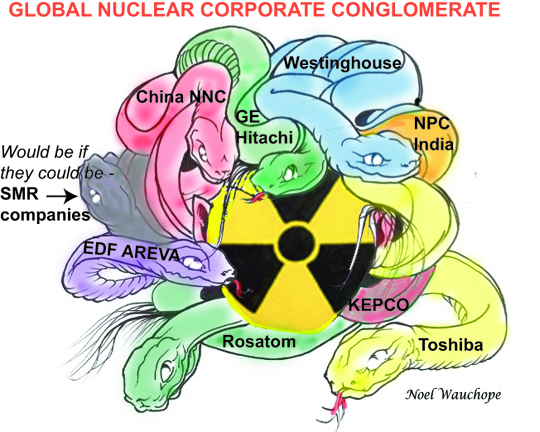
China plans to make nuclear energy tech a major export, Electric Light and Power 08/25/2016 By Joe McDonald Associated Press The Hualong One, developed by two state-owned companies, is one multibillion-dollar facet of the Communist Party’s aspirations to transform China into a creator of profitable technology from mobile phones to genetics.
Still, experts say Beijing underestimates how tough it will be for its novice nuclear exporters to sell abroad. They face political hurdles, safety concerns and uncertain global demand following Japan’s Fukushima disaster.
China’s government-run nuclear industry is based on foreign technology but has spent two decades developing its own with help from Westinghouse Electric Co., France’s Areva and EDF and other partners. A separate export initiative is based on an alliance between Westinghouse and a state-owned reactor developer……..
China’s status as an important market for global suppliers gives Beijing leverage in acquiring technology. Westinghouse, which was acquired by Japan’s Toshiba Corp. in 2006, Areva and France’s EDF have had partnerships with Chinese researchers since the early 1990s.
“I see them as customers, competitors and partners,” said Jeff Benjamin, Westinghouse’s senior vice president for new plants and major projects. Other global suppliers include GE Hitachi Nuclear Energy, South Korea’s KEPCO, Canada’s Candu Energy Inc. and Russia’s Atomstroyexport.
Westinghouse transferred technology for its latest reactor, the AP1000, to China’s State Nuclear Power Technology Corp. in 2007 as part of a transaction that included the sale of four reactors.
The AP1000 became the basis for future Chinese reactor development and Westinghouse agreed to sell reactors with SNPTC. The Chinese partner, which merged with another state company to form the State Power Investment Corp. last year, also developed its own, bigger version, the CAP1400.
The two companies are in talks with Turkey about selling four reactors based on the AP1000. The AP1000 has been approved by U.S. and British regulators, Benjamin said, while the CAP1400 is just beginning the review process. “We look forward to participating in the China market for many years to come,” he said. Abroad, “there will be markets either SPIC on their own or Westinghouse on our own might not have access to, but together we can gain access.” http://www.elp.com/articles/2016/08/china-plans-to-make-nuclear-energy-tech-a-major-export.html
USA pushes India and Pakistan to join nuclear testy ban treaty

Is this because USA wants nuclear disarmament, or because USA wants to sell nuclear materials to the sub continent?
US urges India and Pakistan to sign and ratify nuclear test ban treaty Washington has welcomed Pakistan’s recent proposal to India for a bilateral agreement on nuclear weapons test ban, IBT By Nandini Krishnamoorthy August 24, 2016 The US has asked arch-rivals India and Pakistan to set aside their differences and sign and ratify the Comprehensive Nuclear-Test-Ban Treaty (CTBT). Welcoming Pakistan’s recent proposal to India for a bilateral agreement on nuclear weapons test ban, Washington has urged the two countries to hold talks.
Mark Toner, the State Department deputy spokesperson, said: “We welcome this high-level dialogue between India and Pakistan, encourage both countries to engage in the dialogue and exercise restraint aimed at improving strategic stability.”……..
On Tuesday (23 August), Pakistan announced a fresh move to seek support for its NSGmembership bid. Syed Tariq Fatemi, special assistant to the prime minister on foreign affairs, embarked on a visit to Belarus and Kazakhstan to win their backing, The Hindu reported.
While India was kept out, Pakistan’s membership was not discussed during the plenary meeting of the NSG in Seoul in June. Although it has China on its side, it failed to get the backing of the US.http://www.ibtimes.co.uk/us-urges-india-pakistan-sign-ratify-nuclear-test-ban-treaty-1577733
Again this year, Indonesia’s blanket of smoke is back
 Smoke from Indonesian fires hits ‘unhealthy’ levels in Singapore as authorities push to hunt offenders http://www.abc.net.au/news/2016-08-26/smoke-from-indonesian-fires-hits-unhealthy-level-in-singapore/7790370?section=environmentAir pollution in Singapore has risen to the “unhealthy” level as acrid smoke drifted over the island from fires on Indonesia’s Sumatra island, the city-state’s National Environment Agency (NEA) said, in a repeat of an annual crisis.
Every dry season, smoke from fires set to clear land for palm oil and pulp and paper plantations in Indonesia clouds the skies over much of the region, raising concern about public health and worrying tourist operators and airlines.
The 24-hour Pollution Standards Index (PSI), which the NEA uses as a benchmark, rose as high as 105 in the afternoon — a level above 100 is considered “unhealthy”.
The NEA said it planned a “daily haze advisory” as “a burning smell and slight haze were experienced over many areas” in Singapore.
Indonesia repeatedly vows to stop the fires but each year they return.
This year, Indonesia has arrested 454 people in connection with the smoke pollution. When heavy, the choking smog closes airports and schools and prompts warnings to residents to stay indoors.
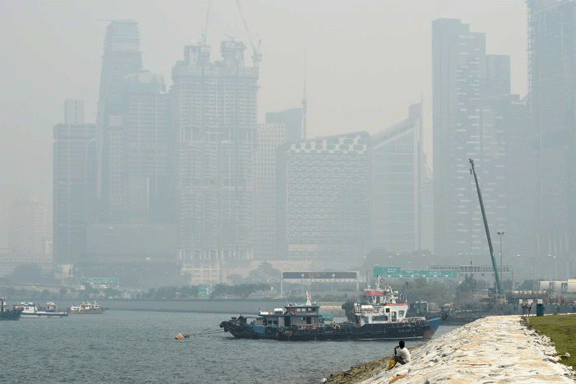
Pollution levels in neighbouring Malaysia were normal on Friday.
Singapore has pushed Indonesia for information on companies suspected of causing pollution, some of which are listed on Singapore’s stock exchange.
A forest campaigner for the environmental group Greenpeace Indonesia, Yuyun Indradi, said the Government was struggling to enforce laws to prevent the drainage of peatland for plantations and the setting of fires to clear land.
“It has become a challenge for the Government to enforce accountability among concession holders, to enforce its directives on blocking canals, and push companies to take part in efforts to restore peatland and prevent fires,” Mr Indradi said. “Now is the time for the Government to answer this challenge. It is in the law.” Greenpeace said, according to its satellite information, there were 138 fires across Indonesia on Friday.
Inside Fukushima’s Time Bomb
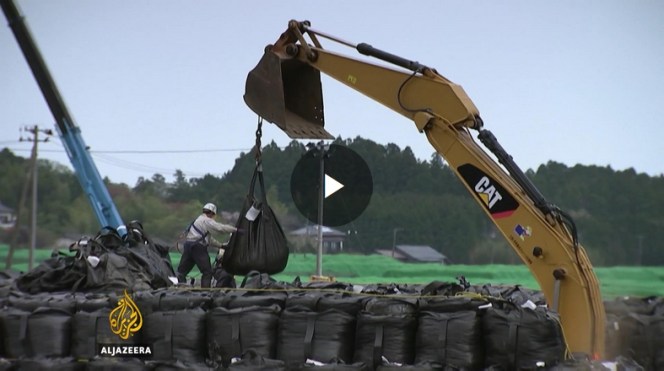
Five years after Japan’s Fukushima nuclear disaster many residents are still living in a radioactive nightmare.
Bubbling streams, lush forests, cherry blossoms in full bloom – Japan’s north is stunningly picturesque.
But nature’s beauty hides a lethal secret – dangerous levels of radiation contaminate this area, fall-out from the Fukushima nuclear disaster.
Five years after the twin catastrophes of the tsunami and nuclear meltdown, villages sit silent and empty.
Thousands of workers still toil to clean up the radioactive material but it could be decades before their work is finished.
As Japan continues to suffer the toxic aftermath of one of its worst ever disasters, 101 East reveals that the countryside may never again be safe.
http://www.aljazeera.com/programmes/101east/2016/08/fukushima-time-bomb-160824122108827.html
Anti-nuclear governor in Japan asks Kyushu Electric to suspend nuke plant
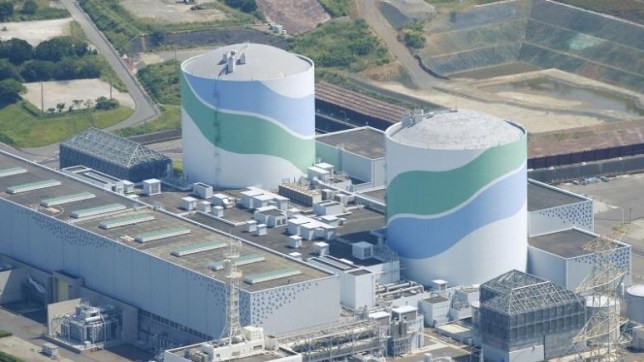
An aerial view shows the No.1 (L) and No.2 reactor buildings at Kyushu Electric Power’s Sendai nuclear power station in Satsumasendai, Kagoshima prefecture, Japan, August 11, 2015
A local Japanese governor on Friday asked Kyushu Electric Power to temporarily suspend the Sendai nuclear plant, one of two operating in the nation, further clouding efforts by the government and utilities to restart more idled reactors.
Anti-nuclear advocate Satoshi Mitazono, who was elected governor of Kagoshima prefecture last month, called on Kyushu Electric to re-examine safety and safety measures at its facility in southwestern Japan, raising concerns about a series of strong quakes that struck neighboring Kumamoto in April.
The request was expected as Mitazono, a former journalist, had said he wanted the temporary shutdown amid heightened concerns from local residents about safety and evacuation plans.
Mitazono’s pledges to suspend operations at the Sendai plant are credited with helping him beat in a July election incumbent Yuichiro Ito, who had agreed to the resumption of Sendai’s reactors.
“As an operator of nuclear power plants, the company has a duty to sincerely listen and response to the concerns of local residents. The company should temporarily suspend the nuclear plant and re-examine safety,” Mitazono said in a statement that was handed to Kyushu Electric President Michiaki Uriu at the prefectural government offices.
Mitazono has no legal power to shut down operating reactors.
“We will give the matter serious consideration,” Kyushu Electric said in a subsequent statement.
Only three reactors are online in Japan: two at Kyushu Electric’s Sendai plant and one at Shikoku Electric Power’s Ikata station. Utilities have struggled to get nuclear units running again in the face of a skeptical public after shutting them all down following the Fukushima disaster of 2011.
Sendai’s reactors are already schedule to be stopped for maintenance this year, one in October and one in December. Reactors in Japan are required to be shut for servicing after 13 months of commercial operation.
http://www.reuters.com/article/us-japan-nuclear-kyushu-elec-pwr-idUSKCN1110WH
President of Fukushima Pediatric Association recently hand delivered the Association’s requests to Fukushima Prefecture to “scale down” thyroid exams for children in Fukushima
Does Fukushima Prefecture need to scale down or expand its existing thyroid exams provided to Fukushima children who were 18 years of younger at the time of Fukushima nuclear accident in 2011?
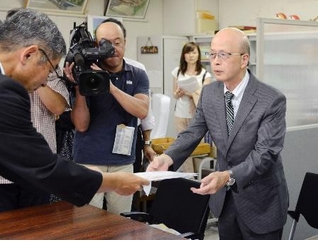
President of Fukushima Pediatric Association recently hand delivered the Association’s requests to Fukushima Prefecture to “scale down” thyroid exams for children in Fukushima.
Fukushima Pediatric Association claims that identifying many children with thyroid cancer through Prefecture’s thyroid exams is causing anxiety among children, their guardians, and citizens in the prefecture, and requests that a partial re-consideration of the thyroid exam is necessary.
(By the way, can you tell which one is Dr. Kazuhiro Ohga of Fukushima Pediatric Association and which one is an official of Fukushima Prefecture, just by looking at the photo of the article? I initially thought the man on the right is an official from the Fukushima Prefecture, because the man on left is bowing deeper, as if he is asking a favor by delivering a request. I was wrong. Dr. Ohga is on the right.)
http://this.kiji.is/141480622388215816?c=39546741839462401
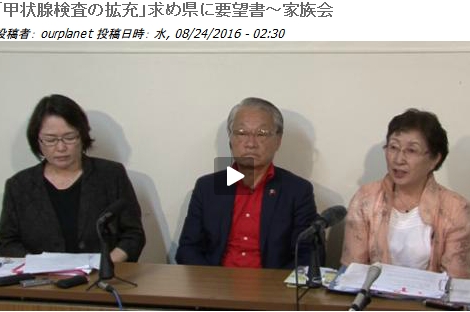
On the other hand, a citizens’ group with parents of children whose thyroid cancers were detected because of Prefecture’s thyroid exams requests Fukushima Prefecture to expand the exams.
http://ourplanet-tv.org/?q=node%2F2057
Credit to Mari Inoue
Two Tepco Kashiwazaki-Kariwa reactors may pass geared-up safety checks by March
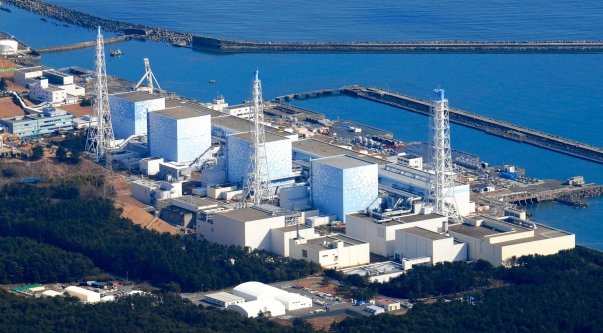
Nuclear regulators have decided to gear up the safety assessment of two reactors operated by Tokyo Electric Power Company Holdings Inc. in central Japan, raising the possibility of finishing the process by next March, sources said Tuesday.
Reactor Nos. 6 and 7 at the Kashiwazaki-Kariwa plant in Niigata Prefecture are boiling water reactors, the same type as the ones that suffered core meltdowns in 2011 at Tepco’s Fukushima No. 1 complex.
All reactors in Japan — either BWRs or pressurized water reactors — are required to meet tougher safety criteria imposed after the Fukushima crisis, but the BWR assessment has been delayed due to the need to install safety equipment that involves extensive work.
If reactors 6 and 7 clear the assessment, they will become the first BWRs technically qualified to resume operation under the post-Fukushima rules.
Facing massive decommissioning costs and compensation payments after the Fukushima disaster, Tepco applied for the safety assessment of the two reactors in September 2013, hoping that restarting the units will help turn around its business.
But it is unclear whether the development will lead to their swift restart because Niigata Gov. Hirohiko Izumida has said he will “not talk about restarting” the reactors unless a study on the Fukushima calamity is sufficiently carried out.
The Kashiwazaki-Kariwa complex on the Sea of Japan coast is one of the world’s largest nuclear power plants in capacity if all of its seven reactors were in operation.
Allowing Tepco to reactivate its reactors can be controversial, as the utility is still struggling to scrap the crippled reactors at the Fukushima plant. Tens of thousands of people who lived nearby also remain displaced evacuees.
The Nuclear Regulation Authority decided last August to prioritize checking the two Kashiwazaki-Kariwa reactors, hoping to make them a model case of the BWR assessment process. But it retracted the decision in March after Tepco failed to offer sufficient explanation on questions raised by the regulators.
But Tepco has come up with the necessary documents and the NRA decided to reinstate the priority status of the Kashiwazaki-Kariwa reactors at least until mid-September. The NRA has conveyed its plan to other utilities whose BWRs are being checked, the sources said.
Under the new safety requirements, BWRs must be equipped with filtered venting systems so that radioactive substances will be reduced when gas and steam need to be released to prevent damage to containment vessels.
The venting facilities are not an immediate requirement for PWRs as they are housed in containers larger than those of BWRs, allowing more time until pressure rises inside the containers.
Currently, two reactors at Kyushu Electric Power Co.’s Sendai plant and another reactor at Shikoku Electric Power Co.’s Ikata plant are operating in Japan after passing the safety checks. They are all BWRs.
The First Nuclear Decommissioning Project in Taiwan
https://attendee.gotowebinar.com/register/8477450529678693123
- Mon, Sep 5, 2016
 Taiwan started with a new government on 20 May, who will be in power in the next 4 to 8 years. (same government can be re-elected once) The new government officially announced Taiwan will become “nuclear home free land”. By law, Taiwan will decommission the first nuclear power plant by 2018. The energy source will be replaced by renewable energy, coal fire power plant and LNG. Taiwan is also facing serious challenge to manage its nuclear waste that has no place to allocate them. Many local protesters refused a dry storage site build near their neighborhood, Taiwan Power Company has awarded the contract to deliver a Decommission Plan for the first nuclear power plant in May last year. UKTI Taipei is planning to bring a nuclear mission to Taiwan in early Nov.
Japan protests, as North Korea fires submarine-launched ballistic missile into Sea of Japan
 North Korea fires submarine-launched ballistic missile into Sea of Japan, officials say, ABC News 24 Aug 16, North Korea has fired a submarine-launched ballistic missile off its east coast, South Korea’s military said, the latest in a string of missile launches by the isolated country in defiance of UN Security Council resolutions.
Key points:
- The missile reached Japan’s air defence identification zone
- Japan President Shinzo Abe slams ‘unforgiveable act’
- China, Japan and South Korea’s Foreign Ministers were due to meet in Tokyo today
The missile was fired at around 5:30am (local time) from near the coastal city of Sinpo, where satellite imagery shows a submarine base to be located, and flew about 500 kilometres before splashing into the Sea of Japan, US and South Korean officials said.
The projectile reached Japan’s air defence identification zone (ADIZ), an area of control designated by countries to help maintain air security, according to Japanese and South Korean authorities
“This is the first time a missile from North Korea was launched from a submarine into our country’s air-defence identification zone,” Japanese Prime Minister Shinzo Abe told reporters, adding that Japan had lodged a stern protest………http://www.abc.net.au/news/2016-08-24/north-korea-test-fires-submarine-launched-ballistic-missile/7779612
China seriously overestimating the global market for their nuclear reactors
Beijing is “seriously underestimating” how hard global sales will be, said Schneider. He said obstacles include strict quality controls, regulations that differ from country to country and competition from the falling cost of wind and solar.
“There is simply no market out there,” said Schneider.
Overseas, China’s nuclear companies face questions over their status as arms of the state
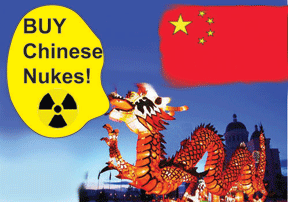 Here comes a new Chinese export: Nuclear reactors, CBS, 24 Aug 16 BEIJING – On a seaside field south of Shanghai, workers are constructing a nuclear reactor that’s the flagship for Beijing’s ambition to compete with the U.S., France and Russia as an exporter of atomic power technology.
The Hualong One, developed by two state-owned companies, is one multibillion-dollar facet of the Communist Party’s aspirations to transform China into a creator of profitable technology from mobile phones to genetics.
Still, experts say Beijing underestimates how tough it will be for its novice nuclear exporters to sell abroad. They face political hurdles, safety concerns and uncertain global demand following Japan’s Fukushima disaster.
China’s government-run nuclear industry is based on foreign technology but has spent two decades developing its own with help from Westinghouse Electric, France’s Areva and EDF, and other partners. A separate export initiative is based on an alliance between Westinghouse and a state-owned reactor developer.
The industry is growing fast, with 32 reactors in operation, 22 being built and more planned, according to the World Nuclear Association, an industry group. China accounted for eight of 10 reactors that started operation last year and six of eight construction starts.
Abroad, builders broke ground in Pakistan last year for a power plant using a Hualong One, supported by a $6.5 billion Chinese loan. Also last year, Argentina signed a contract to use the reactor in a $15 billion plant financed by Chinese banks.
Sales come with financing from state banks, a model that helped Chinese companies break into the market for building highways and other public works in Africa and the Middle East. State-owned companies also are lining up to invest in nuclear power plants in Britain and Romania.
“This is generating significant build-up of skills and industrial experience,” said Mycle Schneider, a nuclear energy consultant in Paris, in an email.
Still, Beijing is “seriously underestimating” how hard global sales will be, said Schneider. He said obstacles include strict quality controls, regulations that differ from country to country and competition from the falling cost of wind and solar.
“There is simply no market out there,” said Schneider.
At home, Beijing faces public unease about nuclear power following an avalanche of industrial accidents and product safety scandals.
This month, thousands of residents of Lianyungang, north of Shanghai, protested after rumors spread that a facility to process nuclear waste might be built there. Authorities said the city, home to one of China’s biggest nuclear power plants, was only one of several being considered. After more protests, they announced the search for a site was suspended.
Overseas, China’s nuclear companies face questions over their status as arms of the state………
China’s nuclear industry has yet to report a major accident but reflexive official secrecy makes it hard for outsiders to assess its safety.
Changes in Chinese-designed models based on foreign technology, such as making reactors bigger while using cooling techniques for smaller units, “raise questions about safety and the good judgment of Chinese reactor engineers,” said Edward Lyman, a nuclear power specialist for the Union of Concerned Scientists in Washington, in an email.
“It is crucial for countries importing Chinese nuclear technology to rigorously conduct their own oversight over the products they are buying,” Lyman said………http://www.cbsnews.com/news/here-comes-a-new-chinese-export-nuclear-reactors/
Chinese nuclear company Pushed U.S. Experts for Nuclear Secrets – says FBI
 FBI Files Say China Firm Pushed U.S. Experts for Nuclear Secrets , Bloomberg, David Voreacos davidvoreacos David McLaughlin damclaughAugust 25, 2016
-
China General Nuclear Power charged with conspiracy by U.S.
-
CGN is partner in delayed British Hinkley plant under review
-
A state-owned Chinese power company under indictment in the U.S. pressed American nuclear consultants for years to hand over secret technologies and documents they weren’t supposed to disclose — and in some cases it got them, several of the consultants have told the FBI.
Summaries of the consultants’ interviews with agents from the Federal Bureau of Investigation were filed this month in a federal court where the company, China General Nuclear Power Corp., has been charged with conspiring to steal nuclear technology.
The FBI documents surfaced shortly after the same company became a focus of concerns across the Atlantic: The U.K. last month delayed approval of the country’s biggest nuclear power station in a generation as questions swirled about whether China General Nuclear’s investment in the plant poses a security risk.
The filings provide a window into the tactics of CGN, China’s biggest nuclear power operator. One of the consultants said CGN employees asked for off-limits operational manuals to nuclear equipment and software, according to the interview summaries. Another said he was asked to provide proprietary temperature settings for material used to contain nuclear fuel. After he refused, he wasn’t offered more consulting jobs, he told the FBI…….. -
China Warning
While the U.S. court case doesn’t address the U.K. plant, the FBI interviews could add to concerns expressed by British officials like Nick Timothy, a close adviser to the new prime minister, Theresa May. Timothy warned last year that China’s involvement in nuclear projects there might allow it to “shut down Britain’s energy production at will.”
The prime minister hasn’t said why she put the brakes on the 18 billion pound ($24 billion) Hinkley Point plant in southwest England, a project one-third owned by CGN and led by Electricite de France SA. In addition to the security concerns, the project has faced criticism over its price tag and the above-market electricity rates that U.K. taxpayers would have to pay. Electricite de France declined to comment……….
-
U.S. Indictments
In the U.S., CGN was indicted along with Szuhsiung “Allen” Ho, an American nuclear engineer born in Taiwan who recruited the U.S. consultants for CGN. Ho and the company are accused in a federal court in Knoxville, Tennessee, of conspiring to help Beijing obtain restricted U.S. nuclear technology over two decades. Ho, 66, is also accused of acting as an unregistered agent of the Chinese government. He faces life in a U.S. prison in what prosecutors call an “extremely significant national security case.”
- Ho has pleaded not guilty. His lawyers say that he was merely helping China’s civil nuclear power industry and that he had no intent to break the law or steal U.S. secrets.
The case is unfolding as U.S. officials say they see Beijing’s hand in cyber-espionage, indicting five Chinese military officials in absentia in 2014 for allegedly stealing trade secrets from U.S. companies — including Westinghouse Electric Co., a unit of Japan’s Toshiba Corp. that designs nuclear power plants. Westinghouse, which didn’t respond to requests for comment, is the former employer of Ho and many of the experts he brought to China to consult for CGN……..http://www.bloomberg.com/news/articles/2016-08-25/fbi-files-say-china-firm-pushed-u-s-experts-for-nuclear-secrets
1 This Month





PLEASE OPPOSE HR 8255 AND S.3639 – bills would accelerate satellite deployment, with no environmental review or safeguards – https://ncstd5li.quorum.us/campaign/169331/
To see nuclear-related stories in greater depth and intensity – go to https://nuclearinformation.wordpress.com
-
Archives
- October 2026 (39)
- September 2026 (339)
- August 2026 (330)
- July 2026 (355)
- June 2026 (287)
- May 2026 (306)
- April 2026 (356)
- March 2026 (251)
- February 2026 (267)
- January 2026 (308)
- December 2025 (358)
- November 2025 (359)
-
Categories
- 1
- 1 NUCLEAR ISSUES
- business and costs
- climate change
- culture and arts
- ENERGY
- environment
- health
- history
- indigenous issues
- Legal
- marketing of nuclear
- media
- opposition to nuclear
- PERSONAL STORIES
- politics
- politics international
- Religion and ethics
- safety
- secrets,lies and civil liberties
- spinbuster
- technology
- Uranium
- wastes
- weapons and war
- Women
- 2 WORLD
- ACTION
- AFRICA
- Atrocities
- AUSTRALIA
- Christina's notes
- Christina's themes
- culture and arts
- Events
- Fuk 2022
- Fuk 2023
- Fukushima 2017
- Fukushima 2018
- fukushima 2019
- Fukushima 2020
- Fukushima 2021
- general
- global warming
- Humour (God we need it)
- Nuclear
- RARE EARTHS
- Reference
- resources – print
- Resources -audiovicual
- Weekly Newsletter
- World
- World Nuclear
- YouTube
-
RSS
Entries RSS
Comments RSS

