Ishinomaki beef to be farmed overseas

A cattle-breeding corporation in Ishinomaki, Miyagi Prefecture, which was devastated by the 2011 Great East Japan Earthquake, will begin raising about 5,000 beef cattle in Vietnam by the end of this year at the earliest, in collaboration with a state-owned company there.
The Vietnamese company will prepare a ranch and young cattle, and Japanese farmers will provide their expertise in livestock farming.
The Japanese side will be able to receive $3 million (about ¥300 million) annually in consultation fees. It will be a particularly large operation for a move overseas by farmers in a disaster-hit area (see below).
“It can be not only post-disaster reconstruction but also a new growth strategy for Japan’s agriculture,” a farming expert said in expectation.
The agricultural corporation that will begin the project in Vietnam is Ushichan Farm Co., one of the largest beef cattle breeders in the Tohoku region. The company now raises about 4,000 beef cattle in Miyagi and Iwate prefectures. It ships out beef rich in fat — called shimofuri — and red meat with less fat.
Tsunami following the tremors washed away cattle barns and about 50 cattle. Due to damage from rumors in the wake of the accident at Tokyo Electric Power Company Holdings Inc.’s Fukushima No. 1 nuclear power plant, sales in the year after the disaster fell by about ¥500 million. However, workers at the company have improved the quality of beef through such steps as utilizing tablet computers in breeding management.
Its Vietnamese partner is Saigon Agriculture Incorporation (SAGRI), a state-owned firm based in Ho Chi Minh City.
In Vietnam, volumes of beef consumption have been rising along with its economic growth. SAGRI paid attention to the high-level production skills of Japanese beef-producing farmers to improve the country’s production volumes and qualities of beef.
Red-meat-type beef is popular in Japan, so SAGRI asked Ushichan Farm to collaborate and the two sides signed a business partnership contract in August this year.
SAGRI will prepare a 500-hectare ranch, cattle barns and about 5,000 young cattle in Ho Chi Minh City. Ushichan Farm will provide such techniques as breeding management that uses individual identification numbers and how to mix feeds.
After conducting administrative procedures in the country, the Japanese company will begin raising the cattle by the end of this year at the earliest. Beef from the Vietnamese ranch will be sold in local supermarkets and other stores starting around 2018. Sales will be evenly shared by the two corporations.
Eyeing the Trans-Pacific Partnership free trade pact, the Japanese side plans to import red meat from the cattle to be raised in Vietnam in the future. Ushichan Farm also aims to prepare for international competition with products from the United States and Australia.
“We want to make [the project] an opportunity to send out information about Japan’s livestock industry,” said Kazutaka Sato, 39, senior managing director of Ushichan Farm.
According to an official of the Japan External Trade Organization: “Such a large-scale investment in agriculture in Vietnam is rare. It indicates how high the Vietnamese side’s expectations are.”
Kazunuki Oizumi, a professor emeritus of Miyagi University who is an expert on agricultural economics, said, “Exporting skills and techniques can result in new growth not only in the disaster-hit areas but also in Japan’s agriculture overall.”
■ Moves overseas by farmers in disaster-hit areas
In coastal areas in Miyagi Prefecture devastated by tsunami, farmers have begun businesses overseas. For example, an agricultural production corporation in the town of Yamamoto has grown strawberries in India since autumn 2012, and farmers in the city of Iwanuma have grown rice in Vietnam since summer 2014. This is partly because exporting products from the prefecture has become difficult, as other countries’ restrictions on imports of farming products from the disaster-hit areas were made stricter in the wake of the accident at TEPCO’s Fukushima No. 1 nuclear power plant.
Not willing to Lie, the Chairman of the Fukushima Thyroid Examination Assessment Subcommittee Resigned
Of course this news was not released in the Japanese national main media nor in the Fukushima local media, it was only released in the Hokkaido Shimbun, a local media from the northern island Hokkaido.
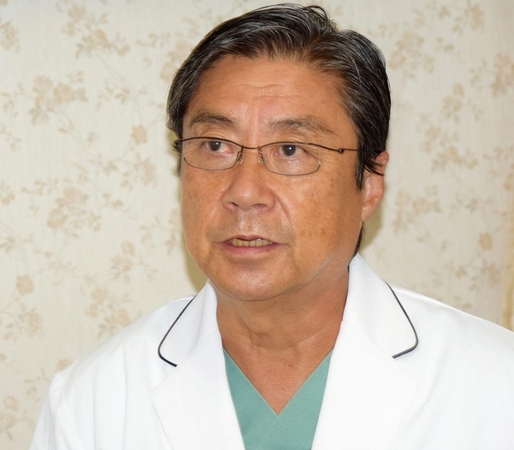
Dr. Kazuo Shimizu
Dr. Kazuo Shimizu, Chairman of the Thyroid Examination Assessment Subcommittee and member of the Oversight Committee for the Fukushima Health Management Survey, a thyroid surgeon and Honorary Director at Kanaji Hospital, and Professor Emeritus at Nippon Medical School, and former chair of the board of the Japanese Society of Thyroid Surgery, submitted his resignation as Chairman of the Thyroid Examination Assessment Subcommittee.
As Chairman of the Thyroid Examination Assessment Subcommittee, he does not personally agree with the interim report conclusion that “it is unlikely that the effects of radiation” caused the high incidence of thyroid cancer found in the Fukushima Prefecture. Not agreeing with the drawn conclusions of the interim report and as Chairman not free to have a personal opinion, nor to express it, he decided to resign.
Dr. Kazuo Shimizu is a doctor, a leading authority in endoscopic surgery of the thyroid gland. Within the Fukushima population, 380,000 children below 18 years old at the time of the Fukushima Daiichi nuclear plant accident in March 2011 have been examined. 174 people have been so far diagnosed with thyroid cancer or suspected thyroid cancer.
Dr. Kazuo Shimizu says that such high incidence of thyroid cancer, from his long clinical experience, is unnatural. That frequency is a fact, which should not be explained, nor discarded by just the “It is unlikely that the effects of radiation.” caused that high incidence conclusion.
In the former Soviet Union after the 1986 Chernobyl nuclear accident, thyroid cancer was frequent in children due the released iodine-131.
http://headlines.yahoo.co.jp/hl?a=20161021-00010003-doshin-soci
However, it is not that surprising. When Oshidori Mako interviewing Dr. Kazuo Shimizu in May 2015 asked « Is it really overdiagnosis that is going on? », Dr. Kazuo Shimizu answered :“I am not in a position to be able to say, ‘It is not due to overdiagnosis.’ As chair of the Subcommittee, I cannot validate opinions of either side. It is hard for me. I would have been able to voice my opinions more clearly if I hadn’t been elected chair of the Subcommittee.”
http://fukushimavoice-eng2.blogspot.fr/2015/08/oshidori-mako-interviews-experts.html
Taiwan to End Nuclear Power Generation in 2025
A very wise decision, we wish that other governments also would be wise enough to do the same. Congratulations to you Taiwan!

Taiwan’s fourth nuclear power plant in New Taipei City in the northern part of the island. Its construction has been suspended due to an anti-nuclear movement that has intensified since the Fukushima nuclear disaster.
TAIPEI–In a rare move for power-hungry Asia, the Taiwanese government has decided to abolish nuclear power generation by 2025 to meet the public’s demand for a nuclear-free society following the Fukushima nuclear disaster.
Taiwan’s Executive Yuan, equivalent to the Cabinet in Japan, approved revisions to the electricity business law, which aim to promote the private-sector’s participation in renewable energy projects, on Oct. 20.
“Revising the law shows our determination to promote the move toward the abolition of nuclear power generation and change the ratios of electricity sources,” said President Tsai Ing-wen.
The government plans to start deliberations on the revised bill in the Legislative Yuan, or the parliament, in the near future, with the goal of passing it within this year.
Movements toward a nuclear-free society are active in Europe. For example, Germany has decided to abolish nuclear power generation by 2022.
On the other hand, China and India are increasing nuclear power generation to meet the growing demand for electricity. In Taiwan, nuclear power accounted for 14.1 percent of all the electricity generated in 2015. At present, three nuclear power plants are operating.
However, the March 2011 accident at the Fukushima No. 1 nuclear power plant heightened public opinion against nuclear power generation. In response to the sentiment, Tsai, who assumed the presidency in May with a vow of establishing a nuclear-free society, led the government’s effort to abolish nuclear power.
Like Japan, Taiwan is hit by many earthquakes. The three nuclear power plants currently in operation will reach their service lives of 40 years by 2025. The revised bill will clearly stipulate that operations of all the nuclear plants will be suspended by that year. The stipulation will close the possible extension of their operations.
The government is looking to solar power and wind power as the pillars of renewable energies. It aims to increase their total ratio among all electricity sources from the current 4 percent to 20 percent in 2025.
However, meeting the goal assumes that electricity generated by solar power will increase 24-fold in 10 years. Because of that, some people harbor doubts on the viability of the plan.
“A hurdle to overcome to achieve the goal is very high,” said an electric power industry source.
0,353 µSv/hour on a Fukushima Train

This is taken on a train in Nihonmatsu, Fukushima. Nihonmatsu is located in a straight line or air distance at 52.75 km west of Okuma (Fukushima Daiichi).
On a running train, inside of a train, radiation is measured already at 0,353 µSv/hour, you can imagine how much more outside of the train, on the ground.
PM Abe’s government forces the population to return despite the obvious contamination, and people are getting fed up with the given continuous lies.
Credit to Kuniko Yamanoi for that information and photo.
Outside power temporarily cut to Okayama uranium processing facility after quake
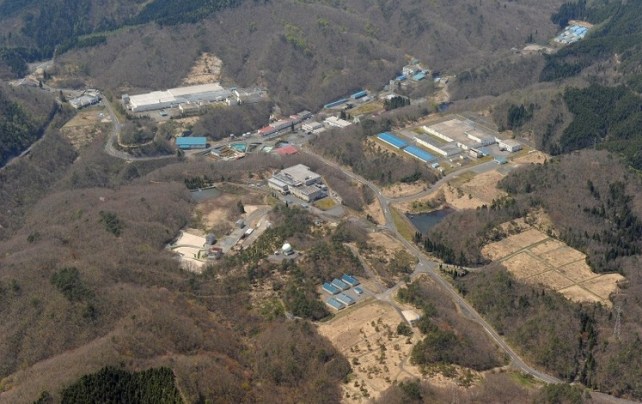
The Japan Atomic Energy Agency’s Ningyo-toge Environmental Engineering Center in Kagamino, Okayama Prefecture, is pictured in this May 2013
The external power supply to a uranium processing facility in Okayama Prefecture was temporarily cut following a powerful Oct. 21 earthquake that hit Tottori Prefecture and surrounding areas, the Nuclear Regulation Authority (NRA) said.
External power was lost for a time at the Japan Atomic Energy Agency’s Ningyo-toge Environmental Engineering Center in Kagamino, Okayama Prefecture, after the magnitude-6.6 quake. Locally, the quake registered an upper 5 on the 7-point Japanese seismic intensity scale, according to the NRA.
However, no problems were reported at the plant, as an emergency power supply system kicked in immediately. The facility was not in operation at the time of the quake.
In related news, operations at the No. 3 reactor at Shikoku Electric Power Co.’s Ikata Nuclear Power Plant in Ehime Prefecture have not been disrupted. There is reportedly no problem with Chugoku Electric Power Co.’s Shimane nuclear plant in Shimane Prefecture, which is not in operation.
http://mainichi.jp/english/articles/20161021/p2a/00m/0na/013000c
Opposition to nuclear energy grows in Japan
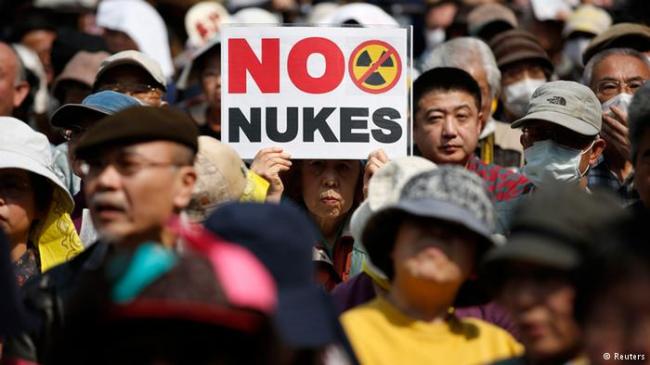
”Opinion polls show the Japanese people oppose nuclear plants going back into operation. It underlines the scale of the problem facing the government in convincing everyone that it’s safe. Julian Ryall reports from Tokyo.”
Before October 16, Ryuichi Yoneyama had contested four regional elections and been soundly beaten each time. Now, however, the 49-year-old qualified doctor and lawyer is to be sworn in as governor of Niigata Prefecture after defeating a candidate who had the backing of the ruling Liberal Democratic Party (LDP) and was considered the firm favorite.
Yoneyama worked hard for his victory over Tamio Mori, a former bureaucrat with the construction ministry, but when the voters stepped into the voting booths there was a single issue that occupied their minds.
Mori and the LDP want to restart the world’s largest nuclear power station, the sprawling Kashiwazaki-Kariwa plant, which lies on the prefecture’s coast. They insist that as Japan moves towards the sixth anniversary of the March 2011 earthquake and tsunami that crippled the Fukushima Dai-Ichi nuclear plant, triggering the second-worst nuclear crisis in history, new safety measures have been implemented that ensure the same thing could not happen in Niigata.
The voters did not agree, with 528,455 supporting Yoneyama’s pledge to not grant approval for Tokyo Electric Power Co.’s (TEPCO) Kashiwazaki-Kariwa plant to be restarted. In comparison, 465,044 voted for Mori.
Nationwide opposition
Those figures are broadly replicated across Japan, with a poll conducted by the Asahi Shimbun newspaper on October 15 and 16 determining that 57 percent of the public is against the nation’s nuclear power plants being restarted, and just 29 percent supporting the resumption of reactors that have nearly all been mothballed since 2011.
At present, only two of the nation’s 54 reactors have been restarted – and that after much wrangling through the courts after local residents and environmental groups expressed their opposition.
Nevertheless, a report issued by the Institute of Energy Economics, Japan (IEEJ) in July predicts that seven additional reactors will be on-line by the end of March next year and a further 12 will be operational one year later.
But as the opinion polls show, the majority of the public is against a policy that the government tells them is in the nation’s best interests.
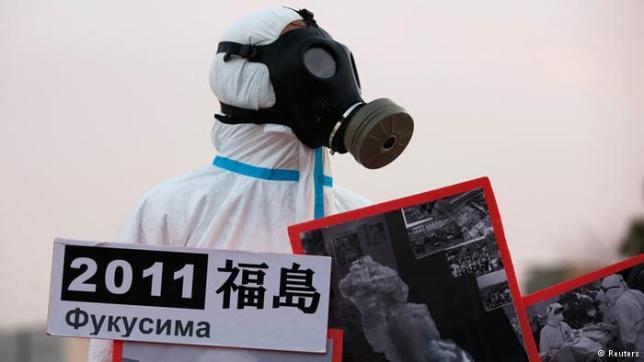
“Since the accident at Fukushima, many people have realized the negatives that go along with the positives of nuclear power, and they simply do not want to take that sort of risk again,” said Hiroko Moriwaki, a librarian who lives in Tokyo.
“And many think that we do not need to,” she added. “Since the disaster, the reactors have not been operational and look around you; we have all the electricity that we need, there are no blackouts and everything is normal.
“Just after the earthquake, we were told to do everything we could to save energy, but not any more,” Moriwaki told DW.
“So maybe we have reached the point where we don’t actually need nuclear energy and that this is in fact an opportunity that the country can take advantage of,” she said.
Japan is an advanced and industrialized nation with vast amounts of skills and technologies that could be put to use to develop and then commercialize new sources of safe, environment-friendly energy, she said.
As well as solar and wind power, which are already visible across Japan, there are moves afoot to harness Japan’s tidal and wave energy, while vast amounts of potential geothermal energy remain virtually untapped.
“We have so much technology, so wouldn’t it be best to divert some of that away from more investment in nuclear energy and put it into fuel sources that are safer and do not harm the environment at all?” Moriwaki asked.
Japan’s energy needs
Critics of this approach – of which the government is one – say Japanese industry needs a secure supply of energy right now and that Japan is presently importing 84 percent of its energy needs, primarily in the form of coal, gas and oil. And that is both expensive and to blame for the nation’s emissions of carbon dioxide and other harmful greenhouse gases climbing.
Still, the Japanese public is far from convinced that nuclear energy is the answer.
“It’s complicated and we keep hearing from the government how important it is to have the nuclear plants operating again, but after Fukushima, I think, a lot of people no longer trust the operators or the government,” said Kanako Hosomura, a housewife whose family home is north of Tokyo and only about 250 km from the Fukushima plant.
Inquiries after the disaster revealed that TEPCO ignored experts’ warnings about the potential size and power of tsunami and had failed to take precautions such as ensuring a backup power supply in the event the generators used to cool the reactors were out of operation.
The government also came under fire after the media reported that it did not have a full understanding of the severity of the crisis, while it was also issuing statements that the situation was completely under control at the same time as drawing up plans to evacuate tens of millions of people from a huge swathe of eastern Japan.
“When it comes down to it, I have a young son and a family and their safety is my number one priority,” said Hosomura. “Maybe Japan was lucky the Fukushima disaster was not worse than it was. Maybe next time we will not be so lucky.”
Protest at Japanese Embassy in Paris Against Fukushima Evacuees Forced Return and the 2020 Tokyo Olympics

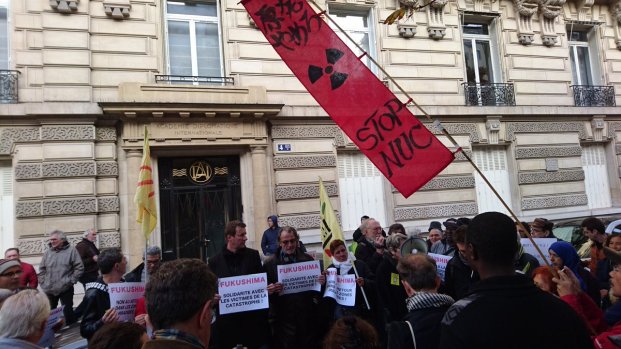
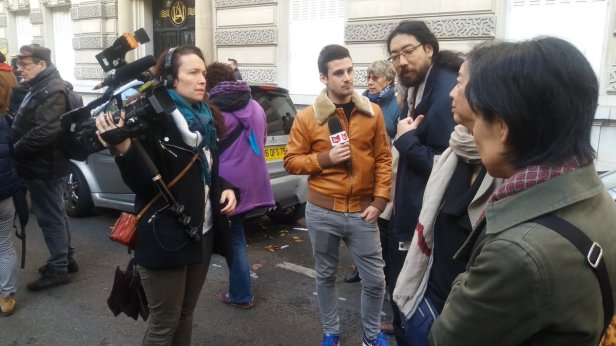
Today October 22, 2016, in Paris, the French Green Ecology Party (EELV), Green Peace France and Réseau Sortir du Nucléaire, joined together to organize a Fukushima protest in front of the Japanese Embassy.
They denounced the Fukushima evacuees forced return by the Japanese government, and insisted that no one should be compelled to live in irradiated town with high level of radiation. That it is plainly criminal on the part of the Japanese Government.
Since Eastern Japan and Tokyo included, have been contaminated by the now five years and a half ongoing nuclear catastrophe at Tepco’s Fukushima Daiichi nuclear plant, a catastrophe yet neither under control nor resolved, the 2020 Olympics should be relocated somewhere else.
Some officials of the French Green Ecology Party (EELV) and personalities of Green Peace France and Réseau Sortir du Nucléaire attended the protest. Among those were also present Yannick Jadot and Michele Rivasi, both Europe Ecology deputies at the European Parliament, one of the two to be the French Ecology Party presidential candidate at the coming French presidential election in 2017. Were also present members of the Japanese community.
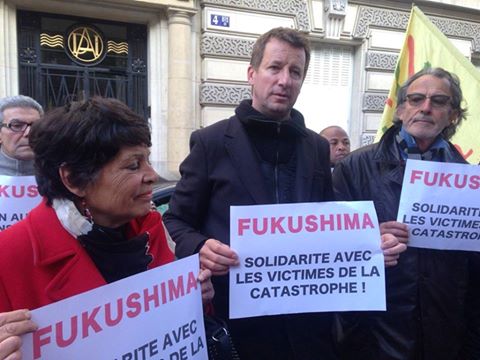
Michele Rivasi and Yannick Jadot

India not happy with Costs of Nuclear Power Project With France
India Dissatisfied With Costs of Nuclear Power Project With France / sandeepachetan
BUSINESS 19:11 21.10.2016 India sent a strong message to France that it will not go ahead with the project unless the costs of production for the Jaitapur nuclear power project would be affordable.
New Delhi (Sputnik) — India’s Atomic Energy Commission has made it clear that Western nuclear reactors will be welcomed only if it generates power at affordable rates.
https://sputniknews.com/business/201610211046596608-india-france-nuclear-project/
South Korea’s State nuclear company expects to win $billions from marketing nuclear operations to United Arab Emirates
 S.Korea signs on to venture to operate UAE’s 1st nuclear power plant http://af.reuters.com/article/energyOilNews/idAFL3N1C32ZG
SEOUL Oct 20 (Reuters) – State-run utility Korea Electric Power Corp (KEPCO) agreed to invest $900 million in a company operating the first nuclear power plant in the United Arab Emirates, South Korea’s energy ministry said on Thursday.
KEPCO expects the deal to boost its revenue by nearly $50 billion over the next 60 years, according to a statement from the ministry.
KEPCO and Emirates Nuclear Energy Corp (ENEC) signed the deal to co-invest in the company managing and operating the UAE’s Barakah nuclear power plant for the next six decades, the ministry statement said.
In 2009, a KEPCO-led consortium won a contract to build the four 1,400 megawatt nuclear reactors that are being constructed at the Barakah plant to meet the UAE’s surging demand for electricity.
South Korea, the world’s fifth-biggest user of nuclear power, constructs and operates its reactors through KEPCO. (Reporting By Jane Chung; Editing by Tom Hogue)
Impact of the Fukushima Accident on Marine Life, Five Years Later
Five years ago, the largest single release of human-made radioactive discharge to the marine environment resulted from an accident at the Fukushima Daiichi Nuclear Power Plant in Japan. Approximately 80 percent of the fallout happened over the Pacific Ocean. A new study explores the environmental consequences in the marine environment of the accident. It outlines the status of current research about the impact of the fallout on plant and animal life and what remains to be done as the radioactivity continues to spread.
https://www.sciencedaily.com/releases/2016/10/161018141309.htm
Containment Repair Research for Fukushima Unit 2 Ongoing
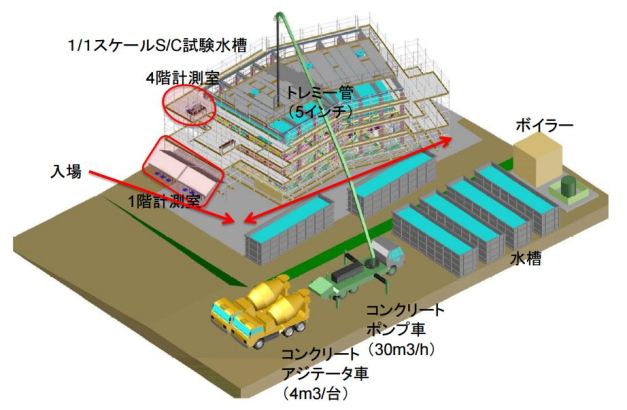
IRID announced the details of the ongoing research for repairing the unit 2 suppression chamber.
Based on their previous investigations IRID has determined that there could be a hole or series of holes of around 50mm in the unit 2 suppression chamber.
The research work is to determine if filling with concrete that structure could work. The proposed plan would use a concrete pump truck with a 5 inch diameter flexible hose to inject concrete into the suppression chamber.
Initial work took place at the Ando Hazama Technical Research Institute (Tsukuba City, Ibaraki Prefecture) on October 15th.
It seems they succeeded in layering the concrete mixture, sinking properly in the bottom of the suppression chamber tube. A 28 day pressure test will be conducted to assure the concrete properly plugs the leak.
Future work may be conducted at the new decommissioning research center at Naraha.
Source IRID :
<添付資料1:1/1スケールS/C試験に関する現場状況・概要図>
http://irid.or.jp/wp-content/uploads/2016/10/20161018_001.pdf
<添付資料2:コンクリート打設進捗に伴う時経列事象・解説図>
http://irid.or.jp/wp-content/uploads/2016/10/20161018_002.pdf
Residents Who Fled Fukushima Meltdown Fear Return to Ghost Town
Japan seeks to lure evacuees back to town near nuclear plant
Abe looks to win support for restarting mothballed reactors
Weed-engulfed buildings and shuttered businesses paint an eerie picture of a coastal Japanese town abandoned after a monstrous earthquake and tsunami triggered meltdowns in the Fukushima nuclear plant.
Namie, one of the communities hardest hit by the 2011 disaster, had 21,000 residents before they fled radiation spewing from the reactors eight kilometers (five miles) away. Prime Minister Shinzo Abe is now looking to repopulate the town as early as next year, a symbolic step toward recovery that might also help soften opposition to his government’s plan to restart Japan’s mostly mothballed nuclear industry.
“The national and local governments are trying to send us back,” said Yasuo Fujita, 64, a sushi chef who lives alongside hundreds of other Fukushima evacuees in a modern high rise in Tokyo more than 200 kilometers away. “We do want to return — we were born and raised there. But can we make a living? Can we live next to the radioactive waste?”

The main street in Namie, Fukushima
So far few evacuees are making plans to go back even as clean-up costs top $30 billion and Abe’s government restores infrastructure. That reluctance mirrors a national skepticism toward nuclear power that threatens to erode the prime minister’s positive approval ratings, particularly in areas with atomic reactors.
Mothballed Reactors
Officials in his government are calling for nuclear power to account for as much as 22 percent of Japan’s electricity supply by 2030, nearly the same percentage as before the Fukushima meltdown, in part to help meet climate goals. Only two of the nation’s 42 operable nuclear plants are currently running, leaving the country even more heavily reliant on imports of oil and gas.
A poll published by the Asahi newspaper this week found 57 percent of respondents were opposed to restarting nuclear reactors, compared with 29 percent in favor. One of Abe’s ministers lost his seat in Fukushima in an upper house election in July, and the government suffered another setback when an anti-nuclear candidate won Sunday’s election for governor of Niigata prefecture, home to the world’s largest nuclear plant.
Some 726 square kilometers — roughly the size of New York City — of Fukushima prefecture remain under evacuation orders, divided by level of radioactivity. While the government is looking to reopen part of Namie next year, most of the town is designated as “difficult to return to” and won’t be ready for people to move back until at least 2022.
“We must make the area attractive, so that people want to return there,” Reconstruction Minister Masahiro Imamura said this week. “I want to do everything I can to make it easy to go back.”

Workers are cleaning by scraping up soil, moss and leaves from contaminated surfaces and sealing them in containers. Still, the operation has skipped most of the prefecture’s hilly areas, leading to fears that rain will simply wash more contamination down into residential zones. Decommissioning of the stricken plant itself is set to take as many as 40 years.
The bill for cleaning up the environment is ballooning, with the government estimating the cost through March 2018 at $3.3 trillion yen ($32 billion). That’s weighing on Tokyo Electric Power Co. Holdings Inc., which is already struggling to avoid default over decommissioning costs.
“They are spending money in the name of returning things to how they were” without having had a proper debate on whether this is actually possible, said Yutaka Okada, senior researcher at Mizuho Research Institute in Tokyo. “Was it really right to spend this enormous amount of money?”
Namie officials, operating from temporary premises 100 kilometers away in the city of Nihonmatsu, are plowing ahead with preparations. A middle school in the town is scheduled for remodeling to add facilities for elementary pupils — even though they expect only about 20 children to attend. Similar efforts in nearby communities have had limited success.
Only 18 percent of former Namie residents surveyed by the government last year said they wanted to return, compared with 48 percent who did not. The remainder were undecided.
Staying Put
Fujita, the sushi chef, has joined the ranks of those starting afresh elsewhere. He opened a seafood restaurant near his temporary home last year, and is buying an apartment in the area. In a sign the move will be permanent, he even plans to squeeze the Buddhist altar commemorating his Fukushima ancestors into his Tokyo home.

For those that do return, finding work will be a headache in a town that was heavily dependent on the plant for jobs and money.
Haruka Hoshi, 27, was working inside the nuclear facility when the earthquake struck, and she fled with just her handbag. Months later she married another former employee at the plant, and they built a house down the coast in the city of Iwaki, where they live with their three-year-old son. They have no plans to return.
“It would be difficult to recreate the life we had before,” she said. “The government wants to show it’s achieved something, to say: ‘Fukushima’s all right, there was a terrible incident, but people are able to return after five years.’ That goal doesn’t correspond with the reality.”
LDP may lose next election if nuclear exit becomes main issue: ex-PM
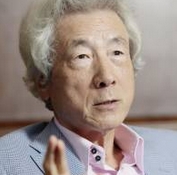
Former Prime Minister Junichiro Koizumi said the pro-nuclear ruling party of Prime Minister Shinzo Abe could lose the next Lower House election if nuclear power becomes the main election issue.
Citing recent gubernatorial election wins for candidates concerned about restarting nuclear power plants in Niigata and Kagoshima prefectures, Koizumi said during a recent interview with Kyodo News, “(Anti-nuclear) opinions are beginning to grow . . . that could influence the (next) House of Representatives election.”
If opposition parties unite in fielding anti-nuclear candidates and make complete phase-out of the country’s nuclear plants one of the top election issues, they can defeat the ruling Liberal Democratic Party by tapping into voter fears following the 20111 Fukushima meltdowns, Koizumi said.
The current term of Lower House lawmakers expires in December 2018, but some senior LDP officials have said Abe might dissolve the house for an election early next year.
Koizumi, who promoted nuclear power generation as prime minister between 2001 and 2006, has become an active anti-nuclear campaigner. He has repeatedly criticized Abe and the way his government is dealing with the aftermath of the Fukushima nuclear disaster.
“There is no way that a party which ignores the will of the public can maintain its hold on power,” said Koizumi, who retired from politics in 2009.
Koizumi also said that the main opposition Democratic Party “has not realized that the nuclear issue can be the biggest election issue.”
“The slogans by promoters of nuclear power that (nuclear power) is safe, low-cost and clean, are all lies,” Koizumi said.
He noted that the government would be forced to pour more funds into Tokyo Electric Power Company Holdings Inc., operator of the Fukushima Daiichi nuclear power plant crippled following the 2011 quake-tsunami disaster, to decontamination costs at the plant and compensation.
The government should give up its nuclear-fuel recycling policy, including the use of the Monju fast-breeder reactor, Koizumi said. The government has not decided on the fate of the trouble-prone reactor, which was intended to play a key role in the recycling policy.
On Abe’s drive to revise the war-renouncing Article 9 of the Constitution, Koizumi said it will not be possible due to a lack of sufficient public support.
Koizumi said a breakthrough on the decades-old territorial dispute over a group of Russian-held islands off Hokkaido will also be difficult as Russia will not accept Japan’s ownership of the islands.
Abe hopes to make progress on the issue, which has prevented the two countries from signing a post-World War II peace treaty, when he meets Russian President Vladimir Putin on Dec. 15 in Japan.
Kansai Electric manager’s suicide result of excess overtime
A manager working on technology for the Takahama nuclear power plant killed himself after working excessive overtime hours, sources have revealed.
The man, in his 40s, was found dead in April in a hotel in Tokyo where he was staying on a business trip.
The suicide of the Kansai Electric Power Co. manager was recognized as a work-related death by the Tsuruga Labor Standards Inspection Office in Tsuruga, Fukui Prefecture, sources said.
It had been a especially hectic time for the Osaka-based utility as two 40-plus-year-old reactors in Takahama, Fukui Prefecture, were at risk of being decommissioned if the safety screening process by the Nuclear Regulation Authority was not completed by July 7.
The company was pushing hard to have the No. 1 and No. 2 reactors at the nuclear power plant pass safety evaluations so that their operational lives could be extended by 20 years.
The dead man was the head of a department in charge of engineering regarding construction at the company, according to the sources.
He was tasked with responding to the NRA as he was responsible for having the construction plans on upgrading the two reactors approved by the nuclear watchdog.
Under the Labor Standards Law, work hours are not restricted for supervisors and managers such as the suicide victim. However, employers still have a responsibility to maintain the health of such employees by ensuring they avoid overwork.
Study: Possible water problem at storage sites in Fukushima
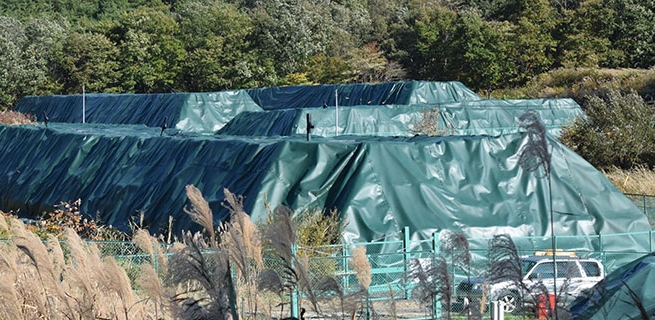
It might be difficult to measure radiation levels in water at this temporary storage site for contaminated soil in Fukushima Prefecture.
Bags of radiation-contaminated soil could be sinking into the ground at temporary storage sites in Fukushima Prefecture, allowing water to accumulate within instead of flowing to outside tanks for testing, the Board of Audit said.
No confirmation has been made that the ground at the sites is actually sinking or if contaminated water has pooled inside. But Board of Audit officials are asking the Environment Ministry to consider additional safety measures if signs indicate that this is actually occurring.
The board’s study focused on 34 of the 106 temporary storage sites that the Environment Ministry set up for soil removed through decontamination work after the disaster in March 2011 unfolded at the Fukushima No. 1 nuclear power plant.
Construction of the storage sites started in 2012, and the transfer of contaminated soil to these facilities was completed in 2015.
The temporary storage sites were designed to have a slight mound on the ground in the center to allow water from the bags to flow down into surrounding collection tanks for periodic measurements of radiation levels.
Internal Environment Ministry guidelines called for this setup at storage sites containing bags that are not waterproof.
The Board of Audit studied 34 temporary storage sites where the bags are not waterproof. These bags were piled five deep or higher at those sites.
The study showed that at 31 of the sites, the weight of the bags may have not only flattened the mound in the center, but it also could have created an indent in the ground where the leaking water could accumulate.
If the water does not flow to the tanks, it will be difficult to determine the radiation levels.
The study also noted that the foundations at the sites were soft to begin with and may be unable to support the bags of soil. The sinking phenomenon could worsen as time passes.
The Environment Ministry played down the risk of the water contaminating areas around the storage facilities.
“Even if the ground has sunk, the structure is designed so water does not leak outside the site,” a ministry official said. “Eventually, the water should collect in the tanks. We will make every effort to oversee the sites as well as use waterproof bags as much as possible.”
A total of 4.16 billion yen ($40 million) was spent to construct the 31 temporary storage sites.
The Environment Ministry designed the temporary storage sites under the precondition they would be used for only three years and then removed. For that reason, measures were not taken to strengthen the foundations to prevent the ground from sinking, even if soft farmland was chosen for a site.
The plan is to eventually return the land where the temporary storage sites have been built to its original state and return it to the landowners
However, the Board of Audit’s study adds another concern for residents, many of whom had opposed construction of the temporary storage sites in their neighborhoods.
Toshio Sato, 68, has evacuated to Fukushima city from his home in Iitate village, where four of the possible problem storage sites are located.
“There are some people who want to resume growing rice once they return home,” Sato said. “If water is accumulating, there is the possibility it could unexpectedly overflow into surrounding areas. The concerns just seem to emerge one after another.”
The government plans to lift the evacuation order for a large part of Iitate in March 2017.
1 This Month





PLEASE OPPOSE HR 8255 AND S.3639 – bills would accelerate satellite deployment, with no environmental review or safeguards – https://ncstd5li.quorum.us/campaign/169331/
To see nuclear-related stories in greater depth and intensity – go to https://nuclearinformation.wordpress.com
-
Archives
- October 2026 (19)
- September 2026 (339)
- August 2026 (330)
- July 2026 (355)
- June 2026 (287)
- May 2026 (306)
- April 2026 (356)
- March 2026 (251)
- February 2026 (267)
- January 2026 (308)
- December 2025 (358)
- November 2025 (359)
-
Categories
- 1
- 1 NUCLEAR ISSUES
- business and costs
- climate change
- culture and arts
- ENERGY
- environment
- health
- history
- indigenous issues
- Legal
- marketing of nuclear
- media
- opposition to nuclear
- PERSONAL STORIES
- politics
- politics international
- Religion and ethics
- safety
- secrets,lies and civil liberties
- spinbuster
- technology
- Uranium
- wastes
- weapons and war
- Women
- 2 WORLD
- ACTION
- AFRICA
- Atrocities
- AUSTRALIA
- Christina's notes
- Christina's themes
- culture and arts
- Events
- Fuk 2022
- Fuk 2023
- Fukushima 2017
- Fukushima 2018
- fukushima 2019
- Fukushima 2020
- Fukushima 2021
- general
- global warming
- Humour (God we need it)
- Nuclear
- RARE EARTHS
- Reference
- resources – print
- Resources -audiovicual
- Weekly Newsletter
- World
- World Nuclear
- YouTube
-
RSS
Entries RSS
Comments RSS

