Tsunami risk for nuclear reactors on coastlines of India and Pakistan
Nuclear plants in Arabian Sea face tsunami risk https://phys.org/news/2020-09-nuclear-arabian-sea-tsunami.html, by SciDev.Net, 21 Sep 20, A major tsunami in the northern Arabian Sea could severely impact the coastlines of India and Pakistan, which are studded with sensitive installations including several nuclear plants, says the author of a new study.
“A magnitude 9 earthquake is a possibility in the Makran subduction zone and consequent high tsunami waves,” says C.P. Rajendran, lead author of the study, which was published this September in Pure and Applied Geophysics.
“Our study is a step towards understanding the tsunami hazards of the northern Arabian Sea,” says Rajendran. “The entire northern Arabian Sea region, with its critical facilities, including nuclear power stations, needs to take this danger into consideration in hazard perceptions.”
Atomic power stations functioning along the Arabian Sea include Tarapur (1,400 megawatts) in India’s Maharashtra state, Kaiga (being expanded to 2,200 megawatts) in Karnataka state and Karachi in Pakistan (also being expanded to 2,200 megawatts). A mega nuclear power plant coming up at Jaitapur, Maharashtra will generate 9,900 megawatts, while another project at Mithi Virdi in Gujarat may be shelved because of public opposition.
Nuclear power plants are located along coasts because their enormous cooling needs can be taken care of easily and cheaply by making using abundant seawater.
“Siting nuclear reactors in areas prone to natural disasters is not very wise,” says M.V. Ramana, Simons Chair in Disarmament, Global and Human Security and Director, Liu Institute for Global Issues, University of British Columbia, tells SciDev.Net. “In principle, one could add safety systems to lower the risk of accidents—a very high sea wall, for instance. Such safety systems, however, add to the cost of nuclear plants and make them even more uncompetitive when compared with other ways of generating electricity.”
“All nuclear plants can be subject to severe accidents due to purely internal causes, but natural disasters like earthquakes, tsunamis, hurricanes, and storm surges make accidents more likely because they cause stresses on the reactor that could lead to some failures while simultaneously disabling one or more safety systems,” says Ramana, who has worked extensively on nuclear energy.
Rajendran and his team embarked on the study after noticing that, compared to peninsular India’s eastern coast, tsunami hazards on the west coast were under-recognized. This despite the 8.1 magnitude earthquake that occurred in the Makran subduction zone in 1945.
The study relies on historical reports of a major disturbance that struck the coast of western India in 1524 that was recorded by a Portuguese fleet off Dabhol and the Gulf of Cambay, and corroborated by geological evidence and radiocarbon dating of seashells transported inland which are preserved in a dune complex at Kelshi village near Dabhol.
Modeling carried out by the team produced results suggesting that the high impact in Kelshi could have been generated by a magnitude 9 earthquake sourced in the Makran subduction zone during the 1508 —1681 period, says Rajendran. Subduction zones occur where one tectonic plate slides over another, releasing seismic energy.
As per radiocarbon dating of the shells, the inundation may have occurred during 1432—1681 and overlaps the historical reports of major sea disturbances in 1524 that were recorded by a Portuguese fleet of 14 ships led by Vasco da Gama, the man who discovered the sea-route between India and Europe.
A future mega-tsunami originating in the Makran subduction zone could not only devastate the coasts of Iran, Pakistan and Oman but also the west coast of India, says Rajendran, adding that alternate offshore quake sources are yet to be identified in the Arabian Sea.
The larger Indian Ocean features another tectonically active tsunamigenic source—in the Andaman-Sumatra region where the devastating 2004 Asian tsunami occurred. “The next tsunami, after our experience in 2004, will likely be on the west coast,” says Rajendran.
The 2004 tsunami claimed more than 250,000 lives and devastated the beaches of Indonesia, Thailand and Sri Lanka, and claimed lives as far away as Yemen, Somalia and South Africa. Significantly, an atomic power plant at Kalpakkam, on the coast of India’s south-eastern, Tamil Nadu state, was flooded.
Earlier studies, such as the one published in 2013 in Geophysical Research Letters, have indicated that tsunamis, similar in magnitude to the one caused by the 2004 Sumatra earthquake, could occur at the Makran subduction zone where the Arabian plate is subducting beneath the Eurasian plate by about 1.5 inches per year.
According to the 2013 study, the Makran is a wide-potential seismogenic zone that may be capable of generating a very significant (greater than 8.5 in magnitude) tsunamigenic earthquake that poses risks to the coastlines of Pakistan, Iran, Oman, and India.
Vinod Menon, a founder member of India’s National Disaster Management Authority tells SciDev.Net that the new study “raises pertinent questions on the seismic and tsunamigenic risks from a potential rupture of the Makran subduction zone.”
“The tsunami risk and vulnerability of the west coast has not received adequate attention in spite of a history of occurrence in the past as curated by the authors as well as previous studies,” says Menon, who adds that it is worth noting that there are far more sensitive installations around the northern Arabian Sea than in the Andaman-Sumatra region.
Ramana says that such studies serve as a warning against the risks and costs of setting up nuclear power plants in seismically vulnerable areas. “A decade after the 2011 disaster in Fukushima, the prefecture retains radioactive hotspots and the cost of clean-up has been variously estimated to range between US$20 billion and US$600 billion.”
U.S. general says that North Korea has a ”small” number of nuclear weapons (over 70?)
|
N. Korea has ‘small number’ of nuclear weapons: US general, Korea Herald, By Yonhap, Sept 18, 2020 WASHINGTON — North Korea has a “small number” of nuclear weapons, the vice chairman of the US Joint Chiefs of Staff said Thursday, although that number was not defined. Air Force Gen. John Hyten told a virtual forum that the specific numbers were “classified” and in many ways hard to understand. “But a small number is a confident characterization of nuclear capabilities that can threaten their neighbors or the United States,” he said in a symposium hosted by the National Defense University’s Center for the Study of Weapons of Mass Destruction. Hyten offered no further explanation of what he meant by “a small number.” The US has never officially discussed its assessment of North Korea’s nuclear capabilities, but the communist state is widely estimated to possess more than 70 nuclear warheads. In its latest annual report,” North Korean Tactics,” published in July, the US Army said the North is “estimated” to possess 2,500 to 5,000 tons of chemical weapons. With regard to its nuclear arsenal, however, the report simply states “estimates for North Korean nuclear weapons range from 20 to 60 bombs, with the capability to produce six new devices each year.” North Korea has conducted six nuclear tests, between October 2006 and September 2017. Hyten’s remark follows a recently renewed controversy, at least in Seoul, over Pyongyang’s nuclear capabilities. In his latest book, “Rage,” Washington Post journalist Bob Woodward discusses a US response to a North Korean attack that he says could include the use of up to 80 nuclear weapons……….. http://www.koreaherald.com/view.php?ud=20200918000129 |
|
USA DID have a plan to drop 80 nuclear weapons on Nortrh Korea
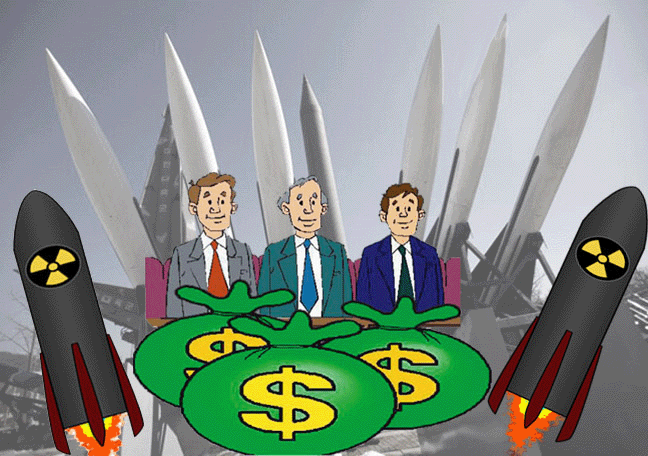 Yes, The United States DidDraw Up A Plan To Drop 80 Nuclear Weapons On North Korea, In 2017, a war between North Korea and the United States was “much closer than anyone would know,” President Trump claims. The Drive BY THOMAS NEWDICK, SEPTEMBER 18, 2020.
Current nuclear war plans are among any nuclear-armed military’s most closely guarded secrets. Details of one such attack plan recently became available, however, revealing that the United States envisaged using 80 nuclear weapons in case of war with North Korea. The way this particular detail emerged is also pretty unusual — the associated passage appeared in U.S. journalist Bob Woodward’s book Rage, detailing President Trump’s administration, which was published this week.
In an interview with NPR, Woodward cleared up any confusion, noting that the 80 nuclear weapons were part of a U.S. attack plan — OPLAN 5027, which would include ‘decapitating’ the North Korean regime of dictator Kim Jong-un.
Woodward said that Mattis confided in him that he was not worried that Trump might launch a preemptive strike against North Korea. Instead, the source of his angst was the North Korean leader in Pyongyang.
In fact, such was Mattis’s level of concern that he would sleep in his gym clothes, Woodward claims. “There was a light in his bathroom… if he was in the shower and they detected a North Korean launch.”
There were alarm bells set up in Mattis’s bedroom and kitchen too, and on more than one occasion during the summer of 2017 they sounded the alert, and he entered the communications room in his Washington DC residency. Woodward explains that Mattis’s car was also constantly followed by an SUV with a team equipped to plot the flight path of any incoming missile, whether it was threatening Japan, South Korea, or the United States. If Mattis considered the missile hostile, he had a mobile communications link to issue launch orders to shoot it down. …………
Clearly, the status of a nuclear-armed North Korea provided much pause for thought within the U.S. administration during Mattis’ tenure as Secretary of Defense. That a strike plan against North Korea involving 80 nuclear weapons was discussed between the president and his defense secretary isn’t all that hard to imagine………..
One of the options under consideration in Washington was OPLAN 5015, a nuclear strike to take out the North Korean leadership, which Woodward also refers to, drawing again from his extensive interviews with Trump. Specifically, Woodward mentions “updating” such a plan — after all, Kim Jong-un and his predecessors will have always been priority targets in the case of an all-out war. ……………… https://www.thedrive.com/the-war-zone/36519/yes-the-united-states-did-draw-up-a-plan-to-drop-80-nuclear-weapons-on-north-korea
IAEA and China helping Saudi Arabia with its nuclear ambitions
China and IAEA are helping Saudi Arabia achieve its nuclear ambitionsAlthough Saudi Arabia has pledged that its nuclear program is strictly peaceful, Crown Prince Mohammed Bin Salman said the kingdom would develop a bomb if Iran did so. The Print JONATHAN TIRONE 16 September, 2020 Vienna: The United Nations nuclear watchdog has been working in parallel with Chinese officials to help Saudi Arabia exploit uranium — the key ingredient for nuclear power and weapons — despite its inspectors being frozen out of the kingdom.
The International Atomic Energy Agency published a document ahead of its annual conference next week showing the Vienna-based organization assisting Saudi efforts to make nuclear fuel. An institute in Beijing affiliated with the IAEA has been prospecting for uranium in Saudi Arabia……..
The Saudis have stepped up their pursuit of nuclear technologies in recent years, piquing the interest of companies from South Korea to Russia and the U.S. The kingdom is nearing completion of its first reactor, a low-powered research unit being built with Argentina’s state-owned INVAP SE. It has repeatedly pledged that its nuclear program is strictly for peaceful purposes, but Crown Prince Mohammed Bin Salman said the kingdom would develop a bomb if its regional rival Iran did so.
Nuclear non-proliferation experts have long warned that without adequate safeguards, IAEA technical cooperation can unwittingly help countries develop weapons capabilities………
While Saudi Arabia has been open about its ambitions to generate nuclear power, less is known about the kinds of monitoring the kingdom intends to put in place. President Donald Trump’s administration sent a letter to Saudi Arabia a year ago setting requirements to access U.S. atomic technology. The baseline for any agreement is tougher IAEA inspections that include a so-called Additional Protocol — the same monitoring standard applied in Iran and more than 130 other nations, which allows inspectors wider access to sites including uranium mines.
The kingdom is among only 31 countries worldwide that still applies an old set of IAEA regulations that don’t allow inspections. On Monday, the agency said it was beginning a new initiative to roll back those rules because they can’t provide adequate assurance that all activity is for exclusively peaceful purposes.
“I’m approaching them, telling them that in 2020 this is no longer adequate,” Grossi said. “We have to be up to a minimum standard.”
The IAEA provided financial and technical aid to develop Pakistan’s uranium mines and improve plutonium-producing reactors even after the country tested a nuclear weapon in 1998 in defiance of a non-proliferation treaty. While that aid was intended for civilian nuclear power, scientists involved in those projects said Pakistan used uranium mined with agency help for weapons.
The IAEA similarly helped North Korea develop its uranium mines before it kicked inspectors out in 2003. Syria, under investigation since 2007 for allegedly building a secret atomic-weapons reactor, used an IAEA-built lab to produce uranium ……..https://theprint.in/world/china-and-iaea-are-helping-saudi-arabia-achieve-its-nuclear-ambitions/503674/#:~:text=The%20International%20Atomic%20Energy%20Agency,for%20uranium%20in%20Saudi%20Arabia.
South Korea says no use of nuclear weapons in joint operational plans with U.S
 South Korea says no use of nuclear weapons in joint operational plans with U.S. The Chronicle Herald, South Korea says no use of nuclear weapons in joint operational plans with U.S. The Chronicle Herald,
Hyonhee Shin, 16 Sep 20, SEOUL (Reuters) – South Korea said on Tuesday none of its joint military action plans with the United States include any use of nuclear weapons, after a book by a U.S. journalist sparked debate over whether scenarios of a full-blown war with North Korea would entail a nuclear attack from either side.
In his new book, titled “Rage,” Washington Post associate editor Bob Woodward wrote that the United States had devised plans for a possible armed clash with North Korea, such as “the U.S. response to an attack that could include the use of 80 nuclear weapons.” The book was based on multiple interviews with U.S. President Donald Trump. The passage fueled debate in South Korea over whether it meant Washington or Pyongyang would detonate 80 bombs against each other. Seoul’s defense ministry said on Tuesday its joint operational plans (OPLAN) with the United States did not include any use of nuclear weapons, reiterating the view of the presidential office. A presidential official said on Monday there must not be another war on the peninsula and any use of force cannot be implemented without South Korea’s consent. “I can say clearly that the use of a nuclear weapon does not exist in our OPLANs, and it is impossible to use military force without our agreement,” the official told reporters…………. https://www.thechronicleherald.ca/news/world/south-korea-says-no-use-of-nuclear-weapons-in-joint-operational-plans-with-us-497135/ |
|
In 2017, USA considered plans to attack North Korea using nuclear weapons
|
US reviewed plans to use nuclear weapons on North Korea, strike leadership https://www.nknews.org/2020/09/us-reviewed-plans-to-use-nuclear-weapons-on-north-korea-strike-leadership/
Amid growing tensions in 2017, U.S. brushed up on plans to attack North Korea using nuclear weapons
Chad O’Carroll September 14, 2020 The United States reviewed plans to strike North Korea with as many as 80 nuclear weapons and updated leadership strike plans during the first year of Trump’s presidency, according to veteran journalist Bob Woodward’s new book, “Rage.”Woodward’s book reveals that, as tensions between North Korea and the U.S. sharpened in 2017 over Pyongyang’s testing of advanced missile technologies, then-Secretary of Defense Jim Mattis grew anxious about the possibility of nuclear war. Woodward cited direct interview material and informed sources to make these claims.Mattis did not think Trump would launch a preemptive strike on North Korea, but when tensions were
|
|
China ditches US nuclear technology in favour of home-grown alternative
China ditches US nuclear technology in favour of home-grown alternative. The US-developed AP1000 technology was once the basis of China’s third-generation nuclear power, SCMP, Echo Xie, 14 Sep, 2020
But China’s Hualong One is now the preferred option
China has switched from American nuclear power technology to a domestically developed alternative as worries over energy security and geopolitical uncertainties increase.
The AP1000 technology, designed by America’s Westinghouse Electric Company, was once the basis of China’s third-generation nuclear power, but now the country has more third-generation reactors based on its own Hualong One technology under construction or approved, than it does AP1000 reactors.
A total of 12 nuclear reactors in China – either under construction or going through the approval process – use Hualong One technology. In contrast, no new AP1000 reactors have been approved for more than a decade. The last US reactors – in Zhejiang and Shandong provinces – went into commercial operation in 2018………
However, China’s bet on nuclear power comes at a time when some European countries are phasing out its use and development in the US has stagnated. …….. https://www.scmp.com/news/china/society/article/3101304/china-ditches-us-nuclear-technology-favour-home-grown
Suttsu, Hokkaido, residents oppose radioactive waste dump plan
Residents Oppose Hokkaido Town’s Radioactive Waste Site Plan https://www.nippon.com/en/news/yjj2020091000878/residents-oppose-hokkaido-town%27s-radioactive-waste-site-plan.html Suttsu, Hokkaido, Sept. 11 (Jiji Press)–Many residents of a Japanese town considering hosting a final disposal facility for high-level radioactive waste have voiced opposition to the plan at a briefing session organized by the municipal government.The meeting was the fourth of its kind for residents of the town of Suttsu in the northernmost Japan prefecture of Hokkaido. The first such session was held on Monday.
At Thursday’s meeting, which was opened to the press, Suttsu Mayor Haruo Kataoka explained the reasons for considering applying for a literature survey, the first stage of a three-stage research process to select the location of the final disposal site for high-level radioactive waste from nuclear power plants.
Some 260 residents attended the session, which lasted for over three hours from 6:30 p.m. (9:30 a.m. GMT).
Participating residents voiced concerns that the move will lead to harmful rumors about the town, and that if the town receives subsidies from the Japanese government as a result of applying for the literature survey, it will have no choice but to become a final disposal site. Some said that detailed discussions should be held after the mayoral election in the town next year.
Tokyo Olympics must be held at ‘any cost’, says Japanese minister
Seiko Hashimoto says country is planning for event next year even though a widely available vaccine is unlikely
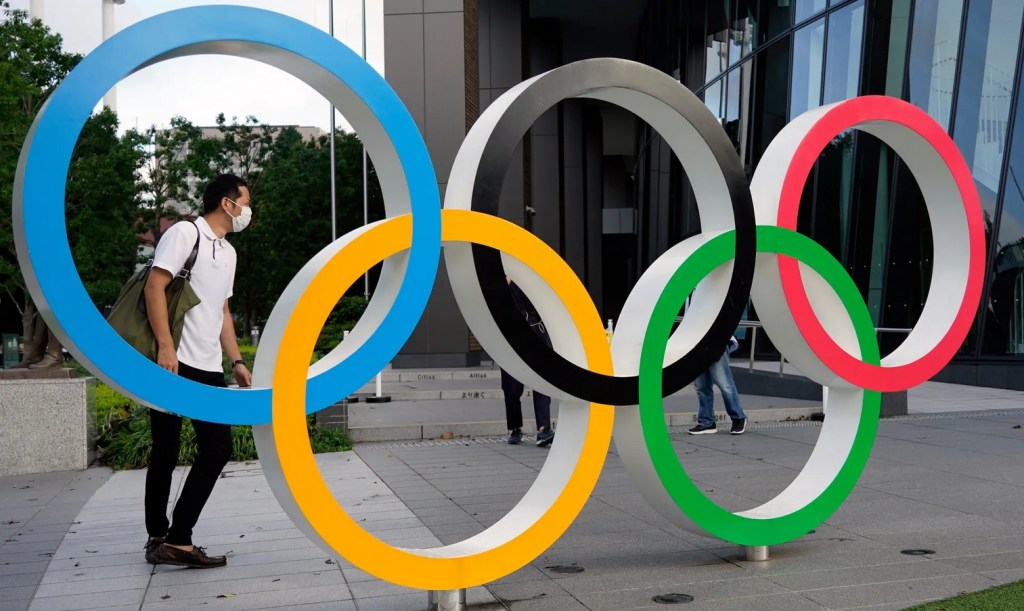
A man wearing a protective face mask walks past an Olympic Rings monument near the national stadium, the main venue of the Tokyo Olympics and Paralympics.
September 8, 2020
The Tokyo Olympics must be held “at any cost”, Japan’s Games minister, Seiko Hashimoto, has said, as organisers continue to weigh up options for staging a “post-pandemic” celebration of sport in the city next summer.
“Everyone involved with the Games is working together to prepare, and the athletes are also making considerable efforts towards next year,” Hashimoto told reporters on Tuesday.
The former Olympian suggested the priority had shifted from planning for the “complete Games” once favoured by the outgoing prime minister, Shinzo Abe, towards an event that would enable athletes to compete regardless of the status of the Covid-19 pandemic.
“I think we have to hold the Games at any cost,” she said. “I want to concentrate all our efforts on measures against the coronavirus.”
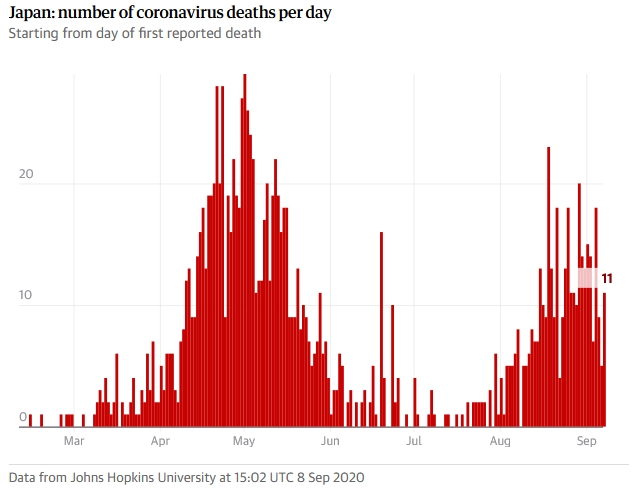
There is also a growing belief within national olympic committees that the Games will go ahead following lengthy discussions over the summer about how they can be staged safely. The Guardian understands that proposals under discussion include:
- Potentially keeping athletes in preparation camps for longer before they move into the Olympic village, enabling them to be tested regularly for Covid-19 and cleared before competing.
- Asking athletes to leave the athletes’ village immediately after they have competed, rather than stay until after the closing ceremony as is traditional.
- Having reduced capacities in stadiums observing social distancing rules.
However, suggestions that there could be a downsized Olympics, with fewer athletes and staff, are being downplayed by senior sources.
The 2020 Tokyo Olympics were postponed in March as the coronavirus began its rampage through Europe, the US, Brazil, India and other parts of the world.
With health experts warning that a vaccine is unlikely to be widely available by the time the opening ceremony is due to take place on 23 July 2021, a task force of organisers, national and local government officials and health experts met for the first time last week to consider anti-virus measures.
The group, which is expected to release an interim report at the end of the year, is sifting through more than 200 proposals on how best to prevent an Olympic-related outbreak while enabling around 11,000 athletes from more than 200 countries to travel to Japan.
“While living with the coronavirus, we need to make sure that athletes can perform at their best and audiences enjoy the Games safely,” the deputy chief cabinet secretary, Kazuhiro Sugita, said at the meeting. “To achieve that, we will adjust border controls, testing and medical systems and the operations of the venues.”
Last week, the Tokyo chief executive, Toshiro Muto, insisted the Games could be held even if a vaccine was not available.
“It’s not a prerequisite,” he said. “It’s not a condition for the delivery of the Tokyo 2020 Games. A vaccine is not a requirement. Of course, if vaccines are developed, we’ll really appreciate it. And for Tokyo 2020 that would be great.”
While the delayed start of domestic and international sports competitions show it is possible to reduce the risks to athletes, it will be harder to ensure the safety of huge numbers of spectators from overseas.
“As far as spectators, we don’t have any conditions yet, but we’d like to avoid no spectators,” Muto said.
The comments from Hashimoto, who represented her country in speed skating and track cycling, echo those made on Monday by John Coates, vice president of the International Olympic Committee [IOC]. He said the event would go ahead next summer “with or without Covid”.
“The Games were going to be … the ‘reconstruction Games’ after the devastation of the tsunami,” Coates said, referring to the disaster that struck north-east Japan in 2011.
“Now very much these will be the Games that conquered Covid, the light at the end of the tunnel.”
Public support is waning in Japan, however, with two-thirds of respondents to a poll in July saying they would prefer the Olympics to be postponed a second time – an option organisers and the IOC have ruled out – or cancelled.
Organisers said they had been encouraged to see international sports events such as the US Open tennis and the Tour de France go ahead in the midst of the pandemic, and by reports that Japan’s government is considering allowing more fans into stadiums to watch domestic baseball and football matches.
“This has been a big, big encouragement for the staff at Tokyo 2020,” organising committee spokesman Masa Takaya told reporters on Tuesday. “We feel that is another step towards seeing sports in action in our society.”
IOC Vice President Says 2021 Tokyo Olympics Will Happen
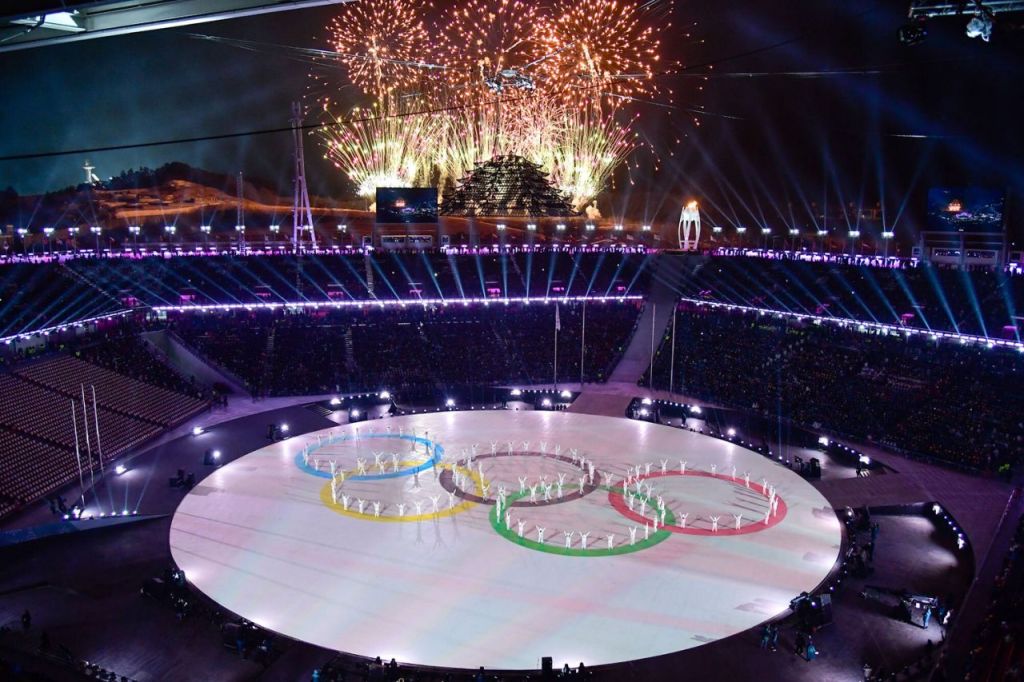
September 7, 2020
The Tokyo Summer Olympics are taking place next year regardless of the coronavirus pandemic, according to International Olympic Committee Vice President John Coates.
“It will take place with or without COVID. The Games will start on July 23 next year,” Coates told news agency AFP on Monday, according to multiple outlets.
“The Games were going to be, their theme, the Reconstruction Games after the devastation of the tsunami,” he added, referring to the devastating earthquake and tsunami that struck Japan in 2011. “Now very much these will be the Games that conquered COVID, the light at the end of the tunnel.”
In late March, the International Olympic Committee (IOC) announced that the Summer Games would be rescheduled for the same time slot next year due to the ongoing COVID-19 crisis.
The Olympics will now be held from July 23 through August 8, 2021.
There is still much uncertainty regarding the games, however. In June, various Japanese media sources published stories indicating that the Olympics will be “downsized,” “simplified” or “very different.”
Officials have not yet announced any specific modifications, but the reports indicated that athletes may face quarantines and coronavirus testing and seating could be reduced.
Following the published reports, Tokyo Olympics spokesman Masa Takaya appeared in an online news conference but did not confirm any of the leaked information about downsizing.
He did, however, address concerns about reducing the amount of seating, as millions of tickets have already been sold. “We want to brush away these concerns,” Takaya said, speaking to ticket holders.
“We understand that countermeasures for COVID-19 next year, particularly during games time, is one of the biggest things to address in preparing for the games next year,” he added. “But once again these countermeasures will be discussed in more depth from this autumn onward.”
Adam Rippon Says 2020 Winter Olympians Are ‘Grieving’ Amid Postponement
Figure skater Adam Rippon won a bronze medal in the 2018 Olympics in PyeongChang
Olympic Minister Seiko Hashimoto said that costs must be cut for the rescheduled games, but added that ensuring athletes’ safety may lead to higher expenses.
“Unless safety and security are ensured, there will be uncertainty for the athletes-first point of view,” she said, according to the Associated Press. “We must study measures including virus testing in order to ensure safety and security.”
The delay marks only the fourth time in modern Olympic history that the games have been disrupted.
https://www.yahoo.com/entertainment/ioc-vice-president-says-2021-155509392.html
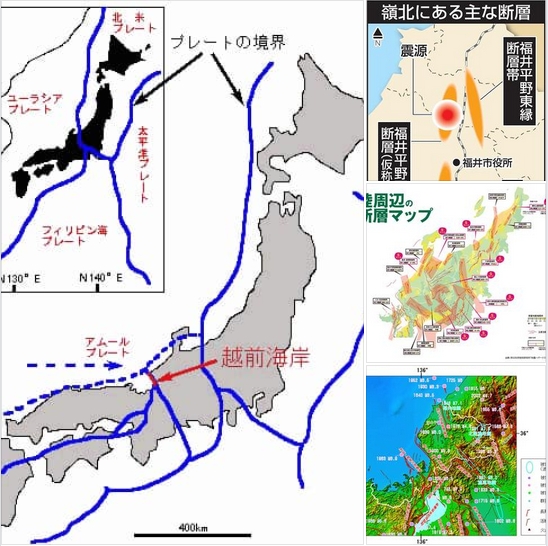
There are 15 nuclear power plants in Fukui Prefecture.
By Akihiko Tamai
Fukui SEISMIC INTENSITY 5 weak epicenter, fault expert, chain warning ′′ it can be connected to a big earthquake ′′
According to Professor Taku Okamoto (Earthquake) of fukui college of technology, there is a fault in the hirano part of the epicenter of the earthquake that observed the maximum SEISMIC INTENSITY OF 5 in Fukui Prefecture on the morning of September 4th It was possible to wake up In the future, if the earthquake of magnitude (M) 5 0 class is frequent, it is a chain with the surrounding fault, and it is pointed out that ′′ it can be connected to a big earthquake like the kumamoto earthquake 5
According to Professor Okamoto, the next wave that does not appear if it is not a fault-specific structure near the epicenter of this time is observed in the past earthquake, and in the west rim of fukui hirano, it is a fault that penetrates the confluence of the kuzuryu and hinogawa to the north It is said that there is a.
According to the Japan Meteorological Agency, this earthquake is a ′′ reverse fault type ′′ that is pushed from both sides and moves in the upper and lower direction. Professor Okamoto points out that the fault of the fukui hirano west rim may have caused the fault of the estimated fault and epicenter.
The Epicenter of this time is about 5 km away from the fukui hirano fault belt, which caused the fukui earthquake on June 28, 1948, and it is not directly related. Also, the earthquake of 4 or more seismic intensity that epicenter the north of the north of the north of the north of the north of the north of the north of the
The current situation is close to the earthquake of the shaking aftershocks, but in the future, if there is a similar earthquake as this time, there is a sabae fault in the south, so it is pointed out that ′′ chain leads to a big earthquake On Top of that, ′′ I need to carefully look at the progression of aftershocks activities for 1 OR 2 weeks
The earthquake is also called ′′ emergency earthquake breaking news is not in time In the future of aftershocks, I’m calling ′′ if you feel the tremor, I want you to lower your posture and take action to protect your head (Fukui Shimbun September 5)
Tokyo Olympics will be most costly Summer Games, Oxford study shows

In this June 3, the Olympic rings float in the water at sunset in the Odaiba section in Tokyo.
September 4, 2020
TOKYO
The Tokyo Olympics are already the most expensive Summer Games on record with costs set to go higher, a wide-ranging study from Britain’s University of Oxford indicates.
The Tokyo cost overrun already exceeds 200%, lead author Bent Flyvbjerg explained in an interview with The Associated Press. This is even before several billion more dollars are added on from the one-year delay from the COVID-19 pandemic.
Flyvbjerg is an economist at Oxford’s Said Business School. His entire study is available here, and it’s set to be published on Sept. 15 in the journal “Environment and Planning A: Economy and Space.” It’s titled “Regression to the Tail: Why the Olympics Blow Up.”
Tokyo, postponed until July 23, 2021, is only a small part of the focus. The study — the third in a series following editions 2012 and 2016 — looks at Olympic costs since 1960 and finds they keep increasing despite claims by the International Olympic Committee that costs are being cut.
Flyvbjerg cites many reasons for the rising costs and cost overruns, and offers solutions for the IOC. The vast majority of costs are picked up by governments with the IOC contributing only a small portion.
“The Olympics offer the highest level of risk a city can take on,” Flyvbjerg told AP. “The trend cannot continue. No city will want to do this because it’s just too expensive, putting themselves into a debt that most cities cannot afford.”
In his paper, Flyvbjerg cites Los Angeles Mayor Eric Garcetti, whose city is to hold the 2028 Olympics following Paris in 2024.
“Most cities, unless you have a government that’s willing to go into debt or pay the subsidy of what this costs, most cities will never say ‘yes’ to the Olympics again unless they find the right model,” he quotes Garcetti as saying.
By the right model, Garcetti means lower costs.
Tracking Olympic costs is difficult, a dense maze of overlap and debate. Politicians and organizers always argue over what are — and what are not — Olympic expenses.
Flyvbjerg writes: “Unfortunately, Olympics officials and hosts often misinform about the costs and cost overruns of the Games. … We therefore cannot count on organizers, the IOC, and governments to provide us with reliable information about the real costs, cost overruns, and cost risks of the Olympic Games.”
Flyvbjerg looks only at costs to operate the games — the operating costs and capital costs — the cost to build sports venues. He leaves out a third category, which is usually many times larger: renovating roads, building airports, and what he calls “sprucing up projects,” which also fall to taxpayers.
“Our estimates are conservative because there are lots of costs that are hidden that we can’t get into,” Flyvbjerg said. “And there are lots of costs we decided not to include because it’s too complex. We include the things we can get the most reliable numbers for and we do it in the same way for each city that we study.”
He also excludes the cost of debt, and the future cost of running sports venues after the Olympics leave, and inflation.
According to the Oxford numbers. Tokyo’s spending is at $15.84 billion, already surpassing the 2012 London Olympics, which were the most expensive summer games to date at $14.95 billion. He expects several billion more from the cost of the one-year delay.
Tokyo organizers say officially they are spending $12.6 billion. However, a national auditor says the actual costs are twice that high, made up of some expenses that the Oxford study omits because they are not constant between different Olympics.
Tokyo said the cost would be $7.3 billion when it won the bid in 2013.
“They (IOC) obviously don’t like our results, but it’s very difficult to counter a piece of rigorous research like this,” Flyvbjerg said. “And they haven’t done that, and they can’t do that. Our research is a problem for them.”
In an email to Associated Press, the IOC said it had not seen the latest Oxford study and declined to comment.It referenced another study by Mainz and Sorbonne universities.
This study also found Olympic cost overruns but said they were in line with other large-scale projects. Flyvbjerg’s study finds they are not.
Flyvbjerg said he has been in touch on and off with the IOC and had sent a colleague to an IOC workshop. He said a major reason for the rising costs is that the IOC does not pay for them. He also cited rising security costs, and moving the games around the world. He calls this the “Eternal Beginner Syndrome” with new host cities starting basically from scratch.
He’s said the IOC has tried recently to rein in costs, but the effort is “too little, too late.”
“They (IOC) define the specs but don’t pay for them,”Flyvbjerg said. “This is pretty similar to you and I giving the specs for a house that we are going to live in, but we don’t have to pay for it. How do you think we’d spend? We’d gold-plate it. This is what has happened over time.”
Flyvbjerg said he’s relish a chance to sit and talk with IOC President Thomas Bach. He calls himself a fan of the Olympics.
“It’s not that the IOC hasn’t been willing to talk, or I am not willing to talk,”he said. “We certainly are. We have communicated in writing to keep the IOC informed. But yes, we would like to sit down with Thomas Bach.”
https://japantoday.com/category/sports/oxford-study-tokyo-olympics-are-most-costly-summer-games
Nuclear waste disposal is a matter of environmental concern
Aug 31, 2020
It has been reported that the town of Suttsu in Hokkaido is considering applying for a two-year “literature research” into the possibility of storing high-level radioactive nuclear waste. A maximum of ¥2 billion in subsidies will be granted by the central government.
“The future of the town is financially precarious,” said Haruo Kataoka, the mayor of Suttsu, in an interview.
But the money that is thought to revive the town cannot reverse what the nuclear waste is likely to cause.
It is, in my opinion, never a financial issue, but a matter of environmental concern.
What is in question here is high-level radioactive nuclear waste, which can be dangerous for at least 200,000 years and therefore must be handled with the utmost care. It is indeed a problem that any country with nuclear power plants needs to address, however thorny it is. Any indiscreet decision is deemed extremely irresponsible and profoundly unethical.
“Financially precarious,” I must stress, is by no means comparable to environmentally threatening. Besides, it is specifically stated in a Hokkaido ordinance that nuclear waste is hardly acceptable in the prefecture.
Before a final disposal site is selected, or even before an application for research is submitted, the scientific facts ought to be thoroughly understood and the residents properly informed.
The span of recorded history is merely 5,000 years, while 200,000 years is far beyond human experience and comprehension. We certainly cannot live to see what is going to become of the nuclear waste, but I believe that we do not want to leave the thorny problem unaddressed to haunt our future generations.
Jive Sun
Sapporo
Fukushima’s citizen radiation testers still on the job.
Fukushima Has Turned These Grandparents Into Avid Radiation Testers, NPR, Kat Lonsdorf (@lilkat_bigworld) September 11, 2020 Takenori Kobayashi lugs a garbage bag full of soil across a parking lot to an unmarked office. His wife, Tomoko, holds the door to a tiny work space with lab equipment and computers set up. On the edge of Fukushima’s former nuclear exclusion zone, this is the place the couple likes to call their “grandma and grandpa lab.”
A handful of other residents help run the lab, and throughout the years, experts from nearby universities have come to teach them all about the different equipment and radiation science.
“All the grandparents here are radiation professionals now,” Takenori, 71, says with a smile……..
Effective nuclear arms control engagement with China – the View from Beijing
Carnegie–Tsinghua Center for Global Policy 11 Sept 20, Effective nuclear arms control engagement with China will likely require confidence-building measures by the United States and greater support from the international community.
The United States will have to keep its public voice down while offering China concrete proposals to address the two countries’ asymmetric capabilities. If they’re to be taken seriously, these proposals should show a willingness by the United States to limit its own capabilities, particularly in areas of U.S. superiority such as air- and sea-launched missile systems and space-based capabilities.
Given China’s deep skepticism and outsider status in the arms control arena, engagement will require transparency and time to build confidence. One valuable starting point could be a reset of fundamental terms: China may be more eager to discuss “strategic ability” than “arms control.” Identifying cooperative measures for nuclear risk reduction would be a useful topic for initial discussions.
1 This Month



26 September – International Day for the Total Elimination of Nuclear Weapons


PLEASE OPPOSE HR 8255 AND S.3639 – bills would accelerate satellite deployment, with no environmental review or safeguards – https://ncstd5li.quorum.us/campaign/169331/
To see nuclear-related stories in greater depth and intensity – go to https://nuclearinformation.wordpress.com
-
Archives
- September 2026 (281)
- August 2026 (330)
- July 2026 (355)
- June 2026 (287)
- May 2026 (306)
- April 2026 (356)
- March 2026 (251)
- February 2026 (267)
- January 2026 (308)
- December 2025 (358)
- November 2025 (359)
- October 2025 (375)
-
Categories
- 1
- 1 NUCLEAR ISSUES
- business and costs
- climate change
- culture and arts
- ENERGY
- environment
- health
- history
- indigenous issues
- Legal
- marketing of nuclear
- media
- opposition to nuclear
- PERSONAL STORIES
- politics
- politics international
- Religion and ethics
- safety
- secrets,lies and civil liberties
- spinbuster
- technology
- Uranium
- wastes
- weapons and war
- Women
- 2 WORLD
- ACTION
- AFRICA
- Atrocities
- AUSTRALIA
- Christina's notes
- Christina's themes
- culture and arts
- Events
- Fuk 2022
- Fuk 2023
- Fukushima 2017
- Fukushima 2018
- fukushima 2019
- Fukushima 2020
- Fukushima 2021
- general
- global warming
- Humour (God we need it)
- Nuclear
- RARE EARTHS
- Reference
- resources – print
- Resources -audiovicual
- Weekly Newsletter
- World
- World Nuclear
- YouTube
-
RSS
Entries RSS
Comments RSS

