nuclear-news

The News That Matters about the Nuclear Industry Fukushima Chernobyl Mayak Three Mile Island Atomic Testing Radiation Isotope

Atomic bombs dropped on Hiroshima and Nagasaki 75 years ago are still claiming lives and causing suffering.

July 25, 2020 Posted by | Japan, PERSONAL STORIES, radiation, weapons and war | Leave a comment

China’s government-run nuclear institutions are experiencing a brain drain.

July 25, 2020 Posted by | China, employment | Leave a comment

South Asia floods displace millions and kill 550

July 25, 2020 Posted by | ASIA, climate change | Leave a comment

Virtual tours planned at Hiroshima Peace Memorial Museum and the Nagasaki Atomic Bomb Museum

Virtual tours planned at atomic bomb museums,  https://www3.nhk.or.jp/nhkworld/en/news/20200721_43/?fbclid=IwAR2KZ-D8gWm-K1Yl8WVBDpUyobELxvI6Hm-DiWxtZYPBmyS8mo9BOneLd2E  21 Jul 20, Two Japanese museums dedicated to documenting the 1945 atomic bombings of Hiroshima and Nagasaki plan to offer virtual tours online in cooperation with an international NGO devoted to the elimination of nuclear weapons.They are planning the events as the number of international visitors to these museums has dropped sharply due to the coronavirus pandemic.

Kawasaki Akira, a member from the International Campaign to Abolish Nuclear Weapons, or ICAN, unveiled the plan online on Monday.

The exhibits at the Hiroshima Peace Memorial Museum and the Nagasaki Atomic Bomb Museum will be shown live on Instagram. Volunteers and researchers from universities will explain the displays in English.

The Hiroshima museum will hold the virtual tour on Wednesday for about 30 minutes after closing time, between 6:30 p.m. and 7p.m. Japan time.

The Nagasaki museum will hold it on Friday for about 30 minutes before opening time, between 8:00 a.m. and 8:30 a.m. Japan time.

Kawasaki said his group and the museums want to do everything possible online as various activities have been canceled due to the coronavirus pandemic.

He said he wants to offer young people abroad an opportunity to find out about the damage and aftereffects of the atomic bombings of the two cities.

July 25, 2020 Posted by | history, Japan, media, weapons and war | Leave a comment

Why the nuclear whistleblower exposing AQ Khan was ignored

Nuclear secrets: the Dutch whistleblower who tried to stop Pakistan’s bomb Frits Veerman first warned the authorities in 1973 about the suspicious activities of his colleague AQ Khan. Why was he ignored?  Simon Kuper– 24 July 20, 
  In the early 1970s, the Dutch technician Frits Veerman shared a large desk in a lab in Amsterdam with a charming Pakistani scientist named Abdul. One day, Veerman mentioned that he’d like to visit Pakistan. He asked if he could stay a few nights with his colleague’s family. Abdul — full name Abdul Qadeer Khan — replied that Pakistan’s government would pay for his entire trip. That’s when Veerman began to suspect that Khan was stealing Dutch nuclear secrets.  ………
Veerman first tried to report Khan to the Dutch authorities in 1973. He didn’t make it past a secretary. Had he been heard, then or later, the world might have been spared a nightmare. The Dutch allowed Khan to leave their country in 1975 and to keep visiting European suppliers. The US Central Intelligence Agency didn’t stop him either. Khan ended up building Pakistan’s nuclear bomb and selling the technology to Iran, North Korea and Libya.
………….After Veerman blew the whistle, he lost his job. A report this month by the Huis voor Klokkenluiders, the new Dutch Whistleblowers Authority, finally absolves him. It also helps explain why he and not Khan was punished.

Khan is now 84, and living under unofficial house arrest in Pakistan, where he has long had an up-and-down relationship with the authorities. He is closely escorted by security officials during his restricted movements, while any visitors to his home are screened in advance.  …………
The Dutch briefed the CIA on Khan, Lubbers told Japanese TV in 2005. The Americans opposed the nuclear ambitions of their Pakistani allies. Nonetheless, the CIA stopped the BVD from arresting Khan. The Americans wanted to watch him, so as to track Pakistan’s nuclear procurement and Europe’s secretive nuclear suppliers.

The CIA’s failure to stop him in 1975 “was the first monumental error”, Robert Einhorn, who worked on nonproliferation in the Clinton and Obama administrations, told Frantz and Collins. The Americans asked the Dutch “to inform them fully but not take any action”, Lubbers recalled, laughing. He said he “found it a bit strange”, but also thought, “‘OK, it’s American business.’ We didn’t feel . . . safeguarding the world against nuclear proliferation as a Dutch responsibility.” The business of the Netherlands was business. The CIA would watch Khan for decades.

FDO didn’t tell Khan he was under suspicion. It gave him a new job, calling it a promotion, and said he could stop visiting Almelo. He may have realised the game was up. On December 15 1975 he flew to Pakistan on leave, taking his wife, daughters and blueprints of centrifuges. Soon afterwards, from Pakistan, he resigned from FDO.  ……..
In September 1976, FDO held a meeting about Khan. Veerman told his colleagues that he thought Khan was a spy. FDO doesn’t seem to have launched an investigation or taken measures, says the Dutch Whistleblowers Authority. Later, Veerman detailed Khan’s actions to BVD agents. But his speaking out was unpopular. There had been rejoicing within FDO when an executive returned from a visit to ex-employee Khan in Pakistan with orders of work. Pakistani technicians began visiting FDO for what Veerman calls “a course in ‘how to build an ultracentrifuge’”.
In September 1976, FDO held a meeting about Khan. Veerman told his colleagues that he thought Khan was a spy. FDO doesn’t seem to have launched an investigation or taken measures, says the Dutch Whistleblowers Authority. Later, Veerman detailed Khan’s actions to BVD agents. But his speaking out was unpopular. There had been rejoicing within FDO when an executive returned from a visit to ex-employee Khan in Pakistan with orders of work. Pakistani technicians began visiting FDO for what Veerman calls “a course in ‘how to build an ultracentrifuge’”.  ………..
Why was Veerman sacked? A former Dutch security investigator, who handled the Khan case from 1979, told the whistleblowers authority that Veerman was “sacrificed” because he wouldn’t stop talking. FDO’s security had been lax, the Netherlands and its high-tech sector were embarrassed, those involved didn’t want the story to reach the media or other countries, and the junior employee had to shut up. This is what Veerman had always suspected.
No other Dutch tech company would hire him. Is Veerman bitter? The question seems to surprise him. He doesn’t have a large emotional vocabulary. “I don’t cry about it all day. A great injustice was done to me, but I don’t think about it much. When something like that happens, you have to make an assessment — maybe I am too sober — and go on.”  Now, with the whistleblowers’ report, Veerman plans to seek compensation from the Dutch state and the present incarnation of FDO’s former holding company, VMF-Stork (FDO closed in 1992). The current Stork, which now consists of a very different set of operating companies, says it “has fully co-operated with the investigation [by the Dutch Whistleblowers Authority], even though this question is from a very long time ago . . . The ­current Stork cannot be regarded as Mr Veerman’s employer, as the Authority’s report confirms.”  ………
Meanwhile, Khan regularly flew into Brussels, then drove to nearby countries visiting suppliers and scientists. The BVD took no action, even when Dutch businessman Nico Zondag reported in 1977 that Pakistan was seeking products to build a nuclear bomb. A Dutch foreign-ministry official wrote in a memo in 1984 that exports to Pakistan continued, “including essential bomb components that for whatever reason couldn’t be blocked”.  Khan said in 1987 that Europeans were keen sellers: “People chased us with figures and details of equipment they had sold to Almelo and Capenhurst [the British site of another Urenco plant]. They literally begged us to buy their equipment.” There were few restrictions on such exports in those days. If an item seemed particularly problematic, the trick was to conceal its destination by routing it through an inoffensive third country.
A small country with an impenetrable language can generally keep national embarrassments secret. The Dutch government commissioned a report on Khan only in 1979, after the German TV channel ZDF — using sources other than Veerman — revealed Khan’s espionage to the world. Nobody then thought Pakistan was close to getting the bomb and the CIA believed it had the matter under control, but the Netherlands — a vocal supporter of the Nuclear Nonproliferation Treaty of 1968 — was humiliated in front of its allies.
In 1983, Veerman was summoned to a meeting at the Bijlmer prison. There, he later told the whistleblowers authority, government officials ordered him to keep quiet about Khan “because the Netherlands’ international relations and reputation were at risk, and the interests of Dutch industry”. When he said he’d keep speaking out, an executive from FDO snapped that speaking out had got him fired — thereby blowing the company’s cover story
Veerman went straight from the meeting to a Dutch newspaper, but afterwards retreated into his social security job and was hardly heard of again in public for decades until now. He was also put on an international watchlist and for many years was questioned by the authorities when he travelled abroad. On one family holiday in Italy, his car was stopped by armed police.
In 1983 the Netherlands sentenced Khan in absentia to four years in jail for seeking secret information. The main evidence was his letters to Veerman. Khan was offended by the verdict and his biographer Zahid Malik would record his complaint that two of the judges were Jews. Later, his sentence was overturned because he hadn’t been served the summons. The Dutch then abandoned prosecution of the most consequential crime committed on their territory since the second world war. The ministry of justice later admitted that Khan’s legal file had gone missing.
Lubbers, who became prime minister in 1982, wanted Khan arrested but was told to “leave it to the [intelligence] services”. Looking back, he told the Argos radio show: “The last word is Washington. There is no doubt they knew everything, heard everything. There is an open line between The Hague and Washington . . . It was very dumb.” Khan was allowed to return to the Netherlands repeatedly, including for a visit to his dying father-in-law in 1992.
 The CIA’s former director of central intelligence, George Tenet, once boasted: “We were inside [Khan’s] residence, inside his facilities, inside his rooms.” Yet the Americans missed a lot, partly because they expected Pakistan to pursue a bomb made with plutonium rather than uranium. They were also late to realise that Khan had opened a nuclear supermarket, offering starter kits to many countries including Syria and Saudi Arabia. Decades after leaving the Netherlands, he was still selling Dutch knowledge. He grew rich. In 1998, he also became celebrated as “Mohsin e-Pakistan” (Saviour of Pakistan), after the country detonated six nuclear bombs at a test site.
 Proof of his sales emerged in 2003, when the US Navy intercepted a ship carrying nuclear technology from one of his factories to Libya. Later, the Libyans handed the Americans two plastic bags (bearing the names of an Islamabad tailor and a dry cleaner) that contained bomb designs. In 2004, Khan confessed on live television to transferring the technology to Libya, Iran and North Korea. By then, the US couldn’t demand his punishment, as Pakistan was an ally in the “war on terror”.
Meanwhile, the Dutch government admitted in 2004 that Iranian centrifuges had been seen that used “Urenco technology from the 1970s”. Pakistan’s centrifuges were similar. The Dutch foreign ministry told the FT: “The Netherlands attaches great importance to the Non-proliferation Treaty and the prevention of proliferation. The Netherlands did not actively contribute to unwanted proliferation of knowledge.” Khan later withdrew his confession. Some years ago, an American documentary-maker arranged for Veerman to phone his old friend. Khan, who resents being painted as a common spy, told him, “Frits, you are the biggest liar around.” Khan is now out of favour with Pakistan’s government. Security forces personnel installed in the house next door block him from meeting his relatives, friends and lawyers, he complained in an appeal to Pakistan’s Supreme Court last month.  ……
Veerman is harsher about his own country: “If Iran ever manages to destroy Israel, they could put on the weapons, ‘Made in Holland.’”  https://www.ft.com/content/be09ba7c-b0d8-45e4-aff8-bf01b4aa558e

July 25, 2020 Posted by | EUROPE, Pakistan, secrets,lies and civil liberties, USA | Leave a comment

Arms Control Today interviews Hiroshima Mayor Kazumi Matsui  


July 23, 2020 Posted by | Japan, weapons and war | Leave a comment

Plutonium particles from Fukushima a bigger problem than previously thought

Plutonium Particles Scattered 200km From Fukushima Nuclear Disaster Site, Scientists Say   https://theswaddle.com/plutonium-particles-scattered-200km-from-fukushima-nuclear-disaster-site-scientists-say/, By Aditi Murti, Jul 22, 2020  Plutonium fragments may have spread more than 200km via caesium microparticle compounds released during the 2011 Fukushima Daiichi nuclear power plant disaster in Japan. These findings are according to research done on the region’s soil samples, published in Science of The Total Environment, by an international group of scientists.
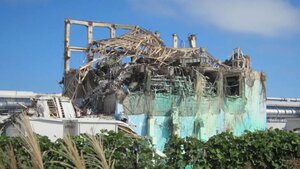
The Fukushima Nuclear disaster occurred when a massive tsunami crashed over the plant’s walls, causing three operating nuclear reactors to overheat and melt down. Simultaneously, reactions within the plant generated hydrogen gas that exploded as soon as it escaped from containment. During the disaster, caesium — a volatile fission product created in nuclear fuel — combined with other reactor materials to create caesium-rich microparticles (CsMPs) that were ejected from the plant.
CsMPs are incredibly radioactive, and scientists study them in an attempt to both measure their environmental impact and to gain insight into the nature and extent of the Fukushima disaster. In one such research process, scientists discovered tiny uranium and plutonium fragments within these micro-particles. The range of plutonium particle spread was previously estimated at 50km, and this research changes that number to 230km. This discovery is vital as it provides a reason to extend testing for plutonium poisoning in human-inhabited regions further than before, and helps scientists understand how to decommission the nuclear reactors in the plant.   Decommissioning nuclear plants is extremely important after they cease to function, in order to reduce residual radioactivity in the region to safe levels.
With respect to immediate implications for health, scientists note that radioactivity levels of the plutonium are similar to global counts from nuclear weapons tests. While this means that radioactivity levels may not pose an urgent, critical danger, scientists also note that plutonium poisoning in food items remains a threat. If plutonium were ingested — a possibility in this region — it could create isotopes that significantly increase radioactivity doses, and poison the body
Due to high radioactivity levels, humans are still unable to enter the Fukushima plant nine years after the disaster. Yet, scientists continue to work towards safely decommissioning the reactors within the plant from the outskirts.

July 23, 2020 Posted by | Fukushima continuing, radiation | Leave a comment

The Fukushima Diiachi Accident Chain, Part 6

The Fukushima Diiachi Accident Chain, Part 6, Nuclear Exhaust, 22 July 20

A Discussion of Official Reports Describing the Fukushma Diiachi  Nuclear Disaster

 The references used for this discussion are:

The Official report of the Fukushima Nuclear Accident Independent Investigation Commission Executive Summary”, The National Diet of Japan, 2012.

“FUKUSHIMA DAIICHI: ANS Committee Report”, A Report by The American Nuclear Society Special Committee on Fukushima, March 2012.

“The Fukushima Daiichi Accident, Technical Volume 1/5 Description and Context of the Accident, IAEA, Vienna, 2015.

 FACT AND CAUSE OF FUKUSHIMA NUCLEAR POWER PLANTS ACCIDENT”, Hideki NARIAI, Proceedings of the International Symposium on Engineering Lessons Learned from the 2011 Great East Japan Earthquake, March 1-4, 2012, Tokyo, Japan.

Other sources, such as press reports, industry and authority regulations and technical bulletins will also be used.

The very great complexity of the disaster and of the human and systems responses to the challenges which confronted, and confront, the Fukushima Diiachi nuclear plant and the people operating and tending to the plant is obvious. The aim of this discussion is to attempt to produce, in review, a coherent picture of the events as reported by the authorities given above.

While the nuclear industry and permanent nuclear authorities – the IAEA – tend to agree closely in their reports of the events, the Fukushima Nuclear Accident Independent Investigation Commission, appointed by the Japanese national Parliament (Diet) reports various aspects of the disaster with pointedly local questioning of events based upon witness accounts and the Committee’s own findings. And these perceptions, based on local knowledge of both the plant and witness statements actually challenge, in aspects, the findings of the other authorities.

As a preamble to the discussion of the disaster, a central consideration to all nuclear power plants in use today has to be included.   The long term, intermediate term and short term safety of nuclear power plants depends upon the availability of electrical grid connection and power to the reactors and the entire plant. This is not an opinion, it is a technical fact which nuclear authorities have repeatedly reported upon.

The surprising fact is, that although nuclear reactors can supply electrical power to the world’s largest cities and nations, when the grid goes down, there is no ability for any nuclear reactor to power itself and its systems on any long term basis. There is nothing integral to the reactors which allows the energy resident in the reactors’ cores and pressure vessels to be controlled and managed so as to manage the cooling of the reactors.

While the nuclear industry and nuclear authorities have touted the virtues of nuclear power plant emergency cooling systems for over 50 years.   However:

 “The emergency cooling systems started. However, they did not work for so long time, and the fuels became to heat up and melt down, resulting the severe accident. “ Source: English translation of “FACT AND CAUSE OF FUKUSHIMA NUCLEAR POWER PLANTS ACCIDENT , Hideki NARIAI, Proceedings of the International Symposium on Engineering Lessons Learned from the 2011 Great East Japan Earthquake, March 1-4, 2012, Tokyo, Japan.

As we shall see later, the workers at the Fukushima Diiachi site during the early stages kept the emergency cooling systems going for many hours longer than the systems were designed to last. And these systems are designed to work for 8 hours only. (See the ANS report)..………. 

It is beyond me why the nuclear industry, for more then 50 years, has been so wilfully dumb, ignorant and arrogant in the design of its emergency systems. And everything else.  It seems to me the main aim of the industry is to sell reactors by any means.  Whereas the industry should have the main aim of assuring safety in the context of the modern world and the modern world energy market.   The problem is, though solar panels mounted on the Fukushima Shima Diiachi reactor building roofs could have save the day by keeping cooling pumps going, the obvious thought is this: why not just replace the Fukushima Diiachi with a solar and wind farm?  

No danger of meltdown at all.  As soon the 2009 scientific assessment came in demonstrating that an earthquake and tsunami was due “within the next 30 years”. that is precisely what should have been down.  Perhaps Barry Brook and Pam Sykes, two academic non nuclear experts in Australia, were right. No human skill could have saved Fukushima Diiachi. So why leave it there? Pity the authorities in the nuclear industry hid and suppressed the scientific warnings of 2009, including TEPCOs own confirmation of the growing threat.  This is standard procedure for the nuclear industry. It is not a particularly Japanese culture.  It is nuclear norm.

The IAEA requirements for electricity grids which supply Nuclear Power Plants.

The following text is a straight quote from : ” “ELECTRIC GRID RELIABILITY AND INTERFACE WITH NUCLEAR POWER PLANTS” IAEA NUCLEAR ENERGY SERIES No. NG-T-3.8, IAEA, ….

Quote: ““The safe and economic operation of a nuclear power plant (NPP) requires the plant to be connected to an electrical grid system that has adequate capacity for exporting the power from the NPP, and for providing a reliable electrical supply to the NPP for safe startup, operation and normal or emergency shutdown of the plant.

“Connection of any large new power plant to the electrical grid system in a country may require significant modification and strengthening of the grid system, but for NPPs there may be added requirements to the structure of the grid system and the way it is controlled and maintained to ensure adequate reliability.

“The organization responsible for the NPP and the organization responsible for the grid system will need to establish and agree the necessary characteristics of the grid and of the NPP, well before the NPP is built, so that they are compatible with each other. They will also need to agree the necessary modifications to the grid system, and how they are to be financed.

“For a Member State that does not yet use nuclear power, the introduction and development of nuclear power is a major undertaking. It requires the country to build physical infrastructure and develop human resources so it can
construct and operate a nuclear power plant (NPP) in a safe, secure and technically sound manner. ” end quote. Source: “ELECTRIC GRID RELIABILITY AND INTERFACE WITH NUCLEAR POWER PLANTS” IAEA NUCLEAR ENERGY SERIES No. NG-T-3.8, IAEA,

Hmm. very interesting. NPPs require a specifically designed and modified baseload capable grid network before they can be expected to safely start up, operation and shut down. Further the grid is needed, according to the world nuclear authority, for SAFE EMERGENCY SHUTDOWN.

The Earthquake and the Grid in Japan on the day of the disaster

One would have thought the following information would have been clearly discussed by the nuclear authorities from the day of the disaster. It’s nearly 10 years and still no word from them:

““Vibrations from the magnitude 9.0 earthquake triggered an immediate shut down of 15 of Japan’s nuclear power stations. Seismic sensors picked up the earthquake and control rods were automatically inserted into the reactors, halting the fission reaction that is used to produce electricity. This sudden loss of power across Japan’s national power grid caused widespread power failures, cutting vital electricity supplies to Fukushima Daiichi. There were three reactors, one, two and three, operating at the time when the earthquake hit while reactors four, five and six had already been shutdown as part of routine maintenance work.” “Japan earthquake: how the nuclear crisis unfolded”. Richard Gray, Science Correspondent, The Telegraph, 20 March 2011. end quote.

The first thing the earthquake did was to cause the shutdown of nuclear power feed into the grid. 15 Nuclear Power Plants threw in the towel because they cannot safely operate during an earthquake. Apparently. Nuclear power guarantees black out in an earthquake.

July 23, 2020 Posted by | Fukushima continuing, Reference, safety | Leave a comment

Fukushima may have scattered plutonium widely

Fukushima may have scattered plutonium widely, Physics World 20 Jul 2020   Tiny fragments of plutonium may have been carried more than 200 km by caesium particles released following the meltdown at the Fukushima Daiichi nuclear power plant in Japan in 2011. So says an international group of scientists that has made detailed studies of soil samples at sites close to the damaged reactors. The researchers say the findings shed new light on conditions inside the sealed-off reactors and should aid the plant’s decommissioning……..

Mapping plutonium spread

To date, plutonium from the accident has been detected as far as 50 km from the damaged reactors. Researchers had previously thought that this plutonium, like the caesium, was released after evaporating from the fuel. But the new analysis instead points to some of it having escaped from the stricken plant in particulate form within fragments of fuel “captured” by the CsMPs…….

Implications for decommissioning

The researchers note that previous studies have shown that plutonium and caesium are distributed differently in the extended area around Fukushima, which suggests that not all CsMPs contain plutonium. However, they say that the fact plutonium is found in some of these particles implies that it could have been transported as far afield as the caesium – up to 230 km from the Fukushima plant.

As regards any threat to health, they note that radioactivity levels of the emitted plutonium are comparable with global counts from nuclear weapons tests. Such low concentrations, they say, “may not have significant health effects”, but they add that if the plutonium were ingested, the isotopes that make it up could yield quite high effective doses.

With radiation levels still too high for humans to enter the damaged reactors, the researchers argue that the fuel fragments they have uncovered provide precious direct information on what happened during the meltdown and the current state of the fuel debris. In particular, Utsunomiya points out that the composition of the debris, just like that of normal nuclear fuel, varies on the very smallest scales. This information, he says, will be vital when it comes to decommissioning the reactors safely, given the potential risk of inhaling dust particles containing uranium or plutonium.

The research is reported in Science of the Total Environment.   https://physicsworld.com/a/fukushima-may-have-scattered-plutonium-widely/

July 21, 2020 Posted by | - plutonium, Fukushima continuing, radiation, Reference | Leave a comment

North Korea continues policy -no denuclearization talks until the US withdraws its “hostile policy.

North Korea Proceeds Down a Nuclear Path, BY38 NORTH, JULY 20, 2020

Reports about the unusual “closed-door meeting” of the Workers’ Party of Korea Central Military Commission (CMC)[1] on July 18 suggested that North Korea remains committed to its strategic weapons development and production plan, including its nuclear weapons. This meeting builds on recent statements by North Korean officials implying that Pyongyang will proceed with its strategic weapons plans and that the moratorium on nuclear weapons and long-range ballistic missile testing is off the table. ……
North Korea may have omitted “nuclear” to dial down the tone of recent messaging, but it does not necessarily translate into actual policy implications …….
In the Context of Recent Statements

This nuanced treatment of nuclear weapons in CMC meeting coverage is consistent with recent statements by North Korean officials, which indicated denuclearization is off the table for now and North Korea will proceed with its weapons development to cope with US “long-term threats.”…….

While Kim Yo Jong’s July 10 press statement seemed more conciliatory in tone than the previous Foreign Ministry statements, the bottom line was consistent with North Korea’s position since the Stockholm talks in October 2019: there will be no denuclearization talks until the US withdraws its “hostile policy.”[9] Kim added that North Korea must plan for “long-term threats” from the US and “strengthen and steadily increase our practical capabilities,” which implied going ahead with North Korea’s weapons development and production plan.   https://www.38north.org/2020/07/cmc072020/

July 21, 2020 Posted by | North Korea, politics international, weapons and war | Leave a comment

Britain’s Conservatives anxious to review UK’s nuclear build co-operation with China

Tory hawks press button on nuclear power battle with China, After Huawei, energy sector looks set to be next flashpoint in Sino-British relations, Ft.com,  Jim PickardDaniel Thomas and Nathalie Thomas-20 July 20

After securing a de facto ban on Huawei from winning future business in the UK, hawkish Conservative MPs have turned their sights on other Chinese investments — with the nuclear industry set to become the next flashpoint.
Over the past decade of a so-called “golden era” of Sino-British relations, initiated by former Tory chancellor George Osborne, Chinese companies snapped up an estimated $80bn of UK assets.

 They range from the manufacturer of the famous London black cabs to a wind farm in Norfolk, various property deals and stakes in various football clubs, including Southampton.
 The buying spree saw a range of household names change hands such as the 2014 takeover of PizzaExpress by private equity group Hony Capital; Thomas Cook, the travel operator that collapsed last year; and breakfast cereal maker Weetabix, since sold to US investors.  ……..
The energy sector looks set to become the next battleground in Sino-British relations. Although there has been a frenzy of activity by Chinese companies across wind and solar farms, the China critics have their sights set on the highly sensitive nuclear power sector with the focus on state-owned China General Nuclear.

CGN, which has already invested £3.8bn in the UK nuclear sector, is a junior funding partner for the new Hinkley Point power station in Somerset being built by France’s EDF, and is also involved with the French company’s other proposed plant at Sizewell in Suffolk.

 But it is CGN’s third nuclear power project — a new station at Bradwell in Essex where it is the majority partner — that the Tory backbenchers want blocked. The Chinese company wants to use its own reactor technology and is hoping to receive design approval from the UK regulator in the next 18 months.
Former Conservative leader Iain Duncan Smith is one of the leading voices pushing for the government to review the group’s involvement in the UK. CGN has been blacklisted by the Trump administration in Washington over allegations of stealing US technology for potential military use. https://www.ft.com/content/58f7a0bf-da3b-4e9f-a1a1-2c9789904a1b

July 21, 2020 Posted by | China, politics international, UK | Leave a comment

India has not committed to the great transition to nuclear power it once envisioned.

A nuclear accord, 15 years ago: Has the agreement, and US-India partnership, lived up to the 2005 hype? The answer is mixed. Times of India, July 18, 2020,  Donald Camp i  The visit of Indian Prime Minister Manmohan Singh to Washington between July 17 and July 19, 2005, was heralded as a new beginning in the US-India partnership by both the countries. The highlight of the summit – an agreement to cooperate in civil nuclear power – was indeed path breaking as it upended the US (and international) focus on rolling back India’s nuclear weapons capabilities, and implicitly acknowledged India’s status as a nuclear weapons power.
Fifteen years later, has the agreement – and the partnership – lived up to the hype? The answer is mixed. ……..
The US-India relationship has continued to grow since 2005 but not in the way the agreement had intended. There has been no great cooperation in civilian nuclear energy; in fact, no contract has been signed with a US company towards that end till today. Of the two American nuclear engineering giants, General Electric (builder of India’s Tarapur reactor in the 1960s) had left the business and Westinghouse was sold to Toshiba in 2006.
India itself has not committed to the great transition to nuclear power it once envisioned. Russia and France are the major nuclear suppliers to India, though Westinghouse was promised a contract for six reactors in 2016, before its bankruptcy in 2017. Today solar and other renewable energy sources are attracting more attention and investment. …………
Over fifteen years, China’s increasing global power as well as its territorial ambitions in both the Himalayas and the South China Sea have significantly worsened China’s relations with both India and the US. After border clashes in recent years in Doklam and now Aksai Chin, India seems less hesitant about a partnership explicitly aimed at containing China. In addition to new arms sales, there is a renewed commitment to the “Quad”, the informal mechanism for security discussions and more between Japan, the US, India and Australia. The current US administration would be delighted to have India buy in more completely to its Indo-Pacific strategy………. https://timesofindia.indiatimes.com/blogs/toi-edit-page/a-nuclear-accord-15-years-ago-has-the-agreement-and-us-india-partnership-lived-up-to-the-2005-hype-the-answer-is-mixed/

July 20, 2020 Posted by | India, politics | Leave a comment

Japanese municipal assemblies oppose dumping radioactive water in sea

Storage tanks for radioactive water are seen at Tokyo Electric Power Co’s (TEPCO) tsunami-crippled Fukushima Daiichi nuclear power plant in Okuma town, Fukushima prefecture, Japan February 18, 2019. Picture taken February 18, 2019. REUTERS/Issei Kato

Fukushima localities speak out against dumping radioactive water in sea,  Japan Times,  17 Jul 20, Seventeen out of 59 municipal assemblies in Fukushima Prefecture have either passed a resolution or issued a statement opposing the discharge into the Pacific Ocean of treated radioactive water currently stored at the Fukushima No. 1 nuclear power plant, a Fukushima Minpo survey has shown.The resolutions and statements also described measures taken by the central government as inadequate to combat reputational damage to food and fishery goods produced in Fukushima Prefecture, and the hope that local voices will be reflected in Tokyo’s decision on whether to release the tritium-tainted water into the sea.

Fukushima Minpo conducted a survey of assemblies in the prefecture’s 59 cities, towns and villages from June 18 to June 24. The assembly for the town of Namie, close to where the nuclear power plant is located, adopted a resolution that opposed the release of the radioactive water into the sea, while assemblies from the town of Miharu and village of Nishigo both issued statements opposing both sea discharge and evaporation as methods for disposing of the water.

Many municipal assemblies have urged the central government to instead come up with measures involving long-term storage of the contaminated water in tanks ……….https://www.japantimes.co.jp/news/2020/07/17/national/fukushima-assemblies-radioactive-water/

July 18, 2020 Posted by | Fukushima continuing | Leave a comment

Why did over 90 nuclear safety scientists resign en masse from an institute under the Chinese Academy of Sciences (CAS)?

90 CAS nuclear scientists who resigned were allegedly ‘poached’
Source: Global Times 2020/7  More than 90 nuclear safety scientists with an institute under the Chinese Academy of Sciences (CAS) resigned enmasse according to media reports, with the unusual high number of resignation drawing public attention, considering the essential service the scientists provide.

An employee at the Institute of Nuclear Energy Safety Technology (INEST) under The Hefei Institutes of Physical Science (CASHIPS) of CAS said the more than 90 researchers who voluntarily left their jobs were “poached” and the resignations were part of “normal staff turnover,” the Shanghai-based news website thepaper.cn reported Thursday.

The employee didn’t identify which company or institute may have recruited the researchers.

INEST, located in Hefei, capital of Central China’s Anhui Province, a hub of China’s scientists, has about 600 members and 80 percent of researchers have PhD degrees, according to the institute’s website………Earlier media reports show the resignations were triggered by a conflict with new security staff hired in mid-June at INEST.

According to the official website, INEST was established in September 2011. It is devoted to the design and R&D of advanced nuclear energy and safety technology, and also an independent nuclear safety assessment center with the aim of promoting the sustainable development of nuclear science and technology.

The employee said the 90-plus researchers submitted their resignations in June.  https://www.globaltimes.cn/content/1194812.shtml

July 18, 2020 Posted by | China, employment | 1 Comment

8 cases of inappropriately stored nuclear waste found at northern Japan reprocessing plant

kjlklmlmThe Japan Nuclear Fuel Ltd. (JNFL) nuclear fuel reprocessing plant in the village of Rokkasho, Aomori Prefecture, is seen in this May 14, 2020 file photo taken from a Mainichi Shimbun aircraft


July 15, 2020

TOKYO — Japan Nuclear Fuel Ltd. (JNFL) had been inappropriately storing nuclear waste at a nuclear fuel reprocessing plant in Rokkasho, Aomori Prefecture, in northern Japan, including keeping waste in undesignated areas, the country’s nuclear regulatory body has revealed.

The Nuclear Regulation Authority (NRA) had instructed JNFL to make improvements in its practices in 2017, but the company had left some of its nuclear waste in places where they were not supposed to be. There has been no confirmation that any of the radioactive substances leaked. There have been a series of shoddy practices uncovered at JNFL, which is likely to call into question the company’s attitude.

At the fuel reprocessing plant, uranium and plutonium are extracted from spent nuclear fuel for reuse in nuclear reactors. Highly radioactive waste liquid that is generated in the process becomes nuclear waste when it is solidified in glass. According to the NRA and others, JNFL had been keeping nuclear waste in a building different from the one the waste is meant to be stored in. As for the approximately 160 kilograms of shards of radioactive waste liquid solidified in glass, an appropriate storage method had not been stipulated. There were eight cases of inappropriate storage, some of them spanning the past 19 years.

Inspectors from the NRA Secretariat confirmed inappropriate storage of nuclear waste in August 2017. The regulatory body asked that JNFL correct its practices by August 2019, but only two of the eight cases had been remedied by the end of June 2020.

At a meeting concerning the safety inspection of the nuclear fuel reprocessing plant this past May, the NRA had determined that the plant had effectively met the government’s new criteria. JNFL explained that it had intended to consult with the NRA Secretariat once the inspections had taken place. The NRA, meanwhile, says that the situation is exempt from safety inspections under the government’s new criteria.

https://mainichi.jp/english/articles/20200715/p2a/00m/0na/002000c?fbclid=IwAR1ohnwU8wykHwF939fJOtLzQvZrujUk0p9op3mdPs1ujPVtBjfNRjNgcCk


July 16, 2020 Posted by | Japan | , , | Leave a comment