No Japan prefectures positive about hosting nuclear waste site

Aug 14, 2020
Nearly half of Japan’s 47 prefectures said they are opposed to or held negative views about hosting a deep-underground disposal site for high-level radioactive nuclear waste, a Kyodo News survey showed Friday.
None expressed a favorable stance. The result signals further woes for the central government in its attempt to find a permanent geological disposal repository.
Little progress has been made since the process to find local governments willing to host one started in 2002, due mainly to opposition from local residents.
The survey was sent to all prefectures in July, with additional interviews conducted depending on their answers.
While 16 prefectures such as Fukushima, Kanagawa and Okinawa clearly opposed hosting a site, seven others including Hokkaido, Kyoto and Nagasaki also expressed negative views.
Most of the others did not make their positions clear.
Of the total 23 prefectures that opposed or showed negative views, seven host nuclear power plants.
“We are already undertaking a certain amount of social responsibility by hosting nuclear plants and providing energy,” Niigata Prefecture said in its response.
Fukui Prefecture said, “We are generating power. Nuclear waste disposal should be handled by others.”
Meanwhile, Hokkaido mentioned its existing ordinance to prevent nuclear waste from being brought into the northernmost main island, a view that contradicts the relatively positive stance held by one of its municipalities. The town of Suttsu said Thursday it is considering signing up for preliminary research into its land to gauge its suitability for hosting a disposal site.
On Friday, however, its mayor, Haruo Kataoka, said the town has been asked by the prefecture not to apply for the preliminary study.
Before Suttsu, the town of Toyo in Kochi Prefecture applied for the study in 2007, but it later withdrew the application following strong protests by local residents.
In the Kyodo News poll, the western prefecture expressed opposition to hosting a disposal site, saying it faces the need to take measures against a possible major earthquake in the region.
For permanent disposal, high-level radioactive waste, produced as a result of the process of extracting uranium and plutonium from spent fuel, must be stored more than 300 meters underground so that it cannot impact human lives or the environment.
Elsewhere in the world, Finland and Sweden are the only countries to have decided on final disposal sites.
Hokkaido town mayor eyes hosting nuclear waste site
 This facility in Finland is the only one where construction has begun on a final storage site for nuclear waste.
August 14, 2020
The mayor of Suttsu in western Hokkaido is bracing for a backlash after stating that he wants his small town to be considered as a final destination for nuclear waste by the central government.
“When I think about the future of our town, where the population has been shrinking, there is a need for financial resources to promote industry,” said Haruo Kataoka, 71, in an interview with The Asahi Shimbun.
“I am prepared for whatever form of bashing I may encounter.”
Kataoka may be in for a long fight.
Selecting the site for the nation’s final storage of nuclear waste is a three-stage process that can take up to 20 years. At each stage, the central government provides any municipality that has applied with annual grants.
Kataoka said he was considering having Suttsu apply for the first stage in which past records about natural disasters and geological conditions for the area are examined.
This stage normally takes about two years, and the municipality can receive up to 1 billion yen ($9.3 million) a year or a maximum total of 2 billion yen.
The annual budget for the Suttsu town government is 5 billion yen. Its main industries are oyster farming and fishing for Atka mackerel.
As of the end of March, the town’s population was 2,893. The population has decreased by 30 percent over the past two decades.
To encourage municipalities to submit applications, the central government in July 2017 released a map of areas that were considered scientifically appropriate as a site for the final storage of nuclear waste.
Suttsu is the first municipality expressing an interest in applying since that map was released.
But it remains to be seen if local residents will go along with Kataoka’s idea. He will hold a meeting in September to explain his intention and a decision will be made thereafter whether to proceed with the application.
Kataoka has also expressed interest in moving toward the second stage of the selection process in which boring samples are taken from underground. This is part of the four-year process to determine if the area meets general conditions to enable the selection process to move to the third stage, in which a test facility will be constructed underground.
In the second stage, the municipality can receive up to 2 billion yen a year, or a maximum total of 7 billion yen.
A municipal government can decide at any time to withdraw from the selection process and the grants it has received until then do not have to be returned.
Because nuclear waste may take up to 100,000 years for radiation to reach safe levels, any final storage site would have to be constructed at least 300 meters underground.
Suttsu is classified at the highest of four levels of appropriateness, according to the map released by the central government. Its location facing the Sea of Japan makes Suttsu highly suitable for transporting nuclear waste to the storage site.
But in addition to possible local opposition, the town government will also have to take into consideration an ordinance approved by the Hokkaido prefectural government in 2000 regarding nuclear waste that said no such waste should be brought onto the main northern island.
In a statement released on Aug. 13, Hokkaido Governor Naomichi Suzuki said the ordinance, “is an expression of the desire not to allow a final storage site within Hokkaido, and I believe I have no alternative but to abide by the ordinance.”
Kataoka said that the first stage of the selection process was just a study that did not represent a violation of the ordinance.
But at each stage of the selection process, the views of the prefectural governor and municipality mayor are solicited and any opposition will stop the process from proceeding.
Meanwhile, Hiroshi Kajiyama, the industry minister who oversees the process for selecting a final storage site, told reporters on Aug. 13 that a number of municipalities in addition to Suttsu had expressed interest in obtaining information about the selection process.
While Kajiyama acknowledged his awareness of the Hokkaido ordinance, he added that applying for the first stage of the process did not mean the municipality would automatically move to the second stage.
The central government has had to resort to offering annual grants to encourage municipal governments to express an interest in becoming the site for the final storage of nuclear waste.
Commenting on the interest shown by Suttsu, one government source said, “It is a step forward, but if we think about the entire process as a marathon, the race has just started and the runners have not yet even left the stadium (to reach the road).”
Meanwhile, other municipalities that in the past showed some interest in becoming the final storage site have more often than not met with huge local opposition.
In 2007, the mayor of Toyo in Kochi Prefecture on the island of Shikoku expressed interest in applying without first consulting the town assembly. Local opposition was so strong that a candidate opposed to the idea defeated the incumbent in the next election and the application was withdrawn.
There have also been reports of other municipalities expressing an interest in applying, but no formal announcement has been made until now.
Japan now possesses about 19,000 tons of spent nuclear fuel, but no progress has been made in selecting a site for its final storage. Foreign nations have also experienced difficulties in securing a site for such storage.
Finland is the only nation where actual construction of such a facility has begun.
(This article was written by Yasuo Sakuma, Ichiro Matsuo, Rintaro Sakurai and Yu Kotsubo.)
Plaintiffs angered by gov’t appeal in Hiroshima ‘black rain’ suit
 Head of the plaintiffs’ group, Masaaki Takano, right, and attorney Masayasu Takemori hold a press conference after the Hiroshima Municipal Government and the Hiroshima Prefectural Government appealed the Hiroshima District Court’s A-bomb health care aid ruling, in Hiroshima’s Naka Ward, on Aug. 12, 2020.
August 13, 2020
HIROSHIMA — Two weeks after a groundbreaking ruling in Japan to award government health care benefits to people exposed to radioactive “black rain” outside of the currently designated zone, the central government appealed, prompting aging plaintiffs to accuse the government of “buying time” and “waiting for them to die.”
In the lawsuit, the Hiroshima District Court recognized that all 84 plaintiffs in their 70s to their 90s had been exposed to radioactive black rain that fell after the 1945 bombing of Hiroshima by the United States military, outside a zone currently recognized by the government. On Aug. 12, however, the government persuaded the Hiroshima Municipal Government and the Hiroshima Prefectural Government and went ahead with its appeal.
While the central government has said it will review the current zone with an eye to expanding it, nobody knows when and who will be given benefits. The plaintiffs, whose average age is over 82, had hoped that a resolution would be reached in this milestone year — 75 years since the bombing — and are angered and disappointed.
At 2 p.m. on the day the state appealed the ruling, the plaintiffs and their attorneys held a press conference at the Hiroshima Bar Association building in the city’s Naka Ward. Masaaki Takano, 82, head of the plaintiffs’ group, was about 20 kilometers northwest of the hypocenter in what is now Hiroshima’s Saeki Ward when he was exposed to black rain as a 7 year old. He leaned forward and said forcefully, “There is a limit to life. If a decision is put off, there will be that many deaths.” He added, “The state has dismissed our demands multiple times. It cannot be trusted.”
In 1976, the state designated the zone eligible for government health benefits based on a meteorological observatory survey conducted in the chaotic period immediately following the end of World War II that pointed to where there had been heavy rains. Two years later, residents who had been exposed to rain outside the designated zone argued that it was unreasonable for the government to draw a line through the same neighborhood, with one part falling within the zone and the other part not.
The residents who fell outside the line established a predecessor organization to the Hiroshima prefectural black rain hibakusha liaison council. In the 42 years since, they have gathered tens of thousands of signatures for petitions, but have been repeatedly dismissed by the central government. Even when the Hiroshima municipal and prefectural governments argued for a widening of the zone eligible for health benefits, saying that black rain had fallen in an area six times that recognized by the central government, the state refused to acknowledge it. As a last-ditch effort, the plaintiffs filed a lawsuit in 2015. After a trial that lasted four years and nine months, they came out victorious. But by then, 12 of the plaintiffs had died, missing out on the opportunity to rejoice together.
“The state’s thinking of not giving us the recognition of being hibakusha and appealing the ruling, while considering expanding the zone in which people can receive state health benefits, is contradictory,” said plaintiff Kazuko Morizono, 82, who was exposed to black rain in what is currently Hiroshima’s Asakita Ward, some 17 kilometers north of the bomb’s hypocenter. While dealing with hypothyroidism, which is suspected to come from the effects of radiation from the atomic bomb, and other disorders, she has been active in the movement to have the zone for state aid for black rain victims expanded for over 20 years. Referring to the death of a fellow plaintiff in May whom she had often seen at the trial hearings, Morizono said, “I don’t have much confidence in my health, and I feel impatient that we have to hurry. Now the trial’s going to last longer.”
Seventy-three-year-old Kuraso Hirotani, who was 3 when he was exposed to black rain in what is now the Hiroshima prefectural town of Akiota, around 20 kilometers northwest of the hypocenter, said with frustration, “We were all given false hope with the (district court) victory. Both the mayor and the governor were persuaded by the central government.” In the Peace Declaration that the mayor of Hiroshima reads on the anniversary of the atomic bombing of Hiroshima every year on Aug. 6, Mayor Kazumi Matsui has over the past 10 years, including his latest speech, called on the state to “expand the ‘black rain areas.'” Hirotani continued, “If you’re truly a politician in a place where an atomic bomb has been dropped, you would not appeal. If they had not appealed, I would’ve thanked them and bowed my head.”
Meanwhile, there are those who see some hope in the state’s promise to consider expanding the zone designated as having been exposed to black rain. Akie Ueda, 79, who was 4 years old when she was exposed to black rain about 9 kilometers west of the hypocenter in what is now Hiroshima’s Saeki Ward, is unwell and did not join the plaintiffs’ group in the lawsuit. She said, however, that “It made me a little bit happy that they cared.” These days she spends most of the day in bed. “We do not have time left,” she said. “I hope they come out with a good result as soon as possible.”
(Japanese original by Misa Koyama and Akari Terouchi, Hiroshima Bureau, and Shinji Kanto, Fukuyama Bureau)
Japan’s nuclear fuel imports almost zero in 2019 as industry stagnates, 1st time in 50 yrs
 Japan’s imports of nuclear fuel were nearly zero last year, as many reactors remain idle or are slated to be decommissioned.
August 12, 2020
TOKYO (Kyodo) — Japan’s imports of fuel to power nuclear plants were close to zero last year, reflecting the stagnating nuclear industry following the Fukushima accident in 2011, official trade data showed Tuesday.
The effective halt in Japan’s imports of enriched and natural uranium or their assemblies is believed to be the first since the resource-poor country started securing the materials from overseas in the 1960s.
Most nuclear plants in Japan remain idle as stricter safety measures were implemented after a massive earthquake and ensuing tsunami crippled the Fukushima Daiichi nuclear complex. The operations of fuel manufacturing plants have also been suspended.
Japan’s imports of the fuel started around the time the country’s first commercial nuclear power station in the village of Tokai, Ibaraki Prefecture, achieved criticality in 1965.
The value of the three materials reached a record 280.4 billion yen ($2.64 billion) in 1984 as nuclear power plants increased, according to the government data.
In subsequent years, the value was around 100 billion yen to 150 billion yen before the level fell to 82.7 billion yen in 2012, one year after the Fukushima disaster.
In 2016, the value decreased further to 2.9 billion yen as more nuclear power plants were halted. Due to the resumptions of some nuclear plants, it recovered to nearly 50 billion yen in 2017 and 2018. But, it fell to 45 million yen in 2019, with small amounts likely imported for research purposes.
Comparable statistics for such materials are available from 1972.
Of the 54 nuclear reactors that were in operation before the Fukushima crisis, currently, only nine have come back online after clearing harsher safety measures.
In the wake of the accident, 21 reactors have been flagged for decommissioning in consideration of the hefty costs for refurbishments.
All four fuel manufacturing factories are offline as they are undergoing regulatory review under the new safety standards.
Kansai Electric Power Co., Shikoku Electric Power Co. and Kyushu Electric Power Co., which operate the nine plants currently back online, said they have enough fuel to run their reactors for the next several years.
Despite the slumping nuclear industry in Japan, the government has set a target for nuclear power generation to account for 20 to 22 percent of the country’s electricity supply by 2030, which requires resuming operations of 20 to 30 reactors.
https://www.japantimes.co.jp/news/2020/08/12/business/japan-nuclear-fuel-imports-zero/
Japan gov’t to appeal ruling on A-bomb “black rain” victims
August 13, 2020
The Japanese government has decided to appeal a recent court ruling awarding state health care benefits to people who were exposed after the 1945 atomic bombing of Hiroshima to radioactive “black rain” outside a zone it currently recognizes, sources with knowledge of the situation said Tuesday.
Late last month, the Hiroshima District Court ruled in favor of 84 plaintiffs in their 70s to 90s, saying they should receive the same health benefits as provided to atomic bomb survivors who were in the zone where the state has recognized black rain fell.
The ruling was the first court decision regarding the boundary of the area affected by radioactive rain after the world’s first nuclear attack, and on the subsequent health problems among survivors.
 A lawyer representing plaintiffs in a lawsuit demanding that state health care benefits be extended to people who were exposed to radioactive “black rain” after the 1945 U.S. atomic bombing of Hiroshima outside a zone currently recognized by the government holds up a sign after the Hiroshima District Court ruled in favor of the suit on July 29, 2020.
The city and prefectural governments of Hiroshima have long sought more assistance for atomic bomb survivors but accepted the government’s policy, the sources said.
The central government will appeal the district court’s ruling on Wednesday, according to the sources.
In the ruling, the court determined it was possible that black rain fell outside of the designated zone and reasonable to conclude the plaintiffs were affected by radiation if they were exposed to it.
The court then determined that the plaintiffs developed diseases specific to atomic bomb survivors due to the effect of black rain.
Drastic flooding in Bangladesh, displaces ove 1.5 million, increasing coronavirus risk
|
Floods leave one third of Bangladesh underwater and displace more than 1.5 million, raising coronavirus risk, ABC News 14 Aug 20, About a third of Bangladesh has been inundated by floods, with at least 161 people killed and an estimated 1.5 million displaced, according to local officials. Key points:
The heaviest rains in almost a decade began last month and are part of the subcontinent’s summer monsoon from June to September. The floods are making it more difficult to contain coronavirus, with Bangladesh reporting 266,498 infections, including 3,513 deaths, as of Thursday. The unusually heavy rain and floods have also impacted nearby India and Nepal. Bangladesh shares a border with India, with 53 rivers running through both countries….. https://www.abc.net.au/news/2020-08-13/bangladesh-floods-sees-a-third-of-nation-underwater-coronavirus/12555448 |
|
No prefecture in Japan wants to host nuclear waste dump
 No Japan prefectures positive about hosting nuclear waste site https://www.japantimes.co.jp/news/2020/08/14/national/prefectures-nuclear-waste-site/ –14 Aug 20, KYODO Nearly half of Japan’s 47 prefectures said they are opposed to or held negative views about hosting a deep-underground disposal site for high-level radioactive nuclear waste, a Kyodo News survey showed Friday. No Japan prefectures positive about hosting nuclear waste site https://www.japantimes.co.jp/news/2020/08/14/national/prefectures-nuclear-waste-site/ –14 Aug 20, KYODO Nearly half of Japan’s 47 prefectures said they are opposed to or held negative views about hosting a deep-underground disposal site for high-level radioactive nuclear waste, a Kyodo News survey showed Friday.
None expressed a favorable stance. The result signals further woes for the central government in its attempt to find a permanent geological disposal repository. Little progress has been made since the process to find local governments willing to host one started in 2002, due mainly to opposition from local residents. The survey was sent to all prefectures in July, with additional interviews conducted depending on their answers. While 16 prefectures such as Fukushima, Kanagawa and Okinawa clearly opposed hosting a site, seven others including Hokkaido, Kyoto and Nagasaki also expressed negative views. Most of the others did not make their positions clear.
“We are already undertaking a certain amount of social responsibility by hosting nuclear plants and providing energy,” Niigata Prefecture said in its response. Fukui Prefecture said, “We are generating power. Nuclear waste disposal should be handled by others.” Meanwhile, Hokkaido mentioned its existing ordinance to prevent nuclear waste from being brought into the northernmost main island, a view that contradicts the relatively positive stance held by one of its municipalities. The town of Suttsu said Thursday it is considering signing up for preliminary research into its land to gauge its suitability for hosting a disposal site. On Friday, however, its mayor, Haruo Kataoka, said the town has been asked by the prefecture not to apply for the preliminary study. Before Suttsu, the town of Toyo in Kochi Prefecture applied for the study in 2007, but it later withdrew the application following strong protests by local residents. In the Kyodo News poll, the western prefecture expressed opposition to hosting a disposal site, saying it faces the need to take measures against a possible major earthquake in the region. For permanent disposal, high-level radioactive waste, produced as a result of the process of extracting uranium and plutonium from spent fuel, must be stored more than 300 meters underground so that it cannot impact human lives or the environment. Elsewhere in the world, Finland and Sweden are the only countries to have decided on final disposal sites. |
|
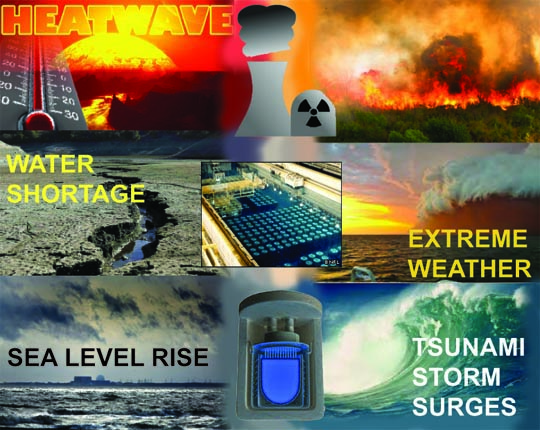
Vulnerability of nuclear reactors to extreme weather events. Flooding all too close to North Korea’s main nuclear reactor
 North Korea floods kill 22, approach nuclear reactor — but Kim doesn’t want help, WP, By Simon Denyer August 14, 2020 , TOKYO — Flooding caused by weeks of unusually heavy monsoon rains has killed at least 22 people in North Korea, with four others missing, and even approached the country’s main nuclear reactor, but leader Kim Jong Un says he is too worried about coronavirus to accept outside help.
The International Federation of the Red Cross said the floods have left at least 22 people dead and four missing, citing the Democratic People’s Republic of Korea Red Cross and the country’s State Committee for Emergency and Disaster Management.
The floodwaters approached the Yongbyon nuclear complex last week, reaching the bases of two pump houses designed to cool the country’s main nuclear reactor, according to the 38 North website, citing satellite imagery.
The floodwaters have receded somewhat and pose “no imminent danger,” as the main reactor apparently has not been operating for some time and a nearby experimental light water reactor has yet to come online, said Jenny Town, deputy director of 38 North, part of the Stimson Center.
“But this year, the river level is usually high,” Town added. “If this were to happen when a reactor was running, it could cause problems in the cooling systems that would necessitate the reactors to be shut down.” ………. https://www.washingtonpost.com/world/north-korea-floods-kill-22-approach-nuclear-reactor–but-kim-doesnt-want-help/2020/08/13/f53992a8-ddda-11ea-b4f1-25b762cdbbf4_story.html
Malaysia rejects nuclear power, focuses on renewable energy
Khairy says nuclear energy ‘not on the table’ for now, focus on renewable energy sources, Malay Mail, Friday, 14 Aug 2020, BY YISWAREE PALANSAMY KUALA LUMPUR, — Science, Technology and Innovation Minister Khairy Jamaluddin said today that the idea to develop nuclear energy as a power source will be a last option for Malaysia, as there are many other sources of energy in the same category which the country has yet to explore.
The Rembau MP said that his ministry is not considering nuclear energy development for now…..
In February, then Prime Minister Tun Dr Mahathir Mohamad spoke of the inherent need for a more non-polluting renewable energy source for the world, but rejected nuclear energy source, over the fear of the radioactive level in its waste.
Dr Mahathir pointed out that Malaysia does not have enough expertise in science that is needed to manage nuclear power.
He also expressed worry about the long-term effects of radioactive waste.
In July 2018, Yeo announced that the then PH government would not be building nuclear power plants or explore nuclear energy.
In winding up her ministerial reply on the 2020 Budget in Parliament last year, Yeo also announced that the Malaysian Nuclear Power Corporation (MNPC) would be shut down. ……. https://www.malaymail.com/news/malaysia/2020/08/14/khairy-says-nuclear-energy-not-on-the-table-for-now-focus-on-renewable-ener/1894036
Climate Change Is a Security Threat to the Asia-Pacific
|
Climate Change Is a Security Threat to the Asia-Pacific Climate change is likely to alter the local physical and strategic environment profoundly, and potentially catastrophically. The Diplomat, By Shiloh Fetzek and Dennis McGinn, August 10, 2020 This week the ASEAN Joint Task Force on Humanitarian Assistance and Disaster Relief (HADR) will meet via video conference, with the COVID-19 pandemic escalating just as some countries in the disaster-prone Indo-Asia Pacific enter their cyclone, drought, heatwave, or monsoon seasons. The overlaying of the pandemic with existing complex challenges is a timely reminder that planning for HADR capacities – and regional security – needs to be attuned to the increasing likelihood of multiple, overlapping hazards and converging security risks, especially in a future where climate change alters the context in which other disasters and crises take place. Developing a clearer recognition of how climate change can reshape the strategic environment will be essential for preserving regional security, stability, and prosperity in the face of complicated and interlocking challenges, as we argue in a new report on the Indo-Asia Pacific published by the International Military Council on Climate and Security (IMCCS).
The Indo-Asia Pacific is highly exposed to climate change impacts. Climate change is likely to alter the local physical and strategic environment profoundly, and potentially catastrophically. More frequent or intense extreme weather, sea level rise, and ocean acidification (among other climate impacts) will create a range of threats to the well-being and security of countries in the region, many of which are already threatened by disaster vulnerability and increasingly complex security tensions.
As well as the immediate physical impacts, climate change will increase food and water insecurity, contribute to forced migration and displacement, and challenge disaster response and recovery capabilities …….. https://thediplomat.com/2020/08/climate-change-is-a-security-threat-to-the-asia-pacific/
|
|
$6.6 trillion in annual GDP at risk as Asian climate warms – McKinsey Global Institute
|
McKinsey sees $6.6 trillion in annual GDP at risk as Asian climate warms, https://www.smh.com.au/business/markets/mckinsey-sees-6-6-trillion-in-annual-gdp-at-risk-as-asian-climate-warms-20200813-p55ley.html By Bloomberg News, August 14, 2020 Lethal heatwaves, droughts, floods and typhoons will become more common in Asia-Pacific, which faces more severe potential impacts from climate change than many parts of the world, McKinsey & Co. researchers warn.Asia is particularly at risk because it has such a high number of poor people, who tend to rely more on outdoor work, living in areas most vulnerable to extreme increases in heat and humidity, McKinsey Global Institute said in a new report published on Thursday. By 2050, the loss of that labor could cost the region as much as $US4.7 trillion ($6.6 trillion) a year in GDP, about two-thirds of the global total at risk. The report underscores the economic risks of delaying investments that mitigate or adapt to climate change. The potential for widespread damage is similar to the region’s experience during the current pandemic, according to McKinsey. What we have seen is that countries, cities and people can take resolute actions and if we do take these actions and sustain them, we can cooperate globally and see positive outcomes,” said Oliver Tonby, McKinsey’s Asia chairman, who co-authored the report. The projections are based on a scenario in which the world fails to cut greenhouse gas emissions and Asia warms by 2 degrees Celsius. They show that by 2050, between 500 million and 700 million people living in places like India, Bangladesh and Pakistan could experience heatwaves that exceed the survivability threshold. The loss of outdoor labour during those times could shave off 7 per cent to 13 per cent off GDP in those three countries, resulting in losses of $US2.8 trillion to $US4.7 trillion across the whole of Asia on average per year, according to the report. Extreme precipitation events could rise three- or four-fold by 2050 in parts of Japan, China, South Korea and Indonesia, according to McKinsey. Increased riverine flooding could cause $US1.2 trillion in damage in Asia, about 75 per cent of the global impact. Conversely, as the earth warms, parts of southwestern Australia could spend more than 80 per cent of a decade in drought conditions by 2050 and regions of China could experience droughts 40 per cent to 60 per cent of the time. Climate change will also increase the likelihood of severe typhoon strikes from the Philippines and Vietnam to Northeast Asia. It will also create winners and losers, increasing surface water supply in parts of northern India and China while depleting reservoirs in Australia.
To face the business risks, Tonby said companies need to assess their exposure and take it into consideration when making plans. A significant opportunity lies in infrastructure development in Asia as the region is still rapidly urbanising. |
Flooding might have damaged Bort Korea’s nuclear reactor site
|
North Korea nuclear reactor site threatened by recent flooding, U.S. think-tank says https://www.reuters.com/article/us-northkorea-nuclear-floods/north-korea-nuclear-reactor-site-threatened-by-recent-flooding-u-s-think-tank-says-idUSKCN25908S, Josh Smith 12 Aug 20SEOUL (Reuters) – Satellite imagery suggests recent flooding in North Korea may have damaged pump houses connected to the country’s main nuclear facility, a U.S.-based think-tank said on Thursday.
Analysts at 38 North, a website that monitors North Korea, said commercial satellite imagery from August 6-11 showed how vulnerable the Yongbyon Nuclear Scientific Research Center’s nuclear reactor cooling systems are to extreme weather events. The Korean peninsula has been hammered by one of the longest rainy spells in recent history, with floods and landslides causing damage and deaths in both North and South Korea. Located on the bank of the Kuryong River about 100 km (60 miles) north of North Korea’s capital, Pyongyang, Yongbyon is home to nuclear reactors, fuel re-processing plants and uranium enrichment facilities that are thought to be used in the country’s nuclear weapons programme. The five-megawatt reactor – believed to be used to produce weapons-grade plutonium – does not appear to have been operating for some time, and an Experimental Light Water Reactor (ELWR) has not yet come online, but such flooding in the future would likely force a shutdown, the 38 North report said. “Damage to the pumps and piping within the pump houses presents the biggest vulnerability to the reactors,” the report said. “If the reactors were operating, for instance, the inability to cool them would require them to be shut down.” While there was further flooding downstream, it did not appear to reach the Yongbyon facility’s Uranium Enrichment Plant and by August 11 the waters appear to have somewhat receded, 38 North said. South Korea’s Ministry of Defence declined to comment on the report, but said it is always monitoring developments related to North Korea’s nuclear and missile programmes and maintaining close cooperation with the U.S. government. At a summit with U.S. President Donald Trump in Vietnam in 2019, North Korean leader Kim Jong Un offered to dismantle here Yongbyon in exchange for relief from a range of international sanctions imposed over North Korea’s nuclear weapons and ballistic missile programmes. At the time Trump said he rejected that deal because Yongbyon is only one part of the North’s nuclear programme, and was not enough of a concession to warrant loosening so many sanctions. Reporting by Josh Smith. Additional reporting by Hyonhee Shin.; Editing by Lincoln Feast. |
|
Japan’s nuclear fuel imports almost zero in 2019 as industry stagnates
|
Most nuclear plants in Japan remain idle as stricter safety measures were implemented after a massive earthquake and ensuing tsunami crippled the Fukushima No. 1 nuclear complex. The operations of fuel manufacturing plants have also been suspended……. Of the 54 nuclear reactors that were in operation before the Fukushima crisis, currently, only nine have come back online after clearing harsher safety measures. In the wake of the accident, 21 reactors have been flagged for decommissioning in consideration of the hefty cost of refurbishment. All four fuel manufacturing factories are offline as they are undergoing regulatory review under the new safety standards. Kansai Electric Power Co., Shikoku Electric Power Co. and Kyushu Electric Power Co., which operate the nine plants currently back online, said they have enough fuel to run their reactors for the next several years. …….https://www.japantimes.co.jp/news/2020/08/12/business/japan-nuclear-fuel-imports-zero/ |
|

A doctor who is a hibakusha speaks out for the Treaty on Prohibition of Nuclear Weapons
Dr. Masao Tomonaga Surviving the nuclear bomb at Nagasaki 75 years ago showed me nuclear weapons shouldn’t exist https://www.nbcnews.com/think/opinion/surviving-nuclear-bomb-nagasaki-75-years-ago-showed-me-nuclear-ncna1236148
People like me learned firsthand the results of using nuclear weapons. A full-scale nuclear war would destroy both the world and humanity as we know it. Aug. 9, 2020, By Dr. Masao Tomonaga, vice president, International Physicians for the Prevention of Nuclear War
It has been 75 years since August 9, 1945, when the atomic bombing of Nagasaki opened the nuclear weapon age. I was 2 years old, and only 1 1/2 miles from ground zero of the nuclear explosion in there; I was, fortunately, unhurt by the blast itself. I was rescued by my mother from a half-destroyed wooden house just before it burned down.
I am one of a dwindling number of hibakusha — atomic bomb survivors; we are now, on average, 83 years old. Many of us still die of radiation-induced cancers and leukemia from the bombs dropped on our cities in 1945 because that exposure to radiation — when most of us were just 10 years old or younger — led to gene abnormalities in many organs that are still causing malignant diseases today.
That means, legally and morally, the human toll of the bombings is still unfolding and the total number of casualties cannot yet be calculated.
Only two atomic bombs of what we would, today, consider a rather small size were used by the United States in Japan: They were 20 kilotons (Nagasaki) and 15 kilotons (Hiroshima), whereas the common size today is a few hundred kilotons. Still, one 15- and one 20-kiloton bomb were enough to devastate two medium-sized Japanese cities and kill 200,000 or more people, either instantaneously or within five months due to acute radiation injuries and skin burns.
Almost the same numbers of hibakusha survived the immediate aftermath, only to go on living with the fear of both contracting radiation-related disorders and passing malignant genetic diseases onto their children.
We hibakusha learned firsthand the horrible human consequences of using nuclear weapons and thus have long feared that a full-scale nuclear war would destroy both the world and humanity as we know it. This made us determined to fight for nuclear abolition — for the sake of the rest of humanity.
Many hibakusha came together years ago, drawing emotional energy from one another, to begin a campaign against nuclear weapons and move humanity forward by spreading our testimonies worldwide and warning of the global danger of human extinction.
In our first success, we hibakusha witnessed the passage of the Nuclear Non-Proliferation Treaty in 1970 by the United Nations, which gave us hope for a nuclear weapon-free world.
Sadly, as we approached the 50th anniversary of the passage of the NPT, the push for nuclear disarmament had almost stopped, and it seemed like the race for nuclear weapons might begin anew. The U.S., for instance, in August 2019 abandoned the Intermediate-Range Nuclear Forces Treaty (signed by U.S. President Ronald Reagan in 1987), the New Strategic Arms Reduction Treaty (signed by U.S. President Barack Obama and Russian President Dmitry Medvedev in 2010) is set to expire next year, and other countries are building new, smaller nuclear weapons.
To push back against this new nuclear arms race, we hibakusha collaborated with the non-nuclear weapon states and many nongovernmental organizations such as ICAN, the International Campaign to Abolish Nuclear Weapons, to establish a Treaty on the Prohibition of Nuclear Weapons. We finally succeeded in July 2017, and since then, the TPNW has been signed and ratified by 43 countries — close to the 50 needed for it to become official under international law.
However, we are facing a serious opposition to the TPNW by the nuclear states, all of whom refuse to sign and ratify the treaty. There is a continuing belief in the nuclear weapon states and the allied countries under their “nuclear umbrella” — including many NATO states, Japan, Australia and Canada — that nuclear weapons are still necessary to keep peace.
Here in Japan, we hibakusha shed tears when our government declared at the United Nations Assembly in 2017 that it would not sign or ratify the TPNW, despite Japan being the only nation to experience nuclear attacks and know in the greatest detail the human consequences and social destruction of the weapons. The nuclear umbrella offered under the U.S.-Japan Security Treaty for the past 60 years has bound Japan tightly to U.S. political and military leaders, who oppose the treaty.
Fukushima’s contaminated waste water – more serious than previously thought
 Fukushima’s Contaminated Wastewater Could Be Too Risky to Dump in the Ocean, https://www.gizmodo.com.au/2020/08/fukushimas-contaminated-wastewater-could-be-too-risky-to-dump-in-the-ocean/ Dharna Noor :August 7, 2020 Almost a decade ago, the Tohoku-oki earthquake and tsunami triggered an explosion at Japan’s Fukushima Daiichi Nuclear Power Plant, causing the most severe nuclear accident since Chernobyl and releasing an unprecedented amount of radioactive contamination in the ocean. In the years since, there’s been a drawn out cleanup process, and water radiation levels around the plant have fallen to safe levels everywhere except for in the areas closest to the now-closed plant. But as a study from the Woods Hole Oceanographic Institution published in Science on Thursday shows, there’s another growing hazard: contaminated wastewater.
Radioactive cooling water is leaking out of the the melted-down nuclear reactors and mixing with the groundwater there. In order to prevent the groundwater from leaking into the ocean, the water is pumped into more than 1,000 tanks. Using sophisticated cleaning processes, workers have been able to remove some of this contamination and divert groundwater flows, reducing the amount of water that must be collected each day. But those tanks are filling up, and some Japanese officials have suggested that the water should dumped into the ocean to free up space.
But according to the new study, that’s not the only radioactive contaminant left in the tanks. By examining TEPCO’s own 2018 data, WHOI researcher Ken Buesseler found that other isotopes remain in the treated wastewater, including carbon-14, cobalt-60, and strontium-90. He found these particles all take much longer to decay than tritium, and that fish and marine organisms absorb them comparatively easily.
“[This] means they could be potentially hazardous to humans and the environment for much longer and in more complex ways than tritium,” the study says.
Though TEPCO’s data shows there is far less of these contaminants in the wastewater tanks than tritium, Buesseler notes that their levels vary widely from tank to tank, and that “more than 70% of the tanks would need secondary treatment to reduce concentrations below that required by law for their release.”
The study says we don’t currently have a good idea of how those more dangerous isotopes would behave in the water. We can’t assume they will behave the same way tritium does in the ocean because they have such different properties. And since there are different levels of each isotope in each different tank, each tank will need its own assessment.
“To assess the consequences of the tank releases, a full accounting after any secondary treatments of what isotopes are left in each tank is needed,” the study said.
Buesseler also calls for an analysis of what other contaminants could be in the tanks, such as plutonium. Even though it wasn’t reported in high amounts in the atmosphere in 2011, recent research shows it may have been dispersed when the explosion occurred. Buesseler fears it may also be present in the cooling waters being used at the plant. That points to the need to take a fuller account of the wastewater tanks before anything is done to dump them in the ocean.
“The first step is to clean up those additional radioactive contaminants that remain in the tanks, and then make plans based on what remains,” he said in a statement. “Any option that involves ocean releases would need independent groups keeping track of all of the potential contaminants in seawater, the seafloor, and marine life.”
Many Japanese municipalities have been pushing the government to reconsider its ocean dumping plans and opt to find a long-term storage solution instead, which makes sense, considering exposure to radioactive isotopes can cause myriad health problems to people. It could also hurt marine life, which could have a devastating impact on fishing economies and on ecosystems.
“The health of the ocean — and the livelihoods of countless people — rely on this being done right,” said Buesseler.
1 This Month
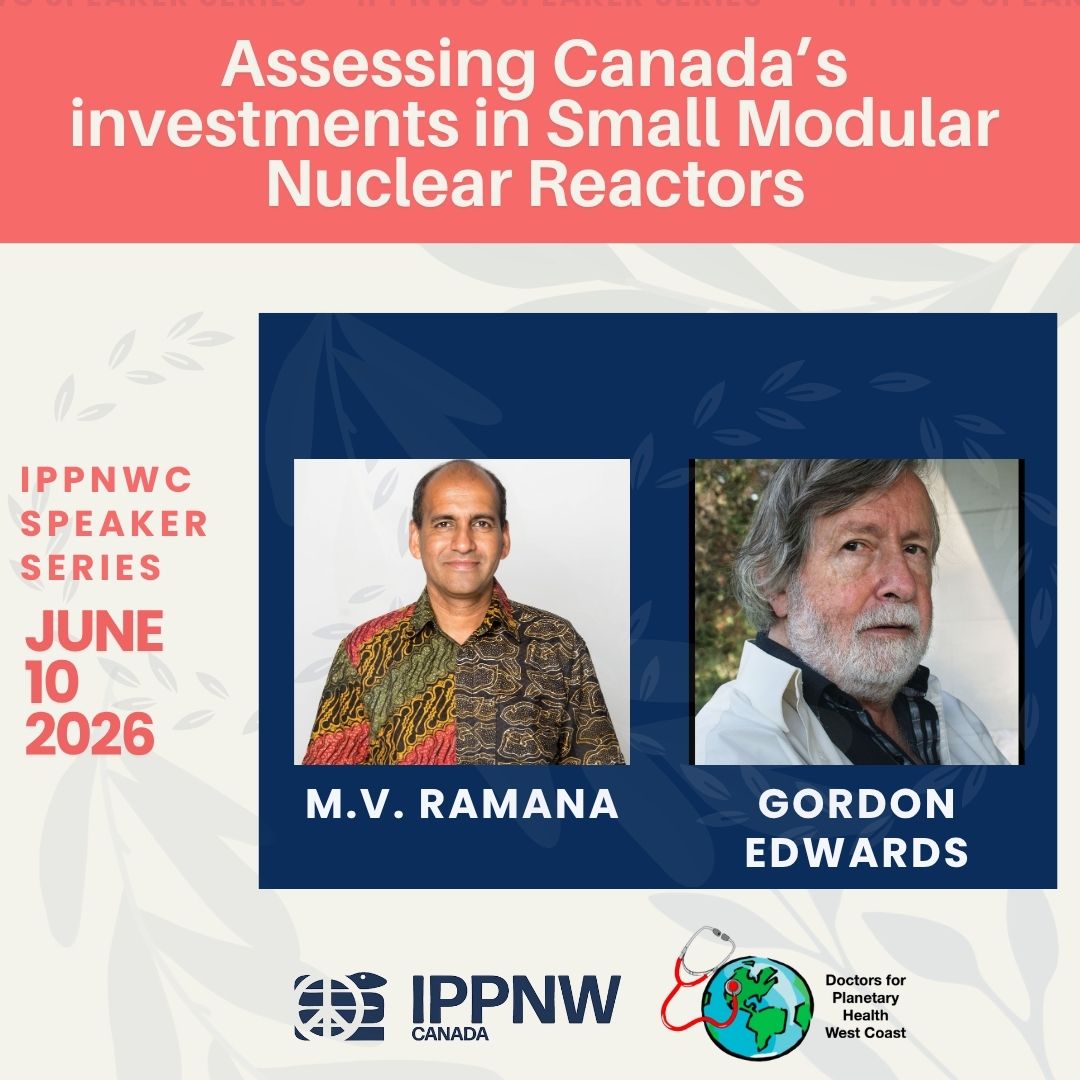
10 June – Assessing Canada’s Investments in Small Modular Nuclear Reactors – https://zoom.us/meeting/register/IiqHA5feRhaEBycOLNTJlA#/registration


Cuba Is Not a Failed State – It Is a Besieged State
PETITION: “Global Appeal to Endorse Palestinian Right of Return of Refugees”
To see nuclear-related stories in greater depth and intensity – go to https://nuclearinformation.wordpress.com
-
Archives
- June 2026 (89)
- May 2026 (306)
- April 2026 (356)
- March 2026 (251)
- February 2026 (268)
- January 2026 (308)
- December 2025 (358)
- November 2025 (359)
- October 2025 (376)
- September 2025 (257)
- August 2025 (319)
- July 2025 (230)
-
Categories
- 1
- 1 NUCLEAR ISSUES
- business and costs
- climate change
- culture and arts
- ENERGY
- environment
- health
- history
- indigenous issues
- Legal
- marketing of nuclear
- media
- opposition to nuclear
- PERSONAL STORIES
- politics
- politics international
- Religion and ethics
- safety
- secrets,lies and civil liberties
- spinbuster
- technology
- Uranium
- wastes
- weapons and war
- Women
- 2 WORLD
- ACTION
- AFRICA
- Atrocities
- AUSTRALIA
- Christina's notes
- Christina's themes
- culture and arts
- Events
- Fuk 2022
- Fuk 2023
- Fukushima 2017
- Fukushima 2018
- fukushima 2019
- Fukushima 2020
- Fukushima 2021
- general
- global warming
- Humour (God we need it)
- Nuclear
- RARE EARTHS
- Reference
- resources – print
- Resources -audiovicual
- Weekly Newsletter
- World
- World Nuclear
- YouTube
-
RSS
Entries RSS
Comments RSS
 nuclear-news