https://www3.nhk.or.jp/nhkworld/en/news/20181027_10/
A reactor at the Ikata nuclear power plant in Ehime Prefecture, western Japan, has gone back online after being suspended for about one year.
The No.3 reactor restarted on Saturday. Workers in the central control room removed the control rods that suppress nuclear fission at 30 minutes past midnight.
Shikoku Electric Power Company shut down the reactor last October for regular inspections. It was kept offline by an injunction issued 2 months later by the Hiroshima High Court.
The ruling was revoked last month by another judge at the High Court, paving the way for a restart.
Shikoku Electric says if the process goes smoothly, the Ikata reactor will likely reach criticality — a self-sustaining nuclear reaction — on Saturday night.
It is expected to begin power generation and transmission on Tuesday, and start commercial operations on November 28th.
Ikata Mayor Kiyohiko Takakado in a statement called on Shikoku Electric to continue pursuing safety and reliability at the plant, and provide highly transparent information disclosure.
Members of a civic group opposing the nuclear plant on Saturday staged a demonstration at the site. One participant said she has heard nuclear reactors are needed to ensure stable energy supplies, but she finds it problematic life-threatening radioactive materials are being used to generate power.
October 29, 2018
Posted by Christina Macpherson |
Japan, politics |
Leave a comment
The 3 reactors at the plant in northeastern Japan have been offline since the March 2011 earthquake and tsunami, and they ain’t comin’ back!
Tohoku Electric Power Co.’s Onagawa Nuclear Power Station is seen from a Mainichi Shimbun helicopter in Onagawa, Miyagi Prefecture, on March 11, 2011.
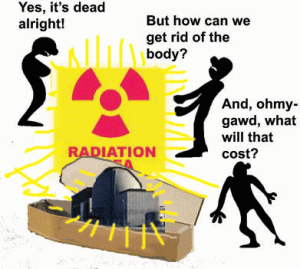
Utility plans to scrap reactor at Onagawa plant
Tohoku Electric Power Company has told Miyagi Prefecture that it is going to decommission an aging reactor at its Onagawa nuclear power plant.
The 3 reactors at the plant in northeastern Japan have been offline since the March 2011 earthquake and tsunami.
The utility’s president, Hiroya Harada, conveyed its decision to Miyagi Governor Yoshihiro Murai on Thursday.
Harada explained that additional safety steps would create technical difficulties as the No.1 reactor is more than 30 years old. The measures are required under government regulations that were introduced after the 2011 disaster.
Murai asked Tohoku Electric Power to put top priority on safety in scrapping the reactor as the work is expected to take a long time. The governor also asked the utility to properly disclose information and maintain stable power supplies.
The utility hopes to put the 2 other reactors back into operation. The No.2 reactor is being checked by the nuclear regulator, and the firm is preparing to apply for an inspection of the No.3 reactor.
Utilities have decided to decommission 10 reactors at 7 plants, including Onagawa, since the 2011 disaster at the Fukushima Daiichi plant. They cite the huge cost of additional safety measures. These figures do not include the all 6 reactors at Fukushima Daiichi.
Tohoku Electric to scrap aging No. 1 unit at Onagawa nuclear plant
SENDAI (Kyodo) — Tohoku Electric Power Co. said Thursday it will scrap the idled No. 1 unit at its Onagawa nuclear power plant in the northeastern Japan prefecture of Miyagi, more than 30 years after it began operation.
The company cited difficulties in taking additional safety measures as well as the relatively small output of the reactor that would make the business unprofitable. Tohoku Electric President Hiroya Harada conveyed its decision to Miyagi Gov. Yoshihiro Murai.
“We decided to decommission (the reactor) at a board meeting today. We took into consideration technical restrictions associated with additional safety measures, output and the years in use,” Harada said when the men met at the prefectural government office.
For its resumption, the company has been required to expand safety measures at the unit under stricter standards introduced after the 2011 Fukushima nuclear disaster.
Under the standards, Japanese nuclear reactors are not allowed, in principle, to operate for more than 40 years.
Having entered into operation in June 1984, the boiling water reactor with an output of 524,000 kilowatts is the oldest among four units operated by the utility.
The utility said in a statement that the No. 1 unit lacked additional space to set up fire extinguishing equipment and infrastructure to secure power supply.
Harada told a press conference on Sept. 27 that decommissioning was an option as the unit’s age made it difficult to implement the required safety measures.
In the March 2011 earthquake and tsunami disaster, the basement floors of the Onagawa plant’s No. 2 unit were flooded. The company is building a 29-meter sea wall to guard the complex.
Tohoku Electric aims to resume operations of the No. 2 unit at the three-reactor Onagawa plant in fiscal 2020 at the earliest, and the Nuclear Regulation Authority, the country’s nuclear watchdog, has been screening its safety measures.
October 27, 2018
Posted by dunrenard |
Japan | Onagawa NPP, Reactor1, Scrapping |
Leave a comment
 U.N. rights expert urges Japan to halt women and child evacuee returns to radioactive parts of Fukushima https://www.japantimes.co.jp/news/2018/10/26/national/science-health/u-n-rights-expert-urges-japan-halt-women-child-evacuee-returns-radioactive-parts-fukushima/#.W9PVHmgzbIU
KYODO GENEVA – The Japanese government must halt the return of women and children displaced by the March 2011 nuclear disaster back to areas of Fukushima where radiation levels remain high, a U.N. human rights expert said Thursday.
The special rapporteur on hazardous substances, Baskut Tuncak, also criticized in his statement the government’s gradual removal of evacuation orders for most of the radioactive areas as well as its plan to lift all orders within the next five years, even for the most contaminated areas.
“The gradual lifting of evacuation orders has created enormous strains on people whose lives have already been affected by the worst nuclear disaster of this century. Many feel they are being forced to return to areas that are unsafe,” he said.
An official of Japan’s permanent mission to the international organizations in Geneva rebuffed the statement, saying it is based on extremely one-sided information and could fan unnecessary fears about Fukushima.
Tuncak expressed concerns about people returning to areas with radiation above 1 millisievert per year, a level previously observed by Japan as an annual limit so as to prevent risks to the health of vulnerable people, especially children and women of reproductive age.
“It is disappointing to see Japan appear to all but ignore the 2017 recommendation of the U.N. human rights monitoring mechanism to return back to what it considered an acceptable dose of radiation before the nuclear disaster,” he said.
In the wake of the Fukushima reactor meltdowns, the Japanese government heightened the annually acceptable level of radiation to 20 millisieverts, raising concerns for the health of residents.
In August, Tuncak and two other U.N. human rights experts jointly criticized the Japanese government for allegedly exploiting and putting at risk the lives of “tens of thousands” of people engaged in cleanup operations at and around the crippled Fukushima No. 1 nuclear plant, a claim Tokyo dismissed.
October 27, 2018
Posted by Christina Macpherson |
health, Japan |
Leave a comment
 Japan rejects UN call to stop returns to Fukushima, Channel News Asia, 27 Oct 18 TOKYO: Japan’s government on Friday (Oct 26) rejected calls from a UN rights expert to halt the return of women and children to areas affected by the Fukushima nuclear disasterover radiation fears.
UN special rapporteur Baskut Tuncak on Thursday warned that people felt they were “being forced to return to areas that are unsafe, including those with radiation levels above what the government previously considered safe.”
In the wake of the Fukushima disaster, Japan’s government lifted its standard for the acceptable level of radiation to 20 millisieverts per year from 1 millisievert.
It has been urged to revise that level back down again, but has rejected calls to do so, a decision Tuncak called “deeply troubling.”
“Japan has a duty to prevent and minimise childhood exposure to radiation,” he said.
But Japan’s government rejected the criticism, saying Tuncak’s comments were based on “one-sided information and could fan unnecessary fears about Fukushima,” a foreign ministry official told AFP.
Japan’s government has gradually lifted evacuation orders on large parts of the areas affected by the disaster, which occurred when a massive tsunami sent reactors at the Fukushima Daiichi plant into meltdown in March 2011.
But other areas remain under evacuation orders because of continued high levels of radiation.
Japan’s government has pushed hard to return affected areas to normal, but has faced criticism that what it refers to as “safe” radiation levels are not in line with international standards. …….. https://www.channelnewsasia.com/news/asia/japan-fukushima-meltdown-radiation-fears-10867932
October 27, 2018
Posted by Christina Macpherson |
Japan, politics |
Leave a comment
Toshiba considers liquidation of British nuclear unit NuGeneration https://mainichi.jp/english/articles/20181026/p2g/00m/0bu/070000c
October 26, 2018 (Mainichi Japan) TOKYO (Kyodo) — Toshiba Corp. is considering dissolving its British nuclear subsidiary NuGeneration Ltd. as negotiations for its sell-off have stalled, sources close to the matter said Friday.
The Japanese conglomerate is in the process of withdrawing from its overseas nuclear businesses after the bankruptcy of its U.S. subsidiary Westinghouse Electric Co. in 2017.
Korea Electric Power Corp. has been selected as the preferred bidder for the British nuclear subsidiary, but no agreement was reached before its preferred bidder status expired, the sources said.
Toshiba is also at odds over the terms of the unit’s sale with a Canadian asset management company which has shown interest in buying NuGeneration, they said.
NuGeneration plans to build a nuclear power plant with three reactors in Moorside, northwestern England. It was initially scheduled to use reactors manufactured by Westinghouse before the U.S. company went bankrupt.
October 27, 2018
Posted by Christina Macpherson |
business and costs, Japan, UK |
Leave a comment
Japan earthquake: Fukushima rocked by 5.0 magnitude quake off coast, JAPAN has been struck by an earthquake with a 5.0 magnitude off the east coast of the country, close to Fukushima. Express UK, By LAURA MOWAT, Oct 22, 2018 The earthquake had a depth of 46.6km and hit at 10:47am universal time (11.47am BST).
There has been an increase in seismic activity in the last 24 hours along the Ring of Fire – the Pacific plate which sees the most earthquakes and most active volcanoes.
An earthquake also struck Japan’s north island last night at a depth of 67km and a magnitude of 4.4.
Japan lies in the Ring of Fire, which is a major area in the basin of the Pacific Ocean where earthquakes and volcanoes are common……….
Earthquakes are common in Japan as the country is located in an area where several continental and oceanic plates meet.
Japan is hit by about 1,500 earthquakes each year, which includes daily tremors that are rarely felt.
An earthquake with a magnitude of five on the Richter Scale is usually felt, but normally only causes minor damage. https://www.express.co.uk/news/world/1034816/japan-earthquake-fukushima-tsunami-warning-center-USGS
October 27, 2018
Posted by Christina Macpherson |
Japan, safety |
Leave a comment
 Draft bill omits state burden for nuclear accident compensation http://www.asahi.com/ajw/articles/AJ201810240030.html, THE ASAHI SHIMBUN, October 24, 2018
 After more than three years of discussions, the nuclear damage compensation law will be left largely intact, including unlimited redress from utilities for accidents at their nuclear plants and vagueness about the government’s responsibility.
Only minor changes will be made to the law, such as measures to accelerate provisional payments to victims of nuclear accidents.
Science ministry officials on Oct. 23 presented a draft of proposed legislation to revise the law at a committee meeting of the ruling Liberal Democratic Party. The legislation is expected to be submitted to the extraordinary Diet session that began on Oct. 24.
An advisory committee on the nuclear damage compensation system within the Japan Atomic Energy Commission (JAEC) had been discussing possible revisions since 2015 in part because of the huge compensation amount–now more than 8 trillion yen ($71 billion)–facing Tokyo Electric Power Co. over the 2011 accident at its Fukushima No. 1 nuclear power plant.
Electric power companies had asked for some sort of limit in the law, given the situation at TEPCO.
One suggestion was to more clearly delineate the responsibility of the central government and the utilities for compensating victims of nuclear disasters.
A committee member who once worked in Keidanren (Japan Business Federation) supported setting a limit, saying the companies would face a serious management problem if they are unable to predict potential compensation risks.
In return, the central government would shoulder the compensation amount above a certain limit, the member proposed.
However, the committee could not reach an agreement, and no change was made to the provision that sets unlimited compensation responsibility on the part of the utilities.
Utilities will have to continue setting aside a maximum 120 billion yen for each nuclear plant it operates as insurance for a major accident.
Although the insurance amount would appear to be a sort of limit on the electric power companies, the utilities must also contribute to the Nuclear Damage Compensation and Decommissioning Facilitation Corp. (NDF), which provides assistance when compensation demands concerning a single nuclear plant exceed 120 billion yen.
The central government also contributes funds to the NDF.
Calls arose to raise the insurance limit for electric power companies beyond 120 billion yen. However, the insurance industry would not agree to any higher amount, and no change was made in the limit.
Some committee members brought up the topic of whether the central government’s responsibility for compensation should be included in a legal revision.
The electric power industry said the central government should shoulder a greater portion of the compensation responsibility for nuclear accidents because it has continued to define nuclear energy as an important base-load energy source.
Members of the advisory committee brushed aside that suggestion, saying the public would never be convinced in light of the Fukushima accident and the various shortcomings revealed about TEPCO’s management.
Other members cited the possibility that utilities would cut back on safety investment if they knew the central government would pay for compensation.
Discussions about the central government’s responsibility never did get off the ground in the advisory committee, even though a number of recent court verdicts in civil lawsuits have awarded compensation while clearly stating the central government’s responsibility for the Fukushima nuclear disaster.
The minor change to the law to allow electric power companies to more quickly begin provisional payments of compensation was proposed to address problems that arose after the Fukushima accident.
TEPCO took about six weeks to begin provisional payments to disaster victims. The delay, according to TEPCO, was because the utility had no idea about the maximum amount of compensation it would have to pay.
Under the proposed change, the central government will provide loans to utilities so they can immediately begin making provisional payments. Utilities will be obligated to compile guidelines that define the procedures for applying for compensation and making those guidelines widely known.
(This article was compiled from reports by Yusuke Ogawa and Senior Staff Writer Noriyoshi Ohtsuki.)
October 25, 2018
Posted by Christina Macpherson |
business and costs, Japan |
Leave a comment
https://metropolisjapan.com/peace-boat-and-greenpeace-still-campaigning-for-fukushima/
Metropolis interviews NGO leaders at the forefront of the recovery effort, BY SARAJEAN ROSSITTO OCTOBER 18, 2018 This past summer, while beaches in Fukushima were re-opening, UN experts were assessing how the nuclear disaster impacted people’s physical and mental health. The ending of government housing provision and living stipends for people from Fukushima in April 2017 greatly reduced the official numbers of disaster evacuees. Whatsmore, by making people from Fukushima invisible it gave the impression that problems were solved. I spoke with several NGO leaders about their work and the issues people from Fukushima face today. Meri Joyce, International Coordinator at Peace Boat, has been working on international programs and campaigns such as nuclear disarmament and Kazue Suzuki is an Energy Campaigner at Greenpeace Japan.
The impossible choice of returning to areas too contaminated to safely live or face economic hardship only exacerbates the victimization of the displaced in Fukushima. The lack of support systems, Suzuki said, resulted in people falling into poverty. Joyce further explained that it is hard for people to put down roots even if more areas are designated as “safe” because hard and soft infrastructure were lacking. Even if school buildings are safe, who will work in those schools? If businesses get up and running, are there any customers?
Greenpeace has served as witness to environmental risks in more than 55 nations for 47 years using non-violent direct action, advocacy and public education. Within days of 3/11, Amsterdam-based Greenpeace International dispatched experts to assist Greenpeace Japan with ocean radiation monitoring from a ship off the coast of Fukushima while other staff assessed terrestrial effects. Concerned that government radiation estimates were too conservative, they shared their radiation readings with governments, media and general public. To keep Fukushima visible, they release annual reports on radiation levels, the nuclear power industry and the socio-economic and health impacts the disaster on communities that depend on the nuclear power industry. Their 2017 report spotlighted rights’ violations — particularly those of women and children. A 2018 study shows that Fukushima radiation risks are expected to last into 2050 in some exclusion zone towns.
Since its founding, about 35 years ago, Peace Boat has been trying to stimulate public discussion on energy, nuclear weapons and development at the local, national and international levels. Joyce shared examples of how issues have impacted their ship programs. Since 2008 they have invited Hiroshima and Nagasaki hibakusha (people who experienced atomic/nuclear bombings) to join Peace Boat cruises where they share their experiences at ports of call. Students on board learn from these elders while also engaging in dialogue about what should be done to build a nuclear-free future. Since 2011, voyages have included sessions on learning from Fukushima and, in 2014, they launched the Fukushima Youth Ambassadors program. This provides youth the opportunity to leave social pressures behind and learn about struggles people face all over the world, while also discovering more opportunities for their future. Students who joined as junior high students after the disaster are now in university and mentoring younger students.
n January of 2012, in partnership with Greenpeace Japan (and others), Peace Boat organised the Global Conference on a Nuclear-Free World in Yokohama, to create a platform for a nuclear-free future and to build bridges between activists and ordinary citizens. An outcome of the Global Conference was the close collaboration between Peace Boat and the Fukushima Action Project (FAP), a local citizens’ group made up of residents and community leaders who have activated public engagement with government officials. The contents of the local nuclear power education center opened for school visits has been a focus point for dialogue. Some feedback has been incorporated, but given the gap in perspectives about nuclear power, FAP still works directly with the public. According to Joyce, an ongoing Peace Boat priority is to connect the local community to Tokyo and the international global community, so they support FAP by sharing access to the general public, international organizations and donors.
The “Lessons from Fukushima” booklet, created by a group of organizations, including Peace Boat, has been translated into 14 languages. Reaching people in countries such as Turkey and Poland where the Japanese government has been promoting nuclear power is part of their global strategy. While the official stance is that Japan can provide the safest power due to the Fukushima experience, the booklet illustrates real experiences and impacts.
Greenpeace Japan has been working with organizations such as Save the Children, Human Rights Now! and the Japan Bar Association to make the plight of people from Fukushima understood and have the voices of the people heard. They put pressure on the government by utilizing existing processes under international treaties and UN Human Rights systems. They have suggested new legislation in support of the victims such as free medical check-ups and treatment, radiation protection systems, establishment of the right to evacuate, dissemination of radiation protection information, participation of victims in decision making processes and the adaptation of UN principles for internally displaced persons.
Both organisations have directly engaged policymakers and bureaucrats in dialogue on energy policy, but activating the public remains necessary. Suzuki explained that local activism has been important for keeping the restarts of power plants at bay. Joyce added that decisions to restart plants are at the local government levels, but they need our support here in the capital where the media is based and where national policy decisions are made.
As this summer has shown, we do not know when the next disaster will strike and how our own lives may be affected, so we all need to get involved and not be under the false impression that everything is alright due to a lack of information.
|
|
|
October 23, 2018
Posted by Christina Macpherson |
Fukushima continuing, weapons and war |
Leave a comment
60,000 tons of dangerous radioactive waste sits on Great Lakes shores Keith Matheny, Detroit Free Press Oct. 19, 2018 “……… Fukushima and ‘The Devil’s Scenario’
On March 11, 2011, following a magnitude-9.0 earthquake and an ensuing, 50-foot tsunami, the Fukushima Daiichi nuclear power plant in Japan lost cooling capabilities for four of its six reactors. The cores became damaged and radiation was released into the atmosphere, making it the world’s second-worst nuclear power industry accident after Chernobyl.
But it’s what happened — or almost happened — at the plant’s Unit 4 spent-fuel pool that gives nuclear watchdogs nightmares.
A hydrogen explosion four days into the disaster left the building housing the Unit 4 spent-fuel pool in ruins. The pool was seven stories up in a crumbling, inaccessible building.
It “was so radioactive, you couldn’t put people up there,” von Hippel said. “For about a month after Fukushima, people didn’t know how much water was in the pool. They were shooting water up there haphazardly with a hose, trying to drop it by helicopter.”
Two weeks after the earthquake and tsunami, the Japanese Atomic Energy Commission secretly conducted a worst-case scenario study of the ongoing disaster. The biggest fear that emerged: that a self-sustaining fire would start in the Unit 4 spent fuel pool, spreading to the nearby, damaged reactors. That, they found, would release radiation requiring evacuations as far away as 150 miles, to the outskirts of Tokyo and its more than 13.4 million residents.
“That was the devil’s scenario that was on my mind,” Chief Cabinet Secretary Yukio Edano said during a special commission’s 2014 investigation of the accident.
“Common sense dictated that, if that came to pass, then it was the end of Tokyo.”
The worst-case-scenario report was not released for nearly a year. “The content was so shocking that we decided to treat it as if it didn’t exist,” the Japan Times quoted a senior Japanese government official as saying in January 2012.
What kept the spent fuel rods covered with water in Unit 4 was a miraculous twist of fate: The explosion had jarred open a gate that typically separated the Unit 4 spent fuel pool from an adjacent reactor pool.
 “Leakage through the gate seals was essential for keeping the fuel in the Unit 4 pool covered with water,” a 2016 report on the Fukushima accident by the U.S. National Academies of Sciences, Engineering and Medicine concluded.
“Had there been no water in the reactor well, there could well have been severe damage to the stored fuel and substantial releases of radioactive material to the environment.”
It’s a startling “very near-miss,” said Gordon Thompson, executive director of the Institute for Resource and Security Studies in Cambridge, Massachusetts.
“Given wind directions that are common in Japan, they could have been looking at removing the population of Tokyo for decades, or centuries,” he said. “You’re talking tens of millions of people that would have to relocate. That’s the bullet that Japan dodged.”……..https://www.freep.com/story/news/local/michigan/2018/10/19/nuclear-waste-great-lakes/1417767002/
October 20, 2018
Posted by Christina Macpherson |
incidents, Japan |
3 Comments
|
Four Japan firms used foreign trainees to clean up at Fukushima plant after nuclear meltdowns: final report, Japan Times, BY SARAH SUK, STAFF WRITER, 19 Oct 18 The government concluded Friday that four companies had used foreign trainees to perform work cleaning up radioactive contamination after the March 2011 tsunami triggered meltdowns at the Fukushima No. 1 nuclear plant.The headline figure from the final report on a survey conducted by the Justice Ministry, the labor ministry and the Organization for Technical Intern Training was the same as that in the interim report, released in mid-July, which reflected results of surveying fewer than 200 companies with foreign trainee programs.
Officials visited a total of 1,018 such companies with facilities in eight prefectures in eastern and northeastern Japan, interviewing technical interns there to confirm the situation, after the issue came to light in March.
Of the four companies, one in Iwate Prefecture has been banned from accepting foreign trainees for five years. It was found to have neglected to pay allowances for decontamination work, amounting to a combined ¥1.5 million, to three trainees.
The government has issued a similar ban for three years to a firm in Fukushima Prefecture for not paying a total of ¥180,000 to three interns for overtime work.
A company in Fukushima and another in Chiba Prefecture received warnings because foreign trainees there engaged in decontamination work, albeit for short periods of time. The names of the four companies were not revealed……https://www.japantimes.co.jp/news/2018/10/19/national/four-japan-firms-used-foreign-trainees-clean-fukushima-plant-nuclear-meltdowns-final-report/#.W8qY8mgzbIU
|
|
October 20, 2018
Posted by Christina Macpherson |
employment, Japan |
Leave a comment
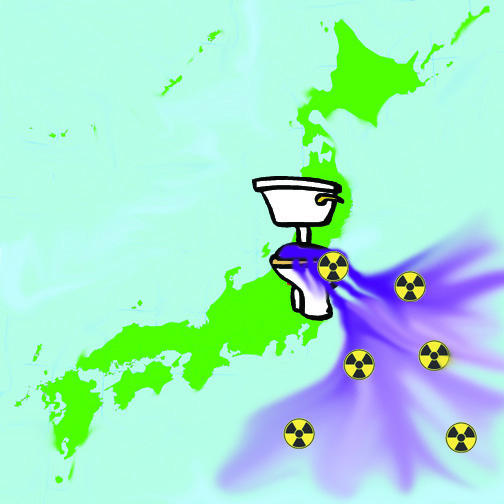
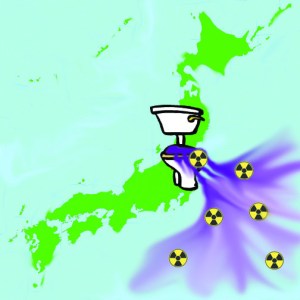 https://www.independent.ie/world-news/asia-pacific/japan-will-flush-unsafe-water-from-fukushima-nuclear-plant-into-sea-37429128.html, Julian Ryall, October 17 2018 Water the Japanese government is planning to release into the Pacific Ocean from the crippled Fukushima nuclear plant contains radioactive material well above legally permitted levels, according to the plant’s operator.
The government is running out of space to store contaminated water that has come into contact with fuel that escaped from three nuclear reactors after the plant was destroyed in the March 2011 earthquake and tsunami that struck north-east Japan.
Its plan to release the approximately 1.09m tons of water stored in 900 tanks into the Pacific has triggered a fierce backlash from local residents and environmental organisations, as well as groups in South Korea and Taiwan fearful that radioactivity from the second-worst nuclear disaster in history might wash up on their shores.
Tokyo Electric Power Co (Tepco), which runs the plant, has until recently claimed the only significant contaminant in the water is safe levels of tritium, which can be found in small amounts in drinking water, but is dangerous in large amounts.
The government has promised that all other radioactive material is being reduced to “non-detect” levels by the sophisticated advanced liquid processing system (ALPS) operated by Hitachi Ltd.
Documents provided to ‘The Daily Telegraph’ by a source in the Japanese government suggest, however, that the ALPS has consistently failed to eliminate a cocktail of other radioactive elements, including iodine, ruthenium, rhodium, antimony, tellurium, cobalt and strontium.
Hitachi declined to comment on the reports on the performance of its equipment. The Japanese government did not reply to multiple requests for comment.
A restricted document also passed to ‘The Telegraph’ from the Japanese government arm responsible for responding to the Fukushima collapse indicates that the authorities were aware that the ALPS facility was not eliminating radionuclides to “non-detect” levels.
That adds to reports of a study by the regional ‘Kahoko Shinpo’ newspaper which said confirmed that levels of iodine 129 and ruthenium 106 exceeded acceptable levels in 45 samples out of 84 in 2017.
Iodine 129 has a half-life of 15.7 million years and can cause cancer of the thyroid; ruthenium 106 is produced by nuclear fission and high doses can be toxic and carcinogenic when ingested.
In late September, Tepco was forced to admit that around 80pc of the water stored at Fukushima still contains radioactive substances above legal levels after the Ministry of Economy, Trade and Industry held public hearings in Tokyo and Fukushima at which local residents and fishermen protested against the plans.
Tepco has now admitted that levels of strontium 90, for example, are more than 100 times above legally permitted levels in 65,000 tons of water that has been through the ALPS cleansing system and are 20,000 times above levels set by the government in several storage tanks at the site.
Dr Ken Buesseler, a marine chemistry scientist with the US Woods Hole Oceanographic Institution, said it was vital to confirm precisely what radionuclides are present in each of the tanks and their amounts.
“Until we know what is in each tank for the different radionuclides, it is hard to evaluate any plan for the release of the water and expected impacts on the ocean”, he told the ‘Telegraph’.
Experts agree the danger posed by any release depends on the concentrations of radionuclides and subsequent contamination of fishery products.
The presence of strontium in the bones of small fish that might be consumed by humans could be a major concern. If ingested by humans, strontium 90 builds up in teeth and bones and can cause bone cancer or leukaemia.
October 18, 2018
Posted by Christina Macpherson |
Fukushima continuing |
2 Comments
 Shikoku outlines plans for decommissioning Ikata 2, WNN, 17 October 2018
A decommissioning plan for unit 2 of the Ikata nuclear power plant in Japan’s Ehime prefecture has been submitted to the country’s nuclear regulator by plant owner Shikoku Electric Power Company………
According to the plan, decommissioning of Ikata 2 will take about 40 years and will be carried out in four stages. The first stage, lasting about ten years, will involve preparing the reactor for dismantling (including the removal of all fuel and surveying radioactive contamination), while the second, lasting 15 years, will be to dismantle peripheral equipment from the reactor and other major equipment. The third stage, taking about eight years, will involve the demolition of the reactor itself, while the fourth stage, taking about seven years, will see the demolition of all remaining buildings and the release of land for other uses.
During the first stage, all fuel is to be removed from the unit. This includes 316 used fuel assemblies that will be sent for reprocessing and 102 fresh fuel assemblies that will be returned to the fuel fabricator.
Ikata 2 became the ninth operable Japanese reactor to be declared for decommissioning since the Fukushima Daiichi accident.
In mid-March 2015, the Ministry of Economy, Trade and Industry’s Agency for Natural Resources and Energy revised the accounting provisions in the Electricity Business Act, whereby electric power companies can now calculate decommissioning costs in instalments of up to ten years, instead of one-time as previously. This enhanced cost recovery provision was to encourage the decommissioning of older and smaller units.
Shikoku decided in March 2016 to decommission unit 1 of the Ikata plant, also a 538 MWe PWR, which began commercial operation in September 1977. That unit had been taken offline in September 2011 for periodic inspections. Upgrades costing more than JPY170 billion (USD1.5 billion) would have been needed at the unit in order for it to operate beyond 40 years.
The NRA approved Shikoku’s decommissioning plan for Ikata 1 in June 2017. That plan also sees the unit being decommissioned in four stages over a 40-year period.
Unit 3 at the Ikata plant was given approval by the NRA to resume operation in April 2016, having been idle since being taken offline for a periodic inspection in April 2011. Shikoku declared the 846 MWe pressurised water reactor back in commercial operation on 7 September 2016. However, in December 2017, a Japanese high court ordered the suspension of the unit’s operation. The injunction was effective until the end of last month. The Hiroshima High Court in late September accepted Shikoku’s appeal and cancelled the injunction, allowing the utility to begin the process of restarting the reactor. http://world-nuclear-news.org/Articles/Shikoku-outlines-plans-for-decommissioning-Ikata-2
October 18, 2018
Posted by Christina Macpherson |
decommission reactor, Japan |
Leave a comment
The status of “Station Blackout” is a serious one.
“it will be many years before the Japanese people know exactly what happened at Fukushima Daiichi on 11 March 2011. One of the key mysteries was role, if any, the magnitude 9 earthquake played in damaging the plant’s reactor cooling systems. Until lethal levels of radiation inside the reactors fall and workers can carry out comprehensive investigations, the truth about the tremor’s impact will remain a subject of conjecture and contention”
Mr. Takamatsu states with expert authority that the pipes of cooling system ware not designed for the 50 second vibration of the magnitude quake. Barry Brook, kangaroo expert, disagrees and tells the world the quake caused no damage at Fukushima. Yet Mr. Brook must surely know the earthquake caused grid blackout. For reactors are all shut down by earthquakes. A solar plant would have kept generating until the last panel shattered. No one would have been evacuated from such a solar plant.
I submit that Prof. Barry Brook’s description of the effects of earthquake upon the Fukushima Diiachi on 11 March 2011 is totally ignorant of the facts as presented by many qualified experts and fly in the face of the independent commission set up by the Japanese Parliament (Diet). It is confirmed that expert investigators concern aspects of TEPCO’s explanations regarding the quake are “irrational”.
Thus any narrative based upon the nuclear industry view, in line with TEPCO’s may fairly be said to be “irrational”. For the industry view is that there is no possibility of quake damage to any structure or sub structure, such as coolant pipes and valves.
Earthquake Damage At Fukushima – is Industry’s Narrative Truthful or Certain? Nuclear History, 16 Oct 18 I am again going to contrast the statements made by Barry Brook in regard to the events and outcomes at Fukushima Daiichi in 2011 with the facts as presented by Mark Willacy. These facts are published in Willacy’s book, “Fukushima – Japan’s tsunami and the inside story of the nuclear meltdowns”, Willacy, M., Pan Macmillan, copyright 2013, Mark Willacy.
However, I will also include information related to the events which were first published and discussed in 2011. ………..
The earthquake generated the tsunami. What else did the earthquake cause?
In this blog I have included posts which give the IAEA considerations for the electrical grids which are connected to nuclear power plants. The IAEA states that the level of engineering and resilience built into such grids may be a significant additional cost for any nation considering generation to nuclear power.
It comes as no surprise then the electrical grid connected to the Fukushima Daiichi NPP failed for two reasons. 1. The earthquake caused all the nuclear reactors connected to the same grid to rapidly shut down. Thus the earthquake caused a blackout due to cessation of electrical generation. 2. The physical grid infrastructure – poles and wires – were damaged by the earthquake. At Fukushima this meant that more than one of the reactors was physically separated from the grid by the earthquake.
It can therefore be seen that the earthquake meant A. Fukushima Diiachi could not generate nuclear electricity as the quake had shut the reactors down. B. The Fukushima Diiachi Nuclear Power Plant was in Station Blackout for one reason: earth quake damage to nuclear infrastructure – the electrical grid. Continue reading →
October 16, 2018
Posted by Christina Macpherson |
Fukushima continuing, Reference, safety, secrets,lies and civil liberties, spinbuster |
Leave a comment
 Prof. Brook is probably, in my opinion, clearly very inadequate when he researches things such as nuclear industry. He claims academic privilege when he communicates his mere opinions related to a field he possesses no training or little training or qualifications in. He can’t have it both ways. The privilege which springs from his actual qualifications may give him status in other things on campus. Away from the lecture theatre though, his opinions of the nature of nuclear industry have zero academic weight….“I’m an academic and therefore I am right” does not wash with me
2003 saw Prof. Shimazaki speak at the first meeting of the government’s Disaster Management Council. This council formed government disaster policy. He urged the council to study the Jogan earthquake of 869 and warned the Japanese Trench could generate earthquakes anywhere along Japan’s Pacific coast.
since 2008 TEPCO management had been busy suppressing THE SAME CONCLUSION of grave risk of 15 metre tsunamis hitting the Fukushima coast, made by TEPCO’s own engineers using simulations and mathematics.
Expert fore warning of the 2011 Tsunami Ignored and Suppressed by Nuclear Authorities.Nuclear Exhaust 12 Oct 18
this post is in progress. Not finished.
I am again going to contrast the statements made by Barry Brook in regard to the tsunami defences at Fukushima Daiichi with the facts as presented by Mark Willacy. These facts are published in Willacy’s book, “Fukushima – Japan’s tsunami and the inside story of the nuclear meltdowns”, Willacy, M., Pan Macmillan, copyright 2013, Mark Willacy.
An interesting aspect of the work of Barry Brook is this: The views expressed by Barry are very frequently attributed by Barry to people who are, according to Barry, experts in nuclear industry. I have heard Barry’s public broadcasts in which Barry makes this attribution. I have not heard Barry give the names of his advisors and friends in the nuclear industry. However it is extremely likely Barry is correct in his attributions. Barry’s statements of opinions and claimed facts can reasonably be assumed to have been provided to Barry by unnamed – as far as I am aware – experts in the nuclear industry. The credibility of Barry statements ride therefore upon the credibility of the nuclear industry.
Of course it is no surprise to hear Barry Brook mirror the statements of nuclear experts from around the world in 2011. The narrative of the global nuclear industry as broadcast by the mass media and the narrative provided by Barry Brook were, as I recall, mutually re-affirming.
Here again is a selected, partial transcript of Barry Brook’s Australian ABC TV interview (please watch the complete interview at the youtube link https://www.youtube.com/watch?v=SFs_-8DtZvo
“Prof. Brook: “I think they (events) show the vulnerability of any human infrastructure to the forces of nature. Especially when they are unleashed with such fury as they were with that massive earthquake, the largest one to hit Japan in recorded times, and a 10 metre tsunami. I don’t think it’s reasonable to expect any infrastructure along a coastline like that to survive an event like that. But what it does highlight is that decisions were made back in the ‘60s, when that nuclear power plant was planned and built, they did not anticipate the scale of the natural disaster that occurred here.”
Prof. Brook: “They predicted up to a 6.5 metres tsunami and protected against that. But of course, as events turned out, the tsunami was even bigger than that………
In a previous post I pointed out that Willacy had found that Dr.Yukinobu Okamura, the director of Japan’s Active Fault and Earthquake Research Centre, had, in 2007, found evidence in the geologic record that the Fukushima coast had been hit by massive tsunamis in its past. (Fukushima, page 26) Continue reading →
October 15, 2018
Posted by Christina Macpherson |
Japan, spinbuster |
Leave a comment
Campaign begins for Fukushima governor race with reconstruction in focus, Oct. 12 FUKUSHIMA
Official campaigning started Thursday for the gubernatorial election in Fukushima Prefecture, with the incumbent governor’s policies on reconstruction work following the 2011 earthquake and nuclear disaster seen as a main issue.
In the governor election which will be held on Oct 28, incumbent Masao Uchibori, 54, is challenged by three candidates — Jun Kanayama, a 78-year-old self-employed worker, Sho Takahashi, a 30-year-old IT company owner, and Kazushi Machida, a 42-year-old prefectural chairman of the Japanese Communist Party.
Although all of the four candidates are running as independents, Uchibori, currently in his first term, gets support from the ruling and opposition parties except for the communist party.
The eastern Japan prefecture is still on the road to recovery from the nuclear meltdown at Fukushima Daiichi power plant, which was crippled by the earthquake-tsunami on March 11, 2011.
“Taking the important missions of the prefecture’s reconstruction and revitalization into consideration, I’ll challenge,” said Uchibori in Fukushima city after filing his candidacy.
Kanayama said he seeks a prefectural administration which “children can be proud of,” while Takahashi appealed for assistance for start-up businesses. Machida called for the complete abolition of all nuclear power plants in Japan.
https://www.japantimes.co.jp/news/2018/10/11/national/politics-diplomacy/campaigning-fukushima-gubernatorial-race-kicks-off-reconstruction-focus/
October 13, 2018
Posted by Christina Macpherson |
Japan, politics |
Leave a comment