Japan vows to cut its nuclear hoard but neighbours fear the opposite

More than 30 years ago, when its economy seemed invincible and the Sony Walkman was ubiquitous, Japan decided to build a recycling plant to turn nuclear waste into nuclear fuel.
It was supposed to open in 1997, a feat of advanced engineering that would burnish its reputation for high-tech excellence and make the nation even less dependent on others for energy.
Then came a series of blown deadlines as the project hit technical snags and struggled with a Sisyphean list of government-mandated safety upgrades. Seventeen prime ministers came and went, the Japanese economy slipped into a funk and the initial $6.8 billion budget ballooned into $27 billion of spending.
Now, Japan Nuclear Fuel Ltd, the private consortium building the recycling plant, says it really is almost done. But there is a problem: Japan does not use much nuclear power anymore.
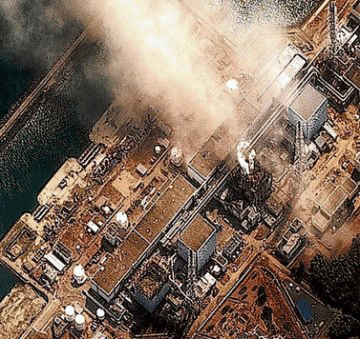
The country turned away from nuclear energy after the 2011 Fukushima disaster, and only nine of its 35 reactors are operational.
It is a predicament with global ramifications. While waiting for the plant to be built, Japan has amassed a stockpile of 47 metric tons of plutonium, raising concerns about nuclear proliferation and Tokyo’s commitment to refrain from building nuclear arms even as it joins the United States in pressing North Korea to give up its arsenal.
In August, North Korea’s state-run Rodong Sinmun newspaper accused Japan of accumulating plutonium “for its nuclear armament.”
Japan pledged for the first time this past summer to reduce the stockpile, saying the recycling plant would convert the plutonium into fuel for use in Japanese reactors.
But if the plant opens as scheduled in four years, the nation’s hoard of plutonium could grow rather than shrink.
That is because only four of Japan’s working reactors are technically capable of using the new fuel, and at least a dozen more would need to be upgraded and operating to consume the plutonium that the recycling plant would extract each year from nuclear waste.
“At the end of the day, Japan is really in a vice of its own making,” said James M. Acton, a researcher at the Carnegie Endowment for International Peace in Washington.
“There is no easy way forward, and all those ways forward have significant costs associated with it.”
A handful of countries reprocess nuclear fuel, including France, India, Russia and the United Kingdom.
But the Japanese plan faces a daunting set of practical and political challenges, and if it does not work, the nation will be left with another problem: about 18,000 metric tons of nuclear waste in the form of spent fuel rods that it has accumulated and stored all these years.
A storage facility for spent fuel rods at Japan Nuclear Fuel Ltd.’s plant in Rokkasho, Japan, Aug 2018.
Japan’s neighbours, most notably China, have long objected to the stockpile of plutonium, which was extracted from the waste during tests of the recycling plant and at a government research facility, as well as by commercial recycling plants abroad.
Most of this plutonium is now stored overseas, in France and Britain, but 10 metric tons remain in Japan, more than a third of it in Rokkasho, the northeastern fishing town where the recycling plant is being built.
Japan says it stores its plutonium in a form that would be difficult to convert into weapons, and that it takes measures to ensure it never falls into the wrong hands.
But experts are worried the sheer size of the stockpile — the largest of any country without nuclear weapons, and in theory enough to make 6,000 bombs — could be used to justify a nuclear buildup by North Korea and others in the region.
Any recycling plan that adds to the stockpile looks like “a route to weaponise down the road,” said Alicia Dressman, a nuclear policy specialist. “This is what really concerns Japan’s neighbours and allies.”
Japan maintains that its plutonium is for peaceful energy purposes and that it will produce only as much as it needs for its reactors. “We are committed to nonproliferation,” said Hideo Kawabuchi, an official at the Japan Atomic Energy Commission.
But the launch of the Rokkasho plant has been delayed so long — and popular opposition to restarting additional nuclear reactors remains so strong — that scepticism abounds over the plan to recycle the stockpile.
Critics say Japan should concede the plant will not solve the problem and start looking for a place to bury its nuclear waste.
“You kind of look at it and say, ‘My God, it’s 30 years later, and that future didn’t happen,’” said Sharon Squassoni, a nonproliferation specialist at George Washington University.
“It’s just wishful thinking about how this is going to solve their myriad problems.”
Ikata NPP’s reactor to restart as Hiroshima court judges volcanic erution frequency to be extremely low
Ruling puts onus on anti-nuclear plaintiffs citing volcanic risks

Reactor can restart in Japan after little risk seen from volcano

Hiroshima High Court signs off on restart of reactor at Shikoku Electric’s Ikata nuclear power plant

Nuclear weapons proliferation: other countries fear that Japan may use its piles of plutonium for weapons
Japan vows to cut its nuclear hoard but neighbours fear the opposite, Japan has amassed a large stockpile of plutonium and neighbours fear that the country may decide to build more nuclear weapons. By Motoko Rich, 25 Sept 2018 New York Times, More than 30 years ago, when its economy seemed invincible and the Sony Walkman was ubiquitous, Japan decided to build a recycling plant to turn nuclear waste into nuclear fuel.
Poor region of Japan is now very dependent on Rokkasho nuclear recycling project
Japan vows to cut its nuclear hoard but neighbours fear the opposite, By Motoko Rich, 25 Sept 2018 New York Times, “………Pulling the plug would also deprive one of Japan’s poorest regions of an economic lifeline. Over the years, the central government has awarded nearly $3 billion in incentives to the prefecture, where political leaders reliably support Japan’s governing party.
Even inoperative, the plant employs more than 1 in 10 residents in Rokkasho and accounts for more than half the town’s tax revenues.
“It is now indispensable for Rokkasho,” said Kenji Kudo, the fourth generation to run his family’s clothing distribution company, which sells uniforms and protective gear to the plant.
As demand from local squid fishermen disappeared, he added, the plant “rescued our business.” The town has also received more than $555 million in government subsidies for hosting the facility, including funding for a 680-seat concert hall, an international school with just eight students and a new pool and gym complex that opened last year.
There are small reminders that the munificence comes with some risk.
A screen in the lobby of the concert hall reports the radiation level at 32 places around the prefecture, and a sign at a local nursing home warns residents not to use the baths “in case of nuclear disaster.”
Kaoru Sasaki, director of the nursing home, said she doubts the plant will ever operate given concerns about nuclear power around the country. “But we don’t talk about that among friends here,” she said. “It is so important to the community.”
The plant itself is sprawled across nearly 1,000 acres of farmland, surrounded by fields of solar panels and wind turbines.
Some 6,000 workers are installing steel nets to protect it against tornadoes and digging ditches for pipes to carry water from a swamp into its cooling towers. Inside a large control room, workers in turquoise jumpsuits mill about computer consoles, monitoring dormant machinery.
The final piece of the plant to come online will be a facility, now under construction, that will take a mix of plutonium and uranium and turn that into fuel. But no one knows what would happen if the government could not persuade communities to reopen and upgrade more reactors to use this type of fuel.
“Our only plan right now is that we want to start reprocessing in 2021,” said Koji Kosugi, general manager for international cooperation and nonproliferation at Japan Nuclear Fuel.
“But we do not yet know how it will be consumed. This is something that has to be worked out with the utilities and the Japanese government.”
One of the reasons Japan is so wedded to recycling may be that it does not want to confront the politically toxic question of what to do with its nuclear waste, much of which is being stored temporarily in cooling pools on the sites of its nuclear power plants.
Thomas M. Countryman, an Obama administration official who is now chairman of the nonpartisan Arms Control Association in Washington, said the Rokkasho plant is “in a sense a delaying tactic in order to put off the most difficult decision that any country has to face.”
One option, said Tatsujiro Suzuki, a nuclear scientist at Nagasaki University, is to turn Rokkasho itself into a nuclear waste storage facility.
Nuclear plants across Japan have sent waste that cannot be recycled to Rokkasho — steel drums full of ash, contaminated filters, steel pipes and protective clothing.
Huge concrete boxes holding the drums are lined up in vast dugouts on the grounds of the plant, and canisters holding highly radioactive waste are stacked nine deep in a cavernous underground room where only their bright orange lids poke out of the floor.
The government promised that the waste would only be stored here temporarily but never came up with a permanent plan. In Rokkasho, residents are still waiting for the recycling plant.
“If the government had asked the village to only accept waste in the first place,” said the mayor, Mamoru Toda, “I don’t think the village would have accepted it.” https://www.sbs.com.au/news/japan-vows-to-cut-its-nuclear-hoard-but-neighbours-fear-the-opposite
Japan’s push for nuclear energy – court allows a reactor restart, but other legal actions are pending.
Japan Court Allows Nuclear Reactor to Reopen in Boost to Abe’s Energy Push, Bloomberg, By Stephen Stapczynski and Chisaki Watanabe, September 25, 2018,
Shikoku Elec.to restart Ikata No. 3 reactor on October 27 Government seeks to restore industry after Fukushima disaster
A Japanese court paved the way for the nation’s ninth nuclear reactor to restart, boosting Prime Minister Shinzo Abe’s push to bring dozens of plants back online following the 2011 Fukushima disaster.
The Hiroshima High Court on Tuesday removed a temporary injunction against Shikoku Electric Power Co.’s Ikata No. 3 reactor, the company said in a statement. While the injunction ordered in December would end this month — meaning the utility could have restart the plant from Oct. 1 — the ruling is a symbolic victory for the government, which has often seen the courts stymie efforts to accelerate nuclear restarts.
Policy makers are seeking to restore the nation’s nuclear industry amid efforts to reduce reliance on costly fossil-fuel imports and cut carbon emissions. The battle in Japan over nuclear power has moved mostly to the courts, which have been used by groups opposed to the technology to keep plants shut. Seven of the nation’s 39 operable nuclear units are currently online, while one is under planned maintenance.
…….. There are roughly three dozen lawsuits pending against Japan’s nuclear facilities and the decision in favor of the utility may have some influence on future rulings, according to Datsugenpatsu Bengodan, a group of lawyers who oppose nuclear power. A nationwide survey by Mainichi Newspaper in February show the restart of nuclear reactors was opposed by almost half of the respondents, while about a third of them approved.
Last year, in a separate case, a Japanese high court overturned an injunction in place since March 2016 that barred Kansai Electric from operating two reactors at its Takahama facility in western Japan. https://www.bloomberg.com/news/articles/2018-09-25/japan-court-rules-shikoku-electric-can-restart-nuclear-reactor
Japan Has Enough Nuclear Material to Build an Arsenal. Its Plan: Recycle.

Japan’s Environment Ministry forced to change its forecast in order to make the nuclear industry look better
|
Ministry retracts estimate of ratio of nuclear power in fiscal 2050,THE ASAHI SHIMBUN, September 24, 2018
The Environment Ministry was forced to retract its trial calculation that the ratio of nuclear power generation to Japan’s total electricity generation will be less than 10 percent in fiscal 2050.
The ministry made the retraction in February in response to backlash from the Ministry of Economy, Trade and Industry, which is supervising the electric power industry, several sources of the two ministries said. At the time, the economy ministry was proceeding with a revision of the government’s basic energy plan. It apparently feared that the trial calculation could influence discussions on the future ratio of nuclear power generation, the sources added. “We didn’t put pressure (on the Environment Ministry),” an economy ministry official said. However, an Environment Ministry official said, “We couldn’t help but retract (the original trial calculation).” After the retraction, the contents of the basic energy plan were decided as had been worked out by the economy ministry and were approved in a Cabinet meeting in July. The Abe administration regards nuclear power generation as “an important baseload electric source” and is promoting the restarts of nuclear reactors. Under the policy, the economy ministry has apparently adopted a stance of concealing data that is inconvenient for the administration. The Asahi Shimbun obtained the trial calculation, which was shown to the economy ministry by the Environment Ministry. According to the estimate, the ratio of nuclear power generation to Japan’s total electricity generation will be 21 percent in fiscal 2030 in accordance with the Abe administration’s policies. The ratio will decrease to 11 to 12 percent in fiscal 2040 and to 7 to 9 percent in fiscal 2050. In addition, the ratio of renewable energies will increase to 57 to 66 percent in fiscal 2040 and further to 72 to 80 percent in fiscal 2050. The Environment Ministry compiled the trial calculation by setting up a team with Mitsubishi Research Institute Inc. and experts to examine measures to reduce greenhouse gases. In the trial calculation, the team assumed that renewable energies will be introduced as much as possible. The Asahi Shimbun obtained the trial calculation, which was shown to the economy ministry by the Environment Ministry. According to the estimate, the ratio of nuclear power generation to Japan’s total electricity generation will be 21 percent in fiscal 2030 in accordance with the Abe administration’s policies. The ratio will decrease to 11 to 12 percent in fiscal 2040 and to 7 to 9 percent in fiscal 2050. In addition, the ratio of renewable energies will increase to 57 to 66 percent in fiscal 2040 and further to 72 to 80 percent in fiscal 2050. The Environment Ministry compiled the trial calculation by setting up a team with Mitsubishi Research Institute Inc. and experts to examine measures to reduce greenhouse gases……….http://www.asahi.com/ajw/articles/AJ201809240032.html |
|
Authorities deceive the public on radiation from Fukushima Daiichi
Informal Labour, Local Citizens and the Tokyo Electric Fukushima
Daiichi Nuclear Crisis: Responses to Neoliberal Disaster Management Adam Broinowski {extensive footnotes and references on original] September 2018, “……… (Official Medicine: The (Il)logic of Radiation Dosimetry On what basis have these policies on radiation from Fukushima Daiichi been made? Instead of containing contamination, the authorities have mounted a concerted campaign to convince the public that it is safe to live with radiation in areas that should be considered uninhabitable and unusable according to internationally accepted standards. To do so, they have concealed from public knowledge the material conditions of radiation contamination so as to facilitate the return of the evacuee population to ‘normalcy’, or life as it was before 3.11. This position has been further supported by the International Atomic Energy Agency (IAEA), which stated annual doses of up to 20 mSv/y are safe for the total population including women and children.43 The World Health Organisation (WHO) and United Nations Scientific Commission on the Effects of Atomic Radiation (UNSCEAR) also asserted that there were no ‘immediate’ radiation related illnesses or deaths (genpatsu kanren shi 原発 関連死) and declared the major health impact to be psychological.
While the central and prefectural governments have repeatedly reassured the public since the beginning of the disaster that there is no immediate health risk, in May 2011 access to official statistics for cancer-related illnesses (including leukaemia) in Fukushima and southern Miyagi prefectures was shut down. On 6 December 2013, the Special Secrets Protection Law (Tokutei Himitsu Hogo Hō 特定秘密保護法) aimed at restricting government employees and experts from giving journalists access to information deemed sensitive to national security was passed (effective December 2014). Passed at the same time was the Cancer Registration Law (Gan Tōroku Hō 癌登録法), which made it illegal to share medical data or information on radiation-related issues including evaluation of medical data obtained through screenings, and denied public access to certain medical records, with violations punishable with a 2 million yen fine or 5–10 years’ imprisonment. In January 2014, the IAEA, UNSCEAR and Fukushima Prefecture and Fukushima Medical University (FMU) signed a confidentiality agreement to control medical data on radiation. All medical personnel (hospitals) must submit data (mortality, morbidity, general illnesses from radiation exposures) to a central repository run by the FMU and IAEA.44 It is likely this data has been collected in the large Fukushima Centre for Environmental Creation, which opened in Minami-Sōma in late 2015 to communicate ‘accurate information on radiation to the public and dispel anxiety’. This official position contrasts with the results of the first round of the Fukushima Health Management Survey (October 2011 – April 2015) of 370,000 young people (under 18 at the time of the disaster) in Fukushima prefecture since 3.11, as mandated in the Children and Disaster Victims Support Act (June 2012).45 The survey report admitted that paediatric thyroid cancers were ‘several tens of times larger’ (suitei sareru yūbyōsū ni kurabete sūjūbai no ōdā de ōi 推定される有病数に比べて数十倍の オーダーで多い) than the amount estimated.46 By 30 September 2015, as part of the second-round screening (April 2014–
March 2016) to be conducted once every two years until the age of 20 and once every five years after 20, there were 15 additional confirmed thyroid cancers coming to a total of 152 malignant or suspected paediatric thyroid cancer cases with 115 surgically confirmed and 37 awaiting surgical confirmation. Almost all have been papillary thyroid cancer with only three as poorly differentiated thyroid cancer (these are no less dangerous). By June 2016, this had increased to 173 confirmed (131) or suspected (42) paediatric thyroid cancer cases.47
The National Cancer Research Center also estimated an increase of childhood thyroid cancer by 61 times, from the 2010 national average of 1–3 per million to 1 in 3,000 children. Continue reading
Britain’s Nuclear Decommissioning Authority partnering with Japan Atomic Energy Agency
Whitehaven News 20th Sept 2018 , The Nuclear Decommissioning Authority has joined forces with the Japan
Atomic Energy Agency to share expertise in nuclear decommissioning and
radioactive waste management. The NDA – which is responsible for cleaning
up and decommissioning 17 sites in the UK including Sellafield in Cumbria
– has signed an agreement that will see skills, knowledge, research,
information and technology exchanged with the JAEA, Japan’s research and
development institute for nuclear energy.
JAEA’s work includes undertaking research and development work to support the decommissioning
and environmental restoration of TEPCO’s stricken Fukushima Daiichi
Nuclear Power station. It is also aiding the decommissioning of the Monju
fast breeder reactor and the Tokai Reprocessing Plant.
http://www.whitehavennews.co.uk/news/business/NDA-joins-forces-with-Japan-Atomic-Energy-Agency-98721037-4777-4322-a8fc-22b18d0c979e-ds
Fukuhima academic team establishing an archive of nuclear disaster lessons
In a March 2017 plan finalized by the Fukushima Prefectural Government, the archives will be inaugurated in the summer of 2020 at a cost of approximately 5.5 billion yen in the town of Futaba, which has been rendered “difficult to live” due to radioactive fallout from the triple core meltdowns at Tokyo Electric Power Co. (TEPCO)’s Fukushima No.1 Nuclear Power Plant in March 2011. The facility will have a total floor space of 5,200 square meters with areas for exhibitions, management and research, storage, training sessions and holding meetings. The design was modeled after a similar center in the western Japan city of Kobe that was built to store records of the 1995 Great Hanshin Earthquake, but with more focus on the nuclear disaster than the quake itself.
Massive flow of money into Japanese coal and nuclear power
Among the 151 Japanese financial institutions analyzed in the Energy Finance in Japan 2018study, only 38 of them were not involved with coal or nuclear energy projects. A similar 350.org study from last year shows that Japanese insurance companies represent a large proportion of investors in domestic and international coal industries. Japan’s single biggest investor in coal for the five-year period studied was Mitsubishi UFJ Financial Group (MUFG), followed by Nippon Life Insurance (NLI) and Nomura Holdings………..
In the wake of the Fukushima disaster, the government responded swiftly and strongly to public outcry and shut down all 54 of Japan’s nuclear reactors as they awaited new, significantly more rigorous safety standards. Now, more than 7 years later, just a fraction of these nuclear power plants have reopened for business. It was at this point that Japanese officials started looking for new avenues to power the country, and they found what they were looking for in coal.
It’s difficult to say, however, how long-lived the Japanese coal renaissance will be. There is a large amount of opposition to the extremely dirty fossil fuel, with critics urging Japan to reverse its course and return to “greener” pastures. Encapsulating the nation’s ambivalence, at the same time that Japanese financial institutions were still funneling money into coal power development and bonds earlier this year, Japanese banks were also creating stricter financing guidelines to include advanced air-pollution technologies.
In fact even MUFG, mentioned above as Japan’s single biggest investor in coal, has significantly tightened their coal-financing policies this year, along with Sumitomo Mitsui Banking Corp. and Mizuho Financial Group Inc. At the same time NLI, Japan’s biggest insurer in terms of revenue, announced in July that it would no longer grant loans to new coal projects or invest in coal-fired plants, citing environmental reasons, and Dai-Ichi Life Insurance Company announced that it would stop financing overseas coal plants in May.
Some critics, including 350.org, say that these changes, while meaningful, are not nearly significant enough to stem the massive flow of Japanese money into coal, and thereby Japanese pollutants into our atmosphere. It’s still unclear whether these first steps away from coal will have any impact on the many coal projects already underway, and while investment may be now limited to some extent, it’s a far cry from divestment. https://oilprice.com/Energy/Coal/Why-Cant-Japan-Kick-Coal-And-Nuclear.html
The Fukushima nuclear crisis: How communities, doctors, media, and government have responded
Chapter Title: Informal Labour, Local Citizens and the Tokyo Electric Fukushima Daiichi Nuclear Crisis: Responses to Neoliberal Disaster Management Chapter Author(s): Adam Broinowski Book Title: New Worlds from Below [extensive footnotes and references on original]
Faced with the post-3.11 reality of government (and corporate) policy that protects economic and security interests over public health and wellbeing, the majority of the 2 million inhabitants of Fukushima Prefecture are either unconscious of or have been encouraged to accept living with radioactive contamination. People dry their clothes outside, drink local tap water and consume local food, swim in outdoor pools and the ocean, consume and sell their own produce or catches. Financial pressure after 3.11 as well as the persistent danger of social marginalisation has made it more difficult to take precautionary measures (i.e. permanent relocation, dual accommodation, importing food and water) and develop and share counter-narratives to the official message. Nevertheless, some continue to conceal their anxiety beneath a mask of superficial calm.
As Fukushima city resident Shiina Chieko observed, the majority of people seem to have adopted denial as a way to excise the present danger from their consciousness. Her sister-in-law, for example, ignored her son’s ‘continuous nosebleeds’, while her mother had decided that the community must endure by pretending that things were no different from pre-3.11 conditions.75 Unlike the claim that risk is evenly distributed, it is likely that greater risk is borne by those who eat processed foods from family restaurants and convenience stores, as well as infants, children and young women who are disproportionately vulnerable to internal radiation exposures. Most mothers, then, have an added burden to shield their children while maintaining a positive front in their family and community.
Some, such as Yokota Asami (40 years old), a small business owner and mother from Kōriyama (60 km from FDNPS), demonstrated initiative in voluntarily evacuating her family. She decided to return (wearing goggles and a mask, she joked) in September 2011 when her son’s regular and continuous nosebleeds (in 30-minute spells) subsided. The Yokotas found themselves the victims of bullying when they called attention to radiation dangers, and were labelled non-nationals (hikokumin 非国民) who had betrayed reconstruction efforts. Her son was the only one to put up his hand when he was asked along with 300 fellow junior high school students if he objected to eating locally produced school lunches. He also chose not to participate in outdoor exercise classes and to go on respite trips instead. When it came time to take the high school entrance exam, he was told by the school principal that those who took breaks could not pass. He took the exam and failed. When he asked to see his results he found that he had, in fact, enough points to pass (the cut-off was 156 while he received 198 out of 250 points). The Yokotas decided that it was better to be a ‘non-national’ and protect one’s health. Their son moved to live in Sapporo.76
In March 2015, Asami reported that doctors undertook paediatric thyroid operations while denying any correlation (inga kankei 因果 関係) with radiation exposures. They also urged their patients to keep their thyroid cancer a secret to enhance their employment or marriage prospects, although it would be difficult to conceal the post-operation scar.77 Yokota also indicated she knew of students having sudden heart attacks and developing leukaemia and other illnesses.78
This seems to be supported by Mr Ōkoshi, a Fukushima city resident, whose two daughters experienced stillbirths after 3.11. While
Ōkoshi found that doctors have regularly advised women in the area to abort after 3.11, presumably to avoid miscarriages and defects, they do not discuss direct causes. He also observed regular illnesses experienced by many of his friends, and some sudden deaths. After a friend (62 years old) started saying strange things, he was diagnosed with brain dysfunction. He died quickly. Another friend (53 years old) was advised by a doctor to monitor a polyp in her breast. When she sought second opinions, she discovered she had accumulated an internal dose of 22 mSv and had a rapidly developing liver cancer. She also died quickly.79 There are many more such stories that are being actively ignored by the authorities. As Shiina put it, ‘we’re getting leukaemia and cataracts and we die suddenly. The TEPCO registrar has been inundated with complaints’.80
While radiation contamination is clearly a health and environmental issue, state-corporate methods deployed by executives to protect (transnational) financial, industry and security interests and assets also make it a political issue.81 As things do not change by themselves, rather than turning one’s frustration inward in self-blame, turning to prayer or deceiving oneself into returning to pre-3.11 lifeways in contaminated areas, Shiina states that people, particularly those most affected, must develop political consciousness.
To achieve this ambitious objective is not as complicated as it might sound. Nishiyama Chikako (60 years old), for example, returned to Kawauchi village to run for the local assembly after the mandatory order was lifted in December 2011. She found, as she commented in her blog, a link between TEPCO and the tripling of the Kawauchi budget post-3.11. Subsequently, she reported that her blog was shut down by unknown hackers on several occasions.82
This sort of information and communication control appears to be widespread. After 3.11, the central government hired advertising companies Dentsū and Hakuhōdō (formerly McCann Ericson Hakuhodo) to run a ‘public acceptance’ campaign. Young teams were dispatched nationwide to conduct ‘public opinion guidance’ (yoron yūdō 世論誘導). The teams consisted of casual labour (earning 2,000–4,000 yen per hour) hired under a confidentiality clause (shuhi gimu 守秘義務) to manipulate information (jōhō kōsaku 情報工作) and harass internet users.83
Media professionals have been subjected to similar tactics. The Asahi TV journalist Iwaji Masaki (Hōdō Station), one of the few mainstream journalists covering the Fukushima Daiichi nuclear accident in depth, for example, was intimidated by police for interviewing (December 2012) informal nuclear workers who showed shoddy decontamination practices that entailed contaminated waste disposal rather than removal and the mother of a child with thyroid cancer. Airing the program was delayed until August 2013. Before he could complete his planned segments on the US$1 billion class action for compensation for unusual and serious illnesses filed against TEPCO, General Electric, Hitachi and Tōshiba in 2015 by sailors from the USS Ronald Reagan (which provided assistance quickly after the disaster, and among whose crew 250 were ill and three had died),84 on 29 September 2013, Iwaji was reportedly found dead in his apartment (having suffered carbon monoxide poisoning in a sealed room as he slept). Much speculation followed on social media, including both plausible reasons for suicide and testimonies from friends that knew him well that Iwaji himself stated he would never commit suicide, but the story was conspicuously ignored by major news channels.85
The former mayor of Futaba village Idogawa Katsuichi was harassed on social media for calling attention to illnesses and for the resettlement of pregnant women and children. When Kariya Tetsu characterised Idogawa in his popular manga series (Oishinbo 美味しんぼ), and depicted the manga’s main character as suffering from nosebleeds after visiting Fukushima, Kariya’s editors shut the series down following accusations of ‘spreading rumours’ from some readers, media commentators and high level politicians. Similarly, Takenouchi Mari, a freelance journalist and mother who evacuated from Fukushima in 2011, received thousands of slanderous messages and threats to her two-year-old son and her property after criticising the co-founder of Fukushima ETHOS on her blog in mid-2012. She too reported that her internet account was suspended and her request for a police investigation ignored. She was counter-sued for harassment and subjected to a criminal investigation and civil law suit.86
Among the activists who have been arrested for anti-nuclear protests, the academic Shimoji Masaki of Hannan University (9 December 2012) was arrested by Osaka Prefectural Police and charged with ‘violating the Railway Operation Act’ for walking through an Osaka station concourse while participating in a demonstration against radioactive waste incineration (17 October 2012). Shimoji had reiterated that residents, due to radioactive incineration (which was due to commence in Osaka in February 2013), would be forced to bear the burden of air, food and water contamination.8
Despite such obstacles to developing a political consciousness as well as the obvious difficulties in permanently resettling large populations, it has been not only evacuees who have had to think about their fundamental life priorities after the Fukushima Daiichi nuclear distaster. Some have adopted real (not only psychological) self-protection mechanisms. The voluntary Fukushima Collective Health Clinic (Fukushima Kyōdō Shinryōjo 福島共同診療所), for example, is founded on three principles: respite (hoyō 保養), treatment (shinryō 診療) and healing (iryō 医療). Co-founder Dr Sugii, advocates a return to the 1 mSv/y limit, and seeks to inform those who for whatever reason cannot move from contaminated areas in Fukushima Prefecture.88 This is modelled on Belrad, the independent health clinic in Belarus run by Alexey Nesterenko, which prioritises knowledge, safety and open information on radiation and its health impacts. 86
To counteract the misinformation residents were exposed to post Chernobyl, over time and with limited resources, Belrad and other organisations have disseminated information and organised respite trips for children in affected areas. In 2015, for example, subsidised respite trips were organised for 50,000 children, and results have shown that over two continuous years of respite those who accumulated 25– 35 Bq/kg had reduced the amount to 0 Bq/kg. Unlike the flat limit of 100 Bq/kg of Caesium in food in Japan (50 Bq/kg for milk and infant foods, 10 Bq/kg for drinking water), Belrad recommends an internal radiation limit of 10–30 Bq/kg in the body (although it advises below 10 Bq for infants to avoid lesions and heart irregularities).89 It should be noted that these limits do not guarantee safety against the effects of repeating internal radiation exposure from consuming contaminated foods, which is relative to the length of time the radiation remains and its location in the body.
While some communities, such as the town of Aketo in Tanohama, Iwate Prefecture, have struggled to block the siting of nuclear waste storage facilities,90 others are also organising to reduce radio-accumulation in their children through respite trips,91 as well as concentrating on indoor activities, measuring hotspots and decontaminating public areas and pathways, pooling funds for expensive spectrometers to monitor internal exposure and food and water, incorporating dietary radioprotection, as well as finding ways to reduce anxiety
Many local farmers cannot admit the already near-permanent damage to their land (which may continue for hundreds of years) because it would imply the devaluation of their property and produce as well as threatening their ancestral ties to the land, commitments and future plans. While many are keenly aware of their responsibilities, the push by the Fukushima and central governments to identify and gain access to markets for produce from irradiated areas would make it easier to overlook uncomfortable factors. Some have argued that given the reassurances of safety from the highest authorities, these offical figures should therefore relocate to contaminated areas and consume these products regularly. Despite the fairness of this statement, a more utilitarian logic has prevailed. In the name of reconstruction and revitalisation of Fukushima and the nation, the dilution of Fukushima produce with unirradiated produce to return measurements just under the required limits, radiation spikes in soil and food or the mutation of plants as Caesium replaces potassium (K40), for example, tend to be minimised. In this climate, the distribution and relabelling of Fukushima produce for urban and international markets (i.e. in a black market of cut-price bulk produce picked up by yakuza and other brokers) is likely to continue.
To date, the majority of evacuees have refused to return to (de)contaminated areas. Some claim they are yet to receive accurate information to justify it. Independent specialists such as Hosokawa Kōmei (Citizens’ Commission on Nuclear Energy), who develops models for transition to renewable alternatives, anticipate an increase in evacuee populations as they predict increased resettlement of Fukushima residents over 20–30 years.92 As some evacuees recognise the potential for second or third Fukushimas, they have sought to strengthen their collective identities and rights. Through local organisation and alternative life practices, whether in micro-scale ecovillages and transition towns93 with communal occupancies and squats, parallel currencies and local exchange systems (roughly 70 substantive projects), organic food co-ops, self-sufficient energy systems, local production and recycling, carpools and free kindergartens, such groups are seeking to reconstruct and model core social priorities, focusing on clean food, health and community cooperation rather than the internalised and dreary competition for material accumulation.
Although the accountability of authorities with prior knowledge has yet to be properly investigated, one of the largest groups of collective legal actions to be mounted in Japanese history includes some 20 lawsuits by 10,000 plaintiffs. The Fukushima genpatsu kokuso-dan (Group of Plaintiffs for Criminal Prosecution 福島原発告訴団), formed on 20 April 2012, filed a criminal case (lodged 3 September 2013, Fukushima District Court) against 33 previous and present officers of TEPCO, government officials and medical experts for ‘group irresponsibility’ and the neglect of duty of care, environmental damage and harm to human health. Mutō Ruiko, one of the key plaintiffs, declared the main aim to be symbolic: to publicly record injury, reclaim the victims’ sense of agency and protect the next generation. In short, they were seeking recognition of wrong and harm done rather than primarily financial redress. This moderate aim was undoubtedly tempered by recognition of regulatory capture: those who were cavalier with safety procedures ‘were now in charge of restarts; those responsible for the “safety” campaign were now in charge of the Health Survey; [there has been] no responsibility for the SPEEDI cover-up; and TEPCO is not being held responsible for [faulty] decontamination’.94
The judgement of this case was handed down at the Tokyo District Court on the same day as the announcement of Tokyo’s successful Olympics bid (9 September 2013). The case was dismissed on the grounds that the disaster was beyond predictability (sōteigai 想定外), which made negligence hypothetical.95 A citizens’ panel (Committee for inquest of Prosecution) overturned the dismissal and renewed the claim against three TEPCO executives on 18 December 2013. They demanded, alongside a ruling of negligence against three former TEPCO executives, the inclusion of physical, economic, social and psychological harms: illness, paediatric underdevelopment (radiation exposures, excessive isolation indoors), financial losses (unemployment, loss in property value, rental costs of two homes, relocation, travel, etc.), family and community division, ijime (bullying いじめ) and stress. Many plaintiffs also claimed that their disrupted reliance upon nature,96 as inviolable and precious,97 should be recognised as harm. This too was dismissed and again a citizen’s panel found against the three TEPCO executives.98 In May 2015, 10 groups of plaintiffs formed a network named Hidanren (被弾連, Genpatsu Jiko Higaisha Dantai Renrakukai) comprising 20,000 people. The Fukushima kokuso-dan again made a claim to another citizens’ panel, which found in July 2015 in favour of indicting the three TEPCO executives for trial.99 In addition, a civil case filed in June 2015 by 4,000 plaintiffs from Iwaki seeking to prove negligence and not just harm sought to use previously withheld evidence to show fair warning of a 3.11-type scenario was given. This case focused the court on the operator’s calculation of risk probability of a tsunami of that size and, rather than aiming at financial compensation, it sought to deter nuclear operators from future negligent practices if ruled in favour. In anticipation of out-of-court settlements, the Japanese Government increased the budget for compensation payments to 7 trillion yen (US$56 billion). https://www.jstor.org/stable/pdf/j.ctt1pwtd47.11.pdf?refreqid=excelsior%3Af507747c78b2f0fba7a19d91222e4a72
Informal Labour, Local Citizens and the Tokyo Electric Fukushima Daiichi Nuclear Crisis
Informal Labour, Local Citizens and the Tokyo Electric Fukushima Daiichi Nuclear Crisis: Responses to Neoliberal Disaster Management Chapter Author(s): Adam Broinowski Book Title: New Worlds from Below Book Sept 18 “………Conclusions From this discussion, it is evident how an advanced capitalist nation-state deploys a disposable population of informal labour to absorb the dangers inherent to the use of large-scale nuclear technologies and its private extractive and accumulation practices. Since its inception, nuclear power has been regarded by some as a symbol of Japan’s postwar civilisational progress.100 At the same time, the health of many thousands of people has been endangered in exposures to radiation while harms have been perpetrated upon local communities and nuclear workers and the environment more broadly as millions of people have been integrated within the centralising and concentrating dynamic of the transnational nuclear power industry.
On the mediated surface, Fukushima Daiichi has been used to prove to the world that a nuclear disaster of significant scale can be overcome and that people can survive and return to their normal lives. The government has concentrated on proving that it is safe for the Olympics, safe for tourism, safe to consume local produce, and safe to restart nuclear reactors (with 25 reactors expected to be supplying 20 per cent total energy by 2030). The neoliberal disaster model adopted, in which the state prioritises the profit of private corporations and their wealth-creating strategies while minimising public services and pursuing deregulation (e.g. of labour conditions), is indicated not only in the official intention to rebuild the local economy of Fukushima Prefecture, but also to expand, including through its transnational nuclear industry, Japan’s financial, military and industrial sector after Fukushima. This reflects the priority given to both the interests of the utilities, banks and construction companies involved in the reconstruction program, and those of multinational corporations, foreign governments and international regulatory and financial institutions involved in this sector.
At the same time, the sovereign duty to protect the fundamental needs of the population and reflect majority will is secondary to these priorities. Unlike a natural disaster, owing to the materiality of radiation that continues to be dumped and vented into the environment, facilitating the return to pre-disaster conditions by forgetting and rebuilding communities in contaminated areas is a practice of illusion. Despite the claims of the Abe administration and other nuclear promoters, Japan’s safety standards cannot adequately insure against the seismic activities or extreme weather events and their impacts on that archipelago. The authorities have furnished people with the means by which to normalise sickness and pathologise anxiety to justify the return to nuclear power reliance, while suppressing those who seek to resist it. The wealth of a healthy society and environment cannot be traded for the putative convenience and economic benefits of nuclear power generation as they are not comparable values. Official denial of the steady accumulation and exposure to ‘low-level’ internal radiation in a growing segment of the population only aggravates rather than protects the affected communities from the stresses related to Fukushima Daiichi. This inescapably leads to the need to address greater systemic problems that underlie such disasters.
As the previous organic life of village communities in contaminated zones is transformed into retirement villages and ad-hoc industrial hubs for temporary workers, this alienation from food, land, community, history, the human body and nature itself is a warning of the growing negative costs of the rapid expropriation and consumption of the planetary commons under a globalised system. Just as nuclear energy is not the solution to climate disruption caused by reliance on fossil fuels in a global capitalist economy, nor are radiation exposures comparable to everyday risks in modern society (i.e. transport accidents). If introducing ‘mistakes’ into the human genome is to be wagered against the daily conveniences of ‘modern’ life then this aspect of modernity is unsustainable. Although somewhat anthropocentric, it is a timely reminder that the Nobel Prize laureate (1946) Herman Müller stated in 1956, ‘the genome is the most valuable treasure of humankind. It determines the life of our descendants and the harmonious development of the future generations’.101
And so we return to the basic problem that no nuclear reactor can operate without radiation-exposed labour, particularly of informal or irregular workers. If these populations refused to work and joined in support with a network of translocal groups on informal and alternative life projects for greater self-sufficiency such as micro-financing, small-scale and permaculture farming on non-contaminated land, renewable and decentralised energy production and distribution, or campaigns for greater distribution of wealth, better public education and health improvement, these communities and workers could be active agents in devising models that could eventually become viable for adaptation to larger human populations. This application at scale cannot come too soon in the present context of imminent exhaustion of the planetary commons from the systemic demands for relentless economic growth and accumulation of wealth and power for the few.https://www.jstor.org/stable/pdf/j.ctt1pwtd47.11.pdf?refreqid=excelsior%3Af507747c78b2f0fba7a19d91222e4a72
Deplorable conditions of Japan’s ‘informal’ nuclear workers: Fukushima, radiation and leukaemia
Sworn to secrecy, after a superficial safety education drill, they are sent into highly contaminated, hot and wet labyrinthine areas.
the state also raised nuclear workers’ limits from no more than 50 mSv per year (mSv/y) and 100 mSv/5 years to 250 mSv/y to deal with emergency conditions, and determined that there would be no follow-up health treatment for those exposed to doses below 50 mSv/y, while TEPCO decided to not record radiation levels below 2 mSv/y in the misplaced justification that the effects
would be negligible.
poor monitoring and record-keeping has meant that many former nuclear workers who develop leukaemia and other illnesses have been denied government compensation
Informal Labour, Local Citizens and the Tokyo Electric Fukushima Daiichi Nuclear Crisis: Chapter Author(s): Adam Broinowski Book Title: New Worlds from Below [many footnotes and references on original] Sept 18
Nuclear workers are important as sentinels for a broader epidemic of radiation related diseases that may affect the general population. We live with contradictions everyday
Introduction The ongoing disaster at the Fukushima Daiichi nuclear power station (FDNPS), operated by Tokyo Electric Power Company (TEPCO), since 11 March 2011 can be recognised as part of a global phenomenon that has been in development over some time. This disaster occurred within a social and political shift that began in the mid-1970s and that became more acute in the early 1990s in Japan with the downturn of economic growth and greater deregulation and financialisation in the global economy. After 40 years of corporate fealty in return for lifetime contracts guaranteed by corporate unions, as tariff protections were lifted further and the workforce was increasingly casualised, those most acutely affected by a weakening welfare regime were irregular day labourers, or what we might call ‘informal labour’.
During this period, many day labourers evacuated rented rooms (doya どや) and left the various yoseba (urban day labour market よせば, or lit. ‘meeting place’) to take up communal tent living in parks and on riverbanks, where they were increasingly victimised. With independent unions having long been rendered powerless, growing numbers of unemployed, unskilled and precarious youths (freeters フリーター) alongside older, vulnerable and homeless day labourers (these groups together comprising roughly 38 per cent of the workforce in 2015)3 found themselves not only lacking insurance or industrial protection but also in many cases basic living needs. With increasing deindustrialisation and capital flight, regular public outbursts of frustration and anger from these groups have manifested since the Osaka riots of 1992.
In this chapter, first I outline the conditions of irregular workers at nuclear power plants and the excess burden they have borne with the rise of nuclear labour in Japan since the 1970s. I then turn to post-3.11 conditions experienced by residents in radiation-contaminated areas. Contextualising these conditions within the genealogy of radiodosimetry standards, I seek to show, through personal interviews and localised responses, how those who are regularly exposed to radiation from Fukushima Daiichi are now confronting problems similar to those faced by informal nuclear labour for decades in Japan. This analysis shows how, after 40 years or more of environmental movements as discussed in Chapter Four, the struggle continues to find viable solutions to the systemic production of the intertwined problems of environmental crises and labour exploitation, and suggests how potential alternative directions for affected populations may lie in their mutual combination.
Conditions for Informal Labour Employed in Nuclear Power Stations Continue reading
-
Archives
- April 2026 (181)
- March 2026 (251)
- February 2026 (268)
- January 2026 (308)
- December 2025 (358)
- November 2025 (359)
- October 2025 (376)
- September 2025 (257)
- August 2025 (319)
- July 2025 (230)
- June 2025 (348)
- May 2025 (261)
-
Categories
- 1
- 1 NUCLEAR ISSUES
- business and costs
- climate change
- culture and arts
- ENERGY
- environment
- health
- history
- indigenous issues
- Legal
- marketing of nuclear
- media
- opposition to nuclear
- PERSONAL STORIES
- politics
- politics international
- Religion and ethics
- safety
- secrets,lies and civil liberties
- spinbuster
- technology
- Uranium
- wastes
- weapons and war
- Women
- 2 WORLD
- ACTION
- AFRICA
- Atrocities
- AUSTRALIA
- Christina's notes
- Christina's themes
- culture and arts
- Events
- Fuk 2022
- Fuk 2023
- Fukushima 2017
- Fukushima 2018
- fukushima 2019
- Fukushima 2020
- Fukushima 2021
- general
- global warming
- Humour (God we need it)
- Nuclear
- RARE EARTHS
- Reference
- resources – print
- Resources -audiovicual
- Weekly Newsletter
- World
- World Nuclear
- YouTube
-
RSS
Entries RSS
Comments RSS