Japanese people object to US government conducting a subcritical nuclear test last December.
A 39-year-old man expressed regret over the test during a visit with his baby to the Peace Memorial Park in the city of Hiroshima, which was hit by a US atomic bombing in 1945.
He said it’s regrettable that the United States conducted the test, which no one wanted, despite people’s hope for peace.
He said for the sake of children, he does not want nuclear weapons to exist in the future.
A 52-year-old woman in the city said the administration of President Donald Trump is not moving in the right direction, while provoking the world to divide.
She said she hopes the Japanese government will have its own views, without following the US administration.
Shigemitsu Tanaka, the head of the atomic bomb survivors’ organization in Nagasaki, also criticized the subcritical test.
He said it was a move against the UN Treaty on the Prohibition of Nuclear Weapons, which was adopted last year, and the test is unforgivable.
He said he hopes the US will lead efforts to eliminate nuclear arms as the only country to have used nuclear weapons and will call on other nations to abolish them.
Cancers in Japan – concern over Fukushima radiation microparticles and rapid onset cancers
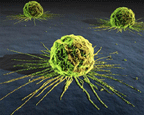 SimplyInfo.org Report: Fukushima Microparticles, An Unrecognized Threat Simply Info 7th Sept 2018, In the years since the initial disaster there have been disparities between
the official radiation exposure estimates and the subsequent health
problems in Japan. In some cases the estimates were based on faulty or
limited early data. Where a better understanding of the exposure levels is
known there still remained an anomaly in some of the health problems vs.
the exposure dose. Rapid onset cancers also caused concern. The missing
piece of the puzzle may be insoluble microparticles from the damaged
reactors.
http://www.fukuleaks.org/web/?p=16788
Fukushima’s stored water still contains radioactive iodine, cesium and strontium, as well as tritium
 Water stored at Fukushima nuclear plant still radioactive, https://abcnews.go.com/International/wireStory/water-stored-fukushima-nuclear-plant-radioactive-58147073 By MARI YAMAGUCHI, ASSOCIATED PRESS, The operator of Japan‘s wrecked Fukushima nuclear plant said Friday that much of the radioactive water stored at the plant isn’t clean enough and needs further treatment if it is to be released into the ocean.
Tokyo Electric Power Co. and the government had said that treatment of the water had removed all radioactive elements except tritium, which experts say is safe in small amounts.
They called it “tritium water,” but it actually wasn’t.
TEPCO said Friday that studies found the water still contains other elements, including radioactive iodine, cesium and strontium. It said more than 80 percent of the 900,000 tons of water stored in large, densely packed tanks contains radioactivity exceeding limits for release into the environment.
TEPCO general manager Junichi Matsumoto said radioactive elements remained, especially earlier in the crisis when plant workers had to deal with large amounts of contaminated water leaking from the wrecked reactors and could not afford time to stop the treatment machines to change filters frequently.
“We had to prioritize processing large amounts of water as quickly as possible to reduce the overall risk,” Matsumoto said.
About 161,000 tons of the treated water has 10 to 100 times the limit for release into the environment, and another 65,200 tons has up to nearly 20,000 times the limit, TEPCO said………
TEPCO only says it has the capacity to store up to 1.37 million tons of water through 2020 and that it cannot stay at the plant forever.
Some experts say the water can be stored for decades, but others say the tanks take up too much space at the plant and could interfere with ongoing decommissioning work, which could take decades.
Follow Mari Yamaguchi on Twitter at www.twitter.com/mariyamaguchi
Find her work at https://www.apnews.com/search/mari%20yamaguchi https://abcnews.go.com/International/wireStory/water-stored-fukushima-nuclear-plant-radioactive-58147073
The workers of Fukushima

|
TOUCHING FROM A DISTANCE, The workers of Fukushima Daiichi BY ANDREW DECK METROPOLIS JAPAN, SEPTEMBER 28, 2018“………an elaborate operation that also aspires to full decommissioning of Units 1, 2, 3 and 4 by 2050. Now seven years into this proposed timeline, some critics have questioned its feasibility. According to Daisuke Hirose, a TEPCO spokesperson who debriefed Metropolis on the state of decommissioning, there are three major priorities in fulfilling the plan as scheduled.
The most complex is the location and extraction of nuclear fuel debris. Hundreds of tons of melted fuel remain buried deep within Units 1, 2 and 3, the exact locations of which remain unknown. Rubble and fatal radioactivity levels have rendered these parts of the reactor buildings inaccessible to humans, leaving remote-controlled robots the most viable method of investigation. Only minimal fuel debris in Unit 2 has currently been identified and the means of extraction have not been finalized, but Hirose says TEPCO will meet a 2021 benchmark for initial fuel extraction. Alongside the handling of nuclear debris, the plant must confront a rapid accumulation of contaminated water on site, perhaps the most urgent task facing the operation. ……….
Our coach passed the border of the “difficult to return zone,” a government-designated boundary that separates areas of Fukushima deemed habitable from those deemed uninhabitable. Suddenly we were facing the Fukushima “ghost towns” of popular imagination. While Fukushima Daiichi is ground zero, the heart of this disaster is in the abandoned towns of the prefecture: homes and businesses and schools left behind in an instant, hard evidence of the 160,000 residents that were displaced by the disaster. Abandoned vehicles, shattered windows, hollowed-out storefronts, a dilapidated pachinko parlor and seven years of weeds rising from cracks in the cement — they all passed by the coach windows on our approach to Fukushima Daiichi. We were not the only vehicles on this highway, trucks rumbled past us and cars lined the road. Calling these “ghost towns” is a misnomer: these towns may be uninhabited, but they are not unoccupied. Many of these vehicles belonged to a decontamination project that spans the original 20km exclusion zone and beyond. It is not operated by TEPCO, but rather a web of government agencies and municipalities. Their job, first and foremost, entails the mass removal of dirt, stripping entire towns of topsoil and manually washing down rooftops and other surfaces that were doused in radioactive particles in an effort to clean away radiation. Fields of black refuse sacks, millions of which are filled with contaminated soil, now litter the prefecture without plans for their permanent storage or removal. Regardless of this work’s efficacy, it is an undertaking that requires a massive labor force; Japan’s Ministry of Health, Labour and Welfare reports that more than 46,000 were employed in Fukushima decontamination work in 2016. The harsh reality is that the disaster has disrupted the industries that once thrived in Fukushima Prefecture — fishing, agriculture and service jobs. Currently, only half of the region’s 1,000 fishermen are going out to sea and they face highly reduced demand. The decontamination industry is one of the few thriving seven years later, but this line of work is not without its risks. In early September, the UN human rights division released a statement warning of possible worker exploitation in the recovery effort, both within the prefectural decontamination projects and on the 1F site. “Workers hired to decontaminate Fukushima reportedly include migrant workers, asylum seekers and people who are homeless,” wrote three UN Special Rapporteurs. “They are often exposed to a myriad of human rights abuses, forced to make the abhorrent choice between their health and income, and their plight is invisible to most consumers and policymakers with the power to change it.” Japan’s Foreign Ministry responded by calling the statement “extremely regrettable.” There are many people who shoulder the burden of the nuclear disaster: parents sending their children to school with Geiger counters on their backpacks, farmers who have lost their livestock and livelihood, elderly left to care for deserted towns as the young set roots far from Futaba-gun, multi-generation Fukushima lineages that have been forced to abandon their familial homes for prefabricated temporary housing units. Yamamoto carries one small burden of this sweeping tragedy, as do the other workers of Fukushima Daiichi, as do those who labor in irradiated fields without other means of income. They are trying to extinguish a danger that can’t be seen, but its presence is felt in every aspect of their work. At times the job they’ve been assigned feels beyond comprehension, but Fukushima is not a supernatural disaster and Yamamoto is no ghostbuster. This disaster is deeply human, founded in both nature and negligence. “If you think in terms of decades, the long road ahead and the abstractness of it all will crush you,” says Yamamoto. “But just as with any other work, if you split up big projects into smaller pieces, the feeling of accomplishment from each small victory will keep you motivated.” Inside the exclusion zone, we witness the people of Fukushima trying to take their land a few steps closer to normal. https://metropolisjapan.com/workers-of-fukushima-daiichi-power-plant/
|
|
|
Formal restart approval of tsunami-hit Tokai N°2 nuclear plant near Tokyo
Tokai No. 2 nuke plant passes tighter safety checks introduced after 2011 quake

Tsunami-hit nuclear plant near Tokyo wins formal restart approval
Japan vows to cut its nuclear hoard but neighbours fear the opposite

More than 30 years ago, when its economy seemed invincible and the Sony Walkman was ubiquitous, Japan decided to build a recycling plant to turn nuclear waste into nuclear fuel.
It was supposed to open in 1997, a feat of advanced engineering that would burnish its reputation for high-tech excellence and make the nation even less dependent on others for energy.
Then came a series of blown deadlines as the project hit technical snags and struggled with a Sisyphean list of government-mandated safety upgrades. Seventeen prime ministers came and went, the Japanese economy slipped into a funk and the initial $6.8 billion budget ballooned into $27 billion of spending.
Now, Japan Nuclear Fuel Ltd, the private consortium building the recycling plant, says it really is almost done. But there is a problem: Japan does not use much nuclear power anymore.
The country turned away from nuclear energy after the 2011 Fukushima disaster, and only nine of its 35 reactors are operational.
It is a predicament with global ramifications. While waiting for the plant to be built, Japan has amassed a stockpile of 47 metric tons of plutonium, raising concerns about nuclear proliferation and Tokyo’s commitment to refrain from building nuclear arms even as it joins the United States in pressing North Korea to give up its arsenal.
In August, North Korea’s state-run Rodong Sinmun newspaper accused Japan of accumulating plutonium “for its nuclear armament.”
Japan pledged for the first time this past summer to reduce the stockpile, saying the recycling plant would convert the plutonium into fuel for use in Japanese reactors.
But if the plant opens as scheduled in four years, the nation’s hoard of plutonium could grow rather than shrink.
That is because only four of Japan’s working reactors are technically capable of using the new fuel, and at least a dozen more would need to be upgraded and operating to consume the plutonium that the recycling plant would extract each year from nuclear waste.
“At the end of the day, Japan is really in a vice of its own making,” said James M. Acton, a researcher at the Carnegie Endowment for International Peace in Washington.
“There is no easy way forward, and all those ways forward have significant costs associated with it.”
A handful of countries reprocess nuclear fuel, including France, India, Russia and the United Kingdom.
But the Japanese plan faces a daunting set of practical and political challenges, and if it does not work, the nation will be left with another problem: about 18,000 metric tons of nuclear waste in the form of spent fuel rods that it has accumulated and stored all these years.
 A storage facility for spent fuel rods at Japan Nuclear Fuel Ltd.’s plant in Rokkasho, Japan, Aug 2018.
Japan’s neighbours, most notably China, have long objected to the stockpile of plutonium, which was extracted from the waste during tests of the recycling plant and at a government research facility, as well as by commercial recycling plants abroad.
Most of this plutonium is now stored overseas, in France and Britain, but 10 metric tons remain in Japan, more than a third of it in Rokkasho, the northeastern fishing town where the recycling plant is being built.
Japan says it stores its plutonium in a form that would be difficult to convert into weapons, and that it takes measures to ensure it never falls into the wrong hands.
But experts are worried the sheer size of the stockpile — the largest of any country without nuclear weapons, and in theory enough to make 6,000 bombs — could be used to justify a nuclear buildup by North Korea and others in the region.
Any recycling plan that adds to the stockpile looks like “a route to weaponise down the road,” said Alicia Dressman, a nuclear policy specialist. “This is what really concerns Japan’s neighbours and allies.”
Japan maintains that its plutonium is for peaceful energy purposes and that it will produce only as much as it needs for its reactors. “We are committed to nonproliferation,” said Hideo Kawabuchi, an official at the Japan Atomic Energy Commission.
But the launch of the Rokkasho plant has been delayed so long — and popular opposition to restarting additional nuclear reactors remains so strong — that scepticism abounds over the plan to recycle the stockpile.
Critics say Japan should concede the plant will not solve the problem and start looking for a place to bury its nuclear waste.
“You kind of look at it and say, ‘My God, it’s 30 years later, and that future didn’t happen,’” said Sharon Squassoni, a nonproliferation specialist at George Washington University.
“It’s just wishful thinking about how this is going to solve their myriad problems.”
Ikata NPP’s reactor to restart as Hiroshima court judges volcanic erution frequency to be extremely low
Ruling puts onus on anti-nuclear plaintiffs citing volcanic risks

Reactor can restart in Japan after little risk seen from volcano
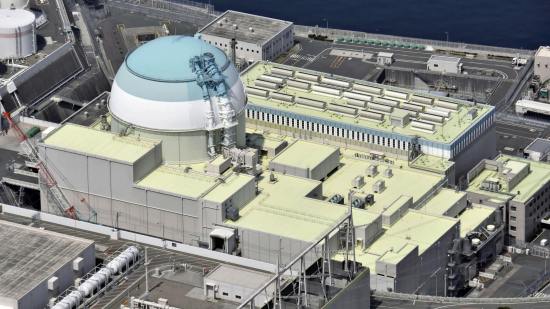
Hiroshima High Court signs off on restart of reactor at Shikoku Electric’s Ikata nuclear power plant

Nuclear weapons proliferation: other countries fear that Japan may use its piles of plutonium for weapons
 Japan vows to cut its nuclear hoard but neighbours fear the opposite, Japan has amassed a large stockpile of plutonium and neighbours fear that the country may decide to build more nuclear weapons. By Motoko Rich, 25 Sept 2018 New York Times, More than 30 years ago, when its economy seemed invincible and the Sony Walkman was ubiquitous, Japan decided to build a recycling plant to turn nuclear waste into nuclear fuel.
Poor region of Japan is now very dependent on Rokkasho nuclear recycling project
 Japan vows to cut its nuclear hoard but neighbours fear the opposite, By Motoko Rich, 25 Sept 2018 New York Times, “………Pulling the plug would also deprive one of Japan’s poorest regions of an economic lifeline. Over the years, the central government has awarded nearly $3 billion in incentives to the prefecture, where political leaders reliably support Japan’s governing party.
Even inoperative, the plant employs more than 1 in 10 residents in Rokkasho and accounts for more than half the town’s tax revenues.
“It is now indispensable for Rokkasho,” said Kenji Kudo, the fourth generation to run his family’s clothing distribution company, which sells uniforms and protective gear to the plant.
As demand from local squid fishermen disappeared, he added, the plant “rescued our business.” The town has also received more than $555 million in government subsidies for hosting the facility, including funding for a 680-seat concert hall, an international school with just eight students and a new pool and gym complex that opened last year.
There are small reminders that the munificence comes with some risk.
A screen in the lobby of the concert hall reports the radiation level at 32 places around the prefecture, and a sign at a local nursing home warns residents not to use the baths “in case of nuclear disaster.”
Kaoru Sasaki, director of the nursing home, said she doubts the plant will ever operate given concerns about nuclear power around the country. “But we don’t talk about that among friends here,” she said. “It is so important to the community.”
The plant itself is sprawled across nearly 1,000 acres of farmland, surrounded by fields of solar panels and wind turbines.
Some 6,000 workers are installing steel nets to protect it against tornadoes and digging ditches for pipes to carry water from a swamp into its cooling towers. Inside a large control room, workers in turquoise jumpsuits mill about computer consoles, monitoring dormant machinery.
The final piece of the plant to come online will be a facility, now under construction, that will take a mix of plutonium and uranium and turn that into fuel. But no one knows what would happen if the government could not persuade communities to reopen and upgrade more reactors to use this type of fuel.
“Our only plan right now is that we want to start reprocessing in 2021,” said Koji Kosugi, general manager for international cooperation and nonproliferation at Japan Nuclear Fuel.
“But we do not yet know how it will be consumed. This is something that has to be worked out with the utilities and the Japanese government.”
One of the reasons Japan is so wedded to recycling may be that it does not want to confront the politically toxic question of what to do with its nuclear waste, much of which is being stored temporarily in cooling pools on the sites of its nuclear power plants.
Thomas M. Countryman, an Obama administration official who is now chairman of the nonpartisan Arms Control Association in Washington, said the Rokkasho plant is “in a sense a delaying tactic in order to put off the most difficult decision that any country has to face.”
One option, said Tatsujiro Suzuki, a nuclear scientist at Nagasaki University, is to turn Rokkasho itself into a nuclear waste storage facility.
Nuclear plants across Japan have sent waste that cannot be recycled to Rokkasho — steel drums full of ash, contaminated filters, steel pipes and protective clothing.
Huge concrete boxes holding the drums are lined up in vast dugouts on the grounds of the plant, and canisters holding highly radioactive waste are stacked nine deep in a cavernous underground room where only their bright orange lids poke out of the floor.
The government promised that the waste would only be stored here temporarily but never came up with a permanent plan. In Rokkasho, residents are still waiting for the recycling plant.
“If the government had asked the village to only accept waste in the first place,” said the mayor, Mamoru Toda, “I don’t think the village would have accepted it.” https://www.sbs.com.au/news/japan-vows-to-cut-its-nuclear-hoard-but-neighbours-fear-the-opposite
Japan’s push for nuclear energy – court allows a reactor restart, but other legal actions are pending.
 Japan Court Allows Nuclear Reactor to Reopen in Boost to Abe’s Energy Push, Bloomberg, By Stephen Stapczynski and Chisaki Watanabe, September 25, 2018,
Shikoku Elec.to restart Ikata No. 3 reactor on October 27 Government seeks to restore industry after Fukushima disaster
A Japanese court paved the way for the nation’s ninth nuclear reactor to restart, boosting Prime Minister Shinzo Abe’s push to bring dozens of plants back online following the 2011 Fukushima disaster.
The Hiroshima High Court on Tuesday removed a temporary injunction against Shikoku Electric Power Co.’s Ikata No. 3 reactor, the company said in a statement. While the injunction ordered in December would end this month — meaning the utility could have restart the plant from Oct. 1 — the ruling is a symbolic victory for the government, which has often seen the courts stymie efforts to accelerate nuclear restarts.
Policy makers are seeking to restore the nation’s nuclear industry amid efforts to reduce reliance on costly fossil-fuel imports and cut carbon emissions. The battle in Japan over nuclear power has moved mostly to the courts, which have been used by groups opposed to the technology to keep plants shut. Seven of the nation’s 39 operable nuclear units are currently online, while one is under planned maintenance.
…….. There are roughly three dozen lawsuits pending against Japan’s nuclear facilities and the decision in favor of the utility may have some influence on future rulings, according to Datsugenpatsu Bengodan, a group of lawyers who oppose nuclear power. A nationwide survey by Mainichi Newspaper in February show the restart of nuclear reactors was opposed by almost half of the respondents, while about a third of them approved.
Last year, in a separate case, a Japanese high court overturned an injunction in place since March 2016 that barred Kansai Electric from operating two reactors at its Takahama facility in western Japan. https://www.bloomberg.com/news/articles/2018-09-25/japan-court-rules-shikoku-electric-can-restart-nuclear-reactor
Japan Has Enough Nuclear Material to Build an Arsenal. Its Plan: Recycle.

Japan’s Environment Ministry forced to change its forecast in order to make the nuclear industry look better
|
Ministry retracts estimate of ratio of nuclear power in fiscal 2050,THE ASAHI SHIMBUN, September 24, 2018
The Environment Ministry was forced to retract its trial calculation that the ratio of nuclear power generation to Japan’s total electricity generation will be less than 10 percent in fiscal 2050.
The ministry made the retraction in February in response to backlash from the Ministry of Economy, Trade and Industry, which is supervising the electric power industry, several sources of the two ministries said. At the time, the economy ministry was proceeding with a revision of the government’s basic energy plan. It apparently feared that the trial calculation could influence discussions on the future ratio of nuclear power generation, the sources added. “We didn’t put pressure (on the Environment Ministry),” an economy ministry official said. However, an Environment Ministry official said, “We couldn’t help but retract (the original trial calculation).” After the retraction, the contents of the basic energy plan were decided as had been worked out by the economy ministry and were approved in a Cabinet meeting in July. The Abe administration regards nuclear power generation as “an important baseload electric source” and is promoting the restarts of nuclear reactors. Under the policy, the economy ministry has apparently adopted a stance of concealing data that is inconvenient for the administration. The Asahi Shimbun obtained the trial calculation, which was shown to the economy ministry by the Environment Ministry. According to the estimate, the ratio of nuclear power generation to Japan’s total electricity generation will be 21 percent in fiscal 2030 in accordance with the Abe administration’s policies. The ratio will decrease to 11 to 12 percent in fiscal 2040 and to 7 to 9 percent in fiscal 2050. In addition, the ratio of renewable energies will increase to 57 to 66 percent in fiscal 2040 and further to 72 to 80 percent in fiscal 2050. The Environment Ministry compiled the trial calculation by setting up a team with Mitsubishi Research Institute Inc. and experts to examine measures to reduce greenhouse gases. In the trial calculation, the team assumed that renewable energies will be introduced as much as possible. The Asahi Shimbun obtained the trial calculation, which was shown to the economy ministry by the Environment Ministry. According to the estimate, the ratio of nuclear power generation to Japan’s total electricity generation will be 21 percent in fiscal 2030 in accordance with the Abe administration’s policies. The ratio will decrease to 11 to 12 percent in fiscal 2040 and to 7 to 9 percent in fiscal 2050. In addition, the ratio of renewable energies will increase to 57 to 66 percent in fiscal 2040 and further to 72 to 80 percent in fiscal 2050. The Environment Ministry compiled the trial calculation by setting up a team with Mitsubishi Research Institute Inc. and experts to examine measures to reduce greenhouse gases……….http://www.asahi.com/ajw/articles/AJ201809240032.html |
|
Authorities deceive the public on radiation from Fukushima Daiichi
 Informal Labour, Local Citizens and the Tokyo Electric Fukushima
  Daiichi Nuclear Crisis: Responses to Neoliberal Disaster Management Adam Broinowski {extensive footnotes and references on original] September 2018, “……… (Official Medicine: The (Il)logic of Radiation Dosimetry On what basis have these policies on radiation from Fukushima Daiichi been made? Instead of containing contamination, the authorities have mounted a concerted campaign to convince the public that it is safe to live with radiation in areas that should be considered uninhabitable and unusable according to internationally accepted standards. To do so, they have concealed from public knowledge the material conditions of radiation contamination so as to facilitate the return of the evacuee population to ‘normalcy’, or life as it was before 3.11. This position has been further supported by the International Atomic Energy Agency (IAEA), which stated annual doses of up to 20 mSv/y are safe for the total population including women and children.43 The World Health Organisation (WHO) and United Nations Scientific Commission on the Effects of Atomic Radiation (UNSCEAR) also asserted that there were no ‘immediate’ radiation related illnesses or deaths (genpatsu kanren shi 原発 関連死) and declared the major health impact to be psychological.
While the central and prefectural governments have repeatedly reassured the public since the beginning of the disaster that there is no immediate health risk, in May 2011 access to official statistics for cancer-related illnesses (including leukaemia) in Fukushima and southern Miyagi prefectures was shut down. On 6 December 2013, the Special Secrets Protection Law (Tokutei Himitsu Hogo Hō 特定秘密保護法) aimed at restricting government employees and experts from giving journalists access to information deemed sensitive to national security was passed (effective December 2014). Passed at the same time was the Cancer Registration Law (Gan Tōroku Hō 癌登録法), which made it illegal to share medical data or information on radiation-related issues including evaluation of medical data obtained through screenings, and denied public access to certain medical records, with violations punishable with a 2 million yen fine or 5–10 years’ imprisonment. In January 2014, the IAEA, UNSCEAR and Fukushima Prefecture and Fukushima Medical University (FMU) signed a confidentiality agreement to control medical data on radiation. All medical personnel (hospitals) must submit data (mortality, morbidity, general illnesses from radiation exposures) to a central repository run by the FMU and IAEA.44 It is likely this data has been collected in the large Fukushima Centre for Environmental Creation, which opened in Minami-Sōma in late 2015 to communicate ‘accurate information on radiation to the public and dispel anxiety’. This official position contrasts with the results of the first round of the Fukushima Health Management Survey (October 2011 – April 2015) of 370,000 young people (under 18 at the time of the disaster) in Fukushima prefecture since 3.11, as mandated in the Children and Disaster Victims Support Act (June 2012).45 The survey report admitted that paediatric thyroid cancers were ‘several tens of times larger’ (suitei sareru yūbyōsū ni kurabete sūjūbai no ōdā de ōi 推定される有病数に比べて数十倍の オーダーで多い) than the amount estimated.46 By 30 September 2015, as part of the second-round screening (April 2014– March 2016) to be conducted once every two years until the age of 20 and once every five years after 20, there were 15 additional confirmed thyroid cancers coming to a total of 152 malignant or suspected paediatric thyroid cancer cases with 115 surgically confirmed and 37 awaiting surgical confirmation. Almost all have been papillary thyroid cancer with only three as poorly differentiated thyroid cancer (these are no less dangerous). By June 2016, this had increased to 173 confirmed (131) or suspected (42) paediatric thyroid cancer cases.47
The National Cancer Research Center also estimated an increase of childhood thyroid cancer by 61 times, from the 2010 national average of 1–3 per million to 1 in 3,000 children. Continue reading
Britain’s Nuclear Decommissioning Authority partnering with Japan Atomic Energy Agency
Whitehaven News 20th Sept 2018 , The Nuclear Decommissioning Authority has joined forces with the Japan
Atomic Energy Agency to share expertise in nuclear decommissioning and
radioactive waste management. The NDA – which is responsible for cleaning
up and decommissioning 17 sites in the UK including Sellafield in Cumbria
– has signed an agreement that will see skills, knowledge, research,
information and technology exchanged with the JAEA, Japan’s research and
development institute for nuclear energy.
JAEA’s work includes undertaking research and development work to support the decommissioning
and environmental restoration of TEPCO’s stricken Fukushima Daiichi
Nuclear Power station. It is also aiding the decommissioning of the Monju
fast breeder reactor and the Tokai Reprocessing Plant.
http://www.whitehavennews.co.uk/news/business/NDA-joins-forces-with-Japan-Atomic-Energy-Agency-98721037-4777-4322-a8fc-22b18d0c979e-ds
1 This Month
26 September – International Day for the Total Elimination of Nuclear Weapons





PLEASE OPPOSE HR 8255 AND S.3639 – bills would accelerate satellite deployment, with no environmental review or safeguards – https://ncstd5li.quorum.us/campaign/169331/
To see nuclear-related stories in greater depth and intensity – go to https://nuclearinformation.wordpress.com
-
Archives
- September 2026 (281)
- August 2026 (330)
- July 2026 (355)
- June 2026 (287)
- May 2026 (306)
- April 2026 (356)
- March 2026 (251)
- February 2026 (267)
- January 2026 (308)
- December 2025 (358)
- November 2025 (359)
- October 2025 (375)
-
Categories
- 1
- 1 NUCLEAR ISSUES
- business and costs
- climate change
- culture and arts
- ENERGY
- environment
- health
- history
- indigenous issues
- Legal
- marketing of nuclear
- media
- opposition to nuclear
- PERSONAL STORIES
- politics
- politics international
- Religion and ethics
- safety
- secrets,lies and civil liberties
- spinbuster
- technology
- Uranium
- wastes
- weapons and war
- Women
- 2 WORLD
- ACTION
- AFRICA
- Atrocities
- AUSTRALIA
- Christina's notes
- Christina's themes
- culture and arts
- Events
- Fuk 2022
- Fuk 2023
- Fukushima 2017
- Fukushima 2018
- fukushima 2019
- Fukushima 2020
- Fukushima 2021
- general
- global warming
- Humour (God we need it)
- Nuclear
- RARE EARTHS
- Reference
- resources – print
- Resources -audiovicual
- Weekly Newsletter
- World
- World Nuclear
- YouTube
-
RSS
Entries RSS
Comments RSS

