Hokkaido municipalities gamble on a nuclear future, but at what cost?
Hokkaido municipalities gamble on a nuclear future, but at what cost? https://www.japantimes.co.jp/news/2020/10/24/national/media-national/hokkaido-gambling-casinos/ BY PHILIP BRASOR Since August, two local governments on the western shore of Hokkaido have said they will apply to the central government for a survey that could eventually lead to their municipalities hosting a permanent underground repository for high-level radioactive waste. The fact that these two localities made their announcements about a month apart and are situated not far from each other was enough to attract more than the usual media attention, which revealed not only the straitened financial situations of the two areas, but also the muddled official policy regarding waste produced by the country’s nuclear power plants.
Then again, neither Suttsu nor Kamoenai may make it past the first stage. Yugo Ono, an honorary geology professor at Hokkaido University, told the magazine Aera that Suttsu is located relatively close to a convergence of faults that caused a major earthquake in 2018. And Kamoenai is already considered inappropriate for a repository on a map drawn up by the trade ministry in 2017.
If the Nuclear Waste Management Organization’s process for selecting a site sounds arbitrary, it could reflect the government’s general attitude toward future plans for nuclear power, which is still considered national policy, despite the fact that only three reactors nationwide are online. Presently, spent fuel is being stored in cooling pools at 17 nuclear plants comprising a storage capacity of 21,400 tons. As of March, 75 percent of that capacity was being used, so there is still some time to find a final resting place for the waste. Some of this spent fuel was supposed to be recycled at the Rokkasho Reprocessing Plant in Aomori Prefecture, but, due to numerous setbacks, it doesn’t look as if it’s ever going to open, so the fuel will just become hazardous garbage.
Ono tells Aera that the individual private nuclear plants should, in line with product liability laws, be required to manage their own waste themselves. If they don’t have the capacity, then they should create more. It’s wrong to bury the waste 300 meters underground, which is the plan, because many things can happen over the course of future millennia. The waste should be in a safe place on the surface, where it can be readily monitored.
However, that would require lots of money virtually forever, something the government would prefer not to think about, much less explain. Instead, they’ve made plans that allow them to kick the can down the road for as long as possible.
Warnings on releasing Fukushima’s radioactive water into the Pacific Ocean
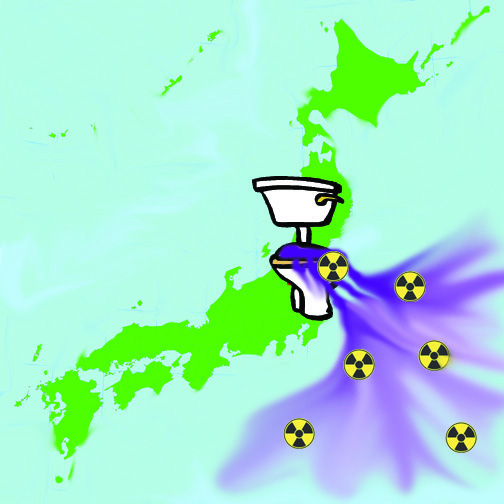 Warning over Fukushima nuclear power plant water release, 7 News, CNN, Allie Godfrey, Sunday, 25 October 2020 Contaminated water that could soon be released into the sea from the Fukushima Daiichi nuclear power plant contains radioactive carbon with the potential to damage human DNA, environmental rights organisation Greenpeace has warned.
To cool fuel cores at the damaged Fukushima nuclear plant operator Tokyo Electric Power Company (TEPCO) has pumped in tens of thousands of tons of water over the years. Once used, the water is put into storage.
But nine years on from Japan’s worst nuclear disaster, storage space is running out, and the government is still deciding what to do with the water.
Authorities, including the country’s environment minister, have indicated the only solution is to release it into the ocean – a plan facing opposition from environmental campaigners and fishing industry representatives.
On Friday, the Japanese government postponed a decision on what to do with the water. ……….“Any radioactive discharge carries some environmental and health risk,” Francis Livens, a professor of radiochemistry at the University of Manchester told CNN, adding that the risk would be relative to how much carbon 14 would be released into the ocean. “An awful lot really does depend on how much is going to be discharged.”
“If it’s (carbon-14) there and it’s there in quantity, yes, there probably is a risk associated with it,” Livens, who is not associated with the Greenpeace study, said. “People have discharged carbon-14 into the sea over many years. It all comes down to how much is there, how much is dispersed, does it enter marine food chains and find its way back to people?”……..
Corkhill told CNN the contaminated water is becoming a pressing concern: If the Japanese government does not deal with the contaminated water, it will have “several millions of cubic meters of water that’s radioactive all sat on the Fukushima site,” she said. https://7news.com.au/technology/warning-over-fukushima-nuclear-power-plant-water-release-c-1453141
Miyagi Prefectural Assembly approves nuclear reactor restart, despite very strong public opposition
|
Miyagi assembly approves restart of Onagawa nuclear reactor, HTTPS://WWW.JAPANTIMES.CO.JP/NEWS/2020/10/23/NATIONAL/MIYAGI-APPROVES-ONAGAWA-NUCLEAR-RESTART/SENDAI – The Miyagi Prefectural Assembly has adopted a petition seeking the restart of the No. 2 reactor at Tohoku Electric Power Co.’s Onagawa nuclear plant in the prefecture.The petition was approved by a majority vote at a plenary meeting of the assembly on Thursday.
It is now highly likely that Miyagi Gov. Yoshihiro Murai will agree to resuming operation of the reactor at the nuclear plant, which straddles the city of Ishinomaki and the town of Onagawa, as the governor has said he plans to respect the will of the prefectural assembly. The municipal assemblies of Ishinomaki and Onagawa have already approved the reactor’s restart. At Thursday’s prefectural assembly meeting, the petition submitted by the commerce and industry association in Onagawa was approved by 35 members and rejected by 19 members. Meanwhile, a petition opposing the proposed restart, submitted by 53 organizations, including civic groups, in their joint names, was voted down, securing the support of only 19 members. After the meeting, Murai said, “This is the first time that an assembly of a tsunami-afflicted prefecture that hosts a nuclear power plant has approved a reactor restart. “I take the judgment seriously,” Murai added. Miyagi is one of the prefectures that were severely affected by the March 2011 tsunami. The governor plans to hear opinions on the proposed restart at a meeting of heads of municipalities in the prefecture in November, and make his judgment after having discussions with the mayors of Ishinomaki and Onagawa. |
|
Japan now has enough plutonium to make about 6,000 atomic bombs
Japan Sticks to Nuclear Fuel Recycling Plan Despite Plutonium Stockpile
Japan now has 45.5 tons of separated plutonium, enough to make about 6,000 atomic bombs. https://thediplomat.com/2020/10/japan-sticks-to-nuclear-fuel-recycling-plan-despite-plutonium-stockpile/
Chief Cabinet Secretary Kato Katsunobu, at a meeting with the governor of Aomori prefecture, home to Japan’s pending nuclear fuel reprocessing plant, reaffirmed that new Prime Minister Suga Yoshihide’s government will pursue the country’s nuclear energy policy.
“The government will firmly promote our nuclear energy policy and fuel cycle programs,” Kato said. He said Japan will make effort to reduce volume and toxicity of high-level nuclear waste, and extract plutonium from spent fuel from a resource conservation point of view.
critics say continuation of spent fuel reprocessing only adds to Japan’s already large plutonium stockpile. Japan also lacks a final repository for high-level nuclear waste.
Wednesday’s meeting came after the Nuclear Regulation Authority granted a safety approval this past summer for the Rokkasho fuel reprocessing plant, operated by Japan Nuclear Fuel Ltd., located in northern Japan, for a planned launch in 2022. The authority also gave a preliminary permit for the Rokkasho MOX fuel production plant, also planned for completion in 2022.
Japan now has 45.5 tons of separated plutonium — 8.9 tons at home, and 36.6 tons in Britain and France, where spent fuel from Japanese nuclear plants has been reprocessed and stored because Japan lacks a plant to produce MOX fuel containing plutonium at home. The amount is enough to make about 6,000 atomic bombs.
Despite security concerns raised by Washington and others, the stockpile is hardly decreasing due to difficulties in achieving a full nuclear fuel recycling program and slow restarts of reactors amid setbacks from the 2011 Fukushima disaster.
Japan reprocesses spent fuel, instead of disposing it as waste, to extract plutonium and uranium to make MOX fuel for reuse, while the U.S. discontinued the costly and challenging program. Allowed under international safeguard rules, Japan is the only non-nuclear weapons state that separates plutonium for peaceful purposes, though the same technology can make atomic bombs.
Japan – nuclear power fine – but no nuclear waste for Aomori Prefecture, please
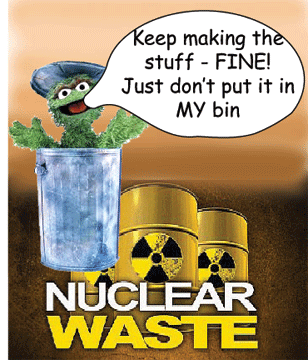 Aomori wants reassurance that it won’t be final nuclear waste site, Japan Times, 21 Oct 20, Aomori Prefecture on Wednesday urged the government to reconfirm its policy of not building in the prefecture a facility for the final disposal of high-level radioactive waste from nuclear power plants across the nation.The request was made during a meeting of a council for discussions on issues related to the country’s nuclear fuel cycle policy between relevant Cabinet ministers and officials of the prefecture, where a spent nuclear fuel reprocessing facility is under construction. It was the first meeting of the council since November 2010.
At the day’s meeting, the Aomori side called on Prime Minister Yoshihide Suga’s Cabinet, launched last month, to maintain the promise not to make the prefecture a final disposal site, upheld by past administrations.
Participants in the meeting, held at the Prime Minister’s Office in Tokyo, included Chief Cabinet Secretary Katsunobu Kato and industry minister Hiroshi Kajiyama from the central government, and Aomori Gov. Shingo Mimura.
“It’s necessary for the state and the operator (of the reprocessing plant) to make the utmost efforts to promote, with support from Aomori, the nuclear fuel cycle policy, including the launch of the plant,” Kato said at the start of the meeting.
Mimura told reporters after the meeting that he asked the central government to abide by the promise and promote the nuclear fuel cycle policy, in which uranium and plutonium are extracted from spent fuel and reprocessed into fuel for use at nuclear power plants.
Mimura indicated that Kato showed the state’s understanding of his requests……..
Aomori has agreed to accept spent nuclear fuel from nuclear plants across the country on the condition that a final disposal facility is not constructed in the prefecture.
The central government regards the nuclear fuel cycle as a pillar of its nuclear energy strategy.
Besides the reprocessing plant, a facility to make mixed oxide, or MOX, fuel from extracted uranium and plutonium is also under construction at the same site in Rokkasho. https://www.japantimes.co.jp/news/2020/10/21/national/japan-aomori-nuclear-waste-disposal/
Japanese Prime Minister Yoshihide Suga soon to decide on disposal of Fukushima’s nuclear waste water
Reuters 21st Oct 2020, Japanese Prime Minister Yoshihide Suga said on Wednesday that he is aiming
to make a speedy decision on the disposal of contaminated water at the
tsunami-crippled Fukushima nuclear plant.
Restart of Japan’s tsunami-hit Onagawa nuclear reactor to be OK’d
October 14, 2020
Sendai – A nuclear reactor in northeastern Japan damaged by the 2011 earthquake-tsunami disaster is all but certain to resume operations as the governor of the prefecture hosting the facility has decided to give consent, local officials said Wednesday.
For the No. 2 unit of the Onagawa nuclear plant in Miyagi Prefecture to restart, winning consent from local government leaders is the last remaining step needed after it cleared a national safety screening in February.

Tohoku Electric Power Co.’s Onagawa nuclear plant, as pictured in August 2020
Miyagi Gov. Yoshihiro Murai will formally announce his consent by the end of the year, according to the officials, who spoke on condition of anonymity.
By doing so, he would be the first governor of a disaster-hit prefecture to give the green light to the restart of a nuclear reactor.
The other heads of local governments whose consent is essential are the mayors of the city of Ishinomaki and the town of Onagawa where the plant operated by Tohoku Electric Power Co. straddles.
Of them, Ishinomaki Mayor Hiroshi Kameyama has already expressed his willingness to give the nod, and such a move is backed by the two municipalities’ assemblies.
After the quake triggered one of the world’s worst nuclear crises in neighboring Fukushima Prefecture and caused all of Japan’s 54 reactors to halt at one point, nine units at five plants in the country have restarted following regulatory and local approval.
Murai has come to believe residents will support his stance after the prefectural assembly adopted a plea seeking his consent at a panel meeting Tuesday and is set to approve it at a plenary session next week, the officials said.
“When the plenary session shows its stance, I will make a decision upon hearing the opinions of mayors of cities, towns and villages within the prefecture,” Murai said.
The 825,000-kilowatt reactor won the approval of the Nuclear Regulation Authority in February, becoming the second disaster-damaged reactor to pass stricter safety standards after the Fukushima nuclear disaster — the worst since the 1986 Chernobyl accident.
At the Onagawa complex, all three reactors — the same boiling water reactors as in Fukushima — shut down when a massive quake and a 13-meter tsunami hit northeastern Japan on March 11, 2011, flooding the underground floors of the No. 2 unit.
However, the plant’s emergency cooling system did not fail and there was no meltdown of the type that occurred at three of the six reactors at the Fukushima Daiichi plant of Tokyo Electric Power Company Holdings Inc.
Tohoku Electric Power Co. aims to restart the Onagawa No. 2 reactor in 2022 at the earliest, after completing anti-disaster work such as the construction of an 800-meter-long seawall at the plant. It has already decided to scrap the No. 1 unit.
Other boiling water reactors at TEPCO’s Kashiwazaki-Kariwa plant in Niigata Prefecture and the Tokai No. 2 plant of Japan Atomic Power Co. in Ibaraki Prefecture have also won the regulator’s approval to resume operations but have yet to obtain local consent.
Mansion without a toilet: Towns in Japan seek to house, store nuclear waste out of necessity

Oct 12, 2020
Two remote towns in northern Japan struggling with rapidly graying and shrinking populations signed up Friday to possibly host a high-level radioactive waste storage site as a means of economic survival.
Japanese utilities have about 16,000 tons of highly radioactive spent fuel rods stored in cooling pools or other interim sites, and there is no final repository for them in Japan — a situation called “a mansion without a toilet.”
Japan is in a dire situation following the virtual failure of an ambitious nuclear fuel recycling plan, in which plutonium extracted from spent fuel was to be used in still-unbuilt fast breeder reactors. The problem of accumulating nuclear waste came to the fore after the 2011 Fukushima nuclear power plant disaster. Finding a community willing to host a radioactive dump site is difficult, even with a raft of financial enticements.
On Friday, Haruo Kataoka, the mayor of Suttsu town on the northwestern coast of Hokkaido, applied in Tokyo for preliminary government research on whether its land would be suitable for highly radioactive waste storage for thousands of years.
Later Friday in Kamoenai just north of Kamoenai, village chief Masayuki Takahashi announced his decision to also apply for an initial feasibility study.
Suttsu, with a population of 2,900, and Kamoenai, with about 800 people, have received annual government subsidies as hosts of the Tomari nuclear power plant. But they are struggling financially because of a declining fishing industry and their aging and shrinking populations.
The preliminary research is the first of three steps in selecting a permanent disposal site, with the whole process estimated to take about two decades. Municipalities can receive up to 2 billion yen ($19 million) in government subsidies for two years by participating in the first stage. Moving on to the next stage would bring in more subsidies.
“I have tried to tackle the problems of declining population, low birth rates and social welfare, but hardly made progress,” Takahashi told reporters. “I hope that accepting research (into the waste storage) can help the village’s development.”
It is unknown whether either place will qualify as a disposal site. Opposition from people across Hokkaido could also hinder the process. A gasoline bomb was thrown into the Suttsu mayor’s home early Thursday, possibly by an opponent of the plan, causing slight damage.
Hokkaido Gov. Naomichi Suzuki and local fisheries groups are opposed to hosting such a facility.
One mayor in southwestern Japan expressed interest in 2007, but faced massive opposition and the plan was spiked.
High-level radioactive waste must be stored in thick concrete structures at least 300 meters (yards) underground so it won’t affect humans and the environment.
A 2017 land survey map released by the government indicated parts of Suttsu and Kamoenai could be suitable for a final repository.
So far, Finland and Sweden are the only countries that have selected final disposal sites
Japan’s government is appealing the landmark ruling about its responsibility for Fukushima nuclear accident
Landmark Court Ruling In Japan Holds Government Accountable For 2011 Nuclear Meltdown https://www.npr.org/2020/10/15/924150284/landmark-court-ruling-in-japan-holds-government-accountable-for-2011-nuclear-mel
 Heard on All Things Considered, ANTHONY KUHN, 15 Oct 20, Japan’s government is appealing a landmark court ruling that holds it responsible for failing to prevent the worst nuclear accident in the country’s history and orders it to pay damages to victims. Heard on All Things Considered, ANTHONY KUHN, 15 Oct 20, Japan’s government is appealing a landmark court ruling that holds it responsible for failing to prevent the worst nuclear accident in the country’s history and orders it to pay damages to victims.AILSA CHANG, HOST: The Japanese government and a nuclear power plant operator have appealed a landmark court ruling. The ruling holds them responsible for the country’s worst ever nuclear accident. The 2011 Fukushima meltdown was triggered by a huge earthquake and tsunami. But as NPR’s Anthony Kuhn reports from Seoul, plaintiffs are concerned that justice is being delayed once again. (CHEERING) ANTHONY KUHN, BYLINE: Cheering broke out outside the high court in the city of Sendai, about 60 miles north of the crippled Fukushima nuclear plant last month. To many people’s surprise, the court’s ruling held the central government and the Tokyo Electric Power Company – or TEPCO, which runs the plant – equally responsible for the accident. Plaintiffs argued that scientists had warned the government in 2002 that a major tsunami could hit the area. The court said in its scathing verdict that the government failed to take action. TAKASHI NAKAJIMA: (Speaking Japanese).KUHN: “The government, despite its position as regulator, just let TEPCO do as it pleased and let it put off safety measures. It was gross negligence, and it was an attitude unbefitting a regulatory agency.” That was Takashi Nakajima paraphrasing the court’s verdict. He’s a leader among the nearly 3,600 plaintiffs in the case. The Sendai court ordered the government and TEPCO to pay them $9.6 million in compensation, double what a lower court had ruled three years ago. Many people in Nakajima’s community near Fukushima fled their homes. He says he filed the lawsuit basically just to say, give me back my former life. NAKAJIMA: (Speaking Japanese). KUHN: “Imagine how you would feel,” he says, “if suddenly you get into a situation where you can never go back to your hometown because there’s a risk of radiation.” Nakajima runs a supermarket, but he says that fears about radiation in waters near Fukushima make it impossible to sell the local fish in which he used to take such pride. NAKAJIMA: (Speaking Japanese). KUHN: “The fishermen eat them because they’ve been eating them for a long time,” he says, “and they’re tasty. But their sons and daughters-in-law tell them that their grandchildren should not eat them. This is a situation which divides many families.” Judges in the Sendai verdict appear to have been especially sympathetic to such hardships. Eri Osaka, a law professor at Toyo University in Tokyo, explains. ERI OSAKA: (Through translator) The Sendai High Court judges actually visited the area at issue in the trial before the decision was made. It’s very unusual that judges truly understand what hardships the victims are experiencing. KUHN: Some plaintiffs in similar lawsuits have not been as fortunate as Nakajima and have lost. Professor Masafumi Yokemoto, a professor of environmental policy at Osaka City University, says the Sendai verdict could change that. MASAFUMI YOKEMOTO: (Speaking Japanese). KUHN: “This is the first time a decision recognizing the government’s full responsibility has been made at the high court level,” he says, “although it was partly recognized by a lower court. It’s very significant, and it’ll clearly influence future decisions.” That’s why many observers were not surprised when the government and TEPCO appealed the verdict on Tuesday. Plaintiff Takashi Nakajima hopes that the Sendai court ruling will eventually pave the way for the shutdown of all dangerous nuclear power plants in Japan. But whether or not the ruling stands will now be up to Japan’s Supreme Court to decide. Anthony Kuhn, NPR News, Seoul. |
|
Japan’s government planning to dump into the sea, the radioactive water from Fukushima No. 1 nuclear reactor
Fukushima No. 1 nuclear plant wastewater looks headed for ocean, THE ASAHI SHIMBUN, October 16, 2020 The government is moving toward the controversial disposal method for contaminated water at the crippled Fukushima No. 1 nuclear power plant of dumping it into the ocean.
Fishermen have fiercely opposed this disposal method at the plant, which experienced a triple meltdown in March 2011 following a magnitude-9.0 earthquake and tsunami, over fears of resulting negative publicity hurting their industry.
The central government is likely to hold a meeting of relevant Cabinet ministers before the end of October to make a formal decision on the dumping, sources said.
Before being dumped into the ocean, the stored water would be processed a second time and diluted with seawater to lower levels of radioactive materials below legally established standards.
It is expected to take about two years to prepare for the dumping process.
Water contaminated with radioactive materials continues to be produced at the Fukushima No. 1 plant at a daily rate of about 140 tons. Water used to cool melted spent nuclear fuel mixes in with groundwater that leaks into the reactor building.
Tokyo Electric Power Co., the operator of the plant, treats the contaminated water using equipment called advanced liquid processing systems, or ALPS, before storing the water in tanks on the plant grounds.
But about 1.2 million tons of processed water is being stored in tanks and TEPCO has estimated that tank capacity will be reached by the summer of 2022 even under the current plan to build more tanks.
Because about two years is needed to construct the necessary equipment to dispose of the contaminated water and to pass screening by the Nuclear Regulation Authority, a decision on disposal of the water was expected by this summer.
A subcommittee of experts set up by the economy ministry compiled a proposal in February that said the two realistic alternatives were to dump the water into the ocean or release it into the atmosphere. The panel added that dumping the water into the ocean was the method that could be implemented with certainty.
Since April, the government has conducted seven hearings involving local government officials, farming and fisheries organizations and business groups on the issue……… http://www.asahi.com/ajw/articles/13831640
Japan’s government ignores U.N. nuclear ban treaty, puts out feeble anti-nuclear weapons resolution
Japan submits anti-nuclear resolution with no mention of ban pact, https://www.japantimes.co.jp/news/2020/10/16/national/japan-un-nuke-resolution-ban-pact/ NEW YORK – Japan submitted an anti-nuclear resolution to a panel at the United Nations on Thursday, but the text made no direct reference to a U.N.-adopted nuclear ban treaty likely to go into effect early next year.
Opting not to mention the Treaty on the Prohibition of Nuclear Weapons, which is expected to cross the needed threshold of ratification soon and take effect 90 days later, apparently reflects Japan’s ties with the United States, its key security ally which opposes the pact and provides security assurances to Japan under its so-called nuclear umbrella.
Tokyo’s stance on the matter appears to have remained unaltered after the first change to the country’s leadership in nearly eight years, with Prime Minister Yoshihide Suga replacing former Prime Minister Shinzo Abe last month.
As the only country in the world to have suffered atomic bombings, Japan has submitted an anti-nuclear resolution to the United Nations every year since 1994. But versions of the annual resolution submitted since the nuclear ban pact was adopted in 2017 make no mention of it.
So far, 47 countries and regions have completed ratification procedures for the nuclear ban treaty, with a total of 50 ratifications needed for it to take effect.
Japan opposed the nuclear ban pact along with the five permanent members of the U.N. Security Council, which are all nuclear powers.
The nation’s latest resolution preserves phrasing from last year about the devastating humanitarian impacts of nuclear weapons, which was worded less strongly than previous versions that until 2018 expressed deep concern on the matter.
Japan’s resolution is likely to pass the U.N. General Assembly’s First Committee on disarmament issues by early November before being adopted at the General Assembly by the end of the year.
800-meter-long seawall being constructed, as Japan plans to reopen damaged Onagawa nuclear complex
|
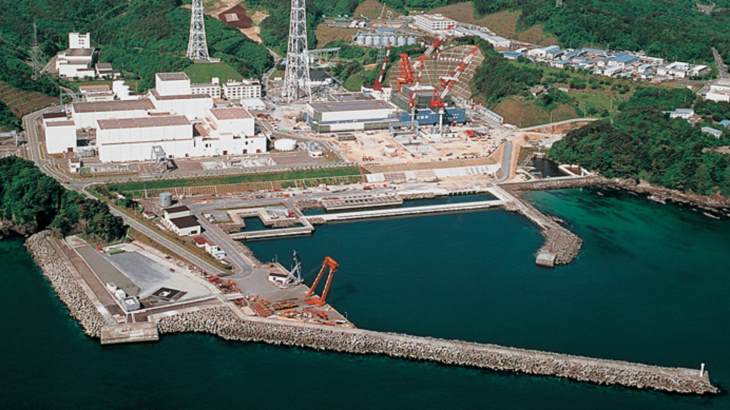
Japan’s damaged nuclear reactor set to reopen https://www.aa.com.tr/en/asia-pacific/japan-s-damaged-nuclear-reactor-set-to-reopen/2005798, Quake-hit Onagawa nuclear complex awaits final approval by Miyagi provincial officials, Riyaz ul Khaliq |14.10.2020 ANKARAJapan’s nuclear reactor hit by a 2011 earthquake in the northeastern Miyagi province will resume operations by the end of this year, according to officials, the local media reported on Wednesday.
Miyagi Governor Yoshihiro Murai will formally announce his consent to restart the nuclear reactors at Onagawa complex by the end of the year, the Kyodo News agency said. Early this year, the 825,000-kilowatt reactor, operated by Tohoku Electric Power Company, won the approval of the country’s Nuclear Regulation Authority. All the three reactors were shut down when the massive quake and a 13-meter tsunami hit northeastern Japan on March 11, 2011, flooding the underground floors of the No. 2 unit. Nearly 10,000 people lost their lives while over 4,000 others are still missing. Onagawa nuclear reactor is the second such disaster-ravaged complex, after the Fukushima nuclear disaster, to pass stricter nuclear safety standards. The world has witnessed the worst nuclear disaster in 1986 at Chernobyl in today’s Ukraine. Unlike the Fukushima Daiichi plant of Tokyo Electric Power Company, the Onagawa plant’s emergency cooling system did not fail and underwent no meltdown after hit by the earthquake and tsunami. To restart the Onagawa nuclear reactors, the consent of local government leaders is the last remaining step needed after it cleared a national safety screening in February. Tohoku aims to restart the No. 2 unit of Onagawa nuclear complex in 2022 at the earliest. Currently, a 800-meter-long seawall at the plant is under construction. The operator has already decided to scrap unit No. 1. Murai would be the first governor of a disaster-hit province to allow resumption of a damaged nuclear reactor’s operations. The 2011 earthquake and tsunami triggered one of the world’s worst nuclear crises in Japan’s Fukushima province which caused all of Japan’s 54 reactors to halt. However, since then, nine units at five plants of the country have restarted following regulatory and local approvals. “When the plenary session [of the local assembly] shows its stance, I will make a decision upon hearing the opinions of mayors of cities, towns, and villages within the prefecture,” Murai said. |
Struggling Japanese towns look to nuclear waste storing and the money associated
|
MANSION WITHOUT A TOILET: TOWNS IN JAPAN SEEK TO HOUSE, STORE NUCLEAR WASTE OUT OF NECESSITY, https://www.firstpost.com/tech/science/mansion-without-a-toilet-towns-in-japan-seek-to-house-store-nuclear-waste-out-of-necessity-8904851.html Radioactive waste needs to be stored away for a few centuries in thick concrete structures underground so it won’t affect humans and the environment.
Two remote towns in northern Japan struggling with rapidly graying and shrinking populations signed up Friday to possibly host a high-level radioactive waste storage site as a means of economic survival.
Japanese utilities have about 16,000 tons of highly radioactive spent fuel rods stored in cooling pools or other interim sites, and there is no final repository for them in Japan — a situation called “a mansion without a toilet.”
Japan is in a dire situation following the virtual failure of an ambitious nuclear fuel recycling plan, in which plutonium extracted from spent fuel was to be used in still-unbuilt fast breeder reactors. The problem of accumulating nuclear waste came to the fore after the 2011 Fukushima nuclear power plant disaster. Finding a community willing to host a radioactive dump site is difficult, even with a raft of financial enticements.
On Friday, Haruo Kataoka, the mayor of Suttsu town on the northwestern coast of Hokkaido, applied in Tokyo for preliminary government research on whether its land would be suitable for highly radioactive waste storage for thousands of years. Later Friday in Kamoenai just north of Kamoenai, village chief Masayuki Takahashi announced his decision to also apply for an initial feasibility study. Suttsu, with a population of 2,900, and Kamoenai, with about 800 people, have received annual government subsidies as hosts of the Tomari nuclear power plant. But they are struggling financially because of a declining fishing industry and their aging and shrinking populations. The preliminary research is the first of three steps in selecting a permanent disposal site, with the whole process estimated to take about two decades. Municipalities can receive up to 2 billion yen ($19 million) in government subsidies for two years by participating in the first stage. Moving on to the next stage would bring in more subsidies. “I have tried to tackle the problems of declining population, low birth rates and social welfare, but hardly made progress,” Takahashi told reporters. “I hope that accepting research (into the waste storage) can help the village’s development.” It is unknown whether either place will qualify as a disposal site. Opposition from people across Hokkaido could also hinder the process. A gasoline bomb was thrown into the Suttsu mayor’s home early Thursday, possibly by an opponent of the plan, causing slight damage. Hokkaido Gov. Naomichi Suzuki and local fisheries groups are opposed to hosting such a facility. One mayor in southwestern Japan expressed interest in 2007, but faced massive opposition and the plan was spiked. High-level radioactive waste must be stored in thick concrete structures at least 300 meters (yards) underground so it won’t affect humans and the environment. A 2017 land survey map released by the government indicated parts of Suttsu and Kamoenai could be suitable for a final repository. So far, Finland and Sweden are the only countries that have selected final disposal sites |
|
Ikata nuclear reactor to be shut down – 40 year decommissioning process
Regulator approves Ikata 2 decommissioning plan
Japan’s Nuclear Regulation Authority (NRA) today approved Shikoku Electric Power Company’s decommissioning plan for unit 2 of its Ikata nuclear power plant in Ehime prefecture. Decommissioning of the unit is expected to be completed by 2059.

07 October 2020
Ikata 2 is a 538 MWe pressurised water reactor that began operating in March 1988. It was taken offline in January 2012 for periodic inspections. Shikoku announced in March 2018 that it did not plan to restart the reactor. It said the cost and scale of modifications required to upgrade the 40-year-old unit to meet the country’s revised safety standards made it uneconomical to restart it.
The utility submitted an outline of its plans for decommissioning the unit to the NRA on 10 October, 2018. Shikoku also submitted requests to Ehime prefecture and the municipality of Ikata, as specified under nuclear safety agreements concluded with those authorities.
Following a review, which included a total of seven public meetings, the NRA has today approved the decommissioning plan for Ikata 2.
According to the plan, decommissioning of the unit will take about 40 years and will be carried out in four stages. The first stage, lasting about 10 years, will involve preparing the reactor for dismantling (including the removal of all fuel and surveying radioactive contamination), while the second, lasting 15 years, will be to dismantle peripheral equipment from the reactor and other major equipment. The third stage, taking about eight years, will involve the demolition of the reactor itself, while the fourth stage, taking about seven years, will see the demolition of all remaining buildings and the release of land for other uses.
During the first stage, all fuel is to be removed from the unit. This includes 316 used fuel assemblies that will be sent for reprocessing and 102 fresh fuel assemblies that will be returned to the fuel fabricator.
“In the future, we will obtain the consent of Ikata Town and Ehime Prefecture, based on the safety agreement,” Shikoku said.
Shikoku decided in March 2016 to decommission unit 1 of the Ikata plant, also a 538 MWe PWR, which began commercial operation in September 1977. That unit had been taken offline in September 2011 for periodic inspections. Upgrades costing more than JPY170 billion (USD1.5 billion) would have been needed at the unit in order for it to operate beyond 40 years. The NRA approved Shikoku’s decommissioning plan for Ikata 1 in June 2017. That plan also sees the unit being decommissioned in four stages over a 40-year period.
The utility said, “As with unit 1, we will steadily proceed with the decommissioning of unit 2 with the highest priority given to ensuring safety.”
https://www.world-nuclear-news.org/Articles/Regulator-approves-Ikata-2-decommissioning-plan
Fishing industry chief opposes releasing Fukushima No. 1 water into sea
Fishing industry chief opposes releasing Fukushima No. 1 water into sea, https://www.japantimes.co.jp/news/2020/10/09/national/zengyoren-fukushima-water-sea/ 9 Oct 20, The head of the National Federation of Fisheries Cooperative Associations, or Zengyoren, has voiced strong opposition against releasing treated water containing radioactive tritium from the disaster-stricken Fukushima No. 1 nuclear plant into the sea.
“We are absolutely against ocean release” as a way to dispose of tainted water at Tokyo Electric Power Company Holdings Inc.’s nuclear plant in Fukushima Prefecture, Hiroshi Kishi, head of Zengyoren, said Thursday at a government hearing in Tokyo.
Kishi said that fishermen who are operating along the coast of Fukushima have been suffering from problems caused by the radioactive fallout from the 2011 meltdowns at the plant, such as fishing restrictions, as well as malicious rumors about the safety of farm and marine products there.
If the government chooses to release radioactive water into the sea, a leading option to get rid of accumulating low-level radioactive water at the plant, it will trash all efforts fishermen have so far made to sweep away such rumors and consequently “will have a devastating impact on the future of Japan’s fishing industry,” Kishi stressed.
Toshihito Ono, head of the prefecture’s fishery product processors association, who joined the hearing via a video call, warned that Fukushima’s processed marine products, including products that use ingredients from other prefectures, will become targets of harmful rumors.
In a report released in February, a government panel pointed out that a realistic option would be releasing the tainted water into the ocean after dilution or into the air through evaporation.
Many people fear that both methods will add to the reputational damage suffered by Fukushima products. But treated water storage at the power plant is expected to reach full capacity as early as autumn 2022.
After the hearing, state industry minister Kiyoshi Ejima told reporters, “We find it unadvisable to put off a decision on how to dispose of the water because not much room is left at the plant for tanks containing the water.”
This was probably the last hearing on the water issue, people familiar with the matter said.
1 This Month



26 September – International Day for the Total Elimination of Nuclear Weapons


PLEASE OPPOSE HR 8255 AND S.3639 – bills would accelerate satellite deployment, with no environmental review or safeguards – https://ncstd5li.quorum.us/campaign/169331/
To see nuclear-related stories in greater depth and intensity – go to https://nuclearinformation.wordpress.com
-
Archives
- September 2026 (245)
- August 2026 (330)
- July 2026 (355)
- June 2026 (287)
- May 2026 (306)
- April 2026 (356)
- March 2026 (251)
- February 2026 (267)
- January 2026 (308)
- December 2025 (358)
- November 2025 (359)
- October 2025 (375)
-
Categories
- 1
- 1 NUCLEAR ISSUES
- business and costs
- climate change
- culture and arts
- ENERGY
- environment
- health
- history
- indigenous issues
- Legal
- marketing of nuclear
- media
- opposition to nuclear
- PERSONAL STORIES
- politics
- politics international
- Religion and ethics
- safety
- secrets,lies and civil liberties
- spinbuster
- technology
- Uranium
- wastes
- weapons and war
- Women
- 2 WORLD
- ACTION
- AFRICA
- Atrocities
- AUSTRALIA
- Christina's notes
- Christina's themes
- culture and arts
- Events
- Fuk 2022
- Fuk 2023
- Fukushima 2017
- Fukushima 2018
- fukushima 2019
- Fukushima 2020
- Fukushima 2021
- general
- global warming
- Humour (God we need it)
- Nuclear
- RARE EARTHS
- Reference
- resources – print
- Resources -audiovicual
- Weekly Newsletter
- World
- World Nuclear
- YouTube
-
RSS
Entries RSS
Comments RSS
 nuclear-news